EP0981884B1 - System und verfahren zur verbindungsverwaltung zwischen einem server und einem klientknoten - Google Patents
System und verfahren zur verbindungsverwaltung zwischen einem server und einem klientknoten Download PDFInfo
- Publication number
- EP0981884B1 EP0981884B1 EP98923426A EP98923426A EP0981884B1 EP 0981884 B1 EP0981884 B1 EP 0981884B1 EP 98923426 A EP98923426 A EP 98923426A EP 98923426 A EP98923426 A EP 98923426A EP 0981884 B1 EP0981884 B1 EP 0981884B1
- Authority
- EP
- European Patent Office
- Prior art keywords
- application
- window
- server
- client
- html page
- Prior art date
- Legal status (The legal status is an assumption and is not a legal conclusion. Google has not performed a legal analysis and makes no representation as to the accuracy of the status listed.)
- Expired - Lifetime
Links
Images


Classifications
-
- G—PHYSICS
- G06—COMPUTING OR CALCULATING; COUNTING
- G06F—ELECTRIC DIGITAL DATA PROCESSING
- G06F9/00—Arrangements for program control, e.g. control units
- G06F9/06—Arrangements for program control, e.g. control units using stored programs, i.e. using an internal store of processing equipment to receive or retain programs
- G06F9/46—Multiprogramming arrangements
- G06F9/54—Interprogram communication
- G06F9/541—Interprogram communication via adapters, e.g. between incompatible applications
-
- G—PHYSICS
- G06—COMPUTING OR CALCULATING; COUNTING
- G06F—ELECTRIC DIGITAL DATA PROCESSING
- G06F9/00—Arrangements for program control, e.g. control units
- G06F9/06—Arrangements for program control, e.g. control units using stored programs, i.e. using an internal store of processing equipment to receive or retain programs
- G06F9/46—Multiprogramming arrangements
- G06F9/54—Interprogram communication
- G06F9/542—Event management; Broadcasting; Multicasting; Notifications
-
- H—ELECTRICITY
- H04—ELECTRIC COMMUNICATION TECHNIQUE
- H04L—TRANSMISSION OF DIGITAL INFORMATION, e.g. TELEGRAPHIC COMMUNICATION
- H04L61/00—Network arrangements, protocols or services for addressing or naming
-
- H—ELECTRICITY
- H04—ELECTRIC COMMUNICATION TECHNIQUE
- H04L—TRANSMISSION OF DIGITAL INFORMATION, e.g. TELEGRAPHIC COMMUNICATION
- H04L69/00—Network arrangements, protocols or services independent of the application payload and not provided for in the other groups of this subclass
- H04L69/16—Implementation or adaptation of Internet protocol [IP], of transmission control protocol [TCP] or of user datagram protocol [UDP]
-
- H—ELECTRICITY
- H04—ELECTRIC COMMUNICATION TECHNIQUE
- H04L—TRANSMISSION OF DIGITAL INFORMATION, e.g. TELEGRAPHIC COMMUNICATION
- H04L69/00—Network arrangements, protocols or services independent of the application payload and not provided for in the other groups of this subclass
- H04L69/16—Implementation or adaptation of Internet protocol [IP], of transmission control protocol [TCP] or of user datagram protocol [UDP]
- H04L69/161—Implementation details of TCP/IP or UDP/IP stack architecture; Specification of modified or new header fields
-
- H—ELECTRICITY
- H04—ELECTRIC COMMUNICATION TECHNIQUE
- H04L—TRANSMISSION OF DIGITAL INFORMATION, e.g. TELEGRAPHIC COMMUNICATION
- H04L69/00—Network arrangements, protocols or services independent of the application payload and not provided for in the other groups of this subclass
- H04L69/16—Implementation or adaptation of Internet protocol [IP], of transmission control protocol [TCP] or of user datagram protocol [UDP]
- H04L69/165—Combined use of TCP and UDP protocols; selection criteria therefor
-
- G—PHYSICS
- G06—COMPUTING OR CALCULATING; COUNTING
- G06F—ELECTRIC DIGITAL DATA PROCESSING
- G06F2209/00—Indexing scheme relating to G06F9/00
- G06F2209/54—Indexing scheme relating to G06F9/54
- G06F2209/549—Remote execution
-
- H—ELECTRICITY
- H04—ELECTRIC COMMUNICATION TECHNIQUE
- H04L—TRANSMISSION OF DIGITAL INFORMATION, e.g. TELEGRAPHIC COMMUNICATION
- H04L2101/00—Indexing scheme associated with group H04L61/00
- H04L2101/60—Types of network addresses
- H04L2101/618—Details of network addresses
- H04L2101/663—Transport layer addresses, e.g. aspects of transmission control protocol [TCP] or user datagram protocol [UDP] ports
-
- H—ELECTRICITY
- H04—ELECTRIC COMMUNICATION TECHNIQUE
- H04L—TRANSMISSION OF DIGITAL INFORMATION, e.g. TELEGRAPHIC COMMUNICATION
- H04L69/00—Network arrangements, protocols or services independent of the application payload and not provided for in the other groups of this subclass
- H04L69/18—Multiprotocol handlers, e.g. single devices capable of handling multiple protocols
-
- H—ELECTRICITY
- H04—ELECTRIC COMMUNICATION TECHNIQUE
- H04L—TRANSMISSION OF DIGITAL INFORMATION, e.g. TELEGRAPHIC COMMUNICATION
- H04L69/00—Network arrangements, protocols or services independent of the application payload and not provided for in the other groups of this subclass
- H04L69/30—Definitions, standards or architectural aspects of layered protocol stacks
- H04L69/32—Architecture of open systems interconnection [OSI] 7-layer type protocol stacks, e.g. the interfaces between the data link level and the physical level
- H04L69/322—Intralayer communication protocols among peer entities or protocol data unit [PDU] definitions
- H04L69/329—Intralayer communication protocols among peer entities or protocol data unit [PDU] definitions in the application layer [OSI layer 7]
Definitions
- the present invention relates to execution of applications in a distributed client-server environment and, in particular, to the remote execution of applications written in interpretive languages in a client-server environment.
- Client server computer networks typically require that the client and the server establish communications according to some set of preestablished rules. These rules are referred to as communications protocols. Such protocols may be predefined such that every client node uses the same communications protocol as the server node. Alternatively, the server may keep a record of the communications protocol used by each client and use that protocol to communicate with the client when the client sends a request to communicate with the application on the server.
- a problem associated with such communications methods is that either the protocol may be too rigidly defined for applications which do not need all the functionality being required, or that the client protocol must be known to the server prior to the client being able to communicate with the server.
- the present invention seeks to avoid both the rigidity of a predefined protocol and the necessity of precontact knowledge on the part of the server.
- Shadowing transmitting data destined for one client node substantially simultaneously to a second client node
- broadcasting transmitting the same data substantially simultaneously to more than one client node
- Shadowing is useful in monitoring data traffic and for creating a redundant copy of information being transmitted for data integrity and system security purposes. Broadcasting is useful in providing the same information to many users, when such information is "real-time" or when the information does not have a per se beginning or ending. For example, a stock price quotation program simply transmits the current prices of various stocks on a given exchange and the list repeats with the latest prices once the list of stocks is exhausted. Thus it is irrelevant to a user that he or she does not specify to the quotation program where to begin the list.
- Such programs typically are written with a broadcast program in mind and require specialized receiver programs to receive the data transmitted. If an application has not been written as a broadcast program, the data transmitted by such an application can not typically be broadcast to multiple client nodes.
- the present invention attempts to overcome this problem by permitting programs not written for broadcast functionality to be used to broadcast data over a network.
- HTML HyperText Markup Language
- web graphical user interface
- HTTP Hypertext Transfer Protocol
- HTML is an application protocol that provides users access to files (which can be in different formats such as text, graphics, images, sound, video, etc.) using the HTML page description language.
- HTML provides basic document formatting and allows the developer to specify communication "links" to other servers and files.
- Use of an HTML-compliant client browser involves specification of a link via a Uniform Resource Locator or "URL.”
- URL Uniform Resource Locator
- the client makes a TCP/IP request to the server identified in the link and receives a "Web page" in return.
- organizations can provide HTML files that are accessible from within the organization but not from the WWW. These internal networks and collections of HTML files are commonly referred to as "Intranets.”
- a file written using HTML includes "tags," which indicate to a browser displaying the file when special action should be taken.
- a tag may indicate to the browser: (1) that a graphics file should be displayed at a particular point in the document; (2) that certain text should centered, bolded, or otherwise formatted; (3) that the background of a document should be shaded or have a particular pattern; or (4) that a different HTML should be loaded in place of the HTML the browser is currently displaying.
- HTML files are inherently static. That is, HTML is a "display only" language, which does not easily permit execution of applications within an HTML page. Companies seeking to leverage the popularity and ubiquity of the WWW are increasingly looking for ways to embed applications within an HTML file.
- ActiveXTM objects are one attempt to provide HTML files with the ability to display executing applications.
- An ActiveXTM object is a data object which can be used with browsers that have an ActiveXTM interface.
- An obvious drawback of these objects is that if a user's browser does not have an ActiveXTM interface then it cannot display the executing application. This limits the utility of ActiveXTM objects since a primary objective of most HTML pages is to be viewed by as many users as possible.
- a programming language called JAVATM also has been proposed as a way to allow executable code to be added to an HTML file. Since JAVATM is a language, it does not require a specific browser interface and has a potentially broader audience. However, a JAVATM program, usually called an applet, is downloaded to the client before executing. This may be problematic for clients lacking sufficient memory to download the applet and, even if the client has enough memory, requires the client to wait for the applet to download. Further, since JAVATM is itself a programming language, existing applications must be rewritten in the JAVATM language before they can be embedded in a Web page.
- the present invention provides a method for displaying output, produced by an application executing on a server, in an HTML page, the method comprising the steps of:
- the present invention provides a method for displaying an executing application in a displayed HTML file without requiring the application to be rewritten in a special language and without requiring the viewing user's browser to support a specialized interface.
- the application executes on the server, mitigating download time and client-side memory restrictions. Further, a client may invoke execution of multiple applications for multiple pages and travel between the HTML documents without terminating any of the applications.
- a method for displaying an executing application in an HTML page begins by receiving an input from a user which signals that the user wants execution of an application program to begin. Parameters of the window in which the application will execute are determined, and a communication channel to the applications window in the HTML page is created. The output of the application program, which is executing on a server, is displayed in the applications window via the communications channel.
- the present invention provides an apparatus for displaying output, produced by an application executing on a server, in an HTML page, the apparatus comprising:
- the present invention provides an article of manufacture having computer-readable code means for displaying output, produced by an application executing on a server, in an HTML page embodied thereon, the article comprising:
- the present invention provides a system for displaying output, produced by an application program executing on a server, in an HTML file comprising:
- a typical network 20 includes at least one client node 24, at least one server node 34, 34', and a master network information node 40 connected together by a communications link 44.
- the embodiment shown in Fig. 1 depicts the communications link 44 as a local area network ring or LAN ring, but any communication topology may be used.
- the server node 34 is assumed to have the application 30 requested by the client node 24.
- the master network information node 40 is assumed to be a distinct server node, but in actuality the master network information node 40 may be an application execution server node 34.
- nodes may be capable of acting as a network information node, but at any one time only one of such nodes is designated the master network information node 40 for the system 20 and it is to this node that client requests for server information are directed.
- the master network information node 40 maintains a table of addresses for the application execution server nodes 34, 34'. In addition, the master network information node 40 receives messages from each application execution server node 34, 34' indicating its level of activity. The level of activity of the application execution server nodes 34, 34' is maintained in a table along with the address of each of the application execution server nodes 34 and is used by the communications system 44 for load leveling.
- the client node 24 When the client 24 wishes to have an application executed on an application execution server node 34, the client node 24 sends a request to the general communications port previously defined by the communications protocol or to the "well-known" communications port on the master network information node 40. In one embodiment the communication takes place by way of a datagram service.
- the master network information node 40 accesses the table of server addresses and returns a message containing the address of the application execution server or application server 34 which has the requested application and also which has the least load. Subsequent communications are automatically addressed by the client also to a "well-known" or predefined general communications port on the server node 34.
- the type of protocol with which the initial query was made to the master network information node 40 determines the protocol of the information returned by the master network information node 40 to the client node 24.
- the master network information node 40 would return the TCP/IP address of the server 34 to the client node 24 and the client node 24 would subsequently establish contact with the server node 34 using that protocol.
- the datagram requesting an application address by a client 24 includes a request for a different type of protocol than the one used to send the request to the master network information node 40.
- the client 24 may make a request to the master network information node 40 using the IPX protocol and request the address of the application server as a TCP/IP protocol address.
- a client node 24 When a client node 24 (actually a client process 56 on a client node 24) desires to communicate with an application on a server node 34, 34' the client node 24 begins by issuing a network request to determine the location of the server 34 having the desired application. This request is received by the master network information node 40 (also referred to as a network browser 40) residing somewhere on the network. In this Fig. 1, the network browser 40 is shown for simplicity as residing on a different server 40 from the server which has the application, but such may generally not be the case.
- the network master information node 40 returns the network address of the server node 34 having the desired application 30 to the client node 24.
- the client node 24 uses the information received from the network master information node 40 to request connection to the application executing on the specified server 34.
- a connection is first established to a "well-known" communications port and is later transferred to a specific communications port under control of a connection manager.
- the specific communications port is associated with the application executing on the server node 34 which then communicates with the client node 24 through the specific communications port.
- the client process 56 on client node 24 makes a request 54 to the network master information node 40 to obtain the address of a server node 34 which includes the desired application 62.
- the network master information node 40 returns to the client node 24 a message 58 containing the address of the server node 34 which includes the server application 62.
- the protocol used at this point of the connection is a datagram service.
- the client node 24 uses the returned address to establish a communication channel 68 with the server 34.
- the port number used by the client 24 corresponds to the "well-known port" in the server 34 which has been defined by the network protocol as the port by which the server 34 establishes communication connections with clients 24.
- the well-known port 72 has a rudimentary protocol stack 76 which includes primarily an endpoint data structure 78.
- the endpoint data structure 78 points to the communication protocol stack 76 and client connection thereby establishing a unique representation or "handle" for the client 24.
- the endpoint data structure 78 permits the connection between the server 34 and the client 24 to be moved at will between the connection manager 80 and the various applications 62 on the server 34.
- the endpoint data structure 78 in one embodiment, not only contains the handle to the client 24 but may also contain other information relating to the client connection.
- the application server 34 monitors activity on a specific communications system (e.g. LAN or WAN) and has initialized this minimum protocol stack 76 with only the necessary protocol modules needed to support a "TTY" communication mode.
- the "TTY" communication mode is a simple ASCII stream with no protocol assumptions above the transport layer.
- a client node 24 seeking an application 62 running on the server 34 establishes a connection to the well-known communications port 72 with the minimum protocol set needed to support a TTY communication mode.
- a connection manager 80 executing on the server node 34 is "listening" to the well-known communications port 72 for a connection request 68.
- the connection manager 80 is notified 84.
- the connection manager 80 knows which protocol is being used based on the notification 84.
- connection manager 80 creates a new minimum protocol communications stack 104, starts the execution environment 96 and binds the new minimum protocol stack 104 to the execution environment 96.
- the server 34 includes a number of execution environments 96 which have been previously been started, but which have not been associated with a communications port.
- the pre-connection starting of the execution environments permits a faster response time than if each execution environment 96 is started when the connection request is received from the client 24.
- the server application 62 requested by the client 24 is also started.
- the client 24 does not specify an application, either a default application is started or simply the execution environment 96 with no application is started.
- connection manager 80 then moves the client connection, including the unique client identifier or handle, from the well-known port 76 to the new minimum protocol stack 104.
- the connection manager 80 using the minimum protocol stack sends a TTY data stream that indicates service is available.
- this method for detecting a client connection is independent of the port to which the connection is first established. If the client node 24 does not respond within a prescribed time period (e.g. 5 seconds) to the service available message, a resends of the "service available" message is performed by the server 34.
- the client 24 If the client 24 receives the message, the client 24 sends a TTY string indicating that the "service available" message was detected. The client 24 waits for the server 34 to respond and if the response is not within a prescribed time interval (e.g. 5 seconds) the client 24 resends the message. The connection manager 80 then queries 90 the client 24 asking for the client's default communication parameters. This query 90 takes the form of a message which is passed back to the client 24 and which indicates that the client 24 should respond with details regarding what protocols the client 24 would like to use in the connection.
- a prescribed time interval e.g. 5 seconds
- the client 24 sends a set of protocol packets 92; each packet of which is used to specify a required or optional protocol module that is being requested from the server 34.
- the number of packets in the set is variable with one packet being sent for each protocol requested.
- the number of packets that is being sent is included in the header of the first packet.
- the remaining number of packets being sent is included in the header of each packet and is decremented with each succeeding packet sent.
- the client 24 may respond to the query 90 by indicating that, for example, encryption and data compression will be used. In such a case, two protocol packets will be sent from the client 24 to the server 34 and, in one embodiment, the header of the first packet will indicate the number of packets as two.
- the connection manager 80 builds a protocol stack using protocol drivers 120, 120', 120'' which correspond to the protocols requested by the client node 24.
- the connection manager 80 places each of the required protocol drivers 120, 120', 120'', corresponding to the requested client protocols (e.g. an encryption driver if encryption is desired by the client) into the protocol stack "container" 112 and links them together.
- This dynamic process allows a client node 24 to specify the contents of a protocol stack dynamically without requiring that the server 34 have a prior protocol stack description for a particular client node 24. Using this method, multiple clients 24 may be served by a single server, even if the separate clients 24 have vastly differing requirements for the associated communications channel.
- each client 24, 24', 24'' is associated with a respective communications protocol stack 104, 104' and 104''.
- Such dynamically extensible protocol stacks are described in more detail below and in United States Patent Application Serial No. 08/540,891, filed on October 11, 1995 and granted as US 5,826,027.
- the "container” 112 is a user level or kernel level device driver, such as an NTTM device driver.
- This container driver provides ancillary support for the inner protocol modules or “drivers” (generally 120) which correspond to the protocol requirements of the client node 24.
- This ancillary support is in the form of helper routines that, for example, aid one protocol driver to transfer data to the next driver.
- each protocol driver is a complete user-level or kernel-level driver in itself.
- the communications manager 60 includes two main software modules: ICASRV.EXE 90 and ICAAPI.DLL 94.
- ICASRV.EXE 90 is the server side of a client/server interface.
- ICASRV.EXE 90 manages all communications states and is, in one embodiment, implemented as a WINDOWS NTTM service.
- a second part of the connection manager 60 is ICAAPI.DLL 94.
- ICAAPI.DLL 94 establishes the connection with the client, establishes the protocols to be used and notifies ICASRV.EXE 90 of the completion of the protocol stack.
- a third module CDMODEM.DLL 96 is linked to ICAAPI.DLL 94'.
- CDMODEM.DLL 96 is a module which ICAAPI.DLL 94' uses to communicate with modem devices.
- connection methodology described above can be used for a client 24 running a Web browser program.
- the user running the Web browser program will be referred to as the "viewing user.”
- server or “server node” will be used to refer to machines hosting HTML files or applications that may be executed.
- a viewing user runs a Web browser on a client node and makes file requests via the HTTP protocol to servers.
- the servers respond by transmitting file data to the client via the HTTP protocol.
- the Web browser run on the client receives the transmitted data and displays the data as an HTML page to the viewing user.
- an HTML file 64 located on a server 34' includes a generic embedded window tag 66.
- the generic embedded window tag 66 is any data construct which indicates to a browser 60 displaying the HTML file 64 that a generic embedded window 66' should be displayed at a particular location in the HTML page 64' described by the HTML file 64.
- the generic embedded window tag 66 may include additional information, such as height of the window, width of the window, border style of the window, background color or pattern in the window, which applications may be displayed in the window, how often the output display should be updated, or any other additional information that is useful to enhance display of the application output.
- the tag indicates that a window having a height of 295 pixels and a width of 436 pixels should be drawn to receive application output.
- Each tag also specifies that the application should automatically start execution and that the window in which the application output is displayed should be drawn with a border.
- the ActiveXTM and Netscape PluginTM tags have the remote application parameters specified in the file "direct.ica" located in the directory "/ica.”
- the JAVATM tag specifies the remote application parameters directly. In the example above, the address of the server hosting the application is specified as well as the name of the application to be executed.
- the browser application 60 accesses the HTML file 64 by issuing a request to a specific Uniform Resource Locator (URL) address.
- the server 34' hosting the HTML file 64 transmits the HTML file 64 data to the browser application 60, which displays text and translates any tags that are included in the HTML file 64.
- the browser application 60 displays the HTML file 64 data as an HTML page 64'. If a generic embedded window tag 66 is present in the HTML file 64, such as one of the tags described above, the browser 60 draws a blank window 66' in the displayed HTML page 64'.
- Execution of the desired application 62' may commence immediately upon display of the HTML page 64' or execution may await some signal, e.g. a specified user input which indicates execution of the application 62' should begin.
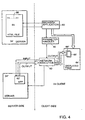
- the browser application 60 instantiates a parameter handler 40 associated with the application window 66'.
- the parameter handler 40 instance may be spawned as a child process of the browser application 60, as a peer process of the browser application 60, or as a Dynamically Linked Library ("DLL”) associated with the browser application 60.
- DLL Dynamically Linked Library
- the browser application 60 passes any specific parameters associated with the application window 66' that were provided by the generic embedded window 66 tag to the parameter handler 40 instance. Additionally, the browser application 60 may pass the handle for the application window 66' to the parameter handler 40 instance or the parameter handler 40 instance may query the browser application 60 to retrieve the handle for the application window 66'.
- the parameter handler 40 instance also spawns a network executive 50. The network executive 50 may be spawned as a child process of the parameter handler 40 instance or as a peer process of the parameter handler 40 instance.
- the parameter handler 40 instance forwards any specified application window 66' parameters to the network executive 50. Parameters which are not specified by the parameter handler 40 instance or the embedded generic window tag 66 may be set to default values.
- the network executive 50 may have certain parameter defaults hard-coded, or the network executive 50 may access a file which contains parameter defaults. -
- the network executive 50 creates its own application output window 66".
- the network executive 50 creates its application output window 66" as a child of the displayed application window 66' and displays its application output window 66" directly over the parent window 66' drawn by the browser application 60. Since the application output window 66" drawn by the network executive 50 is a child of the application window 66' drawn by the browser application 60, the application output window 66" inherits various properties of its parent including position information. Accordingly, the application output window 66" will follow the application window 66' as the viewing user scrolls the screen of the browser application 60 or performs other actions which vary the position of the application window 66'.
- the network executive 50 also establishes a communications channel with the server 60 and invokes execution of the desired application 62' by the server 34" using the connection methodology described above.
- the network executive 50 which acts as the client in the above description, passes any parameters it received from the parameter handler 40 instantiation to the server, along with any necessary default values. If a parameter is not passed to the server, the server may request the parameter if it is a necessary parameter which has no default value, e.g. "user id," or it may provide a default value for the parameter, e.g. execution priority.
- the server 34" begins execution of the desired application program 62' and directs the output to the network executive 50.
- the network executive 50 receives data from the application program 62' and displays the output data in its application output window 66". Since the application output window 66" is drawn on top of the application window 66' drawn by the browser application 60, the application output data is displayed in the HTML page 64'. As noted above, the application output window 66" drawn by the network executive 50 is a child of the application window 66' drawn by the browser application 60. This allows the application output window 66" to scroll as the HTML page 64' is scrolled.
- the application output window 66" also receives input from the viewing user.
- Raw input data e.g. a mouse click
- the network executive 50 forwards the raw input data to the application 62' executing on the server 34". In this manner, the viewing user is able to interact with the application 62' via the HTML page 64'.
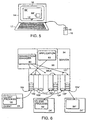
- the viewing user uses a so-called "browser” program to display an HTML page 64' having an application window 66' on the screen 18 of the user's computer 14.
- the viewing user may invoke execution of an application program 62'.
- this is done by the user utilizing a "point-and-click” interface, i.e. the viewing user uses a mouse 16 to manipulate a cursor 12 that is also displayed on the screen 18 of the viewing user's computer 14.
- the viewing user signals by "clicking" a button 15 on the mouse 16.
- the viewing user may also signal by pressing a key on an associated keyboard 17, such as the "return” key.
- the viewing user may not use a mouse 16 at all, but may instead use a touchpad, a trackball, a pressure-sensitive tablet and pen, or some other input mechanism for manipulating the cursor 12.
- the application window 66' may define a "hot zone.”
- execution of the application 62' on the server 34" is started.
- the browser application 60 instantiates a parameter handler 40 and passes the instantiation parameters associated with the applications window 66' by the generic embedded window tag 66.
- the parameter handler 40 instance spawns a network executive 50 and passes to it the parameters of the application window 66'.
- the network executive 50 determines which application 62' is to be invoked, and on what server 34" that application 62' resides. Generally this information is passed to it by the parameter handler 40 instance which gets it from the browser application 60 in the form of the generic embedded window tag 66, but the network executive 50 may need to query a master network information node 40 or other various servers, in order to determine which servers, if any, host the desired application 62'.
- the network executive 50 then begins execution of the application and displays the output of the application program 62' in the applications window 66' as described in detail above.
- the network executive 50 continues to directly display application output in the applications output window 66" until the viewing user indicates that execution of the application 62' should stop, e.g. by closing the application window 66', or until the viewing user clicks on a tag indicating that a different HTML page should be displayed.
- execution of the application 62' can be terminated. It is preferred, however, is to "cache" the connection. In effect, the first parameter handler 40 instance is not immediately terminated. However, the application 62' continues executing with a reduced priority level, i.e. in "background” mode, because the first parameter handles 40 no longer has "focus".
- connection caching it is desirable to accomplish connection caching by providing the parameter handler 40 source code with a globally accessible data structure for registering instances.
- the parameter handler 40 may be provided with a globally accessible linked list data structure, data array, data table, or other data structure. Because the data structure is globally available, each instance of the parameter handler 40 is able to read and write the data structure. This allows each instance of the parameter handler 40 to "register" with every other instance by writing to the data structure to signal its existence.
- a predetermined limit on the number of connections that may be cached at any one time can be set. In these embodiments if registration of an instance would result in an excess number of cached connections, one of the "cached" connections is removed, i.e. the parameter handler 40 instantiation associated with that connection is notified that it should terminate. Before termination, the parameter handler 40 notifies its associated network executive 50 that it should terminate. In turn, the network executive 50 closes its session with the server hosting the application program 62' and then terminates.
- the additional information may be used to more effectively manage the cached connections. For example, if a user has not actively viewed an HTML page 64' in a predetermined number of minutes, e.g. ten minutes, the parameter handler 40 instantiation is instructed to terminate, the session with the hosting server is terminated, and the parameter handler 40 instance removes its entry in the registry.
- a predetermined number of minutes e.g. ten minutes
- Cached connection information may be managed using any known cache management scheme. Connection entries may be discarded on a "first in, first out” basis, i.e. the oldest entry is discarded each time a new entry must be added. Alternatively, cached connection information entries may be discarded on a "least recently used” basis, which discards information relating to connections which have been used the least amount by the user. Other cache management techniques, such as random replacement, may also be used.
- the network executive 50 associated with the HTML page 64' is returned to the foreground, i.e., it regains "focus", and processing of the associated application resumes at a normal priority level. If necessary, the network executive 50 reestablishes the connection with the application 62'. Although no output data is stored by the network executive 50 for cached connections, as soon as a connection is re-established for an applications window 66' the connection to the application 62' is re-established and the application 10 again writes directly to the applications window 66'.
- connection methodology described above may be used to provide remote execution of an application written in an interpretive language.
- a client node 24 is connected to a server node 34 which executes an application 62 on behalf of the client node 24.
- the server application. 62 is any application which allows the client node 24 to request an application written in an interpretive language.
- the application 62 may be a Web browser which allows the client node 24 to download JAVATM applications using URL addresses.
- the node from which the application is downloaded and the server node 34 are separate machines interconnected by a computer network. However, in some embodiments those machines may be one and the same.
- the execution environment 96 on the server node 34 with which the client node 24 is associated provides an execution environment for the downloaded application.
- the execution environment interprets the byte stream of the downloaded application to produce a series of commands representing the application. If the application is written in the JAVATM interpretive language, the execution environment is sometimes referred to as a "virtual JAVATM machine".
- the execution environment includes a compiler.
- These compilers convert the byte stream of the application into "native" code.
- a compiler may convert the byte stream of an application written in the JAVATM application language into 80486 machine code. Conversion of the interpretive language byte stream into native code allows the application to execute faster than if each byte must interpreted and executed at run-time. Some compilers, however, may compile the byte stream while the application is executing. These compilers are sometimes referred to as "just in time” compilers, and usually look a predetermined number of bytes ahead of the currently-executing instruction executing in order to produce a steady stream of compiled code.
- the downloaded application is interpreted and executed by the server node 24 and the output of the application is transmitted to the client node as described in connection with FIG. 2.
- the server node 34 also accepts input from the client node 24. This allows the client node 24 to control the downloaded application or provide input to the application.
- the server node 34 may set up a separate execution environment to interpret and execute the downloaded application. In these embodiments, the execution environment associated with the downloaded application would also direct its output to mux 121.
- any client 24, 24', 24'', or in fact, all the clients (generally 24) attached to server 34 with the application 63 may be another server 34', 34''.
- data transmitted by the application 63 is sent to other servers prior to being sent to client nodes 24.
- data transmitted by the application 63 is transmitted to an ever increasing number of client nodes as this network fans out.
- each client protocol stack (generally 104) and its associated minimal stack (generally 107) is destroyed.
- the minimal protocol stack (generally 106) associated with the first client protocol stack 104 is also destroyed.
- the configuration is as it was initially with only a first client communications protocol stack 104 associated with the execution environment 96. Note that until all the second and subsequent client protocol stacks 104 are terminated, the first client protocol stack 104 may not be destroyed, even if the first client 24 is no longer present.
- each execution environment 96 communicates with each protocol stack 104 through a multiplexer 121, 121', 121".
- a multiplexer 121, 121', 121" it is possible for more than one client to receive data being transmitted to the first client 24, for example, in order to shadow or monitor the transmission of data from a server 34 or to broadcast data from a specialized broadcast application, such as a stock quotation application, from which the same data is broadcast or transmitted substantially simultaneously to a number of clients (generally 24).
- the first client 24 causes the specialized application 63 to execute and transmit its data to the client 24 as discussed previously.
- the connection manager 80 begins to construct the protocol stack 104' for the second client 24' as previously discussed with regard to the first client 24.
- the application 63 is a broadcast application
- the connection manager 80 recognizes that it need not start an additional execution environment 96 and instead takes the steps necessary to send the data from the broadcast application 63 to the second client 24' and any additional clients 24".
- connection manager 80 creates a first minimal communications protocol stack 106 which it associates with a communications protocol stack 104 of the first client 24.
- the connection manager 80 next creates a second minimal protocol stack 107 and associates it with the communications protocol stack 104' of the second client 24'.
- another minimal protocol stack 106' is created and associated with the first client protocol stack 104 and another minimal protocol stack 107' and client protocol stack 104" is created for each new client 24".
- the first client protocol stack 104 and all the minimal protocol stacks 106, 106' associated with the first client protocol stack 104, and each pair of client protocol stacks 104', 104" and minimal protocol stacks 107, 107' associated with each additional client 24', 24" are in communication by way of a multiplexer 121.
- each multiplexer (generally 121) takes on two additional configurations.
- the multiplexer 121' is configured to send application data to or receive data from both the first client protocol stack 104 and each of the minimal communications protocol stacks 106, 106' associated with it.
- the multiplexer 121" is configured to send data received by the minimal protocol stack 107, 107' to the client protocol stack 104', 104", respectively, associated with it.
- the mux 121 may receive input data directly from each client protocol stack 104, 104', 104".
- the connection manager 80 connects the minimal protocol stacks 106, 106' associated with the first client 24 with the minimal protocol stacks 107, 107' respectively, of the second 24' and subsequent clients 24" and instructs the multiplexer 121 to direct output from the application 63 to the communications protocol stack 104 of the first client 24 and its associated minimal protocol stacks 106, 106'.
- the multiplexer 121 is also instructed by the connection manager 80 to connect each second and subsequent client minimal protocol stack 107, 107' to its associated client protocol stack 104, 104', respectively.
- the protocol stack container includes a data structure to keep track of the number and type of protocols associated with a given application 63.
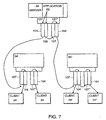
- the "clients" of one server 34 be other servers 34' and 34" (only two being shown for simplicity).
- the second servers 34' and 34" then transmit the data to clients (generally 24) or to additional servers.
- the output of the server protocol stack (generally 104) is connected to the protocol stacks 107' of the secondary servers 34', 34".
- the data is transmitted between the protocol stacks and out to the clients (generally 24). In this manner the data may fan out and be distributed to many more clients than may reasonably be supported by one server.
Landscapes
- Engineering & Computer Science (AREA)
- Theoretical Computer Science (AREA)
- Software Systems (AREA)
- Signal Processing (AREA)
- Computer Networks & Wireless Communication (AREA)
- General Engineering & Computer Science (AREA)
- General Physics & Mathematics (AREA)
- Physics & Mathematics (AREA)
- Computer Security & Cryptography (AREA)
- Multimedia (AREA)
- Computer And Data Communications (AREA)
- Information Transfer Between Computers (AREA)
- Communication Control (AREA)
Claims (16)
- Verfahren zum Anzeigen einer Ausgabe, die durch eine Anwendung (62, 62', 63) erzeugt wird, die auf einem Server (34, 34') ausgeführt wird, in einer HTML-Seite, wobei das Verfahren folgende Schritte umfasst:a) Senden einer Datei (64) zu einem Klienten (24, 24', 24''), wobei die Datei eine erste HTML-Seite (64') repräsentiert und einen Parameter umfasst, der einem Definieren eines Fensters (66') innerhalb der HTML-Seite zugeordnet ist, wenn eine Browseranwendung die HTML-Seite bei dem Klienten anzeigt,b) Empfangen einer Eingabe von der HTML-Seite, die bei dem Klienten angezeigt wird, um eine Ausführung einer Anwendung auf einem Server anzuzeigen,c) Erzeugen eines Kommunikationskanals (44, 68), der von der Browseranwendung (60) unabhängig ist, zwischen dem Fenster innerhalb der HTML-Seite, die bei dem Klienten angezeigt wird, und dem Anwendungsprogramm, das auf dem Server ausgeführt wird, unter Verwendung des Fensterparameters, undd) Senden einer Ausgabe, die durch die Anwendung erzeugt wird, die auf dem Server ausgeführt wird, über den Kommunikationskanal zu dem Klienten für eine Anzeige ohne Intervention bzw. Eingreifen durch die Browseranwendung, in dem Fenster innerhalb der angezeigten HTML-Seite.
- Verfahren nach Anspruch 1, bei dem der Schritt (b) umfasst:b-a) Anzeigen der HTML-Seite auf dem Klienten (24), wobei die Seite zumindest eine Kennzeichnung (66) zum Anzeigen einer Ausführung der Anwendung (62) umfasst, undb-b) Aufrufen einer Ausführung der Anwendung auf dem Server (34) in Antwort auf die Auswahl der zumindest einen Kennzeichnung durch einen Nutzer.
- Verfahren nach Anspruch 1 oder 2, das weiterhin den Schritt des Zugreifens auf die Datei umfasst, um den Parameter des Fensters zu bestimmen, in dem die ausführende Anwendung angezeigt werden wird.
- Verfahren nach Anspruch 1, 2 oder 3, das weiterhin den Schritt des Zugreifens auf die Datei (64) umfasst, um einen Parameter zu bestimmen, der der Ausführung der Anwendung (62) zugeordnet ist.
- Verfahren nach einem der vorstehenden Ansprüche, bei dem der Schritt c) den Schritt des Erzeugens einer Datenröhre bzw. -leitung umfasst, die unabhängig von der Browseranwendung (60) ist, zwischen der ausführenden Anwendung (62) und dem Anwendungsfenster (66') in der HTML-Seite.
- Verfahren nach einem der vorstehenden Ansprüche, das weiterhin den Schritt des Empfangens einer Eingabe zu der Anwendung (62) umfasst, die auf dem Server (34, 34') ausgeführt wird, über den Kommunikationskanal (44), wobei die empfangene Eingabe der Eingabe entspricht, die dem Fenster innerhalb der angezeigten HTML-Seite durch einen Nutzer des Klienten (24) zugeführt wird.
- Verfahren nach einem der vorstehenden Ansprüche, bei dem das Fenster ein erstes Fenster ist und Schritt c) weiterhin folgende Schritte umfasst:Definieren eines zweiten Fensters zum Empfangen der Ausgabe, die durch das Anwendungsprogramm (62) erzeugt wird, das auf dem Server (34, 34') ausgeführt wird, und Zuordnen des zweiten Fensters zu dem ersten Fenster, so dass die durch das zweite Fenster empfangene Ausgabe in dem ersten Fenster innerhalb der angezeigten HTML-Seite erscheint, ohne Eingreifen durch die Browseranwendung (60).
- Verfahren nach Anspruch 7, bei dem der Schritt des Zuordnens des zweiten Fensters zu dem ersten Fenster den Schritt des Verwendens von Fenstergrößen umfasst, die das erste Fenster definieren, um das zweite Fenster zu definieren.
- Verfahren nach Anspruch 1 mit folgenden weiteren Schritten:e) Bestimmen von Parametern eines Fensters innerhalb der ersten Seite, in der eine Ausgabe, die durch die ausführende Anwendung (62) erzeugt wird, angezeigt werden wird.f) Empfangen einer Eingabe von dem Klienten (24), um eine Anzeige einer zweiten HTML-Seite anzuzeigen, undg) Speichern der bestimmten Parameter, die der ersten HTML-Seite zugeordnet sind.
- Verfahren nach Anspruch 9, das weiterhin folgende Schritte umfasst:h) Empfangen einer Eingabe von einem Nutzer, um die erste HTML-Seite erneut anzuzeigen,i) Abrufen bzw. Wiedergewinnen der gespeicherten Parameter, die der ersten HTML-Seite zugeordnet sind, undj) erneutes Anzeigen in Antwort auf die wiedergewonnenen zugeordneten Parameter der ersten HTML-Seite, die das Fenster umfasst, das die ausführende Anwendung (62) anzeigt.
- Vorrichtung zum Anzeigen einer Ausgabe, die durch eine Anwendung (62) erzeugt ist, die auf einem Server (34, 34') ausgeführt ist, in einer HTML-Seite, wobei die Vorrichtung aufweist:einen Seitenanzeiger zum Anzeigen in Antwort auf eine Browseranwendung (60), die bei einem Klienten (24) ausgeführt ist, einer HTML-Seite mit einem Anwendungsausführungsfenster, das darin definiert ist, gemäß einer Datei, die die HTML-Seite repräsentiert,einen Parameterhandhaber (40), der angeordnet ist, um von dem Seitenanzeiger Parameter zu empfangen, die dem Anwendungsausführungsfenster innerhalb der HTML-Seite zugeordnet sind, undeinen Netzwerkausführer (50), der angeordnet ist, um Parameter von dem Parameterhandhaber zu empfangen, um zu bewirken, dass eine Anwendung (62) eine Ausführung auf einem Server (34, 34') beginnt, um einen Kommunikationskanal (44) einzurichten, der unabhängig von der Browseranwendung ist, zwischen dem Anwendungsausführungsfenster und der Anwendung, die auf dem Server ausgeführt ist, um die empfangenen Parameter zu verwenden, um eine Ausgabe zu empfangen, die durch die Anwendung erzeugt ist, durch den Kommunikationskanal, und um die Ausgabe in dem Anwendungsausführungsfenster innerhalb der HTML-Seite anzuzeigen, ohne Eingreifen durch die Browseranwendung.
- Vorrichtung nach Anspruch 11, bei dem der Parameterhandhaber (40) angeordnet ist, um auf eine Datei zuzugreifen, die die HTML-Seite speichert, um die Parameter zu bestimmen, die dem Anwendungsausführungsfenster innerhalb der Seite zugeordnet sind.
- Vorrichtung nach Anspruch 11 oder 12, bei dem der Netzwerkausführer (50) angeordnet ist, um einen weiteren Parameter von dem Parameterhandhaber (40) zu empfangen, der eine Identifikation des Servers (34, 34') ist, der die Anwendung (62) beherbergt bzw. ausrichtet.
- Herstellungsartikel mit computerlesbaren Codemitteln zum Anzeigen einer Ausgabe, die durch eine Anwendung (62) erzeugt ist, die auf einem Server ausgeführt ist, in einer HTML-Seite, die darauf enthalten ist, wobei der Artikel umfasst:computerlesbare Mittel zum Senden einer Datei (64) zu einem Klienten (24), wobei die Datei eine HTML-Seite repräsentiert und einen Parameter umfasst, der einem Definieren eines Fensters innerhalb der HTML-Seite zugeordnet ist, wenn eine Browseranwendung (60) die HTML-Seite bei dem Klienten anzeigt,computerlesbare Codemittel zum Empfangen einer Eingabe von der HTML-Seite, die bei dem Klienten angezeigt ist, um eine Ausführung einer Anwendung in einer HTML-Seite anzuzeigen,computerlesbare Codemittel zum Erzeugen eines Kommunikationskanals (44), der unabhängig von der Browseranwendung ist, zwischen dem Fenster innerhalb der HTML-Seite, die auf dem Klienten angezeigt ist, und dem Anwendungsprogramm, das auf dem Server ausgeführt ist, unter Verwendung des Fensterparameters, undcomputerlesbare Codemittel zum Senden einer Ausgabe, die durch die Anwendung erzeugt ist, die auf dem Server ausgeführt ist, über den Kommunikationskanal zu dem Klienten für eine Anzeige, ohne Eingreifen durch die Browseranwendung, in dem Fenster innerhalb der angezeigten HTML-Seite.
- System zum Anzeigen einer Ausgabe, die durch ein Anwendungsprogramm (62) angezeigt ist, das auf einem Server (34, 34') ausgeführt ist, in einer HTML-Seite mit:wobei der Netzwerkausführer (50) angeordnet ist, um einen Kommunikationskanal (44) einzurichten, der unabhängig von der Browseranwendung ist, zwischen dem Anwendungsprogramm, das auf dem Server ausgeführt ist, und dem Anwendungsfenster, das die Fensterparameter verwendet, wobei der Kommunikationskanal angeordnet ist, um die Anwendungsausgabe von der Anwendung, die auf dem Server ausgeführt ist, zu dem Klienten zum Anzeigen in dem Anwendungsfenster innerhalb der HTML-Seite zu leiten, ohne Eingreifen durch die Browseranwendung.einem Server, der angeordnet ist, um ein Anwendungsprogramm zu speichern und auszuführen,einem Klienten (24), der angeordnet ist, um eine Browseranwendung (60) zum Anzeigen einer HTML-Seite auszuführen,einem Netzwerkausführer (50), der angeordnet ist, um Befehle zu dem Server zu senden, um eine Ausführung des Anwendungsprogramms zu beginnen, das angeordnet ist, um ohne Eingreifen durch die Browseranwendung (60) eine Ausgabe von dem Anwendungsprogramm zu empfangen, das auf dem Server ausgeführt ist, und das weiterhin angeordnet ist, um ohne Eingreifen durch die Browseranwendung die Anwendungsprogrammausgabe zu senden,einem Parameterhandhaber (40), der angeordnet ist, um Parameter zu empfangen und die empfangenen Parameter zu dem Netzwerkausführer zu leiten, undMittel zum Erzeugen einer Datei, die eine HTML-Seite repräsentiert, die ein Anwendungsfenster und Fensterparameter enthält, wobei die Datei angeordnet ist, um die Fensterparameter dem Parameterhandhaber bereitzustellen,
- System nach Anspruch 15, das weiterhin eine Kennzeichnung (66) aufweist, die angeordnet ist, um in der Datei aufgenommen zu sein, und bewirkt, dass das Anwendungsfenster angezeigt ist, und Fensterparameter zu dem Parameterhandhaber (40) leitet.
Priority Applications (2)
| Application Number | Priority Date | Filing Date | Title |
|---|---|---|---|
| EP00200776A EP1011236A3 (de) | 1997-05-14 | 1998-05-14 | Verfahren und System zur Fernausführung einer interpretiven Sprachanwendung |
| EP00200775A EP1017202B1 (de) | 1997-05-14 | 1998-05-14 | System und Verfahren zur Datenübermittlung von einem Serverapplikation an Klientknoten |
Applications Claiming Priority (9)
| Application Number | Priority Date | Filing Date | Title |
|---|---|---|---|
| US08/855,902 US5961586A (en) | 1997-05-14 | 1997-05-14 | System and method for remotely executing an interpretive language application |
| US855902 | 1997-05-14 | ||
| US855977 | 1997-05-14 | ||
| US855965 | 1997-05-14 | ||
| US08/856,051 US5941949A (en) | 1997-05-14 | 1997-05-14 | System and method for transmitting data from a server application to more than one client node |
| US08/855,977 US6370552B1 (en) | 1997-05-14 | 1997-05-14 | Apparatus and method for displaying application output in an HTML document |
| US08/855,965 US6157944A (en) | 1997-05-14 | 1997-05-14 | System and method for replicating a client/server data exchange to additional client notes connecting to the server |
| US856051 | 1997-05-14 | ||
| PCT/US1998/009879 WO1998052320A2 (en) | 1997-05-14 | 1998-05-14 | System and method for managing the connection between a server and a client node |
Related Child Applications (2)
| Application Number | Title | Priority Date | Filing Date |
|---|---|---|---|
| EP00200775A Division EP1017202B1 (de) | 1997-05-14 | 1998-05-14 | System und Verfahren zur Datenübermittlung von einem Serverapplikation an Klientknoten |
| EP00200776A Division EP1011236A3 (de) | 1997-05-14 | 1998-05-14 | Verfahren und System zur Fernausführung einer interpretiven Sprachanwendung |
Publications (2)
| Publication Number | Publication Date |
|---|---|
| EP0981884A2 EP0981884A2 (de) | 2000-03-01 |
| EP0981884B1 true EP0981884B1 (de) | 2005-11-02 |
Family
ID=27505922
Family Applications (3)
| Application Number | Title | Priority Date | Filing Date |
|---|---|---|---|
| EP00200776A Withdrawn EP1011236A3 (de) | 1997-05-14 | 1998-05-14 | Verfahren und System zur Fernausführung einer interpretiven Sprachanwendung |
| EP98923426A Expired - Lifetime EP0981884B1 (de) | 1997-05-14 | 1998-05-14 | System und verfahren zur verbindungsverwaltung zwischen einem server und einem klientknoten |
| EP00200775A Expired - Lifetime EP1017202B1 (de) | 1997-05-14 | 1998-05-14 | System und Verfahren zur Datenübermittlung von einem Serverapplikation an Klientknoten |
Family Applications Before (1)
| Application Number | Title | Priority Date | Filing Date |
|---|---|---|---|
| EP00200776A Withdrawn EP1011236A3 (de) | 1997-05-14 | 1998-05-14 | Verfahren und System zur Fernausführung einer interpretiven Sprachanwendung |
Family Applications After (1)
| Application Number | Title | Priority Date | Filing Date |
|---|---|---|---|
| EP00200775A Expired - Lifetime EP1017202B1 (de) | 1997-05-14 | 1998-05-14 | System und Verfahren zur Datenübermittlung von einem Serverapplikation an Klientknoten |
Country Status (10)
| Country | Link |
|---|---|
| EP (3) | EP1011236A3 (de) |
| JP (3) | JP2002502521A (de) |
| KR (2) | KR100481064B1 (de) |
| AU (1) | AU744486B2 (de) |
| CA (1) | CA2290433C (de) |
| DE (2) | DE69837550T2 (de) |
| ES (2) | ES2252837T3 (de) |
| GB (1) | GB2341065B (de) |
| IL (3) | IL132875A0 (de) |
| WO (1) | WO1998052320A2 (de) |
Families Citing this family (26)
| Publication number | Priority date | Publication date | Assignee | Title |
|---|---|---|---|---|
| US7555529B2 (en) | 1995-11-13 | 2009-06-30 | Citrix Systems, Inc. | Interacting with software applications displayed in a web page |
| US6370552B1 (en) | 1997-05-14 | 2002-04-09 | Citrix Systems, Inc. | Apparatus and method for displaying application output in an HTML document |
| US6950991B2 (en) | 1995-11-13 | 2005-09-27 | Citrix Systems, Inc. | Interacting with software applications displayed in a web page |
| US6088515A (en) | 1995-11-13 | 2000-07-11 | Citrix Systems Inc | Method and apparatus for making a hypermedium interactive |
| US6157944A (en) * | 1997-05-14 | 2000-12-05 | Citrix Systems, Inc. | System and method for replicating a client/server data exchange to additional client notes connecting to the server |
| US5941949A (en) * | 1997-05-14 | 1999-08-24 | Citrix Systems, Inc. | System and method for transmitting data from a server application to more than one client node |
| ATE320039T1 (de) * | 1999-12-15 | 2006-03-15 | Galilei Software Gmbh | Verfahren zum vermitteln von prozessdaten sowie verfahren zum erstellen von anwenderspezifischen daten und mit diesem verfahren erstellte daten |
| US6922724B1 (en) | 2000-05-08 | 2005-07-26 | Citrix Systems, Inc. | Method and apparatus for managing server load |
| US6789112B1 (en) | 2000-05-08 | 2004-09-07 | Citrix Systems, Inc. | Method and apparatus for administering a server having a subsystem in communication with an event channel |
| FR2808949B1 (fr) * | 2000-05-11 | 2002-10-25 | Sagem | Reseau comportant une plate-forme multigestionnaire |
| US6799209B1 (en) | 2000-05-25 | 2004-09-28 | Citrix Systems, Inc. | Activity monitor and resource manager in a network environment |
| US7376695B2 (en) | 2002-03-14 | 2008-05-20 | Citrix Systems, Inc. | Method and system for generating a graphical display for a remote terminal session |
| US8671213B2 (en) | 2002-03-14 | 2014-03-11 | Citrix Systems, Inc. | Methods and apparatus for generating graphical and media displays at a client |
| US8135843B2 (en) | 2002-03-22 | 2012-03-13 | Citrix Systems, Inc. | Methods and systems for providing access to an application |
| KR20030078316A (ko) * | 2002-03-29 | 2003-10-08 | 정보통신연구진흥원 | 웹 세션 관리기술을 포함한 네트워크 시스템 및 그 동작방법 |
| AU2002334254A1 (en) * | 2002-09-05 | 2004-03-29 | Nokia Corporation | Application dispatcher |
| EP1420560A1 (de) * | 2002-11-13 | 2004-05-19 | Thomson Multimedia Broadband Belgium | Softwareaktualisierung über eine USB Verbindung |
| CA2594082A1 (en) | 2005-01-06 | 2006-07-13 | Tervela, Inc. | A caching engine in a messaging system |
| EP1849093A2 (de) * | 2005-01-06 | 2007-10-31 | Tervela Inc. | Auf hardware basierende nachrichtenübermittlungsvorrichtung |
| EP1869834A1 (de) * | 2005-04-02 | 2007-12-26 | Socket Communications, Inc. | Dynamische verwaltung von kommunikationsports, vorrichtungen und logische anschlüsse |
| US8738703B2 (en) | 2006-10-17 | 2014-05-27 | Citrix Systems, Inc. | Systems and methods for providing online collaborative support |
| US9264483B2 (en) | 2007-07-18 | 2016-02-16 | Hammond Development International, Inc. | Method and system for enabling a communication device to remotely execute an application |
| KR100927232B1 (ko) | 2007-12-18 | 2009-11-16 | 한국전자통신연구원 | 어플리케이션 시스템의 포트 설정방법 |
| JP5773352B2 (ja) | 2008-10-28 | 2015-09-02 | 塩野義製薬株式会社 | 抗muc1抗体 |
| US8688799B2 (en) | 2011-06-30 | 2014-04-01 | Nokia Corporation | Methods, apparatuses and computer program products for reducing memory copy overhead by indicating a location of requested data for direct access |
| CN111045758B (zh) * | 2018-10-12 | 2025-01-21 | 北京密境和风科技有限公司 | 视图处理方法、装置、电子设备及计算机存储介质 |
Family Cites Families (4)
| Publication number | Priority date | Publication date | Assignee | Title |
|---|---|---|---|---|
| US5204947A (en) * | 1990-10-31 | 1993-04-20 | International Business Machines Corporation | Application independent (open) hypermedia enablement services |
| US5548726A (en) * | 1993-12-17 | 1996-08-20 | Taligeni, Inc. | System for activating new service in client server network by reconfiguring the multilayer network protocol stack dynamically within the server node |
| US5499343A (en) * | 1993-12-17 | 1996-03-12 | Taligent, Inc. | Object-oriented networking system with dynamically configurable communication links |
| US5857102A (en) * | 1995-03-14 | 1999-01-05 | Sun Microsystems, Inc. | System and method for determining and manipulating configuration information of servers in a distributed object environment |
-
1998
- 1998-05-14 ES ES98923426T patent/ES2252837T3/es not_active Expired - Lifetime
- 1998-05-14 DE DE69837550T patent/DE69837550T2/de not_active Expired - Lifetime
- 1998-05-14 EP EP00200776A patent/EP1011236A3/de not_active Withdrawn
- 1998-05-14 EP EP98923426A patent/EP0981884B1/de not_active Expired - Lifetime
- 1998-05-14 IL IL13287598A patent/IL132875A0/xx unknown
- 1998-05-14 KR KR10-2003-7006568A patent/KR100481064B1/ko not_active Expired - Fee Related
- 1998-05-14 JP JP54955398A patent/JP2002502521A/ja not_active Withdrawn
- 1998-05-14 EP EP00200775A patent/EP1017202B1/de not_active Expired - Lifetime
- 1998-05-14 ES ES00200775T patent/ES2284448T3/es not_active Expired - Lifetime
- 1998-05-14 WO PCT/US1998/009879 patent/WO1998052320A2/en not_active Ceased
- 1998-05-14 DE DE69832168T patent/DE69832168T2/de not_active Expired - Lifetime
- 1998-05-14 GB GB9926972A patent/GB2341065B/en not_active Expired - Lifetime
- 1998-05-14 IL IL13287398A patent/IL132873A/xx not_active IP Right Cessation
- 1998-05-14 IL IL13287498A patent/IL132874A/xx not_active IP Right Cessation
- 1998-05-14 CA CA002290433A patent/CA2290433C/en not_active Expired - Lifetime
- 1998-05-14 KR KR1019997010508A patent/KR100569469B1/ko not_active Expired - Lifetime
- 1998-05-14 AU AU75724/98A patent/AU744486B2/en not_active Expired
-
2005
- 2005-05-16 JP JP2005143236A patent/JP2005339536A/ja not_active Withdrawn
-
2006
- 2006-07-10 JP JP2006189774A patent/JP2006318499A/ja active Pending
Also Published As
Similar Documents
| Publication | Publication Date | Title |
|---|---|---|
| US6370552B1 (en) | Apparatus and method for displaying application output in an HTML document | |
| EP0981884B1 (de) | System und verfahren zur verbindungsverwaltung zwischen einem server und einem klientknoten | |
| US5961586A (en) | System and method for remotely executing an interpretive language application | |
| US5941949A (en) | System and method for transmitting data from a server application to more than one client node | |
| US6157944A (en) | System and method for replicating a client/server data exchange to additional client notes connecting to the server | |
| US7203769B2 (en) | Bootstrapping technique for distributed object client systems | |
| US6757708B1 (en) | Caching dynamic content | |
| EP0972386B1 (de) | Vorrichtung und verfahren zur aktualisierung und zur synchronisierung von informationen zwischen einem klient und einem server | |
| JPH11194983A (ja) | カスタマイズされたインターネット・コンテンツを要求側クライアント装置に提供する方法およびシステム | |
| US7448032B2 (en) | Method and apparatus for integration of URL into standard file systems | |
| AU726335B2 (en) | System and method for transmitting data from a server application to more than one client node | |
| CA2495413C (en) | System and method for managing the connection between a server and a client node | |
| AU726488B2 (en) | System and method for remotely executing an interpretive language application | |
| HK1025700B (en) | System and method for managing the connection between a server and a client node | |
| HK1028688A (en) | System and method for remotely executing an interpretive language application |
Legal Events
| Date | Code | Title | Description |
|---|---|---|---|
| PUAI | Public reference made under article 153(3) epc to a published international application that has entered the european phase |
Free format text: ORIGINAL CODE: 0009012 |
|
| 17P | Request for examination filed |
Effective date: 19991119 |
|
| AK | Designated contracting states |
Kind code of ref document: A2 Designated state(s): DE ES FR GB IE IT |
|
| 17Q | First examination report despatched |
Effective date: 20020424 |
|
| GRAP | Despatch of communication of intention to grant a patent |
Free format text: ORIGINAL CODE: EPIDOSNIGR1 |
|
| GRAS | Grant fee paid |
Free format text: ORIGINAL CODE: EPIDOSNIGR3 |
|
| GRAA | (expected) grant |
Free format text: ORIGINAL CODE: 0009210 |
|
| AK | Designated contracting states |
Kind code of ref document: B1 Designated state(s): DE ES FR GB IE IT |
|
| REG | Reference to a national code |
Ref country code: GB Ref legal event code: FG4D |
|
| REF | Corresponds to: |
Ref document number: 69832168 Country of ref document: DE Date of ref document: 20051208 Kind code of ref document: P |
|
| REG | Reference to a national code |
Ref country code: ES Ref legal event code: FG2A Ref document number: 2252837 Country of ref document: ES Kind code of ref document: T3 |
|
| ET | Fr: translation filed | ||
| REG | Reference to a national code |
Ref country code: HK Ref legal event code: GR Ref document number: 1025700 Country of ref document: HK |
|
| PLBE | No opposition filed within time limit |
Free format text: ORIGINAL CODE: 0009261 |
|
| STAA | Information on the status of an ep patent application or granted ep patent |
Free format text: STATUS: NO OPPOSITION FILED WITHIN TIME LIMIT |
|
| 26N | No opposition filed |
Effective date: 20060803 |
|
| REG | Reference to a national code |
Ref country code: FR Ref legal event code: PLFP Year of fee payment: 19 |
|
| REG | Reference to a national code |
Ref country code: FR Ref legal event code: PLFP Year of fee payment: 20 |
|
| PGFP | Annual fee paid to national office [announced via postgrant information from national office to epo] |
Ref country code: GB Payment date: 20170510 Year of fee payment: 20 Ref country code: FR Payment date: 20170413 Year of fee payment: 20 Ref country code: DE Payment date: 20170509 Year of fee payment: 20 Ref country code: IE Payment date: 20170510 Year of fee payment: 20 |
|
| PGFP | Annual fee paid to national office [announced via postgrant information from national office to epo] |
Ref country code: IT Payment date: 20170522 Year of fee payment: 20 Ref country code: ES Payment date: 20170602 Year of fee payment: 20 |
|
| REG | Reference to a national code |
Ref country code: DE Ref legal event code: R071 Ref document number: 69832168 Country of ref document: DE |
|
| REG | Reference to a national code |
Ref country code: GB Ref legal event code: PE20 Expiry date: 20180513 |
|
| REG | Reference to a national code |
Ref country code: IE Ref legal event code: MK9A |
|
| PG25 | Lapsed in a contracting state [announced via postgrant information from national office to epo] |
Ref country code: GB Free format text: LAPSE BECAUSE OF EXPIRATION OF PROTECTION Effective date: 20180513 Ref country code: IE Free format text: LAPSE BECAUSE OF EXPIRATION OF PROTECTION Effective date: 20180514 |
|
| REG | Reference to a national code |
Ref country code: ES Ref legal event code: FD2A Effective date: 20201202 |
|
| PG25 | Lapsed in a contracting state [announced via postgrant information from national office to epo] |
Ref country code: ES Free format text: LAPSE BECAUSE OF EXPIRATION OF PROTECTION Effective date: 20180515 |