EP0981952A1 - Procédé de culture hydroponique de plantes - Google Patents
Procédé de culture hydroponique de plantes Download PDFInfo
- Publication number
- EP0981952A1 EP0981952A1 EP99202709A EP99202709A EP0981952A1 EP 0981952 A1 EP0981952 A1 EP 0981952A1 EP 99202709 A EP99202709 A EP 99202709A EP 99202709 A EP99202709 A EP 99202709A EP 0981952 A1 EP0981952 A1 EP 0981952A1
- Authority
- EP
- European Patent Office
- Prior art keywords
- point
- irrigation solution
- plants
- sub
- loop
- Prior art date
- Legal status (The legal status is an assumption and is not a legal conclusion. Google has not performed a legal analysis and makes no representation as to the accuracy of the status listed.)
- Withdrawn
Links
- 238000000034 method Methods 0.000 title claims abstract description 25
- 230000008569 process Effects 0.000 title claims abstract description 24
- 229940113601 irrigation solution Drugs 0.000 claims abstract description 56
- XLYOFNOQVPJJNP-UHFFFAOYSA-N water Substances O XLYOFNOQVPJJNP-UHFFFAOYSA-N 0.000 claims abstract description 32
- 235000015097 nutrients Nutrition 0.000 claims abstract description 23
- 239000000645 desinfectant Substances 0.000 claims abstract description 19
- KFSLWBXXFJQRDL-UHFFFAOYSA-N Peracetic acid Chemical compound CC(=O)OO KFSLWBXXFJQRDL-UHFFFAOYSA-N 0.000 claims description 38
- SCKXCAADGDQQCS-UHFFFAOYSA-N Performic acid Chemical group OOC=O SCKXCAADGDQQCS-UHFFFAOYSA-N 0.000 claims description 18
- 238000003973 irrigation Methods 0.000 claims description 18
- 230000002262 irrigation Effects 0.000 claims description 18
- 238000011282 treatment Methods 0.000 claims description 14
- 239000000758 substrate Substances 0.000 claims description 7
- 238000011010 flushing procedure Methods 0.000 claims description 4
- 239000007788 liquid Substances 0.000 claims description 2
- 241000196324 Embryophyta Species 0.000 description 36
- 239000002253 acid Substances 0.000 description 25
- 150000007513 acids Chemical class 0.000 description 16
- QTBSBXVTEAMEQO-UHFFFAOYSA-N Acetic acid Chemical compound CC(O)=O QTBSBXVTEAMEQO-UHFFFAOYSA-N 0.000 description 12
- 241000223259 Trichoderma Species 0.000 description 12
- MHAJPDPJQMAIIY-UHFFFAOYSA-N Hydrogen peroxide Chemical compound OO MHAJPDPJQMAIIY-UHFFFAOYSA-N 0.000 description 10
- 239000000243 solution Substances 0.000 description 10
- 240000003768 Solanum lycopersicum Species 0.000 description 9
- 235000007688 Lycopersicon esculentum Nutrition 0.000 description 8
- WQYVRQLZKVEZGA-UHFFFAOYSA-N hypochlorite Chemical compound Cl[O-] WQYVRQLZKVEZGA-UHFFFAOYSA-N 0.000 description 8
- 244000005700 microbiome Species 0.000 description 8
- -1 aliphatic peroxyacids Chemical class 0.000 description 7
- 230000012010 growth Effects 0.000 description 7
- 244000052769 pathogen Species 0.000 description 7
- 230000001717 pathogenic effect Effects 0.000 description 7
- 244000000003 plant pathogen Species 0.000 description 6
- 238000004659 sterilization and disinfection Methods 0.000 description 6
- 150000001735 carboxylic acids Chemical class 0.000 description 4
- 239000000203 mixture Substances 0.000 description 4
- 239000011490 mineral wool Substances 0.000 description 3
- LJGHYPLBDBRCRZ-UHFFFAOYSA-N 3-(3-aminophenyl)sulfonylaniline Chemical compound NC1=CC=CC(S(=O)(=O)C=2C=C(N)C=CC=2)=C1 LJGHYPLBDBRCRZ-UHFFFAOYSA-N 0.000 description 2
- 241001123534 Colletotrichum coccodes Species 0.000 description 2
- CBENFWSGALASAD-UHFFFAOYSA-N Ozone Chemical compound [O-][O+]=O CBENFWSGALASAD-UHFFFAOYSA-N 0.000 description 2
- 229910019142 PO4 Inorganic materials 0.000 description 2
- 241000918585 Pythium aphanidermatum Species 0.000 description 2
- FAPWRFPIFSIZLT-UHFFFAOYSA-M Sodium chloride Chemical compound [Na+].[Cl-] FAPWRFPIFSIZLT-UHFFFAOYSA-M 0.000 description 2
- 125000000217 alkyl group Chemical group 0.000 description 2
- 238000009395 breeding Methods 0.000 description 2
- 230000001488 breeding effect Effects 0.000 description 2
- 150000001732 carboxylic acid derivatives Chemical class 0.000 description 2
- 150000001875 compounds Chemical class 0.000 description 2
- WJJMNDUMQPNECX-UHFFFAOYSA-N dipicolinic acid Chemical compound OC(=O)C1=CC=CC(C(O)=O)=N1 WJJMNDUMQPNECX-UHFFFAOYSA-N 0.000 description 2
- 244000053095 fungal pathogen Species 0.000 description 2
- 239000003621 irrigation water Substances 0.000 description 2
- 239000000463 material Substances 0.000 description 2
- 235000021317 phosphate Nutrition 0.000 description 2
- 230000000885 phytotoxic effect Effects 0.000 description 2
- CZPZWMPYEINMCF-UHFFFAOYSA-N propaneperoxoic acid Chemical compound CCC(=O)OO CZPZWMPYEINMCF-UHFFFAOYSA-N 0.000 description 2
- 150000003839 salts Chemical class 0.000 description 2
- 125000001424 substituent group Chemical group 0.000 description 2
- DRTNVNKYVPOWCY-UHFFFAOYSA-N 2,2,2-trichloroethaneperoxoic acid Chemical compound OOC(=O)C(Cl)(Cl)Cl DRTNVNKYVPOWCY-UHFFFAOYSA-N 0.000 description 1
- XYPISWUKQGWYGX-UHFFFAOYSA-N 2,2,2-trifluoroethaneperoxoic acid Chemical compound OOC(=O)C(F)(F)F XYPISWUKQGWYGX-UHFFFAOYSA-N 0.000 description 1
- VWNSYHZUZUFFDM-UHFFFAOYSA-N 2,2-dichloroethaneperoxoic acid Chemical compound OOC(=O)C(Cl)Cl VWNSYHZUZUFFDM-UHFFFAOYSA-N 0.000 description 1
- GLVYLTSKTCWWJR-UHFFFAOYSA-N 2-carbonoperoxoylbenzoic acid Chemical compound OOC(=O)C1=CC=CC=C1C(O)=O GLVYLTSKTCWWJR-UHFFFAOYSA-N 0.000 description 1
- ULQQGOGMQRGFFR-UHFFFAOYSA-N 2-chlorobenzenecarboperoxoic acid Chemical class OOC(=O)C1=CC=CC=C1Cl ULQQGOGMQRGFFR-UHFFFAOYSA-N 0.000 description 1
- JSQPGNJFQUOEPA-UHFFFAOYSA-N 2-chloroethaneperoxoic acid Chemical compound OOC(=O)CCl JSQPGNJFQUOEPA-UHFFFAOYSA-N 0.000 description 1
- BMKGRTUNBVSFIY-UHFFFAOYSA-N 2-sulfobenzenecarboperoxoic acid Chemical compound OOC(=O)C1=CC=CC=C1S(O)(=O)=O BMKGRTUNBVSFIY-UHFFFAOYSA-N 0.000 description 1
- 241000894006 Bacteria Species 0.000 description 1
- 240000008067 Cucumis sativus Species 0.000 description 1
- 235000010799 Cucumis sativus var sativus Nutrition 0.000 description 1
- 235000016623 Fragaria vesca Nutrition 0.000 description 1
- 240000009088 Fragaria x ananassa Species 0.000 description 1
- 235000011363 Fragaria x ananassa Nutrition 0.000 description 1
- 241000233866 Fungi Species 0.000 description 1
- 241000223221 Fusarium oxysporum Species 0.000 description 1
- DGAQECJNVWCQMB-PUAWFVPOSA-M Ilexoside XXIX Chemical compound C[C@@H]1CC[C@@]2(CC[C@@]3(C(=CC[C@H]4[C@]3(CC[C@@H]5[C@@]4(CC[C@@H](C5(C)C)OS(=O)(=O)[O-])C)C)[C@@H]2[C@]1(C)O)C)C(=O)O[C@H]6[C@@H]([C@H]([C@@H]([C@H](O6)CO)O)O)O.[Na+] DGAQECJNVWCQMB-PUAWFVPOSA-M 0.000 description 1
- ZOKXTWBITQBERF-UHFFFAOYSA-N Molybdenum Chemical compound [Mo] ZOKXTWBITQBERF-UHFFFAOYSA-N 0.000 description 1
- 229910002651 NO3 Inorganic materials 0.000 description 1
- NHNBFGGVMKEFGY-UHFFFAOYSA-N Nitrate Chemical compound [O-][N+]([O-])=O NHNBFGGVMKEFGY-UHFFFAOYSA-N 0.000 description 1
- GRYLNZFGIOXLOG-UHFFFAOYSA-N Nitric acid Chemical compound O[N+]([O-])=O GRYLNZFGIOXLOG-UHFFFAOYSA-N 0.000 description 1
- 241001507683 Penicillium aurantiogriseum Species 0.000 description 1
- 241000233620 Phytophthora cryptogea Species 0.000 description 1
- 229920000388 Polyphosphate Polymers 0.000 description 1
- ZLMJMSJWJFRBEC-UHFFFAOYSA-N Potassium Chemical compound [K] ZLMJMSJWJFRBEC-UHFFFAOYSA-N 0.000 description 1
- VYPSYNLAJGMNEJ-UHFFFAOYSA-N Silicium dioxide Chemical compound O=[Si]=O VYPSYNLAJGMNEJ-UHFFFAOYSA-N 0.000 description 1
- QAOWNCQODCNURD-UHFFFAOYSA-N Sulfuric acid Chemical compound OS(O)(=O)=O QAOWNCQODCNURD-UHFFFAOYSA-N 0.000 description 1
- 241000561282 Thielaviopsis basicola Species 0.000 description 1
- 241000700605 Viruses Species 0.000 description 1
- 238000010306 acid treatment Methods 0.000 description 1
- 229910052783 alkali metal Inorganic materials 0.000 description 1
- 125000003368 amide group Chemical group 0.000 description 1
- 125000003118 aryl group Chemical group 0.000 description 1
- 230000008901 benefit Effects 0.000 description 1
- 238000004166 bioassay Methods 0.000 description 1
- LBAYFEDWGHXMSM-UHFFFAOYSA-N butaneperoxoic acid Chemical compound CCCC(=O)OO LBAYFEDWGHXMSM-UHFFFAOYSA-N 0.000 description 1
- 239000006227 byproduct Substances 0.000 description 1
- 125000004432 carbon atom Chemical group C* 0.000 description 1
- 238000004140 cleaning Methods 0.000 description 1
- 238000012505 colouration Methods 0.000 description 1
- 230000001276 controlling effect Effects 0.000 description 1
- 238000005260 corrosion Methods 0.000 description 1
- 230000007797 corrosion Effects 0.000 description 1
- 230000002939 deleterious effect Effects 0.000 description 1
- 230000000249 desinfective effect Effects 0.000 description 1
- 239000012895 dilution Substances 0.000 description 1
- 238000010790 dilution Methods 0.000 description 1
- 235000013399 edible fruits Nutrition 0.000 description 1
- 230000000694 effects Effects 0.000 description 1
- 230000007613 environmental effect Effects 0.000 description 1
- 150000002148 esters Chemical group 0.000 description 1
- 150000002170 ethers Chemical group 0.000 description 1
- 238000012851 eutrophication Methods 0.000 description 1
- 235000013305 food Nutrition 0.000 description 1
- 230000002538 fungal effect Effects 0.000 description 1
- 125000001475 halogen functional group Chemical group 0.000 description 1
- 239000003112 inhibitor Substances 0.000 description 1
- 229910052500 inorganic mineral Inorganic materials 0.000 description 1
- 238000007689 inspection Methods 0.000 description 1
- 230000014759 maintenance of location Effects 0.000 description 1
- 230000007246 mechanism Effects 0.000 description 1
- 230000000813 microbial effect Effects 0.000 description 1
- 239000011707 mineral Substances 0.000 description 1
- 229910052750 molybdenum Inorganic materials 0.000 description 1
- 239000011733 molybdenum Substances 0.000 description 1
- 229910017604 nitric acid Inorganic materials 0.000 description 1
- 150000002894 organic compounds Chemical class 0.000 description 1
- 239000010451 perlite Substances 0.000 description 1
- 235000019362 perlite Nutrition 0.000 description 1
- 239000000575 pesticide Substances 0.000 description 1
- NBIIXXVUZAFLBC-UHFFFAOYSA-K phosphate Chemical compound [O-]P([O-])([O-])=O NBIIXXVUZAFLBC-UHFFFAOYSA-K 0.000 description 1
- 239000010452 phosphate Substances 0.000 description 1
- 125000001476 phosphono group Chemical group [H]OP(*)(=O)O[H] 0.000 description 1
- 150000003013 phosphoric acid derivatives Chemical class 0.000 description 1
- 230000008635 plant growth Effects 0.000 description 1
- 239000002984 plastic foam Substances 0.000 description 1
- 239000001205 polyphosphate Substances 0.000 description 1
- 235000011176 polyphosphates Nutrition 0.000 description 1
- 229910052700 potassium Inorganic materials 0.000 description 1
- 239000011591 potassium Substances 0.000 description 1
- 230000002035 prolonged effect Effects 0.000 description 1
- 230000005855 radiation Effects 0.000 description 1
- 230000009467 reduction Effects 0.000 description 1
- 230000001105 regulatory effect Effects 0.000 description 1
- 238000012163 sequencing technique Methods 0.000 description 1
- 238000007086 side reaction Methods 0.000 description 1
- 239000000741 silica gel Substances 0.000 description 1
- 229910002027 silica gel Inorganic materials 0.000 description 1
- 229910052708 sodium Inorganic materials 0.000 description 1
- 239000011734 sodium Substances 0.000 description 1
- 239000011780 sodium chloride Substances 0.000 description 1
- 239000002689 soil Substances 0.000 description 1
- 241000894007 species Species 0.000 description 1
- 239000003381 stabilizer Substances 0.000 description 1
- 239000001117 sulphuric acid Substances 0.000 description 1
- 235000011149 sulphuric acid Nutrition 0.000 description 1
- 238000009281 ultraviolet germicidal irradiation Methods 0.000 description 1
- 235000013311 vegetables Nutrition 0.000 description 1
Images

Classifications
-
- A—HUMAN NECESSITIES
- A01—AGRICULTURE; FORESTRY; ANIMAL HUSBANDRY; HUNTING; TRAPPING; FISHING
- A01G—HORTICULTURE; CULTIVATION OF VEGETABLES, FLOWERS, RICE, FRUIT, VINES, HOPS OR SEAWEED; FORESTRY; WATERING
- A01G31/00—Soilless cultivation, e.g. hydroponics
Definitions
- This invention concerns a process for hydroponic cultivation of plants using a particular system for the irrigation of plants. More specifically it concerns the provision of a system of plant irrigation which enables controlling unwanted microbial growth within this system.
- hypochlorite suffers from two main problems. First, the solutions containing the hypochlorite will also comprise a large quantity of sodium chloride which may not be suitable for the particular plant grown. Secondly, hypochlorite is increasingly coming under pressure from environmental considerations due to their capacity to form unwanted chlorinated organic compounds via side reactions. For ozone and UV treatment, expenditure and equipment can be expensive.
- Biological control is also difficult to achieve as care must be taken, first to select a control which can adequately maintain the targeted micro-organism(s) at an acceptable level, and secondly to select a control which will not cause problems itself - for example by reaching an unacceptable population size.
- Trichoderma can be exacerbated when percarboxylic acids are used.
- Percarboxylic acids are usually supplied as an equilibrium solution containing the parent carboxylic acid, and furthermore once the percarboxylic acid has carried out its disinfection then the carboxylic acid remains as a by-product.
- carboxylic acids can be readily used as a food source by Trichoderma the result is that although its population may initially drop, the end result of application of the percarboxylic acid can be an increase in Trichoderma's population.
- percarboxylic acids Potential problems with percarboxylic acids have been further exemplified in the prior art when they have been applied to such recycle systems, for example in the Derwent® abstract of the Dutch Patent Application 9201631.
- percarboxylic acids were used to control bacteria and other micro-organisms.
- a further treatment was however also required using ultra-violet radiation to kill off viruses and moulds, along with occasional treatment of the water with acidified percarboxylic acids to remove various deposits which built up during prolonged use of the irrigation system.
- a process for hydroponic cultivation of plants wherein an irrigation solution containing water and at least one nutrient is circulated through a main loop at a first point of which a disinfectant is added to the irrigation solution, at a second point of which at least one nutrient is added to the irrigation solution, at a third point of which the plants are supplied with the irrigation solution, at a fourth point of which the irrigation solution drained of the plants is collected and recirculated to the first point, the main loop being provided with one or more sub-loops through which the irrigation solution is recirculated.
- One of the essential characteristics of the invention is the combination of a suitable configuration of the irrigation system in conjunction with a percarboxylic acid. This combination can indeed not only bring about the desired removal of the plant pathogens but also control other non pathogenic microbial species such as fungi, for example Trichoderma.
- the process of the invention uses a circulation system provided with one or more sub-loops.
- the starting point of the sub-loop is advantageously situated between the second point at which at least one nutrient is added to the irrigation solution and the third point at which the plants are supplied with the irrigation solution.
- the sub-loop which starts at any point of the main loop, joins the main loop again at the second point where at least one nutrient is added to the irrigation solution.
- the sub-loop leaves the main loop at a point situated between the second and the third points, and joins the main loop again at the second point.
- the sub-loop comprises a circulation pump which pumps the irrigation solution from the starting point back to the second point.
- the sub-loop comprises a pipework which feeds the irrigation solution from the starting point to a feed machine wherein the concentration of nutrients in the irrigation solution is controlled and optionally adapted, the irrigation solution leaving the feed machine being circulated back to the second point.
- the sub-loop comprises an irrigation solenoid which diverts the irrigation solution at a point situated between the second and the third points back to the second point. Two or three of these alternatives can be combined.
- the main loop of the process of the invention can contain other elements than the four points mentioned before. These other elements can be tanks, collectors, pumps, filters, etc.
- the main loop can be provided with a means of flushing it with rinse water.
- a disinfectant is added to the irrigation solution.
- the addition of disinfectant may be operated for whole of daily irrigation period.
- the disinfectant can be added for part of daily irrigation period interspersed with periods of circulation of irrigation liquid without disinfectant.
- Such a period without disinfectant may be of particular benefit within the last hours as final irrigation to remove any residual carboxylic acids in the irrigation system thereby reducing the possibility of excess growth of Trichoderma or other organisms.
- disinfectant may be carried out directly into the irrigation solution circulating through the main loop. It may be advantageous to add the disinfectant in one or more treatment tanks wherein the irrigation solution is allowed to stand while being treated with the disinfectant to improve reduction of the population of pathogenic or problematic organisms. It can be advantageous to use several treatment tanks, for instance 2, to reduce stagnation time and build up of carboxylic acids which may encourage growth of problematic organisms such as Trichoderma.
- the percarboxylic acid can be any percarboxylic acid of sufficient solubility.
- percarboxylic acids include low molecular weight aliphatic peroxyacids, containing up to 6 carbon atoms. Examples include performic acid, peracetic acid, perpropionic acid, perbutyric acid, dipersuccinic acid, diperglutaric acid, and diperadipic acid.
- the alkyl part of the chain may be optionally substituted with one or more substituents selected from halo-, nitro-, amido-, hydroxy-, carboxy-, sulpho-, or phosphono- groups.
- monochloroperacetic acid Contemplated from this group are monochloroperacetic acid, dichloroperacetic acid, trichloroperacetic acid, and trifluoroperacetic acid.
- Further examples include the monopercarboxylic acids of dibasic carboxylic acids such as monopersuccinic acid, monoperglutaric acid, monoperadipic acid, and also percitric acid and pertartaric acid. Additionally the substituent may be further derivatised to give groups such as esters or ethers. Examples of these are monoester percarboxylic acids of formula: where R represents an alkyl group having from 1 to 4 carbons and x is from 1 to 4.
- a mixture of percarboxylic acids may be employed if desired.
- the compositions may alternatively or additionally include aromatic and substituted aromatic peroxyacids, such as monoperphthalic acid or salts thereof, sulphoperbenzoic acid or salts thereof chloroperbenzoic acids, and tolueneperbenzoic acids.
- aromatic and substituted aromatic peroxyacids such as monoperphthalic acid or salts thereof, sulphoperbenzoic acid or salts thereof chloroperbenzoic acids, and tolueneperbenzoic acids.
- peracetic acid and perpropionic acid Particularly preferred is peracetic acid. Performic acid is also convenient.
- the percarboxylic acid can also be added at other points than the first point in the main loop of the circulation system, care being taken however that the concentration of percarboxylic acid which reaches the plant is preferably below a maximum value.
- This maximum value depends on a variety of factors such as the percarboxylic acid employed, the crop being cultivated and treated, and the age of the crop when treated. In most cases, the concentration of percarboxylic acid in the irrigation solution which reaches the plants should be at most 200 mg/l. For younger plants or seedlings, the maximum value is 150 mg/l because higher values may have deleterious effects. Concentrations of at most 140 mg/l, especially at most 120 mg/l, are convenient.
- the percarboxylic acid is generally added in an amount sufficient to reduce the population of the pathogen to the desired level. It is preferred that the percarboxylic acid is added in sufficient quantities to give a concentration in the irrigation solution which reaches the plants of at least 20 mg/l, especially at least 80 mg/l.
- the concentration of the percarboxylic acid in the solution added can contain up to 40%w/w percarboxylic acid. Preferably it will contain from between about 1%w/w to about 15%w/w percarboxylic acid, and particularly preferably from about 5%w/w to about 12%w/w. It is especially preferred to use a solution containing about 12%w/w percarboxylic acid. Although it may be supplied as either an equilibrium solution or a non-equilibrium solution, it is more usual on logistical and stability grounds for it to be supplied as an equilibrium solution. Such equilibrium solutions will contain, in addition to the percarboxylic acid, also acetic acid and hydrogen peroxide.
- the acetic acid can be present in an amount up to about 40%w/w, but is usually present up to about 20%w/w.
- the hydrogen peroxide will be present in an amount up to about 30%w/w, but is preferably present in an amount up to 20%w/w.
- the solutions may contain compounds commonly recognised in the art as percarboxylic acid or hydrogen peroxide stabilisers, such as for example dipicolinic acid, alkylphosphonic acids, and alkali metal stannates. They may also contain corrosion inhibitors such as for example phosphates and polyphosphates, or acids such as sulphuric acid or nitric acid.
- At the second point of the main loop at least one nutrient is added to the irrigation solution. Any classical nutrient for hydroponic cultures can be used.
- the plants are irrigated with the irrigation solution.
- the irrigation solution can be sprayed on the plants.
- the irrigation solution can be added to the substrate in which the plants grow. Both alternatives can be combined.
- part of the irrigation solution which has not been taken up by the plants is drained of the plants and collected in order to be recirculated to the first point.
- the process of the invention can be employed to control the growth of a wide range of microbial species.
- microbial species Common examples of these are tomato pathogens such as Phytophthora cryptogea, Pythium aphanidermatum, Thielaviopsis basicola and Colletotrichum coccodes, as well as other fungal pathogens such as Fusarium oxysporum, and Penicillium cyclopium.
- the process of the invention may particularly find use in the cultivation of a wide range of crops such as tomato, strawberry, cucumber and other soft fruits.
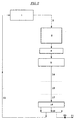
- FIG. 1 illustrates one aspect of the process of the present invention.
- Irrigation solution drained of the plants is collected, via pipework, 22, in the collection tank 1.
- the irrigation solution is then disinfected before being passed, via pipework 3, to a feed tank, 2, in which nutrients and fresh make-up water can be added to the irrigation solution. It may be advantageous if 3 comprises retention tanks in which disinfection can take place.
- a circulation pump, 4, then pumps the irrigation solution further in one or more of three alternative directions.
- the first alternative is that the irrigation solution is passed via a non-return valve, 11, to a main feed delivery line, 14 which sends the irrigation water in the direction of the plants.
- the second alternative which constitutes a sub-loop in accordance with the invention, is that the irrigation solution is circulated via pipework, 6, back to the feed tank 2.
- the third alternative which also constitutes a sub-loop in accordance with the present invention, is that the irrigation solution is fed into a feed machine (i.e. nutrient supply), 5.
- the feed machine 5 is equipped with sensors which determine the concentration in the irrigation solution of the nutrients necessary for the plants. If the concentrations are outside a predetermined level then the feed machine can adjust them accordingly.
- the irrigation solution then leaves the feed machine 5 and re-enters the feed tank 2 via pipework, 7.
- a further sub-loop is provided in the form of irrigation solenoid, 15, and pipework (return line), 8.
- solenoid 15 allows irrigation solution to be diverted, via pipework 8 back to the feed tank 2.
- the force required for circulation can be provided by motorised valve, 9.
- irrigation solution is required by the plants it is allowed through irrigation solenoid, 15, and then proceeds via sub-feed lines, 16, to the nozzles, 17, which supply the individual plants 18. Any excess irrigation solution 19 is either recycled back to tank 1 via pipework 22, or discharged to drain, 21, upon opening outflow valve, 20.
- the system can further be provided with a means of flushing the pipework with rinse water should this become necessary, namely that rinse water, 12, is allowed to enter the system upon opening rinse valve, 13.
- a semi-closed irrigation system as described in Figure 1 was employed to provide water to a tomato crop housed in a greenhouse.
- the tomatoes were grown on an inert rockwool substrate.
- Peracetic acid was added to area 3 of Figure 1 in amounts to maintain its level at round 100mg/l peracetic acid.
- the peracetic acid employed contained approximately 12%w/w peracetic acid, 20%w/w hydrogen peroxide, and 16%w/w acetic acid.
- the dosage was controlled to within a peractetic acid range of 80-120 mg/l. This was allowed to stand for a minimum period of 60 minutes.
- Two small treatment tanks were employed to alternate the sequencing of treatment and discharge over a cycle time of approximately 1 hour.
- the numbering used in Figure 2 corresponds to that used in Figure 1.
- the tomatoes were grown on an inert rockwool substrate.
- Peracetic acid was added to area 3 of Figure 2 in amounts to maintain its level at around 100mg/l peracetic acid.
- the peracetic acid employed contained approximately 12%w/w peracetic acid, 20%w/w hydrogen peroxide, and 16%w/w acetic acid. The dosage was controlled to within a peracetic acid range of 80 - 120 mg/l. Water was circulated by means of a circulation pump 4, and nutrients provided by a feed machine, 5.
Landscapes
- Life Sciences & Earth Sciences (AREA)
- Environmental Sciences (AREA)
- Agricultural Chemicals And Associated Chemicals (AREA)
Priority Applications (1)
| Application Number | Priority Date | Filing Date | Title |
|---|---|---|---|
| EP99202709A EP0981952A1 (fr) | 1998-08-26 | 1999-08-20 | Procédé de culture hydroponique de plantes |
Applications Claiming Priority (3)
| Application Number | Priority Date | Filing Date | Title |
|---|---|---|---|
| EP98306856A EP0981951A1 (fr) | 1998-08-26 | 1998-08-26 | Procédé de culture hydroponique de plantes |
| EP98306856 | 1998-08-26 | ||
| EP99202709A EP0981952A1 (fr) | 1998-08-26 | 1999-08-20 | Procédé de culture hydroponique de plantes |
Publications (1)
| Publication Number | Publication Date |
|---|---|
| EP0981952A1 true EP0981952A1 (fr) | 2000-03-01 |
Family
ID=26151411
Family Applications (1)
| Application Number | Title | Priority Date | Filing Date |
|---|---|---|---|
| EP99202709A Withdrawn EP0981952A1 (fr) | 1998-08-26 | 1999-08-20 | Procédé de culture hydroponique de plantes |
Country Status (1)
| Country | Link |
|---|---|
| EP (1) | EP0981952A1 (fr) |
Citations (6)
| Publication number | Priority date | Publication date | Assignee | Title |
|---|---|---|---|---|
| US4245433A (en) * | 1979-06-12 | 1981-01-20 | Sjostedt Ernst H S | Method and apparatus of growing plants without soil |
| EP0361955A2 (fr) * | 1988-09-29 | 1990-04-04 | Albright & Wilson Limited | Culture hydroponique |
| EP0406458A1 (fr) * | 1989-07-03 | 1991-01-09 | Bentle Products Ag | Dispositif de croissance ainsi que système pour la croissance hydroponique de plantes |
| JPH04126020A (ja) * | 1990-09-14 | 1992-04-27 | O C Eng Kk | 養液栽培に於ける栽培槽等の殺菌方法と養液栽培装置 |
| FR2677848A1 (fr) * | 1991-06-21 | 1992-12-24 | Verbiese Raphael | Installation pour l'irrigation de series de bacs superposes pour le forcage d'endives. |
| NL9201631A (nl) * | 1992-09-21 | 1994-04-18 | Phytocare Cv | Werkwijze en inrichting voor het desinfecteren van drainwater. |
-
1999
- 1999-08-20 EP EP99202709A patent/EP0981952A1/fr not_active Withdrawn
Patent Citations (7)
| Publication number | Priority date | Publication date | Assignee | Title |
|---|---|---|---|---|
| US4245433A (en) * | 1979-06-12 | 1981-01-20 | Sjostedt Ernst H S | Method and apparatus of growing plants without soil |
| EP0361955A2 (fr) * | 1988-09-29 | 1990-04-04 | Albright & Wilson Limited | Culture hydroponique |
| GB2224441A (en) | 1988-09-29 | 1990-05-09 | Albright & Wilson | Peracid solutions as partial disinfectants in hydroponic crop production |
| EP0406458A1 (fr) * | 1989-07-03 | 1991-01-09 | Bentle Products Ag | Dispositif de croissance ainsi que système pour la croissance hydroponique de plantes |
| JPH04126020A (ja) * | 1990-09-14 | 1992-04-27 | O C Eng Kk | 養液栽培に於ける栽培槽等の殺菌方法と養液栽培装置 |
| FR2677848A1 (fr) * | 1991-06-21 | 1992-12-24 | Verbiese Raphael | Installation pour l'irrigation de series de bacs superposes pour le forcage d'endives. |
| NL9201631A (nl) * | 1992-09-21 | 1994-04-18 | Phytocare Cv | Werkwijze en inrichting voor het desinfecteren van drainwater. |
Non-Patent Citations (3)
| Title |
|---|
| DATABASE WPI Section Ch Week 9223, Derwent World Patents Index; Class C07, AN 92-189648, XP002090744 * |
| DATABASE WPI Section Ch Week 9445, Derwent World Patents Index; Class C07, AN 94-148555 * |
| DATABASE WPI Section Ch Week 9515, Derwent World Patents Index; Class C05, AN 95-108157, XP002090747 * |
Similar Documents
| Publication | Publication Date | Title |
|---|---|---|
| US6238685B1 (en) | Peroxy acid treatment to control pathogenic organisms on growing plants | |
| AU624420B2 (en) | Hydroponic crop production | |
| US6295759B1 (en) | Process for hydroponic cultivation of plants | |
| US4925866A (en) | Method for controlling plant diseases and microoganisms in the presence of plants | |
| EP4051006B1 (fr) | Procédé pour éliminer des pathogènes dans une culture de plante et système correspondant | |
| EP0876304B1 (fr) | Amelioration du sol et de l'eau et procede et appareil correspondants | |
| KR20160085437A (ko) | 양액순환식 관수제어시스템 | |
| KR100249733B1 (ko) | 음이온 및 오존을 이용한 환경 친화적인 농사방법 및 그 농사장치 | |
| AU720503B2 (en) | Agricultural compositions containing glycolic acid | |
| EP0981952A1 (fr) | Procédé de culture hydroponique de plantes | |
| EP3570661B1 (fr) | Procédure pour la culture de champignons | |
| KR100336612B1 (ko) | 오존 살균수 재순환을 이용한 지하수 절약형 무농약 콩나물 재배방법 | |
| EP3218018A1 (fr) | Procédé d'assainissement des serres, d'amélioration des conditions sanitaires et de croissance des plantes cultivées dans les serres, et appareil de mise en oeuvre dudit procédé | |
| US5130325A (en) | Method for controlling plant disease and microorganisms by incorporation of N-halohydantoin into nutrient-watering supplies | |
| JPH037330B2 (fr) | ||
| EP0293400A1 (fr) | Procede de controle des maladies des plantes et de controle des microorganismes en presence des plantes | |
| JP4385251B2 (ja) | 潅水チューブ用洗浄剤及びそれを用いた潅水チューブの洗浄方法 | |
| RU2825449C1 (ru) | Способ защиты овощных культур от вирусных инфекций | |
| KR100384694B1 (ko) | 두채류의 재배방법 | |
| JP7176365B2 (ja) | 養液の硝化抑制方法及び装置 | |
| EP4704552A1 (fr) | Système de cuve mobile pour procédé hydroponique de croissance rapide d'une culture végétale et son procédé d'utilisation | |
| JP5866147B2 (ja) | 洗浄農法によるイチゴの栽培方法 | |
| AU764190B2 (en) | Peroxy acid treatment to control pathogenic organisms on growing plants | |
| CN112010401A (zh) | 碱性机能水 | |
| Emmons | Ionized Copper as an Effective Control of Problematic Pathogens |
Legal Events
| Date | Code | Title | Description |
|---|---|---|---|
| PUAI | Public reference made under article 153(3) epc to a published international application that has entered the european phase |
Free format text: ORIGINAL CODE: 0009012 |
|
| AK | Designated contracting states |
Kind code of ref document: A1 Designated state(s): AT BE CH CY DE DK ES FI FR GB GR IE IT LI LU MC NL PT SE |
|
| AX | Request for extension of the european patent |
Free format text: AL;LT;LV;MK;RO;SI |
|
| 17P | Request for examination filed |
Effective date: 20000901 |
|
| AKX | Designation fees paid |
Free format text: AT BE CH CY DE DK ES FI FR GB GR IE IT LI LU MC NL PT SE |
|
| AXX | Extension fees paid |
Free format text: AL PAYMENT 20000901;LT PAYMENT 20000901;LV PAYMENT 20000901;MK PAYMENT 20000901;RO PAYMENT 20000901;SI PAYMENT 20000901 |
|
| GRAH | Despatch of communication of intention to grant a patent |
Free format text: ORIGINAL CODE: EPIDOS IGRA |
|
| STAA | Information on the status of an ep patent application or granted ep patent |
Free format text: STATUS: THE APPLICATION IS DEEMED TO BE WITHDRAWN |
|
| 18D | Application deemed to be withdrawn |
Effective date: 20030527 |