EP0986220A2 - Programmable data network - Google Patents
Programmable data network Download PDFInfo
- Publication number
- EP0986220A2 EP0986220A2 EP99117384A EP99117384A EP0986220A2 EP 0986220 A2 EP0986220 A2 EP 0986220A2 EP 99117384 A EP99117384 A EP 99117384A EP 99117384 A EP99117384 A EP 99117384A EP 0986220 A2 EP0986220 A2 EP 0986220A2
- Authority
- EP
- European Patent Office
- Prior art keywords
- packet
- flow
- network
- network node
- processing program
- Prior art date
- Legal status (The legal status is an assumption and is not a legal conclusion. Google has not performed a legal analysis and makes no representation as to the accuracy of the status listed.)
- Withdrawn
Links
Images




Classifications
-
- H—ELECTRICITY
- H04—ELECTRIC COMMUNICATION TECHNIQUE
- H04L—TRANSMISSION OF DIGITAL INFORMATION, e.g. TELEGRAPHIC COMMUNICATION
- H04L12/00—Data switching networks
- H04L12/28—Data switching networks characterised by path configuration, e.g. LAN [Local Area Networks] or WAN [Wide Area Networks]
-
- H—ELECTRICITY
- H04—ELECTRIC COMMUNICATION TECHNIQUE
- H04L—TRANSMISSION OF DIGITAL INFORMATION, e.g. TELEGRAPHIC COMMUNICATION
- H04L47/00—Traffic control in data switching networks
- H04L47/10—Flow control; Congestion control
-
- H—ELECTRICITY
- H04—ELECTRIC COMMUNICATION TECHNIQUE
- H04L—TRANSMISSION OF DIGITAL INFORMATION, e.g. TELEGRAPHIC COMMUNICATION
- H04L47/00—Traffic control in data switching networks
- H04L47/10—Flow control; Congestion control
- H04L47/24—Traffic characterised by specific attributes, e.g. priority or QoS
- H04L47/2441—Traffic characterised by specific attributes, e.g. priority or QoS relying on flow classification, e.g. using integrated services [IntServ]
-
- H—ELECTRICITY
- H04—ELECTRIC COMMUNICATION TECHNIQUE
- H04Q—SELECTING
- H04Q11/00—Selecting arrangements for multiplex systems
- H04Q11/04—Selecting arrangements for multiplex systems for time-division multiplexing
- H04Q11/0428—Integrated services digital network, i.e. systems for transmission of different types of digitised signals, e.g. speech, data, telecentral, television signals
- H04Q11/0478—Provisions for broadband connections
-
- H—ELECTRICITY
- H04—ELECTRIC COMMUNICATION TECHNIQUE
- H04L—TRANSMISSION OF DIGITAL INFORMATION, e.g. TELEGRAPHIC COMMUNICATION
- H04L12/00—Data switching networks
- H04L12/54—Store-and-forward switching systems
- H04L12/56—Packet switching systems
- H04L12/5601—Transfer mode dependent, e.g. ATM
- H04L2012/5619—Network Node Interface, e.g. tandem connections, transit switching
- H04L2012/562—Routing
-
- H—ELECTRICITY
- H04—ELECTRIC COMMUNICATION TECHNIQUE
- H04L—TRANSMISSION OF DIGITAL INFORMATION, e.g. TELEGRAPHIC COMMUNICATION
- H04L12/00—Data switching networks
- H04L12/54—Store-and-forward switching systems
- H04L12/56—Packet switching systems
- H04L12/5601—Transfer mode dependent, e.g. ATM
- H04L2012/5638—Services, e.g. multimedia, GOS, QOS
- H04L2012/5646—Cell characteristics, e.g. loss, delay, jitter, sequence integrity
- H04L2012/5652—Cell construction, e.g. including header, packetisation, depacketisation, assembly, reassembly
-
- H—ELECTRICITY
- H04—ELECTRIC COMMUNICATION TECHNIQUE
- H04L—TRANSMISSION OF DIGITAL INFORMATION, e.g. TELEGRAPHIC COMMUNICATION
- H04L12/00—Data switching networks
- H04L12/54—Store-and-forward switching systems
- H04L12/56—Packet switching systems
- H04L12/5601—Transfer mode dependent, e.g. ATM
- H04L2012/5638—Services, e.g. multimedia, GOS, QOS
- H04L2012/5646—Cell characteristics, e.g. loss, delay, jitter, sequence integrity
- H04L2012/5652—Cell construction, e.g. including header, packetisation, depacketisation, assembly, reassembly
- H04L2012/566—Cell construction, e.g. including header, packetisation, depacketisation, assembly, reassembly using the ATM layer
- H04L2012/5662—Macrocells or frames
Definitions
- the present invention relates to a programmable network in which in a network system interconnecting a plurality of computers via a network, a program is loaded to a network node on a route of a flow constituted of packets, and the node executes the program for each packet.
- a method for a network system in which data is processed and then transmitted, a method is known by which a video is compressed and packetized for each wavelet band, as disclosed in JP-A-7-15609.
- the invention provides a video transfer method, a video transmitter, a video receiver and an video transfer apparatus, in which a video is transferred in accordance with a network bandwidth on a video reception side and a decoding capability of the decoder, even if which capabilities are inferior to a network bandwidth on a video transmission side and an encoding capability of the encoder.
- the video transmitter packetizes video data for each wavelet band, adds a predetermined classifier to the packet, and then transmits it.
- a priority order is added to a cell header to transmit a cell.
- a cell having a higher priority order is transferred with a priority over other cells when the network is congested.
- the video receiver checks the classifier of the received video data, selects only necessary video data and decodes it in accordance with the decoding capability of the decoder to reproduce the video data.
- a programmable network is known as described in "A Survey of Active Network Research” in “IEEE Communications Magazine", January issue of 1997, at pp. 80 - 86.
- each network node constituting the network executes a packet processing program for each packet.
- the above-described transfer with a priority order by ATM is realized by software using a program loaded at each network node.
- This system can be realized on the network having a QoS (Quality of Service) control function of ATM, e.g., on an IP (Internet Protocol) network such as the Internet.
- QoS Quality of Service
- IP network techniques are also known by which a routing process for controlling a route of packets via network nodes can be speeded up by using a dedicated processor.
- a network node constituting a network comprises: a program processor for executing a packet processing program to each packet corresponding to a flow; a routing processor for performing a routing process for an input packet; and a packet classification unit for analyzing the input packet to transfer a packet belonging to the flow to the program processor and transfer other packets to the routing processor.
- the network node has a function of receiving the packet processing program via the network and making it executable.
- Fig. 2 is a block diagram explaining an example of the structure and operation of a programmable network system.
- the programmable network system of this embodiment is constituted of networks 2, server computers 50, network nodes 1, 51, and client computers 52.
- the network may be the Internet, LAN or the like.
- the network node is a network apparatus such as a router and a gateway.
- the numbers of server computers, client computers and network nodes are not limited to this embodiment.
- network nodes 1 If there are a plurality of network nodes 1, they are represented by 1-1, 1-2,... with branch numbers. The same notation is also applied to the server computer 50 and network 2.
- a server computer 50-1 transmits a flow 60 representative of a series of data and a server computer 50-2 transmits a flow 61, respectively to the networks 2.
- a plurality of network nodes are provided in order to interconnect networks and it is assumed that conventional network nodes 51 and programmable network nodes 1-1, 1-2 are used in a mixed state.
- the programmable network node has a packet classification unit 10, a packet processing program processor 20 and a routing processor 5.
- the server computer 50-1 transmits in advance a packet processing program to the packet processing program processor 20 at the network node 1-1, 1-2 to make the packet processing program executable so as to execute a software process for a data packet to be transmitted.
- the packet processing program processes a data packet belonging to the flow 60 and does not process a data packet belonging to the flow 61.
- the packet classification unit 10 controls a next destination of each data packet belonging to the flow 60 from the server computer 50-1 to the client computer 52, in order to allow each packet processing program processor 20 to execute the packet processing program (refer to bold lines 60-10 to 60-13 in Fig. 2).
- the packet belonging to the flow 61 from the server computer 50-2 to the client computer 52 is not necessary to be processed by the packet processing program. Therefore, at the network node 1-1, 1-2, the packet classification unit 10 controls a next destination of each data packet so that the data packet is processed directly by the routing processor 5 without being transferred to the packet processing program processor 20 (refer to broken lines 61-11 to 61-13 in Fig. 2).
- the network node of the type having the packet processing program processor 20 will be detailed as to its structure.
- the network node 1 of the embodiment is constituted of a network input interface 3, a network output interface 4, a routing processor 5 and a packet processing program processor 20.
- Each network input interface 3 is provided with a packet classification unit 10 which has a packet processing flow classification table 11.
- the packet processing flow classification table 11 stores information for judging whether a packet belonging to each flow is to be transferred to the packet processing program processor 20 or directly to the routing processor 5.
- the packet processing program processor 20 is made of a CPU and a memory and includes a packet input/output unit 21, a processing history update unit 22, a packet processing flow classification update unit 23, and a processing history repository table 24.
- the packet processing flow classification update unit 23 has a function of setting information to the packet processing flow classification table 11.
- the units 21, 22 and 23 are realized by software which is executed by the CPU.
- the packet processing program is stored in the memory and executed when necessary.
- the routing processor 5 controls a route of each packet and is a processor dedicated to a routing process.
- the server computer 50 transmits hierarchically encoded video data 60-10.
- the server computer 50 transmits compressed data by using a packet different for each frequency band.
- the programmable network node discards a packet containing high frequency band data in response to a request, and transfers the other packets to the next network node or client computer 52.
- the server computer 50 transmits to the network nodes, as the packet processing program, a software program for checking the frequency band of a data packet and judging whether the data packet is discarded or transferred.
- the packet processing program has a function of determining the frequency band of a data packet to be discarded at the network node and storing this information, in response to a request from the server computer 50 or client computer 52 and/or in response to a check result of the status of networks to be connected. It is assumed herein that the packet processing program has a function of determining a discard packet frequency band and notifying it to an external software program, in response to a request from the external software program.
- Fig. 3 The format of a packet to be received at the programmable network node is shown in Fig. 3.
- the packet 100 is constituted of: a packet header 110 for storing destination information and the like of the packet; and a packet data field 120 for storing data.
- the packet header 110 is constituted of a packet classifier 111 for classifying a protocol type for the packet, a source address 112 and a source port 113 for identifying a source computer, and a destination address 114 and a destination port 115 for identifying a destination computer.
- a packet classifier 111 for classifying a protocol type for the packet
- a source address 112 and a source port 113 for identifying a source computer
- a destination address 114 and a destination port 115 for identifying a destination computer.
- IP Internet Protocol
- TCP/UDP Transmission Control Protocol
- User Datagram Protocol User Datagram Protocol
- a packet 100 whose data 120 is a packet processing program 130.
- Fig. 4 shows the format of a packet which is used when the server computer 50 transmits the packet processing program to the network node 1-1, 1-2 as shown in Fig. 2.
- the packet processing program 130 may be any type such as an object module executable at the network node 1, a script written by text data, byte codes written by Java language, or the like. If the packet processing program 130 has a length unable to be written in one packet 100, it is possible to transmit it by dividing to a plurality of packets 100.
- the packet shown in Fig. 4 may include a program module name of the packet processing program 130.
- a packet 100 whose data 120 corresponds to processing history information.
- This format of a packet is used when the network node 1-1, 1-2 transmits the processing history information as shown in Fig. 2. Also in this case, if the processing history information 140 has a length unable to be written in one packet 100, it is possible to transmit it by dividing to a plurality of packets 100.
- the processing history information 140 may have the format such as shown in Fig. 6.
- the processing history information 140 is constituted of: a bit field (processing history field) 141 for storing "1" or "0" indicating a processing execution history of each frequency band; and its bit information 142. If the hierarchically encoded video data described earlier is to be transmitted, the frequency band is partitioned into K stages in such a manner that a transfer of a packet storing the lowest frequency band is allocated to 141-1 and a transfer of a packet storing the highest frequency band is allocated to 141-K.
- an initial value "1" is written in each field 142, and "0" is written in the field 142 corresponding to the packet at the frequency band discarded by the packet processing program processor 20.
- the processing history information 140 shown in Fig. 6 is realized by using the bit field, it may be realized by a script written by text data or any other type.
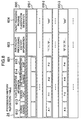
- the packet processing flow classification table 11 is constituted of a flow classification information field 201 and a packet processor classifier field 202.
- the flow classification information field 201 is constituted of a source address 212, a source port 213, a destination address 214 and a destination port 215. These addresses and ports 212 to 215 correspond to the addresses and ports 112 to 115 in the packet header 110 shown in Fig. 3.
- the packet processor classifier field 202 stores a classifier indicating whether the packet 100 is transferred to the packet processing program processor 20 or to the routing processor 5.
- the packet processing flow classification table 11 is constituted of a plurality of entries 210.
- An entry 210-P indicates that the packet constituting the flow represented by the addresses and ports 212 to 215 is transferred to the packet processing program processor 20, whereas an entry 210-R indicates that the packet is transferred to the routing processor 5.
- These entries 210 are set by the packet processing flow classification table update unit 23 of the packet processing program processor 20, and referred by the packet classification unit 10 of the network input interface 3.
- the processing history repository table 24 is constituted of a flow classification information field 601, a per-packet processing history information field 603 and a packet processing program classification information field 604.
- the flow classification information field 610 is constituted of a source address 612, a source port 613, a destination address 614 and a destination port 615.
- the addresses and ports 612 to 615 correspond to the addresses and ports 112 to 115 shown in Fig. 3.
- the per-packet processing history information 603 stores the processing history information 140 shown in Fig. 6.
- the timing when the per-packet processing history information 603 is updated is either the timing when the packet 100 whose data is the processing history information 140 shown in Fig. 5 is transmitted to the network node, or the timing when the processing history update unit 22 updates the per-packet processing history 603 in accordance with the process contents of the packet processing program to be executed at this network node.
- the packet processing program classification information 604 stores information of the packet processing program which processes the packet 100, e.g., a program name.
- the timing when this packet processing program classification information 604 is updated is the timing when the packet 100 whose data is the packet processing program 130 shown in Fig. 3 reaches this network node.
- the processing history repository table 24 is constituted of a plurality of entries 610.
- An entry 610-2 indicates that the packet constituting the flow represented by the addresses and ports 612 to 615 is processed by a packet processing program " xxx", and an entry 610-3 indicates that it is precessed by a packet processing program "yyy”.
- the packet input/output unit 21 receives a packet 100 from the packet classification unit 10 (S401), and judges the type of data stored in the packet payload 120 (S402).
- the data type may be judged from the packet classifier 111 in the packet header or it may be judged by providing a field representative of the data type at a predetermined position in the packet payload 120.
- the packet processing program 130 is stored in the packet payload 120, the program module name is read and the packet processing program is loaded in the main memory so as to make it executable (S403).
- Entries are registered in the processing history repository table 24 shown in Fig. 8 to set values to the fields of the flow classification information 601 and packet processing program information 604 (S404).
- the setting in the example of the entry 610-2 shown in Fig. 8 means that a program having the program module name "xxx" is executed for the flow belonging to the source address of A-1, the source port of P-1, the destination address of A-2 and the destination port of P-2.
- Similar entries (210-P) are set to the packet processing flow classification table 11 shown in Fig. 7 by requesting to the packet processing flow classification table update unit 23 (S411).
- the packet 100 containing the program is transferred to the routing processor 5 (S410).
- this processing history information is compared with the processing history information stored in the processing history repository table 24 (S405).
- the packet processing flow classification table update unit 23 is activated to search the entry having the same flow classification information 201 as that of this packet, and if the value of the packet processor classifier field 202 of the packet processing flow classification table 11 is "packet processing program processor", then it is changed to "routing processor" (S409).
- the packet including the processing history information is transferred to the routing processor 5 (S410).
- the processing history repository table 24 is updated in accordance with the supplied processing history information (S 406).
- the entries in the flow classification information designated by the packet are updated.
- the packet processing flow classification table update unit 23 is activated to update the packet processing flow classification table 11 (S407).
- Updating is performed by analyzing the contents of the processing history information 140 contained in the packet 100. This will be detailed by using as an example the entry 610-2 of the processing history repository table 24.
- the processing history information 140 of (1", "0", "0",...) is supplied by the packet belonging to the flow of this entry.
- This case means that the packet becomes to be processed by the packet processing program at the previous node, because the second frequency band was changed from "1" to "0". In this case, it is not necessary to process the packet of the second frequency band. Therefore, if the packet processor classifier field 202 at the entry having the same flow classification information 201 of the packet processing flow classification table 11 as that of this packet, has the value of "packet processing program processor", it is changed to the value of "routine processor".
- the packet 100 including the processing history is transferred to the routing processor 5 (S410). In this manner, the processing history information is transferred to the next node.
- the packet processing program is executed to process the packet 100 (S408), and thereafter the packet 100 is transferred to the routing processor 5 (S410).
- the flow returns to the step 401 whereat the next packet 100 from the packet classification unit 10 is waited for.
- the timing when this operation starts is the timing when the traffic status of the network 2 to which the packet is transmitted changes or the timing when a notice is received from the client computer 52 or server computer 50, or the operation may start periodically at every predetermined time.
- the processing history update unit 22 supplies the current processing history information to the packet processing program and inquires the process contents (S501). In response to this, the packet processing program checks the traffic of the network and determines how the packet is processed by the packet processing program, the determined process contents being notified to the processing history update unit 22.
- the packet processing program judges that the packet of the third frequency band is processed in order to reduce the traffic of the network.
- the entry of the per-packet processing history information 603 shown in Fig. 8 indicates that the packet of the third frequency band has already been processed by the packet processing program. Therefore, the process is terminated without performing any operation.
- the packet processing program judges that the packet of the second frequency band is processed.
- the entry of the per-packet processing history information 603 shown in Fig. 8 indicates that the packet of the second frequency band is not still processed by the packet processing program.
- the processing history update unit 22 changes the value in the per-packet processing history information 603 of the entry 610-2 of the processing history repository table 24 to ("1", "0", "0”,... ) (S503).
- a processing history information packet 100 having the processing history information of ("1", “0", "0",...) is created and transferred to the routing processor 5 in order to supply this processing history information to the next node (S505).
- the packet classification unit 10 receives a packet 100 from the network 2 (S301).
- the packet classification unit 10 reads the packet classifier 111 indicating the packet type (S302) to judge whether the packet is to be processed by the packet processing program 130 (S303).
- the packet type to be processed by the packet processing program is determined in advance. Alternatively, the packet type may be determined by referring to a correspondence table which is prepared in the packet processing classification table 11 and indicates a correspondence between each packet classifier and a flag indicating whether or not the packet is to be processed by the packet processing program.
- the packet 100 is transferred to the routing processor 5 (S304) to thereafter return to the step S301 to wait for the next packet.
- the source address 112, source port 113, destination address 114 and destination port 115 are read from the packet header field 110 (S305), and the flow classification information 201 of the packet processing flow classification table 11 is searched to find the corresponding entry 210 (S306).
- the packet 100 is transferred to the packet processing program processor 20 (S307) to thereafter return to the step S301 and wait for the next packet.
- the packet processing program processor 20 If the corresponding entry 210 exists and the packet is the data packet, the contents of the packet processor classifier 202 at that entry are checked. If the contents indicate "packet processing program processor", the packet is transferred to the packet processing program processor 20, whereas if the contents indicate "routing processor", the packet is transferred to the routing processor 5. If the corresponding entry exists and the packet is not the data packet, the packet is transferred to the packet processing program processor 20 (S307).
- the contents of the packet processor classifier 202 at this entry are set in accordance with the algorithms described with reference to Figs. 9 and 10.
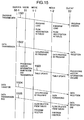
- a server 50-1, nodes 51, 1-1, and 1-2 and a client 52 shown in Fig. 15 correspond to those elements shown in Fig. 2 and having the identical reference numerals. An example of an operation of transmitting data from the server 50-1 to client 52 will be described.
- the server 50-1 transmits the packet processing program to the client 52 by using a packet having the format shown in Fig. 4 (1501).
- the conventional type network node 51 transfers the received packet to the next destination.
- the programmable network nodes 1-1 and 1-2 load the packet processing program contained in the packet in the main memories and register the source/destination addresses and ports in the processing history repository table 24 and packet processing flow classification table 11, and thereafter transfer the packet to the next destination.
- the client 52 discards the packet containing the program.
- the server 50-1 transmits data as the packet having the format shown in Fig. 3 to the client (1502).
- the conventional type network node 51 transfers the received packet to the next destination.
- the programmable network nodes 1-1 and 1-2 process the data in the received packet by using the already loaded packet processing program and transfer the packet to the next destination.
- the client 52 receives the data processed at the nodes 1-1 and 1-2.
- the node 1-1 changes the process contents in cooperation with the packet processing program, and updates the processing history repository table 24, and if necessary, the packet processing flow classification table 11. Then, the node 1-1 generates a packet having the format shown in Fig. 5 and containing the processing history information, by using the source/destination addresses and ports in the flow classification information, and transmits the packet to the next destination (1503).
- the node 102 updates, if necessary, the processing history repository table 24 and the packet processing flow classification table 11. The client 52 discards the packet processing information.
- the server 50-1 transmits again data (1504).
- the node 1-2 stops processing the data by the program and transfers the data to the client 52. This is because the packet processing flow classification table 11 was updated with the packet processing history at 1503.
- the server 50-1 transmits the last data or a packet notifying a data transmission end to the client 52 (1505). After the last data was transferred to the next destination, the nodes 1-1 and 1-2 delete the packet processing program in the memory, and delete the corresponding entry of the flow in the processing history repository table 24 and the packet processing flow classification table 11.
- TCP is used as the protocol for the-above-described sequences.
- per-packet processing history information 140 is added to the last of the packet header 110. This per-packet processing history information 140 is updated when the packet is processed by the packet processing program processor, to store the history.
- a packet processing flow classification table 11 of the second embodiment shown in Fig. 13 is different from that of the first embodiment in that the last field is per-packet processing history information 203.
- the next destination is therefore determined through matching the information 203 with the per-packet processing history information 140 in the packet 100.
- the other constituent elements are similar to those of the first embodiment shown in Fig. 7.
- Fig. 14 is a flow chart illustrating the operation to be executed by a packet classification unit 10 of the second embodiment.
- the packet classification unit 10 receives a packet 100 from the network 2 (S701). Next, the packet classification unit 10 reads the packet classifier 111 indicating the packet type (S702) to judge whether the packet is to be processed by the packet processing program 130 (S703).
- the packet 100 is transferred to the routing processor 5 (S704) to thereafter return to the step S701 to wait for the next packet.
- the source address 112, source port 113, destination address 114 and destination port 115 are read from the packet header field 110 (S705), and the flow classification information 201 of the packet processing flow classification table 11 is searched to find the corresponding entry 220 (S706).
- the packet 100 is transferred to the packet processing program processor 20 (S707) to thereafter return to the step S701 and wait for the next packet.
- the per-packet processing history 140 of the packet 100 is read (S710) and compared with the per-packet processing history 203 in the packet processing flow classification table 11 (S710). If coincident, it means that the packet has already been processed. Therefore, the packet is transferred to the routing processor 5 (S704).
- the packet is transferred to the packet processing program processor 20 and processed thereat.
- the packet processing program processor 20 if the packet processing information is not coincident, it is presumed that the packet is required to be processed. Therefore, the packet is transferred to the packet processing program processor 20.
- processing history repository table 24 and its table operation process are unnecessary.
- the algorithm can therefore be simplified and the structure of a network node can also be simplified.
- the program transmission and the data transmission are continuously and consecutively executed.
- a flow is registered in the packet processing flow classification table 11 and processing history repository table 24, and after the data transmission, the flow and program are deleted from the tables.
- the program transmission and the data transmission may be executed at different timings.
- Registration and deletion of a flow to and from the tables and deletion of the program may be performed by the following method. Namely, the server transmits a packet containing an instruction command for such processes to a programmable network node which receives and executes the instruction command.
- a bitmap indicating a packet processing status for each frequency band is used as the packet processing history.
- the packet processing history may be various formats in accordance with the process contents of the packet processing program. Therefore, the packet processing history may be realized by a script written by text data or any other type.
- the packet classification units 10 are provided in respective network input interface 3. However, only one packet classification unit 10 may be provided in the routing processor 5. In this case, the network input interface 3 transfers all received packets to the routing processor 5. The routing processor 5 judges using its packet classification unit 10 whether the received packet is to be transferred to the packet processing program processor 20, and transfers only necessary packets to the packet processing program processor 20 and the other packets directly to the network output interface 4.
Landscapes
- Engineering & Computer Science (AREA)
- Computer Networks & Wireless Communication (AREA)
- Signal Processing (AREA)
- Data Exchanges In Wide-Area Networks (AREA)
Abstract
Description
Claims (13)
- A network including network nodes, wherein at least one of the network nodes comprises:program executing means (20) for executing a packet processing program relative to each packet belonging to a flow;routing means (5) for performing a routing process for an input packet; andpacket classification means (10) for analyzing the input packet to transfer a packet belonging to the flow to said program executing means and transfer other packets to said routing means.
- A network according to claim 1, wherein said program executing means of the network node receives the packet processing program via the network and makes the received packet processing program executable.
- A network according to claim 1, wherein said packet classification means of the network node includes a correspondence table (11) between each flow and one of the program executing means and the routing means to transfer the packet in accordance with the table.
- A network according to claim 1, wherein said network node further comprises:processing history repository means (24) for storing packet processing history of a packet process already executed by another network node on a route of the flow; andmeans for notifying the packet processing history of the packet process to another network node,
wherein upon arrival of the packet at the subject network node, said packet classification means refers to said processing history repository means;transfers the packet to said program executing means only if the packet belonging to the flow has not been applied with a process to be executed at the subject network node; andtransfers the packet to said routing means if the packet has already been applied with the process. - A network according to claim 1, wherein each packet used by the network has a field for storing packet processing history (140) of a packet process executed by the network node on a route of the flow, and the network node updates the field when executing the packet processing program, andupon arrival of the packet at the subject network node, said packet classification means refers to the field;transfers the packet to said program executing means only if the packet belonging to the flow has not been applied with a process to be executed at the subject network node; andtransfers the packet to said routing means if the packet has already been applied with the process.
- A network node constituting a network, comprising:program executing means (20) for executing a packet processing program relative to each packet belonging to a flow;routing means (5) for performing a routing process for an input packet; andpacket classification means (10) for analyzing the input packet to transfer a packet belonging to the flow to said program executing means and transfer other packets to said routing means.
- A network node according to claim 6, wherein said program executing means receives the packet processing program via the network and makes the received packet processing program executable.
- A network node according to claim 6, wherein said packet classification means includes a correspondence table (11) between each flow and one of the packet executing means and the routing means to transfer the packet in accordance with the table.
- A network node according to claim 6, further comprises:processing history repository means (24) for storing packet processing history of a packet process already executed by another network node on a route of the flow; andmeans for notifying the packet processing history of the packet process to another network node,
wherein upon arrival of the packet at the subject network node, said packet classification means refers to said processing history repository means;transfers the packet to said program executing means only if the packet belonging to the flow has not been applied with a process to be executed at the network node; andtransfers the packet to said routing means if the packet has already been applied with the process. - A method of processing a packet at a network node constituting a network, comprising the steps of:making executable in advance a packet processing program relative to each packet belonging to a flow; andanalyzing an input packet, inputting the input packet belonging to the flow to the packet processing program, and executing a routing process for the input packet not belonging to the flow.
- A method according to claim 10, further comprising a step of receiving the packet processing program via the network and storing a correspondence relation between the flow and the packet processing program.
- A storage medium for storing program codes realizing a method of processing a packet at a network node constituting a network, the packet processing method comprising the steps of:receiving a packet processing program via the network and storing a correspondence relation between a flow and the packet processing program.making executable in advance the packet processing program relative to each packet belonging to the flow; andanalyzing an input packet, inputting the input packet belonging to the flow to the packet processing program, and executing a routing process for the input packet not belonging to the flow.
- A method of transmitting data on a network including network nodes and computers, the method comprising steps:that a source computer transmits a packet processing program corresponding to a flow to a destination computer;that a programmable network node on a route from the source computer to the destination computer receives the packet processing program and makes the received packet processing program executable;that the source program transmits a data packet belonging to the flow to the destination computer; andthat the programmable network node analyzes an input data packet and supplies the packet belonging to the flow to the packet processing program.
Applications Claiming Priority (2)
| Application Number | Priority Date | Filing Date | Title |
|---|---|---|---|
| JP10254228A JP2000092118A (en) | 1998-09-08 | 1998-09-08 | Programmable network |
| JP25422898 | 1998-09-08 |
Publications (2)
| Publication Number | Publication Date |
|---|---|
| EP0986220A2 true EP0986220A2 (en) | 2000-03-15 |
| EP0986220A3 EP0986220A3 (en) | 2002-08-21 |
Family
ID=17262051
Family Applications (1)
| Application Number | Title | Priority Date | Filing Date |
|---|---|---|---|
| EP99117384A Withdrawn EP0986220A3 (en) | 1998-09-08 | 1999-09-03 | Programmable data network |
Country Status (5)
| Country | Link |
|---|---|
| US (3) | US6262983B1 (en) |
| EP (1) | EP0986220A3 (en) |
| JP (1) | JP2000092118A (en) |
| KR (1) | KR20000022897A (en) |
| CA (1) | CA2281321A1 (en) |
Cited By (1)
| Publication number | Priority date | Publication date | Assignee | Title |
|---|---|---|---|---|
| EP1365546A1 (en) * | 2002-05-21 | 2003-11-26 | Hitachi Europe Limited | Programmable network node for performing multiple processes |
Families Citing this family (33)
| Publication number | Priority date | Publication date | Assignee | Title |
|---|---|---|---|---|
| GB2339368A (en) * | 1998-07-08 | 2000-01-19 | Ibm | Data communications protocol with efficient packing of datagrams |
| JP2000092118A (en) * | 1998-09-08 | 2000-03-31 | Hitachi Ltd | Programmable network |
| JP3645735B2 (en) * | 1999-02-24 | 2005-05-11 | 株式会社日立製作所 | Network relay device and network relay method |
| US6604147B1 (en) * | 2000-05-09 | 2003-08-05 | Lucent Technologies Inc. | Scalable IP edge router |
| US7075926B2 (en) * | 2000-05-24 | 2006-07-11 | Alcatel Internetworking, Inc. (Pe) | Programmable packet processor with flow resolution logic |
| US20020154646A1 (en) * | 2001-03-21 | 2002-10-24 | Dubois Jean F. | Programmable network services node |
| US7246173B2 (en) * | 2001-04-16 | 2007-07-17 | Nokia Corporation | Method and apparatus for classifying IP data |
| US20020188732A1 (en) * | 2001-06-06 | 2002-12-12 | Buckman Charles R. | System and method for allocating bandwidth across a network |
| US7095715B2 (en) * | 2001-07-02 | 2006-08-22 | 3Com Corporation | System and method for processing network packet flows |
| US20030033519A1 (en) * | 2001-08-13 | 2003-02-13 | Tippingpoint Technologies,Inc. | System and method for programming network nodes |
| US7142509B1 (en) * | 2001-09-12 | 2006-11-28 | Extreme Networks | Method and apparatus providing for delivery of streaming media |
| AUPR893201A0 (en) * | 2001-11-16 | 2001-12-13 | Telstra New Wave Pty Ltd | Active networks |
| US7239639B2 (en) * | 2001-12-27 | 2007-07-03 | 3Com Corporation | System and method for dynamically constructing packet classification rules |
| US7650634B2 (en) * | 2002-02-08 | 2010-01-19 | Juniper Networks, Inc. | Intelligent integrated network security device |
| US7512129B1 (en) * | 2002-02-19 | 2009-03-31 | Redback Networks Inc. | Method and apparatus for implementing a switching unit including a bypass path |
| ATE323360T1 (en) * | 2002-04-03 | 2006-04-15 | Cit Alcatel | METHOD AND DEVICE FOR REORDERING PACKETS IN A NETWORK PROCESSOR |
| KR100497357B1 (en) * | 2002-06-26 | 2005-06-23 | 삼성전자주식회사 | Header compressed and packet multiplexed apparatus and method in the network environment based on IP |
| KR100560424B1 (en) * | 2003-11-05 | 2006-03-13 | 한국전자통신연구원 | Secure Programmable Packet Transmission Method Using Modified Digital Signature with Access Control Key with Limited Access |
| IL163092A (en) * | 2004-07-19 | 2010-11-30 | Veraz Networks Ltd | Processing of packets forwarded in communication networks |
| JP4514623B2 (en) * | 2005-02-25 | 2010-07-28 | パナソニック株式会社 | Information processing system, information processing apparatus, server apparatus, and information processing method |
| JP4597705B2 (en) * | 2005-02-25 | 2010-12-15 | パナソニック株式会社 | Information processing system, information processing apparatus, server apparatus, and information processing method |
| US7889734B1 (en) * | 2005-04-05 | 2011-02-15 | Oracle America, Inc. | Method and apparatus for arbitrarily mapping functions to preassigned processing entities in a network system |
| KR100530856B1 (en) * | 2005-05-11 | 2005-11-23 | (주) 위즈네트 | High speed data processing communication method and apparatus for embedded system |
| JP4665639B2 (en) * | 2005-07-19 | 2011-04-06 | 日本電気株式会社 | Communication quality monitoring system, communication quality monitoring device, communication quality degradation point identifying device, method and program in the device |
| US7746862B1 (en) * | 2005-08-02 | 2010-06-29 | Juniper Networks, Inc. | Packet processing in a multiple processor system |
| US8028337B1 (en) | 2005-08-30 | 2011-09-27 | Sprint Communications Company L.P. | Profile-aware filtering of network traffic |
| US8204974B1 (en) * | 2005-08-30 | 2012-06-19 | Sprint Communications Company L.P. | Identifying significant behaviors within network traffic |
| US10554534B1 (en) | 2005-09-23 | 2020-02-04 | Chicago Mercantile Exchange Inc. | Clearing message broker system messaging gateway |
| US8149732B1 (en) * | 2005-09-23 | 2012-04-03 | Chicago Mercantile Exchange, Inc. | Clearing message broker system |
| US9325951B2 (en) | 2008-03-03 | 2016-04-26 | Avigilon Patent Holding 2 Corporation | Content-aware computer networking devices with video analytics for reducing video storage and video communication bandwidth requirements of a video surveillance network camera system |
| JP5307792B2 (en) * | 2010-12-24 | 2013-10-02 | 株式会社エヌ・ティ・ティ・ドコモ | Communication control system and communication control method |
| KR101883892B1 (en) * | 2011-10-13 | 2018-08-01 | 한국전자통신연구원 | Apparatus and method for transmitting/receiving data in communication system |
| US10341241B2 (en) * | 2016-11-10 | 2019-07-02 | Hughes Network Systems, Llc | History-based classification of traffic into QoS class with self-update |
Family Cites Families (11)
| Publication number | Priority date | Publication date | Assignee | Title |
|---|---|---|---|---|
| JPH0715609A (en) | 1993-06-17 | 1995-01-17 | Toshiba Corp | Image transmission method, image transmission device, image reception device, and image transmission device |
| US5619501A (en) * | 1994-04-22 | 1997-04-08 | Thomson Consumer Electronics, Inc. | Conditional access filter as for a packet video signal inverse transport system |
| US5563648A (en) * | 1994-04-28 | 1996-10-08 | Thomson Consumer Electronics, Inc. | Method for controlling execution of an audio video interactive program |
| US5473609A (en) * | 1994-05-26 | 1995-12-05 | Thomson Consumer Electronics, Inc. | Method and apparatus for processing a conditional access program guide as for a satellite TV service |
| US5666293A (en) * | 1994-05-27 | 1997-09-09 | Bell Atlantic Network Services, Inc. | Downloading operating system software through a broadcast channel |
| JP3420664B2 (en) * | 1995-12-20 | 2003-06-30 | 株式会社東芝 | Packet transmitting node device, packet receiving node device, and connection setting method |
| US6188689B1 (en) * | 1996-10-04 | 2001-02-13 | Kabushiki Kaisha Toshiba | Network node and method of frame transfer |
| US6172990B1 (en) * | 1997-06-19 | 2001-01-09 | Xaqti Corporation | Media access control micro-RISC stream processor and method for implementing the same |
| DE69831893T2 (en) * | 1997-04-07 | 2006-07-06 | Kabushiki Kaisha Toshiba, Kawasaki | Route searching device and frame transmission method using frame switching on data link layer |
| US5956721A (en) * | 1997-09-19 | 1999-09-21 | Microsoft Corporation | Method and computer program product for classifying network communication packets processed in a network stack |
| JP2000092118A (en) * | 1998-09-08 | 2000-03-31 | Hitachi Ltd | Programmable network |
-
1998
- 1998-09-08 JP JP10254228A patent/JP2000092118A/en active Pending
-
1999
- 1999-09-03 CA CA002281321A patent/CA2281321A1/en not_active Abandoned
- 1999-09-03 EP EP99117384A patent/EP0986220A3/en not_active Withdrawn
- 1999-09-03 KR KR1019990037271A patent/KR20000022897A/en not_active Withdrawn
- 1999-09-08 US US09/391,404 patent/US6262983B1/en not_active Expired - Fee Related
-
2000
- 2000-07-26 US US09/626,391 patent/US6259690B1/en not_active Expired - Fee Related
-
2001
- 2001-06-14 US US09/880,121 patent/US6333933B2/en not_active Expired - Fee Related
Cited By (1)
| Publication number | Priority date | Publication date | Assignee | Title |
|---|---|---|---|---|
| EP1365546A1 (en) * | 2002-05-21 | 2003-11-26 | Hitachi Europe Limited | Programmable network node for performing multiple processes |
Also Published As
| Publication number | Publication date |
|---|---|
| US6259690B1 (en) | 2001-07-10 |
| JP2000092118A (en) | 2000-03-31 |
| EP0986220A3 (en) | 2002-08-21 |
| US6333933B2 (en) | 2001-12-25 |
| KR20000022897A (en) | 2000-04-25 |
| US20010028650A1 (en) | 2001-10-11 |
| US6262983B1 (en) | 2001-07-17 |
| CA2281321A1 (en) | 2000-03-08 |
Similar Documents
| Publication | Publication Date | Title |
|---|---|---|
| EP0986220A2 (en) | Programmable data network | |
| KR100883405B1 (en) | Device for creating multiple virtual queue pairs from a compressed queue pair based on shared attributes | |
| EP0993144B1 (en) | Packet relaying apparatus and method and circuit thereof | |
| US5883890A (en) | Mobile packet communication system | |
| AU747484B2 (en) | Reduced packet header in wireless communications network | |
| US5485460A (en) | System and method for running multiple incompatible network protocol stacks | |
| US5790530A (en) | Message-passing multiprocessor system | |
| US7346707B1 (en) | Arrangement in an infiniband channel adapter for sharing memory space for work queue entries using multiply-linked lists | |
| US6094525A (en) | Network addressing arrangement for backward compatible routing of an expanded address space | |
| US8077711B2 (en) | Address converter for gateways interconnecting networks of different address formats | |
| JP3602485B2 (en) | Multi-layer packet processing device | |
| JPH0818571A (en) | ATM-LAN, server, and ATM address management method | |
| US20090028152A1 (en) | Node apparatus | |
| EP1122927A2 (en) | Route lookup engine | |
| US6658003B1 (en) | Network relaying apparatus and network relaying method capable of high-speed flow detection | |
| US7664112B2 (en) | Packet processing apparatus and method | |
| US7174394B1 (en) | Multi processor enqueue packet circuit | |
| CN118714107A (en) | Communication method, device, electronic device and storage medium | |
| US20040210669A1 (en) | Apparatus and method for distributing packet without IP reassembly | |
| JP2002057719A (en) | Method and apparatus for packet reassembly in a communication switch | |
| US20090070778A1 (en) | Inter process communications in a distributed cp and np environment | |
| CN117813805A (en) | Apparatus and methods for processing data units | |
| JPH07111507A (en) | Data receiving system and communication control device | |
| US12592911B2 (en) | Secure relay device and data transmission reception system | |
| US7957420B2 (en) | Packet transfer method and packet transfer node |
Legal Events
| Date | Code | Title | Description |
|---|---|---|---|
| PUAI | Public reference made under article 153(3) epc to a published international application that has entered the european phase |
Free format text: ORIGINAL CODE: 0009012 |
|
| AK | Designated contracting states |
Kind code of ref document: A2 Designated state(s): AT BE CH CY DE DK ES FI FR GB GR IE IT LI LU MC NL PT SE |
|
| AX | Request for extension of the european patent |
Free format text: AL;LT;LV;MK;RO;SI |
|
| PUAL | Search report despatched |
Free format text: ORIGINAL CODE: 0009013 |
|
| AK | Designated contracting states |
Kind code of ref document: A3 Designated state(s): AT BE CH CY DE DK ES FI FR GB GR IE IT LI LU MC NL PT SE |
|
| AX | Request for extension of the european patent |
Free format text: AL;LT;LV;MK;RO;SI |
|
| RIC1 | Information provided on ipc code assigned before grant |
Free format text: 7H 04L 12/56 A, 7H 04L 29/06 B, 7H 04L 12/46 B, 7H 04N 1/41 B |
|
| AKX | Designation fees paid | ||
| REG | Reference to a national code |
Ref country code: DE Ref legal event code: 8566 |
|
| STAA | Information on the status of an ep patent application or granted ep patent |
Free format text: STATUS: THE APPLICATION IS DEEMED TO BE WITHDRAWN |
|
| 18D | Application deemed to be withdrawn |
Effective date: 20030222 |