EP0986286A1 - Zugriffsnetzwerk für drahtlose Endgeräte - Google Patents
Zugriffsnetzwerk für drahtlose Endgeräte Download PDFInfo
- Publication number
- EP0986286A1 EP0986286A1 EP99402138A EP99402138A EP0986286A1 EP 0986286 A1 EP0986286 A1 EP 0986286A1 EP 99402138 A EP99402138 A EP 99402138A EP 99402138 A EP99402138 A EP 99402138A EP 0986286 A1 EP0986286 A1 EP 0986286A1
- Authority
- EP
- European Patent Office
- Prior art keywords
- terminal
- signaling
- network
- access network
- switch
- Prior art date
- Legal status (The legal status is an assumption and is not a legal conclusion. Google has not performed a legal analysis and makes no representation as to the accuracy of the status listed.)
- Withdrawn
Links
- 230000011664 signaling Effects 0.000 claims description 95
- 230000006978 adaptation Effects 0.000 claims description 49
- 238000000034 method Methods 0.000 claims description 23
- 230000008569 process Effects 0.000 claims description 7
- 230000001960 triggered effect Effects 0.000 claims description 6
- 238000009795 derivation Methods 0.000 claims description 2
- 210000004027 cell Anatomy 0.000 claims 4
- 230000000873 masking effect Effects 0.000 claims 1
- 210000001912 transporting cell Anatomy 0.000 claims 1
- 230000001419 dependent effect Effects 0.000 abstract 1
- 108091006146 Channels Proteins 0.000 description 48
- 238000004891 communication Methods 0.000 description 28
- 102100038395 Granzyme K Human genes 0.000 description 9
- 101001033007 Homo sapiens Granzyme K Proteins 0.000 description 9
- 230000032258 transport Effects 0.000 description 9
- 230000000694 effects Effects 0.000 description 5
- 238000005516 engineering process Methods 0.000 description 5
- 238000011144 upstream manufacturing Methods 0.000 description 5
- 230000002457 bidirectional effect Effects 0.000 description 4
- 238000012546 transfer Methods 0.000 description 4
- 230000004044 response Effects 0.000 description 3
- 230000009471 action Effects 0.000 description 2
- 230000008901 benefit Effects 0.000 description 2
- 230000005540 biological transmission Effects 0.000 description 2
- 238000010586 diagram Methods 0.000 description 2
- 238000009792 diffusion process Methods 0.000 description 2
- 230000004927 fusion Effects 0.000 description 2
- 238000012423 maintenance Methods 0.000 description 2
- 230000000737 periodic effect Effects 0.000 description 2
- 238000012545 processing Methods 0.000 description 2
- 238000012360 testing method Methods 0.000 description 2
- 230000003044 adaptive effect Effects 0.000 description 1
- 230000004656 cell transport Effects 0.000 description 1
- 230000001413 cellular effect Effects 0.000 description 1
- 230000000977 initiatory effect Effects 0.000 description 1
- 230000004807 localization Effects 0.000 description 1
- 239000000463 material Substances 0.000 description 1
- 238000012544 monitoring process Methods 0.000 description 1
- 238000011160 research Methods 0.000 description 1
- 239000004248 saffron Substances 0.000 description 1
- 238000013519 translation Methods 0.000 description 1
- 230000009750 upstream signaling Effects 0.000 description 1
- 230000002618 waking effect Effects 0.000 description 1
Images


Classifications
-
- H—ELECTRICITY
- H04—ELECTRIC COMMUNICATION TECHNIQUE
- H04Q—SELECTING
- H04Q11/00—Selecting arrangements for multiplex systems
- H04Q11/04—Selecting arrangements for multiplex systems for time-division multiplexing
- H04Q11/0428—Integrated services digital network, i.e. systems for transmission of different types of digitised signals, e.g. speech, data, telecentral, television signals
- H04Q11/0478—Provisions for broadband connections
-
- H—ELECTRICITY
- H04—ELECTRIC COMMUNICATION TECHNIQUE
- H04W—WIRELESS COMMUNICATION NETWORKS
- H04W76/00—Connection management
- H04W76/20—Manipulation of established connections
-
- H—ELECTRICITY
- H04—ELECTRIC COMMUNICATION TECHNIQUE
- H04L—TRANSMISSION OF DIGITAL INFORMATION, e.g. TELEGRAPHIC COMMUNICATION
- H04L12/00—Data switching networks
- H04L12/54—Store-and-forward switching systems
- H04L12/56—Packet switching systems
- H04L12/5601—Transfer mode dependent, e.g. ATM
- H04L2012/5603—Access techniques
- H04L2012/5604—Medium of transmission, e.g. fibre, cable, radio
- H04L2012/5607—Radio
-
- H—ELECTRICITY
- H04—ELECTRIC COMMUNICATION TECHNIQUE
- H04L—TRANSMISSION OF DIGITAL INFORMATION, e.g. TELEGRAPHIC COMMUNICATION
- H04L12/00—Data switching networks
- H04L12/54—Store-and-forward switching systems
- H04L12/56—Packet switching systems
- H04L12/5601—Transfer mode dependent, e.g. ATM
- H04L2012/5625—Operations, administration and maintenance [OAM]
- H04L2012/5626—Network management, e.g. Intelligent nets
-
- H—ELECTRICITY
- H04—ELECTRIC COMMUNICATION TECHNIQUE
- H04L—TRANSMISSION OF DIGITAL INFORMATION, e.g. TELEGRAPHIC COMMUNICATION
- H04L12/00—Data switching networks
- H04L12/54—Store-and-forward switching systems
- H04L12/56—Packet switching systems
- H04L12/5601—Transfer mode dependent, e.g. ATM
- H04L2012/5629—Admission control
- H04L2012/563—Signalling, e.g. protocols, reference model
-
- H—ELECTRICITY
- H04—ELECTRIC COMMUNICATION TECHNIQUE
- H04L—TRANSMISSION OF DIGITAL INFORMATION, e.g. TELEGRAPHIC COMMUNICATION
- H04L12/00—Data switching networks
- H04L12/54—Store-and-forward switching systems
- H04L12/56—Packet switching systems
- H04L12/5601—Transfer mode dependent, e.g. ATM
- H04L2012/5687—Security aspects
-
- H—ELECTRICITY
- H04—ELECTRIC COMMUNICATION TECHNIQUE
- H04W—WIRELESS COMMUNICATION NETWORKS
- H04W92/00—Interfaces specially adapted for wireless communication networks
- H04W92/02—Inter-networking arrangements
-
- H—ELECTRICITY
- H04—ELECTRIC COMMUNICATION TECHNIQUE
- H04W—WIRELESS COMMUNICATION NETWORKS
- H04W92/00—Interfaces specially adapted for wireless communication networks
- H04W92/16—Interfaces between hierarchically similar devices
- H04W92/24—Interfaces between hierarchically similar devices between backbone network devices
Definitions
- the present invention relates to an access network for mobile terminals of the type which consists of a switch connected, on the one hand, to at least one other outside network and, on the other hand, to a local access network itself connected to a plurality of radio terminals, each terminal being designed to enter into communication with mobile terminals.
- the links signaling are secured at level 2 by a security protocol, such as that standard called SSCOP.
- SSCOP security protocol
- the SSCOP protocol notably ensures the security of signaling links and permanently checks the integrity of connections between MV terminals and the VCX switch.
- the virtual link which transports the cells of signaling messages between a terminal and its home switch is permanent so the security protocol SSCOP is automatically triggered when the terminal is powered up and it constantly checks the integrity of the connections established between the switch and the terminal, even when they do not exchange data in the user plan. So, these connections secured by the implementation of the SSCOP protocol are not broken only when the terminal or switch is turned off or, possibly, when the physical link between the terminal and the switch is broken.
- a terminal network mobile integrates the functions of establishment and release of virtual connections internal and reservation of ATM resources and radio resources. These operations are managed call by call.
- incoming half-calls where a network terminal can be called by another terminal implements a localization or search process for the terminal called by broadcasting a request to all the mobiles located under the network coverage.
- the object of the present invention is to provide an access network for mobile terminals with links for transporting security messages sent by the SSCOP security protocol are managed on demand, i.e. only during the duration of communications.
- a network solves the problems discussed above.
- an access network for mobile terminals is characterized in that the protocols for establishing and releasing the signaling and user channels between said switch and a terminal and the protocols for securing said channels are implemented, only at the level said switch and said terminals, by exchange of signaling messages between them, and in that it includes an adaptation server which is provided for transparently intercept messages sent by said protocols signaling and to implement, depending on the content of said messages intercepted, management protocols for said local access network in order to perform establishment and release of signaling channels and user channels in said local access network and to reserve the corresponding radio resources.
- a terminal search process is launched by said adaptation server to which said terminal responds by reserving the radio resources necessary for traffic signaling then by sending an acknowledgment message, said server determining then the identifiers of a signaling channel in said local access network and establishing said signaling channel.
- said switch when said switch receives a connection request with a terminal which is under the cover of said network, it issues a security protocol trigger message including interception by said server triggers said terminal search process, said terminal terminal transmitting an acknowledgment message when said signaling channel is established between said terminal and said switch.
- the switch if the switch has not received any acknowledgment message at the expiration of a predetermined time, it issues a new security protocol trigger message, the number of times the switch re-issues security protocol trigger messages being limited, for example to five.
- it comprises a server by which passes all signaling messages to said switch, said server, upon receipt of a connection request message with a terminal which is finds under the cover of said network, transmitting a message to the server so that it initiates said terminal search process, said terminal transmitting a acknowledgment message when said signaling channel is established between said terminal and said switch.
- a terminal which is located under the cover of said network makes a call, it reserves the radio resources necessary for signaling traffic and then issues a request request message connection to the only adaptation server which then determines the identifiers of a signaling channel in said local access network and establishes said communication channel signage.
- said message contains the address temporary logic that was assigned to said terminal when it was in the state of watches under the cover of said network, said server, on receipt of said message, establishing a correspondence between said address and said identifiers of said communication channel signage.
- said signaling protocol for securing the link between the switch and said terminal is triggered.
- the adaptation server intercepting the messages sent by said protocol in order to to reserve the radio resources necessary for user traffic and to establish a user channel in said local access network.
- said local access network is consisting of a distribution network connected, for its connection to the switch, to a cross-connect of virtual conduits, said adaptation server being connected in derivation of said brewer so that only cells with identifiers in their header of specific channels or the identifier of the signaling channels at said level switch or at said terminals, pass into said adaptation server.
- a point-to-point permanent channel is established between each terminal and the adaptation server for the transport of cells carrying said call request message originating from said calling terminal located under the cover of the corresponding terminal or the cells carrying a terminal search acknowledgment message.
- a permanent virtual conduit for cell transport is established carrying acknowledgment messages for signaling channel establishment, said signals cells with a virtual circuit identifier equal to the virtual circuit identifier of said signaling channel.
- a point-to-point permanent channel multipoint is established between the adaptation server and the terminals of said network for the broadcast of the terminal search message.
- said adaptation server when said adaptation server intercepts a release message from either the switch or a terminal, it commands the release of the half-connections in the local access network and radio resources.
- it includes means for hide, for a predetermined time, the protocol trigger messages security issued by the switch or a terminal when the channel is released signaling took place.
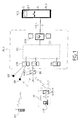
- the access network for RLAM mobile terminals which is shown in Fig. 1 essentially consists of a VCX switch, a local access network RLA and BR radio terminals. These are intended to communicate with MT mobile terminals.
- the local RLA access network is connected upstream to the VCX switch by the intermediary, at the ATM layer, of at least one standardized interface UNI_c (User Network Interface) and, downstream, at the BR radio terminals. It consists of a RD distribution network connected, on the one hand, to a set of CTR concentrators to which the BR terminals are connected and, on the other hand, to a virtual duct mixer BRIDGE type ATM ensuring the connection of the RD distribution network to VCX switch.
- UNI_c User Network Interface
- the RD distribution network and the PONT brewer perform mixing of virtual paths VP (virtual path). These conduits are permanent and established when the system is put into service. Each of them is dedicated to a given type of traffic (user data, signaling, etc.). Their topology is of the star type with fusion in upward direction (terminals BR to VCX switch) and diffusion in the direction descending (VCX switch to BR terminals). They are identified by VPI virtual path identifiers as described below.
- the PONT mixer also allows the passage of user data flows or signaling through or to different server equipment, such as that any one that has been referenced ES.
- This server equipment can for example be a transcoder, a macrodiversity operator, a processing unit of a security protocol, a flow control protocol server, etc.
- ARX server Another ARX server is represented whose description of the structure and operation is done below.
- CTR concentrators carry out establishment and release of virtual half-connections during phases establishment and termination of communications and, possibly, during phases where a mobile is in communication at the same time with two BR terminals connected to the local RLA network. These latter phases are called handover phases.
- Each BR radio terminal consists of an ARR_r adaptation unit ATM / radio linked upstream to a CTR concentrator and downstream to a radio unit UR_r which is specific to the radio system used.
- Each MT mobile terminal is essentially consisting of a TER terminal proper which is of the ATM type entirely complies with standards and which is connected to an AAR_m ATM / radio adaptation unit, by means of a UNI-t interface at the ATM layer.
- Unity AAR_m is itself connected to a UR_m radio unit which is designed to be able to communicate with the UR_r radio unit of each BR terminal on the network.
- UR_m unit is specific to the radio system used. Physically, the TER terminal, the unit AAR_m adapter and UR_m radio unit can be integrated in the same equipment or be separated.
- the SSCOP protocol secures the links of signaling and constantly monitoring the integrity of connections between terminals MT and the VCX switch. This protocol is triggered by a message from BEGIN trigger issued by both the VCX switch and the terminals MT and for which an BEGIN_Ack acknowledgment is expected. At the end of this acknowledgment, this protocol allows the periodic sending of POLL test messages which it also awaits the STAT result.
- the Q2931 establishment / release protocol it is intended to ensure the establishment and release of communications and, to do this, it transmits request messages from which it awaits acknowledgments.
- the Setup connection request message indicating a setup request. It is responded to such a request with an acknowledgment message called Call_proceeding.
- Call_proceeding We can cite the message to launch the Connect connection procedure and its Connect_ack acknowledgment.
- Each terminal can offer different teleservices such as telephony, access to the so-called internet network and all types of multimedia services, etc.
- the VCX switch is upstream connected for example to one or more other local access networks for RLAM mobiles with a structure identical or not to that which is shown in Fig. 1 and to one or more switched networks with fixed terminals RC.
- the role of the VCX switch is to establish call-by-call communications to from and to MT mobiles attached to the RLAM mobiles access network. He does it under the control of a CC call control unit (Call_Control).
- the half-connections ensuring the traffic of the cells of the plan are connected in the VCX switch, either to outgoing connections, if call communications outside the RLAM network, i.e. to half-connections attached to each mobile in the case of local communications between 2 mobiles attached to the RLAM network.
- the appeal procedure can be relayed to one of the networks to which the VCX switch is connected, which may require equipment called a unit UIF interworking to provide gateway functions if signage are different.
- the virtual path VPI identifier is unique and is generally, like access networks for fixed terminals, equal to zero.
- the identifier VCI of virtual circuit in the user plane it is chosen, for a communication given by the VCX switch at the time of call establishment implemented by the establishment / release protocol Q2931 and is kept for the entire duration of the call. It is called VCI_dat below.
- VCI_dat In the control plan, it has a value fixed once and for all, for example equal to five (normalized value).
- the VPI identifier of virtual path is equal to the value VPI_u allocated to the MT terminal when it arrives under the coverage of the access network for RLAM mobile terminals considered. He can do it either by setting walking from its waking state, either already in communication and arriving therefore another access network for RLAM mobile terminals.
- the identifier VCI of virtual circuit it has a value which is, in the user plan, equal to that VCI_dat which has been allocated, by the VCX switch, to the UNI_t interface above. In what concerns the control plane, the VCI identifier is also equal to that allocated to the UNI_t interface, for example five.
- each type of traffic (user data, signaling) is transported in permanent VP virtual conduits which are dedicated.
- these conduits VP virtual machines originate from CTR concentrators and are used to direct traffic which they transport to the appropriate direction: the VCX switch, an ES server such as adaptive equipment, a transcoder, a macrodiversity operator, a security protocol processing unit, or the ARX adaptation server.
- the VCX switch In the upstream direction, they route traffic to all CTR concentrators.
- the topology of VP virtual conduits is therefore a fusion in the uplink direction and a diffusion in the downward direction.
- the IPV assigned to a communication in the user plane is equal to 100.
- VCI virtual circuit identifier Inside a given VP conduit, the half-connections are differentiated using a VCI virtual circuit identifier. These are the circuit identifiers virtual VCI of the control plane called VCI_sig intended to support signaling from end to end and in particular allow the transport of messages generated by SSCOP and Q2931 establishment / release protocols; it's still also VCI virtual circuit identifiers from the VCI_dat user plane used to identify the half-connections supporting user traffic.
- the local RLA access network includes another ARX adaptation server whose function explained below is the establishment, rupture, mobility of bidirectional links which ensure the transfer of user data traffic and transfer of signaling messages in the local RLA network.
- the ARX adaptation server can be connected in one of the ways following. It can be connected to the VCX switch as a server. he can also be connected with the UNI_c multiplex connecting the RLA access network to the VCX switch. It can finally be connected as a branch on the access network RLA through the PONT brewer.
- the ARX adaptation server can have only one bidirectional access or 2 bidirectional access, one access for the downward direction of cells (VCX switch to BR radio terminals) and access for the upward direction (radio terminals BR to VCX switch).
- the branch connection on the BRIDGE mixer of the adaptation server ARX with a single bidirectional access has the advantage that the adaptation function of signaling to mobility problems remains localized in the RLA access network so the VCX switch can be standard ATM equipment intended for the origin for a fixed network.
- the ARX adaptation server is transparent as regards user cells. Only cells that carry signaling messages pass through the ARX server. To do this, the only cells that are diverted to the ARX server are the cells containing in their header, at the interfaces UNI_c or UNI_t, a VCI virtual circuit identifier equal to 5, a value which identifies indeed the membership of these cells in signaling messages, and this, that they arrive from the VCX switch or from the RD distribution network.
- FIG. 2a There is shown in FIG. 2a, the connections in the BRIDGE mixer as regards concerns user cells.
- the cells from the RD distribution network are transmitted on the UNI_c interface to the VCX switch and the cells from the VCX switch are transmitted to the RD distribution network. These cells do not therefore do not pass through the ARX adaptation server.
- Fig. 2b there are shown the connections in the PONT stirrer as regards concerns upstream signaling cells (BR radio terminals to switch VCX) and, in Fig. 2c, the connections with regard to the signaling cells downlink (VCX switch to BR radio terminals).
- the cells emanating from the distribution network RD are routed, in the PONT brewer, at the entrance to the ARX adaptation server, then pass through this last, and are then delivered again to the PONT brewer where they are re-routed to the VCX switch.
- the cells emanating from the VCX switch are switched, in the PONT brewer, at the entry of the ARX adaptation server, pass through the latter, and are then delivered again to the BRIDGE brewer where they are re-routed to the RD distribution network.
- the cells which pass through the ARX server carry identifiers of different virtual paths according to their origin, either the MV terminals or the switch VCX.
- Fig. 2d the connections for the signaling cells are shown. internal to the local RLA access network. These cells, as we will see later, carry messages belonging to protocols specific to the local access network RLA implemented at the ARX server level, for example to ensure the function of search for the physical address of a given terminal (so-called PAGING function) or functions for establishing and releasing connections in the local RLA network, known as here PRSS functions. As will also be seen later, the ATM cells which carry these specific messages will be identified by conduit identifiers VPI virtual and VCI virtual circuit reserved.
- the ARX adaptation server is designed to intercept all messages from signaling exchanged between the VCX switch and the MT mobile terminals and, both up and down. So these are the messages level 2 (for example the messages sent during the implementation of the SSCOP security) and level 3 messages (e.g. messages establishment / release issued during the implementation of the Q2931 protocol).
- the ARX adaptation server On reception of the ATM signaling cells, the ARX adaptation server reconstructs signaling messages by reassembly of these cells. For this do, it advantageously implements an ATM adaptation layer (ATM Adaptation Layer) type 5 (AAL5) whose functions are described in ITU recommendations.
- ATM adaptation layer ATM Adaptation Layer
- AAL5 ATM adaptation layer type 5
- the ARX adaptation server analyzes and decodes the messages received and according to of the nature and content of these messages, it possibly triggers an action which may be the implementation of a network specific signaling protocol RLA access, i.e. a terminal search protocol, generally a protocol known as PAGING, a PRSS protocol for managing connections in the local RLA network, for example establishing / releasing connections, managing ATM resources and radio resources of the RLAM access network. Possibly, can also trigger the emission of trace messages reporting on activity on signaling links. This function can be used by network administrator for maintenance and statistical checks traffic.
- these specific protocols concern the adaptation server ARX and the end devices that are radio terminals and terminals mobile.
- the messages exchanged by these specific protocols are conveyed by permanent canals built in the RLA access network. These channels therefore reserved VPI and VCI circuit identifiers.
- these permanent channels are of the type ARX server downlink to MT and point-to-point mobiles with upstream merger.
- these channels are of the point-to-point type in both senses.
- these specific protocols search for PAGING terminals and PRSS connection management
- the procedures are simpler and, in the second case, they are better secured.
- these signaling messages are not secured by a security protocol of the SSCOP type.
- the ARX server After decoding a message and triggering an action, the ARX server segments this message and retransmits it as ATM cells. If the message comes from the VCX switch, it will be retransmitted to an MT terminal. However, if the message comes from an MT terminal, it will be retransmitted to the VCX switch.
- VPI virtual path identifiers carried by the headers of ATM cells. The direction is also determined by the VPI virtual path identifier.
- the ARX server for this re-transmission, advantageously implements a ATM adaptation layer (ATM Adaptation Layer) type 5 (AAL5) whose functions are described in the ITU recommendations.
- ATM adaptation layer ATM Adaptation Layer
- AAL5 ATM adaptation layer type 5
- the ARX server is completely transparent with regard to intercepted messages, both semantically and temporally. In other words, the contents of the messages are not modified and their crossing time in the ARX server is short enough so that the exchange protocols are not affected and, for example, that wait timers do not do not unduly expire either in the VCX switch or in an MT terminal. It will be understood that a fortiori, the ARX server does not eliminate any message.
- the first phase allows the opening of a signaling while the second allows the opening of a user channel for transport information related to user traffic.
- ATM end devices therefore have batteries standard protocols, for example, the SSCOP and Q2931 protocol stacks.
- level 3 such as that standardized Q2931 which is implemented.
- the signaling links must be secure, which implies the prior implementation of a level 2 protocol, such as the standardized one called SSCOP.
- This SSCOP security protocol controls the integrity of the connections between the MV terminals and the command installed in the VCX switch.
- each call is secured by the implementation of the protocol security, of the SSCOP type, but it is actually a bundle of links which is established at demand between the VCX switch on the one hand and all terminals on the other MV in call phase and in communication phase. For a given MV terminal, this is the entire connection between the VCX switch and this MT terminal which is established during the call establishment phase which is broken during the release phase of Communication.
- the SSCOP security protocol stacks are not installed than in the VCX switch and in MV terminals, which has the advantage to be simpler and less costly in materials.
- Procedures for establishing links for transporting transmitted messages by the SSCOP security protocol and by the establishment / release protocol Q2931 are different depending on whether it is an incoming half call or a half call outgoing.
- the MT terminal which calls reserve, by implementing the RES_s protocol radio resources necessary for the routing of signaling traffic then transmits, via the radio link thus formed between the units AAR_m and ARR_r, a call message Req to the adaptation unit ARR_r of the radio terminal BR under which the terminal is located.
- This sends the Req message to the ARX server via a specialized channel whose reserved virtual path and circuit identifiers are respectively VPI_rss and the VCI_rss.
- This channel is permanent and is defined from each terminal to address the ARX server.
- ARX server determines virtual signaling circuit identifier VCI_sig and establishes a correspondence between the temporary address @mobile contained in the Req message and the identifier VCI_sig. This temporary @mobile address was allocated to the mobile while it was in the standby state under the coverage of the access network to RLAM mobiles.
- the ARX server then activates the PRSS protocol for managing the RLA network in order to carry out the command to mark MARQ_s of a signaling channel in the RLA access network whose virtual circuit identifier is VCI_sig.
- VCI_sig virtual circuit identifier
- the ARX server sends an acknowledgment message establishment E_Ack to the BR terminal considered via a channel identified by the virtual path identifier VPl_st_x and the virtual circuit identifier VCI_sig of the previously defined signaling channel of the RLA network.
- the conduit identifier virtual VPl_st_x is that of a permanent conduit established between the ARX server and the particular terminal BR identified by x.
- a set of point-to-point conduits must therefore be built in the local RLA access network to ensure the transport of signaling information between ARX and BR terminals.
- the acknowledgment message Ack is then received by the terminal MT.
- the SSCOP security protocol being implemented only in the switch VCX and in the MT terminal, is therefore now implemented. In accordance with the standard, it consists of sending a protocol protocol trigger message BEGIN security, its acknowledgment response and then periodic exchanges POLL tests acknowledged by STAT responses.
- the subsequent call phase takes place using the signaling channel which has been established above. It consists, for example, in the implementation of the protocol standardized Q2931.
- a Setup connection request message there is transmission from the terminal MT, a Setup connection request message.
- the VCX switch analyzes the contents of the Setup message and responds with an acknowledgment message Call_Proceeding which contains the virtual circuit identifier VCI_dat allocated to the communication.
- the Setup connection request message is sent to the terminal called with which the calling MT terminal wants to enter into communication. Note that this terminal can be local (under the coverage of the local RLAM access network) or at otherwise external.
- the ARX server intercepts the Call_Proceeding acknowledgment message sent by the VCX switch and then activates the PRSS protocol for managing the local RLA network. This will then proceed to mark MARQ_u of a half-connection ATM in the local network RLA including the virtual circuit identifier VCI_dat is the one assigned by the VCX switch.
- This PRSS protocol will also reserve, by implementing the RES_u protocol, the necessary radio resources for the routing of user traffic.
- the messages emitted by the PRSS protocol are transported in the local RLA access network on an ATM channel identified by a reserved VPI virtual path identifier, for example 80, and the circuit identifier virtual VCI-sig allocated to the signaling channel.
- the VCX switch Upon receipt of the Connect connection message sent by the called terminal, the VCX switch sends a message to the calling terminal Connect and, at the called terminal, an Ack connection acknowledgment message.
- the terminal calling MT On receipt of the Connect message, the terminal calling MT addresses the VCX switch Ack connection acknowledgment message. Communication is established.
- VCI_dat User traffic is transported in the local RLA network on the half-connection identified by the virtual circuit identifier VCI_dat.
- traffic of messages sent periodically throughout the duration of the communication by the protocol of SSCOP security (POLL and STAT instructions) to check the integrity of this half connection it is transported on the half connection identified by the identifier of virtual signaling circuit VCI_sig.
- the terminal mobile MT called is located inside the geographic area covered by the radio terminals of the RLAM access network. It is already identified by an identifier of VPl_u virtual conduit, but we do not know the physical address of the radio terminal BR under which it is located (or was located).
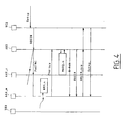
- the VCX switch receives a request request message. Connection Setup which emanates from the Q2931 connection establishment procedure of the calling terminal. Noting that the level 2 link does not exist, the switch VCX activates the SSCOP security protocol and therefore launches a attempt to establish this connection. To do this, it issues a message of BEGIN trigger for which it awaits a response.
- the Setup connection request message has the number (code E164, for example) of the called terminal. This terminal, if it is in the standby state under the cover of the RLAM, is identified in an allocation table of the VCX switch which makes correspond to this number a VPI_u virtual path identifier.
- the message BEGIN of the SSCOP protocol is therefore transmitted by the virtual signaling channel identified by this identifier VPl_u and by the virtual circuit identifier reserved for the signaling, for example 5.
- the ARX adaptation server intercepts the BEGIN trigger message of the SSCOP security protocol and then triggers a search protocol for terminal, named in the PAGING technique. It establishes a correspondence between the identifier VPI_u carried by the header of the cells of the triggering message BEGIN and the logical address @mobile of the called terminal.
- the message of the protocol of PAGING which therefore contains the @mobile logical address of the called terminal is broadcast to all mobiles located under the RLAM network.
- the PAGING protocol message is transmitted on a channel broadcasting permanent including virtual path and circuit identifiers VPl_pag and VCI_pag are reserved.
- the ARX server determines a virtual circuit identifier signaling device VCI_sig and establishes a correspondence between the temporary address @mobile logic and the VCI_sig identifier.
- the ARX server then activates the protocol PRSS for managing the local RLA network, which has the effect of controlling the marking MARQ_s of a VCI_sig signaling channel in the RLA access network.
- the ARX server sends an acknowledgment message E_Ack to the BR terminal considered via a channel identified by the conduit identifier VPl_st_x and the virtual circuit identifier VCI_sig of the signaling channel previously defined from the RLA network.
- the virtual path identifier VPl_st_x is that the permanent conduit established between the ARX server and the particular BR terminal identified by x.
- the acknowledgment message E_Ack is then received by the terminal MT.
- the BEGIN trigger message that triggered the search protocol PAGING terminal has been temporarily stored in the ARX adaptation server until radio and ATM resources are reserved. Now that the channel signaling is open, the BEGIN start message is issued by the ARX adaptation server to the called terminal, which then acknowledges it by sending an acknowledgment message BEGIN_Ack to the VCX switch. The binding of level 2 is established. The VCX switch notices this and transmits immediately, direction of the MT terminal, a Setup connection request message which initializes the proper appeal procedure.
- the VCX switch should only send BEGIN triggering that when, on the one hand, it decodes messages requesting Setup connection and when, on the other hand, the connection for transporting messages from the SSCOP security protocol is not yet established. Indeed, in addition to this case in particular, it should not issue such BEGIN messages when internal links to the local RLA network and the radio links have been released, which would have the effect of restart the PAGING call procedure.
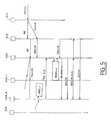
- FIG. 5 Another embodiment to also solve the problem mentioned above.
- the signaling messages normally transmitted to the VCX switch pass beforehand through a FIL server or filter.
- This one has function, to filter these messages and, upon receipt of such a Setup message corresponding to an incoming call (call from an MV terminal located under the access network coverage), to transmit, via the VCX switch or by a specialized link, to the adaptation server ARX a message ME triggering the PAGING terminal search procedure.
- this message ME Intercepted by the ARX server, this message ME has the effect of triggering the PAGING procedure, which is then identical to that which is described in relation to the previous mode of implementation.
- the PAGING search procedure triggers the RES_s procedure which reserves the radio resources necessary for signaling traffic.
- a Pag_Ack message is then transmitted to the ARX server. This, like the mode of previous realization, command the MARQ_s marking of the signaling channel in the RLA network. Once this operation is completed, an acknowledgment message E_Ack is transmitted to the MT terminal.
- the VCX switch periodically issues messages BEGIN trigger which, when the signaling channel is established, is transmitted to the MT terminal. This responds with an acknowledgment message BEGIN_Ack.
- the VCX switch When the links between an MT terminal and the VCX switch are released, the VCX switch periodically issues BEGIN trigger messages, which do not, as previously, have the effect of triggering the PAGING terminal search. Indeed, it is not triggered by such BEGIN message but by a specific ME message sent by the FIL server.
- the user can be led to successively establish several communications from its MT terminal by “superimposing” them; for example it starts with a interpersonal communication such as a videophone which he then accompanies with consultation on the Intemet network. In this case, it is useless to open another channel of signaling, the preliminary phase therefore becomes unnecessary before establishing the call to the Internet network.
- the VCX switch transmits to the MT terminal a Release release message. If it is the MT terminal which is the origin of the communication release, it is he who issues a message of release release.
- the ARX server intercepts this release message Release and then triggers the internal PRSS protocol which aims to free the half-connections ATM signaling and data traffic transport, as well as the release of radio resources.
- the connection for the transport of protocol messages SSCOP security is now physically broken. MV terminals and VCX switch will try in vain to restore it by sending messages from BEGIN beginning, either indefinitely or in limited numbers.
- the ARX server After releasing a communication, the ARX server arms a timeout long enough to hide all BEGIN start messages in from the VCX switch and which have the same path identifier virtual VPl_u than the one assigned to said communication. Indeed, the ARX server must absolutely ignore these BEGIN start messages otherwise it would launch into a preliminary phase of PAGING terminal research which in this specific case any sense.
- the release will have for object the only release of the resources which were consumed by the communication broken.
- the signaling channel will remain open.
Landscapes
- Engineering & Computer Science (AREA)
- Computer Networks & Wireless Communication (AREA)
- Signal Processing (AREA)
- Mobile Radio Communication Systems (AREA)
- Data Exchanges In Wide-Area Networks (AREA)
- Small-Scale Networks (AREA)
- Communication Control (AREA)
Applications Claiming Priority (2)
| Application Number | Priority Date | Filing Date | Title |
|---|---|---|---|
| FR9811527 | 1998-09-11 | ||
| FR9811527A FR2783382B1 (fr) | 1998-09-11 | 1998-09-11 | Reseau d'acces pour des terminaux mobiles |
Publications (1)
| Publication Number | Publication Date |
|---|---|
| EP0986286A1 true EP0986286A1 (de) | 2000-03-15 |
Family
ID=9530474
Family Applications (1)
| Application Number | Title | Priority Date | Filing Date |
|---|---|---|---|
| EP99402138A Withdrawn EP0986286A1 (de) | 1998-09-11 | 1999-08-27 | Zugriffsnetzwerk für drahtlose Endgeräte |
Country Status (5)
| Country | Link |
|---|---|
| US (1) | US6529484B1 (de) |
| EP (1) | EP0986286A1 (de) |
| JP (1) | JP2000115257A (de) |
| CA (1) | CA2282110A1 (de) |
| FR (1) | FR2783382B1 (de) |
Cited By (1)
| Publication number | Priority date | Publication date | Assignee | Title |
|---|---|---|---|---|
| SG163431A1 (en) * | 2001-12-19 | 2010-08-30 | Qualcomm Inc | Efficient multicasting for packet data systems |
Families Citing this family (11)
| Publication number | Priority date | Publication date | Assignee | Title |
|---|---|---|---|---|
| US7027425B1 (en) * | 2000-02-11 | 2006-04-11 | Alereon, Inc. | Impulse radio virtual wireless local area network system and method |
| EP1217841A2 (de) * | 2000-11-27 | 2002-06-26 | Media Glue Corporation | System, Vorrichtung, Verfahren und Computerprogrammprodukt zur Trennung und Mischung von Bitströmen |
| JP4338993B2 (ja) * | 2003-02-28 | 2009-10-07 | モトローラ・インコーポレイテッド | 無線端末のセッション制御方法及びインターフェース設定方法 |
| US7797002B2 (en) * | 2003-07-10 | 2010-09-14 | Mitsubishi Denki Kabushiki Kaisha | Paging control method, paging control apparatus, and radio access network |
| WO2005114443A2 (en) * | 2004-04-23 | 2005-12-01 | Thomson Licensing S.A. | Infrared data association object network storage device |
| RU2387103C2 (ru) * | 2005-06-03 | 2010-04-20 | Нокиа Корпорейшн | Способ и система установления соединения между сетевыми элементами |
| US8311983B2 (en) * | 2009-04-28 | 2012-11-13 | Whp Workflow Solutions, Llc | Correlated media for distributed sources |
| US10419722B2 (en) | 2009-04-28 | 2019-09-17 | Whp Workflow Solutions, Inc. | Correlated media source management and response control |
| US10565065B2 (en) | 2009-04-28 | 2020-02-18 | Getac Technology Corporation | Data backup and transfer across multiple cloud computing providers |
| CN102196394B (zh) * | 2010-03-16 | 2016-03-30 | 中兴通讯股份有限公司 | 信令跟踪信息的发送方法及装置 |
| CN120264345A (zh) * | 2025-04-30 | 2025-07-04 | 中国电信股份有限公司卫星通信分公司 | 呼叫通信方法、系统、电子设备、存储介质及程序产品 |
Family Cites Families (10)
| Publication number | Priority date | Publication date | Assignee | Title |
|---|---|---|---|---|
| US5487065A (en) * | 1993-05-26 | 1996-01-23 | The Trustees Of Columbia University In The City Of New York | Method and apparatus for supporting mobile communications in asynchronous transfer mode based networks |
| US5633868A (en) * | 1994-10-17 | 1997-05-27 | Lucent Technologies Inc. | Virtual circuit management in cellular telecommunications |
| US6195352B1 (en) * | 1996-03-15 | 2001-02-27 | Network Associates, Inc. | System and method for automatically identifying and analyzing currently active channels in an ATM network |
| US5751698A (en) * | 1996-03-15 | 1998-05-12 | Network General Technology Corporation | System and method for automatically identifying and analyzing active channels in an ATM network |
| FR2746992B1 (fr) * | 1996-03-27 | 1998-09-04 | Quinquis Jean Paul | Reseau local d'acces a des mobiles |
| DE19639845C1 (de) * | 1996-09-27 | 1998-04-02 | Philips Patentverwaltung | Lokales Netzwerk mit Sende- und Empfangsvorrichtung |
| US6094424A (en) * | 1997-02-11 | 2000-07-25 | At&T Corp. | Mobile host roaming ATM virtual circuit rerouting method and apparatus |
| FI105878B (fi) * | 1997-06-13 | 2000-10-13 | Nokia Networks Oy | Yhteydentunnistus langattoman tietoliikenneverkon siirtojärjestelmässä ATM-protokollapinon yli |
| SE520266C2 (sv) * | 1997-06-16 | 2003-06-17 | Ericsson Telefon Ab L M | Metod och anordning för att reglera kommunikationstrafiken i ett accessnät |
| AU2001231039A1 (en) * | 2000-01-20 | 2001-07-31 | Mci Worldcom, Inc. | Intelligent network and method for providing voice telephony over atm and alias addressing |
-
1998
- 1998-09-11 FR FR9811527A patent/FR2783382B1/fr not_active Expired - Fee Related
-
1999
- 1999-08-27 EP EP99402138A patent/EP0986286A1/de not_active Withdrawn
- 1999-09-01 US US09/388,096 patent/US6529484B1/en not_active Expired - Fee Related
- 1999-09-10 CA CA002282110A patent/CA2282110A1/en not_active Abandoned
- 1999-09-10 JP JP11258079A patent/JP2000115257A/ja active Pending
Non-Patent Citations (4)
| Title |
|---|
| LA PORTA T F ET AL: "DISTRIBUTED CALL PROCESSING FOR WIRELESS MOBILE NETWORKS", AT & T TECHNICAL JOURNAL, vol. 1, no. 2, 21 September 1996 (1996-09-21), pages 127 - 142, XP000656010 * |
| MARKOULIDAKIS J G ET AL: "TERMINAL DETACH SCENARIOS IN FUTURE MOBILE TELECOMMUNICATIONS", INTERNATIONAL JOURNAL OF WIRELESS INFORMATION NETWORKS, vol. 1, no. 4, 1 January 1994 (1994-01-01), pages 253 - 269, XP000198624 * |
| SOLE-PARETA J ET AL: "NETWORK-BASED PARALLEL COMPUTING OVER ATM USING IMPROVED SSCOP PROTOCOL", COMPUTER COMMUNICATIONS, vol. 19, no. 11, 1 September 1996 (1996-09-01), pages 915 - 926, XP000635577 * |
| VEERARAGHAVAN M ET AL: "A DISTRIBUTED CONTROL STRATEGY FOR WIRELESS ATM NETWORKS", WIRELESS NETWORKS, vol. 1, no. 3, 1 October 1995 (1995-10-01), pages 323 - 338, XP000538244 * |
Cited By (2)
| Publication number | Priority date | Publication date | Assignee | Title |
|---|---|---|---|---|
| SG163431A1 (en) * | 2001-12-19 | 2010-08-30 | Qualcomm Inc | Efficient multicasting for packet data systems |
| US8098607B2 (en) | 2001-12-19 | 2012-01-17 | Qualcomm Incorporated | Efficient multi-cast broadcasting for packet data systems |
Also Published As
| Publication number | Publication date |
|---|---|
| US6529484B1 (en) | 2003-03-04 |
| CA2282110A1 (en) | 2000-03-11 |
| FR2783382A1 (fr) | 2000-03-17 |
| JP2000115257A (ja) | 2000-04-21 |
| FR2783382B1 (fr) | 2000-10-20 |
Similar Documents
| Publication | Publication Date | Title |
|---|---|---|
| CA2030685C (fr) | Procede de gestion des flux dans un reseau numerique de telecommunication a integration de services, a large bande, et reseau pour la mise en oeuvre de ce procede | |
| EP0568453B1 (de) | Optisches System zum Anschluss der Teilnehmereinrichtungen an eine Vermittlungszentrale eines Telekommunikationsnetzes mit interaktiven und nichtinteraktiven Diensten | |
| JPH11504191A (ja) | テレフォニ・システムにおけるサービス用の分散アーキテクチャ | |
| EP0986286A1 (de) | Zugriffsnetzwerk für drahtlose Endgeräte | |
| JP2000115200A (ja) | Atmネットワ―クにおいて呼設定レ―トを減らす方法および装置 | |
| FR2832006A1 (fr) | Procede de mise en oeuvre d'un reseau de communication redondant de type ethernet full-duplex commute | |
| US20030093544A1 (en) | ATM video caching system for efficient bandwidth usage for video on demand applications | |
| WO1997044986A1 (en) | Broadband communication system having a virtual circuit space switch | |
| US8144690B2 (en) | ATM multicasting for delivering information over a network | |
| EP0771132B1 (de) | Anlage zur Regulierung des ATM-Zellenflusses in einer ATM-Vermittlungsstelle | |
| EP3370363B1 (de) | Hybride datentransportlösung, insbesondere für verbindungen über satellit | |
| EP0956682B1 (de) | Vorrichtung zur allgemeinen leitweglenkung von nachrichten in verschiedenen formaten und unterschiendlichen protokollen | |
| US20030187979A1 (en) | Method of and a system for data exchange over a data network such as the public internet | |
| WO2001015386A2 (en) | Differentiated services provisioning for legacy systems | |
| EP0798944B1 (de) | Lokales Netz mit Zugang zu mobilen Teilnehmern | |
| JP3394430B2 (ja) | ネットワークシステム及び交換機 | |
| EP0814625B1 (de) | Lokales Netz mit Zugang für mobile Teilnehmer, welches mit Mitteln zur Verwaltung der Systemressourcen ausgestattet ist | |
| EP0805611B1 (de) | Lokales Netz mit Zugang zu mobilen Teilnehmern | |
| FR2698748A1 (fr) | Réseau hertzien et procédé pour transmettre des services supplémentaires dans ce réseau. | |
| EP1180318B1 (de) | Teilnehmerinnenvorrichtung mit mehreren atm-endeinrichtungen | |
| US7383351B1 (en) | Method and apparatus for efficient SPVC destination endpoint address change | |
| EP1145590A2 (de) | Zugangsnetz für mobile endgeräte | |
| FR2858504A1 (fr) | Procede et systeme de transmission de donnees a haut debit et a qualite de service predeterminee dans un reseau de telecommunications | |
| Mathy et al. | The ACCOPI Multimedia Transport Service over ATM | |
| FR2701793A1 (fr) | Réservation de débit dans un réseau à transfert temporel asynchrone. |
Legal Events
| Date | Code | Title | Description |
|---|---|---|---|
| PUAI | Public reference made under article 153(3) epc to a published international application that has entered the european phase |
Free format text: ORIGINAL CODE: 0009012 |
|
| AK | Designated contracting states |
Kind code of ref document: A1 Designated state(s): DE ES GB IT |
|
| AX | Request for extension of the european patent |
Free format text: AL;LT;LV;MK;RO;SI |
|
| 17P | Request for examination filed |
Effective date: 20000327 |
|
| AKX | Designation fees paid |
Free format text: DE ES GB IT |
|
| GRAP | Despatch of communication of intention to grant a patent |
Free format text: ORIGINAL CODE: EPIDOSNIGR1 |
|
| STAA | Information on the status of an ep patent application or granted ep patent |
Free format text: STATUS: THE APPLICATION IS DEEMED TO BE WITHDRAWN |
|
| 18D | Application deemed to be withdrawn |
Effective date: 20051201 |