EP0986561B1 - Composes pour l'inhibition de la transduction de signaux a mediation ceramide - Google Patents
Composes pour l'inhibition de la transduction de signaux a mediation ceramide Download PDFInfo
- Publication number
- EP0986561B1 EP0986561B1 EP98922323A EP98922323A EP0986561B1 EP 0986561 B1 EP0986561 B1 EP 0986561B1 EP 98922323 A EP98922323 A EP 98922323A EP 98922323 A EP98922323 A EP 98922323A EP 0986561 B1 EP0986561 B1 EP 0986561B1
- Authority
- EP
- European Patent Office
- Prior art keywords
- carbon atoms
- alkyl
- amino
- compound
- less
- Prior art date
- Legal status (The legal status is an assumption and is not a legal conclusion. Google has not performed a legal analysis and makes no representation as to the accuracy of the status listed.)
- Expired - Lifetime
Links
- 0 *N(c1n[s]nc1C(N1*)=O)C1=O Chemical compound *N(c1n[s]nc1C(N1*)=O)C1=O 0.000 description 1
Images




Classifications
-
- C—CHEMISTRY; METALLURGY
- C07—ORGANIC CHEMISTRY
- C07D—HETEROCYCLIC COMPOUNDS
- C07D239/00—Heterocyclic compounds containing 1,3-diazine or hydrogenated 1,3-diazine rings
- C07D239/02—Heterocyclic compounds containing 1,3-diazine or hydrogenated 1,3-diazine rings not condensed with other rings
- C07D239/24—Heterocyclic compounds containing 1,3-diazine or hydrogenated 1,3-diazine rings not condensed with other rings having three or more double bonds between ring members or between ring members and non-ring members
- C07D239/28—Heterocyclic compounds containing 1,3-diazine or hydrogenated 1,3-diazine rings not condensed with other rings having three or more double bonds between ring members or between ring members and non-ring members with hetero atoms or with carbon atoms having three bonds to hetero atoms with at the most one bond to halogen, directly attached to ring carbon atoms
- C07D239/46—Two or more oxygen, sulphur or nitrogen atoms
- C07D239/52—Two oxygen atoms
- C07D239/54—Two oxygen atoms as doubly bound oxygen atoms or as unsubstituted hydroxy radicals
- C07D239/545—Two oxygen atoms as doubly bound oxygen atoms or as unsubstituted hydroxy radicals with other hetero atoms or with carbon atoms having three bonds to hetero atoms with at the most one bond to halogen, directly attached to ring carbon atoms
-
- A—HUMAN NECESSITIES
- A61—MEDICAL OR VETERINARY SCIENCE; HYGIENE
- A61P—SPECIFIC THERAPEUTIC ACTIVITY OF CHEMICAL COMPOUNDS OR MEDICINAL PREPARATIONS
- A61P17/00—Drugs for dermatological disorders
-
- A—HUMAN NECESSITIES
- A61—MEDICAL OR VETERINARY SCIENCE; HYGIENE
- A61P—SPECIFIC THERAPEUTIC ACTIVITY OF CHEMICAL COMPOUNDS OR MEDICINAL PREPARATIONS
- A61P29/00—Non-central analgesic, antipyretic or antiinflammatory agents, e.g. antirheumatic agents; Non-steroidal antiinflammatory drugs [NSAID]
-
- A—HUMAN NECESSITIES
- A61—MEDICAL OR VETERINARY SCIENCE; HYGIENE
- A61P—SPECIFIC THERAPEUTIC ACTIVITY OF CHEMICAL COMPOUNDS OR MEDICINAL PREPARATIONS
- A61P43/00—Drugs for specific purposes, not provided for in groups A61P1/00-A61P41/00
-
- C—CHEMISTRY; METALLURGY
- C07—ORGANIC CHEMISTRY
- C07D—HETEROCYCLIC COMPOUNDS
- C07D213/00—Heterocyclic compounds containing six-membered rings, not condensed with other rings, with one nitrogen atom as the only ring hetero atom and three or more double bonds between ring members or between ring members and non-ring members
- C07D213/02—Heterocyclic compounds containing six-membered rings, not condensed with other rings, with one nitrogen atom as the only ring hetero atom and three or more double bonds between ring members or between ring members and non-ring members having three double bonds between ring members or between ring members and non-ring members
- C07D213/04—Heterocyclic compounds containing six-membered rings, not condensed with other rings, with one nitrogen atom as the only ring hetero atom and three or more double bonds between ring members or between ring members and non-ring members having three double bonds between ring members or between ring members and non-ring members having no bond between the ring nitrogen atom and a non-ring member or having only hydrogen or carbon atoms directly attached to the ring nitrogen atom
- C07D213/60—Heterocyclic compounds containing six-membered rings, not condensed with other rings, with one nitrogen atom as the only ring hetero atom and three or more double bonds between ring members or between ring members and non-ring members having three double bonds between ring members or between ring members and non-ring members having no bond between the ring nitrogen atom and a non-ring member or having only hydrogen or carbon atoms directly attached to the ring nitrogen atom with hetero atoms or with carbon atoms having three bonds to hetero atoms with at the most one bond to halogen, e.g. ester or nitrile radicals, directly attached to ring carbon atoms
- C07D213/72—Nitrogen atoms
- C07D213/76—Nitrogen atoms to which a second hetero atom is attached
-
- C—CHEMISTRY; METALLURGY
- C07—ORGANIC CHEMISTRY
- C07D—HETEROCYCLIC COMPOUNDS
- C07D217/00—Heterocyclic compounds containing isoquinoline or hydrogenated isoquinoline ring systems
- C07D217/22—Heterocyclic compounds containing isoquinoline or hydrogenated isoquinoline ring systems with hetero atoms or with carbon atoms having three bonds to hetero atoms with at the most one bond to halogen, e.g. ester or nitrile radicals, directly attached to carbon atoms of the nitrogen-containing ring
- C07D217/24—Oxygen atoms
-
- C—CHEMISTRY; METALLURGY
- C07—ORGANIC CHEMISTRY
- C07D—HETEROCYCLIC COMPOUNDS
- C07D239/00—Heterocyclic compounds containing 1,3-diazine or hydrogenated 1,3-diazine rings
- C07D239/70—Heterocyclic compounds containing 1,3-diazine or hydrogenated 1,3-diazine rings condensed with carbocyclic rings or ring systems
- C07D239/72—Quinazolines; Hydrogenated quinazolines
- C07D239/95—Quinazolines; Hydrogenated quinazolines with hetero atoms directly attached in positions 2 and 4
- C07D239/96—Two oxygen atoms
-
- C—CHEMISTRY; METALLURGY
- C07—ORGANIC CHEMISTRY
- C07D—HETEROCYCLIC COMPOUNDS
- C07D473/00—Heterocyclic compounds containing purine ring systems
- C07D473/02—Heterocyclic compounds containing purine ring systems with oxygen, sulphur, or nitrogen atoms directly attached in positions 2 and 6
- C07D473/04—Heterocyclic compounds containing purine ring systems with oxygen, sulphur, or nitrogen atoms directly attached in positions 2 and 6 two oxygen atoms
- C07D473/06—Heterocyclic compounds containing purine ring systems with oxygen, sulphur, or nitrogen atoms directly attached in positions 2 and 6 two oxygen atoms with radicals containing only hydrogen and carbon atoms, attached in position 1 or 3
-
- C—CHEMISTRY; METALLURGY
- C07—ORGANIC CHEMISTRY
- C07D—HETEROCYCLIC COMPOUNDS
- C07D473/00—Heterocyclic compounds containing purine ring systems
- C07D473/02—Heterocyclic compounds containing purine ring systems with oxygen, sulphur, or nitrogen atoms directly attached in positions 2 and 6
- C07D473/04—Heterocyclic compounds containing purine ring systems with oxygen, sulphur, or nitrogen atoms directly attached in positions 2 and 6 two oxygen atoms
- C07D473/06—Heterocyclic compounds containing purine ring systems with oxygen, sulphur, or nitrogen atoms directly attached in positions 2 and 6 two oxygen atoms with radicals containing only hydrogen and carbon atoms, attached in position 1 or 3
- C07D473/10—Heterocyclic compounds containing purine ring systems with oxygen, sulphur, or nitrogen atoms directly attached in positions 2 and 6 two oxygen atoms with radicals containing only hydrogen and carbon atoms, attached in position 1 or 3 with methyl radicals in positions 3 and 7, e.g. theobromine
-
- C—CHEMISTRY; METALLURGY
- C07—ORGANIC CHEMISTRY
- C07D—HETEROCYCLIC COMPOUNDS
- C07D475/00—Heterocyclic compounds containing pteridine ring systems
- C07D475/02—Heterocyclic compounds containing pteridine ring systems with an oxygen atom directly attached in position 4
-
- C—CHEMISTRY; METALLURGY
- C07—ORGANIC CHEMISTRY
- C07D—HETEROCYCLIC COMPOUNDS
- C07D513/00—Heterocyclic compounds containing in the condensed system at least one hetero ring having nitrogen and sulfur atoms as the only ring hetero atoms, not provided for in groups C07D463/00, C07D477/00 or C07D499/00 - C07D507/00
- C07D513/02—Heterocyclic compounds containing in the condensed system at least one hetero ring having nitrogen and sulfur atoms as the only ring hetero atoms, not provided for in groups C07D463/00, C07D477/00 or C07D499/00 - C07D507/00 in which the condensed system contains two hetero rings
- C07D513/04—Ortho-condensed systems
Definitions
- the invention relates to compounds effective in modulating cellular responses stimulated by ceramide-mediated signal transduction, in particular in response to stimulus by the cytokine tumor necrosis factor ⁇ (TNF- ⁇ ). More specifically, it relates to compounds which inhibit the development of conditions associated with cell stimulus through the ceramide-mediated signal transduction pathway.
- TNF- ⁇ cytokine tumor necrosis factor ⁇
- the sphingomyelin pathway is a cellular signal transduction pathway that is believed to be involved in mediating cellular responses to several cytokines (including TNF- ⁇ and IL- I ⁇ ) and growth factors (e.g., platelet derived growth factor and fibroblast growth factor) (see , e.g., Dressler, et al., Science , 259:1715-1718, 1992; and, Jacobs and Kester, Amer.J.Physiol ., 265: 740-747, 1993). It is believed that interaction of such molecules with cell surface receptors triggers activation of a plasma membrane sphingomyelinase.
- cytokines including TNF- ⁇ and IL- I ⁇
- growth factors e.g., platelet derived growth factor and fibroblast growth factor
- Ceramide in turn catalyzes the hydrolysis of sphingomyelin to ceramide and phosphocholine. Ceramide is believed to act as a second messenger through activation of a proline-directed, serine/threonine kinase (ceramide-activated protein kinase or "CaPK"). Ceramide also interacts with MAP kinase and protein kinase C zeta (see , e.g., Rivas, et al., Blood, 83:2191-2197, 1993) and with a serine/threonine protein phosphatase ( see , Hannun, et al., TIBS , 20:73-77, 1995).
- the invention is directed toward the development and use of compounds to inhibit cellular responses to ceramide metabolites of the sphingomyelin signal transduction pathway, such as inflammation, fibrosis, ultraviolet light induced cutaneous immune suppression, cell senescence and apoptosis.
- the invention consists of novel compounds comprised of heterocyclic molecules with biologically active side chains (the "compounds of the invention”).
- Purine, pteridine, thiadiazolopyrimidine, quinalozine and isoquinolone based compounds are included in the invention.
- Particularly preferred among these compounds are those which have enhanced water solubility; e.g., morpholinoethyl esters of the compounds of the invention.
- the compounds of the invention do not inhibit the activity of cAMP phosphodiesterase and therefore do not pose the risk of side-effects associated with other TNF- ⁇ inhibitors (e.g., pentoxifylline), such as sleeplessness and anxiety.
- TNF- ⁇ inhibitors e.g., pentoxifylline
- one of the more potent TNF- ⁇ activity inhibitors among the compounds of the invention (compound 37) had the least inhibitory effect on phosphodiesterase type IV, the predominant phosphodiesterase isoenzyme in monocytes and neutrophils. This is due to the fact that compounds such as 37 do not have a methylxanthine structure.
- Many common phosphodiesterase inhibitors are methylxanthine compounds.
- the compounds of the invention inhibit apoptosis and retard cellular responses to TNF- ⁇ in vitro and in vivo with greater potency than pentoxifylline.
- the potency of at least the non-isoquinolone compounds appears to be dependent in part on the presence of ring nitrogens (other than the pyrimidine nitrogens), suggesting that binding to the target receptor responsible for inhibition of the activity of TNF- ⁇ observed is also regulated to some extent by the presence of such ring nitrogens.
- the effects of all of the compounds appear to be totally unrelated to phosphodiesterase inhibition.
- Jun kinase a stress-activated protein kinases
- JNK Jun kinase
- compounds of the invention particularly the isoquinolines, have shown activity as inhibitors of Jun kinase activation induced by anisomycin (a non-specific protein synthesis inhibitor) in MOLT-4 human lymphoblastoid cells or by LPS in RAW mouse macrophages. Therefore, a possible mechanism of activity of these compounds is the inhibition of one arm of the stress response pathway involving a Jun kinase in response to stress or to ceramide.
- novel compounds may be used in inhibiting ceramide-activated cellular responses to stimuli, in particular stimuli for cell senescence and apoptosis. This has potential therapeutic significance in the treatment of cell death associated conditions such as stroke, cardiac ischemia, nerve damage and Alzheimer's disease.
- Compounds of the invention absorb UV radiation. This has potential therapeutic significance in the treatment and prevention of radiation dermatoses, including those associated with therapeutic regimes for treatment of cancer.
- the compounds of the invention are expected to be particularly useful in reducing the effects of aging in skin as well as the onset and progression of radiation dermatitis.
- the invention features a compound having the formula: where R 1 is a terminally substituted normal alkyl having from 1 to 7 carbon atoms, a terminally substituted alkenyl having from 2 to 7 carbon atoms, a terminally substituted ether having from 2 to 6 carbon atoms, a terminally substituted secondary amine having from 2 to 6 carbon atoms, or substituted aryl having less than 8 carbons, where said terminal group is SO 2 R or COOR, where R an alkylamino, where the alkyl group has from 1 to 4 carbon atoms and the amino is NH 2 or a substituted amino where the substituents on the amino have 1.
- Z is C, CH, or N
- R 2 is an alkyl, a cyclic alkyl, a heterocyclic alkyl, alkenyl, or aralkyl having less than 7 carbon atoms when Z is C
- R 2 is a halogen, NO, amino, or substituted amino when Z is CH
- R 2 is H, an alkyl, a cyclic alkyl, a heterocyclic alkyl, alkenyl, or aralkyl having less than 7 carbon atoms when Z is N
- A is CO when Z is N, or CR 5 when Z is C or CH, where R 5 is H, an alkyl, a cyclic alkyl, a heterocyclic alkyl, alkenyl, aryl or aralkyl having less than 7 carbon atoms, OH, or an O-alkyl having from 1 to 5 carbon atoms and there is a double bond between
- H is H, an alkyl, a cyclic alkyl, a heterocyclic alkyl, alkenyl, aryl, alkylcarboxyl, or aralkyl having less than 7 carbon atoms, SH, OH or an O-alkyl having from 1 to 5 carbon atoms, or a salt thereof.
- the compound has the formula:
- R 1 is a terminally substituted normal alkyl having from 1 to 7 carbon atoms, where said terminal group and is COOR, where R is an alkylamino, where the alkyl group has from 1 to 4 carbon atoms and the amino is a substituted amino where the substituents on the amino have 1 to 6 carbon atoms, one of which can be replaced by an oxygen atom or nitrogen atom;
- R 2 when present, is an alkyl having less than 7 carbon atoms (i.e., Me, or -(CH 2 ) 2 CH 3 ); each of R 3 and R 4 , independently, is H, SH, OH, an alkyl, aryl, alkylcarboxyl, or aralkyl having less than 7 carbon atoms, or an O-alkyl having from 1 to 5 carbon atoms; and
- R 6 is NO, an amino, or a substituted amino (i.e., NHR, or NR 2 , where R is H, an alkyl having from 1 to
- R 1 is a terminally substituted normal alkyl having from 1 to 4 carbon atoms where said terminal group is COOR where R is an N-morpholinoalkyl group (i.e., an N-morpholinoethyl group), and each of R 3 and R 4 , independently, is an O-alkyl having from 1 to 5 carbon atoms.
- R 1 is -(CH 2 ) 3 COOR where R is an N-morpholinoethyl group, and R 3 and R 4 each are H or methoxy groups, thus providing the compounds with enhanced water solubility.
- the compound has the formula: where R 1 is a terminally substituted normal alkyl having from 1 to 7 carbon atoms, a terminally substituted alkenyl having from 2 to 7 carbon atoms, a terminally substituted ether having from 2 to 6 carbon atoms, a terminally substituted secondary amine having from 2 to 6 carbon atoms, or substituted aryl having less than 8 carbons, where said terminal group is SO 2 R or COOR, where R is an alkylamino, where the alkyl group has from 1 to 4 carbon atoms and the amino is NH 2 or a substituted amino where the substituents on the amino have 1 to 6 carbon atoms, one of which can be replaced by an oxygen atom or nitrogen atom; R 2 is H, an alkyl, a cyclic alkyl, a heterocyclic alkyl, alkenyl, or aralkyl having less than 7 carbon atoms; Y 2 is N or CH; R 6 is H, an alkyl,
- the compounds of the invention generally comprise purines, pteridines, thiadiazolopyrimidines and quinazolines prepared according to the schemes described below.
- the techniques used in synthesizing the compounds are adaptations of the well-known Traube Synthesis protocol (Lister, "Purines” (Wiley-Interscience, 1971), at p. 220), beginning with 4,5-diaminopyrimidines; to wit: (1) for the purines in general, see Brown, "The Chemistry of Heterocyclic Compounds: Fused Pyrimidines” , Part II, The Purines, 1971), at pp. 31-90; (2) for the 9-dieazapurines in particular, see Fox, et al., J. Org.
- theobromine was used as the starting material under conditions to ensure N-1 alkylation took place in lieu of O-6 alkylation.
- Compounds 4 through 8, 10 and 11 (Table I) were prepared by this method.
- Compounds 10 and 11 in particular were prepared by a variation of the alkylation method in which theobromine was first brominated to give 8-bromotheobromine (compound 9), then alkylated.
- the 8-bromo substituent was also displaced by NaSH to yield the corresponding 8-thioxo derivatives, compounds 12 and 13.
- This method is essentially based on the Traube purine synthesis protocol referred to supra.
- the method was used to prepare 1,3,8-trisubstituted xanthines bearing no alkyl group at the N-7 position.
- the N-1 substituted pyrimidine was alkylated at position N-3.
- Formation of the purine ring was complete by nitrosation, reduction of the nitroso to the amine by catalytic hydrogenation, then ring closure using urea or potassium ethyl xanthate to provide compounds 24 and 25 (respectively, 8-oxo and 8-thioxo derivatives).
- urea or potassium ethyl xanthate to provide compounds 24 and 25 (respectively, 8-oxo and 8-thioxo derivatives).
- the starting material used was n-propyl urea condensed with ethyl cyanoacetate in the presence of sodium ethoxide to yield the 6-amino-1-propylpyrimidinedione in moderate yield.
- Commercially available 3-n-propylxanthine could also be used as the starting material.
- Ring closure was accomplished as described in method A, except that diethoxymethyl acetate was used as the source of carbon in the ring closure step. Sequential alkylations were then performed using alkyl halides to yield the final compound 31 (ethyl 4-(2,3,6,7-tetrahydro-2,6-dioxo-7-methyl-3-n-propyl-1H-purin-1-yl)butonoic acid). A detailed description of this protocol is provided in the Examples.
- R 1 is (CH 2 ) n A, where:
- Method C (above) was chosen as a convenient method to produce N-alkyls in preference to O-alkyls in this group. Method C was modified to this end as follows:
- Synthesis of the pteridines was based on orthodiaminopyrimidines as precursors. Ring closure fo the orthodiamines (compounds 33 and 28) was accomplished with a two carbon source (e.g., glyoxal) to produce compounds 34 and 35 (N-1 substituted pteridines). Alkylation at N-3 as described with respect to Method A produced the desired pteridines (compounds 36-38). Further, use of 3,4-hexanedione in the ring closure step produced a more lipophilic derivative (compound 41; 6,7-diethyl pteridine).
- Method C (above) was chosen as a convenient method to produce N-alkyls in preference to O-alkyls in this group. Method C was modified to this end as follows:
- Synthesis of the pyrimidines was based on orthodiaminopyrimidines as precursors. Ring closure of the orthodiamines was accomplished by treatment with thionyl chloride in the presence of pyridine. Alkylation of these intermediates produced compounds 47 and 48 (disubstituted pyrimidines). A detailed description of this protocol is provided in the Examples.
- the starting material for this protocol was N-methyl isatoic anhydride. A detailed description of this protocol is provided in the examples.
- the carboxylic ester and acid derivatives of the compounds described above can be converted to substituted carboxylic esters, where the substituent of the ester increases the water solubility of the compounds.
- Particular substituents that increase the water solubility of the compounds effectively are aminoalkyl esters.
- the amino group of the aminoalkyl ester preferably is a secondary or tertiary amino group.
- the amino substituents have between 1 and 6 carbon atoms, one of which can be replaced by an oxygen atom or nitrogen atom.
- the preferred aminoalkyl is a tertiary amine and the amino substituents are preferably are ether groups.
- the most preferred aminoalkyl is N-morpholinoethyl.
- the carboxylic ester and carboxylic acid derivatives can be converted to the morpholinoethyl ester form by the method shown in Scheme V.
- Compound 53 an isoquinolone derivative; ethyl (6,7-dimethoxy-1(2H)-isoquinolonyl)butanoic acid; prepared, for example, according to Example 9) converted to compound 54, a morpholinoethyl ester (isolated as a hydrochloride salt) as follows:
- the compounds of Formulas I through IV may be administered to a mammalian host to retard cellular responses associated with TNF- ⁇ and IL-1 production and activation of the ceramide-mediated signal transduction pathway.
- the compounds of the invention may be administered to a mammal to retard activation of ceramide-dependent intracellular biochemical pathways in target cells without inhibiting the activity of phosphodiesterase in the target cells or affecting the levels of diacylglycerol therein.
- the methods are expected to be of particular use in providing protection against inflammation and excessive formation of fibrotic tissue by reducing the production of TNF- ⁇ by stimulated monocytes.
- the compounds of the invention are also expected to be efficacious in providing protection against cell senescence or cell apoptosis, such as occurs as a result of trauma (e.g., radiation dermatitis) and aging (e.g., of the skin and other organs).
- the phrase "providing protection against” means clinically significant inhibition of cellular responses to stimuli (signals) whose transmission to the cell is facilitated in whole or in part by the ceramidemediated, sphingomyelin signal transduction pathway.
- ceramide associated inflammation, fibroblast proliferation, cell senescence and cell apoptosis in response to ceramide-mediated signal transduction through the sphingomyelin pathway.
- ceramide associated inflammation, fibroblast proliferation, cell senescence and cell apoptosis in response to ceramide-mediated signal transduction through the sphingomyelin pathway.
- Those of ordinary skill in the art will be familiar with, or can readily ascertain, the identity and clinical signs of specific ceramide associated conditions, and can identify clinical signs of improvement therein (such as reductions in serum levels of TNF- ⁇ and improvement in clinical health) in addition to those exemplified herein.
- the compounds of the invention will preferably be formulated in a pharmaceutically acceptable carrier.
- a pharmaceutically acceptable carrier include sterile aqueous or non-aqueous solutions, suspensions, and emulsions.
- non-aqueous solvents are propylene glycol, polyethylene glycol, vegetable oils such as olive oil, and injectable organic esters such as ethyl oleate.
- Aqueous carriers include water, alcoholic/aqueous solutions, emulsions or suspensions, including saline and buffered media.
- Parenteral vehicles include sodium chloride solution, Ringer's dextrose, dextrose and sodium chloride, lactated Ringer's or fixed oils.
- Intravenous vehicles include fluid and nutrient replenishers, electrolyte replenishers (such as those based on Ringer's dextrose), and the like. Preservatives and other additives may also be present such as, for example, antimicrobials, antioxidants, chelating agents, and inert gases and the like.
- Exemplary of solid carriers are lactose, terra alba, sucrose, talc, gelatin, agar, pectin, acacia, magnesium stearate, stearic acid, microcrystalline cellulose, polymer hydrogels and the like.
- the carrier or diluent may include any time delay material well known to the art, such as glyceryl monostearate or glyceryl distearate alone or with a wax, microcapsules, microspheres, liposomes, and hydrogels.
- those of skill in the art may wish to consult the standard reference Remington's Pharmaceutical Sciences (which illustrates knowledge in the art concerning suitable pharmaceutical carriers).
- a wide variety of pharmaceutical forms can be employed.
- the preparation when using a solid carrier the preparation can be tableted, placed in a hard gelatin capsule in powder or pellet form, or in the form of a troche, lozenge or suppository.
- the preparation when using a liquid carrier the preparation can be in the form of a liquid, such as an ampule, or as an aqueous or nonaqueous liquid suspension.
- Topical administration via timed release skin patches is also a suitable pharmaceutical form.
- Dosages of the compounds of the invention will vary depending on the age, weight and presenting condition of the host to be treated, as well as the potency of the particular compound administered. Such variables will readily be accounted for by those of ordinary skill in the clinical art. In particular, dosages will be adjusted upward or downward for each recipient based on the severity of the condition to be treated and accessibility of the target cells to the pharmaceutical formulations of the invention. Where possible, it will be preferable to administer the pharmaceutical formulations of the invention locally at the site of the target cells; e.g., into inflamed skin or by infusion to another organ of the host. Thus, dosages will also vary depending on the route of administration and the extent to which the formulations of the invention are expected to reach target cells before dilution or clearance of the formulation. Preferred routes of administration are by topical administration, local injection or parenteral infusion, although oral and intravascular routes may also be utilized.
- the compounds of the invention vary in potency.
- Those of ordinary skill in the art will recognize that lesser or greater dosages of the compounds of the invention may be required depending on the potency of the particular compound being administered.
- ceramide-associated conditions such as inflammation and fibrosis
- cells or intracellular components such as microsomes
- an inflammatory or fibroblast proliferation inducing agent e.g., LPS, TNF- ⁇ , IL-1, PDGF
- a control group of cells is incubated with a known amount of the inflammatory or fibroblast proliferation inducing agent.
- Treatment groups of cells are exposed to the same amount of inflammatory or fibroblast proliferation inducing agent as well as aliquots of the candidate therapeutic compound.
- Inflammatory responses or fibroblast proliferation in each group are detected by conventional means known to those of skill in the art (such as the assay steps described in the examples) and compared.
- apoptosis inducing agent e.g., cytokines such as TNF- ⁇ and exogenous stimuli such as heat, radiation and chemical agents
- cytokines such as TNF- ⁇
- exogenous stimuli such as heat, radiation and chemical agents
- “Therapeutically effective compounds” will be those which, when administered according to the invention and sound medical practices, provide cells with protection against ceramide-associated conditions compared to control values for cellular reactions to a ceramide-associated condition inducing agent.
- min refers to minutes
- hrs refers to hours
- measurement units such as “ml”
- mp refers to melting point
- the serum withdrawal model was used. Specifically, 3T3 fibroblast cells were seeded in 96 well microtiter plates in DMEM in the presence of 10% fetal bovine serum. The cells were incubated to 90% confluence.
- DX2 is a functional anti-FAS (CD95) antibody which will, on binding of CD95, activate the Smase catalysis of sphingomyelin hydrolysis and production of ceramide ( see , re DX2, Cifone, et al ., J.Exp.Med , 177:1547-1552, 1993, the disclosure of which is incorporated herein by reference for use in accessing the DX2 antibody).
- CD95 functional anti-FAS
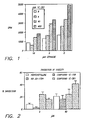
- human T lymphoblasts (Jurkat) were suspended at 2x10 6 cells per ml in RPMI-1640 supplemented with insulin, transferrin, selenium and glutamine. After incubation for 2 hrs. at room temperature with either compound no. 37, compound no. 6, pentoxifylline or a control compound (Ro-1724), 25 ng/ml of anti-FAS antibody was added to each suspension. After another 2 hrs., cell apoptosis was measured as a function of the number of cells (counted by hemocytometer) that excluded the vital dye erythrosin B. The results of the experiment are indicated in FIGURE 2 and establish the apoptosis inhibitory efficacy of the compounds of the invention (as represented by compounds nos. 6 and 37, particularly the latter).
- human peripheral blood lymphocytes were isolated from normal human blood and depleted of monocytes by adherence to a plastic substrate. Lymphocytes were then cultured in RPMI-1640 medium with 10% autologous plasma at an initial concentration of 2x10 6 cells per ml. Aliquots of the cell samples were divided and one half of the samples were incubated with either compound 37 or compound 1L-49 (an isoquinolone, the structure of which is shown in Example 7) for four days. The remaining half of the samples were allowed to rest for four days. Cell viability after four days was determined by erythrosin B dye exclusion in a hemocytometer.
- the compounds of the invention protected the cell sample population from death by up to 100% as compared to the survival rate of untreated lymphocytes.
- Ceramide-activated protein kinase is a 97 kDa protein which is exclusively membrane-bound and is believed to serve a role in the sphingomyelin signal transduction pathway.
- CaPK is believed to mediate phosphorylation of a peptide derived from the amino acid sequence surrounding Thr 669 of the epidermal growth factor receptor (i.e., amino acids 663-681). This site is also recognized by the mitogen-activated kinase MAP (also known as a family of extracellular signal-regulated kinases).
- mitogen-activated kinase MAP also known as a family of extracellular signal-regulated kinases.
- Jurkat cells were suspended at 2x10 6 cells per ml in RPMI-1640 medium as described in Example 2. After incubation for 2 hrs., either compound 37, 20 ⁇ M of ceramide or 25 ng/ml of anti-FAS antibody DX2 were added to each suspension and incubated for 15 mins. After centrifugation and washing, the cells were separately homogenized in a dounce homogenizer.
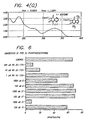
- Ceramide kinase levels in each test sample were assayed as described by Liu, et al ., J.Biol.Chem., 269:3047-3052, 1994 (the disclosure of which is incorporated herein for reference and use in assaying ceramide kinase). Briefly, the membrane fraction was isolated from each test sample of treated cell homogenate by ultracentrifugation and run on a 10% PAGE gel. The gel was washed with guanidine-HCL, and renatured in HEPES buffer. Then [ 32 P]-ATP was added to the gel and left there for 10 mins. Thereafter, the gel was extensively washed with 5% TCA. Autophosphorylated kinase was detected by autoradiography. The results of this assay are indicated in FIGURE 3, and establish the CaPK inhibitory efficacy of the compounds of the invention (as represented by compound 37).
- Radiation is a major cause of skin damage (including apoptosis) in humans.
- the sphingomyelin signal transduction pathway is believed to be involved in at least the early stages of development of radiation induced dermatoses (including radiation dermatitis, sunburn and UVB induced immune suppression from radiation damage to Langerhans cells in the skin- see , e.g., Haimovitz-Friedman, et al. , J.Exp.Med ., 180:525-535, 1994.
- the compounds effectively reduce cellular response to LPS, a known inducer of TNF- ⁇ production.
- the inhibitory activity of the compounds of the invention on LPS induced leukopenia was enhanced (FIGURE 7).
- the inhibitory activity of the compounds was essentially unaffected by diacylglycerol (FIGURE 8), indicating that the mode of action of the compounds are not dependent on hydrolysis of phosphatidic acid.
- the leukopenia inhibitory capacity of the test compounds was determined by intraperitoneal administration of 0.5 ⁇ g of LPS in saline to ICR female mice (age 6-8 weeks; weight 19-23 g). One hour before receiving the LPS, the mice received the test compound by intraperitoneal injection at a dose of 50 mg/kg (in isotonic saline). Two hours after injection of LPS, 200 ⁇ l of blood was collected from each mouse into a heparinized tube and the total count of nucleated cells determined in a hemocytometer (FIGURE 7 and 9).
- An isoquinoline compound was also tested in vitro for its inhibitory efficacy with respect to LPS induced TNF- ⁇ production in human cells.
- the structure of the compound, 1I-49, is described below: Human macrophages were cultured in 96 well microtiter plates and incubated with LPS.
- FIGURE 10 The results of the experiment are indicated in FIGURE 10 and establish that the compounds of the invention (represented by 1I-49 and compound 37) have inhibitory efficacy with respect to reduction in LPS induced TNF- ⁇ production by human cells.
- Other isoqwinolines tested did not exert inhibitory activity in the absence of the side chain substituents added according to the invention.
- PDGF induced fibroblast proliferation was selectively inhibited by the compounds of the invention.
- the compounds were shown not to be cytostatic or cytotoxic, insofar as they did not alter EGF-triggered mitogenesis in the cells tested (FIGURE 12).
- Mouse fibroblast line 3T3 cells (American Type Culture Collection #CCL 92) were seeded into 96 well plates in complete medium and allowed to grow to confluence. The medium was then replaced with medium-free serum and the cells incubated for 24 hrs.
- test compounds were then incubated with the cells for 1 hr before addition of 5 ng/ml human PDGF or EGF was added to each well. After another 24 hrs, 1 ⁇ Ci of [ 3 H]-thymidine was added to each well. 4 hrs later the cells were harvested onto glass fiber filters and the cellular incorporation of [ 3 H]-thymidine was measured by liquid scintillation counting (FIGURES 11 and 12).
- the 5-nitrosopyrimidine (15 mmol) was suspended in water (50 mL) and heated to 80-90°C. With stirring, sodium hydrosulfite (45 mmol) was added in portions over 5 min. The color quickly changed from purple to light green and stirring was continued an additional 10 min. The mixture was cooled in ice and filtered. The filtered solid was washed with cold water, EtOH and Et 2 O to provide the orthodiamine in 70-88% yield as a tan to pale green solid.
- nitrosopyrimidine 19 (270 mg, 1.06 mmol) was dissolved in ethanol (20 mL) with warming and palladium on carbon (75 mg, 10%) was added under argon. Hydrogenation was performed at room temperature and 15 psi for 2 h, filtered to remove catalyst and evaporated to dryness. The residue was combined with urea (600 mg, 10 mmol) and heated neat on the hot plate with stirring. The temperature reached 140°C which produced a clear melt and was maintained for about 10 min. with additional urea added (1 g). Upon cooling the melt solidified and was dissolved in n NaOH (25 mL) and boiled with decolorizing carbon for 10 min., filtered and acidified to pH 3-4 while hot.
- the pyrimidinediamine 33 (100 mg, 0.63 mmol) was combined with potassium ethyl xanthate (810 mg, 5 mmol) and DMF (10 mL) and heated at 100°C. The suspension became green almost immediately and reaction was complete after 30 min. by TLC. After a total reaction time of 1 h, the mixture was cooled, filtered and washed with Et 2 O, dried to yield an off-white solid (310 mg) which presumably contained the unreacted potassium ethyl xanthate and the potassium salt of the desired product. The solid was suspended in water (5 mL) and heated to dissolve. Glacial acetic acid was added to pH 5 and a vigorous effervescence was noted.
- the pyrimidinediamine 28 (750 mg) was combined with diethoxymethyl acetate (7 mL) and heated at 80°C for 2 h. The mixture was evaporated to dryness and water (5 mL) was added and the mixture heated for 20 min. to near boiling. The resulting solution was then allowed to evaporate slowly to yield off-white crystals. Yield 680 mg (86%); mp 282-284°C, Lit. 15 291-292°C.
- the orthodiamine 28 or 33 (2 mmol) was suspended in water (20 mL) and heated to above 70°C before a solution of glyoxal-sodium bisulfite addition product (10 mmol in 25 mL water) was added with stirring. The pale green suspension slowly became light amber and clear. After heating 5 min TLC indicated reaction was complete. The mixture was cooled and extracted with ethyl acetate (5 x 40 mL), dried over MgSO 4 and evaporated to yield the 1-methyl (34) or 1-n-propylpteridine (35) in 71 and 78 %, respectively.
- the nitrosopyrimidine 32 (220 mg, 1.28 mmol) was mixed thoroughly with phenethyl amine hydrochloride (1.5 g, 9.5 mmol) and heated in an open beaker on the hot plate. After a few minutes at about 160°C the purple reaction mixture fused to a brown paste. TLC indicated many products so sulfolane (1 mL) was added and heat was continued for 15 min. The reaction mixture was heated in water (10 mL) and then diluted 50 mL in water and extracted with ethyl acetate (2 x 50 mL), the organic layer dried over MgSO 4 and then concentrated. The residue was flash chromatographed on silica gel using 4% MeOH in CH 2 Cl 2 .
- the orthodiamine 23, 27, or 32 (2.3 mmol) was suspended in dry acetonitrile (5 mL) and dry pyridine (1.5 mL) was added. Thionyl chloride (1 mL, 13.7 mmol) was added quickly and the mixture, which became clear and darkened, was heated at 60°C for 10 min. The mixture was then cooled and poured into n HC1 (40 mL) with stirring. The resulting yellow solution was extracted with ethyl acetate (3 x 40 mL), dried over MgSO 4 and evaporated to yield a pale yellow solid which was triturated with ether. Yield 65-74%.
- N-methylisatoic anhydride 3.5 g, 19.8 mmol
- 4-aminobutyric acid 2.5 g, 24.3 mmol
- TLC indicated reaction to be complete and the DMF was removed in vacuo.
- the residue was used directly for esterification which was accomplished by dissolving the residue in 100% ethanol (50 mL) and adding chlorotrimethyl silane (2.5 mL, 20 mmol). The mixture was heated at 65°C for 6 h and then evaporated to yield a brown syrup. Crude yield 87% from isatoic anhydride.
- Proton NMR confirms structure assignment as the morpholino ethyl ester of Compound 53: 1 H NMR (DMSO-d 6 , 500 MHZ) ⁇ 7.56 and 7.15 (2s, 2H, C-5 and C-8 aromatics), 7.35 and 6.55. (2d, 2H, C-3 and C-4 aromatics), 4.37 (m, 2H, C-1' of ester), 3.92 (m, 2H, C-4 of acyl), 3.86 and 3.84 (2s, 6H, OMe's), 3.95, 3.45, 3.10 (3m, 8H, morpholino and C-2'), 2.38 (t, 2H, C-2 of acyl), 1.92 (m, 2H, C-3 of acyl).
Landscapes
- Chemical & Material Sciences (AREA)
- Organic Chemistry (AREA)
- Health & Medical Sciences (AREA)
- Life Sciences & Earth Sciences (AREA)
- Public Health (AREA)
- General Chemical & Material Sciences (AREA)
- Medicinal Chemistry (AREA)
- Nuclear Medicine, Radiotherapy & Molecular Imaging (AREA)
- Chemical Kinetics & Catalysis (AREA)
- Pharmacology & Pharmacy (AREA)
- Veterinary Medicine (AREA)
- Animal Behavior & Ethology (AREA)
- General Health & Medical Sciences (AREA)
- Bioinformatics & Cheminformatics (AREA)
- Engineering & Computer Science (AREA)
- Pain & Pain Management (AREA)
- Rheumatology (AREA)
- Dermatology (AREA)
- Pharmaceuticals Containing Other Organic And Inorganic Compounds (AREA)
- Lubrication Of Internal Combustion Engines (AREA)
- Other In-Based Heterocyclic Compounds (AREA)
- Nitrogen And Oxygen Or Sulfur-Condensed Heterocyclic Ring Systems (AREA)
Claims (18)
- Composé de formule :dans laquelle R1 représente un groupe alkyle normal, substitué en position terminale, ayant 1 à 7 atomes de carbone, un groupe alcényle substitué en position terminale, ayant 2 à 7 atomes de carbone, un groupe éther substitué en position terminale, ayant 2 à 6 atomes de carbone, un groupe amine secondaire substitué en position terminale, ayant 2 à 6 atomes de carbone, ou un groupe aryle substitué, ayant moins de 8 atomes de carbone, ledit groupe terminal étant un groupe SO2R ou COOR, où R représente un groupe aminoalkyle dont la chaíne alkyle a 1 à 4 atomes de carbone et le groupe amino est un groupe NH2 ou un groupe amino substitué dont les substituants ont 1 à 6 atomes de carbone, l'un des atomes de carbone pouvant être remplacé par un atome d'oxygène ou un atome d'azote,

Z représente C, CH ou N,
R2 représente un groupe alkyle, alkyle cyclique, alkyle hétérocyclique, alcényle ou aralkyle, ayant moins de 7 atomes de carbone, lorsque Z représente C, R2 représente un atome d'halogène ou un groupe NO, amino ou amino substitué lorsque Z représente CH, ou bien R2 représente un atome d'hydrogène ou un groupe alkyle, alkyle cyclique, alkyle hétérocyclique, alcényle ou aralkyle, ayant moins de 7 atomes de carbone, lorsque Z représente N,
A représente CO lorsque Z représente N, ou bien CR5 lorsque Z représente C ou CH, R5 représentant un atome d'hydrogène, un groupe alkyle, alkyle cyclique, alkyle hétérocyclique, alcényle, aryle ou aralkyle, ayant moins de 7 atomes de carbone, un groupe OH ou un groupe O-alkyl ayant 1 à 5 atomes de carbone, étant entendu qu'il y a une double liaison entre Z et A lorsque Z représente C, et une simple liaison entre Z et A lorsque Z représente CH,
Y1 représente N, NR6 ou CR6, où R6 représente un atome d'hydrogène, NO, un groupe amino, un groupe amino substitué, ou un groupe alkyle, alkyle cyclique, alkyle hétérocyclique, alcényle ou aralkyle, ayant moins de 7 atomes de carbone,
Y2 représente N ou CH, et
X représente S lorsque Y1 et Y2 représentent N, ou bien CR7 où R7 représente H, OH, SH, Br, Cl ou I, lorsque Y1 représente NR6, ou bien =C(R3)-C(R4)= où R3 et R4 représentent chacun indépendamment un atome d'hydrogène, un groupe alkyle, alkyle cyclique, alkyle hétérocyclique, alcényle, aryle, alkylcarboxyle ou aralkyle, ayant moins de 7 atomes de carbone, un groupe SH, un groupe OH ou un groupe O-alkyle ayant 1 à 5 atomes de carbone, lorsque Y1 représente N, CH ou CR6 et Y2 représente N ou CH,
ou un sel d'un tel composé. - Composé selon la revendication 1, de formule :ou
 dans laquelle R1 représente un groupe alkyle normal substitué en position terminale, ayant 1 à 7 atomes de carbone, un groupe alcényle substitué en position terminale, ayant 2 à 7 atomes de carbone, un groupe éther substitué en position terminale, ayant 2 à 6 atomes de carbone, un groupe amine secondaire substitué en position terminale, ayant 2 à 6 atomes de carbone, ou un groupe aryle substitué, ayant moins de 8 atomes de carbone, ledit groupe terminal étant un groupe, SO2R ou COOR, où R représente un groupe aminoalkyle dont la chaíne alkyle a 1 à 4 atomes de carbone et le groupe amino est un groupe NH2 ou un groupe amino substitué dont les substituants ont 1 à 6 atomes de carbone, l'un des atomes de carbone pouvant être remplacé par un atome d'oxygène ou un atome d'azote,
R2 représente un groupe alkyle, alkyle cyclique, alkyle hétérocyclique, alcényle ou aralkyle, ayant moins de 7 atomes de carbone,
Y1 et Y2 représentent chacun indépendamment N ou CH,
R3 et R4 représentent chacun indépendamment H, SH, un groupe alkyle, alkyle cyclique, alkyle hétérocyclique, alcényle, aryle, alkylcarboxyle ou aralkyle, ayant moins de 7 atomes de carbone, un groupe OH ou un groupe O-alkyl ayant 1 à 5 atomes de carbone,
R5, lorsqu'il est présent, représente un atome d'hydrogène, un groupe alkyle, alkyle cyclique, alkyle hétérocyclique, alcényle, aryle ou aralkyle, ayant moins de 7 atomes de carbone, un groupe OH ou un groupe O-alkyl ayant 1 à 5 atomes de carbone, et
R6 représente un groupe NO, amino ou amino substitué,
ou un sel d'un tel composé. - Composé selon la revendication 2, de formule :dans laquelle R1 représente un groupe alkyle normal substitué en position terminale, ayant 1 à 7 atomes de carbone, un groupe alcényle substitué en position terminale, ayant 2 à 7 atomes de carbone, un groupe éther substitué en position terminale, ayant 2 à 6 atomes de carbone, un groupe amine secondaire substitué en position terminale, ayant 2 à 6 atomes de carbone, ou un groupe aryle substitué ayant moins de 8 atomes de carbone, ledit groupe terminal étant un groupe SO2R ou COOR, où R représente un groupe aminoalkyle dont la chaíne alkyle a 1 à 4 atomes de carbone, et le groupe amino est un groupe NH2 ou un groupe amino substitué dont les substituants ont 1 à 6 atomes de carbone, l'un des atomes de carbone pouvant être remplacé par un atome d'oxygène ou un atome d'azote,

R2, lorsqu'il est présent, représente un groupe alkyle, alkyle cyclique, alkyle hétérocyclique, alcényle ou aralkyle, ayant moins de 7 atomes de carbone, et
R3 et R4 représentent chacun indépendamment un atome d'hydrogène, un groupe alkyle, alkyle cyclique, alkyle hétérocyclique, alcényle, aryle, alkylcarboxyle ou aralkyle, ayant moins de 7 atomes de carbone, un groupe OH ou un groupe O-alkyl ayant 1 à 5 atomes de carbone,
ou un sel d'un tel composé. - Composé selon la revendication 3, pour lequel R1 représente un groupe alkyle normal substitué en position terminale, ayant 1 à 7 atomes de carbone, ledit groupe terminal étant un groupe COOR, où R représente un groupe aminoalkyle dont la chaíne alkyle a 1 à 4 atomes de carbone et le groupe amino est un groupe amino substitué dont les substituants ont 1 à 6 atomes de carbone, l'un des atomes de carbone pouvant être remplacé par un atome d'oxygène ou un atome d'azote,
R2, lorsqu'il est présent, représente un groupe alkyle ayant moins de 7 atomes de carbone, et
R3 et R4 représentent chacun indépendamment un atome d'hydrogène, un groupe alkyle, aryle, alkylcarboxyle ou aralkyle, ayant moins de 7 atomes de carbone, ou un groupe O-alkyl ayant 1 à 5 atomes de carbone,
ou un sel d'un tel composé. - Composé selon la revendication 4, de formule :dans laquelle R1 représente un groupe alkyle normal substitué en position terminale, ayant 1 à 7 atomes de carbone, ledit groupe terminal étant un groupe COOR où R représente un groupe aminoalkyle dont la chaíne alkyle a 1 à 4 atomes de carbone et le groupe amino est un groupe morpholino, et
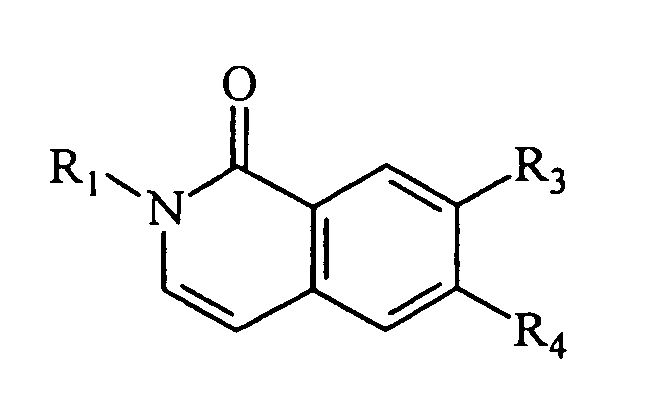
R3 et R4 représentent chacun indépendamment un atome d'hydrogène, un groupe alkyle ayant moins de 7 atomes de carbone, ou un groupe O-alkyl ayant 1 à 5 atomes de carbone,
ou un sel d'un tel composé. - Composé selon la revendication 5, pour lequel R1 représente un groupe alkyle normal substitué en position terminale, ayant 1 à 4 atomes de carbone, ledit groupe terminal étant un groupe COOR où R représente un groupe N-morpholinoalkyle, et R3 et R4 représentent chacun indépendamment un groupe O-alkyl ayant 1 à 5 atomes de carbone, ou un sel d'un tel composé.
- Composé selon la revendication 6, pour lequel R1 représente un groupe -(CH2)3COOR où R représente un groupe N-morpholinoéthyle, et R3 et R4 représentent chacun un groupe méthoxy, ou un sel d'un tel composé.
- Composé selon la revendication 4, de formule :dans laquelle R1 représente un groupe alkyle normal substitué en position terminale, ayant 1 à 7 atomes de carbone, ledit groupe terminal étant un groupe COOR où R représente un atome d'hydrogène, un groupe alkyle ayant 1 à 4 atomes de carbone, ou un groupe aminoalkyle dont la chaíne alkyle a 1 à 4 atomes de carbone et le groupe amino est un groupe morpholino,
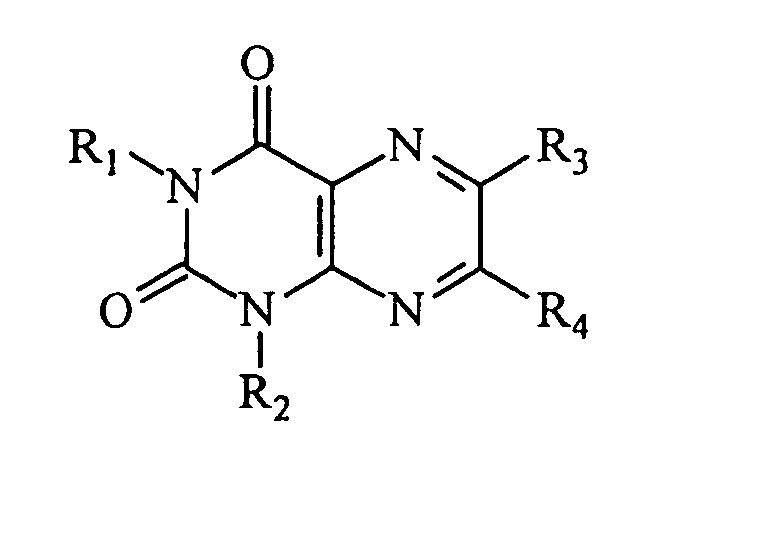
R2 représente un groupe alkyle, alkyle cyclique, alkyle hétérocyclique, alcényle ou aralkyle, ayant moins de 7 atomes de carbone, et
R3 et R4 représentent chacun indépendamment H, OH, SH, un groupe alkyle, aryle ou aralkyle, ayant moins de 7 atomes de carbone, ou un groupe O-alkyl ayant 1 à 5 atomes de carbone,
ou un sel d'un tel composé. - Composé selon la revendication 8, pour lequel R1 représente un groupe alkyle normal substitué en position terminale, ayant 1 à 4 atomes de carbone, ledit groupe terminal étant un groupe COOR où R représente un groupe N-morpholinoalkyle, R2 représente un groupe alkyle ayant moins de 7 atomes de carbone, et R3 et R4 représentent chacun indépendamment un atome d'hydrogène, un groupe alkyle, aryle ou alkylcarboxyle, ayant moins de 7 atomes de carbone, ou un groupe O-alkyl ayant 1 à 5 atomes de carbone, ou un sel d'un tel composé.
- Composé selon la revendication 9, pour lequel R1 représente un groupe -(CH2)3COOR où R représente un groupe N-morpholinoéthyle, R2 représente un groupe alkyle ayant moins de 4 atomes de carbone, et R3 et R4 représentent chacun indépendamment un atome d'hydrogène, un groupe alkyle ayant 1 à 3 atomes de carbone, un groupe phényle ou un groupe méthylcarboxyle, ou un sel d'un tel composé.
- Composé selon la revendication 10, pour lequel R2 représente un groupe -(CH2)2CH3, et R3 et R4 représentent des atomes d'hydrogène, ou un sel d'un tel composé.
- Composé selon la revendication 1, de formule :dans laquelle R1 représente un groupe alkyle normal substitué en position terminale, ayant 1 à 7 atomes de carbone, un groupe alcényle substitué en position terminale, ayant 2 à 7 atomes de carbone, un groupe éther substitué en position terminale, ayant 2 à 6 atomes de carbone, un groupe amine secondaire substitué en position terminale, ayant 2 à 6 atomes de carbone, ou un groupe aryle substitué ayant moins de 8 atomes de carbone, ledit groupe terminal étant un groupe SO2R ou COOR, où R représente un groupe aminoalkyle dont la chaíne alkyle a 1 à 4 atomes de carbone et le groupe amino est un groupe NH2 ou un groupe amino substitué dont les substituants ont 1 à 6 atomes de carbone, l'un des atomes de carbone pouvant être remplacé par un atome d'oxygène ou un atome d'azote,

R2 représente H ou un groupe alkyle, alkyle cyclique, alkyle hétérocyclique, alcényle ou aralkyle, ayant moins de 7 atomes de carbone,
Y2 représente N ou CH,
R6 représente H ou un groupe alkyle, alkyle cyclique, alkyle hétérocyclique, alcényle ou aralkyle, ayant moins de 7 atomes de carbone, et
R7 représente H, OH, SH, Br, Cl ou I,
ou un sel d'un tel composé. - Composé selon la revendication 12, pour lequel R1 représente un groupe alkyle normal substitué en position terminale, ayant 1 à 7 atomes de carbone, ledit groupe terminal étant un groupe COOR où R représente un groupe aminoalkyle dont la chaíne alkyle a 1 à 4 atomes de carbone et le groupe amino est un groupe NH2 ou un groupe amino substitué dont les substituants ont 1 à 6 atomes de carbone, l'un des atomes de carbone pouvant être remplacé par un atome d'oxygène ou un atome d'azote,
R2 représente H ou un groupe alkyle ayant moins de 7 atomes de carbone,
Y2 représente N ou CH,
R6 représente H ou un groupe alkyle ayant moins de 7 atomes de carbone, et
R7 représente H, OH, SH ou Br,
ou un sel d'un tel composé. - Composé selon la revendication 13, pour lequel R1 représente un groupe -(CH2)3COOR où R représente un groupe N-morpholinoéthyle, ou un sel d'un tel composé.
- Composé selon la revendication 1, pour lequel R1 représente un groupe -(CH2)3COOR où R représente un groupe N-morpholinoéthyle, ou un sel d'un tel composé.
- Composé selon l'une quelconque des revendications précédentes, qui est destiné à être utilisé dans une méthode de traitement médical.
- Utilisation d'un composé selon l'une quelconque des revendications 1 à 15, pour la fabrication d'un médicament destiné à être utilisé dans le traitement d'un état en relation avec les céramides.
- Utilisation selon la revendication 17, pour laquelle l'état en relation avec les céramides est l'inflammation, la fibrose, la sénescence cellulaire, l'apoptose, la dermatite sous l'effet des rayonnements, le coup de soleil ou la suppression de l'immunité cutanée, provoquée par les rayons UV.
Applications Claiming Priority (3)
| Application Number | Priority Date | Filing Date | Title |
|---|---|---|---|
| US08/858,778 US6323201B1 (en) | 1994-12-29 | 1997-05-19 | Compounds for inhibition of ceramide-mediated signal transduction |
| PCT/US1998/009964 WO1998052948A1 (fr) | 1997-05-19 | 1998-05-18 | Composes pour l'inhibition de la transduction de signaux a mediation ceramide |
| US858778 | 2001-05-15 |
Publications (3)
| Publication Number | Publication Date |
|---|---|
| EP0986561A1 EP0986561A1 (fr) | 2000-03-22 |
| EP0986561A4 EP0986561A4 (fr) | 2001-06-13 |
| EP0986561B1 true EP0986561B1 (fr) | 2005-07-27 |
Family
ID=25329152
Family Applications (1)
| Application Number | Title | Priority Date | Filing Date |
|---|---|---|---|
| EP98922323A Expired - Lifetime EP0986561B1 (fr) | 1997-05-19 | 1998-05-18 | Composes pour l'inhibition de la transduction de signaux a mediation ceramide |
Country Status (8)
| Country | Link |
|---|---|
| US (2) | US6323201B1 (fr) |
| EP (1) | EP0986561B1 (fr) |
| JP (1) | JP2001526684A (fr) |
| AT (1) | ATE300544T1 (fr) |
| AU (1) | AU747159B2 (fr) |
| CA (1) | CA2287484A1 (fr) |
| DE (1) | DE69830995T2 (fr) |
| WO (1) | WO1998052948A1 (fr) |
Families Citing this family (95)
| Publication number | Priority date | Publication date | Assignee | Title |
|---|---|---|---|---|
| US6323201B1 (en) | 1994-12-29 | 2001-11-27 | The Regents Of The University Of California | Compounds for inhibition of ceramide-mediated signal transduction |
| WO2000000491A1 (fr) * | 1998-06-29 | 2000-01-06 | The Regents Of The University Of California | Antagonistes bifonctionnels des cascades d'activation des kinases sensibles aux cytokines et technique permettant de les utiliser comme anti-inflammatoires |
| US6858616B2 (en) | 1998-12-23 | 2005-02-22 | Bristol-Myers Squibb Pharma Company | Nitrogen containing heterobicycles as factor Xa inhibitors |
| DE69921358T2 (de) | 1998-12-23 | 2006-03-09 | Bristol-Myers Squibb Pharma Co. | Stickstoffhaltige heterobicyclen als faktor-xa-hemmer |
| US7276506B2 (en) | 1998-12-28 | 2007-10-02 | 4 Aza Bioscience Nv | Immunosuppressive effects of pteridine derivatives |
| CA2361561A1 (fr) * | 1999-02-02 | 2000-08-10 | K.U. Leuven Research & Development | Effets immunosuppresseurs des derives de pteridine |
| US6946465B2 (en) * | 1999-02-02 | 2005-09-20 | 4 Aza Bioscience Nv | Immunosuppressive effects of pteridine derivatives |
| US6930101B1 (en) | 1999-05-17 | 2005-08-16 | The Regents Of The University Of California | Thiazolopyrimidines useful as TNFα inhibitors |
| IT1307786B1 (it) * | 1999-07-22 | 2001-11-19 | Bracco Spa | Analoghi di ceramidi, processo per la loro preparazione e loro usocome antitumorali. |
| US6808902B1 (en) | 1999-11-12 | 2004-10-26 | Amgen Inc. | Process for correction of a disulfide misfold in IL-1Ra Fc fusion molecules |
| US7223398B1 (en) * | 1999-11-15 | 2007-05-29 | Dynavax Technologies Corporation | Immunomodulatory compositions containing an immunostimulatory sequence linked to antigen and methods of use thereof |
| CA2432978C (fr) * | 2000-12-22 | 2012-08-28 | Medlyte, Inc. | Compositions et procedes destines au traitement et a la prevention de troubles et de maladies cardio-vasculaires, et a l'identification d'agents therapeutiques correspondants |
| US6998408B2 (en) | 2001-03-23 | 2006-02-14 | Bristol-Myers Squibb Pharma Company | 6-5, 6-6, or 6-7 Heterobicycles as factor Xa inhibitors |
| CA2441772A1 (fr) | 2001-04-18 | 2002-10-31 | Bristol-Myers Squibb Company | 1,4,5,6-tetrahydropyrazolo-¬3,4-c|-pyridin-7-ones utilisees comme inhibiteurs du facteur xa |
| CA2444571A1 (fr) | 2001-04-18 | 2002-10-31 | Bristol-Myers Squibb Company | 1, 4, 5, 6-tetrahydropyrazolo-¬3, 4-c|-pyridine-7-ones comme inhiteurs du facteur xa |
| EP1414449A4 (fr) | 2001-05-22 | 2005-04-06 | Bristol Myers Squibb Co | Inhibiteurs bicycliques du facteur xa |
| PH12012502440A1 (en) | 2001-06-26 | 2013-06-17 | Amgen Inc | Antibodies to opgl |
| CA2461202C (fr) | 2001-09-21 | 2011-07-12 | Donald Pinto | Composes contenant du lactame et leurs derives en tant qu'inhibiteurs du facteur xa |
| TWI331526B (en) | 2001-09-21 | 2010-10-11 | Bristol Myers Squibb Pharma Co | Lactam-containing compounds and derivatives thereof as factor xa inhibitors |
| CA2482838A1 (fr) * | 2002-05-31 | 2003-12-11 | Eisai Co., Ltd. | Composes de pyrazole et compositions pharmaceutiques comprenant ce compose |
| US7429596B2 (en) * | 2003-06-20 | 2008-09-30 | The Regents Of The University Of California | 1H-pyrrolo [2,3-D] pyrimidine derivatives and methods of use thereof |
| CN101103030B (zh) | 2004-02-14 | 2010-10-13 | 史密丝克莱恩比彻姆公司 | 具有hm74a受体活性的药物 |
| US7794713B2 (en) * | 2004-04-07 | 2010-09-14 | Lpath, Inc. | Compositions and methods for the treatment and prevention of hyperproliferative diseases |
| US9512125B2 (en) | 2004-11-19 | 2016-12-06 | The Regents Of The University Of California | Substituted pyrazolo[3.4-D] pyrimidines as anti-inflammatory agents |
| AU2006220835B2 (en) | 2005-03-04 | 2012-01-19 | Dynavax Technologies Corporation | Vaccines comprising oligonucleotides having immunostimulatory sequences (ISS) wherein the ISS are conjugated to antigens and stabilized by buffer conditions and further excipients |
| ES2524922T3 (es) | 2005-05-10 | 2014-12-15 | Intermune, Inc. | Derivados de piridona para modular el sistema de proteína cinasa activada por estrés |
| BRPI0615145A2 (pt) * | 2005-08-10 | 2009-11-03 | Smithkline Beecham Corp | derivados de xantina como agonistas hm74a seletivos |
| GB0606429D0 (en) * | 2006-03-30 | 2006-05-10 | Novartis Ag | Organic compounds |
| WO2007114926A2 (fr) * | 2006-04-04 | 2007-10-11 | The Regents Of The University Of California | Antagonistes de la kinase |
| US9274129B2 (en) * | 2006-05-31 | 2016-03-01 | Lpath, Inc. | Methods and reagents for detecting bioactive lipids |
| US8796429B2 (en) * | 2006-05-31 | 2014-08-05 | Lpath, Inc. | Bioactive lipid derivatives, and methods of making and using same |
| US20080138334A1 (en) * | 2006-05-31 | 2008-06-12 | Sabbadini Roger A | Immune-Derived Moieties Reactive Against Bioactive Lipids, and Methods of Making and Using Same |
| US9274130B2 (en) | 2006-05-31 | 2016-03-01 | Lpath, Inc. | Prevention and treatment of pain using antibodies to lysophosphatidic acid |
| US7862812B2 (en) | 2006-05-31 | 2011-01-04 | Lpath, Inc. | Methods for decreasing immune response and treating immune conditions |
| WO2008009079A2 (fr) | 2006-07-20 | 2008-01-24 | Gilead Sciences, Inc. | Ptéridines substituées utilisables pour le traitement et la prévention des infections virales |
| US9259426B2 (en) | 2006-07-20 | 2016-02-16 | Gilead Sciences, Inc. | 4,6-di- and 2,4,6-trisubstituted quinazoline derivatives useful for treating viral infections |
| BRPI0718118A2 (pt) | 2006-10-27 | 2017-05-30 | Lpath Inc | composições e métodos para ligação de sphingosine-1-fosfato |
| EP2083862A4 (fr) * | 2006-10-27 | 2012-09-19 | Lpath Inc | Compositions et procédés pour traiter des maladies et des troubles oculaires |
| MX2009009492A (es) * | 2007-03-06 | 2009-09-15 | Novartis Ag | Compuestos organicos biciclicos adecuados para el tratamiento de condiciones inflamatorias o alergicas. |
| GB2467670B (en) | 2007-10-04 | 2012-08-01 | Intellikine Inc | Chemical entities and therapeutic uses thereof |
| US8361465B2 (en) * | 2007-10-26 | 2013-01-29 | Lpath, Inc. | Use of anti-sphingosine-1-phosphate antibodies in combination with chemotherapeutic agents |
| EP3613743B1 (fr) | 2008-01-04 | 2022-03-16 | Intellikine, LLC | Procédés de préparation de dérivés de 1h-pyrazolo[3,4-d]pyrimidin-4-amine |
| US8193182B2 (en) | 2008-01-04 | 2012-06-05 | Intellikine, Inc. | Substituted isoquinolin-1(2H)-ones, and methods of use thereof |
| US8993580B2 (en) | 2008-03-14 | 2015-03-31 | Intellikine Llc | Benzothiazole kinase inhibitors and methods of use |
| US8637542B2 (en) | 2008-03-14 | 2014-01-28 | Intellikine, Inc. | Kinase inhibitors and methods of use |
| CA2726588C (fr) | 2008-06-03 | 2019-04-16 | Karl Kossen | Composes et procedes de traitement des troubles inflammatoires et fibrotiques |
| JP5788316B2 (ja) | 2008-07-08 | 2015-09-30 | インテリカイン, エルエルシー | キナーゼインヒビターおよび使用方法 |
| US20110224223A1 (en) | 2008-07-08 | 2011-09-15 | The Regents Of The University Of California, A California Corporation | MTOR Modulators and Uses Thereof |
| US8703778B2 (en) | 2008-09-26 | 2014-04-22 | Intellikine Llc | Heterocyclic kinase inhibitors |
| WO2010045542A2 (fr) | 2008-10-16 | 2010-04-22 | The Regents Of The University Of California | Inhibiteurs d'hétéroarylkinase à noyau fusionné |
| US8871202B2 (en) | 2008-10-24 | 2014-10-28 | Lpath, Inc. | Prevention and treatment of pain using antibodies to sphingosine-1-phosphate |
| US8476431B2 (en) * | 2008-11-03 | 2013-07-02 | Itellikine LLC | Benzoxazole kinase inhibitors and methods of use |
| FR2943673B1 (fr) * | 2009-03-27 | 2013-03-29 | Sanofi Aventis | Applications therapeutiques de derives de quinazolinedione |
| EP2427195B1 (fr) | 2009-05-07 | 2019-05-01 | Intellikine, LLC | Composés hétérocycliques et leurs utilisations |
| US8980899B2 (en) | 2009-10-16 | 2015-03-17 | The Regents Of The University Of California | Methods of inhibiting Ire1 |
| CA2799579A1 (fr) | 2010-05-21 | 2011-11-24 | Intellikine, Inc. | Composes chimiques, compositions et procedes pour modulation de kinases |
| JP2013545749A (ja) | 2010-11-10 | 2013-12-26 | インフィニティー ファーマシューティカルズ, インコーポレイテッド | 複素環化合物及びその使用 |
| TWI674262B (zh) | 2011-01-10 | 2019-10-11 | 美商英菲尼提製藥股份有限公司 | 製備異喹啉酮之方法及異喹啉酮之固體形式 |
| US9295673B2 (en) | 2011-02-23 | 2016-03-29 | Intellikine Llc | Combination of mTOR inhibitors and P13-kinase inhibitors, and uses thereof |
| MX2014000648A (es) | 2011-07-19 | 2014-09-25 | Infinity Pharmaceuticals Inc | Compuestos heterociclicos y sus usos. |
| WO2013012915A1 (fr) | 2011-07-19 | 2013-01-24 | Infinity Pharmaceuticals Inc. | Composés hétérocycliques et leurs utilisations |
| KR20140075693A (ko) | 2011-08-29 | 2014-06-19 | 인피니티 파마슈티칼스, 인코포레이티드 | 헤테로사이클릭 화합물 및 그의 용도 |
| MX370814B (es) | 2011-09-02 | 2020-01-08 | Univ California | Pirazolo[3,4-d]pirimidinas sustituidas y usos de las mismas. |
| US8940742B2 (en) | 2012-04-10 | 2015-01-27 | Infinity Pharmaceuticals, Inc. | Heterocyclic compounds and uses thereof |
| US8828998B2 (en) | 2012-06-25 | 2014-09-09 | Infinity Pharmaceuticals, Inc. | Treatment of lupus, fibrotic conditions, and inflammatory myopathies and other disorders using PI3 kinase inhibitors |
| MX2015003874A (es) | 2012-09-26 | 2015-12-16 | Univ California | Modulacion de ire1. |
| AR092742A1 (es) | 2012-10-02 | 2015-04-29 | Intermune Inc | Piridinonas antifibroticas |
| EP2914296B2 (fr) | 2012-11-01 | 2021-09-29 | Infinity Pharmaceuticals, Inc. | Traitement de cancers à l'aide de modulateurs d'isoforme de pi3 kinase |
| US9481667B2 (en) | 2013-03-15 | 2016-11-01 | Infinity Pharmaceuticals, Inc. | Salts and solid forms of isoquinolinones and composition comprising and methods of using the same |
| WO2015051241A1 (fr) | 2013-10-04 | 2015-04-09 | Infinity Pharmaceuticals, Inc. | Composés hétérocycliques et leurs utilisations |
| MX2021012208A (es) | 2013-10-04 | 2023-01-19 | Infinity Pharmaceuticals Inc | Compuestos heterocíclicos y usos de los mismos. |
| NZ724368A (en) | 2014-03-19 | 2023-07-28 | Infinity Pharmaceuticals Inc | Heterocyclic compounds for use in the treatment of pi3k-gamma mediated disorders |
| MX382781B (es) | 2014-04-02 | 2025-03-13 | Intermune Inc | Piridinonas anti-fibroticas. |
| WO2015160975A2 (fr) | 2014-04-16 | 2015-10-22 | Infinity Pharmaceuticals, Inc. | Polythérapies |
| WO2016040806A1 (fr) | 2014-09-11 | 2016-03-17 | The Regents Of The University Of California | Inhibiteurs de mtorc1 |
| WO2016054491A1 (fr) | 2014-10-03 | 2016-04-07 | Infinity Pharmaceuticals, Inc. | Composés hétérocycliques et leurs utilisations |
| CN107001371B (zh) | 2014-10-09 | 2019-07-05 | 广东众生睿创生物科技有限公司 | 羟基嘌呤类化合物及其应用 |
| WO2016141092A1 (fr) | 2015-03-04 | 2016-09-09 | Gilead Sciences, Inc. | Composés 4,6-diamino-pyrido[3,2-d]pyrimidine modulateurs du récepteur de type toll |
| RU2685417C1 (ru) * | 2015-05-20 | 2019-04-18 | Гуандун Рейновент Биотек Ко., Лтд. | Гидроксипуриновые соединения и их применение |
| CN107614501B (zh) | 2015-05-20 | 2020-01-14 | 广东众生睿创生物科技有限公司 | 羟基嘌呤类化合物及其应用 |
| EP4585268A3 (fr) | 2015-09-14 | 2025-10-15 | Twelve Therapeutics, Inc. | Formes solides de dérivés d'isoquinolinone, procédé de fabrication, compositions comprenant celles-ci et leurs procédés d'utilisation |
| CN108349975B (zh) * | 2015-10-29 | 2020-12-29 | 广东众生睿创生物科技有限公司 | 4H-吡唑并[1,5-α]苯并咪唑类化合物晶型及其制备方法和中间体 |
| US10759806B2 (en) | 2016-03-17 | 2020-09-01 | Infinity Pharmaceuticals, Inc. | Isotopologues of isoquinolinone and quinazolinone compounds and uses thereof as PI3K kinase inhibitors |
| WO2017214269A1 (fr) | 2016-06-08 | 2017-12-14 | Infinity Pharmaceuticals, Inc. | Composés hétérocycliques et leurs utilisations |
| RU2754507C2 (ru) | 2016-06-24 | 2021-09-02 | Инфинити Фармасьютикалз, Инк. | Комбинированная терапия |
| CN109923106B (zh) | 2016-09-02 | 2022-09-13 | 吉利德科学公司 | toll样受体调节剂化合物 |
| EP3507288B1 (fr) | 2016-09-02 | 2020-08-26 | Gilead Sciences, Inc. | Dérivés de 4,6-diamino-pyrido[3,2-d]pyrimidine en tant que modulateurs du recepteur de type toll |
| CN112368289B (zh) | 2018-05-01 | 2024-02-20 | 锐新医药公司 | 作为mtor抑制剂的c26-连接的雷帕霉素类似物 |
| IL300091A (en) | 2018-05-01 | 2023-03-01 | Revolution Medicines Inc | C40-, c28-, and c-32-linked rapamycin analogs as mtor inhibitors |
| AU2019339777B2 (en) | 2018-09-12 | 2022-09-01 | Novartis Ag | Antiviral pyridopyrazinedione compounds |
| TW202212339A (zh) | 2019-04-17 | 2022-04-01 | 美商基利科學股份有限公司 | 類鐸受體調節劑之固體形式 |
| TW202210480A (zh) | 2019-04-17 | 2022-03-16 | 美商基利科學股份有限公司 | 類鐸受體調節劑之固體形式 |
| TWI879779B (zh) | 2019-06-28 | 2025-04-11 | 美商基利科學股份有限公司 | 類鐸受體調節劑化合物的製備方法 |
| AU2020353055B2 (en) | 2019-09-26 | 2024-03-07 | Gilead Sciences, Inc. | Antiviral pyrazolopyridinone compounds |
| AU2023275778A1 (en) | 2022-05-25 | 2024-12-12 | Revolution Medicines, Inc. | Methods of treating cancer with an mtor inhibitor |
Family Cites Families (23)
| Publication number | Priority date | Publication date | Assignee | Title |
|---|---|---|---|---|
| DE2050657C3 (de) * | 1970-10-15 | 1974-06-20 | Basf Ag, 6700 Ludwigshafen | Azofarbstoffe, Verfahren zu ihrer Herstellung und deren Verwendung |
| US4593095A (en) | 1983-02-18 | 1986-06-03 | The Johns Hopkins University | Xanthine derivatives |
| US4769377A (en) | 1983-02-18 | 1988-09-06 | The Johns Hopkins University | Adenosine receptor antagonists |
| DK337086A (da) | 1985-08-12 | 1987-02-13 | Hoffmann La Roche | Benzimidazolderivater |
| IT1199320B (it) * | 1986-12-16 | 1988-12-30 | Malesci Sas | 8-azaxantine alchilaminoalchil o eterociclilalchil sostituite sul nucleo triazolico,loro sali fisiologicamente accettabili,loro composizioni farmaceutiche ad attivita'antibroncospastica e relativo procedimento di preparazione |
| EP0490181A1 (fr) | 1990-11-30 | 1992-06-17 | Hoechst-Roussel Pharmaceuticals Incorporated | Utilisation de xanthines pour la préparation d'un médicament ayant une activité immunosuppressive |
| EP0493682A3 (en) | 1990-11-30 | 1992-11-19 | Hoechst-Roussel Pharmaceuticals Incorporated | Use of xanthines for the preparation of a medicament effective for inhibiting the effects of allograft reaction in humans |
| US5162340A (en) * | 1991-05-10 | 1992-11-10 | Merck & Co., Inc. | Substituted 1-(2h)-isoquinolinones bearing acidic functional groups as angiotensin ii antagonists |
| WO1992021344A2 (fr) | 1991-05-24 | 1992-12-10 | Fred Hutchinson Cancer Research Center | Modulation de la reponse cellulaire a des stimuli externes |
| US5294612A (en) * | 1992-03-30 | 1994-03-15 | Sterling Winthrop Inc. | 6-heterocyclyl pyrazolo [3,4-d]pyrimidin-4-ones and compositions and method of use thereof |
| US5288721A (en) * | 1992-09-22 | 1994-02-22 | Cell Therapeutics, Inc. | Substituted epoxyalkyl xanthines |
| IL109161A0 (en) | 1993-03-31 | 1994-06-24 | Cell Therapeutics Inc | Amino alcohol derivatives, methods for the preparation thereof, and pharmaceutical compositions containing the same |
| US5641783A (en) * | 1993-11-12 | 1997-06-24 | Cell Therapeutics, Inc. | Substituted amino alcohol compounds |
| US5670506A (en) | 1993-04-05 | 1997-09-23 | Cell Therapeutics, Inc. | Halogen, isothiocyanate or azide substituted xanthines |
| US5670527A (en) | 1993-07-16 | 1997-09-23 | Smithkline Beecham Corporation | Pyridyl imidazole compounds and compositions |
| US5593991A (en) | 1993-07-16 | 1997-01-14 | Adams; Jerry L. | Imidazole compounds, use and process of making |
| US5366978A (en) * | 1993-11-03 | 1994-11-22 | Mk Medical Ltd. | Treatment for Kawasaki disease |
| JP3273108B2 (ja) | 1994-09-21 | 2002-04-08 | アサヒビール株式会社 | 新規ピリド〔2,3−d〕ピリミジン誘導体及びその製造方法 |
| US5843943A (en) | 1994-12-29 | 1998-12-01 | The Regents Of The University Of California | Compounds for inhibition of ceramide-mediated signal transduction |
| US6323201B1 (en) | 1994-12-29 | 2001-11-27 | The Regents Of The University Of California | Compounds for inhibition of ceramide-mediated signal transduction |
| DE69534438T2 (de) * | 1994-12-29 | 2006-06-29 | The Regents Of The University Of California, Oakland | Verbindungen für Ceramid-vermittelter Signalübertragung |
| US5753664A (en) | 1995-03-16 | 1998-05-19 | Takeda Chemical Industries, Ltd. | Heterocyclic compounds, their production and use |
| IT1276031B1 (it) | 1995-10-31 | 1997-10-24 | Angelini Ricerche Spa | Composizione farmaceutica per il trattamento delle malattie autoimmuni |
-
1997
- 1997-05-19 US US08/858,778 patent/US6323201B1/en not_active Expired - Fee Related
-
1998
- 1998-05-18 JP JP55046198A patent/JP2001526684A/ja active Pending
- 1998-05-18 EP EP98922323A patent/EP0986561B1/fr not_active Expired - Lifetime
- 1998-05-18 CA CA002287484A patent/CA2287484A1/fr not_active Abandoned
- 1998-05-18 DE DE69830995T patent/DE69830995T2/de not_active Expired - Fee Related
- 1998-05-18 AU AU74896/98A patent/AU747159B2/en not_active Ceased
- 1998-05-18 WO PCT/US1998/009964 patent/WO1998052948A1/fr not_active Ceased
- 1998-05-18 AT AT98922323T patent/ATE300544T1/de not_active IP Right Cessation
-
2001
- 2001-09-13 US US09/951,198 patent/US6562819B2/en not_active Expired - Fee Related
Also Published As
| Publication number | Publication date |
|---|---|
| WO1998052948A1 (fr) | 1998-11-26 |
| JP2001526684A (ja) | 2001-12-18 |
| US6323201B1 (en) | 2001-11-27 |
| ATE300544T1 (de) | 2005-08-15 |
| EP0986561A4 (fr) | 2001-06-13 |
| DE69830995T2 (de) | 2006-04-20 |
| DE69830995D1 (de) | 2005-09-01 |
| AU7489698A (en) | 1998-12-11 |
| US6562819B2 (en) | 2003-05-13 |
| EP0986561A1 (fr) | 2000-03-22 |
| US20020165202A1 (en) | 2002-11-07 |
| AU747159B2 (en) | 2002-05-09 |
| CA2287484A1 (fr) | 1998-11-26 |
Similar Documents
| Publication | Publication Date | Title |
|---|---|---|
| EP0986561B1 (fr) | Composes pour l'inhibition de la transduction de signaux a mediation ceramide | |
| EP1193257B1 (fr) | Composés pour la transduction de signaux à médiation par la céramide | |
| EP0801568B1 (fr) | Composes permettant d'inhiber la transduction des signaux a mediation par la ceramide | |
| US5807861A (en) | Amine substituted xanthinyl compounds | |
| JP2544903B2 (ja) | プリノン系の抗アンギナ薬 | |
| WO2000000491A1 (fr) | Antagonistes bifonctionnels des cascades d'activation des kinases sensibles aux cytokines et technique permettant de les utiliser comme anti-inflammatoires | |
| JP5722280B2 (ja) | 縮合複素環式化合物、並びにそれらの組成物及び使用 | |
| US3702849A (en) | 4-(isoquinolin-1-yl) piperazine-1-carboxylic acid esters | |
| US5801182A (en) | Amine substituted compounds | |
| KR20030083755A (ko) | 동통 치료를 위한 바닐로이드 수용체 길항제로서의 용도를위한 융합 피리딘 유도체 | |
| CA2326357A1 (fr) | Inhibiteurs de kinase dependant des cyclines | |
| Springer et al. | Synthesis and enzymic activity of 6-carbethoxy-and 6-ethoxy-3, 7-disubstituted pyrazolo [1, 5-a] pyrimidines and related derivatives as adenosine cyclic 3', 5'-phosphate phosphodiesterase inhibitors | |
| JP2954971B2 (ja) | 選択的アデノシン受容体剤 | |
| US4503050A (en) | Substituted imidazo[1,2-c]pyrimidines | |
| US5968946A (en) | Heterocyclic derivatives useful in treating central nervous system disorders | |
| LT3337B (en) | 9-deazahypoxantines, useful as purine nucleoside phosphorylase inhibitors | |
| JPH02502095A (ja) | オルニチン誘導体 | |
| AU749223B2 (en) | Compounds for inhibition of ceramide-mediated signal transduction | |
| US6103730A (en) | Amine substituted compounds | |
| KR100316354B1 (ko) | A-2수용체친화성을갖는2-치환된아데노신 | |
| US4478835A (en) | Substituted imidazo[1,5-c]pyrimidines | |
| KAYA et al. | THE EFFECTS OF A NOVEL DIHYDRO [3, 2-D] PYRIDINE SERIES ON HUMAN ERYTHROCYTE CARBONIC ANHYDRASE ENZYME I (HCAI) Tuna DEMİRCİ | |
| JP2003137886A (ja) | ピリミド[4,5−b]インドール |
Legal Events
| Date | Code | Title | Description |
|---|---|---|---|
| PUAI | Public reference made under article 153(3) epc to a published international application that has entered the european phase |
Free format text: ORIGINAL CODE: 0009012 |
|
| 17P | Request for examination filed |
Effective date: 19991115 |
|
| AK | Designated contracting states |
Kind code of ref document: A1 Designated state(s): AT BE CH CY DE DK ES FI FR GB GR IE IT LI LU MC NL PT SE |
|
| RIC1 | Information provided on ipc code assigned before grant |
Free format text: 7C 07D 473/02 A, 7C 07D 513/04 B, 7C 07D 471/04 B, 7A 61K 31/505 B, 7A 61K 31/52 B, 7C 07D 403/04 B, 7C 07D 417/04 B |
|
| A4 | Supplementary search report drawn up and despatched |
Effective date: 20010502 |
|
| AK | Designated contracting states |
Kind code of ref document: A4 Designated state(s): AT BE CH CY DE DK ES FI FR GB GR IE IT LI LU MC NL PT SE |
|
| 17Q | First examination report despatched |
Effective date: 20030520 |
|
| GRAP | Despatch of communication of intention to grant a patent |
Free format text: ORIGINAL CODE: EPIDOSNIGR1 |
|
| GRAJ | Information related to disapproval of communication of intention to grant by the applicant or resumption of examination proceedings by the epo deleted |
Free format text: ORIGINAL CODE: EPIDOSDIGR1 |
|
| GRAP | Despatch of communication of intention to grant a patent |
Free format text: ORIGINAL CODE: EPIDOSNIGR1 |
|
| GRAS | Grant fee paid |
Free format text: ORIGINAL CODE: EPIDOSNIGR3 |
|
| GRAA | (expected) grant |
Free format text: ORIGINAL CODE: 0009210 |
|
| AK | Designated contracting states |
Kind code of ref document: B1 Designated state(s): AT BE CH CY DE DK ES FI FR GB GR IE IT LI LU MC NL PT SE |
|
| PG25 | Lapsed in a contracting state [announced via postgrant information from national office to epo] |
Ref country code: NL Free format text: LAPSE BECAUSE OF FAILURE TO SUBMIT A TRANSLATION OF THE DESCRIPTION OR TO PAY THE FEE WITHIN THE PRESCRIBED TIME-LIMIT Effective date: 20050727 Ref country code: IT Free format text: LAPSE BECAUSE OF FAILURE TO SUBMIT A TRANSLATION OF THE DESCRIPTION OR TO PAY THE FEE WITHIN THE PRESCRIBED TIME-LIMIT;WARNING: LAPSES OF ITALIAN PATENTS WITH EFFECTIVE DATE BEFORE 2007 MAY HAVE OCCURRED AT ANY TIME BEFORE 2007. THE CORRECT EFFECTIVE DATE MAY BE DIFFERENT FROM THE ONE RECORDED. Effective date: 20050727 Ref country code: FI Free format text: LAPSE BECAUSE OF FAILURE TO SUBMIT A TRANSLATION OF THE DESCRIPTION OR TO PAY THE FEE WITHIN THE PRESCRIBED TIME-LIMIT Effective date: 20050727 Ref country code: BE Free format text: LAPSE BECAUSE OF FAILURE TO SUBMIT A TRANSLATION OF THE DESCRIPTION OR TO PAY THE FEE WITHIN THE PRESCRIBED TIME-LIMIT Effective date: 20050727 Ref country code: AT Free format text: LAPSE BECAUSE OF FAILURE TO SUBMIT A TRANSLATION OF THE DESCRIPTION OR TO PAY THE FEE WITHIN THE PRESCRIBED TIME-LIMIT Effective date: 20050727 |
|
| REG | Reference to a national code |
Ref country code: GB Ref legal event code: FG4D |
|
| REG | Reference to a national code |
Ref country code: CH Ref legal event code: EP |
|
| REG | Reference to a national code |
Ref country code: IE Ref legal event code: FG4D |
|
| REF | Corresponds to: |
Ref document number: 69830995 Country of ref document: DE Date of ref document: 20050901 Kind code of ref document: P |
|
| REG | Reference to a national code |
Ref country code: CH Ref legal event code: NV Representative=s name: R. A. EGLI & CO. PATENTANWAELTE |
|
| PG25 | Lapsed in a contracting state [announced via postgrant information from national office to epo] |
Ref country code: SE Free format text: LAPSE BECAUSE OF FAILURE TO SUBMIT A TRANSLATION OF THE DESCRIPTION OR TO PAY THE FEE WITHIN THE PRESCRIBED TIME-LIMIT Effective date: 20051027 Ref country code: GR Free format text: LAPSE BECAUSE OF FAILURE TO SUBMIT A TRANSLATION OF THE DESCRIPTION OR TO PAY THE FEE WITHIN THE PRESCRIBED TIME-LIMIT Effective date: 20051027 Ref country code: DK Free format text: LAPSE BECAUSE OF FAILURE TO SUBMIT A TRANSLATION OF THE DESCRIPTION OR TO PAY THE FEE WITHIN THE PRESCRIBED TIME-LIMIT Effective date: 20051027 |
|
| PG25 | Lapsed in a contracting state [announced via postgrant information from national office to epo] |
Ref country code: ES Free format text: LAPSE BECAUSE OF FAILURE TO SUBMIT A TRANSLATION OF THE DESCRIPTION OR TO PAY THE FEE WITHIN THE PRESCRIBED TIME-LIMIT Effective date: 20051107 |
|
| PG25 | Lapsed in a contracting state [announced via postgrant information from national office to epo] |
Ref country code: PT Free format text: LAPSE BECAUSE OF FAILURE TO SUBMIT A TRANSLATION OF THE DESCRIPTION OR TO PAY THE FEE WITHIN THE PRESCRIBED TIME-LIMIT Effective date: 20051227 |
|
| NLV1 | Nl: lapsed or annulled due to failure to fulfill the requirements of art. 29p and 29m of the patents act | ||
| PG25 | Lapsed in a contracting state [announced via postgrant information from national office to epo] |
Ref country code: IE Free format text: LAPSE BECAUSE OF NON-PAYMENT OF DUE FEES Effective date: 20060518 |
|
| PG25 | Lapsed in a contracting state [announced via postgrant information from national office to epo] |
Ref country code: MC Free format text: LAPSE BECAUSE OF NON-PAYMENT OF DUE FEES Effective date: 20060531 |
|
| PLBE | No opposition filed within time limit |
Free format text: ORIGINAL CODE: 0009261 |
|
| STAA | Information on the status of an ep patent application or granted ep patent |
Free format text: STATUS: NO OPPOSITION FILED WITHIN TIME LIMIT |
|
| 26N | No opposition filed |
Effective date: 20060428 |
|
| EN | Fr: translation not filed | ||
| PG25 | Lapsed in a contracting state [announced via postgrant information from national office to epo] |
Ref country code: FR Free format text: LAPSE BECAUSE OF FAILURE TO SUBMIT A TRANSLATION OF THE DESCRIPTION OR TO PAY THE FEE WITHIN THE PRESCRIBED TIME-LIMIT Effective date: 20060922 |
|
| REG | Reference to a national code |
Ref country code: IE Ref legal event code: MM4A |
|
| PGFP | Annual fee paid to national office [announced via postgrant information from national office to epo] |
Ref country code: CH Payment date: 20070530 Year of fee payment: 10 |
|
| PGFP | Annual fee paid to national office [announced via postgrant information from national office to epo] |
Ref country code: DE Payment date: 20070702 Year of fee payment: 10 |
|
| PGFP | Annual fee paid to national office [announced via postgrant information from national office to epo] |
Ref country code: GB Payment date: 20070525 Year of fee payment: 10 |
|
| PG25 | Lapsed in a contracting state [announced via postgrant information from national office to epo] |
Ref country code: LU Free format text: LAPSE BECAUSE OF NON-PAYMENT OF DUE FEES Effective date: 20060518 |
|
| PG25 | Lapsed in a contracting state [announced via postgrant information from national office to epo] |
Ref country code: FR Free format text: LAPSE BECAUSE OF FAILURE TO SUBMIT A TRANSLATION OF THE DESCRIPTION OR TO PAY THE FEE WITHIN THE PRESCRIBED TIME-LIMIT Effective date: 20050727 Ref country code: CY Free format text: LAPSE BECAUSE OF FAILURE TO SUBMIT A TRANSLATION OF THE DESCRIPTION OR TO PAY THE FEE WITHIN THE PRESCRIBED TIME-LIMIT Effective date: 20050727 |
|
| REG | Reference to a national code |
Ref country code: CH Ref legal event code: PL |
|
| GBPC | Gb: european patent ceased through non-payment of renewal fee |
Effective date: 20080518 |
|
| PG25 | Lapsed in a contracting state [announced via postgrant information from national office to epo] |
Ref country code: LI Free format text: LAPSE BECAUSE OF NON-PAYMENT OF DUE FEES Effective date: 20080531 Ref country code: CH Free format text: LAPSE BECAUSE OF NON-PAYMENT OF DUE FEES Effective date: 20080531 |
|
| PG25 | Lapsed in a contracting state [announced via postgrant information from national office to epo] |
Ref country code: DE Free format text: LAPSE BECAUSE OF NON-PAYMENT OF DUE FEES Effective date: 20081202 |
|
| PG25 | Lapsed in a contracting state [announced via postgrant information from national office to epo] |
Ref country code: GB Free format text: LAPSE BECAUSE OF NON-PAYMENT OF DUE FEES Effective date: 20080518 |