EP0987681B1 - Verfahren und Vorrichtung zur Spracherkennung - Google Patents
Verfahren und Vorrichtung zur Spracherkennung Download PDFInfo
- Publication number
- EP0987681B1 EP0987681B1 EP99307355A EP99307355A EP0987681B1 EP 0987681 B1 EP0987681 B1 EP 0987681B1 EP 99307355 A EP99307355 A EP 99307355A EP 99307355 A EP99307355 A EP 99307355A EP 0987681 B1 EP0987681 B1 EP 0987681B1
- Authority
- EP
- European Patent Office
- Prior art keywords
- speech
- score
- input speech
- single syllable
- input
- Prior art date
- Legal status (The legal status is an assumption and is not a legal conclusion. Google has not performed a legal analysis and makes no representation as to the accuracy of the status listed.)
- Expired - Lifetime
Links
- 238000000034 method Methods 0.000 title claims description 34
- 238000004364 calculation method Methods 0.000 claims description 8
- 230000006870 function Effects 0.000 description 6
- 230000011218 segmentation Effects 0.000 description 4
- 230000002411 adverse Effects 0.000 description 1
- 238000001514 detection method Methods 0.000 description 1
- 238000010586 diagram Methods 0.000 description 1
- 230000001747 exhibiting effect Effects 0.000 description 1
- 230000003287 optical effect Effects 0.000 description 1
- 230000007704 transition Effects 0.000 description 1
Images



Classifications
-
- G—PHYSICS
- G10—MUSICAL INSTRUMENTS; ACOUSTICS
- G10L—SPEECH ANALYSIS TECHNIQUES OR SPEECH SYNTHESIS; SPEECH RECOGNITION; SPEECH OR VOICE PROCESSING TECHNIQUES; SPEECH OR AUDIO CODING OR DECODING
- G10L15/00—Speech recognition
-
- G—PHYSICS
- G10—MUSICAL INSTRUMENTS; ACOUSTICS
- G10L—SPEECH ANALYSIS TECHNIQUES OR SPEECH SYNTHESIS; SPEECH RECOGNITION; SPEECH OR VOICE PROCESSING TECHNIQUES; SPEECH OR AUDIO CODING OR DECODING
- G10L15/00—Speech recognition
- G10L15/02—Feature extraction for speech recognition; Selection of recognition unit
- G10L2015/027—Syllables being the recognition units
Definitions
- the present invention relates to a speech recognition method and apparatus for recognizing input speech, and a computer-readable memory.
- standard patterns words or sentences
- speech recognition is performed by comparing the registered standard patterns with an input utterance.
- Registration forms include, for example, forms using a phonemic expression and generative grammar.
- scores representing the similarity between input speech and the standard patterns are determined, and a standard pattern exhibiting the highest score is determined as a speech recognition result.
- a method of inputting speech to be subjected to speech recognition a method of inputting speech by separating an utterance into syllables of the speech is available.
- the user separately utters the respective syllables, like “ka, na, ga, wa”.
- This input method is called single syllable articulation.
- periods regarded as silence periods are removed from input speech, and speech recognition is performed for the speech information obtained by connecting the remaining periods of speech (Fig. 7).
- US 5794196 describes a speech recognition system in which an input utterance is submitted to both a large vocabulary isolated word speech recognition module and a small vocabulary continuous speech recognition module.
- the small vocabulary contains command words which can be combined in sequences to define commands to an application program.
- the two recognition modules generate respective scores for identified large vocabulary models and for sequences of small vocabulary models.
- the score provided by the continuous speech recogniser is normalised on the basis of the length of the speech input utterance and an arbitration algorithm selects among the candidates identified by the recognition modules. Without requiring the user to switch modes, text is output if a score from the isolated word recogniser is selected and a command is output if a score from the continuous speech recogniser is selected.
- the present invention provides a speech recognition apparatus for recognizing input speech, characterized by comprising: determination means for determining whether speech separately uttered as a single syllable is included; and notification means for notifying a user of information prompting the user to input speech continuously instead of as single syllables on the basis of the determination result obtained by said determination means.
- This aspect also provides a speech recognition method of recognizing input speech, characterized by comprising: a determination step of determining whether speech separately uttered as a single syllable is included; and a notification step of notifying a user of information prompting the user to input speech continuously instead of as single syllables on the basis of the determination result obtained in the determination step.
- Processor implementable instructions for controlling a processor to implement the above method and a storage medium storing such processor implementable instructions are also provided by the invention.
- Fig. 1 shows the hardware arrangement of a speech recognition apparatus according to an embodiment of the present invention.
- Reference symbol H1 denotes a central processing unit for performing arithmetic operation/control and the like.
- the central processing unit H1 computes in accordance with the procedures executed in this embodiment.
- Reference symbol H2 denotes a storage unit such as a RAM, ROM, or the like in which the procedures executed in this embodiment and temporary data required for processing are stored; and H3, an external storage unit such as a hard disk unit in which, for example, standard patterns (templates) and phonemic models for speech recognition are stored.
- Reference symbol H4 denotes an output unit such as a display which outputs a speech recognition result or information obtained by processing the speech recognition.
- the output unit can be incorporated as part of another apparatus or program. In this case, the output is connected to the input of another apparatus or program.
- Reference symbol H5 denotes an input unit such as a microphone which inputs the speech uttered by the user.
- the input unit can be incorporated as part of another apparatus or program.
- the input operation is indirectly performed through another apparatus or program.
- Reference symbol H6 denotes a bus which connects the above units ranging from the central processing unit H1 to input unit H5 to each other.
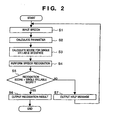
- Fig. 2 is a flow chart showing the processing executed in this embodiment of the present invention.
- step S1 the speech uttered by the user is input.
- step S2 signal processing such as LPC analysis or cepstrum analysis is performed for the speech input in step S1 to calculate a parameter used to calculate the score in comparing a standard pattern with the input speech in speech recognition.
- step S3 a score s0 of the parameter calculated in step S2 for a single syllable sequence is calculated.
- a speech recognition algorithm for comparing an arbitrary syllable sequence with the speech input as a recognition candidate is used, and the resultant score for the first candidate is set as a score for the syllable sequence.
- Fig. 3 shows an example of a method of expressing a recognition input in this embodiment of the present invention.
- step S4 speech recognition is performed by using the parameter calculated in step S2.
- Fig. 4 shows an example of the corresponding table.
- step S5 the score s0 calculated in step S3 is compared with a score s1 of the speech recognition result of the first candidate calculated in step S4. If the comparison result indicates that s1 (recognition score) > s0 (syllable score) (the larger the score, the higher the likelihood of the recognition result) (YES in step S5), the flow advances to step S6 to output the speech recognition result obtained in step S4. The processing is then terminated.
- step S5 If the comparison result does not indicate that s1 (recognition score) > s0 (syllable score) (NO in step S5), the flow advances to step S7 to output, to the output unit H4, a message notifying the user of the detection of single syllable articulation or message prompting the user to continuously utter speech as shown in Fig. 5. The flow then returns to step S1.
- single syllable articulation by the user can be properly handled without increasing the calculation amount much.
- speech recognition does not depend on the recognition result of the contents of single syllable articulation (the speech recognition result indicating the utterance of a specific single syllable sequence). Therefore, speech recognition is not influenced by the speech recognition rate of each syllable. Even if single syllable articulation is interrupted when the speech segmentation unit erroneously detects the end of the utterance, speech recognition can be properly performed. An input by single syllable articulation as a final input for speech recognition can be omitted, and hence a high recognition rate can be ensured.
- steps S3 and S4 have been described as explicitly separate steps. However, steps S3 and S4 can be executed in one step.
- step S4 Assume that the recognition method shown in Fig. 6 is used, and the speech recognition result of the first candidate is a single syllable sequence. In this case, by regarding the speech input by the user as a single syllable sequence, processing equivalent to that in the above embodiment can be performed. In this case, steps S3 and S5 are included in step S4.
- a score for a single syllable sequence is calculated by using a single syllable chain formed by combining arbitrary syllables and silence periods.
- this calculation may be performed by using only a single syllable sequence expected to be uttered by the user. For example, only a combination of two syllable chains included in a recognition input word may be used.
- a penalty may be imposed on the score s0 for a single syllable sequence, and the resultant score may be compared with the score s1 of the speech recognition result.
- ⁇ s0 and s1 may be compared with each other by using a multiplier ⁇ (0 ⁇ ⁇ ⁇ 1).
- ⁇ ( ⁇ > 0) may be used to compare s0- ⁇ and s1.
- step S7 a help message is displayed on the output unit H4 to prompt the user to input speech again.
- a speech output unit may be used as the output unit H4 to output a help message by speech so as to prompt the user to input speech again.
- the present invention may be applied to either a system constituted by a plurality of devices (e.g., a host computer, an interface device, a reader, a printer, and the like), or an apparatus consisting of a single device (e.g., a copying machine, a facsimile apparatus, or the like).
- a system constituted by a plurality of devices
- an interface device e.g., a reader, a printer, and the like
- an apparatus e.g., a copying machine, a facsimile apparatus, or the like.
- the objects of the present invention are also achieved by supplying a storage medium or a carrier signal, which records a program code of a software program that can realize the functions of the above-mentioned embodiments to the system or apparatus, and reading out and executing the program code stored in the storage medium by a computer (or a CPU or MPU) of the system or apparatus.
- the program code itself read out from the storage medium realizes the functions of the above-mentioned embodiments, and the storage medium which stores the program code constitutes the present invention.
- the storage medium for supplying the program code for example, a floppy disk, hard disk, optical disk, magneto-optical disk, CD-ROM, CD-R, magnetic tape, nonvolatile memory card, ROM, and the like may be used.
- the functions of the above-mentioned embodiments may be realized not only by executing the readout program code by the computer but also by some or all of actual processing operations executed by an OS (operating system) running on the computer on the basis of an instruction of the program code.
- OS operating system
- the functions of the above-mentioned embodiments may be realized by some or all of actual processing operations executed by a CPU or the like arranged in a function extension board or a function extension unit, which is inserted in or connected to the computer, after the program code read out from the storage medium is written in a memory of the extension board or unit.
Landscapes
- Engineering & Computer Science (AREA)
- Computational Linguistics (AREA)
- Health & Medical Sciences (AREA)
- Audiology, Speech & Language Pathology (AREA)
- Human Computer Interaction (AREA)
- Physics & Mathematics (AREA)
- Acoustics & Sound (AREA)
- Multimedia (AREA)
- Telephone Function (AREA)
- Document Processing Apparatus (AREA)
- Machine Translation (AREA)
- Character Discrimination (AREA)
Claims (21)
- Spracherkennungsvorrichtung zur Erkennung eingegebener Sprache, gekennzeichnet durch
eine Bestimmungseinrichtung (H1) zur Bestimmung, ob Sprache enthalten ist, die separat als einzelne Silbe ausgesprochen ist, und
eine Benachrichtigungseinrichtung (H4) zur Benachrichtigung eines Benutzers mit Informationen, die den Benutzer zur kontinuierlichen Spracheingabe anstelle einzelner Silben auffordern, auf der Grundlage des durch die Bestimmungseinrichtung erhaltenen Bestimmungsergebnisses. - Vorrichtung nach Anspruch 1, dadurch gekennzeichnet, dass die Bestimmungseinrichtung umfaßt
eine Berechnungseinrichtung zur Berechnung eines ersten Treffers für eine einzelne Silbenfolge der eingegebenen Sprache und
eine Erkennungseinrichtung zur Durchführung einer Spracherkennung für die eingegebene Sprache und Berechnung eines zweiten Treffers für das Spracherkennungsergebnis. - Vorrichtung nach Anspruch 2, dadurch gekennzeichnet, dass die Bestimmungseinrichtung den ersten und zweiten Treffer vergleicht und auf der Grundlage des Vergleichsergebnisses bestimmt, ob als einzelne Silbe separat ausgesprochene Sprache in der eingegebenen Sprache enthalten ist.
- Vorrichtung nach Anspruch 2, dadurch gekennzeichnet, dass die Bestimmungseinrichtung den zweiten Treffer mit einem Treffer vergleicht, der durch Multiplikation des ersten Treffers mit einer vorbestimmten Zahl erhalten wird, und auf der Grundlage des Vergleichsergebnisses bestimmt, ob als einzelne Silbe separat ausgesprochene Sprache in der eingegebenen Sprache enthalten ist.
- Vorrichtung nach Anspruch 2, dadurch gekennzeichnet, dass die Bestimmungseinrichtung den zweiten Treffer mit einem Treffer vergleicht, der durch Subtraktion einer vorbestimmten Zahl vom ersten Treffer erhalten wird, und auf der Grundlage des Vergleichsergebnisses bestimmt, ob als einzelne Silbe separat ausgesprochene Sprache in der eingegebenen Sprache enthalten ist.
- Vorrichtung nach einem der Ansprüche 2 bis 5, dadurch gekennzeichnet, dass die Berechnungseinrichtung den ersten Treffer für eine einzelne Silbenfolge der eingegebenen Sprache unter Verwendung einer einzelnen Silbenkette berechnet, die durch Kombinieren einer willkürlichen Zahl von Paaren willkürlicher einzelner Silben und Schweigeperioden erhalten wird.
- Vorrichtung nach einem der Ansprüche 2 bis 5, dadurch gekennzeichnet, dass die Berechnungseinrichtung den ersten Treffer für eine einzelne Silbenfolge der eingegebenen Sprache unter Verwendung von zwei Silbenketten berechnet, die eine Schweigeperiode einklemmen.
- Vorrichtung nach einem der vorhergehenden Ansprüche, dadurch gekennzeichnet, dass die Benachrichtigungseinrichtung zur Benachrichtigung des Benutzers unter Verwendung einer Anzeigeeinheit eingerichtet ist.
- Vorrichtung nach Anspruch 1, dadurch gekennzeichnet, dass die Benachrichtigungseinrichtung zur Benachrichtigung des Benutzers durch Sprache eingerichtet ist.
- Spracherkennungsverfahren zur Erkennung eingegebener Sprache, gekennzeichnet durch
einen Bestimmungsschritt (S5) zur Bestimmung, ob als einzelne Silbe separat ausgesprochene Sprache enthalten ist, und
einen Benachrichtigungsschritt (S7) zur Benachrichtigung eines Benutzers mit Informationen, die den Benutzer zur kontinuierlichen Spracheingabe anstelle einzelner Silben auffordern, auf der Grundlage des im Bestimmungsschritt erhaltenen Bestimmungsergebnisses. - Verfahren nach Anspruch 10, dadurch gekennzeichnet, dass der Bestimmungsschritt umfaßt
einen Berechnungsschritt zur Berechnung eines ersten Treffers für eine einzelne Silbenfolge der eingegebenen Sprache und
einen Erkennungsschritt zur Durchführung einer Spracherkennung für die eingegebene Sprache und Berechnung eines zweiten Treffers für das Spracherkennungsergebnis. - Verfahren nach Anspruch 11, dadurch gekennzeichnet, dass der Bestimmungsschritt einen Vergleich des ersten und zweiten Treffers und die Bestimmung auf der Grundlage des Vergleichsergebnisses umfaßt, ob als einzelne Silbe separat ausgesprochene Sprache in der eingegebenen Sprache enthalten ist.
- Verfahren nach Anspruch 11, dadurch gekennzeichnet, dass der Bestimmungsschritt den Vergleich des zweiten Treffers mit einem Treffer, der durch Multiplizieren des ersten Treffers mit einer vorbestimmten Zahl erhalten wird, und die Bestimmung auf der Grundlage des Vergleichsergebnisses umfaßt, ob als einzelne Silbe separat ausgesprochene Sprache in der eingegebenen Sprache enthalten ist.
- Verfahren nach Anspruch 11, dadurch gekennzeichnet, dass der Bestimmungsschritt den Vergleich des zweiten Treffers mit einem Treffer, der durch Subtraktion einer vorbestimmten Zahl vom ersten Treffer erhalten wird, und die Bestimmung auf der Grundlage des Vergleichsergebnisses umfaßt, ob als einzelne Silbe separat ausgesprochene Sprache in der eingegebenen Sprache enthalten ist.
- Verfahren nach einem der Ansprüche 11 bis 14, dadurch gekennzeichnet, dass der Berechnungsschritt die Berechnung des ersten Treffers für eine einzelne Silbenfolge der eingegebenen Sprache unter Verwendung einer einzelnen Silbenkette umfaßt, die durch Kombinieren einer willkürlichen Anzahl an Paaren willkürlicher einzelner Silben und Schweigeperioden erhalten wird.
- Verfahren nach einem der Ansprüche 11 bis 15, dadurch gekennzeichnet, dass der Berechnungsschritt die Berechnung des ersten Treffers für eine einzelne Silbenfolge der eingegebenen Sprache unter Verwendung von zwei Silbenketten umfaßt, die eine Schweigeperiode einklemmen.
- Verfahren nach einem der Ansprüche 10 bis 16, dadurch gekennzeichnet, dass der Benachrichtigungsschritt den Benutzter unter Verwendung einer Anzeigeeinheit benachrichtigt.
- Verfahren nach einem der Ansprüche 10 bis 16, dadurch gekennzeichnet, dass der Benachrichtigungsschritt den Benutzer durch Sprache benachrichtigt.
- Spracherkennungsvorrichtung nach Anspruch 1, mit
einer Einrichtung zum Empfangen einer Folge von Parametern, die ein eingegebenes Sprachsignal darstellen,
einer Einrichtung zum Vergleichen der Parameter mit gespeicherten Referenzparametern, die einzelne Silbenmodelle und kontinuierliche gesprochene Wortmodelle enthalten,
einer Einrichtung zur Bereitstellung eines Erkennungsergebnisses in Abhängigkeit von der Ausgabe aus der Vergleichseinrichtung,
einer Einrichtung zur Bestimmung, ob das eingegebene Sprachsignal eine einzelne Silbenaussprache umfasst oder nicht, anhand des Erkennungsergebnisses, und
einer Einrichtung zur Aufforderung eines Benutzers zur wiederholten Aussprache der Sprache in Abhängigkeit von der Ausgabe der Bestimmungseinrichtung. - Speicherträger, der Prozessor-implementierbare Anweisungen zur Steuerung eines Prozessors speichert, um alle Schritte des Verfahrens nach einem der Ansprüche 10 bis 18 zu implementieren.
- Prozessor-implementierbare Anweisungen zur Steuerung eines Prozessors zum Implementieren aller Schritte des Verfahrens nach einem der Ansprüche 10 bis 18.
Applications Claiming Priority (2)
| Application Number | Priority Date | Filing Date | Title |
|---|---|---|---|
| JP26355298 | 1998-09-17 | ||
| JP26355298A JP3720595B2 (ja) | 1998-09-17 | 1998-09-17 | 音声認識装置及びその方法、コンピュータ可読メモリ |
Publications (3)
| Publication Number | Publication Date |
|---|---|
| EP0987681A2 EP0987681A2 (de) | 2000-03-22 |
| EP0987681A3 EP0987681A3 (de) | 2001-03-28 |
| EP0987681B1 true EP0987681B1 (de) | 2003-03-05 |
Family
ID=17391140
Family Applications (1)
| Application Number | Title | Priority Date | Filing Date |
|---|---|---|---|
| EP99307355A Expired - Lifetime EP0987681B1 (de) | 1998-09-17 | 1999-09-16 | Verfahren und Vorrichtung zur Spracherkennung |
Country Status (4)
| Country | Link |
|---|---|
| US (1) | US6438521B1 (de) |
| EP (1) | EP0987681B1 (de) |
| JP (1) | JP3720595B2 (de) |
| DE (1) | DE69905668T2 (de) |
Families Citing this family (6)
| Publication number | Priority date | Publication date | Assignee | Title |
|---|---|---|---|---|
| JP3720595B2 (ja) * | 1998-09-17 | 2005-11-30 | キヤノン株式会社 | 音声認識装置及びその方法、コンピュータ可読メモリ |
| RU2302666C2 (ru) * | 2001-07-03 | 2007-07-10 | Интел Зао | Способ и устройство для быстрого вычисления вероятностей наблюдения при распознавании речи |
| FR2881867A1 (fr) * | 2005-02-04 | 2006-08-11 | France Telecom | Procede de transmission de marques de fin de parole dans un systeme de reconnaissance de la parole |
| JP4986028B2 (ja) * | 2007-01-19 | 2012-07-25 | Kddi株式会社 | 音声認識装置およびその発声判定方法、発声判定プログラムならびにその記憶媒体 |
| US9595205B2 (en) * | 2012-12-18 | 2017-03-14 | Neuron Fuel, Inc. | Systems and methods for goal-based programming instruction |
| US10510264B2 (en) | 2013-03-21 | 2019-12-17 | Neuron Fuel, Inc. | Systems and methods for customized lesson creation and application |
Family Cites Families (6)
| Publication number | Priority date | Publication date | Assignee | Title |
|---|---|---|---|---|
| US3646576A (en) * | 1970-01-09 | 1972-02-29 | David Thurston Griggs | Speech controlled phonetic typewriter |
| DE3931638A1 (de) | 1989-09-22 | 1991-04-04 | Standard Elektrik Lorenz Ag | Verfahren zur sprecheradaptiven erkennung von sprache |
| US5689616A (en) * | 1993-11-19 | 1997-11-18 | Itt Corporation | Automatic language identification/verification system |
| US5794196A (en) | 1995-06-30 | 1998-08-11 | Kurzweil Applied Intelligence, Inc. | Speech recognition system distinguishing dictation from commands by arbitration between continuous speech and isolated word modules |
| JP3720595B2 (ja) * | 1998-09-17 | 2005-11-30 | キヤノン株式会社 | 音声認識装置及びその方法、コンピュータ可読メモリ |
| US6057520A (en) * | 1999-06-30 | 2000-05-02 | Mcnc | Arc resistant high voltage micromachined electrostatic switch |
-
1998
- 1998-09-17 JP JP26355298A patent/JP3720595B2/ja not_active Expired - Fee Related
-
1999
- 1999-09-15 US US09/396,863 patent/US6438521B1/en not_active Expired - Lifetime
- 1999-09-16 EP EP99307355A patent/EP0987681B1/de not_active Expired - Lifetime
- 1999-09-16 DE DE69905668T patent/DE69905668T2/de not_active Expired - Lifetime
Also Published As
| Publication number | Publication date |
|---|---|
| EP0987681A2 (de) | 2000-03-22 |
| DE69905668T2 (de) | 2003-09-25 |
| DE69905668D1 (de) | 2003-04-10 |
| EP0987681A3 (de) | 2001-03-28 |
| US6438521B1 (en) | 2002-08-20 |
| JP2000099070A (ja) | 2000-04-07 |
| JP3720595B2 (ja) | 2005-11-30 |
Similar Documents
| Publication | Publication Date | Title |
|---|---|---|
| US6317711B1 (en) | Speech segment detection and word recognition | |
| JP5282737B2 (ja) | 音声認識装置および音声認識方法 | |
| US7013276B2 (en) | Method of assessing degree of acoustic confusability, and system therefor | |
| US6912499B1 (en) | Method and apparatus for training a multilingual speech model set | |
| JP4301102B2 (ja) | 音声処理装置および音声処理方法、プログラム、並びに記録媒体 | |
| EP2048655B1 (de) | Kontextsensitive mehrstufige Spracherkennung | |
| US10319373B2 (en) | Information processing device, information processing method, computer program product, and recognition system | |
| EP1355295B1 (de) | Spracherkennungsvorrichtung, -verfahren und computerlesbares Medium mit entsprechend gespeichertem Programm | |
| US20050091054A1 (en) | Method and apparatus for generating and displaying N-Best alternatives in a speech recognition system | |
| US6963834B2 (en) | Method of speech recognition using empirically determined word candidates | |
| US6662158B1 (en) | Temporal pattern recognition method and apparatus utilizing segment and frame-based models | |
| JP6599914B2 (ja) | 音声認識装置、音声認識方法およびプログラム | |
| US6963832B2 (en) | Meaning token dictionary for automatic speech recognition | |
| US6438521B1 (en) | Speech recognition method and apparatus and computer-readable memory | |
| JP2000259176A (ja) | 音声認識装置およびその記録媒体 | |
| JP4296290B2 (ja) | 音声認識装置、音声認識方法及びプログラム | |
| JP2000352993A (ja) | 音声認識システム及びヒドン・マルコフ・モデルの学習方法 | |
| KR100404852B1 (ko) | 언어모델적응기능을가진음성인식장치및그제어방법 | |
| JPH09292899A (ja) | 音声認識装置 | |
| JP3039453B2 (ja) | 音声認識装置 | |
| JP4604424B2 (ja) | 音声認識装置及び方法、並びにプログラム | |
| JP2975542B2 (ja) | 音声認識装置 | |
| JP2000276189A (ja) | 日本語ディクテーションシステム | |
| EP1135768B1 (de) | Buchstabiermodus in einem spracherkenner | |
| Kalinli et al. | Continuous speech recognition using attention shift decoding with soft decision. |
Legal Events
| Date | Code | Title | Description |
|---|---|---|---|
| PUAI | Public reference made under article 153(3) epc to a published international application that has entered the european phase |
Free format text: ORIGINAL CODE: 0009012 |
|
| AK | Designated contracting states |
Kind code of ref document: A2 Designated state(s): DE FR GB |
|
| AX | Request for extension of the european patent |
Free format text: AL;LT;LV;MK;RO;SI |
|
| PUAL | Search report despatched |
Free format text: ORIGINAL CODE: 0009013 |
|
| RIC1 | Information provided on ipc code assigned before grant |
Free format text: 7G 10L 15/22 A |
|
| AK | Designated contracting states |
Kind code of ref document: A3 Designated state(s): AT BE CH CY DE DK ES FI FR GB GR IE IT LI LU MC NL PT SE |
|
| AX | Request for extension of the european patent |
Free format text: AL;LT;LV;MK;RO;SI |
|
| 17P | Request for examination filed |
Effective date: 20010823 |
|
| 17Q | First examination report despatched |
Effective date: 20011019 |
|
| AKX | Designation fees paid |
Free format text: DE FR GB |
|
| GRAG | Despatch of communication of intention to grant |
Free format text: ORIGINAL CODE: EPIDOS AGRA |
|
| RTI1 | Title (correction) |
Free format text: SPEECH RECOGNITION METHOD AND APPARATUS |
|
| GRAG | Despatch of communication of intention to grant |
Free format text: ORIGINAL CODE: EPIDOS AGRA |
|
| GRAH | Despatch of communication of intention to grant a patent |
Free format text: ORIGINAL CODE: EPIDOS IGRA |
|
| GRAH | Despatch of communication of intention to grant a patent |
Free format text: ORIGINAL CODE: EPIDOS IGRA |
|
| GRAA | (expected) grant |
Free format text: ORIGINAL CODE: 0009210 |
|
| AK | Designated contracting states |
Designated state(s): DE FR GB |
|
| REG | Reference to a national code |
Ref country code: GB Ref legal event code: FG4D |
|
| REF | Corresponds to: |
Ref document number: 69905668 Country of ref document: DE Date of ref document: 20030410 Kind code of ref document: P |
|
| ET | Fr: translation filed | ||
| PLBE | No opposition filed within time limit |
Free format text: ORIGINAL CODE: 0009261 |
|
| STAA | Information on the status of an ep patent application or granted ep patent |
Free format text: STATUS: NO OPPOSITION FILED WITHIN TIME LIMIT |
|
| 26N | No opposition filed |
Effective date: 20031208 |
|
| PGFP | Annual fee paid to national office [announced via postgrant information from national office to epo] |
Ref country code: DE Payment date: 20140930 Year of fee payment: 16 |
|
| PGFP | Annual fee paid to national office [announced via postgrant information from national office to epo] |
Ref country code: GB Payment date: 20140924 Year of fee payment: 16 |
|
| PGFP | Annual fee paid to national office [announced via postgrant information from national office to epo] |
Ref country code: FR Payment date: 20140924 Year of fee payment: 16 |
|
| REG | Reference to a national code |
Ref country code: DE Ref legal event code: R119 Ref document number: 69905668 Country of ref document: DE |
|
| GBPC | Gb: european patent ceased through non-payment of renewal fee |
Effective date: 20150916 |
|
| REG | Reference to a national code |
Ref country code: FR Ref legal event code: ST Effective date: 20160531 |
|
| PG25 | Lapsed in a contracting state [announced via postgrant information from national office to epo] |
Ref country code: DE Free format text: LAPSE BECAUSE OF NON-PAYMENT OF DUE FEES Effective date: 20160401 Ref country code: GB Free format text: LAPSE BECAUSE OF NON-PAYMENT OF DUE FEES Effective date: 20150916 |
|
| PG25 | Lapsed in a contracting state [announced via postgrant information from national office to epo] |
Ref country code: FR Free format text: LAPSE BECAUSE OF NON-PAYMENT OF DUE FEES Effective date: 20150930 |