EP0987904A2 - Verfahren und Vorrichtung zur adaptiven Synchronisation von Ton- und Bildsignalenwiedergabe - Google Patents
Verfahren und Vorrichtung zur adaptiven Synchronisation von Ton- und Bildsignalenwiedergabe Download PDFInfo
- Publication number
- EP0987904A2 EP0987904A2 EP99306652A EP99306652A EP0987904A2 EP 0987904 A2 EP0987904 A2 EP 0987904A2 EP 99306652 A EP99306652 A EP 99306652A EP 99306652 A EP99306652 A EP 99306652A EP 0987904 A2 EP0987904 A2 EP 0987904A2
- Authority
- EP
- European Patent Office
- Prior art keywords
- video
- audio
- backlogged
- playback
- frames
- Prior art date
- Legal status (The legal status is an assumption and is not a legal conclusion. Google has not performed a legal analysis and makes no representation as to the accuracy of the status listed.)
- Granted
Links
Images


Classifications
-
- H—ELECTRICITY
- H04—ELECTRIC COMMUNICATION TECHNIQUE
- H04N—PICTORIAL COMMUNICATION, e.g. TELEVISION
- H04N21/00—Selective content distribution, e.g. interactive television or video on demand [VOD]
- H04N21/40—Client devices specifically adapted for the reception of or interaction with content, e.g. set-top-box [STB]; Operations thereof
- H04N21/43—Processing of content or additional data, e.g. demultiplexing additional data from a digital video stream; Elementary client operations, e.g. monitoring of home network or synchronising decoder's clock; Client middleware
- H04N21/434—Disassembling of a multiplex stream, e.g. demultiplexing audio and video streams, extraction of additional data from a video stream; Remultiplexing of multiplex streams; Extraction or processing of SI; Disassembling of packetised elementary stream
- H04N21/4341—Demultiplexing of audio and video streams
-
- H—ELECTRICITY
- H04—ELECTRIC COMMUNICATION TECHNIQUE
- H04N—PICTORIAL COMMUNICATION, e.g. TELEVISION
- H04N21/00—Selective content distribution, e.g. interactive television or video on demand [VOD]
- H04N21/40—Client devices specifically adapted for the reception of or interaction with content, e.g. set-top-box [STB]; Operations thereof
- H04N21/43—Processing of content or additional data, e.g. demultiplexing additional data from a digital video stream; Elementary client operations, e.g. monitoring of home network or synchronising decoder's clock; Client middleware
- H04N21/4302—Content synchronisation processes, e.g. decoder synchronisation
- H04N21/4307—Synchronising the rendering of multiple content streams or additional data on devices, e.g. synchronisation of audio on a mobile phone with the video output on the TV screen
- H04N21/43072—Synchronising the rendering of multiple content streams or additional data on devices, e.g. synchronisation of audio on a mobile phone with the video output on the TV screen of multiple content streams on the same device
-
- H—ELECTRICITY
- H04—ELECTRIC COMMUNICATION TECHNIQUE
- H04N—PICTORIAL COMMUNICATION, e.g. TELEVISION
- H04N21/00—Selective content distribution, e.g. interactive television or video on demand [VOD]
- H04N21/40—Client devices specifically adapted for the reception of or interaction with content, e.g. set-top-box [STB]; Operations thereof
- H04N21/43—Processing of content or additional data, e.g. demultiplexing additional data from a digital video stream; Elementary client operations, e.g. monitoring of home network or synchronising decoder's clock; Client middleware
- H04N21/4302—Content synchronisation processes, e.g. decoder synchronisation
- H04N21/4305—Synchronising client clock from received content stream, e.g. locking decoder clock with encoder clock, extraction of the PCR packets
Definitions
- This invention relates to multimedia systems. More particularly, this invention relates to the synchronized playback of digital video and digital audio information, such that user-perceived playback performance is improved while operating in a resource-limited or resource-varying playback environment.
- digital audio and digital video signals are created at a source and delivered in a mixed stream or in separate streams over a communications network such as the Internet to an intelligent playback device such as a personal computer equipped with an Internet browser and multimedia playback tools.
- digital audio signals are typically created as an ordered sequence of digital samples of an analog audio signal.
- the analog signal is periodically sampled at a fixed interval, the inverse of which is known as the audio sampling rate.
- the sequence of audio samples is often divided into non-overlapping segments known as audio blocks, with each audio block containing a prescribed number of audio samples.
- Digital video signals are typically captured and represented as a sequence of still images in digital form. Each video image is generally known as a video frame. The number of video frames captured per unit of time is known as the video frame rate.
- a multimedia source For efficiency in transferring video frames and audio blocks to a multimedia player, a multimedia source generally encodes this video and audio information. This information is often encapsulated in data packets (packetized) at the source before transmission over a data network to a player, with information added to the packets indicating the appropriate playback sequence and time for each transmitted audio block and video frame. At the player, encoded information is extracted from the packets, and then either directly decoded and played or stored for later processing. The playback of decoded data through a video or an audio playback device is commonly referred to as "rendering.”
- Video encoding techniques use inter-frame coding to compress or reduce the amount of video information that must be transmitted to the player. Because only a subset of the pixels encoded in each digital video frame typically changes over successive frames, the amount of video information transmitted can be substantially reduced by encoding and transmitting only those pixels that change over successive frames.
- Such encoding techniques typically require the playback device to successfully decode one or more video frames adjacent to the current video frame in order to fully decode the current frame. In the event that adjacent video frames are ineffectively decoded or lost, most video encoding techniques also periodically insert "key" frames into the video stream, which contain sufficient information to be decoded independently of adjacent frames and can be used to restart the compressed video decoding process when necessary.
- the multimedia data stream generally contains a smaller number of audio packets randomly interspersed among a larger number of video packets. These infrequently interspersed audio packets can lead to misalignment in the intended playback sequence of video frames and audio blocks upon arrival at the playback device.
- a number approaches have been applied to re-synchronize video and audio packets upon arrival (see, e.g., U.S. Patent No. 5,598,352, issued to Rosenau et al., hereinafter referred to as the Rosenau '352 patent).
- multimedia playback performance Even with re-synchronization of multimedia data stream elements upon arrival at the playback device, end-users may find multimedia playback performance to be inadequate. Although multimedia data may be fully streamed or otherwise stored in sequence on a playback device before playback begins, devices with low processing power or the overhead of other substantial and competing tasks may none-the-less suffer CPU backlogs that lead to momentary and longer-lasting interruptions to the multimedia playback experience. As users look to manufacturers for playback devices that are less expensive and able to serve many other simultaneous applications, playback device performance will continue to limit the potential performance of multimedia applications.
- End user-perceived performance of a multimedia playback application is significantly enhanced by a novel invention for rendering synchronized digital video and digital audio information in a multimedia player with limited or highly varying processing power.
- the multimedia player assigns highest priority to the decoding and rendering of audio blocks. Under circumstances where the player's processing resources are limited, this prioritization scheme will likely cause video decoding and rendering to lag (or be "backlogged" relative to) audio decoding and rendering.
- Video rendering backlog is directly monitored, and if significant, reduced by performing a limited rendering of only the most current (or latest) video frame in the sequence of backlogged video frames. This is accomplished by decoding only those video frames in the backlogged sequence that are required to be decoded in order to render the most current backlogged video frame. Backlogged video frames not required to decode the most current backlogged frame are effectively discarded.
- multimedia applications can be effectively rendered on a variety of playback devices with varying processing power.
- multimedia appiications are better able to recover from momentary loss of processing resources caused by other competing tasks.
- prior art multimedia playback systems typically receive a compressed, encoded digital signal that includes a mixed stream of video and audio data. These systems operate on this mixed data stream to separate and decode the video frames and audio blocks, and then to render these frames and blocks in an appropriate sequence and at an appropriate time. As a result, a video image and an audio output are produced in close synchrony to provide a coherent multimedia experience for the system user.
- FIG. 1 The basic components for such a system are illustrated in FIG. 1 (see, e.g., the Rosenau '352 patent).
- an encoded digital audio/video data stream 102 is input to a system decoder 104 , which divides the stream into an encoded video data stream 106 and an encoded audio data stream 108 .
- a video buffer 110 receives the video data stream 106
- an audio buffer 112 receives the audio data stream 108
- a video decoder 114 retrieves video data from the video buffer 110 , decodes this data, assembles the data into video frames 116 , and places each decoded video frame into a video playback buffer 118 to await playback (rendering) by a video player 120
- an audio decoder 122 retrieves audio data from the audio buffer 112 , decodes this data, assembles the decoded data into audio blocks 124 , and places each decoded audio block into an audio playback buffer 126 to await rendering by an audio player 128 .
- FIG. 2(b) illustrates how the data may be encapsulated into packets according to the MPEG-I standard (see. e.g., the Rosenau '352 patent, incorporating the ISO/IEC 11172-1:1993(E) specification for MPEG-I). It can be appreciated that the present invention can be used to support a variety of different multimedia standards, including MPEG-II and H.263.
- a data stream 202 incorporates an ISO layer and a Pack layer.
- ISO ISO layer
- a series of data packages 203 are communicated until an end code 204 is delivered.
- Each package includes pack start code 206 and packet data 208 .
- pack layer each package 202 includes a pack start code 203 a system clock reference (SCR) 210 , a system header 212 and packets of data 214 .
- SCR system clock reference
- These packets 214 include both video packets and audio packets, with video packets, data to the nature of the data, being far more numerous.
- the system clock reference 210 provides an indication of system time, and a multiplexer rate referencing how often audio packets are interspersed between video packets.
- each video and audio packet 214 includes a start code prefix 216 , header data 218 and payload data 220 .
- time stamp information 222 may represent a video presentation time stamp (VPTS) if payload 220 contains video information, or an audio presentation time stamp (APTS) if payload 220 contains audio information.
- VPTS video presentation time stamp
- APTS audio presentation time stamp
- VPTS and APTS are provided to indicate appropriate playback times for associated video frames and audio blocks, respectively.
- Standards such as MPEG-I, MPEG-II and H.263 provide for the digital encoding/decoding and compression/decompression of both video and audio signals.
- inter-frame coding to compress or reduce the amount of video information that must be transmitted over the network to the playback device.
- a "key" frame also referred to as an intra-frame or I-type frame
- a predictive or P-type frame includes data encoded using a prediction model from a past reference frame.
- a bidirectional or B-type frame includes data encoded using a prediction model from a past and/or future reference frame. Through use of prediction models, data can be substantially compressed in both P-type and B-type frames to improve the overall speed of video data transmission.
- Synchronization of audio blocks and video frames during playback is critical to a user's perception of playback performance. Significant misalignment between the audio and video playback sequences can cause playback to be unintelligible. The amount of data required to support a video playback sequence over a given time interval is inherently greater than the amount of data required for audio playback. As a result, the encoded video packets in the transmitted multimedia data stream are much more numerous than audio packets. The infrequent interspersion of audio packets among video packets in the incoming multimedia data stream 106 of FIG. 1 can lead to misalignment among video frames 116 and audio blocks 124 .
- the VPTS and APTS are often used in conjunction with the SCR to synchronize video and audio playback.
- the SCR is used to synchronize the multimedia playback system clock, which is then compared with the VPTS within video decoder 114 and the APTS within audio decoder 122 to determine the degree to which the two signals are out of sync (that is, where one data stream lags the other with respect to desired playback time).
- an action is taken by the playback system to jump ahead in the lagging data stream to re-synchronize the signals (see,. e.g., the Rosenau '352 patent).
- end user-perceived performance of multimedia applications is significantly enhanced by a novel method for rendering a digital video and digital audio data stream in a multimedia playback device with limited or highly varying processing power.
- a novel method for rendering a digital video and digital audio data stream in a multimedia playback device with limited or highly varying processing power.
- audio blocks are given priority in decoding and rendering.
- a simple yet reliable method is used to determine whether a video playback backlog exists, and in the event of a backlog, an efficient scheme is provided to reduce the backlog and re-synchronize the audio and video playback streams.
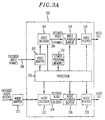
- An exemplary embodiment of this method is presented in FIG 3(a).
- the multimedia playback system is taken to be a typical multimedia PC.
- a processor 330 and a stored program memory 332 are shared by a variety of system elements including, for example, an audio decoder 322 , an audio player 328 , a video decoder 314 and a video player 320 .
- the processor 330 is neither dedicated to any individual element nor guaranteed to be available to any element at any specific time. Accordingly, the elements may contend for shared resources, leading to possible playback interruptions.
- the processor 330 instructs the audio decoder 322 to retrieve a selected number N of encoded audio blocks 324 from the audio buffer 312 , to decode these N audio blocks 324 , and then to place them in the audio playback buffer 326 .
- this selected number N should be at least as large as the number of stages of audio playback buffering associated with the system, and may typically be an integer from two to four.
- the processor 330 instructs the audio player 328 to play these decoded audio blocks.
- the processor 330 periodically monitors the number of decoded blocks remaining in playback buffer 326 and instructs the decoder 322 to decode a sufficient number of audio blocks to refill the playback buffer 326 as required.
- the processor 330 examines the video buffer 310 to determine how many encoded video frames 306 are backlogged. If the number of backlogged encoded frames exceeds a specified threshold, the processor next determines whether any of the backlogged frames in buffer 310 are video key frames.
- the processor 330 instructs the video decoder 314 to decode the key frame in the backlogged sequence which has the highest sequence number and is therefore the most current in that sequence (hereinafter referred to as the latest key frame), as well as all other frames in the buffer 310 that follow this key frame and are thus later in the backlogged sequence.
- the processor 330 then instructs the video decoder 314 to place only that decoded frame which has the highest sequence number in the video playback buffer 318 . This frame is accordingly latest in the decoded frame sequence, and is hereinafter referred to as the most current decoded frame.
- the processor 330 finally instructs the video player 320 to play this most current decoded frame. As a result, only those backlogged frames required to decode the most current decoded frame are decoded, and only the most current decoded frame is played. All other backlogged frames are effectively discarded.
- the processor 330 instructs the video decoder 314 to decode all backlogged frames in the video buffer 310 , and to place the most current decoded frame in the backlogged sequence in playback buffer 318 . Then, once the appropriate backlogged video frames in buffer 310 have been decoded, the processor 330 instructs the video player 320 to retrieve the most current decoded frame from buffer 318 for rendering.
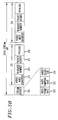
- FIG. 3(b) A basic format for the data stream operated on by the system 300 is shown in FIG. 3(b). This format provides one example in accordance with the present invention. A variety of other data formats are also possible and contemplated within the scope of the present invention.
- a data stream 301 comprises data packets 311 , and each packet includes an identifier 313 that indicates whether the packet carries audio or video data, and a sequence number 315 that establishes the order in which the audio and video packets should each be depacketized and stored. Additionally, each packet 311 includes a packet header 317 and a data payload 319 .
- the entire data stream 301 begins with a stream header 303 .
- the stream header 303 contains a video frame rate 305 , an audio sampling rate 307 and an audio block size 309 .
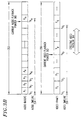
- FIG. 3(c) illustrates how a backlog condition is determined.
- Encoded data representing audio blocks 352 arrive and are placed in sequence order in the audio buffer 312 of FIG. 3(a). Sequence may be established by using the sequence numbers 315 described in FIG. 3(b), or by some alternative means.
- sampling rate and number of samples per block vary according to the selected standard. For example, a "CD quality" audio transmission under MPEG-I might be sampled at a rate of 44.1 kilohertz (kHz), and include 1024 samples in a block. Either the sequence number or the time stamp are stored with an associated encoded frame or block, respectively, in the buffers 318, 326 of FIG 3(a).
- Encoded data representing video frames 356 of FIG. 3(b) arrive and are placed in sequence order in the video buffer 310 of FIG. 3(a). Again, sequence may be established by using the sequence numbers 315 described in FIG. 3(b), or by some alternative means.
- Video frame rate will vary according to the selected standard and the capabilities of the playback device. For example, a high-quality video frame rate might be established at 30 frames per second (fps). Because this frame rate may exceed the capacity of many current desktop multimedia systems, a frame rate of 10 to 15 fps is more typical.
- a current audio playback pointer 360 identifies the next audio block to be decoded from the audio buffer 312 of FIG. 3(a), and a current video playback pointer 362 identifies the next video frame to be decoded V p from the video buffer 310 of FIG. 3(a).
- the time stamp tvp is determined for V p
- the time stamp t Am is determined for the next audio frame to be decoded A m .
- the video backlog 364 consists of the sequence of video frames beginning with V p and ending with V q .
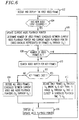
- Video backlog will be used to adapt the video decoding and rendering process, as illustrated in FIG. 6 and described further herein.
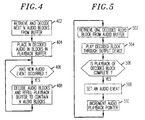
- FIG 4 provides a flowchart for the audio data decoding process.
- step 402 of FIG. 4 the audio decoder 322 of FIG. 3(a) retrieves and decodes N audio blocks from the audio buffer 312 .
- step 404 of FIG. 4 audio decoder 322 of FIG. 3(a) places these N decoded blocks into audio playback buffer 326 , and in step 406 of FIG. 4, awaits the arrival of an audio event. Audio events serve as a basic clock or triggering mechanism for the audio and video decoding and playback processes.
- the number of retrieved audio blocks N is typically a system parameter set by the multimedia system, and should be sufficiently large to provide few interruptions in the audio playback.
- An integer N with a value from two to four blocks has been found to be effective for many multimedia applications employing desktop PC's for the playback device.
- a flowchart depicting the audio playback process is provided in FIG. 5, and includes the steps required to generate an audio event.
- the audio player 328 of FIG. 3(a) retrieves a decoded audio block from the audio playback buffer 326 , and plays this block through an audio output device in step 504 .
- decision step 506 of FIG. 5 the audio player 328 of FIG. 3(a) monitors the completion of the audio block playback, and when complete, generates an audio event in step 508 .
- the processor 330 increments the audio playback pointer, and returns to step 502 of FIG. 5 to retrieve the next decoded audio block. Consistent with the design of the associated buffers, an audio block is effectively discarded from the audio buffer and audio playback buffer after it has been decoded and rendered, respectively.
- the audio event as generated by the audio playback process is detected by the audio decoder 322 of FIG. 3(a) in decision step 406 as illustrated in FIG. 4.
- the audio decoder 322 of FIG. 3(a) retrieves and decodes an additional number of encoded audio blocks from the audio buffer 312 , until the audio playback buffer 326 again contains N decoded audio blocks.
- the audio decoder 322 then returns to decision step 406 of FIG. 4 to await arrival of the next audio event before moving once again to step 408 to replenish the audio playback buffer 326 of FIG. 3(a).
- step 602 the video decoder 314 of FIG. 3(a) decodes the first video frame, and stores this frame in the video playback buffer 318 for playback by the video player 320 .
- step 604 of FIG. 6 the video decoder 314 of FIG. 3(a) then awaits the arrival of an audio event. After detecting the arrival of an audio event, the video decoder 314 moves to step 606 of FIG. 6 to increment the current audio playback pointer 310 of FIG. 3 and determine the video backlog 314 .
- step 608 of FIG 6 the video decoder 314 of FIG. 3(a) takes one of two actions according to the size of the video backlog.
- the video decoder 314 If the video backlog is less than an integer M, the video decoder 314 returns to step 604 of FIG. 6 and awaits the arrival of the next audio event. If the video backlog is equal to or greater than M, in step 610 , the video decoder 314 searches the backlogged frames to determine whether any are video key frames.
- the video decoder 314 of FIG. 3(a) in step 612 of FIG. 6 selects the most current backlogged key frame V k (based on time stamp t Vk ), begins decoding forward in the sequence until the most current backlogged video frame V q has been decoded, and places this decoded most current backlogged frame V q in the video playback buffer 318 . If no video key frame is found, the video decoder 314 of FIG. 1 in step 614 of FIG. 6 decodes all video frames in the backlog V p through V q , and places the most current backlogged video frame V q in the video playback buffer 318 .
- step 616 of FIG. 6 the video player 320 of FIG. 3(a) retrieves the most current decoded frame V q , from video playback buffer 318 , plays this frame, and increments video playback pointer 312 of FIG. 3(b). Consistent with the design of playback buffer 318 , decoded frame V q is effectively discarded from playback buffer 318 after it has been rendered by video player 320 .
- the integer M which sets a threshold level for video backlog, should be set so that large discontinuities in the video playback are minimized. In a typical PC-based environment, we believe that M is most effectively set to an integer value of one.
- each audio playback cycle is completed in a relatively fixed and predictable time period. Accordingly, each cycle completion is used as a clock to trigger an "audio event" that regulates both the audio and video playback and decoding processes.
- a video decoding backlog is detected, synchronization between audio blocks and video frames is reestablished by allowing the video decoder 314 of FIG.
- values selected for the video frame backlog (M), the number of audio blocks retrieved (N) and the number of audio blocks played (one) per audio event cycle can be altered from the values recommended herein.
- One skilled in the art could also readily adapt the method disclosed by this invention to grant priority to video decoding and rendering rather than audio decoding and rendering.
Landscapes
- Engineering & Computer Science (AREA)
- Multimedia (AREA)
- Signal Processing (AREA)
- Compression Or Coding Systems Of Tv Signals (AREA)
- Television Receiver Circuits (AREA)
Applications Claiming Priority (2)
| Application Number | Priority Date | Filing Date | Title |
|---|---|---|---|
| US09/144,161 US6016166A (en) | 1998-08-31 | 1998-08-31 | Method and apparatus for adaptive synchronization of digital video and audio playback in a multimedia playback system |
| US144161 | 1998-08-31 |
Publications (3)
| Publication Number | Publication Date |
|---|---|
| EP0987904A2 true EP0987904A2 (de) | 2000-03-22 |
| EP0987904A3 EP0987904A3 (de) | 2001-05-02 |
| EP0987904B1 EP0987904B1 (de) | 2015-03-25 |
Family
ID=22507352
Family Applications (1)
| Application Number | Title | Priority Date | Filing Date |
|---|---|---|---|
| EP99306652.1A Expired - Lifetime EP0987904B1 (de) | 1998-08-31 | 1999-08-23 | Verfahren und Vorrichtung zur adaptiven Synchronisation von Ton- und Bildsignalenwiedergabe |
Country Status (4)
| Country | Link |
|---|---|
| US (1) | US6016166A (de) |
| EP (1) | EP0987904B1 (de) |
| JP (1) | JP3739609B2 (de) |
| CA (1) | CA2278376C (de) |
Cited By (6)
| Publication number | Priority date | Publication date | Assignee | Title |
|---|---|---|---|---|
| EP2043372A1 (de) * | 2007-09-26 | 2009-04-01 | Vodafone Holding GmbH | Verfahren zur Audio- und Videosynchronisation, Empfangs- und Sendegerät |
| CN102215429A (zh) * | 2010-04-01 | 2011-10-12 | 安凯(广州)微电子技术有限公司 | 一种用于移动电视的录制方法 |
| CN102821308A (zh) * | 2012-06-04 | 2012-12-12 | 西安交通大学 | 一种多场景流媒体课件录制与直播方法 |
| CN103024517A (zh) * | 2012-12-17 | 2013-04-03 | 四川九洲电器集团有限责任公司 | 一种基于并行处理的流媒体音视频同步播放方法 |
| CN104935996A (zh) * | 2015-06-09 | 2015-09-23 | 深圳康荣电子有限公司 | 一种拼接墙同步显示方法 |
| CN107911729A (zh) * | 2017-10-23 | 2018-04-13 | 广州市百果园网络科技有限公司 | 网络视频播放方法及终端 |
Families Citing this family (81)
| Publication number | Priority date | Publication date | Assignee | Title |
|---|---|---|---|---|
| US6304895B1 (en) * | 1997-08-22 | 2001-10-16 | Apex Inc. | Method and system for intelligently controlling a remotely located computer |
| US6205140B1 (en) * | 1997-12-01 | 2001-03-20 | Intel Corporation | Communication of dynamic dependencies along media streams |
| US6415373B1 (en) * | 1997-12-24 | 2002-07-02 | Avid Technology, Inc. | Computer system and process for transferring multiple high bandwidth streams of data between multiple storage units and multiple applications in a scalable and reliable manner |
| US6374336B1 (en) | 1997-12-24 | 2002-04-16 | Avid Technology, Inc. | Computer system and process for transferring multiple high bandwidth streams of data between multiple storage units and multiple applications in a scalable and reliable manner |
| US6081299A (en) * | 1998-02-20 | 2000-06-27 | International Business Machines Corporation | Methods and systems for encoding real time multimedia data |
| US7346920B2 (en) * | 2000-07-07 | 2008-03-18 | Sonic Solutions, A California Corporation | System, method and article of manufacture for a common cross platform framework for development of DVD-Video content integrated with ROM content |
| US6529949B1 (en) | 2000-02-07 | 2003-03-04 | Interactual Technologies, Inc. | System, method and article of manufacture for remote unlocking of local content located on a client device |
| US7448021B1 (en) | 2000-07-24 | 2008-11-04 | Sonic Solutions, A California Corporation | Software engine for combining video or audio content with programmatic content |
| US6769130B1 (en) | 2000-01-20 | 2004-07-27 | Interactual Technologies, Inc. | System, method and article of manufacture for late synchronization during the execution of a multimedia event on a plurality of client computers |
| US6665489B2 (en) | 1999-04-21 | 2003-12-16 | Research Investment Network, Inc. | System, method and article of manufacturing for authorizing the use of electronic content utilizing a laser-centric medium and a network server |
| US6941383B1 (en) * | 2000-01-20 | 2005-09-06 | Interactual Technologies, Inc. | System, method and article of manufacture for java/javascript component in a multimedia synchronization framework |
| CA2388565A1 (en) | 1999-04-21 | 2000-10-26 | Research Investment Network, Inc. | System, method and article of manufacture for updating content stored on a portable storage medium |
| US6453420B1 (en) | 1999-04-21 | 2002-09-17 | Research Investment Network, Inc. | System, method and article of manufacture for authorizing the use of electronic content utilizing a laser-centric medium |
| US7178106B2 (en) | 1999-04-21 | 2007-02-13 | Sonic Solutions, A California Corporation | Presentation of media content from multiple media sources |
| US6405203B1 (en) * | 1999-04-21 | 2002-06-11 | Research Investment Network, Inc. | Method and program product for preventing unauthorized users from using the content of an electronic storage medium |
| US20050182828A1 (en) | 1999-04-21 | 2005-08-18 | Interactual Technologies, Inc. | Platform specific execution |
| US7188193B1 (en) | 2000-01-20 | 2007-03-06 | Sonic Solutions, A California Corporation | System, method and article of manufacture for a synchronizer component in a multimedia synchronization framework |
| US7458091B1 (en) | 2000-01-20 | 2008-11-25 | Sonic Solutions, A California Corporation | System, method and article of manufacture for a business layer component in a multimedia synchronization framework |
| US6480902B1 (en) * | 1999-05-25 | 2002-11-12 | Institute For Information Industry | Intermedia synchronization system for communicating multimedia data in a computer network |
| US6957220B2 (en) | 2000-11-07 | 2005-10-18 | Research Investment Networks, Inc. | System, method and article of manufacture for tracking and supporting the distribution of content electronically |
| US7392481B2 (en) | 2001-07-02 | 2008-06-24 | Sonic Solutions, A California Corporation | Method and apparatus for providing content-owner control in a networked device |
| US7120162B1 (en) * | 2000-08-03 | 2006-10-10 | Skyworks Solutions, Inc. | System and method for processing audio and video data in a wireless handset |
| WO2002015591A1 (en) * | 2000-08-16 | 2002-02-21 | Koninklijke Philips Electronics N.V. | Method of playing multimedia data |
| WO2002015564A1 (en) * | 2000-08-16 | 2002-02-21 | Koninklijke Philips Electronics N.V. | Method of playing multimedia applications |
| US7689510B2 (en) | 2000-09-07 | 2010-03-30 | Sonic Solutions | Methods and system for use in network management of content |
| US7779097B2 (en) | 2000-09-07 | 2010-08-17 | Sonic Solutions | Methods and systems for use in network management of content |
| FR2814027B1 (fr) * | 2000-09-14 | 2003-01-31 | Cit Alcatel | Procede de synchronisation d'un fichier multimedia |
| JP4208398B2 (ja) * | 2000-10-05 | 2009-01-14 | 株式会社東芝 | 動画像復号再生装置、動画像復号再生方法及びマルチメディア情報受信装置 |
| US7191442B2 (en) | 2000-10-30 | 2007-03-13 | Research Investment Network, Inc. | BCA writer serialization management |
| US7447791B2 (en) * | 2000-12-15 | 2008-11-04 | British Telecommunications Public Limited Company | Transmission and reception of audio and/or video material |
| US8166093B2 (en) * | 2001-02-08 | 2012-04-24 | Warner Music Group, Inc. | Method and apparatus for processing multimedia programs for play on incompatible devices |
| US7030930B2 (en) * | 2001-03-06 | 2006-04-18 | Ati Technologies, Inc. | System for digitized audio stream synchronization and method thereof |
| TW499818B (en) * | 2001-03-29 | 2002-08-21 | Winbond Electronics Corp | Audio/video packet synchronous decoding method |
| US7360149B2 (en) | 2001-04-19 | 2008-04-15 | International Business Machines Corporation | Displaying text of video in browsers on a frame by frame basis |
| US6639649B2 (en) * | 2001-08-06 | 2003-10-28 | Eastman Kodak Company | Synchronization of music and images in a camera with audio capabilities |
| US7133362B2 (en) * | 2001-11-14 | 2006-11-07 | Microsoft Corporation | Intelligent buffering process for network conference video |
| EP1341386A3 (de) * | 2002-01-31 | 2003-10-01 | Thomson Licensing S.A. | Audiovideoystem mit variabler Verzögerung |
| US8068546B2 (en) * | 2002-08-29 | 2011-11-29 | Riip, Inc. | Method and apparatus for transmitting video signals |
| US8558795B2 (en) * | 2004-03-12 | 2013-10-15 | Riip, Inc. | Switchless KVM network with wireless technology |
| US7684483B2 (en) * | 2002-08-29 | 2010-03-23 | Raritan Americas, Inc. | Method and apparatus for digitizing and compressing remote video signals |
| US7606314B2 (en) * | 2002-08-29 | 2009-10-20 | Raritan America, Inc. | Method and apparatus for caching, compressing and transmitting video signals |
| US7818480B2 (en) * | 2002-08-29 | 2010-10-19 | Raritan Americas, Inc. | Wireless management of remote devices |
| US7660512B2 (en) * | 2003-10-16 | 2010-02-09 | Microsoft Corporation | Systems and methods for managing frame rates during multimedia playback |
| US7853663B2 (en) * | 2004-03-12 | 2010-12-14 | Riip, Inc. | Wireless management system for control of remote devices |
| WO2005117413A1 (en) * | 2004-05-14 | 2005-12-08 | Cooper J Carl | Method, system, and program product for eliminating error contribution from production switchers with internal dves |
| US20060209210A1 (en) * | 2005-03-18 | 2006-09-21 | Ati Technologies Inc. | Automatic audio and video synchronization |
| US7996699B2 (en) * | 2005-04-11 | 2011-08-09 | Graphics Properties Holdings, Inc. | System and method for synchronizing multiple media devices |
| US8478884B2 (en) | 2005-09-30 | 2013-07-02 | Riip, Inc. | Wireless remote device management utilizing mesh topology |
| US7555715B2 (en) * | 2005-10-25 | 2009-06-30 | Sonic Solutions | Methods and systems for use in maintaining media data quality upon conversion to a different data format |
| US7742407B2 (en) * | 2005-11-10 | 2010-06-22 | Scientific-Atlanta, Llc | Quality of service management in a switched digital video environment |
| US20070107024A1 (en) * | 2005-11-10 | 2007-05-10 | Scientific-Atlanta, Inc. | Atomic channel changes in a switched digital video system |
| US8099756B2 (en) * | 2005-11-10 | 2012-01-17 | Versteeg William C | Channel changes between services with differing bandwidth in a switched digital video system |
| US20070106782A1 (en) * | 2005-11-10 | 2007-05-10 | Scientific-Atlanta, Inc. | Bandwidth management in each network device in a switched digital video environment |
| US7873760B2 (en) * | 2005-11-11 | 2011-01-18 | Versteeg William C | Expedited digital signal decoding |
| US20070230898A1 (en) * | 2006-03-31 | 2007-10-04 | Masstech Group Inc. | Random access searching with frame accuracy and without indexing within windows media video |
| US8306391B2 (en) * | 2006-05-08 | 2012-11-06 | Thomson Licensing | Method for resuming content reproduction across devices |
| US20080022320A1 (en) * | 2006-06-30 | 2008-01-24 | Scientific-Atlanta, Inc. | Systems and Methods of Synchronizing Media Streams |
| US7899046B2 (en) * | 2006-07-07 | 2011-03-01 | Ver Steeg William C | Determining strategy for multicast and/or unicast transmission to correct forward errors |
| US7877660B2 (en) * | 2006-07-07 | 2011-01-25 | Ver Steeg William C | Transmitting additional forward error correction (FEC) upon request |
| US7725797B2 (en) * | 2006-07-07 | 2010-05-25 | Scientific-Atlanta, Llc | Buffer for storing data and forward error correction (FEC) |
| US7774672B2 (en) * | 2006-07-07 | 2010-08-10 | Scientific-Atlanta, Llc | Requesting additional forward error correction |
| TWI314017B (en) * | 2006-07-12 | 2009-08-21 | Quanta Comp Inc | System and method for synchronizing video frames and audio frames |
| JP5049652B2 (ja) * | 2006-09-07 | 2012-10-17 | キヤノン株式会社 | 通信システム、データの再生制御方法、コントローラ、コントローラの制御方法、アダプタ、アダプタの制御方法、およびプログラム |
| US7870465B2 (en) * | 2006-10-18 | 2011-01-11 | Versteeg William C | Reducing channel-change time |
| TWI338508B (en) * | 2006-12-20 | 2011-03-01 | Ind Tech Res Inst | Method and apparatus for audio/video synchronization |
| US7788395B2 (en) * | 2007-02-14 | 2010-08-31 | Microsoft Corporation | Adaptive media playback |
| US20080244667A1 (en) * | 2007-03-27 | 2008-10-02 | Osborne Jason C | Bandwidth sensitive switched digital video content delivery |
| US8370889B2 (en) * | 2007-03-28 | 2013-02-05 | Kanthimathi Gayatri Sukumar | Switched digital video client reverse channel traffic reduction |
| US8832766B2 (en) * | 2007-07-27 | 2014-09-09 | William C. Versteeg | Systems and methods of differentiated channel change behavior |
| US8776160B2 (en) * | 2007-07-27 | 2014-07-08 | William C. Versteeg | Systems and methods of differentiated requests for network access |
| KR101132043B1 (ko) | 2007-08-27 | 2012-04-02 | 후지쯔 가부시끼가이샤 | 디코더 장치 및 디코드 방법 |
| US8190760B2 (en) * | 2008-01-15 | 2012-05-29 | Echostar Advanced Technologies L.L.C. | System and method of managing multiple video players |
| US9832442B2 (en) | 2008-01-15 | 2017-11-28 | Echostar Technologies Llc | System and method of managing multiple video players executing on multiple devices |
| US8490195B1 (en) * | 2008-12-19 | 2013-07-16 | Symantec Corporation | Method and apparatus for behavioral detection of malware in a computer system |
| CA2684678A1 (en) * | 2009-11-03 | 2011-05-03 | Research In Motion Limited | System and method for dynamic post-processing on a mobile device |
| KR101582436B1 (ko) * | 2010-05-04 | 2016-01-04 | 샤잠 엔터테인먼트 리미티드 | 미디어의 동기화 방법 및 시스템 |
| US8483286B2 (en) | 2010-10-27 | 2013-07-09 | Cyberlink Corp. | Batch processing of media content |
| US9043800B2 (en) * | 2011-05-26 | 2015-05-26 | Adobe Systems Incorporated | Video player instance prioritization |
| US9015555B2 (en) | 2011-11-18 | 2015-04-21 | Cisco Technology, Inc. | System and method for multicast error recovery using sampled feedback |
| US20140149606A1 (en) * | 2012-11-23 | 2014-05-29 | Samsung Electronics Co., Ltd. | Server, multimedia apparatus and control method thereof for synchronously playing multimedia contents through a plurality of multimedia devices |
| CN109660805B (zh) * | 2017-10-10 | 2020-07-31 | 武汉斗鱼网络科技有限公司 | 解码播放中音视频同步优化方法、存储介质、设备及系统 |
Family Cites Families (9)
| Publication number | Priority date | Publication date | Assignee | Title |
|---|---|---|---|---|
| AU672070B2 (en) * | 1993-02-26 | 1996-09-19 | Sony Corporation | Synchronization of audio/video information |
| US5351092A (en) * | 1993-07-23 | 1994-09-27 | The Grass Valley Group, Inc. | Synchronization of digital audio with digital video |
| DE69426894T2 (de) * | 1993-09-16 | 2001-07-26 | Toshiba Kawasaki Kk | Digitales Videosignal |
| US5430485A (en) * | 1993-09-30 | 1995-07-04 | Thomson Consumer Electronics, Inc. | Audio/video synchronization in a digital transmission system |
| US5815634A (en) * | 1994-09-30 | 1998-09-29 | Cirrus Logic, Inc. | Stream synchronization method and apparatus for MPEG playback system |
| US5594660A (en) * | 1994-09-30 | 1997-01-14 | Cirrus Logic, Inc. | Programmable audio-video synchronization method and apparatus for multimedia systems |
| US5598352A (en) * | 1994-09-30 | 1997-01-28 | Cirrus Logic, Inc. | Method and apparatus for audio and video synchronizing in MPEG playback systems |
| JPH09205618A (ja) * | 1996-01-29 | 1997-08-05 | Mitsubishi Electric Corp | 動画像音声伸張再生装置および動画像音声同期制御器 |
| US5824997A (en) * | 1996-08-05 | 1998-10-20 | Fastrax Industries, Inc. | Railroad track switch heater |
-
1998
- 1998-08-31 US US09/144,161 patent/US6016166A/en not_active Expired - Lifetime
-
1999
- 1999-07-22 CA CA002278376A patent/CA2278376C/en not_active Expired - Fee Related
- 1999-08-23 EP EP99306652.1A patent/EP0987904B1/de not_active Expired - Lifetime
- 1999-08-31 JP JP24452399A patent/JP3739609B2/ja not_active Expired - Fee Related
Cited By (8)
| Publication number | Priority date | Publication date | Assignee | Title |
|---|---|---|---|---|
| EP2043372A1 (de) * | 2007-09-26 | 2009-04-01 | Vodafone Holding GmbH | Verfahren zur Audio- und Videosynchronisation, Empfangs- und Sendegerät |
| CN102215429A (zh) * | 2010-04-01 | 2011-10-12 | 安凯(广州)微电子技术有限公司 | 一种用于移动电视的录制方法 |
| CN102215429B (zh) * | 2010-04-01 | 2013-04-17 | 安凯(广州)微电子技术有限公司 | 一种用于移动电视的录制方法 |
| CN102821308A (zh) * | 2012-06-04 | 2012-12-12 | 西安交通大学 | 一种多场景流媒体课件录制与直播方法 |
| CN102821308B (zh) * | 2012-06-04 | 2014-11-05 | 西安交通大学 | 一种多场景流媒体课件录制与直播方法 |
| CN103024517A (zh) * | 2012-12-17 | 2013-04-03 | 四川九洲电器集团有限责任公司 | 一种基于并行处理的流媒体音视频同步播放方法 |
| CN104935996A (zh) * | 2015-06-09 | 2015-09-23 | 深圳康荣电子有限公司 | 一种拼接墙同步显示方法 |
| CN107911729A (zh) * | 2017-10-23 | 2018-04-13 | 广州市百果园网络科技有限公司 | 网络视频播放方法及终端 |
Also Published As
| Publication number | Publication date |
|---|---|
| JP2000115772A (ja) | 2000-04-21 |
| US6016166A (en) | 2000-01-18 |
| CA2278376A1 (en) | 2000-02-29 |
| EP0987904B1 (de) | 2015-03-25 |
| CA2278376C (en) | 2002-06-18 |
| JP3739609B2 (ja) | 2006-01-25 |
| EP0987904A3 (de) | 2001-05-02 |
Similar Documents
| Publication | Publication Date | Title |
|---|---|---|
| US6016166A (en) | Method and apparatus for adaptive synchronization of digital video and audio playback in a multimedia playback system | |
| US5719786A (en) | Digital media data stream network management system | |
| EP1699240B1 (de) | Videodatenverarbeitungsverfahren und videodatenverarbeitungseinrichtung | |
| KR100557103B1 (ko) | 데이터 처리방법 및 데이터 처리장치 | |
| US6674803B1 (en) | Methods and systems for encoding real time multimedia data | |
| US6327421B1 (en) | Multiple speed fast forward/rewind compressed video delivery system | |
| US5559999A (en) | MPEG decoding system including tag list for associating presentation time stamps with encoded data units | |
| KR100233353B1 (ko) | 엠펙 데이타 스트림에서 프레임의 위치를 효율적으로 알아내는 방법 및 시스템 | |
| US7010032B1 (en) | Moving image coding apparatus and decoding apparatus | |
| US8160153B2 (en) | Hypothetical reference decoder with low start-up delays for compressed image and video | |
| EP0683951B1 (de) | Multimediaverteilungssystem | |
| US20020150123A1 (en) | System and method for network delivery of low bit rate multimedia content | |
| US20020016970A1 (en) | Data conversion apparatus and method, data distribution apparatus and method, and data distribution system | |
| EP0779725A2 (de) | Verfahren und Gerät zur Erzeugung, anhand komprimierter Videodatenfolgen mit gleichzeitiger konstanter Bitrate, von Datenfolgen variabler Bitrate mit verringertem Drift und Zittern | |
| JP2003519985A (ja) | データストリームの変換方法と装置 | |
| US8904426B2 (en) | Preconditioning ad content for digital program insertion | |
| JP2007202026A (ja) | 符号化装置、復号化装置、符号化方法、復号化方法、符号化方法のプログラム、復号化方法のプログラム、符号化方法のプログラムを記録した記録媒体及び復号化方法のプログラムを記録した記録媒体 | |
| CN1758722B (zh) | 一种切换频道的方法及用于显示图像的解码系统 | |
| JP3556381B2 (ja) | 情報多重化装置 | |
| Kim et al. | Design and implementation of an MPEG-2 transport stream multiplexer for HDTV satellite broadcasting | |
| US20020023269A1 (en) | Data distribution apparatus and method, and data distribution system | |
| JP3441257B2 (ja) | データ伝送装置 | |
| EP0783823A1 (de) | Synchronisationsmessung und -regelung von gemultiplexten video- und audiodaten | |
| GB2348069A (en) | Representation of a slide-show as video | |
| JP4373802B2 (ja) | 番組送信方法、番組送信装置、番組送信システム、および、番組送信プログラム |
Legal Events
| Date | Code | Title | Description |
|---|---|---|---|
| PUAI | Public reference made under article 153(3) epc to a published international application that has entered the european phase |
Free format text: ORIGINAL CODE: 0009012 |
|
| AK | Designated contracting states |
Kind code of ref document: A2 Designated state(s): DE FR GB |
|
| AX | Request for extension of the european patent |
Free format text: AL;LT;LV;MK;RO;SI |
|
| PUAL | Search report despatched |
Free format text: ORIGINAL CODE: 0009013 |
|
| AK | Designated contracting states |
Kind code of ref document: A3 Designated state(s): AT BE CH CY DE DK ES FI FR GB GR IE IT LI LU MC NL PT SE |
|
| AX | Request for extension of the european patent |
Free format text: AL;LT;LV;MK;RO;SI |
|
| 17P | Request for examination filed |
Effective date: 20011018 |
|
| AKX | Designation fees paid |
Free format text: DE FR GB |
|
| 17Q | First examination report despatched |
Effective date: 20080102 |
|
| RAP3 | Party data changed (applicant data changed or rights of an application transferred) |
Owner name: LUCENT TECHNOLOGIES INC. |
|
| RAP1 | Party data changed (applicant data changed or rights of an application transferred) |
Owner name: ALCATEL-LUCENT USA INC. |
|
| 111Z | Information provided on other rights and legal means of execution |
Free format text: DE FR GB Effective date: 20130410 |
|
| REG | Reference to a national code |
Ref country code: DE Ref legal event code: R079 Ref document number: 69945296 Country of ref document: DE Free format text: PREVIOUS MAIN CLASS: H04N0007520000 Ipc: H04N0021430000 |
|
| GRAP | Despatch of communication of intention to grant a patent |
Free format text: ORIGINAL CODE: EPIDOSNIGR1 |
|
| RIC1 | Information provided on ipc code assigned before grant |
Ipc: H04N 21/43 20110101AFI20131209BHEP Ipc: H04N 21/434 20110101ALI20131209BHEP |
|
| INTG | Intention to grant announced |
Effective date: 20140106 |
|
| RAP1 | Party data changed (applicant data changed or rights of an application transferred) |
Owner name: ALCATEL LUCENT |
|
| RAP1 | Party data changed (applicant data changed or rights of an application transferred) |
Owner name: IDPA HOLDINGS, INC. |
|
| GRAP | Despatch of communication of intention to grant a patent |
Free format text: ORIGINAL CODE: EPIDOSNIGR1 |
|
| INTG | Intention to grant announced |
Effective date: 20141016 |
|
| GRAS | Grant fee paid |
Free format text: ORIGINAL CODE: EPIDOSNIGR3 |
|
| GRAA | (expected) grant |
Free format text: ORIGINAL CODE: 0009210 |
|
| AK | Designated contracting states |
Kind code of ref document: B1 Designated state(s): DE FR GB |
|
| REG | Reference to a national code |
Ref country code: GB Ref legal event code: FG4D |
|
| REG | Reference to a national code |
Ref country code: DE Ref legal event code: R096 Ref document number: 69945296 Country of ref document: DE Effective date: 20150507 |
|
| REG | Reference to a national code |
Ref country code: DE Ref legal event code: R097 Ref document number: 69945296 Country of ref document: DE |
|
| PLBE | No opposition filed within time limit |
Free format text: ORIGINAL CODE: 0009261 |
|
| STAA | Information on the status of an ep patent application or granted ep patent |
Free format text: STATUS: NO OPPOSITION FILED WITHIN TIME LIMIT |
|
| 26N | No opposition filed |
Effective date: 20160105 |
|
| REG | Reference to a national code |
Ref country code: FR Ref legal event code: PLFP Year of fee payment: 18 |
|
| PGFP | Annual fee paid to national office [announced via postgrant information from national office to epo] |
Ref country code: GB Payment date: 20160726 Year of fee payment: 18 Ref country code: DE Payment date: 20160721 Year of fee payment: 18 |
|
| PGFP | Annual fee paid to national office [announced via postgrant information from national office to epo] |
Ref country code: FR Payment date: 20160720 Year of fee payment: 18 |
|
| REG | Reference to a national code |
Ref country code: DE Ref legal event code: R119 Ref document number: 69945296 Country of ref document: DE |
|
| GBPC | Gb: european patent ceased through non-payment of renewal fee |
Effective date: 20170823 |
|
| REG | Reference to a national code |
Ref country code: FR Ref legal event code: ST Effective date: 20180430 |
|
| PG25 | Lapsed in a contracting state [announced via postgrant information from national office to epo] |
Ref country code: GB Free format text: LAPSE BECAUSE OF NON-PAYMENT OF DUE FEES Effective date: 20170823 Ref country code: DE Free format text: LAPSE BECAUSE OF NON-PAYMENT OF DUE FEES Effective date: 20180301 |
|
| PG25 | Lapsed in a contracting state [announced via postgrant information from national office to epo] |
Ref country code: FR Free format text: LAPSE BECAUSE OF NON-PAYMENT OF DUE FEES Effective date: 20170831 |