EP0991232A2 - Procédé et dispositif d'achéminement dans un réseau de communications - Google Patents
Procédé et dispositif d'achéminement dans un réseau de communications Download PDFInfo
- Publication number
- EP0991232A2 EP0991232A2 EP99113243A EP99113243A EP0991232A2 EP 0991232 A2 EP0991232 A2 EP 0991232A2 EP 99113243 A EP99113243 A EP 99113243A EP 99113243 A EP99113243 A EP 99113243A EP 0991232 A2 EP0991232 A2 EP 0991232A2
- Authority
- EP
- European Patent Office
- Prior art keywords
- network
- information
- user
- service
- data packet
- Prior art date
- Legal status (The legal status is an assumption and is not a legal conclusion. Google has not performed a legal analysis and makes no representation as to the accuracy of the status listed.)
- Granted
Links
Images



Classifications
-
- H—ELECTRICITY
- H04—ELECTRIC COMMUNICATION TECHNIQUE
- H04L—TRANSMISSION OF DIGITAL INFORMATION, e.g. TELEGRAPHIC COMMUNICATION
- H04L12/00—Data switching networks
- H04L12/28—Data switching networks characterised by path configuration, e.g. LAN [Local Area Networks] or WAN [Wide Area Networks]
- H04L12/2854—Wide area networks, e.g. public data networks
- H04L12/2856—Access arrangements, e.g. Internet access
- H04L12/2869—Operational details of access network equipments
- H04L12/287—Remote access server, e.g. BRAS
- H04L12/2876—Handling of subscriber policies
-
- H—ELECTRICITY
- H04—ELECTRIC COMMUNICATION TECHNIQUE
- H04L—TRANSMISSION OF DIGITAL INFORMATION, e.g. TELEGRAPHIC COMMUNICATION
- H04L12/00—Data switching networks
- H04L12/28—Data switching networks characterised by path configuration, e.g. LAN [Local Area Networks] or WAN [Wide Area Networks]
- H04L12/2854—Wide area networks, e.g. public data networks
- H04L12/2856—Access arrangements, e.g. Internet access
-
- H—ELECTRICITY
- H04—ELECTRIC COMMUNICATION TECHNIQUE
- H04L—TRANSMISSION OF DIGITAL INFORMATION, e.g. TELEGRAPHIC COMMUNICATION
- H04L12/00—Data switching networks
- H04L12/28—Data switching networks characterised by path configuration, e.g. LAN [Local Area Networks] or WAN [Wide Area Networks]
- H04L12/2854—Wide area networks, e.g. public data networks
- H04L12/2856—Access arrangements, e.g. Internet access
- H04L12/2869—Operational details of access network equipments
- H04L12/287—Remote access server, e.g. BRAS
- H04L12/2874—Processing of data for distribution to the subscribers
-
- H—ELECTRICITY
- H04—ELECTRIC COMMUNICATION TECHNIQUE
- H04L—TRANSMISSION OF DIGITAL INFORMATION, e.g. TELEGRAPHIC COMMUNICATION
- H04L45/00—Routing or path finding of packets in data switching networks
-
- H—ELECTRICITY
- H04—ELECTRIC COMMUNICATION TECHNIQUE
- H04L—TRANSMISSION OF DIGITAL INFORMATION, e.g. TELEGRAPHIC COMMUNICATION
- H04L45/00—Routing or path finding of packets in data switching networks
- H04L45/302—Route determination based on requested QoS
- H04L45/308—Route determination based on user's profile, e.g. premium users
-
- H—ELECTRICITY
- H04—ELECTRIC COMMUNICATION TECHNIQUE
- H04L—TRANSMISSION OF DIGITAL INFORMATION, e.g. TELEGRAPHIC COMMUNICATION
- H04L45/00—Routing or path finding of packets in data switching networks
- H04L45/80—Ingress point selection by the source endpoint, e.g. selection of ISP or POP
Definitions
- the invention relates to a method for determining traffic routes, also called 'routing', in packet-oriented communication and data networks.
- a provider of an information service makes information available to users in a packet-oriented network. These can be edited and searched in the form of, for example, database content or websites.
- a user In order to use an information service, a user usually has to use an intermediary service. This mediates data packets in the packet network and thus establishes access to the information service.
- a user can choose between different switching services. He can only use one switching service at a time; all data packets are sent to this switching service, which then distributes them further.
- a packet-oriented data network e.g. B. to an information provider (such as Compuserve or AOL) or to a company network
- a new data connection must be established.
- a user If a user is not in the network to which he wants to have access, he must first establish a connection to a switching service. This happens, for example, from his PC at home using a modem via the circuit-switched telephone network and with a special protocol such as SLIP or PPP. If the user wants to change the switching service, he must end the connection that has been set up and establish a new connection to a next switching service.
- a switching service for example, from his PC at home using a modem via the circuit-switched telephone network and with a special protocol such as SLIP or PPP.
- a special case of the access service is called Virtual PoP (Point of Presence).
- a switching service allows other switching services to use the same access point. The users of this second switching service do not notice that they are in a "foreign" access point.
- the object of the invention is to provide a possibility of how a user with an existing connection to a packet-oriented data network can choose between different providers of switching and information services without having to adapt this connection in each case.
- all data packets in the network are analyzed by a selected network node and the path of the packets to the destination address is manipulated in accordance with the specifications.
- First of all, information contained in the data packet is used (by the user, which can also be a program).
- second routing information is used, which is available to the network node, either in its own database or in several tables, which can also exist in a distributed manner in the network.
- a transfer node suitable for the requirements e.g. switching service
- the user can select various switching and information services without having to disconnect the connection that is visible to him at any time. It ensures that a suitable path is selected, for example if increased security is requested by the user, or if the goal in a corporate network is to be achieved by a path exclusively through this company network.
- the packet can then be forwarded either according to the previously known principle, for example using DNS on the Internet.
- the object is achieved by a device according to claim 19.
- the data packets are sent from the network element to a transfer point, which is fixed. This is usually done in any way, for example with a so-called tunnel for data packets over the network (such as with the help of the GRE, Generic Routing Encapsulation, PPTP, Point-to-Point-Tunneling Protocol or L2TP, Layer 2 Tunneling Protocol).
- GRE Generic Routing Encapsulation
- PPTP Point-to-Point-Tunneling Protocol
- L2TP Layer 2 Tunneling Protocol
- the path to the specified node is also determined by the network node.
- a data path can be, for example, a direct connection (PVC, SVC).
- the path of the data packet can also be realized by an explicit path specification in each packet (logical channels with ATM). With TCP / IP there is so-called 'source routing', or RSVP (Resource ReSerVation Protocol, RFC 2205).
- the additional information contained in the data packet and analyzed by the network node can be of various types. In addition to specific information about desired transfer and destination nodes, specific path information can also be included. Furthermore, information is useful about the source and destination of the data packet and the data transmission characteristics desired by the user, such as costs, quality, security, speed. This information can be determined explicitly or also implicitly from the content (header) of the data packet. This information can be used for further processing individually or in combination.
- the address information about the source and destination of a data packet can consist of several components (address components). This includes, for example, TCP / IP Addresses that can be expanded and refined by specifying a logical connection end point (the so-called port number). With other types of addressing, a connection point to a hardware device can also be controlled by an address extension using a port number.
- the packets may be incorrectly addressed.
- the specified address could e.g. B. can not be resolved correctly by the DNS proxy, so that no destination address and thus no next network node to which the data packet is to be passed on can be determined.
- the destination address is correct, but no switching service could be determined by the central network node that can transmit the data packet to the desired destination address.
- Another possibility of error lies in the fact that users first have to register with a switching or information service. If the user selects a service for which he has not entered any user authorization, data packets cannot be forwarded either.
- Data packets that cannot be forwarded are usually deleted ('discarded') in a packet-oriented data network.
- all of these data packets which cannot be delivered are forwarded to a suitable network node ('default') or are transferred to a local process which then generates a reaction.
- This can consist, for example, of an error message that is sent back to the sender and contains information about it, why the delivery of the data packets was not successful (negative confirmation).
- Another simple solution would be to generate ICMP (Internet Control Message Protocol) responses ('host unreachable').
- This reaction can also contain help on how the error that occurred during data transmission could be avoided (for example: registration with an intermediary service necessary, address error, ).
- these instructions can be so detailed that at least one specific action is offered and the possibility is offered that the user can decide on one of these actions, reject it or also enter an alternative reaction.
- a selection of the switching or information service can be achieved by further queries by the network node.
- the data packets which are sent as response packets from the destination back to the source address, should pass through the same specified node (that is, the same switching service) as the original packets. On the way there and back, it is therefore also necessary that the entries of the source and destination addresses are manipulated by the network node. In order to be able to clearly assign incoming data packets as response packets, records are saved on the (virtual) connections so that the possibly manipulated addresses can be changed again. This corresponds to the Network Address Translation (RFC 1631) methods known for IP data packets. These include masquerading, DNAT (Distributed Network Address Translation), NAR (Negotiated Address Reuse) or RAT (see also Internet Drafts, e.g. at http://www.ietf.org/).
- RRC 1631 Network Address Translation
- the user ie the sender of the original and recipient of the response packets
- the user can be sure that these data packets also meet the criteria they want. This applies to transmission costs and transmission quality as well as to guarantee transmission security.
- the switching service itself can be reached from 'both sides' (sender and recipient, user and information service), this can be arranged to use standard protocols learn specifically from the central network node.
- NAT is possible to different source addresses so that the switching service can also reach the central network node in different ways.
- the central network node can also communicate directly with the underlying network and thus exchange route information.
- the user is allowed to switch between different service providers during a connection to a second data network with the different accessible data sources.
- the path for each data packet is determined individually.
- the user can choose between individual switching services, but only one switching service is active for certain networks or information services. For example, this is important for charging.
- the mediation services for corporate Networks / content providers can be used in parallel.
- a user can log on to various services (switching or information services) in the network and then has a user authorization there.
- services switching or information services
- additional transport properties for messages with attributes for the individual user can be specified.
- Every user has a certain basic state with regard to the mediation and information services.
- This basic state can also be called a user profile.
- the Profile can be changed by the user during a session.
- This user profile can be stored in the central network element, but it is also possible to fetch these user profiles from one (or more distributed) external database if required.
- the central network element can quickly determine which user is authorized for which switching service. In the event that the user is not allowed to use a switching service, the central network element can immediately forward a corresponding data packet to a suitable network node for error handling.
- Access via the user profile can be protected with a password (login).
- the case can be treated that a user cannot use an intermediary service because he has not yet registered there.
- the sender of the data packets makes sense to send the sender of the data packets a suitable notification. This should contain an indication of why a correct transmission of the data packet failed.
- the corresponding data packets (at least one) can also be forwarded to a suitable network element, which takes over the further processing.
- Error handling can be designed to be very user-friendly, for example with graphical interfaces and with user control, which also provides feedback on the possible elimination of the errors found.
- help desk Through a so-called help desk, the user can even after sending Data packets are offered a help option that shows them the options and actions that are possible for them.
- a database e.g. UMS, User Management System
- UMS User Management System
- a suitable access protocol is RADIUS (Remote Authentication Dial-In User Service, RFC 2138) or LDAP (Lightweight Directory Access Protocol, RFC 1777).
- the user himself can modify the information contained in the database, for example his user profile.
- an interface must be provided through which he can access the data with the appropriate interface.
- Many solutions are already known for this.
- One possibility is the already widely used http protocol (hypertext transfer protocol) with the usual web browsers (Netscape, Mosaic, Microsoft Explorer, ...) as the user interface.
- Modified versions of this protocol or other suitable protocols e.g. IP V6, also to be used for Voice over IP
- IP V6 also to be used for Voice over IP
- palm pilots which have a small storage capacity and a small user interface.
- a help machine can also be accessed by the user via this interface. This can simplify correct forwarding of the data packets on the basis of the accessible information and further queries from and to the user.
- the help option can be implemented in different versions.
- the main advantage of the invention is that the modular structure enables the use of many standard components (some in modified form). This simplifies and speeds up implementation.
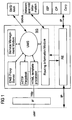
- FIG. 1 shows the possible schematic structure of a device (SG) for determining the traffic route of a data packet (IP).
- the structure does not show the minimal configuration, various components are only intended to increase user-friendliness, but are not necessary for the functioning of the device itself.
- S On the far left (S) is a user or application that creates or receives data packets and wants to forward them to the network. For this purpose, it transfers these data packets (IP) to a 'routing engine' (RE), which has the task of receiving these data packets, processing them and forwarding them later in a suitable manner.
- the 'routing engine' can be included in the device in various ways be in the kernel of an operating system (such as LINUX) or as a separate 'external' router.
- This routing engine exchanges data, with a means (Routing Information Module) for processing first information that it determines from the received data packets, second information about users and services that can be selected from databases and third information that Information contains about hardware and software of the underlying networks and routers used. For example, rules are exchanged, which were determined from a user profile and regulate access to certain switching or information services. There may also be more detailed information on the use of protocols for the further transmission of the data packets, such as methods of NAT (RFC 1631). It can also be billing data.
- the most important source for the second information is the storage medium (current user and service information, UMS).
- UMS current user and service information
- the (current) user profiles which contain the rules and what is still required as information about users and services.
- This information database can be supplemented by one or more external storage sources (SMS, System Management System), which provides the required authentication information (authorization profile). Communication can take place here using RADIUS (radius).
- RADIUS radio access control
- the data which are stored in the (UMS) can also be changed by the users. This is done via an interface (IF) which, for. B. from an HTML 'template processor', realized as a JAVA script ('Servlet', 'Applet').
- IF interface
- HTML 'template processor'
- 'Servlet', 'Applet' JAVA script
- http and HTML are used to communicate with the user, including a graphical user interface such as Netscape. This increases the user friendliness, but is not absolutely necessary for the invention.
- the corresponding control commands can also be used when using a mobile phone as a terminal.
- DNS is required for address resolution (logical name for network address) of the data packets in a packet-oriented network with TCP / IP. This can be a corresponding other service in other networks.
- the DNS proxy provided for this distributes incoming DNS queries according to the stored rules via users and services to the actually responsible DNS servers in the network.
- help desk Another module that is not absolutely necessary offers the user a help facility (help desk). It is advisable to use the same user interface as for changing the information.
- the help function can be designed in a manner known to those skilled in the art.
- IP data packet
- the target can be an information service (CP, content provider) or a corporate network (Corp. Corporate Network). If the data packet is to be sent to another communication network, a transition via an intermediary service (ISP, Internet Service Provider) is necessary.
- ISP Internet Service Provider
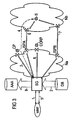
- FIG. 2 shows a schematic structure of two data networks (Na and Nb) and a network element (SG), via which data packets are transmitted by users into one and / or another data network and the data paths that the data packets take to the individual services.
- Na and Nb data networks
- SG network element
- the data packets are received by the network element (SG).
- the further route in the first network (Na) is determined using the method already described and additional information from a database (DB).
- the data packets can be forwarded via encapsulation to one of the available switching services (A - F).
- the switching services enable access to information services (G, H) in a second communication network (Nb).
- One information service can be reached via several switching services (G, A, B, F) and one switching service can reach several information services (A, G, H). Only one switching service can be activated for one information service at a time.
- An information service can be reached directly (C, D, E). More than one information service can be activated at a time.
- Figure 3 shows, starting from Figure 2, the sequence of a possible 'session' of a user.
- a user reaches the network node (SG) via a network (for example a connection in a telephone network).
- a network for example a connection in a telephone network.
- This checks his user profile (2) based on information the transmitted data packets (1) and information contained in a database (DB).
- DB database
- CP freely available services
- this can be information about his account balance, or transfer orders or the like.
- the user can dial in (anonymous login).
- the user gets some interesting information about (for example) web pages on the Internet.
- no intermediary service since no intermediary service has been activated so far, this information service has not been accessible to him (4).
- the network element (SG) is then given to the customer the option of selecting one from a list of switching services (5).
- the user opts for a slow and cheap exchange service (ISPA) and then data exchange with the information service (S) is possible in the second communication network (Nb) (6).
- ISPA slow and cheap exchange service
- S information service
- Nb second communication network
- the user would like to use another information service (Corp), for example his company network (8), to check his electronic mailbox there.
- Core information service
- the user can also terminate the connection via the switching service (ISPB) while the connection to the company network (Corp) continues.
- ISPB switching service
- the activations of the switching services are deleted and all rules are removed from the network element and / or the routing engine (ie the activations of the individual switching services from its database).
- the routing engine ie the activations of the individual switching services from its database.
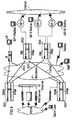
- FIG. 4 shows an exemplary structure of a network of networks in which the user (dial-in user) can exchange data packets via different routes and switching services with a second communication network (Internet).
- the user communicates via the telephone network (PSTN), with which he e.g. B. is connected to the PC via a modem.
- PSTN telephone network
- B. is connected to the PC via a modem.
- the network element can also be used as a virtual PoP (point of presence, access point to a network).
- the data packets sent will be forwarded from the telephone network to the nearest network element (service gateway and / or routing engine).
- service gateway and / or routing engine There are various options, for example via RAS (Remote Access Service) servers, which are available from a wide variety of manufacturers, such as 3Com, Cisco or Ascend.
- RAS Remote Access Service
- the data packets are routed to the network element (SG1 or SG2), which uses information such as the user profile (SSM, Service Selection Module, PRM, Proxy Radius Module) to unite them Path to a transfer point determined.
- this path can be taken over a packet-oriented network such as an IP backbone network.
- the data packets are forwarded using PVC, SVC technology or tunneling.
- the data packet can be routed there directly via a suitable router (R).
- R a suitable router
- the data packet is transferred to another network element or a router (SG3, SG4).
- the determination of the further route is taken over by a router module (RM) in the network element.
- the exchange of authentication, billing and authorization data e.g. with the authentication servers the switching services (ISP x Radius, Authentication and Accounting).
- ISP I, ISP II, IPS III Access to another network, such as the Internet, is then possible via the switching services (ISP I, ISP II, IPS III), and the data packets can be forwarded.
- the billing and the gathering of further information, such as statistical data, can be carried out by Radius servers belonging to the switching services.
- Independent radius servers can also be attached to the IP backbone; for example, they take over authentication and charging for access to information services (CP) that are not routed via switching services (ISP).
- CP information services
- ISP switching services
- TTN Network management
- service gateways The existing special network elements (service gateways) require different information, which should be configured together to avoid inconsistencies. Depending on the size of the network and the number of special network elements (service gateways), the configuration effort would then be very high.
- Figures 5a and 5b shows a flow chart showing the calls made between a user and the network elements.
- the user dials into a network address translation server (NAS) via the telephone network (PSTN, ISDN). He sends his user ID (login ID) and a password. If only a free service is to be used, an anonymous user ID can also be selected without a password.
- NAS network address translation server
- the NAS service sends an access request using the RADIUS protocol to a special server (AAA), which contains the 'login ID', the password and a caller ID.
- AAA special server
- the AAA server in turn asks for (query) in a user management system (UMS) that has stored user information in order to verify the identity of the user. If the query is successful, a user profile (authorization profile) is returned. Otherwise the AAA server will be informed of the failure.
- UMS user management system
- the AAA server reports this to the NAS server ( Access Accept ) together with the authorization or authentication profile determined from the database, which can also contain the network addresses (IP address) that it is assigned (transparent user ). If the authentication is not successful, this is also reported ( Access Reject ).
- the NAS server reports ( AAct Star t Request) some additional information to the AAA server, such as address, caller ID, session ID, which signals the start of the recording of information that is also used for charging.
- the AAA server simultaneously informs the special network element (SG) (notification) with this information identifying the user.
- the AAA server sends a confirmation to the NAS server ( Acct-Start-Ack ).
- the special network element stores the information about services and users that are returned in the user profile were (service profiles). This list can also contain further address details for future processing. With the help of this information, the rules for routing are appropriately modified in the special network element. This enables the user to access the desired services (i.e. logged in or activated).
- the user can also access services via the special network element. These can be offered to him by the network element, for example, via an http website, so that he only has to select the corresponding link on this page (Additional Action). Additional rules from his user profile can be used. If this is necessary, a connection to a network, here the Internet, is now opened or permitted via a suitable switching service.
- the data packets are sent to their destination using the routing rules.
- the special service element (SG) can also keep records of the use of individual services.
- a connection is to be established during the connection to a second switching service, this can also be done by selecting the corresponding 'link' on the 'Homepage'.
- the configurations for the first service are removed as described above, if the services are mutually exclusive, those for the new service are entered.
- Acct-Stop-Request and Acct-Start-Request recordings can be stopped or restarted each time an old service is closed and a new service is opened.
- the NAS server detects the disconnection and informs the AAL server ( Acct-Stop-Request ). This in turn informs the special network element (notification), which then deletes the corresponding entries in its tables and writes the user and service profiles back to the database (DB) if something has changed.
- Acct-Stop-Request is sent for every active service and confirmed ( Acct-Stop-Ack ).
- the NAS server also receives a confirmation.
- the AAA server ends the recordings and sends a confirmation back ( Acct-Stop-Ack ).
Landscapes
- Engineering & Computer Science (AREA)
- Computer Networks & Wireless Communication (AREA)
- Signal Processing (AREA)
- Data Exchanges In Wide-Area Networks (AREA)
- Monitoring And Testing Of Exchanges (AREA)
Applications Claiming Priority (2)
| Application Number | Priority Date | Filing Date | Title |
|---|---|---|---|
| DE19845331A DE19845331A1 (de) | 1998-10-01 | 1998-10-01 | Verfahren und Vorrichtung zur Verkehrswegebestimmung in einem Kommunikations- oder Datennetz oder einem Netz aus Kommunikations- und Datennetz |
| DE19845331 | 1998-10-01 |
Publications (3)
| Publication Number | Publication Date |
|---|---|
| EP0991232A2 true EP0991232A2 (fr) | 2000-04-05 |
| EP0991232A3 EP0991232A3 (fr) | 2004-10-13 |
| EP0991232B1 EP0991232B1 (fr) | 2006-12-13 |
Family
ID=7883128
Family Applications (1)
| Application Number | Title | Priority Date | Filing Date |
|---|---|---|---|
| EP99113243A Expired - Lifetime EP0991232B1 (fr) | 1998-10-01 | 1999-07-06 | Procédé et dispositif d'achéminement dans un réseau de communications |
Country Status (7)
| Country | Link |
|---|---|
| US (1) | US7203190B1 (fr) |
| EP (1) | EP0991232B1 (fr) |
| AT (1) | ATE348463T1 (fr) |
| CA (1) | CA2276577C (fr) |
| DE (2) | DE19845331A1 (fr) |
| ES (1) | ES2281945T3 (fr) |
| PT (1) | PT991232E (fr) |
Families Citing this family (21)
| Publication number | Priority date | Publication date | Assignee | Title |
|---|---|---|---|---|
| ATE492973T1 (de) | 1998-10-30 | 2011-01-15 | Virnetx Inc | Netzwerkprotokoll zur geschützten kommunikation |
| US6826616B2 (en) | 1998-10-30 | 2004-11-30 | Science Applications International Corp. | Method for establishing secure communication link between computers of virtual private network |
| US10511573B2 (en) | 1998-10-30 | 2019-12-17 | Virnetx, Inc. | Agile network protocol for secure communications using secure domain names |
| US6502135B1 (en) | 1998-10-30 | 2002-12-31 | Science Applications International Corporation | Agile network protocol for secure communications with assured system availability |
| US7418504B2 (en) | 1998-10-30 | 2008-08-26 | Virnetx, Inc. | Agile network protocol for secure communications using secure domain names |
| US7508753B2 (en) * | 2000-01-31 | 2009-03-24 | At&T Intellectual Property, Ii, L.P. | Packet redirection and message stream management |
| DE10139156B4 (de) * | 2001-08-09 | 2007-02-01 | Siemens Ag | Optisches Übertragungssystem und Verfahren zum Einrichten einer Ersatzdatenverbindung in einem Transportnetz für Dual-Homing |
| US7359378B2 (en) * | 2001-10-11 | 2008-04-15 | International Business Machines Corporation | Security system for preventing unauthorized packet transmission between customer servers in a server farm |
| US7316029B1 (en) * | 2001-10-25 | 2008-01-01 | Sprint Communications Company L.P. | Network security services architecture |
| JP2005012739A (ja) * | 2003-06-21 | 2005-01-13 | Katsuyasu Ono | Arpをリモートからかけることによる、インターネット下での個人特定方式 |
| US7899918B1 (en) * | 2003-10-10 | 2011-03-01 | Cisco Technology, Inc. | Service accounting in a network |
| JP2005277498A (ja) * | 2004-03-23 | 2005-10-06 | Fujitsu Ltd | 通信システム |
| US7466694B2 (en) * | 2006-06-10 | 2008-12-16 | Cisco Technology, Inc. | Routing protocol with packet network attributes for improved route selection |
| US8824487B1 (en) | 2010-04-29 | 2014-09-02 | Centurylink Intellectual Property Llc | Multi-access gateway for direct to residence communication services |
| US8375139B2 (en) * | 2010-06-28 | 2013-02-12 | Canon Kabushiki Kaisha | Network streaming over multiple data communication channels using content feedback information |
| US8667153B2 (en) * | 2010-07-07 | 2014-03-04 | Red Hat Israel, Ltd. | Using a virtual network interface to obtain access to resources |
| EP2695433B1 (fr) * | 2011-04-05 | 2019-08-28 | Nokia Technologies Oy | Procédé et appareil pour permettre la fourniture d'informations de routage et d'informations de sélection de réseau à un ou plusieurs dispositifs |
| KR101715080B1 (ko) | 2011-06-09 | 2017-03-13 | 삼성전자주식회사 | 네임 기반의 네트워크 시스템에서 펜딩 테이블의 오버플로우를 방지하는 노드 장치 및 방법 |
| US9160797B2 (en) * | 2012-10-17 | 2015-10-13 | Verizon Patent And Licensing Inc. | Network devices with feature peer network logic |
| US9680798B2 (en) | 2014-04-11 | 2017-06-13 | Nant Holdings Ip, Llc | Fabric-based anonymity management, systems and methods |
| US12206524B1 (en) * | 2020-07-23 | 2025-01-21 | Cable Television Laboratories, Inc. | Multi-access gateway with intelligent convergence (magic) |
Family Cites Families (18)
| Publication number | Priority date | Publication date | Assignee | Title |
|---|---|---|---|---|
| GB9223890D0 (en) * | 1992-11-13 | 1993-01-06 | Ncr Int Inc | Wireless local area network system |
| US5991301A (en) * | 1994-05-05 | 1999-11-23 | Sprint Communications Co. L.P. | Broadband telecommunications system |
| US5729689A (en) * | 1995-04-25 | 1998-03-17 | Microsoft Corporation | Network naming services proxy agent |
| US5610910A (en) * | 1995-08-17 | 1997-03-11 | Northern Telecom Limited | Access to telecommunications networks in multi-service environment |
| US5684800A (en) * | 1995-11-15 | 1997-11-04 | Cabletron Systems, Inc. | Method for establishing restricted broadcast groups in a switched network |
| US5757784A (en) * | 1996-01-04 | 1998-05-26 | Orion Atlantic, L.P. | Usage-based billing system for full mesh multimedia satellite network |
| US5828665A (en) * | 1996-05-01 | 1998-10-27 | 3Com Corporation | Apparatus and method for selecting improved routing paths in an emulated lan over an ATM network |
| TW341678B (en) | 1996-10-24 | 1998-10-01 | Ibm | Method and apparatus for access level control in a metropolitan area network |
| CA2198024C (fr) * | 1997-02-19 | 2001-02-06 | Alexander Christopher Lang | Systeme et methode permettant d'etablir des communications vocales interurbaines au moyen d'internet |
| US6157636A (en) * | 1997-03-06 | 2000-12-05 | Bell Atlantic Network Services, Inc. | Network session management with gateway-directory services and authorization control |
| SE517567C2 (sv) | 1997-03-11 | 2002-06-18 | Ericsson Telefon Ab L M | Dirigering av inkommande samtal |
| JP2001500712A (ja) * | 1997-04-22 | 2001-01-16 | テルコーディア テクノロジーズ インコーポレイテッド | インターネット電話経路指定装置および方法 |
| US6393481B1 (en) * | 1997-10-06 | 2002-05-21 | Worldcom, Inc. | Method and apparatus for providing real-time call processing services in an intelligent network |
| US6145002A (en) * | 1997-11-14 | 2000-11-07 | Qwest Communications International Inc. | System and method for accessing an internet service provider |
| US6256671B1 (en) * | 1998-06-24 | 2001-07-03 | Nortel Networks Limited | Method and apparatus for providing network access control using a domain name system |
| US6292657B1 (en) * | 1998-07-13 | 2001-09-18 | Openwave Systems Inc. | Method and architecture for managing a fleet of mobile stations over wireless data networks |
| US6292833B1 (en) * | 1998-07-17 | 2001-09-18 | Openwave Systems Inc. | Method and apparatus for providing access control to local services of mobile devices |
| US6430619B1 (en) * | 1999-05-06 | 2002-08-06 | Cisco Technology, Inc. | Virtual private data network session count limitation |
-
1998
- 1998-10-01 DE DE19845331A patent/DE19845331A1/de not_active Ceased
-
1999
- 1999-06-29 CA CA002276577A patent/CA2276577C/fr not_active Expired - Lifetime
- 1999-06-30 US US09/343,859 patent/US7203190B1/en not_active Expired - Lifetime
- 1999-07-06 PT PT99113243T patent/PT991232E/pt unknown
- 1999-07-06 DE DE59914052T patent/DE59914052D1/de not_active Expired - Lifetime
- 1999-07-06 AT AT99113243T patent/ATE348463T1/de active
- 1999-07-06 EP EP99113243A patent/EP0991232B1/fr not_active Expired - Lifetime
- 1999-07-06 ES ES99113243T patent/ES2281945T3/es not_active Expired - Lifetime
Also Published As
| Publication number | Publication date |
|---|---|
| DE59914052D1 (de) | 2007-01-25 |
| PT991232E (pt) | 2007-02-28 |
| CA2276577A1 (fr) | 2000-04-01 |
| CA2276577C (fr) | 2005-03-22 |
| EP0991232A3 (fr) | 2004-10-13 |
| ES2281945T3 (es) | 2007-10-01 |
| US7203190B1 (en) | 2007-04-10 |
| EP0991232B1 (fr) | 2006-12-13 |
| DE19845331A1 (de) | 2000-04-06 |
| ATE348463T1 (de) | 2007-01-15 |
Similar Documents
| Publication | Publication Date | Title |
|---|---|---|
| EP0991232B1 (fr) | Procédé et dispositif d'achéminement dans un réseau de communications | |
| EP1371173B1 (fr) | Procede et systeme de telecommunication pour controler un flux de donnees dans un reseau de donnees | |
| DE60203099T2 (de) | Eine Methode, ein Netzwerkszugangsserver, ein Authentifizierungs-, Berechtigungs- und Abrechnungsserver, ein Computerprogram mit Proxyfunktion für Benutzer-Authentifizierung, Berechtigung und Abrechnungsmeldungen über einen Netzwerkszugangsserver | |
| DE69816845T9 (de) | Mehrere zusammenarbeitende gebiete innerhalb einer netz durchgangseinheit | |
| DE60028229T2 (de) | Herstellung dynamischer Sitzungen zum Tunnelzugriff in einem Kommunikationsnetzwerk | |
| EP1779637B1 (fr) | Procede de transmission de paquets internet entre des reseaux de clients et des reseaux de prestataires de services internet, par l'intermediaire d'un reseau d'acces | |
| DE69732982T2 (de) | Automatische konfigurierung eines internetzugriffsgeräts | |
| DE60020588T2 (de) | System und Verfahren zur Weiterleitung von Zugriffsversuchen von Benutzern auf eine Netzwerkseite | |
| DE69828600T2 (de) | Steuerung in einem datenzugriffsübertragungsdienst | |
| WO1999033239A2 (fr) | Procede pour favoriser la mobilite dans l'internet | |
| WO2005112363A1 (fr) | Dispositif pour la transmission de paquets sur la base de sessions | |
| DE69735915T2 (de) | NHRP-Paketauthentifizierungsverfahren und NHRP-Server | |
| DE102004027160B4 (de) | Verfahren zur Konfigurierung eines Routers sowie Computerprogrammprodukt und System zur Durchführung des Verfahrens | |
| EP1317820B1 (fr) | Procede pour etablir des liaisons avec des qualites de service predefinies dans un reseau de communication oriente paquet, a l'aide d'un gestionnaire de ressources | |
| EP1266493B1 (fr) | Procede et dispositif permettant de transmettre un paquet de donnees a partir d'une premiere unite de commutation vers une seconde unite de commutation dans un reseau de transmission de donnees | |
| DE60017917T2 (de) | Verbindungsaufbau in einem multimediennetz | |
| DE69921776T2 (de) | Mobiles IP mit Dienstqualität für fremdes Netz mit fremdem Agent und mehreren mobilen Knoten | |
| WO2007025905A1 (fr) | Systeme de communication, ordinateur a noeud de commutation et procede pour definir un noeud de controle | |
| EP4040721B1 (fr) | Procédé de fourniture d'une connexion de données à internet au niveau d'un terminal de télécommunication, ainsi que système serveur | |
| DE60119276T2 (de) | Verfahren und Fallmanagementsystem für das zur Verfügungstellen einer offensichtlichen Verbindung in einem Zugangsnetz | |
| EP1340353B1 (fr) | Procédé permettant d'exécuter des mesures de surveillance dans des réseaux de télécommunication et des réseaux de données à l'aide, par exemple, du protocol IP | |
| DE20122358U1 (de) | Telekommunikationssystem mit verteilten Remote-Breitbandzugangs-Servern | |
| EP1522202A1 (fr) | Etablissement d'accords de services pour l'utilisation de fonctions internes a des reseaux de telecommunication | |
| EP1748618B1 (fr) | Procédé d'établissement d'une liaison de communication inter-réseaux entre au moins deux réseaux de communication | |
| DE102004021698B4 (de) | Verfahren und Telekommunikationsanordnung zur Steuerung der Auslastung von Einwählpunkten in ein Paketvermittlungsnetz |
Legal Events
| Date | Code | Title | Description |
|---|---|---|---|
| PUAI | Public reference made under article 153(3) epc to a published international application that has entered the european phase |
Free format text: ORIGINAL CODE: 0009012 |
|
| AK | Designated contracting states |
Kind code of ref document: A2 Designated state(s): AT BE CH CY DE DK ES FI FR GB GR IE IT LI LU MC NL PT SE |
|
| AX | Request for extension of the european patent |
Free format text: AL;LT;LV;MK;RO;SI |
|
| RAP1 | Party data changed (applicant data changed or rights of an application transferred) |
Owner name: GARDEROS SOFTWARE INNOVATIONS GMBH |
|
| PUAL | Search report despatched |
Free format text: ORIGINAL CODE: 0009013 |
|
| AK | Designated contracting states |
Kind code of ref document: A3 Designated state(s): AT BE CH CY DE DK ES FI FR GB GR IE IT LI LU MC NL PT SE |
|
| AX | Request for extension of the european patent |
Extension state: AL LT LV MK RO SI |
|
| 17P | Request for examination filed |
Effective date: 20050412 |
|
| AKX | Designation fees paid |
Designated state(s): AT BE CH CY DE DK ES FI FR GB GR IE IT LI LU MC NL PT SE |
|
| 17Q | First examination report despatched |
Effective date: 20050630 |
|
| GRAP | Despatch of communication of intention to grant a patent |
Free format text: ORIGINAL CODE: EPIDOSNIGR1 |
|
| GRAS | Grant fee paid |
Free format text: ORIGINAL CODE: EPIDOSNIGR3 |
|
| GRAA | (expected) grant |
Free format text: ORIGINAL CODE: 0009210 |
|
| AK | Designated contracting states |
Kind code of ref document: B1 Designated state(s): AT BE CH CY DE DK ES FI FR GB GR IE IT LI LU MC NL PT SE |
|
| PG25 | Lapsed in a contracting state [announced via postgrant information from national office to epo] |
Ref country code: IE Free format text: LAPSE BECAUSE OF FAILURE TO SUBMIT A TRANSLATION OF THE DESCRIPTION OR TO PAY THE FEE WITHIN THE PRESCRIBED TIME-LIMIT Effective date: 20061213 Ref country code: FI Free format text: LAPSE BECAUSE OF FAILURE TO SUBMIT A TRANSLATION OF THE DESCRIPTION OR TO PAY THE FEE WITHIN THE PRESCRIBED TIME-LIMIT Effective date: 20061213 Ref country code: DK Free format text: LAPSE BECAUSE OF FAILURE TO SUBMIT A TRANSLATION OF THE DESCRIPTION OR TO PAY THE FEE WITHIN THE PRESCRIBED TIME-LIMIT Effective date: 20061213 |
|
| REG | Reference to a national code |
Ref country code: GB Ref legal event code: FG4D Free format text: NOT ENGLISH |
|
| REG | Reference to a national code |
Ref country code: CH Ref legal event code: EP |
|
| GBT | Gb: translation of ep patent filed (gb section 77(6)(a)/1977) |
Effective date: 20061213 |
|
| REG | Reference to a national code |
Ref country code: IE Ref legal event code: FG4D Free format text: LANGUAGE OF EP DOCUMENT: GERMAN |
|
| REF | Corresponds to: |
Ref document number: 59914052 Country of ref document: DE Date of ref document: 20070125 Kind code of ref document: P |
|
| REG | Reference to a national code |
Ref country code: PT Ref legal event code: SC4A Free format text: AVAILABILITY OF NATIONAL TRANSLATION Effective date: 20070119 |
|
| REG | Reference to a national code |
Ref country code: SE Ref legal event code: TRGR |
|
| REG | Reference to a national code |
Ref country code: PT Ref legal event code: PC4A Owner name: SIEMENS AKTIENGESELLSCHAFT, DE Effective date: 20070321 |
|
| ET | Fr: translation filed | ||
| RAP2 | Party data changed (patent owner data changed or rights of a patent transferred) |
Owner name: SIEMENS AKTIENGESELLSCHAFT |
|
| NLS | Nl: assignments of ep-patents |
Owner name: SIEMENS AKTIENGESELLSCHAFT Effective date: 20070627 |
|
| NLT2 | Nl: modifications (of names), taken from the european patent patent bulletin |
Owner name: SIEMENS AKTIENGESELLSCHAFT Effective date: 20070627 |
|
| REG | Reference to a national code |
Ref country code: ES Ref legal event code: FG2A Ref document number: 2281945 Country of ref document: ES Kind code of ref document: T3 |
|
| PLBE | No opposition filed within time limit |
Free format text: ORIGINAL CODE: 0009261 |
|
| STAA | Information on the status of an ep patent application or granted ep patent |
Free format text: STATUS: NO OPPOSITION FILED WITHIN TIME LIMIT |
|
| 26N | No opposition filed |
Effective date: 20070914 |
|
| BERE | Be: lapsed |
Owner name: GARDEROS SOFTWARE INNOVATIONS G.M.B.H. Effective date: 20070731 |
|
| REG | Reference to a national code |
Ref country code: CH Ref legal event code: PL |
|
| NLS | Nl: assignments of ep-patents |
Owner name: NOKIA SIEMENS NETWORKS GMBH & CO. KG Effective date: 20080115 |
|
| REG | Reference to a national code |
Ref country code: GB Ref legal event code: 732E |
|
| PG25 | Lapsed in a contracting state [announced via postgrant information from national office to epo] |
Ref country code: MC Free format text: LAPSE BECAUSE OF NON-PAYMENT OF DUE FEES Effective date: 20070731 Ref country code: LI Free format text: LAPSE BECAUSE OF NON-PAYMENT OF DUE FEES Effective date: 20070731 Ref country code: GR Free format text: LAPSE BECAUSE OF FAILURE TO SUBMIT A TRANSLATION OF THE DESCRIPTION OR TO PAY THE FEE WITHIN THE PRESCRIBED TIME-LIMIT Effective date: 20070314 Ref country code: CH Free format text: LAPSE BECAUSE OF NON-PAYMENT OF DUE FEES Effective date: 20070731 |
|
| REG | Reference to a national code |
Ref country code: FR Ref legal event code: TP |
|
| REG | Reference to a national code |
Ref country code: PT Ref legal event code: PC4A Owner name: NOKIA SIEMENS NETWORKS GMBH & CO. KG, DE Effective date: 20080630 |
|
| PG25 | Lapsed in a contracting state [announced via postgrant information from national office to epo] |
Ref country code: BE Free format text: LAPSE BECAUSE OF NON-PAYMENT OF DUE FEES Effective date: 20070731 |
|
| PG25 | Lapsed in a contracting state [announced via postgrant information from national office to epo] |
Ref country code: LU Free format text: LAPSE BECAUSE OF NON-PAYMENT OF DUE FEES Effective date: 20070706 Ref country code: CY Free format text: LAPSE BECAUSE OF FAILURE TO SUBMIT A TRANSLATION OF THE DESCRIPTION OR TO PAY THE FEE WITHIN THE PRESCRIBED TIME-LIMIT Effective date: 20061213 |
|
| REG | Reference to a national code |
Ref country code: DE Ref legal event code: R079 Ref document number: 59914052 Country of ref document: DE Free format text: PREVIOUS MAIN CLASS: H04L0012560000 Ipc: H04L0012721000 |
|
| REG | Reference to a national code |
Ref country code: DE Ref legal event code: R081 Ref document number: 59914052 Country of ref document: DE Owner name: NOKIA SOLUTIONS AND NETWORKS GMBH & CO. KG, DE Free format text: FORMER OWNER: NOKIA SIEMENS NETWORKS GMBH & CO. KG, 81541 MUENCHEN, DE Effective date: 20140731 Ref country code: DE Ref legal event code: R079 Ref document number: 59914052 Country of ref document: DE Free format text: PREVIOUS MAIN CLASS: H04L0012560000 Ipc: H04L0012721000 Effective date: 20140801 |
|
| REG | Reference to a national code |
Ref country code: ES Ref legal event code: PC2A Owner name: NOKIA SOLUTIONS AND NETWORKS GMBH & CO.KG Effective date: 20141121 |
|
| REG | Reference to a national code |
Ref country code: AT Ref legal event code: HC Ref document number: 348463 Country of ref document: AT Kind code of ref document: T Owner name: NOKIA SOLUTIONS AND NETWORKS GMBH & CO. KG, DE Effective date: 20141120 |
|
| REG | Reference to a national code |
Ref country code: NL Ref legal event code: TD Effective date: 20150126 |
|
| REG | Reference to a national code |
Ref country code: FR Ref legal event code: CD Owner name: NOKIA SOLUTIONS AND NETWORKS GMBH & CO.KG, DE Effective date: 20150211 |
|
| REG | Reference to a national code |
Ref country code: FR Ref legal event code: PLFP Year of fee payment: 17 |
|
| REG | Reference to a national code |
Ref country code: FR Ref legal event code: PLFP Year of fee payment: 18 |
|
| REG | Reference to a national code |
Ref country code: FR Ref legal event code: PLFP Year of fee payment: 19 |
|
| REG | Reference to a national code |
Ref country code: FR Ref legal event code: PLFP Year of fee payment: 20 |
|
| PGFP | Annual fee paid to national office [announced via postgrant information from national office to epo] |
Ref country code: FR Payment date: 20180725 Year of fee payment: 20 Ref country code: NL Payment date: 20180719 Year of fee payment: 20 Ref country code: IT Payment date: 20180724 Year of fee payment: 20 Ref country code: ES Payment date: 20180829 Year of fee payment: 20 Ref country code: DE Payment date: 20180723 Year of fee payment: 20 |
|
| PGFP | Annual fee paid to national office [announced via postgrant information from national office to epo] |
Ref country code: AT Payment date: 20180720 Year of fee payment: 20 Ref country code: GB Payment date: 20180719 Year of fee payment: 20 Ref country code: SE Payment date: 20180719 Year of fee payment: 20 |
|
| PGFP | Annual fee paid to national office [announced via postgrant information from national office to epo] |
Ref country code: PT Payment date: 20180703 Year of fee payment: 20 |
|
| REG | Reference to a national code |
Ref country code: DE Ref legal event code: R071 Ref document number: 59914052 Country of ref document: DE |
|
| REG | Reference to a national code |
Ref country code: NL Ref legal event code: MK Effective date: 20190705 |
|
| REG | Reference to a national code |
Ref country code: GB Ref legal event code: PE20 Expiry date: 20190705 |
|
| REG | Reference to a national code |
Ref country code: AT Ref legal event code: MK07 Ref document number: 348463 Country of ref document: AT Kind code of ref document: T Effective date: 20190706 |
|
| PG25 | Lapsed in a contracting state [announced via postgrant information from national office to epo] |
Ref country code: PT Free format text: LAPSE BECAUSE OF EXPIRATION OF PROTECTION Effective date: 20190716 |
|
| PG25 | Lapsed in a contracting state [announced via postgrant information from national office to epo] |
Ref country code: GB Free format text: LAPSE BECAUSE OF EXPIRATION OF PROTECTION Effective date: 20190705 |
|
| REG | Reference to a national code |
Ref country code: ES Ref legal event code: FD2A Effective date: 20220126 |
|
| PG25 | Lapsed in a contracting state [announced via postgrant information from national office to epo] |
Ref country code: ES Free format text: LAPSE BECAUSE OF EXPIRATION OF PROTECTION Effective date: 20190707 |