EP0993631B1 - Verarbeitungsmaschine und verarbeitungsverfahren - Google Patents
Verarbeitungsmaschine und verarbeitungsverfahren Download PDFInfo
- Publication number
- EP0993631B1 EP0993631B1 EP99919434A EP99919434A EP0993631B1 EP 0993631 B1 EP0993631 B1 EP 0993631B1 EP 99919434 A EP99919434 A EP 99919434A EP 99919434 A EP99919434 A EP 99919434A EP 0993631 B1 EP0993631 B1 EP 0993631B1
- Authority
- EP
- European Patent Office
- Prior art keywords
- component
- components
- application
- user
- processing apparatus
- Prior art date
- Legal status (The legal status is an assumption and is not a legal conclusion. Google has not performed a legal analysis and makes no representation as to the accuracy of the status listed.)
- Expired - Lifetime
Links
Images










Classifications
-
- G—PHYSICS
- G06—COMPUTING OR CALCULATING; COUNTING
- G06F—ELECTRIC DIGITAL DATA PROCESSING
- G06F21/00—Security arrangements for protecting computers, components thereof, programs or data against unauthorised activity
- G06F21/50—Monitoring users, programs or devices to maintain the integrity of platforms, e.g. of processors, firmware or operating systems
- G06F21/52—Monitoring users, programs or devices to maintain the integrity of platforms, e.g. of processors, firmware or operating systems during program execution, e.g. stack integrity ; Preventing unwanted data erasure; Buffer overflow
- G06F21/53—Monitoring users, programs or devices to maintain the integrity of platforms, e.g. of processors, firmware or operating systems during program execution, e.g. stack integrity ; Preventing unwanted data erasure; Buffer overflow by executing in a restricted environment, e.g. sandbox or secure virtual machine
-
- G—PHYSICS
- G06—COMPUTING OR CALCULATING; COUNTING
- G06F—ELECTRIC DIGITAL DATA PROCESSING
- G06F9/00—Arrangements for program control, e.g. control units
- G06F9/06—Arrangements for program control, e.g. control units using stored programs, i.e. using an internal store of processing equipment to receive or retain programs
- G06F9/44—Arrangements for executing specific programs
- G06F9/445—Program loading or initiating
-
- G—PHYSICS
- G06—COMPUTING OR CALCULATING; COUNTING
- G06F—ELECTRIC DIGITAL DATA PROCESSING
- G06F2221/00—Indexing scheme relating to security arrangements for protecting computers, components thereof, programs or data against unauthorised activity
- G06F2221/21—Indexing scheme relating to G06F21/00 and subgroups addressing additional information or applications relating to security arrangements for protecting computers, components thereof, programs or data against unauthorised activity
- G06F2221/2115—Third party
Definitions
- the present invention relates to programmable processing apparatus and to the way in which an apparatus is configured to enable processing operations to be performed.
- the overall application may be supplied to the user on a storage medium, such as a disk, or may be transmitted to the user, for example over a network such as the Internet.
- signals defining the application are transmitted to a user or developer, for example over a network, security may be compromised since the signals may be intercepted and changed by a third party.
- a user or developer may also change the instructions himself in order to gain access to previously unavailable functionality.
- Embodiments of this invention aim to address one or more of the above problems.
- Embodiments of the invention provide an apparatus or method in which separate functional components to make up a processing application are provided to a user from different locations. Each functional component can specify the other functional components it requires in order to perform the required processing.
- the user's computer processing apparatus may be provided with a processing capability for gathering the components from external sources connected to the user's apparatus. In this case, upgrades of a component may be downloaded from the network.
- Embodiments of the invention also provide an apparatus or method in which functional components are arranged and tested to verify their authenticity and/or to verify the interaction which is allowed with other components.
- a processing apparatus can comprise means for fetching and/or integrating individual components to form an application.
- an apparatus can comprise means for controlling communication between stored components of an application and/or between a stored component and processing functions of the apparatus in order to prevent unauthorised interaction.
- a processing apparatus can comprise means for preventing interaction between stored components of an application and/or between the components and facilities of the apparatus otherwise than in accordance with predefined rules.
- a processing apparatus can be provided with means for verifying the authenticity of components defining an application and/or the authenticity of data defining the interaction between the components.
- An apparatus can store a functional component arranged to be used in one or more of the systems above.
- An embodiment of the invention allows component developers to retain control of access to functionality within a component.
- An embodiment of the invention allows existing components to be re-used, significantly reducing the time to market for applications.
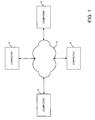
- a plurality of computers 2, 4, 6, 8 are interconnected via a communication path 10, such as the Internet, a local area network (LAN), etc.
- a communication path 10 such as the Internet, a local area network (LAN), etc.
- Each computer 2, 4, 6, 8 includes a processing unit having conventional components which include, inter alia, a central processing unit (CPU) and a memory.
- CPU central processing unit
- computer 2 is a personal computer (PC) for use by a user
- computers 4, 6 and 8 are servers storing data to be sent to computer 2 over the communication path 10.
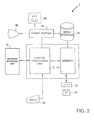
- FIG. 2 schematically shows the components of the computer apparatus 2 in this embodiment.
- a CPU 12 connected to a memory 14 operable to store a program defining the operations to be performed by CPU 12, and to store data processed by CPU 12.
- a network interface unit 16 such as a modem, to facilitate the connection of computer 2 to the communication path 10.
- a disk drive 18 which is operable to accept removable data storage media, such as a disk 20, and to transfer data stored thereon to memory 14. Operating instructions for the CPU 12 may be input to the memory 14 from a removable data storage medium using the disk drive 18.
- Data to be processed by CPU 12 may also be input to the computer 2 from a removable data storage medium using the disk drive 18.
- data to be processed may be input via the network interface unit 16 or a connection (not shown) from a local or remote database.
- a user instruction input device 22 which may comprise, for example, a keyboard and a position sensitive input device such as a mouse, a trackerball, etc.
- a memory buffer 24 which comprises a frame buffer arranged to store image data relating to an image generated by CPU 12, for example by providing a memory location for each pixel of the image.
- the value stored in frame buffer 24 for each pixel defines the colour or intensity of that pixel in the image.
- a display unit 26 for displaying image data stored in frame buffer 24 in a conventional manner. Also coupled to frame buffer 24 is a video tape recorder (VTR) 28 or other image recording device, such as a paper printer.
- VTR video tape recorder
- the mass storage device 30 can receive data processed by CPU 12 from the memory 14 or data from the frame buffer 24 which is to be displayed on display unit 26.
- Data processed by CPU 12 may also be exported from computer 2 by storing the data via disk drive 18 onto a removable storage device, or by transmitting the data as a signal, for example via the network interface unit 16, to a receiving apparatus.
- Operating instructions for causing computer 2 to perform as an embodiment of the invention can be supplied commercially in the form of programs stored on disk 20 or another data storage medium, or can be transmitted as a signal to computer 2, for example over communication path 10, so that the receiving computer 2 becomes reconfigured into an apparatus embodying the invention.
- the operating instructions may also be input via user-input device 22.
- computer 2 is loaded with instructions which configure it to act as a Java virtual machine.
- the Java language and the Java virtual machine are well known to the skilled person, and are described for example on the Internet at http://www.javasoft.com/docs/books/vmspec/index.html, and in "The Java Programming Language” by K. Arnold and J. Gosling, Addison-Wesley, 1996, ISBN 0201310066 , and " Java Security: Hostile Applets, Holes and Antidotes” by G. McGraw and E.W. Felten, J. Wiley & Sons, 1997, ISBN 0-471-17842-X .
- the native operating system of a computer upon which an application runs provides access to the various resources required by the application, for example memory storage, network access and display facilities etc. Different operating systems require applications to access each of these resources in different ways.
- the Java virtual machine provides an environment in which applications can be run independent of the computer operating system, the interaction between the application and the operating system being via the Java virtual machine, which acts as an interface.
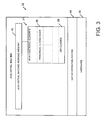
- Figure 3 schematically shows the configuration of computer 2.
- the Java virtual machine 32 includes Java functional elements 34 (Java classes) and a Java virtual machine working memory 42.
- the Java virtual machine 32 effectively provides a layer in which the Java functional elements 34 and processing applications (also in the form of Java classes) may be run.
- the Java functional elements 34 are conventional, and include, inter alia, a primordial classloader 36, which retrieves the data that forms a Java class's byte code and converts it to executable code in memory (forming an object and an associated class object), and Java development kit (JDK) classes 38, which provide access from the Java virtual machine 32 to the native operating system 44, and other functions such as sorting, data structures, lists, vectors, etc.
- the native operating system 44 controls access to the apparatus hardware 46.
- data is input into the Java virtual machine 32 to provide computer 2 with functionality for loading, running and maintaining the application in a desired way.
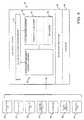
- Figure 4 schematically shows the data which is input to the Java virtual machine 32 to provide computer 2 with this functionality.
- data defining an initialisation file 50, a boot JAR file 52, a control JAR file 54, a platform security level file 56, a security certificates database 58, message digest algorithms 60, and application data 61 are input to the Java virtual machine, for example as data stored on storage medium 20 via disk drive 18, or as a signal via network interface unit 16 or other external connection (not shown).
- the data provides computer 2 with application component control functions 62.
- the boot JAR file 52 and the control JAR file 54 have the format of a conventional JAR file (JAR standing for Java ARchive), for example as described on the Internet at http://java.sun.com/products/jdk/1.1/docs/guide/jar/jar-Guide.html.
- Initialisation 50, platform security level file 56, certificates 58, message digest algorithms 60 and application data 61 are data files.
- Initialisation file 50 defines the storage location of the control JAR file 54 and the platform security level file 56, so that these files can be retrieved once input into computer 2.
- Boot JAR file 52 contains Java classes for providing computer 2 with sufficient functionality to boot the application component control functions 62.
- Control JAR file 54 contains Java classes to provide the functional components of the application component control functions 62.
- Platform security level file 56 contains data defining the maximum level of access that is to be permitted to the resources of computer 2.
- the level of access to each system resource can take one of two values, with one value indicating that an application is allowed access to the specified system resource and the other value indicating that an application is not allowed access to that system resource.
- An example format for a security level file 56 is given in Annex A.
- Certificates database 58 contains CCITT X.509 standard certificates for use in verifying and authenticating components making up an application to be run on computer 2.
- Each certificate input in certificates database 58 comprises a certificate from a trusted authority, such as a root certification authority.
- Message digest algorithms file 60 comprises conventional algorithms, such as SHA-1 and MD5, for calculating message digests.
- Application data 61 comprises data defining at least one "core" component for each application that the user of computer 2 is likely to want to run.
- the input files 50-61 and the application component control functions 62 will be described further below.
- Figure 5 shows the processing operations performed in computer 2 to configure the Java virtual machine 32 to provide the application component control functions 62 using the input files 50-61.
- class objects are considered to be of the same type if they have the same name (that is, they have been created from the same class bytes) and have been created by the same classloader.
- class object can inherit properties from a parent class object in a conventional manner.
- an object for the initialisation file 50 is created within the Java virtual machine 32 using the primordial classloader 36 provided within the Java functional elements 34.
- the initialisation file object created at step S2 is called to read the initialisation file 50 and to determine from the information therein the location of the control JAR file 54.
- the primordial classloader 36 is used to construct a JAR file object using a class within the boot JAR file 52 specifically provided for constructing this object.
- the JAR file object thus created allows subsequent JAR files to be read, checked and understood by the Java virtual machine 32.
- manifest checks are performed on the control JAR file 54, which was previously located at step S4. These checks are carried out using functionality provided by the JAR file object created at step S6 from the boot JAR file 52, and determine whether the data within the files has been modified or corrupted since the JAR file was created.
- FIG. 6 shows the processing operations performed to carry out the manifest checks at step S8.
- a message digest of the data in the first file of the control JAR file is calculated using at least one predetermined conventional algorithm, such as SHA-1.
- further message digests of the file may be calculated using respective different conventional algorithms, such as MD5 etc.
- the message digest calculated at step S40 is compared with the message digest for the given file which is stored in the manifest file of the control JAR file.
- the manifest file may contain a plurality of message digests for a given file, each calculated with a different algorithm. In this case, if more than one message digest is calculated at step S40, then all of the calculated message digests are compared against those stored in the manifest file.
- step S44 it is determined whether the message digests compared at step S42 are the same (that is, identical). If the digests are not the same, then, at step S46, an error is returned and no further processing takes place since the data read from the control JAR file within computer 2 is not the same as the data within the file when it was created. On the other hand, if it is determined at step S44 that the digests are the same, then processing proceeds to step S48, at which it is determined whether there is another file within the control JAR file to be checked. Steps S40 to S48 are repeated until all files within the control JAR file have been manifest checked in the manner described above.
- a classloader object for the control JAR file is created using the primordial classloader 36.
- the classloader object for the control JAR file thus created can then be used to read classes from the JAR file object created at step S6 and to create objects therefor in the Java virtual machine 32 by converting the class byte code into executable code in Java virtual machine working memory 42.
- a classloader can create objects only from class files contained in its own signed JAR file. As is well known to the skilled person, every object created by a classloader is tagged with a reference to that classloader. A classloader maintains references to all of the objects it has created in a hashtable keyed on the object name.
- the Java virtual machine 32 directs the call to the classloader of the calling object.
- a classloader defines a "namespace" within the Java virtual machine, and is able to regulate the objects loaded into that namespace.
- a classloader ensures that class objects may only access other class objects within the same namespace. An object created by a classloader cannot be changed by a user of computer 2.
- Figure 7 schematically shows the namespaces within the Java virtual machine after step S12 has been performed.
- the Java virtual machine 32 includes an overall primordial namespace belonging to the primordial classloader 36 provided within the conventional Java functions 34, and a control namespace 72 provided by the control JAR file classloader created at step S12.
- the control namespace 72 is within the primordial namespace 70 since the control JAR file classloader was created at step S12 by the primordial classloader 36.
- control namespace 72 The way in which the objects and associated class objects are loaded into control namespace 72 to form the application component control functions 62 will now be described.
- control JAR file classloader created at step S12 is used to create a top-level (overall) thread group object for the control JAR file 54 and a control thread group object in the central namespace 72.
- control JAR file classloader created at step S12 calls the JAR file object created at step S6 to read the control class file and creates a control object therefrom.
- control JAR file classloader creates a thread object in the control thread group created at step S14, and passes the control object created at step S16 to the thread object.
- step S20 the thread for the control object is run to load classes from the control JAR file to create functional units.
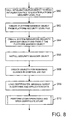
- FIG. 8 shows the processing operations performed at step S20.
- control JAR file classloader created at step S12 calls the initialisation file object created at step S2 to read the initialisation file 50 to locate the platform security level file 56.
- control JAR file classloader creates a platform sandbox object from the platform security level file.
- the control JAR file classloader creates a system resources security manager object and passes it the platform sandbox object created at step S62.
- the security manager object created at this step is the same "type" of object as the conventional Java security manager provided in the Java functional elements 34. Accordingly, the security manager object created at step S64 inherits from the conventional Java security manager.
- step S66 the Java functional elements 34 are instructed to use the security manager object created at step S64 instead of the conventional Java security manager, thereby installing the new security manager.
- step S60 to S66 a new security manager to replace the conventional Java security manager provided within the Java functional elements 34 is installed at an early stage in the start up, and in particular before any data from an external supplier is loaded.
- control JAR file classloader 36 created at step S12 creates objects for the remaining classes in the JAR file object created at step S6 which define control functionality.
- computer 2 is configured to provide all of the functionality defined in the control JAR file 54.
- Figure 9 is a block diagram schematically showing the functional components within the application component control functions 62 which, in effect, are provided as a result of creating objects from the classes in the control JAR file 54.
- the functional components within the application component control functions 62 comprise the following, which will be described in further detail later:
- central controller 80 is connected to Java virtual machine working memory 42 and the Java functional elements 34, thereby provided access to these functional components for the application component control functions 62.
- the application component control functions 62 control, inter alia, the loading of components making up an application, the upgrade of components, inter-component interaction, the interaction of components with system resources, and other aspects of component security and access control.
- certificates database 58 is input to computer 2 and the certificates are stored in certificate stores 102, message digest algorithms file 60 is input and the message digest algorithms are stored in message digest algorithm store 104, and application data file 61 is input and the application information is stored in application database 112.
- step S70 login operations are performed and the user's certificate store 102 is opened.
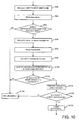
- FIG. 10 shows the processing operations performed at step S70.
- central controller 80 and user interface unit 86 request the user to input a user name, for example by displaying a request message on display device 26.
- step S90 the user name input by a user via input device 22 is read by central controller 80 and authentication controller 100.
- authentication controller 100 determines whether a certificate store 102 exists for the user name read at step S90. If no such certificate store exists, then it is determined that the user is not authorised to use the apparatus, and processing proceeds to step S108, at which an error is returned, thereby denying the user access to the functions within the application component control functions 62.
- central controller 80 and user interface unit 86 prompt the user to input his password, for example by displaying a message on display device 26.
- step S96 the password input by the user is read by central controller 80 and authentication controller 100, and at step S98, authentication controller 100 converts the password to a cryptographic key by using the RSA PKCS#12 standard.
- authentication controller 100 decrypts the certificate store 102 identified for the user at steps S90 and S92 with the key created at step S98.
- central controller 80 and authentication controller 100 determine whether the certificate store decrypted at step S100 has been decrypted correctly. More particularly, central controller 80 and authentication controller 100 read the certificate structure information stored in certificate structure store 103, and central controller 80 requests the Java functional elements 34 to read the certificate information decrypted at step S100 using the structure read from the certificate structure store 103. If the decryption was not successful, the Java functional elements 34 return an error since the decrypted data will not have the defined structure, whereas no error is returned if the decryption was performed correctly.
- step S102 If it is determined at step S102 that the certificate store 102 is not decrypted correctly, then it is determined that the user's password is incorrect and, at step S108, central controller 80 returns an error, thereby denying the user access.
- step S104 central controller 80 and authentication controller 100 perform an integrity check on the data within certificate store 102. This is performed using a conventional HMAC check in accordance with the RSC 2104 standard, in which the data in the certificate store is encoded to give a value which is then compared against the value generated the last time the certificate store 102 was closed.
- central controller 80 and authentication controller 100 determine whether the integrity check performed at step S104 was successful (that is, whether the data in certificate store 102 has not changed, and hence the integrity values compared at step S104 are the same).
- step S106 If it is determined at step S106 that the integrity check was not successful, then, at step S108, central controller 80 returns an error. On the other hand, if it is determined at step S106 that the integrity check performed at step S104 was successful, then, at step S110, it is determined that the login has been successful and the user is allowed to access the application component control functions 62.
- Steps S98 to S110 described above are carried out since user passwords are never stored in the apparatus, thereby improving security.
- the functional units within the application component control functions 62 are fully installed, operable, and accessible by the user. Accordingly, the apparatus is now ready to load an application selected by the user.
- an application is created from a number of separate components which make up the application.
- Each of the components is stored in a computer connected to communication path 10.
- Computer 2 is arranged to identify and gather the necessary components and to configure them to create the desired application.
- a word processing application may be made up from separate components comprising, inter alia, a graphical user interface (GUI) component, a file format component, a spellchecker component, a printing component etc.
- GUI graphical user interface
- an application for controlling on-line (electronic) purchasing of goods may be made up from components comprising a component from a vendor enabling a user (customer) to order goods, a component from a supplier to the vendor enabling the user to view specifications of the goods from that supplier, and a component from a bank which debits an amount from the customer's account when the goods are ordered.
- an application consists of three components, namely component A, component B and component C, stored respectively on computer 4, computer 6 and computer 8.
- component A component A
- component B component B
- component C component C
- computer 4 computer 6
- computer 8 computer 8
- an application may consist of any number of components, and more than one component may be stored on a single computer connected to communication path 10.
- FIGS 11a , 11b and 11c schematically illustrate the data making up a component of an application. This data is stored in the form of a conventional JAR file 140.
- the information stored in a component JAR file 140 comprises:
- digital role signature 158 and digital origin signature 160 are provided as a single RSA PKCS#7 standard signed data construct. This construct allows multiple signatures to be applied to the data. Because the manifest file 156 is the data that is signed by the PKCS#7 construct, it can not be modified without signature checks performed by the application component control function 62 (see below) failing.
- Figure 13 shows the operations performed by computer 2 in loading an application.
- central controller 80 and interface unit 86 read instructions input by a user of computer 2 via input device 22 defining an application which the user wishes to use.
- central controller 80 identifies the core component for the application requested by the user at step S118.
- the user instructions input at step S118 may identify the core component and its universal resource locator. However, if this is not the case, in this embodiment, central controller 80 reads application database 112 and identifies a core component and its universal resource locator for the type of application requested by the user.
- central controller 80 and component loader 88 fetch the core component identified at step S120 and store it in JAR file store 96. More particularly, the universal resource locator of the core component is read, component loader 88 and network interface 94 connect the application component control functions 62 to communication path 10 via network interface unit 16, a connection and communication is established with the computer storing the core component, and the core component is downloaded therefrom to computer 2, where it is stored in JAR file store 96.
- the data defining the component may be transmitted to computer 2 using a standard protocol such as Hyper Text Transfer Protocol (HTTP), File Transfer Protocol (FTP), GOPHER or local FILE.
- step S124 the application component control functions 62 create a signed JAR file object in the control namespace 72 for the component stored at step S122.
- Figure 14 shows the operations performed at step S124 to create the signed JAR file object.
- central controller 80 and authentication controller 100 perform manifest checks on each file in the core component's JAR file 140.
- Figure 6 shows the way in which this step is performed.
- a message digest is calculated by authentication controller 100 using an SHA-1 algorithm and a MD5 algorithm both stored in message digest algorithm store 104. As the steps in Figure 6 have been described previously, they will not be described again here.
- central controller 80 and authentication controller 100 validate and authenticate the origin certificate 152 of the core component.
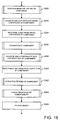
- Figure 15 shows the operations performed at step S182 to validate and authenticate the origin certificate 152.
- central controller 80 and authentication controller 100 check whether origin certificate 152 is guaranteed by a guarantor. If it is not, then processing proceeds to step S232, at which it is determined that the origin certificate is not valid and authenticate and an error is returned, preventing the component from being loaded.
- step S222 authentication controller 100 checks whether the guarantor's certificate is already stored in certificate store 102. If it is not, at step S224, central controller 80 and authentication controller 100 check whether the guarantor's certificate is provided within the JAR file 140 of the component itself, that is, in the guarantors certificates file 154. If it is determined at step S224 that the certificate is not present in the guarantors certificates file 154, then processing proceeds to step S232, at which it is determined that the origin certificate is not valid and authenticate and an error is returned, preventing the component from being loaded.
- step S222 if it is determined at step S222 that the guarantor's certificate is already provided in certificate store S102, or if it is determined at step S224 that the guarantor's certificate is present in the JAR file 140 of the component, then at step S226 authentication controller 100 reads the public key 188 from the guarantor's certificate.
- central controller 80 and authentication controller 100 authenticate the guaranteed certificate (that is, the origin certificate 152 of the core component).
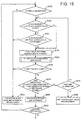
- Figure 16 shows the steps performed at step S228 to carry out the authentication.
- central controller 80 and authentication controller 100 decrypt the digital signature 186 of the origin certificate 152 with the public key 188 read from the guarantor's certificate at step S226, thereby obtaining a message digest.
- central controller 80 and authentication controller 100 read the data 182 and 184 within the origin certificate and calculate a new message digest using the message digest algorithm previously used in the creation of the signature 186 on the origin certificate (defined in the extension to the signature). Authentication controller 100 obtains the message digest algorithm to perform this operation from the message digest algorithm store 104.
- central controller 80 and authentication controller 100 compare the message digest obtained at step S260 by decryption using the public key and the new message digest calculated at step S262.
- central controller 80 and authentication controller 100 determine whether the message digests compared at step S264 are the same. If it is determined that the digests are not the same, then, at step S268 it is determined that the data in the origin certificate is not authenticate. On the other hand, if it is determined at step S266 that the message digests are the same, then, at step S270, it is determined that the data in the origin certificate is authenticate.
- central controller 80 and authentication controller 100 determine whether the origin certificate tested at step S228 is authentic, by referring to the results of steps S266, S268 and S270.
- step S230 If it is determined at step S230 that the certificate is not authentic, then, at step S232, an error is returned preventing loading of the component.
- step S230 if it is determined at step S230 that the certificate is authentic, at step S234, central controller 80 and authentication controller 100 determine whether the certificate was authenticated using the public key 188 from a certificate stored in certificate store 102. That is, central controller 80 and authentication controller 100 determine whether it was determined at step S222 that the guarantor's certificate was present in certificate store 102 such that the public key 188 therefrom was used in steps S226 and S228.
- step S234 If it is determined at step S234 that the guarantor's certificate used for authentication was from the certificate store 102, then, at step S236, it is determined that the origin certificate 152 is valid and authentic. This is because it was authenticated using a guarantor's certificate stored in the application component control functions 62, which, by definition, belongs to a trusted authority since guarantor's certificates from non-trusted authorities are not stored in the application component control functions 62.
- step S234 if it is determined at step S234, that the origin certificate 152 was authenticated at step S228 using the public key 188 from a guarantor's certificate stored in the JAR file 140 of the component (in the guarantors certificates file 154), then further tests are carried out to establish whether there is a chain of authentic certificates between the guarantor's certificate used at steps S226 and S228 to authenticate the origin certificate 152 and a certificate in certificate file 102. More particularly, at step S238, central controller 80 and authentication controller 100 determine whether the guarantor's certificate itself has a guarantor.
- step S238 If it is determined at step S238 that the guarantor's certificate does not have a further guarantor, then, at step S240, it is determined that the origin certificate is not valid, and an error is returned, preventing the component from being loaded. On the other hand, if it is determined at step S238 that the guarantor's certificate has a further guarantor, then processing returns to step S222.
- the guarantor's certificate used previously to authenticate the origin certificate 152 then becomes the certificate to be validated and authenticated and the processing described above is repeated, reading the public key 188 from the certificate of the guarantor of the guarantor's certificate at step S226, and using this at step S228 to authenticate the guarantor's certificate.
- Steps S222 to S240 are performed to authenticate each guarantor's certificate in turn until a chain of authentic certificates has been established between the origin certificate 152 of the component and a certificate in certificate store 102, or until it is established that no such chain exists.
- central controller 80 and authentication controller 100 determine whether there is another certificate to be validated and authenticated.
- the origin certificate only one certificate per component exists, and therefore it is determined that there are no further certificates to validate and authenticate.
- the steps shown in Figure 15 are also used to validate the role certificates 150 of components.
- a component may include more than one role certificate, in which case steps S220 to S242 shown in Figure 15 are repeated until all of the role certificates have been validated and authenticated.
- central controller 80 and authentication controller 100 read the public key from the origin certificate 152 of the core component previously validated and authenticated at step S182.
- central controller 80 and authentication controller 100 authenticate the core component using the public key read at step S184. This is carried out by performing the processing operations shown in Figure 16 , and described above. More particularly, at step S260 ( Figure 16 ) central controller 80 and authentication controller 100 use the public key read from the origin certificate at step S184 to decrypt the digital origin signature 160 of the component. At step S262, central controller 80 and authentication controller 100 calculate a message digest of the manifest file 156 of the component which, as described above with respect to Figures 11a , 11b and 11c , is used to form the digital origin signature 160 of the component. These message digests are then compared in steps S264 to S270 as described above to determine whether the component is authentic.
- step S188 central controller 80 and authentication controller 100 validate and authenticate the role certificate(s) 150 of the core component.
- the processing operations performed at step S188 are the same as those described above with respect to Figure 15 , and accordingly will not be described again here.
- central controller 80 and authentication controller 100 read the public key 188 from the role certificate of the core component which corresponds to the role of the component itself (rather than certificates corresponding to roles to which the component will export Java classes), this role certificate having been validated and authenticated at step S188.
- the public key 188 read at step S190 is the public key corresponding to the private key used to create the digital role signature 158 of the component. That is, the public key 188 read at step S190 corresponds to the private key of the supplier of a different component which makes available a class for export to the core component.
- central controller 80 and authentication controller 100 authenticate the role of the core component.
- the processing operations performed at step S192 are shown in Figure 16 , which have been described above. More particularly, at step S260, central controller 80 and authentication controller 100 decrypt the digital role signature 158 (the digital role signature 158 having been created by a supplier of a component which exports a class to the core component by signing the manifest file 156 of the core component with a private key for the role to which the class is made available). The decryption is performed using the public key read from the role certificate at step S190.
- central controller 80 and authentication controller 100 calculate a message digest for the manifest file 156 (since, as described above, the manifest file 156 is used in the creation of the digital role signature 158). These message digests are then used at steps S264 to S270 to determine whether the role of the core component is authentic.
- step S194 central controller 80 and classloader unit 110 create an object for the core component in the control namespace 72.
- the object created at step S194 contains the data from the component JAR file 140, which has been manifest checked, validated and authenticated at steps S180 to S192 (and is therefore referred to as "signed").
- component loader 88 updates address database 92 with details of the component for which the signed JAR file object was created at step S124. This update is carried out after step S124 to ensure that the component has been successfully validated and authenticated before information about the component is stored in address database 92.
- Figure 17 schematically illustrates information stored in address database 92.
- component loader 88 stores information defining the component, its release and version numbers, its universal resource locator (location), whether a local copy of the component is available within computer 2 (that is, whether a copy of the component will be retained in JAR file store 96 when the user has finished with the application), and, if a local copy is to be kept, the date that the component was fetched from the external computer.
- location the universal resource locator
- database 92 may contain more than one universal resource locator for a given component. This provides computer 2 with more capability to load components when network conditions prevent a connection being established with a given computer.
- central controller 80 and component loader 88 are arranged to try the first-named universal resource locator in database 92 and, if this fails, then to use the alternative universal resource locator(s) until the component is successfully downloaded.
- Each of the alternative universal resource locators is "pinged" (that is, central controller 80 connects computer 2 in turn to each external computer defined by an alternative universal resource locator and measures the connection time) and central controller 80 and component loader 88 are arranged to try the alternative universal resource locators in order of decreasing speed.
- JAR file store 96 The storage of component JAR files in JAR file store 96 to provide a local copy provides improvements in performance of computer 2 when loading an application. This is because the component can be loaded very quickly from the JAR file store 96, and further allows computer 2 to run an application when no connection is available to communication path 10.
- primordial classloader 36 within the Java functional elements 34 creates a new component classloader for the core component and a default component sandbox object defining standard applet security access for the core component.
- the new component classloader created at this step overrides the standard loadClass() method and getResourceAsStream() method in the Java functional elements 34, thereby allowing the new component classloader to implement its own policies for object loading, as described below.
- the classloader defines a namespace, in which it creates objects from Java class files within its own signed JAR file (created at step S124) by converting byte code into executable code in Java virtual machine working memory 42.
- Each object created by the component classloader is tagged with a reference to that classloader, and the classloader maintains references to all of the objects it has created in a hashtable.
- An object created by a classloader cannot be changed by a user of computer 2.
- An example structure to provide the required functionality for a component classloader is given in Annex A.
- central controller 80 determines whether the component control class file 142 from the component's JAR file 140 is on the class path of the Java virtual machine.
- step S132 If it is determined at step S132 that the component control class file 142 is on the class path, then, at step S135 an error is returned, preventing the component from being loaded, since it will not be possible for the application component control functions 62 to separate the component from other components. This is because each component will have access to components on the class path, and will therefore be able to access any component having a control class file 142 on the class path.
- step S134 central controller 80 determines whether the domain name in the component's origin certificate 152 (validated and authenticated at step S182) is the same as the prefix of the component name in the component's component control class file 142. If it is determined at this step that the domain name is not equal to the prefix of the component name, then, at step S135, an error is returned, preventing the component from being loaded. On the other hand, if it is determined at step S134 that the domain name is equal to the prefix of the component name, the processing proceeds to step S136. Step S134 is carried out to ensure that the component's name in the component control class file 142 is a reliable indicator of the component's originator. The test at step S134 stops a developer naming a component, for example, Microsoft.component, when the supplier is not in fact Microsoft.
- the new component classloader created at step S128 is used to create a control object for the core component from the component control class file 142 in the component's signed JAR file (created at step S124). This creates a new namespace for the component.
- references to the class objects created from the control JAR file 54 in the control namespace 72 are imported to the control object for the core component created at step S136 to provide the core component with access to the functionality of the application component control functions 62.
- central controller 80 and thread manager 84 create a new thread group for the core component, and create and run a thread within the thread group.
- central controller 80 identifies the classes within the core component which are available for export to other components. In the example of Figure 11a , no such components are available, and therefore this is noted by central controller 80.
- step S143 if the component is imported to another component (see below) a reference to the new classloader is stored in the namespace 72 of the importing component. In the case of the core component, this is not an imported component, and therefore no reference is stored.
- central controller 80 determines whether the core component has any import requirements.
- step S144 If it is determined at step S144 that the core component requires at least one further component in order to provide the application required by the user, the process returns to step S122.
- Steps S122 to S144 are repeated until all components required for the application have been loaded as described above. That is, all of the import components specified in the core component and any further components specified by these import components and so on are loaded.
- component B is loaded because it is specified in the import requirements of component A
- component C is loaded because it is specified in the import requirements of component B.
- a component may specify the import of more than one other component.
- steps S122, and S126 to S144 are performed in the manner described above, and will not be described again here.
- Figure 18 shows the steps performed at step S124 to create a signed JAR file object for a component other than the core component.
- Step S304 in Figure 18 comprises a check to determine whether the import requirements of the importing component are compatible with the export restrictions of the exporting component.
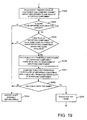
- Figure 19 shows the steps performed at step S304 to check the import/export compatibility.
- central controller 80 and authentication controller 100 compare the import requirements defined in the component control class file 142 of the importing component, the role of the importing component (previously validated and authenticated, for example at step S192), with the export restrictions defined in the component control class file 142 of the exporting component.
- central controller 80 and authentication controller 100 determine whether the exporting component is making available for export the class required by the importing component (no check on export class role restrictions is made at this stage). Referring to the example shown in Figures 11a and 11b , component A requires class B1 to be imported, while component B makes available class B1 for export. Accordingly, in this case, central controller 80 and authentication controller 100 would determine that the class to be imported is available for export.
- step S232 If it is determined at step S232 that the class to be imported is not available for export (that is, the class required to be imported is not listed in the export data of the exporting component), processing proceeds to step S344, at which central controller 80 and authentication controller 100 determine that export is not possible and an error is returned. On the other hand, if it is determined at step S232 that the class to be imported is available for export from the exporting component, then, at step S336, central controller 80 and authentication controller 100 determine whether the role of the importing component defined in the role signature 158 has the same name as the name of a role defined in component control class file 142 of the exporting component to which the exporting component will make available the class required to be imported (in the example of Figure 11b , role X1 and X2).
- step S336 If it is determined at step S336 that the class is not made available to a role having the same name as the role of the importing component, then, at step S344, central controller 80 and authentication controller 100 determine that export is not possible and an error is returned. On the other hand, if it is determined at step S336 that the class is made available for export to a role having the same name as the role of the importing component, then, at step S338, central controller 80 and authentication controller 100 read the public key from the role certificate 150 of the exporting component which has the same name as the role of the importing component (previously validated and authenticated at step S298 for example). At step S340 central controller 80 and authentication controller 100 compare the public key read at step S338 from the role certificate 150 of the exporting component with the public key from the role certificate 150 of the importing component (previously validated and authenticated at step S188).
- central controller 80 and authentication controller 100 determine whether the public keys compared at step S340 are the same. If it is determined that the keys are not the same, then at step S344, central controller 80 and authentication controller 100 determine that the roles are not the same (even though they have the same name), and return an error. On the other hand, if it is determined at step S342 that the public keys are the same, then at step S346, central controller 80 and authentication controller 100 determine that the roles are the same since they have the same name and the role certificate of the importing component and the role certificate of the exporting component (both previously validated and authenticated) define the same public key.
- Steps S338 to S342 ensure that the security of component interaction is not compromised if two suppliers of components create roles which have the same name (that is, each supplier makes available one or more classes within his component for export to a component having a given role name which happens to be the same).
- the public key from the role certificate of the exporting component is the same as the public key from the role certificate of the importing component, it is ensured that the importing component is authorised by the supplier of the exporting component to receive the exported class from the exporting component.
- step S144 when it is determined at step S144 that there are no further components to be imported, then processing proceeds to step S146.
- step S146 processing operations are performed for the last component to be installed (that is, an imported component) with each of the other components being dealt with in subsequent iterations.
- central controller 80 and system resources security manager 106 create a component sandbox object for the component in the component's namespace. In doing this, central controller 80 and system resources security manager 106 combine the security restrictions defined in the sandbox file 148 of the component and the maximum permitted security levels stored in access level store 108 (which stores platform security level file 56).
- central controller 80 and system resources security manager 106 create a component sandbox object having the system resources access levels defined in the component's sandbox file 148 unless one of the access levels exceeds that defined in the access level store 108, in which case the level defined in the access level store 108 is defined for the component for that system resource. If a component's JAR file 140 (and hence its signed JAR file object) does not contain a sandbox file 148, then, at step S146, central controller 80 and system resources security manager 106 create a component sandbox object for the component in the component's namespace which has the basic Java applet sandbox security access levels.
- central controller 80 replaces the default sandbox object previously created for the component at step S128 with the new sandbox object.
- central controller 80 checks whether the component is being loaded for the first time. If the component has been loaded previously, then processing proceeds to step S152. On the other hand, if the component has not been loaded before, then, at step S150, central controller 80 performs the installation instructions for the component defined in the component control class file 142.
- central controller 80 determines whether the component processed previously at step S146 is an imported component. If it is determined that the component is imported, then further components require sandbox objects to be created, and the processing returns to step S146.
- Steps S146 to S152 are repeated until all of the components previously installed have been processed in the manner described above.
- central controller 80 determines that the component previously processed is not an imported component, that is, it is the core component.
- Figure 20 schematically shows the result of performing the operations shown in Figure 13 to install all of the components which, in this example, comprise components A, B and C.
- the primordial namespace 70 contains four further namespaces, namely control namespace 72 (previously created at step S12 when the control JAR file classloader was created), a component A namespace 220, a component B namespace 224, and a component C namespace 228.
- control namespace 72 previously created at step S12 when the control JAR file classloader was created
- component A namespace 220 previously created at step S12 when the control JAR file classloader was created
- component B namespace 224 a component B namespace 224
- component C namespace 228 was created when the component classloader was created at step S128.
- Each component namespace 220, 224 and 228 contains references to the control class objects in the control namespace which, as described previously, provide the component with the functionality of the application component control functions 62.
- Each component namespace 220, 224 and 228 also contains the objects and associated class objects installed from the class files in the component's signed JAR file.
- component A namespace 220 includes references to the component B classloader since component B is an imported component to component A.
- component B namespace 224 includes references to the classloader of component C since component C is an imported component to component B.
- each component making up the application is fetched from an external computer 4, 6, 8 connected to the communication path 10, and a local copy is stored in JAR file store 96.
- new releases and new versions of a component may be made available to computer 2 by storing the new release or new version on an external computer 4, 6, 8. The way in which this is done will now be described.
- the developer When there is a new release of a component (that is, the interface of the component has changed), the developer makes the new release available by storing it on an external computer 4, 6, 8 at a new universal resource locator. In addition, the developer overwrites the previous release of the component with a new version of that release.
- This new version has no functional changes, but its install method contains information that informs the receiving computer which downloads the component that a new release is available and provides information defining the universal resource locator of the new release.
- the component can register the location of the new release (or indeed other components) at the receiving computer.
- This embodiment is configured to enable a user to control the processing operations performed at step S122 ( Figure 13 ) to control when a component is fetched from an external computer and when a local copy of the component stored in JAR file store 96 is used. This provides the user with control over when components are loaded from external computers to take account of upgrades etc and when the local copy of a component stored within computer 2 is used to decrease installation time for an application.
- a user may instruct the application component control functions 62 to load a component from an external computer when initially instructing computer 2 to load the application.
- a user may also define that a component should be fetched from an external computer after a predetermined time has elapsed since the component was last fetched from an external computer. For example, a user may specify that a component is updated every month.
- a user may define whether a local copy of each component is to be retained in JAR file store 96 after the application made up from the components is shut down.
- These user instructions are also stored by central controller 80 in the update instruction store 98.
- Figure 21 shows the operations performed at step S122 to fetch and store components to form an application in accordance with this functionality.
- central controller 80 determines whether the user has requested in the input instructions that a component be fetched from an external computer.
- step S380 central controller 80 reads the data stored in the update instruction store 98 to determine whether the user has set an update time for the component.
- step S382 If it is determined at step S382 that no update time has been set by the user, then processing proceeds to step S386. On the other hand, if it is determined at step S382 that the user has set an update time, then at step S384, central controller 80 reads a clock (not shown) within the application component control functions 62 to determine the current date and the address database 92 to determine the data when the component was last fetched, and determines therefrom whether the predetermined time set by the user has elapsed since the component was last fetched.
- a clock not shown
- central controller 80 If it is determined at step S384 that the predetermined time has not yet elapsed, or if central controller 80 determines that no date is provided within address database 92, then, at step S386 central controller 80 reads the address database 92 to determine whether a local copy of the component is stored in JAR file store 96. A local copy of the component may be stored in JAR file store 96 if the application requested by the user has been loaded before or, alternatively, if a different application which also uses the same component has been loaded onto computer 2.
- step S386 If it is determined at step S386 that a local copy is available, then, at step S388, central controller 80 and component loader 88 fetch the local copy from JAR file store 96 for loading. The component is loaded, as described previously with respect to Figure 13 , Figure 14 and Figure 18 .
- step S386 if it is determined at step S386 that no local copy is available in JAR file store 96 or, if it is determined at step S380 that the user has requested the component to be fetched from an external computer, or, if it is determined at step S384 that the predetermined time set by the user has elapsed since the component was last fetched from an external computer, then, at step S390, central controller 80 and component loader 88 fetch the component from the external computer, as described above.
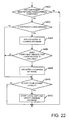
- Figure 22 shows the steps performed at step S126 ( Figure 13 ) to update the address database 92 to take account of new releases and new versions.
- central controller 80 and component loader 88 determine whether the component was fetched from an external computer (rather than from internal JAR file store 96).
- step S400 If it is determined at step S400 that the component has been loaded from JAR file store 96, then the processing ends. On the other hand, if it is determined at step S400 that the component was fetched from an external computer, then, at step S402, central controller 80 and component loader 88 compare the version number of the component defined in the component control class file 142 from the component JAR file 140 and the version number of the component defined in the address database 92 (if there is one), to determine whether the component fetched from the external computer is a new version.
- step S402 If it is determined at step S402 that the version number stored in address database 92 is the same as the version number of the component defined in the component control class file 142, then processing proceeds to step S410. On the other hand, if it is determined at step S402 that the component is a new version (the version number defined in the component control class file 142 being higher than the version number stored in address database 92 or there being no record of the component in the address database), then, at step S404 central controller 80 and component loader 88 replace the entry for the component in the address database 92 with a new entry defining the new version number of the component.
- central controller 80 and component loader 88 read the component control class file 142 to determine whether the component has information stored therein indicating that a new release is available.
- step S406 If it is determined at step S406 that there is no information indicating that a new release is available, the processing proceeds to step S410. On the other hand, if it is determined at step S406 that a new release of the component is available, then, at step S408 central controller 80 and component loader 88 and a further entry in the address database 92 for the new release of the component, storing the address for the new release given in the component control class file 142 read at step S406.
- central controller 80 reads the user instructions stored in update instruction store 98 to determine whether the component is to be stored locally in JAR file store 96 after the application is shut down. If it is determined that a local copy is to be stored, then, at step S412, central controller 80 stores the component in JAR file store 96 and updates the address database 92 to indicate that the local copy is available.
- the embodiment is arranged so that, if a component simply requests the "latest" release of a component (rather than a specific release) in the import instructions defined in its component control class file 142, central controller 80 and component loader 88 will fetch and store the highest release of the component defined in address database 92. On the other hand, if the import instructions of a component specifically request an earlier release of a component, central controller 80 and component loader 88 will fetch and store the specified earlier release since this release has an entry in address database 92 and is still made available by the supplier on an external computer 4, 6, 8. This enables components that rely on specific releases of other components to continue to work after a new release.
- an object for each Java class defined in the file 144 of each component and an object for each resource class defined in the file 146 for each component is created as and when the class is required for the application.
- Figure 23 shows the operations performed to create an object for a Java class file or resource class file.
- central controller 80 determines the component making the request for the class file. This is done by reference to the thread of the component.
- central controller 80 determines whether the class object for the class requested already exists in the requester's namespace. If the namespace of the requester already has the required class object, then, at step S442, a new object is returned.
- step S440 determines whether the required class object already exists in the requester's namespace. If the required class object does already exist in the primordial namespace, then, at step S446, a new object is returned.
- central controller 80 determines whether the class can be loaded with the primordial class loader, by determining whether the class file is on the Java working machine class path. If it is determined at step S448 that the class is on the class path, then, at step S450, the object is loaded using the primordial classloader.
- central controller 80 determines whether the class can be loaded with the classloader of an imported component by referring to the import and export restrictions of the components determined previously (as described above). Referring to Figure 11a and 11b by way of example, when one of the Java classes A1-An in component A requests the Java class B1 of component B, at step S452, central controller 80 determines that this import is allowable since the import of class B1 from component B to component A is permitted.
- step S452 If it is determined at step S452 that the class can be loaded with the classloader of the imported component, then, at step S454, central controller 80 instructs the classloader of the imported object to create an object, and a reference to the class object of the new object is stored in the namespace of the component which requested the class file (that is, the importing component). The reference is stored in the class object memory (hashtable) of the classloader of the importing component.
- central controller 80 determines whether the requested class is in the signed JAR file of the requesting component. If it is determined that the class is within the signed JAR file of the requesting component, then, at step S458, an object is created with the classloader of the requesting component.
- step S456 if it is determined at step S456 that the class file is not in the signed JAR file of the requesting component, then at step S460, central controller 80 determines that the class cannot be loaded and returns an error.
- the Java virtual machine 32 passes the call to the classloader of the object making the call (this being identified in the class object itself). If the classloader does not have the required class object, and cannot load the class object (see description of Figure 23 above) then the call fails. Thus, a component must have a class object in order to call the methods of that class object. A component cannot access the class objects of another component as each component has separate classloaders (created at step S128 in Figure 13 ).
- classloader component
- Java class file The only way in which a classloader (component) can access an object for which it does not have the associated class object or Java class file is via the classloader (component) which can create that object. That is, the only way that the classloader can access an object which it does not have in its namespace is by another classloader passing a reference to the required class object to the requesting classloader. However, as described above, the passing of classes in this manner is controlled by import and export rules.
- An imported class may use any class from its "parent" component (that is, the component from which it is exported), whether they are exported or not. Therefore, a single class can be exported without having to export all of the classes upon which it depends. However, a component that has been authorised to use a class from another component cannot directly reference any class upon which the imported class depends.
- An imported class cannot access the class objects in the importing component because the imported class remains in its own namespace, and only a reference is stored in the namespace of the importing component.
- components are isolated from each other and the functionality within a component cannot be accessed by other components unless the component makes the functionality available by exporting the appropriate Java class.
- This allows the supplier of a component to provide different functions in different Java classes in a component thereby enabling the component to be used in a number of different processing applications in which the functionality provided by the component for each application is different, and to retain control over access to the functions by defining which functions are available for export and the role required by a component to import the function.
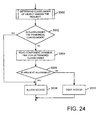
- Figure 24 shows the operations performed by the system resources security manager 106 to determine whether the component should be allowed to access the requested system resource.
- central controller 80 and system resources security manager 106 determine the classloader of the object making the request for access to a system resource.
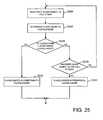
- Figure 25 shows the operations performed at step S500 to determine the classloader of the object making the request.
- central controller 80 and system resources security manager 106 read the call stack defining the chain of calls made between objects leading to an object requesting access to the system resource to determine the class object which originated the request.
- central controller 80 and system resources security manager 106 read the call stack to determine the next class object in the stack, this being the most recently called class object (that is, the class object which actually made the request for access to the system resource) the first time step S530 is performed.
- central controller 80 and system resources security manager 106 determine the classloader of the class object read at step S530. This functionality is available from the standard Java development kit Java.lang.class object within the Java functional elements 34.
- central controller 80 and system resources security manager 106 determine whether the classloader identified at step S532 is a component class loader (that is, a classloader created to load a component). (It should be noted that, the first time step S534 is performed, it will be determined that the classsloader identified at step S532 is not a component classloader, and is instead the primordial classloader, because all requests for a system resource are made through the JDK classes 38 of the Java functional elements 34, which were loaded by the primordial classloader.)
- a component class loader that is, a classloader created to load a component.
- step S534 If it is determined at step S534 that the classloader is a component classloader, then, at step S536, central controller 80 and system resources security manager 106 determine that the classloader of the object making the request for access to the system resource is the component classloader identified at step S532.
- step S534 determines whether the classloader is a component classloader. If it is determined at step S534 that the classloader is not a component classloader, then, at step S538, central controller 80 and system resources security manager 106 determine wether there is another class object in the call stack. If it is determined at step S538 that there is no further class object in the call stack, then, at step S540, central controller 80 and system resources security manager 106 determine that the classloader of the object making the request for access to the system resource is the primordial classloader.
- step S538 determines whether there is a further class object in the call stack. If it is determined at step S538 that there is a further class object in the call stack, the processing returns to step S530 and the operations described above are repeated until it is determined at step S534 that the classloader is a component classloader or until it is determined at step S538 that there is no further class object on the call stack.
- the application component control functions 62 determine the first component (if there is one) above the JDK classes to make the access request.
- central controller 80 and system resources security manager 106 determine whether the classloader identified at step S500 is the primordial classloader. If it is determined that the classloader is the primordial classloader, then, at step S508, central controller 80 and system resources security manager 106 permit access to the requested system resource. Access to the system resource is permitted to an object created by the primordial classloader since the object's JAR file is on the class path, and is therefore trusted since it cannot be changed by a component from an external supplier.
- step S502 if it is determined at step S502 that the classloader of the object making the request is not the primordial classloader, then, at step S504, central controller 80 and system resources security manager 106 call the component sandbox object to read the component sandbox file for the determined classloader.
- central controller 80 and system resources security manager 106 compare the requested access with the access levels defined in the component sandbox file read at step S504 to determine whether the request is allowable.
- step S506 If it is determined at step S506 that the request is allowable, access to the requested system resource is permitted at step S508. On the other hand, if it is determined at step S506 that the access requested is prevented by the component sandbox file, then, at step S510, central controller and system resources security manager 106 deny access to the requested system resource.
- Central controller 80 and system resources security manager 106 perform control to ensure that only the application component control functions 62 can create classloaders, thereby preventing components from creating classloaders. More particularly, each request to create a classloader is passed to the system resources security manager 106, which is arranged to refuse the request unless it is a request from an application component control function 62.
- Central controller 80 and thread manager 84 control threads to ensure that a component can modify threads only if they are in the component's thread group, thereby preventing a component from modifying threads of another component or the threads of the application component control functions 62.
- central controller 80 and thread manager 84 control threads so that the priority of a component's thread can be set only up to a maximum level, which is below the priority level of the threads for the application component control functions 62. This prevents a component taking priority to the application component control functions 62.
- Central controller 80 also performs control to ensure that the application component control functions 62 can only be shut down as the results of an internal instruction, thereby preventing a component from shutting down the application component control functions 62.
- the first processing application which will be described comprises an application for facilitating and controlling the on-line purchase of goods, although, of course, other applications are possible.
- This example processing application comprises three components, which will be referred to as component A, component B and component C.
- Component A is the core component which is provided by a vendor of goods.
- Component A provides functionality to enable the user of the computer onto which it is loaded and run to order goods from the vendor (for example to transmit data to the vendor in the required format to enable the required goods to be identified and shipped to the user).
- Component A is provided on a server run by the vendor.
- Component A imports class B1 and class B2 from component B, and class C1 from component C.
- Component B is provided by a bank at which the user and the vendor have an account.
- Component B contains a number of classes which provide functionality for performing different respective bank account management operations.
- Class B1 in component B provides processing functions for debiting an account at the bank.
- Class B2 in component B provides processing functions for crediting an account at the bank.
- Component B makes available class B1 for export to components having a role X1 defined by the bank and makes available class B2 for export to components having a role X2 defined by the bank.
- Component A which requires class B1 and class B2, is checked by the bank (to ensure that it performs processing operations which are acceptable to the bank, and no other operations) and the manifest file of component A is signed by the bank using a first private key to provide component A with the required role signature for role X1 and using a second private key to provide component A with the required role signature for role X2.
- Component B is stored on a server provided by the bank. The universal resource locator of component B is defined in component A.
- Component A also imports class C1 from component C.
- Component C is provided by a company which supplies goods to the vendor.
- Class C1 provides functionality to enable the user to search and query a database containing the specifications of the goods from the supplier which are sold by the vendor.
- Component C makes available class C1 for export to components having a role Y1 defined by the supplier.
- Component A, which requires class C1 is checked by the supplier to ensure that only processing operations acceptable to the supplier are performed by component A, and the manifest file of component A is signed by the supplier using a private key to provide component A with the required role signature for role Y1.
- Component C is stored on a server provided by the supplier, and is updated each time the specification of the goods changes.
- the universal resource locator of component C is defined in component A.
- component B When loaded onto the user's machine as described above, the components are isolated from each other and from the resources of the user's machine. For example, functionality in component B which relates to the management of bank accounts other than that exported by the component (that is, the functions provided in class B1 and class B2) cannot be used by component A.
- This second application comprises two components, namely component D and component B.
- Component B is the same component B as in the first processing application described above, namely the component from the bank which provides functionality for performing different respective bank account management operations.
- Component D is the core component, and comprises a component for performing personal finance management operations (such as the calculation of income and outgoings etc).
- Component D is provided by a software supplier, and may itself be made up of a number of separate components.
- Component D is provided on a server run by the software company.
- Component D imports class B3 from component B.
- Class B3 in component B provides processing functions for obtaining account details (such as the current amount in an account, the automatic monthly payments which are made from the account, etc) from the bank's database.
- Component B makes available class B3 for export to components having a role X3.
- Component D is checked by the bank to ensure that all of the processing operations which it can perform are acceptable to the bank, and is signed by the bank using a private key to provide component D with the required role signature for role X3.
- component D When component D is loaded onto the user's machine as described above, processing operations are performed which determine that component B is required. If the first processing application has been loaded onto the user's machine, then component B is already available on the user's machine. Accordingly, component B is not re-fetched from the bank's server (although, of course, it would be if component B was not available in the user's machine).
- component B functionality in component B is isolated from component D, except for the functionality in the class which is exported to component D (that is, class B3).
- Component D cannot therefore access the account debiting and crediting functionality provided in class B1 and B2 of component B.
- the bank is able to provide a single component for use in a number of different processing applications, and the functionality provided by component B for each application can be different because functionality other than that exported remains secure.
- computer 2 has authority (for example by the user making appropriate payments) to download information from an external computer 4, 6, 8.
- the embodiment may be arranged such that, in response to a request from a user for an application, computer 2 connects to the external computer storing the core component, and downloads information defining the price of the core component, and information defining additional components required by the core component. Computer 2 may then connect to external computers storing the required further components to download similar information therefrom. Upon completion, computer 2 may present pricing information to the user.
- the application component control functions 62 may be arranged to display to the user a list of applications which are available to the user based on the applications for which a core component is defined in application database 112 or address database 92.
- the core component (that is, component A shown in Figure 11a ) has import requirements, but does not export any classes.
- the core component may export one or more classes as well as importing one or more classes.
- each component making up an application belongs to one role.
- a component may belong to no role, or may belong to more than one role.
- guarantors certificates 154 are provided as part of each component making up an application. However, it is possible to omit these certificates from the components, and instead rely upon the necessary guarantors certificates being present in certificate store 102 within computer 2.
- the component control class file 142 in the component JAR file 140 defines the universal resource locator for each component to be imported.
- the import information in component control class file 142 may state just the name of the component to be imported and the particular class(es) therein, and a database of component names and universal resource locators may be provided within application component control functions 62, to enable central controller 80 to determine the universal resource locator for a given component to be imported.
- the platform security level file 56 and the sandbox file 148 of a component each define access levels in a binary form. That is, the access level defined for each system resource merely defines whether access is, or is not, permitted. However, different forms of access level may be defined. For example, the access levels for file read and file write may define that access is permitted, but only in specified directories.
- message digest algorithms are input in a file 62.
- the message digest algorithms may instead be input as part of the boot JAR file 52.
- the embodiment above may be arranged to allow a user to add new certificates to one or more certificate stores 102.
- central controller 80 and authentication controller 100 would allow a new certificate to be stored in a certificate store 102 only if the new certificate had a guarantor whose certificate was already stored in the certificate store 102, or if the new certificate was from a root certification authority.
- additional functional components may be provided within the application component control functions 62 to enable a user to store private keys and certificates and to encrypt data, thereby enabling the user to create a component for an application.
- the data within certificate store 102 is encrypted. This provides security if private keys are stored therein. However, the data within certificate store 102 need not be encrypted.
- additional functional units may be added to the application component control functions 62 to enable a user to define and record configuration settings, that is settings defining which components of an application should be loaded automatically at start up of computer 2.
- This functionality may be provided through the use of a configuration file having the same format as the Microsoft INI file.
- computer 2 is configured to fetch components making up an application from external computers.
- the security features of computer 2 described above to control the interaction of components with each other and with the system resources can equally be applied to components making up an application received on storage media, such as a disk.
- the application component control functions 62 may be provided without the network interface 94.
- Central controller 80 and component loader 88 may be arranged to determine whether a required component is stored in the JAR file store 96 and, if it is not, to output a message to the user via user interface unit 86 requesting that the component be loaded by the user, for example on a storage medium via disk drive 18.
- computer 2 is configured with a Java virtual machine and application component control functions 62 to control the interaction of components with each other and with the computer systems resources.
- a computer without the Java virtual machine and the full application component control functions 62 described above may be used to identify and gather the components necessary for an application required by the user and to run the application using the components.
- functional units of a central controller 80, working memory 82, interface unit 86, component loader 88, address database 92, network interface 94, file store 96, update instruction store 98 and application database 112 may be provided within a computer without the Java virtual machine to enable components making up an application to be fetched from external computers and loaded into the user's computer.
- An authentication controller 100, a certificate store 102 and a message digest algorithm store 104 may also be provided to validate and authenticate components fetched from external computers.
- the operation of this modification would be the same as the embodiment described above, but without the control of the inter-component interaction and without the control of the interaction between components and the system resources.
- computer 2 is configured with a Java virtual machine 32 and application component control functions 62 are provided within this.
- Java virtual machine 32 and application component control functions 62 are provided within this.
- languages other than Java may be used on computer 2.
- the features which a replacement language should provide are:
- An example format for a sandbox file 148 is:
- Each line defines the level of access that a component has to the named system resource.
- a "*" indicates that full access is allowed and "none" or the absence of an entry indicates that the component has no access to the resource.
Landscapes
- Engineering & Computer Science (AREA)
- Software Systems (AREA)
- Theoretical Computer Science (AREA)
- Computer Security & Cryptography (AREA)
- Physics & Mathematics (AREA)
- General Engineering & Computer Science (AREA)
- General Physics & Mathematics (AREA)
- Computer Hardware Design (AREA)
- Stored Programmes (AREA)
- Electrical Discharge Machining, Electrochemical Machining, And Combined Machining (AREA)
Claims (33)
- System von miteinander verbundenen Computervorrichtungen (2, 4, 6, 8), welches eine programmierbare Benutzer-Verarbeitungsvorrichtung (2) zur Verwendung durch einen Benutzer und wenigstens eine Speichervorrichtung umfaßt, wobei die Speichervorrichtung Daten speichert, die separate Komponenten wenigstens einer Verarbeitungsanwendung definieren, und die Benutzer-Verarbeitungsvorrichtung so konfiguriert ist, daß sie Daten, die Komponenten einer Verarbeitungsanwendung definieren, zur Verwendung durch den Benutzer von der Speichervorrichtung abruft und die Komponenten so installiert, daß die Komponenten voneinander isoliert sind und eine Interaktion zwischen den Komponenten im Betrieb gemäß definierten Interaktionsregeln gestattet wird, um zu ermöglichen, daß die Anwendung durch den Benutzer verwendet wird, wobei die Benutzer-Verarbeitungsvorrichtung so konfiguriert ist, daß sie Daten, die eine oder mehrere der Komponenten definieren, gemäß definierten Regeln in Reaktion auf eine Benutzereingabe erneut abruft und die erneut abgerufenen Daten für die Anwendung verwendet, wobei die die Komponenten definierenden Daten Interaktionsregeln umfassen und wobei die Benutzer-Verarbeitungsvorrichtung so konfiguriert ist, daß sie die Komponenten anordnet und testet, um ihre Echtheit zu verifizieren und/oder um die definierten Interaktionsregeln zu verifizieren.
- System nach Anspruch 1, wobei die Benutzer-Verarbeitungsvorrichtung so betreibbar ist, daß sie Daten, die wenigstens eine der empfangenen Komponenten definieren, speichert, nachdem die Anwendung beendet bzw. heruntergefahren wurde, und die gespeicherten Daten verwendet, wenn die Anwendung von dem Benutzer erneut verwendet wird.
- System nach Anspruch 2, wobei die Benutzer-Verarbeitungsvorrichtung so betreibbar ist, daß sie die Daten gemäß definierten Regeln speichert und erneut verwendet.
- System nach einem der vorangegangenen Ansprüche, wobei die Daten, die jede Komponente definieren, beliebige weitere Komponenten definieren, die von der Komponente benötigt werden, und wobei die Benutzer-Verarbeitungsvorrichtung so konfiguriert ist, daß sie Benutzerbefehle empfängt, die eine Anwendung definieren, um eine erste, für die Anwendung notwendige Komponente zu bestimmen, die erste Komponente abruft und jegliche weiteren benötigten Komponenten identifiziert, jegliche weiteren benötigten Komponenten abruft und mit dem Identifizieren und Abrufen von Komponenten fortfährt, bis alle Komponenten für die benötigte Anwendung erhalten wurden.
- System nach Anspruch 4, wobei die Benutzer-Verarbeitungsvorrichtung so betreibbar ist, daß sie die erste Komponente aus Benutzerbefehlen bestimmt.
- System nach Anspruch 4 oder Anspruch 5, wobei die Benutzer-Verarbeitungsvorrichtung so betreibbar ist, daß sie die erste Komponente aus einer Datenbank von Komponenten bestimmt bzw. ermittelt.
- System nach Anspruch 6, wobei die Regeln, die in den Komponenten definierenden Daten definiert sind, Regeln umfassen, die Funktionen innerhalb einer Komponente definieren, die anderen Komponenten eines spezifizierten Typs zugänglich gemacht werden.
- System nach einem der vorangegangenen Ansprüche, wobei die Benutzer-Verarbeitungsvorrichtung so konfiguriert ist, daß sie die Komponenten derart installiert, daß die Komponenten von Ressourcen der Benutzer-Verarbeitungsvorrichtung isoliert sind, und Zugriff durch die Komponenten auf die isolierten Ressourcen gemäß definierten Regeln gestattet.
- System nach Anspruch 8, wobei die Benutzer-Verarbeitungsvorrichtung so konfiguriert ist, daß sie jede Anforderung von einer Komponente nach Zugriff auf eine Ressource an einen Sicherheitsverwalter weiterleitet, der so betreibbar ist, daß er bestimmt, ob der Zugriff gemäß zuvor gespeicherten Regeln gestattet wird.
- System nach einem der vorangegangenen Ansprüche, wobei die Benutzer-Verarbeitungsvorrichtung mit einer virtuellen Java-Maschine versehen und so ausgelegt ist, daß sie jede Komponente in die virtuelle Java-Maschine lädt.
- System nach Anspruch 10, wobei die Benutzer-Verarbeitungsvorrichtung so konfiguriert ist, daß sie jede Komponente unter Verwendung eines anderen Klassenladers in die virtuelle Java-Maschine lädt.
- System nach einem der vorangegangenen Ansprüche, wobei die Benutzer-Verarbeitungsvorrichtung so konfiguriert ist, daß sie Threads zum Betreiben jeder empfangenen Komponente bereitstellt, und weiterhin so konfiguriert ist, daß sie die Threads derart verwaltet, daß eine Komponente keinen anderen Thread als einen solchen, unter dem sie läuft, verändern kann.
- System nach einem der vorangegangenen Ansprüche, wobei die Benutzer-Verarbeitungsvorrichtung so konfiguriert ist, daß sie Threads zum Betreiben jeder empfangenen Komponente bereitstellt, und weiterhin so konfiguriert ist, daß sie die Threads verwaltet, um zu verhindern, daß eine Komponente die Priorität eines Threads oberhalb eines bestimmten Levels festlegt.
- System nach Anspruch 13, wobei die Benutzer-Verarbeitungsvorrichtung so konfiguriert ist, daß sie das vorbestimmte Level in Abhängigkeit von der Priorität der Threads zum Ausführen ihrer Steuerfunktionen einstellt, um zu gewährleisten, daß eine Komponente eine Steuerfunktion nicht aufheben kann.
- System nach einem der vorangegangenen Ansprüche, wobei die Benutzer-Verarbeitungsvorrichtung so konfiguriert ist, daß sie empfangene Daten, die eine Komponente definieren, testet, um festzustellen, ob die Komponente von einem bestimmten Zulieferer stammt.
- System nach einem der vorangegangenen Ansprüche, wobei die Benutzer-Verarbeitungsvorrichtung so konfiguriert ist, daß sie empfangene Daten, die eine Komponente definieren, testet, um festzustellen, ob die die Komponente definierenden Daten seit ihrer Bereitstellung durch den Zulieferer verändert wurden.
- System nach einem der vorangegangenen Ansprüche, wobei die Benutzer-Verarbeitungsvorrichtung so betreibbar ist, daß sie eine bestimmte Komponente in einer Mehrzahl von Anwendungen verwendet.
- Programmierbare Verarbeitungsvorrichtung (2), die aufweist:Empfangseinrichtungen für das Empfangen von Daten, die eine Mehrzahl von separaten Komponenten definieren, um eine Verarbeitungsanwendung zu bilden, undLadeeinrichtungen zum Installieren der empfangenen Komponenten, um die Anwendung ausführbar zu machen,wobei die Ladeeinrichtung so ausgelegt ist, daß sie die Komponenten derart installiert, daß die Komponenten voneinander isoliert sind und daß im Betrieb eine Interaktion zwischen den Komponenten gemäß definierten Regeln gestattet wird, wobei die Benutzer-Verarbeitungsvorrichtung so konfiguriert ist, daß sie Daten, die eine oder mehrere der Komponenten definieren, gemäß definierten Regeln in Reaktion auf eine Benutzereingabe erneut abruft und die erneut abgerufenen Daten für die Anwendung verwendet, wobei die die Komponenten definierenden Daten Interaktionsregeln umfassen und wobei die Benutzer-Verarbeitungsvorrichtung so konfiguriert ist, daß sie die Komponenten anordnet und testet, um ihre Echtheit zu verifizieren und/oder die definierten Interaktionsregeln zu verifizieren.
- Vorrichtung nach Anspruch 18, wobei die Ladeeinrichtung so konfiguriert ist, daß sie im Betrieb die Interaktion zwischen den Komponenten gemäß Regeln gestattet, die in den empfangenen Daten, welche die Komponenten definieren, definiert sind.
- Vorrichtung nach Anspruch 19, wobei die Regeln, die in den Komponenten definierenden Daten definiert sind, Regeln umfassen, die Funktionen innerhalb einer Komponente definieren, die anderen Komponenten eines spezifizierten Typs zugänglich gemacht werden.
- Vorrichtung nach einem der Ansprüche 18 bis 20, wobei die Ladeeinrichtung so konfiguriert ist, daß sie die Daten derart installiert, daß die Komponenten von Ressourcen der Vorrichtung isoliert sind, und daß Zugriff durch die Komponenten auf die isolierten Ressourcen gemäß definierten Regeln gestattet wird.
- Vorrichtung nach Anspruch 21, wobei die Ladeeinrichtung so konfiguriert ist, daß sie jede Anforderung von einer Komponente nach Zugriff auf eine Ressource an einen Sicherheitsverwalter weiterleitet, welcher so betreibbar ist, daß er bestimmt, ob der Zugriff gemäß zuvor gespeicherten Regeln gestattet wird.
- Vorrichtung nach einem der Ansprüche 18 bis 22, wobei die Ladeeinrichtung so ausgelegt ist, daß sie jede Komponente in einer virtuellen Java-Maschine installiert.
- Vorrichtung nach Anspruch 23, wobei die Ladeeinrichtung so betreibbar ist, daß sie jede Komponente unter Verwendung eines anderen Klassenladers installiert.
- Vorrichtung nach einem der Ansprüche 18 bis 24, wobei die Empfangseinrichtung so betreibbar ist, daß sie Daten, die eine Komponente definieren, von einem Speichermedium empfängt.
- Vorrichtung nach einem der Ansprüche 18 bis 24, wobei die Empfangseinrichtung so betreibbar ist, daß sie Daten, die eine Komponente definieren, empfängt, die als Signal von einer externen Vorrichtung übertragen werden.
- Vorrichtung nach einem der Ansprüche 18 bis 26, wobei die Ladeeinrichtung so betreibbar ist, daß sie eine bestimmte Komponente in einer Mehrzahl von Anwendungen verwendet.
- Verfahren zum Betreiben eines Systems, welches eine Mehrzahl von miteinander verbundenen Computervorrichtungen (2, 4, 6, 8) aufweist, wobei das Verfahren umfaßt:Übermitteln von Daten, die auf wenigstens einer Vorrichtung gespeichert sind und eine Mehrzahl von separaten Komponenten einer Verarbeitungsanwendung definieren, an eine programmierbare Benutzer-Verarbeitungsvorrichtung (2),Installieren der Komponenten durch die programmierbare Benutzer-Verarbeitungsvorrichtung derart, daß die Komponenten voneinander isoliert sind und im Betrieb eine Interaktion zwischen den Komponenten gemäß definierten Interaktionsregeln gestattet wird, um die Verarbeitungsanwendung zur Verwendung durch einen Benutzer bereitzustellen,Anordnen und Testen der Komponenten, um ihre Echtheit zu verifizieren und/oder um die definierten Interaktionsregeln zu verifizieren, underneutes Abrufen von Daten, die eine oder mehrere der Komponenten definieren, gemäß den definierten Regeln in Reaktion auf eine Benutzereingabe und Verwenden der erneut abgerufenen Daten für die Anwendung, wobei die die Komponenten definierenden Daten Interaktionsregeln umfassen.
- Verfahren zum Betreiben einer programmierbaren Verarbeitungsvorrichtung (2), wobei das Verfahren umfaßt:Empfangen von Daten, die eine Mehrzahl von separaten Komponenten definieren, um eine Verarbeitungsanwendung zu bilden,Installieren der empfangenen Komponenten, um die Anwendung ausführbar zu machen, so daß die Komponenten voneinander isoliert sind, und um im Betrieb eine Interaktion zwischen den Komponenten gemäß definierten Regeln zu gestatten,Anordnen und Testen der Komponenten, um ihre Echtheit zu verifizieren und/oder die definierten Interaktionsregeln zu verifizieren underneutes Abrufen von Daten, die eine oder mehrere der Komponenten definieren, gemäß den definierten Regeln in Reaktion auf eine Benutzereingabe und Verwenden der erneut abgerufenen Daten für die Anwendung, wobei die die Komponenten definierenden Daten Interaktionsregeln umfassen.
- Speichervorrichtung, auf der Befehle gespeichert sind, um ein System aus miteinander verbundenen Computervorrichtungen zu veranlassen, die Schritte des Verfahrens nach Anspruch 28 auszuführen.
- Signalübertragungsbefehle, um ein System aus miteinander verbundenen Computervorrichtungen zu veranlassen, die Schritte des Verfahrens nach Anspruch 28 auszuführen.
- Speichervorrichtung, auf der Befehle gespeichert sind, um eine programmierbare Verarbeitungsvorrichtung zu veranlassen, die Schritte des Verfahrens nach Anspruch 29 auszuführen.
- Signalübertragungsbefehle, um eine programmierbare Verarbeitungsvorrichtung zu veranlassen, die Schritte des Verfahrens nach Anspruch 29 auszuführen.
Applications Claiming Priority (5)
| Application Number | Priority Date | Filing Date | Title |
|---|---|---|---|
| GBGB9809670.4A GB9809670D0 (en) | 1998-05-06 | 1998-05-06 | Processing apparatus and method |
| GB9809670 | 1998-05-06 | ||
| GBGB9814615.2A GB9814615D0 (en) | 1998-07-06 | 1998-07-06 | Processing apparatus and method |
| GB9814615 | 1998-07-06 | ||
| PCT/GB1999/001390 WO1999057634A1 (en) | 1998-05-06 | 1999-05-05 | Processing apparatus and method |
Publications (2)
| Publication Number | Publication Date |
|---|---|
| EP0993631A1 EP0993631A1 (de) | 2000-04-19 |
| EP0993631B1 true EP0993631B1 (de) | 2009-07-22 |
Family
ID=26313601
Family Applications (1)
| Application Number | Title | Priority Date | Filing Date |
|---|---|---|---|
| EP99919434A Expired - Lifetime EP0993631B1 (de) | 1998-05-06 | 1999-05-05 | Verarbeitungsmaschine und verarbeitungsverfahren |
Country Status (6)
| Country | Link |
|---|---|
| US (1) | US7069554B1 (de) |
| EP (1) | EP0993631B1 (de) |
| AT (1) | ATE437398T1 (de) |
| AU (1) | AU3722399A (de) |
| DE (1) | DE69941142D1 (de) |
| WO (1) | WO1999057634A1 (de) |
Families Citing this family (57)
| Publication number | Priority date | Publication date | Assignee | Title |
|---|---|---|---|---|
| US7058822B2 (en) * | 2000-03-30 | 2006-06-06 | Finjan Software, Ltd. | Malicious mobile code runtime monitoring system and methods |
| US6385722B1 (en) | 2000-01-27 | 2002-05-07 | Sun Microsystems, Inc. | Method, system, and article of manufacture for limiting access to program files in a shared library file |
| KR20020006336A (ko) * | 2000-07-12 | 2002-01-19 | 서동현 | 자바 애플릿 자동 설치 및 실행 방법 |
| US6907474B2 (en) * | 2000-09-15 | 2005-06-14 | Microsoft Corporation | System and method for adding hardware registers to a power management and configuration system |
| US7506175B2 (en) * | 2000-11-06 | 2009-03-17 | International Business Machines Corporation | File language verification |
| US7249190B2 (en) * | 2001-02-09 | 2007-07-24 | Comlet Technologies, Llc. | Enhanced data exchange and presentation/communication system |
| US7797431B2 (en) * | 2001-02-09 | 2010-09-14 | Willard Case | Enhanced data exchange and functionality control system and method |
| GB2378782B (en) * | 2001-08-16 | 2005-04-13 | Sun Microsystems Inc | Message brokering |
| GB2378781B (en) * | 2001-08-16 | 2005-06-01 | Sun Microsystems Inc | Message brokering |
| GB0122585D0 (en) * | 2001-09-19 | 2001-11-07 | Koninl Philips Electronics Nv | Control of an interactive application |
| US7917921B2 (en) * | 2001-09-19 | 2011-03-29 | Koninklijke Philips Electronics N.V. | Control of an interactive application |
| US7137004B2 (en) * | 2001-11-16 | 2006-11-14 | Microsoft Corporation | Manifest-based trusted agent management in a trusted operating system environment |
| CN1313923C (zh) * | 2002-04-11 | 2007-05-02 | 国际商业机器公司 | 软件分发方法与系统 |
| US20080222234A1 (en) * | 2002-05-23 | 2008-09-11 | Benoit Marchand | Deployment and Scaling of Virtual Environments |
| US20030221109A1 (en) * | 2002-05-24 | 2003-11-27 | Pure Edge Solutions, Inc. | Method of and apparatus for digital signatures |
| GB0213218D0 (en) * | 2002-06-08 | 2002-07-17 | Koninkl Philips Electronics Nv | Operation of java virtual machine |
| NL1021289C2 (nl) * | 2002-08-16 | 2004-02-17 | Tryllian Holding N V | Werkwijze voor het instantieren van verschillende types van programmatuurmodules en werkwijze voor het overdragen van een mobiele programmatuuragent. |
| JPWO2004053666A1 (ja) * | 2002-12-11 | 2006-04-13 | インターレックス株式会社 | ソフトウェア実行制御システム及びソフトウェアの実行制御プログラム |
| US7620737B2 (en) * | 2002-12-12 | 2009-11-17 | Xerox Corporation | Methods, apparatus, and program products for abstract applications/components in a ubiquitous computing environment |
| US7353536B1 (en) * | 2003-09-23 | 2008-04-01 | At&T Delaware Intellectual Property, Inc | Methods of resetting passwords in network service systems including user redirection and related systems and computer-program products |
| US8214799B2 (en) * | 2004-07-08 | 2012-07-03 | Microsoft Corporation | Providing information to an isolated hosted object via system-created variable objects |
| EP1783580A4 (de) * | 2004-08-12 | 2011-03-23 | Fujitsu Ltd | Java-applet, jar-dateierzeugungsverfahren, jar-dateierzeugungsprogramm und jar-dateierzeugungseinrichtung |
| US8365086B2 (en) * | 2005-05-03 | 2013-01-29 | The Mathworks, Inc. | System and method for building graphical instrument panels |
| US8078740B2 (en) | 2005-06-03 | 2011-12-13 | Microsoft Corporation | Running internet applications with low rights |
| US7434218B2 (en) * | 2005-08-15 | 2008-10-07 | Microsoft Corporation | Archiving data in a virtual application environment |
| US7725922B2 (en) * | 2006-03-21 | 2010-05-25 | Novell, Inc. | System and method for using sandboxes in a managed shell |
| US7802243B1 (en) * | 2006-04-20 | 2010-09-21 | Open Invention Network Llc | System and method for server customization |
| US7743414B2 (en) * | 2006-05-26 | 2010-06-22 | Novell, Inc. | System and method for executing a permissions recorder analyzer |
| US20080104145A1 (en) * | 2006-06-23 | 2008-05-01 | Derrell Lipman | Method and appartus for backup of networked computers |
| US8185737B2 (en) | 2006-06-23 | 2012-05-22 | Microsoft Corporation | Communication across domains |
| US7805707B2 (en) | 2006-07-21 | 2010-09-28 | Novell, Inc. | System and method for preparing runtime checks |
| US7739735B2 (en) * | 2006-07-26 | 2010-06-15 | Novell, Inc. | System and method for dynamic optimizations using security assertions |
| US7856654B2 (en) * | 2006-08-11 | 2010-12-21 | Novell, Inc. | System and method for network permissions evaluation |
| US7823186B2 (en) * | 2006-08-24 | 2010-10-26 | Novell, Inc. | System and method for applying security policies on multiple assembly caches |
| US10019570B2 (en) | 2007-06-14 | 2018-07-10 | Microsoft Technology Licensing, Llc | Protection and communication abstractions for web browsers |
| US8407692B2 (en) * | 2007-06-27 | 2013-03-26 | Microsoft Corporation | Dynamic correction of component manifests |
| US8245182B2 (en) * | 2008-04-14 | 2012-08-14 | International Business Machines Corporation | Class selectable design sharing |
| WO2009132154A2 (en) * | 2008-04-22 | 2009-10-29 | Medio Systems, Inc. | Server-controlled user interface |
| US20090299862A1 (en) * | 2008-06-03 | 2009-12-03 | Microsoft Corporation | Online ad serving |
| US9524344B2 (en) * | 2008-06-03 | 2016-12-20 | Microsoft Corporation | User interface for online ads |
| US20090327869A1 (en) * | 2008-06-27 | 2009-12-31 | Microsoft Corporation | Online ad serving |
| US20100211656A1 (en) * | 2009-02-17 | 2010-08-19 | International Business Machines Corporation | Configuring A Blade Environment |
| US8224934B1 (en) * | 2009-03-09 | 2012-07-17 | Netapp, Inc. | Running third party applications as embedded agents in a storage management server |
| US8738589B2 (en) * | 2009-09-30 | 2014-05-27 | Red Hat, Inc. | Classloading technique for an application server that provides dependency enforcement |
| US9922354B2 (en) | 2010-04-02 | 2018-03-20 | Apple Inc. | In application purchasing |
| US9110749B2 (en) * | 2010-06-01 | 2015-08-18 | Apple Inc. | Digital content bundle |
| US8769518B1 (en) | 2010-06-29 | 2014-07-01 | Ca, Inc. | Ensuring determinism during programmatic replay in a virtual machine |
| JP5429880B2 (ja) * | 2010-08-10 | 2014-02-26 | Necビッグローブ株式会社 | アプリケーション配布システム、アプリケーション配布方法、端末及びプログラム |
| US8650550B2 (en) * | 2011-06-07 | 2014-02-11 | Blackberry Limited | Methods and devices for controlling access to computing resources |
| AU2013247347B2 (en) | 2012-04-12 | 2018-02-15 | Ivanti, Inc. | Configuration of third party applications in a sandboxed environment |
| CN104267977B (zh) * | 2014-09-16 | 2017-12-29 | 小米科技有限责任公司 | 应用程序运行方法及装置 |
| US9870239B2 (en) * | 2014-09-16 | 2018-01-16 | Xiaomi Inc. | Method and device for running application program |
| US9910967B2 (en) * | 2015-07-27 | 2018-03-06 | International Business Machines Corporation | File origin determination |
| CN109766084B (zh) * | 2018-12-28 | 2021-04-23 | 百富计算机技术(深圳)有限公司 | 支付应用的定制开发方法、装置、计算机设备和存储介质 |
| CN111625232B (zh) * | 2020-05-29 | 2023-03-24 | 北京字节跳动网络技术有限公司 | 应用程序安装包的生成方法、装置、可读介质和电子设备 |
| US20220027456A1 (en) * | 2020-07-22 | 2022-01-27 | Cisco Technology, Inc. | Rasp-based implementation using a security manager |
| US11809839B2 (en) | 2022-01-18 | 2023-11-07 | Robert Lyden | Computer language and code for application development and electronic and optical communication |
Family Cites Families (9)
| Publication number | Priority date | Publication date | Assignee | Title |
|---|---|---|---|---|
| ATE177857T1 (de) * | 1992-05-15 | 1999-04-15 | Addison M Fischer | Verfahren und vorrichtung zur sicherheit eines computersystem mit programmberechtigungsdatenstrukturen |
| US5664195A (en) * | 1993-04-07 | 1997-09-02 | Sequoia Systems, Inc. | Method and apparatus for dynamic installation of a driver on a computer system |
| US5958051A (en) * | 1996-11-27 | 1999-09-28 | Sun Microsystems, Inc. | Implementing digital signatures for data streams and data archives |
| US6347398B1 (en) * | 1996-12-12 | 2002-02-12 | Microsoft Corporation | Automatic software downloading from a computer network |
| US6216152B1 (en) * | 1997-10-27 | 2001-04-10 | Sun Microsystems, Inc. | Method and apparatus for providing plug in media decoders |
| US6202207B1 (en) * | 1998-01-28 | 2001-03-13 | International Business Machines Corporation | Method and a mechanism for synchronized updating of interoperating software |
| US6259448B1 (en) * | 1998-06-03 | 2001-07-10 | International Business Machines Corporation | Resource model configuration and deployment in a distributed computer network |
| US6370686B1 (en) * | 1998-09-21 | 2002-04-09 | Microsoft Corporation | Method for categorizing and installing selected software components |
| US6279030B1 (en) * | 1998-11-12 | 2001-08-21 | International Business Machines Corporation | Dynamic JAVA™ class selection and download based on changeable attributes |
-
1999
- 1999-05-05 EP EP99919434A patent/EP0993631B1/de not_active Expired - Lifetime
- 1999-05-05 AU AU37223/99A patent/AU3722399A/en not_active Abandoned
- 1999-05-05 WO PCT/GB1999/001390 patent/WO1999057634A1/en not_active Ceased
- 1999-05-05 AT AT99919434T patent/ATE437398T1/de not_active IP Right Cessation
- 1999-05-05 DE DE69941142T patent/DE69941142D1/de not_active Expired - Lifetime
-
2000
- 2000-01-05 US US09/478,624 patent/US7069554B1/en not_active Expired - Lifetime
Non-Patent Citations (1)
| Title |
|---|
| BALFANZ D. ET GONG L.: "Experience with Secure Multi-Processing in Java", TECHNICAL REPORT, 29 September 1997 (1997-09-29), Technical Report 560-97, Department of Computer Science, Princeton University, September 1997, pages 1 - 12, XP009066794, Retrieved from the Internet <URL:http://www.cs.princeton.edu/sip/pub/icdcs.html> [retrieved on 20060512] * |
Also Published As
| Publication number | Publication date |
|---|---|
| ATE437398T1 (de) | 2009-08-15 |
| AU3722399A (en) | 1999-11-23 |
| EP0993631A1 (de) | 2000-04-19 |
| DE69941142D1 (de) | 2009-09-03 |
| US7069554B1 (en) | 2006-06-27 |
| WO1999057634A1 (en) | 1999-11-11 |
Similar Documents
| Publication | Publication Date | Title |
|---|---|---|
| US7069554B1 (en) | Component installer permitting interaction among isolated components in accordance with defined rules | |
| JP4550147B2 (ja) | コンポーネントをロードするための方法、システム及び記録媒体 | |
| Bellissimo et al. | Secure software updates: Disappointments and new challenges. | |
| US7159240B2 (en) | Operating system upgrades in a trusted operating system environment | |
| US7305553B2 (en) | Manifest-based trusted agent management in a trusted operating system environment | |
| US7577840B2 (en) | Transferring application secrets in a trusted operating system environment | |
| US8549313B2 (en) | Method and system for integrated securing and managing of virtual machines and virtual appliances | |
| JP5030626B2 (ja) | ソフトウェア・アプリケーション配布のための範囲を制限された許可 | |
| JP7653425B2 (ja) | ポリシ強制のための仮想環境タイプ検証 | |
| US8738786B2 (en) | Method for protecting client and server | |
| US20060026693A1 (en) | Method, apparatus, and product for asserting physical presence with a trusted platform module in a hypervisor environment | |
| US20250111028A1 (en) | Management controller-based verification of platform certificates | |
| US8239958B2 (en) | Confirmation method of software and apparatus for executing software | |
| KR20060050590A (ko) | 정보처리시스템의 보안 전자전달 인증 | |
| US20240095402A1 (en) | Methods and Systems for Recursive Descent Parsing | |
| EP1531377B1 (de) | Gesicherte Identifizierung eines Programms mittels einer Authentifizierungseinheit | |
| CN115935363B (zh) | 用于计算设备的安全支配权的计算设备、介质、方法 | |
| Avaznejad | Disk encryption on talos operating system | |
| CN119691761A (zh) | 一种应用权限管理方法及终端 |
Legal Events
| Date | Code | Title | Description |
|---|---|---|---|
| PUAI | Public reference made under article 153(3) epc to a published international application that has entered the european phase |
Free format text: ORIGINAL CODE: 0009012 |
|
| AK | Designated contracting states |
Kind code of ref document: A1 Designated state(s): AT BE CH CY DE DK ES FI FR GB GR IE IT LI LU MC NL PT SE |
|
| AX | Request for extension of the european patent |
Free format text: AL PAYMENT 20000128;LT PAYMENT 20000128;LV PAYMENT 20000128;MK PAYMENT 20000128;RO PAYMENT 20000128;SI PAYMENT 20000128 |
|
| 17P | Request for examination filed |
Effective date: 20000511 |
|
| RAP1 | Party data changed (applicant data changed or rights of an application transferred) |
Owner name: SUN MICROSYSTEMS, INC. |
|
| 17Q | First examination report despatched |
Effective date: 20050603 |
|
| GRAP | Despatch of communication of intention to grant a patent |
Free format text: ORIGINAL CODE: EPIDOSNIGR1 |
|
| GRAS | Grant fee paid |
Free format text: ORIGINAL CODE: EPIDOSNIGR3 |
|
| GRAA | (expected) grant |
Free format text: ORIGINAL CODE: 0009210 |
|
| AK | Designated contracting states |
Kind code of ref document: B1 Designated state(s): AT BE CH CY DE DK ES FI FR GB GR IE IT LI LU MC NL PT SE |
|
| AX | Request for extension of the european patent |
Extension state: AL LT LV MK RO SI |
|
| REG | Reference to a national code |
Ref country code: GB Ref legal event code: FG4D |
|
| REG | Reference to a national code |
Ref country code: CH Ref legal event code: EP |
|
| REG | Reference to a national code |
Ref country code: IE Ref legal event code: FG4D |
|
| REF | Corresponds to: |
Ref document number: 69941142 Country of ref document: DE Date of ref document: 20090903 Kind code of ref document: P |
|
| LTIE | Lt: invalidation of european patent or patent extension |
Effective date: 20090722 |
|
| NLV1 | Nl: lapsed or annulled due to failure to fulfill the requirements of art. 29p and 29m of the patents act | ||
| PG25 | Lapsed in a contracting state [announced via postgrant information from national office to epo] |
Ref country code: SE Free format text: LAPSE BECAUSE OF FAILURE TO SUBMIT A TRANSLATION OF THE DESCRIPTION OR TO PAY THE FEE WITHIN THE PRESCRIBED TIME-LIMIT Effective date: 20090722 Ref country code: FI Free format text: LAPSE BECAUSE OF FAILURE TO SUBMIT A TRANSLATION OF THE DESCRIPTION OR TO PAY THE FEE WITHIN THE PRESCRIBED TIME-LIMIT Effective date: 20090722 Ref country code: ES Free format text: LAPSE BECAUSE OF FAILURE TO SUBMIT A TRANSLATION OF THE DESCRIPTION OR TO PAY THE FEE WITHIN THE PRESCRIBED TIME-LIMIT Effective date: 20091102 Ref country code: AT Free format text: LAPSE BECAUSE OF FAILURE TO SUBMIT A TRANSLATION OF THE DESCRIPTION OR TO PAY THE FEE WITHIN THE PRESCRIBED TIME-LIMIT Effective date: 20090722 |
|
| PG25 | Lapsed in a contracting state [announced via postgrant information from national office to epo] |
Ref country code: NL Free format text: LAPSE BECAUSE OF FAILURE TO SUBMIT A TRANSLATION OF THE DESCRIPTION OR TO PAY THE FEE WITHIN THE PRESCRIBED TIME-LIMIT Effective date: 20090722 |
|
| PG25 | Lapsed in a contracting state [announced via postgrant information from national office to epo] |
Ref country code: PT Free format text: LAPSE BECAUSE OF FAILURE TO SUBMIT A TRANSLATION OF THE DESCRIPTION OR TO PAY THE FEE WITHIN THE PRESCRIBED TIME-LIMIT Effective date: 20091122 |
|
| PG25 | Lapsed in a contracting state [announced via postgrant information from national office to epo] |
Ref country code: DK Free format text: LAPSE BECAUSE OF FAILURE TO SUBMIT A TRANSLATION OF THE DESCRIPTION OR TO PAY THE FEE WITHIN THE PRESCRIBED TIME-LIMIT Effective date: 20090722 |
|
| PLBE | No opposition filed within time limit |
Free format text: ORIGINAL CODE: 0009261 |
|
| STAA | Information on the status of an ep patent application or granted ep patent |
Free format text: STATUS: NO OPPOSITION FILED WITHIN TIME LIMIT |
|
| PG25 | Lapsed in a contracting state [announced via postgrant information from national office to epo] |
Ref country code: BE Free format text: LAPSE BECAUSE OF FAILURE TO SUBMIT A TRANSLATION OF THE DESCRIPTION OR TO PAY THE FEE WITHIN THE PRESCRIBED TIME-LIMIT Effective date: 20090722 |
|
| 26N | No opposition filed |
Effective date: 20100423 |
|
| PG25 | Lapsed in a contracting state [announced via postgrant information from national office to epo] |
Ref country code: GR Free format text: LAPSE BECAUSE OF FAILURE TO SUBMIT A TRANSLATION OF THE DESCRIPTION OR TO PAY THE FEE WITHIN THE PRESCRIBED TIME-LIMIT Effective date: 20091023 |
|
| PG25 | Lapsed in a contracting state [announced via postgrant information from national office to epo] |
Ref country code: MC Free format text: LAPSE BECAUSE OF NON-PAYMENT OF DUE FEES Effective date: 20100531 |
|
| REG | Reference to a national code |
Ref country code: CH Ref legal event code: PL |
|
| GBPC | Gb: european patent ceased through non-payment of renewal fee |
Effective date: 20100505 |
|
| REG | Reference to a national code |
Ref country code: FR Ref legal event code: ST Effective date: 20110131 |
|
| PG25 | Lapsed in a contracting state [announced via postgrant information from national office to epo] |
Ref country code: LI Free format text: LAPSE BECAUSE OF NON-PAYMENT OF DUE FEES Effective date: 20100531 Ref country code: CH Free format text: LAPSE BECAUSE OF NON-PAYMENT OF DUE FEES Effective date: 20100531 |
|
| PG25 | Lapsed in a contracting state [announced via postgrant information from national office to epo] |
Ref country code: IT Free format text: LAPSE BECAUSE OF FAILURE TO SUBMIT A TRANSLATION OF THE DESCRIPTION OR TO PAY THE FEE WITHIN THE PRESCRIBED TIME-LIMIT Effective date: 20090722 |
|
| PG25 | Lapsed in a contracting state [announced via postgrant information from national office to epo] |
Ref country code: IE Free format text: LAPSE BECAUSE OF NON-PAYMENT OF DUE FEES Effective date: 20100505 |
|
| PG25 | Lapsed in a contracting state [announced via postgrant information from national office to epo] |
Ref country code: FR Free format text: LAPSE BECAUSE OF NON-PAYMENT OF DUE FEES Effective date: 20100531 |
|
| PG25 | Lapsed in a contracting state [announced via postgrant information from national office to epo] |
Ref country code: GB Free format text: LAPSE BECAUSE OF NON-PAYMENT OF DUE FEES Effective date: 20100505 |
|
| PG25 | Lapsed in a contracting state [announced via postgrant information from national office to epo] |
Ref country code: CY Free format text: LAPSE BECAUSE OF FAILURE TO SUBMIT A TRANSLATION OF THE DESCRIPTION OR TO PAY THE FEE WITHIN THE PRESCRIBED TIME-LIMIT Effective date: 20090722 |
|
| PG25 | Lapsed in a contracting state [announced via postgrant information from national office to epo] |
Ref country code: LU Free format text: LAPSE BECAUSE OF NON-PAYMENT OF DUE FEES Effective date: 20100505 |
|
| PGFP | Annual fee paid to national office [announced via postgrant information from national office to epo] |
Ref country code: DE Payment date: 20180424 Year of fee payment: 20 |
|
| REG | Reference to a national code |
Ref country code: DE Ref legal event code: R071 Ref document number: 69941142 Country of ref document: DE |