EP0994614A2 - Einrichtung zur Funk-kommunikation mit "API" für Fernsprechanwendungen - Google Patents
Einrichtung zur Funk-kommunikation mit "API" für Fernsprechanwendungen Download PDFInfo
- Publication number
- EP0994614A2 EP0994614A2 EP99117583A EP99117583A EP0994614A2 EP 0994614 A2 EP0994614 A2 EP 0994614A2 EP 99117583 A EP99117583 A EP 99117583A EP 99117583 A EP99117583 A EP 99117583A EP 0994614 A2 EP0994614 A2 EP 0994614A2
- Authority
- EP
- European Patent Office
- Prior art keywords
- call
- terminal
- program
- class
- telephony
- Prior art date
- Legal status (The legal status is an assumption and is not a legal conclusion. Google has not performed a legal analysis and makes no representation as to the accuracy of the status listed.)
- Granted
Links
Images



Classifications
-
- H—ELECTRICITY
- H04—ELECTRIC COMMUNICATION TECHNIQUE
- H04M—TELEPHONIC COMMUNICATION
- H04M1/00—Substation equipment, e.g. for use by subscribers
- H04M1/247—Telephone sets including user guidance or feature selection means facilitating their use
- H04M1/2473—Telephone terminals interfacing a personal computer, e.g. using an API (Application Programming Interface)
-
- H—ELECTRICITY
- H04—ELECTRIC COMMUNICATION TECHNIQUE
- H04B—TRANSMISSION
- H04B7/00—Radio transmission systems, i.e. using radiation field
- H04B7/24—Radio transmission systems, i.e. using radiation field for communication between two or more posts
- H04B7/26—Radio transmission systems, i.e. using radiation field for communication between two or more posts at least one of which is mobile
-
- H—ELECTRICITY
- H04—ELECTRIC COMMUNICATION TECHNIQUE
- H04L—TRANSMISSION OF DIGITAL INFORMATION, e.g. TELEGRAPHIC COMMUNICATION
- H04L67/00—Network arrangements or protocols for supporting network services or applications
- H04L67/01—Protocols
- H04L67/04—Protocols specially adapted for terminals or networks with limited capabilities; specially adapted for terminal portability
-
- H—ELECTRICITY
- H04—ELECTRIC COMMUNICATION TECHNIQUE
- H04L—TRANSMISSION OF DIGITAL INFORMATION, e.g. TELEGRAPHIC COMMUNICATION
- H04L69/00—Network arrangements, protocols or services independent of the application payload and not provided for in the other groups of this subclass
- H04L69/12—Protocol engines
-
- H—ELECTRICITY
- H04—ELECTRIC COMMUNICATION TECHNIQUE
- H04M—TELEPHONIC COMMUNICATION
- H04M1/00—Substation equipment, e.g. for use by subscribers
- H04M1/72—Mobile telephones; Cordless telephones, i.e. devices for establishing wireless links to base stations without route selection
- H04M1/724—User interfaces specially adapted for cordless or mobile telephones
- H04M1/72403—User interfaces specially adapted for cordless or mobile telephones with means for local support of applications that increase the functionality
-
- H—ELECTRICITY
- H04—ELECTRIC COMMUNICATION TECHNIQUE
- H04M—TELEPHONIC COMMUNICATION
- H04M1/00—Substation equipment, e.g. for use by subscribers
- H04M1/72—Mobile telephones; Cordless telephones, i.e. devices for establishing wireless links to base stations without route selection
- H04M1/724—User interfaces specially adapted for cordless or mobile telephones
- H04M1/72403—User interfaces specially adapted for cordless or mobile telephones with means for local support of applications that increase the functionality
- H04M1/72406—User interfaces specially adapted for cordless or mobile telephones with means for local support of applications that increase the functionality by software upgrading or downloading
-
- H—ELECTRICITY
- H04—ELECTRIC COMMUNICATION TECHNIQUE
- H04Q—SELECTING
- H04Q3/00—Selecting arrangements
- H04Q3/42—Circuit arrangements for indirect selecting controlled by common circuits, e.g. register controller, marker
- H04Q3/54—Circuit arrangements for indirect selecting controlled by common circuits, e.g. register controller, marker in which the logic circuitry controlling the exchange is centralised
- H04Q3/545—Circuit arrangements for indirect selecting controlled by common circuits, e.g. register controller, marker in which the logic circuitry controlling the exchange is centralised using a stored program
- H04Q3/54575—Software application
- H04Q3/54583—Software development, e.g. procedural, object oriented, software generation, software testing
-
- H—ELECTRICITY
- H04—ELECTRIC COMMUNICATION TECHNIQUE
- H04L—TRANSMISSION OF DIGITAL INFORMATION, e.g. TELEGRAPHIC COMMUNICATION
- H04L69/00—Network arrangements, protocols or services independent of the application payload and not provided for in the other groups of this subclass
- H04L69/30—Definitions, standards or architectural aspects of layered protocol stacks
- H04L69/32—Architecture of open systems interconnection [OSI] 7-layer type protocol stacks, e.g. the interfaces between the data link level and the physical level
- H04L69/322—Intralayer communication protocols among peer entities or protocol data unit [PDU] definitions
- H04L69/329—Intralayer communication protocols among peer entities or protocol data unit [PDU] definitions in the application layer [OSI layer 7]
-
- H—ELECTRICITY
- H04—ELECTRIC COMMUNICATION TECHNIQUE
- H04W—WIRELESS COMMUNICATION NETWORKS
- H04W8/00—Network data management
- H04W8/18—Processing of user or subscriber data, e.g. subscribed services, user preferences or user profiles; Transfer of user or subscriber data
- H04W8/183—Processing at user equipment or user record carrier
Definitions
- This invention relates to the radio communications device having a user application program (commonly referred to as an application or applet) and a telephony program (e.g. an instance of a telephony class) and an application programming interface (API) between the user application program and the telephony program.
- the invention relates to aspects of the API and it relates to a method invoked through the API, for example a method for establishing a dual mode call.
- Object oriented program languages such as Java (TM) are increasingly popular in more and more devices on account of portability of programs across platforms, operating systems and devices. This means that a program developed for one device is more readily used on another device of different characteristics, for example different operating systems or different microprocessors.
- TM object orienting languages
- An example of a problem lies in the need to support a complete set of object classes, where an object is a self-contained computer program which interacts with other programs in a defined manner, and where a class is a generic template for a set of objects with similar features.
- a problem is that in order to maintain the portability of programs across different platforms, uniformity needs to be present in the classes that any given application expects to be able to invoke. For example, pJava (TM) has a very large set of class libraries and efforts are in place to define a smaller language to be termed "eJava" (TM) using only a subset of the complete set of class libraries.
- JTAPI Java telephony API
- JTAPI is a portable, object oriented application programming interface for JAVA (TM)-based computer-telephony applications described at the following universal resource locator on the worldwide web: www.javasoft.com/products/JTAPI/index.html.
- the JAVA (TM) Telephony API supports both first- and third-party telephony application domains. The API is designed to make programming simple applications easy, while providing those features necessary for advanced telephony applications.
- JTAPI is a set of APIs. There is a "core" API providing a basic call model and rudimentary telephony features, such as placing telephone calls and answering telephone calls. The core API is surrounded by standard extension APIs providing functionality for specific telephony domains such as call centers and media stream access. Applications written using JTAPI are portable across various computer platforms and telephone systems. Version 1.2 of JTAPI was released to the public in December 1997.
- JTAPI is in a network configuration where the JTAPI application or JAVA (TM) applet runs on a remote station, such as a network computer with only a display, keyboard, processor and some memory. This computer accesses network resources, making use of a centralized server that manages telephony resources. JTAPI communicates with this server via a remote communication mechanism, such as the remote method invocation(RMI) of Java (TM) or a telephony protocol.
- the JAVA (TM) telephony API is composed of a set of JAVA (TM) language packages. Each package provides a piece of functionality for a certain aspect of computer-telephony applications.
- Implementations of telephony servers choose the packages they support, depending on the capabilities of there underlying platform hardware. Applications may query for the packages supported by the implementation they are currently using. Additionally, application developers may concern themselves with only the supported packages that applications need to accomplish a task. For example, a call package permits applet designers to add telephone capabilities to a web page, while a number of standard extension packages extend the JTAPI core package. These extension packages bring additional telephony functionality to the API, such as: all control, call center, media, phone, private data and capabilities packages.
- JTAPI JTAPI
- JTAPI As a telephony API for a wireless communication device, and in particular as a telephony API for a Global System for Mobile (GSM) radio telephone.
- GSM Global System for Mobile
- JTAPI still suffers from the burden of having over 63 event classes with a total class file size of approximately 130k bytes. This represents a substantial memory allocation for a relatively minor element of an overall program for a radio telephone.
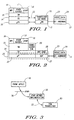
- the radio telephone comprises a first microprocessor 10 (microprocessor A), a second microprocessor 11 (microprocessor B) and certain RF hardware 13.
- the microprocessors A and B are connected together.
- the microprocessor B is connected to the RF hardware 13.
- the RF hardware 13 includes at least a receiver and a transmitter.
- the RF hardware also has voice communication elements 23 which preferably include a voice coder, by way of example, and data communication elements 24 which preferably include a data modem or fax modem, by way of example.
- the microprocessor has an operating system (OS) 14 such as OS 9000 supplied by Microware Systems Corporation of Des Moines, Iowa.
- OS operating system
- a virtual machine 15 such as a commercially available JAVA (TM) virtual machine.
- An application program 16 and various other JAVA (TM) classes 17 run on the virtual machine 15.
- One of the classes 17 is a JTAPI implementation 18.
- the microprocessor 11 has transceiver software 20 which performs such functions as call control, framing and generally byte level manipulation such as block coding.
- the transceiver software 20 communicates across a common service provider module interface (CSPMI) 22 with the operating system 14.
- CSPMI common service provider module interface
- the microprocessors A and B can in effect be integrated into a single integrated circuit 25 as shown in phantom outline in FIG. 2.
- the microprocessor 10 the hardware 13, the operating system 14, the virtual machine 15 and the various software elements 16-18 are the same as in the embodiment of FIG. 1.
- DSP digital signal processor
- the DSP 27 has DSP code 28 which performs framing and other byte-level manipulations such as block coding, while other transceiver software functions such as call control are performed by transceiver software code 29 which is run on the microprocessor 10 using the operating system 14.
- a suitable integrated circuit 25 is the M-core (TM) integrated microprocessor and DSP available from Motorola, Inc., of Schaumburg, Illinois.
- the application 16 is shown (referred to as a "phone applet") and the JTAPI method implementation 18 is shown.
- a JTAPI interface 30 is shown interfacing between the phone applet 16 and the JTAPI method implementation 18.
- the JTAPI method implementation 18 controls and receives input from a radio transceiver such as a GSM transceiver 30 over the CSPMI 22.
- the GSM transceiver 30 comprises the second microprocessor 11, the RF hardware 13 and the transceiver software 20 (all shown in FIG. 1).
- the JTAPI 30 is substantially as described in the JTAPI specification version 1.2, which defines the syntax or operation of high level objects, such as "Provider” and is set out in Appendix A. In addition, certain operations specific to GSM are supported, for which the following specific semantics are now defined.
- the domain of the JTAPI Provider is simply the mobile station (MS).
- MS mobile station
- the only addresses in the Providers domain are those of the MS, e.g., a single address in the domain for a single line phone.
- Provider.getAddresses() returns an array of addresses for the MS, typically with only 1 entry. If the MS supports multiple lines and telephone numbers, the default or primary address is the first entry.
- Provider.getAddress() accepts only the number or numbers assigned to the MS. By default, the primary address, i.e., getAddresses()[0], is returned.
- Provider.getTerminals() returns an array of Terminals supported by the MS. A separate terminal is defined for each call bearer type (see below).
- Provider.getTerminals() takes a string specifying the name of the terminal. By default, the voice Terminal is returned. All implementations must support VOICE, DATA and FAX as names for the respective Terminals (see below).
- Provider.createCall() will create a call even if the Provider is OUT_OF_SERVICE, as long as it has not been shut down. The call cannot be successfully placed until the Provider is IN_SERVICE. This feature is a change to JTAPI 1.2 createCall() pre-conditions and is described below in greater detail with reference to FIGs. 5 and 6.
- Call.connect() parses the destination address string for common SS codes and address flags. If the destination number string passed to Call.connect() starts with a "+" character, the type-of-number (TON) is set to INTERNATIONAL; otherwise, the TON is UNKNOWN. If the string contains only numeric digits, the numbering-plan identifier (NPI) is ISDN, otherwise it is UNKNOWN.
- TON type-of-number
- NPI numbering-plan identifier
- TerminalConnection.join() and TerminalConnection.leave() are used to change call modes in a dual-mode (voice and data or voice and fax) call. There is always exactly one TerminalConnection that is active in a call; invoking join() on another TerminalConnection causes a switch in call mode and calling leave() on the active TerminalConnection automatically activates the alternate one.
- Applications can interact with the information content of the call using the API defined for MediaTerminalConnection. If a TerminalConnection returned from Connection.getTerminalConnections() implements MediaTerminalConnection, the application can use the following methods: MediaTerminalConnection.getMediaAvailability(), which is implemented as defined in JTAPI 1.2; MediaTerminalConnection.getMediaState(), which is implemented as defined in JTAPI 1.2; MediaTerminalConnection.generateDtmf(), which is used to generate DTMF tones on the call. All other methods in MediaTerminalConnection are optional.
- the Provider will not necessarily disconnect any active calls when it goes out of service.
- the Provider may keep the Call active and attempt to reestablish the call, assuming a temporary communication failure.
- the application can assume that the Provider is attempting to reestablish a call if the ProvOutOfServiceEv is not closely followed by CalllnvalidEv and related ConnDisconnectedEv events (i.e. if these latter do not follow within a timeout time).
- GSM functions cannot be easily accessed using the existing JTAPI syntax and method signature.
- the following new methods or methods with different signatures are defined.
- Provider.getNetworkID() returns the name of the current network.
- Provider.getServiceLevel() returns the operating service level, NONE, EMERGENCY, FULL.
- Provider.isRoaming() returns true if the MS is not on the home PLMN.
- PLMN public land mobile network
- the Terminal object represents the physical end-point of the call. It is assumed that the call is carrying voice.
- additional Terminal subclasses are defined, one for each major call bearer type.
- the DataTerminal subclass of Terminal represents the physical end-point of a GSM data call.
- the FaxTerminal subclass of Terminal represents the physical end-point of a GSM fax call.
- a typical GSM MS will support at least three Terminals, a VOICE, a DATA and a FAX Terminal.
- An MS may support additional Terminal instances or subclasses (e.g., a InternalDataTerminal for internal data and a ModemDataTerminal for data sent to a connected PC).
- Applications accept incoming calls of various bearer types by observing incoming call events on the appropriate Terminal.
- FIG. 4 illustrates details of the JTAPI implementation 18 of FIG. 3.
- the provider method 40 This provider method interfaces with the operating system 14 in a manner that need not be described in detail.
- a "method" is a function defined inside a class that operates on instances of that class.
- the provider method 40 has associated with it a voice terminal object 42, a data terminal object 44, a fax terminal object 46, and an address object 48.
- the provider method 40 creates a call object 50.
- the call object 50 creates a local connection object 52.
- the local connection object 52 creates a terminal connection object 54 which references the voice terminal 42.
- the local connection object 52 can also create a second terminal connection object 56 (and even a third terminal connection object 58).
- the second terminal connection object 56 references the data terminal object 44.
- the third terminal object 58 if present, can reference the fax terminal 46.
- the second and third terminal connection objects can be generated for the purpose of creating a data and fax call, as will be described in greater detail.
- the call object 50 will create an additional remote connection object 60 with its own associated terminal connection objects 62-66, as necessary. It may also be noted that if there is another call (for example a call on hold) the provider method 40 can create an additional second call object 70 which will have its own corresponding local connection and terminal connections. In all cases, for a given radio telephone, there are only three terminals: the voice terminal, the data terminal and the fax terminal. So in all cases, the various terminal connection objects created by the local connection 52 and the remote connection 60 and any other local connections or remote connections all reference the respective voice terminal object 42, data terminal object 44 and fax terminal object 46.
- the GSM transceiver 30 sets up a call with a remote switch over a radio telephone communications channel and in the case where the call is a dual mode (e.g. voice and data or voice and fax) it is the aim for the JTAPI method implementation 18 to set up a call with dual mode capability and to inform the GSM transceiver over the CSPMI 22 that a dual mode call has been established, so that the GSM transceiver 30 can inform the GSM system that the call is a dual mode call, so that in turn the switch of the GSM system, upon receipt of the request to set up a call makes a call and reserves a modem of its interworking function to support the data or fax functionality of the call. It is further the aim to establish this dual mode call at the instigation of the phone application 16, using the JTAPI command call.connect().
- call.connect() expects an argument that is a terminal object, thereby permitting establishment of a single mode call to or from that terminal.
- call.connect() In order to establish a dual mode call, the preferred embodiment of the present invention permits call.connect() to be overridden to add a method that takes as a first argument a terminal array, instead of a single originating terminal.
- the terminal array is the argument of the command call.connect and contains an array of terminal objects which may be a voice terminal and a data terminal or a voice terminal and a fax terminal or a data terminal and a fax terminal or a voice terminal, a data terminal and a fax terminal.
- the method provider 40 When the method provider 40 is invoked with this command and an array as an argument, it creates the call object 50 and the local connection object 22.
- the local connection object 22 creates the first and second terminal objects 54 and 56.
- the local connection object 52 queries the first terminal connection object 54 for its terminal and the first terminal object 54 replies to the local connection object 52 indicating that its terminal (i.e. the terminal that its references) is the voice terminal.
- the second terminal connection object 56 is queried by the local connection object 52 and replies by indicating that its terminal is the data terminal.
- the local connection object 54 informs the call object 50 that a data terminal connection and a voice terminal connection are established.
- the call object 50 informs the provider 40 that the dual mode call has been established.
- the provider 40 informs the GSM transceiver over the CSPMI 22 (through the OS 14) that the dual mode call has been established.
- the provider 40 establishes the call through the transceiver 30 as follows.
- the provider 40 creates a buffer that has as its type PlaceCallReq and it adds parameters M/O/C from the following Table 1. These parameters describe the call.
- Parameter Name Parameter Type M/O/C CallType CALL_TYPE M CalledParty PHONE_NUMBER C RepeatIndicator REPEAT_INDICATOR O CallType CALL_TYPE O DataPerameters DATA-PARAMETERS C CLIRDisposition CLIR_DISPOSITION O CUGInfo CUG_INFO O
- This confirmation message gives call-handle which allows the microprocessor 10 to identify the call in subsequent commands.
- call type 2 indicates an alternate call type and indicates that the alternate call type is data or fax (the initial call type is always voice in GSM).
- the provider 40 informs the transceiver 30 that there is an alternate call type and that it is data (alternatively fax).
- the switch is then informed that there an alternate call type and that this alternate call type requires reservation of a data modem (or a fax modem).
- the first terminal array entry is the initially active terminal, but the call is configured to handle any of the terminals declared in the array, that is, the terminal connections to the other terminals are placed in the call control terminal connection.bridgedstate (or terminalconnection.passivestate). As discussed above, joined/leave is used to control the current mode of the call.
- This variant of connect () is used to support the GSM requirement of initially declaring dual-mode call parameters (thus requiring the application 16 to declare up front all of the terminals that might participate in the call).
- Call.connect() is overridden to add methods to explicitly specify the TON (type of number) and NPI (numbering plan identifier) of the destination address string, if these cannot be inferred as described above.
- Call.setEmergency() is defined to set the emergency mode flag.
- Call.setCUGInfo() is defined to specify closed user group information in a programmatic form rather than using SS (supplementary services) codes in the destination address string.
- Call.setCallerIdRestricted() is defined to specify calling line identification restriction requests in a programmatic form rather than using SS codes in the destination address string.
- the setConferenceEnable(), getConferenceEnable(), setTransferEnable() and getTransferEnable() manipulate internal flags that control the ability to transfer or conference this call.
- Connection.reject(int) is defined to allow the application to specify a reject reason when refusing a call. This supports user-determined-user-busy functionality.
- a subclass of terminal connection is defined (data terminal connection) representing the physical link between the network and the end-point data terminal. Methods are defined to specify and query the data call parameters, such as data rate, modem type, layer to protocol etc. Similarly, a sub-class of terminal connection ((fax terminal connection), which is more accurately described as a sub-class of media terminal connection) represents the physical link between the network and the end-point terminals. Methods are defined to specify and query the fax call parameters, such as data weight, group mode etc.
- FaxTerminalConnection also provided media-specific methods for configuring the fax media stream, and transmitting data pages and end-of page indicators.
- a new Terminal event is defined to allow applications to determine if call forwarding is active for a "TermForwardingActiveEv" specific Terminal. Forwarding for different services (i.e., voice, fax and data) are signaling through the appropriate Terminal object (i.e., VOICE, DATA, FAX).
- Terminal object i.e., VOICE, DATA, FAX
- Provider.createCall() will create a call even if the Provider is OUT_OF_SERVICE, as long as it has not been shut down and that the call cannot be successfully placed until the Provider is IN_SERVICE. This feature is described now in greater detail with reference to FIGs. 5 and 6.
- the application 16 seeks to place a call or establish a connection or a packet data session.
- the application 16 is typically the interface to the user and may seek to initiate a call by, for example, the user powering up the radio communications device (the mobile station or MS) and dialing a telephone number.
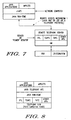
- the application 16 initiates the program (or method) illustrated in FIG. 5 by calling (invoking) a Provider.createCall method (step 100) through a Provider.createCall() command across the API 30. If, in step 101, the communications device is in a shut down mode, the program simply returns an error in step 102 and exits at step 103. If the device is not in the shut down mode, a Call object 50 is created in step 110, and the program of FIG. 5 is completed at step 111, ready for the program of FIG. 6 to begin.
- step 150 a Call.connect method
- step 152 the communications device is determined to be out of service
- step 154 the program (or method) waits in step 152 while other functions perform a scanning operation in step 154.
- a waiting period of about 10 seconds is typically sufficient to permit connection to a cellular network in a scanning routine.
- step 158 begins and a command is sent to the transceiver 30 across the serial interface 22 to place the call.
- the program of FIG. 6 ends at step 160.
- a user is able to begin dialing a telephone number to place a call even before service has been established.
- This is a particularly useful feature since a typical user wishes to begin placing a call as soon as the communications device is powered up, without regard for whether service has been established.
- the establishment of service can begin in response to the act of powering up the device (e.g. upon pressing a power key or opening a flip) and the methods of FIGs. 5 and 6 can begin in parallel, in response to some other act of the user or the application.
- JTAPI definition has a separate class for each different JTAPI event. This burdens with the MS with defining over 63 events classes, with a total class file of approximately 130k bytes.
- applications are dispatched based on an event ID rather than the type of event class. This replaces the multitude of event classes with a much smaller set of an event-category classes. Applications use the event ID to determine a specific event within a broad type. This results in a saving of significant space with no significant loss of object encapsulation.
- the event classes are grouped into eight generic classes as follows:
- a telephony API for a wireless communications device and an associated implementation including a provider method have been described which are highly suited to development of object oriented computer programs for invoking wireless telephony functions.
- dual mode call functionality such as is required in the GSM radio telephone system, is supported using a standard JTAPI event class heretofore used for establishment of simple wireline telephony calls.
- a radio communications device comprising a memory having stored therein a user application program and a mobile telephony program.
- the mobile telephony program maintains parameters describing a wireless network to which the device is connected. These parameters include one or more of: a name of a current network; an operating service level of the current network; and an indication of whether the current network is a home network. These parameters may be delivered to the mobile telephony program from a transceiver or over a mobile internet protocol connection.
- An application programming interface between the user application program and the mobile telephony program has at least one command (e.g. Provider.getNetworkID(); Provider.getServiceLevel(); or Provider.isRoaming()) for calling these parameters and returning them to the application program.
Landscapes
- Engineering & Computer Science (AREA)
- Computer Networks & Wireless Communication (AREA)
- Signal Processing (AREA)
- Human Computer Interaction (AREA)
- Computer Security & Cryptography (AREA)
- Computer Vision & Pattern Recognition (AREA)
- Telephonic Communication Services (AREA)
- Mobile Radio Communication Systems (AREA)
Priority Applications (1)
| Application Number | Priority Date | Filing Date | Title |
|---|---|---|---|
| EP04028556A EP1519532A3 (de) | 1998-09-28 | 1999-09-06 | Einrichtung zur Funkkommunikation mit "API" für Fernsprechanwendungen |
Applications Claiming Priority (2)
| Application Number | Priority Date | Filing Date | Title |
|---|---|---|---|
| US161817 | 1988-02-29 | ||
| US09/161,817 US6269254B1 (en) | 1998-09-28 | 1998-09-28 | Radio communications device and method with API between user application program and telephony program and method |
Related Child Applications (2)
| Application Number | Title | Priority Date | Filing Date |
|---|---|---|---|
| EP04028556A Division EP1519532A3 (de) | 1998-09-28 | 1999-09-06 | Einrichtung zur Funkkommunikation mit "API" für Fernsprechanwendungen |
| EP04028556.1 Division-Into | 2004-12-02 |
Publications (3)
| Publication Number | Publication Date |
|---|---|
| EP0994614A2 true EP0994614A2 (de) | 2000-04-19 |
| EP0994614A3 EP0994614A3 (de) | 2002-07-31 |
| EP0994614B1 EP0994614B1 (de) | 2005-03-23 |
Family
ID=22582875
Family Applications (2)
| Application Number | Title | Priority Date | Filing Date |
|---|---|---|---|
| EP04028556A Withdrawn EP1519532A3 (de) | 1998-09-28 | 1999-09-06 | Einrichtung zur Funkkommunikation mit "API" für Fernsprechanwendungen |
| EP99117583A Expired - Lifetime EP0994614B1 (de) | 1998-09-28 | 1999-09-06 | Einrichtung zur Funk-kommunikation mit "API" für Fernsprechanwendungen |
Family Applications Before (1)
| Application Number | Title | Priority Date | Filing Date |
|---|---|---|---|
| EP04028556A Withdrawn EP1519532A3 (de) | 1998-09-28 | 1999-09-06 | Einrichtung zur Funkkommunikation mit "API" für Fernsprechanwendungen |
Country Status (13)
| Country | Link |
|---|---|
| US (1) | US6269254B1 (de) |
| EP (2) | EP1519532A3 (de) |
| JP (1) | JP4362178B2 (de) |
| KR (1) | KR100342952B1 (de) |
| CN (1) | CN1226885C (de) |
| AR (1) | AR021829A1 (de) |
| AT (1) | ATE291806T1 (de) |
| AU (1) | AU734151B2 (de) |
| BR (1) | BRPI9904366B8 (de) |
| CA (1) | CA2282996C (de) |
| DE (1) | DE69924337T2 (de) |
| IL (2) | IL131630A (de) |
| TW (1) | TW457823B (de) |
Cited By (10)
| Publication number | Priority date | Publication date | Assignee | Title |
|---|---|---|---|---|
| WO2002023356A3 (en) * | 2000-09-14 | 2002-05-30 | Intel Corp | Wireless computing device and method therefore |
| EP1233343A3 (de) * | 2001-02-16 | 2002-10-30 | Microsoft Corporation | Verfahren und Funkschnittstellenschicht bestehend aus einer Menge von Anwendungsprogrammierungsschnittstellen (APIs) |
| DE102004057766B4 (de) * | 2004-11-30 | 2007-06-21 | Advanced Micro Devices, Inc., Sunnyvale | Funkschnittstellensteuerung auf Grundlage einer Ereignislistenspezifikation |
| WO2010086712A3 (en) * | 2009-01-30 | 2010-11-11 | Cassis International Pte Ltd | System and method for managing a wireless device from removable media with processing capability |
| US8089509B2 (en) | 2001-11-09 | 2012-01-03 | Karl Storz Imaging, Inc. | Programmable camera control unit with updatable program |
| US8199188B2 (en) | 2001-11-09 | 2012-06-12 | Karl Storz Imaging, Inc. | Video imaging system with a camera control unit |
| US8254903B2 (en) | 2009-01-30 | 2012-08-28 | Cassis International Pte. Ltd. | System and method for remotely operating a wireless device using a server and client architecture |
| US8274559B2 (en) | 2001-11-09 | 2012-09-25 | Karl Storz Imaging, Inc. | Replaceable hardware component of a camera control unit for video systems |
| US8341087B2 (en) | 2010-03-03 | 2012-12-25 | Cassis International Pte Ltd | Method for implementing and application of a secure processor stick (SPS) |
| US10409829B2 (en) | 2002-02-01 | 2019-09-10 | Microsoft Technology Licensing, Llc | Method and system for managing changes to a contact database |
Families Citing this family (65)
| Publication number | Priority date | Publication date | Assignee | Title |
|---|---|---|---|---|
| US6628965B1 (en) * | 1997-10-22 | 2003-09-30 | Dynamic Mobile Data Systems, Inc. | Computer method and system for management and control of wireless devices |
| US7251315B1 (en) * | 1998-09-21 | 2007-07-31 | Microsoft Corporation | Speech processing for telephony API |
| US6343116B1 (en) * | 1998-09-21 | 2002-01-29 | Microsoft Corporation | Computer telephony application programming interface |
| US6314094B1 (en) * | 1998-10-29 | 2001-11-06 | Central Coast Patent Agency Inc | Mobile wireless internet portable radio |
| US6993004B2 (en) * | 1998-10-29 | 2006-01-31 | Sound Starts, Inc. | Method and apparatus for practicing IP telephony from an Internet-capable radio |
| US6967957B2 (en) | 1998-12-11 | 2005-11-22 | Telcordia Technologies, Inc. | Architecture for the rapid creation of telephony services in a next generation network |
| US6418310B1 (en) * | 1999-08-05 | 2002-07-09 | Ericsson Inc. | Wireless subscriber terminal using java control code |
| US7187662B1 (en) * | 1999-08-11 | 2007-03-06 | Klingman Edwin E | Table driven call distribution system for local and remote agents |
| US6651241B1 (en) * | 1999-09-29 | 2003-11-18 | Lucent Technologies Inc. | Scriptor and interpreter |
| CA2319909A1 (en) * | 1999-09-30 | 2001-03-30 | Lucent Technologies Inc. | Method and apparatus for supporting multiple mobile address schemes using object-oriented programming techniques |
| US6578054B1 (en) | 1999-10-04 | 2003-06-10 | Microsoft Corporation | Method and system for supporting off-line mode of operation and synchronization using resource state information |
| US6633758B1 (en) * | 1999-11-16 | 2003-10-14 | Nokia Corporation | Methods and devices for operational modes in communication devices being modified with application specific parameters and operational modes automatically launching applications or commands |
| US7010610B1 (en) * | 2000-05-22 | 2006-03-07 | International Business Machines Corporation | Programmable agent workstation system and method |
| US20020133450A1 (en) * | 2001-03-13 | 2002-09-19 | Deming Douglas R. | Hypertext transfer protocol application programming interface between client-side trading systems and server-side stock trading systems |
| US20020133585A1 (en) * | 2001-03-13 | 2002-09-19 | Deming Douglas R. | Computer program for recording and selective playback of a communication involving the hypertext transfer protocol |
| US20050044274A1 (en) * | 2001-03-13 | 2005-02-24 | Deming Douglas R. | Methods of handling automated trading |
| KR100797739B1 (ko) * | 2001-04-23 | 2008-01-24 | 주식회사 케이티 | 자바 api 기반의 통합음성서비스 장치 |
| US6963574B2 (en) * | 2001-05-25 | 2005-11-08 | General Instrument Corporation | Conversation of access network bandwidth during multiuser call connections in a broadband telephony network |
| KR100744502B1 (ko) * | 2001-06-04 | 2007-08-01 | 엘지전자 주식회사 | 무선 단말기의 베이스 구조 및 그 방법 |
| US7050408B2 (en) * | 2001-09-26 | 2006-05-23 | Microsoft Corporation | Communicating multi-part messages between cellular devices using a standardized interface |
| US7206744B2 (en) * | 2001-12-14 | 2007-04-17 | Sbc Technology Resources, Inc. | Voice review of privacy policy in a mobile environment |
| US7110753B2 (en) * | 2002-09-26 | 2006-09-19 | Siemens Communications, Inc. | Remotely controllable wireless device |
| US7184534B2 (en) * | 2002-12-19 | 2007-02-27 | International Business Machines Corporation | Using a telephony application server for call control with a voice server |
| US7392043B2 (en) | 2003-04-17 | 2008-06-24 | Ntt Docomo, Inc. | API system, method and computer program product for accessing content/security analysis functionality in a mobile communication framework |
| US7254811B2 (en) * | 2003-04-17 | 2007-08-07 | Ntt Docomo, Inc. | Update system and method for updating a scanning subsystem in a mobile communication framework |
| US6987963B2 (en) * | 2003-04-17 | 2006-01-17 | Ntt Docomo, Inc. | System, method and computer program product for content/context sensitive scanning utilizing a mobile communication device |
| US6970697B2 (en) * | 2003-04-17 | 2005-11-29 | Ntt Docomo, Inc. | Platform-independent scanning subsystem API for use in a mobile communication framework |
| DK1678967T3 (da) * | 2003-10-10 | 2011-07-25 | Ericsson Telefon Ab L M | Mobil terminal-gateway |
| US20050078620A1 (en) * | 2003-10-10 | 2005-04-14 | Kumar Balachandran | Mobile-terminal gateway |
| US7644376B2 (en) * | 2003-10-23 | 2010-01-05 | Microsoft Corporation | Flexible architecture for notifying applications of state changes |
| KR100709799B1 (ko) * | 2004-10-20 | 2007-04-23 | 주식회사 팬택 | 듀얼모드 이동통신단말기에서의 연속적인 패킷 데이터서비스 제공 방법 |
| US20060086569A1 (en) * | 2004-10-26 | 2006-04-27 | Jimmydeer Llc | Mobile hunting stand |
| US7783686B2 (en) * | 2006-06-16 | 2010-08-24 | Microsoft Corporation | Application program interface to manage media files |
| US7603387B2 (en) * | 2006-06-16 | 2009-10-13 | Microsoft Corporation | Techniques to manage media files |
| US9058032B2 (en) * | 2006-09-29 | 2015-06-16 | Rockwell Automation Technologies, Inc. | Hosting requirements for services |
| US8041435B2 (en) * | 2008-09-30 | 2011-10-18 | Rockwell Automation Technologies, Inc. | Modular object dynamic hosting |
| US7835805B2 (en) * | 2006-09-29 | 2010-11-16 | Rockwell Automation Technologies, Inc. | HMI views of modules for industrial control systems |
| US7856279B2 (en) * | 2006-09-29 | 2010-12-21 | Rockwell Automation Technologies, Inc. | Module structure and use for industrial control systems |
| US8732658B2 (en) * | 2006-09-29 | 2014-05-20 | Rockwell Automation Technologies, Inc. | Layered interface in an industrial environment |
| US8776092B2 (en) | 2006-09-29 | 2014-07-08 | Rockwell Automation Technologies, Inc. | Multiple interface support |
| US20080082577A1 (en) * | 2006-09-29 | 2008-04-03 | Rockwell Automation Technologies, Inc. | Module classification and searching for industrial control systems |
| US8078296B2 (en) * | 2006-09-29 | 2011-12-13 | Rockwell Automation Technologies, Inc. | Dynamic procedure selection |
| US8265775B2 (en) * | 2008-09-30 | 2012-09-11 | Rockwell Automation Technologies, Inc. | Modular object publication and discovery |
| US9261877B2 (en) * | 2006-09-29 | 2016-02-16 | Rockwell Automation Technologies, Inc. | Multiple machine interface |
| US8818757B2 (en) * | 2008-09-30 | 2014-08-26 | Rockwell Automation Technologies, Inc. | Modular object and host matching |
| US7676279B2 (en) * | 2006-09-29 | 2010-03-09 | Rockwell Automation Technologies, Inc. | Services for industrial control systems |
| US7912560B2 (en) * | 2006-09-29 | 2011-03-22 | Rockwell Automation Technologies, Inc. | Module and controller operation for industrial control systems |
| US9217998B2 (en) * | 2006-09-29 | 2015-12-22 | Rockwell Automation Technologies, Inc. | Management and development of an industrial environment |
| US8024455B2 (en) | 2006-10-26 | 2011-09-20 | Tango Networks, Inc. | System, method, and computer-readable medium for implementing intelligent network service functionality in a network |
| US20100071467A1 (en) * | 2008-09-24 | 2010-03-25 | Invensense | Integrated multiaxis motion sensor |
| US8047075B2 (en) | 2007-06-21 | 2011-11-01 | Invensense, Inc. | Vertically integrated 3-axis MEMS accelerometer with electronics |
| US20090262074A1 (en) * | 2007-01-05 | 2009-10-22 | Invensense Inc. | Controlling and accessing content using motion processing on mobile devices |
| US8508039B1 (en) | 2008-05-08 | 2013-08-13 | Invensense, Inc. | Wafer scale chip scale packaging of vertically integrated MEMS sensors with electronics |
| US7934423B2 (en) * | 2007-12-10 | 2011-05-03 | Invensense, Inc. | Vertically integrated 3-axis MEMS angular accelerometer with integrated electronics |
| US8462109B2 (en) * | 2007-01-05 | 2013-06-11 | Invensense, Inc. | Controlling and accessing content using motion processing on mobile devices |
| US7796872B2 (en) * | 2007-01-05 | 2010-09-14 | Invensense, Inc. | Method and apparatus for producing a sharp image from a handheld device containing a gyroscope |
| US8952832B2 (en) | 2008-01-18 | 2015-02-10 | Invensense, Inc. | Interfacing application programs and motion sensors of a device |
| US8141424B2 (en) | 2008-09-12 | 2012-03-27 | Invensense, Inc. | Low inertia frame for detecting coriolis acceleration |
| US8020441B2 (en) * | 2008-02-05 | 2011-09-20 | Invensense, Inc. | Dual mode sensing for vibratory gyroscope |
| US8250921B2 (en) * | 2007-07-06 | 2012-08-28 | Invensense, Inc. | Integrated motion processing unit (MPU) with MEMS inertial sensing and embedded digital electronics |
| US8490119B2 (en) * | 2010-12-14 | 2013-07-16 | Microsoft Corporation | Communication interface for non-communication applications |
| CN103178981B (zh) * | 2011-12-24 | 2016-03-02 | 腾讯科技(深圳)有限公司 | 连接管理方法和系统 |
| CN104333484B (zh) * | 2014-10-28 | 2017-07-28 | 广东欧珀移动通信有限公司 | 通信协议测试方法及装置 |
| CN112528333A (zh) * | 2020-12-15 | 2021-03-19 | 中国联合网络通信集团有限公司 | 用户隐私保护方法、mec服务器、终端、设备及介质 |
| CN112822337B (zh) * | 2021-01-22 | 2022-09-23 | 深圳壹账通智能科技有限公司 | 智能电话平台、呼入方法、呼出方法、设备和存储介质 |
Family Cites Families (11)
| Publication number | Priority date | Publication date | Assignee | Title |
|---|---|---|---|---|
| US5265206A (en) * | 1990-10-23 | 1993-11-23 | International Business Machines Corporation | System and method for implementing a messenger and object manager in an object oriented programming environment |
| GB2289186A (en) * | 1994-04-05 | 1995-11-08 | Ibm | Collaborative working method and system |
| US5852773A (en) * | 1995-01-30 | 1998-12-22 | Wireless Transactions Corporation | PSTN transaction processing network employing wireless concentrator/controller |
| US5781612A (en) * | 1995-03-10 | 1998-07-14 | Northern Telecom Limited | Radio terminal interfaces for voice and data telecommunications, and methods for their operation |
| US5625678A (en) * | 1995-05-24 | 1997-04-29 | Microsoft Corporation | Method and system for allowing switched voice and data communication among multiple application programs |
| US5752199A (en) * | 1995-12-18 | 1998-05-12 | Paradyne Corporation | Method and apparatus for sending faxes over analog cellular |
| US6055441A (en) * | 1996-04-30 | 2000-04-25 | International Business Machines Corporation | Systems and methods for facsimile communication over a cellular radiotelephone communications link |
| US5933778A (en) * | 1996-06-04 | 1999-08-03 | At&T Wireless Services Inc. | Method and apparatus for providing telecommunication services based on a subscriber profile updated by a personal information manager |
| US5983117A (en) * | 1996-06-21 | 1999-11-09 | Nortel Networks Corporation | System and method for interfacing a standard telephony device to a wireless communication system |
| US6055424A (en) * | 1997-01-29 | 2000-04-25 | Telefonaktiebolaget Lm Ericsson | Intelligent terminal application protocol |
| GB2322040A (en) * | 1997-02-05 | 1998-08-12 | Nokia Mobile Phones Ltd | Number storage and call establishment in a cordless/cellular hybrid phone |
-
1998
- 1998-09-28 US US09/161,817 patent/US6269254B1/en not_active Expired - Lifetime
-
1999
- 1999-08-27 IL IL131630A patent/IL131630A/en not_active IP Right Cessation
- 1999-08-27 IL IL176365A patent/IL176365A/en not_active IP Right Cessation
- 1999-08-30 AU AU44845/99A patent/AU734151B2/en not_active Ceased
- 1999-09-03 TW TW088115166A patent/TW457823B/zh not_active IP Right Cessation
- 1999-09-06 EP EP04028556A patent/EP1519532A3/de not_active Withdrawn
- 1999-09-06 AT AT99117583T patent/ATE291806T1/de not_active IP Right Cessation
- 1999-09-06 DE DE69924337T patent/DE69924337T2/de not_active Expired - Lifetime
- 1999-09-06 EP EP99117583A patent/EP0994614B1/de not_active Expired - Lifetime
- 1999-09-22 CA CA002282996A patent/CA2282996C/en not_active Expired - Fee Related
- 1999-09-27 CN CNB99120719XA patent/CN1226885C/zh not_active Expired - Fee Related
- 1999-09-27 KR KR1019990041254A patent/KR100342952B1/ko not_active Expired - Fee Related
- 1999-09-27 JP JP27165399A patent/JP4362178B2/ja not_active Expired - Fee Related
- 1999-09-27 AR ARP990104857A patent/AR021829A1/es active IP Right Grant
- 1999-09-28 BR BRPI9904366A patent/BRPI9904366B8/pt not_active IP Right Cessation
Cited By (18)
| Publication number | Priority date | Publication date | Assignee | Title |
|---|---|---|---|---|
| WO2002023356A3 (en) * | 2000-09-14 | 2002-05-30 | Intel Corp | Wireless computing device and method therefore |
| CN101583143B (zh) * | 2000-09-14 | 2012-10-10 | 英特尔公司 | 无线计算设备及其使用方法 |
| CN100520746C (zh) * | 2000-09-14 | 2009-07-29 | 英特尔公司 | 无线计算设备及其使用方法 |
| EP1233343A3 (de) * | 2001-02-16 | 2002-10-30 | Microsoft Corporation | Verfahren und Funkschnittstellenschicht bestehend aus einer Menge von Anwendungsprogrammierungsschnittstellen (APIs) |
| US6826762B2 (en) | 2001-02-16 | 2004-11-30 | Microsoft Corporation | Radio interface layer in a cell phone with a set of APIs having a hardware-independent proxy layer and a hardware-specific driver layer |
| US8199188B2 (en) | 2001-11-09 | 2012-06-12 | Karl Storz Imaging, Inc. | Video imaging system with a camera control unit |
| US8089509B2 (en) | 2001-11-09 | 2012-01-03 | Karl Storz Imaging, Inc. | Programmable camera control unit with updatable program |
| US8274559B2 (en) | 2001-11-09 | 2012-09-25 | Karl Storz Imaging, Inc. | Replaceable hardware component of a camera control unit for video systems |
| US9007450B2 (en) | 2001-11-09 | 2015-04-14 | Karl Storz Imaging, Inc. | Video imaging system with detachable storage device |
| US10409829B2 (en) | 2002-02-01 | 2019-09-10 | Microsoft Technology Licensing, Llc | Method and system for managing changes to a contact database |
| US7636555B2 (en) | 2004-11-30 | 2009-12-22 | Globalfoundries Inc. | Event list specification based radio interface control |
| DE102004057766B4 (de) * | 2004-11-30 | 2007-06-21 | Advanced Micro Devices, Inc., Sunnyvale | Funkschnittstellensteuerung auf Grundlage einer Ereignislistenspezifikation |
| WO2010086712A3 (en) * | 2009-01-30 | 2010-11-11 | Cassis International Pte Ltd | System and method for managing a wireless device from removable media with processing capability |
| US8254903B2 (en) | 2009-01-30 | 2012-08-28 | Cassis International Pte. Ltd. | System and method for remotely operating a wireless device using a server and client architecture |
| US8396992B2 (en) | 2009-01-30 | 2013-03-12 | Cassis International Pte Ltd | System and method for virtualizing the peripherals in a terminal device to enable remote management via removable portable media with processing capability |
| US8442509B2 (en) | 2009-01-30 | 2013-05-14 | Cassis International Pte. Ltd. | System and method for managing a wireless device from removable media with processing capability |
| US8477082B2 (en) | 2009-01-30 | 2013-07-02 | Cassis International Pte Ltd. | System and method for implementing a remote display using a virtualization technique |
| US8341087B2 (en) | 2010-03-03 | 2012-12-25 | Cassis International Pte Ltd | Method for implementing and application of a secure processor stick (SPS) |
Also Published As
| Publication number | Publication date |
|---|---|
| IL131630A0 (en) | 2001-01-28 |
| KR20000034944A (ko) | 2000-06-26 |
| CN1249640A (zh) | 2000-04-05 |
| EP1519532A2 (de) | 2005-03-30 |
| AR021829A1 (es) | 2002-08-07 |
| US6269254B1 (en) | 2001-07-31 |
| BR9904366A (pt) | 2000-06-13 |
| CN1226885C (zh) | 2005-11-09 |
| ATE291806T1 (de) | 2005-04-15 |
| KR100342952B1 (ko) | 2002-07-04 |
| DE69924337T2 (de) | 2005-08-11 |
| CA2282996A1 (en) | 2000-03-28 |
| BRPI9904366B1 (pt) | 2015-08-25 |
| HK1026997A1 (en) | 2000-12-29 |
| CA2282996C (en) | 2004-11-09 |
| TW457823B (en) | 2001-10-01 |
| AU4484599A (en) | 2000-04-13 |
| JP2000165960A (ja) | 2000-06-16 |
| BRPI9904366B8 (pt) | 2016-09-13 |
| JP4362178B2 (ja) | 2009-11-11 |
| AU734151B2 (en) | 2001-06-07 |
| IL176365A (en) | 2008-11-03 |
| IL131630A (en) | 2006-10-05 |
| DE69924337D1 (de) | 2005-04-28 |
| EP0994614A3 (de) | 2002-07-31 |
| EP0994614B1 (de) | 2005-03-23 |
| EP1519532A3 (de) | 2005-06-08 |
Similar Documents
| Publication | Publication Date | Title |
|---|---|---|
| CA2282996C (en) | Radio communications device and method with api between user application program and telephony program and method | |
| US5625678A (en) | Method and system for allowing switched voice and data communication among multiple application programs | |
| US5790800A (en) | Client application program mobilizer | |
| EP1029423B1 (de) | Intelligente schnittstelle und nachrichtenübertragungsprotokoll zum verbinden von mobilstationen mit peripheriegeräten | |
| US4782517A (en) | System and method for defining and providing telephone network services | |
| US20080092149A1 (en) | Modular architecture for a device interface component | |
| US6826762B2 (en) | Radio interface layer in a cell phone with a set of APIs having a hardware-independent proxy layer and a hardware-specific driver layer | |
| AU620071B2 (en) | Communication system supporting remote operations | |
| WO1998006207A1 (en) | A system, method and article of manufacture for seamless, server application support of network and non-network client terminals | |
| KR20000048634A (ko) | 인터넷 네트워크를 통한 2개의 전화기 장치 간의 인터렉티브 통신 프로세스 및 시스템 | |
| US7149297B2 (en) | Networkwide desk sharing with automatic device relocation | |
| US20050108574A1 (en) | Method and system for communication between a multi-modal device and a web application | |
| US6304651B1 (en) | Communicating network resource locators to customer premises equipment using modified ring access | |
| US6393494B1 (en) | Method, computer program product, and system for managing connection-oriented media | |
| CA2242495A1 (en) | Data network node connection establishment | |
| CN100586203C (zh) | 用于集成网络服务提供者的服务应用程序构架 | |
| US20050180455A1 (en) | Apparatus and method for multiplexing communication signals | |
| US6917621B1 (en) | Enhanced emulation system on a communication network | |
| MXPA99008863A (es) | Dispositivo y metodo de radiocomunicaciones con api entre el programa de aplicación de usuario y el programa y metodo de telefonia | |
| EP1533975A2 (de) | Verfahren und System zur Kommunikation zwischen einem multimodalen Endgerät und einer Webanwendung | |
| KR20010060627A (ko) | 다중 통화를 지원하는 웹 서버 장치 | |
| CA2242958C (en) | Communicating network resource locators to customer premises equipment using modified ring access | |
| JP2003152769A (ja) | データ管理装置、ゲートキーパ制御装置およびゲートキーパシステム | |
| WO1999035568A2 (en) | Isolation of resources from application in a process control system | |
| JPH07222219A (ja) | 構内型インテリジェントネットワーク装置と方法 |
Legal Events
| Date | Code | Title | Description |
|---|---|---|---|
| PUAI | Public reference made under article 153(3) epc to a published international application that has entered the european phase |
Free format text: ORIGINAL CODE: 0009012 |
|
| AK | Designated contracting states |
Kind code of ref document: A2 Designated state(s): AT BE CH CY DE DK ES FI FR GB GR IE IT LI LU MC NL PT SE |
|
| AX | Request for extension of the european patent |
Free format text: AL;LT;LV;MK;RO;SI |
|
| PUAL | Search report despatched |
Free format text: ORIGINAL CODE: 0009013 |
|
| PUAF | Information related to the publication of a search report (a3 document) modified or deleted |
Free format text: ORIGINAL CODE: 0009199SEPU |
|
| AK | Designated contracting states |
Kind code of ref document: A3 Designated state(s): AT BE CH CY DE DK ES FI FR GB GR IE IT LI LU MC NL PT SE |
|
| AX | Request for extension of the european patent |
Free format text: AL;LT;LV;MK;RO;SI |
|
| D17D | Deferred search report published (deleted) | ||
| PUAL | Search report despatched |
Free format text: ORIGINAL CODE: 0009013 |
|
| AX | Request for extension of the european patent |
Free format text: AL;LT;LV;MK;RO;SI |
|
| 17P | Request for examination filed |
Effective date: 20030506 |
|
| AKX | Designation fees paid |
Designated state(s): AT BE CH CY DE DK ES FI FR GB GR IE IT LI LU MC NL PT SE |
|
| AXX | Extension fees paid |
Extension state: SI Payment date: 20030506 Extension state: RO Payment date: 20030506 Extension state: LV Payment date: 20030506 Extension state: LT Payment date: 20030506 Extension state: AL Payment date: 20030506 |
|
| 17Q | First examination report despatched |
Effective date: 20030711 |
|
| GRAP | Despatch of communication of intention to grant a patent |
Free format text: ORIGINAL CODE: EPIDOSNIGR1 |
|
| GRAS | Grant fee paid |
Free format text: ORIGINAL CODE: EPIDOSNIGR3 |
|
| GRAA | (expected) grant |
Free format text: ORIGINAL CODE: 0009210 |
|
| AK | Designated contracting states |
Kind code of ref document: B1 Designated state(s): AT BE CH CY DE DK ES FI FR GB GR IE IT LI LU MC NL PT SE |
|
| AX | Request for extension of the european patent |
Extension state: AL LT LV RO SI |
|
| PG25 | Lapsed in a contracting state [announced via postgrant information from national office to epo] |
Ref country code: NL Free format text: LAPSE BECAUSE OF FAILURE TO SUBMIT A TRANSLATION OF THE DESCRIPTION OR TO PAY THE FEE WITHIN THE PRESCRIBED TIME-LIMIT Effective date: 20050323 Ref country code: LI Free format text: LAPSE BECAUSE OF FAILURE TO SUBMIT A TRANSLATION OF THE DESCRIPTION OR TO PAY THE FEE WITHIN THE PRESCRIBED TIME-LIMIT Effective date: 20050323 Ref country code: CH Free format text: LAPSE BECAUSE OF FAILURE TO SUBMIT A TRANSLATION OF THE DESCRIPTION OR TO PAY THE FEE WITHIN THE PRESCRIBED TIME-LIMIT Effective date: 20050323 Ref country code: BE Free format text: LAPSE BECAUSE OF FAILURE TO SUBMIT A TRANSLATION OF THE DESCRIPTION OR TO PAY THE FEE WITHIN THE PRESCRIBED TIME-LIMIT Effective date: 20050323 Ref country code: AT Free format text: LAPSE BECAUSE OF FAILURE TO SUBMIT A TRANSLATION OF THE DESCRIPTION OR TO PAY THE FEE WITHIN THE PRESCRIBED TIME-LIMIT Effective date: 20050323 |
|
| REG | Reference to a national code |
Ref country code: GB Ref legal event code: FG4D |
|
| REG | Reference to a national code |
Ref country code: CH Ref legal event code: EP |
|
| REG | Reference to a national code |
Ref country code: IE Ref legal event code: FG4D |
|
| REF | Corresponds to: |
Ref document number: 69924337 Country of ref document: DE Date of ref document: 20050428 Kind code of ref document: P |
|
| PG25 | Lapsed in a contracting state [announced via postgrant information from national office to epo] |
Ref country code: GR Free format text: LAPSE BECAUSE OF FAILURE TO SUBMIT A TRANSLATION OF THE DESCRIPTION OR TO PAY THE FEE WITHIN THE PRESCRIBED TIME-LIMIT Effective date: 20050623 Ref country code: DK Free format text: LAPSE BECAUSE OF FAILURE TO SUBMIT A TRANSLATION OF THE DESCRIPTION OR TO PAY THE FEE WITHIN THE PRESCRIBED TIME-LIMIT Effective date: 20050623 |
|
| PG25 | Lapsed in a contracting state [announced via postgrant information from national office to epo] |
Ref country code: ES Free format text: LAPSE BECAUSE OF FAILURE TO SUBMIT A TRANSLATION OF THE DESCRIPTION OR TO PAY THE FEE WITHIN THE PRESCRIBED TIME-LIMIT Effective date: 20050704 |
|
| LTIE | Lt: invalidation of european patent or patent extension |
Effective date: 20050323 |
|
| NLV1 | Nl: lapsed or annulled due to failure to fulfill the requirements of art. 29p and 29m of the patents act | ||
| PG25 | Lapsed in a contracting state [announced via postgrant information from national office to epo] |
Ref country code: IE Free format text: LAPSE BECAUSE OF NON-PAYMENT OF DUE FEES Effective date: 20050906 Ref country code: CY Free format text: LAPSE BECAUSE OF FAILURE TO SUBMIT A TRANSLATION OF THE DESCRIPTION OR TO PAY THE FEE WITHIN THE PRESCRIBED TIME-LIMIT Effective date: 20050906 |
|
| PG25 | Lapsed in a contracting state [announced via postgrant information from national office to epo] |
Ref country code: PT Free format text: LAPSE BECAUSE OF FAILURE TO SUBMIT A TRANSLATION OF THE DESCRIPTION OR TO PAY THE FEE WITHIN THE PRESCRIBED TIME-LIMIT Effective date: 20050907 |
|
| PG25 | Lapsed in a contracting state [announced via postgrant information from national office to epo] |
Ref country code: MC Free format text: LAPSE BECAUSE OF NON-PAYMENT OF DUE FEES Effective date: 20050930 Ref country code: LU Free format text: LAPSE BECAUSE OF NON-PAYMENT OF DUE FEES Effective date: 20050930 |
|
| REG | Reference to a national code |
Ref country code: CH Ref legal event code: PL |
|
| PLBE | No opposition filed within time limit |
Free format text: ORIGINAL CODE: 0009261 |
|
| STAA | Information on the status of an ep patent application or granted ep patent |
Free format text: STATUS: NO OPPOSITION FILED WITHIN TIME LIMIT |
|
| ET | Fr: translation filed | ||
| 26N | No opposition filed |
Effective date: 20051227 |
|
| REG | Reference to a national code |
Ref country code: IE Ref legal event code: MM4A |
|
| PG25 | Lapsed in a contracting state [announced via postgrant information from national office to epo] |
Ref country code: SE Free format text: LAPSE BECAUSE OF FAILURE TO SUBMIT A TRANSLATION OF THE DESCRIPTION OR TO PAY THE FEE WITHIN THE PRESCRIBED TIME-LIMIT Effective date: 20050623 |
|
| REG | Reference to a national code |
Ref country code: DE Ref legal event code: R081 Ref document number: 69924337 Country of ref document: DE Owner name: GOOGLE TECHNOLOGY HOLDINGS LLC, MOUNTAIN VIEW, US Free format text: FORMER OWNER: MOTOROLA, INC., SCHAUMBURG, ILL., US Effective date: 20110324 Ref country code: DE Ref legal event code: R081 Ref document number: 69924337 Country of ref document: DE Owner name: MOTOROLA MOBILITY, INC. ( N.D. GES. D. STAATES, US Free format text: FORMER OWNER: MOTOROLA, INC., SCHAUMBURG, ILL., US Effective date: 20110324 |
|
| REG | Reference to a national code |
Ref country code: FR Ref legal event code: TP Owner name: MOTOROLA MOBILITY, INC., US Effective date: 20110912 |
|
| REG | Reference to a national code |
Ref country code: GB Ref legal event code: S117 Free format text: REQUEST FILED; REQUEST FOR CORRECTION UNDER SECTION 117 FILED ON 22 DECEMBER 2011 |
|
| REG | Reference to a national code |
Ref country code: GB Ref legal event code: 732E Free format text: REGISTERED BETWEEN 20120510 AND 20120516 |
|
| REG | Reference to a national code |
Ref country code: GB Ref legal event code: S117 Free format text: CORRECTIONS ALLOWED; REQUEST FOR CORRECTION UNDER SECTION 117 FILED ON 22 DECEMBER 2011 ALLOWED ON 30 APRIL 2012 |
|
| REG | Reference to a national code |
Ref country code: FR Ref legal event code: PLFP Year of fee payment: 17 |
|
| PGFP | Annual fee paid to national office [announced via postgrant information from national office to epo] |
Ref country code: FI Payment date: 20150929 Year of fee payment: 17 |
|
| PGFP | Annual fee paid to national office [announced via postgrant information from national office to epo] |
Ref country code: FR Payment date: 20150917 Year of fee payment: 17 |
|
| PGFP | Annual fee paid to national office [announced via postgrant information from national office to epo] |
Ref country code: IT Payment date: 20150923 Year of fee payment: 17 |
|
| PGFP | Annual fee paid to national office [announced via postgrant information from national office to epo] |
Ref country code: GB Payment date: 20160927 Year of fee payment: 18 |
|
| PGFP | Annual fee paid to national office [announced via postgrant information from national office to epo] |
Ref country code: DE Payment date: 20160928 Year of fee payment: 18 |
|
| PG25 | Lapsed in a contracting state [announced via postgrant information from national office to epo] |
Ref country code: FI Free format text: LAPSE BECAUSE OF NON-PAYMENT OF DUE FEES Effective date: 20160906 |
|
| REG | Reference to a national code |
Ref country code: FR Ref legal event code: ST Effective date: 20170531 |
|
| PG25 | Lapsed in a contracting state [announced via postgrant information from national office to epo] |
Ref country code: FR Free format text: LAPSE BECAUSE OF NON-PAYMENT OF DUE FEES Effective date: 20160930 |
|
| PG25 | Lapsed in a contracting state [announced via postgrant information from national office to epo] |
Ref country code: IT Free format text: LAPSE BECAUSE OF NON-PAYMENT OF DUE FEES Effective date: 20160906 |
|
| REG | Reference to a national code |
Ref country code: GB Ref legal event code: 732E Free format text: REGISTERED BETWEEN 20170831 AND 20170906 |
|
| REG | Reference to a national code |
Ref country code: DE Ref legal event code: R119 Ref document number: 69924337 Country of ref document: DE |
|
| REG | Reference to a national code |
Ref country code: DE Ref legal event code: R082 Ref document number: 69924337 Country of ref document: DE Representative=s name: BETTEN & RESCH PATENT- UND RECHTSANWAELTE PART, DE Ref country code: DE Ref legal event code: R081 Ref document number: 69924337 Country of ref document: DE Owner name: GOOGLE TECHNOLOGY HOLDINGS LLC, MOUNTAIN VIEW, US Free format text: FORMER OWNER: MOTOROLA MOBILITY, INC. ( N.D. GES. D. STAATES DELAWARE ), LIBERTYVILLE, LLL., US |
|
| GBPC | Gb: european patent ceased through non-payment of renewal fee |
Effective date: 20170906 |
|
| PG25 | Lapsed in a contracting state [announced via postgrant information from national office to epo] |
Ref country code: DE Free format text: LAPSE BECAUSE OF NON-PAYMENT OF DUE FEES Effective date: 20180404 Ref country code: GB Free format text: LAPSE BECAUSE OF NON-PAYMENT OF DUE FEES Effective date: 20170906 |
|
| P01 | Opt-out of the competence of the unified patent court (upc) registered |
Effective date: 20230511 |