EP0994811B1 - Prämien-beinhaltender behälterverschluss - Google Patents
Prämien-beinhaltender behälterverschluss Download PDFInfo
- Publication number
- EP0994811B1 EP0994811B1 EP98934271A EP98934271A EP0994811B1 EP 0994811 B1 EP0994811 B1 EP 0994811B1 EP 98934271 A EP98934271 A EP 98934271A EP 98934271 A EP98934271 A EP 98934271A EP 0994811 B1 EP0994811 B1 EP 0994811B1
- Authority
- EP
- European Patent Office
- Prior art keywords
- compartment
- closure
- side wall
- flange
- container
- Prior art date
- Legal status (The legal status is an assumption and is not a legal conclusion. Google has not performed a legal analysis and makes no representation as to the accuracy of the status listed.)
- Expired - Lifetime
Links
- 230000003247 decreasing effect Effects 0.000 claims description 6
- 230000003014 reinforcing effect Effects 0.000 claims description 6
- 238000000034 method Methods 0.000 claims description 5
- 230000015572 biosynthetic process Effects 0.000 claims description 2
- 230000001737 promoting effect Effects 0.000 description 21
- 238000013022 venting Methods 0.000 description 6
- 238000007789 sealing Methods 0.000 description 5
- 239000011324 bead Substances 0.000 description 4
- 229920001684 low density polyethylene Polymers 0.000 description 3
- 239000004702 low-density polyethylene Substances 0.000 description 3
- 238000005452 bending Methods 0.000 description 2
- 235000014171 carbonated beverage Nutrition 0.000 description 2
- 238000010276 construction Methods 0.000 description 2
- 230000007423 decrease Effects 0.000 description 2
- 239000005020 polyethylene terephthalate Substances 0.000 description 2
- 229920000139 polyethylene terephthalate Polymers 0.000 description 2
- 230000000717 retained effect Effects 0.000 description 2
- 239000007767 bonding agent Substances 0.000 description 1
- 230000000694 effects Effects 0.000 description 1
- 229920001903 high density polyethylene Polymers 0.000 description 1
- 239000004700 high-density polyethylene Substances 0.000 description 1
- 238000009434 installation Methods 0.000 description 1
- 230000014759 maintenance of location Effects 0.000 description 1
- 238000004519 manufacturing process Methods 0.000 description 1
- 239000000463 material Substances 0.000 description 1
- 239000012528 membrane Substances 0.000 description 1
- 238000013508 migration Methods 0.000 description 1
- 230000005012 migration Effects 0.000 description 1
- 238000012986 modification Methods 0.000 description 1
- 230000004048 modification Effects 0.000 description 1
- 239000002991 molded plastic Substances 0.000 description 1
- 238000000465 moulding Methods 0.000 description 1
- 229920003023 plastic Polymers 0.000 description 1
- 239000004033 plastic Substances 0.000 description 1
- 239000002985 plastic film Substances 0.000 description 1
- 229920006255 plastic film Polymers 0.000 description 1
- -1 polyethylene terephthalate Polymers 0.000 description 1
- 229920002635 polyurethane Polymers 0.000 description 1
- 239000004814 polyurethane Substances 0.000 description 1
- 238000003825 pressing Methods 0.000 description 1
- 238000000926 separation method Methods 0.000 description 1
Images


Classifications
-
- B—PERFORMING OPERATIONS; TRANSPORTING
- B65—CONVEYING; PACKING; STORING; HANDLING THIN OR FILAMENTARY MATERIAL
- B65D—CONTAINERS FOR STORAGE OR TRANSPORT OF ARTICLES OR MATERIALS, e.g. BAGS, BARRELS, BOTTLES, BOXES, CANS, CARTONS, CRATES, DRUMS, JARS, TANKS, HOPPERS, FORWARDING CONTAINERS; ACCESSORIES, CLOSURES, OR FITTINGS THEREFOR; PACKAGING ELEMENTS; PACKAGES
- B65D51/00—Closures not otherwise provided for
- B65D51/24—Closures not otherwise provided for combined or co-operating with auxiliary devices for non-closing purposes
- B65D51/28—Closures not otherwise provided for combined or co-operating with auxiliary devices for non-closing purposes with auxiliary containers for additional articles or materials
Definitions
- the present invention relates generally to promotional closures for containers configured for use in connection with a sales promotion or game, and more particularly to a promotion-receiving compartment for a closure which is configured to facilitate easy-opening by consumers for removal of a promotional element from within the compartment.
- Promotions and games which are associated with the sale of products have shown enduring popularity with consumers.
- a wide variety of such promotions and games are known, and may include gaming systems where game elements are collected to receive an award, or receipt by a consumer of a promotional element which can be redeemed for an award, or which may have intrinsic value for the consumer.
- Promotional systems for use with container closures have heretofore taken various forms. For example, it has been known to provide the liner portion of a closure in the form of a gaming piece, whereby collection of certain ones of the liners permits prize redemption, or the liners themselves can be individually redeemed for cash or other awards. It has also been known to provide container closures with a compartment element positionable generally within the closure so that a promotional element can be positioned within the compartment for removal upon opening of the container. Closure/compartment arrangements of this nature are disclosed in U.S. Patent No. 5,056,659, to Howes et al. The preamble of claim 1 is based on this prior art.
- the present invention is directed to an easy-open promotion-receiving member for a promotional closure which is configured to facilitate convenient manipulation and opening by consumers for use in a promotional or gaming system.
- a closure for a container including a cap having a top wall and a depending skirt, a compartment having a bottom wall and a surrounding side wall extending therefrom defining a circumference, said compartment arranged to be held within said cap and removable therefrom, characterized by said side wall having a circumferentially arranged frangible portion extending at least partially about the circumference of said side wall, said frangible portion being at least partially separable from remaining portions of said side wall to open said compartment.
- a method of accessing a prize from a bottle including the steps of removing a closure from the bottle, removing a prize-containing compartment having a bottom wall and a surrounding side wall from within said closure, accessing said prize from within said compartment by tearing open said compartment by at least partially separating a frangible portion of said compartment which extends at least partially circumferentially of the side wall of said compartment, and removing said prize from within said compartment.
- the promotion compartment of the present invention is positionable beneath the top wall portion of the outer closure cap, and inwardly of the annular skirt portion of the cap for disposition generally within an associated container.
- the cup-shaped promotion compartment includes a circular bottom wall, and an upstanding, generally cylindrical side wall extending upwardly therefrom.
- the compartment includes a annular flange extending outwardly from the side wall.
- the cap includes a seal covering an inside of the top wall thereof and having an annular radially inwardly extending flange or lip. The annular flange of the compartment is captured between the top wall and the lip to be held within the cap. When the cap is removed from the bottle, the compartment can be removed from the cap by manipulating the compartment to cause the flange to disengage from the lip.
- the side wall of the compartment comprises a frangible portion which can be opened after the closure is removed from the associated container and the promotion compartment is removed from within the closure cap. Opening of the frangible portion of the compartment facilitates removal of a promotional element, such as a coupon, currency, or other promotional item, from within the promotion compartment.
- the frangible portion of the side wall comprises a side wall with a circumferentially extending band which extends at least partially about the circumference of the side wall and is defined by tear lines of weakened side wall, e.g., molded relatively thin wall sections, score lines, perforations, etc. Fracture along the weakened lines permits opening of the compartment such as by a hinging movement of the circular bottom wall about a remaining side wall portion which joins the bottom wall to the remainder of the compartment.
- the annular flange acts in the nature of a finger grip to facilitate opening of the compartment.
- a bottom flange is also included which provides a finger grip for removing the compartment from the cap and for manipulating the compartment during opening thereof.
- the bottom flange also protects the pull tab affixed to the frangible portion during handling, assembly, and high speed application of closures to containers.
- the promotion compartment is thus split or opened circumferentially from its cup-shaped configuration, facilitating convenient access to a promotional element carried within the compartment.
- a preferred fabrication of the compartment from low density polyethylene further facilitates convenient opening of the compartment.
- the promotional closure embodying the principles of the present invention thus provides a method for accessing a prize or like promotional piece from a bottle.
- the method comprises the steps of removing a closure from the associated bottle, and thereafter removing a prize-container compartment from within the closure.
- the prize is accessed from within the compartment by tearing open the compartment by at least partially separating a frangible portion of the compartment, which extends at least partially circumferentially of the compartment. By this opening of the compartment, the prize can thereafter be accessed by removing the prize from within the compartment.
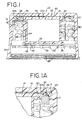
- FIGURE 1 therein is illustrated a promotional closure 10 including a easy-open promotion-receiving member embodying the principles of the present invention.
- Promotional closure 10 is particularly configured for use with an associated container, a portion of which is illustrated and is designated C shown in FIGURE 1 a.
- the container such as a bottle, can be closed by the closure such as by threaded application to a neck portion of the container.
- Closures of the type illustrated in FIGURE 1 can be formed in accordance with the teachings of U.S. Patent No. 4,497,765.
- Closure 10 is in the form of an assembly that includes a molded plastic outer closure cap 12 having a circular top wall portion 14 and a depending annular skirt portion 16.
- the annular skirt portion 16 includes an internal helical thread formation 18 configured for cooperating threaded engagement with the associated container C.
- a sealing liner 20 positioned adjacent the top wall portion 14 of the closure facilitates sealing engagement of the closure with an associated container, and permits the closure to be configured for use with containers having carbonated contents.
- the illustrated closure 10 is of the so-called tamper-indicating type, and includes a detachable pilfer bad 22 depending from the annular skirt portion 16.
- the pilfer band 22 is distinguished from the upper closure cap 12 by a circumferentially extending score line 24, with a plurality of circumferentially spaced frangible ribs 26 extending between the inside surfaces of the closure cap and the pilfer band.
- a plurality of circumferentially spaced container-engaging flexible projections 28 extend inwardly of the pilfer band, for cooperating engagement with the locking portion of the associated container.
- the frangible ribs 26 split and fracture during removal of the closure from the container, thereby separating the pilfer band from the skirt portion 16 of the closure cap for the desired tamper-evidence.
- the illustrated embodiment of the pilfer band is configured in accordance with U.S. Patent No. 4,938,370, but may alternately be configured in accordance with the teachings of U.S. Patent No. 4,418,828.
- the closure 10 is intended for use in connection with consumer promotions or games, and to this end, the closure includes a promotion-receiving member positioned generally within the closure cap 12.
- the promotion-receiving member is provided in the form of a promotion compartment 30 having a generally cup-shaped configuration including a circular bottom wall 32, and a generally cylindrical upstanding side wall 34 extending upwardly from the bottom wall 32.
- the promotion compartment 30 includes a depending annular bottom flange 36 which facilitates finger grasping for removal of the compartment from within the closure cap 12.
- the bottom flange 36 also desirably protects the pull tab (as will be described) of the compartment 30.
- the compartment 30 is preferably of unitary construction apart from its cover member, and preferably molded from low density polyethylene plastic material which, as will be further described, facilitates tearing, opening, or splitting of the compartment so that a promotional element positioned within the compartment can be easily removed by consumers.
- Positioning of the compartment 30 within the closure cap 12 is facilitated by the provision of a annular compartment flange 38 which extends generally outwardly from the upper edge of the side wall 34.
- the annular compartment flange 38 is interengaged with a portion of the sealing liner 20 of closure 10, by the provision of a annular liner flange or lip 39 on the liner which fits between the container C and the compartment flange 38.
- the flange 39 extends from an annular liner bead 20b.
- the compartment flange 38 is preferably held in generally captive relationship between the liner flange 39 and the liner bead 20b within closure cap 12.
- a closure prize compartment embodying the principles of the present invention can be otherwise retained within the associated outer closure cap.
- the closure assembly can be configured such that the upper annular flange 38 of the compartment effects sealing engagement with the associated container, with the closure liner 20 having no lip 39 or the like.
- a preformed disc liner can be provided in the outer cap (rather than the illustrated molded in place liner 20) to provide a so-called secondary seal, that is, an arrangement for sealing the container after removal of the compartment 30 from within the outer cap.
- the compartment may be configured for self-venting. Such venting can be desirable in view of the elevated gas pressure which can exist within the compartment from use of the closure assembly on a container having carbonated contents.
- a self-venting compartment can be provided by configuring the seal of cover member 40 to delaminate or open in a predetermined fashion.
- a suitable self-venting seal arrangement is described in commonly assigned U.S. Patent Application Serial No. 08/746,710, filed November 15, 1996.
- the installation of the compartment 30 into the cap 12 includes the bending of the compartment flange 38 upwardly into a cone shape for passing an outer edge of the compartment flange between the lip 39 and the liner bead 20b.
- the bending is done by a tool which then releases the compartment flange 38 allowing the compartment flange to snap back to its planar configuration fully inserted between the lip 39 ad the bead 20b.
- FIGURE 1 also illustrates that in the preferred form, the tab 48 extends radially outwardly no further than the bottom flange 36, and the top flange 38. This protects the tab 48 from damage during handling and assembly, and facilitates highspeed application of closures to containers.
- a suitable promotional element can be positioned within the interior of the compartment 30.
- a promotional element can be provided in the form of a coupon redeemable for an award or the like, folded currency (i.e., cash), or some other suitable promotional article.
- Retention of the promotional element within the compartment is desirably enhanced by the optional provision of a cover member 40 in the form of a membrane fitted to the flange 38, which cover member 40 can be provided in the form of a suitable plastic film or the like heat-sealed or otherwise secured to the flange 38 of the compartment.
- the cover 40 acts to desirably isolate the contents of the compartment from the contents of the associated container C, and to desirably enhance the structural integrity of the compartment 30 without impairing easy-opening of the compartment.
- the cover member can be a laminate of low density polyethylene with PET (polyethylene terephthalate) with a polyurethane bonding agent.
- a substantially rigid reinforcing disc 41 is carried in a recessed annular step 42 (see FIGURE 1) of the flange 38 and is sealed to the cover member 40.
- the disc 41 is sufficiently thick to substantially prevent "doming” which prevents pressing of a top of the cover member 40 to the inside surface 20a.
- the disc 41 is preferably composed of high density polyethylene. As an alternative arrangement the disc 41 can have a snap engagement to positively lock to the annular step 42. The disc can also be provided with a vent hole beneath the cover member for venting if the cover member is peeled off, or if a removable membrane-like cover member is contemplated.
- One size of closure commonly used for containers for carbonated beverages has a diameter of 28 millimeters, with a promotion compartment embodying the principles of the present invention sized for disposition within an associated container when a closure of this size is applied thereto. While a promotion compartment in accordance with this invention can be configured for use with closures of many different sizes, use in connection with a 28 millimeter closure necessarily requires that the promotion compartment be relatively small in size. As such, removal of a promotional element from within the compartment should be as easy as possible to permit removal by consumers without resort to use of a tool or other implement.
- the promotion compartment 30 in accordance with the present invention is configured for easy-opening, that is, is configured to split or open in a fashion which permits the contents of the compartment to be easily removed without the use of an associated implement.
- the promotion compartment 30 is sized for use with 28 millimeter closures, consumers can very easily gain access to the contents of the compartment.
- the sidewall has an upper annular L-shaped (in cross-section) rim 44 which provides the stepped recess 42 for holding the disc 41.
- the depending annular bottom flange 36 is also L-shaped in cross-section, forming a bottom recess 45.
- the flange 36 can be used for finger gripping to remove the compartment from the cap.
- an outer surface 32a of the bottom wall 32 is exposed.
- the outer surface 32a can carry indicia such as advertising, game information, or an announcement of a winning compartment, i.e., that the compartment contains a prize.
- a handle or tab 46 is provided having an elongate body 48 with finger-gripping ribs 50 provided thereon on a front side and ribs 52 optionally provided on a back side.
- the elongate body 48 is connected to a pull portion 54 which is molded to a side wall region 58 having a reduced thickness.
- the pull portion 54 has a height in a direction parallel to an axis of the cylindrical wall 34.
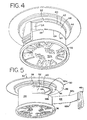
- Two sets of intermittently weakened lines, preferably formed by molding relatively thin regions in the sidewall 34, are arranged in parallel around a partial circumference of the wall 34, spaced apart a distance approximating the height of the pull portion.
- the circumferentially extending tear lines preferably extend 270°-300° around the circumference, in substantially parallel relationship to each other.
- a top weakened or tear line 60 has intermittent bridges or residual regions 62.
- a lower weakened or tear line 64 has residual regions 66.
- the upper and lower tear lines 60, 64 are spaced apart to define a frangible band-shaped portion 68 therebetween extending from the pull portion 54 around a partial circumference of the wall 34.
- the upper tear line 60 terminates in a first substantially circular recess 70 while the lower tear line 64 terminates in a second substantially circular recess 72.
- a last region 74 of the tear line 60 which is contiguous with the recess 70, has a depth decreasing into the recess 70.
- a last region 76 of the tear line 64 contiguous with the second recess 72 has a depth decreasing into the circular recess 72. The decreasing depth of the tear lines and the circular recesses tend to slow down and terminate ripping of the side wall at the recesses.
- the first circular recess 70 terminates around the circumference of the wall 34 at a position A, while the second circular recess 72 extends further and terminates at the position B.
- the difference C between these two positions tends to cause the frangible portion 68, if ripped past the recesses 70, 72, to be removed along offset paths 80, 82 shown dashed, which are offset at an end region thereof toward the rim 44 rather than to continue across the side wall circumferentially.
- the frangible portion 68 is forcibly removed, a region 90 substantially remains intact to retain the flange 38 connected to the wall 34 at this position.
- the residuals 62, 66 can be formed by relatively thick regions of the thinly molded tear lines 60, 64 or by using overlying bridge pieces similar to the bridge pieces 26 spanning across the score line 24 of the pilfer band.
- FIGURE 5 illustrates the promotion compartment 30 removed from the cap and in a partial stage of opening.
- the tab or handle 46 has been pulled from the region of reduced thickness 58 along a tear line 92 and the tear lines 60, 64.
- the residuals 62, 66 have been broken into half pieces or fragmentary pieces 62a, 62b and 66a, 66b.
- the frangible portion or band 68 is sufficiently opened, the promotion piece held within the container 30 can be removed. If the frangible band-shaped portion 68 is continuously torn from the wall 34, the offset terminations A and B will cause an angular rip toward the flange 38 preventing a complete circumferential rip of the band and separation of the compartment 30 into top and bottom pieces. It is preferable to retain the entire opened compartment 30 as a single piece, or to allow only the band 68 to be removed while retaining the remainder of the container 30 as a single piece.
- FIGURES 6 and 7 illustrates a alternate embodiment promotion-receiving compartment 100 having a wide band 102 across its side wall 106 defined by two continuous tear lines 108, 110.
- a tangentially extending handle 116 connects to the band 102 at a rectangular depression 118 which form a reduced thickness wall region.
- the vertical line 120 at the inner face between the handle 116 ad the recess 118 separates and the band 102 can be peeled open along the tear lines 108, 110 circumferentially around the wall 106 to terminations A, B shown in FIGURE 7.
- no circular enlarged recesses are used at the termination positions A, B, and the termination positions are not offset circumferentially.
- the depth of the tear lines 108, 110 decreases gradually throughout the regions 126, 128 which are adjacent the terminal positions A, B. This decrease in depth at the terminal regions effectively slows the speed of peeling or tearing of the panel 102 from the wall 106 to prevent unwanted tearing throughout the wall region 130 between the terminal positions A, B and the recess 118.
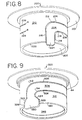
- FIGURE 8 illustrates a further alternate promotion-receiving compartment 200.
- stepped annular top and bottom flanges as in the previous embodiments, are not used but optionally could be used. Instead, a reinforced planar annular flange 201 and a recessed bottom 202 are used.
- a frangible portion in the form of a band 204 is formed by a first tear line 206 and a second tear line 208 formed into an annular side wall 210 of the container 200.
- the tear lines 206, 208 extend substantially circumferentially around a portion of the circumference of the side wall 210 and turn down arcuately at positions 212, 214 into axially arranged tear line portions 216, 218 which extend to a bottom edge 220 of the wall 210. Additionally, an overhang portion 224 is provided contiguous with the band 204 and which extends outwardly of the edge 220 to provide a finger grip or pull tab.
- the tear lines 206, 208 wrap around the circumference of the wall 210 and terminate at positions A, B which can, for example, be configured and shaped as positions A, B shown in FIGURE 7 with decreasing depth contiguous to the positions A, B; or configured and shaped as the terminations A, B shown in FIGURE 3 with offset circular recesses and decreasing depth. Although no residuals are shown in the tear lines 206, 208 in the embodiment of FIGURE 8, it is also possible to use residuals to strengthen the container.
- FIGURE 9 shows a still further alternate embodiment promotion-receiving compartment 300, somewhat similar to the compartment shown in FIGURE 8.
- a frangible portion comprising band 304 defined by a first tear line 306 and a tear line 308 formed into an annular wall 310 of the container, extends circumferentially around the annular wall 310.
- the tear lines are arcuately turned down toward a bottom edge 320 of the wall 310.
- a recessed bottom wall 346 is provided.
- the tear lines 306, 308 extend downwardly into expanded tear lines 322, 324 diverging from each other. The tear lines 322, 324 then are turned downwardly into tear lines 326, 328 to the bottom edge 320 of the wall 310.
- the band 304 extends further outwardly of the bottom edge 320 with an overhanging portion 330.
- the overhanging portion 330 as well as the tear lines 322, 324, 326, 328 define a pull tab, easily gripped and manipulated for removing the band along the tear lines 326, 328, 322, 324, 306 and 304 around the partial circumference of the wall 310.
- the tear lines 306, 308 terminate at positions A, B, (not shown) in a fashion such as that shown in FIGURE 3 or FIGURE 7, or combination of the two methods.
- residuals can be used optionally to increase the strength of the container 300, spaced intermittently along the tear lines.
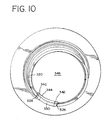
- FIGURE 10 illustrates in a bottom view the tab 330 having on a back side thereof reinforcing gussets 340, 342, which are molded into a recess region 344 of the bottom wall 346.
Landscapes
- Engineering & Computer Science (AREA)
- Mechanical Engineering (AREA)
- Closures For Containers (AREA)
- Packages (AREA)
Claims (32)
- Verschluss (10) für einen Behälter, wobei der Verschluss folgendes aufweist:eine Kappe (12) mit einer oberen Wand (14) und einem abhängigen Rand (16);ein Fach (3) mit einer unteren Wand (32) und einer umgebenden Seitenwand (34), die sich von dort erstreckt und einen Umfang definiert, wobei das genannte Fach (30) so angeordnet ist, dass es innerhalb der genannten Kappe (12) gehalten wird und von dieser entfernt werden kann, dadurch gekennzeichnet, dassdie genannte Seitenwand (34) ein umfänglich angeordnetes zerbrechliches Teilstück (68) aufweist, das sich zumindest teilweise um den Umfang der genannten Seitenwand (34) erstreckt, wobei das genannte zerbrechliche Teilstück (68) zumindest teilweise von dem verbleibenden Teilstücken der genannten Seitenwand (34) getrennt werden kann, um das genannte Fach (30) zu öffnen.
- Verschluss (10) nach Anspruch 1, dadurch gekennzeichnet, dass das genannte Fach (30) einen oberen Flansch (38) umfasst, der sich von der genannten Seitenwand (34) radial auswärts erstreckt, und wobeidie genannte Kappe (12) ein ringförmiges Dichtungsteilstück (20) aufweist, das an der genannten oberen Wand (14) positioniert ist, wobei der genannte obere Flansch (38) so positioniert ist, dass er durch das genannte Fach (30) an der genannten ringförmigen Dichtung (20) gefangen wird, wenn die genannte Kappe (12) an dem genannten Behälter installiert wird.
- Verschluss (10) nach Anspruch 2, dadurch gekennzeichnet, dass das genannte ringförmige Dichtungsteilstück (20) eine sich radial einwärts erstreckende Lippe (39) aufweist, und wobei der genannte obere Flansch (38) zwischen der genannten Lippe (39) und der genannten oberen Wand (14) gefangen wird.
- Verschluss (10) nach Anspruch 1, dadurch gekennzeichnet, dass das genannte zerbrechliche Teilstück (68) ein sich umfänglich erstreckendes bandförmiges Teilstück der genannten Seitenwand aufweist, das durch eine sich umfänglich erstreckende obere Abreißlinie (60) und eine sich umfänglich erstreckende untere Abreißlinie (66) definiert wird, und mit einem mit dem Finger greifbaren Ansatzteilstück (46), das sich von einem Ende des genannten bandförmigen Teilstücks erstreckt.
- Verschluss (10) nach Anspruch 4, dadurch gekennzeichnet, dass sich das genannte Ansatzteilstück (46) von dem genannten bandförmigen Teilstück radial auswärts erstreckt.
- Verschluss (10) nach Anspruch 4, dadurch gekennzeichnet, dass sich das genannte Ansatzteilstück (46) von dem genannten bandförmigen Teilstück tangential erstreckt.
- Verschluss (10) nach Anspruch 4, dadurch gekennzeichnet, dass sich das genannte Ansatzteilstück (46) von dem genannten bandförmigen Teilstück axial erstreckt.
- Verschluss (10) nach Anspruch 4, dadurch gekennzeichnet, dass sich die genannte erste Abreißlinie (60) von dem genannten Ende des genannten bandförmigen Teilstücks in eine umfängliche Richtung an eine erste Endposition (70) erstreckt, und wobei sich die genannte zweite Abreißlinie (66) umfänglich an eine zweite Endposition (72) erstreckt, die weiter um den genannten Umfang der genannten ersten Endposition angeordnet ist.
- Verschluss (10) nach Anspruch 4, dadurch gekennzeichnet, dass die genannten ersten und zweiten Abreißlinien (60, 66) in vergrößerten runden Aussparungen enden.
- Verschluss (10) nach Anspruch 4, dadurch gekennzeichnet, dass die genannten ersten und zweiten Abreißlinien (60, 66) entlang ihrer Länge unterbrochen sind und räumlich getrennte Verstärkungsbereiche bilden.
- Verschluss (10) nach Anspruch 4, dadurch gekennzeichnet, dass die genannten ersten und zweiten Abreißlinien (60, 66) jeweils eine erste Tiefe in die genannte Seitenwand durch ein erstes Teilstück der umfänglichen Längen (62, 64) der genannten ersten und zweiten Abreißlinien (60, 66) aufweisen sowie eine reduzierte tiefe an Endbereichen angrenzend an ein zweites Teilstück (74, 76) der umfänglichen Länge.
- Verschluss (10) nach Anspruch 1, dadurch gekennzeichnet, dass das genannte Fach ferner ein Abdeckelement (40) aufweist, das so angeordnet ist, dass es ein oberes Ende des genannten Behälters überlagert, um den genannten Behälter dicht zu verschließen.
- Verschluss (10) nach Anspruch 12, dadurch gekennzeichnet, dass das genannte Fach (30) ferner eine verstärkende Scheibe (91) aufweist, die an dem genannten Behälter getragen wird und das genannte obere Ende abdeckt.
- Verschluss (10) nach Anspruch 13, dadurch gekennzeichnet, dass das genannte Fach (30) einen oberen ringförmigen Flansch (48) aufweist, der sich von dem genannten oberen Ende radial auswärts erstreckt, und wobei die genannte verstärkende Scheibe (41) an dem genannten Flansch (38) gestützt wird, und wobei das genannte Abdeckelement (40) den genannten Flansch (38) abdichtet, der die genannte verstärkende Scheibe (41) überlagert.
- Verschluss (10) nach Anspruch 1, dadurch gekennzeichnet, dass das genannte Fach (30) ferner einen oberen Flansch (38) aufweist, der sich von einem oberen Ende der genannten Seitenwand (34) radial erstreckt, und mit einem unteren Flansch (36), der sich von der genannten unteren Wand nach unten erstreckt, wobei der genannte obere Flansch (38) so angeordnet ist, dass er zwischen der genannten Kappe (12) und dem genannten Behälter gefangen wird, wenn die genannte Kappe (12) an dem genannten Behälter installiert ist.
- Verschluss (10) nach Anspruch 1, dadurch gekennzeichnet, dass das genannte Fach (30) einen greifbaren Ansatz (46) aufweist, der sich von einer Ausgangsendkante (58) des genannten zerbrechlichen Teilstücks (68) erstreckt, und wobei die genannte Seitenwand einen axial angeordneten Bereich mit reduzierter Dicke über eine Breite des genannten zerbrechlichen Teilstücks an der genannten Ausgangsendkante (58) des genannten zerbrechlichen Teilstücks aufweist.
- Verschluss (10) nach Anspruch 1, dadurch gekennzeichnet, dass das genannte Fach (30) einen unteren Flansch (36) aufweist, der sich von der genannten Seitenwand (34) nach unten erstreckt, und wobei der genannte greifbare Ansatz (46) radial von der genannten Seitenwand (34) nicht weiter vorsteht als der genannte untere Flansch (36).
- Verschluss (10) nach Anspruch 1, dadurch gekennzeichnet, dass:die genannte Seitenwand (34) ein offenes oberes Ende definiert und ferner folgendes aufweist:eine im Wesentlichen steife Scheibe (40), die an der genannten Seitenwand (39) getragen wird und das genannte offene obere Ende im Wesentlichen abdeckt.
- Verschluss (10) nach Anspruch 18, dadurch gekennzeichnet, dass das genannte Fach (30) ferner einen ringförmigen Flansch (38) aufweist, der das genannte offene obere Ende umgibt, und wobei die genannte Scheibe (40) an dem genannten ringförmigen Flansch (38) gestützt wird.
- Verschluss (10) nach Anspruch 19, dadurch gekennzeichnet, dass der genannte ringförmige Flansch (38) eine ringförmige gestufte Aussparung (42) zum Halten der genannten Scheibe (40) aufweist.
- Verschluss (10) nach Anspruch 19, dadurch gekennzeichnet, dass die genannte Kappe (12) eine ringförmige Lippe (39) angrenzend an die genannte obere Wand (14) aufweist und sich radial einwärts erstreckt, und wobei der genannte ringförmige Flansch (38) zwischen der genannten oberen Wand (14) und der genannten Lippe (39) gefangen wird, um das genannte Fach (30) innerhalb der genannten Kappe (12) zu halten.
- Verschluss (10) nach Anspruch 19, ferner mit einer Foliendichtung (41), die dicht mit dem genannten ringförmigen Flansch (38) abschließt.
- Verschluss (10) nach Anspruch 22, dadurch gekennzeichnet, dass die genannte Seitenwand (34) ein zerbrechlich entfernbares Band (68) aufweist, das sich um einen Großteil des Umfang der genannten Seitenwand (34) erstreckt.
- Verschluss (10) nach Anspruch 1, dadurch gekennzeichnet, dass:wobei das genannte Fach (30) ein zerbrechliches Teilstück (68) zum Öffnen des genannten Fachs (30) aufweist, mit einem bandförmigen Teilstück in der genannten Seitenwand (34), das durch ein Paar räumlich getrennter, sich umfänglicher Abreißlinien (60, 66) definiert wird, die sich mindestens teilweise um den Umfang der genannten Seitenwand (34) erstrecken, wobei das genannte zerbrechliche Teilstück (68) einen Aufreißstreifen (46) aufweist, der mit dem genannten bandförmigen Teilstück verbunden ist, um das genannte bandförmige Teilstück entlang der genannten Abreißlinien (60, 66) zu ziehen.die genannte Kappe (12) eine interne Gewindeformation für einen schraubfähigen Eingriff mit dem genannten Behälter aufweist, und wobeidas genannte Fach (30) allgemein innerhalb der genannten Verschlusskappe (12) positionierbar ist, wobei das genannte Fach eine runde untere Wand (32) aufweist, eine aufrecht stehende, allgemein zylindrische Seitenwand (34), die sich von dort erstreckt, so dass ein Umfang definiert wird, einen ringförmigen oberen Flansch (38), der sich von der genannten Seitenwand (34) auswärts erstreckt, wobei das genannte Fach (30) für eine Anordnung in der genannten Verschlusskappe (12) konfiguriert ist, so dass der genannte obere Flansch (38) allgemein zwischen der genannten oberen Wand (14) der genannten Verschlusskappe (12) und dem genannten Behälter positioniert ist, wobei das genannte Fach (30) von innerhalb der genannten Verschlusskappe (12) entfernt werden kann, nachdem die genannte Verschlusseinheit (10) von dem genannten Behälter entfernt worden ist,
- Verschlusseinheit (10) nach Anspruch 24, dadurch gekennzeichnet, dass das genannte Fach (30) eine Abdeckeinrichtung (40) aufweist, die angrenzend an den genannten ringförmigen oberen Flansch (38) positioniert ist, um das Innere des genannten Fachs (30) zu verschließen.
- Verschlusseinheit (10) nach Anspruch 25, dadurch gekennzeichnet, dass die genannte Abdeckeinrichtung (40) ein membranartiges Abdeckelement (41) aufweist, das mit dem genannten ringförmigen Flansch (38) dicht abschließt.
- Verschlusseinheit (10) nach Anspruch 25, dadurch gekennzeichnet, dass die genannte Abdeckeinrichtung (40) eine runde Scheibe aufweist.
- Verschlusseinheit (10) nach Anspruch 24, dadurch gekennzeichnet, dass der genannte Abreißstreifen (46) radial auswärts der genannten Seitenwand (34) des genannten Fachs (30) positioniert ist.
- Verschlusseinheit (10) nach Anspruch 24, dadurch gekennzeichnet, dass sich der genannte Abreißstreifen (46) von dem genannten bandförmigen Teilstück nach unten erstreckt.
- Verschlusseinheit (10) nach Anspruch 24, dadurch gekennzeichnet, dass das genannte Fach (30) einen unteren Flansch (36) aufweist, der von der genannten runden unteren Wand (32) abhängt.
- Verschlusseinheit (10) nach Anspruch 24, dadurch gekennzeichnet, dass die genannten Abreißlinien (60, 66) durch absatzweise schwächere, verhältnismäßig dünne Bereich der genannten Seitenwand definiert sind.
- Verfahren für den Zugriff auf eine Prämie einer Flasche, wobei das Verfahren die folgenden Schritte aufweist:Entfernen eines Verschlusses (10) von der Flasche;Entfernen eines eine Prämie beinhaltenden Fachs mit einer unteren Wand (32) und einer umgebenden Seitenwand (34) von innerhalb des genannten Verschlusses;Zugriff auf die genannte Prämie innerhalb des genannten Fachs durch Aufreißen des genannten Fachs, indem zumindest teilweise ein zerbrechliches Teilstück (68) des genannten Fachs separiert wird, das sich zumindest teilweise umfänglich um die genannte Seitenwand des genannten Fachs erstreckt; undEntfernen der genannten Prämie von innerhalb des genannten Fachs.
Applications Claiming Priority (3)
| Application Number | Priority Date | Filing Date | Title |
|---|---|---|---|
| US08/882,395 US5915585A (en) | 1997-07-10 | 1997-07-10 | Easy-open promotion compartment |
| US882395 | 1997-07-10 | ||
| PCT/US1998/013946 WO1999002417A1 (en) | 1997-07-10 | 1998-07-09 | Prize holding container closure |
Publications (2)
| Publication Number | Publication Date |
|---|---|
| EP0994811A1 EP0994811A1 (de) | 2000-04-26 |
| EP0994811B1 true EP0994811B1 (de) | 2004-04-14 |
Family
ID=25380480
Family Applications (1)
| Application Number | Title | Priority Date | Filing Date |
|---|---|---|---|
| EP98934271A Expired - Lifetime EP0994811B1 (de) | 1997-07-10 | 1998-07-09 | Prämien-beinhaltender behälterverschluss |
Country Status (8)
| Country | Link |
|---|---|
| US (2) | US5915585A (de) |
| EP (1) | EP0994811B1 (de) |
| CN (1) | CN1268932A (de) |
| AT (1) | ATE264230T1 (de) |
| AU (1) | AU747256B2 (de) |
| DE (1) | DE69823199T2 (de) |
| ES (1) | ES2218841T3 (de) |
| WO (1) | WO1999002417A1 (de) |
Families Citing this family (30)
| Publication number | Priority date | Publication date | Assignee | Title |
|---|---|---|---|---|
| US6415936B1 (en) | 1998-10-27 | 2002-07-09 | Michael S. Gzybowski | Easy opening closure with strippable core member |
| BR0011044A (pt) * | 1999-05-28 | 2002-04-16 | Alcoa Closure Systems Int Inc | Tampa de recipiente que contém um prêmio e método de encobrimento |
| MXPA01013109A (es) * | 1999-07-14 | 2002-06-04 | Coca Cola Co | Compartimiento promocional ventilado. |
| US6298990B1 (en) | 2000-09-06 | 2001-10-09 | Kraft Foods Holdings, Inc. | Container with sound chip |
| WO2002060774A1 (en) * | 2001-02-01 | 2002-08-08 | Gzybowski Michael S | Easy opening closure |
| WO2002062673A1 (en) * | 2001-02-06 | 2002-08-15 | Gzybowski Michael S | Easy opening closure |
| GB2412882A (en) * | 2002-12-23 | 2005-10-12 | Gametech International Inc | Enhanced gaming system |
| GB2408258B (en) * | 2003-10-31 | 2006-12-06 | Leigh Smith | Closure for a drinks container having a separate compartment |
| US20050150805A1 (en) * | 2004-01-13 | 2005-07-14 | Michael Burchell | Pill container having a visual indicator |
| US20050178688A1 (en) * | 2004-02-17 | 2005-08-18 | Ami Hasson | Method for promoting product sales |
| EP1600396A1 (de) * | 2004-05-24 | 2005-11-30 | Dolci Preziosi S.R.L. | Behälterverschluss |
| US7740927B2 (en) * | 2004-12-09 | 2010-06-22 | Tech-Seal Products, Inc. | Container seal with integral promotional token and method |
| US7819266B2 (en) * | 2004-12-09 | 2010-10-26 | Tech-Seal Products, Inc. | Container sealing material having a heat-releasable interlayer |
| US7713605B2 (en) * | 2004-12-09 | 2010-05-11 | Tech-Seal Products, Inc. | Container seal with integral, heat-releasable promotional token and method |
| US20060213862A1 (en) * | 2005-03-24 | 2006-09-28 | Leigh Smith | Top for a drinks container |
| US20070014898A1 (en) * | 2005-07-12 | 2007-01-18 | Nottingham-Spirk Design Associates, Inc. | Polymeric cereal container as well as system and method utilizing same |
| US20080000898A1 (en) * | 2006-06-28 | 2008-01-03 | Christopher Edward Ramsden | Methods and apparatus for providing edible substances with a beverage |
| US7772986B2 (en) | 2006-09-18 | 2010-08-10 | Vesstech, Inc. | Verbal warning systems and other audible warning systems for use with various types of devices, containers, products and other things |
| RU2350532C2 (ru) * | 2007-03-05 | 2009-03-27 | Андрей Леонидович Мосунов | Устройство для закупоривания сосудов и способ его применения (варианты) |
| US20090020535A1 (en) * | 2007-07-19 | 2009-01-22 | Joubert Brad T | Capsule For An Item |
| US8757408B2 (en) * | 2007-07-19 | 2014-06-24 | Brad T. Joubert | Bottle closure with chamber for holding an item |
| US20100051576A1 (en) * | 2008-09-04 | 2010-03-04 | Tran Quoc A | Container cap with aqua tissue |
| US8727149B1 (en) * | 2009-01-28 | 2014-05-20 | Innovative Molding | Container with stored scoop |
| US8960466B2 (en) * | 2009-08-08 | 2015-02-24 | Andrew P. Golden | Novelty associated with stoppers for beverages |
| US8376161B2 (en) * | 2009-08-08 | 2013-02-19 | Andrew P Golden | Novelty associated with beverages |
| JP5390370B2 (ja) * | 2009-12-22 | 2014-01-15 | 日本クロージャー株式会社 | 合成樹脂製注出口栓 |
| US10196189B2 (en) | 2015-10-16 | 2019-02-05 | Zipz, Inc. | Carbonated beverage closure |
| KR101889790B1 (ko) * | 2016-11-03 | 2018-09-28 | 제이씨텍(주) | 내열용기마개 |
| US10442573B1 (en) * | 2018-09-25 | 2019-10-15 | Menashe Battat | Coupon cup |
| WO2022026176A1 (en) * | 2020-07-28 | 2022-02-03 | Bard Peripheral Vascular, Inc. | Peelable cathlock |
Family Cites Families (32)
| Publication number | Priority date | Publication date | Assignee | Title |
|---|---|---|---|---|
| GB252937A (en) * | 1925-08-10 | 1926-06-10 | British Kork N Seal Agency Ltd | Improvements in or relating to lids for bottles, jars, and similar containers |
| US2891713A (en) * | 1954-10-06 | 1959-06-23 | Safe Pack Container Co | Container |
| FR1591349A (de) * | 1968-11-07 | 1970-04-27 | ||
| US3613955A (en) * | 1969-07-15 | 1971-10-19 | Monsanto Co | Compartmentalized container package |
| US3746158A (en) * | 1971-05-07 | 1973-07-17 | Swift & Co | Container attachment |
| FR2225355A1 (en) * | 1973-04-14 | 1974-11-08 | Henkel & Cie Gmbh | Plastic cover for buckets, barrels etc. - has bowl which can contain additive for main product and transparent lid |
| DE2356138A1 (de) * | 1973-11-09 | 1975-05-15 | Unilever Gmbh Deutsche | Aufreissbarer becher |
| NL7413077A (nl) * | 1974-10-03 | 1976-04-06 | Leer Koninklijke Emballage | Houder met schroefdop. |
| US4531650A (en) * | 1978-05-30 | 1985-07-30 | The Continental Group, Inc. | Plastic cap with pressure seal |
| US4475654A (en) * | 1979-08-22 | 1984-10-09 | Fruchter Lawrence C | Storage and individualized dosage container |
| US4418828A (en) | 1981-07-24 | 1983-12-06 | H-C Industries, Inc. | Plastic closure with mechanical pilfer band |
| DK460081A (da) * | 1981-10-19 | 1983-04-20 | Martin Baram | Blandingsaggregat |
| US4497795A (en) | 1982-12-13 | 1985-02-05 | The Texas A&M University System | Method of regulating appetite and efficiency of food utilization employing interferon |
| US4636328A (en) * | 1984-04-05 | 1987-01-13 | Purex Corporation | Multi functional laundry product and employment of same during fabric laundering |
| US4557393A (en) * | 1984-04-17 | 1985-12-10 | Continental White Cap, Inc. | Snap-on cap with tethering strap |
| US4667818A (en) * | 1985-10-25 | 1987-05-26 | Purex Corporation | Fitment adapter for use with container |
| FR2623477B1 (fr) * | 1987-11-20 | 1990-03-23 | Sah Participations Proced Indl | Bouchon comportant un godet de matiere absorbante fixe de facon definitive au bouchon |
| US4795028A (en) * | 1987-11-25 | 1989-01-03 | Erie Plastics Corp. | Combination beverage package |
| US4903865A (en) * | 1988-09-19 | 1990-02-27 | Janowitz C Michael | Push button cap containing an additive for containers |
| US5056659A (en) * | 1988-09-28 | 1991-10-15 | Howes James P | Prize holding container assemblies |
| US5056681A (en) * | 1988-09-28 | 1991-10-15 | Howes James P | Prize holding container assemblies |
| US4919949A (en) * | 1988-10-06 | 1990-04-24 | The Pillsbury Co. | Refrigerated dough container |
| US4938370B1 (en) | 1989-04-26 | 2000-10-17 | Hc Ind | Tamper-indicating plastic closure |
| US5114011A (en) * | 1990-08-31 | 1992-05-19 | Robbins Edward S Iii | Container assemblies with additive cups |
| AU4272493A (en) * | 1992-04-20 | 1993-11-18 | Lee, Jung Min | Bottle cap made of synthetic resin |
| US5356021A (en) * | 1993-09-30 | 1994-10-18 | H-C Industries, Inc. | Container closure with multiple liner seals |
| US5439103A (en) * | 1994-05-03 | 1995-08-08 | Howes; James P. | Prize holding container assemblies |
| US5524788A (en) * | 1994-06-10 | 1996-06-11 | The Coca-Cola Company | Closure with hidden-gift compartment |
| US5749460A (en) * | 1995-06-06 | 1998-05-12 | The Pillsbury Company | Undercup assembly |
| US5819976A (en) * | 1996-11-15 | 1998-10-13 | Alcoa Closure Systems International | Closure having self-venting, sealed promotion compartment |
| US5806707A (en) * | 1996-11-15 | 1998-09-15 | Alcoa Closure Systems International, Inc. | Removable inner promotional compartment closure and promotional gaming system |
| US5813563A (en) * | 1996-11-15 | 1998-09-29 | Alcoa Closure Systems International, Inc. | Closure having easy-open promotion compartment |
-
1997
- 1997-07-10 US US08/882,395 patent/US5915585A/en not_active Expired - Fee Related
-
1998
- 1998-07-09 AT AT98934271T patent/ATE264230T1/de not_active IP Right Cessation
- 1998-07-09 WO PCT/US1998/013946 patent/WO1999002417A1/en not_active Ceased
- 1998-07-09 DE DE1998623199 patent/DE69823199T2/de not_active Expired - Fee Related
- 1998-07-09 CN CN98808755.3A patent/CN1268932A/zh active Pending
- 1998-07-09 EP EP98934271A patent/EP0994811B1/de not_active Expired - Lifetime
- 1998-07-09 ES ES98934271T patent/ES2218841T3/es not_active Expired - Lifetime
- 1998-07-09 AU AU83836/98A patent/AU747256B2/en not_active Ceased
-
1999
- 1999-03-30 US US09/281,037 patent/US6032820A/en not_active Expired - Fee Related
Also Published As
| Publication number | Publication date |
|---|---|
| US5915585A (en) | 1999-06-29 |
| ES2218841T3 (es) | 2004-11-16 |
| EP0994811A1 (de) | 2000-04-26 |
| CN1268932A (zh) | 2000-10-04 |
| DE69823199D1 (de) | 2004-05-19 |
| AU8383698A (en) | 1999-02-08 |
| WO1999002417A1 (en) | 1999-01-21 |
| AU747256B2 (en) | 2002-05-09 |
| US6032820A (en) | 2000-03-07 |
| ATE264230T1 (de) | 2004-04-15 |
| DE69823199T2 (de) | 2004-11-18 |
Similar Documents
| Publication | Publication Date | Title |
|---|---|---|
| US5915585A (en) | Easy-open promotion compartment | |
| AU701983B2 (en) | Tamper-evident closure with captive band | |
| US5813563A (en) | Closure having easy-open promotion compartment | |
| US4815617A (en) | Tamper-evident container cap having sealed disc retention means | |
| US4111329A (en) | Container with tamperproof and stackable lid | |
| US5320233A (en) | Tamper evident lug cap | |
| US4643329A (en) | Tamper evident container | |
| US6257435B1 (en) | Tamper evident closure member | |
| US5875906A (en) | Tamper evident sleeves and method of forming them | |
| CA2271481A1 (en) | Prize-holding bottle closure | |
| US4322010A (en) | Tamper proof lid | |
| US4432466A (en) | Container having closure panel including integrally formed scoop rupturable therefrom | |
| US20040060892A1 (en) | Closure having taper-evidencing label | |
| US5819976A (en) | Closure having self-venting, sealed promotion compartment | |
| JP3492007B2 (ja) | キャップ | |
| GB2247231A (en) | Tamper-proof seals | |
| JPH1135054A (ja) | 中身抜き取り防止用カバー | |
| MXPA00000335A (en) | Prize holding container closure | |
| GB2319019A (en) | Tamper Proof Seal | |
| JP3776617B2 (ja) | 開口仮封止栓付缶 | |
| JPH0120298Y2 (de) | ||
| JP3875421B2 (ja) | 開口仮封止栓付缶 | |
| JP2008207828A (ja) | オーバーキャップ付きストレート缶 | |
| JP2005538910A (ja) | 飲料用ボトルおよびこの飲料用ボトルを開けるツール | |
| JPH0442252B2 (de) |
Legal Events
| Date | Code | Title | Description |
|---|---|---|---|
| PUAI | Public reference made under article 153(3) epc to a published international application that has entered the european phase |
Free format text: ORIGINAL CODE: 0009012 |
|
| 17P | Request for examination filed |
Effective date: 20000204 |
|
| AK | Designated contracting states |
Kind code of ref document: A1 Designated state(s): AT BE CH CY DE DK ES FI FR GB GR IE IT LI LU MC NL PT SE |
|
| 17Q | First examination report despatched |
Effective date: 20021129 |
|
| GRAP | Despatch of communication of intention to grant a patent |
Free format text: ORIGINAL CODE: EPIDOSNIGR1 |
|
| GRAS | Grant fee paid |
Free format text: ORIGINAL CODE: EPIDOSNIGR3 |
|
| GRAA | (expected) grant |
Free format text: ORIGINAL CODE: 0009210 |
|
| AK | Designated contracting states |
Kind code of ref document: B1 Designated state(s): AT BE CH CY DE DK ES FI FR GB GR IE IT LI LU MC NL PT SE |
|
| PG25 | Lapsed in a contracting state [announced via postgrant information from national office to epo] |
Ref country code: NL Free format text: LAPSE BECAUSE OF FAILURE TO SUBMIT A TRANSLATION OF THE DESCRIPTION OR TO PAY THE FEE WITHIN THE PRESCRIBED TIME-LIMIT Effective date: 20040414 Ref country code: FI Free format text: LAPSE BECAUSE OF FAILURE TO SUBMIT A TRANSLATION OF THE DESCRIPTION OR TO PAY THE FEE WITHIN THE PRESCRIBED TIME-LIMIT Effective date: 20040414 Ref country code: CY Free format text: LAPSE BECAUSE OF FAILURE TO SUBMIT A TRANSLATION OF THE DESCRIPTION OR TO PAY THE FEE WITHIN THE PRESCRIBED TIME-LIMIT Effective date: 20040414 Ref country code: AT Free format text: LAPSE BECAUSE OF FAILURE TO SUBMIT A TRANSLATION OF THE DESCRIPTION OR TO PAY THE FEE WITHIN THE PRESCRIBED TIME-LIMIT Effective date: 20040414 |
|
| REG | Reference to a national code |
Ref country code: GB Ref legal event code: FG4D |
|
| REG | Reference to a national code |
Ref country code: CH Ref legal event code: EP |
|
| REG | Reference to a national code |
Ref country code: CH Ref legal event code: NV Representative=s name: KIRKER & CIE SA |
|
| REF | Corresponds to: |
Ref document number: 69823199 Country of ref document: DE Date of ref document: 20040519 Kind code of ref document: P |
|
| REG | Reference to a national code |
Ref country code: IE Ref legal event code: FG4D |
|
| PG25 | Lapsed in a contracting state [announced via postgrant information from national office to epo] |
Ref country code: LU Free format text: LAPSE BECAUSE OF NON-PAYMENT OF DUE FEES Effective date: 20040709 |
|
| PG25 | Lapsed in a contracting state [announced via postgrant information from national office to epo] |
Ref country code: SE Free format text: LAPSE BECAUSE OF FAILURE TO SUBMIT A TRANSLATION OF THE DESCRIPTION OR TO PAY THE FEE WITHIN THE PRESCRIBED TIME-LIMIT Effective date: 20040714 Ref country code: DK Free format text: LAPSE BECAUSE OF FAILURE TO SUBMIT A TRANSLATION OF THE DESCRIPTION OR TO PAY THE FEE WITHIN THE PRESCRIBED TIME-LIMIT Effective date: 20040714 |
|
| PG25 | Lapsed in a contracting state [announced via postgrant information from national office to epo] |
Ref country code: MC Free format text: LAPSE BECAUSE OF NON-PAYMENT OF DUE FEES Effective date: 20040731 |
|
| REG | Reference to a national code |
Ref country code: GR Ref legal event code: EP Ref document number: 20040402341 Country of ref document: GR |
|
| NLV1 | Nl: lapsed or annulled due to failure to fulfill the requirements of art. 29p and 29m of the patents act | ||
| REG | Reference to a national code |
Ref country code: ES Ref legal event code: FG2A Ref document number: 2218841 Country of ref document: ES Kind code of ref document: T3 |
|
| ET | Fr: translation filed | ||
| PLBE | No opposition filed within time limit |
Free format text: ORIGINAL CODE: 0009261 |
|
| STAA | Information on the status of an ep patent application or granted ep patent |
Free format text: STATUS: NO OPPOSITION FILED WITHIN TIME LIMIT |
|
| 26N | No opposition filed |
Effective date: 20050117 |
|
| PGFP | Annual fee paid to national office [announced via postgrant information from national office to epo] |
Ref country code: GB Payment date: 20050614 Year of fee payment: 8 |
|
| PGFP | Annual fee paid to national office [announced via postgrant information from national office to epo] |
Ref country code: IE Payment date: 20050630 Year of fee payment: 8 |
|
| PGFP | Annual fee paid to national office [announced via postgrant information from national office to epo] |
Ref country code: FR Payment date: 20050706 Year of fee payment: 8 |
|
| PGFP | Annual fee paid to national office [announced via postgrant information from national office to epo] |
Ref country code: ES Payment date: 20050721 Year of fee payment: 8 |
|
| PGFP | Annual fee paid to national office [announced via postgrant information from national office to epo] |
Ref country code: GR Payment date: 20050726 Year of fee payment: 8 |
|
| PGFP | Annual fee paid to national office [announced via postgrant information from national office to epo] |
Ref country code: BE Payment date: 20050728 Year of fee payment: 8 |
|
| PGFP | Annual fee paid to national office [announced via postgrant information from national office to epo] |
Ref country code: DE Payment date: 20050729 Year of fee payment: 8 |
|
| PGFP | Annual fee paid to national office [announced via postgrant information from national office to epo] |
Ref country code: CH Payment date: 20050927 Year of fee payment: 8 |
|
| PG25 | Lapsed in a contracting state [announced via postgrant information from national office to epo] |
Ref country code: GB Free format text: LAPSE BECAUSE OF NON-PAYMENT OF DUE FEES Effective date: 20060709 |
|
| PG25 | Lapsed in a contracting state [announced via postgrant information from national office to epo] |
Ref country code: IE Free format text: LAPSE BECAUSE OF NON-PAYMENT OF DUE FEES Effective date: 20060710 |
|
| PG25 | Lapsed in a contracting state [announced via postgrant information from national office to epo] |
Ref country code: LI Free format text: LAPSE BECAUSE OF NON-PAYMENT OF DUE FEES Effective date: 20060731 Ref country code: CH Free format text: LAPSE BECAUSE OF NON-PAYMENT OF DUE FEES Effective date: 20060731 Ref country code: BE Free format text: LAPSE BECAUSE OF NON-PAYMENT OF DUE FEES Effective date: 20060731 |
|
| PGFP | Annual fee paid to national office [announced via postgrant information from national office to epo] |
Ref country code: IT Payment date: 20060731 Year of fee payment: 9 |
|
| PG25 | Lapsed in a contracting state [announced via postgrant information from national office to epo] |
Ref country code: DE Free format text: LAPSE BECAUSE OF NON-PAYMENT OF DUE FEES Effective date: 20070201 |
|
| REG | Reference to a national code |
Ref country code: CH Ref legal event code: PL |
|
| GBPC | Gb: european patent ceased through non-payment of renewal fee |
Effective date: 20060709 |
|
| REG | Reference to a national code |
Ref country code: IE Ref legal event code: MM4A |
|
| REG | Reference to a national code |
Ref country code: FR Ref legal event code: ST Effective date: 20070330 |
|
| REG | Reference to a national code |
Ref country code: ES Ref legal event code: FD2A Effective date: 20060710 |
|
| BERE | Be: lapsed |
Owner name: *ALCOA CLOSURE SYSTEMS INTERNATIONAL INC. Effective date: 20060731 |
|
| PG25 | Lapsed in a contracting state [announced via postgrant information from national office to epo] |
Ref country code: PT Free format text: LAPSE BECAUSE OF NON-PAYMENT OF DUE FEES Effective date: 20040914 |
|
| PG25 | Lapsed in a contracting state [announced via postgrant information from national office to epo] |
Ref country code: ES Free format text: LAPSE BECAUSE OF NON-PAYMENT OF DUE FEES Effective date: 20060710 |
|
| PG25 | Lapsed in a contracting state [announced via postgrant information from national office to epo] |
Ref country code: FR Free format text: LAPSE BECAUSE OF NON-PAYMENT OF DUE FEES Effective date: 20060731 |
|
| PG25 | Lapsed in a contracting state [announced via postgrant information from national office to epo] |
Ref country code: GR Free format text: LAPSE BECAUSE OF NON-PAYMENT OF DUE FEES Effective date: 20070202 |
|
| PG25 | Lapsed in a contracting state [announced via postgrant information from national office to epo] |
Ref country code: IT Free format text: LAPSE BECAUSE OF NON-PAYMENT OF DUE FEES Effective date: 20070709 |