EP0995802B1 - Verfahren zur Verabreichng von Nukleinsäuren in Zellen in vitro oder ex vivo - Google Patents
Verfahren zur Verabreichng von Nukleinsäuren in Zellen in vitro oder ex vivo Download PDFInfo
- Publication number
- EP0995802B1 EP0995802B1 EP99401687A EP99401687A EP0995802B1 EP 0995802 B1 EP0995802 B1 EP 0995802B1 EP 99401687 A EP99401687 A EP 99401687A EP 99401687 A EP99401687 A EP 99401687A EP 0995802 B1 EP0995802 B1 EP 0995802B1
- Authority
- EP
- European Patent Office
- Prior art keywords
- cells
- cell
- transduced
- transduction
- nucleic acid
- Prior art date
- Legal status (The legal status is an assumption and is not a legal conclusion. Google has not performed a legal analysis and makes no representation as to the accuracy of the status listed.)
- Expired - Lifetime
Links
- 238000000034 method Methods 0.000 title claims abstract description 94
- 150000007523 nucleic acids Chemical class 0.000 title claims abstract description 51
- 108020004707 nucleic acids Proteins 0.000 title claims abstract description 49
- 102000039446 nucleic acids Human genes 0.000 title claims abstract description 49
- 238000000338 in vitro Methods 0.000 title claims abstract description 19
- 238000012384 transportation and delivery Methods 0.000 title claims abstract description 12
- 210000004027 cell Anatomy 0.000 claims abstract description 458
- 241001430294 unidentified retrovirus Species 0.000 claims abstract description 56
- 210000003958 hematopoietic stem cell Anatomy 0.000 claims abstract description 54
- 238000005119 centrifugation Methods 0.000 claims abstract description 49
- 108010067306 Fibronectins Proteins 0.000 claims abstract description 41
- 102000016359 Fibronectins Human genes 0.000 claims abstract description 41
- 241000713813 Gibbon ape leukemia virus Species 0.000 claims abstract description 24
- 230000002950 deficient Effects 0.000 claims abstract description 12
- 210000001744 T-lymphocyte Anatomy 0.000 claims description 128
- 210000004443 dendritic cell Anatomy 0.000 claims description 105
- 230000001177 retroviral effect Effects 0.000 claims description 63
- 239000003550 marker Substances 0.000 claims description 30
- 101150052863 THY1 gene Proteins 0.000 claims description 28
- 238000004806 packaging method and process Methods 0.000 claims description 27
- 108090000765 processed proteins & peptides Proteins 0.000 claims description 22
- 102000004196 processed proteins & peptides Human genes 0.000 claims description 20
- 239000012634 fragment Substances 0.000 claims description 19
- 239000012528 membrane Substances 0.000 claims description 18
- 229920001184 polypeptide Polymers 0.000 claims description 17
- 229920000209 Hexadimethrine bromide Polymers 0.000 claims description 11
- 102000007327 Protamines Human genes 0.000 claims description 9
- 108010007568 Protamines Proteins 0.000 claims description 9
- 229950008679 protamine sulfate Drugs 0.000 claims description 9
- 210000001616 monocyte Anatomy 0.000 claims description 5
- 101001027128 Homo sapiens Fibronectin Proteins 0.000 claims description 3
- 210000003719 b-lymphocyte Anatomy 0.000 claims description 3
- 102100031573 Hematopoietic progenitor cell antigen CD34 Human genes 0.000 description 137
- 101000777663 Homo sapiens Hematopoietic progenitor cell antigen CD34 Proteins 0.000 description 137
- 238000010361 transduction Methods 0.000 description 108
- 230000026683 transduction Effects 0.000 description 107
- 239000006228 supernatant Substances 0.000 description 66
- 108090000623 proteins and genes Proteins 0.000 description 63
- 208000015181 infectious disease Diseases 0.000 description 52
- 239000013598 vector Substances 0.000 description 48
- 108010005774 beta-Galactosidase Proteins 0.000 description 45
- 230000000694 effects Effects 0.000 description 44
- 238000002474 experimental method Methods 0.000 description 41
- WQZGKKKJIJFFOK-FPRJBGLDSA-N beta-D-galactose Chemical compound OC[C@H]1O[C@@H](O)[C@H](O)[C@@H](O)[C@H]1O WQZGKKKJIJFFOK-FPRJBGLDSA-N 0.000 description 39
- 230000014509 gene expression Effects 0.000 description 35
- 238000010186 staining Methods 0.000 description 28
- 230000003612 virological effect Effects 0.000 description 27
- 108091003079 Bovine Serum Albumin Proteins 0.000 description 25
- 108700014844 flt3 ligand Proteins 0.000 description 25
- 238000012546 transfer Methods 0.000 description 25
- 238000003752 polymerase chain reaction Methods 0.000 description 24
- 108010017213 Granulocyte-Macrophage Colony-Stimulating Factor Proteins 0.000 description 21
- 102000004457 Granulocyte-Macrophage Colony-Stimulating Factor Human genes 0.000 description 21
- 108020004414 DNA Proteins 0.000 description 20
- OPIFSICVWOWJMJ-AEOCFKNESA-N 5-bromo-4-chloro-3-indolyl beta-D-galactoside Chemical compound O[C@@H]1[C@@H](O)[C@@H](O)[C@@H](CO)O[C@H]1OC1=CNC2=CC=C(Br)C(Cl)=C12 OPIFSICVWOWJMJ-AEOCFKNESA-N 0.000 description 19
- 108700019146 Transgenes Proteins 0.000 description 19
- 238000009630 liquid culture Methods 0.000 description 19
- 101710177504 Kit ligand Proteins 0.000 description 18
- 229920000609 methyl cellulose Polymers 0.000 description 18
- 239000001923 methylcellulose Substances 0.000 description 18
- 108090000978 Interleukin-4 Proteins 0.000 description 17
- 102000004388 Interleukin-4 Human genes 0.000 description 17
- 238000004458 analytical method Methods 0.000 description 17
- 210000004700 fetal blood Anatomy 0.000 description 17
- 108060008682 Tumor Necrosis Factor Proteins 0.000 description 16
- 102100040247 Tumor necrosis factor Human genes 0.000 description 15
- 238000003556 assay Methods 0.000 description 15
- 229940098773 bovine serum albumin Drugs 0.000 description 15
- 230000003394 haemopoietic effect Effects 0.000 description 15
- 230000003021 clonogenic effect Effects 0.000 description 14
- 210000002360 granulocyte-macrophage progenitor cell Anatomy 0.000 description 14
- 241000700605 Viruses Species 0.000 description 13
- 238000001514 detection method Methods 0.000 description 13
- 230000004069 differentiation Effects 0.000 description 13
- 210000000662 T-lymphocyte subset Anatomy 0.000 description 11
- 238000000684 flow cytometry Methods 0.000 description 11
- 239000013612 plasmid Substances 0.000 description 11
- 108010002350 Interleukin-2 Proteins 0.000 description 10
- 102000000588 Interleukin-2 Human genes 0.000 description 10
- 230000004913 activation Effects 0.000 description 10
- 230000000735 allogeneic effect Effects 0.000 description 10
- 230000001351 cycling effect Effects 0.000 description 10
- 239000012894 fetal calf serum Substances 0.000 description 10
- 230000001404 mediated effect Effects 0.000 description 10
- 238000007799 mixed lymphocyte reaction assay Methods 0.000 description 10
- 239000002245 particle Substances 0.000 description 10
- 239000000047 product Substances 0.000 description 10
- WSFSSNUMVMOOMR-UHFFFAOYSA-N Formaldehyde Chemical compound O=C WSFSSNUMVMOOMR-UHFFFAOYSA-N 0.000 description 9
- 206010038997 Retroviral infections Diseases 0.000 description 9
- 238000004113 cell culture Methods 0.000 description 9
- 239000003153 chemical reaction reagent Substances 0.000 description 9
- 239000003102 growth factor Substances 0.000 description 9
- 238000001727 in vivo Methods 0.000 description 9
- 230000010354 integration Effects 0.000 description 9
- 239000013642 negative control Substances 0.000 description 9
- 101710091045 Envelope protein Proteins 0.000 description 8
- 102100034349 Integrase Human genes 0.000 description 8
- 241001529936 Murinae Species 0.000 description 8
- 101710188315 Protein X Proteins 0.000 description 8
- 230000022131 cell cycle Effects 0.000 description 8
- 239000002609 medium Substances 0.000 description 8
- 238000007427 paired t-test Methods 0.000 description 8
- UCSJYZPVAKXKNQ-HZYVHMACSA-N streptomycin Chemical compound CN[C@H]1[C@H](O)[C@@H](O)[C@H](CO)O[C@H]1O[C@@H]1[C@](C=O)(O)[C@H](C)O[C@H]1O[C@@H]1[C@@H](NC(N)=N)[C@H](O)[C@@H](NC(N)=N)[C@H](O)[C@H]1O UCSJYZPVAKXKNQ-HZYVHMACSA-N 0.000 description 8
- 206010028980 Neoplasm Diseases 0.000 description 7
- 238000004873 anchoring Methods 0.000 description 7
- 210000002960 bfu-e Anatomy 0.000 description 7
- 210000000170 cell membrane Anatomy 0.000 description 7
- 238000010276 construction Methods 0.000 description 7
- MHMNJMPURVTYEJ-UHFFFAOYSA-N fluorescein-5-isothiocyanate Chemical compound O1C(=O)C2=CC(N=C=S)=CC=C2C21C1=CC=C(O)C=C1OC1=CC(O)=CC=C21 MHMNJMPURVTYEJ-UHFFFAOYSA-N 0.000 description 7
- 238000001476 gene delivery Methods 0.000 description 7
- 230000001566 pro-viral effect Effects 0.000 description 7
- 230000035755 proliferation Effects 0.000 description 7
- 239000000758 substrate Substances 0.000 description 7
- 108020004684 Internal Ribosome Entry Sites Proteins 0.000 description 6
- 230000018199 S phase Effects 0.000 description 6
- 108700012920 TNF Proteins 0.000 description 6
- 239000000463 material Substances 0.000 description 6
- 102000004169 proteins and genes Human genes 0.000 description 6
- 210000001519 tissue Anatomy 0.000 description 6
- IUVCFHHAEHNCFT-INIZCTEOSA-N 2-[(1s)-1-[4-amino-3-(3-fluoro-4-propan-2-yloxyphenyl)pyrazolo[3,4-d]pyrimidin-1-yl]ethyl]-6-fluoro-3-(3-fluorophenyl)chromen-4-one Chemical compound C1=C(F)C(OC(C)C)=CC=C1C(C1=C(N)N=CN=C11)=NN1[C@@H](C)C1=C(C=2C=C(F)C=CC=2)C(=O)C2=CC(F)=CC=C2O1 IUVCFHHAEHNCFT-INIZCTEOSA-N 0.000 description 5
- 102100026189 Beta-galactosidase Human genes 0.000 description 5
- 238000012413 Fluorescence activated cell sorting analysis Methods 0.000 description 5
- ZDXPYRJPNDTMRX-VKHMYHEASA-N L-glutamine Chemical compound OC(=O)[C@@H](N)CCC(N)=O ZDXPYRJPNDTMRX-VKHMYHEASA-N 0.000 description 5
- 101710135898 Myc proto-oncogene protein Proteins 0.000 description 5
- 102100038895 Myc proto-oncogene protein Human genes 0.000 description 5
- 108010004729 Phycoerythrin Proteins 0.000 description 5
- 101710150448 Transcriptional regulator Myc Proteins 0.000 description 5
- 150000001413 amino acids Chemical class 0.000 description 5
- 239000000427 antigen Substances 0.000 description 5
- 108091007433 antigens Proteins 0.000 description 5
- 102000036639 antigens Human genes 0.000 description 5
- 230000008901 benefit Effects 0.000 description 5
- 230000004663 cell proliferation Effects 0.000 description 5
- 238000011534 incubation Methods 0.000 description 5
- 210000005087 mononuclear cell Anatomy 0.000 description 5
- 108010089520 pol Gene Products Proteins 0.000 description 5
- 230000004936 stimulating effect Effects 0.000 description 5
- 231100000419 toxicity Toxicity 0.000 description 5
- 230000001988 toxicity Effects 0.000 description 5
- 210000004881 tumor cell Anatomy 0.000 description 5
- 241000282412 Homo Species 0.000 description 4
- 101000599852 Homo sapiens Intercellular adhesion molecule 1 Proteins 0.000 description 4
- 101000914484 Homo sapiens T-lymphocyte activation antigen CD80 Proteins 0.000 description 4
- 102100037877 Intercellular adhesion molecule 1 Human genes 0.000 description 4
- TWRXJAOTZQYOKJ-UHFFFAOYSA-L Magnesium chloride Chemical compound [Mg+2].[Cl-].[Cl-] TWRXJAOTZQYOKJ-UHFFFAOYSA-L 0.000 description 4
- 241001465754 Metazoa Species 0.000 description 4
- 238000010222 PCR analysis Methods 0.000 description 4
- 229930182555 Penicillin Natural products 0.000 description 4
- JGSARLDLIJGVTE-MBNYWOFBSA-N Penicillin G Chemical compound N([C@H]1[C@H]2SC([C@@H](N2C1=O)C(O)=O)(C)C)C(=O)CC1=CC=CC=C1 JGSARLDLIJGVTE-MBNYWOFBSA-N 0.000 description 4
- 239000006146 Roswell Park Memorial Institute medium Substances 0.000 description 4
- 230000006044 T cell activation Effects 0.000 description 4
- 230000005867 T cell response Effects 0.000 description 4
- 102100027222 T-lymphocyte activation antigen CD80 Human genes 0.000 description 4
- 210000000612 antigen-presenting cell Anatomy 0.000 description 4
- 210000004899 c-terminal region Anatomy 0.000 description 4
- 210000001151 cytotoxic T lymphocyte Anatomy 0.000 description 4
- 230000007423 decrease Effects 0.000 description 4
- 238000011161 development Methods 0.000 description 4
- 230000018109 developmental process Effects 0.000 description 4
- 238000010348 incorporation Methods 0.000 description 4
- 108020004999 messenger RNA Proteins 0.000 description 4
- 239000002773 nucleotide Substances 0.000 description 4
- 125000003729 nucleotide group Chemical group 0.000 description 4
- 229940049954 penicillin Drugs 0.000 description 4
- 230000008569 process Effects 0.000 description 4
- 238000011160 research Methods 0.000 description 4
- 210000002966 serum Anatomy 0.000 description 4
- 210000000130 stem cell Anatomy 0.000 description 4
- 230000000638 stimulation Effects 0.000 description 4
- 229960005322 streptomycin Drugs 0.000 description 4
- 210000002536 stromal cell Anatomy 0.000 description 4
- 239000000725 suspension Substances 0.000 description 4
- 230000002463 transducing effect Effects 0.000 description 4
- 238000012250 transgenic expression Methods 0.000 description 4
- 229910001868 water Inorganic materials 0.000 description 4
- DGVVWUTYPXICAM-UHFFFAOYSA-N β‐Mercaptoethanol Chemical compound OCCS DGVVWUTYPXICAM-UHFFFAOYSA-N 0.000 description 4
- 108091032973 (ribonucleotides)n+m Proteins 0.000 description 3
- SXRSQZLOMIGNAQ-UHFFFAOYSA-N Glutaraldehyde Chemical compound O=CCCCC=O SXRSQZLOMIGNAQ-UHFFFAOYSA-N 0.000 description 3
- PEDCQBHIVMGVHV-UHFFFAOYSA-N Glycerine Chemical compound OCC(O)CO PEDCQBHIVMGVHV-UHFFFAOYSA-N 0.000 description 3
- 241000713869 Moloney murine leukemia virus Species 0.000 description 3
- 206010067482 No adverse event Diseases 0.000 description 3
- 108010076504 Protein Sorting Signals Proteins 0.000 description 3
- 230000001464 adherent effect Effects 0.000 description 3
- 230000004075 alteration Effects 0.000 description 3
- 210000004369 blood Anatomy 0.000 description 3
- 239000008280 blood Substances 0.000 description 3
- 239000002458 cell surface marker Substances 0.000 description 3
- 230000008859 change Effects 0.000 description 3
- 239000002299 complementary DNA Substances 0.000 description 3
- 230000000875 corresponding effect Effects 0.000 description 3
- 230000003247 decreasing effect Effects 0.000 description 3
- 238000010790 dilution Methods 0.000 description 3
- 239000012895 dilution Substances 0.000 description 3
- 238000009826 distribution Methods 0.000 description 3
- 238000012137 double-staining Methods 0.000 description 3
- GNBHRKFJIUUOQI-UHFFFAOYSA-N fluorescein Chemical compound O1C(=O)C2=CC=CC=C2C21C1=CC=C(O)C=C1OC1=CC(O)=CC=C21 GNBHRKFJIUUOQI-UHFFFAOYSA-N 0.000 description 3
- 230000006870 function Effects 0.000 description 3
- 230000002068 genetic effect Effects 0.000 description 3
- ZDXPYRJPNDTMRX-UHFFFAOYSA-N glutamine Natural products OC(=O)C(N)CCC(N)=O ZDXPYRJPNDTMRX-UHFFFAOYSA-N 0.000 description 3
- 230000012010 growth Effects 0.000 description 3
- 230000028993 immune response Effects 0.000 description 3
- 238000009169 immunotherapy Methods 0.000 description 3
- 230000001976 improved effect Effects 0.000 description 3
- 238000002955 isolation Methods 0.000 description 3
- 239000010410 layer Substances 0.000 description 3
- 230000000670 limiting effect Effects 0.000 description 3
- 210000004698 lymphocyte Anatomy 0.000 description 3
- 238000004519 manufacturing process Methods 0.000 description 3
- 231100000252 nontoxic Toxicity 0.000 description 3
- 230000030648 nucleus localization Effects 0.000 description 3
- 210000005259 peripheral blood Anatomy 0.000 description 3
- 239000011886 peripheral blood Substances 0.000 description 3
- 239000013641 positive control Substances 0.000 description 3
- XJMOSONTPMZWPB-UHFFFAOYSA-M propidium iodide Chemical compound [I-].[I-].C12=CC(N)=CC=C2C2=CC=C(N)C=C2[N+](CCC[N+](C)(CC)CC)=C1C1=CC=CC=C1 XJMOSONTPMZWPB-UHFFFAOYSA-M 0.000 description 3
- 238000007619 statistical method Methods 0.000 description 3
- 239000003656 tris buffered saline Substances 0.000 description 3
- 210000002845 virion Anatomy 0.000 description 3
- JKMHFZQWWAIEOD-UHFFFAOYSA-N 2-[4-(2-hydroxyethyl)piperazin-1-yl]ethanesulfonic acid Chemical compound OCC[NH+]1CCN(CCS([O-])(=O)=O)CC1 JKMHFZQWWAIEOD-UHFFFAOYSA-N 0.000 description 2
- 241000208199 Buxus sempervirens Species 0.000 description 2
- 101150013553 CD40 gene Proteins 0.000 description 2
- 241001227713 Chiron Species 0.000 description 2
- 108091026890 Coding region Proteins 0.000 description 2
- 108020004705 Codon Proteins 0.000 description 2
- 102000004127 Cytokines Human genes 0.000 description 2
- 108090000695 Cytokines Proteins 0.000 description 2
- 101900264058 Escherichia coli Beta-galactosidase Proteins 0.000 description 2
- 102000006354 HLA-DR Antigens Human genes 0.000 description 2
- 108010058597 HLA-DR Antigens Proteins 0.000 description 2
- 108060003951 Immunoglobulin Proteins 0.000 description 2
- 108010002386 Interleukin-3 Proteins 0.000 description 2
- 229930182816 L-glutamine Natural products 0.000 description 2
- 206010025323 Lymphomas Diseases 0.000 description 2
- 102000043129 MHC class I family Human genes 0.000 description 2
- 108091054437 MHC class I family Proteins 0.000 description 2
- 108700018351 Major Histocompatibility Complex Proteins 0.000 description 2
- 241000713333 Mouse mammary tumor virus Species 0.000 description 2
- 108091028043 Nucleic acid sequence Proteins 0.000 description 2
- 101710160107 Outer membrane protein A Proteins 0.000 description 2
- 239000012980 RPMI-1640 medium Substances 0.000 description 2
- 102000007056 Recombinant Fusion Proteins Human genes 0.000 description 2
- 108010008281 Recombinant Fusion Proteins Proteins 0.000 description 2
- 102100029797 Sodium-dependent phosphate transporter 1 Human genes 0.000 description 2
- 101710116331 Sodium-dependent phosphate transporter 1 Proteins 0.000 description 2
- 230000006052 T cell proliferation Effects 0.000 description 2
- 102100025237 T-cell surface antigen CD2 Human genes 0.000 description 2
- 108010009583 Transforming Growth Factors Proteins 0.000 description 2
- 102000009618 Transforming Growth Factors Human genes 0.000 description 2
- 102100040245 Tumor necrosis factor receptor superfamily member 5 Human genes 0.000 description 2
- 239000011543 agarose gel Substances 0.000 description 2
- 125000000539 amino acid group Chemical group 0.000 description 2
- 238000013459 approach Methods 0.000 description 2
- 230000004071 biological effect Effects 0.000 description 2
- 230000033228 biological regulation Effects 0.000 description 2
- 210000000601 blood cell Anatomy 0.000 description 2
- 239000000872 buffer Substances 0.000 description 2
- 239000006285 cell suspension Substances 0.000 description 2
- 238000004587 chromatography analysis Methods 0.000 description 2
- 238000010367 cloning Methods 0.000 description 2
- 230000008045 co-localization Effects 0.000 description 2
- 210000004748 cultured cell Anatomy 0.000 description 2
- 238000012258 culturing Methods 0.000 description 2
- 230000003292 diminished effect Effects 0.000 description 2
- 108010078428 env Gene Products Proteins 0.000 description 2
- ZMMJGEGLRURXTF-UHFFFAOYSA-N ethidium bromide Chemical compound [Br-].C12=CC(N)=CC=C2C2=CC=C(N)C=C2[N+](CC)=C1C1=CC=CC=C1 ZMMJGEGLRURXTF-UHFFFAOYSA-N 0.000 description 2
- 229960005542 ethidium bromide Drugs 0.000 description 2
- 239000012737 fresh medium Substances 0.000 description 2
- 230000004927 fusion Effects 0.000 description 2
- 108700004026 gag Genes Proteins 0.000 description 2
- 239000001963 growth medium Substances 0.000 description 2
- 208000019691 hematopoietic and lymphoid cell neoplasm Diseases 0.000 description 2
- JYGXADMDTFJGBT-VWUMJDOOSA-N hydrocortisone Chemical compound O=C1CC[C@]2(C)[C@H]3[C@@H](O)C[C@](C)([C@@](CC4)(O)C(=O)CO)[C@@H]4[C@@H]3CCC2=C1 JYGXADMDTFJGBT-VWUMJDOOSA-N 0.000 description 2
- 230000003053 immunization Effects 0.000 description 2
- 238000002649 immunization Methods 0.000 description 2
- 230000002163 immunogen Effects 0.000 description 2
- 102000018358 immunoglobulin Human genes 0.000 description 2
- 230000006698 induction Effects 0.000 description 2
- 230000001939 inductive effect Effects 0.000 description 2
- 238000001802 infusion Methods 0.000 description 2
- 239000003446 ligand Substances 0.000 description 2
- 230000007774 longterm Effects 0.000 description 2
- 210000002540 macrophage Anatomy 0.000 description 2
- 229910001629 magnesium chloride Inorganic materials 0.000 description 2
- 238000012423 maintenance Methods 0.000 description 2
- 210000004962 mammalian cell Anatomy 0.000 description 2
- 238000012986 modification Methods 0.000 description 2
- 230000004048 modification Effects 0.000 description 2
- 108040007629 peroxidase activity proteins Proteins 0.000 description 2
- 102000013415 peroxidase activity proteins Human genes 0.000 description 2
- 239000008363 phosphate buffer Substances 0.000 description 2
- 230000003389 potentiating effect Effects 0.000 description 2
- 230000010469 pro-virus integration Effects 0.000 description 2
- 230000002062 proliferating effect Effects 0.000 description 2
- 230000000644 propagated effect Effects 0.000 description 2
- 238000000746 purification Methods 0.000 description 2
- 108020003175 receptors Proteins 0.000 description 2
- 102000005962 receptors Human genes 0.000 description 2
- 238000011084 recovery Methods 0.000 description 2
- 230000000284 resting effect Effects 0.000 description 2
- 238000012216 screening Methods 0.000 description 2
- 239000007787 solid Substances 0.000 description 2
- 239000000243 solution Substances 0.000 description 2
- 239000012192 staining solution Substances 0.000 description 2
- 230000020382 suppression by virus of host antigen processing and presentation of peptide antigen via MHC class I Effects 0.000 description 2
- 230000036962 time dependent Effects 0.000 description 2
- 230000014616 translation Effects 0.000 description 2
- 230000001960 triggered effect Effects 0.000 description 2
- 229960005486 vaccine Drugs 0.000 description 2
- XLYOFNOQVPJJNP-UHFFFAOYSA-N water Substances O XLYOFNOQVPJJNP-UHFFFAOYSA-N 0.000 description 2
- IQFYYKKMVGJFEH-OFKYTIFKSA-N 1-[(2r,4s,5r)-4-hydroxy-5-(tritiooxymethyl)oxolan-2-yl]-5-methylpyrimidine-2,4-dione Chemical compound C1[C@H](O)[C@@H](CO[3H])O[C@H]1N1C(=O)NC(=O)C(C)=C1 IQFYYKKMVGJFEH-OFKYTIFKSA-N 0.000 description 1
- OQPDPIPLWCUACY-UHFFFAOYSA-N 2-aminoethylthiourea;hydrobromide Chemical compound [Br-].NCC[NH+]=C(N)S OQPDPIPLWCUACY-UHFFFAOYSA-N 0.000 description 1
- 101150039504 6 gene Proteins 0.000 description 1
- 241000894006 Bacteria Species 0.000 description 1
- 102100035793 CD83 antigen Human genes 0.000 description 1
- 241000713756 Caprine arthritis encephalitis virus Species 0.000 description 1
- 102000014914 Carrier Proteins Human genes 0.000 description 1
- 108010067770 Endopeptidase K Proteins 0.000 description 1
- 102000004190 Enzymes Human genes 0.000 description 1
- 108090000790 Enzymes Proteins 0.000 description 1
- LFQSCWFLJHTTHZ-UHFFFAOYSA-N Ethanol Chemical compound CCO LFQSCWFLJHTTHZ-UHFFFAOYSA-N 0.000 description 1
- 102000010834 Extracellular Matrix Proteins Human genes 0.000 description 1
- 108010037362 Extracellular Matrix Proteins Proteins 0.000 description 1
- 102100024785 Fibroblast growth factor 2 Human genes 0.000 description 1
- 108090000379 Fibroblast growth factor 2 Proteins 0.000 description 1
- 101710177291 Gag polyprotein Proteins 0.000 description 1
- 108010010803 Gelatin Proteins 0.000 description 1
- 101100118916 Gibbon ape leukemia virus env gene Proteins 0.000 description 1
- 102100021519 Hemoglobin subunit beta Human genes 0.000 description 1
- 108091005904 Hemoglobin subunit beta Proteins 0.000 description 1
- 101100220044 Homo sapiens CD34 gene Proteins 0.000 description 1
- 101000946856 Homo sapiens CD83 antigen Proteins 0.000 description 1
- 101000987586 Homo sapiens Eosinophil peroxidase Proteins 0.000 description 1
- 101000920686 Homo sapiens Erythropoietin Proteins 0.000 description 1
- 101001002657 Homo sapiens Interleukin-2 Proteins 0.000 description 1
- 101000946889 Homo sapiens Monocyte differentiation antigen CD14 Proteins 0.000 description 1
- 101001030211 Homo sapiens Myc proto-oncogene protein Proteins 0.000 description 1
- 101000869719 Homo sapiens Sodium-dependent phosphate transporter 2 Proteins 0.000 description 1
- 241000700588 Human alphaherpesvirus 1 Species 0.000 description 1
- 108090000723 Insulin-Like Growth Factor I Proteins 0.000 description 1
- 102000004218 Insulin-Like Growth Factor I Human genes 0.000 description 1
- 102100034353 Integrase Human genes 0.000 description 1
- 102000014150 Interferons Human genes 0.000 description 1
- 108010050904 Interferons Proteins 0.000 description 1
- 108090001005 Interleukin-6 Proteins 0.000 description 1
- 102000015696 Interleukins Human genes 0.000 description 1
- 108010063738 Interleukins Proteins 0.000 description 1
- 239000007760 Iscove's Modified Dulbecco's Medium Substances 0.000 description 1
- 102100020880 Kit ligand Human genes 0.000 description 1
- 241000713666 Lentivirus Species 0.000 description 1
- 102000008072 Lymphokines Human genes 0.000 description 1
- 108010074338 Lymphokines Proteins 0.000 description 1
- 102000043131 MHC class II family Human genes 0.000 description 1
- 108091054438 MHC class II family Proteins 0.000 description 1
- 101710125418 Major capsid protein Proteins 0.000 description 1
- 108010052285 Membrane Proteins Proteins 0.000 description 1
- 102100035877 Monocyte differentiation antigen CD14 Human genes 0.000 description 1
- 241000714177 Murine leukemia virus Species 0.000 description 1
- 108700026244 Open Reading Frames Proteins 0.000 description 1
- 229930040373 Paraformaldehyde Natural products 0.000 description 1
- 241001494479 Pecora Species 0.000 description 1
- 108010033276 Peptide Fragments Proteins 0.000 description 1
- 102000007079 Peptide Fragments Human genes 0.000 description 1
- 241000233805 Phoenix Species 0.000 description 1
- 241000276498 Pollachius virens Species 0.000 description 1
- 241000288906 Primates Species 0.000 description 1
- 239000012979 RPMI medium Substances 0.000 description 1
- 108020004511 Recombinant DNA Proteins 0.000 description 1
- 108700008625 Reporter Genes Proteins 0.000 description 1
- 241000724205 Rice stripe tenuivirus Species 0.000 description 1
- 108010071390 Serum Albumin Proteins 0.000 description 1
- 102000007562 Serum Albumin Human genes 0.000 description 1
- 102100032419 Sodium-dependent phosphate transporter 2 Human genes 0.000 description 1
- 238000000692 Student's t-test Methods 0.000 description 1
- 238000007800 T cell depleted bone marrow transplantation Methods 0.000 description 1
- 108091008874 T cell receptors Proteins 0.000 description 1
- 102000016266 T-Cell Antigen Receptors Human genes 0.000 description 1
- IQFYYKKMVGJFEH-XLPZGREQSA-N Thymidine Chemical compound O=C1NC(=O)C(C)=CN1[C@@H]1O[C@H](CO)[C@@H](O)C1 IQFYYKKMVGJFEH-XLPZGREQSA-N 0.000 description 1
- 108700005077 Viral Genes Proteins 0.000 description 1
- 208000036142 Viral infection Diseases 0.000 description 1
- 101710097943 Viral-enhancing factor Proteins 0.000 description 1
- 108010066342 Virus Receptors Proteins 0.000 description 1
- 102000018265 Virus Receptors Human genes 0.000 description 1
- SXEHKFHPFVVDIR-UHFFFAOYSA-N [4-(4-hydrazinylphenyl)phenyl]hydrazine Chemical compound C1=CC(NN)=CC=C1C1=CC=C(NN)C=C1 SXEHKFHPFVVDIR-UHFFFAOYSA-N 0.000 description 1
- 239000002253 acid Substances 0.000 description 1
- 239000002671 adjuvant Substances 0.000 description 1
- 101150073130 ampR gene Proteins 0.000 description 1
- 230000003321 amplification Effects 0.000 description 1
- 239000003242 anti bacterial agent Substances 0.000 description 1
- 229940088710 antibiotic agent Drugs 0.000 description 1
- 230000030741 antigen processing and presentation Effects 0.000 description 1
- 230000001580 bacterial effect Effects 0.000 description 1
- 239000011324 bead Substances 0.000 description 1
- 108091008324 binding proteins Proteins 0.000 description 1
- 230000003115 biocidal effect Effects 0.000 description 1
- 210000001185 bone marrow Anatomy 0.000 description 1
- 230000021164 cell adhesion Effects 0.000 description 1
- 230000009743 cell cycle entry Effects 0.000 description 1
- 230000024245 cell differentiation Effects 0.000 description 1
- 230000006037 cell lysis Effects 0.000 description 1
- 239000013553 cell monolayer Substances 0.000 description 1
- 230000001413 cellular effect Effects 0.000 description 1
- 238000006243 chemical reaction Methods 0.000 description 1
- 230000000295 complement effect Effects 0.000 description 1
- 239000012141 concentrate Substances 0.000 description 1
- 238000011109 contamination Methods 0.000 description 1
- 230000002596 correlated effect Effects 0.000 description 1
- 230000000139 costimulatory effect Effects 0.000 description 1
- 238000007821 culture assay Methods 0.000 description 1
- 230000009089 cytolysis Effects 0.000 description 1
- 210000000805 cytoplasm Anatomy 0.000 description 1
- 230000001086 cytosolic effect Effects 0.000 description 1
- 231100000433 cytotoxic Toxicity 0.000 description 1
- 230000001472 cytotoxic effect Effects 0.000 description 1
- 230000002354 daily effect Effects 0.000 description 1
- 230000003111 delayed effect Effects 0.000 description 1
- 238000012217 deletion Methods 0.000 description 1
- 230000037430 deletion Effects 0.000 description 1
- 238000002716 delivery method Methods 0.000 description 1
- 229960003964 deoxycholic acid Drugs 0.000 description 1
- KXGVEGMKQFWNSR-LLQZFEROSA-N deoxycholic acid Chemical compound C([C@H]1CC2)[C@H](O)CC[C@]1(C)[C@@H]1[C@@H]2[C@@H]2CC[C@H]([C@@H](CCC(O)=O)C)[C@@]2(C)[C@@H](O)C1 KXGVEGMKQFWNSR-LLQZFEROSA-N 0.000 description 1
- 230000001419 dependent effect Effects 0.000 description 1
- 230000029087 digestion Effects 0.000 description 1
- 230000008034 disappearance Effects 0.000 description 1
- 238000010494 dissociation reaction Methods 0.000 description 1
- 230000005593 dissociations Effects 0.000 description 1
- 210000002308 embryonic cell Anatomy 0.000 description 1
- 238000005516 engineering process Methods 0.000 description 1
- 108700004025 env Genes Proteins 0.000 description 1
- 101150030339 env gene Proteins 0.000 description 1
- 230000002255 enzymatic effect Effects 0.000 description 1
- 230000008029 eradication Effects 0.000 description 1
- 210000003743 erythrocyte Anatomy 0.000 description 1
- 238000011156 evaluation Methods 0.000 description 1
- 230000003203 everyday effect Effects 0.000 description 1
- 230000001747 exhibiting effect Effects 0.000 description 1
- 210000002744 extracellular matrix Anatomy 0.000 description 1
- 239000000284 extract Substances 0.000 description 1
- 210000002950 fibroblast Anatomy 0.000 description 1
- 238000012921 fluorescence analysis Methods 0.000 description 1
- 101150098622 gag gene Proteins 0.000 description 1
- 239000000499 gel Substances 0.000 description 1
- 239000008273 gelatin Substances 0.000 description 1
- 229920000159 gelatin Polymers 0.000 description 1
- 235000019322 gelatine Nutrition 0.000 description 1
- 235000011852 gelatine desserts Nutrition 0.000 description 1
- 238000012239 gene modification Methods 0.000 description 1
- 238000001415 gene therapy Methods 0.000 description 1
- 238000007429 general method Methods 0.000 description 1
- 230000005017 genetic modification Effects 0.000 description 1
- 235000013617 genetically modified food Nutrition 0.000 description 1
- 239000011521 glass Substances 0.000 description 1
- 210000003714 granulocyte Anatomy 0.000 description 1
- 210000002443 helper t lymphocyte Anatomy 0.000 description 1
- 230000011132 hemopoiesis Effects 0.000 description 1
- 102000044890 human EPO Human genes 0.000 description 1
- 102000053563 human MYC Human genes 0.000 description 1
- 210000005260 human cell Anatomy 0.000 description 1
- 210000004408 hybridoma Anatomy 0.000 description 1
- 229960000890 hydrocortisone Drugs 0.000 description 1
- 230000036039 immunity Effects 0.000 description 1
- 230000005847 immunogenicity Effects 0.000 description 1
- 229940072221 immunoglobulins Drugs 0.000 description 1
- 238000013394 immunophenotyping Methods 0.000 description 1
- 230000003308 immunostimulating effect Effects 0.000 description 1
- 230000006872 improvement Effects 0.000 description 1
- 239000012678 infectious agent Substances 0.000 description 1
- 230000002401 inhibitory effect Effects 0.000 description 1
- 230000005764 inhibitory process Effects 0.000 description 1
- 230000000977 initiatory effect Effects 0.000 description 1
- 238000003780 insertion Methods 0.000 description 1
- 230000037431 insertion Effects 0.000 description 1
- 230000003993 interaction Effects 0.000 description 1
- 229940079322 interferon Drugs 0.000 description 1
- 229940047122 interleukins Drugs 0.000 description 1
- 150000002500 ions Chemical class 0.000 description 1
- 150000002632 lipids Chemical class 0.000 description 1
- 231100000053 low toxicity Toxicity 0.000 description 1
- 230000000998 lymphohematopoietic effect Effects 0.000 description 1
- 239000012139 lysis buffer Substances 0.000 description 1
- 230000003211 malignant effect Effects 0.000 description 1
- 230000035800 maturation Effects 0.000 description 1
- 210000003071 memory t lymphocyte Anatomy 0.000 description 1
- ZAHQPTJLOCWVPG-UHFFFAOYSA-N mitoxantrone dihydrochloride Chemical compound Cl.Cl.O=C1C2=C(O)C=CC(O)=C2C(=O)C2=C1C(NCCNCCO)=CC=C2NCCNCCO ZAHQPTJLOCWVPG-UHFFFAOYSA-N 0.000 description 1
- 239000000203 mixture Substances 0.000 description 1
- 238000012544 monitoring process Methods 0.000 description 1
- 238000010172 mouse model Methods 0.000 description 1
- 230000001400 myeloablative effect Effects 0.000 description 1
- 210000000066 myeloid cell Anatomy 0.000 description 1
- 210000004296 naive t lymphocyte Anatomy 0.000 description 1
- 238000012758 nuclear staining Methods 0.000 description 1
- 238000003199 nucleic acid amplification method Methods 0.000 description 1
- 229940046166 oligodeoxynucleotide Drugs 0.000 description 1
- 230000008520 organization Effects 0.000 description 1
- 229920002866 paraformaldehyde Polymers 0.000 description 1
- 239000008188 pellet Substances 0.000 description 1
- 210000003819 peripheral blood mononuclear cell Anatomy 0.000 description 1
- 230000035699 permeability Effects 0.000 description 1
- 230000008823 permeabilization Effects 0.000 description 1
- 230000002085 persistent effect Effects 0.000 description 1
- 125000000286 phenylethyl group Chemical group [H]C1=C([H])C([H])=C(C([H])=C1[H])C([H])([H])C([H])([H])* 0.000 description 1
- 238000007747 plating Methods 0.000 description 1
- 108700004029 pol Genes Proteins 0.000 description 1
- 229920005644 polyethylene terephthalate glycol copolymer Polymers 0.000 description 1
- 238000002360 preparation method Methods 0.000 description 1
- 238000012545 processing Methods 0.000 description 1
- 238000012342 propidium iodide staining Methods 0.000 description 1
- 230000006798 recombination Effects 0.000 description 1
- 238000005215 recombination Methods 0.000 description 1
- 230000002829 reductive effect Effects 0.000 description 1
- 230000010076 replication Effects 0.000 description 1
- 230000004044 response Effects 0.000 description 1
- 230000002441 reversible effect Effects 0.000 description 1
- 201000009410 rhabdomyosarcoma Diseases 0.000 description 1
- 229920006395 saturated elastomer Polymers 0.000 description 1
- 238000012163 sequencing technique Methods 0.000 description 1
- 238000013207 serial dilution Methods 0.000 description 1
- 238000004904 shortening Methods 0.000 description 1
- 210000000952 spleen Anatomy 0.000 description 1
- 239000000126 substance Substances 0.000 description 1
- 230000008093 supporting effect Effects 0.000 description 1
- 210000000242 supportive cell Anatomy 0.000 description 1
- 238000004114 suspension culture Methods 0.000 description 1
- 238000012360 testing method Methods 0.000 description 1
- 230000001225 therapeutic effect Effects 0.000 description 1
- 238000002560 therapeutic procedure Methods 0.000 description 1
- 231100000331 toxic Toxicity 0.000 description 1
- 230000002588 toxic effect Effects 0.000 description 1
- 230000002103 transcriptional effect Effects 0.000 description 1
- 238000011282 treatment Methods 0.000 description 1
- 230000010415 tropism Effects 0.000 description 1
- 102000003390 tumor necrosis factor Human genes 0.000 description 1
- 238000011870 unpaired t-test Methods 0.000 description 1
- 238000011144 upstream manufacturing Methods 0.000 description 1
- 238000002255 vaccination Methods 0.000 description 1
- 230000009385 viral infection Effects 0.000 description 1
- 238000005406 washing Methods 0.000 description 1
- 230000003442 weekly effect Effects 0.000 description 1
Images






Classifications
-
- C—CHEMISTRY; METALLURGY
- C07—ORGANIC CHEMISTRY
- C07K—PEPTIDES
- C07K14/00—Peptides having more than 20 amino acids; Gastrins; Somatostatins; Melanotropins; Derivatives thereof
- C07K14/005—Peptides having more than 20 amino acids; Gastrins; Somatostatins; Melanotropins; Derivatives thereof from viruses
-
- A—HUMAN NECESSITIES
- A61—MEDICAL OR VETERINARY SCIENCE; HYGIENE
- A61K—PREPARATIONS FOR MEDICAL, DENTAL OR TOILETRY PURPOSES
- A61K48/00—Medicinal preparations containing genetic material which is inserted into cells of the living body to treat genetic diseases; Gene therapy
-
- C—CHEMISTRY; METALLURGY
- C07—ORGANIC CHEMISTRY
- C07K—PEPTIDES
- C07K14/00—Peptides having more than 20 amino acids; Gastrins; Somatostatins; Melanotropins; Derivatives thereof
- C07K14/435—Peptides having more than 20 amino acids; Gastrins; Somatostatins; Melanotropins; Derivatives thereof from animals; from humans
- C07K14/705—Receptors; Cell surface antigens; Cell surface determinants
- C07K14/70503—Immunoglobulin superfamily
-
- C—CHEMISTRY; METALLURGY
- C12—BIOCHEMISTRY; BEER; SPIRITS; WINE; VINEGAR; MICROBIOLOGY; ENZYMOLOGY; MUTATION OR GENETIC ENGINEERING
- C12N—MICROORGANISMS OR ENZYMES; COMPOSITIONS THEREOF; PROPAGATING, PRESERVING, OR MAINTAINING MICROORGANISMS; MUTATION OR GENETIC ENGINEERING; CULTURE MEDIA
- C12N15/00—Mutation or genetic engineering; DNA or RNA concerning genetic engineering, vectors, e.g. plasmids, or their isolation, preparation or purification; Use of hosts therefor
- C12N15/09—Recombinant DNA-technology
- C12N15/63—Introduction of foreign genetic material using vectors; Vectors; Use of hosts therefor; Regulation of expression
- C12N15/79—Vectors or expression systems specially adapted for eukaryotic hosts
- C12N15/85—Vectors or expression systems specially adapted for eukaryotic hosts for animal cells
- C12N15/86—Viral vectors
-
- C—CHEMISTRY; METALLURGY
- C12—BIOCHEMISTRY; BEER; SPIRITS; WINE; VINEGAR; MICROBIOLOGY; ENZYMOLOGY; MUTATION OR GENETIC ENGINEERING
- C12N—MICROORGANISMS OR ENZYMES; COMPOSITIONS THEREOF; PROPAGATING, PRESERVING, OR MAINTAINING MICROORGANISMS; MUTATION OR GENETIC ENGINEERING; CULTURE MEDIA
- C12N7/00—Viruses; Bacteriophages; Compositions thereof; Preparation or purification thereof
-
- C—CHEMISTRY; METALLURGY
- C12—BIOCHEMISTRY; BEER; SPIRITS; WINE; VINEGAR; MICROBIOLOGY; ENZYMOLOGY; MUTATION OR GENETIC ENGINEERING
- C12N—MICROORGANISMS OR ENZYMES; COMPOSITIONS THEREOF; PROPAGATING, PRESERVING, OR MAINTAINING MICROORGANISMS; MUTATION OR GENETIC ENGINEERING; CULTURE MEDIA
- C12N2740/00—Reverse transcribing RNA viruses
- C12N2740/00011—Details
- C12N2740/10011—Retroviridae
- C12N2740/13011—Gammaretrovirus, e.g. murine leukeamia virus
- C12N2740/13022—New viral proteins or individual genes, new structural or functional aspects of known viral proteins or genes
-
- C—CHEMISTRY; METALLURGY
- C12—BIOCHEMISTRY; BEER; SPIRITS; WINE; VINEGAR; MICROBIOLOGY; ENZYMOLOGY; MUTATION OR GENETIC ENGINEERING
- C12N—MICROORGANISMS OR ENZYMES; COMPOSITIONS THEREOF; PROPAGATING, PRESERVING, OR MAINTAINING MICROORGANISMS; MUTATION OR GENETIC ENGINEERING; CULTURE MEDIA
- C12N2740/00—Reverse transcribing RNA viruses
- C12N2740/00011—Details
- C12N2740/10011—Retroviridae
- C12N2740/13011—Gammaretrovirus, e.g. murine leukeamia virus
- C12N2740/13041—Use of virus, viral particle or viral elements as a vector
- C12N2740/13043—Use of virus, viral particle or viral elements as a vector viral genome or elements thereof as genetic vector
-
- C—CHEMISTRY; METALLURGY
- C12—BIOCHEMISTRY; BEER; SPIRITS; WINE; VINEGAR; MICROBIOLOGY; ENZYMOLOGY; MUTATION OR GENETIC ENGINEERING
- C12N—MICROORGANISMS OR ENZYMES; COMPOSITIONS THEREOF; PROPAGATING, PRESERVING, OR MAINTAINING MICROORGANISMS; MUTATION OR GENETIC ENGINEERING; CULTURE MEDIA
- C12N2740/00—Reverse transcribing RNA viruses
- C12N2740/00011—Details
- C12N2740/10011—Retroviridae
- C12N2740/13011—Gammaretrovirus, e.g. murine leukeamia virus
- C12N2740/13041—Use of virus, viral particle or viral elements as a vector
- C12N2740/13045—Special targeting system for viral vectors
-
- C—CHEMISTRY; METALLURGY
- C12—BIOCHEMISTRY; BEER; SPIRITS; WINE; VINEGAR; MICROBIOLOGY; ENZYMOLOGY; MUTATION OR GENETIC ENGINEERING
- C12N—MICROORGANISMS OR ENZYMES; COMPOSITIONS THEREOF; PROPAGATING, PRESERVING, OR MAINTAINING MICROORGANISMS; MUTATION OR GENETIC ENGINEERING; CULTURE MEDIA
- C12N2740/00—Reverse transcribing RNA viruses
- C12N2740/00011—Details
- C12N2740/10011—Retroviridae
- C12N2740/13011—Gammaretrovirus, e.g. murine leukeamia virus
- C12N2740/13051—Methods of production or purification of viral material
- C12N2740/13052—Methods of production or purification of viral material relating to complementing cells and packaging systems for producing virus or viral particles
-
- C—CHEMISTRY; METALLURGY
- C12—BIOCHEMISTRY; BEER; SPIRITS; WINE; VINEGAR; MICROBIOLOGY; ENZYMOLOGY; MUTATION OR GENETIC ENGINEERING
- C12N—MICROORGANISMS OR ENZYMES; COMPOSITIONS THEREOF; PROPAGATING, PRESERVING, OR MAINTAINING MICROORGANISMS; MUTATION OR GENETIC ENGINEERING; CULTURE MEDIA
- C12N2810/00—Vectors comprising a targeting moiety
- C12N2810/50—Vectors comprising as targeting moiety peptide derived from defined protein
- C12N2810/60—Vectors comprising as targeting moiety peptide derived from defined protein from viruses
- C12N2810/6045—RNA rev transcr viruses
- C12N2810/6054—Retroviridae
-
- C—CHEMISTRY; METALLURGY
- C12—BIOCHEMISTRY; BEER; SPIRITS; WINE; VINEGAR; MICROBIOLOGY; ENZYMOLOGY; MUTATION OR GENETIC ENGINEERING
- C12N—MICROORGANISMS OR ENZYMES; COMPOSITIONS THEREOF; PROPAGATING, PRESERVING, OR MAINTAINING MICROORGANISMS; MUTATION OR GENETIC ENGINEERING; CULTURE MEDIA
- C12N2840/00—Vectors comprising a special translation-regulating system
- C12N2840/20—Vectors comprising a special translation-regulating system translation of more than one cistron
- C12N2840/203—Vectors comprising a special translation-regulating system translation of more than one cistron having an IRES
Definitions
- the present invention relates to methods and constructs for the delivery of nucleic acids to cells in vitro or ex vivo, such as hematopoietic cells.
- the invention relates more particularly to retroviral-mediated gene delivery to hematopoietic cells in vitro or ex vivo, with high efficiency; and disclosed are vector constructs and cells used in this method.
- HC hematopoietic cells
- several parameters can be modified, including 1) the cycling of target cells; 2) high virus-titers 3) a stable integration and expression of the transgene; 4) transduction procedures preserving the initial function of transduced cells without any toxicity on the proliferation and differentiation; 5) development of transduction protocols that are in accordance with good medical procedures.
- fibronectin improved the transduction efficiency of murine and human hematopoietic progenitors (Moritz et al., 1994; Hanenberg et al., 1996) due to colocalization of retrovirus and target cells on specific FN fragments (Moritz et al., 1996).
- Bunnell et al have also shown that centrifugation at low-temperature incubation increased the transduction of human and nonhuman primate T lymphocytes (Bunnell et al., 1995).
- Another approach to increase the transduction efficiency is to perform a selection of the infected cells, using for instance a marker gene co-expressed by the retroviral vector.
- the invention now provides a novel in vitro or ex vivo method of nucleic acid delivery to hematopoietic cells, with very high efficiency and low toxicity.
- the invention can be used to prepare transduced HC in vitro or ex vivo, which are suitable for either basic research applications (i.e., gene regulation studies, screening methods, etc.), recombinant protein production, or in vivo applications in humans or animals (vaccines, grafts, etc.).
- the above preferred embodiment offers the possibility of transducing different T-cell subsets using clinical grade reagents and a 24-hour infection at levels that will avoid, for most clinical applications, further selection or expansion of transduced T-cells.
- the general method according to this invention combines several advantageous features, such as the use of a pseudotyped retrovirus, a centrifugation and a fibronectin adhesion steps. As illustrated in the examples these combinations of features act in synergy to provide a very high level of transduction of hematopoietic cells (near 100%), even without a selection step. Also, the claimed method can be used to transduce any hematopoietic cells of mammalian origin, i.e., human or animal, such as immature or mature hematopoietic cells.
- the method according to the present invention is particularly suited for delivering nucleic acids to immature hematopoietic cells, such as hematopoietic progenitor and stem cells.
- the claimed method is particularly efficient for the delivery of nucleic acids to hematopoietic CD34+ stem cells.
- the method of this invention is also particularly suited for gene delivery to mature hematopoietic cells, such as for instance T lymphocytes (including helper T lymphocytes, cytotoxic T lymphocytes, natural killers, lymphokine-activated killers, etc), B lymphocytes, monocytes and dendritic cells or hematopoietic tumor cells (i.e., B lymphoma cells, for instance).
- T lymphocytes including helper T lymphocytes, cytotoxic T lymphocytes, natural killers, lymphokine-activated killers, etc
- B lymphocytes i.e., monocytes and dendritic cells or hematopoietic tumor cells (i.e., B lymphoma cells, for instance).
- B lymphoma cells hematopoietic tumor cells
- the population of hematopoietic cells can be provided by any technique known by the skilled artisan. These techniques include blood or other tissue sample collection (spleens or nodes) and isolation of the relevant cell population by any routine technique (gradients, centrifugations, chromatography, cell sorting, etc).
- the cells can be either prepared just before use in the present method, or can be cells available in cell collections and libraries. As indicated above, these cell populations can be of mammalian origin, preferably of human or animal origin.
- the cell population comprises at least 50% of hematopoietic cells, more preferably above 65%.
- the cell population is highly enriched and comprises at least 80%, preferably at least 90% of hematopoietic cells. These cells are generally cultured in any appropriate medium known to the skilled artisan.
- the instant invention uses as the nucleic acid delivery vehicle a retrovirus.
- Recombinant retroviruses have been disclosed and used in the art for many applications, including in vitro, ex vivo and in vivo gene delivery. Their structure and production are well known to those skilled in the art.
- most recombinant retroviruses are created by replacing, in the recombinant genome, the viral genes gag, pol and env with a nucleic acid of interest, and then produced in a so-called packaging cell, which produces the complementing functions encoded by gag, pol and env. Examples of such packaging cell lines are, for instance PA317, PsiCRIP or Am12.
- the recombinant retrovirus can be created using different types of retroviruses, such as MoMLV (Moloney Murine Leukemia Virus) ALV, BLV, MMTV or RSV for instance, or using lentiviruses such as HIV, SIV or CAEV, for instance.
- MoMLV Moloney Murine Leukemia Virus
- BLV BLV
- MMTV MMTV
- RSV lentiviruses
- HIV HIV
- CAEV CAEV
- the tropism of a retrovirus is determined essentially by the envelope protein (ENV)
- envelope protein most of the packaging cells contain a gene encoding an amphotropic envelope protein, i.e., a protein that confer on the virus the capacity to infect most mammalian cells, including human cells.
- the envelope is the A4070 amphotropic envelope.
- the retrovirus that is being used is pseudotyped with an envelope of the Gibbon Ape Leukemia Virus (GALV).
- GLV Gibbon Ape Leukemia Virus
- the term pseudotyped means that the envelope protein and the other gag and pol proteins of the recombinant retrovirus are of different origins.
- the retrovirus that is being used in the instant method comprises an ENV protein of a GALV virus.
- the presence of such GALV envelope instead of an amphotropic retroviral envelope provides, in combination with the other process features, a very high level of transduction of hematopoietic cells, close to 100%, without any selection step and with no apparent toxicity.
- a packaging cell line that contains the GALV env gene such as the packaging cells TE-FLY GA18 disclosed by Cosset et al. (Cosset et al., 1995).
- any other cell expressing the GALV envelope protein and Mo-MLV-based gag and pol genes could be used in a similar way to produce pseudotyped retroviruses, as discussed in the experimental section.
- the cell line that is used to produce the defective recombinant retrovirus is a packaging cell line comprising a truncated retroviral pol DNA.
- the packaging cell comprises a truncated retroviral pol DNA which lacks any overlapping sequence with the env coding region.
- the use of such packaging cell potentially increases the safety of the production method.
- These overlapping sequences could allow some recombination event to take place, which may affect the genetic stability of the packaging cells as well as the quality of the recombinant retroviruses.
- the inventors have now shown that it is possible to prepare a truncated retroviral pol DNA, that lacks or has reduced overlapping sequence with env, and still remains biologically active.
- nucleic acid coding for a biologically active retroviral POL protein lacking between 3 to 50 amino acid residues at the C-terminal end, at least.
- the nucleic acid lacks 80% at least of the overlapping sequences with the env coding region, more preferably at least 90%.
- An example of the 3' end of such a nucleic acid is GGACCATCCTCTAG (SEQ ID NO: 1).
- An example of a nucleic acid sequence of the invention encoding a functional truncated POL protein is represented in Figure 8 (in particular in residues from the gag stop codon to the pol artificial stop codon).
- any variant of this sequence is also contemplated in particular any variant in which nucleic acid residues have been modified without affecting the encoded protein (due to the degeneracy of the genetic code) as well as other variants with modified residues that still retain the biological activity of POL.
- Such variants include truncated POL encoding nucleic acids prepared from other retroviral strains, in particular from MoMLV, MMTV or RSV retroviruses.
- Such variants also include mutants of the above sequence comprising preferably less than 10%, more preferably less than 5%, advantageously less than 3% of modified amino acids.
- a genetically modified cell that comprises a DNA encoding a truncated retroviral pol DNA. More preferably, such cell is a retrovirus packaging cell that further comprises a retroviral gag gene and a gene encoding an envelope protein.
- the recombinant retrovirus used in the invention further comprises a marker nucleic acid, coding for a membrane polypeptide.
- the recombinant retrovirus comprises a first nucleic acid whose delivery to the cells is sought (the nucleic acid) and a second nucleic acid (the marker nucleic acid) encoding a membrane polypeptide that allows detection of the transduced cells.
- the marker nucleic acid codes for a membrane polypeptide that comprises an extracellular domain capable of anchoring in the cell membrane, and is devoid of intracytoplasmic domain.
- the use of such membrane polypeptide as a marker is advantageous in that it does not produce any biological signal within the cell, due to the absence of a functional intracytoplasmic domain, even upon binding of a specific ligand, such as an antibody or the natural ligand, to its extracellular domain.
- the anchoring of the extracellular domain is effected either directly by an interaction of said extracellular domain with membrane proteins or lipids, or by an intramembrane domain, that incorporates into the cytoplasmic membrane.
- Thy-1 human Thy-1 (Seki et al., 1985; Planelles et al., 1995).
- This protein belongs to the superfamily of immunoglobulins and is rather small (about 140 amino acids, 25-30 kDa) which is easily compatible with the cloning capacity of retroviruses.
- Thy-1 is devoid of an intracytoplasmic domain. Indeed, this molecule interacts with the cell membrane by a glycosylpgosphatidylinositol (GPI) binding through its C-terminal end.
- GPI glycosylpgosphatidylinositol
- Thy-1 is absent from mature T cells ( ⁇ 1 %) and dendritic cells, for instance, and can be easily detected by monoclonal antibodies.
- the anti-Thy-1 monoclonal antibody produced by hybridoma K117 can be used (ATCC accession number HB-8553). This molecule therefore represents a very convenient marker for transduced hematopoietic cells.
- the marker polypeptide can be further modified by introduction of a "tag" sequence, i.e., a short sequence that can be easily detected.
- a tag is the c-myc tag having the amino acid sequence EQKLISEEDL, corresponding to residues 410 to 419 of human c-Myc protein.
- Such a tag can be introduced in or fused to any marker gene, in particular to the above marker gene, either intact or deleted (see Figure 6 ).
- the marker gene is a chimeric gene comprising a tag and residues for anchoring in or at the plasma membrane. More particularly, the marker gene comprises a signal peptide, a tag and the residues for GPI or intracytoplasmic anchor.
- the marker polypeptide of the instant invention can be any polypeptide
- an example of such a molecule is a hybrid comprising the human Thy-1 protein and the c-myc tag sequence, at its N-terminal end (tag/Thy-1).
- Another example is a hybrid molecule comprising a portion of the Thy-1 protein that is responsible for cell membrane anchoring (this portion comprises essentially the C-terminal end of Thy-1, for instance the last 20 to 50 residues at the C-terminal end of Thy-1) linked to a tag sequence.
- nucleic acid of interest and the marker nucleic acid are part of a bicistronic unit that comprise said nucleic acid and said marker nucleic acid operably linked by an IRES sequence. This is the case for the following reasons:
- the transduction efficiency of the method according to this invention is very high and does not require a selection step
- the presence of this marker nucleic acid, as a bicistronic unit can be used to control the quality of the cell population or to trace the cells after in vivo administration, if needed.
- the invention uses a recombinant retrovirus which is pseudotyped with a GALV envelope and comprises a bicistronic unit comprising, operably linked by an IRES sequence:
- the bicistronic unit can be inserted in the same or opposite orientation than the retroviral LTR sequence. It can be under the control of any appropriate promoter, functional in mammalian cells, including the LTR sequence or any other viral or house-keeping promoter, for instance.
- the contacting between the population of hematopoietic cells and the recombinant retrovirus is accomplished by incubating the cells in the presence of a suspension of the retroviruses.
- the suspension can be a supernatant of a packaging cell culture producing the virus, or a dilution or concentrate thereof.
- the suspension can also be a partially purified supernatant, enriched for the viruses, obtained according to known methods (i.e., gradient centrifugation, chromatography or the like).
- the incubation is generally performed with a suspension of retroviruses comprising between 10 4 and 10 7 , more preferably between 10 4 and 10 6 viral particles, for 10 4 cells, approximately. It should be understood that the precise amount of viruses per cell used in the method can be adapted by the skilled artisan without undue experimentation.
- the cell population is subjected to a centrifugation step alone or associated to a fibronectin adhesion step.
- a centrifugation step alone or associated to a fibronectin adhesion step.
- the combination of a particular type of retrovirus with this specific treatment of the cells allows one to obtain very high transduction levels of hematopoietic cells, in the range of 100%.
- the centrifugation can be performed in any suitable device (tube, plate, bags, etc) and with any appropriate centrifuge, preferably under sterile conditions.
- the centrifugation can be conveniently performed at between 100 to 3000 X g, preferably 300 to 2500 X g.
- the temperature and time course of the centrifugation can be adapted by the skilled artisan. Typically, the centrifugation is performed at room temperature, for 1 to 5 hours, approximately.
- the centrifugation is carried out in the presence of a polycation, such as polybrene or protamine sulfate.
- a polycation such as polybrene or protamine sulfate.
- the polycations usually induce changes in the membrane permeability to ions, and therefore create an electrochemical alteration of the membranes which may further increase the transduction efficiency.
- Polybrene can be used for instance at concentrations equal to or below 4 ⁇ g/ml, at which no toxic effect on hematopoietic cells has been reported.
- the polycation used is protamine sulfate, which has the advantage of being approved for human use.
- This centrifugation step can be performed one or several times, in order to further increase, if necessary, the transduction levels.
- the centrifugation can be performed from 1 to 5 times, preferably 1 to 3 times.
- the fibronectin adhesion step can be carried out by incubating the cell population on any appropriate support coated with fibronectin or fragments thereof.
- Fibronectin is a complex extracellular matrix molecule with multiple cell adhesion sites that can bind both hematopoietic cells (such as hematopoietic progenitors) and retroviral particles (Moritz et al., 1996). More preferably, in the present method, the fibronectin adhesion step is performed by incubating the cell population on a support coated with human fibronectin or fragments thereof.
- the support can be any device suitable for cell culture or introduced into a cell culture, such as a plate, microplate, bag, bead, tube, etc.
- the adhesion step is performed by plating the cell population on plates or bags coated with (human) fibronectin or fragments thereof.
- the fibronectin is preferably of human origin, and the entire molecule can be used or only fragments thereof.
- fragments thereof designates any portion of the (human) fibronectin having the capacity to bind both hematopoietic cells and a retroviral particle. Such fragments have been disclosed in the art (such as fragment CH 296-FN, Hanenberg et al., 1996) and can be prepared by routine methods comprising digestion of the protein and assaying the binding capacity of the resulting fragments.
- the fibronectin or fragments can be of recombinant origin, i.e., produced by expression in a recombinant host cell of the corresponding nucleic acid molecule.
- the fibronectin adhesion step is performed using a support coated with 1 to 500 pmol/cm2 of fibronectin or fragment thereof. Preferred density is between 10 and 100 pmol/cm2. Remarkable effects have been observed with a support coated with about 50 or 75 pmol/cm2 of fibronectin (or fragment thereof).
- the adhesion step can be carried out over varying periods of time, preferably between 1 to 10 hours, in particular between 2 and 6 hours, 4 hours being a specific example of an efficient condition.
- the transduced cells are collected by any suitable method and suspended in fresh medium or buffer.
- the cells can be used for any suitable application or stored under appropriate conditions.
- the cell population is contacted twice with the recombinant retrovirus.
- the cell population is contacted again with a defective recombinant retrovirus as defined above.
- this double infection provides an enhanced gene delivery to the cells, without toxicity.
- steps b) and c) of the present method can be repeated several times, preferably 1 to 4, more preferably 1 to 3 times, in order to further improve the transduction levels, if appropriate.
- Also disclosed herein is a population of human hematopoietic cells obtained by the method disclosed above. As explained before, these cell populations are suitable for either basic research applications (i.e., gene regulation studies, screening methods, etc.), recombinant protein production, or in vivo applications in humans or animals (vaccines, grafts, etc.). Of particular interest are cell populations comprising immature hematopoietic cells, such as CD34 positive hematopoietic stem cells or dendritic cells, or human T lymphocytes (e.g., CD4+ and/or CD8+ T lymphocytes). As shown in the examples, the present methods enable the production of these cell populations with a transduction efficiency close to 100%, without toxicity and with no selection step or coculture. Furthermore, the transduced immature hematopoietic cells described above can also be used to produce transduced dendritic cells that retain their antigen-presenting capacities.
- immature hematopoietic cells such as CD34 positive hema
- transduced hematopoietic stem cells are produced and then further differentiated into dendritic cells.
- various lymphokines such as GM-CSF, interferon and/or interleukins.
- the present disclosed method may be applicable to other cell populations, such as, for instance, human tumor cells (i.e., non-hematopoietic tumor cells as well as tumor cell lines) which can be administered following transduction in order to generate or modulate the immune response, or embryonic cells (of murine or human origin for instance) which can be used for basic research.
- human tumor cells i.e., non-hematopoietic tumor cells as well as tumor cell lines
- embryonic cells of murine or human origin for instance
- Example 1 Gene delivery to immature hematopoietic cells (CD34+ cells).
- CB Cord blood cells
- Mononuclear cells were separated on Ficoll-Hypaque gradient (density 1.077g/ml), resuspended in Iscove's Modified Dulbecco's Medium (IMDM) and counted. Isolation of CD34 + cells was performed as described elsewhere (Movassagh et al., 1996). Briefly, MNC were stained with fluorescein (FITC)-conjugated CD34 monoclonal antibody purchased from Becton Dickinson (Sunnyvale, CA, USA) using a one-step direct immunofluorescent procedure.
- FITC fluorescein
- TA7, T-MOSALF and G18 cells are Mo-MuLV-based packaging cell lines conferring amphotropic, ecotropic, and GALV host ranges, respectively. These cells, kindly supplied by F.L.Cosset (Cosset et al., 1995), derived from a human rhabdomyosarcoma cell line produce higher-titer viruses containing the Escherichia Coli ⁇ -galactosidase gene fused with a nuclear localization sequence (nls-LacZ). G18 cells are similar to TA7 cells, except that the amphotropic envelope has been replaced by the GALV envelope. The viral titer determined by infection of NIH-3T3 cells ranged from 5x10 6 to 10 7 particles/ml.
- IMDM Iscove's modified Dulbecco medium
- Viral supernatant harvested from subconfluent cell monolayers 24 hours after medium change, was filtered through a 0.45 mm low binding protein filter (Costar) prior to transduction experiments.
- Purified CD34 + cells were pre-stimulated in IMDM containing 10%FCS, IL-3 (100U/ml, Genzyme, Boston, USA), IL-6 (100U/ml, a gift from Dr L.Aarden, Amsterdam, The Netherlands), SCF (50ng/ml, Amgen, Thousands Oaks, CA, USA), IGF-1 (50ng/ml, Boehringer, Meylan ,France) and bFGF (50ng/ml, Sigma, St Louis, MO, USA) at 37°C for 24 hours as described elsewhere (Movassagh et al., 1997).
- CD34 + cells were infected under similar culture conditions using different protocols denoted as standard protocol, centrifugation protocol, adhesion protocol, optimized protocol: 1) the standard protocol was performed in the presence of 4 mg/ml Pb by infection of stimulated CD34 + cells either directly cocultured onto nonirradiated vector-producer cells or with viral supernatant during 24-hours. Cells were infected in 24-well flat bottomed tissue-culture plates (Costar) and maintained at 37°C in a 5% CO 2 incubator; 2) the centrifugation protocol involved exposure of cells to supernatant with or without Pb and centrifugation in round bottomed tubes at 200 X g or 1000 X g at 25°C for 3 hours.
- standard protocol was performed in the presence of 4 mg/ml Pb by infection of stimulated CD34 + cells either directly cocultured onto nonirradiated vector-producer cells or with viral supernatant during 24-hours. Cells were infected in 24-well flat bottomed tissue-culture plates (Costar
- BFU-E Burst Forming Unit Erythroid
- CFU-GM Colony Forming Unit Granulocyte-Macrophage
- infected and mock-infected CD34 + cells were seeded in 24-well tissue culture plates (Costar) containing LTC medium (StemCell Technologies, Vancouver, BC, Canada) and a pre-established feeder layer of MS-5 cells, a murine stromal cell line supporting normal human hematopoiesis (Isaad et al., 1993).
- LTC medium StemCell Technologies, Vancouver, BC, Canada
- MS-5 cells were irradiated at 40 Gy and seeded at 4x10 4 cells/well onto plastic wells precoated with 1% gelatin in order to avoid early detachment of the stromal cell layer.
- CD34 + cells/well in 1 ml were cocultured without growth factors or hydrocortisone on MS-5 cells for 5 weeks with weekly half-medium changes. Then, non-adherent and adherent cells obtained after trypsinization in each well were pooled and assayed for their CFC content as described above. The colonies obtained in these secondary methylcellulose cultures are the product of LTC-IC.
- nls-LacZ gene Detection of the presence of provirus and nuclear beta-galactosidase activity encoded by the nls-LacZ gene were performed as follows:
- Results are presented as the mean ⁇ SEM of (n) experiments. Comparison of gene transfer efficiency between direct coculture and viral supernatant (standard protocol) was analyzed by using a non-paired t-test. Comparisons of gene transfer efficiencies between the different infection protocols using viral supernatant were analyzed by using a paired t-test. Statistical significance was taken at the 5% level (p ⁇ 0.05).
- CD34 + cells were infected by combining centrifugation and adhesion to FN (optimized protocol) with or without Pb for 24, 48 and 72 hours.
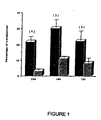
- results presented in Table 1 and Figure 3 show that the percentage and total number of transduced clonogenic progenitors were significantly increased (p ⁇ 0.05) using a 48-hour transduction protocol. No difference was observed using a 72-hour transduction protocol, except that the total number of transduced CFU-GM was increased due to an in vitro expansion of these progenitors (see Figure 3 ). Under these infection conditions, the percentage and total number of transduced LTC-IC remained unchanged.
- the Env glycoproteins are responsible for fusion of virus and host cell receptor on the target cell and for fusion of virus and host cell membrane to mediate internalization of the virus.
- our objective was to establish whether there were significant differences in the transduction efficiencies using retroviral vectors pseudotyped with GALV envelope in comparison to an analogous amphotropic vector. Therefore, using the 48-hour-optimized protocol described above, CD34 + cells were infected with supernatant derived from the G18 cell line. Transduction efficiency was evaluated not only on colonies derived from short and long-term cultures as above but also directly on CD34 + cells. FACS analysis on CD34 + cells after double staining with FDG and CD34-PE MoAb shows 53 ⁇ 8 % of transduction (Table 2).
- Transduction efficiency on hematopoietic progenitors shows that b-galactosidase activity was detected in 83 ⁇ 7% of clonogenic progenitors and in 63 ⁇ 4% of LTC-IC-derived colonies (Table 2).
- the total number of CFC and LTC-IC infected with G18 supernatant remained unchanged comparatively to mock-infected progenitors (not shown).
- PCR analysis of individual colonies shows integration of the nls-LacZ gene in 98/102 of clonogenic progenitors and 39/40 LTC-IC derived colonies (Table 3).
- CB represents an easily available source of HSC and has the capacity to reconstitute the lympho-hematopoietic system of children as well as of adult recipients after myeloablative therapy (Gluckman et al., 1989). Furthermore, CB cells exhibit in response to various combinations of hematopoietic growth factors high proliferative capacities leading within few weeks to large expansion of cells (Mayani and Lansdorp, 1995). For these reasons, CB has considerable interest as a source of HSC for clinical use (Moritz et al., 1993). The aim of our study was to improve retroviral transduction of CB progenitors under conditions that are suitable for clinical applications meaning a transduction system that do not use direct cocultivation or stromal supportive-cells.
- Example 2 Gene delivery to dendritic cells .
- DC Dendritic cells
- APC antigen-presenting cells
- CB peripheral blood or cord blood
- transduced DC will constitutively express a cDNA encoding an immunogenic antigen that, after endogeneous processing, will generate multiple peptide fragments, some of which are capable of being associated with MHC class I molecules could serve as cytotoxic T cell (CTL) epitopes.
- CTL cytotoxic T cell
- transduction of DC would have several advantages such as a longer term antigen presentation, an induction of immunity in a MHC class I context leading to a specific CTL immune response without knowing immunodominant epitopes and the presentation of tumor or viral-associated antigens in a context of additional immunostimulatory signals not usually provided by most tumor or viral-infected cells.
- Introducing genes into DC can be realized either directly into mature DC or into CD34 + cells that will further differentiate into transduced DC.
- CD34 + cells were infected either by amphotropic or by gibbon ape leukemia virus (GALV)-pseudotyped retroviral vectors, both of them carrying an easily detectable reporter gene. Then, the effects of various cytokines on the proliferation and differentiation of transduced CD34 + into DC as well as their transgene expression were studied. The immunophenotypic and functional properties of transduced CD34 + -derived DC were compared to non-transduced DC. In addition, by using a semi-solid methylcellulose assay that reveals dendritic progenitors, we have also studied the transduction efficiency into clonogenic dendritic progenitors.
- GALV gibbon ape leukemia virus
- the CRIP packaging cell line producing recombinant retroviruses, with amphotropic host range, carrying the murine CD2 (mCD2) cDNA has been kindly provided by J.M. Heard (CNRS URA 1157, Institut Pasteur, France).
- mCD2 murine CD2
- cells transduced with MFG-mCD2 retroviral vectors expressed the mCD2 cell surface antigen that is easily detectable by flow cytometry (Champseix et al., 1996).
- the NIH-3T3 murine fibroblast cell line was used as negative control.
- CB cells were collected and CD34 cells isolated as described in Example A1.
- CD34 + cells (10 5 cells/ml) were infected for 48-hours under similar culture conditions with viral supernatant harvested from either G18 or MFG-mCD2 cells using the optimized protocol of example A that combined cell centrifugation in the presence of 8 ⁇ g/ml protamine sulfate followed by adhesion on wells precoated with 50 ⁇ g/cm2 fibronectin fragments (CH 296-FN, Takara Shuzo Ldt, Shiga, Japan).
- CD34 + cells were mock-infected with either T-MOSALF or NIH-3T3 cell supernatants under the same conditions. Eighteen to twenty four hours after infection, cells were counted, stained in order to determine the percentage of transduction and then selected or not by cell sorting before being cultured for further studies.
- FDG + fluorescein di-beta galactopyranosidase
- mCD2 + transduced CD34 + cells were seeded at 2 x 10 4 cells/ml into 24-well plates (Costar) at 37°C under various culture conditions in order to generate DC.
- transduced and non transduced CD34 + cells were cultured in RPMI containing 10% FCS, 1% glutamine, 1% antibiotics, 20 ng/ml granulocyte-macrophage colony-stimulating factor (GM-CSF, Schering Plough, Levallois-Perret, France), 50ng/ml SCF, 50 ng/ml IL-4 (Genzyme) with or without 50U/ml tumor necrosis factor (TNF-a, Genzyme, specific activity 1.6 x 10 8 U/mg) and with or without 50 or 300 ng/ml FL. Culture media were changed at day 5 and day 8 of culture. After 12 day-culture, cells were counted, morphologically characterized, assessed for their transgenic expression, immunophenotyped and tested for their ability to stimulate allogeneic T lymphocytes.
- GM-CSF granulocyte-macrophage colony-stimulating factor
- TNF-a tumor necrosis factor
- TNF-a tumor nec
- CFU-G granulocyte
- CFU-M macrophage
- CFU-GM granulocyte-macrophage
- Retroviral transduction efficiency was assessed both directly on CD34 + cells 24 hours after the transduction protocol and on CD1a + cells after 12 days of liquid culture.
- CD34 + cells or CD1a + cells were double stained with a FITC-conjugated rat antimurine CD2 mAb (Pharmingen, San Diego, CA, USA) and a PE-Cy5-conjugated CD34 mAb or a PE-conjugated CD1a mAb (both from Coultronics), respectively.
- FITC-conjugated rat antimurine CD2 mAb Pharmingen, San Diego, CA, USA
- PE-Cy5-conjugated CD34 mAb or a PE-conjugated CD1a mAb both from Coultronics
- CD34 + or CD1a + cells were first stained with a PE-Cy5-conjugated CD34 mAb or a PE-conjugated CD1a mAb using a one-step direct immunofluorescent procedure and then detection of the nuclear ⁇ -gal activity was performed using FDG substrate as described in example A.
- infected and mock-infected cells T-MOSALF cell supernatant
- T-MOSALF cell supernatant infected and mock-infected cells
- the percentage of transduced cells was determined by flow-cytometric analysis. Then, transduced (mCD2 + or FDG + cells) and non-transduced cells (mCD2 - or FDG - cells) were sorted for further studies.
- Cells were cytospun at 300 X g onto glass slides for 5 minutes, fixed in 1ml PBS containing 1% glutaraldehyde, 0.2% formaldehyde and 0.02% NP40 for 5 minutes, washed twice in PBS and detection of ⁇ -gal activity was performed as described above. Then, cells were rinced and saturated with Tris-buffered saline (TBS) containing 0.5% BSA, 0.5% AB serum, 0.02% NP40. After addition of 0.3% H 2 O 2 for 2 minutes, cells were rinced again in TBS and incubated in a dark humidified chamber with a CD1a mAb (DAKO, Glostrup, Denmark) for 2 hours at 20°C.
- TBS Tris-buffered saline
- DAKO peroxidase-labeled antimouse antibodies
- PCR Semiquantitative PCR was performed on sorted and non-sorted CD1a + transduced cells as follows: serial dilutions from cell DNA and from purified plasmid DNA containing the nls-LacZ insert (pMFG nls-LacZ) were amplified by PCR. Then, PCR products were run in a 2% agarose gel and stained with ethidium bromide. The number of copies per cell was determined by comparing the different band intensities.
- the following murine antihuman mAbs directly conjugated either to fluorescein isothiocyanate (FITC) or to phycoerythrin (PE) were used: CD1a-FITC (Ortho Diagnostic, Raritan, NJ, USA); CD1a-PE, CD14-FITC and CD83-PE (Coultronics); CD54-PE, CD80-PE and HLA-DR-PE (Becton Dickinson, Mountain View, CA, USA); CD40-FITC and CD86-PE (Pharmingen). Negative controls were irrelevant isotype-matched mAbs. After 12 days of culture, cells were double stained with both FITC-conjugated and PE-conjugated mAbs.
- FITC fluorescein isothiocyanate
- PE phycoerythrin
- MLR was performed to test the stimulatory function of transduced DC for allogeneic quiescent T cells comparatively to non-transduced DC after 12 days of culture. MLR were carried out either after selection by cell sorting of FDG + or mCD2 + transduced CD1a + cells or using the bulk infected population. Briefly, allogeneic T cells, obtained from normal donor peripheral blood, were isolated by E-rosetting of PBMC with 2-aminoethylisothiouroniumbromid (AET, Sigma)-treated sheep red blood cells and recovered from the pellet after lysis with NH4 + Cl - buffer (pH 7,2).
- AET 2-aminoethylisothiouroniumbromid
- Irradiated (30 Gys) DC were added in graded doses (E:T ratio varying from 1:10 to 1:10000) to triplicate wells, each containing 10 5 allogeneic T cells in round-bottomed 96-well tissue culture plates.
- Cells were maintained in 200 ⁇ l of RPMI containing 10% human serum at 37°C for 5 days and then pulsed with 1 ⁇ Ci [ 3 H]-thymidine ([ 3 H]-TdR) for 16 h.
- [ 3 H]-TdR incorporation into DNA was measured using a beta counter.
- PHA-stimulated T lymphocytes or T lymphocytes alone were used as positive and negative controls, respectively. Results are expressed as mean counts per minute (mean cpm) ⁇ standard deviation.
- Results are expressed as the mean ⁇ SEM of (n) experiments. Statistical analyses were performed using a paired Student t-test unless specified as unpaired t-test. Statistical significance was taken at the 5% level (p ⁇ 0.05).
- CD34 + cells were retrovirally infected with either amphotropic MFG-mCD2 vector or with nls-LacZ GALV-pseudotyped vector using a very efficient 48-hour-transduction protocol (see material and methods). Eighteen to 24 hours after infection, the percentage of total cells and/or CD34 + cells expressing the transgenes was determined by flow cytometry after staining of the cells either with mCD2-FITC and CD34-PE-Cy5 mAbs or with FDG substrate and CD34-PE-Cy5 mAbs, respectively. After infection, 87 ⁇ 4% of the cells were still CD34 + .
- DC can be generated from CD34 + cells using GM-CSF, TNF-a, IL-4, SCF and more recently transforming growth factor (TGF)- ⁇ and FL (Caux et al., 1992).
- TGF transforming growth factor
- transduced mCD2 + CD34 + cells were sorted after infection and cultured in the presence of GM-CSF + IL4 + SCF ⁇ FL (at 50 or 300 ng/ml) and ⁇ TNF-a for 12 days.
- transduced CD34 + cells selected by cell sorting on the basis of their ⁇ -gal activity were then cultured under our optimized conditions for 12 days.
- CD34 + cells infected with G18 supernatants, were directly cultured without selection (Table 6B, see total infected CD34 + cells).
- Table 6B see total infected CD34 + cells.
- the percentage of transduced CD1a + cells remained in the same range (73.5 ⁇ 5% of CD1a + ⁇ -gal + cells), but the percentage of total ⁇ -gal + cells (52.5 ⁇ 3%) was significantly lower (p ⁇ 0.05).
- CD1a + cells derived from retrovirally infected CD34 + cells can be transduced and have integrated at least 2 proviral copies per cell, 2 x 10 4 CD34 + cells giving rise to an average number of 5 x 10 5 transduced CD1a + DC cells.
- Transduced CD34 + -derived DC display normal immunophenotype and have normal capacity to stimulate the proliferation of allogenic T lymphocytes
- allogeneic MLR assays were performed with transduced (mCD2 + or ⁇ -gal + ), non transduced or mock-infected CD1a + cells. Because cell populations are heterogeneous after 12 days of liquid cultures, cell sorting was applied to purify transduced CD1a + mCD2 + or ⁇ -gal + DC and nontransduced or mock-infected CD1a + cells prior to being assayed in graded doses as stimulatory APC for resting allogeneic T-lymphocytes.
- DC derived from CD34 + cells genetically modified by either a gene coding for a murine cell surface marker or by a gene coding for ⁇ -gal activity with nuclear localization remained immunophenotypically and functionally similar to DC derived from non-transduced or mock-infected CD34 + cells.
- CFU-DC Pure dendritic colonies
- CFU-GM/DC mixed myeloid/dendritic colonies
- CFU-GM myeloid colonies
- the two retroviral MFG-derived vectors were a classical amphotropic vector containing a gene coding for the cell surface marker mCD2 and a GALV-pseudotyped vector containing the nls-LacZ gene coding for the ⁇ -gal enzyme activity with nuclear localization.
- the total number of CD1a + cells remained unchanged while the percentage of CD1a + cells increased due to the disappearance of other cell types. Furthermore, costimulatory molecules such as CD80 and CD86 as well as CD54 were upregulated. Overall, it turned out that TNF-a induced the differentiation and maturation of DC, while FL increased their total number by -3 fold as already reported.
- the growth factor combination including GM-CSF, IL-4, SCF, FL at 50 ng/ml and TNF-a allows to generate from 2 x 10 4 CD34 + cells an average number of 6.4 x 10 5 CD1a + cells within 12 days.
- One difficulty in view of retroviral-mediated gene therapy applications is the maintenance of an efficient expression level of the transgene during the differentiation of transduced hematopoietic progenitors. Persistent expression is dependent on i) the retroviral constructions; ii) the functional properties of the promoters into both transduced hematopoietic stem cells and their differentiated cell products; iii) the high number of integrated proviral copies into progenitors leading to better chance of maintaining transgene expression throughout the cell differentiation. Therefore, we have studied transgene expression during the dendritic differentiation of sorted transduced CD34 + cells.
- transduced DC a -25 fold expansion of transduced DC could be obtained from total infected CB CD34 + cells.
- transduction levels can be explained both by almost 100% infection of CD34 + cells and by the relatively large number of nls-LacZ gene copies per cell detected by PCR and that can be expressed under our culture conditions.
- Example 3 Gene delivery to T lymphocytes .
- the delivery method as described above was used to transfer nucleic acids into mature T lymphocytes.
- Mature CD4+ T lymphocytes were isolated according to known techniques and cultured 3 to 6 days in RPMI medium containing 10% bovine serum albumin, in the presence of OKT3 (5 ⁇ g/ml) and IL-2 (600 U/ml). Transduction was performed according to the centrifugation protocol of Example A with supernatant of GALV-pseudotyped retroviruses and 5x10⁵ cells/ml. The cells were centrifuged three times in 24 hours (2 hours at 2400g) at 8, 13 and 20 hours post culture (representing 3 infection cycles). Cells were suspended in fresh medium and transduction efficiency was determined as described in examples A and B.
- Example 4 Construction of a retroviral vector comprising bicistronic unit composed of a transgene and a membrane marker gene.
- This example discloses the construction of a retroviral vector comprising a bicistronic unit comprising, operably linked by an IRES (Internal Ribosome Entry Site) sequence:
- the bicistronic unit is placed under the control of a retroviral promoter (the 5' LTR sequence), although any other promoter can be used.
- a retroviral promoter the 5' LTR sequence
- Plasmid pKM4 was constructed by conventional recombinant DNA techniques and comprises the following operably linked elements:
- bicistronic unit comprises a chimeric marker DNA comprising a tag inserted linked to Thy-1 or a variant thereof.
- a first chimeric marker DNA comprises a nucleotide sequence encoding the following domains: (i) the Thy-1 signal peptide (residues - 19 to -1), (ii) the c-myc tag and (iii) the Thy-1 protein (residues +1 to +142) (see Figure 6 ).
- a second chimeric marker DNA comprises a nucleotide sequence encoding the following domains: (i) the Thy-1 signal peptide (residues -19 to -1), (ii) the c-myc tag and (iii) the Thy-1 GPI anchoring domain (residues +123 to +142) (see Figure 6 ).
- Plasmid pKM4 (see Example D1 above) and the derivatives thereof comprising chimeric marker DNAs are transfected in retroviral packaging cells (see Example A1), in particular in the TE-FLY cells, and the retroviruses produced or the supernatants are recovered.
- the structure of the genome of the recombinant retroviruses is represented on Figure 6 .
- T lymphocytes were prestimulated during 3 days in the presence of OKT3 coated monoclonal antibodies (Orthoclone, Jansen-Cilag) and recombinant human IL-2 (Chiron). Then, the cells were infected with supernatant harvested from TE-FLY-Thy1/1RES/TK packaging cells that produce retroviral particles containing the Thy-1 and TK genes. Infection was performed by centrifugation of 2 x 10 5 cells/ml of retroviral supernatant at 2400 g during 2 hours, this procedure being repeated three times the same day. Control (mock infection) was performed by manipulating the cells under the same conditions as above using supernatant from TE-FLY parental cells.
- the results obtained show efficient delivery of the bicistronic unit to the T lymphocytes, which express the Thy-1 molecule at their surface. This confirms the biological activity of the bicistronic unit and the efficacy of the present method. Furthermore, in the mock infected cells, expression of Thy-1 was very low (i.e., background signal of 1.2%) which further confirm the operability of thy-1 as a marker gene. As indicated above, the Thy-1 molecule can be used to select the cell population that indeed contain and express the transgene, as well as to detect the cells upon in vivo administration.
- T-cells were isolated from mononuclear cells by negative selection affinity columns (R&D systems, Minneapolis, MN). Cultures of T-cells were performed using clinical grade reagents. Briefly, cells were plated onto 6-well tissue culture plates (Costar, Cambridge, MA) previously coated with anti-CD3 mAb (OKT3 clone, Orthoclone, Jansen-Cilag, Paris, France) at a final concentration of 5 ⁇ g/ml.
- anti-CD3 mAb OKT3 clone, Orthoclone, Jansen-Cilag, Paris, France
- cells were grown at 10 6 cells/ml in RPMI 1640 medium (GIBCO BRL), Grand Island, NY) supplemented with 2 mM L-Glutamine, 100 U/ml penicillin, 100 ⁇ g/ml streptomycin and 10% heat-inactivated pooled human AB serum (hABS), supplemented with 600 U/ml IL-2 (Chiron Corporation, Emeryville, CA) for 3 or 5 days until retroviral infection. The day prior the transduction protocol, medium change was performed and activated T-cells were split.
- TE-FLY GA18 and TE-FLY MOSALF packaging cells containing the Escherichia Coli ⁇ -galactosidase ( ⁇ -gal) gene, described elsewhere (Movassagh M. et al, (1998); (Movassagh, M. et al (1999), were used. Cells were transduced by centrifugation with fresh retroviral supernatant containing 600 U/ml IL-2 and 4 ⁇ g/ml protamine sulfate at 2400 x g for 2 h at 30°C. The transduction process was repeated 3 times over a 24 hour-period.
- Retroviral transduction efficiency was assessed by FDG and X-gal staining (Movassagh M. et al, (1998); (Movassagh, M. et al (1999) on T-cells harvested from suspension cultures 48-hours after the transduction protocol and at different periods of time until 8 week.
- T lymphocyte subsets were generated by DNA staining with propidium iodide using Coulter Reagents Kit (Coultronics, Margency, France). The percentage of T-cells in the different phases of the cell cycle was analyzed using a Multicycle AV software (Phoenix Flow Systems Inc, Seattle, WA).
- cell cycle was studied by flow cytometry after propidium iodide (PI) staining using Coulter Reagents Kit (Coultronics) that contains reagents for cell lysis and permeabilization (DNA-Prep LPR) and reagents for DNA staining with propidium iodide (DNA-Prep Stain). Briefly, 5 x 10 5 T-cells were washed after activation in 2 ml PBS, resuspended in DNA-Prep LPR reagent. Then, DNA-Prep stain reagent was added and the cells were incubated in the dark at room temperature for 1 hour.
- PI propidium iodide
- Cell cycle analysis was performed on an EPICS Elite cytometer (Coultronics) on the basis of light scatter properties and fluorescence intensity. Doublets were excluded by plotting peak fluorescence versus integral fluorescence of PI. At least 30,000 events were analyzed at low speed (100 events/second) and collected on listmode files.
- T-cell proliferation was assessed every 24 hours from day 1 to day 8 by tritiated thymidine ( 3 H-Tdr) incorporation.
- T-cells were pulsed with 3 H-Tdr (Amersham, Buckinghamshire, UK; specific activity; 25 Ci/mmol, 1 Mci/ml) for 16 hours and 3 H-Tdr incorporation was measured using a ⁇ -counter.
- FDG staining cells after staining either with anti-CD4-PE, CD8-PE or CD3-PE mAbs were counted and brought to 10 7 per ml in RPMI containing 2% (vol/vol) FCS, 10 mM Hepes (pH 7.3) and 100 ⁇ l of 2 mM FDG in H20, prewarmed to 37°C and were added to a 100 ⁇ l solution of cells. The cells were mixed gently but thoroughly and rapidly placed back into a 37°C water bath for 10 minutes. Then the cells were placed on ice and 1,800 ⁇ l of ice-chilled isotonic incubation medium were added. After 25 minutes, the reaction was stopped by the addition of 1 mM phenylethyl ⁇ thiogalactoside (PETG, Sigma). The cells were analyzed by flow-cytometry, 30,000 events being collected in listmode files.
- PETG phenylethyl ⁇ thiogalactoside
- X-gal staining cells were fixed in 1 ml PBS containing 1 % glutaraldehyde, 02% formaldehyde for 5 minutes, washed twice in phosphate buffer and then stained for 12 hours at 37°C with 1 ml of X-gal staining solution containing 5 mM ferricyanin, 5 mM ferrocyanine, 2 mM MgCl 2 and 1 mg/ml 5-bromo-4-chloro-3-indoyl- ⁇ -D- galactopyranoside as described by Movassagh et al (1998). Only nuclear staining was scored positive.
- T-cell activation kinetics of cycling and proliferation
- CD4/CD8 ratio was reversed after 4 days ( Fig. 11 ).
- CD8 + cells are triggered into S-phase earlier than CD4 + cells leading to an inversion of the CD4/CD8 ratio in the total T-cell population.
- the transduction protocol optimized for CD4 + T-cells was then evaluated to determine whether it could also be efficient for CD8 + and total T-cells. For this, total T-cells were activated during either 3 (total T d3 ) or 5 (total T d5 ) days - in order to evaluate to what extent the timing of activation might bias the transduction of one or the other T-cells subsets -while CD8 + T-cells and CD4 + T-cells were activated during 3 or 5 days, respectively.
- T-cells were expanded in liquid cultures and the percentage of transduced cells was monitored up to 8 weeks. More than 94% of CD4 + , CD8 + , total T d3 and total T d5 cells were transduced ( Fig. 14 ). In most cases, ⁇ -gal transgene expression was maintained over 90% during the first 4 weeks. Thereafter, transgene expression progressively decreased in some T-cell cultures. Immunophenotyping of total T-cell cultures indicated that the CD4/CD8 ratio was reversed since day 5 and then remained stable at 0.35-.0.65 ( Fig.12 ).
- hematopoietic progenitors and dendritic cells can be transduced at very high levels by using GALV-pseudotyped vectors and a transduction protocol combining cell centrifugation and FN, as demonstrated above.
- the infection protocol was shortened to 24 hours by using GALV-pseudotyped vectors and cell centrifugation only, as demonstrated above.
- human T-cells express higher levels of GLVR-1 mRNA than GLVR-2 mRNA, coding for the GALV and amphotropic envelope receptors, respectively.
- both mRNA are upregulated following growth in IL-2 and anti-CD3 stimulation (Lame et al. (1996)).
- CD8 + T-cells are more susceptible to clonal expressions in vivo than CD4 + T-cells
- in vitro inversion of the CD4/CD8 ratio may represent an additional factor contributing to T-cell repertoire alterations (Wack et al (1998)).
- the functional consequences of CD4/CD8 imbalance and repertoire restriction on in vivo immune responses are unknown at present. Nevertheless, such findings strongly support the need for shortening the duration of in vitro T-cell expansion prior to reinfusion in order to preserve the overall quality of the T-cell repertoire to be reinfused.
- T-cells were isolated from mononuclear cells by negative selection affinity columns (R&D Systems). T-cells plated onto tissue culture plates previously coated with anti-CD3 monoclonal antibody at 5 ⁇ g/ml were grown in RPMI 1640 medium supplemented with 10% heat inactivated pooled human AB serum and 600 units/ml interleukin2 for 5 days. Thereafter, T-cells were retrovirally transduced using supernatant for TE-FLYGA16 packaging cells. These cells produce 10 6 virions/ml containing Thy-1 (CD90) gene. Cells were transduced by centrifugation in the presence of interleukin2 and protamine sulfate as described above.
- CD3 + transduced T-cells 48 hours after retroviral infection, the percentage of CD3 + transduced T-cells was analyzed by flow-cytometry after staining of the cells with anti-CD3 and anti-Thy-1 (CD90) monoclonal by antibodies labeled to FITC and phycoerytrin, respectively.
Landscapes
- Health & Medical Sciences (AREA)
- Life Sciences & Earth Sciences (AREA)
- Chemical & Material Sciences (AREA)
- Genetics & Genomics (AREA)
- Organic Chemistry (AREA)
- Engineering & Computer Science (AREA)
- Zoology (AREA)
- General Health & Medical Sciences (AREA)
- Bioinformatics & Cheminformatics (AREA)
- Biotechnology (AREA)
- Molecular Biology (AREA)
- Wood Science & Technology (AREA)
- Medicinal Chemistry (AREA)
- Biochemistry (AREA)
- Biophysics (AREA)
- General Engineering & Computer Science (AREA)
- Biomedical Technology (AREA)
- Immunology (AREA)
- Virology (AREA)
- Gastroenterology & Hepatology (AREA)
- Proteomics, Peptides & Aminoacids (AREA)
- Microbiology (AREA)
- Pharmacology & Pharmacy (AREA)
- Toxicology (AREA)
- Cell Biology (AREA)
- Veterinary Medicine (AREA)
- Public Health (AREA)
- Animal Behavior & Ethology (AREA)
- Epidemiology (AREA)
- Physics & Mathematics (AREA)
- Plant Pathology (AREA)
- Micro-Organisms Or Cultivation Processes Thereof (AREA)
- Medicines Containing Material From Animals Or Micro-Organisms (AREA)
- Medicines That Contain Protein Lipid Enzymes And Other Medicines (AREA)
- Pharmaceuticals Containing Other Organic And Inorganic Compounds (AREA)
Claims (11)
- Ein Verfahren zur Zufuhr einer Nukleinsäure in vitro oder ex vivo an hämatopoetische Zellen, wobei das Verfahren die folgenden Schritte umfasst:a) Bereitstellen einer Population hämatopoetischer Zellen,b) In Kontakt bringen dieser Population hämatopoetischer Zellen mit einem defekten rekombinanten Retrovirus, wobei der Retrovirus:- mit einer GALV Hülle pseudotypisiert ist, und- diese Nukleinsäure umfasst,c) Unterziehen der Zellpopulation eines Zentrifugationsschritts; undd) Sammeln der Zellpopulation, die im Schritt c) erhalten wird,wobei der Retrovirus ferner umfasst:- eine Marker Nukleinsäure, die für ein Membran-Polypeptid kodiert, umfassend eine extrazelluläre Domäne, die in oder auf der Membran verankert ist, der aber eine intracytoplasmatische Domäne fehlt;- eine bicistronische Einheit umfassend die Nukleinsäure und die Marker Nukleinsäure, die durch eine IRES Sequenz funktionell verknüpft sind;und wobei das defekte rekombinante Retrovirus in einer Verpackungszelllinie hergestellt wird, die eine trunkierte retrovirale pol DNA umfasst.
- Das Verfahren nach 1, wobei die Zellpopulation in c) einem Zentrifugationsschritt und einem Fibronektin Adhäsionsschritt unterzogen wird.
- Das Verfahren nach 1 oder 2, wobei die Zellpopulation zwischen c) und d) nochmals mit einem defekten rekombinanten Retrovirus wie in Schritt b) definiert, in Kontakt gebracht wird.
- Das Verfahren nach 1, wobei dieses Membran Polypeptid das humane Thy-1 ist.
- Das Verfahren nach 1 oder 4, wobei das Membran Polypeptid einen Tag umfasst.
- Das Verfahren nach 1, wobei die Zentrifugation in Gegenwart eines Polykations, zum Beispiel Polybren oder Protaminsulfat durchgeführt wird.
- Das Verfahren nach 1 oder 6, wobei die Zentrifugation zwischen 100 bis 3000 g durchgefiihrt wird.
- Das Verfahren nach 2, wobei der Fibronektin Adhäsionsschritt durch Inkubieren der Zellpopulation auf einem Träger, der mit humanem Fibronektin oder Fragmenten davon beschichtet ist, durchgeführt wird.
- Das Verfahren nach 1, wobei die hämatopoetischen Zellen unreife hämatopoetische Zellen sind.
- Das Verfahren nach 1, wobei diese hämatopoetischen Zellen ausgewählt sind aus T-Lymphozyten, B-Lymphozyten, Monozyten und dendritischen Zellen.
- Das Verfahren nach 9, wobei diese hämatopoetischen Zellen nach Schritt d) weiter zu dendritischen Zellen differenziert werden.
Applications Claiming Priority (2)
| Application Number | Priority Date | Filing Date | Title |
|---|---|---|---|
| US11328098A | 1998-07-10 | 1998-07-10 | |
| US113280 | 1998-07-10 |
Publications (3)
| Publication Number | Publication Date |
|---|---|
| EP0995802A2 EP0995802A2 (de) | 2000-04-26 |
| EP0995802A3 EP0995802A3 (de) | 2001-01-10 |
| EP0995802B1 true EP0995802B1 (de) | 2009-12-23 |
Family
ID=22348556
Family Applications (1)
| Application Number | Title | Priority Date | Filing Date |
|---|---|---|---|
| EP99401687A Expired - Lifetime EP0995802B1 (de) | 1998-07-10 | 1999-07-06 | Verfahren zur Verabreichng von Nukleinsäuren in Zellen in vitro oder ex vivo |
Country Status (4)
| Country | Link |
|---|---|
| EP (1) | EP0995802B1 (de) |
| JP (1) | JP2000139478A (de) |
| AT (1) | ATE452982T1 (de) |
| DE (1) | DE69941836D1 (de) |
Cited By (1)
| Publication number | Priority date | Publication date | Assignee | Title |
|---|---|---|---|---|
| EP3757206B1 (de) * | 2014-11-05 | 2024-04-10 | Juno Therapeutics, Inc. | Verfahren zur transduktion und zellverarbeitung |
Families Citing this family (2)
| Publication number | Priority date | Publication date | Assignee | Title |
|---|---|---|---|---|
| US9493789B2 (en) * | 2014-04-24 | 2016-11-15 | Miltenyi Biotec Gmbh | Automated generation of genetically modified stem cells |
| EP4342978A3 (de) * | 2016-09-01 | 2024-07-03 | Chimera Bioengineering Inc. | Goldoptimierte car-t-zellen |
Family Cites Families (4)
| Publication number | Priority date | Publication date | Assignee | Title |
|---|---|---|---|---|
| US5017492A (en) * | 1986-02-27 | 1991-05-21 | Life Technologies, Inc. | Reverse transcriptase and method for its production |
| WO1997014809A2 (en) * | 1995-10-16 | 1997-04-24 | Dana-Farber Cancer Institute | Novel expression vectors and methods of use |
| WO1997042338A1 (en) * | 1996-05-06 | 1997-11-13 | Chiron Corporation | Crossless retroviral vectors |
| EP1161549A2 (de) * | 1999-03-15 | 2001-12-12 | Chiron Corporation | Retroviren hellstellende zellen, die viele transduktionen verwenden |
-
1999
- 1999-07-06 AT AT99401687T patent/ATE452982T1/de not_active IP Right Cessation
- 1999-07-06 DE DE69941836T patent/DE69941836D1/de not_active Expired - Lifetime
- 1999-07-06 EP EP99401687A patent/EP0995802B1/de not_active Expired - Lifetime
- 1999-07-12 JP JP11198186A patent/JP2000139478A/ja active Pending
Cited By (1)
| Publication number | Priority date | Publication date | Assignee | Title |
|---|---|---|---|---|
| EP3757206B1 (de) * | 2014-11-05 | 2024-04-10 | Juno Therapeutics, Inc. | Verfahren zur transduktion und zellverarbeitung |
Also Published As
| Publication number | Publication date |
|---|---|
| DE69941836D1 (de) | 2010-02-04 |
| JP2000139478A (ja) | 2000-05-23 |
| EP0995802A2 (de) | 2000-04-26 |
| EP0995802A3 (de) | 2001-01-10 |
| ATE452982T1 (de) | 2010-01-15 |
Similar Documents
| Publication | Publication Date | Title |
|---|---|---|
| Serafini et al. | Characterization of CD20-transduced T lymphocytes as an alternative suicide gene therapy approach for the treatment of graft-versus-host disease | |
| Cavazzana-Calvo et al. | Role of interleukin-2 (IL-2), IL-7, and IL-15 in natural killer cell differentiation from cord blood hematopoietic progenitor cells and from gamma c transduced severe combined immunodeficiency X1 bone marrow cells | |
| US20010007659A1 (en) | Use of lentiviral vectors for antigen presentation in dendritic cells | |
| US5906928A (en) | Efficient gene transfer into primary murine lymphocytes obviating the need for drug selection | |
| US6734014B1 (en) | Methods and compositions for transforming dendritic cells and activating T cells | |
| Chinnasamy et al. | Efficient gene transfer to human peripheral blood monocyte-derived dendritic cells using human immunodeficiency virus type 1-based lentiviral vectors | |
| EP0879281B1 (de) | Verfahren zur transformation dendritischer zellen und aktivierung von t zellen | |
| KR20190046713A (ko) | 별개의 세포 아형 활성의 선택적 조정 방법 | |
| Zhang et al. | Evaluation of γ-retroviral vectors that mediate the inducible expression of IL-12 for clinical application | |
| EP0701604B1 (de) | Immortalisierung von dendritischen zellen mit dem v-myc onkogen | |
| Movassagh et al. | High-level gene transfer to cord blood progenitors using gibbon ape leukemia virus pseudotype retroviral vectors and an improved clinically applicable protocol | |
| WO1996009400A1 (en) | Methods for genetically modifying hematopoietic stem cells | |
| EP1214437A1 (de) | Gebrauch von lentiviralen vektoren zur antigen presentation auf dendritischen zellen | |
| CA2217297A1 (en) | Transplantation of genetically modified cells having low levels of class i mhc proteins on the cell surface | |
| Introna et al. | Rapid retroviral infection of human haemopoietic cells of different lineages: efficient transfer in fresh T cells | |
| EP0995802B1 (de) | Verfahren zur Verabreichng von Nukleinsäuren in Zellen in vitro oder ex vivo | |
| Poznansky et al. | Inhibition of human immunodeficiency virus replication and growth advantage of CD4+ T cells and monocytes derived from CD34+ cells transduced with an intracellular antibody directed against human immunodeficiency virus type 1 Tat | |
| EP0716710B1 (de) | Verfahren zur unterdrückung der immunantwort durch gentherapie | |
| JP2002506980A (ja) | 新規の相補的レセプター−リガンド対およびそれを使用する養子免疫療法 | |
| US6984379B1 (en) | Gene therapy by administration of genetically engineered CD34+ cells obtained from cord blood | |
| EP0904786B1 (de) | Tumorvakzinierung mittels Verwendung autologer oder HLA-verwandter Antigen präsentierender Zellen (APC), die mit einem Tumorantigen sowie einem eine Immunantwort hervorrufenden Fremdantigen transduziert sind | |
| Stockschlader et al. | Expansion and fibronectin-enhanced retroviral transduction of primary human T lymphocytes for adoptive immunotherapy | |
| WO1997012052A1 (en) | Transduction of hematopoietic cells by viral vector and a cationic lipid | |
| Zhang | Novel approaches to identify T cell-recognized tumor antigens and to redirect T cells for adoptive immunotherapy | |
| Radosevich | Herpes virus ICP47 and US11 suppression of CTL activity adapted for use in gene therapy |
Legal Events
| Date | Code | Title | Description |
|---|---|---|---|
| PUAI | Public reference made under article 153(3) epc to a published international application that has entered the european phase |
Free format text: ORIGINAL CODE: 0009012 |
|
| AK | Designated contracting states |
Kind code of ref document: A2 Designated state(s): AT BE CH CY DE DK ES FI FR GB GR IE IT LI LU MC NL PT SE |
|
| AX | Request for extension of the european patent |
Free format text: AL;LT;LV;MK;RO;SI |
|
| PUAL | Search report despatched |
Free format text: ORIGINAL CODE: 0009013 |
|
| AK | Designated contracting states |
Kind code of ref document: A3 Designated state(s): AT BE CH CY DE DK ES FI FR GB GR IE IT LI LU MC NL PT SE |
|
| AX | Request for extension of the european patent |
Free format text: AL;LT;LV;MK;RO;SI |
|
| 17P | Request for examination filed |
Effective date: 20010119 |
|
| AKX | Designation fees paid |
Free format text: AT BE CH CY DE DK ES FI FR GB GR IE IT LI LU MC NL PT SE |
|
| 17Q | First examination report despatched |
Effective date: 20070215 |
|
| GRAP | Despatch of communication of intention to grant a patent |
Free format text: ORIGINAL CODE: EPIDOSNIGR1 |
|
| GRAS | Grant fee paid |
Free format text: ORIGINAL CODE: EPIDOSNIGR3 |
|
| GRAA | (expected) grant |
Free format text: ORIGINAL CODE: 0009210 |
|
| AK | Designated contracting states |
Kind code of ref document: B1 Designated state(s): AT BE CH CY DE DK ES FI FR GB GR IE IT LI LU MC NL PT SE |
|
| REG | Reference to a national code |
Ref country code: GB Ref legal event code: FG4D |
|
| REG | Reference to a national code |
Ref country code: CH Ref legal event code: EP |
|
| REG | Reference to a national code |
Ref country code: IE Ref legal event code: FG4D |
|
| REF | Corresponds to: |
Ref document number: 69941836 Country of ref document: DE Date of ref document: 20100204 Kind code of ref document: P |
|
| REG | Reference to a national code |
Ref country code: NL Ref legal event code: VDEP Effective date: 20091223 |
|
| PG25 | Lapsed in a contracting state [announced via postgrant information from national office to epo] |
Ref country code: SE Free format text: LAPSE BECAUSE OF FAILURE TO SUBMIT A TRANSLATION OF THE DESCRIPTION OR TO PAY THE FEE WITHIN THE PRESCRIBED TIME-LIMIT Effective date: 20091223 Ref country code: FI Free format text: LAPSE BECAUSE OF FAILURE TO SUBMIT A TRANSLATION OF THE DESCRIPTION OR TO PAY THE FEE WITHIN THE PRESCRIBED TIME-LIMIT Effective date: 20091223 |
|
| PG25 | Lapsed in a contracting state [announced via postgrant information from national office to epo] |
Ref country code: AT Free format text: LAPSE BECAUSE OF FAILURE TO SUBMIT A TRANSLATION OF THE DESCRIPTION OR TO PAY THE FEE WITHIN THE PRESCRIBED TIME-LIMIT Effective date: 20091223 |
|
| PG25 | Lapsed in a contracting state [announced via postgrant information from national office to epo] |
Ref country code: PT Free format text: LAPSE BECAUSE OF FAILURE TO SUBMIT A TRANSLATION OF THE DESCRIPTION OR TO PAY THE FEE WITHIN THE PRESCRIBED TIME-LIMIT Effective date: 20100423 Ref country code: NL Free format text: LAPSE BECAUSE OF FAILURE TO SUBMIT A TRANSLATION OF THE DESCRIPTION OR TO PAY THE FEE WITHIN THE PRESCRIBED TIME-LIMIT Effective date: 20091223 Ref country code: ES Free format text: LAPSE BECAUSE OF FAILURE TO SUBMIT A TRANSLATION OF THE DESCRIPTION OR TO PAY THE FEE WITHIN THE PRESCRIBED TIME-LIMIT Effective date: 20100403 |
|
| PG25 | Lapsed in a contracting state [announced via postgrant information from national office to epo] |
Ref country code: BE Free format text: LAPSE BECAUSE OF FAILURE TO SUBMIT A TRANSLATION OF THE DESCRIPTION OR TO PAY THE FEE WITHIN THE PRESCRIBED TIME-LIMIT Effective date: 20091223 |
|
| PG25 | Lapsed in a contracting state [announced via postgrant information from national office to epo] |
Ref country code: GR Free format text: LAPSE BECAUSE OF FAILURE TO SUBMIT A TRANSLATION OF THE DESCRIPTION OR TO PAY THE FEE WITHIN THE PRESCRIBED TIME-LIMIT Effective date: 20100324 Ref country code: CY Free format text: LAPSE BECAUSE OF FAILURE TO SUBMIT A TRANSLATION OF THE DESCRIPTION OR TO PAY THE FEE WITHIN THE PRESCRIBED TIME-LIMIT Effective date: 20091223 |
|
| PLBE | No opposition filed within time limit |
Free format text: ORIGINAL CODE: 0009261 |
|
| STAA | Information on the status of an ep patent application or granted ep patent |
Free format text: STATUS: NO OPPOSITION FILED WITHIN TIME LIMIT |
|
| 26N | No opposition filed |
Effective date: 20100924 |
|
| PG25 | Lapsed in a contracting state [announced via postgrant information from national office to epo] |
Ref country code: DK Free format text: LAPSE BECAUSE OF FAILURE TO SUBMIT A TRANSLATION OF THE DESCRIPTION OR TO PAY THE FEE WITHIN THE PRESCRIBED TIME-LIMIT Effective date: 20091223 |
|
| PG25 | Lapsed in a contracting state [announced via postgrant information from national office to epo] |
Ref country code: MC Free format text: LAPSE BECAUSE OF NON-PAYMENT OF DUE FEES Effective date: 20100731 |
|
| REG | Reference to a national code |
Ref country code: CH Ref legal event code: PL |
|
| PG25 | Lapsed in a contracting state [announced via postgrant information from national office to epo] |
Ref country code: IT Free format text: LAPSE BECAUSE OF FAILURE TO SUBMIT A TRANSLATION OF THE DESCRIPTION OR TO PAY THE FEE WITHIN THE PRESCRIBED TIME-LIMIT Effective date: 20091223 |
|
| PG25 | Lapsed in a contracting state [announced via postgrant information from national office to epo] |
Ref country code: CH Free format text: LAPSE BECAUSE OF NON-PAYMENT OF DUE FEES Effective date: 20100731 Ref country code: LI Free format text: LAPSE BECAUSE OF NON-PAYMENT OF DUE FEES Effective date: 20100731 |
|
| PG25 | Lapsed in a contracting state [announced via postgrant information from national office to epo] |
Ref country code: IE Free format text: LAPSE BECAUSE OF NON-PAYMENT OF DUE FEES Effective date: 20100706 |
|
| PG25 | Lapsed in a contracting state [announced via postgrant information from national office to epo] |
Ref country code: LU Free format text: LAPSE BECAUSE OF NON-PAYMENT OF DUE FEES Effective date: 20100706 |
|
| PGFP | Annual fee paid to national office [announced via postgrant information from national office to epo] |
Ref country code: FR Payment date: 20130731 Year of fee payment: 15 Ref country code: GB Payment date: 20130731 Year of fee payment: 15 |
|
| PGFP | Annual fee paid to national office [announced via postgrant information from national office to epo] |
Ref country code: DE Payment date: 20130930 Year of fee payment: 15 |
|
| REG | Reference to a national code |
Ref country code: DE Ref legal event code: R119 Ref document number: 69941836 Country of ref document: DE |
|
| GBPC | Gb: european patent ceased through non-payment of renewal fee |
Effective date: 20140706 |
|
| REG | Reference to a national code |
Ref country code: FR Ref legal event code: ST Effective date: 20150331 |
|
| PG25 | Lapsed in a contracting state [announced via postgrant information from national office to epo] |
Ref country code: DE Free format text: LAPSE BECAUSE OF NON-PAYMENT OF DUE FEES Effective date: 20150203 |
|
| REG | Reference to a national code |
Ref country code: DE Ref legal event code: R119 Ref document number: 69941836 Country of ref document: DE Effective date: 20150203 |
|
| PG25 | Lapsed in a contracting state [announced via postgrant information from national office to epo] |
Ref country code: GB Free format text: LAPSE BECAUSE OF NON-PAYMENT OF DUE FEES Effective date: 20140706 Ref country code: FR Free format text: LAPSE BECAUSE OF NON-PAYMENT OF DUE FEES Effective date: 20140731 |