EP0996254B1 - Verfahren zur Quantifizierung der Kommunikationsleistung - Google Patents
Verfahren zur Quantifizierung der Kommunikationsleistung Download PDFInfo
- Publication number
- EP0996254B1 EP0996254B1 EP99306850A EP99306850A EP0996254B1 EP 0996254 B1 EP0996254 B1 EP 0996254B1 EP 99306850 A EP99306850 A EP 99306850A EP 99306850 A EP99306850 A EP 99306850A EP 0996254 B1 EP0996254 B1 EP 0996254B1
- Authority
- EP
- European Patent Office
- Prior art keywords
- computer system
- data packet
- time
- stamp
- network
- Prior art date
- Legal status (The legal status is an assumption and is not a legal conclusion. Google has not performed a legal analysis and makes no representation as to the accuracy of the status listed.)
- Expired - Lifetime
Links
Images




Classifications
-
- H—ELECTRICITY
- H04—ELECTRIC COMMUNICATION TECHNIQUE
- H04L—TRANSMISSION OF DIGITAL INFORMATION, e.g. TELEGRAPHIC COMMUNICATION
- H04L41/00—Arrangements for maintenance, administration or management of data switching networks, e.g. of packet switching networks
-
- H—ELECTRICITY
- H04—ELECTRIC COMMUNICATION TECHNIQUE
- H04L—TRANSMISSION OF DIGITAL INFORMATION, e.g. TELEGRAPHIC COMMUNICATION
- H04L43/00—Arrangements for monitoring or testing data switching networks
-
- H—ELECTRICITY
- H04—ELECTRIC COMMUNICATION TECHNIQUE
- H04L—TRANSMISSION OF DIGITAL INFORMATION, e.g. TELEGRAPHIC COMMUNICATION
- H04L43/00—Arrangements for monitoring or testing data switching networks
- H04L43/08—Monitoring or testing based on specific metrics, e.g. QoS, energy consumption or environmental parameters
- H04L43/0852—Delays
-
- H—ELECTRICITY
- H04—ELECTRIC COMMUNICATION TECHNIQUE
- H04L—TRANSMISSION OF DIGITAL INFORMATION, e.g. TELEGRAPHIC COMMUNICATION
- H04L43/00—Arrangements for monitoring or testing data switching networks
- H04L43/08—Monitoring or testing based on specific metrics, e.g. QoS, energy consumption or environmental parameters
- H04L43/0852—Delays
- H04L43/0864—Round trip delays
-
- H—ELECTRICITY
- H04—ELECTRIC COMMUNICATION TECHNIQUE
- H04L—TRANSMISSION OF DIGITAL INFORMATION, e.g. TELEGRAPHIC COMMUNICATION
- H04L43/00—Arrangements for monitoring or testing data switching networks
- H04L43/10—Active monitoring, e.g. heartbeat, ping or trace-route
- H04L43/106—Active monitoring, e.g. heartbeat, ping or trace-route using time related information in packets, e.g. by adding timestamps
-
- H—ELECTRICITY
- H04—ELECTRIC COMMUNICATION TECHNIQUE
- H04L—TRANSMISSION OF DIGITAL INFORMATION, e.g. TELEGRAPHIC COMMUNICATION
- H04L43/00—Arrangements for monitoring or testing data switching networks
- H04L43/12—Network monitoring probes
Definitions
- the present invention relates to the field of computer system communication networks.
- the present invention pertains to network monitoring and management.
- Disclosed in this application are network performance statistics using end-node computer systems.
- Computer systems linked to each other in a communication network are commonly used in businesses and like organizations.
- Computer system communication networks (“networks") are growing in size - as measured by the number of applications and the number of users they support - due to improvements in network reliability and the recognition of associated benefits such as increased productivity.
- RMON Remote Network Monitoring
- RMON and RMON2 thus are network management software tools that provide a set of standards for network management and control, including a standard protocol, a specification for database structure, and a set of data objects.
- RMON and RMON2 are implemented in a network through management information bases (MIBs) which contain instructions specifying the data that are to be collected, how the data are to be identified, and other information pertinent to the purpose of network monitoring.
- MIBs are implemented through the RMON probes to monitor the local areas of the network.
- Network managers use the RMON and RMON2 MIBs using SNMP to collect information regarding the performance of the network. By collecting information about network performance and analyzing it, the network manager is able to recognize situations indicating that either a problem is present or impending.
- the network manager (or any of the network users, for that matter) may be interested in obtaining performance statistics such as the average and worst-case performance times and the reliability of the network for a particular application.
- performance statistics such as the average and worst-case performance times and the reliability of the network for a particular application.
- Such applications generally describe a transaction between a user that is accessing the network through a client computer system and a server computer system that responds to the client computer system with the requested information.
- Network managers need performance statistics to help them manage and maintain the network and to plan for network improvements. For example, performance statistics can be used to recognize bottlenecks in the network before they cause problems so that corrective action can be taken. If the performance statistics indicate a growing load in one area of the network, network traffic (in the form of data packets that travel through the network's communication equipment) can be routed along a different path. Statistics accumulated over a longer period of time can be used to help decide whether it is necessary to expand particular areas of the network.
- Performance statistics are also necessary for businesses and the like to determine whether the network support provided by a vendor of network management services is satisfactory or not.
- Many businesses contract with vendors for network management services. Such contracts are typically implemented with service level agreements (SLAs) which specify metrics against which the provider of the network management services is measured. These metrics are used to quantify standards of performance that allow businesses to assess not only the performance of the network but also the performance of the network management services provider.
- SLAs generally include a provision specifying metrics for performance time for critical applications, where performance time, for example, is considered to be the amount of time between the time a user submits a request via the network and the time until the response to that request is received by the user.
- An effective network management tool should therefore provide a means for monitoring the network and gathering performance statistics for comparison against the requirements contained in the SLAs.
- the network management tools in the prior art do not provide a ready means of demonstrating compliance with SLAs.
- Prior art network management tools have trouble aiding the network manager in determining whether a problem within the network is associated with the network or with the system hardware supporting the network, so that the network manager can identify and implement the appropriate corrective action. For example, if a user places a request for a particular application to a server computer and a response is not received, the prior art network management tools do not generally identify whether the problem is occurring because of a bottleneck in the network or because the server is not functioning. Therefore, as will be seen in the discussion to follow, the network management tools in the prior art do not provide a ready means of monitoring performance of the entire network so that problems can be quickly detected.
- Network 100 is typically comprised of a plurality of client computer systems 110a, 110b and 110c networked with a number of different servers 130a, 130b and 130c.
- client computer system 110c connected via communication lines 120 and 122 to server computer system 130c.
- Data packets (not shown) from client computer system 110c travel to server computer system 130c and back on either of communication lines 120 and 122, depending on the amount of traffic present on those lines due to simultaneous communications between client computer systems 110a and 110b and server computer systems 130a, 130b and 130c.
- the request data packets issued from client computer system 110c contain data that specify the address of client computer system 110c and the address of destination server computer system 130c, as well as other data pertinent to the application being used, such as data defining the request being made.
- the response data packets issued from server computer system 130c also contain the sender and destination address as well as other data needed to respond to the request.
- RMON probes 140 and 142 are also on communication lines 120 and 122 (the term “RMON” refers to both RMON and RMON2).
- RMON probe typically operates in a promiscuous mode, observing every data packet that passes only through the communication line to which it is coupled.
- RMON MIBs provide the capability to define filters that can be used to limit the number of data packets observed by an RMON probe that are to be captured or counted. Filters are specified based on the type of data packet or other packet characteristics associated with the data contained within the data packet. Filters permit the RMON probe to screen observed data packets on the basis of recognition characteristics specified by the filter. Data packets are captured or counted by the RMON probe on the basis of a match (or a failure to match) with the specified recognition characteristics. Filters can be combined using logical "and" and "or” operations to define a more complex filter to be applied to data packets, thus focusing the screen onto a narrower group of data packets. Data packets that pass through the complex filter are selected for capture or counting and are referred to as a channel.
- Packet monitoring using probes is problematic when data switching is used in network 100.
- a user issues a request data packet (not shown) from client computer system 110c that is routed through communications line 120 to server computer system 130c.
- RMON probe 140 observes the request data packet and in this case, because of the filter specified, captures and counts the data packet.
- Server computer system 130c responds to the request data packet and transmits a response data packet (not shown).
- the response data packet is more efficiently routed back to client computer system 110c through communications line 122 and is observed by RMON probe 142. Because of the filter specified, RMON probe 142 also captures and counts the data packet.
- the RMON probes are only capable of making a count of the number of filtered data packets, which provides only a limited measure of the performance of the network.
- one drawback to the prior art is that, because of the nature of switched networks, a data packet may take one route from a client computer system to a server computer system and a different route back. Therefore, the packets are never correlated because they are counted by two different probes and each probe operates independently.
- the network manager would expect that the number of filtered response data packets and filtered request data packets would be equal, and if not, this would provide an indication of a potential problem on the network.
- this information only indicates the reliability of the network for carrying data packets, or the reliability of a server computer system to respond to a request, but does not provide a measure of the time it took to respond to the request. Therefore, another drawback to the prior art is that it does not measure performance times such as application response time, application processing time, or network latency, because packets might not be correlated if they are captured by different probes.
- the network manager or a user does not have the desired information regarding the average and worst-case performance times.
- the network services provider cannot readily demonstrate compliance to the goveming SLA.
- a fault on communications line 122 may occur so that the response data packet is not delivered to client computer system 110c.
- a failure of switch 125 may occur so that the response data packet is not able to complete its joumey.
- the response data packet may still be counted as a successful transaction.
- a disadvantage to the prior art is that a fault in the network may not be detected by the network monitoring software, and would only be eventually noticed by the user who did not receive a response to his/her request.
- Another drawback to the prior art is therefore that a fault in the network may not be noticed in a timely manner.
- An additional drawback to the prior art is that the accuracy of the performance statistics may be affected by the location of the RMON probes.
- One prior art system attempts to address some of the disadvantages identified above by incorporating RMON into routers or switches instead of a probe, and adding a plurality of these components to the network.
- a disadvantage to this prior art system is that the speed at which the component (e.g., a switch) performs its primary function is significantly slowed by the addition of the network monitoring function, because of the complexity of RMON MIBs and the application of multiple filters.
- another drawback to this prior art system is that the cost of the component such as a switch is substantially increased by the incorporation of the RMON facilities.
- This prior art system also does not address the other disadvantages identified above, such as the inability to measure performance times and demonstrate compliance with SLAs in a switched communication system.
- MANSFIELD G ET AL Network management in a large-scale OSI-based campus network using SNMP' DISCOVERING A NEW WORLD OF COMMUNICATIONS. CHICAGO, JUNE 14-18, 1992. BOUND TOGETHER WITH B0190700, VOL. 3, PROCEEDINGS OF THE INTERNATIONAL CONFERENCE ON COMMUNICATIONS, NEW YORK, IEEE, US, vol. 4, 14 June 1992 (1992-06-14), pages 179-185, XP 010061804 ISBN: 0-7803-0599-X discloses network management using SNMP.
- DUSSA-ZIEGER K ET AL 'Monitoring and modeling of a distributed ISDN test system' PARALLEL AND DISTRIBUTED PROCESSING, 1995. PROCEEDINGS. EUROMICRO WORKSHOP ON SAN REMO, ITALY 25-27 JAN. 1995, LOS ALAMITOS, CA, USA, IEEE COMPUT. SOC, 25 January 1995 (1995-01-25), pages 201-208, XP010133382 ISBN: 0-8186-7031-2 discloses ISDN test system.
- the present invention provides a method to monitor a computer system communication network that readily and quickly detects and identifies a degradation of the network.
- the present invention also provides a method that accomplishes the above and enables the network manager to demonstrate compliance with the provisions of the goveming service level agreement (SLA).
- SLA goveming service level agreement
- the present invention further provides a method that accomplishes the above and also provides an accurate measure of the network performance as well as its reliability.
- the present invention provides a method that accomplishes the above and is cost-effective and compatible with the Simple Network Management Protocol that is currently employed in many communication networks.
- the present invention described herein provides a method for quantifying communication performance in a communication network having computer systems communicatively coupled to each other with communication equipment.
- the present invention is implemented on a client computer system and measures performance statistics associated with data packets sent and received by the computer systems.
- this embodiment applies a first time-stamp to data packets sent by a computer system over the communication equipment, and applies a second time-stamp to data packets received by the computer system over the communication equipment.
- the present invention correlates a first data packet sent by a first computer system over the communication network to a second data packet sent by a second computer system over the communication network.
- the present invention computes a difference between a time-stamp of the first data packet and a time-stamp of the second data packet.
- this embodiment calculates performance statistics measured on the difference and stores the performance statistics in a memory unit within the first computer system.
- the first computer system reports the stored performance statistics to a central computer system.
- the present invention implements the method described above using a management information base extension to Remote Network Monitoring (RMON)-based computer software, in which the management information base extension is comprised of a response time control table, a response time correlation table, a response time data table, and a response time statistics database.
- RMON Remote Network Monitoring
- the present invention provides the method described above and applies the time-stamp at the network interface cards of the computer systems. In another embodiment, the present invention provides the method described above and applies the time-stamp at the protocol stack of the computer systems.
- NIC network interface card
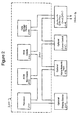
- Display device 205 of Figure 2 utilized with client computer system 300 of the present invention may be a liquid crystal device, cathode ray tube, or other display device suitable for creating graphic images and alphanumeric characters recognizable to the user.
- Cursor control device 207 allows the computer user to dynamically signal the two-dimensional movement of a visible symbol (pointer) on a display screen of display device 205.
- cursor control device Many implementations of the cursor control device are known in the art including a trackball, mouse, joystick or special keys on alphanumeric input device 206 capable of signaling movement of a given direction or manner of displacement.
- the cursor means 207 also may be directed and/or activated via input from the keyboard using special keys and key sequence commands. Alternatively, the cursor may be directed and/or activated via input from a number of specially adapted cursor directing devices.
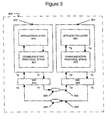
- FIG. 3 a diagram showing client computer system 300 coupled to server computer system 350 in communication network 305 is provided.
- client computer system 300 there are a plurality of client computer systems and server computer systems coupled to each other with communications equipment.
- a single client computer system 300 is shown coupled via communications lines 340 and 342 with a single server computer system 350, but more computer systems could be employed.
- Client computer system 300 and server computer system 350 are each connected In communication network 305 by physical layer network interface cards (NICs) 330 and 380, respectively.
- NICs network interface cards
- the software executed by central processor 201 ( Figure 2) of client computer system 300 is represented by application layer 310 which is separated from the remainder of protocol stack 320.
- Application layer 310 defines the manner in which application programs interact with the communication network, where applications include computer software programs, word processors, database management systems, electronic mail, and the like.
- Protocol stack 320 contains the remaining layers of software that define the computer-to-computer or computer-to-network protocol, where protocol defines the procedures to be followed when data are transmitted and received.
- server computer system 350 includes analogous application layer 360 and protocol stack 370.
- one of the software layers (e.g., application layer 310) of client computer system 300 transmits a request to server computer system 350 in the form of request data packet 390, and server computer system 350 responds to the request In the form of response data packet 395.
- request data packet 390 and response data packet 395 are shown traveling by different communications lines (e.g., in a switched network environment), but it is appreciated that in the present invention the data packets altematively can travel over the same communications line.
- the present invention is a client-implemented process that determines performance statistics associated with the request and response data packets sent and received by the client and server computer systems.
- the present invention uses filters to identify and select request and response data packets that will be used to generate performance statistics.
- the present invention applies time-stamps to the identified request and response data packets.
- the present invention uses correlation rules to correlate a response packet to a request packet, so that the time-stamps can be used to determine time intervals associated with the time between transmission and reception of the data packets by the computer systems.
- the present invention uses the time intervals to determine the performance statistics.
- the present invention implements the above method in the form of extensions to a Remote Network Monitoring (RMON) management information base (MIB).
- RMON Remote Network Monitoring
- MIB Management information base
- client computer system 300 is coupled to server computer system 350 in communication network 305.
- a data packet takes a measurable amount of time to travel from client computer system 300 to server computer system 350, and vice versa. It also takes a measurable amount of time for a computer system to perform an application.
- network latency is the amount of time required for the data packet to travel from point A, A' at which it exits one computer system to point B, B' at which it enters another computer system.
- network latency is the time to travel one-way from network interface card 330 in client computer system 300 to network interface card 380 in server computer system 350 and vice versa.
- the network latency from client computer system 300 to server computer system 350 is determined by computing tne difference between time-stamps T2 and T1, and the network latency from server computer system 350 to client computer system 300 is determined by computing the time difference between time-stamps T6 and T5.
- application processing time is the time required for server computer system 350 to complete performing an application in response to a request received from client computer system 300.
- Application processing time is the elapsed time between the time when request data packet 390 enters server computer system 350 and the time when the correlated response data packet 395 exits server computer system 350 (one-way from point D to point E).
- the application processing time is determined for correlated data packets by computing the difference between time-stamps T5 and T2.
- application response time is the elapsed time between the time when request data packet 390 exits client computer system 300 and the time when response data packet 395 enters client computer system 300 (round trip from point A to point C), where response data packet 395 is sent in response to request data packet 390.
- application response time includes network latency from client computer system 300 to server computer system 350, application processing time in server computer system 350, and network latency from server computer system 350 to client computer system 300.
- the application response time is determined for correlated data packets by computing the difference between time-stamps T6 and T1.
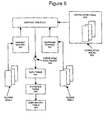
- filters 505a, 505b and 505c contain recognition characteristics for recognizing and selecting request data packets 390 that are of interest to the network manager (that is, the data packets that will be used to generate performance statistics).
- filters 506a, 506b and 506c contain recognition characteristics for recognizing and selecting response data packets 395 that are of interest to the network manager. It is appreciated that for the discussion herein two sets of three filters each are shown; however, the number of filters applied in the present Invention may be different from the number shown.
- request channel 520 stores request packets 390 selected by filters 505a-c.
- response channel 521 stores response packets 395 selected by filters 506a-c.
- each filter 505a-c and 506a-c is uniquely indexed, and thus request channel 520 and response channel 521 each specify the filters to be applied to request and response data packets 390 and 395, respectively, by referencing the appropriate index.
- request channel 520 and response channel 521 are each uniquely indexed so that they can be referenced and acted on in accordance with the present invention.
- correlation rules 525a, 525b and 525c to be applied to request channel 520 and response channel 521 are specified in correlation table 526.
- correlation table 526 specifies the correlation rules to be applied by reference to the appropriate index.
- correlation table 526 is identified by a unique index that associates the correlation table with control table 510.
- control table 510 references request channel 520 and response channel 521 using their unique indices.
- the present invention applies correlation rules 525a-c to request channel 520 and to response channel 521 to identify a match of a response data packet 395 to a request data packet 390, thereby forming a correlated request and response data packet 530.
- each request data packet 390 and response data packet 395 includes time-stamps corresponding to the time when it was transmitted and received by a computer system.
- data table 540 is used to store entries consisting of the time difference between these time-stamps.
- statistics table 550 is used to store performance statistics that are based on the information stored in data table 540. At a time interval specified by the network manager, the performance statistics in statistics table 550 are read to user-history table 560.
- control table 510, correlation table 526, data table 540 and statistics table 550 are linked to each other through the use of an index common to each.
- statistics table 550 accumulates the minimum, maximum, average and median for the entries stored in data table 540.
- the information stored in statistics table 550 is collected for a specified time interval, and then read to user-history table 560.
- user-history table 560 data are stored for each of a plurality of time intervals. The data stored for each time interval may also be combined to compute data for a larger time interval.
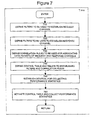
- Figure 7 illustrates a process 700 for creating and activating a control table, where process 700 is implemented as program instructions stored in computer-readable memory units of client computer system 300 ( Figure 3) and executed by central processor 201 ( Figure 2), and also stored and executed on server computer system 350 ( Figure 3).
- a set of filters, channels, and corresponding correlation rules for application to data packets are predefined and stored in the computer system.
- a filter or combination of filters is defined and created by the network manager for application to request data packets.
- a filter or combination of filters is defined and created for application to response data packets.
- Filters screen the data packets by comparing the bit/byte pattern of the data in certain defined fields of the data packets to the recognition characteristics specified by the filter definition. Filters are combined by the network manager using logical operations such as "and" and "or” to define more complex filters for screening data packets traveling over the communication network. Data packets are selected on the basis of a match (or alternatively, a failure to match) with the recognition characteristics of the filter or the combination of filters. Data packets that are identified and selected by the filter or combination of filters form a channel. Thus, a channel accepts data packets that share recognition characteristics that are of interest to the network manager.
- the network manager uses an RMON MIB to specify a filter or a combination of filters (e.g., filters 505a-c of Figure 5) to identify and capture request data packets.
- the request channel e.g., request channel 520 of Figure 5 contains request data packets that satisfy the filter(s) when the control table is activated by the network manager.
- the network manager uses an RMON MIB to specify a filter or combination of filters (e.g., filters 506a-c of Figure 5) to identify and capture response data packets.
- the response channel (e.g., response channel 521 of Figure 5) contains response data packets that satisfy the filter(s).
- the filters are applied at the end-node computer systems. That is, in the present embodiment a filter is applied at either or both the client computer system and the server computer system, depending on the type of performance statistics that are being collected.
- the network manager may create more than one response channel and more than one request channel.
- Each response channel and request channel is indexed, and the index is used in the control table by the network manager to specify which response channel and which request channel are to be used as the basis for generating performance statistics.
- correlation rules are specified based on the knowledge of protocol session behavior. For example, in a Transmission Control Protocol (TCP) session, one correlation matches the source Internet Protocol (IP) address in the request channel to the destination IP address in the response channel.
- TCP Transmission Control Protocol
- IP Internet Protocol
- the central processors of client computer system 300 and server computer system 350 each incorporate an application layer and a protocol stack (note: in the Intemational Standards Organization/Open System Interconnection [ISO/OSI] model, the application layer is the top layer of the protocol stack, but for simplicity herein the application layer is separately identified from the remainder of the protocol stack).
- a user of client computer system 300 issues an application request in the form of request data packet 390 from application layer 310.
- Request data packet 390 thus initially contains data that identify the type of application being utilized or requested.
- each layer adds bits and bytes of information to request data packet 390 in a logical and standard format established by the ISO/OSI model.
- request data packet 390 when it exits the bottom of protocol stack 320, it contains a set of data (including source and destination addresses) that is logically organized and formatted in data fields according to a known standard.
- response data packet 395 also contains a set of data logically organized and formatted in data fields according to the same known standard.
- each request and response data packet contains a destination address and a source address that are located within a specific field in each data packet.
- a correlation rule is defined to compare the destination and source addresses within request and response data packets as one method of establishing a correlation between request and response data packets.
- Other correlation rules are defined to compare other aspects of the request and response data packets until the correlation is complete, and the response data packet is matched to the request data packet that prompted the response.
- client computer system 300 transmits numerous request data packets 390 to server computer system 350 and vice versa, and therefore the correlation rules defined in the present embodiment include a sophisticated set of recognition characteristics.
- the present invention defines correlation rules 525 ( Figure 5) that are of sufficient sophistication that a specific response data packet can be identified and matched with the specific request data packet to which the response data packet is responding.
- Correlation rules 525 that are to be applied to the request and response data packets of interest are defined in a correlation table (e.g., correlation table 526 of Figure 5).
- the present embodiment of the present invention incorporates correlation rules 525 to identify applications in data packets that are based on a known standard.
- the present embodiment also allows for correlation rules 525 to recognize and correlate data packets containing applications that potentially contain a protocol not generally used. For example, a business may use a unique application developed by that business and utilized solely on its intemal communication network.
- the present embodiment incorporates correlation rules that can be designed to specifically identify those unique applications.
- control table 510 is used by the network manager to specify the request and response channels and the correlation rules that will be used to collect performance statistics.
- control table 510 is used by the network manager to specify the time interval over which the performance statistics are to be collected.
- step 760 once control table 510 is complete, the network manager activates control table 510 to collect the desired performance statistics in accordance with the present invention.
- Figure 8 provides details of step 760 ( Figure 7) that are implemented as program instructions stored in computer-readable memory units of client computer system 300 ( Figure 3) and executed by central processor 201 ( Figure 2), and also stored and executed on server computer system 350 ( Figure 3).
- the filter or combination of filters is applied in order to select data packets sent by one or the other of the computer systems.
- the filter(s) are applied to data packets transmitted by client computer system 300.
- the filter(s) are applied to data packets transmitted by server computer system 350.
- a filter is applied to each of the data packets, and the request data packets that satisfy the filter(s) are collected in a request channel, and the response data packets that satisfy the filter(s) are placed in a response channel.
- the accepted data packets will be used as the basis for generating performance statistics.
- the filters are applied at the end-node computer systems. That is, in the present embodiment a filter is applied at either or both the client computer system and the server computer system, depending on the type of performance statistics that are being collected.
- time-stamps are applied to the request and response data packets at the end-node computer systems; that is, time-stamps are applied at client computer system 300 and at server computer system 350.
- request data packet 390 receives a time-stamp from client computer system 300 when it exits the client computer system, and a time-stamp from server computer system 350 when it enters the server computer system.
- response data packet 395 receives a time-stamp from server computer system 350 when it exits the server computer system, and a time-stamp from client computer system 300 when it enters the client computer system.
- the time-stamps provide an accurate measure of when the data packets are transmitted and received by each of the computer systems in the computer network.
- the time-stamps are applied at the bottom of the protocol stacks of client computer system 300 and server computer system 350 (protocol stacks 320 and 370).
- the time-stamps are applied at the network interface cards (NICs) of client computer system 300 and server computer system 350 (NICs 330 and 380).
- the present embodiment of the present invention correlates response data packet 395 from server computer system 350 to request data packet 390 from client computer system 300; that is, the two data packets are identified, matched, and paired.
- request and response data packets 390 and 395 are correlated using a set of correlation rules 525 ( Figure 5) specified and applied to the request and response channels.
- the set of correlation rules to be applied are specified in control table 510 ( Figure 5) that also references the pertinent response and request channels.
- a request data packet 390 and response data packet 395 that each satisfy the same set of correlation rules are thus uniquely identified as matching (that is, a response data packet 395 is identified as the response to a request data packet 390 that requested the response) and are paired to form a correlated data packet 530 ( Figure 5).
- the present embodiment determines performance time based on the time-stamps of each pair of correlated data packets (e.g., correlated data packet 530 of Figure 5).
- the present embodiment computes the time difference between the time-stamps that were applied to the request data packet that comprises one part of the correlated data packet and the time-stamps that were applied to the response data packet that comprises the other part of the correlated data packet.
- the present invention computes the application response time using the time-stamps of each correlated data packet 530, by computing the difference between the time request data packet 390 was transmitted by client computer system 300 and the time that correlated response data packet 395 was received by client computer system 300.
- the present invention computes the application processing time using the time-stamps of each correlated data packet 530, by computing the difference between the time request data packet 390 was received by server computer system 350 and the time correlated response data packet 395 was transmitted by server computer system 350.
- the present invention calculates the network latency using the time-stamps applied to each data packet when it is sent by one computer system and received by the other computer system, by computing the difference between the time request data packet 390 was transmitted by client computer system 300 and received by server computer system 350, and by computing the difference between the time correlated response data packet 395 was transmitted by server computer system 350 and received by client computer system 300.
- the time-stamps provide an accurate measure of when the data packets are transmitted and received by the computer systems on the communication network.
- the use of the time-stamps to determine application response time, application processing time, and network latency provide an accurate measure of network performance and reliability.
- the present embodiment of the present invention calculates performance statistics based on the application response time, application processing time, and network latency for a plurality of correlated data packets 530 of Figure 5, where the correlated data packets have each satisfied the correlation rules and hence represent transactions on the communicatlon network of interest to the network manager for monitoring purposes.
- correlated data packets that all pertain to a particular application may be used as the basis for calculating performance statistics associated with that application.
- the performance statistics include statistics such as the mean, median, minimum and maximum response times for a particular control table 510 ( Figure 5).
- the performance statistics are automatically calculated and accumulated for a programmable interval of time specified by the network manager, e.g., for 30-minute intervals of time, although it is appreciated that other units of time can be specified in accordance with the present invention.
- the present embodiment then stores the performance statistics in a memory unit within a computer system that is on the communication network.
- the performance statistics associated with a client computer system are stored in a memory unit within that client computer system.
- the performance statistics for each consecutive 30-minute interval are then automatically used to calculate performance statistics for a programmable interval of time, e.g., for a 6-hour interval, by combining the performance statistics for each 30-minute interval.
- the performance statistics for each such interval are automatically used to determine performance statistics for a longer Interval of time, e.g., for a 24-hour interval, by combining the performance statistics for each 6-hour interval.
- the performance statistics are readily available to the network manager for either a shorter or a longer time interval. It is appreciated that other intervals of time can be specified in accordance with the present invention.
- the present embodiment of the present invention provides a method for readily and quickly detecting and identifying degradation of the network.
- the performance statistics also provide the information needed to enable the network manager to compare network performance against the metrics specified in the service level agreement.
- the performance statistics also permit the network manager to perform active trouble-shooting to determine the source of any network degradation in addition to the monitoring function.
- the performance statistics are reported to a central computer system.
- the performance statistics are periodically and automatically reported to the central computer system from each client computer system on the communicatlon network at a programmable Interval of time, e.g., every 30 minutes, although it is appreciated that other intervals of time can be specified in accordance with the present invention.
- the round-trip network latency may also be readily determined using the protocol "heartbeat" data packets that are routinely generated in protocol stack 320 of client computer system 300 and transmitted to protocol stack 370 of server computer system 350, and vice versa.
- the purpose of such well-known heartbeat data packets is to enable the computer systems to determine that a communication link exists between the computer systems and to indicate if the link is broken.
- the heartbeat data packets do not pass into the application layer of the computer systems.
- round-trip network latency can be determined by using the time-stamps to time the round trip of the heartbeat data packet, because the time of the round trip does not include application processing time.
- round-trip network latency is the difference between time-stamps T6 and T1 when the difference between time-stamps T4 and T3 is zero.
- the present invention uses an extension to an RMON MIB to implement the method and perform the steps described above in order to determine the performance statistics for the communication network system.
- RMON is a supplement to the SNMP protocol currently employed in computer system communication networks, and thus the present embodiment of the present Invention is compatible with the standards currently in use.
- the RMON MIB extension is comprised of a response time control table, a response time correlation table, a response time data table, and a response time statistics database, which are specified in detail in the Code Section below, and which correspond to the method and functions of the control table, correlation table, data table, and statistics table described above for the present embodiment.
- the RMON MIB is implemented in the client and server computer systems and thus does not require additional hardware.
- the present embodiment of the present invention provides a cost-effective method for monitoring network performance.
- the present embodiment RMON MIB extension is provided in the Code Section below.
- the present invention determines performance statistics associated with the request and response data packets sent and received by the client and server computer systems.
- the present invention uses filters to identify and select request and response data packets that will be used to generate performance statistics.
- the present invention applies time-stamps to the request and response data packets.
- the present invention uses correlation rules to correlate a response packet to a request packet, so that the time-stamps can be used to determine time intervals associated with the time between transmission and reception of the data packets by the computer systems.
- the present invention uses the time intervals to determine the performance statistics.
- the present invention implements the above method in an extension to an RMON MIB.
- the present invention computes performance statistics for application response time, application processing time, and network latency, and reports the performance statistics to the network manager at a prescribed interval.
- the present invention thus provides a method for monitoring a computer system communication network that readily and quickly detects and identifies degradation of the network.
- the present invention described herein measures performance time at the end-user computer systems and thus provides an accurate measure of the performance and reliability of the network.
- the performance statistics generated by the present invention can be used to measure the performance of the network against the provisions of a goveming service level agreement.
- the present invention is implemented through the client and server computer systems, and thus is also cost-effective.
- the use of an RMON MIB extension means the present invention is compatible with the SNMP protocol currently employed in computer system communication networks.
Landscapes
- Engineering & Computer Science (AREA)
- Computer Networks & Wireless Communication (AREA)
- Signal Processing (AREA)
- Data Exchanges In Wide-Area Networks (AREA)
- Testing, Inspecting, Measuring Of Stereoscopic Televisions And Televisions (AREA)
- Reduction Or Emphasis Of Bandwidth Of Signals (AREA)
- Radio Relay Systems (AREA)
Claims (13)
- Verfahren zum Quantifizieren der Kommunikationsleistung in einem Kommunikationsnetz, das Computersysteme umfasst, die kommunikativ über Kommunikationsvorrichtungen miteinander gekoppelt sind, wobei das genannte Verfahren dadurch gekennzeichnet ist, dass es die folgenden Schritte umfasst:a) das Messen der Leistungsstatistiken, die Datenpaketen (390, 395) zugeordnet sind, die von den genannten Computersystemen übermittelt und empfangen werden, wobei der genannte Schritt a) die folgenden Schritte umfasst:a1) das Zuweisen (861) eines ersten Zeitstempels an Datenpakete, die von einem Computersystem über die genannten Kommunikationsvorrichtungen übermittelt werden, und das Zuweisen (862) eines zweiten Zeitstempels an Datenpakete, die von einem Computersystem über die genannten Kommunikationsvorrichtungen empfangen werden;a2) das Korrelieren (863) eines ersten Datenpakets, das von einem ersten Computersystem über das genannte Kommunikationsnetz übermittelt wird, mit einem zweiten Datenpaket, das von einem zweiten Computersystem über das genannte Kommunikationsnetz übermittelt wird;a3) das Berechnen (864) einer Differenz zwischen dem genannten ersten Zeitstempel und dem genannten zweiten Zeitstempel; unda4) das Errechnen (864, 865) von an der genannten Differenz gemessenen Leistungsstatistiken, und das Speichern der genannten Leistungsstatistiken in einer Speichereinheit in dem genannten ersten Computersystem; undb) das Melden (866) der genannten gespeicherten Leistungsstatistiken an ein zentrales Computersystem.
- Verfahren nach Anspruch 1, wobei die Schritte a) und b) durch ein Client-Computersystem (300) umgesetzt werden.
- Verfahren nach Anspruch 1, wobei der Schritt a) durch ein Server-Computersystem (350) umgesetzt wird, und wobei der Schritt b) durch ein Client-Computersystem (300) umgesetzt wird.
- Verfahren nach Anspruch 1, 2 oder 3, wobei der genannte Schritt a) unter Verwendung einer Management-Informationsbankerweiterung einer Remote Network Monitoring (RMON)-basierten Computersoftware implementiert wird, wobei die genannte Management-Informationsbankerweiterung eine Antwortzeit-Steuerungstabelle, eine Antwortzeit-Korrelationstabelle, eine Antwortzeit-Datentabelle und eine Antwortzeit-Statistikdatenbank umfasst.
- Verfahren nach Anspruch 1, 2 oder 3, wobei der Schritt a1) ferner das Zuweisen des genannten ersten Zeitstempels und des genannten zweiten Zeitstempels an eine Netzwerkschnittstellenkarte (330) des genannten Client-Computersystems umfasst.
- Verfahren nach Anspruch 1, 2 oder 3, wobei der Schritt a1) ferner das Zuweisen des genannten ersten Zeitstempels und des genannten zweiten Zeitstempels an einen Protokollstapel (320) des genannten Client-Computersystems umfasst.
- Verfahren nach Anspruch 1, 2 oder 3, wobei die genannten Leistungsstatistiken die Anwendungsantwortzeit messen, und wobei der Schritt a1) ferner die folgenden Schritte umfasst:das Zuweisen des genannten ersten Zeitstempels an das genannte erste Datenpaket, wenn das genannte erste Datenpaket von dem genannten ersten Computersystem zu dem genannten zweiten Computersystem übermittelt wird; unddas Zuweisen des genannten zweiten Zeitstempels an das genannte zweite Datenpaket, wenn das genannte zweite Datenpaket von dem genannten ersten Computersystem von dem genannten zweiten Computersystem empfangen wird, wobei das genannte zweite Datenpaket eine Quittung darstellt und als Reaktion auf das genannte erste Datenpaket übermittelt wird, wobei das genannte erste Computersystem das genannte Client-Computersystem darstellt, und wobei es sich bei dem genannten zweiten Computersystem um ein Server-Computersystem handelt.
- Verfahren nach Anspruch 1, 2 oder 3, wobei die genannten Leistungsstatistiken die Anwendungsverarbeitungszeit messen, und wobei der Schritt a1) ferner die folgenden Schritte umfasst:das Zuweisen des genannten ersten Zeitstempels an das genannte erste Datenpaket, wenn das genannte erste Datenpaket von dem genannten zweiten Computersystem von dem genannten ersten Computersystem empfangen wird; unddas Zuweisen des genannten zweiten Zeitstempels an das genannte zweite Datenpaket, wenn das genannte zweite Datenpaket von dem genannten zweiten Computersystem übermittelt wird, wobei das genannte zweite Datenpaket eine Quittung darstellt und als Reaktion auf das genannte erste Datenpaket übermittelt wird, wobei das genannte erste Computersystem das genannte Client-Computersystem darstellt, und wobei es sich bei dem genannten zweiten Computersystem um das genannte Server-Computersystem handelt.
- Verfahren nach Anspruch 1, 2 oder 3, wobei die genannten Leistungsstatistiken die Netzlatenz messen, und wobei der Schritt a1) ferner die folgenden Schritte umfasst:das Zuweisen des genannten ersten Zeitstempels an das genannte erste Datenpaket, wenn das genannte erste Datenpaket von dem genannten ersten Computersystem zu dem genannten zweiten Computersystem übermittelt wird; unddas Zuweisen des genannten zweiten Zeitstempels an das genannte erste Datenpaket, wenn das genannte erste Datenpaket von dem genannten zweiten Computersystem empfangen wird, wobei das genannte erste Computersystem das genannte Client-Computersystem darstellt, und wobei es sich bei dem genannten zweiten Computersystem um ein Server-Computersystem handelt.
- Verfahren nach Anspruch 1, 2 oder 3, wobei der Schritt a2) ferner die folgenden Schritte umfasst:das Vergleichen des genannten ersten Datenpakets und des genannten zweiten Datenpakets mit Korrelationsregeln, wobei die genannten Korrelationsregeln Übereinstimmungseigenschaften zum Vergleichen der genannten Datenpakete definieren; unddas Paaren des genannten ersten Datenpakets und des genannten zweiten Datenpakets, wenn die genannten Korrelationsregeln erfüllt sind.
- Verfahren nach Anspruch 10, wobei das Verfahren ferner das Zuweisen eines Filters (505a-c, 506a-c) zum Erkennen der von den genannten Computersystemen übermittelten und empfangenen Datenpakete, wobei der genannte Filter Erkennungseigenschaften umfasst.
- Verfahren nach Anspruch 10, wobei die genannten Korrelationsregeln die Abstimmung von Quellen- und Zieladressen der genannten ersten und zweiten Datenpakete umfassen.
- Computersystem, das folgendes umfasst:einen Prozessor (201), der mit einem Bus (200) gekoppelt ist; undeine Speichereinheit (202, 203), die mit dem genannten Bus gekoppelt ist und in der Befehle gespeichert sind, die bei einer Ausführung durch den genannten Prozessor ein Verfahren zum Quantifizieren der Kommunikationsleistung eines Kommunikationsnetzes implementieren, das Computersysteme umfasst, die kommunikativ miteinander gekoppelt sind, wobei das genannte Verfahren dadurch gekennzeichnet ist, dass es die folgenden Schritte umfasst:a) das Messen der Leistungsstatistiken, die Datenpaketen zugeordnet sind und die von den genannten Computersystemen übermittelt und empfangen werden, wobei der genannte Schritt a) die folgenden Schritte umfasst:a1) das Zuweisen (861) eines ersten Zeitstempels an Datenpakete, die von einem Computersystem über die genannten Kommunikationsvorrichtungen übermittelt werden, und das Zuweisen (862) eines zweiten Zeitstempels an Datenpakete, die von dem genannten Computersystem über die genannten Kommunikationsvorrichtungen empfangen werden;a2) das Korrelieren (863) eines ersten Datenpakets, das von einem ersten Computersystem über das genannte Kommunikationsnetz übermittelt wird, mit einem zweiten Datenpaket, das von einem zweiten Computersystem über das genannte Kommunikationsnetz übermittelt wird;a3) das Berechnen (864) einer Differenz zwischen einem ersten Zeitstempel des genannten ersten Datenpakets und einem zweiten Zeitstempel des genannten zweiten Datenpakets; unda4) das Errechnen (864, 865) von an der genannten Differenz gemessenen Leistungsstatistiken, und das Speichern der genannten Leistungsstatistiken in einer Speichereinheit in dem genannten ersten Computersystem; undb) das Melden (866) der genannten gespeicherten Leistungsstatistiken durch das genannte erste Computersystem an ein zentrales Computersystem.
Applications Claiming Priority (2)
| Application Number | Priority Date | Filing Date | Title |
|---|---|---|---|
| US09/141,968 US6321264B1 (en) | 1998-08-28 | 1998-08-28 | Network-performance statistics using end-node computer systems |
| US141968 | 1998-08-28 |
Publications (3)
| Publication Number | Publication Date |
|---|---|
| EP0996254A2 EP0996254A2 (de) | 2000-04-26 |
| EP0996254A3 EP0996254A3 (de) | 2002-04-24 |
| EP0996254B1 true EP0996254B1 (de) | 2005-06-22 |
Family
ID=22498021
Family Applications (1)
| Application Number | Title | Priority Date | Filing Date |
|---|---|---|---|
| EP99306850A Expired - Lifetime EP0996254B1 (de) | 1998-08-28 | 1999-08-27 | Verfahren zur Quantifizierung der Kommunikationsleistung |
Country Status (4)
| Country | Link |
|---|---|
| US (1) | US6321264B1 (de) |
| EP (1) | EP0996254B1 (de) |
| AT (1) | ATE298482T1 (de) |
| DE (1) | DE69925890D1 (de) |
Families Citing this family (163)
| Publication number | Priority date | Publication date | Assignee | Title |
|---|---|---|---|---|
| CN1214567C (zh) * | 1998-11-24 | 2005-08-10 | 尼克桑公司 | 用于采集和分析通信数据的装置及方法 |
| US7386586B1 (en) * | 1998-12-22 | 2008-06-10 | Computer Associates Think, Inc. | System for scheduling and monitoring computer processes |
| FR2790348B1 (fr) * | 1999-02-26 | 2001-05-25 | Thierry Grenot | Systeme et procede de mesure des durees de transfert et des taux de pertes dans des reseaux de telecommunication haut-debit |
| US6853623B2 (en) * | 1999-03-05 | 2005-02-08 | Cisco Technology, Inc. | Remote monitoring of switch network |
| US6636905B1 (en) * | 1999-03-26 | 2003-10-21 | Unisys Corporation | Method for analyzing input/output performance of a data processing system |
| US6560648B1 (en) * | 1999-04-19 | 2003-05-06 | International Business Machines Corporation | Method and apparatus for network latency performance measurement |
| US7725570B1 (en) * | 1999-05-24 | 2010-05-25 | Computer Associates Think, Inc. | Method and apparatus for component to service mapping in service level management (SLM) |
| US6601098B1 (en) * | 1999-06-07 | 2003-07-29 | International Business Machines Corporation | Technique for measuring round-trip latency to computing devices requiring no client-side proxy presence |
| JP3461146B2 (ja) * | 1999-09-28 | 2003-10-27 | 株式会社ジャストシステム | 時間認証システム、ネットワークシステム、サーバ装置及びクライアント装置、並びに記録媒体 |
| US6745242B1 (en) * | 1999-11-30 | 2004-06-01 | Verizon Corporate Services Group Inc. | Connectivity service-level guarantee monitoring and claim validation systems and methods |
| US6993578B1 (en) * | 1999-12-08 | 2006-01-31 | Agilent Technologies, Inc. | Method and system for managing performance data about a network |
| US6701342B1 (en) * | 1999-12-21 | 2004-03-02 | Agilent Technologies, Inc. | Method and apparatus for processing quality of service measurement data to assess a degree of compliance of internet services with service level agreements |
| US6865612B2 (en) * | 2000-02-19 | 2005-03-08 | International Business Machines Corporation | Method and apparatus to provide high precision packet traversal time statistics in a heterogeneous network |
| US6701363B1 (en) * | 2000-02-29 | 2004-03-02 | International Business Machines Corporation | Method, computer program product, and system for deriving web transaction performance metrics |
| FR2809513B1 (fr) * | 2000-05-23 | 2003-09-12 | Bull Sa | Controle de qualite de service, notamment de telecommunication |
| US7299489B1 (en) * | 2000-05-25 | 2007-11-20 | Lucent Technologies Inc. | Method and apparatus for host probing |
| US20020015387A1 (en) * | 2000-08-02 | 2002-02-07 | Henry Houh | Voice traffic packet capture and analysis tool for a data network |
| US6868434B1 (en) * | 2000-08-07 | 2005-03-15 | Sun Microsystems, Inc. | System and method for testing server latencies using multiple concurrent users in a computer system |
| US7545752B2 (en) * | 2000-11-10 | 2009-06-09 | Packeteer, Inc. | Application service level mediation and method of using the same |
| AU2002230616A1 (en) * | 2000-12-06 | 2002-06-18 | Waveset Technologies, Inc. | System and method for managing information objects |
| US20020108115A1 (en) * | 2000-12-11 | 2002-08-08 | The Associated Press | News and other information delivery system and method |
| US20020083180A1 (en) * | 2000-12-26 | 2002-06-27 | Yung-Cheng Lu | Method for actuating network linking to internet from distant end |
| US6782421B1 (en) * | 2001-03-21 | 2004-08-24 | Bellsouth Intellectual Property Corporation | System and method for evaluating the performance of a computer application |
| KR100429160B1 (ko) * | 2001-04-12 | 2004-04-29 | (주)맥컴정보기술 | 에스앤엠피브이 알엠오엔을 이용한 초고속망의 네트웍성능 및 표준 관리장치 |
| US20020198985A1 (en) * | 2001-05-09 | 2002-12-26 | Noam Fraenkel | Post-deployment monitoring and analysis of server performance |
| FR2827451B1 (fr) * | 2001-07-13 | 2003-12-12 | France Telecom | Procede de diffusion d'un contenu a partir d'une source vers des terminaux recepteurs a travers un reseau informatique, avec remontee de rapports de reception, et serveur de collecte associe |
| US20030033430A1 (en) * | 2001-07-20 | 2003-02-13 | Lau Chi Leung | IP flow discovery for IP probe auto-configuration and SLA monitoring |
| US7496046B2 (en) * | 2001-08-22 | 2009-02-24 | Nippon Telegraph And Telephone Corporation | Packet communication quality measurement method and system |
| DE60129701T2 (de) * | 2001-09-21 | 2008-04-30 | Koninklijke Kpn N.V. | Computersystem, Datenübertragungsnetz, Computerprogramm und Datenträger, alle zur Filterung von einen Inhalt gemäss einer Markierungssprache einschliessenden Nachrichten |
| US7516216B2 (en) * | 2001-10-01 | 2009-04-07 | Ixia | Generating traffic for testing a system under test |
| US8914432B2 (en) | 2001-10-01 | 2014-12-16 | Ixia | Real world traffic |
| FR2832577B1 (fr) * | 2001-11-16 | 2005-03-18 | Cit Alcatel | Acquisition adaptative de donnees pour systeme de gestion de reseaux ou de services |
| US8768715B2 (en) * | 2001-12-13 | 2014-07-01 | Oracle America, Inc. | System and method for resource management |
| US7127508B2 (en) * | 2001-12-19 | 2006-10-24 | Tropic Networks Inc. | Method and system of measuring latency and packet loss in a network by using probe packets |
| US20030135823A1 (en) * | 2002-01-14 | 2003-07-17 | Richard Marejka | Loader and provider configuration for remotely provided services |
| US8086720B2 (en) | 2002-01-31 | 2011-12-27 | International Business Machines Corporation | Performance reporting in a network environment |
| US7412502B2 (en) | 2002-04-18 | 2008-08-12 | International Business Machines Corporation | Graphics for end to end component mapping and problem-solving in a network environment |
| US7065102B1 (en) * | 2002-03-01 | 2006-06-20 | Network General Technology | System and method for correlating request and reply packets |
| US20030177160A1 (en) * | 2002-03-14 | 2003-09-18 | Internationl Business Machines Corporation | Predictive system for self-managed e-business infrastructures |
| JP2004005085A (ja) * | 2002-05-31 | 2004-01-08 | Hitachi Ltd | ストレージネットワーク性能測定システム |
| US20030225877A1 (en) * | 2002-05-31 | 2003-12-04 | Eric Packman | Method and apparatus of diagnosing network performance issues through correlative analysis |
| US7747729B2 (en) * | 2002-06-14 | 2010-06-29 | Hanoch Levy | Determining client latencies over a network |
| US7225286B2 (en) * | 2002-06-24 | 2007-05-29 | Koninklijke Philips Electronics N.V. | Method to measure transmission delay between 1394 bridges |
| US7437446B2 (en) * | 2002-09-30 | 2008-10-14 | Electronic Data Systems Corporation | Reporting of abnormal computer resource utilization data |
| US7243145B1 (en) * | 2002-09-30 | 2007-07-10 | Electronic Data Systems Corporation | Generation of computer resource utilization data per computer application |
| US7143025B2 (en) * | 2002-12-13 | 2006-11-28 | Sun Microsystems, Inc. | Web simulator |
| US7533012B2 (en) * | 2002-12-13 | 2009-05-12 | Sun Microsystems, Inc. | Multi-user web simulator |
| US20040148373A1 (en) * | 2003-01-23 | 2004-07-29 | International Business Machines Corporation | Service level agreement compliance measurement |
| US20040177142A1 (en) * | 2003-03-06 | 2004-09-09 | Ixia | Dynamic streams for network analysis |
| US7330889B2 (en) * | 2003-03-06 | 2008-02-12 | Actional Corporation | Network interaction analysis arrangement |
| US7257082B2 (en) * | 2003-03-31 | 2007-08-14 | Ixia | Self-similar traffic generation |
| US7840664B2 (en) * | 2003-05-21 | 2010-11-23 | Ixia | Automated characterization of network traffic |
| US7627669B2 (en) * | 2003-05-21 | 2009-12-01 | Ixia | Automated capturing and characterization of network traffic using feedback |
| US7543051B2 (en) | 2003-05-30 | 2009-06-02 | Borland Software Corporation | Method of non-intrusive analysis of secure and non-secure web application traffic in real-time |
| FR2857540A1 (fr) * | 2003-07-11 | 2005-01-14 | France Telecom | Procedes et dispositifs d'evaluation de delais de transmission et de traitement d'un signal de parole recu dans un terminal relie a un reseau de paquets |
| US20050152406A2 (en) * | 2003-10-03 | 2005-07-14 | Chauveau Claude J. | Method and apparatus for measuring network timing and latency |
| US7327686B2 (en) * | 2003-11-12 | 2008-02-05 | Ixia | Generating processed traffic |
| US7376083B2 (en) * | 2003-12-09 | 2008-05-20 | International Business Machines Corporation | Apparatus and method for modeling queueing systems with highly variable traffic arrival rates |
| EP1548980A1 (de) | 2003-12-26 | 2005-06-29 | Alcatel | Ein Verfahren zur Überwachung eines Netzwerkes |
| EP1548981A3 (de) * | 2003-12-26 | 2011-05-11 | Alcatel Lucent | Ein Verfahren zur Überwachung eines Netzwerkes |
| DE602004004577T2 (de) * | 2004-01-21 | 2007-05-31 | Tektronix International Sales Gmbh | Verfahren und Vorrichtung zur Feststellung der Sprachlatenzzeit durch ein Netzwerkelement eines Kommunikationsnetzwerkes |
| US7496688B2 (en) * | 2004-01-30 | 2009-02-24 | Ixia | Label switched data unit content evaluation |
| US20050190714A1 (en) * | 2004-02-28 | 2005-09-01 | Intel Corporation | System and associated methods for network aware dynamic power management |
| US8244891B2 (en) * | 2004-03-08 | 2012-08-14 | Ixia | Simulating a large number of users |
| US7422152B2 (en) | 2004-05-13 | 2008-09-09 | Cisco Technology, Inc. | Methods and devices for providing scalable RFID networks |
| US7849142B2 (en) | 2004-05-29 | 2010-12-07 | Ironport Systems, Inc. | Managing connections, messages, and directory harvest attacks at a server |
| US7870200B2 (en) * | 2004-05-29 | 2011-01-11 | Ironport Systems, Inc. | Monitoring the flow of messages received at a server |
| US7873695B2 (en) | 2004-05-29 | 2011-01-18 | Ironport Systems, Inc. | Managing connections and messages at a server by associating different actions for both different senders and different recipients |
| US7573831B1 (en) * | 2004-07-01 | 2009-08-11 | Sprint Communications Company L.P. | System and method for analyzing transmission of billing data |
| US20060026286A1 (en) * | 2004-07-06 | 2006-02-02 | Oracle International Corporation | System and method for managing user session meta-data in a reverse proxy |
| US9621473B2 (en) | 2004-08-18 | 2017-04-11 | Open Text Sa Ulc | Method and system for sending data |
| GB2417391B (en) * | 2004-08-18 | 2007-04-18 | Wecomm Ltd | Transmitting data over a network |
| US20090106193A1 (en) * | 2004-08-20 | 2009-04-23 | Koninklijke Philips Electronics, N.V. | Real time responses in decentralized networks |
| US8458467B2 (en) | 2005-06-21 | 2013-06-04 | Cisco Technology, Inc. | Method and apparatus for adaptive application message payload content transformation in a network infrastructure element |
| US7664879B2 (en) | 2004-11-23 | 2010-02-16 | Cisco Technology, Inc. | Caching content and state data at a network element |
| JP4126702B2 (ja) * | 2004-12-01 | 2008-07-30 | インターナショナル・ビジネス・マシーンズ・コーポレーション | 制御装置、情報処理システム、制御方法、及びプログラム |
| US7987272B2 (en) * | 2004-12-06 | 2011-07-26 | Cisco Technology, Inc. | Performing message payload processing functions in a network element on behalf of an application |
| US7725934B2 (en) | 2004-12-07 | 2010-05-25 | Cisco Technology, Inc. | Network and application attack protection based on application layer message inspection |
| US8806490B1 (en) | 2004-12-08 | 2014-08-12 | Cadence Design Systems, Inc. | Method and apparatus for managing workflow failures by retrying child and parent elements |
| US8250131B1 (en) * | 2004-12-08 | 2012-08-21 | Cadence Design Systems, Inc. | Method and apparatus for managing a distributed computing environment |
| US8244854B1 (en) | 2004-12-08 | 2012-08-14 | Cadence Design Systems, Inc. | Method and system for gathering and propagating statistical information in a distributed computing environment |
| US8108878B1 (en) | 2004-12-08 | 2012-01-31 | Cadence Design Systems, Inc. | Method and apparatus for detecting indeterminate dependencies in a distributed computing environment |
| US7979870B1 (en) | 2004-12-08 | 2011-07-12 | Cadence Design Systems, Inc. | Method and system for locating objects in a distributed computing environment |
| US8082304B2 (en) | 2004-12-10 | 2011-12-20 | Cisco Technology, Inc. | Guaranteed delivery of application layer messages by a network element |
| US20060159232A1 (en) * | 2005-01-14 | 2006-07-20 | Sbc Knowledge Ventures L.P. | System and method for managing a communication network |
| US7698416B2 (en) | 2005-01-25 | 2010-04-13 | Cisco Technology, Inc. | Application layer message-based server failover management by a network element |
| US8121148B2 (en) | 2005-03-24 | 2012-02-21 | Ixia | Protocol stack using shared memory |
| US7675856B2 (en) * | 2005-03-24 | 2010-03-09 | Microsoft Corporation | Bandwidth estimation in broadband access networks |
| US7685270B1 (en) * | 2005-03-31 | 2010-03-23 | Amazon Technologies, Inc. | Method and apparatus for measuring latency in web services |
| US7860006B1 (en) * | 2005-04-27 | 2010-12-28 | Extreme Networks, Inc. | Integrated methods of performing network switch functions |
| US7668969B1 (en) | 2005-04-27 | 2010-02-23 | Extreme Networks, Inc. | Rule structure for performing network switch functions |
| US8266327B2 (en) | 2005-06-21 | 2012-09-11 | Cisco Technology, Inc. | Identity brokering in a network element |
| US7345585B2 (en) | 2005-08-01 | 2008-03-18 | Cisco Technology, Inc. | Network based device for providing RFID middleware functionality |
| US7633876B2 (en) * | 2005-08-22 | 2009-12-15 | At&T Intellectual Property I, L.P. | System and method for monitoring a switched metro ethernet network |
| US7623463B2 (en) * | 2005-09-09 | 2009-11-24 | International Business Machines Corporation | Performance evaluation of a network-based application |
| JP2007221207A (ja) * | 2006-02-14 | 2007-08-30 | Hitachi Ltd | 管理装置及び通信システム |
| US20080010523A1 (en) * | 2006-05-12 | 2008-01-10 | Samik Mukherjee | Performance Testing Despite Non-Conformance |
| US20080027948A1 (en) * | 2006-07-06 | 2008-01-31 | Richard Corley | Managing Application System Load |
| US8208389B2 (en) * | 2006-07-20 | 2012-06-26 | Cisco Technology, Inc. | Methods and apparatus for improved determination of network metrics |
| US8059641B1 (en) * | 2006-07-20 | 2011-11-15 | Avaya Inc. | Encapsulation method discovery protocol for network address translation gateway traversal |
| US7797406B2 (en) | 2006-07-27 | 2010-09-14 | Cisco Technology, Inc. | Applying quality of service to application messages in network elements based on roles and status |
| US8126756B2 (en) * | 2006-08-07 | 2012-02-28 | International Business Machines Corporation | Method and system for real time measurement data adjudication and service level evaluation |
| US8180856B2 (en) | 2006-09-14 | 2012-05-15 | Ixia | Testing a network |
| US8112813B1 (en) | 2006-09-29 | 2012-02-07 | Amazon Technologies, Inc. | Interactive image-based document for secured data access |
| US8234302B1 (en) | 2006-09-29 | 2012-07-31 | Amazon Technologies, Inc. | Controlling access to electronic content |
| US9258203B1 (en) * | 2006-09-29 | 2016-02-09 | Amazon Technologies, Inc. | Monitoring computer performance metrics utilizing baseline performance metric filtering |
| US8391156B2 (en) * | 2006-11-21 | 2013-03-05 | Verizon Patent And Licensing Inc. | Testing and evaluating the status of a network node |
| US8195815B2 (en) * | 2007-10-31 | 2012-06-05 | Cisco Technology, Inc. | Efficient network monitoring and control |
| US9977721B2 (en) | 2007-12-20 | 2018-05-22 | Netapp, Inc. | Evaluating and predicting computer system performance using kneepoint analysis |
| US9740991B2 (en) * | 2007-12-21 | 2017-08-22 | Ca, Inc. | Calculating in-flight metrics for non-interruptible business transactions |
| US7817636B2 (en) | 2008-01-30 | 2010-10-19 | Cisco Technology, Inc. | Obtaining information on forwarding decisions for a packet flow |
| CN101594262A (zh) * | 2008-03-07 | 2009-12-02 | 福路开公司 | Tcp和非tcp协议的终端用户响应时间确定方法和装置 |
| US8095507B2 (en) * | 2008-08-08 | 2012-01-10 | Oracle International Corporation | Automated topology-based statistics monitoring and performance analysis |
| US7925748B2 (en) * | 2008-10-24 | 2011-04-12 | International Business Machines Corporation | System and method for managing system resources in a network environment |
| US7930395B2 (en) * | 2008-12-01 | 2011-04-19 | International Business Machines Corporation | System and method for managing system resources in a network environment |
| US9634851B2 (en) * | 2009-04-20 | 2017-04-25 | Ca, Inc. | System, method, and computer readable medium for measuring network latency from flow records |
| US9210050B2 (en) * | 2009-07-09 | 2015-12-08 | Centurylink Intellectual Property Llc | System and method for a testing vector and associated performance map |
| US8788652B2 (en) * | 2009-07-27 | 2014-07-22 | Ixia | Real world network testing combining lower layer network tests, application layer tests and interdependent interactions |
| US20110019558A1 (en) * | 2009-07-27 | 2011-01-27 | Honeywell International Inc. | Distributed latency measurement system for communication system analysis |
| US8189487B1 (en) * | 2009-07-28 | 2012-05-29 | Sprint Communications Company L.P. | Determination of application latency in a network node |
| US8614955B2 (en) * | 2009-09-22 | 2013-12-24 | Ixia | Misdirected packet detection apparatus and method |
| US8649271B2 (en) * | 2010-01-25 | 2014-02-11 | Ixia | Testing network equipment |
| US8331270B2 (en) * | 2010-10-14 | 2012-12-11 | Cisco Technology, Inc. | In-band communication of network statistics over a FICON network |
| US20120215479A1 (en) * | 2011-02-21 | 2012-08-23 | General Electric Company | System for testing intelligent electronic devices |
| US9386127B2 (en) | 2011-09-28 | 2016-07-05 | Open Text S.A. | System and method for data transfer, including protocols for use in data transfer |
| US8655969B2 (en) | 2012-06-01 | 2014-02-18 | Ixia | Statistics reporting in a network test system |
| US9178790B2 (en) | 2012-08-06 | 2015-11-03 | Ixia | Methods, systems, and computer readable media for controlling Tx and Rx throughput over TCP |
| US9178823B2 (en) | 2012-12-12 | 2015-11-03 | Ixia | Methods, systems, and computer readable media for generating simulated network traffic using different traffic flows and maintaining a configured distribution of traffic between the different traffic flows and a device under test |
| US9397901B2 (en) | 2012-12-18 | 2016-07-19 | Ixia | Methods, systems, and computer readable media for classifying application traffic received at a network traffic emulation device that emulates multiple application servers |
| US9473591B1 (en) | 2012-12-21 | 2016-10-18 | Emc Corporation | Reliable server transport over fibre channel using a block device access model |
| US9270786B1 (en) | 2012-12-21 | 2016-02-23 | Emc Corporation | System and method for proxying TCP connections over a SCSI-based transport |
| US9232000B1 (en) | 2012-12-21 | 2016-01-05 | Emc Corporation | Method and system for balancing load across target endpoints on a server and initiator endpoints accessing the server |
| US9407601B1 (en) | 2012-12-21 | 2016-08-02 | Emc Corporation | Reliable client transport over fibre channel using a block device access model |
| US9712427B1 (en) | 2012-12-21 | 2017-07-18 | EMC IP Holding Company LLC | Dynamic server-driven path management for a connection-oriented transport using the SCSI block device model |
| US9514151B1 (en) | 2012-12-21 | 2016-12-06 | Emc Corporation | System and method for simultaneous shared access to data buffers by two threads, in a connection-oriented data proxy service |
| US9563423B1 (en) | 2012-12-21 | 2017-02-07 | EMC IP Holding Company LLC | System and method for simultaneous shared access to data buffers by two threads, in a connection-oriented data proxy service |
| US9647905B1 (en) * | 2012-12-21 | 2017-05-09 | EMC IP Holding Company LLC | System and method for optimized management of statistics counters, supporting lock-free updates, and queries for any to-the-present time interval |
| US9237057B1 (en) | 2012-12-21 | 2016-01-12 | Emc Corporation | Reassignment of a virtual connection from a busiest virtual connection or locality domain to a least busy virtual connection or locality domain |
| US9591099B1 (en) | 2012-12-21 | 2017-03-07 | EMC IP Holding Company LLC | Server connection establishment over fibre channel using a block device access model |
| US9473589B1 (en) | 2012-12-21 | 2016-10-18 | Emc Corporation | Server communication over fibre channel using a block device access model |
| US9473590B1 (en) | 2012-12-21 | 2016-10-18 | Emc Corporation | Client connection establishment over fibre channel using a block device access model |
| US9531765B1 (en) * | 2012-12-21 | 2016-12-27 | Emc Corporation | System and method for maximizing system data cache efficiency in a connection-oriented data proxy service |
| US9509797B1 (en) | 2012-12-21 | 2016-11-29 | Emc Corporation | Client communication over fibre channel using a block device access model |
| US9116873B2 (en) | 2013-03-21 | 2015-08-25 | Ixia | Methods, systems, and computer readable media for adjusting load at a device under test |
| US9172647B2 (en) | 2013-04-25 | 2015-10-27 | Ixia | Distributed network test system |
| US9736263B2 (en) * | 2015-02-16 | 2017-08-15 | Telefonaktiebolaget L M Ericsson (Publ) | Temporal caching for ICN |
| US10776535B2 (en) | 2016-07-11 | 2020-09-15 | Keysight Technologies Singapore (Sales) Pte. Ltd. | Methods, systems and computer readable media for testing network devices using variable traffic burst profiles |
| US10498622B2 (en) * | 2017-09-08 | 2019-12-03 | Vmware, Inc. | Tunnel state detection for overlay networks |
| US11398968B2 (en) | 2018-07-17 | 2022-07-26 | Keysight Technologies, Inc. | Methods, systems, and computer readable media for testing virtualized network functions and related infrastructure |
| US11388078B1 (en) | 2019-06-10 | 2022-07-12 | Keysight Technologies, Inc. | Methods, systems, and computer readable media for generating and using statistically varying network traffic mixes to test network devices |
| US11381464B2 (en) | 2019-11-28 | 2022-07-05 | Keysight Technologies, Inc. | Methods, systems, and computer readable media for implementing a generalized model for defining application state machines |
| US11323354B1 (en) | 2020-10-09 | 2022-05-03 | Keysight Technologies, Inc. | Methods, systems, and computer readable media for network testing using switch emulation |
| US11483227B2 (en) | 2020-10-13 | 2022-10-25 | Keysight Technologies, Inc. | Methods, systems and computer readable media for active queue management |
| US11483228B2 (en) | 2021-01-29 | 2022-10-25 | Keysight Technologies, Inc. | Methods, systems, and computer readable media for network testing using an emulated data center environment |
| US12210890B2 (en) | 2021-02-09 | 2025-01-28 | Keysight Technologies, Inc. | Methods, systems, and computer readable media for impairment testing using an emulated switching fabric environment |
| US11405302B1 (en) | 2021-03-11 | 2022-08-02 | Keysight Technologies, Inc. | Methods, systems, and computer readable media for network testing using configurable test infrastructure |
| US11388081B1 (en) | 2021-03-30 | 2022-07-12 | Keysight Technologies, Inc. | Methods, systems, and computer readable media for impairment testing using an impairment device |
| US12244477B2 (en) | 2021-10-11 | 2025-03-04 | Keysight Technologies, Inc. | Methods, systems, and computer readable media for recycling background traffic in a test environment |
| US12067016B1 (en) | 2021-11-26 | 2024-08-20 | Amazon Technologies, Inc. | Metric data processing and storage |
| US11729087B2 (en) | 2021-12-03 | 2023-08-15 | Keysight Technologies, Inc. | Methods, systems, and computer readable media for providing adaptive background test traffic in a test environment |
| US11765068B2 (en) | 2021-12-22 | 2023-09-19 | Keysight Technologies, Inc. | Methods, systems, and computer readable media for programmable data plane processor based traffic impairment |
| US12372576B2 (en) | 2022-08-25 | 2025-07-29 | Keysight Technologies, Inc. | Methods, systems, and computer readable media for using a testbed transpiler |
| US12056028B2 (en) | 2022-09-15 | 2024-08-06 | Keysight Technologies, Inc. | Methods, systems, and computer readable media for using an impairment configuration manager |
Family Cites Families (10)
| Publication number | Priority date | Publication date | Assignee | Title |
|---|---|---|---|---|
| US5255182A (en) * | 1992-01-31 | 1993-10-19 | Visa International Service Association | Payment card point-of-sale service quality monitoring system, apparatus, and method |
| US5623483A (en) * | 1995-05-11 | 1997-04-22 | Lucent Technologies Inc. | Synchronization system for networked multimedia streams |
| DE19528563C2 (de) * | 1995-08-03 | 1997-11-06 | Siemens Ag | Verfahren zur Bewertung von mindestens zwei mehrteiligen Kommunikationsverbindungen zwischen zwei Kommunikationspartnern in einem Mehrknotennetzwerk |
| US5757772A (en) * | 1995-09-18 | 1998-05-26 | Telefonaktiebolaget Lm Ericsson | Packet switched radio channel traffic supervision |
| US6097700A (en) * | 1995-09-18 | 2000-08-01 | Telefonaktiebolaget L M Ericsson (Publ) | Packet switched radio channel congestion control |
| US5809540A (en) * | 1995-12-04 | 1998-09-15 | Unisys Corporation | Processor command for prompting a storage controller to write a day clock value to specified memory location |
| US6134531A (en) * | 1997-09-24 | 2000-10-17 | Digital Equipment Corporation | Method and apparatus for correlating real-time audience feedback with segments of broadcast programs |
| US6052363A (en) * | 1997-09-30 | 2000-04-18 | Northern Telecom Limited | Method for causal ordering in a distributed network |
| US6151020A (en) * | 1997-10-24 | 2000-11-21 | Compaq Computer Corporation | Real time bit map capture and sharing for collaborative tools |
| US5915098A (en) * | 1997-10-24 | 1999-06-22 | Digital Equipment Corp. | System for compressing bit maps to be shared and displayed in collaborative tool by client and server systems |
-
1998
- 1998-08-28 US US09/141,968 patent/US6321264B1/en not_active Expired - Fee Related
-
1999
- 1999-08-27 EP EP99306850A patent/EP0996254B1/de not_active Expired - Lifetime
- 1999-08-27 DE DE69925890T patent/DE69925890D1/de not_active Expired - Lifetime
- 1999-08-27 AT AT99306850T patent/ATE298482T1/de not_active IP Right Cessation
Also Published As
| Publication number | Publication date |
|---|---|
| ATE298482T1 (de) | 2005-07-15 |
| EP0996254A2 (de) | 2000-04-26 |
| DE69925890D1 (de) | 2005-07-28 |
| US6321264B1 (en) | 2001-11-20 |
| EP0996254A3 (de) | 2002-04-24 |
Similar Documents
| Publication | Publication Date | Title |
|---|---|---|
| EP0996254B1 (de) | Verfahren zur Quantifizierung der Kommunikationsleistung | |
| US6363477B1 (en) | Method for analyzing network application flows in an encrypted environment | |
| US12068938B2 (en) | Network health data aggregation service | |
| US12335117B2 (en) | Visualization of network health information | |
| EP0994602B1 (de) | Überwachung des Durchsatzes eines Computersystems und eines Netzwerkes | |
| EP1367771B1 (de) | Passives Netzüberwachungssystem | |
| US10243820B2 (en) | Filtering network health information based on customer impact | |
| US5886643A (en) | Method and apparatus for discovering network topology | |
| US10911263B2 (en) | Programmatic interfaces for network health information | |
| US6747957B1 (en) | Network availability monitor | |
| KR100814546B1 (ko) | 통신 데이터를 수집하여 분석하는 장치 및 방법 | |
| US6137782A (en) | Automatic network traffic analysis | |
| US7275192B2 (en) | Method and system for on demand selective rerouting of logical circuit data in a data network | |
| US6219705B1 (en) | System and method of collecting and maintaining historical top communicator information on a communication device | |
| JP2000324137A (ja) | ルートおよびパスの管理システム | |
| MX2010006844A (es) | Metodo de resolución de direcciones de red a nombres de host en flujos de red para dispositivos de red. | |
| US20060168263A1 (en) | Monitoring telecommunication network elements | |
| EP2586158B1 (de) | Vorrichtung und verfahren zur überwachung von konnektivitätsdiensten | |
| US20040141464A1 (en) | Method and system for obtaining logical performance data for a circuit in a data network | |
| US5682523A (en) | System and method for collecting and retrieving network problem determination data with a generic collection subsystem reporting to an agent on demand | |
| WO2000005594A1 (en) | Automatic network traffic analysis | |
| Enger et al. | RFC1470: FYI on a network management tool catalog: Tools for monitoring and debugging TCP/IP internets and interconnected devices | |
| Şahin | Web Based Network Traffic Monitoring | |
| KR20040091846A (ko) | 실시간 모니터링 에이전트 및 그를 이용한 모니터링 방법 | |
| Gemmill | Blind men felling the elephant managing application network performance: standards, tools and challenges |
Legal Events
| Date | Code | Title | Description |
|---|---|---|---|
| PUAI | Public reference made under article 153(3) epc to a published international application that has entered the european phase |
Free format text: ORIGINAL CODE: 0009012 |
|
| AK | Designated contracting states |
Kind code of ref document: A2 Designated state(s): AT BE CH CY DE DK ES FI FR GB GR IE IT LI LU MC NL PT SE |
|
| AX | Request for extension of the european patent |
Free format text: AL;LT;LV;MK;RO;SI |
|
| PUAL | Search report despatched |
Free format text: ORIGINAL CODE: 0009013 |
|
| AK | Designated contracting states |
Kind code of ref document: A3 Designated state(s): AT BE CH CY DE DK ES FI FR GB GR IE IT LI LU MC NL PT SE |
|
| AX | Request for extension of the european patent |
Free format text: AL;LT;LV;MK;RO;SI |
|
| 17P | Request for examination filed |
Effective date: 20021023 |
|
| AKX | Designation fees paid |
Free format text: AT BE CH CY DE DK ES FI FR GB GR IE IT LI LU MC NL PT SE |
|
| 17Q | First examination report despatched |
Effective date: 20040413 |
|
| GRAP | Despatch of communication of intention to grant a patent |
Free format text: ORIGINAL CODE: EPIDOSNIGR1 |
|
| GRAS | Grant fee paid |
Free format text: ORIGINAL CODE: EPIDOSNIGR3 |
|
| GRAA | (expected) grant |
Free format text: ORIGINAL CODE: 0009210 |
|
| AK | Designated contracting states |
Kind code of ref document: B1 Designated state(s): AT BE CH CY DE DK ES FI FR GB GR IE IT LI LU MC NL PT SE |
|
| PG25 | Lapsed in a contracting state [announced via postgrant information from national office to epo] |
Ref country code: NL Free format text: LAPSE BECAUSE OF FAILURE TO SUBMIT A TRANSLATION OF THE DESCRIPTION OR TO PAY THE FEE WITHIN THE PRESCRIBED TIME-LIMIT Effective date: 20050622 Ref country code: LI Free format text: LAPSE BECAUSE OF FAILURE TO SUBMIT A TRANSLATION OF THE DESCRIPTION OR TO PAY THE FEE WITHIN THE PRESCRIBED TIME-LIMIT Effective date: 20050622 Ref country code: IT Free format text: LAPSE BECAUSE OF FAILURE TO SUBMIT A TRANSLATION OF THE DESCRIPTION OR TO PAY THE FEE WITHIN THE PRESCRIBED TIME-LIMIT;WARNING: LAPSES OF ITALIAN PATENTS WITH EFFECTIVE DATE BEFORE 2007 MAY HAVE OCCURRED AT ANY TIME BEFORE 2007. THE CORRECT EFFECTIVE DATE MAY BE DIFFERENT FROM THE ONE RECORDED. Effective date: 20050622 Ref country code: FI Free format text: LAPSE BECAUSE OF FAILURE TO SUBMIT A TRANSLATION OF THE DESCRIPTION OR TO PAY THE FEE WITHIN THE PRESCRIBED TIME-LIMIT Effective date: 20050622 Ref country code: ES Free format text: LAPSE BECAUSE OF FAILURE TO SUBMIT A TRANSLATION OF THE DESCRIPTION OR TO PAY THE FEE WITHIN THE PRESCRIBED TIME-LIMIT Effective date: 20050622 Ref country code: CH Free format text: LAPSE BECAUSE OF FAILURE TO SUBMIT A TRANSLATION OF THE DESCRIPTION OR TO PAY THE FEE WITHIN THE PRESCRIBED TIME-LIMIT Effective date: 20050622 Ref country code: BE Free format text: LAPSE BECAUSE OF FAILURE TO SUBMIT A TRANSLATION OF THE DESCRIPTION OR TO PAY THE FEE WITHIN THE PRESCRIBED TIME-LIMIT Effective date: 20050622 Ref country code: AT Free format text: LAPSE BECAUSE OF FAILURE TO SUBMIT A TRANSLATION OF THE DESCRIPTION OR TO PAY THE FEE WITHIN THE PRESCRIBED TIME-LIMIT Effective date: 20050622 |
|
| REG | Reference to a national code |
Ref country code: GB Ref legal event code: FG4D |
|
| REG | Reference to a national code |
Ref country code: CH Ref legal event code: EP |
|
| PGFP | Annual fee paid to national office [announced via postgrant information from national office to epo] |
Ref country code: GR Payment date: 20050727 Year of fee payment: 7 |
|
| REG | Reference to a national code |
Ref country code: IE Ref legal event code: FG4D |
|
| REF | Corresponds to: |
Ref document number: 69925890 Country of ref document: DE Date of ref document: 20050728 Kind code of ref document: P |
|
| PGFP | Annual fee paid to national office [announced via postgrant information from national office to epo] |
Ref country code: MC Payment date: 20050729 Year of fee payment: 7 |
|
| PGFP | Annual fee paid to national office [announced via postgrant information from national office to epo] |
Ref country code: NL Payment date: 20050803 Year of fee payment: 7 |
|
| PGFP | Annual fee paid to national office [announced via postgrant information from national office to epo] |
Ref country code: FR Payment date: 20050809 Year of fee payment: 7 |
|
| PGFP | Annual fee paid to national office [announced via postgrant information from national office to epo] |
Ref country code: IE Payment date: 20050811 Year of fee payment: 7 |
|
| PGFP | Annual fee paid to national office [announced via postgrant information from national office to epo] |
Ref country code: DK Payment date: 20050815 Year of fee payment: 7 |
|
| PGFP | Annual fee paid to national office [announced via postgrant information from national office to epo] |
Ref country code: GB Payment date: 20050824 Year of fee payment: 7 |
|
| PGFP | Annual fee paid to national office [announced via postgrant information from national office to epo] |
Ref country code: DE Payment date: 20050825 Year of fee payment: 7 |
|
| PG25 | Lapsed in a contracting state [announced via postgrant information from national office to epo] |
Ref country code: CY Free format text: LAPSE BECAUSE OF FAILURE TO SUBMIT A TRANSLATION OF THE DESCRIPTION OR TO PAY THE FEE WITHIN THE PRESCRIBED TIME-LIMIT Effective date: 20050827 |
|
| PGFP | Annual fee paid to national office [announced via postgrant information from national office to epo] |
Ref country code: CH Payment date: 20050830 Year of fee payment: 7 |
|
| PGFP | Annual fee paid to national office [announced via postgrant information from national office to epo] |
Ref country code: LU Payment date: 20050921 Year of fee payment: 7 |
|
| PG25 | Lapsed in a contracting state [announced via postgrant information from national office to epo] |
Ref country code: SE Free format text: LAPSE BECAUSE OF FAILURE TO SUBMIT A TRANSLATION OF THE DESCRIPTION OR TO PAY THE FEE WITHIN THE PRESCRIBED TIME-LIMIT Effective date: 20050922 Ref country code: GR Free format text: LAPSE BECAUSE OF FAILURE TO SUBMIT A TRANSLATION OF THE DESCRIPTION OR TO PAY THE FEE WITHIN THE PRESCRIBED TIME-LIMIT Effective date: 20050922 Ref country code: DK Free format text: LAPSE BECAUSE OF FAILURE TO SUBMIT A TRANSLATION OF THE DESCRIPTION OR TO PAY THE FEE WITHIN THE PRESCRIBED TIME-LIMIT Effective date: 20050922 |
|
| PG25 | Lapsed in a contracting state [announced via postgrant information from national office to epo] |
Ref country code: DE Free format text: LAPSE BECAUSE OF FAILURE TO SUBMIT A TRANSLATION OF THE DESCRIPTION OR TO PAY THE FEE WITHIN THE PRESCRIBED TIME-LIMIT Effective date: 20050923 |
|
| PGFP | Annual fee paid to national office [announced via postgrant information from national office to epo] |
Ref country code: BE Payment date: 20051013 Year of fee payment: 7 |
|
| PG25 | Lapsed in a contracting state [announced via postgrant information from national office to epo] |
Ref country code: PT Free format text: LAPSE BECAUSE OF FAILURE TO SUBMIT A TRANSLATION OF THE DESCRIPTION OR TO PAY THE FEE WITHIN THE PRESCRIBED TIME-LIMIT Effective date: 20051129 |
|
| NLV1 | Nl: lapsed or annulled due to failure to fulfill the requirements of art. 29p and 29m of the patents act | ||
| REG | Reference to a national code |
Ref country code: CH Ref legal event code: PL |
|
| PLBE | No opposition filed within time limit |
Free format text: ORIGINAL CODE: 0009261 |
|
| STAA | Information on the status of an ep patent application or granted ep patent |
Free format text: STATUS: NO OPPOSITION FILED WITHIN TIME LIMIT |
|
| 26N | No opposition filed |
Effective date: 20060323 |
|
| EN | Fr: translation not filed | ||
| PG25 | Lapsed in a contracting state [announced via postgrant information from national office to epo] |
Ref country code: FR Free format text: LAPSE BECAUSE OF FAILURE TO SUBMIT A TRANSLATION OF THE DESCRIPTION OR TO PAY THE FEE WITHIN THE PRESCRIBED TIME-LIMIT Effective date: 20060818 |
|
| PG25 | Lapsed in a contracting state [announced via postgrant information from national office to epo] |
Ref country code: IE Free format text: LAPSE BECAUSE OF NON-PAYMENT OF DUE FEES Effective date: 20060828 |
|
| PG25 | Lapsed in a contracting state [announced via postgrant information from national office to epo] |
Ref country code: MC Free format text: LAPSE BECAUSE OF NON-PAYMENT OF DUE FEES Effective date: 20060831 |
|
| GBPC | Gb: european patent ceased through non-payment of renewal fee |
Effective date: 20060827 |
|
| REG | Reference to a national code |
Ref country code: IE Ref legal event code: MM4A |
|
| PG25 | Lapsed in a contracting state [announced via postgrant information from national office to epo] |
Ref country code: GB Free format text: LAPSE BECAUSE OF NON-PAYMENT OF DUE FEES Effective date: 20060827 |
|
| PG25 | Lapsed in a contracting state [announced via postgrant information from national office to epo] |
Ref country code: LU Free format text: LAPSE BECAUSE OF NON-PAYMENT OF DUE FEES Effective date: 20060827 |