EP1001589B1 - Telecommunications exchange - Google Patents
Telecommunications exchange Download PDFInfo
- Publication number
- EP1001589B1 EP1001589B1 EP99122419.7A EP99122419A EP1001589B1 EP 1001589 B1 EP1001589 B1 EP 1001589B1 EP 99122419 A EP99122419 A EP 99122419A EP 1001589 B1 EP1001589 B1 EP 1001589B1
- Authority
- EP
- European Patent Office
- Prior art keywords
- communication system
- connection
- http
- data processing
- control unit
- Prior art date
- Legal status (The legal status is an assumption and is not a legal conclusion. Google has not performed a legal analysis and makes no representation as to the accuracy of the status listed.)
- Expired - Lifetime
Links
- 238000004891 communication Methods 0.000 claims description 107
- 238000012545 processing Methods 0.000 claims description 33
- UDYLZILYVRMCJW-UHFFFAOYSA-L disodium;oxido carbonate Chemical compound [Na+].[Na+].[O-]OC([O-])=O UDYLZILYVRMCJW-UHFFFAOYSA-L 0.000 claims description 31
- 230000005540 biological transmission Effects 0.000 claims description 11
- 239000013256 coordination polymer Substances 0.000 claims description 7
- 238000012800 visualization Methods 0.000 claims description 7
- 230000008878 coupling Effects 0.000 claims 2
- 238000010168 coupling process Methods 0.000 claims 2
- 238000005859 coupling reaction Methods 0.000 claims 2
- 230000010354 integration Effects 0.000 description 6
- 230000011664 signaling Effects 0.000 description 5
- 230000003993 interaction Effects 0.000 description 2
- 238000012546 transfer Methods 0.000 description 2
- 230000004913 activation Effects 0.000 description 1
- 238000007630 basic procedure Methods 0.000 description 1
- 230000002860 competitive effect Effects 0.000 description 1
- 238000011161 development Methods 0.000 description 1
- 230000018109 developmental process Effects 0.000 description 1
- 238000010586 diagram Methods 0.000 description 1
- 230000010365 information processing Effects 0.000 description 1
- 238000012544 monitoring process Methods 0.000 description 1
- 230000002093 peripheral effect Effects 0.000 description 1
Images
Classifications
-
- H—ELECTRICITY
- H04—ELECTRIC COMMUNICATION TECHNIQUE
- H04Q—SELECTING
- H04Q3/00—Selecting arrangements
- H04Q3/58—Arrangements providing connection between main exchange and sub-exchange or satellite
- H04Q3/62—Arrangements providing connection between main exchange and sub-exchange or satellite for connecting to private branch exchanges
- H04Q3/625—Arrangements in the private branch exchange
-
- H—ELECTRICITY
- H04—ELECTRIC COMMUNICATION TECHNIQUE
- H04M—TELEPHONIC COMMUNICATION
- H04M3/00—Automatic or semi-automatic exchanges
- H04M3/42—Systems providing special services or facilities to subscribers
- H04M3/42314—Systems providing special services or facilities to subscribers in private branch exchanges
- H04M3/42323—PBX's with CTI arrangements
-
- H—ELECTRICITY
- H04—ELECTRIC COMMUNICATION TECHNIQUE
- H04Q—SELECTING
- H04Q3/00—Selecting arrangements
- H04Q3/64—Distributing or queueing
-
- H—ELECTRICITY
- H04—ELECTRIC COMMUNICATION TECHNIQUE
- H04M—TELEPHONIC COMMUNICATION
- H04M2201/00—Electronic components, circuits, software, systems or apparatus used in telephone systems
- H04M2201/38—Displays
-
- H—ELECTRICITY
- H04—ELECTRIC COMMUNICATION TECHNIQUE
- H04M—TELEPHONIC COMMUNICATION
- H04M2242/00—Special services or facilities
- H04M2242/22—Automatic class or number identification arrangements
-
- H—ELECTRICITY
- H04—ELECTRIC COMMUNICATION TECHNIQUE
- H04M—TELEPHONIC COMMUNICATION
- H04M3/00—Automatic or semi-automatic exchanges
- H04M3/42—Systems providing special services or facilities to subscribers
- H04M3/42025—Calling or Called party identification service
- H04M3/42034—Calling party identification service
- H04M3/42042—Notifying the called party of information on the calling party
-
- H—ELECTRICITY
- H04—ELECTRIC COMMUNICATION TECHNIQUE
- H04M—TELEPHONIC COMMUNICATION
- H04M7/00—Arrangements for interconnection between switching centres
- H04M7/0024—Services and arrangements where telephone services are combined with data services
- H04M7/0027—Collaboration services where a computer is used for data transfer and the telephone is used for telephonic communication
-
- H—ELECTRICITY
- H04—ELECTRIC COMMUNICATION TECHNIQUE
- H04Q—SELECTING
- H04Q2213/00—Indexing scheme relating to selecting arrangements in general and for multiplex systems
- H04Q2213/13003—Constructional details of switching devices
-
- H—ELECTRICITY
- H04—ELECTRIC COMMUNICATION TECHNIQUE
- H04Q—SELECTING
- H04Q2213/00—Indexing scheme relating to selecting arrangements in general and for multiplex systems
- H04Q2213/1302—Relay switches
-
- H—ELECTRICITY
- H04—ELECTRIC COMMUNICATION TECHNIQUE
- H04Q—SELECTING
- H04Q2213/00—Indexing scheme relating to selecting arrangements in general and for multiplex systems
- H04Q2213/1304—Coordinate switches, crossbar, 4/2 with relays, coupling field
-
- H—ELECTRICITY
- H04—ELECTRIC COMMUNICATION TECHNIQUE
- H04Q—SELECTING
- H04Q2213/00—Indexing scheme relating to selecting arrangements in general and for multiplex systems
- H04Q2213/1305—Software aspects
-
- H—ELECTRICITY
- H04—ELECTRIC COMMUNICATION TECHNIQUE
- H04Q—SELECTING
- H04Q2213/00—Indexing scheme relating to selecting arrangements in general and for multiplex systems
- H04Q2213/13072—Sequence circuits for call signaling, ACD systems
-
- H—ELECTRICITY
- H04—ELECTRIC COMMUNICATION TECHNIQUE
- H04Q—SELECTING
- H04Q2213/00—Indexing scheme relating to selecting arrangements in general and for multiplex systems
- H04Q2213/13093—Personal computer, PC
-
- H—ELECTRICITY
- H04—ELECTRIC COMMUNICATION TECHNIQUE
- H04Q—SELECTING
- H04Q2213/00—Indexing scheme relating to selecting arrangements in general and for multiplex systems
- H04Q2213/13096—Digital apparatus individually associated with a subscriber line, digital line circuits
-
- H—ELECTRICITY
- H04—ELECTRIC COMMUNICATION TECHNIQUE
- H04Q—SELECTING
- H04Q2213/00—Indexing scheme relating to selecting arrangements in general and for multiplex systems
- H04Q2213/13106—Microprocessor, CPU
-
- H—ELECTRICITY
- H04—ELECTRIC COMMUNICATION TECHNIQUE
- H04Q—SELECTING
- H04Q2213/00—Indexing scheme relating to selecting arrangements in general and for multiplex systems
- H04Q2213/13175—Graphical user interface [GUI], WWW interface, visual indication
-
- H—ELECTRICITY
- H04—ELECTRIC COMMUNICATION TECHNIQUE
- H04Q—SELECTING
- H04Q2213/00—Indexing scheme relating to selecting arrangements in general and for multiplex systems
- H04Q2213/1322—PBX
-
- H—ELECTRICITY
- H04—ELECTRIC COMMUNICATION TECHNIQUE
- H04Q—SELECTING
- H04Q2213/00—Indexing scheme relating to selecting arrangements in general and for multiplex systems
- H04Q2213/13299—Bus
-
- H—ELECTRICITY
- H04—ELECTRIC COMMUNICATION TECHNIQUE
- H04Q—SELECTING
- H04Q2213/00—Indexing scheme relating to selecting arrangements in general and for multiplex systems
- H04Q2213/13389—LAN, internet
Definitions
- the invention relates to a communication system according to the preamble of patent claim 1.
- Such a CTI system is known in which a communication system for connecting communication terminals via a LAN (Local Area Network) is connected to a plurality of data processing devices, eg with 'personal computers'.
- a communication terminal is assigned a respective data processing device.
- a voice connection with a communication terminal connected to the communication system is established within the scope of a connection setup, a parallel connection is established to the voice connection via the integration element and the 'LAN server' Connection established between the communication system and a, the communication terminal associated data processing device via the LAN.
- the data associated with the voice connection is transmitted to the data processing device assigned to the communication terminal as data via the respective communication user and displayed there.
- the subscriber at his communication terminal additional information about his interlocutor on the screen of the data processing device are displayed and on the other hand, the voice connection associated switching functions, so-called features of the communication system, such as setting up a conference call, call forwarding, brokering, etc. comfortable from the data processing device to control or cause the activation.
- 'CTI servers' which combine the functions of the integration element and the 'LAN server' in one unit.
- system-specific programs - ie communication system and computer-individual application software - and protocols are needed for both the 'CTI server' and for the data processing devices, by which on the one hand the information provided by the communication system are displayed on the data processing equipment and by which, on the other hand, between the data processing devices and the 'CTI server' or between the 'CTI server' and the communication system to be transmitted messages to be transmitted bidirectionally.
- TAPI T elephony A pplication P rogramming I nterface
- CAPI C ommon ISDN A pplication P rogramming I nterface
- CTI devices The well-known interaction of CTI devices and the communication system implies that different programs and protocols must be used for different communication systems and depending on the type of data processing equipment connected to the communication system - for example, a so-called 'workstation' or a 'personal computer'.
- the present invention has the object of developing a communication system such that the cost of implementing computer-telephony integration functions can be kept low.
- a significant advantage of the communication system according to the invention is that the integration of a DV control unit in the communication system for connecting the data processing equipment to the communication system no additional external 'CTI server' and thus no additional protocols for data transfer between the communication system and the ' CTI server 'are needed.
- Another advantage of the communication system according to the invention is that by a direct connection of the other control unit with a central control unit of the communication system, existing communication system-internal functions, such as a safety monitoring, can be used by the DV control unit.
- One advantage of embodiments of the invention defined in the subclaims is, inter alia, that the user interface for the data processing devices is loaded by the communications system as an HTTP central computer unit-frequently referred to in the literature as an "HTTP server" -by an embodiment of the computer control unit can and a data processing device can thus be operated as a multi-functional terminal.
- HTTP server an HTTP central computer unit-frequently referred to in the literature as an "HTTP server”
- HTTP server HTTP server
- a data processing device can thus be operated as a multi-functional terminal.
- only one visualization unit for information based on the HTTP protocol - frequently referred to in the literature as a "browser" - is required in the data processing devices.
- a further advantage of embodiments of the invention defined in the subclaims is that the use of a 'browser' as a visualization unit for the data processing devices achieves independence of the application software used from the type of data processing devices used or operating systems installed on the data processing devices.
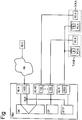
- the figure shows a structure diagram for a schematic representation of the essential functional units of a communication system according to the invention.
- FIG. 1 shows a schematic representation of a communication system PBX with connected internal communication terminals KE-A, KE-B and a, connected via a communication network KN external communication terminal KE-C.
- each internal communication terminal KE-A, KE-B is assigned a respective computer PC-A, PC-B.
- an internal communication terminal KE-A, KE-B and a computer PC-A, PC-B are respectively assigned to a subscriber TLN-A, TLN-B registered at the communication system PBX.
- the communication network CN for example, an ISDN-oriented (Integrated Services Digital Network) communication network as a terminal of the communications network KN is usually carried out on a so-called S 2M interface - often referred to in the literature as the primary rate access.
- an S 2M interface comprises on the one hand 30 payload data channels, which are configured as ISDN-oriented B channels with a transmission bit rate of 64 kbit / s each, and on the other hand a signaling channel, which is an ISDN-oriented D channel with a transmission bit rate of 64 kBit / s is configured.
- subscriber line unit ISDN communication terminals or by means derived therefrom interfaces, such as U p0 interfaces digital communication terminals are usually connected to the communication system PBX using S 0 interfaces.
- a U P0 or an S 0 interface comprise, on the one hand, 2 user data channels which are configured as ISDN-oriented B channels with a transmission rate of 64 kbit / s each and, on the other hand, a signaling channel which can be used as an ISDN-oriented D channel. Channel configured with a transmission rate of 16 kBit / s is.
- a / b interfaces of the subscriber line unit AE-KE analog communication terminals to connect to the communication system PBX.
- TCP / IP interface T ransmission C ontrol P rotocol / I nternet P rotocol
- a data transmission via the computer network is thus based on the TCP / IP protocol.
- the TCP / IP protocol supports the transport layer (layer 4) of the OSI reference model (O pen S ystem I nterconnection) and is based on the IP protocol (I nternet P rotocol), which is the network layer (layer 3) of the OSI Supported reference model.
- the communication system PBX has a switching network module SN, a central controller CP and a computer control unit HTTP.
- the switching network module SN is connected via at least one so-called 'PCM Highway' with the network terminal unit AE-N and with the subscriber line unit AE-KE.
- a 'PCM Highway' corresponding to the S 2M interface generally comprises 30 user data channels, which are configured as ISDN-oriented B channels with a transmission bit rate of 64 kbit / s and on the other hand, a signaling channel, which as ISDN-oriented D- Channel with a transmission bit rate of 64 kBit / s is configured.
- a signaling channel which as ISDN-oriented D- Channel with a transmission bit rate of 64 kBit / s is configured.
- the central control unit CP essentially takes over the control tasks of the communication system PBX.
- the central control unit CP is connected via a bus system BUS to the network connection unit AE-N, the subscriber connection unit AE-KE, the computer connection unit AE-R, the switching network module SN and the computer control unit HTTP.
- the host controller HTTP is connected via the computer terminal unit AE-R with that formed by the computer PC-A, PC-B computer network and used to control the CTI functions (C omputer- T elephonie- I ntegration) of the computer PC-A, PC-B.
- the computer control unit HTTP is designed as a so-called 'HTTP server'.
- the HTTP protocol (H ext yper T T ransmission P rotocol) relies on the TCP / IP protocol and supports the application layer (layer 7) of the OSI reference model and allows a transmission of the so-called WWW-pages (W orld W ide W eb) from the computer control unit HTTP to a plurality of peripheral units, in the present embodiment to the computer PC-A, PC-B.
- This architecture is often referred to in the literature as 'client-server architecture', in the present embodiment, the computer PC-A, PC-B as 'clients' and the computer control unit HTTP are referred to as 'server'.
- a visualization unit B For processing the information transmitted by the computer control unit HTTP to the computers PC-A, PC-B, a visualization unit B is set up in the computers PC-A, PC-B, by means of which the transmitted information is displayed on a screen of the computer PC. A, PC-B are displayed.
- a visualization unit B for processing information transmitted on the HTTP protocol is generally referred to in the literature as a 'browser'.
- Such 'browsers' are independent of the type of computers used (known types of computers are, for example, so-called 'workstations' or 'personal computers'), or of the operating systems installed on the computers (known operating systems for example, UNIX or WINDOWS NT) are available.
- the TCP / IP interface of the computer connection unit AE-R is assigned a unique IP address.
- This IP address corresponds to a so-called URL address ( U niform R esource L ocator) in the HTTP protocol, by which, starting from the computers PC-A, PC-B one of the URL address assigned stored in the computer control unit HTTP WWW page selected and can be displayed by the visualization unit B on the screen of the computer PC-A, PC-B.
- a bi-directional data transfer between the computers PC-A, PC-B and the computer control unit HTTP takes place over so-called "socket connections" in the form of 'string messages ", ie (on the basis of the ASCII character format A merican S tandard C ode for I nformation I nterchange).
- Messages transmitted by the computers PC-A, PC-B to the computer control unit HTTP are converted by the computer control unit HTTP and optionally directly via the bus system BUS to the corresponding functional units of the communication system PBX, eg the central control unit CP or the switching network module SN forwarded.
- the communication system PBX eg the central control unit CP or the switching network module SN forwarded.
- integrated in the communication system PBX computer control unit HTTP in contrast to an external 'CTI server' existing communication system-internal functions of the communication system PBX can be used.
- a voice connection between the external communication terminal KE-C and an internal communication terminal - for example, with the, a first participant TLN-A associated first internal communication terminal KE-A - starting from the external communication terminal KE-C via the network connection unit AE-N, the Coupled field module SN and the subscriber line unit AE-KE built, this is detected by the computer control unit HTTP.
- a connection to the first computer PC-A assigned to the first user TLN-A is then established on the basis of the computer control unit HTTP via the computer connection unit AE-R.
- the first computer PC-A of the voice connection between the external communication terminal KE-C and the first internal communication terminal KE-A associated switching functions of the communication system PBX, such as setting up a conference call, call forwarding, toggle, etc. to control. If, for example, during an existing voice connection between the external communication terminal KE-C and the first internal communication terminal KE-A a conference call with a third communication terminal - for example, the second internal communication terminal KE-C - are set up, this is signaled starting from the first computer PC-A to the computer control unit HTTP.
- the computer control unit HTTP converts a corresponding received signaling message into a corresponding control message and forwards it via the bus system BUS to the corresponding functional units of the communication system PBX, for example to the switching network module SN, through which a conference call between the external communication terminal KE-C and the first and the second internal communication terminal KE-A, KE-B is established.
- analog internal communication terminals can also use features of the communication system PBX, which are normally not available to analog communication terminals.
- the external communication terminal KE-C is also assigned an external computer (not shown), which is connected to the communication network KN via an S 0 interface or a modem, for example, data can be exchanged between the first computer PC and the voice connection in a simple manner.
Landscapes
- Engineering & Computer Science (AREA)
- Computer Networks & Wireless Communication (AREA)
- Physics & Mathematics (AREA)
- Astronomy & Astrophysics (AREA)
- General Physics & Mathematics (AREA)
- Signal Processing (AREA)
- Telephonic Communication Services (AREA)
- Mobile Radio Communication Systems (AREA)
Claims (6)
- Central de télécommunications (PBX),
avec une unité centrale de commande (CP) et avec des premières unités de raccordement (AE-KE, AE-N), comprenant une interface d'abonné (TSS) ou une interface de réseau (NSS), en vue de la liaison avec des terminaux de communication (KE-A, KE-B, KE-C), dans lequel à chacun des terminaux de communication internes (KE-A, KE-B) est associé un dispositif de traitement de données (PC-A, PC-B) particulier avec un dispositif d'écran,
caractérisé par
une unité de commande de traitement de données, interne au central de télécommunications (HTTP), différente de l'unité centrale de commande (CP) et reliée à celle-ci par le biais d'un système de bus (BUS) interne au central de télécommunications,- qui est configurée pour le transfert de données, se rapportant au partenaire de conversation concerné, au dispositif de traitement de données (PC-A, PC-B) associé à une liaison vocale avec un terminal de communication interne (KE-A, KE-B), et- qui est conçue pour la conversion d'informations, envoyées côté dispositif de traitement de données, et pour leur transmission à l'unité centrale de commande (CP), etau moins une seconde unité de raccordement (AE-R), reliée à l'unité de commande de traitement de données, interne au central de télécommunications (HTTP) et comprenant une interface d'ordinateur (RSS), en vue du raccordement des dispositifs de traitement de données (PC-A, PC-B), dans lequel la seconde unité de raccordement (AE-R) est différente de la première unité de raccordement (AE-KE, AE-N). - Central de télécommunications selon la revendication 1,
caractérisé
en ce que la seconde unité de raccordement (AE-R) comprend au moins une interface de données (RSS) basée sur le protocole TCP/IP (protocole de commande de transmission / protocole Internet) en vue du raccordement des dispositifs de traitement de données (PC-A, PC-B). - Central de télécommunications selon la revendication 1 ou 2,
caractérisé
en ce que l'unité de commande de traitement de données, interne au central de télécommunications (HTTP) est agencée en tant d'unité centrale d'ordinateur HTTP (protocole de transport d'hypertexte), dans lequel un protocole HTTP est configuré pour un transfert de données entre l'unité de commande de traitement de données, interne au central de télécommunications (HTTP) et les dispositifs de traitement de données (PC-A, PC-B). - Central de télécommunications selon la revendication 3,
caractérisé
en ce que les dispositifs de traitement de données (PC-A, PC-B) comprennent chacun une unité de visualisation (B) en vue du traitement d'informations basées sur le protocole HTTP (protocole de transport d'hypertexte). - Système de télécommunications selon l'une quelconque des revendications 1 à 3, avec un module de matrice de commutation (SN) pour connecter des liaisons vocales,
caractérisé
en ce que le système de bus (BUS) est également relié aux premières unités de raccordement (AE-KE, AE-N) et au module de matrice de commutation (SN), et en ce que l'unité de commande de traitement de données (HTTP) est agencée pour reconnaître l'établissement d'une liaison vocale entre un terminal de communication externe (KE-C) et un terminal de communication interne (KE-A, KE-B) et, à la suite de quoi, pour établir une liaison au dispositif de traitement de données (PC-A, PC-B) associé au terminal de communication interne (KE-A, KE-B). - Système de télécommunications selon la revendication 5,
caractérisé
en ce que l'unité de commande de traitement de données (HTTP) est agencée, lorsqu'une liaison RNIS est établie en tant que liaison vocale, pour détecter un numéro d'appel pour le terminal de communication externe (KE-C) ou un nom associé au terminal de communication externe (KE-C) et pour sélectionner des données, associées au numéro d'appel ou au nom et enregistrées dans l'unité de commande de traitement de données (HTTP), et pour les transférer au dispositif de traitement de données (PC-A, PC-B) associé au terminal de communication interne.
Applications Claiming Priority (2)
| Application Number | Priority Date | Filing Date | Title |
|---|---|---|---|
| DE19852425 | 1998-11-13 | ||
| DE19852425A DE19852425A1 (de) | 1998-11-13 | 1998-11-13 | Kommunikationsanlage |
Publications (3)
| Publication Number | Publication Date |
|---|---|
| EP1001589A2 EP1001589A2 (fr) | 2000-05-17 |
| EP1001589A3 EP1001589A3 (fr) | 2003-09-24 |
| EP1001589B1 true EP1001589B1 (fr) | 2018-03-28 |
Family
ID=7887722
Family Applications (1)
| Application Number | Title | Priority Date | Filing Date |
|---|---|---|---|
| EP99122419.7A Expired - Lifetime EP1001589B1 (fr) | 1998-11-13 | 1999-11-10 | Telecommunications exchange |
Country Status (2)
| Country | Link |
|---|---|
| EP (1) | EP1001589B1 (fr) |
| DE (1) | DE19852425A1 (fr) |
Families Citing this family (2)
| Publication number | Priority date | Publication date | Assignee | Title |
|---|---|---|---|---|
| DE10043487A1 (de) * | 2000-09-04 | 2002-04-25 | Tenovis Gmbh & Co Kg | Verfahren zur Übertragung von Nachrichtendaten innerhalb eines Telefonsystems |
| DE10158748A1 (de) | 2001-11-30 | 2003-06-18 | Siemens Ag | Übermittlung Call-bezogener Daten in einem Kommunikationssystem |
Family Cites Families (6)
| Publication number | Priority date | Publication date | Assignee | Title |
|---|---|---|---|---|
| US5751795A (en) * | 1995-08-11 | 1998-05-12 | Lucent Technologies Inc. | Broadcasting of information through telephone switching system display messages |
| US6430282B1 (en) | 1995-09-29 | 2002-08-06 | Nortel Networks Limited | Methods and apparatus for originating voice calls |
| IL115967A (en) * | 1995-11-12 | 1999-05-09 | Phonet Communication Ltd | Network based distributed pbx system |
| US5764639A (en) * | 1995-11-15 | 1998-06-09 | Staples; Leven E. | System and method for providing a remote user with a virtual presence to an office |
| US5894512A (en) * | 1996-07-26 | 1999-04-13 | Ncr Corporation | Method and apparatus for routing voice and video calls to a group of agents |
| US5970126A (en) * | 1996-08-09 | 1999-10-19 | International Business Machines Corporation | Communication method and system |
-
1998
- 1998-11-13 DE DE19852425A patent/DE19852425A1/de not_active Withdrawn
-
1999
- 1999-11-10 EP EP99122419.7A patent/EP1001589B1/fr not_active Expired - Lifetime
Non-Patent Citations (1)
| Title |
|---|
| None * |
Also Published As
| Publication number | Publication date |
|---|---|
| DE19852425A1 (de) | 2000-05-25 |
| EP1001589A2 (fr) | 2000-05-17 |
| EP1001589A3 (fr) | 2003-09-24 |
Similar Documents
| Publication | Publication Date | Title |
|---|---|---|
| DE60034145T2 (de) | Client-server-netz zur behandlung von sprach-datenpaketen nach dem internet-protokoll | |
| EP0939537B1 (fr) | Méthode et appareil pour délivrer des services par un réseau de communication | |
| EP0971549B1 (fr) | Méthode pour informer les abonnés mobiles des caractéristiques des services sur un réseau de communication | |
| EP0687402B1 (fr) | Circuit permettant d'integrer des systemes informatiques dans le cadre de l'utilisation d'installations telephoniques | |
| EP1014660A2 (fr) | Méthode pour réaliser une fonction de lignes groupées dans un réseau de communication selon ITU-T H.323 | |
| EP1001589B1 (fr) | Telecommunications exchange | |
| EP0734186B1 (fr) | Procédé pour commander un réseau d'accès ainsi qu'un réseau d'accès et un central pour cela | |
| EP1424845B1 (fr) | Procédé pour intégrer un réseau à commutation par paquets dans un système de communication | |
| EP1305957B1 (fr) | Systeme permettant de connecter un dispositif de telecommunication a un reseau de communication a commutation de paquets | |
| DE19827376B4 (de) | Telekommunikationsanlage | |
| EP0939536A2 (fr) | Méthode et appareil pour délivrer des services pour des abonnés mobiles par un réseau de communication | |
| EP1313330A1 (fr) | Envoyer des informations vers un terminal d'un appelant sur les terminaux accessibles d'un appelé | |
| DE10129322A1 (de) | Zentrale Administration eines Callcenters | |
| EP1117235A2 (fr) | Méthode, commutateur, processeur de service, module de programme et interface pour la transmission de données de service de télécommunication entre un commutateur et un processeur de service | |
| EP1395024B1 (fr) | Méthode fournissant des services et/ou des charactéristiques techniques d'intégration téléphonique par ordinateur sur une liaison de communication comprenant plusieurs canaux de communication | |
| EP1385341B1 (fr) | PBX et serveur intégré dans un PBX | |
| EP1169813B1 (fr) | Procede de commande de dispositifs places dans un reseau de communication | |
| WO2012084248A1 (fr) | Procédé de mise en service automatique d'un terminal de communication conçu pour la communication vocale sur un terminal de communication pour la communication textuelle | |
| DE19914511B4 (de) | Vermittlungseinrichtung mit ISDN-Anschluß | |
| EP1202543A2 (fr) | Routeur pour l'établissement d'une connecetion via un réseau IP et méthode pour effectuer ceci | |
| DE60035493T2 (de) | Verfahren zur Dienstbereitsstellung in einem Kommunikationsnetzwerk und Programmmodulen und diesbezügliche Mittel | |
| EP1325617B1 (fr) | Systeme de communication et procede pour commander des fonctions dans un systeme de communication | |
| DE10117366B4 (de) | Verfahren und Anordnung zum Betreiben eines Telekommunikationsnetzes | |
| EP1168789A2 (fr) | Connection directe entre les matrices de commutation d'un serveur CTI et un central de télécommunication | |
| WO2012084257A1 (fr) | Intégration entre ordinateur et téléphonie à rattachement de l'ordinateur par l'intermédiaire d'un serveur de présence |
Legal Events
| Date | Code | Title | Description |
|---|---|---|---|
| PUAI | Public reference made under article 153(3) epc to a published international application that has entered the european phase |
Free format text: ORIGINAL CODE: 0009012 |
|
| AK | Designated contracting states |
Kind code of ref document: A2 Designated state(s): AT BE CH CY DE DK ES FI FR GB GR IE IT LI LU MC NL PT SE |
|
| AX | Request for extension of the european patent |
Free format text: AL;LT;LV;MK;RO;SI |
|
| PUAL | Search report despatched |
Free format text: ORIGINAL CODE: 0009013 |
|
| AK | Designated contracting states |
Kind code of ref document: A3 Designated state(s): AT BE CH CY DE DK ES FI FR GB GR IE IT LI LU MC NL PT SE |
|
| AX | Request for extension of the european patent |
Extension state: AL LT LV MK RO SI |
|
| RIC1 | Information provided on ipc code assigned before grant |
Ipc: 7H 04Q 3/62 B Ipc: 7H 04M 3/42 A |
|
| 17P | Request for examination filed |
Effective date: 20030902 |
|
| AKX | Designation fees paid |
Designated state(s): DE FR GB IT |
|
| 17Q | First examination report despatched |
Effective date: 20070911 |
|
| RAP1 | Party data changed (applicant data changed or rights of an application transferred) |
Owner name: SIEMENS ENTERPRISE COMMUNICATIONS GMBH & CO. KG |
|
| RAP1 | Party data changed (applicant data changed or rights of an application transferred) |
Owner name: UNIFY GMBH & CO. KG |
|
| RAP1 | Party data changed (applicant data changed or rights of an application transferred) |
Owner name: UNIFY GMBH & CO. KG |
|
| GRAP | Despatch of communication of intention to grant a patent |
Free format text: ORIGINAL CODE: EPIDOSNIGR1 |
|
| INTG | Intention to grant announced |
Effective date: 20171121 |
|
| GRAS | Grant fee paid |
Free format text: ORIGINAL CODE: EPIDOSNIGR3 |
|
| GRAA | (expected) grant |
Free format text: ORIGINAL CODE: 0009210 |
|
| AK | Designated contracting states |
Kind code of ref document: B1 Designated state(s): DE FR GB IT |
|
| REG | Reference to a national code |
Ref country code: GB Ref legal event code: FG4D Free format text: NOT ENGLISH |
|
| REG | Reference to a national code |
Ref country code: DE Ref legal event code: R096 Ref document number: 59915471 Country of ref document: DE |
|
| PG25 | Lapsed in a contracting state [announced via postgrant information from national office to epo] |
Ref country code: IT Free format text: LAPSE BECAUSE OF FAILURE TO SUBMIT A TRANSLATION OF THE DESCRIPTION OR TO PAY THE FEE WITHIN THE PRESCRIBED TIME-LIMIT Effective date: 20180328 |
|
| REG | Reference to a national code |
Ref country code: DE Ref legal event code: R097 Ref document number: 59915471 Country of ref document: DE |
|
| PLBE | No opposition filed within time limit |
Free format text: ORIGINAL CODE: 0009261 |
|
| STAA | Information on the status of an ep patent application or granted ep patent |
Free format text: STATUS: NO OPPOSITION FILED WITHIN TIME LIMIT |
|
| 26N | No opposition filed |
Effective date: 20190103 |
|
| REG | Reference to a national code |
Ref country code: DE Ref legal event code: R119 Ref document number: 59915471 Country of ref document: DE |
|
| GBPC | Gb: european patent ceased through non-payment of renewal fee |
Effective date: 20181110 |
|
| PG25 | Lapsed in a contracting state [announced via postgrant information from national office to epo] |
Ref country code: FR Free format text: LAPSE BECAUSE OF NON-PAYMENT OF DUE FEES Effective date: 20181130 Ref country code: DE Free format text: LAPSE BECAUSE OF NON-PAYMENT OF DUE FEES Effective date: 20190601 |
|
| PG25 | Lapsed in a contracting state [announced via postgrant information from national office to epo] |
Ref country code: GB Free format text: LAPSE BECAUSE OF NON-PAYMENT OF DUE FEES Effective date: 20181110 |