EP1001614A1 - Système de traitement de programmes et d'information des parameters dérivés de plusiers sources de radiodiffusion - Google Patents
Système de traitement de programmes et d'information des parameters dérivés de plusiers sources de radiodiffusion Download PDFInfo
- Publication number
- EP1001614A1 EP1001614A1 EP99402801A EP99402801A EP1001614A1 EP 1001614 A1 EP1001614 A1 EP 1001614A1 EP 99402801 A EP99402801 A EP 99402801A EP 99402801 A EP99402801 A EP 99402801A EP 1001614 A1 EP1001614 A1 EP 1001614A1
- Authority
- EP
- European Patent Office
- Prior art keywords
- program
- information
- content rating
- broadcast
- rating
- Prior art date
- Legal status (The legal status is an assumption and is not a legal conclusion. Google has not performed a legal analysis and makes no representation as to the accuracy of the status listed.)
- Granted
Links
Images


Classifications
-
- H—ELECTRICITY
- H04—ELECTRIC COMMUNICATION TECHNIQUE
- H04N—PICTORIAL COMMUNICATION, e.g. TELEVISION
- H04N7/00—Television systems
- H04N7/12—Systems in which the television signal is transmitted via one channel or a plurality of parallel channels, the bandwidth of each channel being less than the bandwidth of the television signal
-
- H—ELECTRICITY
- H04—ELECTRIC COMMUNICATION TECHNIQUE
- H04N—PICTORIAL COMMUNICATION, e.g. TELEVISION
- H04N21/00—Selective content distribution, e.g. interactive television or video on demand [VOD]
- H04N21/40—Client devices specifically adapted for the reception of or interaction with content, e.g. set-top-box [STB]; Operations thereof
- H04N21/43—Processing of content or additional data, e.g. demultiplexing additional data from a digital video stream; Elementary client operations, e.g. monitoring of home network or synchronising decoder's clock; Client middleware
- H04N21/433—Content storage operation, e.g. storage operation in response to a pause request, caching operations
- H04N21/4334—Recording operations
-
- H—ELECTRICITY
- H04—ELECTRIC COMMUNICATION TECHNIQUE
- H04N—PICTORIAL COMMUNICATION, e.g. TELEVISION
- H04N21/00—Selective content distribution, e.g. interactive television or video on demand [VOD]
- H04N21/20—Servers specifically adapted for the distribution of content, e.g. VOD servers; Operations thereof
- H04N21/23—Processing of content or additional data; Elementary server operations; Server middleware
- H04N21/235—Processing of additional data, e.g. scrambling of additional data or processing content descriptors
- H04N21/2353—Processing of additional data, e.g. scrambling of additional data or processing content descriptors specifically adapted to content descriptors, e.g. coding, compressing or processing of metadata
-
- H—ELECTRICITY
- H04—ELECTRIC COMMUNICATION TECHNIQUE
- H04N—PICTORIAL COMMUNICATION, e.g. TELEVISION
- H04N21/00—Selective content distribution, e.g. interactive television or video on demand [VOD]
- H04N21/20—Servers specifically adapted for the distribution of content, e.g. VOD servers; Operations thereof
- H04N21/23—Processing of content or additional data; Elementary server operations; Server middleware
- H04N21/236—Assembling of a multiplex stream, e.g. transport stream, by combining a video stream with other content or additional data, e.g. inserting a URL [Uniform Resource Locator] into a video stream, multiplexing software data into a video stream; Remultiplexing of multiplex streams; Insertion of stuffing bits into the multiplex stream, e.g. to obtain a constant bit-rate; Assembling of a packetised elementary stream
- H04N21/2362—Generation or processing of Service Information [SI]
-
- H—ELECTRICITY
- H04—ELECTRIC COMMUNICATION TECHNIQUE
- H04N—PICTORIAL COMMUNICATION, e.g. TELEVISION
- H04N21/00—Selective content distribution, e.g. interactive television or video on demand [VOD]
- H04N21/40—Client devices specifically adapted for the reception of or interaction with content, e.g. set-top-box [STB]; Operations thereof
- H04N21/41—Structure of client; Structure of client peripherals
- H04N21/4104—Peripherals receiving signals from specially adapted client devices
- H04N21/4135—Peripherals receiving signals from specially adapted client devices external recorder
-
- H—ELECTRICITY
- H04—ELECTRIC COMMUNICATION TECHNIQUE
- H04N—PICTORIAL COMMUNICATION, e.g. TELEVISION
- H04N21/00—Selective content distribution, e.g. interactive television or video on demand [VOD]
- H04N21/40—Client devices specifically adapted for the reception of or interaction with content, e.g. set-top-box [STB]; Operations thereof
- H04N21/41—Structure of client; Structure of client peripherals
- H04N21/426—Internal components of the client ; Characteristics thereof
-
- H—ELECTRICITY
- H04—ELECTRIC COMMUNICATION TECHNIQUE
- H04N—PICTORIAL COMMUNICATION, e.g. TELEVISION
- H04N21/00—Selective content distribution, e.g. interactive television or video on demand [VOD]
- H04N21/40—Client devices specifically adapted for the reception of or interaction with content, e.g. set-top-box [STB]; Operations thereof
- H04N21/43—Processing of content or additional data, e.g. demultiplexing additional data from a digital video stream; Elementary client operations, e.g. monitoring of home network or synchronising decoder's clock; Client middleware
- H04N21/4302—Content synchronisation processes, e.g. decoder synchronisation
- H04N21/4305—Synchronising client clock from received content stream, e.g. locking decoder clock with encoder clock, extraction of the PCR packets
-
- H—ELECTRICITY
- H04—ELECTRIC COMMUNICATION TECHNIQUE
- H04N—PICTORIAL COMMUNICATION, e.g. TELEVISION
- H04N21/00—Selective content distribution, e.g. interactive television or video on demand [VOD]
- H04N21/40—Client devices specifically adapted for the reception of or interaction with content, e.g. set-top-box [STB]; Operations thereof
- H04N21/43—Processing of content or additional data, e.g. demultiplexing additional data from a digital video stream; Elementary client operations, e.g. monitoring of home network or synchronising decoder's clock; Client middleware
- H04N21/432—Content retrieval operation from a local storage medium, e.g. hard-disk
- H04N21/4325—Content retrieval operation from a local storage medium, e.g. hard-disk by playing back content from the storage medium
-
- H—ELECTRICITY
- H04—ELECTRIC COMMUNICATION TECHNIQUE
- H04N—PICTORIAL COMMUNICATION, e.g. TELEVISION
- H04N21/00—Selective content distribution, e.g. interactive television or video on demand [VOD]
- H04N21/40—Client devices specifically adapted for the reception of or interaction with content, e.g. set-top-box [STB]; Operations thereof
- H04N21/43—Processing of content or additional data, e.g. demultiplexing additional data from a digital video stream; Elementary client operations, e.g. monitoring of home network or synchronising decoder's clock; Client middleware
- H04N21/434—Disassembling of a multiplex stream, e.g. demultiplexing audio and video streams, extraction of additional data from a video stream; Remultiplexing of multiplex streams; Extraction or processing of SI; Disassembling of packetised elementary stream
- H04N21/4345—Extraction or processing of SI, e.g. extracting service information from an MPEG stream
-
- H—ELECTRICITY
- H04—ELECTRIC COMMUNICATION TECHNIQUE
- H04N—PICTORIAL COMMUNICATION, e.g. TELEVISION
- H04N21/00—Selective content distribution, e.g. interactive television or video on demand [VOD]
- H04N21/40—Client devices specifically adapted for the reception of or interaction with content, e.g. set-top-box [STB]; Operations thereof
- H04N21/45—Management operations performed by the client for facilitating the reception of or the interaction with the content or administrating data related to the end-user or to the client device itself, e.g. learning user preferences for recommending movies, resolving scheduling conflicts
- H04N21/4508—Management of client data or end-user data
- H04N21/4532—Management of client data or end-user data involving end-user characteristics, e.g. viewer profile, preferences
-
- H—ELECTRICITY
- H04—ELECTRIC COMMUNICATION TECHNIQUE
- H04N—PICTORIAL COMMUNICATION, e.g. TELEVISION
- H04N21/00—Selective content distribution, e.g. interactive television or video on demand [VOD]
- H04N21/40—Client devices specifically adapted for the reception of or interaction with content, e.g. set-top-box [STB]; Operations thereof
- H04N21/45—Management operations performed by the client for facilitating the reception of or the interaction with the content or administrating data related to the end-user or to the client device itself, e.g. learning user preferences for recommending movies, resolving scheduling conflicts
- H04N21/462—Content or additional data management e.g. creating a master electronic programme guide from data received from the Internet and a Head-end or controlling the complexity of a video stream by scaling the resolution or bit-rate based on the client capabilities
- H04N21/4622—Retrieving content or additional data from different sources, e.g. from a broadcast channel and the Internet
-
- H—ELECTRICITY
- H04—ELECTRIC COMMUNICATION TECHNIQUE
- H04N—PICTORIAL COMMUNICATION, e.g. TELEVISION
- H04N21/00—Selective content distribution, e.g. interactive television or video on demand [VOD]
- H04N21/40—Client devices specifically adapted for the reception of or interaction with content, e.g. set-top-box [STB]; Operations thereof
- H04N21/45—Management operations performed by the client for facilitating the reception of or the interaction with the content or administrating data related to the end-user or to the client device itself, e.g. learning user preferences for recommending movies, resolving scheduling conflicts
- H04N21/462—Content or additional data management e.g. creating a master electronic programme guide from data received from the Internet and a Head-end or controlling the complexity of a video stream by scaling the resolution or bit-rate based on the client capabilities
- H04N21/4627—Rights management associated to the content
-
- H—ELECTRICITY
- H04—ELECTRIC COMMUNICATION TECHNIQUE
- H04N—PICTORIAL COMMUNICATION, e.g. TELEVISION
- H04N21/00—Selective content distribution, e.g. interactive television or video on demand [VOD]
- H04N21/40—Client devices specifically adapted for the reception of or interaction with content, e.g. set-top-box [STB]; Operations thereof
- H04N21/47—End-user applications
- H04N21/472—End-user interface for requesting content, additional data or services; End-user interface for interacting with content, e.g. for content reservation or setting reminders, for requesting event notification, for manipulating displayed content
- H04N21/47214—End-user interface for requesting content, additional data or services; End-user interface for interacting with content, e.g. for content reservation or setting reminders, for requesting event notification, for manipulating displayed content for content reservation or setting reminders; for requesting event notification, e.g. of sport results or stock market
-
- H—ELECTRICITY
- H04—ELECTRIC COMMUNICATION TECHNIQUE
- H04N—PICTORIAL COMMUNICATION, e.g. TELEVISION
- H04N21/00—Selective content distribution, e.g. interactive television or video on demand [VOD]
- H04N21/40—Client devices specifically adapted for the reception of or interaction with content, e.g. set-top-box [STB]; Operations thereof
- H04N21/47—End-user applications
- H04N21/475—End-user interface for inputting end-user data, e.g. personal identification number [PIN], preference data
- H04N21/4751—End-user interface for inputting end-user data, e.g. personal identification number [PIN], preference data for defining user accounts, e.g. accounts for children
-
- H—ELECTRICITY
- H04—ELECTRIC COMMUNICATION TECHNIQUE
- H04N—PICTORIAL COMMUNICATION, e.g. TELEVISION
- H04N21/00—Selective content distribution, e.g. interactive television or video on demand [VOD]
- H04N21/40—Client devices specifically adapted for the reception of or interaction with content, e.g. set-top-box [STB]; Operations thereof
- H04N21/47—End-user applications
- H04N21/482—End-user interface for programme selection
- H04N21/4821—End-user interface for programme selection using a grid, e.g. sorted out by channel and broadcast time
-
- H—ELECTRICITY
- H04—ELECTRIC COMMUNICATION TECHNIQUE
- H04N—PICTORIAL COMMUNICATION, e.g. TELEVISION
- H04N21/00—Selective content distribution, e.g. interactive television or video on demand [VOD]
- H04N21/80—Generation or processing of content or additional data by content creator independently of the distribution process; Content per se
- H04N21/81—Monomedia components thereof
- H04N21/8126—Monomedia components thereof involving additional data, e.g. news, sports, stocks, weather forecasts
- H04N21/8133—Monomedia components thereof involving additional data, e.g. news, sports, stocks, weather forecasts specifically related to the content, e.g. biography of the actors in a movie, detailed information about an article seen in a video programme
-
- H—ELECTRICITY
- H04—ELECTRIC COMMUNICATION TECHNIQUE
- H04N—PICTORIAL COMMUNICATION, e.g. TELEVISION
- H04N21/00—Selective content distribution, e.g. interactive television or video on demand [VOD]
- H04N21/80—Generation or processing of content or additional data by content creator independently of the distribution process; Content per se
- H04N21/81—Monomedia components thereof
- H04N21/8166—Monomedia components thereof involving executable data, e.g. software
- H04N21/8173—End-user applications, e.g. Web browser, game
-
- H—ELECTRICITY
- H04—ELECTRIC COMMUNICATION TECHNIQUE
- H04N—PICTORIAL COMMUNICATION, e.g. TELEVISION
- H04N21/00—Selective content distribution, e.g. interactive television or video on demand [VOD]
- H04N21/80—Generation or processing of content or additional data by content creator independently of the distribution process; Content per se
- H04N21/83—Generation or processing of protective or descriptive data associated with content; Content structuring
- H04N21/835—Generation of protective data, e.g. certificates
- H04N21/8352—Generation of protective data, e.g. certificates involving content or source identification data, e.g. Unique Material Identifier [UMID]
-
- H—ELECTRICITY
- H04—ELECTRIC COMMUNICATION TECHNIQUE
- H04N—PICTORIAL COMMUNICATION, e.g. TELEVISION
- H04N21/00—Selective content distribution, e.g. interactive television or video on demand [VOD]
- H04N21/80—Generation or processing of content or additional data by content creator independently of the distribution process; Content per se
- H04N21/83—Generation or processing of protective or descriptive data associated with content; Content structuring
- H04N21/835—Generation of protective data, e.g. certificates
- H04N21/8355—Generation of protective data, e.g. certificates involving usage data, e.g. number of copies or viewings allowed
-
- H—ELECTRICITY
- H04—ELECTRIC COMMUNICATION TECHNIQUE
- H04N—PICTORIAL COMMUNICATION, e.g. TELEVISION
- H04N21/00—Selective content distribution, e.g. interactive television or video on demand [VOD]
- H04N21/80—Generation or processing of content or additional data by content creator independently of the distribution process; Content per se
- H04N21/83—Generation or processing of protective or descriptive data associated with content; Content structuring
- H04N21/84—Generation or processing of descriptive data, e.g. content descriptors
-
- H—ELECTRICITY
- H04—ELECTRIC COMMUNICATION TECHNIQUE
- H04N—PICTORIAL COMMUNICATION, e.g. TELEVISION
- H04N5/00—Details of television systems
- H04N5/76—Television signal recording
- H04N5/78—Television signal recording using magnetic recording
- H04N5/782—Television signal recording using magnetic recording on tape
-
- H—ELECTRICITY
- H04—ELECTRIC COMMUNICATION TECHNIQUE
- H04N—PICTORIAL COMMUNICATION, e.g. TELEVISION
- H04N7/00—Television systems
- H04N7/08—Systems for the simultaneous or sequential transmission of more than one television signal, e.g. additional information signals, the signals occupying wholly or partially the same frequency band, e.g. by time division
- H04N7/087—Systems for the simultaneous or sequential transmission of more than one television signal, e.g. additional information signals, the signals occupying wholly or partially the same frequency band, e.g. by time division with signal insertion during the vertical blanking interval only
- H04N7/088—Systems for the simultaneous or sequential transmission of more than one television signal, e.g. additional information signals, the signals occupying wholly or partially the same frequency band, e.g. by time division with signal insertion during the vertical blanking interval only the inserted signal being digital
- H04N7/0887—Systems for the simultaneous or sequential transmission of more than one television signal, e.g. additional information signals, the signals occupying wholly or partially the same frequency band, e.g. by time division with signal insertion during the vertical blanking interval only the inserted signal being digital for the transmission of programme or channel identifying signals
-
- H—ELECTRICITY
- H04—ELECTRIC COMMUNICATION TECHNIQUE
- H04N—PICTORIAL COMMUNICATION, e.g. TELEVISION
- H04N7/00—Television systems
- H04N7/16—Analogue secrecy systems; Analogue subscription systems
- H04N7/162—Authorising the user terminal, e.g. by paying; Registering the use of a subscription channel, e.g. billing
- H04N7/163—Authorising the user terminal, e.g. by paying; Registering the use of a subscription channel, e.g. billing by receiver means only
-
- H—ELECTRICITY
- H04—ELECTRIC COMMUNICATION TECHNIQUE
- H04N—PICTORIAL COMMUNICATION, e.g. TELEVISION
- H04N5/00—Details of television systems
- H04N5/76—Television signal recording
-
- H—ELECTRICITY
- H04—ELECTRIC COMMUNICATION TECHNIQUE
- H04N—PICTORIAL COMMUNICATION, e.g. TELEVISION
- H04N5/00—Details of television systems
- H04N5/76—Television signal recording
- H04N5/84—Television signal recording using optical recording
- H04N5/85—Television signal recording using optical recording on discs or drums
-
- H—ELECTRICITY
- H04—ELECTRIC COMMUNICATION TECHNIQUE
- H04N—PICTORIAL COMMUNICATION, e.g. TELEVISION
- H04N9/00—Details of colour television systems
- H04N9/79—Processing of colour television signals in connection with recording
- H04N9/80—Transformation of the television signal for recording, e.g. modulation, frequency changing; Inverse transformation for playback
- H04N9/804—Transformation of the television signal for recording, e.g. modulation, frequency changing; Inverse transformation for playback involving pulse code modulation of the colour picture signal components
- H04N9/806—Transformation of the television signal for recording, e.g. modulation, frequency changing; Inverse transformation for playback involving pulse code modulation of the colour picture signal components with processing of the sound signal
- H04N9/8063—Transformation of the television signal for recording, e.g. modulation, frequency changing; Inverse transformation for playback involving pulse code modulation of the colour picture signal components with processing of the sound signal using time division multiplex of the PCM audio and PCM video signals
-
- H—ELECTRICITY
- H04—ELECTRIC COMMUNICATION TECHNIQUE
- H04N—PICTORIAL COMMUNICATION, e.g. TELEVISION
- H04N9/00—Details of colour television systems
- H04N9/79—Processing of colour television signals in connection with recording
- H04N9/80—Transformation of the television signal for recording, e.g. modulation, frequency changing; Inverse transformation for playback
- H04N9/82—Transformation of the television signal for recording, e.g. modulation, frequency changing; Inverse transformation for playback the individual colour picture signal components being recorded simultaneously only
- H04N9/8205—Transformation of the television signal for recording, e.g. modulation, frequency changing; Inverse transformation for playback the individual colour picture signal components being recorded simultaneously only involving the multiplexing of an additional signal and the colour video signal
- H04N9/8227—Transformation of the television signal for recording, e.g. modulation, frequency changing; Inverse transformation for playback the individual colour picture signal components being recorded simultaneously only involving the multiplexing of an additional signal and the colour video signal the additional signal being at least another television signal
Definitions
- This invention is related to the processing of programs and associated content rating and system timing information received from multiple broadcast sources for program play, recording and playback.
- packetized program information transmitted to a video decoder such as a High Definition Television (HDTV) receiver
- a video decoder such as a High Definition Television (HDTV) receiver
- the packetized program information of an individual broadcaster may contain the data content of several program sub-channels occupying the frequency spectrum previously occupied by a single analog broadcast channel.
- the sub-channels may comprise, for example, digital services including a main program channel, a financial service channel offering stock quotes, a sports news service channel and a shopping and interactive channel, all being conveyed within the 6 MHz bandwidth previously allocated to a single analog NTSC compatible broadcast channel.
- the packetized program information of an individual broadcaster also contains ancillary information as well as the data content of the program sub-channels.
- the ancillary information includes system information and program specific data used in identifying and assembling packets comprising selected programs and also includes program guide and text information associated with the transmitted program data.
- the ancillary system information includes system timing information providing a time clock reference enabling determination of a time at which a specific program is to be broadcast.
- the ancillary program specific data may include program content rating information (such as PG-13 etc.) enabling parental control of viewing using a conditional access system such as a V-chip type system, for example.
- the ancillary system timing and content rating information is typically encoded along with program data to conform to the requirements of a known standard.
- One such standard detailing an information protocol incorporating system timing and content rating information for broadcast applications is entitled, Program and System Information Protocol for Terrestrial Broadcast and Cable , published by the Advanced Television Systems Committee (ATSC), 10 November 1997, hereinafter referred to as
- a number of problems may arise in a digital video system in processing system timing and program specific information from multiple broadcast sources. Specifically, problems arise in the use of the system timing information for scheduling program processing functions and for displaying a current time to a user. Problems also arise in providing a conditional access system that uses accurate program content rating information in authorizing access to programs whilst also providing desirable features such as the ability for a user to optionally override a previously set content rating limit. Thus there is a need to solve these problems and derivative problems.
- a system processes packetized program information, from different broadcast sources, containing programs and program specific information including associated content rating data.
- a program specific parameter of a desired program is selected based on its source from equivalent parameters from alternative broadcast sources.
- the desired program is processed for display, recording or playback using the selected program specific parameter.
- the selected program specific parameter may comprise a content rating that is mapped to a different program content rating system and used in validating authorization to access the desired program.
- FIG. 1 is a block diagram of a digital video receiving system for demodulating and decoding broadcast signals from multiple broadcast sources, according to the principles of the invention.
- the MPEG data format is widely adopted and detailed in the MPEG2 (Moving Pictures Expert Group) image encoding standard, hereinafter referred to as the "MPEG standard", (ISO/IEC 13818-1, 10th June 1994, and ISO/IEC 13818-2, 20th January 1995).
- the program specific and timing information may be of a variety of types.
- PSI Program Specific Information
- it may comply with Program Specific Information (PSI) requirements specified in section 2.4.4 of the MPEG systems standard or it may comply with the previously mentioned PSIP standard or other ATSC standards.
- PSIP Program Specific Information
- it may be formed in accordance with proprietary or custom requirements of a particular system.
- the principles of the invention may be applied to terrestrial, cable, satellite, Internet or computer network broadcast systems in which the coding type or modulation format may be varied.
- Such systems may include, for example, non-MPEG compatible systems, involving other types of encoded datastreams and other methods of conveying program specific information.
- 'program' is used to represent any form of packetized data such as audio data, telephone messages, computer programs, Internet data or other communications, for example.
- a broadcast carrier modulated with signals carrying audio, video and associated data representing broadcast program content is received by antenna 10 and processed by unit 13.
- the resultant digital output signal is demodulated by demodulator 15.
- the demodulated output from unit 15 is trellis decoded, mapped into byte length data segments, deinterleaved and Reed-Solomon error corrected by decoder 17.
- the corrected output data from unit 17 is in the form of an MPEG compatible transport datastream containing program representative multiplexed audio, video and data components.
- the transport stream from unit 17 is demultiplexed into audio, video and data components by unit 22 which are further processed by the other elements of decoder system 100.
- decoder 100 provides MPEG decoded data for display and audio reproduction on units 50 and 55 respectively.
- the transport stream from unit 17 is processed by decoder 100 to provide an MPEG compatible datastream for storage on storage medium 105 via storage device 90.
- Controller 60 uses the selection information provided from remote control unit 70 via interface 65 to appropriately configure the elements of Figure 1 to receive a desired program channel for viewing.
- Controller 60 comprises processor 62 and processor 64.
- Unit 62 processes (i.e. parses, collates and assembles) system timing information and program specific information including program content rating, and program guide information.
- Processor 64 performs the remaining control functions required in operating decoder 100.
- the functions of unit 60 may be implemented as separate elements 62 and 64 as depicted in Figure 1, they may alternatively be implemented within a single processor.
- Controller 60 configures processor 13, demodulator 15, decoder 17 and decoder system 100 to demodulate and decode the input signal format and coding type. Further, controller 60 configures units 13, 15, and 17 for other communication modes, such as for receiving cable television (CATV) signals and for bi-directional communication via coaxial line 14 or for bi-directional (e.g. Internet) communication, for example, via telephone line 11.
- CATV cable television
- NTSC NTSC compatible signal
- units 13, 15, 17 and sub-units within decoder 100 are individually configured for the input signal type by controller 60 setting control register values within these elements using a bi-directional data and control signal bus C.
- the transport stream provided to decoder 100 comprises data packets containing program channel data and ancillary system timing information and program specific information including program content rating, and program guide information.
- Unit 22 directs the ancillary information packets to controller 60 which parses, collates and assembles this information into hierarchically arranged tables. Individual data packets comprising the User selected program channel SC are identified and assembled using the assembled program specific information.
- the system timing information contains a time reference indicator and associated correction data (e.g. a daylight savings time indicator and offset information adjusting for time drift, leap years etc.). This timing information is sufficient for a decoder to convert the time reference indicator to a time clock (e.g.
- the program specific information contains conditional access, network information and identification and linking data enabling the system of Figure 1 to tune to a desired channel and assemble data packets to form complete programs.
- the program specific information also contains ancillary program content rating information (e.g. an age based suitability rating), program guide information (e.g. an Electronic Program Guide - EPG) and descriptive text related to the broadcast programs as well as data supporting the identification and assembly of this ancillary information.
- the program specific and system timing information is assembled by controller 60 into multiple hierarchically arranged and inter-linked tables.
- An exemplary PSIP compatible hierarchical table arrangement includes a System Time Table (STT), a Master Guide Table (MGT), a Channel Information Table (CIT), Event Information Tables (EITs) and optional tables such as Extended Text Tables (ETTs) and a Rating Region Table (RRT).
- STT contains a time reference indicator and associated correction data sufficient for a decoder to establish a time of transmission of a program by a broadcast source accurate to within plus or minus 4 seconds, for example.
- the MGT contains information for acquiring program specific information conveyed in other tables such as identifiers for identifying data packets associated with the other tables.
- the CIT contains information for tuning and navigation to receive a User selected program channel.
- the EIT contains descriptive lists of programs (events) receivable on the channels listed in the CIT.
- the ETT contains text messages describing programs and program channels.
- the RRT contains program content rating information such as the MPAA (Motion Picture Association of America) or V-chip compatible rating information that is collated by region (e.g. by country or by state within the U.S.A.). Additional program specific information describing and supplementing items within the hierarchical tables is conveyed within descriptor information elements.
- Information associating a program content rating with a particular program from a particular broadcast source may be conveyed within a content advisory descriptor contained in an EIT or PMT.
- the system timing and program content rating information associating a specific program with a specific rating may be contained in other tables, data formats, or descriptors such as the caption service descriptor or the information may be conveyed in user definable data.
- Additional program content ratings are conveyed in vertical blanking intervals in NTSC compatible signals processed by analog processor 27 within decoder 100 in analog video mode.
- the program specific and system timing information acquired by controller 60 via unit 22 is stored within internal memory of unit 60. Controller 60 uses the acquired content rating and system timing information in conditioning access to programs and in scheduling program processing functions including program viewing, recording and playback.
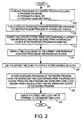
- Controller 60 employs the process of Figure 2 to execute scheduled program processing functions including program viewing, recording, and playback.
- a process corresponding to the process of Figure 2 may be used to execute other scheduled functions including program transmission, program standards conversion, program encryption, decryption, scrambling, decoding and their derivative functions including the termination of any of these processing functions.
- controller 60 adaptively generates a scheduling time clock from a time reference indication (e.g. in the STT) provided by the broadcast source of the particular program. This generated scheduling clock is used to time the initiation of scheduled program processing functions. Previously derived time clocks (e.g. from other broadcast sources) are disregarded in initiating scheduled processing of this particular program.
- the scheduling time clock is re-synchronized to the STT time reference information provided by a particular broadcast source prior to initiating scheduled processing of any programs produced by that particular source.
- the wrong program may be recorded (or viewed or played back) in overlap periods between initiation or termination of program recording and the actual broadcast time of the program.
- a program may be erroneously recorded using the program specific information parameters of a previously processed program during program segments occurring in the overlap periods. Consequently, upon playback of the program, incorrect program specific parameters are applied during the overlap segments. This may cause faulty decoding including incorrect packet identification and acquisition or the use of incorrect program content ratings, for example.
- invalid and objectionable images may be transiently displayed to a user. Under such conditions a portion of an adult content rated program may be erroneously displayed to a child, for example.
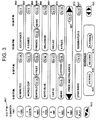
- Controller 60 employs the process of Figure 2 to schedule and execute program processing functions upon user initiation of a scheduling function. Following the start at step 200, controller 60 in step 203 schedules program viewing (including tuning and acquisition), recording or playback in response to a user scheduling command via the program guide interface of Figure 3 displayed on display 50 ( Figure 1). Other embodiments may employ alternative user interfaces for this scheduling function.
- a user navigates to the desired channel and program using menu icons 853 and 855.
- the user selects a program e.g. news program 849 by highlighting the news icon 849 and schedules the news program 849 for viewing or recording by selecting icon 805 or icon 810 respectively.
- a user may similarly schedule playback of a movie such as movie item 847 (Terminator II) from storage device 90 and medium 105 ( Figure 1).
- the user schedules playback of the movie by highlighting the movie item 847 and selecting icon 815.
- a user may schedule program viewing, recording or playback by other methods such as by using remote unit 70 buttons rather than program guide icons 805, 810 and 815.
- controller 60 Upon user selection of icons 805 or 810 controller 60 stores the scheduled times of broadcast and termination of news item 849 in internal memory. Controller 60 determines scheduled times of broadcast and termination of news item 849 from stored program guide information previously derived from the EIT. Upon user selection of icon 815 controller 60 in conjunction with unit 37 ( Figure 1) generates a scheduling menu enabling a user to enter a time for future playback of movie 847 or to select immediate playback of the movie. A user selects the control and navigation icons and enters times etc. using remote control 70 which supports cursor manipulation (or an alternative cursor based arrangement such as a mouse or keyboard system).
- controller 60 in step 205 configures units 13, 15 and 17 ( Figure 1) and decoder 100 elements to receive packetized program information containing a user selected program.
- Controller 60 configures processor 13, demodulator 15 and decoder 17 to receive the specific channel frequency and data format of the transmission channel of the broadcaster of the desired program (previously selected in step 203).
- controller 60 acquires the packets comprising STT data from the broadcast source of the desired program by configuring demultiplexer 22 with the predetermined STT PIDs and table identification data (Table_ID). Thereby controller 60 acquires the STT data containing a current time reference indication and time correction data produced by the broadcast source of the desired program.
- the STT data is transmitted and acquired at predetermined periodic intervals (recommended by the PSIP standard to be at least once per second).
- controller 60 derives a time clock using the acquired STT time reference indication (a value indicating the number of seconds elapsed since a base time, specifically since 12 a.m. January 6, 1980) together with STT correction data including an offset value and daylight savings time indicator (per PSIP standard section 6.1).
- the derived time clock consists of both a date and time and comprises year, month, day and time of day. In deriving the time clock from the time reference indication the following four values are computed:
- controller 60 uses an internal system clock synchronized with operation of storage device 90 for initiation of movie playback.
- controller 60 may derive a scheduling clock from a variety of other forms of time clock data. It is advantageous that the time clock data used to derive the scheduling clock is synchronized with the time clock transmitted by the broadcast source in broadcasting the desired program. This is achieved, for example, by using STT data from the broadcast source of the desired program in viewing and recording modes and by using a system clock synchronized with a playback device in playback mode. STT data and time clocks derived from STT data from broadcast sources other than the source of the desired program are disregarded in initiating scheduled processing of the desired program.
- controller 60 updates (i.e. corrects and re-synchronizes) an internally maintained and stored scheduling time clock with the time clock information derived in step 215.
- the scheduling clock is periodically updated in this manner from derived time clock values obtained from the updated STT data received at intervals of one second or less. In the time intervals between updating the scheduling clock from the STT data the scheduling clock is maintained using an internal crystal derived clock frequency within controller 60.
- Controller 60 in other embodiments may create and maintain separate scheduling clocks and/or STT derived time reference and correction information associated with each program broadcast source (e.g. one clock for each broadcast source) using the method of steps 205-215.
- step 220 if no time clock reference information is available from the broadcast source of the desired program, controller 60 uses a previously derived scheduling clock. Controller 60 in step 225 initiates processing of the desired program at the scheduled processing time previously established in step 203. Controller 60 determines whether the times for initiating processing (previously scheduled in step 203) have arrived based on the scheduled clock determined in step 220.
- Controller 60 in step 225 initiates processing of the desired program for viewing, recording or playback at the scheduled processing time by identifying and acquiring the packets comprising the desired program.
- controller 60 and processor 22 ( Figure 1) determine from the CIT the PIDs of video, audio and sub-picture streams in the packetized decoded transport stream input to decoder 100 from unit 17.
- the video, audio and sub-picture streams constitute the desired program being transmitted on selected channel SC.
- Processor 22 provides MPEG compatible video, audio and sub-picture streams for to video decoder 25, audio decoder 35 and sub-picture processor 30 respectively.
- the video and audio streams contain compressed video and audio data representing the selected channel SC program content.
- the sub-picture data contains the EIT, ETT and RRT information associated with the channel SC program content.
- Decoder 25 decodes and decompresses the MPEG compatible packetized video data from unit 22 and provides decompressed program representative pixel data to NTSC encoder 45 via multiplexer 40.
- audio processor 35 decodes the packetized audio data from unit 22 and provides decoded and amplified audio data, synchronized with the associated decompressed video data, to device 55 for audio reproduction.
- Processor 30 decodes and decompresses sub-picture data received from unit 22.
- Processor 30 assembles, collates and interprets EIT, RRT, and ETT data from unit 22 to produce formatted program guide data for output to OSD 37.
- OSD 37 processes the EIT, RRT and ETT and other information to generate pixel mapped data representing subtitling, control and information menu displays including selectable menu options and other items for presentation on the display device 50.
- the control and information menus that are displayed enable a user to select a program to view and to schedule future program processing functions including a) tuning to receive a selected program for viewing, b) recording of a program onto storage medium 105, and c) playback of a program from medium 105.
- the control and information displays including text and graphics produced by OSD generator 37, are generated in the form of overlay pixel map data under direction of controller 60.
- the overlay pixel map data from unit 37 is combined and synchronized with the decompressed pixel representative data from MPEG decoder 25 in encoder 45 via multiplexer 40 under direction of controller 60.
- Combined pixel map data representing a video program on channel SC together with associated sub-picture data is encoded by NTSC encoder 45 and output to device 50 for display.
- controller 60 In step 230 ( Figure 2), controller 60 generates a second time clock for presentation to a user such as the displayed time clock item 857 (also comprising a date) depicted in the program guide of Figure 3, for example.
- the second time clock is different to the scheduling clock and is generated to prevent time change discontinuities that occur in the scheduling clock from being displayed and from disturbing a user.
- Controller 60 generates the second time clock a) by filtering the scheduling time clock values to prevent abrupt discontinuities e.g. by using a low pass filter, or b) by updating the second time clock in periods when it is not visible to a user.
- a second time clock may be used that is independent of the scheduling clock and is a) based on an internal clock of the controller 60 and decoder 100 system, b) is received on a channel that is separate and distinct from the program content channels, or c) is received embedded within a composite program guide that lists programs from multiple broadcast sources, for example.
- the process of Figure 2 terminates at step 235.
- Controller 60 employs the method of Figure 4 to process packetized program information from different broadcast sources using functionally equivalent program specific information parameters including program content rating data dynamically selected from alternative broadcast sources.
- controller 60 advantageously adaptively selects a program specific parameter based on the broadcast source of the parameter.
- the process of Figure 4 is also applicable to the scheduling of analog video NTSC compatible programs and to the acquisition and processing of rating information derived from vertical blanking intervals.
- controller 60 conditions access to programs based on program content ratings received from multiple broadcast sources that provide either analog or digital data. Controller 60 conditions access to programs in response to user commands entered via control and information menus generated by OSD unit 37 and displayed on unit 50 (as described in connection with Figure 2).
- the control and information menus enable a user to enter content rating profiles for himself and others, upon providing entitlement data comprising a user identification (ID) and a predetermined password, for example.
- a content rating profile allows a user to set a maximum rating limit threshold for individual users of decoder 100 according to a user selected rating system.
- a user may select rating limit thresholds according to one of a number of different rating systems such as the V-chip, MPAA, or other systems.
- decoder 100 enables parental control over access to broadcast programs by children and others.
- the control and information menus enable a user to override a selected preset maximum rating limit upon entry of authorization data such as a userid and password.
- controller 60 in step 303 initiates scheduling of program viewing (including tuning and acquisition), recording or playback. Controller 60 initiates scheduling in response to a user scheduling command via the program guide interface of Figure 3 as previously discussed. Controller 60 in step 305 configures units 13, 15 and 17 ( Figure 1) and decoder 100 elements to receive composite program guide information from a first broadcast source.
- the composite program guide information contains program description and other information supporting assembly and decoding of packet data constituting individual programs produced by multiple different broadcast sources.
- Controller 60 configures processor 13, demodulator 15 and decoder 17 to receive the specific channel frequency and data format of the transmission channel provided by the first broadcast source.
- controller 60 acquires composite program guide information containing program specific information including a program content rating for the desired program from the first broadcast source. Also, in step 305 controller 60 stores the program specific information in internal memory and in step 310 retrieves the content rating of the desired program from a content advisory descriptor contained in an EIT of the stored program specific information. Controller 60 determines the rating system of the retrieved content rating (i.e. whether the desired program is rated according to a V-chip or MPAA compatible system, for example) from an acquired RRT of the stored program specific information.
- controller 60 compares the retrieved program content rating with a maximum rating threshold limit contained in a predetermined user specific rating profile.
- the rating threshold limit determines the maximum program content rating that the present user of the decoder 100 system is authorized to access. If the content rating of the desired program does not exceed the maximum content rating threshold, controller 60 schedules processing of the desired program in step 315.
- the retrieved program content rating and maximum content rating threshold limit are compatible with a content rating system contained within the previously stored RRT.
- An exemplary age based rating system is depicted in the program guide of Figure 3 (items 860-872) and comprises TV-M, TV-14, TV-PG. TV-G, TV-Y7, TV-Y ratings.
- a number of problems may occur in using content ratings from a composite program guide (or another rating information source) in scheduling processing of programs in the manner disclosed in steps 303-315. Specifically, problems may rise because a) the content rating supplied in the composite guide provided by the first broadcast source may be inaccurate, and b) the verification of user authorization performed in step 315 may be rendered invalid for a variety of reasons. The verification may be rendered invalid, for example, because either the program guide limit threshold is subsequently overridden and altered by an authorized user or because of a subsequent re-rating of the content of the desired program.
- controller 60 in step 320 acquires a second content rating of the desired program from program specific information provided by the broadcast source of the desired program.
- the content rating from this second broadcast source is acquired reasonably close to the time of program broadcast to enable a current and reliable second validation of user authorization to access the desired program.
- controller 60 converts the content rating acquired from the second source (the broadcaster of the desired program) to be compatible with the content rating system used by the first source (the composite guide broadcaster). Controller 60 converts the content rating using predetermined equivalence mapping information for mapping content ratings of one broadcast source to a rating system of another source.
- step 330 if the ratings acquired from the first and second broadcast sources are different, controller 60 selects between them. Once selected, the content rating is used in further processing and may be used by controller 60 in step 330 to update an existing different rating such as a rating displayed in the program guide of Figure 3, for example. Controller 60, in step 330, selects a program specific information parameter from the broadcast source deemed to be the most reliable and accurate considering a) the type of parameter being selected (a content rating in this example), and b) the time and stage in the processing scheme at which the parameter is being processed. A program specific information parameter from one broadcast source may be deemed more reliable at a particular point in time than an equivalent parameter from another source.
- parameter selection may be advantageously varied based on the source of the parameter and time and processing stage at which it is acquired.
- the rating conversion step 325 may be unnecessary and it may alternatively be used to convert a rating to the system of the second source or to a third and different system. It is advantageous in conditioning access based on program content ratings to select the content rating that: a) is provided from the broadcast source of the desired program, and b) is the most recently acquired rating especially if the rating is acquired substantially close to the time of broadcast of the desired program.
- controller 60 uses the rating selected in step 330 to perform a second validation of user authorization to access the desired program in the manner described in connection with step 315. Specifically, controller 60 compares the retrieved program content rating with the maximum rating threshold limit contained in the predetermined user specific rating profile. Upon successful validation, controller 60 in step 337 initiates processing of the desired program by configuring demultiplexer 22 with the PIDs for identifying and acquiring the packets comprising the datastreams constituting the desired program. Decoder 100 processes the identified packets of the desired program for viewing, recording or playback in the manner previously described in connection with Figure 2. The process of Figure 4 terminates at step 340.
- steps 303-320 similarly involve scheduling analog video processing and tuning to analog video sources for deriving content ratings (e.g. V chip compatible ratings) from NTSC compatible vertical or horizontal blanking intervals.
- content ratings e.g. V chip compatible ratings
- steps 325-337 use ratings derived from analog video signal as well as from digital program specific information.
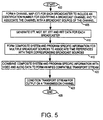
- Figure 5 shows a method for generating program specific information incorporating system timing and program content rating information, according to the invention.
- the method may be employed at an encoder for broadcasting video data such as the data received by antenna 10 of Figure 1 or the method may be employed within a decoder unit such as within controller 60 of Figure 1 in a storage mode, for example.
- the corrected output data from unit 17 is processed by decoder 100 to provide an MPEG compatible datastream for storage.
- a program is selected for storage by a user via remote unit 70 and interface 65.
- Processor 22, in conjunction with controller 60 forms condensed system and program specific information including STT, MGT, CIT, EIT, ETT and RRT data containing the advantageous features previously described.
- the condensed information supports decoding of the program selected for storage but excludes unrelated information.
- Controller 60, in conjunction with processor 22 forms a composite MPEG compatible datastream containing packetized content data of the selected program and associated condensed program specific information.
- the composite datastream is output to storage interface 95.
- Storage interface 95 buffers the composite datastream to reduce gaps and bit rate variation in the data.
- the resultant buffered data is processed by storage device 90 to be suitable for storage on medium 105.
- Storage device 90 encodes the buffered datastream from interface 95 using known error encoding techniques such as channel coding, interleaving and Reed Solomon encoding to produce an encoded datastream suitable for storage.
- Unit 90 stores the resultant encoded datastream incorporating the condensed program specific information on medium 105.
- An encoder employs the method of Figure 5 for generating system and program specific information including STT, MGT, CIT, EIT, ETT and RRT data and descriptors for each broadcaster and for combining the information in a composite datastream.
- the generated information may be transmitted to a decoder system such as the system of Figure 1 for reception by antenna 10 and subsequent decoding as previously described for example.
- STT, MGT, CIT, EIT, ETT and RRT data and descriptors for each broadcaster is generated in steps 405 and 410.
- a CIT is generated in step 405.
- the CIT contains channel and program identification information enabling acquisition of available broadcast programs and channels produced by an individual broadcaster.
- the CIT incorporates channel identification numbers and packet identifiers for identifying individual packetized datastreams that constitute individual programs to be transmitted on particular channels.
- the generated CIT also incorporates items linked to listed program channels including a program number, a language code indicator, and a stream type identifier, as previously described in connection with Figure 1.
- an EIT is generated containing program guide information including descriptive lists of programs (events) receivable on the channels listed in the CIT.
- the EIT is generated to include a content advisory descriptor containing program content ratings selected and processed from rating information provided by multiple broadcast sources in the manner described in connection with Figure 4.
- the EIT associates a specific program with a specific rating.
- An ETT and an RRT are also generated in step 410.
- the ETT contains text messages describing programs, for example, and the RRT contains program content rating information for various rating systems as previously described.
- an MGT is also generated containing data identifiers enabling the identification and assembly of CIT, EIT, and RRT information.
- the MGT also conveys table size information for the previously generated CIT, EIT, ETT and RRT.
- An STT is also generated in step 410 containing a time reference indicator and associated correction data sufficient for a decoder to establish a time of transmission of a program by the program broadcaster.
- step 415 the STT, MGT, CIT, EIT, ETT and RRT data and descriptors generated for each broadcaster in steps 405 and 410 are formed into composite system and program specific information for multiple broadcast sources.
- the composite system and program specific information is advantageously formed to associate individual STT time references with their corresponding broadcast sources.
- step 420 the composite information produced in step 415 is combined with video and audio program representative components for multiple channels and is formatted into a transport stream for output.
- step 423 the output transport stream is further processed to be suitable for transmission to another device such as a receiver, video server, or storage device for recording on a storage medium, for example.
- the processes performed in step 423 include known encoding functions such as data compression Reed-Solomon encoding, interleaving, scrambling, trellis encoding, and carrier modulation.
- the process is complete and terminates at step 425.
- multiple CIT, EIT, ETT and RRT tables may be formed and incorporated in the program specific information in order to accommodate expanded numbers of channels.
- the architecture of Figure 1 is not exclusive. Other architectures may be derived in accordance with the principles of the invention to accomplish the same objectives. Further, the functions of the elements of decoder 100 of Figure 1 and the process steps of Figures 2, 4 and 5 may be implemented in whole or in part within the programmed instructions of a microprocessor. In addition, the principles of the invention apply to any form of MPEG or non-MPEG compatible electronic program guide.
- a datastream formed according to the invention principles may be used in a variety of applications including video server or PC type communication via telephone lines, for example.
- a program datastream with one or more components of video, audio and data formed to incorporate system and program specific information according to invention principles may be recorded on a storage medium and transmitted or re-broadcast to other servers, PCs or receivers.
Landscapes
- Engineering & Computer Science (AREA)
- Multimedia (AREA)
- Signal Processing (AREA)
- Databases & Information Systems (AREA)
- Computer Security & Cryptography (AREA)
- Human Computer Interaction (AREA)
- General Health & Medical Sciences (AREA)
- Child & Adolescent Psychology (AREA)
- Health & Medical Sciences (AREA)
- Business, Economics & Management (AREA)
- Finance (AREA)
- Strategic Management (AREA)
- Library & Information Science (AREA)
- General Engineering & Computer Science (AREA)
- Software Systems (AREA)
- Television Systems (AREA)
- Two-Way Televisions, Distribution Of Moving Picture Or The Like (AREA)
- Compression Or Coding Systems Of Tv Signals (AREA)
Applications Claiming Priority (2)
| Application Number | Priority Date | Filing Date | Title |
|---|---|---|---|
| US09/191,056 US6529526B1 (en) | 1998-07-13 | 1998-11-12 | System for processing programs and program content rating information derived from multiple broadcast sources |
| US191056 | 1998-11-12 |
Publications (2)
| Publication Number | Publication Date |
|---|---|
| EP1001614A1 true EP1001614A1 (fr) | 2000-05-17 |
| EP1001614B1 EP1001614B1 (fr) | 2012-05-30 |
Family
ID=22703960
Family Applications (1)
| Application Number | Title | Priority Date | Filing Date |
|---|---|---|---|
| EP99402801A Expired - Lifetime EP1001614B1 (fr) | 1998-11-12 | 1999-11-10 | Procédé de traitement de paramètres spécifiques à un programme dérivés de plusieurs sources de radiodiffusion |
Country Status (7)
| Country | Link |
|---|---|
| US (1) | US6529526B1 (fr) |
| EP (1) | EP1001614B1 (fr) |
| JP (1) | JP4510192B2 (fr) |
| KR (1) | KR100707879B1 (fr) |
| CN (2) | CN100385928C (fr) |
| ES (1) | ES2385430T3 (fr) |
| TW (1) | TW444497B (fr) |
Cited By (6)
| Publication number | Priority date | Publication date | Assignee | Title |
|---|---|---|---|---|
| EP1341388A3 (fr) * | 2002-02-28 | 2004-10-27 | Broadcom Corporation | Traitement de données de puce antiviolence pour dispositif de décodage à fonction d'enregistrement vidéo personel. |
| US8228433B2 (en) | 2006-09-11 | 2012-07-24 | Lg Electronics Inc. | Method of controlling receiver for processing broadcast signal defining multi-channel broadcast and broadcast receiver using the same |
| CN103686407A (zh) * | 2013-12-04 | 2014-03-26 | 乐视网信息技术(北京)股份有限公司 | 轮播水印显示的方法和系统 |
| US8712434B2 (en) | 2007-02-13 | 2014-04-29 | Lg Electronics Inc. | Apparatus for providing location information of hand-held device and method thereof |
| EP2093961B1 (fr) * | 2007-05-30 | 2014-07-16 | Huawei Technologies Co., Ltd. | Procédé, dispositif et système pour un filtrage de contenu |
| US8959230B2 (en) | 2002-01-28 | 2015-02-17 | Qualcomm Incorporated | Method and apparatus for negotiation of transmission parameters for broadcast/multicast services |
Families Citing this family (142)
| Publication number | Priority date | Publication date | Assignee | Title |
|---|---|---|---|---|
| US6020189A (en) * | 1996-08-30 | 2000-02-01 | The Johns Hopkins University School Of Medicine | Fibroblast growth factor homologous factors (FHFs) and methods of use |
| US6720745B2 (en) * | 1997-08-26 | 2004-04-13 | Color Kinetics, Incorporated | Data delivery track |
| US8286207B1 (en) | 1998-07-13 | 2012-10-09 | Thomson Licensing | System for processing programs and system timing information derived from multiple broadcast sources |
| US6976265B1 (en) * | 1998-10-08 | 2005-12-13 | Ati International Srl | Method and apparatus for controlling display of content signals |
| US7730300B2 (en) * | 1999-03-30 | 2010-06-01 | Sony Corporation | Method and apparatus for protecting the transfer of data |
| US7565546B2 (en) | 1999-03-30 | 2009-07-21 | Sony Corporation | System, method and apparatus for secure digital content transmission |
| US6697489B1 (en) * | 1999-03-30 | 2004-02-24 | Sony Corporation | Method and apparatus for securing control words |
| US8108891B1 (en) * | 1999-04-21 | 2012-01-31 | Mitsubishi Electric Visual Solutions America, Inc. | V-chip hours |
| US7406706B1 (en) * | 1999-07-28 | 2008-07-29 | Sony Corporation | Method and system for devices efficiently sharing information regarding the content of a digital television bit-stream |
| US7085377B1 (en) * | 1999-07-30 | 2006-08-01 | Lucent Technologies Inc. | Information delivery in a multi-stream digital broadcasting system |
| US6952685B1 (en) * | 1999-08-27 | 2005-10-04 | Ochoa Optics Llc | Music distribution system and associated antipiracy protection |
| US8090619B1 (en) | 1999-08-27 | 2012-01-03 | Ochoa Optics Llc | Method and system for music distribution |
| US7647618B1 (en) * | 1999-08-27 | 2010-01-12 | Charles Eric Hunter | Video distribution system |
| US7209900B2 (en) * | 1999-08-27 | 2007-04-24 | Charles Eric Hunter | Music distribution systems |
| US6647417B1 (en) | 2000-02-10 | 2003-11-11 | World Theatre, Inc. | Music distribution systems |
| US8656423B2 (en) * | 1999-08-27 | 2014-02-18 | Ochoa Optics Llc | Video distribution system |
| US7039614B1 (en) | 1999-11-09 | 2006-05-02 | Sony Corporation | Method for simulcrypting scrambled data to a plurality of conditional access devices |
| US9252898B2 (en) | 2000-01-28 | 2016-02-02 | Zarbaña Digital Fund Llc | Music distribution systems |
| US7225164B1 (en) | 2000-02-15 | 2007-05-29 | Sony Corporation | Method and apparatus for implementing revocation in broadcast networks |
| AU2001251703A1 (en) * | 2000-03-06 | 2001-09-17 | Sony Electronics Inc. | System and method for effectively implementing an electronic image manager device |
| US7284064B1 (en) | 2000-03-21 | 2007-10-16 | Intel Corporation | Method and apparatus to determine broadcast content and scheduling in a broadcast system |
| US7167895B1 (en) * | 2000-03-22 | 2007-01-23 | Intel Corporation | Signaling method and apparatus to provide content on demand in a broadcast system |
| US8677413B2 (en) | 2000-04-17 | 2014-03-18 | Lg Electronics Inc. | Information descriptor and extended information descriptor data structures for digital television signals |
| US7877769B2 (en) * | 2000-04-17 | 2011-01-25 | Lg Electronics Inc. | Information descriptor and extended information descriptor data structures for digital television signals |
| US6772214B1 (en) * | 2000-04-27 | 2004-08-03 | Novell, Inc. | System and method for filtering of web-based content stored on a proxy cache server |
| US20010039657A1 (en) * | 2000-04-28 | 2001-11-08 | Tvmentor, Inc. | Methods, systems and devices for selectively presenting and sorting data content |
| CA2342045C (fr) * | 2000-06-02 | 2006-05-23 | Tri-Vision Electronics Inc. | Selecteur universel de cotes de medias |
| US20040205812A1 (en) * | 2000-06-22 | 2004-10-14 | Candelore Brant L. | Method and apparatus for routing program data in a program viewing unit |
| US20030206631A1 (en) * | 2000-06-22 | 2003-11-06 | Candelore Brant L. | Method and apparatus for scrambling program data for furture viewing |
| KR20020005160A (ko) * | 2000-07-08 | 2002-01-17 | Didim Power Co Ltd | 스포츠 센터용 오디오/비디오 시스템 |
| GB0023408D0 (en) * | 2000-09-23 | 2000-11-08 | Koninkl Philips Electronics Nv | Handling broadcast data tokens |
| KR100664012B1 (ko) * | 2000-10-14 | 2007-01-03 | 엘지전자 주식회사 | 디지털 티브이의 출력언어 표시방법 |
| US7275254B1 (en) | 2000-11-21 | 2007-09-25 | Intel Corporation | Method and apparatus for determining and displaying the service level of a digital television broadcast signal |
| US7281061B2 (en) * | 2000-12-06 | 2007-10-09 | Matsushita Electric Industrial Co., Ltd. | Time managing apparatus for managing time to synchronize with other apparatuses |
| US20020112243A1 (en) * | 2001-02-12 | 2002-08-15 | World Theatre | Video distribution system |
| US8112311B2 (en) * | 2001-02-12 | 2012-02-07 | Ochoa Optics Llc | Systems and methods for distribution of entertainment and advertising content |
| EP1231782A1 (fr) * | 2001-02-13 | 2002-08-14 | Sony International (Europe) GmbH | Dispositif d'accord pour un réseau de distribution de données |
| US20020144265A1 (en) * | 2001-03-29 | 2002-10-03 | Connelly Jay H. | System and method for merging streaming and stored content information in an electronic program guide |
| US20020143591A1 (en) * | 2001-03-30 | 2002-10-03 | Connelly Jay H. | Method and apparatus for a hybrid content on demand broadcast system |
| US20020144269A1 (en) * | 2001-03-30 | 2002-10-03 | Connelly Jay H. | Apparatus and method for a dynamic electronic program guide enabling billing broadcast services per EPG line item |
| US8949878B2 (en) * | 2001-03-30 | 2015-02-03 | Funai Electric Co., Ltd. | System for parental control in video programs based on multimedia content information |
| US7034890B2 (en) * | 2001-04-13 | 2006-04-25 | Ati Technologies, Inc. | Method and apparatus for updating a computer system clock from a real time television signal |
| US7185352B2 (en) * | 2001-05-11 | 2007-02-27 | Intel Corporation | Method and apparatus for combining broadcast schedules and content on a digital broadcast-enabled client platform |
| US7747853B2 (en) | 2001-06-06 | 2010-06-29 | Sony Corporation | IP delivery of secure digital content |
| US7350082B2 (en) * | 2001-06-06 | 2008-03-25 | Sony Corporation | Upgrading of encryption |
| US7895616B2 (en) * | 2001-06-06 | 2011-02-22 | Sony Corporation | Reconstitution of program streams split across multiple packet identifiers |
| US7336787B2 (en) | 2001-06-06 | 2008-02-26 | Sony Corporation | Critical packet partial encryption |
| US20020194603A1 (en) * | 2001-06-15 | 2002-12-19 | Jay H. Connelly | Method and apparatus to distribute content using a multi-stage broadcast system |
| US20030005465A1 (en) * | 2001-06-15 | 2003-01-02 | Connelly Jay H. | Method and apparatus to send feedback from clients to a server in a content distribution broadcast system |
| US20030005451A1 (en) * | 2001-06-15 | 2003-01-02 | Connelly Jay H. | Method and apparatus to distribute content descriptors in a content distribution broadcast system |
| US20020194585A1 (en) * | 2001-06-15 | 2002-12-19 | Connelly Jay H. | Methods and apparatus for providing ranking feedback for content in a broadcast system |
| US7328455B2 (en) * | 2001-06-28 | 2008-02-05 | Intel Corporation | Apparatus and method for enabling secure content decryption within a set-top box |
| US7363569B2 (en) * | 2001-06-29 | 2008-04-22 | Intel Corporation | Correcting for data losses with feedback and response |
| US7047456B2 (en) * | 2001-08-28 | 2006-05-16 | Intel Corporation | Error correction for regional and dynamic factors in communications |
| US20030046633A1 (en) * | 2001-08-28 | 2003-03-06 | Jutzi Curtis E. | Data error correction based on reported factors and predicted data interference factors |
| US20030046683A1 (en) * | 2001-08-28 | 2003-03-06 | Jutzi Curtis E. | Server-side preference prediction based on customer billing information to generate a broadcast schedule |
| US7960005B2 (en) * | 2001-09-14 | 2011-06-14 | Ochoa Optics Llc | Broadcast distribution of content for storage on hardware protected optical storage media |
| KR20030025444A (ko) * | 2001-09-20 | 2003-03-29 | 주식회사 에이스테크놀로지 | 디지털 위성방송 시스템의 정보 송수신 방법 및 수신장치 |
| US7231653B2 (en) | 2001-09-24 | 2007-06-12 | Intel Corporation | Method for delivering transport stream data |
| US20030061611A1 (en) * | 2001-09-26 | 2003-03-27 | Ramesh Pendakur | Notifying users of available content and content reception based on user profiles |
| US20030066090A1 (en) * | 2001-09-28 | 2003-04-03 | Brendan Traw | Method and apparatus to provide a personalized channel |
| US8943540B2 (en) * | 2001-09-28 | 2015-01-27 | Intel Corporation | Method and apparatus to provide a personalized channel |
| US20030097478A1 (en) * | 2001-10-08 | 2003-05-22 | Imagearray, Ltd. | Method and system for synchronizing a presentation |
| US7039938B2 (en) * | 2002-01-02 | 2006-05-02 | Sony Corporation | Selective encryption for video on demand |
| US7242773B2 (en) * | 2002-09-09 | 2007-07-10 | Sony Corporation | Multiple partial encryption using retuning |
| US7765567B2 (en) * | 2002-01-02 | 2010-07-27 | Sony Corporation | Content replacement by PID mapping |
| US7823174B2 (en) * | 2002-01-02 | 2010-10-26 | Sony Corporation | Macro-block based content replacement by PID mapping |
| US7302059B2 (en) * | 2002-01-02 | 2007-11-27 | Sony Corporation | Star pattern partial encryption |
| US7215770B2 (en) * | 2002-01-02 | 2007-05-08 | Sony Corporation | System and method for partially encrypted multimedia stream |
| US7233669B2 (en) * | 2002-01-02 | 2007-06-19 | Sony Corporation | Selective encryption to enable multiple decryption keys |
| US7292691B2 (en) | 2002-01-02 | 2007-11-06 | Sony Corporation | Progressive video refresh slice detection |
| US7218738B2 (en) * | 2002-01-02 | 2007-05-15 | Sony Corporation | Encryption and content control in a digital broadcast system |
| US7155012B2 (en) * | 2002-01-02 | 2006-12-26 | Sony Corporation | Slice mask and moat pattern partial encryption |
| US7376233B2 (en) * | 2002-01-02 | 2008-05-20 | Sony Corporation | Video slice and active region based multiple partial encryption |
| US20030135605A1 (en) * | 2002-01-11 | 2003-07-17 | Ramesh Pendakur | User rating feedback loop to modify virtual channel content and/or schedules |
| US20030135857A1 (en) * | 2002-01-11 | 2003-07-17 | Ramesh Pendakur | Content discovery in a digital broadcast data service |
| US8126127B2 (en) * | 2002-01-16 | 2012-02-28 | Qualcomm Incorporated | Method and apparatus for provision of broadcast service information |
| KR100416169B1 (ko) * | 2002-02-25 | 2004-01-24 | 주식회사 에어코드 | 데이터 방송 송출/수신 시스템 및 이를 이용한 데이터방송 송출/수신 방법 |
| KR100406122B1 (ko) * | 2002-03-29 | 2003-11-14 | 한국전자통신연구원 | 디지털 데이터 방송을 위한 동기화 데이터 삽입 장치 및그 방법 |
| US20040017831A1 (en) * | 2002-04-05 | 2004-01-29 | Jian Shen | System and method for processing SI data from multiple input transport streams |
| US20090180025A1 (en) * | 2002-05-28 | 2009-07-16 | Sony Corporation | Method and apparatus for overlaying graphics on video |
| US7530084B2 (en) * | 2002-05-28 | 2009-05-05 | Sony Corporation | Method and apparatus for synchronizing dynamic graphics |
| KR101019981B1 (ko) | 2002-06-07 | 2011-03-09 | 톰슨 라이센싱 | 네트워크에서 디지털 인코딩된 데이터의 분배를 제어하기 위한 방법 및 장치 |
| US6795404B2 (en) * | 2002-06-18 | 2004-09-21 | Bellsouth Intellectual Property Corporation | Device for aggregating, translating, and disseminating communications within a multiple device environment |
| US20030231212A1 (en) * | 2002-06-18 | 2003-12-18 | Bellsouth Intellectual Property Corporation | User interface to a device environment |
| US7039698B2 (en) | 2002-06-18 | 2006-05-02 | Bellsouth Intellectual Property Corporation | Notification device interaction |
| US7016888B2 (en) | 2002-06-18 | 2006-03-21 | Bellsouth Intellectual Property Corporation | Learning device interaction rules |
| US6889207B2 (en) | 2002-06-18 | 2005-05-03 | Bellsouth Intellectual Property Corporation | Content control in a device environment |
| US20030233660A1 (en) * | 2002-06-18 | 2003-12-18 | Bellsouth Intellectual Property Corporation | Device interaction |
| US8818896B2 (en) | 2002-09-09 | 2014-08-26 | Sony Corporation | Selective encryption with coverage encryption |
| US8572408B2 (en) * | 2002-11-05 | 2013-10-29 | Sony Corporation | Digital rights management of a digital device |
| US7724907B2 (en) * | 2002-11-05 | 2010-05-25 | Sony Corporation | Mechanism for protecting the transfer of digital content |
| US8645988B2 (en) * | 2002-12-13 | 2014-02-04 | Sony Corporation | Content personalization for digital content |
| US8667525B2 (en) * | 2002-12-13 | 2014-03-04 | Sony Corporation | Targeted advertisement selection from a digital stream |
| US7409702B2 (en) * | 2003-03-20 | 2008-08-05 | Sony Corporation | Auxiliary program association table |
| US7292692B2 (en) | 2003-03-25 | 2007-11-06 | Sony Corporation | Content scrambling with minimal impact on legacy devices |
| US20050036067A1 (en) * | 2003-08-05 | 2005-02-17 | Ryal Kim Annon | Variable perspective view of video images |
| US7653288B2 (en) * | 2003-08-16 | 2010-01-26 | Samsung Electronics Co., Ltd. | Information storage medium having data structure for being reproduced adaptively according to player profile information, method for reproducing AV data in interactive mode |
| US7286667B1 (en) | 2003-09-15 | 2007-10-23 | Sony Corporation | Decryption system |
| KR100565614B1 (ko) | 2003-09-17 | 2006-03-29 | 엘지전자 주식회사 | 캡션 송수신 방법 |
| US20050066357A1 (en) * | 2003-09-22 | 2005-03-24 | Ryal Kim Annon | Modifying content rating |
| US7366287B2 (en) * | 2003-09-25 | 2008-04-29 | At&T Knowledge Ventures, L.P. | DTMF lockout utility epoch time stamp |
| US7853980B2 (en) * | 2003-10-31 | 2010-12-14 | Sony Corporation | Bi-directional indices for trick mode video-on-demand |
| US20050097597A1 (en) * | 2003-10-31 | 2005-05-05 | Pedlow Leo M.Jr. | Hybrid storage of video on demand content |
| US7346163B2 (en) * | 2003-10-31 | 2008-03-18 | Sony Corporation | Dynamic composition of pre-encrypted video on demand content |
| US7620180B2 (en) * | 2003-11-03 | 2009-11-17 | Sony Corporation | Preparation of content for multiple conditional access methods in video on demand |
| US7343013B2 (en) * | 2003-12-16 | 2008-03-11 | Sony Corporation | Composite session-based encryption of video on demand content |
| US20050097596A1 (en) * | 2003-10-31 | 2005-05-05 | Pedlow Leo M.Jr. | Re-encrypted delivery of video-on-demand content |
| US7263187B2 (en) * | 2003-10-31 | 2007-08-28 | Sony Corporation | Batch mode session-based encryption of video on demand content |
| US20050102702A1 (en) * | 2003-11-12 | 2005-05-12 | Candelore Brant L. | Cablecard with content manipulation |
| US20050169473A1 (en) * | 2004-02-03 | 2005-08-04 | Candelore Brant L. | Multiple selective encryption with DRM |
| JP2006033677A (ja) * | 2004-07-21 | 2006-02-02 | Matsushita Electric Ind Co Ltd | 映像再生出力装置及び映像再生出力方法 |
| WO2006049424A1 (fr) * | 2004-11-02 | 2006-05-11 | Yong-Seok Jeong | Procede et appareil permettant de demander un service au moyen d'un code d'acces |
| US7895617B2 (en) | 2004-12-15 | 2011-02-22 | Sony Corporation | Content substitution editor |
| US8041190B2 (en) | 2004-12-15 | 2011-10-18 | Sony Corporation | System and method for the creation, synchronization and delivery of alternate content |
| KR100678018B1 (ko) * | 2005-01-07 | 2007-02-02 | 엘지전자 주식회사 | 설정된 시청등급에 따른 기록 및 재생 방법과 장치 |
| KR100691322B1 (ko) * | 2005-06-07 | 2007-03-12 | 삼성전자주식회사 | 전송 스트림 송/수신 시스템 및 그 제어방법 |
| KR100754177B1 (ko) * | 2005-06-30 | 2007-09-03 | 삼성전자주식회사 | 방송 스트림 시간 정보 관리 방법 및 장치 |
| KR20070025752A (ko) * | 2005-09-05 | 2007-03-08 | 삼성전자주식회사 | 방송프로그램의 등급별 녹화방법 |
| JP4855752B2 (ja) * | 2005-09-30 | 2012-01-18 | 株式会社東芝 | Ip放送の送信方法 |
| US20070118857A1 (en) * | 2005-11-18 | 2007-05-24 | Sbc Knowledge Ventures, L.P. | System and method of recording video content |
| BRPI0619388A2 (pt) * | 2005-11-29 | 2011-10-04 | Google Inc | aplicações sociais e interativas para mìdia de massa |
| KR100820837B1 (ko) * | 2006-01-27 | 2008-04-10 | 엘지전자 주식회사 | 방송 수신기 및 이를 이용한 다이나믹 rrt 정보의 처리 방법 |
| US8185921B2 (en) | 2006-02-28 | 2012-05-22 | Sony Corporation | Parental control of displayed content using closed captioning |
| US7555464B2 (en) * | 2006-03-01 | 2009-06-30 | Sony Corporation | Multiple DRM management |
| US20070223870A1 (en) * | 2006-03-23 | 2007-09-27 | Seagate Technology Llc | Single board digital video system |
| FR2901950B1 (fr) * | 2006-05-30 | 2008-10-10 | Nds Technologies France Soc Pa | Procede de controle de visualisation de chaines de television notamment pour le renforcement du controle parental, et decodeur de chaines de television |
| US9679602B2 (en) | 2006-06-14 | 2017-06-13 | Seagate Technology Llc | Disc drive circuitry swap |
| US8411977B1 (en) | 2006-08-29 | 2013-04-02 | Google Inc. | Audio identification using wavelet-based signatures |
| KR20080022757A (ko) * | 2006-09-07 | 2008-03-12 | 엘지전자 주식회사 | 디지털 방송 신호와 상기 신호를 처리하는 장치 및 방법 |
| US9456250B2 (en) * | 2006-12-15 | 2016-09-27 | At&T Intellectual Property I, L.P. | Automatic rating optimization |
| KR101356491B1 (ko) * | 2007-03-02 | 2014-02-03 | 엘지전자 주식회사 | Iptv 환경에서의 등급에 관한 정보 처리 방법과 장치및 iptv 시스템 |
| KR101377952B1 (ko) * | 2007-06-05 | 2014-03-25 | 엘지전자 주식회사 | 방송 신호 전송 방법, 방송 신호 수신 방법 및 방송 수신기 |
| US20080313666A1 (en) * | 2007-06-15 | 2008-12-18 | Mark Clifford Evenson | Method and system for controlling access to media content distributed within a premises |
| US8407734B2 (en) * | 2007-07-25 | 2013-03-26 | Lg Electronics Inc. | Broadcasting receiver and method of transmitting / receiving broadcasting signal |
| US8087043B2 (en) * | 2007-07-25 | 2011-12-27 | Sony Corporation | Extensible downloadable content advisory system |
| US9305590B2 (en) | 2007-10-16 | 2016-04-05 | Seagate Technology Llc | Prevent data storage device circuitry swap |
| US20100287584A1 (en) * | 2009-05-07 | 2010-11-11 | Microsoft Corporation | Parental control for media playback |
| US8843984B2 (en) | 2010-10-12 | 2014-09-23 | At&T Intellectual Property I, L.P. | Method and system for preselecting multimedia content |
| CN103179432B (zh) * | 2011-12-21 | 2016-05-11 | 上海未来宽带技术股份有限公司 | 基于网页来进行节目处理的方法及系统 |
| US9703846B1 (en) | 2014-10-15 | 2017-07-11 | Google Inc. | Methods, systems, and media for presenting content based on a generic rating |
| US9788033B1 (en) * | 2016-06-29 | 2017-10-10 | Cisco Technology, Inc. | Secure differential insertion of secondary content |
Citations (3)
| Publication number | Priority date | Publication date | Assignee | Title |
|---|---|---|---|---|
| EP0701367A2 (fr) * | 1994-09-09 | 1996-03-13 | Thomson Consumer Electronics, Inc. | Interface pour guide de programme |
| US5625406A (en) * | 1994-12-21 | 1997-04-29 | Thomson Consumer Electronics, Inc. | Unified program guide interface |
| WO1997046010A1 (fr) * | 1996-05-31 | 1997-12-04 | Thomson Consumer Electronics, Inc. | Decodage de donnees numeriques comprenant des informations specifiques a un programme |
Family Cites Families (17)
| Publication number | Priority date | Publication date | Assignee | Title |
|---|---|---|---|---|
| US4323922A (en) | 1979-12-17 | 1982-04-06 | Oak Industries Inc. | Television coding system with channel level identification |
| US4930160A (en) | 1987-09-02 | 1990-05-29 | Vogel Peter S | Automatic censorship of video programs |
| US5410344A (en) | 1993-09-22 | 1995-04-25 | Arrowsmith Technologies, Inc. | Apparatus and method of selecting video programs based on viewers' preferences |
| US5485518A (en) | 1993-09-30 | 1996-01-16 | Yellowstone Environmental Science, Inc. | Electronic media program recognition and choice |
| US5550575A (en) | 1994-05-04 | 1996-08-27 | West; Brett | Viewer discretion television program control system |
| US5559548A (en) * | 1994-05-20 | 1996-09-24 | Davis; Bruce | System and method for generating an information display schedule for an electronic program guide |
| US5758257A (en) | 1994-11-29 | 1998-05-26 | Herz; Frederick | System and method for scheduling broadcast of and access to video programs and other data using customer profiles |
| JP3065227B2 (ja) * | 1995-03-10 | 2000-07-17 | ソニー株式会社 | 視聴制限装置および視聴制限方法 |
| JP3372004B2 (ja) * | 1995-03-31 | 2003-01-27 | ソニー株式会社 | 電子番組ガイド装置、電子番組ガイドシステム、および電子番組ガイド方法 |
| US5583576A (en) | 1995-09-11 | 1996-12-10 | Oktv, Inc. | Rating-dependent parental lock-out for television reception |
| JP3423160B2 (ja) * | 1996-09-30 | 2003-07-07 | 三洋電機株式会社 | 番組案内表示装置 |
| JP3416007B2 (ja) | 1995-12-06 | 2003-06-16 | インターナショナル・ビジネス・マシーンズ・コーポレーション | オーディオビジュアル・マテリアルをスクリーニングする装置及び方法 |
| US5754651A (en) * | 1996-05-31 | 1998-05-19 | Thomson Consumer Electronics, Inc. | Processing and storage of digital data and program specific information |
| JP3540098B2 (ja) * | 1996-06-21 | 2004-07-07 | 松下電器産業株式会社 | テレビジョン放送受信装置 |
| JP3519883B2 (ja) * | 1996-09-30 | 2004-04-19 | 三洋電機株式会社 | 画像表示装置 |
| US6111612A (en) * | 1997-07-10 | 2000-08-29 | Thomson Consumer Electronics | System for forming and processing text data for use in program specific information for broadcast |
| JP2003078890A (ja) * | 2001-09-04 | 2003-03-14 | Matsushita Electric Ind Co Ltd | デジタル放送送出装置、デジタル放送受信装置、デジタル放送送出方法、デジタル放送受信方法、及びプログラム |
-
1998
- 1998-11-12 US US09/191,056 patent/US6529526B1/en not_active Expired - Lifetime
-
1999
- 1999-10-14 TW TW088117805A patent/TW444497B/zh not_active IP Right Cessation
- 1999-10-27 KR KR1019990046764A patent/KR100707879B1/ko not_active Expired - Fee Related
- 1999-11-05 CN CNB2005100825965A patent/CN100385928C/zh not_active Expired - Lifetime
- 1999-11-05 CN CNB991236904A patent/CN1215712C/zh not_active Expired - Lifetime
- 1999-11-10 JP JP32027699A patent/JP4510192B2/ja not_active Expired - Lifetime
- 1999-11-10 ES ES99402801T patent/ES2385430T3/es not_active Expired - Lifetime
- 1999-11-10 EP EP99402801A patent/EP1001614B1/fr not_active Expired - Lifetime
Patent Citations (3)
| Publication number | Priority date | Publication date | Assignee | Title |
|---|---|---|---|---|
| EP0701367A2 (fr) * | 1994-09-09 | 1996-03-13 | Thomson Consumer Electronics, Inc. | Interface pour guide de programme |
| US5625406A (en) * | 1994-12-21 | 1997-04-29 | Thomson Consumer Electronics, Inc. | Unified program guide interface |
| WO1997046010A1 (fr) * | 1996-05-31 | 1997-12-04 | Thomson Consumer Electronics, Inc. | Decodage de donnees numeriques comprenant des informations specifiques a un programme |
Cited By (9)
| Publication number | Priority date | Publication date | Assignee | Title |
|---|---|---|---|---|
| US7366397B2 (en) | 2001-08-20 | 2008-04-29 | Broadcom Corporation | V-Chip data processing for decoder with personal video recording functionality |
| US8478107B2 (en) | 2001-08-20 | 2013-07-02 | Broadcom Corporation | V-chip data processing for decoder with personal video recording functionality |
| US8959230B2 (en) | 2002-01-28 | 2015-02-17 | Qualcomm Incorporated | Method and apparatus for negotiation of transmission parameters for broadcast/multicast services |
| EP1341388A3 (fr) * | 2002-02-28 | 2004-10-27 | Broadcom Corporation | Traitement de données de puce antiviolence pour dispositif de décodage à fonction d'enregistrement vidéo personel. |
| US8228433B2 (en) | 2006-09-11 | 2012-07-24 | Lg Electronics Inc. | Method of controlling receiver for processing broadcast signal defining multi-channel broadcast and broadcast receiver using the same |
| US8712434B2 (en) | 2007-02-13 | 2014-04-29 | Lg Electronics Inc. | Apparatus for providing location information of hand-held device and method thereof |
| EP2093961B1 (fr) * | 2007-05-30 | 2014-07-16 | Huawei Technologies Co., Ltd. | Procédé, dispositif et système pour un filtrage de contenu |
| US9473517B2 (en) | 2007-05-30 | 2016-10-18 | Huawei Technologies Co., Ltd. | Content screening method, apparatus and system |
| CN103686407A (zh) * | 2013-12-04 | 2014-03-26 | 乐视网信息技术(北京)股份有限公司 | 轮播水印显示的方法和系统 |
Also Published As
| Publication number | Publication date |
|---|---|
| JP2000152238A (ja) | 2000-05-30 |
| TW444497B (en) | 2001-07-01 |
| CN1255806A (zh) | 2000-06-07 |
| CN1215712C (zh) | 2005-08-17 |
| CN100385928C (zh) | 2008-04-30 |
| US6529526B1 (en) | 2003-03-04 |
| KR100707879B1 (ko) | 2007-04-16 |
| EP1001614B1 (fr) | 2012-05-30 |
| KR20000035074A (ko) | 2000-06-26 |
| JP4510192B2 (ja) | 2010-07-21 |
| CN1717020A (zh) | 2006-01-04 |
| ES2385430T3 (es) | 2012-07-24 |
Similar Documents
| Publication | Publication Date | Title |
|---|---|---|
| EP1001614B1 (fr) | Procédé de traitement de paramètres spécifiques à un programme dérivés de plusieurs sources de radiodiffusion | |
| JP5528947B2 (ja) | 多数の放送源から得られる番組及びシステムタイミング情報を処理するシステム | |
| KR100755797B1 (ko) | 프로그램 가이드 정보 획득 방법 | |
| KR100718568B1 (ko) | 방송 프로그램, 프로그램 가이드 및 채널 식별 데이터를 획득하고 처리하기 위한 방법 | |
| EP1013081B1 (fr) | Systeme pour former et traiter des donnees de type texte utilisees dans des informations specifiques d'emissions en vue de leur radiodiffusion | |
| US6993782B1 (en) | Program guide information and processor for providing program and channel substitution | |
| US6249320B1 (en) | System and method for displaying major and minor channel numbers | |
| EP0997036B1 (fr) | Systeme pour former et traiter des informations specifiques d'emissions, contenant des donnees de type texte, en vue d'une radiodiffusion terrestre, par cable ou par satellite | |
| AU2003203566B2 (en) | A system for forming and processing program map information suitable for terrestrial, cable or satellite broadcast | |
| WO2005048589A2 (fr) | Affichage automatique d'informations relatives a une nouvelle emission pendant la visualisation d'une emission | |
| EP1264481B1 (fr) | Informations de guide de programme et processeur fournissant le programme et la substitution de canal | |
| MXPA99010439A (en) | A system for processing programs and parameter information derived from multiple sources of transmis | |
| MXPA99010438A (en) | A system for processing programs and system timing information derived from multiple sources of transmis | |
| EP1684500A2 (fr) | Système de formation et de traitement d'informations specifiques à un programme et adaptées à une diffusion terrestre, par cable, ou par satellite | |
| WO2004100536A1 (fr) | Procede et dispositif pour l'activation d'information de guide psip depuis des sources disparates |
Legal Events
| Date | Code | Title | Description |
|---|---|---|---|
| PUAI | Public reference made under article 153(3) epc to a published international application that has entered the european phase |
Free format text: ORIGINAL CODE: 0009012 |
|
| AK | Designated contracting states |
Kind code of ref document: A1 Designated state(s): DE ES FR GB IT SE |
|
| AX | Request for extension of the european patent |
Free format text: AL;LT;LV;MK;RO;SI |
|
| 17P | Request for examination filed |
Effective date: 20001110 |
|
| AKX | Designation fees paid |
Free format text: DE ES FR GB IT SE |
|
| 17Q | First examination report despatched |
Effective date: 20070816 |
|
| GRAP | Despatch of communication of intention to grant a patent |
Free format text: ORIGINAL CODE: EPIDOSNIGR1 |
|
| RTI1 | Title (correction) |
Free format text: A METHOD FOR PROCESSING PROGRAM SPECIFIC PARAMETERS DERIVED FROM MULTIPLE BROADCAST SOURCES |
|
| RIN1 | Information on inventor provided before grant (corrected) |
Inventor name: SCHNEIDEWEND, DANIEL RICHARDTHOMSON MULTIMEDIA |
|
| GRAS | Grant fee paid |
Free format text: ORIGINAL CODE: EPIDOSNIGR3 |
|
| GRAA | (expected) grant |
Free format text: ORIGINAL CODE: 0009210 |
|
| AK | Designated contracting states |
Kind code of ref document: B1 Designated state(s): DE ES FR GB IT SE |
|
| REG | Reference to a national code |
Ref country code: GB Ref legal event code: FG4D |
|
| REG | Reference to a national code |
Ref country code: DE Ref legal event code: R096 Ref document number: 69944236 Country of ref document: DE Effective date: 20120719 |
|
| REG | Reference to a national code |
Ref country code: ES Ref legal event code: FG2A Ref document number: 2385430 Country of ref document: ES Kind code of ref document: T3 Effective date: 20120724 |
|
| PG25 | Lapsed in a contracting state [announced via postgrant information from national office to epo] |
Ref country code: SE Free format text: LAPSE BECAUSE OF FAILURE TO SUBMIT A TRANSLATION OF THE DESCRIPTION OR TO PAY THE FEE WITHIN THE PRESCRIBED TIME-LIMIT Effective date: 20120530 |
|
| PLBE | No opposition filed within time limit |
Free format text: ORIGINAL CODE: 0009261 |
|
| STAA | Information on the status of an ep patent application or granted ep patent |
Free format text: STATUS: NO OPPOSITION FILED WITHIN TIME LIMIT |
|
| 26N | No opposition filed |
Effective date: 20130301 |
|
| REG | Reference to a national code |
Ref country code: DE Ref legal event code: R097 Ref document number: 69944236 Country of ref document: DE Effective date: 20130301 |
|
| REG | Reference to a national code |
Ref country code: FR Ref legal event code: PLFP Year of fee payment: 17 |
|
| PGFP | Annual fee paid to national office [announced via postgrant information from national office to epo] |
Ref country code: GB Payment date: 20151130 Year of fee payment: 17 Ref country code: IT Payment date: 20151124 Year of fee payment: 17 |
|
| PGFP | Annual fee paid to national office [announced via postgrant information from national office to epo] |
Ref country code: ES Payment date: 20151014 Year of fee payment: 17 |
|
| REG | Reference to a national code |
Ref country code: FR Ref legal event code: PLFP Year of fee payment: 18 |
|
| GBPC | Gb: european patent ceased through non-payment of renewal fee |
Effective date: 20161110 |
|
| REG | Reference to a national code |
Ref country code: DE Ref legal event code: R082 Ref document number: 69944236 Country of ref document: DE Representative=s name: HOFSTETTER, SCHURACK & PARTNER PATENT- UND REC, DE |
|
| PG25 | Lapsed in a contracting state [announced via postgrant information from national office to epo] |
Ref country code: IT Free format text: LAPSE BECAUSE OF NON-PAYMENT OF DUE FEES Effective date: 20161110 |
|
| REG | Reference to a national code |
Ref country code: FR Ref legal event code: PLFP Year of fee payment: 19 |
|
| PG25 | Lapsed in a contracting state [announced via postgrant information from national office to epo] |
Ref country code: GB Free format text: LAPSE BECAUSE OF NON-PAYMENT OF DUE FEES Effective date: 20161110 |
|
| PG25 | Lapsed in a contracting state [announced via postgrant information from national office to epo] |
Ref country code: ES Free format text: LAPSE BECAUSE OF FAILURE TO SUBMIT A TRANSLATION OF THE DESCRIPTION OR TO PAY THE FEE WITHIN THE PRESCRIBED TIME-LIMIT Effective date: 20120530 |
|
| REG | Reference to a national code |
Ref country code: ES Ref legal event code: FD2A Effective date: 20181116 |
|
| PGFP | Annual fee paid to national office [announced via postgrant information from national office to epo] |
Ref country code: DE Payment date: 20181112 Year of fee payment: 20 |
|
| PG25 | Lapsed in a contracting state [announced via postgrant information from national office to epo] |
Ref country code: ES Free format text: LAPSE BECAUSE OF FAILURE TO SUBMIT A TRANSLATION OF THE DESCRIPTION OR TO PAY THE FEE WITHIN THE PRESCRIBED TIME-LIMIT Effective date: 20161111 |
|
| PGFP | Annual fee paid to national office [announced via postgrant information from national office to epo] |
Ref country code: FR Payment date: 20181129 Year of fee payment: 20 |
|
| REG | Reference to a national code |
Ref country code: DE Ref legal event code: R071 Ref document number: 69944236 Country of ref document: DE |
|
| P01 | Opt-out of the competence of the unified patent court (upc) registered |
Effective date: 20230527 |