EP1002085B1 - Methoden und mittel zur blühkontrolle in pflanzen - Google Patents
Methoden und mittel zur blühkontrolle in pflanzen Download PDFInfo
- Publication number
- EP1002085B1 EP1002085B1 EP98929549A EP98929549A EP1002085B1 EP 1002085 B1 EP1002085 B1 EP 1002085B1 EP 98929549 A EP98929549 A EP 98929549A EP 98929549 A EP98929549 A EP 98929549A EP 1002085 B1 EP1002085 B1 EP 1002085B1
- Authority
- EP
- European Patent Office
- Prior art keywords
- plant
- nucleic acid
- sequence
- flowering
- esd4
- Prior art date
- Legal status (The legal status is an assumption and is not a legal conclusion. Google has not performed a legal analysis and makes no representation as to the accuracy of the status listed.)
- Expired - Lifetime
Links
- 230000017260 vegetative to reproductive phase transition of meristem Effects 0.000 title claims abstract description 109
- 238000000034 method Methods 0.000 title claims description 51
- 150000007523 nucleic acids Chemical class 0.000 claims description 105
- 108020004707 nucleic acids Proteins 0.000 claims description 100
- 102000039446 nucleic acids Human genes 0.000 claims description 100
- 108090000623 proteins and genes Proteins 0.000 claims description 96
- 230000014509 gene expression Effects 0.000 claims description 51
- 239000002773 nucleotide Substances 0.000 claims description 49
- 125000003729 nucleotide group Chemical group 0.000 claims description 49
- 239000012634 fragment Substances 0.000 claims description 31
- 150000001413 amino acids Chemical class 0.000 claims description 23
- 108091026890 Coding region Proteins 0.000 claims description 20
- 239000013598 vector Substances 0.000 claims description 18
- 102000004196 processed proteins & peptides Human genes 0.000 claims description 17
- 108090000765 processed proteins & peptides Proteins 0.000 claims description 17
- 229920001184 polypeptide Polymers 0.000 claims description 16
- 230000001105 regulatory effect Effects 0.000 claims description 15
- 230000009466 transformation Effects 0.000 claims description 14
- 230000009261 transgenic effect Effects 0.000 claims description 13
- 230000000692 anti-sense effect Effects 0.000 claims description 11
- 230000001939 inductive effect Effects 0.000 claims description 10
- 230000003828 downregulation Effects 0.000 claims description 9
- 238000010367 cloning Methods 0.000 claims description 8
- 238000004519 manufacturing process Methods 0.000 claims description 8
- 230000000295 complement effect Effects 0.000 claims description 7
- 238000013518 transcription Methods 0.000 claims description 7
- 230000035897 transcription Effects 0.000 claims description 7
- 230000033228 biological regulation Effects 0.000 claims description 6
- 230000006798 recombination Effects 0.000 claims description 6
- 238000005215 recombination Methods 0.000 claims description 6
- 230000000813 microbial effect Effects 0.000 claims description 3
- 125000003275 alpha amino acid group Chemical group 0.000 claims 3
- 230000001902 propagating effect Effects 0.000 claims 1
- 230000001172 regenerating effect Effects 0.000 claims 1
- 241000196324 Embryophyta Species 0.000 abstract description 182
- 101100172705 Arabidopsis thaliana ESD4 gene Proteins 0.000 abstract description 44
- 241000219195 Arabidopsis thaliana Species 0.000 abstract description 16
- 241000894007 species Species 0.000 abstract description 11
- 101150033839 4 gene Proteins 0.000 abstract description 2
- 210000004027 cell Anatomy 0.000 description 70
- 108020004414 DNA Proteins 0.000 description 40
- 101150044357 ESD4 gene Proteins 0.000 description 36
- 238000003752 polymerase chain reaction Methods 0.000 description 26
- 239000002299 complementary DNA Substances 0.000 description 23
- 239000000047 product Substances 0.000 description 20
- 238000009396 hybridization Methods 0.000 description 19
- 239000013615 primer Substances 0.000 description 18
- 108091032973 (ribonucleotides)n+m Proteins 0.000 description 17
- 108700028369 Alleles Proteins 0.000 description 16
- 241000219194 Arabidopsis Species 0.000 description 15
- 230000000694 effects Effects 0.000 description 15
- 238000005516 engineering process Methods 0.000 description 12
- 229930027917 kanamycin Natural products 0.000 description 11
- 229960000318 kanamycin Drugs 0.000 description 11
- SBUJHOSQTJFQJX-NOAMYHISSA-N kanamycin Chemical compound O[C@@H]1[C@@H](O)[C@H](O)[C@@H](CN)O[C@@H]1O[C@H]1[C@H](O)[C@@H](O[C@@H]2[C@@H]([C@@H](N)[C@H](O)[C@@H](CO)O2)O)[C@H](N)C[C@@H]1N SBUJHOSQTJFQJX-NOAMYHISSA-N 0.000 description 11
- 229930182823 kanamycin A Natural products 0.000 description 11
- 230000035772 mutation Effects 0.000 description 11
- 102000004169 proteins and genes Human genes 0.000 description 11
- 240000007594 Oryza sativa Species 0.000 description 10
- 235000007164 Oryza sativa Nutrition 0.000 description 10
- 108700019146 Transgenes Proteins 0.000 description 10
- 235000018102 proteins Nutrition 0.000 description 10
- 235000009566 rice Nutrition 0.000 description 10
- 239000000523 sample Substances 0.000 description 10
- FAPWRFPIFSIZLT-UHFFFAOYSA-M Sodium chloride Chemical compound [Na+].[Cl-] FAPWRFPIFSIZLT-UHFFFAOYSA-M 0.000 description 9
- 239000000203 mixture Substances 0.000 description 9
- 241000589158 Agrobacterium Species 0.000 description 8
- 238000012217 deletion Methods 0.000 description 8
- 230000037430 deletion Effects 0.000 description 8
- 230000003321 amplification Effects 0.000 description 7
- 238000003199 nucleic acid amplification method Methods 0.000 description 7
- 238000012163 sequencing technique Methods 0.000 description 7
- 210000001519 tissue Anatomy 0.000 description 7
- 108020004705 Codon Proteins 0.000 description 6
- LFQSCWFLJHTTHZ-UHFFFAOYSA-N Ethanol Chemical compound CCO LFQSCWFLJHTTHZ-UHFFFAOYSA-N 0.000 description 6
- 108091028043 Nucleic acid sequence Proteins 0.000 description 6
- 108091034117 Oligonucleotide Proteins 0.000 description 6
- ISWSIDIOOBJBQZ-UHFFFAOYSA-N Phenol Chemical compound OC1=CC=CC=C1 ISWSIDIOOBJBQZ-UHFFFAOYSA-N 0.000 description 6
- 240000008042 Zea mays Species 0.000 description 6
- 235000016383 Zea mays subsp huehuetenangensis Nutrition 0.000 description 6
- 235000002017 Zea mays subsp mays Nutrition 0.000 description 6
- 230000002068 genetic effect Effects 0.000 description 6
- 230000001965 increasing effect Effects 0.000 description 6
- 235000009973 maize Nutrition 0.000 description 6
- 239000003550 marker Substances 0.000 description 6
- 238000007792 addition Methods 0.000 description 5
- 238000004458 analytical method Methods 0.000 description 5
- 238000006243 chemical reaction Methods 0.000 description 5
- 210000000349 chromosome Anatomy 0.000 description 5
- 238000002474 experimental method Methods 0.000 description 5
- 238000003780 insertion Methods 0.000 description 5
- 230000037431 insertion Effects 0.000 description 5
- 239000002609 medium Substances 0.000 description 5
- 230000002018 overexpression Effects 0.000 description 5
- 238000007894 restriction fragment length polymorphism technique Methods 0.000 description 5
- 239000011780 sodium chloride Substances 0.000 description 5
- 239000002689 soil Substances 0.000 description 5
- 238000006467 substitution reaction Methods 0.000 description 5
- IJGRMHOSHXDMSA-UHFFFAOYSA-N Atomic nitrogen Chemical compound N#N IJGRMHOSHXDMSA-UHFFFAOYSA-N 0.000 description 4
- HEDRZPFGACZZDS-UHFFFAOYSA-N Chloroform Chemical compound ClC(Cl)Cl HEDRZPFGACZZDS-UHFFFAOYSA-N 0.000 description 4
- ZHNUHDYFZUAESO-UHFFFAOYSA-N Formamide Chemical compound NC=O ZHNUHDYFZUAESO-UHFFFAOYSA-N 0.000 description 4
- 235000001014 amino acid Nutrition 0.000 description 4
- 229940024606 amino acid Drugs 0.000 description 4
- 238000013507 mapping Methods 0.000 description 4
- 108020004999 messenger RNA Proteins 0.000 description 4
- 230000009467 reduction Effects 0.000 description 4
- 238000003757 reverse transcription PCR Methods 0.000 description 4
- 150000003839 salts Chemical class 0.000 description 4
- 241000219198 Brassica Species 0.000 description 3
- 235000006008 Brassica napus var napus Nutrition 0.000 description 3
- 235000011299 Brassica oleracea var botrytis Nutrition 0.000 description 3
- 240000003259 Brassica oleracea var. botrytis Species 0.000 description 3
- 240000005979 Hordeum vulgare Species 0.000 description 3
- 235000007340 Hordeum vulgare Nutrition 0.000 description 3
- 206010020649 Hyperkeratosis Diseases 0.000 description 3
- 241000209510 Liliopsida Species 0.000 description 3
- 108700026244 Open Reading Frames Proteins 0.000 description 3
- 235000021307 Triticum Nutrition 0.000 description 3
- 244000098338 Triticum aestivum Species 0.000 description 3
- JLCPHMBAVCMARE-UHFFFAOYSA-N [3-[[3-[[3-[[3-[[3-[[3-[[3-[[3-[[3-[[3-[[3-[[5-(2-amino-6-oxo-1H-purin-9-yl)-3-[[3-[[3-[[3-[[3-[[3-[[5-(2-amino-6-oxo-1H-purin-9-yl)-3-[[5-(2-amino-6-oxo-1H-purin-9-yl)-3-hydroxyoxolan-2-yl]methoxy-hydroxyphosphoryl]oxyoxolan-2-yl]methoxy-hydroxyphosphoryl]oxy-5-(5-methyl-2,4-dioxopyrimidin-1-yl)oxolan-2-yl]methoxy-hydroxyphosphoryl]oxy-5-(6-aminopurin-9-yl)oxolan-2-yl]methoxy-hydroxyphosphoryl]oxy-5-(6-aminopurin-9-yl)oxolan-2-yl]methoxy-hydroxyphosphoryl]oxy-5-(6-aminopurin-9-yl)oxolan-2-yl]methoxy-hydroxyphosphoryl]oxy-5-(6-aminopurin-9-yl)oxolan-2-yl]methoxy-hydroxyphosphoryl]oxyoxolan-2-yl]methoxy-hydroxyphosphoryl]oxy-5-(5-methyl-2,4-dioxopyrimidin-1-yl)oxolan-2-yl]methoxy-hydroxyphosphoryl]oxy-5-(4-amino-2-oxopyrimidin-1-yl)oxolan-2-yl]methoxy-hydroxyphosphoryl]oxy-5-(5-methyl-2,4-dioxopyrimidin-1-yl)oxolan-2-yl]methoxy-hydroxyphosphoryl]oxy-5-(5-methyl-2,4-dioxopyrimidin-1-yl)oxolan-2-yl]methoxy-hydroxyphosphoryl]oxy-5-(6-aminopurin-9-yl)oxolan-2-yl]methoxy-hydroxyphosphoryl]oxy-5-(6-aminopurin-9-yl)oxolan-2-yl]methoxy-hydroxyphosphoryl]oxy-5-(4-amino-2-oxopyrimidin-1-yl)oxolan-2-yl]methoxy-hydroxyphosphoryl]oxy-5-(4-amino-2-oxopyrimidin-1-yl)oxolan-2-yl]methoxy-hydroxyphosphoryl]oxy-5-(4-amino-2-oxopyrimidin-1-yl)oxolan-2-yl]methoxy-hydroxyphosphoryl]oxy-5-(6-aminopurin-9-yl)oxolan-2-yl]methoxy-hydroxyphosphoryl]oxy-5-(4-amino-2-oxopyrimidin-1-yl)oxolan-2-yl]methyl [5-(6-aminopurin-9-yl)-2-(hydroxymethyl)oxolan-3-yl] hydrogen phosphate Polymers Cc1cn(C2CC(OP(O)(=O)OCC3OC(CC3OP(O)(=O)OCC3OC(CC3O)n3cnc4c3nc(N)[nH]c4=O)n3cnc4c3nc(N)[nH]c4=O)C(COP(O)(=O)OC3CC(OC3COP(O)(=O)OC3CC(OC3COP(O)(=O)OC3CC(OC3COP(O)(=O)OC3CC(OC3COP(O)(=O)OC3CC(OC3COP(O)(=O)OC3CC(OC3COP(O)(=O)OC3CC(OC3COP(O)(=O)OC3CC(OC3COP(O)(=O)OC3CC(OC3COP(O)(=O)OC3CC(OC3COP(O)(=O)OC3CC(OC3COP(O)(=O)OC3CC(OC3COP(O)(=O)OC3CC(OC3COP(O)(=O)OC3CC(OC3COP(O)(=O)OC3CC(OC3COP(O)(=O)OC3CC(OC3COP(O)(=O)OC3CC(OC3CO)n3cnc4c(N)ncnc34)n3ccc(N)nc3=O)n3cnc4c(N)ncnc34)n3ccc(N)nc3=O)n3ccc(N)nc3=O)n3ccc(N)nc3=O)n3cnc4c(N)ncnc34)n3cnc4c(N)ncnc34)n3cc(C)c(=O)[nH]c3=O)n3cc(C)c(=O)[nH]c3=O)n3ccc(N)nc3=O)n3cc(C)c(=O)[nH]c3=O)n3cnc4c3nc(N)[nH]c4=O)n3cnc4c(N)ncnc34)n3cnc4c(N)ncnc34)n3cnc4c(N)ncnc34)n3cnc4c(N)ncnc34)O2)c(=O)[nH]c1=O JLCPHMBAVCMARE-UHFFFAOYSA-N 0.000 description 3
- 238000013459 approach Methods 0.000 description 3
- 238000005119 centrifugation Methods 0.000 description 3
- 235000013339 cereals Nutrition 0.000 description 3
- BNIILDVGGAEEIG-UHFFFAOYSA-L disodium hydrogen phosphate Chemical compound [Na+].[Na+].OP([O-])([O-])=O BNIILDVGGAEEIG-UHFFFAOYSA-L 0.000 description 3
- 239000000499 gel Substances 0.000 description 3
- -1 phosphinotricin Chemical compound 0.000 description 3
- 239000013612 plasmid Substances 0.000 description 3
- 108091008146 restriction endonucleases Proteins 0.000 description 3
- 238000009331 sowing Methods 0.000 description 3
- 238000012546 transfer Methods 0.000 description 3
- 238000013519 translation Methods 0.000 description 3
- 230000009452 underexpressoin Effects 0.000 description 3
- MYPYJXKWCTUITO-UHFFFAOYSA-N vancomycin Natural products O1C(C(=C2)Cl)=CC=C2C(O)C(C(NC(C2=CC(O)=CC(O)=C2C=2C(O)=CC=C3C=2)C(O)=O)=O)NC(=O)C3NC(=O)C2NC(=O)C(CC(N)=O)NC(=O)C(NC(=O)C(CC(C)C)NC)C(O)C(C=C3Cl)=CC=C3OC3=CC2=CC1=C3OC1OC(CO)C(O)C(O)C1OC1CC(C)(N)C(O)C(C)O1 MYPYJXKWCTUITO-UHFFFAOYSA-N 0.000 description 3
- XLYOFNOQVPJJNP-UHFFFAOYSA-N water Substances O XLYOFNOQVPJJNP-UHFFFAOYSA-N 0.000 description 3
- 241000589155 Agrobacterium tumefaciens Species 0.000 description 2
- 235000007319 Avena orientalis Nutrition 0.000 description 2
- 244000075850 Avena orientalis Species 0.000 description 2
- 241000219310 Beta vulgaris subsp. vulgaris Species 0.000 description 2
- 235000011331 Brassica Nutrition 0.000 description 2
- 235000014698 Brassica juncea var multisecta Nutrition 0.000 description 2
- 240000002791 Brassica napus Species 0.000 description 2
- 240000000385 Brassica napus var. napus Species 0.000 description 2
- 240000007124 Brassica oleracea Species 0.000 description 2
- 235000003899 Brassica oleracea var acephala Nutrition 0.000 description 2
- 235000011301 Brassica oleracea var capitata Nutrition 0.000 description 2
- 235000001169 Brassica oleracea var oleracea Nutrition 0.000 description 2
- 235000006618 Brassica rapa subsp oleifera Nutrition 0.000 description 2
- 235000004977 Brassica sinapistrum Nutrition 0.000 description 2
- 108090000994 Catalytic RNA Proteins 0.000 description 2
- 102000053642 Catalytic RNA Human genes 0.000 description 2
- 108091060211 Expressed sequence tag Proteins 0.000 description 2
- 108700039691 Genetic Promoter Regions Proteins 0.000 description 2
- 244000020551 Helianthus annuus Species 0.000 description 2
- 235000003222 Helianthus annuus Nutrition 0.000 description 2
- 102100034343 Integrase Human genes 0.000 description 2
- FFEARJCKVFRZRR-BYPYZUCNSA-N L-methionine Chemical compound CSCC[C@H](N)C(O)=O FFEARJCKVFRZRR-BYPYZUCNSA-N 0.000 description 2
- 101150074286 LHY gene Proteins 0.000 description 2
- 240000008415 Lactuca sativa Species 0.000 description 2
- 235000003228 Lactuca sativa Nutrition 0.000 description 2
- TWRXJAOTZQYOKJ-UHFFFAOYSA-L Magnesium chloride Chemical compound [Mg+2].[Cl-].[Cl-] TWRXJAOTZQYOKJ-UHFFFAOYSA-L 0.000 description 2
- 108010092799 RNA-directed DNA polymerase Proteins 0.000 description 2
- 240000003829 Sorghum propinquum Species 0.000 description 2
- 235000011684 Sorghum saccharatum Nutrition 0.000 description 2
- 238000002105 Southern blotting Methods 0.000 description 2
- 208000037065 Subacute sclerosing leukoencephalitis Diseases 0.000 description 2
- 206010042297 Subacute sclerosing panencephalitis Diseases 0.000 description 2
- 235000021536 Sugar beet Nutrition 0.000 description 2
- 239000011543 agarose gel Substances 0.000 description 2
- 230000008901 benefit Effects 0.000 description 2
- 238000004113 cell culture Methods 0.000 description 2
- 239000003795 chemical substances by application Substances 0.000 description 2
- 239000013601 cosmid vector Substances 0.000 description 2
- 238000005520 cutting process Methods 0.000 description 2
- 230000001934 delay Effects 0.000 description 2
- 238000004925 denaturation Methods 0.000 description 2
- 230000036425 denaturation Effects 0.000 description 2
- 238000013461 design Methods 0.000 description 2
- 238000001514 detection method Methods 0.000 description 2
- 229960000633 dextran sulfate Drugs 0.000 description 2
- 229910000397 disodium phosphate Inorganic materials 0.000 description 2
- 238000004520 electroporation Methods 0.000 description 2
- 239000013604 expression vector Substances 0.000 description 2
- 238000010353 genetic engineering Methods 0.000 description 2
- 239000012869 germination medium Substances 0.000 description 2
- 230000000977 initiatory effect Effects 0.000 description 2
- 238000002955 isolation Methods 0.000 description 2
- 238000002372 labelling Methods 0.000 description 2
- 239000007788 liquid Substances 0.000 description 2
- 239000000463 material Substances 0.000 description 2
- 230000001404 mediated effect Effects 0.000 description 2
- 229930182817 methionine Natural products 0.000 description 2
- 238000002703 mutagenesis Methods 0.000 description 2
- 231100000350 mutagenesis Toxicity 0.000 description 2
- 229910052757 nitrogen Inorganic materials 0.000 description 2
- 239000008188 pellet Substances 0.000 description 2
- 102000054765 polymorphisms of proteins Human genes 0.000 description 2
- 238000002360 preparation method Methods 0.000 description 2
- 239000011541 reaction mixture Substances 0.000 description 2
- 230000002441 reversible effect Effects 0.000 description 2
- 108091092562 ribozyme Proteins 0.000 description 2
- 238000012216 screening Methods 0.000 description 2
- 238000012360 testing method Methods 0.000 description 2
- 229910052721 tungsten Inorganic materials 0.000 description 2
- 239000010937 tungsten Substances 0.000 description 2
- 238000011144 upstream manufacturing Methods 0.000 description 2
- 235000013311 vegetables Nutrition 0.000 description 2
- QKNYBSVHEMOAJP-UHFFFAOYSA-N 2-amino-2-(hydroxymethyl)propane-1,3-diol;hydron;chloride Chemical compound Cl.OCC(N)(CO)CO QKNYBSVHEMOAJP-UHFFFAOYSA-N 0.000 description 1
- CAAMSDWKXXPUJR-UHFFFAOYSA-N 3,5-dihydro-4H-imidazol-4-one Chemical class O=C1CNC=N1 CAAMSDWKXXPUJR-UHFFFAOYSA-N 0.000 description 1
- 101150043982 44 gene Proteins 0.000 description 1
- 244000291564 Allium cepa Species 0.000 description 1
- 235000002732 Allium cepa var. cepa Nutrition 0.000 description 1
- 108020005544 Antisense RNA Proteins 0.000 description 1
- 239000004475 Arginine Substances 0.000 description 1
- DCXYFEDJOCDNAF-UHFFFAOYSA-N Asparagine Natural products OC(=O)C(N)CC(N)=O DCXYFEDJOCDNAF-UHFFFAOYSA-N 0.000 description 1
- 235000007558 Avena sp Nutrition 0.000 description 1
- 235000011293 Brassica napus Nutrition 0.000 description 1
- 244000180419 Brassica nigra Species 0.000 description 1
- 235000011291 Brassica nigra Nutrition 0.000 description 1
- 235000017647 Brassica oleracea var italica Nutrition 0.000 description 1
- 235000004936 Bromus mango Nutrition 0.000 description 1
- 241000701489 Cauliflower mosaic virus Species 0.000 description 1
- LZZYPRNAOMGNLH-UHFFFAOYSA-M Cetrimonium bromide Chemical compound [Br-].CCCCCCCCCCCCCCCC[N+](C)(C)C LZZYPRNAOMGNLH-UHFFFAOYSA-M 0.000 description 1
- 239000005496 Chlorsulfuron Substances 0.000 description 1
- 240000006740 Cichorium endivia Species 0.000 description 1
- KRKNYBCHXYNGOX-UHFFFAOYSA-K Citrate Chemical compound [O-]C(=O)CC(O)(CC([O-])=O)C([O-])=O KRKNYBCHXYNGOX-UHFFFAOYSA-K 0.000 description 1
- 108700010070 Codon Usage Proteins 0.000 description 1
- 108020004635 Complementary DNA Proteins 0.000 description 1
- 229920000742 Cotton Polymers 0.000 description 1
- 244000241257 Cucumis melo Species 0.000 description 1
- 235000015510 Cucumis melo subsp melo Nutrition 0.000 description 1
- 238000007400 DNA extraction Methods 0.000 description 1
- 239000003155 DNA primer Substances 0.000 description 1
- 238000001712 DNA sequencing Methods 0.000 description 1
- 244000000626 Daucus carota Species 0.000 description 1
- 235000002767 Daucus carota Nutrition 0.000 description 1
- 240000006497 Dianthus caryophyllus Species 0.000 description 1
- 235000009355 Dianthus caryophyllus Nutrition 0.000 description 1
- KCXVZYZYPLLWCC-UHFFFAOYSA-N EDTA Chemical compound OC(=O)CN(CC(O)=O)CCN(CC(O)=O)CC(O)=O KCXVZYZYPLLWCC-UHFFFAOYSA-N 0.000 description 1
- YQYJSBFKSSDGFO-UHFFFAOYSA-N Epihygromycin Natural products OC1C(O)C(C(=O)C)OC1OC(C(=C1)O)=CC=C1C=C(C)C(=O)NC1C(O)C(O)C2OCOC2C1O YQYJSBFKSSDGFO-UHFFFAOYSA-N 0.000 description 1
- 241000588724 Escherichia coli Species 0.000 description 1
- 240000009088 Fragaria x ananassa Species 0.000 description 1
- 108700028146 Genetic Enhancer Elements Proteins 0.000 description 1
- 108700007698 Genetic Terminator Regions Proteins 0.000 description 1
- CEAZRRDELHUEMR-URQXQFDESA-N Gentamicin Chemical compound O1[C@H](C(C)NC)CC[C@@H](N)[C@H]1O[C@H]1[C@H](O)[C@@H](O[C@@H]2[C@@H]([C@@H](NC)[C@@](C)(O)CO2)O)[C@H](N)C[C@@H]1N CEAZRRDELHUEMR-URQXQFDESA-N 0.000 description 1
- 229930182566 Gentamicin Natural products 0.000 description 1
- 241000208150 Geraniaceae Species 0.000 description 1
- 244000068988 Glycine max Species 0.000 description 1
- 235000010469 Glycine max Nutrition 0.000 description 1
- 239000005562 Glyphosate Substances 0.000 description 1
- 244000299507 Gossypium hirsutum Species 0.000 description 1
- 241000282412 Homo Species 0.000 description 1
- 102220547197 Interferon-induced protein with tetratricopeptide repeats 1B_G14F_mutation Human genes 0.000 description 1
- 108091092195 Intron Proteins 0.000 description 1
- DCXYFEDJOCDNAF-REOHCLBHSA-N L-asparagine Chemical compound OC(=O)[C@@H](N)CC(N)=O DCXYFEDJOCDNAF-REOHCLBHSA-N 0.000 description 1
- CKLJMWTZIZZHCS-REOHCLBHSA-N L-aspartic acid Chemical compound OC(=O)[C@@H](N)CC(O)=O CKLJMWTZIZZHCS-REOHCLBHSA-N 0.000 description 1
- ZDXPYRJPNDTMRX-VKHMYHEASA-N L-glutamine Chemical compound OC(=O)[C@@H](N)CCC(N)=O ZDXPYRJPNDTMRX-VKHMYHEASA-N 0.000 description 1
- AGPKZVBTJJNPAG-WHFBIAKZSA-N L-isoleucine Chemical compound CC[C@H](C)[C@H](N)C(O)=O AGPKZVBTJJNPAG-WHFBIAKZSA-N 0.000 description 1
- ROHFNLRQFUQHCH-YFKPBYRVSA-N L-leucine Chemical compound CC(C)C[C@H](N)C(O)=O ROHFNLRQFUQHCH-YFKPBYRVSA-N 0.000 description 1
- FBOZXECLQNJBKD-ZDUSSCGKSA-N L-methotrexate Chemical compound C=1N=C2N=C(N)N=C(N)C2=NC=1CN(C)C1=CC=C(C(=O)N[C@@H](CCC(O)=O)C(O)=O)C=C1 FBOZXECLQNJBKD-ZDUSSCGKSA-N 0.000 description 1
- KZSNJWFQEVHDMF-BYPYZUCNSA-N L-valine Chemical compound CC(C)[C@H](N)C(O)=O KZSNJWFQEVHDMF-BYPYZUCNSA-N 0.000 description 1
- ROHFNLRQFUQHCH-UHFFFAOYSA-N Leucine Natural products CC(C)CC(N)C(O)=O ROHFNLRQFUQHCH-UHFFFAOYSA-N 0.000 description 1
- 235000007688 Lycopersicon esculentum Nutrition 0.000 description 1
- KDXKERNSBIXSRK-UHFFFAOYSA-N Lysine Natural products NCCCCC(N)C(O)=O KDXKERNSBIXSRK-UHFFFAOYSA-N 0.000 description 1
- 239000004472 Lysine Substances 0.000 description 1
- 241000218922 Magnoliophyta Species 0.000 description 1
- 244000070406 Malus silvestris Species 0.000 description 1
- 240000007228 Mangifera indica Species 0.000 description 1
- 235000014826 Mangifera indica Nutrition 0.000 description 1
- 240000005561 Musa balbisiana Species 0.000 description 1
- 244000061176 Nicotiana tabacum Species 0.000 description 1
- 235000002637 Nicotiana tabacum Nutrition 0.000 description 1
- 239000000020 Nitrocellulose Substances 0.000 description 1
- 108020005187 Oligonucleotide Probes Proteins 0.000 description 1
- 108700001094 Plant Genes Proteins 0.000 description 1
- 240000005809 Prunus persica Species 0.000 description 1
- 235000006040 Prunus persica var persica Nutrition 0.000 description 1
- 241000220324 Pyrus Species 0.000 description 1
- 238000002123 RNA extraction Methods 0.000 description 1
- 102000006382 Ribonucleases Human genes 0.000 description 1
- 108010083644 Ribonucleases Proteins 0.000 description 1
- 235000007238 Secale cereale Nutrition 0.000 description 1
- 244000082988 Secale cereale Species 0.000 description 1
- 240000003768 Solanum lycopersicum Species 0.000 description 1
- 241000251131 Sphyrna Species 0.000 description 1
- 235000009337 Spinacia oleracea Nutrition 0.000 description 1
- 244000300264 Spinacia oleracea Species 0.000 description 1
- 235000009184 Spondias indica Nutrition 0.000 description 1
- 102000008579 Transposases Human genes 0.000 description 1
- 108010020764 Transposases Proteins 0.000 description 1
- 239000007983 Tris buffer Substances 0.000 description 1
- KZSNJWFQEVHDMF-UHFFFAOYSA-N Valine Natural products CC(C)C(N)C(O)=O KZSNJWFQEVHDMF-UHFFFAOYSA-N 0.000 description 1
- 108010059993 Vancomycin Proteins 0.000 description 1
- JUGOREOARAHOCO-UHFFFAOYSA-M acetylcholine chloride Chemical compound [Cl-].CC(=O)OCC[N+](C)(C)C JUGOREOARAHOCO-UHFFFAOYSA-M 0.000 description 1
- 239000002253 acid Substances 0.000 description 1
- 150000007513 acids Chemical class 0.000 description 1
- 230000004075 alteration Effects 0.000 description 1
- 238000000137 annealing Methods 0.000 description 1
- 230000002547 anomalous effect Effects 0.000 description 1
- 239000003242 anti bacterial agent Substances 0.000 description 1
- 229940088710 antibiotic agent Drugs 0.000 description 1
- 235000021016 apples Nutrition 0.000 description 1
- ODKSFYDXXFIFQN-UHFFFAOYSA-N arginine Natural products OC(=O)C(N)CCCNC(N)=N ODKSFYDXXFIFQN-UHFFFAOYSA-N 0.000 description 1
- 229960001230 asparagine Drugs 0.000 description 1
- 235000009582 asparagine Nutrition 0.000 description 1
- 235000003704 aspartic acid Nutrition 0.000 description 1
- 230000001580 bacterial effect Effects 0.000 description 1
- 235000021015 bananas Nutrition 0.000 description 1
- OQFSQFPPLPISGP-UHFFFAOYSA-N beta-carboxyaspartic acid Natural products OC(=O)C(N)C(C(O)=O)C(O)=O OQFSQFPPLPISGP-UHFFFAOYSA-N 0.000 description 1
- 239000000872 buffer Substances 0.000 description 1
- 238000010804 cDNA synthesis Methods 0.000 description 1
- 210000000170 cell membrane Anatomy 0.000 description 1
- 235000003733 chicria Nutrition 0.000 description 1
- VJYIFXVZLXQVHO-UHFFFAOYSA-N chlorsulfuron Chemical compound COC1=NC(C)=NC(NC(=O)NS(=O)(=O)C=2C(=CC=CC=2)Cl)=N1 VJYIFXVZLXQVHO-UHFFFAOYSA-N 0.000 description 1
- 230000002759 chromosomal effect Effects 0.000 description 1
- 238000003776 cleavage reaction Methods 0.000 description 1
- 239000003184 complementary RNA Substances 0.000 description 1
- 150000001875 compounds Chemical class 0.000 description 1
- 108091036078 conserved sequence Proteins 0.000 description 1
- 244000038559 crop plants Species 0.000 description 1
- 238000012272 crop production Methods 0.000 description 1
- 230000007423 decrease Effects 0.000 description 1
- 230000007547 defect Effects 0.000 description 1
- 230000018044 dehydration Effects 0.000 description 1
- 238000006297 dehydration reaction Methods 0.000 description 1
- 230000001419 dependent effect Effects 0.000 description 1
- 238000011161 development Methods 0.000 description 1
- 230000018109 developmental process Effects 0.000 description 1
- 230000029087 digestion Effects 0.000 description 1
- 235000021186 dishes Nutrition 0.000 description 1
- 230000005059 dormancy Effects 0.000 description 1
- 235000013399 edible fruits Nutrition 0.000 description 1
- 238000001962 electrophoresis Methods 0.000 description 1
- 239000000839 emulsion Substances 0.000 description 1
- ZMMJGEGLRURXTF-UHFFFAOYSA-N ethidium bromide Chemical compound [Br-].C12=CC(N)=CC=C2C2=CC=C(N)C=C2[N+](CC)=C1C1=CC=CC=C1 ZMMJGEGLRURXTF-UHFFFAOYSA-N 0.000 description 1
- 229960005542 ethidium bromide Drugs 0.000 description 1
- 241001233957 eudicotyledons Species 0.000 description 1
- 230000007717 exclusion Effects 0.000 description 1
- 238000000605 extraction Methods 0.000 description 1
- 239000011536 extraction buffer Substances 0.000 description 1
- 244000037666 field crops Species 0.000 description 1
- 230000008124 floral development Effects 0.000 description 1
- 238000009472 formulation Methods 0.000 description 1
- 230000005251 gamma ray Effects 0.000 description 1
- 230000030279 gene silencing Effects 0.000 description 1
- 238000012226 gene silencing method Methods 0.000 description 1
- 230000008303 genetic mechanism Effects 0.000 description 1
- ZDXPYRJPNDTMRX-UHFFFAOYSA-N glutamine Natural products OC(=O)C(N)CCC(N)=O ZDXPYRJPNDTMRX-UHFFFAOYSA-N 0.000 description 1
- XDDAORKBJWWYJS-UHFFFAOYSA-N glyphosate Chemical compound OC(=O)CNCP(O)(O)=O XDDAORKBJWWYJS-UHFFFAOYSA-N 0.000 description 1
- 229940097068 glyphosate Drugs 0.000 description 1
- 230000012010 growth Effects 0.000 description 1
- 238000003898 horticulture Methods 0.000 description 1
- 125000001165 hydrophobic group Chemical group 0.000 description 1
- 238000000338 in vitro Methods 0.000 description 1
- 230000002779 inactivation Effects 0.000 description 1
- 230000005764 inhibitory process Effects 0.000 description 1
- 230000010354 integration Effects 0.000 description 1
- 238000011835 investigation Methods 0.000 description 1
- 229960000310 isoleucine Drugs 0.000 description 1
- AGPKZVBTJJNPAG-UHFFFAOYSA-N isoleucine Natural products CCC(C)C(N)C(O)=O AGPKZVBTJJNPAG-UHFFFAOYSA-N 0.000 description 1
- 239000002502 liposome Substances 0.000 description 1
- 229910001629 magnesium chloride Inorganic materials 0.000 description 1
- 238000005259 measurement Methods 0.000 description 1
- 230000007246 mechanism Effects 0.000 description 1
- 229910001507 metal halide Inorganic materials 0.000 description 1
- 150000005309 metal halides Chemical class 0.000 description 1
- 229960000485 methotrexate Drugs 0.000 description 1
- 238000000520 microinjection Methods 0.000 description 1
- 239000011859 microparticle Substances 0.000 description 1
- 238000010369 molecular cloning Methods 0.000 description 1
- 238000012544 monitoring process Methods 0.000 description 1
- 229910000403 monosodium phosphate Inorganic materials 0.000 description 1
- 235000019799 monosodium phosphate Nutrition 0.000 description 1
- 229920001220 nitrocellulos Polymers 0.000 description 1
- 239000002751 oligonucleotide probe Substances 0.000 description 1
- 210000000056 organ Anatomy 0.000 description 1
- 239000002245 particle Substances 0.000 description 1
- 235000021017 pears Nutrition 0.000 description 1
- 238000000053 physical method Methods 0.000 description 1
- 230000037039 plant physiology Effects 0.000 description 1
- 238000004161 plant tissue culture Methods 0.000 description 1
- 239000013600 plasmid vector Substances 0.000 description 1
- 230000004983 pleiotropic effect Effects 0.000 description 1
- 229920002401 polyacrylamide Polymers 0.000 description 1
- 230000008488 polyadenylation Effects 0.000 description 1
- 239000002244 precipitate Substances 0.000 description 1
- 230000008569 process Effects 0.000 description 1
- 230000000644 propagated effect Effects 0.000 description 1
- 230000005855 radiation Effects 0.000 description 1
- 230000008929 regeneration Effects 0.000 description 1
- 238000011069 regeneration method Methods 0.000 description 1
- 230000008439 repair process Effects 0.000 description 1
- 230000010076 replication Effects 0.000 description 1
- 230000001850 reproductive effect Effects 0.000 description 1
- 238000011160 research Methods 0.000 description 1
- 230000000979 retarding effect Effects 0.000 description 1
- 238000012340 reverse transcriptase PCR Methods 0.000 description 1
- 102220041352 rs797044476 Human genes 0.000 description 1
- 102200026943 rs80356664 Human genes 0.000 description 1
- 230000007017 scission Effects 0.000 description 1
- 238000005204 segregation Methods 0.000 description 1
- 230000035945 sensitivity Effects 0.000 description 1
- 238000000926 separation method Methods 0.000 description 1
- 230000001568 sexual effect Effects 0.000 description 1
- 239000001509 sodium citrate Substances 0.000 description 1
- NLJMYIDDQXHKNR-UHFFFAOYSA-K sodium citrate Chemical compound O.O.[Na+].[Na+].[Na+].[O-]C(=O)CC(O)(CC([O-])=O)C([O-])=O NLJMYIDDQXHKNR-UHFFFAOYSA-K 0.000 description 1
- AJPJDKMHJJGVTQ-UHFFFAOYSA-M sodium dihydrogen phosphate Chemical compound [Na+].OP(O)([O-])=O AJPJDKMHJJGVTQ-UHFFFAOYSA-M 0.000 description 1
- 210000001082 somatic cell Anatomy 0.000 description 1
- UNFWWIHTNXNPBV-WXKVUWSESA-N spectinomycin Chemical compound O([C@@H]1[C@@H](NC)[C@@H](O)[C@H]([C@@H]([C@H]1O1)O)NC)[C@]2(O)[C@H]1O[C@H](C)CC2=O UNFWWIHTNXNPBV-WXKVUWSESA-N 0.000 description 1
- 229960000268 spectinomycin Drugs 0.000 description 1
- 238000010186 staining Methods 0.000 description 1
- 238000010561 standard procedure Methods 0.000 description 1
- 235000021012 strawberries Nutrition 0.000 description 1
- 230000001360 synchronised effect Effects 0.000 description 1
- UEUXEKPTXMALOB-UHFFFAOYSA-J tetrasodium;2-[2-[bis(carboxylatomethyl)amino]ethyl-(carboxylatomethyl)amino]acetate Chemical compound [Na+].[Na+].[Na+].[Na+].[O-]C(=O)CN(CC([O-])=O)CCN(CC([O-])=O)CC([O-])=O UEUXEKPTXMALOB-UHFFFAOYSA-J 0.000 description 1
- 238000011426 transformation method Methods 0.000 description 1
- LENZDBCJOHFCAS-UHFFFAOYSA-N tris Chemical compound OCC(N)(CO)CO LENZDBCJOHFCAS-UHFFFAOYSA-N 0.000 description 1
- 239000004474 valine Substances 0.000 description 1
- 229960003165 vancomycin Drugs 0.000 description 1
- MYPYJXKWCTUITO-LYRMYLQWSA-N vancomycin Chemical compound O([C@@H]1[C@@H](O)[C@H](O)[C@@H](CO)O[C@H]1OC1=C2C=C3C=C1OC1=CC=C(C=C1Cl)[C@@H](O)[C@H](C(N[C@@H](CC(N)=O)C(=O)N[C@H]3C(=O)N[C@H]1C(=O)N[C@H](C(N[C@@H](C3=CC(O)=CC(O)=C3C=3C(O)=CC=C1C=3)C(O)=O)=O)[C@H](O)C1=CC=C(C(=C1)Cl)O2)=O)NC(=O)[C@@H](CC(C)C)NC)[C@H]1C[C@](C)(N)[C@H](O)[C@H](C)O1 MYPYJXKWCTUITO-LYRMYLQWSA-N 0.000 description 1
- 108700026220 vif Genes Proteins 0.000 description 1
- 238000003260 vortexing Methods 0.000 description 1
- 238000005406 washing Methods 0.000 description 1
Images




Classifications
-
- C—CHEMISTRY; METALLURGY
- C07—ORGANIC CHEMISTRY
- C07K—PEPTIDES
- C07K14/00—Peptides having more than 20 amino acids; Gastrins; Somatostatins; Melanotropins; Derivatives thereof
- C07K14/415—Peptides having more than 20 amino acids; Gastrins; Somatostatins; Melanotropins; Derivatives thereof from plants
-
- C—CHEMISTRY; METALLURGY
- C12—BIOCHEMISTRY; BEER; SPIRITS; WINE; VINEGAR; MICROBIOLOGY; ENZYMOLOGY; MUTATION OR GENETIC ENGINEERING
- C12N—MICROORGANISMS OR ENZYMES; COMPOSITIONS THEREOF; PROPAGATING, PRESERVING, OR MAINTAINING MICROORGANISMS; MUTATION OR GENETIC ENGINEERING; CULTURE MEDIA
- C12N15/00—Mutation or genetic engineering; DNA or RNA concerning genetic engineering, vectors, e.g. plasmids, or their isolation, preparation or purification; Use of hosts therefor
- C12N15/09—Recombinant DNA-technology
- C12N15/63—Introduction of foreign genetic material using vectors; Vectors; Use of hosts therefor; Regulation of expression
- C12N15/79—Vectors or expression systems specially adapted for eukaryotic hosts
- C12N15/82—Vectors or expression systems specially adapted for eukaryotic hosts for plant cells, e.g. plant artificial chromosomes (PACs)
- C12N15/8241—Phenotypically and genetically modified plants via recombinant DNA technology
- C12N15/8261—Phenotypically and genetically modified plants via recombinant DNA technology with agronomic (input) traits, e.g. crop yield
- C12N15/8262—Phenotypically and genetically modified plants via recombinant DNA technology with agronomic (input) traits, e.g. crop yield involving plant development
- C12N15/827—Flower development or morphology, e.g. flowering promoting factor [FPF]
Definitions
- This invention relates to the genetic control of flowering in plants and the cloning and expression of genes involved therein. More particularly, the invention relates to the cloning and expression of the EARLY SHORT DAYS 4 gene of Arabidopsis thaliana, and homologues from other species, and manipulation and use of these genes in plants.
- Arabidopsis thaliana is a facultative long day plant, flowering early under long days and late under short days. Because it has a small, well-characterized genome, is relatively easily transformed and regenerated and has a rapid growing cycle, Arabidopsis is an ideal model plant in which to study flowering and its control.
- the present inventors have discovered that one of the genes that regulates flowering time in Arabidopsis is a gene termed the EARLY SHORT DAYS 4 or ESD4 gene.
- the present inventors have found that plants carrying a recessive mutation affecting the ESD4 gene flower earlier than their wild-types under long and short days.
- the ESD4 gene has now been cloned and sequenced and the inventors have demonstrated that the mutation is a deletion removing part of the gene. This provides indication that reducing or abolishing ESD4 function accelerates flowering, and therefore that the ESD4 gene likely encodes a repressor of flowering.
- a nucleic acid molecule including a nucleotide sequence encoding a polypeptide with ESD4 function.
- ESD4 function may be used to refer to the ability to influence the timing of flowering phenotypically when its expression is reduced like the ESD4 gene of Arabidopsis thaliana. esd4 mutants exhibit early flowering under long and short days, the timing of flowering being substantially unaffected by vernalisation.
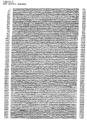
- the present invention provides a nucleic acid isolate encoding a polypeptide including the amino acid sequence shown in Figure 1 , which may include the coding sequence shown in Figure 1 which is that of the ESD4 gene of Arabidopsis thaliana .
- Figure 2 shows a genomic sequence including nucleotides encoding the polypeptide for which the amino acid sequence is shown in Figure 1 .
- Nucleic acid according to the present invention may have the sequence of an ESD4 gene of Arabidopsis thaliana , or be a mutant, variant, derivative or allele or a homologue of the sequence provided.
- Preferred mutants, variants, derivatives and alleles are those which encode a protein which retains a functional characteristic of the protein encoded by the wild-type gene, especially the ability to affect a physical characteristic of a plant, such as a flowering characteristic, especially the ability to repress flowering as discussed herein.
- a mutant, variant, derivative or allele in accordance with the present invention may have the ability to affect a physical characteristic of a plant, particularly a flowering characteristic.
- a mutant, variant, derivative or allele represses flowering compared with wild-type on expression in a plant, e.g. compared with the effect obtained using a gene sequence encoding the polypeptide of Figure 1 .
- "Repression" of flowering delays, retards, inhibits or slows it down.
- a mutant, variant, derivative or allele promotes flowering compared with wild-type on expression in a plant, e.g. compared with the effect obtained using a gene sequence encoding the polypeptide of Figure 1 .
- over-expression of nucleic acid according to the present invention may delay flowering while under expression may promote flowering in a transgenic plant.
- Changes to a sequence, to produce a mutant, variant or derivative may be by one or more of addition, insertion, deletion or substitution of one or more nucleotides in the nucleic acid, leading to the addition, insertion, deletion or substitution of one or more amino acids in the encoded polypeptide.
- changes to the nucleic acid which make no difference to the encoded amino acid sequence are included.
- homology at the amino acid level is generally in terms of amino acid similarity or identity. Similarity allows for "conservative variation", i.e. substitution of one hydrophobic residue such as isoleucine, valine, leucine or methionine for another, or the substitution of one polar residue for another, such as arginine for lysine, glutamic for aspartic acid, or glutamine for asparagine. Similarity may be as defined and determined by the TBLASTN program, of Altschul et al. (1990) J. Mol. Biol.
- BestFit which is part of the Wisconsin Package, Version 8, September 1994, (Genetics Computer Group, 575 Science Drive, Madison, Wisconsin, USA, Wisconsin 53711). BestFit makes an optimal alignment of the best segment of similarity between two sequences. Optimal alignments are found by inserting gaps to maximize the number of matches using the local homology algorithm of Smith and Waterman (Adv. Appl. Math. (1981) 2: 482-489 ).
- Homology may be over the full-length of the relevant sequence shown herein, or may more preferably be over a contiguous sequence of about or greater than about 20, 25, 30, 33, 40, 50, 67, 133, 167, 200, 233, 267, 300, 333 or more amino acids or codons, compared with the relevant amino acid sequence or nucleotide sequence as the case may be.
- nucleic acid including or consisting essentially of a sequence of nucleotides complementary to a nucleotide sequence hybridisable with any encoding sequence provided herein. Another way of looking at this would be for nucleic acid according to this aspect to be hybridisable with a nucleotide sequence complementary to any encoding sequence provided herein.
- DNA is generally double-stranded and blotting techniques such as Southern hybridisation are often performed following separation of the strands without a distinction being drawn between which of the strands is hybridising.
- the hybridisable nucleic acid or its complement encode a product able to influence a physical characteristic of a plant, particularly a flowering characteristic such as the timing of flowering.
- Preferred conditions for hybridisation are familiar to those skilled in the art, but are generally stringent enough for there to be positive hybridisation between the sequences of interest to the exclusion of other sequences.
- the nucleic acid which may contain for example DNA encoding the amino acid sequence of Figure 1 , as genomic (see e.g. Figure 2 ) or cDNA, may be in the form of a recombinant and preferably replicable vector, for example a plasmid, cosmid, phage or Agrobactericun binary vector.
- the nucleic acid may be under the control of an appropriate promoter or other regulatory elements for expression in a host cell such as a microbial, e.g. bacterial, or plant cell.
- genomic DNA this may contain its own promoter or other regulatory elements and in the case of cDNA this may be under the control of an appropriate promoter or other regulatory elements for expression in the host cell.
- a vector including nucleic acid according to the present invention need not include a promoter or other regulatory sequence, particularly if the vector is to be used to introduce the nucleic acid into cells for recombination into the genome.
- Suitable vectors can be chosen or constructed, containing appropriate regulatory sequences, including promoter sequences, terminator fragments, polyadenylation sequences, enhancer sequences, marker genes and other sequences as appropriate.
- appropriate regulatory sequences including promoter sequences, terminator fragments, polyadenylation sequences, enhancer sequences, marker genes and other sequences as appropriate.
- Molecular Cloning a Laboratory Manual: 2nd edition, Sambrook et al, 1989, Cold Spring Harbor Laboratory Press .
- Many known techniques and protocols for manipulation of nucleic acid for example in preparation of nucleic acid constructs, mutagenesis, sequencing, introduction of DNA into cells and gene expression, and analysis of proteins, are described in detail in Current Protocols in Molecular Biology, Second Edition, Ausubel et al.
- Selectable genetic markers may be used consisting of chimaeric genes that confer selectable phenotypes such as resistance to antibiotics such as kanamycin, hygromycin, phosphinotricin, chlorsulfuron, methotrexate, gentamycin, spectinomycin, imidazolinones and glyphosate.
- Nucleic acid molecules and vectors according to the present invention may be provided isolated and/or purified from their natural environment, in substantially pure or homogeneous form, or free or substantially free of nucleic acid or genes of the species of interest or origin other than the sequence encoding a polypeptide with the required function.
- Nucleic acid according to the present invention may include cDNA, RNA, genomic DNA and may be wholly or partially synthetic. The term "isolate" encompasses all these possibilities. Where a DNA sequence is specified, e.g. with reference to a figure, unless context requires otherwise the RNA equivalent, with U substituted for T where it occurs, is encompassed.
- nucleic acid to be inserted should be assembled within a construct which contains effective regulatory elements which will drive transcription. There must be available a method of transporting the construct into the cell. Once the construct is within the cell membrane, integration into the endogenous chromosomal material either will or will not occur. Finally, as far as plants are concerned the target cell type must be such that cells can be regenerated into whole plants.
- Plants transformed with the DNA segment containing the sequence may be produced by standard techniques which are already known for the genetic manipulation of plants.
- DNA can be transformed into plant cells using any suitable technology, such as a disarmed Ti-plasmid vector carried by Agrobacterium exploiting its natural gene transfer ability ( EP-A-270355 , EP-A-0116718 , NAR 12(22) 8711 - 87215 1984 ), particle or microprojectile bombardment ( US 5100792 , EP-A-444882 , EP-A-434616 ) microinjection ( WO 92/09696 , WO 94/00583 , EP 331083 , EP 175966 , Green et al.
- a disarmed Ti-plasmid vector carried by Agrobacterium exploiting its natural gene transfer ability ( EP-A-270355 , EP-A-0116718 , NAR 12(22) 8711 - 87215 1984 ), particle or microprojectile bombardment ( US 5100792 , EP-
- Microprojectile bombardment, electroporation and direct DNA uptake are preferred where Agrobacterium is inefficient or ineffective.
- a combination of different techniques may be employed to enhance the efficiency of the transformation process, eg bombardment with Agrobacterium coated microparticles ( EP-A-486234 ) or microprojectile bombardment to induce wounding followed by co-cultivation with Agrobacterium ( EP-A-486233 ).
- a plant may be regenerated, e.g. from single cells, callus tissue or leaf discs, as is standard in the art. Almost any plant can be entirely regenerated from cells, tissues and organs of the plant. Available techniques are reviewd in Vasil et al., Cell Culture and Somatic Cell Genetics of Plants, Vol I, II and III, Laboratory Procedures and Their Applications, Academic Press, 1984 , and Weissbach and Weissbach, Methods for Plant Molecular Biology, Academic Press, 1989 .
- a ESD4 gene and modified versions thereof (alleles, mutants, variants and derivatives thereof), and other nucleic acid provided herein, including species homologues, may be used to affect a physical characteristic, such as a flowering characteristic which may include timing of flowering, in plants.
- a physical characteristic such as a flowering characteristic which may include timing of flowering
- nucleic acid such as a vector as described herein may be used for the production of a transgenic plant.
- Such a plant may possess an altered flowering phenotype, particular in terms of timing of flowering, compared with wild-type (that is to say a plant that is wild-type for ESD4 or the relevant homologue thereof).
- the invention further encompasses a host cell transformed with nucleic acid or a vector according tot he present invention, especially a plant or a microbial cell.
- a host cell such as a plant cell, including heterologous nucleic acid according to the present invention is provided.
- the nucleic acid may be incorporated within the chromosome. There may be more than one heterologous nucleotide sequence per haploid genome.
- a suitable inducible promoter is the GST-II-27 gene promoter which has been shown to be induced by certain chemical compounds which can be applied to growing plants.
- the promoter is functional in both monocotyledons and dicotyledons. It can therefore be used to control gene expression in a variety of genetically modified plants, including field crops such as canola, sunflower, tobacco, sugarbeet, cotton; cereals such as wheat, barley, rice, maize, sorghum; fruit such as tomatoes, mangoes, peaches, apples, pears, strawberries, bananas, and melons; and vegetables such as carrot, lettuce, cabbage and onion.
- the GST-II-27 promoter is also suitable for use in a variety of tissues, including roots, leaves, stems and reproductive tissues.
- Another example of an inducible promoter is the ethanol inducible gene switch disclosed in Caddick et al (1998) Nature Biotechnology 16: 177-180 . Many other examples are known to those skilled in the art.
- nucleic acid sequence to be placed within a cell in which it or a homologue is found naturally, but wherein the nucleic acid sequence is linked and/or adjacent to nucleic acid which does not occur naturally within the cell, or cells of that type or species or variety of plant, such as operably linked to one or more regulatory sequences, such as a promoter sequence, for control of expression.
- a sequence within a plant or other host cell may be identifiably heterologous, exogenous or foreign.
- Plants which include a plant cell according to the invention are also provided, along with any part or propagule thereof, seed, selfed or hybrid progeny and descendants.
- a plant according to the present invention may be one which does not breed true in one or more properties. Plant varieties may be excluded, particularly registrable plant varieties according to Plant Breeders' Rights. It is noted that a plant need not be considered a "plant variety” simply because it contains stably within its genome a transgene, introduced into a cell of the plant or an ancestor thereof.
- the present invention provides any clone of such a plant, seed, selfed or hybrid progeny and descendants, and any part of any of these, such as cuttings, seed.
- the invention provides any plant propagule, that is any part which may be used in reproduction or propagation, sexual or asexual, including cuttings, seed and so on.
- the invention further provides a method of influencing or affecting a physical e.g. flowering characteristic such as the timing of flowering of a plant, including causing or allowing expression of a heterologous nucleic acid sequence as discussed within cells of the plant.
- a physical e.g. flowering characteristic such as the timing of flowering of a plant
- the present invention also encompasses the expression product of any of the nucleic acid sequences disclosed and methods of making the expression product by expression from encoding nucleic acid therefore under suitable conditions, which may be in suitable host cells.
- the product may be isolated from the expression system and may be used as desired, for instance in formulation of a composition including at least one additional component.
- a further aspect of the present invention provides a method of identifying and cloning ESD4 homologues from plant species other than Arabidopsis thaliana which method employs a nucleotide sequence derived from that shown in Figure 1 . Sequences derived from these may themselves be used in identifying and in cloning other sequences.
- the nucleotide sequence information provided herein, or any part thereof, may be used in a data-base search to find homologous sequences, expression products of which can be tested for ability to influence a flowering characteristic. These may have ESD4 function or the ability to repress flowering.
- nucleic acid libraries may be screened using techniques well known to those skilled in the art and homologous sequences thereby identified then tested.
- Target or candidate nucleic acid may, for example, comprise genomic DNA, cDNA or RNA (or a mixture of any of these preferably as a library) obtainable from an organism known to contain or suspected of containing such nucleic acid, either monocotyledonous or dicotyledonous.
- genomic DNA e.g., genomic DNA
- cDNA or RNA or a mixture of any of these preferably as a library
- the complexity of a nucleic acid library may be reduced by creating a cDNA library for example using RT-PCR or by using the phenol emulsion reassociation technique ( Clarke et al. (1992) NAR 20, 1289-1292 ) on a genomic library.
- Successful hybridisation may be identified and target/candidate nucleic acid isolated for further investigation and/or use.
- Hybridisation of nucleic acid molecule to a ESD4 gene or homologue may be determined or identified indirectly, e.g using a nucleic acid amplification reaction, particularly the polymerase chain reaction (PCR).
- PCR requires the use of two primers to specifically amplify target nucleic acid, so preferably two nucleic acid molecules with sequences characteristic of ESD4 are employed. However, if RACE is used only one such primer may be needed.
- Hybridisation may be also be determined (optionally in conjunction with an amplification technique such as PCR) by probing with nucleic acid and identifying positive hybridisation under suitably stringent conditions (in accordance with known techniques).
- preferred conditions are those which are stringent enough for there to be a simple pattern with a small number of hybridisations identified as positive which can be investigated further. It is well known in the art to increase stringency of hybridisation gradually until only a few positive clones remain.
- Binding of a probe to target nucleic acid may be measured using any of a variety of techniques at the disposal of those skilled in the art.
- probes may be radioactively, fluorescently or enzymatically labelled.
- Other methods not employing labelling of probe include examination of restriction fragment length polymorphisms, amplification using PCR, RNAase cleavage and allele specific oligonucleotide probing.
- Preliminary experiments may be performed by hybridising under low stringency conditions various probes to Southern blots of DNA digested with restriction enzymes.
- preferred conditions are those which are stringent enough for there to be a simple pattern with a small number of hybridisations identified as positive which can be investigated further. It is well known in the art to increase stringency of hybridisation gradually until only a few positive clones remain. Suitable conditions would be achieved when a large number of hybridising fragments were obtained while the background hybridisation was low. Using these conditions nucleic acid libraries, e.g. cDNA libraries representative of expressed sequences, may be searched. Those skilled in the art are well able to employ suitable conditions of the desired stringency for selective hybridisation, taking into account factors such as oligonucleotide length and base composition, temperature and so on.
- Suitable conditions include, e.g. for detection of sequences that are about 80-90% identical, hybridization overnight at 42°C in 0.25M Na 2 HPO 4 , pH 7.2, 6.5% SDS, 10% dextran sulfate and a final wash at 55°C in 0.1X SSC, 0.1% SDS.
- suitable conditions include hybridization overnight at 65°C in 0.25M Na 2 HPO 4 , pH 7.2, 6.5% SDS, 10% dextran sulfate and a final wash at 60°C in 0.1X SSC, 0.1% SDS.
- PCR techniques for the amplification of nucleic acid are described in US Patent No. 4,683,195 and Saiki et al. Science 239: 487-491 (1988 ).
- PCR includes steps of denaturation of template nucleic acid (if double-stranded), annealing of primer to target, and polymerisation.
- the nucleic acid probed or used as template in the amplification reaction may be genomic DNA, cDNA or RNA.
- PCR may be used to amplify specific sequences from genomic DNA, specific RNA sequences and cDNA transcribed from mRNA. References for the general use of PCR techniques include Mullis et al, Cold Spring Harbor Symp. Quant.
- a PCR band may contain a complex mix of products. Individual products may be cloned and each screened for linkage to such known genes that are segregating in progeny that showed a polymorphism for this probe. Alternatively, the PCR product may be treated in a way that enables one to display the polymorphism on a denaturing polyacrylamide DNA sequencing gel with specific bands that are linked to the gene being preselected prior to cloning.
- a candidate PCR band may be used to isolate clones which may be inspected for other features and homologies to ESD4 / ESD4 or other related gene. It may subsequently be analysed by transformation to assess its function on introduction into a plant of interest. Alternatively, the PCR band or sequences derived by analysing it may be used to assist plant breeders in monitoring the segregation of a useful gene.
- Preferred amino acid sequences suitable for use in the design of probes or PCR primers are sequences conserved (completely, substantially or partly) between at least two ESD4 peptides or polypeptides encoded by genes involved in control of flowering in a plant. conserveed nucleotide sequences may be identified from the nucleotide sequence information contained herein.
- oligonucleotide probes or primers may be designed (when working from amino acid sequence information, taking into account the degeneracy of the genetic code and where appropriate, codon usage of the organism).
- a gene or fragment thereof identified as being that to which a said nucleic acid molecule hybridises may be isolated and/or purified and may be subsequently investigated for ability to alter a flowering characteristic of a plant. If the identified nucleic acid is a fragment of a gene, the fragment may be used (e.g. by probing and/or PCR) in subsequent cloning of the full-length gene, which may be a full-length coding sequence. Inserts may be prepared from partial cDNA clones and used to screen cDNA libraries. The full-length clones isolated may be subcloned into expression vectors and activity assayed by introduction into suitable host cells and/or sequenced. It may be necessary for one or more gene fragments to be ligated to generate a full-length coding sequence.
- Molecules found to manipulate genes with ability to alter a plant's flowering characteristics may be used as such, i.e. to alter a flowering characteristic of a plant.
- Nucleic acid obtained and obtainable using a method as disclosed herein is provided in various aspects of the present invention.
- the present application also provides oligonucleotides based on either an ESD4 nucleotide sequence as provided herein or an ESD4 nucleotide sequence obtainable in accordance with the disclosures and suggestions herein.
- the oligonucleotides may be of a length suitable for use as primers in an amplification reaction, or they may be suitable for use as hybridization fishing probes.
- an oligonucleotide in accordance with the invention e.g. for use in nucleic acid amplification, has about 10 or fewer codons (e.g. 6, 7 or 8), i.e. is about 30 or fewer nucleotides in length (e.g. 18, 21 or 24).
- the present invention also extends to nucleic acid encoding an ESD4 homologue obtained using a nucleotide sequence derived from that shown in Figure 1
- sequence information for the ESD4 gene of Arabidopsis thaliana enables the obtention of homologous sequences from other plant species.
- it should be possible to easily isolate ESD4 homologues from related, commercially important Brassica species e.g. Brassica nigra, Brassica napus and Brassica oleraceae ), as has been done for other flowering time genes isolated from Arabidopsis (e.g CO; WO 96/14414 ).
- nucleic acid molecules which encode amino acid sequences which are homologues of ESD4 of Arabidopsis thaliana. Homology may be at the nucleotide sequence and/or amino acid sequence level, as has already been discussed above.
- a homologue from a species other than Arabidopsis thaliana encodes a product which causes a phenotype similar to that caused by the Arabidopsis thaliana ESD4 gene, generally including the ability to influence a flowering characteristic such as the timing of flowering.
- mutants, derivatives or alleles of these genes may promote or delay flowering compared with wild-type.
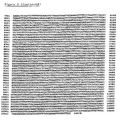
- ESD4 gene homologues may also be identified from economically important monocotyledonous crop plants such as rice and maize. Although genes encoding the same protein in monocotyledonous and dicotyledonous plants show relatively little homology at the nucleotide level, amino acid sequences are conserved. Therefore it is possible to use public sequence databases to identify Arabidopsis, rice or maize cDNA clone sequences that were obtained in random sequencing programmes and share homology to the gene of interest, as has been done for other flowering time genes isolated from Arabidopsis (e.g CO; WO 96/14414 ). A gene related to ESD4 has been isolated from rice as an expressed sequence tag ( Figure 3 ). Of course, mutants, derivatives and alleles of these sequences are included within the scope of the present invention in the same terms as discussed above for the Arabidopsis thaliana ESD4 gene.
- Nucleic acid according to the invention may include a nucleotide sequence encoding a product whose wild-type function is to repress flowering. Reducing the level of expression, as in the esd4 mutant, may be used to accelerate flowering, while increasing the level of expression may be used to delay flowering.
- the ESD4 gene product is an active repressor of flowering, while genes such as CO and LD encode proteins that promote flowering. The over-expression of the LHY gene delays flowering.
- nucleic acid As noted below, other physical characteristics of plants may be affected by means of expression from nucleic acid according to the present invention.
- Nucleic acid according to the invention such as an ESD4 gene or homologue, may be placed under the control of an externally inducible gene promoter to place the timing of flowering under the control of the user.
- An advantage of introduction of a heterologous gene into a plant cell, particularly when the cell is comprised in a plant, is the ability to place expression of the gene under the control of a promoter of choice, in order to be able to influence gene expression, and therefore flowering, according to preference.
- mutants and derivatives of the wild-type gene eg with higher or lower activity than wild-type, may be used in place of the endogenous gene.
- over-expression may be achieved by introduction of the nucleotide sequence in a sense orientation.
- the present invention provides a method of influencing a physical e.g. flowering characteristic of a plant, the method including causing or allowing expression of the product (polypeptide or nucleic acid transcript) encoded by heterologous nucleic acid according to the invention from that nucleic acid within cells of the plant.
- Down-regulation of expression of a target gene may be achieved using anti-sense technology or "sense regulation" ("co-suppression”).
- An alternative is to use a copy of all or part of the target gene inserted in sense, that is the same, orientation as the target gene, to achieve reduction in expression of the target gene by co-suppression.
- van der Krol et al. (1990) The Plant Cell 2, 291-299 ; Napoli et al., (1990) The Plant Cell 2, 279-289 ; Zhang et al., (1992) The Plant Cell 4, 1575-1588 , and US-A-5,231,020 .
- the complete sequence corresponding to the coding sequence need not be used. For example fragments of sufficient length may be used. It is a routine matter for the person skilled in the art to screen fragments of various sizes and from various parts of the coding sequence to optimise the level of anti-sense inhibition. It may be advantageous to include the initiating methionine ATG codon, and perhaps one or more nucleotides upstream of the initiating codon. A further possibility is to target a conserved sequence of a gene, e.g. a sequence that is characteristic of one or more genes, such as a regulatory sequence.
- the present invention also provides a method of influencing a flowering characteristic of a plant, the method including causing or allowing anti-sense transcription from heterologous nucleic acid according to the invention within cells of the plant.
- the present invention further provides the use of the nucleotide sequence of Figure 1 or Figure 2 or a fragment, mutant, derivative, allele, variant or homologue thereof for down-regulation of gene expression, particularly down-regulation of expression of an ESD4 gene or homologue thereof, preferably in order to influence a physical characteristic of a plant, especially a flowering characteristic such as the timing of flowering.
- the present invention also provides a method of influencing a flowering characteristic of a plant, the method including causing or allowing expression from nucleic acid according to the invention within cells of the plant.
- This may be used to suppress activity of a product with ability to influence a flowering characteristic.
- the activity of the product is preferably suppressed as a result of under-expression within the plant cells.
- Reduction of gene activity may also be achieved by using ribozymes, such as replication ribozymes, e.g. of the hammerhead class ( Haseloff and Gerlach, 1988, Nature 334: 585-591 ; Feyter et al. Mol., 1996, Gen. Genet. 250: 329-338 ).
- ribozymes such as replication ribozymes, e.g. of the hammerhead class ( Haseloff and Gerlach, 1988, Nature 334: 585-591 ; Feyter et al. Mol., 1996, Gen. Genet. 250: 329-338 ).
- transposon mutagenesis Another way to reduce gene activity in a plant employs transposon mutagenesis (reviewed by Osborne et al., (1995) Current Opinion in Cell Biology 7, 406-413 ). Inactivation of genes has been demonstrated via a "targeted tagging" approach using either endogenous mobile elements or heterologous cloned transposons which retain their mobility in alien genomes. Alleles carrying any insertion of known sequence may be identified by using PCR primers with binding specificities both in the insertion sequence and the homologue. "Two-element systems” may be used to stabilize the transposon within inactivated alleles.
- a T-DNA is constructed bearing a non-autonomous transposon containing selectable or screenable marker gene inserted into an excision marker. Plants bearing these T-DNAs are crossed to plants bearing a second T-DNA expressing transposase function. Hybrids are double-selected for excision and for the marker within the transposon yielding F 2 plants with transposed elements.
- Example 2 demonstrates that introduction of the ESD4 gene into the mutant is sufficient to correct the defect caused by the mutation. This provides indication that the function of the ESD4 gene is to repress flowering and that reduction in its function causes the plant to flower early.
- ESD4 Causing late flowering by increasing the activity of ESD4
- the observation that reduced expression of the ESD4 gene accelerates flowering provides indication that the normal function of ESD4 is to delay flowering.
- Increasing the expression of the ESD4 gene is indicated for use in causing late flowering. This is supported by the observation that in wild-type plants the ESD4 mRNA is rare; it was only detected by RT-PCR and is absent from libraries of randomly sequenced cDNAs.
- Increasing the level of the ESD4 MRNA by expressing the gene from strong plant promoters such as the CaMV 35S promoter may be used to cause late flowering.
- the esd4 mutant flowers significantly earlier than wild-type under long and short days, although the difference is most dramatic under short days (Table 1).
- the esd4 mutant retains sensitivity to daylength, flowering earlier under long than short days.
- the esd4 mutant shows some pleiotropic effects.
- the mutants are shorter than wild-type and produce fewer flowers.
- the mutant forms flowers or floral structures in ectopic positions on the shoot. These ectopic floral structures occur in two ways. First, the shoot meristem is converted late in development into a carpelloid structure, so that the shoot is determinate and terminates with this structure. Second, extra flowers are formed on the sides of the shoot. Either one or several flowers are often formed very close to the position of the last cauline leaf, where flowers are never in wild-type plants, or at the first node at which flowers are formed several flowers develop rather than only one. These phenotypes indicate that ESD4 has a role in ensuring that flowers form in their correct positions.
- the esd4 mutation also has an effect on pod shape.
- the siliques of mutant plants are noticeably club shaped, being narrow at the base and broad at the tip, while in wild-type plants they are of similar width throughout their length.
- the location of the ESD4 gene was determined by testing for genetic linkage between the mutation and DNA markers that are polymorphic between the Arabidopsis ecotypes Landsberg erecta and Columbia.
- the esd4 mutant was crossed to the Columbia ecotype, and F1 plants grown to maturity.
- the F1 plants were self-fertilised and F2 progeny grown in the greenhouse under short days.
- F2 plants that showed the homozygous esd4 phenotype were identified, and DNA was extracted from 30 of these individuals. Published RFLP and CAPS markers of known position were tested for genetic linkage to esd4.
- Loose linkage was detected with markers m448 and nga8 which are located on chromosome 4, and tighter linkage was found with AG, which is positioned lower on chromosome 4.
- the number of esd4 mutant plants tested was then increased to 250, and more markers located between nga8 and AG were tested. This demonstrated that esd4 is located on chromosome 4 between markers m326 and SC5, an interval of approximately 3 cM.
- the region between the polymorphisms was only approximately 35 kb in length and was defined by one plant that carried a recombination cross-over between esd4 and a CAPS marker G14 (primers G14F[GACTACCTGAGAAGTTGGAATG] and G14R[GCCACTGGTCCAAGGATTCAG]) at one end of G14587 and 3 plants that carried cross-overs between esd4 and CAPS marker G32 (primers G32F[GCAAGATGCACTAAGTATGAG] and G32R[GAGTGGTACTTAGTGATGC]) which is at the other end of G14587.
- the complementation experiments could not be performed with the G5945 and G14587 cosmids because these were not made in a cosmid vector that could be used for plant transformation.
- the cosmid vector 04541 which is also a binary vector that could be used for plant transformation was used. With the aim of identifying 04541-based cosmids containing the relevant DNA an 04541-based cosmid library made from YAC YUP5B11 was used. This YAC spans the whole region demonstrated to contain the ESD4 gene.
- the cosmid library was screened with probes made from cosmids G5945 and G14587. Positively hybridising clones were then mapped with restriction enzymes HindIII and SalI and from these digestions the positions of the clones relative to one another could be determined.
- a cDNA was screened for in cDNA libraries.
- the aerial parts library and a seedling library were screened by PCR using primers that annealed to the vector. Small fragments were amplified from these libraries and sequenced.
- the libraries were then re-screened using primers that annealed to the ESD4 sequence and were designed from either the genomic sequence or the cDNA sequence that had already been obtained. The fragments were sequenced by cycle sequencing.
- ESD4 cDNA and predicted protein sequence were used to search for homology to genes in the public databases. Using a BLAST search of GenBank homology to the carboxy-terminal region of ESD4 was found to genes from rice, C.elegans, humans and mouse ( Figure 3 ). The residues shared by these proteins can be presumed to define a functional domain of the protein.
- Short days comprised a photoperiod of 10 hours lit with 400 Watt metal halide power star lamps supplemented with 100 watt tungsten halide lamps. This provided a level of photosynthetically active radiation (PAR) of 113.7 _moles photons m -2 s -1 and a red:far red light ration of 2.41.
- PAR photosynthetically active radiation
- a similar cabinet and lamps were used for the long day.
- the photoperiod was for 10 hours under the same conditions used for short days and extended for a further 8 hours using only the tungsten halide lamps.
- the combination of lamps used for the 10 hour period provided a PAR of 92.9 _moles photons m -2 s -1 and a red:far red ratio of 1.49.
- the 8 hour extension produced PAR of 14.27 _moles m -2 s -1 and a red:far-red ratio of 0.66.
- the standard wild-type genotype used was Arabidopsis thaliana Landsberg erecta .
- Plant genomic DNA was isolated from glasshouse grown plants essentially as described by Tai and Tanksley; Plant Mol . Biol. Rep. 8 : 297-303 (1991), except that the tissue was ground in liquid nitrogen and the RNase step omitted. Large-scale (2.5-5 g leaves) and miniprep (3-4 leaves) DNA was prepared using this method.
- tissue frozen in liquid nitrogen was ground in a coffee grinder and extracted with a mixture of 15 ml of phenol and 15 ml of extraction buffer (50 mM Tris pH8, 1 mM EDTA, 1% SDS).
- extraction buffer 50 mM Tris pH8, 1 mM EDTA, 1% SDS.
- the mixture was shaken, centrifuged and 25 ml of the aqueous layer recovered. This was then shaken vigorously with a mixture of 0.7 ml 4M sodium chloride, 10 ml phenol and 10 ml of chloroform.
- the aqueous layer was recovered after centrifugation and extracted with 25 ml of chloroform.
- the RNA was then precipitated from 25 ml of the aqueous layer by the addition of 2 ml of 10 M LiCL, and the precipitate recovered by centrifugation.
- the pellet was dissolved in 2 ml DEPC water and the RNA precipitated by the addition of 0.2 ml of 4M sodium chloride and 4 ml of ethanol. After centrifugation the pellet was dissolved in 0.5 ml of DEPC water and the RNA concentration determined.
- Arabidopsis DNA was performed by a CTAB extraction method described by Dean, et al. (1992), Plant Journal, 2: 69-82 .
- RNA was isolated from whole seedlings at the 2-3 leaf stage growing under long days in the greenhouse.
- 10 ug of RNA in a volume of 10 ul was heated to 65°C for 3 minutes, and then quickly cooled on ice.
- reaction mix 10 ul of reaction mix was made containing 1 ul of RNAsin, 1 ul of standard dT 17 -adapter primer (1 ug/ul; Frohman et al, 1988), 4ul of 5x reverse transcriptase buffer (250mM TrisHCl pH8.3, 375mM KCl, 15mM MgCl 2 ), 2ul DTT (100mM), lul dNTP (20mM), 1ul reverse transcriptase (200 units, M-MLV Gibco). This reaction mix was then added to the RNA creating a final volume of 20ul. The mixture was incubated at 42°C for 2 hours and then diluted to 200 ul with water.
- 5x reverse transcriptase buffer 250mM TrisHCl pH8.3, 375mM KCl, 15mM MgCl 2
- 2ul DTT 100mM
- lul dNTP 20mM
- 1ul reverse transcriptase 200 units, M-MLV Gibco
- the first strand cDNA was then used for PCR using primers C3new and C5, 1SO and 2SO or 3SO and 4SO that are described above and the reactions were performed at 94°C for 1 minute, 34 cycles of 55°C for 1 minute, 72°C for 2 minutes and then finally at 72°C for 10 minutes.
- the cosmids containing DNA from the vicinity of LHY were mobilised into Agrobacterium tumefaciens C58C1, and the T-DNA introduced into Arabidopsis plants as described by Valvekens, et al, (1988), Proc. Natl. Acad. Sci, USA, 87: 5536-5540 .
- Roots of plants grown in vitro were isolated and grown on callus-inducing medium (Valvekens et al, 1988) for 2 days. The roots were then cut into short segments and co-cultivated with Agrobacterium tumefaciens carrying the plasmid of interest. The root explants were dried on blotting paper and placed onto callus-inducing medium for 2-3 days.
- plants scored were the progeny of the primary transformants.
- One batch of seeds was sown on kanamycin medium and the seedlings scored for kanamycin resistance, and the ratio of sensitive to resistant seedlings is shown.
- a second batch of seeds was sown on soil and scored for flowering time by counting leaf number. Because the transgene was segregating, some plants looked like esd4 as they had not inherited the transgene. The ratio of wild-type plants to the total number of plants in the population is shown in the final column.
Landscapes
- Health & Medical Sciences (AREA)
- Genetics & Genomics (AREA)
- Life Sciences & Earth Sciences (AREA)
- Chemical & Material Sciences (AREA)
- Organic Chemistry (AREA)
- Engineering & Computer Science (AREA)
- Molecular Biology (AREA)
- Bioinformatics & Cheminformatics (AREA)
- Wood Science & Technology (AREA)
- Zoology (AREA)
- Biophysics (AREA)
- General Health & Medical Sciences (AREA)
- Biochemistry (AREA)
- General Engineering & Computer Science (AREA)
- Biotechnology (AREA)
- Biomedical Technology (AREA)
- Microbiology (AREA)
- Proteomics, Peptides & Aminoacids (AREA)
- Cell Biology (AREA)
- Physiology (AREA)
- Plant Pathology (AREA)
- Botany (AREA)
- Physics & Mathematics (AREA)
- Medicinal Chemistry (AREA)
- Gastroenterology & Hepatology (AREA)
- Breeding Of Plants And Reproduction By Means Of Culturing (AREA)
- Micro-Organisms Or Cultivation Processes Thereof (AREA)
- Agricultural Chemicals And Associated Chemicals (AREA)
- Fertilizers (AREA)
- Peptides Or Proteins (AREA)
- Saccharide Compounds (AREA)
Claims (29)
- Isolierte Nucleinsäure, die für ein Polypeptid kodiert, das zumindest 80 % Aminosäuresequenzähnlichkeit mit der Aminosäuresequenz aus Fig. 1 aufweist, wobei die Expression des Polypeptids in einer transgenen Pflanze eine Blüheigenschaft der Pflanze beeinflusst.
- Isolierte Nucleinsäure nach Anspruch 1, wobei die Nucleinsäure für ein Polypeptid kodiert, das die in Fig. 1 angeführte Aminosäuresequenz umfasst.
- Nucleinsäure nach Anspruch 2, worin die Kodierungssequenz die in Fig. 1 angeführte Kodierungssequenz ist.
- Nucleinsäure nach Anspruch 2, die für das Polypeptid kodiert, wobei die Kodierungssequenz sich von der in Fig. 1 angeführten Kodierungssequenz unterscheidet, aber für die in Fig. 1 angeführte Aminosäure kodiert.
- Nucleinsäure nach einem der Ansprüche 1 bis 4, wobei die Blüheigenschaft der Zeitpunkt des Blühens ist.
- Nucleinsäure nach einem der Ansprüche 1 bis 5, die operabel an eine Regulationssequenz für die Expression des Polypeptids gebunden ist.
- Nucleinsäure nach Anspruch 6, wobei die Regulationssequenz einen induzierbaren Promotor umfasst.
- Isolierte Nucleinsäure, die ein Fragment einer Kodierungssequenz einer Nucleinsäure nach einem der Ansprüche 1 bis 5 ist und operabel an eine Regulationssequenz zur Transkription gebunden ist und zur Verwendung zur Sense-Regulation der Expression geeignet ist, um eine Blüheigenschaft einer Pflanze zu beeinflussen.
- Isolierte Nucleinsäure mit einer Nucleotidsequenz, die zu einer Kodierungssequenz einer Nucleinsäure nach einem der Ansprüche 1 bis 5 oder einem Fragment der Kodierungssequenz komplementär ist, wobei das Fragment zur Verwendung zur Antisense-Regulation der Expression geeignet ist, um die Blüheigenschaften einer Pflanze zu beeinflussen, wobei die zur Kodierungssequenz oder zum Fragment davon komplementäre Nucleotidsequenz unter der Kontrolle einer Regulationssequenz für die Antisense-Transkription steht.
- Nucleinsäure nach Anspruch 9 oder 10, wobei die Regulationssequenz einen induzierbaren Promotor umfasst.
- Nucleinsäurevektor, der zur Transformation einer Pflanzenzelle geeignet ist und eine Nucleinsäure nach einem der vorangegangenen Ansprüche umfasst.
- Wirtszelle, die eine heterologe Nucleinsäure nach einem der vorangegangenen Ansprüche enthält.
- Wirtszelle nach Anspruch 12, die eine Mikrobenzelle ist.
- Wirtszelle nach Anspruch 12, die eine Pflanzenzelle ist.
- Wirtszelle nach Anspruch 14, die die heterologe Nucleinsäure in ihrem Genom aufweist.
- Pflanzenzelle nach Anspruch 15 mit mehr als einer Nucleotidsequenz pro haploidem Genom.
- Pflanze, umfassend eine Pflanzenzelle nach einem der Ansprüche 14 bis 16.
- Pflanze nach Anspruch 17, die sich nicht reinrassig fortpflanzt.
- Selbstbefruchtete oder Hybrid-Nachkomme oder Abkömmling einer Pflanze nach Anspruch 17 oder 18 oder ein Teil oder eine Fortpflanzungseinheit einer solchen Pflanze oder eines solchen Nachkommen oder eines solchen Abkömmlings, wie z.B. ein Samen, wobei der Nachkomme, der Abkömmling, der Teil oder die Fortpflanzungseinheit eine Zelle nach einem der Ansprüche 14 bis 16 umfasst.
- Verfahren zur Beeinflussung einer Blüheigenschaft einer Pflanze, wobei das Verfahren das Hervorrufen oder Ermöglichen der Expression eines Produkts, für das eine heterologe Nucleinsäure nach einem der Ansprüche 1 bis 5 kodiert, in den Zellen der Pflanze umfasst.
- Verfahren zur Beeinflussung einer Blüheigenschaft einer Pflanze, wobei das Verfahren das Hervorrufen oder Ermöglichen der Transkription aus einer heterologen Nucleinsäure nach Anspruch 8 in den Zellen der Pflanze umfasst.
- Verfahren zur Beeinflussung einer Blüheigenschaft einer Pflanze, wobei das Verfahren das Hervorrufen oder Ermöglichen der Transkription aus einer heterologen Nucleinsäure nach Anspruch 9 in den Zellen der Pflanze umfasst.
- Verfahren zur Beeinflussung einer Blüheigenschaft einer Pflanze, wobei das Verfahren umfasst, dass in Zellen der Pflanze eine Herabregulierung der Expression eines Gens hervorgerufen wird, das die Nucleinsäure umfasst, die eine Sequenz gemäß der Sequenz einer Nucleinsäure nach einem der Ansprüche 1 bis 5 aufweist.
- Verfahren zur Erzeugung einer Pflanzenzelle nach Anspruch 15, wobei das Verfahren Folgendes umfasst:(i) Einführen eines Nucleinsäurevektors, der zur Transformation einer Pflanzenzelle geeignet ist und eine Nucleinsäure nach einem der Ansprüche 1 bis 10 umfasst, in die Pflanzenzelle und(ii) Hervorrufen oder Ermöglichen der Rekombination zwischen dem Vektor und dem Pflanzenzellgenom zur Einführung einer Nucleinsäure nach einem der Ansprüche 1 bis 10 in das Genom.
- Verfahren zur Erzeugung einer Pflanze, wobei das Verfahren Folgendes umfasst:(i) Erzeugung von Pflanzenzellen nach Anspruch 24;(ii) Regenerieren einer Pflanze aus den Pflanzenzellen oder Abkömmlingen davon.
- Verfahren nach Anspruch 25, ferner umfassend das Klonieren oder die Vermehrung der Pflanze oder eines Abkömmlings davon, die/der die heterologe Nucleinsäure nach einem der Ansprüche 1 bis 10 in ihrem/seinem Genom aufweist.
- Verwendung einer Nucleinsäure nach einem der Ansprüche 1 bis 5 zur Beeinflussung einer Blüheigenschaft einer Pflanze.
- Verwendung einer Nucleinsäure nach Anspruch 8 zur Beeinflussung einer Blüheigenschaft einer Pflanze.
- Verwendung einer Nucleinsäure nach Anspruch 9 zur Beeinflussung einer Blüheigenschaft einer Pflanze.
Applications Claiming Priority (3)
| Application Number | Priority Date | Filing Date | Title |
|---|---|---|---|
| GBGB9712415.0A GB9712415D0 (en) | 1997-06-13 | 1997-06-13 | Genetic control of flowering |
| GB9712415 | 1997-06-13 | ||
| PCT/GB1998/001714 WO1998056918A1 (en) | 1997-06-13 | 1998-06-12 | Methods and means for control of flowering in plants |
Publications (2)
| Publication Number | Publication Date |
|---|---|
| EP1002085A1 EP1002085A1 (de) | 2000-05-24 |
| EP1002085B1 true EP1002085B1 (de) | 2009-01-14 |
Family
ID=10814168
Family Applications (1)
| Application Number | Title | Priority Date | Filing Date |
|---|---|---|---|
| EP98929549A Expired - Lifetime EP1002085B1 (de) | 1997-06-13 | 1998-06-12 | Methoden und mittel zur blühkontrolle in pflanzen |
Country Status (8)
| Country | Link |
|---|---|
| US (1) | US6670526B1 (de) |
| EP (1) | EP1002085B1 (de) |
| AT (1) | ATE420959T1 (de) |
| AU (1) | AU7926098A (de) |
| DE (1) | DE69840479D1 (de) |
| ES (1) | ES2321349T3 (de) |
| GB (1) | GB9712415D0 (de) |
| WO (1) | WO1998056918A1 (de) |
Families Citing this family (66)
| Publication number | Priority date | Publication date | Assignee | Title |
|---|---|---|---|---|
| US6596527B1 (en) | 1999-07-31 | 2003-07-22 | Board Of Regents, The University Of Texas Sytem | Composition and methods relating to SENP 1- a sentrin-specific protease |
| EP1659180A3 (de) * | 1999-10-12 | 2006-07-26 | Mendel Biotechnology, Inc. | Veränderung der Blütezeit |
| WO2002015675A1 (en) * | 2000-08-22 | 2002-02-28 | Mendel Biotechnology, Inc. | Genes for modifying plant traits iv |
| CA2575388C (en) | 2004-07-29 | 2013-04-30 | Pioneer Hi-Bred International, Inc. | Methods and compositions for modulating flowering and maturity in plants |
| KR100647793B1 (ko) | 2006-07-28 | 2006-11-23 | 재단법인서울대학교산학협력재단 | Ecl1 유전자를 이용하여 식물의 개화시기를 조절하는방법 |
| US7947877B2 (en) | 2008-05-14 | 2011-05-24 | Monosanto Technology LLC | Plants and seeds of spring canola variety SCV328921 |
| US7935870B2 (en) | 2008-05-14 | 2011-05-03 | Monsanto Technology Llc | Plants and seeds of spring canola variety SCV354718 |
| US7964774B2 (en) | 2008-05-14 | 2011-06-21 | Monsanto Technology Llc | Plants and seeds of spring canola variety SCV384196 |
| US8829282B2 (en) | 2008-05-14 | 2014-09-09 | Monsanto Technology, Llc | Plants and seeds of spring canola variety SCV425044 |
| MX2011013224A (es) | 2009-06-09 | 2012-06-01 | Pioneer Hi Bred Int | Promotor de endospermo temprano y metodos de uso. |
| US8071848B2 (en) | 2009-06-17 | 2011-12-06 | Monsanto Technology Llc | Plants and seeds of spring canola variety SCV218328 |
| EP2456874A1 (de) * | 2009-07-24 | 2012-05-30 | Pioneer Hi-Bred International Inc. | Verwendung von dimerisatonsdomänenkomponentenstapeln zur modulation einer pflanzenarchitektur |
| US8440891B2 (en) | 2009-09-22 | 2013-05-14 | Board of Trustees of the University of Akransas, N.A. | Rice cultivar CL 142-AR |
| US8440892B2 (en) | 2009-10-15 | 2013-05-14 | Board Of Trustees Of The University Of Arkansas, N.A. | Rice cultivar CL 181-AR |
| BR112012009044A2 (pt) | 2009-10-26 | 2015-09-01 | Pioneer Hi Bred Int | Molécula de ácido nucléico isolada, cassete de expressão, vetor, célula vegetal, planta, semente transgênica, método para expressão de um polinucleotídeo em uma planta ou célula vegetal e método para expressão de um polinucleotídeo, preferencialmente em tecidos somáticos de óvulo de uma planta |
| US8143488B2 (en) | 2010-02-26 | 2012-03-27 | Monsanto Technoloy LLC | Plants and seeds of spring canola variety SCV470336 |
| US8148611B2 (en) | 2010-02-26 | 2012-04-03 | Monsanto Technology Llc | Plants and seeds of spring canola variety SCV453784 |
| US8138394B2 (en) | 2010-02-26 | 2012-03-20 | Monsanto Technology Llc | Plants and seeds of spring canola variety SCV431158 |
| US8581048B2 (en) | 2010-03-09 | 2013-11-12 | Monsanto Technology, Llc | Plants and seeds of spring canola variety SCV119103 |
| US8153865B2 (en) | 2010-03-11 | 2012-04-10 | Monsanto Technology Llc | Plants and seeds of spring canola variety SCV152154 |
| US8513487B2 (en) | 2011-04-07 | 2013-08-20 | Zenon LISIECZKO | Plants and seeds of spring canola variety ND-662c |
| US8513494B2 (en) | 2011-04-08 | 2013-08-20 | Chunren Wu | Plants and seeds of spring canola variety SCV695971 |
| US8507761B2 (en) | 2011-05-05 | 2013-08-13 | Teresa Huskowska | Plants and seeds of spring canola variety SCV372145 |
| US8513495B2 (en) | 2011-05-10 | 2013-08-20 | Dale Burns | Plants and seeds of spring canola variety SCV291489 |
| US20130167262A1 (en) | 2011-12-21 | 2013-06-27 | The Curators Of The University Of Missouri | Soybean variety s05-11268 |
| US9204603B2 (en) | 2011-12-21 | 2015-12-08 | The Curators Of The University Of Missouri | Soybean variety S05-11482 |
| WO2013103365A1 (en) | 2012-01-06 | 2013-07-11 | Pioneer Hi-Bred International, Inc. | Pollen preferred promoters and methods of use |
| EP2800816A1 (de) | 2012-01-06 | 2014-11-12 | Pioneer Hi-Bred International Inc. | Spezifischer eizellenpromoter und anwendungsverfahren dafür |
| US8802935B2 (en) | 2012-04-26 | 2014-08-12 | Monsanto Technology Llc | Plants and seeds of spring canola variety SCV942568 |
| US8835720B2 (en) | 2012-04-26 | 2014-09-16 | Monsanto Technology Llc | Plants and seeds of spring canola variety SCV967592 |
| US8859857B2 (en) | 2012-04-26 | 2014-10-14 | Monsanto Technology Llc | Plants and seeds of spring canola variety SCV259778 |
| US8878009B2 (en) | 2012-04-26 | 2014-11-04 | Monsanto Technology, LLP | Plants and seeds of spring canola variety SCV318181 |
| WO2014059155A1 (en) | 2012-10-11 | 2014-04-17 | Pioneer Hi-Bred International, Inc. | Guard cell promoters and uses thereof |
| EA028528B1 (ru) | 2013-03-13 | 2017-11-30 | Пайонир Хай-Бред Интернэшнл, Инк. | Внесение глифосата для борьбы с сорняками у brassica |
| WO2014153254A2 (en) | 2013-03-14 | 2014-09-25 | Pioneer Hi-Bred International Inc. | Compositions and methods to control insect pests |
| CA2901316A1 (en) | 2013-03-15 | 2014-09-25 | Pioneer Hi-Bred International, Inc. | Phi-4 polypeptides and methods for their use |
| BR112016003225B1 (pt) | 2013-08-16 | 2022-10-25 | Pioneer Hi-Bred International, Inc. | Polipeptídeo pip-47, polipeptídeo pip-47 quimérico, composição, proteína de fusão, método para controlar uma população de inseto-praga, método para inibir o crescimento ou matar um inseto-praga, construto de dna, polinucleotídeo isolado, cassete de expressão, método de obtenção de uma planta transgênica e método para controlar infestação de inseto |
| BR122020001770B1 (pt) | 2013-09-13 | 2022-11-29 | Pioneer Hi-Bred International, Inc | Construto de dna, método de obtenção de planta transgênica, proteína de fusão, método para controlar uma população de praga de inseto, método para inibir o crescimento ou matar uma praga de inseto |
| WO2015095152A1 (en) * | 2013-12-17 | 2015-06-25 | The Penn State Research Foundation | Manipulation of light spectral quality to reduce parasitism by cuscuta and other plant parasites |
| CN106536545B (zh) | 2014-02-07 | 2026-03-03 | 先锋国际良种公司 | 杀昆虫蛋白及其使用方法 |
| CA2955828A1 (en) | 2014-08-08 | 2016-02-11 | Pioneer Hi-Bred International, Inc. | Ubiquitin promoters and introns and methods of use |
| WO2016044092A1 (en) | 2014-09-17 | 2016-03-24 | Pioneer Hi Bred International Inc | Compositions and methods to control insect pests |
| CN113372421B (zh) | 2014-10-16 | 2024-08-06 | 先锋国际良种公司 | 杀昆虫蛋白及其使用方法 |
| US20170359965A1 (en) | 2014-12-19 | 2017-12-21 | E I Du Pont De Nemours And Company | Polylactic acid compositions with accelerated degradation rate and increased heat stability |
| CN114075267B (zh) | 2015-01-15 | 2025-03-18 | 先锋国际良种公司 | 杀昆虫蛋白及其使用方法 |
| CA2985198A1 (en) | 2015-05-19 | 2016-11-24 | Pioneer Hi-Bred International, Inc. | Insecticidal proteins and methods for their use |
| EP3310803A1 (de) | 2015-06-16 | 2018-04-25 | Pioneer Hi-Bred International, Inc. | Zusammensetzungen und verfahren zur bekämpfung von insektenschädlingen |
| BR112018002535A2 (pt) | 2015-08-06 | 2018-09-25 | Du Pont | polipeptídeo inseticida recombinante, polinucleotídeo recombinante, construto de dna, planta transgênica ou célula de planta, composição, proteína de fusão, método para controlar uma praga, método para inibir crescimento ou para exterminar uma população de pragas ou uma praga e uso do polipeptídeo |
| DK3341483T3 (da) | 2015-08-28 | 2020-03-16 | Pioneer Hi Bred Int | Ochrobactrum-medieret transformation af planter |
| CN108575091A (zh) | 2015-12-18 | 2018-09-25 | 先锋国际良种公司 | 杀昆虫蛋白及其使用方法 |
| CA3004056C (en) | 2015-12-22 | 2024-01-23 | Pioneer Hi-Bred International, Inc. | Tissue-preferred promoters and methods of use |
| CA3018384A1 (en) | 2016-05-04 | 2017-11-09 | Pioneer Hi-Bred International, Inc. | Insecticidal proteins and methods for their use |
| CA3022858A1 (en) | 2016-06-16 | 2017-12-21 | Pioneer Hi-Bred International, Inc. | Compositions and methods to control insect pests |
| UA127388C2 (uk) | 2016-06-24 | 2023-08-09 | Піонір Хай-Бред Інтернешнл, Інк. | Регуляторний елемент рослини і спосіб його застосування |
| EP3478052B1 (de) | 2016-07-01 | 2021-08-25 | Pioneer Hi-Bred International, Inc. | Insektizidproteine aus pflanzen und verfahren zu deren verwendung |
| WO2018013333A1 (en) | 2016-07-12 | 2018-01-18 | Pioneer Hi-Bred International, Inc. | Compositions and methods to control insect pests |
| EP3535285B1 (de) | 2016-11-01 | 2022-04-06 | Pioneer Hi-Bred International, Inc. | Insektizide proteine und verfahren zu deren verwendung |
| CN111373046A (zh) | 2017-09-25 | 2020-07-03 | 先锋国际良种公司 | 组织偏好性启动子和使用方法 |
| US11332752B2 (en) | 2018-03-12 | 2022-05-17 | Pioneer Hi-Bred International, Inc. | Use of morphogenic factors for the improvement of gene editing |
| AU2019234562B2 (en) | 2018-03-14 | 2024-08-01 | Pioneer Hi-Bred International, Inc. | Insecticidal proteins from plants and methods for their use |
| CA3092078A1 (en) | 2018-03-14 | 2019-09-19 | Pioneer Hi-Bred International, Inc. | Insecticidal proteins from plants and methods for their use |
| WO2019226508A1 (en) | 2018-05-22 | 2019-11-28 | Pioneer Hi-Bred International, Inc. | Plant regulatory elements and methods of use thereof |
| CA3097915A1 (en) | 2018-06-28 | 2020-01-02 | Pioneer Hi-Bred International, Inc. | Methods for selecting transformed plants |
| US20210395758A1 (en) | 2018-10-31 | 2021-12-23 | Pioneer Hi-Bred International, Inc. | Compositions and methods for ochrobactrum-mediated plant transformation |
| BR112022027035A2 (pt) | 2020-07-14 | 2023-04-11 | Pioneer Hi Bred Int | Proteínas inseticidas e métodos para uso das mesmas |
| EP4725303A1 (de) | 2024-10-11 | 2026-04-15 | Agrokray Limited Liability Company | Pflanzensamen, verfahren zur herstellung von pflanzensamen, aus pflanzensamen hergestelltes getreide und daraus hergestelltes lebensmittelprodukt |
Family Cites Families (1)
| Publication number | Priority date | Publication date | Assignee | Title |
|---|---|---|---|---|
| GB9518731D0 (en) | 1995-09-13 | 1995-11-15 | Innes John Centre | Flowering genes |
-
1997
- 1997-06-13 GB GBGB9712415.0A patent/GB9712415D0/en active Pending
-
1998
- 1998-06-12 AT AT98929549T patent/ATE420959T1/de not_active IP Right Cessation
- 1998-06-12 DE DE69840479T patent/DE69840479D1/de not_active Expired - Lifetime
- 1998-06-12 WO PCT/GB1998/001714 patent/WO1998056918A1/en not_active Ceased
- 1998-06-12 US US09/445,774 patent/US6670526B1/en not_active Expired - Fee Related
- 1998-06-12 EP EP98929549A patent/EP1002085B1/de not_active Expired - Lifetime
- 1998-06-12 ES ES98929549T patent/ES2321349T3/es not_active Expired - Lifetime
- 1998-06-12 AU AU79260/98A patent/AU7926098A/en not_active Abandoned
Also Published As
| Publication number | Publication date |
|---|---|
| ES2321349T3 (es) | 2009-06-04 |
| ATE420959T1 (de) | 2009-01-15 |
| AU7926098A (en) | 1998-12-30 |
| WO1998056918A1 (en) | 1998-12-17 |
| US6670526B1 (en) | 2003-12-30 |
| EP1002085A1 (de) | 2000-05-24 |
| GB9712415D0 (en) | 1997-08-13 |
| DE69840479D1 (de) | 2009-03-05 |
Similar Documents
| Publication | Publication Date | Title |
|---|---|---|
| EP1002085B1 (de) | Methoden und mittel zur blühkontrolle in pflanzen | |
| EP0935658B1 (de) | Genetische kontrolle der blütenbildung | |
| AU705130B2 (en) | Genetic control of flowering | |
| EP1681349B1 (de) | Genetische Kontrolle des Pflanzenwachstums und Entwicklung | |
| CN100506986C (zh) | 编码拟南芥的gai基因的核酸 | |
| EP1144662B1 (de) | Verfahren und mittel zur veränderung von eigenschaften von pflanzen mit hilfe des vernalisations gens vrn2 | |
| AU782427B2 (en) | Methods and means for modification of plant flowering characteristics | |
| US6887708B1 (en) | Plant control genes | |
| EP0832234B1 (de) | Genetische kontrolle des blühens | |
| AU2003227061B2 (en) | Method of repressing flowering in a plant | |
| JP2011101659A (ja) | 生殖性除去構築物 | |
| US20030126630A1 (en) | Plant sterol reductases and uses thereof | |
| EP1002086A1 (de) | Material und methoden bezüglich eines pflanzlichen regulatorischen proteins | |
| WO2005021759A1 (en) | Plant vasculature modulating factor |
Legal Events
| Date | Code | Title | Description |
|---|---|---|---|
| PUAI | Public reference made under article 153(3) epc to a published international application that has entered the european phase |
Free format text: ORIGINAL CODE: 0009012 |
|
| 17P | Request for examination filed |
Effective date: 19991227 |
|
| AK | Designated contracting states |
Kind code of ref document: A1 Designated state(s): AT BE CH CY DE DK ES FI FR GB GR IE IT LI NL PT SE |
|
| RAP1 | Party data changed (applicant data changed or rights of an application transferred) |
Owner name: PIONEER HI-BRED INTERNATIONAL, INC. |
|
| 17Q | First examination report despatched |
Effective date: 20040112 |
|
| RIN1 | Information on inventor provided before grant (corrected) |
Inventor name: COUPLAND, GEORGE, MICHAEL |
|
| RIN1 | Information on inventor provided before grant (corrected) |
Inventor name: COUPLAND, GEORGE, MICHAELMAX-PLANCK-HORLTINSTIT. |
|
| GRAP | Despatch of communication of intention to grant a patent |
Free format text: ORIGINAL CODE: EPIDOSNIGR1 |
|
| GRAS | Grant fee paid |
Free format text: ORIGINAL CODE: EPIDOSNIGR3 |
|
| GRAA | (expected) grant |
Free format text: ORIGINAL CODE: 0009210 |
|
| AK | Designated contracting states |
Kind code of ref document: B1 Designated state(s): AT BE CH CY DE DK ES FI FR GB GR IE IT LI NL PT SE |
|
| REG | Reference to a national code |
Ref country code: GB Ref legal event code: FG4D |
|
| REG | Reference to a national code |
Ref country code: CH Ref legal event code: EP |
|
| REG | Reference to a national code |
Ref country code: IE Ref legal event code: FG4D |
|
| REF | Corresponds to: |
Ref document number: 69840479 Country of ref document: DE Date of ref document: 20090305 Kind code of ref document: P |
|
| PG25 | Lapsed in a contracting state [announced via postgrant information from national office to epo] |
Ref country code: NL Free format text: LAPSE BECAUSE OF FAILURE TO SUBMIT A TRANSLATION OF THE DESCRIPTION OR TO PAY THE FEE WITHIN THE PRESCRIBED TIME-LIMIT Effective date: 20090114 |
|
| REG | Reference to a national code |
Ref country code: ES Ref legal event code: FG2A Ref document number: 2321349 Country of ref document: ES Kind code of ref document: T3 |
|
| NLV1 | Nl: lapsed or annulled due to failure to fulfill the requirements of art. 29p and 29m of the patents act | ||
| PG25 | Lapsed in a contracting state [announced via postgrant information from national office to epo] |
Ref country code: FI Free format text: LAPSE BECAUSE OF FAILURE TO SUBMIT A TRANSLATION OF THE DESCRIPTION OR TO PAY THE FEE WITHIN THE PRESCRIBED TIME-LIMIT Effective date: 20090114 |
|
| PG25 | Lapsed in a contracting state [announced via postgrant information from national office to epo] |
Ref country code: SE Free format text: LAPSE BECAUSE OF FAILURE TO SUBMIT A TRANSLATION OF THE DESCRIPTION OR TO PAY THE FEE WITHIN THE PRESCRIBED TIME-LIMIT Effective date: 20090414 Ref country code: PT Free format text: LAPSE BECAUSE OF FAILURE TO SUBMIT A TRANSLATION OF THE DESCRIPTION OR TO PAY THE FEE WITHIN THE PRESCRIBED TIME-LIMIT Effective date: 20090615 Ref country code: AT Free format text: LAPSE BECAUSE OF FAILURE TO SUBMIT A TRANSLATION OF THE DESCRIPTION OR TO PAY THE FEE WITHIN THE PRESCRIBED TIME-LIMIT Effective date: 20090114 |
|
| PG25 | Lapsed in a contracting state [announced via postgrant information from national office to epo] |
Ref country code: BE Free format text: LAPSE BECAUSE OF FAILURE TO SUBMIT A TRANSLATION OF THE DESCRIPTION OR TO PAY THE FEE WITHIN THE PRESCRIBED TIME-LIMIT Effective date: 20090114 |
|
| PG25 | Lapsed in a contracting state [announced via postgrant information from national office to epo] |
Ref country code: DK Free format text: LAPSE BECAUSE OF FAILURE TO SUBMIT A TRANSLATION OF THE DESCRIPTION OR TO PAY THE FEE WITHIN THE PRESCRIBED TIME-LIMIT Effective date: 20090114 |
|
| PLBE | No opposition filed within time limit |
Free format text: ORIGINAL CODE: 0009261 |
|
| STAA | Information on the status of an ep patent application or granted ep patent |
Free format text: STATUS: NO OPPOSITION FILED WITHIN TIME LIMIT |
|
| 26N | No opposition filed |
Effective date: 20091015 |
|
| REG | Reference to a national code |
Ref country code: CH Ref legal event code: PL |
|
| GBPC | Gb: european patent ceased through non-payment of renewal fee |
Effective date: 20090612 |
|
| PG25 | Lapsed in a contracting state [announced via postgrant information from national office to epo] |
Ref country code: LI Free format text: LAPSE BECAUSE OF NON-PAYMENT OF DUE FEES Effective date: 20090630 Ref country code: IE Free format text: LAPSE BECAUSE OF NON-PAYMENT OF DUE FEES Effective date: 20090612 Ref country code: CH Free format text: LAPSE BECAUSE OF NON-PAYMENT OF DUE FEES Effective date: 20090630 |
|
| PG25 | Lapsed in a contracting state [announced via postgrant information from national office to epo] |
Ref country code: GB Free format text: LAPSE BECAUSE OF NON-PAYMENT OF DUE FEES Effective date: 20090612 |
|
| PG25 | Lapsed in a contracting state [announced via postgrant information from national office to epo] |
Ref country code: GR Free format text: LAPSE BECAUSE OF FAILURE TO SUBMIT A TRANSLATION OF THE DESCRIPTION OR TO PAY THE FEE WITHIN THE PRESCRIBED TIME-LIMIT Effective date: 20090415 |
|
| PG25 | Lapsed in a contracting state [announced via postgrant information from national office to epo] |
Ref country code: CY Free format text: LAPSE BECAUSE OF FAILURE TO SUBMIT A TRANSLATION OF THE DESCRIPTION OR TO PAY THE FEE WITHIN THE PRESCRIBED TIME-LIMIT Effective date: 20090114 |
|
| PGFP | Annual fee paid to national office [announced via postgrant information from national office to epo] |
Ref country code: IT Payment date: 20140618 Year of fee payment: 17 Ref country code: DE Payment date: 20140603 Year of fee payment: 17 Ref country code: ES Payment date: 20140513 Year of fee payment: 17 |
|
| PGFP | Annual fee paid to national office [announced via postgrant information from national office to epo] |
Ref country code: FR Payment date: 20140609 Year of fee payment: 17 |
|
| REG | Reference to a national code |
Ref country code: DE Ref legal event code: R119 Ref document number: 69840479 Country of ref document: DE |
|
| PG25 | Lapsed in a contracting state [announced via postgrant information from national office to epo] |
Ref country code: IT Free format text: LAPSE BECAUSE OF NON-PAYMENT OF DUE FEES Effective date: 20150612 |
|
| REG | Reference to a national code |
Ref country code: FR Ref legal event code: ST Effective date: 20160229 |
|
| PG25 | Lapsed in a contracting state [announced via postgrant information from national office to epo] |
Ref country code: DE Free format text: LAPSE BECAUSE OF NON-PAYMENT OF DUE FEES Effective date: 20160101 |
|
| PG25 | Lapsed in a contracting state [announced via postgrant information from national office to epo] |
Ref country code: FR Free format text: LAPSE BECAUSE OF NON-PAYMENT OF DUE FEES Effective date: 20150630 |
|
| REG | Reference to a national code |
Ref country code: ES Ref legal event code: FD2A Effective date: 20160729 |
|
| PG25 | Lapsed in a contracting state [announced via postgrant information from national office to epo] |
Ref country code: ES Free format text: LAPSE BECAUSE OF NON-PAYMENT OF DUE FEES Effective date: 20150613 |