EP1002145B1 - Procede et solution de filage eclair - Google Patents
Procede et solution de filage eclair Download PDFInfo
- Publication number
- EP1002145B1 EP1002145B1 EP97940843A EP97940843A EP1002145B1 EP 1002145 B1 EP1002145 B1 EP 1002145B1 EP 97940843 A EP97940843 A EP 97940843A EP 97940843 A EP97940843 A EP 97940843A EP 1002145 B1 EP1002145 B1 EP 1002145B1
- Authority
- EP
- European Patent Office
- Prior art keywords
- solvent
- spin fluid
- spin
- synthetic fiber
- methylene chloride
- Prior art date
- Legal status (The legal status is an assumption and is not a legal conclusion. Google has not performed a legal analysis and makes no representation as to the accuracy of the status listed.)
- Expired - Lifetime
Links
- 238000009987 spinning Methods 0.000 title claims description 14
- YMWUJEATGCHHMB-UHFFFAOYSA-N Dichloromethane Chemical compound ClCCl YMWUJEATGCHHMB-UHFFFAOYSA-N 0.000 claims description 135
- 239000002904 solvent Substances 0.000 claims description 65
- 239000006184 cosolvent Substances 0.000 claims description 42
- 239000012530 fluid Substances 0.000 claims description 39
- -1 polyethylene Polymers 0.000 claims description 26
- DHZPVNGMSDDSQX-UHFFFAOYSA-N 1,1,2-trifluoro-2-(trifluoromethyl)cyclobutane Chemical compound FC(F)(F)C1(F)CCC1(F)F DHZPVNGMSDDSQX-UHFFFAOYSA-N 0.000 claims description 23
- UKDOTCFNLHHKOF-FGRDZWBJSA-N (z)-1-chloroprop-1-ene;(z)-1,2-dichloroethene Chemical group C\C=C/Cl.Cl\C=C/Cl UKDOTCFNLHHKOF-FGRDZWBJSA-N 0.000 claims description 18
- 229920000098 polyolefin Polymers 0.000 claims description 17
- 239000004698 Polyethylene Substances 0.000 claims description 15
- 229920000573 polyethylene Polymers 0.000 claims description 15
- 238000000034 method Methods 0.000 claims description 13
- 239000004743 Polypropylene Substances 0.000 claims description 12
- 229920001155 polypropylene Polymers 0.000 claims description 12
- MITPAYPSRYWXNR-UHFFFAOYSA-N 1,1,2,2,3,3-hexafluorocyclopentane Chemical compound FC1(F)CCC(F)(F)C1(F)F MITPAYPSRYWXNR-UHFFFAOYSA-N 0.000 claims description 10
- QVEJLBREDQLBKB-UHFFFAOYSA-N 1,1,2,2,3,3,4,5-octafluorocyclopentane Chemical compound FC1C(F)C(F)(F)C(F)(F)C1(F)F QVEJLBREDQLBKB-UHFFFAOYSA-N 0.000 claims description 9
- 238000009835 boiling Methods 0.000 claims description 9
- 125000004122 cyclic group Chemical group 0.000 claims description 7
- 125000004432 carbon atom Chemical group C* 0.000 claims description 4
- 229930195733 hydrocarbon Natural products 0.000 claims description 4
- 150000002430 hydrocarbons Chemical class 0.000 claims description 4
- 238000002360 preparation method Methods 0.000 claims description 2
- 239000004215 Carbon black (E152) Substances 0.000 claims 2
- 239000000243 solution Substances 0.000 description 31
- 239000000203 mixture Substances 0.000 description 26
- 239000011877 solvent mixture Substances 0.000 description 18
- 229920001903 high density polyethylene Polymers 0.000 description 17
- 239000004700 high-density polyethylene Substances 0.000 description 17
- 239000000047 product Substances 0.000 description 14
- RIQRGMUSBYGDBL-UHFFFAOYSA-N 1,1,1,2,2,3,4,5,5,5-decafluoropentane Chemical compound FC(F)(F)C(F)C(F)C(F)(F)C(F)(F)F RIQRGMUSBYGDBL-UHFFFAOYSA-N 0.000 description 11
- 239000004751 flashspun nonwoven Substances 0.000 description 9
- 229920000642 polymer Polymers 0.000 description 9
- 239000000155 melt Substances 0.000 description 7
- WSLDOOZREJYCGB-UHFFFAOYSA-N 1,2-Dichloroethane Chemical group ClCCCl WSLDOOZREJYCGB-UHFFFAOYSA-N 0.000 description 6
- LKLFXAVIFCLZQS-UHFFFAOYSA-N 1,1,2,2,3,3,4,4-octafluorobutane Chemical compound FC(F)C(F)(F)C(F)(F)C(F)F LKLFXAVIFCLZQS-UHFFFAOYSA-N 0.000 description 4
- PZRWFKGUFWPFID-UHFFFAOYSA-N 3,9-dioctadecoxy-2,4,8,10-tetraoxa-3,9-diphosphaspiro[5.5]undecane Chemical compound C1OP(OCCCCCCCCCCCCCCCCCC)OCC21COP(OCCCCCCCCCCCCCCCCCC)OC2 PZRWFKGUFWPFID-UHFFFAOYSA-N 0.000 description 4
- JPOXNPPZZKNXOV-UHFFFAOYSA-N bromochloromethane Chemical compound ClCBr JPOXNPPZZKNXOV-UHFFFAOYSA-N 0.000 description 4
- 239000003381 stabilizer Substances 0.000 description 4
- 239000007788 liquid Substances 0.000 description 3
- IJGRMHOSHXDMSA-UHFFFAOYSA-N Atomic nitrogen Chemical compound N#N IJGRMHOSHXDMSA-UHFFFAOYSA-N 0.000 description 2
- CURLTUGMZLYLDI-UHFFFAOYSA-N Carbon dioxide Chemical compound O=C=O CURLTUGMZLYLDI-UHFFFAOYSA-N 0.000 description 2
- VGGSQFUCUMXWEO-UHFFFAOYSA-N Ethene Chemical compound C=C VGGSQFUCUMXWEO-UHFFFAOYSA-N 0.000 description 2
- 239000005977 Ethylene Substances 0.000 description 2
- CBENFWSGALASAD-UHFFFAOYSA-N Ozone Chemical compound [O-][O+]=O CBENFWSGALASAD-UHFFFAOYSA-N 0.000 description 2
- 229920001577 copolymer Polymers 0.000 description 2
- 229950010592 dodecafluoropentane Drugs 0.000 description 2
- 229920001519 homopolymer Polymers 0.000 description 2
- NJCBUSHGCBERSK-UHFFFAOYSA-N perfluoropentane Chemical compound FC(F)(F)C(F)(F)C(F)(F)C(F)(F)C(F)(F)F NJCBUSHGCBERSK-UHFFFAOYSA-N 0.000 description 2
- 125000004805 propylene group Chemical group [H]C([H])([H])C([H])([*:1])C([H])([H])[*:2] 0.000 description 2
- 239000000126 substance Substances 0.000 description 2
- 238000010998 test method Methods 0.000 description 2
- CYRMSUTZVYGINF-UHFFFAOYSA-N trichlorofluoromethane Chemical compound FC(Cl)(Cl)Cl CYRMSUTZVYGINF-UHFFFAOYSA-N 0.000 description 2
- 229940029284 trichlorofluoromethane Drugs 0.000 description 2
- 238000010521 absorption reaction Methods 0.000 description 1
- 230000015572 biosynthetic process Effects 0.000 description 1
- 229910002092 carbon dioxide Inorganic materials 0.000 description 1
- 239000001569 carbon dioxide Substances 0.000 description 1
- 206010061592 cardiac fibrillation Diseases 0.000 description 1
- 239000013065 commercial product Substances 0.000 description 1
- 230000001143 conditioned effect Effects 0.000 description 1
- 239000012895 dilution Substances 0.000 description 1
- 238000010790 dilution Methods 0.000 description 1
- 239000006185 dispersion Substances 0.000 description 1
- 238000009826 distribution Methods 0.000 description 1
- 230000002349 favourable effect Effects 0.000 description 1
- 239000000835 fiber Substances 0.000 description 1
- 230000002600 fibrillogenic effect Effects 0.000 description 1
- 150000008282 halocarbons Chemical class 0.000 description 1
- 231100000086 high toxicity Toxicity 0.000 description 1
- 238000002347 injection Methods 0.000 description 1
- 239000007924 injection Substances 0.000 description 1
- 238000011835 investigation Methods 0.000 description 1
- 230000001788 irregular Effects 0.000 description 1
- 229920004889 linear high-density polyethylene Polymers 0.000 description 1
- 239000006193 liquid solution Substances 0.000 description 1
- 238000004519 manufacturing process Methods 0.000 description 1
- 239000000463 material Substances 0.000 description 1
- 238000002844 melting Methods 0.000 description 1
- 230000008018 melting Effects 0.000 description 1
- 229910052757 nitrogen Inorganic materials 0.000 description 1
- 229960004624 perflexane Drugs 0.000 description 1
- ZJIJAJXFLBMLCK-UHFFFAOYSA-N perfluorohexane Chemical compound FC(F)(F)C(F)(F)C(F)(F)C(F)(F)C(F)(F)C(F)(F)F ZJIJAJXFLBMLCK-UHFFFAOYSA-N 0.000 description 1
- QQONPFPTGQHPMA-UHFFFAOYSA-N propylene Natural products CC=C QQONPFPTGQHPMA-UHFFFAOYSA-N 0.000 description 1
- 238000011084 recovery Methods 0.000 description 1
- 238000009864 tensile test Methods 0.000 description 1
- 231100000419 toxicity Toxicity 0.000 description 1
- 230000001988 toxicity Effects 0.000 description 1
Images



Classifications
-
- D—TEXTILES; PAPER
- D01—NATURAL OR MAN-MADE THREADS OR FIBRES; SPINNING
- D01D—MECHANICAL METHODS OR APPARATUS IN THE MANUFACTURE OF ARTIFICIAL FILAMENTS, THREADS, FIBRES, BRISTLES OR RIBBONS
- D01D5/00—Formation of filaments, threads, or the like
- D01D5/11—Flash-spinning
-
- D—TEXTILES; PAPER
- D01—NATURAL OR MAN-MADE THREADS OR FIBRES; SPINNING
- D01F—CHEMICAL FEATURES IN THE MANUFACTURE OF ARTIFICIAL FILAMENTS, THREADS, FIBRES, BRISTLES OR RIBBONS; APPARATUS SPECIALLY ADAPTED FOR THE MANUFACTURE OF CARBON FILAMENTS
- D01F6/00—Monocomponent artificial filaments or the like of synthetic polymers; Manufacture thereof
- D01F6/02—Monocomponent artificial filaments or the like of synthetic polymers; Manufacture thereof from homopolymers obtained by reactions only involving carbon-to-carbon unsaturated bonds
- D01F6/04—Monocomponent artificial filaments or the like of synthetic polymers; Manufacture thereof from homopolymers obtained by reactions only involving carbon-to-carbon unsaturated bonds from polyolefins
-
- D—TEXTILES; PAPER
- D01—NATURAL OR MAN-MADE THREADS OR FIBRES; SPINNING
- D01F—CHEMICAL FEATURES IN THE MANUFACTURE OF ARTIFICIAL FILAMENTS, THREADS, FIBRES, BRISTLES OR RIBBONS; APPARATUS SPECIALLY ADAPTED FOR THE MANUFACTURE OF CARBON FILAMENTS
- D01F6/00—Monocomponent artificial filaments or the like of synthetic polymers; Manufacture thereof
- D01F6/02—Monocomponent artificial filaments or the like of synthetic polymers; Manufacture thereof from homopolymers obtained by reactions only involving carbon-to-carbon unsaturated bonds
- D01F6/04—Monocomponent artificial filaments or the like of synthetic polymers; Manufacture thereof from homopolymers obtained by reactions only involving carbon-to-carbon unsaturated bonds from polyolefins
- D01F6/06—Monocomponent artificial filaments or the like of synthetic polymers; Manufacture thereof from homopolymers obtained by reactions only involving carbon-to-carbon unsaturated bonds from polyolefins from polypropylene
Definitions
- This invention relates to flash-spinning of polymeric plexifilamentary film-fibril strands. More particularly, this invention relates to a spin fluid that may be used in existing commercial equipment with minimum changes in the equipment, and to a spinning process using existing commercial equipment in which the spinning process does not release to the atmosphere ozone depletion components, and in which the spinning process is carried out in an atmosphere that is of low flammability.
- Patent 5,286,422 the Shin methylene chloride based process is not entirely satisfactory, and '422 patent discloses an alternative, namely, a spin fluid of bromochloromethane or 1,2-dichloroethylene and a co-solvent, e.g., carbon dioxide, dodecafluoropentane, etc.
- three-dimensional fiber favorable for manufacturing flash-spun non-woven sheet may be made from polymer dissolved in mixtures of solvents where the major component of the solvent mixture is selected from the group consisting of methylene chloride, dichloroethylene, and bromochloromethane, and the minor component of the solvent mixture is selected from the group consisting of dodecafluoropentane, decafluoropentane, and tetradecafluorohexane.
- the present invention is a process for the preparation of plexifilamentary film-fibril strands of synthetic fiber-forming polyolefin which comprises flash-spinning a spin fluid at a pressure that is greater than the autogenous pressure of the spin fluid into a region of lower pressure, characterised in that said spin fluid consists essentially of (a) 5 to 30 wt.
- % synthetic fiber-forming polyolefin (b) a primary solvent selected from the group consisting of methylene chloride and 1,2-dichloroethylene, and (c) a co-solvent selected from the group consisting of cyclic partially fluorinated hydrocarbons, said co-solvent having (i) 4 to 7 carbon atoms and (ii) an atmospheric boiling point between 15 and 100°C, said co-solvent being present in the spin fluid in an amount sufficient to raise the cloud point pressure of the spin fluid by at least 345 kPa (50 pounds per square inch).
- Suitable co-solvents may be selected from the group consisting of 1-trifluoromethyl-1-fluoro-2,2-difluorocyclobutane; 1,1,2,2,3,3-hexafluorocyclopentane; and 1,1,2,2,3,3,4,5-octafluorocyclopentane.
- a preferred synthetic fiber-forming polyolefin is linear polyethylene, and an alternative is polypropylene.
- This invention is also a spin fluid characterised in that it consists essentially of (a) 5 to 30 wt.% synthetic fiber-forming polyolefin, (b) a primary solvent selected from the group consisting of methylene chloride and 1,2-dichloroethylene, and (c) a co-solvent selected from the group consisting of cyclic partially fluorinated hydrocarbons having (i) 4 to 7 carbon atoms and (ii) an atmospheric boiling point between 15 and 100°C, said co-solvent being present in the spin fluid in an amount sufficient to raise the cloud point pressure of the spin fluid by at least 345 kPa (50 pounds per square inch).
- Suitable co-solvents may be selected from the group consisting of 1-trifluoromethyl-1-fluoro-2,2-difluorocyclobutane; 1,1,2,2,3,3-hexafluorocyclopentane; and 1,1,2,2,3,3,4,5-octafluorocyclopentane.
- the synthetic fiber-forming polyolefin is linear polyethylene.
- the preferred process employees a spin fluid in which the synthetic fiber-forming polyolefin concentration is in the range of 8 to 18 wt. % of the fluid.
- the amount of co-solvent is sufficient to raise the cloud point pressure of the spin fluid by at least 1480 kPa (200 psig).
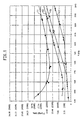
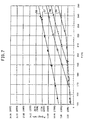
- Figure 1 is a plot of the cloud point data for a 12% by weight high density polyethylene solution in a solvent comprised of 100% methylene chloride or one of three mixtures of methylene chloride and 1-trifluoromethyl-1-fluoro-2,2-difluorocyclobutane.
- Figure 2 is a plot of the cloud point data for a 9% by weight polypropylene solution in a solvent comprised of a mixture of 100% methylene chloride or one of six mixtures of methylene chloride and 1-trifluoromethyl-1-fluoro-2,2-difluorocyclobutane.
- Figure 3 is a plot of the cloud point data for a 12% by weight high density polyethylene solution in a solvent comprised of either a 70/30 mixture of 1,2-dichloroethylene and 1-trifluoromethyl-1-fluoro-2,2-difluorocyclobutane or 100% 1,2-dichloroethylene.
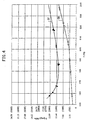
- Figure 4 is a plot of the cloud point data for a 12% by weight high density polyethylene solution in a solvent comprised of either a mixture of methylene chloride and 1,1,2,2,3,3-hexafluorocyclopentane or 100% methylene chloride.
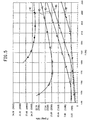
- Figure 5 is a plot of the cloud point data for a 12% by weight high density polyethylene solution in a solvent comprised of 100% methylene chloride or one of five mixtures of methylene chloride and 1,1,2,2,3,3,4,4-octafluorobutane.
- Figure 6 is a plot of the cloud point data for a 12% by weight high density polyethylene solution in a solvent comprised of a mixture of methylene chloride and 1,1,1,2,3,4,4,5,5,5-decafluoropentane at one of four different solvent ratios.
- Figure 7 is a plot of the cloud point data for a 9% by weight polypropylene solution in a solvent comprised of 100% methylene chloride or one of three mixtures of methylene chloride and 1,1,1,2,3,4,4,5,5,5 decafluoropentane.
- Figure 8 is a plot of the cloud point data for a 12% by weight high density polyethylene solution in a solvent comprised of five different mixtures of 1,2-dichloroethylene and 1,1,1,2,3,4,4,5,5,5-decafluoropentane at solvent ratios.
- synthetic fiber-forming polyolefin is intended to encompass the classes of polymers disclosed in the flash-spinning art.
- polyethylene as used herein is intended to encompass not only homopolymers of ethylene, but also copolymers wherein at least 85% of the recurring units are ethylene units.
- One preferred polyethylene is linear high density polyethylene which has an upper limit melting range of about 130° to 140°C, a density in the range of 0.94 to 0.98 gram per cubic centimeter, and a melt index (as defined by ASTM D-1238-57T Condition E) of between 0.1 and 100, and preferably less than 4.
- polypropylene is intended to embrace not only homopolymers of propylene but also copolymers where at least 85% of the recurring units are propylene units.
- cloud-point pressure means the pressure at which a single phase liquid solution starts to phase separate into a polymer-rich/spin liquid-rich two-phase liquid/liquid dispersion.
- plexifilamentary as used herein, means a three-dimensional integral network of a multitude of thin, ribbon-like, film-fibril elements of random length and with a mean film thickness of less than about 4 ⁇ m (microns) and a median fibril width of less than about 25 ⁇ m (microns).
- the film-fibril elements are generally coextensively aligned with the longitudinal axis of the structure and they intermittently unite and separate at irregular intervals in various places throughout the length, width and thickness of the structure to form a continuous three-dimensional network.
- the co-solvent in the spin fluid must be a "non-solvent" for the polymer, or at least a poorer solvent than the primary solvent: i.e., methylene chloride or 1,2-dichloroethylene.
- the solvent power of the co-solvent of the spin fluid used must be such that if the polymer to be flash-spun were to be dissolved in the co-solvent alone, the polymer would not dissolve in the co-solvent, or the resultant solution would have a cloud-point pressure greater than about 48.36 MPa (7000 psig).
- Methylene chloride and 1,2-dichloroethylene are such good solvents for the polyolefins that are commercially employed in the formation of flash-spun products (i.e., polyethylene and polypropylene) that the cloud-point pressure is so close to the bubble point that it is not possible to operate efficiently.
- flash-spun products i.e., polyethylene and polypropylene
- the solvent power of the mixture is lowered sufficiently that flash-spinning to obtain the desired plexifilamentary product is readily accomplished.
- Figure 1 is a plot of the cloud point data for a 12% by weight high density polyethylene solution in a solvent comprised of either a methylene chloride and 1-trifluoromethyl-1-fluoro-2,2-difluorocyclobutane at 3 different solvent weight ratios (70/30, curve 11; 75/25, curve 13; and 80/20, curve 15) or 100% methylene chloride (curve 17).
- solvent ratios are expressed herein, the first number refers to weight percent of the methylene chloride or dichloroethylene primary solvent in the solvent mixture, and the second number refers to the weight percent of the co-solvent in the solvent mixture.
- Figure 2 is a plot of the cloud point data for a 9% by weight polypropylene solution in a solvent comprised either methylene chloride and 1-trifluoromethyl-1-fluoro-2,2-difluorocyclobutane at 6 different solvent weight ratios (30/70, curve 21; 35/65, curve 23; 40/60, curve 25; 50/50, curve 26; 60/40, curve 27; 70/30, curve 28) or 100% methylene chloride (curve 29).
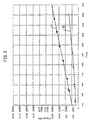
- Figure 3 is a plot of the cloud point data for a 12% by weight high density polyethylene solution in a solvent comprised of either a 70/30 mixture by weight of 1,2-dichloroethylene and 1-trifluoromethyl-1-fluoro-2,2-difluorocyclobutane (curve 31) or 100% 1,2-dichloroethylene (curve 33).
- Figure 4 is a plot of the cloud point data for a 12% by weight high density polyethylene solution in a solvent comprised of either a 70/30 mixture by weight of methylene chloride and 1,1,2,2,3,3 hexafluorocyclopentane (HFC-C456ff)(curve 37) or 100% methylene chloride (curve 39).
- a solvent comprised of either a 70/30 mixture by weight of methylene chloride and 1,1,2,2,3,3 hexafluorocyclopentane (HFC-C456ff)(curve 37) or 100% methylene chloride (curve 39).
- Figure 5 is a plot of the cloud point data for a 12% by weight high density polyethylene solution in a solvent comprised of either a mixture of methylene chloride and 1,1,2,2,3,3,4,4-octafluorobutane (HFC-338pcc) at one of 4 solvent weight ratios (70/30, curve 41; 75/25, curve 43; 80/20, curve 45; 85/15, curve 46) or 100% methylene chloride (curve 47).
- HFC-338pcc 1,1,2,2,3,3,4,4-octafluorobutane
- Figure 6 is a plot of the cloud point data for a 12% by weight high density polyethylene solution in a solvent comprised of a mixture of methylene chloride and 1,1,1,2,3,4,4,5,5,5-decafluoropentane (HFC-43-10mee) at one of 4 different solvent weight ratios (75/25, curve 51; 80/20, curve 52; 85/15, curve 53; 90/10, curve 54).
- HFC-43-10mee 1,1,1,2,3,4,4,5,5,5-decafluoropentane
- Figure 7 is a plot of the cloud point data for a 9% by weight polypropylene solution in a solvent comprised of either a mixture of methylene chloride and 1,1,1,2,3,4,4,5,5,5-decafluoropentane at one of 3 different solvent weight ratios (60/40, curve 56; 70/30, curve 57; 80/20, curve 58) or 100% methylene chloride (curve 59).
- Figure 8 is a plot of the cloud point data for a 12% by weight high density polyethylene solution in a solvent comprised of a mixture of 1,2-dichloroethylene and 1,1,1,2,3,4,4,5,5,5-decafluoropentane at one of 5 different solvent weight ratios (70/30, curve 61; 75/25, curve 62; 77.5/22.5, curve 63; 80/20, curve 64; 85/15, curve 65).
- the flash-spun material is projected against a rotating baffle: see, for example, Brethauer et al. U.S. Patent 3,851,023, and then subjected to an electrostatic charge.
- the baffle causes the product to change directions and start to spread, and the electrostatic charge causes the product (web) to further spread.
- a major component of the atmosphere surrounding the web is the vaporized solvents that, prior to flash-spinning, dissolved the polymer which was flash-spun.
- the mixtures of a primary solvent selected from the group consisting of methylene chloride and 1,2-dichloroethylene and the co-solvents listed above, when vaporized, have a dielectric strength sufficient to maintain sufficient electric charge on the web to insure a satisfactory product. These mixtures have a dielectric strength as measured by ASTM D-2477 of greater than about 40 kilovolts per centimeter.
- the mixture of solvents has a boiling point that is near room temperature, a high pressure solvent recovery system is not necessary; and furthermore, a high pressure solvent injection system is not necessary.
- the solvent mixtures of the present invention are also of low flammability.
- the amount of co-solvent employed with the primary solvent selected from the group consisting of methylene chloride and 1,2-dichloroethylene will usually be in the range of about 10 to 50 parts by weight per hundred parts by weight of the solvent mixture. Due to the relatively high toxicity of methylene chloride and the slight flammability of 100% dichloroethylene, it is advantageous for the solvent mixture to comprise a high proportion of the more benign co-solvent. Dilution with the co-solvent reduces the toxicity and flammability concerns associated with the primary solvents. However, high proportions of many potential co-solvents raise the cloud point pressure of the spin solution too high for commercial flash-spinning processes. It has been found that partially fluorinated cyclic co-solvents of the invention can be used in the spin solution at relatively high concentrations without raising the cloud point pressure of the spin solution above the point where commercial flash-spinning is practical.
- a spin solution comprised of 12% polyethylene in a solvent mixture of 70 parts by weight methylene chloride and 30 parts 1-trifluoromethyl-1-fluoro-2,2-difluorocyclobutane has a cloud point pressure of about 13.20 MPa(1900 psig) at 200°C ( see Figure 1, Curve 11).
- the cloud pressure is about 9.75 MPa (400 psig) at 200°C ( see Figure 4, Curve 37).
- the cloud point pressure rises to 23.54 MPa (3400 psig) at 200°C ( see Figure 5, Curve 41).
- the co-solvent is replaced with the straight chain 1,1,1,2,3,4,4,5,5,5-decafluoropentane, the cloud point pressure would rise to more than 20.78 MPa (3000 psig) at 200°C ( see Figure 6).
- the primary solvent is dichloroethylene.
- the cloud point pressure of the solution at 200° C is about 9.06 MPa(1300 psig) (see Figure 3, Curve 31).
- the tenacity of the flash-spun strand is determined with an Instron tensile-testing machine.
- the strands are conditioned and tested at 21.1°C (70°F) and 65% relative humidity.
- the sample is then twisted to 3.94 turns per cm (10 turns per inch) and mounted in jaws of the Instron Tester.
- a 5.08 cm (2-inch) gauge length and an elongation rate of 100% per minute are used.
- the tenacity (T) at break is recorded in grams per denier.
- the Elongation of the flash-spun strand is measured as elongation at break and is reported as a percentage.
- the Modulus corresponds to the slope of the stress/strain curve and is expressed in units of gpd.
- the Denier of the strand is determined from the weight of a 18 cm sample length of the strand.
- the surface area of the plexifilamentary film-fibril strand product is a measure of the degree and fineness of fibrillation of the flash-spun product. Surface area is measured by the BET nitrogen absorption method of S. Brunauer, P. H. Emmett and E. Teller, J. Am. Chem. Soc., V. 60 p 309-319 (1938) and is reported as m 2 /g.
- the apparatus and process for carrying out the examples is as described in U.S. Patent 5,250,237 at column 10 and following.
- the spinneret employed had an orifice with a 0.76 mm (30 mil) diameter and a 0.76 mm (30 mil) length.
- the 1-trifluoromethyl-1-fluoro-2,2-difluorocyclobutane has an atmospheric boiling point of about 68° C.
- the presence of the co-solvent raised the cloud point of the spin fluid by more than 1379 kPa (200 psi) ( see Figure 1: curve 13).
- the polyethylene and solvent were mixed at 190°C and a pressure of 13.89 MPa(2000psig) for 45 minutes.
- the solution was spun at an accumulator pressure of 6.31 MPa of (900 psig), at a spin pressure of about 5.62 MPa (800 psig), and at a temperature of 190°C through the spin orifice.
- a well fibrillated plexifilamentary product was obtained having a denier of 193 dTex (174 denier), a modulus of 11.3 gpdTex (12.5 gpd) a tenacity of 4.9 gpdTex (5.4 gpd), an elongation of 93% and a surface area of 21.2 m 2 /g.
- the presence of the co-solvent raised the cloud point of the spin fluid by more than 1379 kPa (200 psi) ( See Figure 3).
- the polyethylene and solvent were mixed at 210°C and a pressure of 13.87 MPa (2000 psig) for 30 minutes.
- the solution was spun at an accumulator pressure of 9.06 MPa(1300 psig), at a spin pressure of 8.38 MPa (1200 psig), and at a temperature of 210°C through the spin orifice.
- a well fibrillated plexifilamentary product was obtained having a denier of 191 dTex (172 denier), a modulus of 6.6 gpdTex (7.3 gpd), a tenacity of 3.4 gpdTex (3.9 gpd), and an elongation of 82%.
- the presence of the co-solvent raised the cloud point of the spin fluid by more than 1379 kPa (200 psi).
- the polyethylene and solvent was mixed at 200°C and a pressure of 17.34 MPa (2500 psig) for 30 minutes.
- the solution was spun at an accumulator pressure of 7.00MPa (1000 psig), at a spin pressure of about 5.62 MPa(800 psig), and at a temperature of 200°C through the spin orifice.
- a well fibrillated plexifilamentary product was obtained having a denier of 266 dTex (239 denier), a modulus of 9.8 gpdTex (10.9 gpd), a tenacity of 4.6 gpdTex (5.1 gpd), and an elongation of 73%.
- the presence of the co-solvent raised the cloud point of the spin fluid by more than 1379 kPa (200 psi) ( See Figure 2).
- the polypropylene and solvent were mixed at 220°C and a pressure of 17.34 MPa (2500 psig) for 30 minutes.
- the solution was spun at an accumulator pressure of 7.00 MPa (1000 psig), at a spin pressure of about 6.13 MPa (875 psig), and at a temperature of 220°C through the spin orifice.
- a well fibrillated plexifilamentary product was obtained having a denier of 106 dTex (95 denier), a modulus of 2.5 gpdTex (2.8 gpd), a tenacity of 1.4 gpdTex (1.5 gpd), and an elongation of 107%.
- the polyethylene and solvent are mixed at 200°C and a pressure of 27.68 MPa (4000 psig) for 30 minutes.
- the solution is spun at an accumulator pressure of 8.38 MPa (1200 psig), at a spin pressure of about 7.69 MPa (1100 psig), and at a temperature of 200°C through the spin orifice.
- a well fibrillated plexifilamentary product is obtained.
- the solution is spun at an accumulator pressure of 9.75 MPa (1400 psig), at a spin pressure of about 8.38 MPa (1200 psig), and at a temperature of 200°C through the spin orifice.
- a well fibrillated plexifilamentary product is obtained.
Landscapes
- Engineering & Computer Science (AREA)
- Textile Engineering (AREA)
- Chemical & Material Sciences (AREA)
- Chemical Kinetics & Catalysis (AREA)
- General Chemical & Material Sciences (AREA)
- Mechanical Engineering (AREA)
- Spinning Methods And Devices For Manufacturing Artificial Fibers (AREA)
- Artificial Filaments (AREA)
Claims (11)
- Procédé pour la préparation de brins de fibrilles de films plexifilamentaires de polyoléfine synthétique formant des fibres qui comprend le filage éclair d'un fluide de filage à une pression qui est plus grande que la pression autogène du fluide de filage dans une région de pression inférieure, caractérisé en ce que ledit fluide de filage consiste essentiellement en (a) 5 à 30% en poids de polyoléfine synthétique formant des fibres, (b) un solvant principal choisi parmi le groupe constitué du chlorure de méthylène et du 1,2-dichloroéthylène, et (c) un co-solvant d'hydrocarbure cyclique partiellement fluoré ayant (i) 4 à 7 atomes de carbone et (ii) un point d'ébullition atmosphérique entre 15 et 100°C, ledit co-solvant étant présent dans le fluide de filage dans une quantité suffisante pour augmenter la pression du point de trouble du fluide de filage d'au moins 345 kPa (50 livres par pouce carré).
- Procédé selon la revendication 1 dans lequel le co-solvant est choisi parmi le groupe constitué du 1-trifluorométhyl-1-fluoro-2,2-difluorocyclobutane ; le 1,1,2,2,3,3-hexafluorocyclopentane et le 1,1,2,2,3,3,4,5-octafluorocyclopentane.
- Procédé selon la revendication 2 dans lequel la polyoléfine synthétique formant des fibres est du polyéthylène linéaire.
- Procédé selon la revendication 2 dans lequel la polyoléfine synthétique formant des fibres est du polypropylène.
- Procédé selon la revendication 1 dans lequel le fluide de filage contient 8 à 18% en poids de polyoléfine synthétique formant des fibres.
- Procédé selon la revendication 1 dans lequel le co-solvant est présent dans le fluide de filage dans une quantité suffisante pour augmenter la pression de point de trouble du fluide de filage d'au moins 1379 kPa (200 livres par pouce carré).
- Fluide de filage caractérisé en ce qu'il consiste essentiellement en (a) 5 à 30% en poids de polyoléfine synthétique formant des fibres, (b) un solvant principal choisi parmi le groupe constitué du chlorure de méthylène et du 1,2-dichloroéthylène, et (c) un co-solvant d'hydrocarbure cyclique partiellement fluoré ayant (i) 4 à 7 atomes de carbone et (ii) un point d'ébullition atmosphérique entre 15 et 100°C, ledit co-solvant étant présent dans le fluide de filage dans une quantité suffisante pour augmenter la pression du point de trouble du fluide de filage d'au moins 345 kPa (50 livres par pouce carré).
- Fluide de filage selon la revendication 7 contenant 8 à 18% en poids de polyoléfine synthétique formant des fibres.
- Fluide de filage selon la revendication 7 dans lequel le co-solvant est choisi parmi le groupe constitué du 1-trifluorométhyl-1-fluoro-2,2-difluorocyclobutane ; le 1,1,2,2,3,3-hexafluorocyclopehtane et le 1,1,2,2,3,3,4,5-octaflubrocyclopentane.
- Fluide de filage selon la revendication 7 dans lequel la polyoléfine synthétique formant des fibres est du polyéthylène linéaire.
- Fluide de filage selon la revendication 7 dans lequel la polyoléfine synthétique formant des fibres est du polypropylène.
Applications Claiming Priority (3)
| Application Number | Priority Date | Filing Date | Title |
|---|---|---|---|
| US902645 | 1997-07-30 | ||
| US08/902,645 US5874036A (en) | 1996-03-08 | 1997-07-30 | Flash-spinning process |
| PCT/US1997/015639 WO1999006616A1 (fr) | 1997-07-30 | 1997-09-05 | Procede et solution de filage eclair |
Publications (2)
| Publication Number | Publication Date |
|---|---|
| EP1002145A1 EP1002145A1 (fr) | 2000-05-24 |
| EP1002145B1 true EP1002145B1 (fr) | 2003-06-11 |
Family
ID=25416164
Family Applications (1)
| Application Number | Title | Priority Date | Filing Date |
|---|---|---|---|
| EP97940843A Expired - Lifetime EP1002145B1 (fr) | 1997-07-30 | 1997-09-05 | Procede et solution de filage eclair |
Country Status (7)
| Country | Link |
|---|---|
| US (1) | US5874036A (fr) |
| EP (1) | EP1002145B1 (fr) |
| JP (1) | JP3946953B2 (fr) |
| KR (1) | KR20010022444A (fr) |
| CA (1) | CA2289649A1 (fr) |
| DE (1) | DE69722823T2 (fr) |
| WO (1) | WO1999006616A1 (fr) |
Cited By (1)
| Publication number | Priority date | Publication date | Assignee | Title |
|---|---|---|---|---|
| WO2025144674A1 (fr) * | 2023-12-27 | 2025-07-03 | Dupont Safety & Construction, Inc. | Compositions azéotropiques et de type azéotrope comprenant du dichlorométhane et du trans-1h, 2h-octafluorocyclopentane et utilisation des compositions en tant qu'agents de filage éclair |
Families Citing this family (11)
| Publication number | Priority date | Publication date | Assignee | Title |
|---|---|---|---|---|
| US7179413B1 (en) * | 1999-08-20 | 2007-02-20 | E. I. Du Pont De Nemours And Company | Flash-spinning process and solution |
| US6849194B2 (en) | 2000-11-17 | 2005-02-01 | Pcbu Services, Inc. | Methods for preparing ethers, ether compositions, fluoroether fire extinguishing systems, mixtures and methods |
| EP1349972B1 (fr) * | 2000-12-22 | 2007-01-24 | E.I. Du Pont De Nemours And Company | Melanges d'azeotrope avec du perfluorobutylethylene |
| US7300968B2 (en) * | 2002-12-18 | 2007-11-27 | E.I. Du Pont De Nemours And Company | Flash spinning solution and flash spinning process using straight chain hydrofluorocarbon co-solvents |
| BRPI0409518B1 (pt) | 2003-04-03 | 2014-08-19 | Du Pont | Processo, aparelho de fiação rotacional e folha não tecida fibrosa |
| CN1938459B (zh) * | 2004-04-01 | 2012-03-21 | 纳幕尔杜邦公司 | 形成均匀材料的旋转法及由该方法形成的膜 |
| US20070202764A1 (en) * | 2005-04-01 | 2007-08-30 | Marin Robert A | Rotary process for forming uniform material |
| WO2025144676A1 (fr) * | 2023-12-27 | 2025-07-03 | Dupont Safety & Construction, Inc. | Processus de filage éclair et fluide de filage éclair |
| WO2025144673A1 (fr) | 2023-12-27 | 2025-07-03 | Dupont Safety & Construction, Inc. | Compositions non azéotropiques comprenant du dichlorométhane et du 1h, 1h, 2h-heptafluorocyclopentane et utilisation des compositions en tant qu'agents de filage flash |
| WO2025178740A1 (fr) * | 2024-02-19 | 2025-08-28 | Dupont Safety & Construction, Inc. | Compositions azéotropiques et de type azéotrope comprenant du cyclopentane et du 1h,1h,2h-heptafluorocyclopentane ou du 2-méthylpentane et 1h,1h,2h-heptafluorocyclopentane et utilisation des compositions en tant qu'agents de filage éclair |
| WO2025178741A1 (fr) | 2024-02-19 | 2025-08-28 | Dupont Safety & Construction, Inc. | Compositions azéotropiques et de type azéotrope comprenant du 1,2-dichloroéthylène et du 1h,2h-octafluorocyclopentane et utilisation des compositions en tant qu'agents de filage éclair |
Family Cites Families (16)
| Publication number | Priority date | Publication date | Assignee | Title |
|---|---|---|---|---|
| US3227664A (en) * | 1961-12-07 | 1966-01-04 | Du Pont | Ultramicrocellular structures of crystalline organic polymer |
| US3081519A (en) * | 1962-01-31 | 1963-03-19 | Fibrillated strand | |
| US3637458A (en) * | 1968-12-27 | 1972-01-25 | Du Pont | Microcellular foam sheet |
| US3851023A (en) * | 1972-11-02 | 1974-11-26 | Du Pont | Process for forming a web |
| MX171962B (es) * | 1988-08-30 | 1993-11-25 | Du Pont | Proceso mejorado para hilado rapido de cordones de fibrilla-pelicula flexifilamentarios |
| US5032326A (en) * | 1988-08-31 | 1991-07-16 | E. I. Du Pont De Nemours And Company | Flash-spinning of polymeric plexifilaments |
| TW204377B (fr) * | 1989-07-12 | 1993-04-21 | Asahi Chemical Ind | |
| DE69116703T2 (de) * | 1990-02-07 | 1996-07-18 | Du Pont | Isolierte Leiter mit hoher Übertragungsgeschwindigkeit und Herstellungsverfahren |
| WO1991013846A1 (fr) * | 1990-03-05 | 1991-09-19 | E.I. Du Pont De Nemours And Company | 1,1,2,2,3,3-hexafluorocyclopentane et son utilisation dans des compositions et des procedes de nettoyage |
| US5147586A (en) * | 1991-02-22 | 1992-09-15 | E. I. Du Pont De Nemours And Company | Flash-spinning polymeric plexifilaments |
| US5286422A (en) * | 1991-08-03 | 1994-02-15 | Asahi Kasei Kogyo Kabushiki Kaisha | Process for producing three-dimensional fiber using a halogen group solvent |
| JP3159765B2 (ja) * | 1992-03-16 | 2001-04-23 | 旭化成株式会社 | フラッシュ紡糸方法 |
| US5250237A (en) * | 1992-05-11 | 1993-10-05 | E. I. Du Pont De Nemours And Company | Alcohol-based spin liquids for flash-spinning polymeric plexifilaments |
| JPH06101113A (ja) * | 1992-09-11 | 1994-04-12 | Asahi Chem Ind Co Ltd | 三次元網状繊維の製法 |
| US5643525A (en) * | 1993-03-26 | 1997-07-01 | E. I. Du Pont De Nemours And Company | Process for improving electrostatic charging of plexifilaments |
| US5401429A (en) * | 1993-04-01 | 1995-03-28 | Minnesota Mining And Manufacturing Company | Azeotropic compositions containing perfluorinated cycloaminoether |
-
1997
- 1997-07-30 US US08/902,645 patent/US5874036A/en not_active Expired - Lifetime
- 1997-09-05 KR KR1020007001028A patent/KR20010022444A/ko not_active Withdrawn
- 1997-09-05 EP EP97940843A patent/EP1002145B1/fr not_active Expired - Lifetime
- 1997-09-05 WO PCT/US1997/015639 patent/WO1999006616A1/fr not_active Ceased
- 1997-09-05 JP JP2000505353A patent/JP3946953B2/ja not_active Expired - Fee Related
- 1997-09-05 DE DE69722823T patent/DE69722823T2/de not_active Expired - Lifetime
- 1997-09-05 CA CA002289649A patent/CA2289649A1/fr not_active Abandoned
Cited By (1)
| Publication number | Priority date | Publication date | Assignee | Title |
|---|---|---|---|---|
| WO2025144674A1 (fr) * | 2023-12-27 | 2025-07-03 | Dupont Safety & Construction, Inc. | Compositions azéotropiques et de type azéotrope comprenant du dichlorométhane et du trans-1h, 2h-octafluorocyclopentane et utilisation des compositions en tant qu'agents de filage éclair |
Also Published As
| Publication number | Publication date |
|---|---|
| KR20010022444A (ko) | 2001-03-15 |
| DE69722823D1 (de) | 2003-07-17 |
| JP3946953B2 (ja) | 2007-07-18 |
| WO1999006616A1 (fr) | 1999-02-11 |
| JP2001512188A (ja) | 2001-08-21 |
| CA2289649A1 (fr) | 1999-02-11 |
| DE69722823T2 (de) | 2004-05-06 |
| EP1002145A1 (fr) | 2000-05-24 |
| US5874036A (en) | 1999-02-23 |
Similar Documents
| Publication | Publication Date | Title |
|---|---|---|
| EP0572570B1 (fr) | Liquides de filage a base d'hydrocarbure/de co-solvant pour le filage eclair de plexifilaments polymeres | |
| EP0885317B1 (fr) | Procede de filage eclair et solution de filage eclair | |
| US5977237A (en) | Flash-spinning solution | |
| EP1049821B1 (fr) | Procede et solution de filage eclair | |
| EP1002145B1 (fr) | Procede et solution de filage eclair | |
| EP1141452B1 (fr) | Procede de filage eclair et solution pour filage eclair contenant des azeotropes | |
| WO1997033016A9 (fr) | Procede de filage eclair et solution de filage eclair | |
| EP0640154A1 (fr) | Liquides de filature a base d'alcool pour filature eclair de plexifilaments polymeres. | |
| US7300968B2 (en) | Flash spinning solution and flash spinning process using straight chain hydrofluorocarbon co-solvents | |
| EP0361684B1 (fr) | Hydrocarbures halogénés pour le filage-éclair de plexifilaments de polymères | |
| US6270709B1 (en) | Flash spinning polymethylpentene process and product | |
| US5023025A (en) | Halocarbons for flash-spinning polymeric plexifilaments | |
| US5081177A (en) | Halocarbons for flash-spinning polymeric plexifilaments |
Legal Events
| Date | Code | Title | Description |
|---|---|---|---|
| PUAI | Public reference made under article 153(3) epc to a published international application that has entered the european phase |
Free format text: ORIGINAL CODE: 0009012 |
|
| 17P | Request for examination filed |
Effective date: 20000119 |
|
| AK | Designated contracting states |
Kind code of ref document: A1 Designated state(s): DE ES FR GB IT |
|
| 17Q | First examination report despatched |
Effective date: 20011123 |
|
| GRAH | Despatch of communication of intention to grant a patent |
Free format text: ORIGINAL CODE: EPIDOS IGRA |
|
| GRAH | Despatch of communication of intention to grant a patent |
Free format text: ORIGINAL CODE: EPIDOS IGRA |
|
| GRAA | (expected) grant |
Free format text: ORIGINAL CODE: 0009210 |
|
| AK | Designated contracting states |
Designated state(s): DE ES FR GB IT |
|
| PG25 | Lapsed in a contracting state [announced via postgrant information from national office to epo] |
Ref country code: IT Free format text: LAPSE BECAUSE OF FAILURE TO SUBMIT A TRANSLATION OF THE DESCRIPTION OR TO PAY THE FEE WITHIN THE PRE;WARNING: LAPSES OF ITALIAN PATENTS WITH EFFECTIVE DATE BEFORE 2007 MAY HAVE OCCURRED AT ANY TIME BEFORE 2007. THE CORRECT EFFECTIVE DATE MAY BE DIFFERENT FROM THE ONE RECORDED.SCRIBED TIME-LIMIT Effective date: 20030611 |
|
| REG | Reference to a national code |
Ref country code: GB Ref legal event code: FG4D |
|
| REF | Corresponds to: |
Ref document number: 69722823 Country of ref document: DE Date of ref document: 20030717 Kind code of ref document: P |
|
| PG25 | Lapsed in a contracting state [announced via postgrant information from national office to epo] |
Ref country code: ES Free format text: LAPSE BECAUSE OF FAILURE TO SUBMIT A TRANSLATION OF THE DESCRIPTION OR TO PAY THE FEE WITHIN THE PRESCRIBED TIME-LIMIT Effective date: 20030922 |
|
| ET | Fr: translation filed | ||
| PLBE | No opposition filed within time limit |
Free format text: ORIGINAL CODE: 0009261 |
|
| STAA | Information on the status of an ep patent application or granted ep patent |
Free format text: STATUS: NO OPPOSITION FILED WITHIN TIME LIMIT |
|
| 26N | No opposition filed |
Effective date: 20040312 |
|
| REG | Reference to a national code |
Ref country code: FR Ref legal event code: PLFP Year of fee payment: 19 |
|
| PGFP | Annual fee paid to national office [announced via postgrant information from national office to epo] |
Ref country code: GB Payment date: 20150902 Year of fee payment: 19 Ref country code: DE Payment date: 20150902 Year of fee payment: 19 |
|
| PGFP | Annual fee paid to national office [announced via postgrant information from national office to epo] |
Ref country code: FR Payment date: 20150811 Year of fee payment: 19 |
|
| REG | Reference to a national code |
Ref country code: DE Ref legal event code: R119 Ref document number: 69722823 Country of ref document: DE |
|
| GBPC | Gb: european patent ceased through non-payment of renewal fee |
Effective date: 20160905 |
|
| REG | Reference to a national code |
Ref country code: FR Ref legal event code: ST Effective date: 20170531 |
|
| PG25 | Lapsed in a contracting state [announced via postgrant information from national office to epo] |
Ref country code: DE Free format text: LAPSE BECAUSE OF NON-PAYMENT OF DUE FEES Effective date: 20170401 Ref country code: GB Free format text: LAPSE BECAUSE OF NON-PAYMENT OF DUE FEES Effective date: 20160905 Ref country code: FR Free format text: LAPSE BECAUSE OF NON-PAYMENT OF DUE FEES Effective date: 20160930 |