EP1002229B1 - Elektrochemische und photochemische elektroden und deren verwendung - Google Patents
Elektrochemische und photochemische elektroden und deren verwendung Download PDFInfo
- Publication number
- EP1002229B1 EP1002229B1 EP97922016A EP97922016A EP1002229B1 EP 1002229 B1 EP1002229 B1 EP 1002229B1 EP 97922016 A EP97922016 A EP 97922016A EP 97922016 A EP97922016 A EP 97922016A EP 1002229 B1 EP1002229 B1 EP 1002229B1
- Authority
- EP
- European Patent Office
- Prior art keywords
- fad
- electrode
- enzyme
- group
- enzymes
- Prior art date
- Legal status (The legal status is an assumption and is not a legal conclusion. Google has not performed a legal analysis and makes no representation as to the accuracy of the status listed.)
- Expired - Lifetime
Links
- 102000004190 Enzymes Human genes 0.000 claims abstract description 116
- 108090000790 Enzymes Proteins 0.000 claims abstract description 116
- 230000008859 change Effects 0.000 claims abstract description 17
- 230000001419 dependent effect Effects 0.000 claims abstract description 16
- 230000003287 optical effect Effects 0.000 claims abstract description 15
- 125000000524 functional group Chemical group 0.000 claims abstract description 13
- 239000007788 liquid Substances 0.000 claims abstract description 12
- 230000003197 catalytic effect Effects 0.000 claims abstract description 11
- 238000007699 photoisomerization reaction Methods 0.000 claims abstract description 6
- 239000002356 single layer Substances 0.000 claims description 33
- 238000000034 method Methods 0.000 claims description 27
- 230000004044 response Effects 0.000 claims description 27
- 239000012491 analyte Substances 0.000 claims description 25
- 108010006591 Apoenzymes Proteins 0.000 claims description 24
- 239000000126 substance Substances 0.000 claims description 21
- 125000005647 linker group Chemical group 0.000 claims description 13
- 238000006317 isomerization reaction Methods 0.000 claims description 12
- 230000008569 process Effects 0.000 claims description 12
- 238000001179 sorption measurement Methods 0.000 claims description 9
- 230000026683 transduction Effects 0.000 claims description 8
- 238000010361 transduction Methods 0.000 claims description 8
- 238000012546 transfer Methods 0.000 claims description 8
- 108010093096 Immobilized Enzymes Proteins 0.000 claims description 7
- 239000000758 substrate Substances 0.000 claims description 6
- 238000001727 in vivo Methods 0.000 claims description 5
- 238000004519 manufacturing process Methods 0.000 claims description 5
- 238000006479 redox reaction Methods 0.000 claims description 4
- 230000007423 decrease Effects 0.000 claims description 3
- 229940088598 enzyme Drugs 0.000 description 85
- 239000004366 Glucose oxidase Substances 0.000 description 53
- 229940116332 glucose oxidase Drugs 0.000 description 53
- 108010015776 Glucose oxidase Proteins 0.000 description 51
- 235000019420 glucose oxidase Nutrition 0.000 description 51
- WQZGKKKJIJFFOK-GASJEMHNSA-N Glucose Natural products OC[C@H]1OC(O)[C@H](O)[C@@H](O)[C@@H]1O WQZGKKKJIJFFOK-GASJEMHNSA-N 0.000 description 36
- 239000008103 glucose Substances 0.000 description 36
- MMXZSJMASHPLLR-UHFFFAOYSA-N pyrroloquinoline quinone Chemical compound C12=C(C(O)=O)C=C(C(O)=O)N=C2C(=O)C(=O)C2=C1NC(C(=O)O)=C2 MMXZSJMASHPLLR-UHFFFAOYSA-N 0.000 description 23
- 239000000243 solution Substances 0.000 description 20
- 238000002484 cyclic voltammetry Methods 0.000 description 18
- 239000010931 gold Substances 0.000 description 18
- 230000027756 respiratory electron transport chain Effects 0.000 description 18
- XKRFYHLGVUSROY-UHFFFAOYSA-N Argon Chemical compound [Ar] XKRFYHLGVUSROY-UHFFFAOYSA-N 0.000 description 16
- 230000003647 oxidation Effects 0.000 description 16
- 238000007254 oxidation reaction Methods 0.000 description 16
- 239000008363 phosphate buffer Substances 0.000 description 16
- 102000004169 proteins and genes Human genes 0.000 description 11
- 108090000623 proteins and genes Proteins 0.000 description 11
- XLYOFNOQVPJJNP-UHFFFAOYSA-N water Substances O XLYOFNOQVPJJNP-UHFFFAOYSA-N 0.000 description 11
- 102000004674 D-amino-acid oxidase Human genes 0.000 description 10
- 108010003989 D-amino-acid oxidase Proteins 0.000 description 10
- 230000004048 modification Effects 0.000 description 10
- 238000012986 modification Methods 0.000 description 10
- 230000007306 turnover Effects 0.000 description 10
- PCHJSUWPFVWCPO-UHFFFAOYSA-N gold Chemical compound [Au] PCHJSUWPFVWCPO-UHFFFAOYSA-N 0.000 description 9
- 229910052737 gold Inorganic materials 0.000 description 9
- 238000002360 preparation method Methods 0.000 description 9
- CIWBSHSKHKDKBQ-JLAZNSOCSA-N Ascorbic acid Chemical compound OC[C@H](O)[C@H]1OC(=O)C(O)=C1O CIWBSHSKHKDKBQ-JLAZNSOCSA-N 0.000 description 8
- 229910052786 argon Inorganic materials 0.000 description 8
- 230000002210 biocatalytic effect Effects 0.000 description 7
- 238000004891 communication Methods 0.000 description 7
- GPRSOIDYHMXAGW-UHFFFAOYSA-N cyclopenta-1,3-diene cyclopentanecarboxylic acid iron Chemical compound [CH-]1[CH-][CH-][C-]([CH-]1)C(=O)O.[CH-]1C=CC=C1.[Fe] GPRSOIDYHMXAGW-UHFFFAOYSA-N 0.000 description 7
- OOTFVKOQINZBBF-UHFFFAOYSA-N cystamine Chemical compound CCSSCCN OOTFVKOQINZBBF-UHFFFAOYSA-N 0.000 description 7
- 229940099500 cystamine Drugs 0.000 description 7
- 230000000694 effects Effects 0.000 description 7
- 238000002474 experimental method Methods 0.000 description 7
- 238000005259 measurement Methods 0.000 description 7
- 229910052760 oxygen Inorganic materials 0.000 description 7
- LMDZBCPBFSXMTL-UHFFFAOYSA-N 1-ethyl-3-(3-dimethylaminopropyl)carbodiimide Chemical compound CCN=C=NCCCN(C)C LMDZBCPBFSXMTL-UHFFFAOYSA-N 0.000 description 6
- IAZDPXIOMUYVGZ-UHFFFAOYSA-N Dimethylsulphoxide Chemical compound CS(C)=O IAZDPXIOMUYVGZ-UHFFFAOYSA-N 0.000 description 6
- QVGXLLKOCUKJST-UHFFFAOYSA-N atomic oxygen Chemical compound [O] QVGXLLKOCUKJST-UHFFFAOYSA-N 0.000 description 6
- 125000003178 carboxy group Chemical group [H]OC(*)=O 0.000 description 6
- KTWOOEGAPBSYNW-UHFFFAOYSA-N ferrocene Chemical compound [Fe+2].C=1C=C[CH-]C=1.C=1C=C[CH-]C=1 KTWOOEGAPBSYNW-UHFFFAOYSA-N 0.000 description 6
- 230000002452 interceptive effect Effects 0.000 description 6
- 239000001301 oxygen Substances 0.000 description 6
- 230000002441 reversible effect Effects 0.000 description 6
- 0 C1CC*CC1 Chemical compound C1CC*CC1 0.000 description 5
- 239000011942 biocatalyst Substances 0.000 description 5
- 238000002848 electrochemical method Methods 0.000 description 5
- JKMHFZQWWAIEOD-UHFFFAOYSA-N 2-[4-(2-hydroxyethyl)piperazin-1-yl]ethanesulfonic acid Chemical compound OCC[NH+]1CCN(CCS([O-])(=O)=O)CC1 JKMHFZQWWAIEOD-UHFFFAOYSA-N 0.000 description 4
- 108010083590 Apoproteins Proteins 0.000 description 4
- 102000006410 Apoproteins Human genes 0.000 description 4
- QNAYBMKLOCPYGJ-UWTATZPHSA-N D-alanine Chemical compound C[C@@H](N)C(O)=O QNAYBMKLOCPYGJ-UWTATZPHSA-N 0.000 description 4
- QNAYBMKLOCPYGJ-UHFFFAOYSA-N D-alpha-Ala Natural products CC([NH3+])C([O-])=O QNAYBMKLOCPYGJ-UHFFFAOYSA-N 0.000 description 4
- 239000007995 HEPES buffer Substances 0.000 description 4
- PMZURENOXWZQFD-UHFFFAOYSA-L Sodium Sulfate Chemical compound [Na+].[Na+].[O-]S([O-])(=O)=O PMZURENOXWZQFD-UHFFFAOYSA-L 0.000 description 4
- 238000004458 analytical method Methods 0.000 description 4
- 235000010323 ascorbic acid Nutrition 0.000 description 4
- 239000011668 ascorbic acid Substances 0.000 description 4
- 239000003153 chemical reaction reagent Substances 0.000 description 4
- 238000005859 coupling reaction Methods 0.000 description 4
- 230000006870 function Effects 0.000 description 4
- FUZZWVXGSFPDMH-UHFFFAOYSA-N hexanoic acid Chemical compound CCCCCC(O)=O FUZZWVXGSFPDMH-UHFFFAOYSA-N 0.000 description 4
- 108090000765 processed proteins & peptides Proteins 0.000 description 4
- 229910052938 sodium sulfate Inorganic materials 0.000 description 4
- 235000011152 sodium sulphate Nutrition 0.000 description 4
- QAOWNCQODCNURD-UHFFFAOYSA-N Sulfuric acid Chemical compound OS(O)(=O)=O QAOWNCQODCNURD-UHFFFAOYSA-N 0.000 description 3
- 238000010521 absorption reaction Methods 0.000 description 3
- 230000004913 activation Effects 0.000 description 3
- 229960005070 ascorbic acid Drugs 0.000 description 3
- 239000000872 buffer Substances 0.000 description 3
- 239000003638 chemical reducing agent Substances 0.000 description 3
- 230000008878 coupling Effects 0.000 description 3
- 238000010168 coupling process Methods 0.000 description 3
- 230000009849 deactivation Effects 0.000 description 3
- XPPKVPWEQAFLFU-UHFFFAOYSA-J diphosphate(4-) Chemical compound [O-]P([O-])(=O)OP([O-])([O-])=O XPPKVPWEQAFLFU-UHFFFAOYSA-J 0.000 description 3
- 235000011180 diphosphates Nutrition 0.000 description 3
- 230000001747 exhibiting effect Effects 0.000 description 3
- 239000011521 glass Substances 0.000 description 3
- 238000005286 illumination Methods 0.000 description 3
- 230000000670 limiting effect Effects 0.000 description 3
- 238000011068 loading method Methods 0.000 description 3
- 229910052751 metal Inorganic materials 0.000 description 3
- 239000002184 metal Substances 0.000 description 3
- 239000007800 oxidant agent Substances 0.000 description 3
- 230000001590 oxidative effect Effects 0.000 description 3
- 230000009467 reduction Effects 0.000 description 3
- AZQWKYJCGOJGHM-UHFFFAOYSA-N 1,4-benzoquinone Chemical compound O=C1C=CC(=O)C=C1 AZQWKYJCGOJGHM-UHFFFAOYSA-N 0.000 description 2
- 241001507939 Cormus domestica Species 0.000 description 2
- 108010063907 Glutathione Reductase Proteins 0.000 description 2
- 102100036442 Glutathione reductase, mitochondrial Human genes 0.000 description 2
- KFZMGEQAYNKOFK-UHFFFAOYSA-N Isopropanol Chemical compound CC(C)O KFZMGEQAYNKOFK-UHFFFAOYSA-N 0.000 description 2
- 108010073450 Lactate 2-monooxygenase Proteins 0.000 description 2
- GRYLNZFGIOXLOG-UHFFFAOYSA-N Nitric acid Chemical compound O[N+]([O-])=O GRYLNZFGIOXLOG-UHFFFAOYSA-N 0.000 description 2
- VYPSYNLAJGMNEJ-UHFFFAOYSA-N Silicium dioxide Chemical compound O=[Si]=O VYPSYNLAJGMNEJ-UHFFFAOYSA-N 0.000 description 2
- NINIDFKCEFEMDL-UHFFFAOYSA-N Sulfur Chemical compound [S] NINIDFKCEFEMDL-UHFFFAOYSA-N 0.000 description 2
- YTPLMLYBLZKORZ-UHFFFAOYSA-N Thiophene Chemical compound C=1C=CSC=1 YTPLMLYBLZKORZ-UHFFFAOYSA-N 0.000 description 2
- LEHOTFFKMJEONL-UHFFFAOYSA-N Uric Acid Chemical compound N1C(=O)NC(=O)C2=C1NC(=O)N2 LEHOTFFKMJEONL-UHFFFAOYSA-N 0.000 description 2
- TVWHNULVHGKJHS-UHFFFAOYSA-N Uric acid Natural products N1C(=O)NC(=O)C2NC(=O)NC21 TVWHNULVHGKJHS-UHFFFAOYSA-N 0.000 description 2
- 125000002252 acyl group Chemical group 0.000 description 2
- 125000004450 alkenylene group Chemical group 0.000 description 2
- 125000002947 alkylene group Chemical group 0.000 description 2
- 150000001412 amines Chemical group 0.000 description 2
- 238000013459 approach Methods 0.000 description 2
- 238000011088 calibration curve Methods 0.000 description 2
- 238000006243 chemical reaction Methods 0.000 description 2
- 238000000970 chrono-amperometry Methods 0.000 description 2
- 150000001875 compounds Chemical class 0.000 description 2
- YSHTTYWCNWNGII-UHFFFAOYSA-N cyclopenta-1,3-diene 2-(2,3-dimethylcyclopenta-2,4-dien-1-yl)ethanamine iron(2+) Chemical compound [Fe++].c1cc[cH-]c1.Cc1cc[c-](CCN)c1C YSHTTYWCNWNGII-UHFFFAOYSA-N 0.000 description 2
- 238000000502 dialysis Methods 0.000 description 2
- 239000003480 eluent Substances 0.000 description 2
- 230000002255 enzymatic effect Effects 0.000 description 2
- 229910052736 halogen Inorganic materials 0.000 description 2
- 150000002367 halogens Chemical class 0.000 description 2
- JVTAAEKCZFNVCJ-UHFFFAOYSA-N lactic acid Chemical group CC(O)C(O)=O JVTAAEKCZFNVCJ-UHFFFAOYSA-N 0.000 description 2
- 239000010410 layer Substances 0.000 description 2
- 230000001404 mediated effect Effects 0.000 description 2
- 229910017604 nitric acid Inorganic materials 0.000 description 2
- 125000001997 phenyl group Chemical group [H]C1=C([H])C([H])=C(*)C([H])=C1[H] 0.000 description 2
- BASFCYQUMIYNBI-UHFFFAOYSA-N platinum Chemical compound [Pt] BASFCYQUMIYNBI-UHFFFAOYSA-N 0.000 description 2
- 229920001184 polypeptide Polymers 0.000 description 2
- 102000004196 processed proteins & peptides Human genes 0.000 description 2
- 238000009877 rendering Methods 0.000 description 2
- 229920006395 saturated elastomer Polymers 0.000 description 2
- 238000000926 separation method Methods 0.000 description 2
- 239000007787 solid Substances 0.000 description 2
- 238000004809 thin layer chromatography Methods 0.000 description 2
- 229940116269 uric acid Drugs 0.000 description 2
- FXYPGCIGRDZWNR-UHFFFAOYSA-N (2,5-dioxopyrrolidin-1-yl) 3-[[3-(2,5-dioxopyrrolidin-1-yl)oxy-3-oxopropyl]disulfanyl]propanoate Chemical compound O=C1CCC(=O)N1OC(=O)CCSSCCC(=O)ON1C(=O)CCC1=O FXYPGCIGRDZWNR-UHFFFAOYSA-N 0.000 description 1
- 125000004400 (C1-C12) alkyl group Chemical group 0.000 description 1
- XNCSCQSQSGDGES-UHFFFAOYSA-N 2-[2-[bis(carboxymethyl)amino]propyl-(carboxymethyl)amino]acetic acid Chemical compound OC(=O)CN(CC(O)=O)C(C)CN(CC(O)=O)CC(O)=O XNCSCQSQSGDGES-UHFFFAOYSA-N 0.000 description 1
- 229910000497 Amalgam Inorganic materials 0.000 description 1
- 241000228212 Aspergillus Species 0.000 description 1
- 229920002307 Dextran Polymers 0.000 description 1
- MYMOFIZGZYHOMD-UHFFFAOYSA-N Dioxygen Chemical compound O=O MYMOFIZGZYHOMD-UHFFFAOYSA-N 0.000 description 1
- 108010053070 Glutathione Disulfide Proteins 0.000 description 1
- OFOBLEOULBTSOW-UHFFFAOYSA-N Malonic acid Chemical compound OC(=O)CC(O)=O OFOBLEOULBTSOW-UHFFFAOYSA-N 0.000 description 1
- 229920005654 Sephadex Polymers 0.000 description 1
- 239000012507 Sephadex™ Substances 0.000 description 1
- BQCADISMDOOEFD-UHFFFAOYSA-N Silver Chemical compound [Ag] BQCADISMDOOEFD-UHFFFAOYSA-N 0.000 description 1
- 239000005864 Sulphur Substances 0.000 description 1
- 241001408665 Timandra griseata Species 0.000 description 1
- 125000003342 alkenyl group Chemical group 0.000 description 1
- 125000000217 alkyl group Chemical group 0.000 description 1
- 125000004419 alkynylene group Chemical group 0.000 description 1
- 125000000539 amino acid group Chemical group 0.000 description 1
- 125000003277 amino group Chemical group 0.000 description 1
- 230000003321 amplification Effects 0.000 description 1
- 239000012062 aqueous buffer Substances 0.000 description 1
- 229940072107 ascorbate Drugs 0.000 description 1
- 238000003556 assay Methods 0.000 description 1
- DMLAVOWQYNRWNQ-UHFFFAOYSA-N azobenzene Chemical compound C1=CC=CC=C1N=NC1=CC=CC=C1 DMLAVOWQYNRWNQ-UHFFFAOYSA-N 0.000 description 1
- 230000000975 bioactive effect Effects 0.000 description 1
- 238000009835 boiling Methods 0.000 description 1
- 230000005587 bubbling Effects 0.000 description 1
- 125000004432 carbon atom Chemical group C* 0.000 description 1
- 150000001768 cations Chemical class 0.000 description 1
- 238000012512 characterization method Methods 0.000 description 1
- 239000003795 chemical substances by application Substances 0.000 description 1
- 229910052681 coesite Inorganic materials 0.000 description 1
- 230000002860 competitive effect Effects 0.000 description 1
- 239000012141 concentrate Substances 0.000 description 1
- 229910052906 cristobalite Inorganic materials 0.000 description 1
- 125000004122 cyclic group Chemical group 0.000 description 1
- 230000003247 decreasing effect Effects 0.000 description 1
- 238000004925 denaturation Methods 0.000 description 1
- 230000036425 denaturation Effects 0.000 description 1
- 238000009792 diffusion process Methods 0.000 description 1
- 229940079919 digestives enzyme preparation Drugs 0.000 description 1
- ZOMNIUBKTOKEHS-UHFFFAOYSA-L dimercury dichloride Chemical class Cl[Hg][Hg]Cl ZOMNIUBKTOKEHS-UHFFFAOYSA-L 0.000 description 1
- 229910001882 dioxygen Inorganic materials 0.000 description 1
- 238000004090 dissolution Methods 0.000 description 1
- 125000002228 disulfide group Chemical group 0.000 description 1
- 238000009429 electrical wiring Methods 0.000 description 1
- 230000005518 electrochemistry Effects 0.000 description 1
- 239000007772 electrode material Substances 0.000 description 1
- 239000003792 electrolyte Substances 0.000 description 1
- 239000008151 electrolyte solution Substances 0.000 description 1
- 125000004185 ester group Chemical group 0.000 description 1
- 238000001914 filtration Methods 0.000 description 1
- 239000011888 foil Substances 0.000 description 1
- 229910021397 glassy carbon Inorganic materials 0.000 description 1
- YPZRWBKMTBYPTK-BJDJZHNGSA-N glutathione disulfide Chemical group OC(=O)[C@@H](N)CCC(=O)N[C@H](C(=O)NCC(O)=O)CSSC[C@@H](C(=O)NCC(O)=O)NC(=O)CC[C@H](N)C(O)=O YPZRWBKMTBYPTK-BJDJZHNGSA-N 0.000 description 1
- 150000004820 halides Chemical group 0.000 description 1
- 239000000383 hazardous chemical Substances 0.000 description 1
- 229910052739 hydrogen Inorganic materials 0.000 description 1
- 239000001257 hydrogen Substances 0.000 description 1
- 125000004435 hydrogen atom Chemical class [H]* 0.000 description 1
- 125000004356 hydroxy functional group Chemical group O* 0.000 description 1
- 230000003100 immobilizing effect Effects 0.000 description 1
- 230000028993 immune response Effects 0.000 description 1
- 230000002163 immunogen Effects 0.000 description 1
- 238000012623 in vivo measurement Methods 0.000 description 1
- 238000011534 incubation Methods 0.000 description 1
- 230000003993 interaction Effects 0.000 description 1
- 230000001678 irradiating effect Effects 0.000 description 1
- 239000012948 isocyanate Substances 0.000 description 1
- 150000002513 isocyanates Chemical class 0.000 description 1
- ZBKFYXZXZJPWNQ-UHFFFAOYSA-N isothiocyanate group Chemical group [N-]=C=S ZBKFYXZXZJPWNQ-UHFFFAOYSA-N 0.000 description 1
- 238000005304 joining Methods 0.000 description 1
- 210000003734 kidney Anatomy 0.000 description 1
- 238000012933 kinetic analysis Methods 0.000 description 1
- 235000014655 lactic acid Nutrition 0.000 description 1
- 239000004310 lactic acid Substances 0.000 description 1
- AGBQKNBQESQNJD-UHFFFAOYSA-M lipoate Chemical compound [O-]C(=O)CCCCC1CCSS1 AGBQKNBQESQNJD-UHFFFAOYSA-M 0.000 description 1
- 235000019136 lipoic acid Nutrition 0.000 description 1
- 239000011159 matrix material Substances 0.000 description 1
- QSHDDOUJBYECFT-UHFFFAOYSA-N mercury Chemical compound [Hg] QSHDDOUJBYECFT-UHFFFAOYSA-N 0.000 description 1
- 229910052753 mercury Inorganic materials 0.000 description 1
- DZVCFNFOPIZQKX-LTHRDKTGSA-M merocyanine Chemical compound [Na+].O=C1N(CCCC)C(=O)N(CCCC)C(=O)C1=C\C=C\C=C/1N(CCCS([O-])(=O)=O)C2=CC=CC=C2O\1 DZVCFNFOPIZQKX-LTHRDKTGSA-M 0.000 description 1
- 125000000956 methoxy group Chemical group [H]C([H])([H])O* 0.000 description 1
- 229910052757 nitrogen Inorganic materials 0.000 description 1
- 231100000252 nontoxic Toxicity 0.000 description 1
- 230000003000 nontoxic effect Effects 0.000 description 1
- 238000000655 nuclear magnetic resonance spectrum Methods 0.000 description 1
- 238000003199 nucleic acid amplification method Methods 0.000 description 1
- 239000012044 organic layer Substances 0.000 description 1
- YPZRWBKMTBYPTK-UHFFFAOYSA-N oxidized gamma-L-glutamyl-L-cysteinylglycine Natural products OC(=O)C(N)CCC(=O)NC(C(=O)NCC(O)=O)CSSCC(C(=O)NCC(O)=O)NC(=O)CCC(N)C(O)=O YPZRWBKMTBYPTK-UHFFFAOYSA-N 0.000 description 1
- 230000020477 pH reduction Effects 0.000 description 1
- 230000036961 partial effect Effects 0.000 description 1
- 230000037361 pathway Effects 0.000 description 1
- 230000035515 penetration Effects 0.000 description 1
- 229910052697 platinum Inorganic materials 0.000 description 1
- 150000004032 porphyrins Chemical group 0.000 description 1
- 238000012746 preparative thin layer chromatography Methods 0.000 description 1
- 125000002924 primary amino group Chemical group [H]N([H])* 0.000 description 1
- 238000012545 processing Methods 0.000 description 1
- 238000000746 purification Methods 0.000 description 1
- 238000011160 research Methods 0.000 description 1
- 239000000377 silicon dioxide Substances 0.000 description 1
- 229910052709 silver Inorganic materials 0.000 description 1
- 239000004332 silver Substances 0.000 description 1
- RPENMORRBUTCPR-UHFFFAOYSA-M sodium;1-hydroxy-2,5-dioxopyrrolidine-3-sulfonate Chemical compound [Na+].ON1C(=O)CC(S([O-])(=O)=O)C1=O RPENMORRBUTCPR-UHFFFAOYSA-M 0.000 description 1
- 125000006850 spacer group Chemical group 0.000 description 1
- 229910052682 stishovite Inorganic materials 0.000 description 1
- 239000011550 stock solution Substances 0.000 description 1
- 238000003860 storage Methods 0.000 description 1
- QAOWNCQODCNURD-UHFFFAOYSA-L sulfate group Chemical group S(=O)(=O)([O-])[O-] QAOWNCQODCNURD-UHFFFAOYSA-L 0.000 description 1
- 125000001273 sulfonato group Chemical group [O-]S(*)(=O)=O 0.000 description 1
- 229910052717 sulfur Inorganic materials 0.000 description 1
- 229960002663 thioctic acid Drugs 0.000 description 1
- 125000003396 thiol group Chemical group [H]S* 0.000 description 1
- 229930192474 thiophene Natural products 0.000 description 1
- 231100000331 toxic Toxicity 0.000 description 1
- 230000002588 toxic effect Effects 0.000 description 1
- 238000006276 transfer reaction Methods 0.000 description 1
- 229910052905 tridymite Inorganic materials 0.000 description 1
Images







Classifications
-
- C—CHEMISTRY; METALLURGY
- C12—BIOCHEMISTRY; BEER; SPIRITS; WINE; VINEGAR; MICROBIOLOGY; ENZYMOLOGY; MUTATION OR GENETIC ENGINEERING
- C12Q—MEASURING OR TESTING PROCESSES INVOLVING ENZYMES, NUCLEIC ACIDS OR MICROORGANISMS; COMPOSITIONS OR TEST PAPERS THEREFOR; PROCESSES OF PREPARING SUCH COMPOSITIONS; CONDITION-RESPONSIVE CONTROL IN MICROBIOLOGICAL OR ENZYMOLOGICAL PROCESSES
- C12Q1/00—Measuring or testing processes involving enzymes, nucleic acids or microorganisms; Compositions therefor; Processes of preparing such compositions
- C12Q1/001—Enzyme electrodes
- C12Q1/004—Enzyme electrodes mediator-assisted
Definitions
- the present invention is generally in the field of bioelectronics and concerns electrically conducting solid matrices (to be referred to herein as " electrodes ”) carrying redox enzymes such that an electric charge can flow between the surface of the electrode and the enzymes rendering them catalytically active. Also provided by the invention is a process for the preparation of the electrodes as well as devices, systems and methods making use of such electrodes. In accordance with one embodiment, the invention is applied for the determination of the presence and optionally the concentration of an analyte in a liquid medium. In accordance with another embodiment, the immobilized enzymes can be switched by light into two distinct biocatalytic states thus allowing the transduction and amplification of recorded optical signals thus fulfilling "read” and "write” functions, rendering such electrodes useful in optical information storage and processing.
- redox active groups ferrocene, bipyridinium, etc.
- amino acid residues of redox enzymes Covalent coupling of redox active groups (ferrocene, bipyridinium, etc.) to amino acid residues of redox enzymes produces biocatalysts that electrically communicate with electrodes electrically " wired " enzymes (1-3) .
- Enzymes modified by photoisomerizable groups e.g. nitrospiropyran/nitromerocyanine
- photoswitchable biocatalysts as active matrices for optical recordings and optobioelectric devices was recently reviewed (6) .
- the FAD-cofactor can be removed from the native protein to yield the unfolded apo-protein which can be reconstituted back with the natural cofactor or chemically modified FAD cofactors to yield the bioactive enzyme (8-10) .
- the reconstitution of apo-flavoenzymes with a FAD-cofactor bound to an electron mediator group generated an " electro enzyme " that exhibited electrical contact with electrode surfaces.
- Mediated electron transfer activates the reconstituted enzymes for the electrocatalytic oxidation of their substrates (11) .
- Enzyme-electrodes for electrochemical determination of an analyte can operate as non-invasive or invasive analytical devices.
- the electrodes For invasive analyses the electrodes must be constructed of bio compatible non-hazardous substances, and the electrodes must be fabricated as thin needles to exclude pain upon invasive penetration. The low surface area of the electrodes must be compensated by a high electrical activity of the sensing biocatalysts to yield measurable current responses.
- Electrodes for use in such method and system. It is particularly an object of the invention to provide such electrodes comprising a solid, electrically conducting matrix carrying immobilized enzymes such that electric charge and flow between the electrode to the enzymes renders the enzyme catalytically active whereby they catalyze a reaction in which the analyte to be assayed is converted into a product.
- the present invention has two aspects: one aspect, to be referred to herein as the "first aspect” in which the electrode is useful for the determination of the presence and optionally the concentration of an analyte in a liquid medium; and another aspect, to be referred to herein as the “second aspect” , in which the electrical response of the electrode is photoregulated (i.e. the degree of electrical response is controllable by irradiation of light at a specific wavelength) allowing the use of the electrode in recordal of optical signals and the electrical transduction of recorded optical signals.
- first aspect in which the electrode is useful for the determination of the presence and optionally the concentration of an analyte in a liquid medium
- the electrical response of the electrode is photoregulated (i.e. the degree of electrical response is controllable by irradiation of light at a specific wavelength) allowing the use of the electrode in recordal of optical signals and the electrical transduction of recorded optical signals.
- Both aspects of the present invention share a common denominator in that the electrodes carry immobilized enzymes, and in that the enzymes have functionalized cofactors, i.e., cofactors modified by the addition of a functional group or moiety (such enzymes to be referred to at times as "functionalized enzymes" ).
- a functionalized enzyme may be obtained by reconstituting an apo-enzyme (an enzyme without its cofactor) with a FAD modified by the addition of a functional group or moiety (" functionalized FAD ").
- the functional group or moiety is a binding moiety capable of chemical association with, attachment to or being chemically sorbed onto the surface of the electrode.
- the functional group or moiety is an electron mediator group which is a group capable of reversibly changing its redox state and transfer electrons to and from the FAD.
- the functionalized group is a photoisomerizable group which can change its isomerization state upon photostimulation. It is possible also in accordance with other embodiments of the invention for the functionalized FAD to have more than one functional group or moiety, e.g. a binding moiety and an electron mediator group, or a binding moiety and a photoisomerizable group, etc.
- the functionalized FAD preferably comprises an electron mediator group. It should be noted that where the functionalized FAD in the functionalized enzyme used in the first aspect does not comprise an electron mediator group, there is an electron mediator group which may be freely tumbling in solution or independently immobilized on the surface of the electrode, side by side with the modified FAD.
- enzymes have two catalytic states representing "ON” and “OFF” states. This allows the "writing” of a photo event on the surface of the electrode which is then “memorized” by the electrode by means of the induced photoisomerizable state of the functionalized cofactor, and this state can then be “read” by the electrode by measuring a change in the electrical response.
- the changes in the analyte's concentration in the case of the first aspect or a change in the photoisomerization state in the case of the second aspect gives rise to a change in the electrical response.
- the term "electrical response” which is used herein denotes the current-voltage behavior of an electrode, e.g. the current response or the flow of charge of an electrode under a certain applied potential, etc.
- the electrical response may be determined by measuring current or charge flow, under alternating current or direct current conditions.
- reconstitution referring to the joining together of an apo-enzyme (enzyme without its cofactor) with a cofactor to obtain a functionalized enzyme.
- the reconstitution of the enzyme is performed with a synthetic, functionalized FAD-cofactor.
- the term "reconstituted functionalized enzyme” will be used to denote an enzyme obtained by reconstitution of an apo-enzyme with a functionalized cofactor.
- the functionalized enzyme reconstituted with a functionalized FAD will have properties which will be influenced by the type of the FAD modification.
- a functionalized enzyme having a FAD comprising a linking group with a binding moiety and having an electron mediator group will be electrobiocatalytically active and capable of directly receiving electrons from or transferring electrons to the electrode (depending on whether it catalyzes in a reduction or oxidation pathway, respectively), without the need for a separate electron mediator group.
- Such a functionalized enzyme exhibits a highly efficient electrical contact with the electrode with an enzyme turnover approaching maximal theoretical consideration.
- a functionalized enzyme with a functionalized FAD having a photoisomerizable group will have different electrobiocatalytic properties, depending on the isomerization state of the photoisomerizable group; the catalytic properties of the enzyme can thus be controlled by light.
- an electrode carrying FAD-dependent enzymes on its surface carrying FAD-dependent enzymes on its surface, the enzymes having a functionalized FAD, being an FAD modified by the addition of a functional group or moiety, being one or more of the group consisting of:
- Preferred electrodes for use in accordance with the first aspect of the invention are such wherein the functionalized FAD comprises both a binding moiety and an electron mediator group.
- the electron mediator group will be sandwiched between the binding moiety and the remainder of the functionalized FAD thus allowing efficient and rapid electron transfer between the surface of the electrode and the FAD.
- the functionalized enzymes may at times be bound to the electrode by means of a group linked to a surface residue of the protein at its one end and having a binding moiety at its other end.
- the functionalized FAD may comprise both a photoisomerizable group and a binding moiety bound to the electrode.
- the present invention also provides a process for preparing an electrode having FAD-dependent redox enzymes immobilized thereon, the process comprising:
- steps (a) and (b) can be reversed. Furthermore, it is at times possible to first combine the apo-enzyme with the modified FAD and only then immobilizing the entire complex onto the surface of the electrode.
- a preferred immobilization scheme for preparing an electrode for use in accordance with the first aspect comprises:
- the present invention further provides, by another of its facets, an electrochemical system for determining the presence of an analyte liquid medium, the system comprising:
- the analyte specificity of the system is determined by the type of the immobilized enzyme.
- the present invention further provides a method for determining the presence of an analyte in a liquid medium, the method comprising:
- Electrodes in accordance with the first aspect of the invention exhibit high turnover rates which approaches theoretical concentrations and are thus essentially insensitive to various non-specific oxidizing or reducing agents such as oxygen, etc. This is particularly the case in electrodes of the invention where the electron mediator group forms part of or is covalently attached to the functionalized FAD.
- Such electrodes are thus suitable for performing measurement in a non protected environment, e.g., measurement performed in vivo.
- a particular example is an electrode in the form of a needle which can be inserted into a blood vein and continuously measure a desired parameter, e.g. glucose level. All the entities of the surface of the electrodes, i.e. the enzymes, may be made to be identical to such normally present within the body and accordingly there will typically be no immune response or any toxic effect, which may otherwise result from a continuous exposure to a foreign entity.
- Electrodes and systems for continuous in vivo measurement of various parameters are particularly preferred in accordance with the first aspect of the invention.
- Enzymes which can be used in accordance with the invention include glucose oxidase (GOD), in which case the analyte will be glucose; D-aminoacid oxidase (DAAO), in which case the analyte is a D-aminoacid (e.g. D-alanine); lactate oxidase (LacOx), in which case the analyte is lactic acid; glutathione reductase (GR), in which case the analyte is oxidized glutathione; and many other flavoenzymes.
- GOD glucose oxidase
- DAAO D-aminoacid oxidase
- LacOx lactate oxidase
- GR glutathione reductase
- an electro chemical system for the recordal of optical signals having a first wavelength and the electrical transduction of the recorded signals having an electrochemical cell comprising:
- the photoisomerizable group can be isomerized reversibly by exposure to light to different wavelength regions.
- light irradiation at a first wavelength will change the isomerization state from a first state to a second state whereas light of a second wavelength will change the isomerization state between the second state to the first state.
- the system may comprise a light source irradiating light at the second wavelength for changing the isomerization state from the second back to the first state.
- the system will record light events at a first wavelength and can then be reset by the second wavelength emitted from the system's light source.
- the present invention further provides, in accordance with the second aspect, a method for recordal of optical signals having a first wavelength and electrical transduction of the recorded optical signals, the method comprising:
- the present invention still further provides a process for preparing electrodes for use in accordance with the second aspect of the invention, the process comprising:
- Another process to prepare an electrode in accordance with a second aspect comprises:
- Enzymes which can be used in accordance with the second aspect of the invention include those mentioned above in connection with the first aspect.
- a linking group which can be utilized in accordance with the present invention to immobilize an FAD onto the surface of an electrode may have the following general formula (I): Z-R 1 -Q (I) wherein:
- the electrode material is a metal
- the electrode material may for example be a sulphur atom obtained from a thiol group, a disulfide group, a sulphonate group, or a sulphate group.
- R 1 may be a covalent bond or may be a peptide or polypeptide or may be selected from a very wide variety of suitable groups such as alkylene, alkenylene, alkynylene phenyl containing chains, and many others.
- R 1 are a chemical bond or a group having the following formulae (IIa), (IIb), (IIc) or (IId) -R 2 -NH- II (b) wherein
- Q may for example be an amine group, capable of binding to a carboxyl residue; a carboxyl group, capable of binding to an amine residue; an isocyanate or isothiocyanate group or an acyl group capable of binding to an amine residue; or a halide group capable of binding to hydroxy residues of the polypeptide.
- linking group are those of the following formulae (III) - (IX): wherein n is an integer between 1-6.
- Linking the FAD with an electro mediator group or a photoisomerizable group, as well as linking of electron mediators directly onto the enzyme may be achieved by means of a connecting group having the following formula (X): Z-F-R 1 -Q (X) wherein R 1 has the same meaning as indicated above and Q 1 and Q 2 have independently one of the meanings given above for Q.
- electron-mediator groups which can be used in accordance with the invention are errocene, pyrroloquinoline quinone, quinone, N,N'-dialkyl-4,4'-bipyridinium salts and many others.
- the linking group may at times comprise also another functional group, such as an electron mediator group or a photoisomerizable group.
- a linking group in accordance with such embodiments may have the following general formula (XI) Q 1 -R 1 -Q 2 (XI) wherein Z, R 1 and Q have the meaning given above, and F is the functional group.
- photoisomerizable groups examples include nitrospiropyran, azobenzene, thiophene fulgide and many other compounds being photoisomerized from one state to the other state and back by irradiation by light of two different wavelength regions.
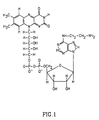
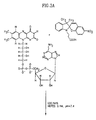
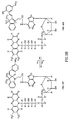
- N 6 -(2-aminoethyl)-FAD (10 mg, 1.1 ⁇ 10 -5 mol) was reacted with N-(2-methyl-ferrocene) caproic acid (18 mg, 5.5 ⁇ 10 -5 mol) in the presence of 1-ethyl-3-(3-dimethylaminopropyl) carbodiimide (EDC, Aldrich; 11.6 mg, 5.5 ⁇ 10 -5 mol) as a coupling reagent and N-hydroxy-3-sulfosuccinimide sodium salt (NSI, Aldrich; 13.2 mg, 5.5 ⁇ 10 -5 mol) as a promoter (Fig. 2).
- EDC 1-ethyl-3-(3-dimethylaminopropyl) carbodiimide
- N-hydroxy-3-sulfosuccinimide sodium salt (NSI, Aldrich; 13.2 mg, 5.5 ⁇ 10 -5 mol) as a promoter (Fig. 2).
- the coupling reaction was done in 1 ml of 0.1 M HEPES buffer, pH 7.4 for 3 h at room temperature.
- the product was purified on Sepadex G10 column using water as eluent.
- TLC thin layer chromatography
- Carboxylic derivative of spiropyran, 1'-( ⁇ -carboxymethyl)-3',3'-dimethyl-6-nitro-[2H-1]benzopyran-2,2'-indolin, SP-COOH was synthesized as hitherto described (Namba and Suzuki, Bul. Chem. Soc. Jpn , 48 :1323, 1975) (13) .
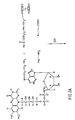
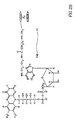
- the diad including the amino-FAD and the photoisomerizable component (FAD-SP) was prepared similarly as described above for FAD-Fc using SP-COOH as carboxylic component for coupling with the amino-FAD (Fig. 3).
- the product was purified by preparative TLC on SiO 2 plates using isopropanol:H 2 O (7:3) as eluent.
- the nitrospiropyran-modified FAD reveals reversible photoisomerizable properties. Illumination of FAD-SP, 360 nm ⁇ 380 nm ( "hv" in Fig. 3), yields the nitromerocyanine-FAD isomer state, FAD-MRH + , exhibiting an absorption band in the region of 320-560 nm that corresponds to the overlapping bands of the MRHP + (520 nm) and FAD (355 nm, 460 nm) chromophores.
- DAAO D-aminoacid oxidase
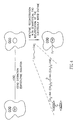
- the apo-GOD was reacted with FAD-Fc diad to generate the ferrocene-FAD reconstituted glucose oxidase (Fig. 4).
- the reconstitution was done in 3 ml stirred Na-phosphate buffer, 0.1 M, pH 7:0, containing 9.6 mg (5.16 ⁇ 10 -5 mol) apo-GOD and 0.8 mg (6.7 ⁇ 10 -4 mol) FAD-Fc for 4 h at room temperature followed by overnight incubation at 4°C.
- the solution was purified twice by filtration through a filter with a cut of 10,000 and then dialyzed against 0.1 M Na-phosphate buffer, pH 7.0 for one day.
- the loading of the reconstituted GOD was determined spectroscopically as one molecule of the FAD-Fc diad per the enzyme subunit.
- the activity of the reconstituted GOD was about 40% of that of the native GOD.
- the apo-DAAO was reconstituted with the FAD-Fc diad and then purified similarily as described above for the apo-GOD.
- the loading of the reconstituted DAAO was about one molecule of the FAD-Fc diad per the enzyme.
- the activity of the reconstituted GOD was about 20% of that of the native GOD.
- Reconstitution of the apo-GOD with the FAD-SP diad was accomplished by treatment of apo-GOD with the diad (molar ratio 1:10) in 0.1 M phosphate buffer, pH 7.0 under vigorous shaking for 24 hours, 25°C. The product was dialyzed against phosphate buffer, 0.1 M, pH 7.0, for 30 hours. The loading of the FAD-SP cofactor was about 1 per each of the enzyme subunits.
- Reconstituted GOD exhibits about 80% of the activity of the native GOD. The reconstituted GOD exhibits photoisomerizable properties. Illumination of the GOD reconstituted with FAD-SP, 360 nm ⁇ 380 nm, yields the merocyanine isomeric state that can be isomerized back using illumination ⁇ >475 nm (Fig. 5).
- Gold electrodes (0.5 mm diameter Au wire, having a geometrical area of about 0.2 cm 2 ; roughness coefficient of about 1.2 or Au foil of geometrical area of about 0.4 cm 2 ; roughness coefficient of about 15) were used for all modifications and measurements.
- the rough gold electrode was obtained by treatment with liquid mercury and further dissolution of the amalgam layer in concentrated nitric acid (Katz et al., J. Electroanal. Chem ., 367 :59, 1994). A cyclic voltammogram recorded in 0.5 M H 2 SO 4 was used to determine the purity of the electrode surface just before modification.
- the real electrode surface area and coefficients of roughness were estimated from the same cyclic voltammogram by integrating the cathodic peak for the electrochemical reduction of the oxide layer on the electrode surface (Woods in A.J. Bard (Ed.), Electroanalytical Chemistry, Dekker, New York, p. 1, 1978).
- Electrochemical measurements were performed using a potentiostat (EG&G) VersaStat) connected to a personal computer (EG&G research electrochemistry software model 270/250). All the measurements were carried out in a three-compartment electrochemical cell comprising the chemically modified electrode as a working electrode, a glassy carbon auxiliary electrode isolated by a glass frit and a saturated calomel electrode (SCE) connected to the working volume with a Luggin capillary. All potential are reported with respect to this reference electrode. Argon bubbling was used to remove oxygen from the solutions in the electrochemical cell. During the measurements the cell was thermostated using circulated water in a jacket around the cell (the temperature is indicated in each of the experimental examples below).
- the electrode was treated with a boiling 2 M solution of KOH for 1 h, then rinsed with water and stored in concentrates sulfuric acid. Immediately before modification, the electrode was rinsed with water, soaked for 10 min in concentrated nitric acid and then rinsed again with water.
- a clean bare gold electrode was soaked in a solution of 0.02 M cystamine (2,2'-diaminodiethyldisulfide, Aldrich) in water for 2 h. The electrode was then rinsed thoroughly with water to remove the unabsorbed cystamine.
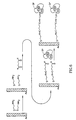
- a gold electrode was functionalized with active ester groups by chemisorption of dithio-bis-(succinimidylpropionate) (DSP, Aldrich) (Willner et al ., 1992 2 ; Katz, E., J. Electroanal. Chem ., 191 :257, (1990)) and then the electrode was treated with the GOD reconstituted with FAD-SP (4 mg per 1 ml of 0.01 M phosphate buffer, pH 7.0) for 1 h (Fig. 6). The enzyme electrode was rinsed with 0.1 M phosphate buffer, pH 7.0 and used immediately for electrochemical measurements.
- DSP dithio-bis-(succinimidylpropionate)
- a lipoic acid active ster monolayer was adsorbed (1 h, room temperature) onto a rough gold electrode from 10 mM solution in dimethylsulfoxide (DMSO).
- DMSO dimethylsulfoxide
- the resulting electrode was rinsed twice with DMSO and once with water to remove physically adsorbed molecules.
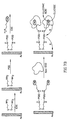
- the modified electrode was treated with 5 mM N 6 -(2-aminoethyl)-FAD solution in 0.1 HEPES buffer, pH 7.3 for 1 h and finally rinsed several times with water (Fig. 7A).
- the electrode modification with pyrroloquinoline quinone, PQQ, was done as recently described (14) .
- a cystamine monolayer Au modified electrode was soaked for 3 h in a 0.01 M HEPES buffer solution, pH 7.3, containing 1 mM PQQ (Sigma). Then the modified electrode was thoroughly rinsed with water to remove from its surface uncoupled physically adsorbed PQQ molecules.
- the obtained PQQ-functionalized electrode was treated with 5 mM N 6 -(2-aminoethyl)-FAD solution in 0.1 HEPES buffer, pH 7.3, in the presence of 10 mM EDC for 1 h and then thoroughly rinsed again with water (Fig. 7B).
- Each FAD-functionalized electrode (FAD only and PQQ-FAD) was treated with an apo-GOD solution (about 3 mg/ml in phosphate buffer, 0.1 M, pH 7.0) under vigorous shaking for 4 hours at room temperature and then for 16 hours at 4°C. Then the modified electrode was rinsed with the 0.1 M phosphate buffer, pH 7.0 and used immediately for electrochemical measurements (Fig. 7A&B).
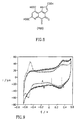
- the FAD-Fc diad exhibits in an aqueous buffer solution two characteristic reversible waves at -0.50 and 0.35 V (vs SCE) (Fig. 9). These waves correspond to the two-electron redox process of FAD and the one-electron redox reaction of the ferrocene, respectively.
- the electrochemical process shows strong adsorption of the FAD-Fc diad on the unmodified Au electrode.
- the cyclic voltammogram of the FAD-Fc-reconstituted GOD shows only the reversible redox process of the ferrocene unit, implying that the ferrocene component communicates with the electrode where the enzyme-embedded FAD component lacks direct electrical communication with the electrode (Fig. 9).
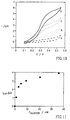
- Fig. 10 shows the electrocatalytic anodic currents developed by the FAD-Fc-reconstituted GOD in the presence of different concentrations of added glucose.
- the calibration curve, showing the anodic current at different concentrations, is given in Fig. 11.
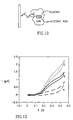
- Fig. 13 shows the cyclic voltammograms observed upon addition of different concentrations of D-alanine to a solution that contains the FAD-Fc DAAO.
- the apo-GOD reconstituted with photoisomerizable FAD-SP diad has no direct non-mediated electrical communication with an electrode. Therefore, bioelectrocatalytic glucose oxidation using this reconstituted enzyme was studied in the presence of diffusionally mobile electron transfer mediators (ferrocene derivatives: ferrocene monocarboxylic acid, ferrocene dicarboxylic acid and dimethylaminoethyl ferrocene).
- the reconstituted enzyme was applied in the solubilized form or immobilized as a monolayer (see 3.3).
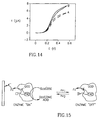
- FIG. 14 shows the cyclic voltammograms obtained upon electrobiocatalized oxidation of glucose in the presence of ferrocene carboxylic acid as a diffusional electron transfer mediator and the FAD-SP-reconstituted GOD.
- the electrocatalytic anodic current in the presence of the FAD-MRH + reconstituted GOD is enhanced by about 25% as compared to the FAD-SP-reconstituted GOD, implying the higher activity of the FAD-MRH + -GOD.
- the anocid currents developed by the systems in the presence of glucose are different for both isomeric states: SP and MRH + : the system is "ON" and "OFF" (Fig. 15).
- the FAD-SP-reconstituted GOD was assembled as a monolayer and applied for biocatalytic glucose oxidation in the presence of diffusionally mobile electron transfer mediator.
- the monolayer can be transformed into two different isomeric states by light (Fig. 17).
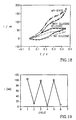
- Fig. 18 shows cyclic voltammograms for reversible activation and deactivation of the monolayer modified electrode for bioelectrocatalytic glucose oxidation by light.
- the activation biocatalytic system comprising the reconstituted GOD and diffusional mediator is in "ON" state
- deactivation the system is in "OFF” state
- Fig. 19 can be reversibly repeated many times
- the electrode modified with the FAD component only (see 3.4) was used to reconstitute the apo-GOD directly on the interface.
- the interfacial electron transfer rate constant between the electrode and FAD unit was ca. 230 s -1 and the surface concentration of the FAC units on the electrode was ca. 3 ⁇ 10 -11 mol/cm 2 that corresponds to a non-densely packed monolayer coverage.
- the reconstituted GOD on the electrode did not show any biocatalytic activity in the absence of electron transfer mediators.
- the PQQ-FAD monolayer was further treated with apo-GOD to produce the reconstituted GOD directly on the modified interface.
- curve b shows the cyclic voltammogram of the resulting electrode after reconstitution.
- the redox wave characteristic of the FAD units decreases dramatically, whereas the redox wave corresponding to the PQQ component is not changed. This is consistent with the fact that the FAD component embedded n the protein as a result of reconstitution, lacks electrical communication with the electrode surface.
- the small residual FAD wave observed after reconstitution corresponds to free FAD units that still communicate with the electrode. From the difference in the FAD wave before and after reconstitution the surface density of the GOD on the electrode surface was estimated to be about 1.7 ⁇ 10 -12 mol/cm 2 .
- the enzyme reconstituted onto the PQQ-FAD diad monolayer reveals direct electrical communication with the electrode and is active in the bioelectrocatalyzed oxidation of glucose.
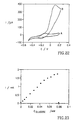
- Fig. 22 shows the cyclic voltammograms of the PQQ-FAD reconstituted GOD monolayer electrode in the absence (curve a ) and presence (curve b ) of glucose.
- a high electrocatalytic anodic current is observed with glucose indicating that the reconstituted protein bioelectro-catalyzes the glucose oxidation very efficiently.
- the PQQ component of the monolayer functions as an electron transfer mediator between the FAD incorporated into the protein and the electrode.
- the electrocatalytic anodic currents developed by the system are controlled by the glucose concentration in the range 5-80 mM (Fig. 23).
- Dioxygen affect the electron transfer from the reconstituted GOD through PQQ to the electrode only slightly (for 80 mM glucose the anodic current decreased in the presence of oxygen only by about 5%) that is very unusual for glucose biosensors based on GOD (results not shown).
- Addition of 0.1 mM ascorbate (usual interfering component in vivo ) to the system containing 5 mM glucose did not affect the amperometric response of the electrode.
- the upper limit of the turnover rate of glucose oxidase at 25°C is GOD ⁇ 100 s -1 (C. Bourdillon et al., J. Am. Chem. Soc ., 115 :12264 (1993)) and the activation energy is 7.2 Kcal ⁇ mole -1 (H.G. Eisenwiener, Naturwissenschaften , 56 :563, (1969)).
- this translates to a limiting turnover rate of 900 ⁇ 150 s -1 at 35°C.
- the surface coverage of the reconstituted enzyme on the electrode is 1.7 ⁇ 10 -2 and using the theoretic turnover rate at 35°C, the maximum current density that can be observed from the electrode is 290 ⁇ 60 ⁇ A ⁇ cm -2 .
- Fig. 23 shows that at a glucose concentration of 80 mM, the observed current is 1.9 mA (for an electrode with a surface area of 0.4 cm 2 and roughness factor of Ca.20). This translates to an experimental current density corresponding to 300 ⁇ 100 ⁇ A ⁇ cm -2 , a value that is within the range of the limiting turnover rate of the enzyme. This is further supported by the fact that the current response is linear with glucose concentration, Fig. 23, indicating that the current is controlled by the diffusion of glucose to the active site and that the FAD sites exist in their oxidized form at E ⁇ 0.2 Volt.
Landscapes
- Chemical & Material Sciences (AREA)
- Organic Chemistry (AREA)
- Life Sciences & Earth Sciences (AREA)
- Health & Medical Sciences (AREA)
- Wood Science & Technology (AREA)
- Proteomics, Peptides & Aminoacids (AREA)
- Zoology (AREA)
- Engineering & Computer Science (AREA)
- Immunology (AREA)
- Biochemistry (AREA)
- Microbiology (AREA)
- Molecular Biology (AREA)
- Analytical Chemistry (AREA)
- Biotechnology (AREA)
- Physics & Mathematics (AREA)
- Biophysics (AREA)
- Bioinformatics & Cheminformatics (AREA)
- General Engineering & Computer Science (AREA)
- General Health & Medical Sciences (AREA)
- Genetics & Genomics (AREA)
- Apparatus Associated With Microorganisms And Enzymes (AREA)
- Hybrid Cells (AREA)
- Measuring Or Testing Involving Enzymes Or Micro-Organisms (AREA)
- Immobilizing And Processing Of Enzymes And Microorganisms (AREA)
Claims (17)
- Eine Elektrode mit auf ihrer Oberfläche immobilisierten FAD-abhängigen Enzymen, wobei die Enzyme ein funktionalisiertes FAD aufweisen, das ein FAD ist, das durch das Hinzufügen einer funktionellen Gruppe oder eines Bereiches modifiziert ist, die oder der eine oder mehrere der folgenden Gruppen oder Bereiche ist:(a) ein Bindungsbereich, der chemisch mit der Elektrode assoziieren kann, sich an die Elektrode anlagern kann oder chemisch an die Elektrode absorbieren kann, wobei das Enzym auf der Elektrode durch Bindung der Bindungsgruppe an die Oberfläche der Elektrode immobilisiert ist;(b) eine Elektronenvermittlergruppe, die Elektronen zwischen der Oberfläche der Elektrode und dem FAD transferieren kann; und(c) eine fotoisomerisierbare Gruppe, die sich von einem Isomerisierungszustand in einen anderen durch Aussetzen an Licht einer ersten Wellenlänge verändem kann, wobei die Fotoisomerisierung entweder die elektrisch induzierte katalytische Aktivität erhöht oder verringert.
- Eine Elektrode gemäß Anspruch 1, worin das funktionalisierte FAD einen Bindungsbereich und eine Elektronenvermittlergruppe umfasst.
- Eine Elektrode gemäß Anspruch 2 zur Verwendung in der in vivo-Bestimmung eines Analyten.
- Ein Verfahren zur Herstellung einer Elektrode mit FAD-abhängigen Redoxenzymen, die darauf immobilisiert sind, wobei der Prozess:umfasst.(a) die Herstellung von Apo-Enzymen durch die Behandlung eines FAD-abhängigen Enzyms in einer Weise, dass der FAD-Cofaktor daraus entfernt wird;(b) die Herstellung eines funktionalisierten FAD durch kovalente Bindung an einen Bindungsbereich, der zur chemischen Assoziation mit, zur Anlagerung an oder zu einer chemischen Absorption an die Oberfläche der Elektrode in der Lage ist;(c) das Reagieren des funktionalisierten FAD mit einer Elektrode unter Bedingungen, so dass das modifizierte FAD auf der Elektrode durch chemische Assoziation, Anlagerung oder Adsorption an den Bindungsbereich auf der Oberfläche der Elektrode immobilisiert wird; und(d) das Reagieren der in (c) erhaltenen Elektrode mit dem Apo-Enzym unter Bedingungen, bei denen das Apo-Enzym mit dem modifizierten FAD kombiniert, um funktionelle immobilisierte Enzyme zu ergeben;
- Ein Verfahren zur Herstellung einer Elektrode mit darauf immobilisierten FAD-abhängigen Redoxenzymen, wobei der Prozess:umfasst.(a) das Behandeln einer Elektrode, um eine Monoschicht zu erthalten, die eine Elektronenvermittlergruppe umfasst, wobei die Elektronenvermittlergruppe einen Bindungsbereich aufweist, der zur chemischen Assoziation mit, Anlagerung an oder chemischen Adsorption an die Oberfläche der Elektrode in der Lage ist, wobei die Behandlung die Bindung des Bindungsbereiches an die Oberfläche der Elektrode umfasst;(b) das Reagieren der in (a) erhaltenen Elektrode mit einem FAD, so dass das FAD auf der Elektrode durch chemische Anlagerung an die Elektronenvermittlergruppe immobilisiert wird;(c) das Reagieren der in (b) erhaltenen Elektrode mit dem Apo-Enzym eines FAD-abhängigen Enzyms unter Bedingungen, bei denen das Apo-Enzym mit der FAD-Komponente des immobilisierten FAD kombiniert;
- Ein Verfahren zur Herstellung von Elektroden, die immobilisierte Enzyme mit einer assoziierten fotoisomerisierbaren Gruppe umfassen, die ihren Isomerisierungszustand durch Aussetzen an Licht bei einer bestimmten Wellenlänge ändern kann, wodurch die Geschwindigkeit der elektrisch induzierten katalytischen Aktivität des Enzyms verändert wird, wobei das Verfahren:umfasst.(a) das Herstellen eines Apo-Enzyms durch die Behandlung eines FAD-abhängigen Enzyms, um das FAD daraus zu entfernen;(b) das Herstellen eines modifizierten FAD durch kovalente Bindung einer Gruppe, die in der Lage ist, sich an eine fotoisomerisierbare Gruppe anzulagern oder zu binden;(c) das Reagieren des modifizierten FAD mit der fotoisomerisierbaren Gruppe, um ein fotoisomerisierbares FAD zu ergeben;(d) das Kombinieren des Apo-Enzyms mit dem fotoisomerisierbaren FAD, um ein rekonstituiertes fotoisomerisierbares Redoxenzym zu ergeben; und(e) das Zurverfügungstellen einer Elektrode, die darauf immobilisierte Verbindungsgruppen trägt, und das Reagieren der rekonstituierten Enzyme mit den Elektroden, so dass die Enzyme kovalent an die Verbindungsgruppen gebunden werden;
- Ein elektrochemisches System zur Bestimmung des Vorhandenseins eines Analyten in einem Flüssigkeitsmediums, wobei das System:umfasst.(a) eine Elektrode, die auf ihrer Oberfläche FAD-abhängige Enzyme trägt, wobei die Enzyme in der Lage sind, eine Redoxreaktion zu katalysieren, in welcher ein Analyt in ein Produkt umgewandelt wird, wobei die Enzyme ein funktionalisiertes FAD mit einem Bindungsbereich umfassen, der chemisch assoziiert mit, angelagert an oder chemisch adsorbiert an die Oberfläche der Elektrode ist;(b) eine Elektronenvermittlergruppe, die Elektronen zwischen der Oberfläche der Elektrode und dem FAD transferieren kann;(c) ein elektrischer Stromkreis zum Laden der Elektrode und Messung der elektrischen Reaktion;
- Ein System gemäß Anspruch 7, worin die Elektronenvermittlergruppe Teil von oder kovalent gebunden an das funktionalisierte FAD ist.
- Ein System gemäß Anspruch 7, worin die Elektronenvermittlergruppe kovalent an das Enzym gebunden ist.
- Ein System gemäß Anspruch 7, worin die Elektronenvermittlergruppe frei in einem Medium treibt, das die Elektrode umgibt.
- Verfahren zur Bestimmung des Vorhandenseins eines Analyten in einem Flüssigkeitsmedium, wobei das Verfahren:umfasst.(a) das Zurverfügungstellen eines Systems gemäß Anspruch 7;(b) das Einführen einer Probe von besagtem Flüssigkeitsmedium in die elektrochemische Zelle des Systems;(c) das Laden der Elektrode und das Messen der elektrischen Reaktion, einer Änderung in der elektrischen Reaktion im Vergleich zu einer elektrischen Reaktion unter der gleichen Bedingung in einem Kontrollmedium, das den Analyten nicht umfasst, was das Vorhandensein des Analyten in dem System anzeigt;
- Ein Verfahren gemäß Anspruch 11, worin die Analytenbestimmung in vivo durchgeführt wird.
- Ein elektrochemisches System zur Aufnahme optischer Signale mit einer ersten Wellenlänge und einer elektrischen Weitergabe der aufgenommenen Signale, wobei das System eine elektrochemische Zelle aufweist, die:umfasst.(a) eine Elektrode, die immobilisierte FAD-abhängige Redoxenzyme trägt, wobei die Enzyme:(aa) ein funktionalisiertes FAD aufweisen, das eine fotoisomerisierbare Gruppe umfasst, die ihren isomerisierungszustand von einem ersten zu einem zweiten Zustand nach Fotostimulierung durch Licht der ersten Wellenlänge ändert, wobei eine Änderung in dem Isomerisierungszustand eine Änderung in der Geschwindigkeit der katalytischen Aktivität des Redoxenzyms bewirkt; und(ab) auf der Oberfläche der Elektrode durch eine Verbindungsgruppe immobilisiert sind, die entweder(aba) Teil von oder kovalent gebunden an das funktionalisierte FAD ist, oder(abb) kovalent an einen externen Bereich auf der Oberfläche des Enzyms gebunden ist;(b) eine Elektronenvermittlergruppe, die Elektronen zwischen der Elektrode und dem FAD transferieren kann;(c) ein Substrat für die katalytische Aktivität des Enzyms; und(d) einen elektrischen Stromkreis zum Laden der Elektrode und Messung der elektrischen Reaktion;
- Ein System gemäß Anspruch 13, worin das Enzym auf der Oberfläche der Elektrode durch eine Verbindungsgruppe immobilisiert ist, die kovalent an einen externen Bereich auf der Oberfläche des Enzyms gebunden ist.
- Ein System gemäß Anspruch 13 oder 14, worin die Elektronenvermittlergruppe frei in dem Medium, das die Elektrode umgibt, treibt.
- Ein System gemäß einem der Ansprüche 13 - 15, umfassend einen Lichtschalter, der Licht bei einer zweiten Wellenlänge emittiert, wobei besagte zweite Wellenlänge die fotoisomerisierbare Gruppe von dem zweiten Zustand in den ersten Zustand fotoisomerisiert.
- Ein Verfahren zur Aufnahme von optischen Signalen mit einer ersten Wellenlänge und einer elektrischen Weitergabe der aufgenommenen optischen Signale, wobei das Verfahren:(a) das Zurverfügungstellen eines Systems gemäß einem der Ansprüche 13 - 16;(b) das Aussetzen der Elektrode an eine Lichtquelle;(c) das Laden der Elektrode und die Messung der elektrischen Reaktion, umfasst, wobei die elektrischen Reaktion verändert wird, was das Aussetzen an Licht mit besagter ersten Wellenlänge anzeigt.
Applications Claiming Priority (3)
| Application Number | Priority Date | Filing Date | Title |
|---|---|---|---|
| IL11843296 | 1996-05-27 | ||
| IL11843296A IL118432A (en) | 1996-05-27 | 1996-05-27 | Electrochemical and photochemical electrodes and their use |
| PCT/IL1997/000169 WO1997045720A1 (en) | 1996-05-27 | 1997-05-27 | Electrochemical and photochemical electrodes and their use |
Publications (2)
| Publication Number | Publication Date |
|---|---|
| EP1002229A1 EP1002229A1 (de) | 2000-05-24 |
| EP1002229B1 true EP1002229B1 (de) | 2004-01-14 |
Family
ID=11068904
Family Applications (1)
| Application Number | Title | Priority Date | Filing Date |
|---|---|---|---|
| EP97922016A Expired - Lifetime EP1002229B1 (de) | 1996-05-27 | 1997-05-27 | Elektrochemische und photochemische elektroden und deren verwendung |
Country Status (8)
| Country | Link |
|---|---|
| US (1) | US6350368B1 (de) |
| EP (1) | EP1002229B1 (de) |
| AT (1) | ATE257943T1 (de) |
| AU (1) | AU2786997A (de) |
| DE (1) | DE69727250T2 (de) |
| ES (1) | ES2214620T3 (de) |
| IL (1) | IL118432A (de) |
| WO (1) | WO1997045720A1 (de) |
Cited By (2)
| Publication number | Priority date | Publication date | Assignee | Title |
|---|---|---|---|---|
| US8515507B2 (en) | 2008-06-16 | 2013-08-20 | Given Imaging Ltd. | Device and method for detecting in-vivo pathology |
| US11644410B2 (en) | 2011-01-21 | 2023-05-09 | Labrador Diagnostics Llc | Systems and methods for sample use maximization |
Families Citing this family (68)
| Publication number | Priority date | Publication date | Assignee | Title |
|---|---|---|---|---|
| US6652734B1 (en) | 1999-03-16 | 2003-11-25 | Lifescan, Inc. | Sensor with improved shelf life |
| AUPP250398A0 (en) * | 1998-03-20 | 1998-04-23 | Usf Filtration And Separations Group Inc. | Sensor with improved shelf life |
| IL150810A0 (en) * | 2000-01-19 | 2003-02-12 | Given Imaging Ltd | A system for detecting substances |
| AU2001265403A1 (en) * | 2000-05-26 | 2001-12-11 | Minerva Biotechnologies Corporation | Metallocenes as signal-transducer for detection of chemical or biological events |
| US8641644B2 (en) | 2000-11-21 | 2014-02-04 | Sanofi-Aventis Deutschland Gmbh | Blood testing apparatus having a rotatable cartridge with multiple lancing elements and testing means |
| US9427532B2 (en) | 2001-06-12 | 2016-08-30 | Sanofi-Aventis Deutschland Gmbh | Tissue penetration device |
| US9226699B2 (en) | 2002-04-19 | 2016-01-05 | Sanofi-Aventis Deutschland Gmbh | Body fluid sampling module with a continuous compression tissue interface surface |
| US7344507B2 (en) | 2002-04-19 | 2008-03-18 | Pelikan Technologies, Inc. | Method and apparatus for lancet actuation |
| CA2448902C (en) | 2001-06-12 | 2010-09-07 | Pelikan Technologies, Inc. | Self optimizing lancing device with adaptation means to temporal variations in cutaneous properties |
| US7537571B2 (en) | 2001-06-12 | 2009-05-26 | Pelikan Technologies, Inc. | Integrated blood sampling analysis system with multi-use sampling module |
| US9795747B2 (en) | 2010-06-02 | 2017-10-24 | Sanofi-Aventis Deutschland Gmbh | Methods and apparatus for lancet actuation |
| US7041068B2 (en) | 2001-06-12 | 2006-05-09 | Pelikan Technologies, Inc. | Sampling module device and method |
| JP3672099B2 (ja) * | 2001-06-14 | 2005-07-13 | 松下電器産業株式会社 | バイオセンサ |
| EP1279742A1 (de) * | 2001-07-23 | 2003-01-29 | Applied NanoSystems B.V. | Methode unter Verwendung von Hydrophobin, um eine Verbindung an eine Sensoroberflaeche zu binden |
| US7344894B2 (en) | 2001-10-16 | 2008-03-18 | Agilent Technologies, Inc. | Thermal regulation of fluidic samples within a diagnostic cartridge |
| US8784335B2 (en) | 2002-04-19 | 2014-07-22 | Sanofi-Aventis Deutschland Gmbh | Body fluid sampling device with a capacitive sensor |
| US8702624B2 (en) | 2006-09-29 | 2014-04-22 | Sanofi-Aventis Deutschland Gmbh | Analyte measurement device with a single shot actuator |
| US8579831B2 (en) | 2002-04-19 | 2013-11-12 | Sanofi-Aventis Deutschland Gmbh | Method and apparatus for penetrating tissue |
| US7563232B2 (en) | 2002-04-19 | 2009-07-21 | Pelikan Technologies, Inc. | Method and apparatus for penetrating tissue |
| US7485128B2 (en) | 2002-04-19 | 2009-02-03 | Pelikan Technologies, Inc. | Method and apparatus for penetrating tissue |
| US7244265B2 (en) | 2002-04-19 | 2007-07-17 | Pelikan Technologies, Inc. | Method and apparatus for penetrating tissue |
| US7297122B2 (en) | 2002-04-19 | 2007-11-20 | Pelikan Technologies, Inc. | Method and apparatus for penetrating tissue |
| US7374544B2 (en) | 2002-04-19 | 2008-05-20 | Pelikan Technologies, Inc. | Method and apparatus for penetrating tissue |
| AU2003231749A1 (en) | 2002-04-19 | 2003-11-03 | Pelikan Technologies, Inc. | Device and method for variable speed lancet |
| US7547287B2 (en) | 2002-04-19 | 2009-06-16 | Pelikan Technologies, Inc. | Method and apparatus for penetrating tissue |
| US9248267B2 (en) | 2002-04-19 | 2016-02-02 | Sanofi-Aventis Deustchland Gmbh | Tissue penetration device |
| US7410468B2 (en) | 2002-04-19 | 2008-08-12 | Pelikan Technologies, Inc. | Method and apparatus for penetrating tissue |
| US9795334B2 (en) | 2002-04-19 | 2017-10-24 | Sanofi-Aventis Deutschland Gmbh | Method and apparatus for penetrating tissue |
| US7226461B2 (en) | 2002-04-19 | 2007-06-05 | Pelikan Technologies, Inc. | Method and apparatus for a multi-use body fluid sampling device with sterility barrier release |
| US7291117B2 (en) | 2002-04-19 | 2007-11-06 | Pelikan Technologies, Inc. | Method and apparatus for penetrating tissue |
| US7232451B2 (en) | 2002-04-19 | 2007-06-19 | Pelikan Technologies, Inc. | Method and apparatus for penetrating tissue |
| US7524293B2 (en) | 2002-04-19 | 2009-04-28 | Pelikan Technologies, Inc. | Method and apparatus for penetrating tissue |
| US7491178B2 (en) | 2002-04-19 | 2009-02-17 | Pelikan Technologies, Inc. | Method and apparatus for penetrating tissue |
| US7331931B2 (en) | 2002-04-19 | 2008-02-19 | Pelikan Technologies, Inc. | Method and apparatus for penetrating tissue |
| US9314194B2 (en) | 2002-04-19 | 2016-04-19 | Sanofi-Aventis Deutschland Gmbh | Tissue penetration device |
| US7229458B2 (en) | 2002-04-19 | 2007-06-12 | Pelikan Technologies, Inc. | Method and apparatus for penetrating tissue |
| US7141058B2 (en) | 2002-04-19 | 2006-11-28 | Pelikan Technologies, Inc. | Method and apparatus for a body fluid sampling device using illumination |
| US7371247B2 (en) | 2002-04-19 | 2008-05-13 | Pelikan Technologies, Inc | Method and apparatus for penetrating tissue |
| US8574895B2 (en) | 2002-12-30 | 2013-11-05 | Sanofi-Aventis Deutschland Gmbh | Method and apparatus using optical techniques to measure analyte levels |
| AU2004205725A1 (en) * | 2003-01-22 | 2004-08-05 | Bionanophotonics A/S | Light induced immobilisation |
| WO2006001797A1 (en) | 2004-06-14 | 2006-01-05 | Pelikan Technologies, Inc. | Low pain penetrating |
| US7604592B2 (en) | 2003-06-13 | 2009-10-20 | Pelikan Technologies, Inc. | Method and apparatus for a point of care device |
| EP1671096A4 (de) | 2003-09-29 | 2009-09-16 | Pelikan Technologies Inc | Verfahren und apparatur für eine verbesserte probeneinfangvorrichtung |
| EP1680014A4 (de) | 2003-10-14 | 2009-01-21 | Pelikan Technologies Inc | Verfahren und gerät für eine variable anwenderschnittstelle |
| WO2005065414A2 (en) | 2003-12-31 | 2005-07-21 | Pelikan Technologies, Inc. | Method and apparatus for improving fluidic flow and sample capture |
| US8828203B2 (en) | 2004-05-20 | 2014-09-09 | Sanofi-Aventis Deutschland Gmbh | Printable hydrogels for biosensors |
| US9775553B2 (en) | 2004-06-03 | 2017-10-03 | Sanofi-Aventis Deutschland Gmbh | Method and apparatus for a fluid sampling device |
| EP1765194A4 (de) | 2004-06-03 | 2010-09-29 | Pelikan Technologies Inc | Verfahren und gerät für eine flüssigkeitsentnahmenvorrichtung |
| US20060003400A1 (en) * | 2004-06-30 | 2006-01-05 | Byrd Patricia A | Methods and compositions for characterizing a redox reagent system enzyme |
| US8738106B2 (en) | 2005-01-31 | 2014-05-27 | Given Imaging, Ltd | Device, system and method for in vivo analysis |
| KR101381331B1 (ko) | 2005-05-09 | 2014-04-04 | 테라노스, 인코포레이티드 | 현장진료 유체 시스템 및 그 용도 |
| US20100216969A1 (en) * | 2005-06-27 | 2010-08-26 | Bionanophotnics A/S | Immobilisation of polypeptides by irradiation |
| US11287421B2 (en) | 2006-03-24 | 2022-03-29 | Labrador Diagnostics Llc | Systems and methods of sample processing and fluid control in a fluidic system |
| US8663093B2 (en) | 2006-04-03 | 2014-03-04 | Given Imaging Ltd. | Device, system and method for in-vivo analysis |
| US8007999B2 (en) | 2006-05-10 | 2011-08-30 | Theranos, Inc. | Real-time detection of influenza virus |
| US8012744B2 (en) | 2006-10-13 | 2011-09-06 | Theranos, Inc. | Reducing optical interference in a fluidic device |
| US20080113391A1 (en) | 2006-11-14 | 2008-05-15 | Ian Gibbons | Detection and quantification of analytes in bodily fluids |
| DE102006057612A1 (de) * | 2006-12-05 | 2008-06-12 | Studiengesellschaft Kohle Mbh | Photoschaltbare Katalysatoren |
| US8158430B1 (en) | 2007-08-06 | 2012-04-17 | Theranos, Inc. | Systems and methods of fluidic sample processing |
| US8088593B2 (en) | 2007-10-02 | 2012-01-03 | Theranos, Inc. | Modular point-of-care devices, systems, and uses thereof |
| EP2265324B1 (de) | 2008-04-11 | 2015-01-28 | Sanofi-Aventis Deutschland GmbH | Integriertes System zur Messung von Analyten |
| WO2009137519A1 (en) * | 2008-05-05 | 2009-11-12 | Edwards Lifesciences Corporation | Membrane for use with amperometric sensors |
| US9375169B2 (en) | 2009-01-30 | 2016-06-28 | Sanofi-Aventis Deutschland Gmbh | Cam drive for managing disposable penetrating member actions with a single motor and motor and control system |
| CN105808956A (zh) | 2009-10-19 | 2016-07-27 | 提拉诺斯公司 | 集成的健康数据采集和分析系统 |
| US8965476B2 (en) | 2010-04-16 | 2015-02-24 | Sanofi-Aventis Deutschland Gmbh | Tissue penetration device |
| DK3194962T3 (da) * | 2014-09-15 | 2019-07-01 | Qorvo Us Inc | Massedetektering via redoxkobling |
| US20160250392A1 (en) | 2015-02-26 | 2016-09-01 | Battelle Memorial Instute | Implant with reactive oxygen species scavenging coating |
| WO2018074551A1 (ja) * | 2016-10-19 | 2018-04-26 | キッコーマン株式会社 | フラビン化合物を用いたグルコース酸化還元反応及びグルコース測定用組成物 |
Family Cites Families (6)
| Publication number | Priority date | Publication date | Assignee | Title |
|---|---|---|---|---|
| SU593439A1 (ru) * | 1975-08-04 | 1980-10-07 | Ордена Трудового Красного Знамени Институт Химических Наук Ан Казахской Сср | Способ получени электропроводных фермент-ковакторных систем |
| JPH0815431B2 (ja) * | 1985-11-13 | 1996-02-21 | 相沢 益男 | 導電性酵素膜 |
| US4704193A (en) * | 1986-05-14 | 1987-11-03 | Gte Laboratories Incorporated | Covalently coupled cofactor modified electrodes and methods of synthesis and use |
| US4797181A (en) | 1987-08-03 | 1989-01-10 | Gte Laboratories Incorporated | Flavin cofactor modified electrodes and methods of synthesis and use |
| DE4118880C2 (de) * | 1991-06-08 | 1998-12-17 | Fraunhofer Ges Forschung | Verfahren zur selektiven Bestimmung der Konzentration gelöster Substanzen in enzymatischen Reaktionen |
| IL102930A (en) | 1992-08-25 | 1997-03-18 | Yissum Res Dev Co | Electrobiochemical analytical method and electrodes |
-
1996
- 1996-05-27 IL IL11843296A patent/IL118432A/xx not_active IP Right Cessation
-
1997
- 1997-05-27 DE DE69727250T patent/DE69727250T2/de not_active Expired - Fee Related
- 1997-05-27 ES ES97922016T patent/ES2214620T3/es not_active Expired - Lifetime
- 1997-05-27 AU AU27869/97A patent/AU2786997A/en not_active Abandoned
- 1997-05-27 US US09/194,364 patent/US6350368B1/en not_active Expired - Fee Related
- 1997-05-27 AT AT97922016T patent/ATE257943T1/de not_active IP Right Cessation
- 1997-05-27 EP EP97922016A patent/EP1002229B1/de not_active Expired - Lifetime
- 1997-05-27 WO PCT/IL1997/000169 patent/WO1997045720A1/en not_active Ceased
Cited By (2)
| Publication number | Priority date | Publication date | Assignee | Title |
|---|---|---|---|---|
| US8515507B2 (en) | 2008-06-16 | 2013-08-20 | Given Imaging Ltd. | Device and method for detecting in-vivo pathology |
| US11644410B2 (en) | 2011-01-21 | 2023-05-09 | Labrador Diagnostics Llc | Systems and methods for sample use maximization |
Also Published As
| Publication number | Publication date |
|---|---|
| DE69727250D1 (de) | 2004-02-19 |
| IL118432A0 (en) | 1996-09-12 |
| WO1997045720A1 (en) | 1997-12-04 |
| US6350368B1 (en) | 2002-02-26 |
| ATE257943T1 (de) | 2004-01-15 |
| IL118432A (en) | 1999-12-31 |
| AU2786997A (en) | 1998-01-05 |
| EP1002229A1 (de) | 2000-05-24 |
| ES2214620T3 (es) | 2004-09-16 |
| DE69727250T2 (de) | 2004-11-04 |
Similar Documents
| Publication | Publication Date | Title |
|---|---|---|
| US6350368B1 (en) | Electrochemical and photochemical electrodes and their use | |
| Blonder et al. | Application of a nitrospiropyran-FAD-reconstituted glucose oxidase and charged electron mediators as optobioelectronic assemblies for the amperometric transduction of recorded optical signals: control of the “on”−“off” direction of the photoswitch | |
| Willner et al. | Bioelectrocatalyzed amperometric transduction of recorded optical signals using monolayer-modified Au-electrodes1 | |
| Katz et al. | Glucose oxidase electrodes via reconstitution of the apo-enzyme: tailoring of novel glucose biosensors | |
| Li et al. | Direct electron transfer to cytochrome c oxidase in self-assembled monolayers on gold electrodes | |
| Lion-Dagan et al. | Amperometric transduction of optical signals recorded by organized monolayers of photoisomerizable biomaterials on Au electrodes | |
| Scheller et al. | Bioelectrocatalysis by redox enzymes at modified electrodes | |
| EP0584794B1 (de) | Elektrobiochemisches Nachweisverfahren und Elektroden dafür | |
| Crumbliss et al. | Colloidal gold as a biocompatible immobilization matrix suitable for the fabrication of enzyme electrodes by electrodeposition | |
| Mano et al. | On the relationship between the characteristics of bilirubin oxidases and O2 cathodes based on their “wiring” | |
| Tarasevich | Bioelectrocatalysis | |
| Willner et al. | Electrical contact of redox enzyme layers associated with electrodes: routes to amperometric biosensors | |
| Schmidt et al. | Reagentless oxidoreductase sensors | |
| Shoham et al. | A bilirubin biosensor based on a multilayer network enzyme electrode | |
| Li et al. | Amperometric immunosensor based on toluidine blue/nano-Au through electrostatic interaction for determination of carcinoembryonic antigen | |
| Okawa et al. | Tethered mediator biosensor. Mediated electron transfer between redox enzyme and electrode via ferrocene anchored to electrode surface with long poly (oxyethylene) chain | |
| Willner et al. | Assembly of functionalized monolayers of redox proteins on electrode surfaces: novel bioelectronic and optobioelectronic systems | |
| Yon-Hin et al. | Covalent electropolymerization of glucose oxidase in polypyrrole. Evaluation of methods of pyrrole attachment to glucose oxidase on the performance of electropolymerized glucose sensors | |
| Wimmerová et al. | Sensitive amperometric biosensor for the determination of biogenic and synthetic amines using pea seedlings amine oxidase: a novel approach for enzyme immobilisation | |
| Silveira et al. | Small electron-transfer proteins as mediators in enzymatic electrochemical biosensors | |
| Katz et al. | Fully integrated biocatalytic electrodes based on bioaffinity interactions | |
| Blonder et al. | Reconstitution of apo-glucose oxidase on nitrospiropyran and FAD mixed monolayers on gold electrodes: photostimulation of bioelectrocatalytic features of the biocatalyst | |
| Willner et al. | Reconstitution of apo-glucose oxidase with a nitrospiropyran-modified FAD cofactor yields a photoswitchable biocatalyst for amperometric transduction of recorded optical signals | |
| Suzuki et al. | Essential insight of direct electron transfer-type bioelectrocatalysis by membrane-bound d-fructose dehydrogenase with structural bioelectrochemistry | |
| JP3107567B2 (ja) | 基質再生型バイオセンサー |
Legal Events
| Date | Code | Title | Description |
|---|---|---|---|
| PUAI | Public reference made under article 153(3) epc to a published international application that has entered the european phase |
Free format text: ORIGINAL CODE: 0009012 |
|
| 17P | Request for examination filed |
Effective date: 19981209 |
|
| AK | Designated contracting states |
Kind code of ref document: A1 Designated state(s): AT BE CH DE DK ES FI FR GB GR IE IT LI LU MC NL PT SE |
|
| 17Q | First examination report despatched |
Effective date: 20020228 |
|
| GRAH | Despatch of communication of intention to grant a patent |
Free format text: ORIGINAL CODE: EPIDOS IGRA |
|
| GRAS | Grant fee paid |
Free format text: ORIGINAL CODE: EPIDOSNIGR3 |
|
| GRAA | (expected) grant |
Free format text: ORIGINAL CODE: 0009210 |
|
| AK | Designated contracting states |
Kind code of ref document: B1 Designated state(s): AT BE CH DE DK ES FI FR GB GR IE IT LI LU MC NL PT SE |
|
| PG25 | Lapsed in a contracting state [announced via postgrant information from national office to epo] |
Ref country code: NL Free format text: LAPSE BECAUSE OF FAILURE TO SUBMIT A TRANSLATION OF THE DESCRIPTION OR TO PAY THE FEE WITHIN THE PRESCRIBED TIME-LIMIT Effective date: 20040114 Ref country code: FI Free format text: LAPSE BECAUSE OF FAILURE TO SUBMIT A TRANSLATION OF THE DESCRIPTION OR TO PAY THE FEE WITHIN THE PRESCRIBED TIME-LIMIT Effective date: 20040114 Ref country code: AT Free format text: LAPSE BECAUSE OF FAILURE TO SUBMIT A TRANSLATION OF THE DESCRIPTION OR TO PAY THE FEE WITHIN THE PRESCRIBED TIME-LIMIT Effective date: 20040114 |
|
| REG | Reference to a national code |
Ref country code: GB Ref legal event code: FG4D |
|
| REG | Reference to a national code |
Ref country code: CH Ref legal event code: EP |
|
| REG | Reference to a national code |
Ref country code: IE Ref legal event code: FG4D |
|
| REF | Corresponds to: |
Ref document number: 69727250 Country of ref document: DE Date of ref document: 20040219 Kind code of ref document: P |
|
| RAP2 | Party data changed (patent owner data changed or rights of a patent transferred) |
Owner name: YISSUM RESEARCH DEVELOPMENT COMPANYOF THE HEBREW U |
|
| REG | Reference to a national code |
Ref country code: CH Ref legal event code: NV Representative=s name: BOVARD AG PATENTANWAELTE |
|
| PG25 | Lapsed in a contracting state [announced via postgrant information from national office to epo] |
Ref country code: SE Free format text: LAPSE BECAUSE OF FAILURE TO SUBMIT A TRANSLATION OF THE DESCRIPTION OR TO PAY THE FEE WITHIN THE PRESCRIBED TIME-LIMIT Effective date: 20040414 Ref country code: GR Free format text: LAPSE BECAUSE OF FAILURE TO SUBMIT A TRANSLATION OF THE DESCRIPTION OR TO PAY THE FEE WITHIN THE PRESCRIBED TIME-LIMIT Effective date: 20040414 Ref country code: DK Free format text: LAPSE BECAUSE OF FAILURE TO SUBMIT A TRANSLATION OF THE DESCRIPTION OR TO PAY THE FEE WITHIN THE PRESCRIBED TIME-LIMIT Effective date: 20040414 |
|
| NLT2 | Nl: modifications (of names), taken from the european patent patent bulletin |
Owner name: YISSUM RESEARCH DEVELOPMENT COMPANY |
|
| PG25 | Lapsed in a contracting state [announced via postgrant information from national office to epo] |
Ref country code: LU Free format text: LAPSE BECAUSE OF NON-PAYMENT OF DUE FEES Effective date: 20040527 |
|
| PG25 | Lapsed in a contracting state [announced via postgrant information from national office to epo] |
Ref country code: MC Free format text: LAPSE BECAUSE OF NON-PAYMENT OF DUE FEES Effective date: 20040531 |
|
| NLV1 | Nl: lapsed or annulled due to failure to fulfill the requirements of art. 29p and 29m of the patents act | ||
| REG | Reference to a national code |
Ref country code: ES Ref legal event code: FG2A Ref document number: 2214620 Country of ref document: ES Kind code of ref document: T3 |
|
| ET | Fr: translation filed | ||
| PLBE | No opposition filed within time limit |
Free format text: ORIGINAL CODE: 0009261 |
|
| STAA | Information on the status of an ep patent application or granted ep patent |
Free format text: STATUS: NO OPPOSITION FILED WITHIN TIME LIMIT |
|
| 26N | No opposition filed |
Effective date: 20041015 |
|
| PGFP | Annual fee paid to national office [announced via postgrant information from national office to epo] |
Ref country code: ES Payment date: 20070927 Year of fee payment: 11 |
|
| PGFP | Annual fee paid to national office [announced via postgrant information from national office to epo] |
Ref country code: IE Payment date: 20070928 Year of fee payment: 11 |
|
| PG25 | Lapsed in a contracting state [announced via postgrant information from national office to epo] |
Ref country code: PT Free format text: LAPSE BECAUSE OF NON-PAYMENT OF DUE FEES Effective date: 20040614 |
|
| PGFP | Annual fee paid to national office [announced via postgrant information from national office to epo] |
Ref country code: GB Payment date: 20070928 Year of fee payment: 11 |
|
| PGFP | Annual fee paid to national office [announced via postgrant information from national office to epo] |
Ref country code: IT Payment date: 20070928 Year of fee payment: 11 Ref country code: DE Payment date: 20071025 Year of fee payment: 11 |
|
| PGFP | Annual fee paid to national office [announced via postgrant information from national office to epo] |
Ref country code: CH Payment date: 20071015 Year of fee payment: 11 |
|
| PGFP | Annual fee paid to national office [announced via postgrant information from national office to epo] |
Ref country code: BE Payment date: 20071123 Year of fee payment: 11 |
|
| PGFP | Annual fee paid to national office [announced via postgrant information from national office to epo] |
Ref country code: FR Payment date: 20071016 Year of fee payment: 11 |
|
| BERE | Be: lapsed |
Owner name: *YISSUM RESEARCH DEVELOPMENT CY OF THE HEBREW UNIV Effective date: 20080531 |
|
| REG | Reference to a national code |
Ref country code: CH Ref legal event code: PL |
|
| GBPC | Gb: european patent ceased through non-payment of renewal fee |
Effective date: 20080527 |
|
| PG25 | Lapsed in a contracting state [announced via postgrant information from national office to epo] |
Ref country code: LI Free format text: LAPSE BECAUSE OF NON-PAYMENT OF DUE FEES Effective date: 20080531 Ref country code: CH Free format text: LAPSE BECAUSE OF NON-PAYMENT OF DUE FEES Effective date: 20080531 |
|
| REG | Reference to a national code |
Ref country code: IE Ref legal event code: MM4A |
|
| REG | Reference to a national code |
Ref country code: FR Ref legal event code: ST Effective date: 20090119 |
|
| PG25 | Lapsed in a contracting state [announced via postgrant information from national office to epo] |
Ref country code: BE Free format text: LAPSE BECAUSE OF NON-PAYMENT OF DUE FEES Effective date: 20080531 |
|
| PG25 | Lapsed in a contracting state [announced via postgrant information from national office to epo] |
Ref country code: IE Free format text: LAPSE BECAUSE OF NON-PAYMENT OF DUE FEES Effective date: 20080527 Ref country code: FR Free format text: LAPSE BECAUSE OF NON-PAYMENT OF DUE FEES Effective date: 20080602 Ref country code: DE Free format text: LAPSE BECAUSE OF NON-PAYMENT OF DUE FEES Effective date: 20081202 |
|
| PG25 | Lapsed in a contracting state [announced via postgrant information from national office to epo] |
Ref country code: GB Free format text: LAPSE BECAUSE OF NON-PAYMENT OF DUE FEES Effective date: 20080527 |
|
| REG | Reference to a national code |
Ref country code: ES Ref legal event code: FD2A Effective date: 20080528 |
|
| PG25 | Lapsed in a contracting state [announced via postgrant information from national office to epo] |
Ref country code: IT Free format text: LAPSE BECAUSE OF NON-PAYMENT OF DUE FEES Effective date: 20080527 |
|
| PG25 | Lapsed in a contracting state [announced via postgrant information from national office to epo] |
Ref country code: ES Free format text: LAPSE BECAUSE OF NON-PAYMENT OF DUE FEES Effective date: 20080528 |