EP1002773A1 - Wärmereflektierendes Glas und Doppelscheibenfenster mit diesem Glas - Google Patents
Wärmereflektierendes Glas und Doppelscheibenfenster mit diesem Glas Download PDFInfo
- Publication number
- EP1002773A1 EP1002773A1 EP99123110A EP99123110A EP1002773A1 EP 1002773 A1 EP1002773 A1 EP 1002773A1 EP 99123110 A EP99123110 A EP 99123110A EP 99123110 A EP99123110 A EP 99123110A EP 1002773 A1 EP1002773 A1 EP 1002773A1
- Authority
- EP
- European Patent Office
- Prior art keywords
- glass
- heat
- glass plate
- reflecting
- titanium nitride
- Prior art date
- Legal status (The legal status is an assumption and is not a legal conclusion. Google has not performed a legal analysis and makes no representation as to the accuracy of the status listed.)
- Withdrawn
Links
Images

Classifications
-
- C—CHEMISTRY; METALLURGY
- C03—GLASS; MINERAL OR SLAG WOOL
- C03C—CHEMICAL COMPOSITION OF GLASSES, GLAZES OR VITREOUS ENAMELS; SURFACE TREATMENT OF GLASS; SURFACE TREATMENT OF FIBRES OR FILAMENTS MADE FROM GLASS, MINERALS OR SLAGS; JOINING GLASS TO GLASS OR OTHER MATERIALS
- C03C17/00—Surface treatment of glass, not in the form of fibres or filaments, by coating
- C03C17/34—Surface treatment of glass, not in the form of fibres or filaments, by coating with at least two coatings having different compositions
- C03C17/3411—Surface treatment of glass, not in the form of fibres or filaments, by coating with at least two coatings having different compositions with at least two coatings of inorganic materials
- C03C17/3429—Surface treatment of glass, not in the form of fibres or filaments, by coating with at least two coatings having different compositions with at least two coatings of inorganic materials at least one of the coatings being a non-oxide coating
- C03C17/3435—Surface treatment of glass, not in the form of fibres or filaments, by coating with at least two coatings having different compositions with at least two coatings of inorganic materials at least one of the coatings being a non-oxide coating comprising a nitride, oxynitride, boronitride or carbonitride
-
- C—CHEMISTRY; METALLURGY
- C03—GLASS; MINERAL OR SLAG WOOL
- C03C—CHEMICAL COMPOSITION OF GLASSES, GLAZES OR VITREOUS ENAMELS; SURFACE TREATMENT OF GLASS; SURFACE TREATMENT OF FIBRES OR FILAMENTS MADE FROM GLASS, MINERALS OR SLAGS; JOINING GLASS TO GLASS OR OTHER MATERIALS
- C03C3/00—Glass compositions
- C03C3/04—Glass compositions containing silica
- C03C3/076—Glass compositions containing silica with 40% to 90% silica, by weight
- C03C3/083—Glass compositions containing silica with 40% to 90% silica, by weight containing aluminium oxide or an iron compound
- C03C3/085—Glass compositions containing silica with 40% to 90% silica, by weight containing aluminium oxide or an iron compound containing an oxide of a divalent metal
- C03C3/087—Glass compositions containing silica with 40% to 90% silica, by weight containing aluminium oxide or an iron compound containing an oxide of a divalent metal containing calcium oxide, e.g. common sheet or container glass
-
- C—CHEMISTRY; METALLURGY
- C03—GLASS; MINERAL OR SLAG WOOL
- C03C—CHEMICAL COMPOSITION OF GLASSES, GLAZES OR VITREOUS ENAMELS; SURFACE TREATMENT OF GLASS; SURFACE TREATMENT OF FIBRES OR FILAMENTS MADE FROM GLASS, MINERALS OR SLAGS; JOINING GLASS TO GLASS OR OTHER MATERIALS
- C03C4/00—Compositions for glass with special properties
- C03C4/02—Compositions for glass with special properties for coloured glass
Definitions
- the present invention relates to a heat-reflecting glass which gives a greenish or bluish reflected color tone, has a low visible light reflectance, and is especially suitable for use in windows of buildings, and a double-glazing unit using the glass.
- greenish used herein means to include “green” and “bluish green”
- blueish used herein means to include “blue” and “greenish blue”.
- Heat-reflecting glasses comprising a glass plate having a heat-reflecting film formed on a surface thereof and tinted glasses (USA) comprising a glass plate containing a slight amount of an additive ingredient have come to be extensively used in buildings, motor vehicles and other vehicles, etc., for the purposes of reducing the load of air cooling or enabling persons irradiated with sunlight to feel less hot.
- Double-glazing units comprising two or more glass plates separated by an air layer and thus having enhanced heat insulating performance also have been used in windows of buildings.
- double-glazing units containing a glass plate having a coating film formed on a surface thereof for enhancing heat insulating performance are also known.
- Such heat-reflecting glasses comprise an ordinary glass plate and, formed on a surface thereof by sputtering, chemical vapor deposition (CVD), etc., a coating film such as a fluorine-doped tin oxide film, a multilayered film of chromium metal, or a multilayered film of titanium oxide or nitride.
- a coating film such as a fluorine-doped tin oxide film, a multilayered film of chromium metal, or a multilayered film of titanium oxide or nitride.
- the heat-reflecting glasses serve to thus reflect solar energy and inhibit the inflow of solar radiation energy into buildings, motor vehicles, or other vehicles.
- JP-A-2-44046 discloses a glass which comprises a glass plate, a titanium nitride film formed thereon, and a titanium oxide film further formed thereon by sputtering and gives a bluish or greenish reflected color tone.
- JP-A-6-305774 discloses a heat-reflecting glass which comprises a glass plate and, formed thereon in this order, a titanium nitride film, a titanium oxide film, and a titanium nitride film and gives a greenish reflected color tone.
- JP-B-5-39898 discloses a process in which a titanium nitride film is formed on a glass by chemical vapor deposition (CVD) as a technique other than sputtering.
- CVD chemical vapor deposition
- JP-A-7-187719 discloses a sunlight protective window glass obtained by forming a titanium nitride film and a titanium oxide film in this order on a glass plate by CVD.
- the glass disclosed in JP-A-2-44046 has too high a reflectance, although values of reflectance are given therein in terms of reflection L* value.
- This glass, having a high visible light reflectance, has a problem that it gives glittering reflections of sunlight, which constitute a nuisance to neighborhood buildings and houses.
- the glasses need to have an exceedingly low transmittance. As a result, the room becomes too dark and its comfortableness is impaired.
- the technique disclosed in the above reference is disadvantageous in production cost as compared with other techniques because the proposed technique employs a vacuum film deposition technique called sputtering in forming the coating film.
- the heat-reflecting glass disclosed in JP-A-6-305774 is obtained by forming a three-layer film by sputtering.
- this production technique also is costly as compared with other techniques.
- JP-B-5-39898 employs CVD, which is more suitable for mass production than sputtering. However, there is no description therein concerning optical properties of the glass obtained.
- the sunlight protective window glass disclosed in JP-A-7-187719 which is obtained with CVD, has a solar heat shielding performance of from 1 to 1.4, excluding 1, in terms of the ratio of light transmittance TL to energy transmittance TE, according to a description given therein.
- a value of solar heat shielding performance is insufficient.
- the present invention has been achieved in view of the problems described above.
- One object of the present invention is to provide, at low cost, a heat-reflecting glass which has a low visible light reflectance so as not to arouse troubles such as a reflected-light nuisance to the neighborhood, and has high heat radiation shielding properties and a greenish or bluish color tone, a recent taste of the market, and which is especially suitable for use in relatively low-latitude temperate regions.
- Another object of the present invention is to provide a heat-reflecting double-glazing unit.
- the present invention which has been achieved in order to eliminate the above-described problems, provides a heat-reflecting glass which comprises a glass plate comprising a glass composition which consists essentially of, in % by weight:
- Preferred embodiments of the above heat-reflecting glass are as follows.
- the heat-reflecting glass wherein the metal oxide film is an oxide film mainly comprising any one of silicon oxide, titanium oxide and tin oxide.
- the heat-reflecting glass which has a solar heat gain coefficient of from 0.01 to 0.45 when disposed such that the uncoated side of the glass plate faces outward.
- the heat-reflecting glass which has a visible light reflectance of from 4 to 20% when viewed from the uncoated side of the glass plate.
- the heat-reflecting glass which has a solar heat gain coefficient of from 0.01 to 0.4 when disposed such that the uncoated side of the glass plate faces outward, and which gives a greenish reflected color tone when viewed from the uncoated side of the glass plate.
- the heat-reflecting glass which has a visible light reflectance of from 4 to 15% when viewed from the uncoated side of the glass plate and gives a bluish reflected color tone when viewed from said side.
- the heat-reflecting glass which has a solar heat gain coefficient of from 0.01 to 0.35 when disposed such that the uncoated side of the glass plate faces outward, and which gives a greenish reflected color tone when viewed from said side.
- the heat-reflecting glass wherein the glass plate is a plate glass produced by a float process, and the titanium nitride film and the metal oxide film have been formed on the glass plate surface by a pyrolytic process utilizing the heat resulting from the float process.
- the present invention further provides a double-glazing unit which comprises two glass plates disposed so as to face each other and separated by an air layer, inert-gas layer, or vacuum layer formed by sealing the edges of the glass plates, at least one of the glass plates comprising the heat-reflecting glass.
- a preferred embodiment of the double-glazing unit is the double-glazing unit wherein the outdoor-side glass plate is the heat-reflecting glass, with the titanium nitride film and metal oxide film formed on a surface of the heat-reflecting glass facing the air, inert-gas layer or vacuum layer of the double-glazing unit, and the double-glazing unit has a solar heat gain coefficient of from 0.01 to 0.35 with respect to solar radiation incident thereon from the outdoor side.
- a heat-reflecting glass having enhanced solar heat shielding performance is obtained by regulating a glass plate with respect to the amount and valence of iron to thereby attain a reduced solar energy transmittance while maintaining a high visible light transmittance, and by forming a coating film which further reduces the solar energy transmittance.
- a heat-reflecting glass giving a greenish or bluish reflected color tone is obtained by regulating the glass plate with respect to the amount and valence of iron to thereby regulate the color of the transmitted light which has passed through the glass plate, and by regulating a metal oxide coating film with respect to its metallic material and further regulating a titanium nitride coating film and the metal oxide coating film with respect to film thickness.
- a heat-reflecting glass having a low reflectance with respect to light incident thereon from the outdoor side is obtained by using a coated glass plate in which both the glass plate and the coating films show some degree of absorption in the visible region and by forming the coating films on the indoor side.
- a double-glazing unit having higher solar heat shielding performance is obtained by using the above heat-reflecting glass as at least one of the glass plates.
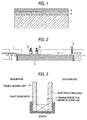
- Fig. 1 is an enlarged sectional view of a heat-reflecting glass according to the present invention.
- Fig. 2 is a view illustrating an on-line CVD apparatus as an example of apparatuses usable for forming a coating film on a glass plate surface in producing a heat-reflecting glass according to the present invention.
- Fig. 3 is a view illustrating one embodiment of the double-glazing unit containing a heat-reflecting glass according to the present invention.
- Fig. 4 is a view illustrating another embodiment of the double-glazing unit containing a heat-reflecting glass according to the present invention.
- the glass substrate for use in the present invention is made of a glass which comprises basic glass compositions for a soda-lime silicate glass and coloring components comprising from 0.30 to 1.30 wt% total iron oxide in terms of Fe 2 O 3 , wherein the amount of FeO in terms of Fe 2 O 3 is from 20 to 58 wt% of the amount of total iron oxide in terms of Fe 2 O 3 , from 0 to 1.0 wt% TiO 2 , and from 0 to 20 ppm CoO.
- the glass substrate preferably contains, as coloring components, from 0.40 to 1.30 wt% total iron oxide in terms of Fe 2 O 3 , wherein the amount of FeO in terms of Fe 2 O 3 is from 20 to 35 wt% of the total iron oxide amount in terms of Fe 2 O 3 , from 0 to 1.0wt% TiO 2 , and from 0 to 20 ppm CoO.
- the glass substrate is intended to have a bluish tone, it preferably contains, as coloring components, from 0.30 to 1.30 wt% total iron oxide in terms of Fe 2 O 3 , wherein the amount of FeO in terms of Fe 2 O 3 is from 20 to 58 wt% of the total iron oxide amount, and from 0 to 20 ppm CoO.
- high solar heat shielding performance is obtained by using a glass having such a composition, higher solar heat shielding performance is obtained by applying the glass to a double-glazing unit structure.
- SiO 2 is the main component forming a glass skeleton. If the content of SiO 2 is lower than 65%, the glass has reduced durability. If the content thereof exceeds 80%, the glass is difficult to melt. Consequently, the content of SiO 2 should be from 65 to 80%.
- Al 2 O 3 which is not an essential ingredient, serves to improve the durability of the glass. If the content of Al 2 O 3 exceeds 5%, the glass is difficult to melt. Consequently, the content of Al 2 O 3 should be 5% or lower, and is preferably from 0.1 to 2%.
- B 2 O 3 which is not an essential ingredient, is used for improving the durability of the glass and also as a melting aid. If the content thereof exceeds 5%, troubles arise in glass forming due to vaporization of B 2 O 3 , etc. Consequently, the content of B 2 O 3 should be 5% or lower.
- MgO and CaO are used for improving the durability of the glass and for regulating the devitrification temperature and viscosity of the glass during molding. If the content of MgO, which is not an essential ingredient, exceeds 10%, the glass has an elevated devitrification temperature. Consequently, the content of MgO should be 10% or lower. If the content of CaO is lower than 5% or exceeds 15%, the glass has an elevated devitrification temperature. Consequently the content of CaO should be from 5 to 15%. Furthermore, if the total content of MgO and CaO is lower than 5%, the glass has reduced durability. If the total content thereof exceeds 15%, the glass has an elevated devitrification temperature. Consequently, the total content of MgO and CaO should be from 5 to 15%.
- Na 2 O and K 2 O are used as glass melting accelerators. If the content of Na 2 O is lower than 10% or if the total content of Na 2 O and K 2 O is lower than 10%, the effect of melting acceleration is poor. If the content of Na 2 O exceeds 18% or if the total content of Na 2 O and K 2 O exceeds 20%, the glass has reduced durability.
- the proportion of K 2 O, which is not an essential ingredient, should be 5% or lower because it necessitates a higher material cost than Na 2 O.
- iron oxide is present in the forms of Fe 2 O 3 and FeO. If the total iron oxide content in terms of Fe 2 O 3 is below 0.30%, the effect of absorbing ultraviolet and infrared rays is low and a high visible light transmittance results. On the other hand, total contents thereof exceeding 1.30% are undesirable in that during melting, an upper part of the molten glass heats up excessively due to the heat absorbing effect of FeO, leading to a fear that the resulting radiant heat may raise the temperature of the ceiling bricks of the melting furnace to a temperature above the heat-resistant temperature thereof and the ceiling bricks may thus begin to melt. Consequently, the total iron oxide content in terms of Fe 2 O 3 should be from 0.30 to 1.30%.
- the total iron oxide content in terms of Fe 2 O 3 for respective glass plate colors there are preferred ranges of the total iron oxide content in terms of Fe 2 O 3 for respective glass plate colors.
- the total content thereof for a greenish tone is preferably from 0.40 to 1.30%, while that for a bluish tone is preferably from 0.30 to 1.30%.
- the ratio of (the amount of FeO in terms of Fe 2 O 3 ) to (the amount of total iron oxide in terms of Fe 2 O 3 ) is regulated while keeping the total iron oxide content within the above range. Values of that ratio exceeding 0.58 are undesirable in that the absolute amount of FeO is too large and the temperature of ceiling bricks of the glass melting furnace increases excessively. On the other hand, values of that ratio smaller than 0.2 are undesirable in that the glass has a reduced infrared absorbing effect.
- the ratio of (the amount of FeO in terms of Fe 2 O 3 ) to (the amount of total iron oxide in terms of Fe 2 O 3 ) should be from 0.2 to 0.58.
- that ratio is regulated to a value of from 0.2 to 0.35 for obtaining a greenish tone and to a value of from 0.2 to 0.58 for obtaining a bluish tone.
- TiO 2 in the glass is an ingredient which absorbs ultraviolet rays, although not essential. It further absorbs visible light and thus functions to reduce visible light reflectance. It is therefore preferred to add TiO 2 as a coloring ingredient especially for greenish glasses. However, if the concentration of TiO 2 exceeds 1.0%, the glass excessively absorbs visible rays having shorter wavelengths and hence has not the desired color tone but a yellowish tone. Consequently, the content of TiO 2 in the glass composition for use in the present invention should be 1.0% or lower.
- CoO which is not an essential ingredient, contributes to obtaining a greenish color tone when coexistent with TiO 2 and further serves to reduce visible light transmittance.
- the color of the glass changes from green to yellowish green or yellow as the addition amount of TiO 2 increases. This color change of the glass toward yellow by the addition of TiO 2 can be inhibited by adding CoO.
- CoO concentrations exceeding 20 ppm are undesirable in that the glass has too low a transmittance. Consequently, the concentration of CoO should be 20 ppm or lower.
- the glass having a composition within the range according to the present invention may contain NiO and Cr 2 O 3 for the purpose of color tone regulation and may further contain CeO 2 as an ultraviolet absorbing ingredient.
- NiO is an ingredient for obtaining a grayish color tone.
- too high NiO concentrations result in a reduced visible light transmittance. Consequently, the content of NiO is preferably up to 0.005%.
- Cr203 is an ingredient for obtaining a greenish color tone.
- the content of Cr 2 O 3 is preferably up to 0.5%, more preferably up to 0.05%.
- CeO 2 is an ultraviolet absorbing ingredient.
- CeO 2 concentrations exceeding 1.0% are undesirable in that the glass excessively absorbs visible rays having shorter wavelengths and hence has not the desired color tone but a yellowish tone, and that such high CeO 2 concentrations increase the cost of glass production. Consequently, the content of CeO 2 is preferably up to 1.0%.
- the glass having a composition within the range according to the present invention may contain at least one of ZnO, MnO, V 2 O 5 , and MoO 3 in a total amount of up to 1% and sulfur in an amount of up to 1% in terms of SO 3 , as long as these ingredients are not counter to the spirit of the invention.
- ZnO has the effect of preventing the generation of nickel sulfide, which is apt to generate during glass melting in a reducing atmosphere and is causative of spontaneous breakage.
- MnO, V 2 O 5 , and MoO 3 in the glass each serves as an ultraviolet absorbing ingredient. They can be used also for the fine control of a bronze to achromatic tone according to their degree of ultraviolet absorption.
- SO 3 is an ingredient which comes into the glass mainly from a sulfuric acid salt or the like used as a refining agent. When added in a proper amount, SO 3 accelerates the melting and refining of the glass.
- One surface of a glass plate having the composition described above is coated with the coating films described below, whereby a heat-reflecting glass having a low visible light reflectance can be obtained.
- This metal oxide film is made of a material such as silicon oxide, silicon oxide containing carbon and nitrogen, aluminum oxide, an oxide of metals mainly comprising silicon and aluminum, tin oxide, titanium oxide, zinc oxide or indium oxide.
- the heat-reflecting glass can be obtained.
- Preferred among such materials usable for constituting the metal oxide film are silicon oxide, silicon oxide containing carbon and nitrogen, tin oxide and titanium oxide, from the standpoints of durability, including chemical resistance and abrasion resistance, transparency and ease of film deposition by CVD, which will be described later.
- the heat-reflecting glass of the present invention can have a reduced visible light reflectance with respect to light incident thereon from the uncoated side of the glass plate. It is however impossible to completely eliminate the reflection of visible light on the uncoated surface of the glass plate. Since this visible light reflection is about 4% at the most, the lower limit of the visible light reflectance with respect to light incident from the uncoated side is 4%. If the visible light reflectance exceeds 25%, the reflected light glitters to constitute a nuisance to the neighborhood. Consequently, the visible light reflectance of the uncoated surface of the glass plate should be from 4 to 25%, preferably from 4 to 20%.
- the heat-reflecting glass is intended to inhibit the inflow of solar radiation energy into buildings and houses, especially buildings, generally for the purpose of energy saving, e.g., reducing the load of air cooling.
- the solar heat gain coefficient of the glass is preferably as low as possible.
- a reduced solar heat gain coefficient is obtained by reducing the visible light transmittance of the glass, the solar heat gain coefficient cannot be reduced to zero because the spectral range of visible light overlaps that of solar energy.
- the solar heat gain coefficient is reduced to below 0.01, this, of course, results in too low a visible light transmittance. As a result, illumination with sunlight alone is considerably insufficient for keeping the room sufficiently bright, and comfortableness is impaired.
- the solar heat gain coefficient is preferably from 0.01 to 0.45.
- the glass plate itself has a solar heat gain coefficient of preferably from 0.01 to 0.4, more preferably from 0.01 to 0.35. This heat-reflecting glass therefore has high solar heat shielding performance.
- the heat-reflecting glass is one giving a bluish reflected color tone
- the glass plate itself has a reflectance of from 4 to 15%. This heat-reflecting glass therefore is more inhibited from giving reflections constituting a nuisance to the neighborhood.
- the heat-reflecting glass can be made to give a greenish or bluish reflected color tone by regulating the thickness of the titanium nitride film formed on one surface of the glass plate, the kind of the metal oxide constituting the metal oxide film formed thereon and the thickness of the metal oxide film.
- each coating film in the present invention is determined according to the desired color of reflected light.
- the thickness of the titanium nitride film is preferably in the range of from 30 to 60 nm.
- the thickness of the metal oxide film formed on the titanium nitride is preferably from 15 to 50 nm, from 10 to 30 nm, or from 10 to 40 nm when the metal oxide is silicon oxide, titanium oxide, or tin oxide, respectively.
- the thickness of the titanium nitride film is preferably from 15 to 35 nm.
- the thickness of the metal oxide film is from 5 to 25 nm, from 5 to 20 nm, or from 5 to 20 nm when the metal oxide is silicon oxide, titanium oxide, or tin oxide, respectively.
- the reasons for these optimal thickness ranges for the films are as follows. If the titanium nitride film is too thin, sufficient solar heat shielding performance cannot be obtained. If it is too thick, the heat-reflecting glass disadvantageously gives a yellowish reflected color tone. If the metal oxide film is too thin, the effect of preventing the titanium nitride film from oxidation is insufficient. If it is too thick, the heat-reflecting glass disadvantageously gives a yellowish reflected color tone. The reason why the films made of different materials differ in optimal film thickness range is that these films slightly differ in optical properties, e.g., refractive index, according to the materials.
- vapor deposition for forming the titanium nitride coating film according to the present invention, vapor deposition, sputtering or the like can be used.
- chemical vapor deposition which is a pyrolytic method, is preferred from the standpoints of productivity and that the glass plate can be subjected to air blast cooling and tempering after the film formation.
- vapor deposition, sputtering, coating or the like can be used for forming a film of a metal oxide, such as silicon oxide, titanium oxide or tin oxide, on the titanium nitride film.
- CVD chemical vapor deposition
- a spraying method as another pyrolytic method such as a solution, dispersion or powder spraying method, is preferred from the standpoints of productivity and coating film durability and that the glass plate can be subjected to air blast cooling and tempering after the film formation.
- Film deposition by those methods may be conducted in the following manners.
- a film-forming vapor containing the compound to be deposited may be used.
- film deposition is accomplished by spraying a solution of a compound of the metal to be deposited over the glass substrate heated at high temperature.
- film deposition is accomplished by spraying a dispersion of fine particles of a compound of the metal in a solution or solvent or by spraying a powder of a compound of the metal, in place of the above solution.
- a fluid prepared beforehand by mixing all ingredients together may be sprayed as minute droplets or particles. Alternatively, the ingredients may be separately and simultaneously sprayed as droplets or particles and reacted.
- the spraying methods are disadvantageous in that evenness of film thickness is difficult to obtain because the control of sprayed droplets and the control of reaction products and products to be discharged, including undecomposed products, are difficult. Furthermore, use of the spraying methods results in considerable glass distortion. Therefore, CVD is preferred from a comprehensive standpoint.
- a general technique for forming a film of a metal oxide by CVD comprises heating a cut glass and blowing a gaseous compound of the metal against the glass to deposit a metal oxide film thereon.
- this filmdeposition technique is used in such a manner that a glass plate formed through melting, cooling, and then cutting is reheated before a gaseous metal compound is blown against thereto to form a film, this process is disadvantageous in that a step for the reheating is additionally required and a larger quantity of energy is necessary for heating. It is therefore desirable, as specified in the preferred embodiments, to form a film by CVD on a glass ribbon which is maintained at high temperature by utilizing the heat energy applied for glass forming (float molding). Furthermore, by conducting this CVD technique within the space over the tin float bath, the defects generally called pinholes can be diminished.
- Film deposition may also be conducted in such a manner that a titanium nitride coating film or the like is formed by CVD and a coating film of a metal oxide, e.g., tin oxide or titanium oxide, is formed thereon by a spraying method.
- a metal oxide e.g., tin oxide or titanium oxide
- titanium materials for titanium nitride to be deposited by CVD include titanium tetrachloride, tetrakisdimethylamidotitanium, and tetrakisdiethylamidotitanium.
- materials for nitriding include ammonia, methylamine, ethylamine, dimethylamine, butylamine, and methylhydrofuran.
- titanium materials for titanium oxide to be deposited by CVD include titanium isopropoxide besides the titanium materials enumerated above.
- silicon materials for silicon oxide to be deposited by CVD include monosilane, disilane, trisilane, monochlorosilane, dichlorosilane, 1,2-dimethylsilane, 1,1,2-trimethyldisilane, 1,1,2,2-tetramethyldisilane, tetramethyl orthosilicate and tetraethyl orthosilicate.
- oxidizing agents include oxygen, water vapor, dry air, carbon dioxide, carbon monoxide, nitrogen dioxide and ozone.
- a gas of an unsaturated hydrocarbon such as, e.g., ethylene, acetylene, or toluene may be added for the purposes of preventing a silane used as a silicon material from oxidizing before it reaches the glass surface, and of regulating the refractive index of the silicon oxide film to be obtained.
- Examples of tin materials for tin oxide to be deposited by CVD include tin tetrachloride, dimethyltin dichloride, dibutyltin dichloride, tetrabutyltin, dioctyltin dichloride, dimethyltin dichloride, tetramethyltin, tetraoctyltin and monobutyltin trichloride.
- Examples of materials for oxidation include oxygen, water vapor and dry air.
- examples of materials therefor include antimony trichloride and antimony pentachloride.
- examples of materials therefor include hydrogen fluoride, trifluoroacetic acid, bromotrifluoromethane and chlorodifluoromethane.
- titanium materials in the case of film deposition by a spraying method include titanium tetrachloride, titanium tetraethoxide, acetylacetone titanyl, titanous sulfate, titanic sulfate, titanium tetrabutoxide, titanium isopropoxide, titanium methoxide, titanium diisopropoxybisoctylene glycoxide, titanium di-n-propoxybisoctylene glycoxide, titanium (diisopropoxymonooctylene glycoxy)acetylacetonate, titanium (di-n-butoxymonooctylene glycoxy)acetylacetonate, titanium tetraoctylene glycoxide and titanium di-n-propoxybisacetylacetonate.
- silicon materials in the case of film deposition by a spraying method include tetramethyl orthosilicate and tetraethyl orthosilicate.
- zirconium acetylacetonate or the like may be added.
- tin materials in the case of film deposition by a spraying method include tin tetrachloride, dibutyltin dichloride, tetrabutyltin, dioctyltin dichloride, dimethyltin dichloride, tetraoctyltin, dibutyltin oxide, dibutyltin dilaurate, dibutyltin fatty acids, monobutyltin fatty acids, monobutyltin trichloride, dibutyltin diacetate, dioctyltin diacetate, and dioctyltin dilaurate.
- a salt of a metal such as, e.g., manganese, vanadium, bismuth, cobalt, iron, chromium, nickel, copper, tin, antimony, titanium, zirconium, zinc, aluminum, silicon, or indium and a halogen element such as, e.g., chlorine or bromine may be incorporated into the coating films for the purpose of regulating the color tone and optical properties of the heat-reflecting glass to be obtained or regulating the durability of the coating films, so long as this incorporation does not defeat the objects of the invention.
- a metal such as, e.g., manganese, vanadium, bismuth, cobalt, iron, chromium, nickel, copper, tin, antimony, titanium, zirconium, zinc, aluminum, silicon, or indium and a halogen element such as, e.g., chlorine or bromine
- the double-glazing unit include one in which the two glass plates are disposed apart at a distance of about from 5 to 6 mm to form therebetween an air layer or a layer of an inert gas, e.g., argon, and further include one in which the two glass plates are disposed apart at a distance of 1 mm or shorter to form therebetween a vacuum layer having a pressure of from 10 -2 to 10 -4 Torr.
- an inert gas e.g., argon
- this double-glazing unit is preferably fabricated in such a manner that at least the outer-side glass plate is the heat-reflecting glass and that the titanium nitride film and metal oxide film formed on one of the main surfaces of the glass substrate face the air layer, layer of an inert gas, e.g., argon, or vacuum layer.
- an inert gas e.g., argon
- solar energy is absorbed by the heat-reflecting glass, disposed as the outer-side glass plate, which employs a glass substrate containing iron which has been regulated with respect to amount and valence.
- the absorbed solar energy is shielded by the titanium nitride film and metal oxide film formed on that side of the heat-reflecting glass which faces the air layer, layer of an inert gas, e.g., argon, or vacuum layer.
- the air layer, layer of an inert gas, e.g., argon, or vacuum layer formed between the heat-reflecting glass and the indoor-side glass plate reduces the transmittance of the solar energy.
- the inflow of solar energy into the room is inhibited.
- a double-glazing unit having a solar heat gain coefficient, indicating solar heat shielding performance, of 0.35 or lower can be obtained.
- Fig. 1 is an enlarged sectional view of a heat-reflecting glass according to the present invention.
- This heat-reflecting glass comprises a glass plate 1, a titanium nitride film 2 formed on one of the two main surfaces thereof, and a metal oxide film 3 formed on the film 2 and mainly comprising any one of silicon oxide, titanium oxide and tin oxide.
- FIG. 2 An example of methods for forming the titanium nitride film 2 and the metal oxide film 3, mainly comprising any one of silicon oxide, titanium oxide and tin oxide, is explained by reference to Fig. 2.
- numeral 4 denotes a melting furnace. A molten glass is caused to flow from the melting furnace 4 onto a tin bath 5 through a tweel 8 to form a float glass of a flat plate shape. This float glass is drawn out by the revolution of rollers 6. A glass ribbon is hence continuously produced from the molten glass.
- This apparatus has coaters 7a and 7b disposed in a ceiling part over the tin bath 5.
- the coater 7a blows a vapor of a titanium compound against the surface of the high-temperature glass ribbon which is being conveyed, whereby a titanium nitride film 2 is formed on the glass plate surface by a pyrolytic method utilizing the heat within the tin bath 5.
- a metal oxide film as the second layer is formed with the coater 7b in the same manner.
- the titanium nitride film and the metal oxide film can be formed by a method in which a glass placed on a mesh belt or the like is passed through a heating furnace and the two films are pyrolytically deposited on the glass during the passing. A combination of these two methods may also be used.
- Silica sand, dolomite, limestone, soda ash, potassium carbonate, boron oxide, salt cake, ferric oxide, titanium oxide, cobalt oxide (added in Examples 2 and 3 only) and a carbonaceous reducing agent were suitably mixed so as to obtain given glass compositions.
- the resulting batches each was melted by heating to 1,500°C in an electric furnace.
- Each glass composition was regulated so as to contain approximately 72% SiO 2 , 1.5% Al 2 O 3 , 4% MgO, 8% CaO, 13% Na 2 O and 0.7% K 2 O by weight as typical basic compositions, besides coloring components.
- Each molten batch was maintained for 4 hours, and the resulting molten glass was cast on a stainless steel plate and annealed to obtain a glass plate having a thickness of about 8 mm.
- the glass plates thus obtained were polished so as to have a thickness of 6 mm.
- Each of these glass plates was washed, dried, and then placed as a substrate in a closed type furnace.
- the furnace was evacuated with a vacuum pump and the chamber was then filled with nitrogen, during which operation the glass was heated to about 640°C.
- a gas composed of titanium tetrachloride, ammonia and nitrogen was used to form a titanium nitride coating film, and the coated glass plate was cooled gradually.
- the coated glass plate was placed on the mesh belt of an open type conveying furnace and passed through a heating furnace to heat it to about 430°C.
- On this heated glass plate was formed a titanium oxide coating film using a mixed gas composed of titanium isopropoxide gas, oxygen and nitrogen.
- Example 7 Glass plates having a thickness of 6 mm were obtained in the same manner as in Example 1, except that in Example 7, a glass plate containing cobalt oxide was obtained by adding cobalt oxide to the batch materials.
- Each of these glass plates was washed, dried and then placed as a substrate in a closed type furnace.
- the furnace was evacuated with a vacuum pump and the chamber was then filled with nitrogen, during which operation the glass was heated to about 640°C.
- a gas composed of titanium tetrachloride, ammonia and nitrogen was used to form a titanium nitride coating film, and the coated glass plate was cooled gradually.
- the coated glass plate was placed on the mesh belt of an open type conveying furnace and passed through a heating furnace to heat it to about 530°C.
- On this heated glass plate was formed a tin oxide coating film using a mixed gas composed of monobutyltin trichloride gas, oxygen, water vapor and nitrogen.
- Each of these glass plates was washed, dried and then placed as a substrate in a closed type furnace.
- the furnace was evacuated with a vacuum pump and the chamber was then filled with nitrogen, during which operation the glass was heated to about 640°C.
- a gas composed of titanium tetrachloride, ammonia and nitrogen was used to form a titanium nitride coating film, and the coated glass plate was cooled gradually.
- the coated glass plate was placed on the mesh belt of an open type conveying furnace and passed through a heating furnace to heat it to about 500°C.
- On this heated glass plate was formed a silicon oxide coating film using a mixed gas composed of monosilane, oxygen and nitrogen.
- Each of these glass plates was washed, dried and then placed as a substrate in a closed type furnace.
- the furnace was evacuated with a vacuum pump and the chamber was then filled with nitrogen, during which operation the glass was heated to about 640°C.
- a gas composed of titanium tetrachloride, ammonia and nitrogen was used to form a titanium nitride coating film, and the coated glass plate was cooled gradually.
- the coated glass plate was placed on the mesh belt of an open type conveying furnace and passed through a heating furnace to heat it to about 430°C.
- On this heated glass plate was formed a titanium oxide coating film using a mixed gas composed of titanium isopropoxide gas, oxygen and nitrogen.
- Silica sand, dolomite, limestone, soda ash, potassium carbonate, boron oxide, salt cake, ferric oxide, cobalt oxide and a carbonaceous reducing agent were suitably mixed so as to obtain given glass compositions.
- the resulting batches each was melted by heating to 1,500°C in an electric furnace.
- Each glass composition was regulated so as to contain approximately 72% SiO 2 , 1.5% Al 2 O 3 , 4% Mgo, 8% CaO, 13% Na 2 O and 0.7% K 2 O by weight as typical basic components, besides coloring components.
- Each molten batch was maintained for 4 hours, and the resulting molten glass was cast on a stainless steel plate and annealed to obtain a glass plate having a thickness of about 8 mm.
- the glass plates thus obtained were polished so as to have a thickness of 6 mm.
- Each of these glass plates was washed, dried and then placed as a substrate in a closed type furnace.
- the furnace was evacuated with a vacuum pump and the chamber was then filled with nitrogen, during which operation the glass was heated to about 640°C.
- a gas composed of titanium tetrachloride, ammonia and nitrogen was used to form a titanium nitride coating film, and the coated glass plate was cooled gradually.
- the furnace was evacuated again with a vacuum pump and the chamber was then filled with nitrogen.
- the glass plate was heated to about 500°C, and a silicon oxide coating film was formed thereon using a mixed gas composed of monosilane, oxygen and nitrogen.
- Silica sand, dolomite, limestone, soda ash, potassium carbonate, boron oxide, salt cake, ferric oxide, titanium oxide and a carbonaceous reducing agent were suitably mixed so as to obtain given glass compositions.
- the resulting batches each was melted by heating to 1,500°C in an electric furnace.
- Each glass composition was regulated so as to contain approximately 72% SiO 2 , 1.5% Al 2 O 3 , 4% MgO, 8% CaO, 13% Na 2 O and 0.7% K 2 O by weight as typical basic compositions, besides coloring components.
- Each molten batch was maintain for 4 hours, and the resulting molten glass was cast on a stainless steel plate and annealed to obtain a glass plate having a thickness of about 8 mm.
- the glass plates thus obtained were polished so as to have a thickness of 6 mm.
- Each of these glass plates was washed, dried and then placed as a substrate in a closed type furnace.
- the furnace was evacuated with a vacuum pump and the chamber was then filled with nitrogen, during which operation the glass was heated to about 640°C.
- a gas composed of titanium tetrachloride, ammonia and nitrogen was used to form a titanium nitride coating film, and the coated glass plate was cooled gradually.
- the coated glass plate was placed on the mesh belt of an open type conveying furnace and passed through a heating furnace to heat it to about 430°C.
- On this heated glass plate was formed a titanium oxide coating film using a mixed gas composed of titanium isopropoxide gas, oxygen and nitrogen.
- Silica sand, dolomite, limestone, soda ash, potassium carbonate, boron oxide, salt cake, ferric oxide and a carbonaceous reducing agent were suitably mixed so as to obtain a given glass composition.
- the resulting batch was melted by heating to 1,500°C in an electric furnace.
- the glass composition was regulated so as to contain approximately 72% SiO 2 , 1.5% Al 2 O 3 , 4% MgO, 8% CaO, 13% Na 2 O and 0.7% K 2 O by weight as typical basic compositions, besides coloring components.
- the molten batch was maintained for 4 hours, and the resulting molten glass was cast on a stainless steel plate and annealed to obtain a glass plate having a thickness of about 8 mm.
- the glass plate thus obtained was polished so as to have a thickness of 6 mm.
- This glass plate was washed, dried and then placed as a substrate in a closed type furnace.
- the furnace was evacuated with a vacuum pump and the chamber was then filled with nitrogen, during which operation the glass was heated to about 640°C.
- a gas composed of titanium tetrachloride, ammonia and nitrogen was used to form a titanium nitride coating film, and the coated glass plate was cooled gradually.
- the furnace was evacuated again with a vacuum pump and the chamber was then filled with nitrogen.
- the glass plate was heated to about 500°C, and a silicon oxide coating film was formed using a mixed gas composed of monosilane, oxygen and nitrogen.
- a double-glazing unit was fabricated using the heat-reflecting glass obtained in Example 4 and a 6 mm-thick glass plate made of a colorless and transparent soda-lime glass.
- aluminum spacers packed with a drying agent were disposed between the two glass plates along the edges thereof, and these glass plates and spacers were bonded to each other with butyl rubber.
- the coated side of the heat-reflecting glass faced the air layer, which had a thickness of 6 mm.
- the double-glazing unit obtained had a visible light reflectance of 17.0%, gave a greenish reflected color tone, and had a solar heat gain coefficient of 0.26. These properties were obtained through examinations of the glass from the uncoated side of the heat-reflecting glass.
- a double-glazing unit was fabricated in the same manner as in Example 17 using the heat-reflecting glass obtained in Example 15 and a 6 mm-thick glass plate made of a colorless and transparent soda-lime glass.
- the double-glazing unit obtained had a visible light reflectance of 10.3%, gave a bluish reflected color tone, and had a solar heat gain coefficient of 0.32. These properties were obtained through examinations of the glass from the uncoated side of the heat-reflecting glass.
- the visible light reflectance and solar heat gain coefficient of each glass obtained were measured in accordance with JIS R 3106-1985.
- a heat-reflecting glass having enhanced solar heat shielding performance is obtained by regulating a glass plate with respect to the amount and valence of iron to thereby attain a reduced solar energy transmittance while maintaining a high visible light transmittance, and by forming a coating film which further reduces the solar energy transmittance.
- a heat-reflecting glass giving a greenish or bluish reflected color tone is obtained by regulating the glass plate with respect to the amount and valence of iron to thereby regulate the color tone of the transmitted light which has passed through the glass plate, and by regulating a metal oxide coating film with respect to its metallic material and further regulating a titanium nitride coating film and the metal oxide coating film with respect to film thickness.
- a heat-reflecting glass having a low reflectance with respect to light incident thereon from the outdoor side is obtained by using a coated glass plate in which both the glass plate and the coating films formed thereon show some degree of absorption in the visible region and by forming the coating films on the indoor side.
- a coating film excellent in durability and productivity can be formed as a surface coating film of the heat-reflecting glass by depositing the film by CVD as a pyrolytic method.
- a double-glazing unit having excellent solar heat shielding performance is obtained by using the heat-reflecting glass as at least one of the glass plates.
Landscapes
- Chemical & Material Sciences (AREA)
- Life Sciences & Earth Sciences (AREA)
- Engineering & Computer Science (AREA)
- Chemical Kinetics & Catalysis (AREA)
- General Chemical & Material Sciences (AREA)
- Geochemistry & Mineralogy (AREA)
- Materials Engineering (AREA)
- Organic Chemistry (AREA)
- Surface Treatment Of Glass (AREA)
- Glass Compositions (AREA)
Applications Claiming Priority (2)
| Application Number | Priority Date | Filing Date | Title |
|---|---|---|---|
| JP32822998 | 1998-11-18 | ||
| JP32822998 | 1998-11-18 |
Publications (1)
| Publication Number | Publication Date |
|---|---|
| EP1002773A1 true EP1002773A1 (de) | 2000-05-24 |
Family
ID=18207893
Family Applications (1)
| Application Number | Title | Priority Date | Filing Date |
|---|---|---|---|
| EP99123110A Withdrawn EP1002773A1 (de) | 1998-11-18 | 1999-11-18 | Wärmereflektierendes Glas und Doppelscheibenfenster mit diesem Glas |
Country Status (2)
| Country | Link |
|---|---|
| EP (1) | EP1002773A1 (de) |
| CA (1) | CA2289868A1 (de) |
Cited By (7)
| Publication number | Priority date | Publication date | Assignee | Title |
|---|---|---|---|---|
| WO2004009502A1 (en) * | 2002-07-19 | 2004-01-29 | Ppg Industries Ohio, Inc. | Blue-green glass |
| GB2403731A (en) * | 2003-07-11 | 2005-01-12 | Pilkington Plc | Solar control glazing |
| US7547106B2 (en) * | 2005-07-29 | 2009-06-16 | Ppg Industries Ohio, Inc. | Simulated high refractive index glass |
| CN101410001B (zh) * | 2007-10-10 | 2010-11-17 | 中国钢铁股份有限公司 | 兼具有表面装饰及电磁波遮蔽的非金属基材 |
| US7943246B2 (en) | 2003-07-11 | 2011-05-17 | Pilkington Group Limited | Solar control glazing |
| CN108455841A (zh) * | 2018-02-08 | 2018-08-28 | 中国建材国际工程集团有限公司 | 废弃的平板显示器用特种玻璃的用途 |
| CN108883967A (zh) * | 2016-03-30 | 2018-11-23 | Kcc公司 | 玻璃组合物 |
Families Citing this family (1)
| Publication number | Priority date | Publication date | Assignee | Title |
|---|---|---|---|---|
| CN113735444B (zh) * | 2021-10-21 | 2022-12-27 | 郑州金安工业技术玻璃有限公司 | 轿车用银遮蔽玻璃釉料及浆料 |
Citations (3)
| Publication number | Priority date | Publication date | Assignee | Title |
|---|---|---|---|---|
| EP0616883A2 (de) * | 1988-07-27 | 1994-09-28 | Saint-Gobain Vitrage International | Elektrisch leitende Glasscheibe, erhalten durch Pyrolyse von pulverigen Verbindungen, verwendbar als Schutzscheibe für Fahrzeuge |
| EP0638527A1 (de) * | 1993-08-12 | 1995-02-15 | Saint-Gobain Vitrage | Verfahren zum Ablegen einer Dünnschicht auf Basis von einem Metallnitrid auf einem transparenten Substrat |
| DE19636301A1 (de) * | 1995-09-06 | 1997-03-13 | Glaverbel | Sehr dunkelgraues Natronkalkglas |
-
1999
- 1999-11-17 CA CA 2289868 patent/CA2289868A1/en not_active Abandoned
- 1999-11-18 EP EP99123110A patent/EP1002773A1/de not_active Withdrawn
Patent Citations (3)
| Publication number | Priority date | Publication date | Assignee | Title |
|---|---|---|---|---|
| EP0616883A2 (de) * | 1988-07-27 | 1994-09-28 | Saint-Gobain Vitrage International | Elektrisch leitende Glasscheibe, erhalten durch Pyrolyse von pulverigen Verbindungen, verwendbar als Schutzscheibe für Fahrzeuge |
| EP0638527A1 (de) * | 1993-08-12 | 1995-02-15 | Saint-Gobain Vitrage | Verfahren zum Ablegen einer Dünnschicht auf Basis von einem Metallnitrid auf einem transparenten Substrat |
| DE19636301A1 (de) * | 1995-09-06 | 1997-03-13 | Glaverbel | Sehr dunkelgraues Natronkalkglas |
Cited By (12)
| Publication number | Priority date | Publication date | Assignee | Title |
|---|---|---|---|---|
| WO2004009502A1 (en) * | 2002-07-19 | 2004-01-29 | Ppg Industries Ohio, Inc. | Blue-green glass |
| US6849566B2 (en) | 2002-07-19 | 2005-02-01 | Ppg Industries Ohio, Inc. | Blue-green grass |
| CN1300025C (zh) * | 2002-07-19 | 2007-02-14 | Ppg工业俄亥俄公司 | 蓝绿色玻璃 |
| GB2403731A (en) * | 2003-07-11 | 2005-01-12 | Pilkington Plc | Solar control glazing |
| US7943246B2 (en) | 2003-07-11 | 2011-05-17 | Pilkington Group Limited | Solar control glazing |
| US8632886B2 (en) | 2003-07-11 | 2014-01-21 | Pilkington Plc | Solar control glazing |
| US7547106B2 (en) * | 2005-07-29 | 2009-06-16 | Ppg Industries Ohio, Inc. | Simulated high refractive index glass |
| CN101410001B (zh) * | 2007-10-10 | 2010-11-17 | 中国钢铁股份有限公司 | 兼具有表面装饰及电磁波遮蔽的非金属基材 |
| CN108883967A (zh) * | 2016-03-30 | 2018-11-23 | Kcc公司 | 玻璃组合物 |
| EP3438061A4 (de) * | 2016-03-30 | 2019-04-17 | KCC Corporation | Glaszusammensetzung |
| US11180408B2 (en) | 2016-03-30 | 2021-11-23 | Kcc Glass Corporation | Glass composition |
| CN108455841A (zh) * | 2018-02-08 | 2018-08-28 | 中国建材国际工程集团有限公司 | 废弃的平板显示器用特种玻璃的用途 |
Also Published As
| Publication number | Publication date |
|---|---|
| CA2289868A1 (en) | 2000-05-18 |
Similar Documents
| Publication | Publication Date | Title |
|---|---|---|
| KR100498219B1 (ko) | 질화규소또는옥시질화물을원료로한적어도하나의얇은층을구비한투명기판과그제조방법및상기기판을이용한창유리조립체의제조방법 | |
| RU2274616C2 (ru) | Изделие из стекла с солнцезащитным покрытием | |
| US7803463B2 (en) | Glazing panel having solar screening properties | |
| US9556068B2 (en) | Coating stack comprising a layer of barrier coating | |
| RU2309917C2 (ru) | Изделие из стекла с отражающим солнцезащитным покрытием | |
| US7195821B2 (en) | Coated substrate with high reflectance | |
| CN102378682A (zh) | 薄膜涂层及其制备方法 | |
| GB2302102A (en) | Glazing panel having solar screening properties | |
| EP0282565A1 (de) | Glasbeschichtungsverfahren und so hergestellter gegenstand. | |
| CN100418910C (zh) | 具有低透射色位移的着色玻璃组合物和汽车视野板 | |
| USRE40315E1 (en) | Coated substrate with high reflectance | |
| US7005182B1 (en) | Colored glass substrate carrying a coating | |
| EP1004550A1 (de) | Wärmereflektierendes Glas und Doppelscheibenfenster mit diesem Glas | |
| EP1053980A1 (de) | Glas mit niedriger Emissivität, Gegenstände aus Glas mit niedriger Emissivität und Verfahren zur Herstellung eines Glases mit niedriger Emissivität | |
| CA2289868A1 (en) | Heat-reflecting glass and double-glazing unit using the same | |
| JP2000233946A (ja) | 熱線反射ガラス及びこれを用いた複層ガラス | |
| CA2178033C (en) | Glazing panel having solar screening properties and a process for making such a panel | |
| JPH0873242A (ja) | 熱線反射ガラス | |
| US5721054A (en) | Glazing panel and process for forming the same | |
| WO2001016041A1 (en) | Transparent heat shading glass sheet and multiple-glazing unit using the same | |
| JP3094852B2 (ja) | 車両用熱線遮蔽ガラス | |
| JP7684228B2 (ja) | コーティングされたガラス物品の放射率を低減する方法 | |
| JPH11292562A (ja) | 透明遮熱ガラス及びこれを用いた複層ガラス | |
| JPH10152345A (ja) | 熱線遮蔽ガラスおよび熱線遮蔽複層ガラス | |
| GB2288818A (en) | Glazing panel |
Legal Events
| Date | Code | Title | Description |
|---|---|---|---|
| PUAI | Public reference made under article 153(3) epc to a published international application that has entered the european phase |
Free format text: ORIGINAL CODE: 0009012 |
|
| AK | Designated contracting states |
Kind code of ref document: A1 Designated state(s): AT BE CH CY DE DK ES FI FR GB GR IE IT LI LU MC NL PT SE |
|
| AX | Request for extension of the european patent |
Free format text: AL;LT;LV;MK;RO;SI |
|
| STAA | Information on the status of an ep patent application or granted ep patent |
Free format text: STATUS: THE APPLICATION HAS BEEN WITHDRAWN |
|
| 18W | Application withdrawn |
Withdrawal date: 20001031 |