EP1002861A1 - Antigenbindungsproteine mit einer Kopplung, die die strukturelle Beweglichkeit einschränkt - Google Patents
Antigenbindungsproteine mit einer Kopplung, die die strukturelle Beweglichkeit einschränkt Download PDFInfo
- Publication number
- EP1002861A1 EP1002861A1 EP99303118A EP99303118A EP1002861A1 EP 1002861 A1 EP1002861 A1 EP 1002861A1 EP 99303118 A EP99303118 A EP 99303118A EP 99303118 A EP99303118 A EP 99303118A EP 1002861 A1 EP1002861 A1 EP 1002861A1
- Authority
- EP
- European Patent Office
- Prior art keywords
- linker
- amino acid
- protein
- antigen binding
- multivalent
- Prior art date
- Legal status (The legal status is an assumption and is not a legal conclusion. Google has not performed a legal analysis and makes no representation as to the accuracy of the status listed.)
- Withdrawn
Links
Images




Classifications
-
- C—CHEMISTRY; METALLURGY
- C07—ORGANIC CHEMISTRY
- C07K—PEPTIDES
- C07K7/00—Peptides having 5 to 20 amino acids in a fully defined sequence; Derivatives thereof
- C07K7/04—Linear peptides containing only normal peptide links
- C07K7/06—Linear peptides containing only normal peptide links having 5 to 11 amino acids
-
- C—CHEMISTRY; METALLURGY
- C07—ORGANIC CHEMISTRY
- C07K—PEPTIDES
- C07K16/00—Immunoglobulins [IG], e.g. monoclonal or polyclonal antibodies
- C07K16/18—Immunoglobulins [IG], e.g. monoclonal or polyclonal antibodies against material from animals or humans
- C07K16/26—Immunoglobulins [IG], e.g. monoclonal or polyclonal antibodies against material from animals or humans against hormones ; against hormone releasing or inhibiting factors
-
- C—CHEMISTRY; METALLURGY
- C07—ORGANIC CHEMISTRY
- C07K—PEPTIDES
- C07K16/00—Immunoglobulins [IG], e.g. monoclonal or polyclonal antibodies
- C07K16/44—Immunoglobulins [IG], e.g. monoclonal or polyclonal antibodies against material not provided for elsewhere, e.g. haptens, metals, DNA, RNA, amino acids
-
- C—CHEMISTRY; METALLURGY
- C07—ORGANIC CHEMISTRY
- C07K—PEPTIDES
- C07K19/00—Hybrid peptides, i.e. peptides covalently bound to nucleic acids, or non-covalently bound protein-protein complexes
-
- C—CHEMISTRY; METALLURGY
- C12—BIOCHEMISTRY; BEER; SPIRITS; WINE; VINEGAR; MICROBIOLOGY; ENZYMOLOGY; MUTATION OR GENETIC ENGINEERING
- C12N—MICROORGANISMS OR ENZYMES; COMPOSITIONS THEREOF; PROPAGATING, PRESERVING, OR MAINTAINING MICROORGANISMS; MUTATION OR GENETIC ENGINEERING; CULTURE MEDIA
- C12N15/00—Mutation or genetic engineering; DNA or RNA concerning genetic engineering, vectors, e.g. plasmids, or their isolation, preparation or purification; Use of hosts therefor
- C12N15/09—Recombinant DNA-technology
- C12N15/11—DNA or RNA fragments; Modified forms thereof; Non-coding nucleic acids having a biological activity
- C12N15/62—DNA sequences coding for fusion proteins
-
- C—CHEMISTRY; METALLURGY
- C07—ORGANIC CHEMISTRY
- C07K—PEPTIDES
- C07K2317/00—Immunoglobulins specific features
- C07K2317/20—Immunoglobulins specific features characterized by taxonomic origin
- C07K2317/22—Immunoglobulins specific features characterized by taxonomic origin from camelids, e.g. camel, llama or dromedary
-
- C—CHEMISTRY; METALLURGY
- C07—ORGANIC CHEMISTRY
- C07K—PEPTIDES
- C07K2317/00—Immunoglobulins specific features
- C07K2317/30—Immunoglobulins specific features characterized by aspects of specificity or valency
- C07K2317/31—Immunoglobulins specific features characterized by aspects of specificity or valency multispecific
-
- C—CHEMISTRY; METALLURGY
- C07—ORGANIC CHEMISTRY
- C07K—PEPTIDES
- C07K2319/00—Fusion polypeptide
Definitions
- the present invention relates to the preparation of multivalent and multispecific binding proteins.
- the invention relates to the preparation of antigen binding proteins comprising a plurality of binding units linked in series by means of intervening polypeptide linker groups, the amino acid sequence of which linker groups confer restricted conformational flexibility.
- Antigen binding proteins which are multivalent that is, comprise more than one antigen binding site), more especially those which are also multispecific (where the antigen binding sites have differing antigen specificities) have found particular application in the fields of diagnosis or therapy, for example, where the construction of binding proteins having binding activity .against both target site and diagnostic or therapeutic agent allows for targeted delivery of the diagnostic or therapeutic agent to the intended site of action.
- Other uses for which multivalent and multispecific binding proteins have been proposed include assays, such as immunoassays and agglutination assays, and purification processes.
- constructs comprising two or more polypeptide chains are described in WO 94/09131 (Scotgen Limited) and WO 97/14719 (Unilever) and WO 97/38102 (Unilever); multivalent molecules comprising two or more single chain Fv molecules linked together are described in WO 93/11161 (Enzon Inc.) and WO 94/13806 (Dow Chemical Co.).
- WO 94/04678 (Casterman et al) describes immunoglobulins capable of exhibiting the functional properties of classical, four chain, immunoglobulins but which comprise two heavy polypeptide chains only and are naturally devoid of light polypeptide chains. Fragments corresponding to isolated V domains or to V dimers linked by the hinge disulphide are also disclosed. These immunoglobulins, which may be isolated from Camelids, do not rely on the association of heavy and light chain variable domains for the formation of the antigen-binding site; instead, the heavy chain variable domain (hereinafter V ) alone forms the complete antigen binding site, constituting a single domain binding site.
- V heavy chain variable domain
- WO 96/34103 Casterman et al disclose multivalent, multispecific constructs comprising V fragments combined with a linker sequence.
- Suitable linker sequences disclosed and exemplified are derived from sequences corresponding to the hinge domain of an immunoglobulin devoid of light chains.
- multivalent, multispecific antigen-binding proteins comprising a polypeptide comprising in series two or more single domain binding units which are preferably variable domains of a heavy chain derived from an immunoglobulin naturally devoid of light chains.
- the individual single domain binding units may suitably be linked by means of peptide linkers, preferably flexible peptide linkers, which allow the variable domains to flex in relation to each other with the aim of ensuring that they can bind to multiple antigenic determinants simultaneously.
- the invention provides the use of a polypeptide group, the amino acid sequence of which group confers restricted conformational flexibility, as a linking group to link binding units in a multivalent binding protein.
- the invention also provides a multivalent binding protein comprising a plurality of binding units linked by means of intervening polypeptide linker groups, the amino acid sequence of which linker group confers restricted conformational flexibility.
- the invention further provides a nucleotide sequence encoding a multivalent antigen binding protein according to the invention and cloning and expression vectors comprising such nucleotide sequences. Also provided are host cells transformed with vectors comprising such nucleotide sequences.
- a 'multivalent binding protein' is a protein which has more than one binding units which allow for specific binding with a molecule partner in a binding pair. Included within this are bivalent, trivalent and so on. Examples of suitable binding units include antigen binding domains of antibodies, binding domains of receptors such as hormone receptors, lectins, enzymes, and cell adhesion molecules.
- a 'multivalent antigen binding protein' is a protein which has more than one antigen binding unit.
- An 'antigen binding unit' is any structure which exhibits antigen-binding activity. This may be an antibody or an immunologically active fragment thereof.
- An 'antibody' refers to an immunoglobulin which may be derived from natural sources or synthetically produced. Unless indicated otherwise, 'antibody' and 'immunoglobulin' are used synonymously throughout this specification.
- An antibody fragment is a portion of a whole antibody which retains the ability to exhibit antigen-binding activity.
- the antigen binding site may be formed through association of antibody light and heavy chain variable domains or may comprise individual antibody variable domains, constituting a single domain binding site.
- Suitable fragments include Fab (comprising an antibody light chain associated with the V H and C H1 domains of an antibody heavy chain), Fv (comprising the variable domains of antibody heavy and light chains associated with each other) and scFv (comprising an antibody V H domain linked to a V domain by a flexible peptide linker) fragments.
- Fab comprising an antibody light chain associated with the V H and C H1 domains of an antibody heavy chain
- Fv comprising the variable domains of antibody heavy and light chains associated with each other
- scFv comprising an antibody V H domain linked to a V domain by a flexible peptide linker fragments.
- the antigen binding site comprises a single variable domain, this may be a heavy chain variable domain, most suitably a heavy chain variable domain derived from an immunoglobulin naturally devoid of light chains.
- an antigen binding protein comprising two single binding units is hereinafter referred to as a 'bi-head'.
- the invention is based on the unexpected finding that by using a polypeptide linking group conferring restricted conformational flexibility to link together antigen binding units, multivalent antigen binding proteins having advantageous binding affinity, as demonstrated by their increased sensitivity of diagnosis and detection, are obtained. Furthermore, constructs according to the invention may conveniently be produced at high yields economically and efficiently on a scale appropriate for industrial use.
- linking means has been provided by flexible peptide groups. Flexibility of conformation in the linker group has been considered desirable in order to allow the multivalent construct to assume the correct orientation to allow simultaneous binding of multiple antigens.
- the present inventors have found that by restricting the conformational flexibility of the linking polypeptide group, multivalent antigen binding constructs having improved binding affinity may be obtained. This is entirely contrary to the teaching in the art that the linking group should desirably be flexible.
- the invention is applicable to the preparation of multivalent antigen binding constructs comprising antigen binding units where the antigen binding site is formed through association of antibody light and heavy chain variable domains.
- the constructs prepared according to the invention comprise a plurality of single domain binding units, more particularly a plurality of heavy chain variable domains derived from an immunoglobulin naturally devoid of light chains such as may be obtained from lymphoid cells, especially peripheral blood lymphocytes, bone marrow cells or spleen cells derived from Camelids as described in WO 94/04678 (Casterman et al) discussed above.
- Bivalent forms, that is having two antigen binding sites, of the multivalent antigen binding proteins prepared according to the invention are preferred but it will be appreciated that higher multivalent forms, which are also encompassed in the present invention, may find application under suitable circumstances, for example where more than two antigens are required to bind, for example in processes for scavenging molecules from solution or processes where close proximity of molecules form the basis of an assay.
- the linker group preferably comprises one or more proline residues.
- Linker groups comprising other sequence features which promote the formation of a beta-turn configuration in the peptide backbone, such as peptide linkers containing valine residues or constrained residues such as 8-bicyclic and 5,9-bicyclic tripeptide units (see, for example, Johannesson et al, J. Med. Chem., 42, 601-608 (1999), may also suitably find application in the present invention.
- peptide linker groups derived from naturally occurring proteins such as cell wall proteins (CWP), in particular, CWP1, or cellobishydrolases (CBH), such as CBH1P, which serve to restrict conformational flexibility or linker groups showing at least 50% homology thereto as determined by the ALIGN program of Dayhoff et al (1983), Methods Enzymol., 91 , 524-545, may also suitably be used according to the invention.
- CWP cell wall proteins
- CBH cellobishydrolases
- Peptide linker groups which encode a glycosylation binding site and/or are resistant to proteolytic attack may also suitably be employed.
- the presence of a carbohydrate attached to the amino acid residues has the effect of restricting the flexibility of the peptide backbone.
- the polypeptide linking group according to the invention comprises from 4 to 30 amino acid residues, preferably from 5 to 15 amino acid residues.
- Preferred polypeptide linking groups according to the invention comprise an amino acid sequence selected from:
- Multivalent antigen binding proteins according to the invention may be prepared by transforming a host by incorporating a gene encoding the polypeptide as set forth above and expressing said gene in said host.
- the host or hosts may be selected from prokaryotic bacteria, such as Gram-negative bacteria, for example E. coli , and Gram-positive bacteria, for example B. subtilis or lactic acid bacteria, lower eukaryotes such as yeasts, for example belonging to the genera Saccharomyces, Kluyveromyces, Hansenula or Pichia , or moulds such as those belonging to the genera Aspergillus or Trichoderma .
- prokaryotic bacteria such as Gram-negative bacteria, for example E. coli
- Gram-positive bacteria for example B. subtilis or lactic acid bacteria
- lower eukaryotes such as yeasts, for example belonging to the genera Saccharomyces, Kluyveromyces, Hansenula or Pichia
- moulds such as those belonging to the genera Aspergillus or Trichoderma .
- Preferred hosts for use in connection with the present invention are the lower eukaryotic moulds and yeasts.
- Proteins according to the invention may be recovered and purified using conventional techniques such as affinity chromatography, ion exchange chromatography or gel filtration chromatography.
- the activity of the multivalent binding proteins according to the invention may conveniently be measured by standard techniques known in the art such as enzyme-linked immunoadsorbant assay (ELISA), radioimmune assay (RIA) or by using biosensors.
- ELISA enzyme-linked immunoadsorbant assay
- RIA radioimmune assay
- HC-V denotes heavy chain variable domain
- the anti-RR-6 response was measured by using Nunc Covalink plates, which where coated with the azo-dye. After incubation with (diluted) serum samples, the bound llama antibodies were detected via a incubation with poly-clonal rabbit-anti-llama antiserum (obtained via immunising rabbits with llama immunoglobulins which were purified via ProtA and ProtG columns; ID-DLO), followed by an incubation with swine-anti-rabbit immunoglobulins (Dako) conjugated with alkaline phosphatase.
- alkaline phosphatase enzyme-activity was determined after incubation with p-nitro-phenyl phosphate and the optical density was measured at 405nm.
- the anti-hCG response was measured in essentially the same way using Nunc maxi-sorb plates coated with hCG.
- first strand cDNA synthesis e.g. with the Amersham first strand cDNA kit
- DNA fragments encoding HC-V fragments and part of the long or short hinge region were amplified by PCR using specific primers:
- the DNA fragments with a length between 300 and 400bp encoding the HC-V domain, but lacking the first three and the last three codons were purified via gel electrophoresis and isolation from the agarose gel.
- Plasmids pUR4547 and pUR4548 are Saccharomyces cerevisiae episomal expression plasmids, derived from pSY1 (Harmsen et al., Gene, 125: 115-123, (1993). From pSY1 the Pst I site, located in front of the GAL7 promoter was removed after partial digestion with Pst I, incubation with Klenow fragment and subsequent blunt end ligation. After transformation the desired plasmid could be selected on the basis of restriction pattern analysis.
- the Bst EII site in the Leu2 selection marker was removed by replacing the about 410bp Afl II/ Pfl MI fragment with a corresponding fragment in which the Bst EII site was removed via a three step PCR mutagenesis, using the primers:
- PCR-A was performed with primers BOLI 1 and BOLI 4 and resulted in an about 130bp fragment with the Pfl MI restriction site at the 3'-end and the inactivated Bst EII site at the 5'-end.
- PCR-B was performed with primers BOLI 2 and BOLI 3 and resulted in an about 290bp fragment with the Afl II site at the 5'-end.
- the third PCR was with the fragments obtained from reaction A and B, together with the primers BOLI 1 and BOLI 2.
- Both plasmids contain the GAL7 promoter and PGK terminator sequences as well as the invertase (SUC2) signal sequence.
- SUC2 invertase
- the DNA sequence encoding the SUC2 signal sequence is followed by the first 5 codons, (encoding Q-V-Q-L-Q) of the HC-V domain (including the Bst II site), a stuffer sequence, the last six codons (encoding Q-V-T-V-S-S) of the HC-V domain.
- pUR4547 this is followed by two stop codons, an Afl II and Hind III site.
- pUR4548 this sequence is followed by eleven codons encoding the myc-tag, two stop codons, an Afl II and Hind III site.
- Plasmids pUR4547 and pUR4548 were deposited under the Budapest Treaty at the Centraal Bureau voor Schimmelcultures, Baarn on 18th August 1997 with deposition numbers: CBS 100012 and CBS 100013, respectively.
- EPC or a similar arrangement from a state not being a contracting state of the EPC, it is hereby requested that a sample of such deposit, when requested, will be submitted to an expert only.
- the about 6.4kb vector fragment was isolated and ligated with the Pst I- Bst EII fragments of about 350bp obtained as described above.
- transformants were selected from minimal medium agar plates (comprising 0.7% yeast nitrogen base, 2% glucose and 2% agar, supplemented with the essential amino acids and bases).
- the Pst I site was removed and a Xho I site was introduced via PCR, using the primers:
- the about 330bp fragments were purified via agarose gel electrophoresis and isolation from the gel. The fragments were cloned into pUR4421 (see Example 1 in WO 94/25591) which was digested with the same enzymes, resulting in pJS2 (H14). Subsequently, the about 420bp Eag I - Hind III fragment of pJS2 was isolated and ligated in the about 6.6kb EagI- Hind III vector fragment of the pSY1 plasmid of which the Pst I and Bst EII sites were removed as described above.
- the resulting plasmid pJS7 was digested with Bst EII and Hind III, after which the purified vector fragment was religated in the presence of a synthetic linker having the following sequence: resulting in plasmid pJS9. Finally, the plasmid was digested with Pst I and Hind III, after which the purified vector fragments of about 7.0kb were ligated with the Pst I - Hind III fragments of about 350bp of pUR4638 and pUR4640, encoding an anti-RR6 HC-V fragment denoted R9 followed by the myc-tail. The resulting S.
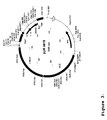
- pUR4619 encodes a anti-hCG-anti-RR6 bispecific bihead preceded by the SUC2 signal sequence and followed by the myc-tail.
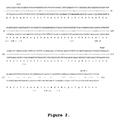
- pUR4619 SUC2 - H14 - R9 - myc (see Figures 3-4/SEQ. ID NO. 27, 28)
- Xho I- Bst EII fragments of about 0.7kb can be isolated and subsequently cloned into the vector fragment of pUR4547 (digested with the same enzymes). In this way biheads can be obtained without the myc tail.
- expression vectors can be constructed in which different promoter systems, e.g. the constitutive GAPDH promoter or different signal sequences, e.g. the mating factor prepro sequence are used.
- transformants were selected from minimal medium agar plates as described in part b(ii) above.
- the transformants were grown overnight in selective minimal medium and subsequently diluted ten times in YPGal medium. After 24 and 48 hours of growth, samples were taken for Western blot analysis.
- monoclonal anti-myc antibodies were used, followed by incubation with poly-clonal rabbit-anti-mouse conjugate with alkaline phosphatase.
- the oligonucleotide linker fragments encode the last amino acid of the N-terminal HC-V fragment (S) and the first amino acid of the C-terminal HC-V fragment, intersected by the connecting linker peptide. This resulted in plasmids pUR5330 to 5334, respectively.
- the production levels of the biheads in which the two HC-V domains are separated by a linker peptide were found to be 3 to 5 times higher as found for the bihead in which the two HC-V fragments are connected without a peptide linker.
- PINs coated with hCG were incubated with (diluted) medium samples. Subsequently, the PINs were incubated with a RR6-alkaline phosphatase conjugate, in which the azo-dye RR6 was coupled to the alkaline phosphatase via its reactive triazine group. Finally, the alkaline phosphatase enzyme activity was determined after incubation of the PINs with p-nitro-phenyl phosphate and the optical density was measured at 405nm (see Figure 5).
- a 5 ml column of recombinant Protein A Fast Flow Sepharose (Amersham Pharmacia Biotech) was equilibrated by washing with 10 column volumes of wash buffer (10 mM potassium phosphate, pH 6), at a flow rate of 2 ml/min.
- wash buffer (10 mM potassium phosphate, pH 6)
- the bi-head fermentation broth was loaded at 2 ml/min in an upwards direction.
- the column was washed with wash buffer until the OD 280 reached the baseline.
- Elution was carried out with a linear gradient of 0 - 40 mM citric acid pH 2.5 in the reverse direction, collecting 4 ml fractions into tubes containing 400 ⁇ l of a neutralising agent (1M Tris.Cl, pH 8.5) in order to minimise the effects of the acid.
- a neutralising agent (1M Tris.Cl, pH 8.5
- Peak fractions were checked for purity by running on a 12% SDS-PAGE Ready Gel (Bio-Rad) under standard denaturing conditions. Staining was with GelCode Blue (Pierce & Warriner). The fractions were concentrated using Macrosep centrifugal concentrators (3 kDa molecular weight cut-off, Pall Filtron Corp.) then buffer exchanged into 10mM potassium phosphate, pH 6 using PD-10 columns (Amersham Pharmacia Biotech). The final purity of the sample was determined by carrying out a UV scan from 400 - 220 nm and using the value at 280 nm to determine an accurate concentration. The samples were then aliquoted into vials, frozen, freeze dried and stored until required.
- a solution of Reactive Red 6 was made up at 10 mg/ml in phosphate buffered saline (PBS).
- a solution of bovine serum albumin (BSA) was made up at 10 mg/ml in PBS.
- 200 ⁇ l of the RR6 solution was added to 800 ⁇ l of the BSA solution and the resulting solution was mixed in an end over end rotary mixer for 2 hours at room temperature.
- RR6 that had conugated to BSA was separated from free RR6 by addition of the reaction mixture (1 ml) to a PD10 column (Pharmacia) previously washed with 10 ml of PBS containing 0.1% sodium azide (PBSA).
- PBSA sodium azide
- the column was then eluted by addition of PBSA (5 ml) and 1 ml aliquots were collected.
- the RR6-BSA conjugate eluted in fractions 4 and 5. These were pooled and the concentration of protein was determined using a BCA protein test and the concentration adjusted to 2 mg/ml with PBSA.
- a 50 ⁇ l aliqot of Duke blue latex (10 % solids) was added and mixed by inverting.
- the diluted latex was centrifuged at 8000 g for 10 minutes at room temperature, the supernatant removed and the pellet vortexed briefly.
- the pellet was resuspended in 900 ⁇ l of buffer B and to this 100 ⁇ l of the previously prepared RR6-BSA conjugate was added.
- the latex solution was sonicated for 10 s using a sonic probe.
- the solution containing the latex was mixed for 2 h at room temperature and then centrifuged (8000 g , 10 min at room temperature).
- the latex pellet was washed by resuspending in 1 ml of buffer B and centrifuged once more (8000 g , 10 min at room temperature). The pellet was then resuspended in 1 ml buffer B ready for use.
- the llama bi-heads were tested by self assembling onto RR6-BSA adsorbed latex and detection of hCG in a rapid assay technology (RAT) format. This was performed by mixing the llama bi-head (5 ⁇ l of a 0.1 mg/ml solution) with RR6-BSA adsorbed latex (5 ⁇ l of 0.1 % solids) in 10 ⁇ l of PBSA to which hCG (5 ⁇ l of various concentrations) was added.
- RAT rapid assay technology
- the resulting solution was added to the bottom of a nitrocellulose strip (6 mm wide x 30 mm long) on which a monoclonal antibody recognising hCG had been adsorbed by plotting in a line (2.5 mg/ml) mid way up the strip.
- the latex-bi-head-hCG solution was allowed to flow up the nitrocellulose strip by capillary action and the strip was then washed by applying PBSA (25 ⁇ l) to the bottom of the strip.
- the amount of latex, captured at the plotted antibody line on the nitrocellulose strip, was quantified by measuring the absorbance through the strip.
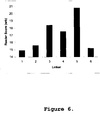
- Figure 6 shows that the llama bi-heads with linkers 3, 4 and 5 gave the highest response in RAT assays.
- These linkers are structurally more ordered than the comparative examples, flexible linkers 2 and 6 and result in more hCG and more latex captured in the assay. The more ordered linkers promote the correct orientation of the binding domains to achieve more optimal binding than when no linker is used.
- Linker 3 is derived from CWP1 and Linker 5 from CBH1P.
- Synthetic linkers with some order can offer increased sensitivity in assays than those with little order (linker 2).
- Figure 7 shows that the bi-head with linker 4 can detect lower amounts (50 mIU/ml) of hCG than the bi-head with linker 2 and, hence, give a more sensitive assay for hCG.
Landscapes
- Chemical & Material Sciences (AREA)
- Health & Medical Sciences (AREA)
- Organic Chemistry (AREA)
- Genetics & Genomics (AREA)
- Life Sciences & Earth Sciences (AREA)
- Molecular Biology (AREA)
- Biochemistry (AREA)
- Biophysics (AREA)
- General Health & Medical Sciences (AREA)
- Medicinal Chemistry (AREA)
- Engineering & Computer Science (AREA)
- Proteomics, Peptides & Aminoacids (AREA)
- Biomedical Technology (AREA)
- Wood Science & Technology (AREA)
- Zoology (AREA)
- Bioinformatics & Cheminformatics (AREA)
- General Engineering & Computer Science (AREA)
- Biotechnology (AREA)
- Immunology (AREA)
- Physics & Mathematics (AREA)
- Microbiology (AREA)
- Plant Pathology (AREA)
- Endocrinology (AREA)
- Peptides Or Proteins (AREA)
- Preparation Of Compounds By Using Micro-Organisms (AREA)
Priority Applications (6)
| Application Number | Priority Date | Filing Date | Title |
|---|---|---|---|
| EP99303118A EP1002861A1 (de) | 1998-10-26 | 1999-04-22 | Antigenbindungsproteine mit einer Kopplung, die die strukturelle Beweglichkeit einschränkt |
| BR9914829-3A BR9914829A (pt) | 1998-10-27 | 1999-10-22 | Uso de um grupo de polipeptìdeo, proteìna ligadora multivalente, sequências de nucleotìdeos, vetor de expressão, e, célula hospedeira |
| CA002348839A CA2348839A1 (en) | 1998-10-27 | 1999-10-22 | Antigen-binding proteins comprising a linker which confers restricted conformational flexibility |
| EP99957977A EP1127116A2 (de) | 1998-10-27 | 1999-10-22 | Antigenbindungsproteine mit einer kopplung, die die strukturelle beweglichkeit einschränkt |
| PCT/EP1999/008323 WO2000024884A2 (en) | 1998-10-27 | 1999-10-22 | Antigen-binding proteins comprising a linker which confers restricted conformational flexibility |
| AU15503/00A AU1550300A (en) | 1998-10-27 | 1999-10-22 | Antigen-binding proteins |
Applications Claiming Priority (3)
| Application Number | Priority Date | Filing Date | Title |
|---|---|---|---|
| WOPCT/EP98/06991 | 1998-10-26 | ||
| PCT/EP1998/006991 WO1999023221A2 (en) | 1997-10-27 | 1998-10-27 | Multivalent antigen-binding proteins |
| EP99303118A EP1002861A1 (de) | 1998-10-26 | 1999-04-22 | Antigenbindungsproteine mit einer Kopplung, die die strukturelle Beweglichkeit einschränkt |
Publications (1)
| Publication Number | Publication Date |
|---|---|
| EP1002861A1 true EP1002861A1 (de) | 2000-05-24 |
Family
ID=8241342
Family Applications (2)
| Application Number | Title | Priority Date | Filing Date |
|---|---|---|---|
| EP99303118A Withdrawn EP1002861A1 (de) | 1998-10-26 | 1999-04-22 | Antigenbindungsproteine mit einer Kopplung, die die strukturelle Beweglichkeit einschränkt |
| EP99957977A Withdrawn EP1127116A2 (de) | 1998-10-27 | 1999-10-22 | Antigenbindungsproteine mit einer kopplung, die die strukturelle beweglichkeit einschränkt |
Family Applications After (1)
| Application Number | Title | Priority Date | Filing Date |
|---|---|---|---|
| EP99957977A Withdrawn EP1127116A2 (de) | 1998-10-27 | 1999-10-22 | Antigenbindungsproteine mit einer kopplung, die die strukturelle beweglichkeit einschränkt |
Country Status (5)
| Country | Link |
|---|---|
| EP (2) | EP1002861A1 (de) |
| AU (1) | AU1550300A (de) |
| BR (1) | BR9914829A (de) |
| CA (1) | CA2348839A1 (de) |
| WO (1) | WO2000024884A2 (de) |
Cited By (10)
| Publication number | Priority date | Publication date | Assignee | Title |
|---|---|---|---|---|
| US7771724B2 (en) | 2002-08-07 | 2010-08-10 | Ablynx N.V. | Modulation of platelet adhesion based on the surface-exposed beta-switch loop of platelet glycoprotein IB-alpha |
| US7807162B2 (en) | 2005-05-20 | 2010-10-05 | Ablynx N.V. | Single domain VHH antibodies against von Willebrand factor |
| US7939277B2 (en) | 2005-01-14 | 2011-05-10 | Umc Utrecht Holding Bv | Methods and assays for distinguishing between different forms of diseases and disorders characterized by thrombocytopenia and/or by spontaneous interaction between Von Willebrand Factor (vWF) and platelets |
| WO2013036130A1 (en) | 2011-09-09 | 2013-03-14 | Universiteit Utrecht Holding B.V. | Broadly neutralizing vhh against hiv-1 |
| US9028816B2 (en) | 2003-01-10 | 2015-05-12 | Ablynx N.V. | Polypeptides and polypeptide constructs comprising single domain antibodies directed against von Willebrand factor |
| US9320792B2 (en) | 2002-11-08 | 2016-04-26 | Ablynx N.V. | Pulmonary administration of immunoglobulin single variable domains and constructs thereof |
| US9371381B2 (en) | 2002-11-08 | 2016-06-21 | Ablynx, N.V. | Single domain antibodies directed against tumor necrosis factor-alpha and uses therefor |
| US9393304B2 (en) | 2008-10-29 | 2016-07-19 | Ablynx N.V. | Formulations of single domain antigen binding molecules |
| WO2018060453A1 (en) | 2016-09-30 | 2018-04-05 | Vhsquared Limited | Compositions |
| US10118962B2 (en) | 2008-10-29 | 2018-11-06 | Ablynx N.V. | Methods for purification of single domain antigen binding molecules |
Families Citing this family (27)
| Publication number | Priority date | Publication date | Assignee | Title |
|---|---|---|---|---|
| WO2003020906A2 (en) * | 2001-08-31 | 2003-03-13 | Abmaxis, Inc. | Multivalent protein conjugate with multiple ligand-binding domains of receptors |
| CA2488441C (en) | 2002-06-03 | 2015-01-27 | Genentech, Inc. | Synthetic antibody phage libraries |
| EP1600459A3 (de) * | 2002-06-28 | 2005-12-07 | Domantis Limited | Ligand |
| US9321832B2 (en) | 2002-06-28 | 2016-04-26 | Domantis Limited | Ligand |
| US20050079574A1 (en) * | 2003-01-16 | 2005-04-14 | Genentech, Inc. | Synthetic antibody phage libraries |
| US7785903B2 (en) | 2004-04-09 | 2010-08-31 | Genentech, Inc. | Variable domain library and uses |
| EP1841452B8 (de) | 2004-10-08 | 2014-06-11 | Domantis Limited | Einzel-domän antikörper gegen tnfr1 und verfahren und deren verwendungen |
| FR2879605B1 (fr) | 2004-12-16 | 2008-10-17 | Centre Nat Rech Scient Cnrse | Production de formats d'anticorps et applications immunologiques de ces formats |
| GB0621513D0 (en) | 2006-10-30 | 2006-12-06 | Domantis Ltd | Novel polypeptides and uses thereof |
| CN104961827A (zh) | 2010-04-06 | 2015-10-07 | 阿格罗塞文公司 | 农用化学品的特异性输送 |
| WO2012025602A1 (en) | 2010-08-26 | 2012-03-01 | Vib Vzw | Insect binding antibodies |
| ES2634547T3 (es) | 2010-08-26 | 2017-09-28 | Agrosavfe N.V. | Composiciones para el tratamiento de semillas |
| CA2851040A1 (en) | 2011-10-06 | 2013-04-11 | Agrosavfe N.V. | Manufacturing of specifically targeting microcapsules |
| WO2018191438A1 (en) | 2017-04-11 | 2018-10-18 | Inhibrx, Inc. | Multispecific polypeptide constructs having constrained cd3 binding and methods of using the same |
| US12037382B2 (en) | 2018-02-05 | 2024-07-16 | Stichting Vu | Inverse agonistic anti-US28 antibodies |
| IL277863B2 (en) | 2018-04-11 | 2026-02-01 | Inhibrx Inc | Multispecific polypeptide constructs with forced CD3 binding and related methods and uses |
| CA3105891A1 (en) | 2018-07-24 | 2020-01-30 | Inhibrx, Inc. | Multispecific polypeptide constructs containing a constrained cd3 binding domain and a receptor binding region and methods of using the same |
| CN113518647A (zh) | 2018-10-11 | 2021-10-19 | 印希比股份有限公司 | 5t4单域抗体及其治疗性组合物 |
| CA3115082A1 (en) | 2018-10-11 | 2020-04-16 | Inhibrx, Inc. | B7h3 single domain antibodies and therapeutic compositions thereof |
| EP3864045A2 (de) | 2018-10-11 | 2021-08-18 | Inhibrx, Inc. | Dll3-einzeldomänenantikörper und therapeutische zusammensetzungen davon |
| WO2020077257A1 (en) | 2018-10-11 | 2020-04-16 | Inhibrx, Inc. | Pd-1 single domain antibodies and therapeutic compositions thereof |
| WO2020080941A1 (en) | 2018-10-16 | 2020-04-23 | Umc Utrecht Holding B.V. | Anti- low-density lipoprotein receptor-related protein 5/6 antibodies |
| US20220324947A1 (en) | 2019-08-05 | 2022-10-13 | Stichting Vu | Identification and Elimination of HCMV-Infected Cells |
| IL294879A (en) | 2020-01-29 | 2022-09-01 | Inhibrx Inc | Monodomain antibodies of cd28 and their multivalent and multispecific constructs |
| WO2022098787A1 (en) | 2020-11-04 | 2022-05-12 | Juno Therapeutics, Inc. | Cells expressing a chimeric receptor from a modified invariant cd3 immunoglobulin superfamily chain locus and related polynucleotides and methods |
| AU2024274792A1 (en) | 2023-05-23 | 2025-10-23 | Sana Biotechnology, Inc. | Tandem fusogens and related lipid particles |
| WO2025038668A1 (en) | 2023-08-14 | 2025-02-20 | Voro Therapeutics, Inc. | Therapeutic binding agents that conditionally promote myeloid cell activity against target cells and uses thereof |
Citations (3)
| Publication number | Priority date | Publication date | Assignee | Title |
|---|---|---|---|---|
| WO1993002198A1 (en) * | 1990-07-16 | 1993-02-04 | Technical Research Centre Of Finland | Recombinant secretable fusion proteins |
| WO1994013804A1 (en) * | 1992-12-04 | 1994-06-23 | Medical Research Council | Multivalent and multispecific binding proteins, their manufacture and use |
| WO1997014719A1 (en) * | 1995-10-16 | 1997-04-24 | Unilever N.V. | A bifunctional or bivalent antibody fragment analogue |
-
1999
- 1999-04-22 EP EP99303118A patent/EP1002861A1/de not_active Withdrawn
- 1999-10-22 BR BR9914829-3A patent/BR9914829A/pt not_active IP Right Cessation
- 1999-10-22 CA CA002348839A patent/CA2348839A1/en not_active Abandoned
- 1999-10-22 WO PCT/EP1999/008323 patent/WO2000024884A2/en not_active Ceased
- 1999-10-22 AU AU15503/00A patent/AU1550300A/en not_active Abandoned
- 1999-10-22 EP EP99957977A patent/EP1127116A2/de not_active Withdrawn
Patent Citations (3)
| Publication number | Priority date | Publication date | Assignee | Title |
|---|---|---|---|---|
| WO1993002198A1 (en) * | 1990-07-16 | 1993-02-04 | Technical Research Centre Of Finland | Recombinant secretable fusion proteins |
| WO1994013804A1 (en) * | 1992-12-04 | 1994-06-23 | Medical Research Council | Multivalent and multispecific binding proteins, their manufacture and use |
| WO1997014719A1 (en) * | 1995-10-16 | 1997-04-24 | Unilever N.V. | A bifunctional or bivalent antibody fragment analogue |
Non-Patent Citations (6)
| Title |
|---|
| A. PLÜCKTHUN ET AL.: "New protein engineering approaches to multivalent and bispecific antibody fragments.", IMMUNOTECHNOLOGY, vol. 3, no. 2, June 1997 (1997-06-01), Amsterdam, NL, pages 83 - 105, XP004088466 * |
| H. HOOGENBOOM: "Mix and match: Building manifold binding sites.", NATURE BIOTECHNOLOGY, vol. 15, no. 2, February 1997 (1997-02-01), New York, NY, USA, pages 125 - 126, XP002110046 * |
| K. ALFTHAN ET AL.: "Properties of a single-chain antibody containing different linker peptides.", PROTEIN ENGINEERING, vol. 8, no. 7, July 1995 (1995-07-01), Oxford, GB, pages 725 - 731, XP002112077 * |
| M. SRISODSUK ET AL.: "Role of the interdomain linker peptide of Trichoderma reesei cellobiohydrolase I in its interaction with crystalline cellulose.", THE JOURNAL OF BIOLOGICAL CHEMISTRY, vol. 268, no. 28, 5 October 1993 (1993-10-05), Baltimore, MD, USA, pages 20756 - 20761, XP002112074 * |
| P. HOLLIGER ET AL.: "Specific killing of lymphoma cells by cytotoxic T-cells mediated by a bispecific diabody.", PROTEIN ENGINEERING, vol. 9, no. 3, March 1996 (1996-03-01), Oxford, GB, pages 299 - 305, XP002112075 * |
| P. PORTOGHESE ET AL.: "Synthesis and opioid antagonist potencies of naltrexamine bivalent ligands with conformationally restricted spacers.", JOURNAL OF MEDICINAL CHEMISTRY, vol. 29, no. 9, September 1986 (1986-09-01), Washington, DC, USA, pages 1650 - 1653, XP002112076 * |
Cited By (17)
| Publication number | Priority date | Publication date | Assignee | Title |
|---|---|---|---|---|
| US7771724B2 (en) | 2002-08-07 | 2010-08-10 | Ablynx N.V. | Modulation of platelet adhesion based on the surface-exposed beta-switch loop of platelet glycoprotein IB-alpha |
| US9243065B2 (en) | 2002-11-08 | 2016-01-26 | Ablynx N.V. | Polypeptide constructs including VHH directed against EGFR for intracellular delivery |
| US9320792B2 (en) | 2002-11-08 | 2016-04-26 | Ablynx N.V. | Pulmonary administration of immunoglobulin single variable domains and constructs thereof |
| US9371381B2 (en) | 2002-11-08 | 2016-06-21 | Ablynx, N.V. | Single domain antibodies directed against tumor necrosis factor-alpha and uses therefor |
| US9725522B2 (en) | 2002-11-08 | 2017-08-08 | Ablynx N.V. | Pulmonary administration of immunoglobulin single variable domains and constructs thereof |
| US11034755B2 (en) | 2003-01-10 | 2021-06-15 | Ablynx N.V. | Polypeptides and polypeptide constructs comprising single domain antibodies directed against von willebrand factor |
| US9028816B2 (en) | 2003-01-10 | 2015-05-12 | Ablynx N.V. | Polypeptides and polypeptide constructs comprising single domain antibodies directed against von Willebrand factor |
| US10112989B2 (en) | 2003-01-10 | 2018-10-30 | Ablynx, N.V. | Polypeptides and polypeptide constructs comprising single domain antibodies directed against von Willebrand factor |
| US7939277B2 (en) | 2005-01-14 | 2011-05-10 | Umc Utrecht Holding Bv | Methods and assays for distinguishing between different forms of diseases and disorders characterized by thrombocytopenia and/or by spontaneous interaction between Von Willebrand Factor (vWF) and platelets |
| US7807162B2 (en) | 2005-05-20 | 2010-10-05 | Ablynx N.V. | Single domain VHH antibodies against von Willebrand factor |
| US8372398B2 (en) | 2005-05-20 | 2013-02-12 | Ablynx N.V. | Single domain VHH antibodies against Von Willebrand Factor |
| US9993552B2 (en) | 2008-10-29 | 2018-06-12 | Ablynx N.V. | Formulations of single domain antigen binding molecules |
| US9393304B2 (en) | 2008-10-29 | 2016-07-19 | Ablynx N.V. | Formulations of single domain antigen binding molecules |
| US10118962B2 (en) | 2008-10-29 | 2018-11-06 | Ablynx N.V. | Methods for purification of single domain antigen binding molecules |
| US11370835B2 (en) | 2008-10-29 | 2022-06-28 | Ablynx N.V. | Methods for purification of single domain antigen binding molecules |
| WO2013036130A1 (en) | 2011-09-09 | 2013-03-14 | Universiteit Utrecht Holding B.V. | Broadly neutralizing vhh against hiv-1 |
| WO2018060453A1 (en) | 2016-09-30 | 2018-04-05 | Vhsquared Limited | Compositions |
Also Published As
| Publication number | Publication date |
|---|---|
| BR9914829A (pt) | 2001-07-10 |
| WO2000024884A2 (en) | 2000-05-04 |
| EP1127116A2 (de) | 2001-08-29 |
| CA2348839A1 (en) | 2000-05-04 |
| AU1550300A (en) | 2000-05-15 |
| WO2000024884A3 (en) | 2000-08-03 |
Similar Documents
| Publication | Publication Date | Title |
|---|---|---|
| EP1127116A2 (de) | Antigenbindungsproteine mit einer kopplung, die die strukturelle beweglichkeit einschränkt | |
| US6670453B2 (en) | Multivalent antigen-binding proteins | |
| US20040132098A1 (en) | Immunological binding | |
| AU627183B2 (en) | Method for producing recombinant dna proteins | |
| EP0617706B1 (de) | Multivalente antigen-bindende proteine | |
| JP4430066B2 (ja) | アミノ酸38〜44に結合するモノクローナル抗体を用いたproBNPの検出方法 | |
| KR102727092B1 (ko) | 항-인간 n-말단 프로 뇌 나트륨 이뇨 펩티드의 재조합 항체 | |
| CA2178212A1 (en) | Monoclonal antibodies specific for phf-tau, hybridomas secreting them, antigen recognition by these antibodies and their applications | |
| JPH02500329A (ja) | ターゲット化多機能蛋白質 | |
| WO1992001787A1 (en) | Binding domains | |
| CN117069849B (zh) | 识别nag的单克隆抗体及其应用 | |
| CN116693663A (zh) | 识别猴痘病毒核心蛋白a29l的单克隆纳米抗体、应用及单克隆纳米抗体文库 | |
| US5965405A (en) | Method for producing Fv fragments in eukaryotic cells | |
| CN114478761B (zh) | 绿色荧光蛋白鲨源纳米抗体、制备方法及其应用 | |
| CN120795141B (zh) | 中性粒细胞载脂蛋白同二聚体特异性单克隆抗体及其应用 | |
| JPH07506727A (ja) | 凝集アッセイ用試薬 | |
| CN110903359B (zh) | 一种空肠弯曲菌重组蛋白及其单克隆抗体的制备 | |
| CN117362432B (zh) | C肽重组兔单克隆抗体、制备方法及其应用 | |
| CN116178536B (zh) | 小鼠抗人IV型胶原α5链NC1段单克隆抗体及其应用 | |
| CN112067818B (zh) | 人细胞外基质蛋白1检测试剂盒 | |
| CN116987194B (zh) | 人st2抗原的模拟表位肽的抗独特型纳米抗体及应用 | |
| CN118126176B (zh) | 抗人和肽素的单克隆抗体及其应用 | |
| CN121851161B (zh) | α-syn特异性抗体及其在帕金森辅助诊断试剂盒中的应用 | |
| CN121108327B (zh) | B族链球菌表面免疫原性蛋白单克隆抗体及其应用 | |
| CN120865394B (zh) | 肠道病毒71型衣壳蛋白vp1单克隆抗体及其应用 |
Legal Events
| Date | Code | Title | Description |
|---|---|---|---|
| PUAI | Public reference made under article 153(3) epc to a published international application that has entered the european phase |
Free format text: ORIGINAL CODE: 0009012 |
|
| AK | Designated contracting states |
Kind code of ref document: A1 Designated state(s): AT BE CH CY DE DK ES FI FR GB GR IE IT LI LU MC NL PT SE |
|
| AX | Request for extension of the european patent |
Free format text: AL;LT;LV;MK;RO;SI |
|
| STAA | Information on the status of an ep patent application or granted ep patent |
Free format text: STATUS: THE APPLICATION IS DEEMED TO BE WITHDRAWN |
|
| 18D | Application deemed to be withdrawn |
Effective date: 20000627 |