EP1003875B1 - Gruppe a streptokokken-impfstoff - Google Patents
Gruppe a streptokokken-impfstoff Download PDFInfo
- Publication number
- EP1003875B1 EP1003875B1 EP98946991A EP98946991A EP1003875B1 EP 1003875 B1 EP1003875 B1 EP 1003875B1 EP 98946991 A EP98946991 A EP 98946991A EP 98946991 A EP98946991 A EP 98946991A EP 1003875 B1 EP1003875 B1 EP 1003875B1
- Authority
- EP
- European Patent Office
- Prior art keywords
- fusion polypeptide
- group
- streptococci
- polypeptide according
- immunogenic
- Prior art date
- Legal status (The legal status is an assumption and is not a legal conclusion. Google has not performed a legal analysis and makes no representation as to the accuracy of the status listed.)
- Expired - Lifetime
Links
- 229960005486 vaccine Drugs 0.000 title description 43
- 108090000765 processed proteins & peptides Proteins 0.000 claims abstract description 93
- 102000004196 processed proteins & peptides Human genes 0.000 claims abstract description 81
- 229920001184 polypeptide Polymers 0.000 claims abstract description 61
- 241001505901 Streptococcus sp. 'group A' Species 0.000 claims abstract description 59
- 230000002163 immunogen Effects 0.000 claims abstract description 56
- 230000004927 fusion Effects 0.000 claims abstract description 37
- 230000028993 immune response Effects 0.000 claims abstract description 18
- 150000001413 amino acids Chemical class 0.000 claims abstract description 14
- 239000012634 fragment Substances 0.000 claims description 21
- 108010010318 streptococcal M protein Proteins 0.000 claims description 21
- 241000282414 Homo sapiens Species 0.000 claims description 19
- 239000000203 mixture Substances 0.000 claims description 18
- 229940037003 alum Drugs 0.000 claims description 17
- 230000001662 opsonic effect Effects 0.000 claims description 14
- 239000002671 adjuvant Substances 0.000 claims description 11
- 208000015181 infectious disease Diseases 0.000 claims description 9
- 239000003550 marker Substances 0.000 claims description 4
- 108091008146 restriction endonucleases Proteins 0.000 claims description 4
- -1 carrier Substances 0.000 claims description 3
- 239000003085 diluting agent Substances 0.000 claims description 3
- 230000002519 immonomodulatory effect Effects 0.000 claims description 3
- 239000000546 pharmaceutical excipient Substances 0.000 claims description 3
- 108010002350 Interleukin-2 Proteins 0.000 claims description 2
- 108090000978 Interleukin-4 Proteins 0.000 claims description 2
- 238000004519 manufacturing process Methods 0.000 claims description 2
- 239000011347 resin Substances 0.000 claims description 2
- 229920005989 resin Polymers 0.000 claims description 2
- 239000003381 stabilizer Substances 0.000 claims description 2
- 230000001225 therapeutic effect Effects 0.000 claims description 2
- PXHVJJICTQNCMI-UHFFFAOYSA-N Nickel Chemical compound [Ni] PXHVJJICTQNCMI-UHFFFAOYSA-N 0.000 claims 2
- 101800005309 Carboxy-terminal peptide Proteins 0.000 claims 1
- 239000003814 drug Substances 0.000 claims 1
- 229910052759 nickel Inorganic materials 0.000 claims 1
- 230000005847 immunogenicity Effects 0.000 abstract description 12
- 210000004899 c-terminal region Anatomy 0.000 abstract description 6
- 230000004936 stimulating effect Effects 0.000 abstract description 5
- 101800001415 Bri23 peptide Proteins 0.000 abstract description 4
- 101800000655 C-terminal peptide Proteins 0.000 abstract description 4
- 102400000107 C-terminal peptide Human genes 0.000 abstract description 4
- 244000052769 pathogen Species 0.000 abstract description 4
- 108010005636 polypeptide C Proteins 0.000 abstract description 4
- 230000001717 pathogenic effect Effects 0.000 abstract 1
- 108090000623 proteins and genes Proteins 0.000 description 59
- 101710085938 Matrix protein Proteins 0.000 description 43
- 101710127721 Membrane protein Proteins 0.000 description 43
- 102000004169 proteins and genes Human genes 0.000 description 39
- 108020004707 nucleic acids Proteins 0.000 description 27
- 102000039446 nucleic acids Human genes 0.000 description 27
- 150000007523 nucleic acids Chemical class 0.000 description 27
- 241000283973 Oryctolagus cuniculus Species 0.000 description 23
- 241000699670 Mus sp. Species 0.000 description 19
- 239000000427 antigen Substances 0.000 description 19
- 102000036639 antigens Human genes 0.000 description 19
- 108091007433 antigens Proteins 0.000 description 19
- 239000003795 chemical substances by application Substances 0.000 description 19
- 229940023143 protein vaccine Drugs 0.000 description 17
- 238000003556 assay Methods 0.000 description 16
- 230000001681 protective effect Effects 0.000 description 16
- 210000002966 serum Anatomy 0.000 description 15
- 210000004027 cell Anatomy 0.000 description 13
- 238000012360 testing method Methods 0.000 description 12
- 238000002965 ELISA Methods 0.000 description 10
- 241000588724 Escherichia coli Species 0.000 description 10
- 238000002347 injection Methods 0.000 description 10
- 239000007924 injection Substances 0.000 description 10
- 239000013612 plasmid Substances 0.000 description 10
- 238000000746 purification Methods 0.000 description 10
- 241000894006 Bacteria Species 0.000 description 9
- 230000014207 opsonization Effects 0.000 description 9
- 239000013598 vector Substances 0.000 description 9
- 102000057297 Pepsin A Human genes 0.000 description 8
- 108090000284 Pepsin A Proteins 0.000 description 8
- 238000000034 method Methods 0.000 description 8
- 229940111202 pepsin Drugs 0.000 description 8
- 239000003981 vehicle Substances 0.000 description 8
- 238000001476 gene delivery Methods 0.000 description 7
- 230000014509 gene expression Effects 0.000 description 7
- 125000002924 primary amino group Chemical group [H]N([H])* 0.000 description 7
- 230000000763 evoking effect Effects 0.000 description 6
- 230000003053 immunization Effects 0.000 description 6
- 238000002649 immunization Methods 0.000 description 6
- 210000001519 tissue Anatomy 0.000 description 6
- 241000699666 Mus <mouse, genus> Species 0.000 description 5
- FAPWRFPIFSIZLT-UHFFFAOYSA-M Sodium chloride Chemical compound [Na+].[Cl-] FAPWRFPIFSIZLT-UHFFFAOYSA-M 0.000 description 5
- 206010061372 Streptococcal infection Diseases 0.000 description 5
- 239000000047 product Substances 0.000 description 5
- 239000011780 sodium chloride Substances 0.000 description 5
- 108020004414 DNA Proteins 0.000 description 4
- 241001465754 Metazoa Species 0.000 description 4
- 230000000844 anti-bacterial effect Effects 0.000 description 4
- 230000000890 antigenic effect Effects 0.000 description 4
- 210000004369 blood Anatomy 0.000 description 4
- 239000008280 blood Substances 0.000 description 4
- 238000002474 experimental method Methods 0.000 description 4
- 239000013604 expression vector Substances 0.000 description 4
- 239000000499 gel Substances 0.000 description 4
- 210000004201 immune sera Anatomy 0.000 description 4
- 229940042743 immune sera Drugs 0.000 description 4
- 238000007912 intraperitoneal administration Methods 0.000 description 4
- 201000003068 rheumatic fever Diseases 0.000 description 4
- 108091061960 Naked DNA Proteins 0.000 description 3
- 102000007056 Recombinant Fusion Proteins Human genes 0.000 description 3
- 108010008281 Recombinant Fusion Proteins Proteins 0.000 description 3
- 210000004556 brain Anatomy 0.000 description 3
- 239000000969 carrier Substances 0.000 description 3
- 238000001415 gene therapy Methods 0.000 description 3
- 210000002216 heart Anatomy 0.000 description 3
- 238000010166 immunofluorescence Methods 0.000 description 3
- 229940031348 multivalent vaccine Drugs 0.000 description 3
- 230000004083 survival effect Effects 0.000 description 3
- 230000009466 transformation Effects 0.000 description 3
- 238000001262 western blot Methods 0.000 description 3
- CIWBSHSKHKDKBQ-JLAZNSOCSA-N Ascorbic acid Chemical compound OC[C@H](O)[C@H]1OC(=O)C(O)=C1O CIWBSHSKHKDKBQ-JLAZNSOCSA-N 0.000 description 2
- 108020004705 Codon Proteins 0.000 description 2
- 238000000729 Fisher's exact test Methods 0.000 description 2
- 108010052285 Membrane Proteins Proteins 0.000 description 2
- 102000018697 Membrane Proteins Human genes 0.000 description 2
- 102100029513 Ubiquinol-cytochrome-c reductase complex assembly factor 2 Human genes 0.000 description 2
- 241000700605 Viruses Species 0.000 description 2
- 229960000723 ampicillin Drugs 0.000 description 2
- AVKUERGKIZMTKX-NJBDSQKTSA-N ampicillin Chemical compound C1([C@@H](N)C(=O)N[C@H]2[C@H]3SC([C@@H](N3C2=O)C(O)=O)(C)C)=CC=CC=C1 AVKUERGKIZMTKX-NJBDSQKTSA-N 0.000 description 2
- 238000004458 analytical method Methods 0.000 description 2
- 210000001188 articular cartilage Anatomy 0.000 description 2
- 230000001580 bacterial effect Effects 0.000 description 2
- 230000008901 benefit Effects 0.000 description 2
- 150000001720 carbohydrates Chemical class 0.000 description 2
- 235000014633 carbohydrates Nutrition 0.000 description 2
- 238000006243 chemical reaction Methods 0.000 description 2
- 230000034994 death Effects 0.000 description 2
- 231100000517 death Toxicity 0.000 description 2
- 238000013461 design Methods 0.000 description 2
- 238000001514 detection method Methods 0.000 description 2
- 239000005546 dideoxynucleotide Substances 0.000 description 2
- 238000010790 dilution Methods 0.000 description 2
- 239000012895 dilution Substances 0.000 description 2
- 201000010099 disease Diseases 0.000 description 2
- 208000037265 diseases, disorders, signs and symptoms Diseases 0.000 description 2
- 238000004520 electroporation Methods 0.000 description 2
- 239000000284 extract Substances 0.000 description 2
- RWSXRVCMGQZWBV-WDSKDSINSA-N glutathione Chemical compound OC(=O)[C@@H](N)CCC(=O)N[C@@H](CS)C(=O)NCC(O)=O RWSXRVCMGQZWBV-WDSKDSINSA-N 0.000 description 2
- 238000010191 image analysis Methods 0.000 description 2
- 238000000338 in vitro Methods 0.000 description 2
- 238000001727 in vivo Methods 0.000 description 2
- 239000002054 inoculum Substances 0.000 description 2
- 239000003446 ligand Substances 0.000 description 2
- 239000002502 liposome Substances 0.000 description 2
- 239000012528 membrane Substances 0.000 description 2
- 239000008194 pharmaceutical composition Substances 0.000 description 2
- 238000001556 precipitation Methods 0.000 description 2
- 238000002360 preparation method Methods 0.000 description 2
- ZCCUUQDIBDJBTK-UHFFFAOYSA-N psoralen Chemical compound C1=C2OC(=O)C=CC2=CC2=C1OC=C2 ZCCUUQDIBDJBTK-UHFFFAOYSA-N 0.000 description 2
- 230000002441 reversible effect Effects 0.000 description 2
- 239000007790 solid phase Substances 0.000 description 2
- 238000010561 standard procedure Methods 0.000 description 2
- 210000001258 synovial membrane Anatomy 0.000 description 2
- 241000701161 unidentified adenovirus Species 0.000 description 2
- 238000002255 vaccination Methods 0.000 description 2
- 239000013603 viral vector Substances 0.000 description 2
- VXGRJERITKFWPL-UHFFFAOYSA-N 4',5'-Dihydropsoralen Natural products C1=C2OC(=O)C=CC2=CC2=C1OCC2 VXGRJERITKFWPL-UHFFFAOYSA-N 0.000 description 1
- QFVHZQCOUORWEI-UHFFFAOYSA-N 4-[(4-anilino-5-sulfonaphthalen-1-yl)diazenyl]-5-hydroxynaphthalene-2,7-disulfonic acid Chemical compound C=12C(O)=CC(S(O)(=O)=O)=CC2=CC(S(O)(=O)=O)=CC=1N=NC(C1=CC=CC(=C11)S(O)(=O)=O)=CC=C1NC1=CC=CC=C1 QFVHZQCOUORWEI-UHFFFAOYSA-N 0.000 description 1
- 241000304886 Bacilli Species 0.000 description 1
- 244000063299 Bacillus subtilis Species 0.000 description 1
- 235000014469 Bacillus subtilis Nutrition 0.000 description 1
- 101100098985 Caenorhabditis elegans cct-3 gene Proteins 0.000 description 1
- 241000283707 Capra Species 0.000 description 1
- 241000701022 Cytomegalovirus Species 0.000 description 1
- 241001533413 Deltavirus Species 0.000 description 1
- 229920002307 Dextran Polymers 0.000 description 1
- 108090000204 Dipeptidase 1 Proteins 0.000 description 1
- KCXVZYZYPLLWCC-UHFFFAOYSA-N EDTA Chemical compound OC(=O)CN(CC(O)=O)CCN(CC(O)=O)CC(O)=O KCXVZYZYPLLWCC-UHFFFAOYSA-N 0.000 description 1
- 241000701959 Escherichia virus Lambda Species 0.000 description 1
- 108700028146 Genetic Enhancer Elements Proteins 0.000 description 1
- WQZGKKKJIJFFOK-GASJEMHNSA-N Glucose Natural products OC[C@H]1OC(O)[C@H](O)[C@@H](O)[C@@H]1O WQZGKKKJIJFFOK-GASJEMHNSA-N 0.000 description 1
- 108010024636 Glutathione Proteins 0.000 description 1
- 241000606768 Haemophilus influenzae Species 0.000 description 1
- 208000005331 Hepatitis D Diseases 0.000 description 1
- 208000037262 Hepatitis delta Diseases 0.000 description 1
- 241000175212 Herpesvirales Species 0.000 description 1
- 241000282412 Homo Species 0.000 description 1
- 102000000588 Interleukin-2 Human genes 0.000 description 1
- QIVBCDIJIAJPQS-VIFPVBQESA-N L-tryptophane Chemical compound C1=CC=C2C(C[C@H](N)C(O)=O)=CNC2=C1 QIVBCDIJIAJPQS-VIFPVBQESA-N 0.000 description 1
- 238000012773 Laboratory assay Methods 0.000 description 1
- GUBGYTABKSRVRQ-QKKXKWKRSA-N Lactose Natural products OC[C@H]1O[C@@H](O[C@H]2[C@H](O)[C@@H](O)C(O)O[C@@H]2CO)[C@H](O)[C@@H](O)[C@H]1O GUBGYTABKSRVRQ-QKKXKWKRSA-N 0.000 description 1
- 101150112752 M5 gene Proteins 0.000 description 1
- 241000124008 Mammalia Species 0.000 description 1
- 241001529936 Murinae Species 0.000 description 1
- 241000711408 Murine respirovirus Species 0.000 description 1
- 101100202339 Mus musculus Slc6a13 gene Proteins 0.000 description 1
- 108091028043 Nucleic acid sequence Proteins 0.000 description 1
- 241001494479 Pecora Species 0.000 description 1
- 108010087702 Penicillinase Proteins 0.000 description 1
- 108010033276 Peptide Fragments Proteins 0.000 description 1
- 102000007079 Peptide Fragments Human genes 0.000 description 1
- 201000007100 Pharyngitis Diseases 0.000 description 1
- 206010034839 Pharyngitis streptococcal Diseases 0.000 description 1
- 239000002202 Polyethylene glycol Substances 0.000 description 1
- 108010039918 Polylysine Proteins 0.000 description 1
- 108010076504 Protein Sorting Signals Proteins 0.000 description 1
- 102000002067 Protein Subunits Human genes 0.000 description 1
- 241000589516 Pseudomonas Species 0.000 description 1
- 208000006311 Pyoderma Diseases 0.000 description 1
- 101100202330 Rattus norvegicus Slc6a11 gene Proteins 0.000 description 1
- 241000293869 Salmonella enterica subsp. enterica serovar Typhimurium Species 0.000 description 1
- 206010040047 Sepsis Diseases 0.000 description 1
- 206010040070 Septic Shock Diseases 0.000 description 1
- 102000007562 Serum Albumin Human genes 0.000 description 1
- 108010071390 Serum Albumin Proteins 0.000 description 1
- 241000191940 Staphylococcus Species 0.000 description 1
- 241000194017 Streptococcus Species 0.000 description 1
- 241000193996 Streptococcus pyogenes Species 0.000 description 1
- 241000187747 Streptomyces Species 0.000 description 1
- CZMRCDWAGMRECN-UGDNZRGBSA-N Sucrose Chemical compound O[C@H]1[C@H](O)[C@@H](CO)O[C@@]1(CO)O[C@@H]1[C@H](O)[C@@H](O)[C@H](O)[C@@H](CO)O1 CZMRCDWAGMRECN-UGDNZRGBSA-N 0.000 description 1
- 229930006000 Sucrose Natural products 0.000 description 1
- 239000012505 Superdex™ Substances 0.000 description 1
- 210000001744 T-lymphocyte Anatomy 0.000 description 1
- 239000004098 Tetracycline Substances 0.000 description 1
- 102000003978 Tissue Plasminogen Activator Human genes 0.000 description 1
- 108090000373 Tissue Plasminogen Activator Proteins 0.000 description 1
- 206010044248 Toxic shock syndrome Diseases 0.000 description 1
- 231100000650 Toxic shock syndrome Toxicity 0.000 description 1
- QIVBCDIJIAJPQS-UHFFFAOYSA-N Tryptophan Natural products C1=CC=C2C(CC(N)C(O)=O)=CNC2=C1 QIVBCDIJIAJPQS-UHFFFAOYSA-N 0.000 description 1
- 239000002253 acid Substances 0.000 description 1
- 150000007513 acids Chemical class 0.000 description 1
- 230000002411 adverse Effects 0.000 description 1
- 239000011543 agarose gel Substances 0.000 description 1
- WNROFYMDJYEPJX-UHFFFAOYSA-K aluminium hydroxide Chemical compound [OH-].[OH-].[OH-].[Al+3] WNROFYMDJYEPJX-UHFFFAOYSA-K 0.000 description 1
- 125000000539 amino acid group Chemical group 0.000 description 1
- 230000003321 amplification Effects 0.000 description 1
- 210000004102 animal cell Anatomy 0.000 description 1
- 239000003242 anti bacterial agent Substances 0.000 description 1
- 229940088710 antibiotic agent Drugs 0.000 description 1
- 239000003963 antioxidant agent Substances 0.000 description 1
- 235000006708 antioxidants Nutrition 0.000 description 1
- 229960005070 ascorbic acid Drugs 0.000 description 1
- 235000010323 ascorbic acid Nutrition 0.000 description 1
- 239000011668 ascorbic acid Substances 0.000 description 1
- 230000002238 attenuated effect Effects 0.000 description 1
- 230000001363 autoimmune Effects 0.000 description 1
- 238000011888 autopsy Methods 0.000 description 1
- 230000001651 autotrophic effect Effects 0.000 description 1
- 210000003719 b-lymphocyte Anatomy 0.000 description 1
- 235000021028 berry Nutrition 0.000 description 1
- WQZGKKKJIJFFOK-VFUOTHLCSA-N beta-D-glucose Chemical compound OC[C@H]1O[C@@H](O)[C@H](O)[C@@H](O)[C@@H]1O WQZGKKKJIJFFOK-VFUOTHLCSA-N 0.000 description 1
- 102000006635 beta-lactamase Human genes 0.000 description 1
- 230000003115 biocidal effect Effects 0.000 description 1
- 239000006161 blood agar Substances 0.000 description 1
- 108010006025 bovine growth hormone Proteins 0.000 description 1
- 239000000872 buffer Substances 0.000 description 1
- 239000007975 buffered saline Substances 0.000 description 1
- AIYUHDOJVYHVIT-UHFFFAOYSA-M caesium chloride Chemical compound [Cl-].[Cs+] AIYUHDOJVYHVIT-UHFFFAOYSA-M 0.000 description 1
- 239000001506 calcium phosphate Substances 0.000 description 1
- 229910000389 calcium phosphate Inorganic materials 0.000 description 1
- 235000011010 calcium phosphates Nutrition 0.000 description 1
- 210000002421 cell wall Anatomy 0.000 description 1
- 238000005119 centrifugation Methods 0.000 description 1
- 239000002738 chelating agent Substances 0.000 description 1
- 239000013611 chromosomal DNA Substances 0.000 description 1
- 230000002759 chromosomal effect Effects 0.000 description 1
- 239000013599 cloning vector Substances 0.000 description 1
- 150000001875 compounds Chemical class 0.000 description 1
- 238000012790 confirmation Methods 0.000 description 1
- 238000010276 construction Methods 0.000 description 1
- 230000009260 cross reactivity Effects 0.000 description 1
- 230000000694 effects Effects 0.000 description 1
- 230000005684 electric field Effects 0.000 description 1
- 239000012149 elution buffer Substances 0.000 description 1
- 210000003527 eukaryotic cell Anatomy 0.000 description 1
- 239000012847 fine chemical Substances 0.000 description 1
- GNBHRKFJIUUOQI-UHFFFAOYSA-N fluorescein Chemical compound O1C(=O)C2=CC=CC=C2C21C1=CC=C(O)C=C1OC1=CC(O)=CC=C21 GNBHRKFJIUUOQI-UHFFFAOYSA-N 0.000 description 1
- 238000009472 formulation Methods 0.000 description 1
- 238000002523 gelfiltration Methods 0.000 description 1
- 230000002068 genetic effect Effects 0.000 description 1
- 239000008103 glucose Substances 0.000 description 1
- 229960003180 glutathione Drugs 0.000 description 1
- 210000000224 granular leucocyte Anatomy 0.000 description 1
- 210000005003 heart tissue Anatomy 0.000 description 1
- 208000029570 hepatitis D virus infection Diseases 0.000 description 1
- 210000005260 human cell Anatomy 0.000 description 1
- 244000052637 human pathogen Species 0.000 description 1
- 230000036039 immunity Effects 0.000 description 1
- 238000000099 in vitro assay Methods 0.000 description 1
- 208000037798 influenza B Diseases 0.000 description 1
- 238000007918 intramuscular administration Methods 0.000 description 1
- 238000010255 intramuscular injection Methods 0.000 description 1
- 239000007927 intramuscular injection Substances 0.000 description 1
- 230000009545 invasion Effects 0.000 description 1
- BPHPUYQFMNQIOC-NXRLNHOXSA-N isopropyl beta-D-thiogalactopyranoside Chemical compound CC(C)S[C@@H]1O[C@H](CO)[C@H](O)[C@H](O)[C@H]1O BPHPUYQFMNQIOC-NXRLNHOXSA-N 0.000 description 1
- 238000005304 joining Methods 0.000 description 1
- 229960000318 kanamycin Drugs 0.000 description 1
- 229930027917 kanamycin Natural products 0.000 description 1
- SBUJHOSQTJFQJX-NOAMYHISSA-N kanamycin Chemical compound O[C@@H]1[C@@H](O)[C@H](O)[C@@H](CN)O[C@@H]1O[C@H]1[C@H](O)[C@@H](O[C@@H]2[C@@H]([C@@H](N)[C@H](O)[C@@H](CO)O2)O)[C@H](N)C[C@@H]1N SBUJHOSQTJFQJX-NOAMYHISSA-N 0.000 description 1
- 229930182823 kanamycin A Natural products 0.000 description 1
- 210000003734 kidney Anatomy 0.000 description 1
- 230000002147 killing effect Effects 0.000 description 1
- 239000008101 lactose Substances 0.000 description 1
- 238000001638 lipofection Methods 0.000 description 1
- 210000003141 lower extremity Anatomy 0.000 description 1
- 210000004962 mammalian cell Anatomy 0.000 description 1
- 210000003622 mature neutrocyte Anatomy 0.000 description 1
- 239000002609 medium Substances 0.000 description 1
- 238000000520 microinjection Methods 0.000 description 1
- 238000012986 modification Methods 0.000 description 1
- 230000004048 modification Effects 0.000 description 1
- 238000010369 molecular cloning Methods 0.000 description 1
- 210000003205 muscle Anatomy 0.000 description 1
- 210000004165 myocardium Anatomy 0.000 description 1
- 230000007935 neutral effect Effects 0.000 description 1
- 230000003472 neutralizing effect Effects 0.000 description 1
- 231100000252 nontoxic Toxicity 0.000 description 1
- 230000003000 nontoxic effect Effects 0.000 description 1
- 238000003199 nucleic acid amplification method Methods 0.000 description 1
- 239000008188 pellet Substances 0.000 description 1
- 229950009506 penicillinase Drugs 0.000 description 1
- 230000002688 persistence Effects 0.000 description 1
- 239000012071 phase Substances 0.000 description 1
- 238000000053 physical method Methods 0.000 description 1
- 239000013600 plasmid vector Substances 0.000 description 1
- 229920002401 polyacrylamide Polymers 0.000 description 1
- 229920001223 polyethylene glycol Polymers 0.000 description 1
- 229920000656 polylysine Polymers 0.000 description 1
- 230000009465 prokaryotic expression Effects 0.000 description 1
- 230000001737 promoting effect Effects 0.000 description 1
- 230000000644 propagated effect Effects 0.000 description 1
- 210000003314 quadriceps muscle Anatomy 0.000 description 1
- 230000009467 reduction Effects 0.000 description 1
- 210000005084 renal tissue Anatomy 0.000 description 1
- 230000010076 replication Effects 0.000 description 1
- 230000003362 replicative effect Effects 0.000 description 1
- 230000000717 retained effect Effects 0.000 description 1
- 230000001177 retroviral effect Effects 0.000 description 1
- 238000007423 screening assay Methods 0.000 description 1
- 238000012163 sequencing technique Methods 0.000 description 1
- 238000002415 sodium dodecyl sulfate polyacrylamide gel electrophoresis Methods 0.000 description 1
- 239000000243 solution Substances 0.000 description 1
- 241000894007 species Species 0.000 description 1
- 238000007920 subcutaneous administration Methods 0.000 description 1
- 239000005720 sucrose Substances 0.000 description 1
- 239000006228 supernatant Substances 0.000 description 1
- 229960000814 tetanus toxoid Drugs 0.000 description 1
- 229960002180 tetracycline Drugs 0.000 description 1
- 229930101283 tetracycline Natural products 0.000 description 1
- 235000019364 tetracycline Nutrition 0.000 description 1
- 150000003522 tetracyclines Chemical class 0.000 description 1
- 229960000187 tissue plasminogen activator Drugs 0.000 description 1
- 238000010361 transduction Methods 0.000 description 1
- 230000026683 transduction Effects 0.000 description 1
- 238000012546 transfer Methods 0.000 description 1
- QORWJWZARLRLPR-UHFFFAOYSA-H tricalcium bis(phosphate) Chemical compound [Ca+2].[Ca+2].[Ca+2].[O-]P([O-])([O-])=O.[O-]P([O-])([O-])=O QORWJWZARLRLPR-UHFFFAOYSA-H 0.000 description 1
- 108700026220 vif Genes Proteins 0.000 description 1
- 230000003612 virological effect Effects 0.000 description 1
- 229910052724 xenon Inorganic materials 0.000 description 1
- FHNFHKCVQCLJFQ-UHFFFAOYSA-N xenon atom Chemical compound [Xe] FHNFHKCVQCLJFQ-UHFFFAOYSA-N 0.000 description 1
Images



Classifications
-
- A—HUMAN NECESSITIES
- A61—MEDICAL OR VETERINARY SCIENCE; HYGIENE
- A61K—PREPARATIONS FOR MEDICAL, DENTAL OR TOILETRY PURPOSES
- A61K39/00—Medicinal preparations containing antigens or antibodies
- A61K39/02—Bacterial antigens
- A61K39/09—Lactobacillales, e.g. aerococcus, enterococcus, lactobacillus, lactococcus, streptococcus
- A61K39/092—Streptococcus
-
- A—HUMAN NECESSITIES
- A61—MEDICAL OR VETERINARY SCIENCE; HYGIENE
- A61P—SPECIFIC THERAPEUTIC ACTIVITY OF CHEMICAL COMPOUNDS OR MEDICINAL PREPARATIONS
- A61P31/00—Antiinfectives, i.e. antibiotics, antiseptics, chemotherapeutics
- A61P31/04—Antibacterial agents
-
- C—CHEMISTRY; METALLURGY
- C07—ORGANIC CHEMISTRY
- C07K—PEPTIDES
- C07K14/00—Peptides having more than 20 amino acids; Gastrins; Somatostatins; Melanotropins; Derivatives thereof
- C07K14/195—Peptides having more than 20 amino acids; Gastrins; Somatostatins; Melanotropins; Derivatives thereof from bacteria
- C07K14/315—Peptides having more than 20 amino acids; Gastrins; Somatostatins; Melanotropins; Derivatives thereof from bacteria from Streptococcus (G), e.g. Enterococci
-
- A—HUMAN NECESSITIES
- A61—MEDICAL OR VETERINARY SCIENCE; HYGIENE
- A61K—PREPARATIONS FOR MEDICAL, DENTAL OR TOILETRY PURPOSES
- A61K39/00—Medicinal preparations containing antigens or antibodies
- A61K2039/555—Medicinal preparations containing antigens or antibodies characterised by a specific combination antigen/adjuvant
- A61K2039/55505—Inorganic adjuvants
-
- C—CHEMISTRY; METALLURGY
- C07—ORGANIC CHEMISTRY
- C07K—PEPTIDES
- C07K2319/00—Fusion polypeptide
Definitions
- the present invention provides pharmaceutical compositions and methods, and in particular, vaccines for use in preventing Group A streptococcal infections.
- Streptococci are a group of bacteria with the capacity to grow in chains. Many varieties are part of the normal bacterial flora in humans and are not especially harmful. However, a particular group of streptococcal bacteria, called group A and represented by Streptococcus pyogenes, is a human pathogen. Briefly, group A streptococci cause a variety of human illnesses, ranging from uncomplicated pharyngitis and pyoderma to life-threatening infections associated with toxic shock syndrome, deep tissue invasion and sepsis. In some individuals, untreated streptococcal pharyngitis may be followed by acute rheumatic fever.
- streptococcal infections can be generally treated with antibiotics, in at least 4% of cases the infection leads to acute rheumatic fever. This disease is particularly prevalent in developing countries such as India, where millions of school-age children are affected.
- the present invention provides new Group A streptococcal vaccines with enhanced immunogenicity, and further, provides other related advantages.
- the present invention provides immunogenic synthetic fusion polypeptides which stimulate an immune response against Group A streptococci.
- such polypeptides comprise (a) at least two immunogenic polypetides from a Group A streptococci of at least 10 amino acids in length which are capable of stimulating an immune response against Group A streptococci, and a peptide C terminal to the immunogenic polypeptide which protects the immunogenicity of the immunogenic portion.
- the C-terminal peptide is not required to stimulate an immune response against Group A streptococci and hence, may be an inconsequential non-immunogenic peptide, or a reiterated immunogenic polypeptide.
- the immunogenic polypeptide can be obtained from a wide variety of Group A streptococci (ranging from “1” to greater than “90"), including for example, Types 1, 1.1, 2, 3, 4, 5, 6, 11, 12, 13, 14, 18, 19, 22, 24, 28, 30, 48, 49, 52, 55 and 56.
- vaccinating agents for promoting an immune response against Group A streptococci, comprising (a) at least two immunogenic polypetides from a Group A streptococci of at least 10 amino acids in length which are capable of stimulating a protective immune response against Group A streptococci, and (b) a peptide C terminal to the immunogenic polypeptide which protects the immunogenicity of the immunogenic portion, wherein the C-terminal peptide is not required to stimulate an immune response against Group A streptococci.
- the polypeptide may selected from a wide variety of Group A streptococci (ranging from “1” to greater than “90"), including for example, types 1.1, 2, 3, 4, 5, 6, 11, 12, 13, 14, 18, 19, 22, 24, 28, 30, 48. 49. 52, 55 and 56.
- the vaccinating agent may further comprise an adjuvant, such as, for example, alum, Freund's adjuvant, and/or an immunomodulatory cofactor (e.g ., IL-4, IL-10, ⁇ -IFN, or IL-2, IL-12 or IL-15).
- an adjuvant such as, for example, alum, Freund's adjuvant, and/or an immunomodulatory cofactor (e.g ., IL-4, IL-10, ⁇ -IFN, or IL-2, IL-12 or IL-15).
- Vaccinating Agent refers to a composition which is capable of stimulating a protective immune response within the host which receives the vaccinating agent.
- the vaccinating agent may be either protein, or, DNA-based (e.g., a gene delivery vehicle).
- a prokaryotic host may be generated to be a vaccinating agent, and designed to express an immunogenic polypeptide or multivalent construct of the present invention (see, e.g., U.S. Application No. 07/540,586).
- Gene delivery vehicle refers to a recombinant vehicle, such as a recombinant viral vector, a nucleic acid vector (such as plasmid), a naked nucleic acid molecule such as genes, a nucleic acid molecule complexed to a polycationic molecule capable of neutralizing the negative charge on the nucleic acid molecule and condensing the nucleic acid molecule into a compact molecule, a nucleic acid associated with a liposome (Wang et al., PNAS 84:7851, 1987), a bacterium, and certain eukaryotic cells such as a producer cell, that are capable of delivering a nucleic acid molecule having one or more desirable properties to host cells in an organism.
- a recombinant viral vector such as plasmid
- a naked nucleic acid molecule such as genes
- a nucleic acid molecule complexed to a polycationic molecule capable of neutralizing the negative charge on the nucleic acid
- the present invention provides vaccinating agents suitable for preventing Group A streptococcal infections. Briefly, as described in more detail below it has been discovered that, in order to optimize the immunogenicity of all aspects of a multivalent vaccine.
- immunogenic synthetic fusion polypeptides which stimulate an immune response against Group A streptococci are provided.
- Such polypeptides generally comprise (a) at least two immunogenic polypetides from a Group A streptococci of at least 10 amino acids in length which are capable of stimulating an immune response against Group A streptococci, and (b) a peptide C terminal to the immunogenic polypeptide which protects the immunogenicity of the immunogenic portion, wherein the C-terminal peptide is not required to stimulate an immune response against Group A streptococci.
- Particularly preferred protective peptides are generally at least ten amino acids in length, and may be 30 amino acids or longer.
- Immunogenic polypeptides suitable for use within the present invention may be readily identified and generated given the disclosure of the subject application (see also Dale and Beachey, J. Exp. Med. 163 :1191-1202; 1986: Beachey et al., Nature 292 :457-459, 1981; Dale et al., J. Immunol. 151 :2188-2194; 1993; and U.S. Patent Nos. 4,454,121; 4,521,334; 4,597,967; 4,705,684; 4,919,930; and 5,124,153).
- Particularly preferred polypeptides can be obtained within the 50 amino acid residues of the N-terminus of an M protein.
- Serotypes of Group A streptococci can be readily obtained from clinical isolates, from university collections (e.g., Rockefeller University Collection, 1230 York Avenue, New York, NY) or from depositories such as the American Type Culture Collection (10801 University Boulevard, Manassas, Virginia). Furthermore, sequences for Group A streptococci serotypes are available from the Centers for Disease Control. Atlanta, Georgia.
- peptides are copied from various serotypes (e.g ., the amino-terminal 20-50 amino acids of M5 (Beachey et al., "Purification and properties of M protein extracted from group A streptococci with pepsin: Covalent structure of the amino terminal region of the type 24 M antigen," J. Exp. Med. 145 :1469-1483, 1977).
- Additional sarcolemmal membrane crossreactive epitopes are localized to peptide 164-197.
- epitopes of M5 that evoked antibodies that crossreacted with articular cartilage and synovium can also be found within the B repeats and the region spanning the A and B repeats of M5.
- the brain-crossreactive epitopes of M6 that were shared with other M proteins are localized to the B repeat region of the molecule.
- tissue-crossreactive epitopes are shared among types 5, 6, 18 and 19 M proteins (Bronze, M.S. and Dale, J.B., "Epitopes of streptococcal M proteins that evoke antibodies that cross-react with human brain,” J. Immunol. 151 :2820-2828., 1993).
- Primary structural data reveals that all of these M proteins contain similar sequences within their B repeats (Dale et al., "Recombinant tetravalent group A streptococcal M protein vaccine," J. Immunol.
- tissue-specific epitope it is not necessary to localize the tissue-specific epitope, but rather, to first localize protective epitopes and ensure that they are not tissue-reactive.
- a suitable immunogenic polypeptide for a selected serotype may be, optionally, combined with immunogenic polypeptides from other serotypes, in order to construct a multivalent vaccine.
- preferred vaccines include vaccines developed from a combination of serotypes such as 1, 1.1, 2, 3, 4, 5, 6, 11, 12, 13, 14, 18, 19, 22, 24, 28, 30, 48, 49, 52 and 56 (for serotype 30 see Nakashima et al., Clinic Infec. Dis. 25:260, 1997).
- Representative examples include vaccine such as 24, 5, 6, 19, 1, 3, X; and 1, 3, 5, 6, 18, 19, 22, 24, 28. 30, and X, wherein X is the C-terminal protective polypeptide.
- Vaccinating agents of the present invention can be synthesized chemically (see, e.g., Beachey et al., Nature 292:457-459, 1981), or generated recombinantly.
- PCR primers can be synthesized to amplify desired 5'sequences of each emm gene, and each primer is extended to contain a unique restriction enzyme site used to ligate the individual PCR products in tandem.
- the C-terminal portion of the vaccinating agent is constructed so as to contain a selective portion that can be lost or cleaved in vivo without affecting the efficacy of the vaccine. This may be accomplished by, for example, including an inconsequential non-immunogenic polypeptide at the end, or, including an immunogenic polypeptide that does not adversely impact the efficiency of the vaccine (e.g ., a reiterated immunogenic polypeptide may be included at the end of the vaccine).
- protective antigens from unrelated pathogens can also be combined into a single polypeptide, which may circumvent the need for carriers.
- Vaccines against some pathogens might include T and B cell epitopes originally derived from different proteins on the same hybrid construct. Additionally, multivalent hybrid proteins may be sufficient conjugates in carbohydrate vaccines, such as those for S. pneumoniae, H. influenza B or group B streptococci.
- the multivalent genes are ligated into any suitable replicating plasmid which is used to transform an appropriate prokaryote host strain.
- Prokaryotes include gram negative or gram positive organisms, for example E. coli or bacilli.
- Suitable prokaryotic hosts cells for transformation include, for example, E. coli, Bacillus subtilis, Salmonella typhimurium, and various other species within the genera Pseudomonas, Streptomyces, and Staphylococcus.
- Expression vectors transfected into prokaryotic host cells generally comprise one or more phenotypic selectable markers such as, for example, a gene encoding proteins that confer antibiotic resistance or that supplies an autotrophic requirement, and an origin of replication recognized by the host to ensure amplification within the host.
- Other useful expression vectors for prokaryotic host cells include a selectable marker of bacterial origin derived from commercially available plasmids. This selectable marker can comprise genetic elements of the cloning vector pBR322 (ATCC 37017). Briefly, pBR322 contains genes for ampicillin and tetracycline resistance and thus provides simple means for identifying transformed cells.
- the pBR322 "backbone" sections are combined with an appropriate promoter and a mammalian ETF structural gene sequence.
- Other commercially available vectors include, for example, pKK223-3 (Pharmacia Fine Chemicals, Uppsala, Sweden), pQE30 and pGEM1 (Promega Biotec, Madison, WI, USA).
- Common promoter sequences for use within prokaryotic expression vectors include ⁇ -lactamase (penicillinase), lactose promoter system (Chang et al., Nature 275 :615, 1978; and Goeddel et al., Nature 281 :544, 1979), tryptophan (trp) promoter system (Goeddel et al., Nucl. Acids Res. 8 :4057, 1980; and EPA 36,776) and tac promoter (Sambrook et al., Molecular Cloning: A Laboratory Manual, Cold Spring Harbor Laboratory, (1989)).
- a particularly useful prokaryotic host cell expression system employs a phage ⁇ P L promoter and a cI857ts thermolabile repressor sequence.
- Plasmid vectors available from the American Type Culture Collection that incorporate derivatives of the ⁇ P L promoter include plasmid pHUB2 (resident in E. coli strain JMB9 (ATCC 37092)) and pPLc28 (resident in E. coli RR1 (ATCC 53082)).
- Transformation of the host strains of E . coli is accomplished by electroporation using standard methods (Dale et al., "Recombinant tetravalent group A streptococcal M protein vaccine,” J. Immunol. 151 :2188-2194, 1993; Dale et al., "Recombinant, octavalent group A streptococcal M protein vaccine,” Vaccine 14 :944-948, 1996).
- Successful transformants are identified by colony blots using rabbit antisera raised against one of the native M proteins or a synthetic peptide copy of the amino-terminus of one of the M proteins included in the multivalent protein.
- the molecular size and antigenicity of the recombinant protein expressed by selected clones are determined by performing Western blots of extracts of E. coli (Dale et al., "Recombinant tetravalent group A streptococcal M protein vaccine," J. Immunol. 151 :2188-2194, 1993) using rabbit antisera raised against each native M protein purified from pepsin extracts of live streptococci (Beachey et al., "Purification and properties of M protein extracted from group A streptococci with pepsin: Covalent structure of the amino terminal region of the type 24 M antigen," J. Exp. Med. 145 :1469-1483, 1977).
- the multivalent gene is sequenced by the dideoxy-nucleotide chain termination method to confirm that each gene fragment is an exact copy of the native emm sequence.
- the M protein vaccines described above are ideally suited for delivery via naked DNA because protective immunity is ultimately determined by antibodies.
- the multivalent genes are ligated into plasmids that are specifically engineered for mammalian cell expression (see, e.g., Hartikka et al., Hum Gene Ther 7 :1205-17, 1996, which contains the promoter/enhancer element from cytomegalovirus early gene, the signal peptide from human tissue plasminogen activator and a terminator element from the bovine growth hormone gene).
- the M protein hybrid genes can be cloned into the plasmid which is used to transfect human cell lines to assure recombinant protein expression.
- the plasmid is propagated in E.
- mice are immunized with 50 ug of plasmid in 50 ul saline given intramuscularly into the rectus femoris. Booster injections of the same dose are given at three and six weeks after the initial injection.
- a wide variety of other gene delivery vehicles can likewise be utilized within the context of the present invention, including for example, viruses, retrotransposons and cosmids.
- Representative examples include adenoviral vectors (e.g., WO 94/26914, WO 93/9191; Yei et al., Gene Therapy 1 :192-200, 1994; Kolls et al., PNAS 91 (1):215-219, 1994; Kass-Eisler et al., PNAS 90 (24):11498-502, 1993; Guzman et al., Circulation 88 (6):2838-48, 1993; Guzman et al., Cir. Res.
- Gene-delivery vehicles may be introduced into a host cell utilizing a vehicle, or by various physical methods. Representative examples of such methods include transformation using calcium phosphate precipitation (Dubensky et al., PNAS 81 :7529-7533, 1984), direct microinjection of such nucleic acid molecules into intact target cells (Acsadi et al., Nature 352 :815-818, 1991), and electroporation whereby cells suspended in a conducting solution are subjected to an intense electric field in order to transiently polarize the membrane, allowing entry of the nucleic acid molecules.
- nucleic acid molecules linked to an inactive adenovirus include the use of nucleic acid molecules linked to an inactive adenovirus (Cotton et al., PNAS 89 :6094, 1990), lipofection (Felgner et al., Proc. Natl. Acad. Sci. USA 84 :7413-7417, 1989), microprojectile bombardment (Williams et al., PNAS 88 :2726-2730, 1991), polycation compounds such as polylysine, receptor specific ligands, liposomes entrapping the nucleic acid molecules, spheroplast fusion whereby E.
- coli containing the nucleic acid molecules are stripped of their outer cell walls and fused to animal cells using polyethylene glycol, viral transduction, (Cline et al., Pharmac. Ther. 29 :69, 1985; and Friedmann et al.. Science 244 :1275, 1989), and DNA ligand (Wu et al, J. of Biol. Chem. 264 :16985-16987, 1989), as well as psoralen inactivated viruses such as Sendai or Adenovirus.
- Serum from mice immunized with gene delivery vehicles containing multivalent M protein genes are assayed for total antibody titer by ELISA using native M proteins as the antigen. Serum opsonic antibodies are assayed as described above.
- Protective efficacy of DNA M protein vaccines is determined by direct mouse protection tests using the serotypes of group A streptococci represented in the vaccine.
- vaccinating agents can be administered to a patient by a variety of routes, including for example, by intramuscular, subcutaneous, and mucosal routes.
- the vaccinating agent may be administered as a single dosage, or in multiple units over an extended period of time.
- the vaccinating agent is administered to a human at a concentration of 50-300 ug per single site intramuscular injection. Several injections can be given (e.g., three or four) at least one month apart in order to further increase vaccine efficacy.
- the vaccinating agent will be administered in the form of a pharmaceutical composition
- a pharmaceutical composition comprising purified polypeptide in conjunction with physiologically acceptable carriers, excipients or diluents.
- Such carriers will be nontoxic to patients at the dosages and concentrations employed.
- the preparation of such compositions entails combining the vaccinating agent with buffers, antioxidants such as ascorbic acid, low molecular weight (less than about 10 residues) polypeptides, proteins, amino acids, carbohydrates including glucose, sucrose or dextrans, chelating agents such as EDTA, glutathione and other stabilizers and excipients.
- Neutral buffered saline or saline mixed with conspecific serum albumin are exemplary appropriate diluents.
- the vaccinating agent is combined with an adjuvant, such as, for example, Freund's adjuvant, alum and the like.
- an adjuvant such as, for example, Freund's adjuvant, alum and the like.
- a hexavalent emm gene was constructed using PCR to amplify specific 5' regions of the six different emm genes (24, 5, 6, 19, 1 and 3) essentially as described previously (Dale et al., "Recombinant tetravalent group A streptococcal M protein vaccine,” J. Immunol. 151 :2188-2194, 1993; Dale et al., "Recombinant, octavalent group A streptococcal M protein vaccine," Vaccine 14 :944-948, 1996).
- the multivalent genes are constructed using PCR and primers that specify specific 5' emm gene fragments.
- the gene fragments may range in size from 30 bp to 300 bp.
- Chromosomal DNA from each serotype of group A streptococcus is used as the template for the PCR reactions.
- the PCR primers are as follows:
- PCR is performed on the chromosomal template as previously described (Dale et al., "Recombinant tetravalent group A streptococcal M protein vaccine,” J. Immunol. 151 :2188-2194, 1993). To assure ligation of the fragments in the correct orientation and reading frame, each PCR product is purified, ligated, and then subjected to PCR again using the forward primer from the 5' fragment and the reverse primer from the 3' fragment. For example, to construct a hexavalent emm gene containing DNA sequences from types 24, 5, 6, 19, 1, and 3 M proteins, the M24 and M5 gene fragments are amplified by PCR using the primers described above.
- PCR products are purified from agarose gels, cut with the appropriate restriction enzyme, and ligated together (Dale et al., "Recombinant tetravalent group A streptococcal M protein vaccine.” J. Immunol. 151 :2188-2194. 1993; Dale et al., "Recombinant, octavalent group A streptococcal M protein vaccine,” Vaccine 14 :944-948, 1996).
- the ligation mixture is then amplified by PCR using the forward M24 primer and the reverse M5 primer.
- the resulting product of the appropriate size is then purified and ligated to the M6 and M19 gene fragment that was similarly constructed.
- the entire gene is amplified again by PCR, cut with the appropriate restriction enzymes and ligated into a suitable expression vector.
- the plasmid was purified from the host E. coli and a new PCR product from emm 24 was force cloned into the 3' PstI restriction site.
- the hexavalent gene was sequenced by the dideoxy-nucleotide chain termination method to confirm that each gene fragment was an exact copy of the respective native emm sequence.
- Transformed E. coli were grown in a shaking incubator to log phase in 11 of LB containing 100 ug/ml ampicillin and 25 ug/ml kanamycin. IPTG (2mM) was added for the final four hours of growth.
- the cell pellet was suspended in 30 ml PBS and lysed in a French pressure cell at 1000 psi.
- the hexavalent protein was purified from the supernatant using Ni-NTA resin according to the protocol provided by the manufacturer (Qiagen).
- the elution buffer containing the protein was concentrated from 15 ml to 5 ml in a spin filter (Ultrafree-15, Millipore). Final purification was accomplished by gel filtration over Superdex 75 (prep grade, Pharmacia Biotech).
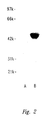
- the active fraction was identified by Western blots (Dale, J.B. and Beachey, E.H., "Multiple heart-cross-reactive epitopes of streptococcal M proteins," J. Exp. Med. 161 :113-122, 1985) using rabbit antiserum against pep M24 (Beachey et al., "Purification and properties of M protein extracted from group A streptococci with pepsin: Covalent structure of the amino terminal region of the type 24 M antigen," J. Exp. Med. 145 :1469-1483, 1977).
- Total protein concentration was determined by standard methods and the sample was diluted in PBS to contain 200 ug/ml of hexavalent protein. Purity of the samples was determined by gel scanning (Photoshop digital image and Collage image analysis).
- the structure of the hybrid emm gene was confirmed by doublestranded sequencing methods after ligation into pQE30.
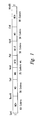
- the sequence of each subunit was identical to the respective native emm gene ( Figure 1).
- the fragments were joined only by the two amino acids specified by each unique restriction site used to facilitate their ligation ( Figure 1).
- hexavalent vaccine either precipitated with alum or emulsified in complete Freund's adjuvant.
- the hexavalent protein 200 ug/ml
- aluminum hydroxide 2mg/ml
- the hexavalent protein was also emulsified in CFA at a final concentration of 100 ug/ml.
- Rabbits that received the hexavalent vaccine in alum were given 100 ug I.M. as an initial injection and the same dose was repeated at 4, and 8 weeks.
- the second set of rabbits received 100 ug of hexavalent vaccine in CFA subcutaneously as an initial injection and then booster injections of the same dose in saline were given at 4 and 8 weeks. Blood was obtained prior to the first injection and at 2-week intervals thereafter.
- Antibody assays were performed using purified native pepsin-extracted M proteins (Beachey et al., "Purification and properties of M protein extracted from group A streptococci with pepsin: Covalent structure of the amino terminal region of the type 24 M antigen," J. Exp. Med. 145 :1469-1483, 1977) or the purified hexavalent protein, as previously described (Dale et al., "Heterogeneity of type-specific and cross-reactive antigenic determinants within a single M protein of group A streptococci," J. Exp. Med. 151 :1026-1038, 1980).
- Opsonic antibodies were detected by in vitro opsonization assays and indirect bactericidal assays (Beachey et al.. "Human immune response to immunization with a structurally defined polypeptide fragment of streptococcal M protein," J. Exp. Med. 150 :862-877, 1979).
- ELISA titers are defined as the inverse of the last dilution of antisera resulting in an OD of >0.1 at 450nm.
- the titers of immune sera against the native M antigen are most likely to predict the levels of antibodies that are evoked by the recombinant protein that will react with the M protein on the surface of the respective serotype of streptococcus (i.e. promote opsonization).
- Opsonic M protein antibodies correlate with protection against infection with the same serotype of group A streptococci (Lancefield, R.C., "Current knowledge of the type specific M antigens of group A streptococci,” J. Immunol. 89 :307-313, 1962; Lancefield, R.C., "Persistence of type-specific antibodies in man following infection with group A streptococci,” J. Exp. Med. 110 :271-282, 1959). Two related in vitro assays are used to detect opsonic antibodies in immune sera.
- the first is a screening assay that measures opsonization in mixtures of immune serum, whole, nonimmune human blood and the test organism (Beachey et al., "Purification and properties of M protein extracted from group A streptococci with pepsin: Covalent structure of the amino terminal region of the type 24 M antigen," J . Exp. Med. 145 :1469-1483, 1977).
- 0.1 ml of test serum is added to a standard number of bacteria and incubated for 15 minutes at room temperature.
- 0.4 ml of lightly heparinized human blood is added and the entire mixture is rotated end-over-end at 370 for 45 minutes.
- smears are prepared on microscope slides that are air-dried and stained with Wright's stain. "Percent opsonization” is quantitated by counting the percentage of polymorphonuclear leukocytes that have ingested or are associated with bacteria. An interpretable assay must have a preimmune control value that is 10% opsonization or less.
- Protective efficacy of M protein vaccines is determined by either indirect or direct (passive or active immunization) mouse protection tests. Indirect tests are performed by giving mice 1 ml of immune or preimmune serum via the intraperitoneal (i.p.) route 24 hours prior to challenge infections with the test organism given i.p. (Beachey et al., "Human immune response to immunization with a structurally defined polypeptide fragment of streptococcal M protein," J. Exp. Med. 150 :862-877, 1979). For each test organism, groups of 25 mice receive either preimmune of immune serum. The animals are then divided into 5 groups of 5 mice each and 10-fold increasing challenge doses of virulent streptococci are given to each subgroup. After 7 days of observation, the LD50 is calculated for each serotype tested.
- mice are actively immunized with M protein vaccine prior to the challenge infections.
- Each mouse receives 25-50ug vaccine in alum given intramuscularly (i.m.) at time 0, 4 weeks, and 8 weeks.
- Challenge infections are performed ten weeks after the first injection.
- Control animals are sham immunized with alum alone.
- the LD50 is calculated and significance is determined using Fisher's exact test.
- mice were immunized with the vaccine adsorbed to ALUM and then challenged with two of the serotypes represented in the vaccine.
- Female outbred white Swiss mice were immunized via the I.M. route in the hind leg according to the following schedule: time 0, 25ug; 3 weeks, 25 ug; 6 weeks, 50ug; and 13 weeks, 50ug.
- mice were challenged with an inoculum that approximated the LD 70 -LD 100 for each serotype, which was 2x10 4 CFU.
- the challenge experiments were begun 15 weeks after the first dose of vaccine was administered and deaths were recorded for 10 days.
- CFU Surviving 3 hr rotation: Serotype Inoculum(CFU) Preimmune Immune Percent Reduction 24 12 2890 0 100 5 11 3260 0 100 6 6 2640 0 100 19 6 1580 0 100 1 8 2670 490 82 3 11 1720 10 99
Landscapes
- Health & Medical Sciences (AREA)
- Chemical & Material Sciences (AREA)
- Life Sciences & Earth Sciences (AREA)
- General Health & Medical Sciences (AREA)
- Organic Chemistry (AREA)
- Medicinal Chemistry (AREA)
- Animal Behavior & Ethology (AREA)
- Pharmacology & Pharmacy (AREA)
- Veterinary Medicine (AREA)
- Public Health (AREA)
- Communicable Diseases (AREA)
- Molecular Biology (AREA)
- Genetics & Genomics (AREA)
- Oncology (AREA)
- Chemical Kinetics & Catalysis (AREA)
- General Chemical & Material Sciences (AREA)
- Nuclear Medicine, Radiotherapy & Molecular Imaging (AREA)
- Proteomics, Peptides & Aminoacids (AREA)
- Gastroenterology & Hepatology (AREA)
- Biochemistry (AREA)
- Biophysics (AREA)
- Immunology (AREA)
- Microbiology (AREA)
- Mycology (AREA)
- Epidemiology (AREA)
- Medicines Containing Antibodies Or Antigens For Use As Internal Diagnostic Agents (AREA)
- Peptides Or Proteins (AREA)
Claims (35)
- Fusionspolypeptid, umfassend:(a) einen multivalenten immunogenen Anteil, wobei der immunogene Anteil mindestens zwei immunogene Peptide umfasst, wobei jedes immunogene Peptid mindestens 10 Aminosäuren eines aminoterminalen Fragments eines M-Proteins aus Gruppe A-Streptokokken umfasst, und wobei der multivalente immunogene Anteil fähig ist, eine lmmunreaktion gegen Gruppe A-Streptokokken der auszulösen; und(b) ein carboxyterminales Peptid, bei dem es sich um die Wiederholung eines Peptids aus dem aminoterminalen Bereich des multivalenten Anteils handelt.
- Fusionspolypeptid gemäß Anspruch 1, wobei nur ein immunogenes Peptid wiederholt wird.
- Fusionspolypeptid gemäß Anspruch 1, wobei die lmmunreaktion gegen Gruppe A-Streptokokken opsonische Antikörper umfasst, die nicht mit menschlichem Gewebe kreuzreagieren.
- Fusionspolypeptid gemäß einem der Ansprüche 1 - 3, wobei das Fusionspolypeptid mindestens ein immunogenes Peptid aus einem aus 1, 2, 3, 4, 5, 6, 11, 12, 13, 14, 18, 19, 22, 24, 28, 30, 48, 49, 52, 55 und 56 ausgewählten Serotyp von Gruppe A-Streptokokken aufweist.
- Fusionspolypeptid gemäß einem der Ansprüche 1 - 3, wobei mindestens eines der immunogenen Peptide aus einer Gruppe A-Streptokokke des Serotyps 1 stammt.
- Fusionspolypeptid gemäß einem der Ansprüche 1 - 3, wobei mindestens eines der immunogenen Peptide aus einer Gruppe A-Streptokokke des Serotyps 2 stammt.
- Fusionspolypeptid gemäß einem der Ansprüche 1 - 3, wobei mindestens eines der immunogenen Peptide aus einer Gruppe A-Streptokokke des Serotyps 3 stammt.
- Fusionspolypeptid gemäß einem der Ansprüche 1 - 3, wobei mindestens eines der immunogenen Peptide aus einer Gruppe A-Streptokokke des Serotyps 5 stammt.
- Fusionspolypeptid gemäß einem der Ansprüche 1 - 3, wobei mindestens eines der immunogenen Peptide aus einer Gruppe A-Streptokokke des Serotyps 6 stammt.
- Fusionspolypeptid gemäß einem der Ansprüche 1 - 3, wobei mindestens eines der immunogenen Peptide aus einer Gruppe A-Streptokokke des Serotyps 11 stammt.
- Fusionspolypeptid gemäß einem der Ansprüche 1 - 3, wobei mindestens eines der immunogenen Peptide aus einer Gruppe A-Streptokokke des Serotyps 12 stammt.
- Fusionspolypeptid gemäß einem der Ansprüche 1 - 3, wobei mindestens eines der immunogenen Peptide aus einer Gruppe A-Streptokokke des Serotyps 13 stammt.
- Fusionspolypeptid gemäß einem der Ansprüche 1 - 3, wobei mindestens eines der immunogenen Peptide aus einer Gruppe A-Streptokokke des Serotyps 14 stammt.
- Fusionspolypeptid gemäß einem der Ansprüche 1 - 3, wobei mindestens eines der immunogenen Peptide aus einer Gruppe A-Streptokokke des Serotyps 18 stammt.
- Fusionspolypeptid gemäß einem der Ansprüche 1 - 3, wobei mindestens eines der immunogenen Peptide aus einer Gruppe A-Streptokokke des Serotyps 19 stammt.
- Fusionspolypeptid gemäß einem der Ansprüche 1 - 3, wobei mindestens eines der immunogenen Peptide aus einer Gruppe A-Streptokokke des Serotyps 22 stammt.
- Fusionspolypeptid gemäß einem der Ansprüche 1 - 3, wobei mindestens eines der immunogenen Peptide aus einer Gruppe A-Streptokokke des Serotyps 24 stammt.
- Fusionspolypeptid gemäß einem der Ansprüche 1 - 3, wobei mindestens eines der immunogenen Peptide aus einer Gruppe A-Streptokokke des Serotyps 28 stammt.
- Fusionspolypeptid gemäß einem der Ansprüche 1 - 3, wobei der immunogene Anteil aus sechs bis zehn immunogenen Peptiden besteht.
- Fusionspolypeptid gemäß einem der Ansprüche 1 - 3, wobei der immunogene Anteil aus sechs immunogenen Peptiden besteht.
- Fusionspolypeptid gemäß einem der Ansprüche 1 - 3 und 19 - 20, wobei jedes immunogene Peptid des immunogenen Anteils aus einem anderen Serotyp von Gruppe A-Streptokokken stammt.
- Fusionspolypeptid gemäß Anspruch 21, wobei es sich bei den Serotypen um 1, 3, 5, 6, 19 und 24 handelt.
- Fusionspolypeptid gemäß Anspruch 21, wobei es sich bei den Serotypen um 1, 3, 5, 6, 18, 19, 22, 24, 28 und 30 handelt.
- Fusionspolypeptid gemäß einem der Ansprüche 1 - 23, wobei die immunogenen Polypeptide des Fusionspolypeptids durch Aminosäuren, die durch eine Restriktionsenzymstelle kodiert werden, verbunden sind.
- Fusionspolypeptid gemäß einem der Ansprüche 1 - 24, ferner umfassend einen Marker.
- Fusionspolypeptid gemäß Anspruch 25, wobei der Marker fähig ist, an Nickelharz zu binden.
- Zusammensetzung, umfassend ein Fusionspolypeptid gemäß einem der Ansprüche 1 - 26 und einen pharmazeutisch verträglichen Exzipienten, Träger, Stabilisator oder ein pharmazeutisch verträgliches Verdünnungsmittel.
- Zusammensetzung gemäß Anspruch 27, ferner umfassend ein Adjuvans.
- Zusammensetzung gemäß Anspruch 28, wobei es sich bei dem Adjuvans um Alaun oder Freundsches Adjuvans handelt.
- Zusammensetzung gemäß einem der Ansprüche 27 - 29, ferner umfassend einen immunmodulatorischen Kofaktor.
- Zusammensetzung gemäß Anspruch 30, wobei der immunmodulatorische Kofaktor aus der Gruppe bestehend aus IL-4, IL-10, Y-IFN, IL-2, IL-12 und IL-15 ausgewählt ist.
- Fusionspolypeptid gemäß einem der Ansprüche 1 - 26 oder Zusammensetzung gemäß einem der Ansprüche 27 - 31 zur therapeutischen Verwendung.
- Verwendung eines Fusionspolypeptids gemäß einem der Ansprüche 1 - 26 oder einer Zusammensetzung gemäß einem der Ansprüche 27 - 31 zur Herstellung eines Medikaments zum Behandeln von Infektionen mit Gruppe A-Streptokokken.
- Verwendung gemäß Anspruch 33 wobei das Fusionspolypeptid oder die Zusammensetzung opsonische Antikörper auslöst.
- Verwendung gemäß Anspruch 34, wobei die opsonischen Antikörper nicht mit Wirtsgewebe kreuzreagieren.
Priority Applications (1)
| Application Number | Priority Date | Filing Date | Title |
|---|---|---|---|
| EP06026584A EP1801217A1 (de) | 1997-09-12 | 1998-09-14 | Streptokokken-Impfstoffgruppe |
Applications Claiming Priority (3)
| Application Number | Priority Date | Filing Date | Title |
|---|---|---|---|
| US5863597P | 1997-09-12 | 1997-09-12 | |
| US58635P | 1997-09-12 | ||
| PCT/US1998/019100 WO1999013084A1 (en) | 1997-09-12 | 1998-09-14 | Group a streptococcal vaccines |
Related Child Applications (1)
| Application Number | Title | Priority Date | Filing Date |
|---|---|---|---|
| EP06026584A Division EP1801217A1 (de) | 1997-09-12 | 1998-09-14 | Streptokokken-Impfstoffgruppe |
Publications (2)
| Publication Number | Publication Date |
|---|---|
| EP1003875A1 EP1003875A1 (de) | 2000-05-31 |
| EP1003875B1 true EP1003875B1 (de) | 2006-12-27 |
Family
ID=22018009
Family Applications (1)
| Application Number | Title | Priority Date | Filing Date |
|---|---|---|---|
| EP98946991A Expired - Lifetime EP1003875B1 (de) | 1997-09-12 | 1998-09-14 | Gruppe a streptokokken-impfstoff |
Country Status (8)
| Country | Link |
|---|---|
| EP (1) | EP1003875B1 (de) |
| JP (1) | JP2001515723A (de) |
| AT (1) | ATE349527T1 (de) |
| AU (1) | AU751009B2 (de) |
| CA (1) | CA2303478C (de) |
| DE (1) | DE69836744T2 (de) |
| ES (1) | ES2280101T3 (de) |
| WO (1) | WO1999013084A1 (de) |
Families Citing this family (16)
| Publication number | Priority date | Publication date | Assignee | Title |
|---|---|---|---|---|
| US7939087B2 (en) | 2000-10-27 | 2011-05-10 | Novartis Vaccines And Diagnostics, Inc. | Nucleic acids and proteins from Streptococcus groups A & B |
| GB2370770B (en) * | 2001-01-03 | 2005-06-01 | Simon Connolly | Uses of Streptococcus Vaccines |
| ATE557041T1 (de) | 2001-05-18 | 2012-05-15 | Us Gov Health & Human Serv | Peptid-vakzinen gegen streptokokken der gruppe a |
| AU2008203277B2 (en) * | 2001-05-18 | 2011-07-07 | The Government Of The United States Of America, As Represented By The Secretary, Department Of Health And Human Services, Centers For Disease Control And Prevention, Technology Transfer Office | Peptide vaccines against group A streptococci |
| AU2011232787B2 (en) * | 2001-05-18 | 2013-05-02 | The Government Of The United States Of America, As Represented By The Secretary, Department Of Health And Human Services, Centers For Disease Control And Prevention, Technology Transfer Office | Peptide vaccines against group A streptococci |
| WO2003004650A2 (en) | 2001-07-06 | 2003-01-16 | Shire Biochem Inc. | Group b streptococcus antigens and corresponding dna fragments |
| AU2002365184A1 (en) * | 2001-10-26 | 2003-07-30 | Id Biomedical Corporation Of Washington | Efficient protein expression system |
| US7255867B2 (en) | 2002-11-15 | 2007-08-14 | Id Biomedical Corporation Of Quebec | Vaccine |
| US7709009B2 (en) | 2003-07-31 | 2010-05-04 | Novartis Vaccines And Diagnostics, Srl | Immunogenic compositions for streptococcus pyogenes |
| US8945589B2 (en) | 2003-09-15 | 2015-02-03 | Novartis Vaccines And Diagnostics, Srl | Immunogenic compositions for Streptococcus agalactiae |
| WO2006078318A2 (en) | 2004-07-29 | 2006-07-27 | Novartis Vaccines And Diagnostics Inc. | Immunogenic compositions for gram positive bacteria such as streptococcus agalactiae |
| EP1807446A2 (de) | 2004-10-08 | 2007-07-18 | Novartis Vaccines and Diagnostics, Inc. | Immunogene und therapeutische zusammensetzungen für pyogene streptokokken |
| EP1857640A3 (de) | 2006-05-10 | 2010-05-05 | Silicon Fire AG | Neuartiger kaskadierter Kraftwerksprozess und Verfahren zum Bereitstellen von reversibel einsetzbaren Wasserstoffträgern in einem solchen Kraftwerksprozess |
| US8287885B2 (en) | 2007-09-12 | 2012-10-16 | Novartis Ag | GAS57 mutant antigens and GAS57 antibodies |
| NZ586430A (en) | 2007-12-21 | 2012-09-28 | Novartis Ag | Mutant forms of streptolysin o (slo) |
| CL2013002782A1 (es) * | 2013-09-27 | 2014-04-25 | Univ Pontificia Catolica Chile | Formulación inmunogénica para inducir la respuesta inmune en un sujeto que comprende una mezcla de bacterias no patógenas que expresan cada una un segmento hipervariable de la proteína m de diferentes streptococcus pyogenes; uso de la formulación para producir una vacuna; método para producir vacuna |
Family Cites Families (1)
| Publication number | Priority date | Publication date | Assignee | Title |
|---|---|---|---|---|
| DE69331733T2 (de) * | 1992-09-16 | 2002-08-22 | The University Of Tennessee Research Corp., Knoxville | Rekombinantes vielwertiges m-protein-vakzin |
-
1998
- 1998-09-14 DE DE69836744T patent/DE69836744T2/de not_active Expired - Lifetime
- 1998-09-14 AU AU93884/98A patent/AU751009B2/en not_active Expired
- 1998-09-14 ES ES98946991T patent/ES2280101T3/es not_active Expired - Lifetime
- 1998-09-14 AT AT98946991T patent/ATE349527T1/de not_active IP Right Cessation
- 1998-09-14 WO PCT/US1998/019100 patent/WO1999013084A1/en not_active Ceased
- 1998-09-14 CA CA002303478A patent/CA2303478C/en not_active Expired - Lifetime
- 1998-09-14 EP EP98946991A patent/EP1003875B1/de not_active Expired - Lifetime
- 1998-09-14 JP JP2000510869A patent/JP2001515723A/ja active Pending
Also Published As
| Publication number | Publication date |
|---|---|
| DE69836744T2 (de) | 2007-10-04 |
| WO1999013084A9 (en) | 1999-05-27 |
| EP1003875A1 (de) | 2000-05-31 |
| ATE349527T1 (de) | 2007-01-15 |
| JP2001515723A (ja) | 2001-09-25 |
| CA2303478C (en) | 2008-09-02 |
| WO1999013084A1 (en) | 1999-03-18 |
| AU751009B2 (en) | 2002-08-08 |
| DE69836744D1 (de) | 2007-02-08 |
| CA2303478A1 (en) | 1999-03-18 |
| AU9388498A (en) | 1999-03-29 |
| ES2280101T3 (es) | 2007-09-01 |
Similar Documents
| Publication | Publication Date | Title |
|---|---|---|
| US20090035259A1 (en) | Group a streptococcal vaccines | |
| US7074416B2 (en) | Antigen of hybrid M protein and carrier for group A streptococcal vaccine | |
| AU751009B2 (en) | Group A streptococcal vaccines | |
| US7960535B2 (en) | Recombinant lipidated PsaA protein, methods of preparation and use | |
| CN101855238B (zh) | 融合蛋白疫苗 | |
| US20150266934A1 (en) | Methods for protection against lethal infection with bacillus anthracis | |
| US9370557B2 (en) | Adjuvant compounds | |
| EP0625043B1 (de) | Rekombinantes vielwertiges m-protein-vakzin | |
| EP2292646A2 (de) | Kleine Streptococcus-pyogenes-Antigene und Verwendung dafür | |
| EP1801217A1 (de) | Streptokokken-Impfstoffgruppe | |
| HK1105787A (en) | Group a streptococcal vaccines |
Legal Events
| Date | Code | Title | Description |
|---|---|---|---|
| PUAI | Public reference made under article 153(3) epc to a published international application that has entered the european phase |
Free format text: ORIGINAL CODE: 0009012 |
|
| 17P | Request for examination filed |
Effective date: 20000315 |
|
| AK | Designated contracting states |
Kind code of ref document: A1 Designated state(s): AT BE CH CY DE DK ES FI FR GB GR IE IT LI LU MC NL PT SE |
|
| RAP1 | Party data changed (applicant data changed or rights of an application transferred) |
Owner name: DALE, JAMES B. |
|
| RAP1 | Party data changed (applicant data changed or rights of an application transferred) |
Owner name: THE UNIVERSITY OF TENNESSEE RESEARCH CORPORATION |
|
| 17Q | First examination report despatched |
Effective date: 20030410 |
|
| GRAP | Despatch of communication of intention to grant a patent |
Free format text: ORIGINAL CODE: EPIDOSNIGR1 |
|
| GRAS | Grant fee paid |
Free format text: ORIGINAL CODE: EPIDOSNIGR3 |
|
| GRAA | (expected) grant |
Free format text: ORIGINAL CODE: 0009210 |
|
| AK | Designated contracting states |
Kind code of ref document: B1 Designated state(s): AT BE CH CY DE DK ES FI FR GB GR IE IT LI LU MC NL PT SE |
|
| PG25 | Lapsed in a contracting state [announced via postgrant information from national office to epo] |
Ref country code: NL Free format text: LAPSE BECAUSE OF FAILURE TO SUBMIT A TRANSLATION OF THE DESCRIPTION OR TO PAY THE FEE WITHIN THE PRESCRIBED TIME-LIMIT Effective date: 20061227 Ref country code: LI Free format text: LAPSE BECAUSE OF FAILURE TO SUBMIT A TRANSLATION OF THE DESCRIPTION OR TO PAY THE FEE WITHIN THE PRESCRIBED TIME-LIMIT Effective date: 20061227 Ref country code: FI Free format text: LAPSE BECAUSE OF FAILURE TO SUBMIT A TRANSLATION OF THE DESCRIPTION OR TO PAY THE FEE WITHIN THE PRESCRIBED TIME-LIMIT Effective date: 20061227 Ref country code: DK Free format text: LAPSE BECAUSE OF FAILURE TO SUBMIT A TRANSLATION OF THE DESCRIPTION OR TO PAY THE FEE WITHIN THE PRESCRIBED TIME-LIMIT Effective date: 20061227 Ref country code: CH Free format text: LAPSE BECAUSE OF FAILURE TO SUBMIT A TRANSLATION OF THE DESCRIPTION OR TO PAY THE FEE WITHIN THE PRESCRIBED TIME-LIMIT Effective date: 20061227 Ref country code: AT Free format text: LAPSE BECAUSE OF FAILURE TO SUBMIT A TRANSLATION OF THE DESCRIPTION OR TO PAY THE FEE WITHIN THE PRESCRIBED TIME-LIMIT Effective date: 20061227 |
|
| REG | Reference to a national code |
Ref country code: GB Ref legal event code: FG4D |
|
| RAP1 | Party data changed (applicant data changed or rights of an application transferred) |
Owner name: UNIVERSITY OF TENNESSEE RESEARCH FOUNDATION |
|
| REG | Reference to a national code |
Ref country code: IE Ref legal event code: FG4D |
|
| REF | Corresponds to: |
Ref document number: 69836744 Country of ref document: DE Date of ref document: 20070208 Kind code of ref document: P |
|
| PG25 | Lapsed in a contracting state [announced via postgrant information from national office to epo] |
Ref country code: SE Free format text: LAPSE BECAUSE OF FAILURE TO SUBMIT A TRANSLATION OF THE DESCRIPTION OR TO PAY THE FEE WITHIN THE PRESCRIBED TIME-LIMIT Effective date: 20070327 |
|
| PG25 | Lapsed in a contracting state [announced via postgrant information from national office to epo] |
Ref country code: PT Free format text: LAPSE BECAUSE OF FAILURE TO SUBMIT A TRANSLATION OF THE DESCRIPTION OR TO PAY THE FEE WITHIN THE PRESCRIBED TIME-LIMIT Effective date: 20070528 |
|
| NLV1 | Nl: lapsed or annulled due to failure to fulfill the requirements of art. 29p and 29m of the patents act | ||
| REG | Reference to a national code |
Ref country code: CH Ref legal event code: PL |
|
| ET | Fr: translation filed | ||
| REG | Reference to a national code |
Ref country code: ES Ref legal event code: FG2A Ref document number: 2280101 Country of ref document: ES Kind code of ref document: T3 |
|
| PLBE | No opposition filed within time limit |
Free format text: ORIGINAL CODE: 0009261 |
|
| STAA | Information on the status of an ep patent application or granted ep patent |
Free format text: STATUS: NO OPPOSITION FILED WITHIN TIME LIMIT |
|
| 26N | No opposition filed |
Effective date: 20070928 |
|
| PG25 | Lapsed in a contracting state [announced via postgrant information from national office to epo] |
Ref country code: MC Free format text: LAPSE BECAUSE OF NON-PAYMENT OF DUE FEES Effective date: 20070930 Ref country code: GR Free format text: LAPSE BECAUSE OF FAILURE TO SUBMIT A TRANSLATION OF THE DESCRIPTION OR TO PAY THE FEE WITHIN THE PRESCRIBED TIME-LIMIT Effective date: 20070328 |
|
| PG25 | Lapsed in a contracting state [announced via postgrant information from national office to epo] |
Ref country code: IE Free format text: LAPSE BECAUSE OF NON-PAYMENT OF DUE FEES Effective date: 20070914 |
|
| PG25 | Lapsed in a contracting state [announced via postgrant information from national office to epo] |
Ref country code: LU Free format text: LAPSE BECAUSE OF NON-PAYMENT OF DUE FEES Effective date: 20070914 Ref country code: CY Free format text: LAPSE BECAUSE OF FAILURE TO SUBMIT A TRANSLATION OF THE DESCRIPTION OR TO PAY THE FEE WITHIN THE PRESCRIBED TIME-LIMIT Effective date: 20061227 |
|
| REG | Reference to a national code |
Ref country code: FR Ref legal event code: PLFP Year of fee payment: 18 |
|
| REG | Reference to a national code |
Ref country code: FR Ref legal event code: PLFP Year of fee payment: 19 |
|
| REG | Reference to a national code |
Ref country code: FR Ref legal event code: PLFP Year of fee payment: 20 |
|
| PGFP | Annual fee paid to national office [announced via postgrant information from national office to epo] |
Ref country code: FR Payment date: 20170925 Year of fee payment: 20 Ref country code: GB Payment date: 20170927 Year of fee payment: 20 Ref country code: IT Payment date: 20170925 Year of fee payment: 20 |
|
| PGFP | Annual fee paid to national office [announced via postgrant information from national office to epo] |
Ref country code: BE Payment date: 20170927 Year of fee payment: 20 |
|
| PGFP | Annual fee paid to national office [announced via postgrant information from national office to epo] |
Ref country code: DE Payment date: 20170927 Year of fee payment: 20 |
|
| PGFP | Annual fee paid to national office [announced via postgrant information from national office to epo] |
Ref country code: ES Payment date: 20171002 Year of fee payment: 20 |
|
| REG | Reference to a national code |
Ref country code: DE Ref legal event code: R071 Ref document number: 69836744 Country of ref document: DE |
|
| REG | Reference to a national code |
Ref country code: GB Ref legal event code: PE20 Expiry date: 20180913 |
|
| REG | Reference to a national code |
Ref country code: BE Ref legal event code: MK Effective date: 20180914 |
|
| PG25 | Lapsed in a contracting state [announced via postgrant information from national office to epo] |
Ref country code: GB Free format text: LAPSE BECAUSE OF EXPIRATION OF PROTECTION Effective date: 20180913 |
|
| REG | Reference to a national code |
Ref country code: ES Ref legal event code: FD2A Effective date: 20200721 |
|
| PG25 | Lapsed in a contracting state [announced via postgrant information from national office to epo] |
Ref country code: ES Free format text: LAPSE BECAUSE OF EXPIRATION OF PROTECTION Effective date: 20180915 |