EP1004100B1 - Dispositif portable electronique pour systeme de communication securisee, et procede d'initialisation de ses parametres - Google Patents
Dispositif portable electronique pour systeme de communication securisee, et procede d'initialisation de ses parametres Download PDFInfo
- Publication number
- EP1004100B1 EP1004100B1 EP98942753A EP98942753A EP1004100B1 EP 1004100 B1 EP1004100 B1 EP 1004100B1 EP 98942753 A EP98942753 A EP 98942753A EP 98942753 A EP98942753 A EP 98942753A EP 1004100 B1 EP1004100 B1 EP 1004100B1
- Authority
- EP
- European Patent Office
- Prior art keywords
- personalizing
- secret
- specific
- key
- per
- Prior art date
- Legal status (The legal status is an assumption and is not a legal conclusion. Google has not performed a legal analysis and makes no representation as to the accuracy of the status listed.)
- Expired - Lifetime
Links
Images

Classifications
-
- G—PHYSICS
- G07—CHECKING-DEVICES
- G07F—COIN-FREED OR LIKE APPARATUS
- G07F7/00—Mechanisms actuated by objects other than coins to free or to actuate vending, hiring, coin or paper currency dispensing or refunding apparatus
- G07F7/08—Mechanisms actuated by objects other than coins to free or to actuate vending, hiring, coin or paper currency dispensing or refunding apparatus by coded identity card or credit card or other personal identification means
- G07F7/10—Mechanisms actuated by objects other than coins to free or to actuate vending, hiring, coin or paper currency dispensing or refunding apparatus by coded identity card or credit card or other personal identification means together with a coded signal, e.g. in the form of personal identification information, like personal identification number [PIN] or biometric data
- G07F7/1008—Active credit-cards provided with means to personalise their use, e.g. with PIN-introduction/comparison system
-
- G—PHYSICS
- G06—COMPUTING OR CALCULATING; COUNTING
- G06Q—INFORMATION AND COMMUNICATION TECHNOLOGY [ICT] SPECIALLY ADAPTED FOR ADMINISTRATIVE, COMMERCIAL, FINANCIAL, MANAGERIAL OR SUPERVISORY PURPOSES; SYSTEMS OR METHODS SPECIALLY ADAPTED FOR ADMINISTRATIVE, COMMERCIAL, FINANCIAL, MANAGERIAL OR SUPERVISORY PURPOSES, NOT OTHERWISE PROVIDED FOR
- G06Q20/00—Payment architectures, schemes or protocols
- G06Q20/30—Payment architectures, schemes or protocols characterised by the use of specific devices or networks
- G06Q20/34—Payment architectures, schemes or protocols characterised by the use of specific devices or networks using cards, e.g. integrated circuit [IC] cards or magnetic cards
- G06Q20/341—Active cards, i.e. cards including their own processing means, e.g. including an IC or chip
-
- G—PHYSICS
- G06—COMPUTING OR CALCULATING; COUNTING
- G06Q—INFORMATION AND COMMUNICATION TECHNOLOGY [ICT] SPECIALLY ADAPTED FOR ADMINISTRATIVE, COMMERCIAL, FINANCIAL, MANAGERIAL OR SUPERVISORY PURPOSES; SYSTEMS OR METHODS SPECIALLY ADAPTED FOR ADMINISTRATIVE, COMMERCIAL, FINANCIAL, MANAGERIAL OR SUPERVISORY PURPOSES, NOT OTHERWISE PROVIDED FOR
- G06Q20/00—Payment architectures, schemes or protocols
- G06Q20/30—Payment architectures, schemes or protocols characterised by the use of specific devices or networks
- G06Q20/34—Payment architectures, schemes or protocols characterised by the use of specific devices or networks using cards, e.g. integrated circuit [IC] cards or magnetic cards
- G06Q20/355—Personalisation of cards for use
- G06Q20/3558—Preliminary personalisation for transfer to user
-
- G—PHYSICS
- G06—COMPUTING OR CALCULATING; COUNTING
- G06Q—INFORMATION AND COMMUNICATION TECHNOLOGY [ICT] SPECIALLY ADAPTED FOR ADMINISTRATIVE, COMMERCIAL, FINANCIAL, MANAGERIAL OR SUPERVISORY PURPOSES; SYSTEMS OR METHODS SPECIALLY ADAPTED FOR ADMINISTRATIVE, COMMERCIAL, FINANCIAL, MANAGERIAL OR SUPERVISORY PURPOSES, NOT OTHERWISE PROVIDED FOR
- G06Q20/00—Payment architectures, schemes or protocols
- G06Q20/38—Payment protocols; Details thereof
- G06Q20/40—Authorisation, e.g. identification of payer or payee, verification of customer or shop credentials; Review and approval of payers, e.g. check credit lines or negative lists
- G06Q20/409—Device specific authentication in transaction processing
- G06Q20/4097—Device specific authentication in transaction processing using mutual authentication between devices and transaction partners
Definitions
- the present invention relates generally to secure electronic communication systems and more particularly, to such systems in which portable devices secure electronics allow communication with and / or to access another electronic unit.
- Access control systems are notably described in the documents US-A-3 806 874, US-A-4 601 011, US-A-4 720 860, US-A-4 800 590 and US-A-5 060 263.
- the systems described in these documents make call to a secure electronic portable device which generates a goes by encrypting a variable.
- a verification unit performs the same calculation or a similar calculation on the same or approximately the same variable and authorizes access to the requested application if there is match between passwords generated in the portable device and the verification unit.
- the variable can be a random number or pseudo-random, hereinafter called random, transmitted from the verification unit portable device, or it can be generated independently in the portable device and the verification unit by means, for example, of a clock and / or event counter.
- the security of the system is based on the preservation of the secrecy of the key stored in both the portable device and the verification unit.
- the key can be static, i.e. it retains the same value for the life of the device portable.
- the key can be dynamic, i.e. it evolves over time depending, for example, on the content of a counter incremented by a clock signal and / or an event counter.
- the key Whether the key is static or dynamic, it must have initially, that is to say when personalizing the device, a determined value that is stored both in the portable device electronically and in a database associated with the verification unit.
- a user When a user makes an access request, he must in a way or another, for example by means of a public identification number or a personal identification number (PIN), identify yourself to the verification unit which obtains the static key from the database or, if it is a dynamic key, any information that may be required to calculate the current key.
- PIN personal identification number
- this or these keys and other data of secret personalizations are loaded into memory in the device by the entity which delivers the device to the end user.
- this personalization data it is known, in particular from document WO 93/10509, to allow the supplier a memory card to replace a new master key to access data from personalization with the initial key that was implemented by the card manufacturer.
- the invention has among other objects to provide a portable electronic device secure communication with another electronic unit which ensures such independence of functions.
- this object is achieved by means of a portable device secure communication electronics as defined in claim 1 and subclaims 2 to 12.
- the subject of the invention is also, according to claim 13 and to subclaims 14 to 18, a method of initializing such a portable device secure electronic communications.
- said system further comprises a production parameters initialization tool for initial loading in each of said devices of a reprogrammable secret data specific to each device and representative of said secret access code for specific personalization.
- the invention relates to a secure communication system comprising a set of devices comprising means as defined above for the implementation of authentication mechanisms and at least one unit of verification.
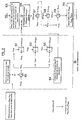
- the access control system shown in Figure 1 is assumed give conditional access to an application which is symbolized by the rectangle 1.
- the term "application” must be taken in a very large. It designates any application to which access is conditioned by a authorization involving authentication involving a verification of the device (card) using which the request is made, and preferably also an identification of the person requesting access to the application to know if his request is legitimate.
- the application can be of any kind, for example control access to a room, a computer network or a computer, setting up work of a pecuniary or other transaction (teleshopping, bank at home, interactive TV games, pay TV), etc. authentication of people and / or messages (electronic signature) expressly falls within the scope of the present invention.
- the system of access control includes a first unit or portable device 2 also hereinafter called “map" and at least a second unit of verification 3.
- the access control system according to the invention can have a large number of cards 2 and one or more units of verification 3, but in any case in a generally lower number.
- the numbers of cards 2 and units 3 are in no way limiting of the invention.
- Card 2 is for example in the form of a calculator or a credit card and it has a keyboard 4 intended to allow the introduction of information, such as for example a number PIN personal identification, as well as various function keys 5. It also includes a display screen 6, for example with crystals liquids, and has an integrated electronic circuit comprising a programmed microcontroller 7 as well as a permanent ROM 8 ROM type and a reprogrammable memory 9 consisting of RAM memory and possibly EEPROM memory. Memory permanent 8 and reprogrammable memory 9 are inaccessible from the outside of the card and the data and address buses of the microcontroller 7 are also inaccessible from the outside so as to make fraudulent reading or modification impossible, since outside, information contained in memories 8 and 9.
- Permanent memory area 8 includes an area program and a given area.
- the reprogrammable memory area 9 of RAM type and possibly EEPROM stores the information described below:
- This data is structured according to security levels and according to applications, the modification of a data zone is conditioned by authentication of the entity requesting personalization: code access according to a hazard generated by the card, signature, ...
- the card 2 also includes a communication device 10 allowing communication with the verification unit 3, or with a manufacturing tool or a customization tool as will be described in the following, either directly or by a transmission link to more or less long distance.
- This communication device 10 can be present in many aspects, for example a cable link bidirectional, a bidirectional DTMF telephone link, a bidirectional link by infrared rays, bidirectional link called "in online mode" in which the card is inserted in a reader appropriate, optical reception means associated, in unit 3, with means for reading information displayed on the screen 6 as described by example in document EP-A-0 399 897, or any other device for transmission well known in the art.
- a source of electrical energy (not shown), by example an electric cell of reduced dimensions, is provided for supply the various circuits of card 2 and allow its operation autonomous.
- Unit 3 first of all includes interface means allowing ensure communication with card 2 by means of the communication 10.
- interface means symbolized by a rectangle 12
- the particularity of these interface means 12 is that they allow communication with the card (s) 2 which are assigned to them associated via the communication device 10.
- the interface means 12 can also include a keyboard 13 and a display screen 14 to allow a user to enter information to be communicated to part 15 of unit 3, such as by example of passwords or data to be authenticated relating to application 1.
- information to be communicated to part 15 of unit 3 such as by example of passwords or data to be authenticated relating to application 1.
- the introduction of this data can be carried out in other ways, including automatically without intervention user manual, for example by simply introducing the card 2 in interface 12 or by emission of modulated infrared rays controlled by means of one of the function keys 5.
- the interface 12 communicates with the part 15 of the unit 3 which is will call "server".
- This communication symbolized by the connection 16 can be done at short or long distance by any suitable means.
- the information circulating on this connection are in particular the password to check in server 15 and possibly data to authenticate and to operate in the server.
- the server 15 comprises in particular a processor 17 and a memory 18.
- the processor 17 is capable of conditionally releasing the applications 1, targeted by access requests made by cards 2.
- the microcontroller 7 of the card 2 is programmed to ensure, in link with verification unit 3, communications security in the sense wide, for example the authentication of a user with card 2, the message certification, securing transactions, etc. authentication, certification, etc. mechanisms are well known to technical specialists and they will not be described in detail in the this request. These mechanisms use encryption and / or decryption in card 2 and / or in unit 3 of one or more information by a public key and private key algorithm or a secret key algorithm, keys that are stored in memory programmable 9 associated with microcontroller 7 and / or in memory 18 of the "server" 15.
- an authentication procedure using a secret key algorithm consists, after the user has identified himself with the verification unit, of encrypting a variable in parallel in the card. 2 and in the verification unit 3 by means of this algorithm and a shared secret key K SEA and then to compare, generally in the verification unit 3, the two passwords A SEA resulting from the encryption of this variable .
- this variable is a random number generated by the verification unit 3 and transmitted to the card 2.
- this variable is dynamic, that is to say it acts of a number which, in the card 2 and the unit 3, evolves in time according to the contents of a clock counter and / or an event counter.
- Synchronous systems assume, with certain tolerances, a concordance between the contents of the clock and / or event counters of card 2 and the content, at the address associated with card 2, of a database forming part of the verification unit 3 or to which it has access for the implementation of the authentication process.
- Detailed examples of these authentication mechanisms are given, for example, in document EP-A-0 338 936 and in French patent application No. 96 04797 filed on April 17, 1996 (FR-A-2747814) to which can refer.
- the secret encryption key (s) and / or decryption stored in the card 2 and the server 15 can be static, i.e. they keep the same value for the entire duration of the product, or dynamic, that is to say that their value evolves over time.
- the value of dynamic keys can itself be a function of the content of clock counters and / or events such as described for example in French patent application No. 96 04798 filed on April 17, 1996 (FR-A-2747815).
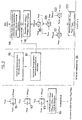
- Figure 2 is a diagram illustrating the mechanisms of initialization in production of the data or parameters, hereinafter called production parameters, which are common to a batch of cards intended for a given customer.
- the left column shows the operations carried out by the card supplier, i.e. the entity which is responsible for providing the security system to the customer.
- the middle column illustrates the operations that are implemented by a tool 20 for manufacturing cards 2, the manufacturer may or may not be the same entity as the supplier.
- the right column illustrates the operations that are implemented in card 2.
- the manufacturing tool 20 used by the manufacturer includes hardware and software conventional that there is no need to describe here and which allow, between others, to develop a certain number of data and to transmit them to cards 2 to program the programmable memory 9.
- the K ROM key is defined by the supplier and is known only to him. This key K ROM is located in the permanent read-only memory 8 of the cards during the masking of the integrated circuits, but it is not known to the manufacturer of the cards 2 if the latter is not the same entity as the supplier. To this end, it can for example be embedded in encrypted form in the control software of the card manufacturing tool.
- the K PEM , K ALE and K MES keys are also chosen by the supplier and entered in encrypted form by the latter in the control software of the manufacturing tool. The values of these three keys are communicated confidentially to the customer, preferably separately from the batch of cards intended for him.
- the K PEM key is a personalization master key which, as will be described below, makes it possible to generate a personalization key specific to each card as a function of its serial number.
- the K ALE key is a key allowing the cards to generate randomness and the K MES key is a key which makes it possible to load an alphabet and messages in the cards.
- the serial number NS associated with a given card is read by the manufacturing tool 20 and this number NS is subjected by an algorithm to an encryption operation E using the K PEM personalization master key (block 100).
- the result of this encryption is a specific personalization key specific to the card, K PER which is subjected in 101 by means of an algorithm and the key K ROM to an inverse operation E-1 to produce a datum E (K PER ).
- the key K PER is used in 102 and 103 to generate data E (K MES ) and E ( KALE ), from the keys K MES and K ALE respectively, thanks to the reverse operation E-1.
- the production parameters include the NS serial number, the output data from blocks 101, 102 and 103, and the state of an internal clock counter of the manufacturing tool allowing to initialize a clock counter of card 2, in particular if the system implements dynamic variables and / or keys.
- step 106 the card 2 receives the manufacturing frame consisting of the data listed above (block 104).
- the microcontroller 7 calculates at 107 by the operation E the key K PER from the data item E (K PER ) and the key K ROM . It also calculates by operation E, in 108 the key K MES from the data E (K MES ) and the key K PER , and in 109 the key K ALE from the data E (K ALE ) and of the key K PER .
- step 110 the serial number NS and the keys K PER , K ALE and K MES , are stored in memory and the card is ready to be transmitted to a client for personalization.
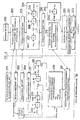
- FIG. 3 describes an alternative embodiment of the process for initializing the production parameters which has the advantage of not introducing the K ROM key and the K PEM key into the software for initializing the production parameters of the manufacturing tool 20.
- the supplier uses its own software, calculates the data E (K PER ), E (K MES ) and E (K ALE ) from, respectively, K PER , K MES and K ALE data , and the K ROM key. After the calculation of these data at 111, 112 and 113 by an operation E-1, these are introduced by the supplier into the software for initializing the production parameters of the manufacturing tool (step 114).
- the manufacturing tool 20 After reading the serial number of the card concerned by the tool 20 at 115, and after resetting the parameters and initializing the internal parameters of the card at 116, the manufacturing tool 20 transmits the production parameters to the card (step 117): this is the serial number NS, the data E-1 (K PER ), E-1 (K MES ) and E-1 (K ALE ), as well as the state of the counter d internal clock.
- the microcontroller 6 calculates by operation E the key K PEM using the data item E (K PEM ) and the key K ROM (step 119). It then calculates the personalization key specific to the card, K PER , by the operation E using the data NS and the personalization master key K PEM (step 120).
- the microcontroller 7 calculates at 121 and 122 by the operation E the keys K ALE and K MES from the data E (K ALE ) and E (K MES ) respectively and from the key K ROM stored in the permanent memory 8 from the menu.
- the data NS, K PER , K ALE and K MES are stored in the programmable memory 9 of the card 2. These data are the same as those obtained by the initialization process of the production parameters described in look at figure 2.
- each card contains in memory the keys K ALE and K MES which are common to this batch of cards, as well as the key K PER and the serial number NS which are specific to it.
- each card 2 contains in memory a code or number to identify the version of software that has been implemented, when their masking, in the integrated circuits of this card.
- the software version implemented may be different and, within the same batch of cards intended for a customer, he can possibly there are several groups of cards equipped with versions different software depending on the needs expressed by the customer as to the use of these cards.
- the code or number of each version of the software implanted in the cards delivered to it is supplied by the supplier to customer. The latter also has the software (s) necessary for the personalization of its cards according to the version of the software installed in these.
- L personalization tool 30 has a structure similar to that of the verification unit 3, that is to say that it comprises means of communication with the cards 2, an information processing processor, memories containing in particular the software or software necessary for personalizing the cards as a function of the version of the software installed in them, and a database containing the values of the keys K PEM , K ALE and K MES and the personalization parameters to be loaded into cards 2 depending on the software version installed in them.
- step 200 the card is in a waiting state a communication opening frame from the communication tool customization.
- the personalization tool opens the communication with the card to be personalized and transmits the opening frame of INIT-MAT communication.
- step 202 the card receives the frame INIT-MAT communication opening and transmits to the personalization of an IDENT-MAT identification frame including the code or the version number of the software it contains.
- step 203 the personalization 30 receives the IDENT-MAT identification frame and the software version number is applied to the database to read from, among other things, the personalization parameters to be loaded into the card.
- the personalization tool 30 transmits an initialization frame INIT-LOG software received at 205 by the card, which then goes to step 206.
- the card calculates by the operation E a hazard using the key K ALE (block 207), then the data item E (NS) by encryption of the serial number NS of the card by means of a key which is itself the result of the encryption by a logical function F of the version number of the software NL by means of the hazard calculated in 207.
- the card transmits in 210 a frame of IDENT-LOG identification containing the hazard and E (NS).
- This frame is received in 211 by the personalization tool 30 which, by an operation F in 212 on the NL number by means of the hazard transmitted from the card and an operation E-1 in 213 on E (NS) by means of the result of the operation performed in 212, generates the NS serial number of the card.
- the NS serial number of the card being personalized is applied to the database to allow the customer to keep a table of personalization data for each card.
- the personalization tool calculates the key K PER specific to the card by an encryption operation E of the serial number NS by means of the personalization master key K PEM which is provided by the tool's database. 30
- the tool calculates in 215 an authentication password A PO (which constitutes the access code for personalizing the card) by encryption F of the hazard using the key K PER :
- a PO F [K PER ] (Random).
- the personalization tool constructs the common personalization data of the card from the password calculated at 215 and the personalization parameters received from the database.
- These common personalization data include personalization control codes, the password A PO for authentication of the personalization tool, a new secret personalization key specific to the NK PER card intended to be substituted for the personalization key.
- step 217 this personalization data is transmitted to the card in the form of several frames.
- the card receives the personalization frames, checks customization control codes, stores received data and sends an acknowledgment to the personalization tool.
- the card calculates a code or password A PC for verifying the authentication password A PO by encryption of the hazard according to the logical function F by means of the specific personalization key K PER stored in his memory in 110 or 123:
- a PC F [K PER ] (Random).
- step 220 the card verifies that the authentication password A PO received from the personalization tool 30 is consistent with the verification password A PC calculated by the card and, if so, stores it the personalization data in 221: this consistency can consist, for example, in that the two passwords are identical as shown in FIG. 4, but it can also reside in the fact that these two passwords are linked by a other predetermined relationship.
- the card replaces the new personalization key NK PER received from the personalization tool with the old key K PER .
- This new NK PER key is not known to the supplier, who will now be unable to access customer personalization data.
- the general administrator can transmit the cards to the local administrators of the sites X, Y, etc., who, each by means of the respective secondary keys K PERX , K PERY , etc., will be able to , by a process similar to that of FIG. 4 which there is no need to describe again in detail, to load into the card the personalization parameters specific to the site for which they are responsible.
- the secondary key specific to the personalization of the card for each site will have been communicated confidentially by the general administrator to the local administrator concerned.
- the local administrator will load into the card the personalization data specific to the site concerned, for example an authentication key for calculating an authentication password vis- vis-à-vis a verification unit of this site.
- the local administrator will have the possibility, in the card, of replacing the secondary personalization key K PERX received from the general administrator for the site concerned with a new secondary personalization key NK PERX , as described in FIG. 4.
- the modification of the secondary keys also ensures sealing between the different segments or functions of the card.
- K PERX , K PERY , etc ... replaced by NK PERX , NK PERY , etc ...), one protects oneself against an attack aiming to write other secret data in the segments. This type of attack is limited, since it will not be possible to read this secret data even if we have the corresponding secondary secret key for personalization. But this guarantees exclusive access to the personalization of each segment, as we guarantee exclusive access to common personalization data with the key K PER , NK PER .
- the key K PER , NK PER specific to the card allows, after personalization of the segments by means of the secondary keys K PERX , K PERY , NK PERX , NK PERY , to overwrite the latter in order to perform, if necessary, a new initialization process for all of the card's personalization parameters.
- This possibility can be useful, in the event of an anomaly, to prevent the device from being permanently rendered unusable.
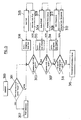
- FIG. 5 illustrates the main phases of the program which takes place in a card 2 provided with several segments which, after initializing the personalization parameters common, must be initialized with personalization parameters specific to them with a view to implementing, by means of the card, functions specific to each segment.
- the program begins in 300 and in 301 a test is carried out for determine if this is the first start-up of the card after delivery to zero ("RESET").
- the memory is reset to zero in 302, then takes a 303 test to determine if a flag representative of the initialization of parameters in production (parameters initialized by the manufacturer) is active. If the answer to test 301 is negative, we pass directly to test 303.
- step 304 the program starts in a waiting state for initialization of production parameters (step 304).
- step 305 corresponds to the initialization in card 2 of the production parameters as described with reference to Figures 2 or 3.
- a flag is activated in step 306 and the program returns to the input of test 303.
- step 307 determines whether a flag representative of the initialization by the client of the common personalization parameters is active. If the answer is negative, the program goes into a waiting state for initialization of the common personalization parameters (step 308).
- step 309 corresponds to the initialization in the card 2 of the common personalization parameters as described with reference to FIG. 4.
- These common personalization parameters include inter alia the reprogrammable personalization keys K PERX , K PERY specific to each segment or function.
- Step 311 corresponds to the initialization in the card 2 of the personalization parameters specific to the segments.
- This initialization is subject, for each segment, to the supply to the card of a correct access code A PX , A PY , function of the key K PERX , K PEY assigned to this segment and of a hazard provided by the map to the personalization tool as described with reference to FIG. 4.
- this initialization can be carried out by the general administrator or by local administrators at different geographic sites, as described above.
- the administrator responsible can substitute a new special personalization key NK PERX , NK PERY for the initial personalization key K PERX , K PERY which, for the segment considered, had was loaded in step 309.
- NK PERY Only the holder of this new NK PERX key, NK PERY can generate the new access code NA PX , NA PY and access later (read and / or write depending on the programming of the means of processing) to the personalization data specific to the corresponding segment, and the holder of the specific personalization key K PER (or NK PER if it has been modified), will not have access to it if he does not know the new key special customization.
- step 314 When the initialization of personalization parameters for all the segments is completed, a flag is activated in step 314, the response to test 311 is positive and the program goes to step 315 which represents access for the end user to the various functions of the card implemented by its program.
- the invention is not limited to the implementation of symmetric secret key algorithms, and it applies also in the case where the parameters initialization mechanisms of the card use asymmetric public key and key algorithms Private.
- the public key is stored in the card or device 2
- the hazard is always generated in device 2
- the private key is stored in a personalization tool or in a smart card used by the customization tool.
Landscapes
- Engineering & Computer Science (AREA)
- Business, Economics & Management (AREA)
- General Physics & Mathematics (AREA)
- Physics & Mathematics (AREA)
- Accounting & Taxation (AREA)
- Theoretical Computer Science (AREA)
- Strategic Management (AREA)
- General Business, Economics & Management (AREA)
- Microelectronics & Electronic Packaging (AREA)
- Computer Networks & Wireless Communication (AREA)
- Computer Security & Cryptography (AREA)
- Finance (AREA)
- Storage Device Security (AREA)
- Mobile Radio Communication Systems (AREA)
- Control Of Vending Devices And Auxiliary Devices For Vending Devices (AREA)
- Transceivers (AREA)
Description
- de données de personnalisation communes aux différentes fonctions dudit dispositif,
- desdites données de personnalisation particulières et
- desdites données secrètes particulières.
- identification du porteur
- authentification du porteur vis-à-vis de l'unité de vérification
- authentification de l'unité de vérification et de l'unité de personnalisation
- authentification de message
- chiffrement/déchiffrement
- éventuellement signature électronique
- ..........
- lors de la fabrication
- lors des différentes personnalisations chez le ou les clients
- communication avec l'utilisateur : affichage, clavier,
- communication avec l'unité de vérification ou de personnalisation
- infrarouge
- DTMF
- communication avec un lecteur
- communication avec une carte à puce
- etc.....
- clés secrètes de personnalisation
- clés secrètes relatives aux mécanismes de sécurité : authentification d'entité, authentification de message, génération d'aléas,
- données relatives à l'application : contenu des messages, types de mécanismes de sécurité requis,.....
- données relatives à l'exploitation de la carte dans une application donnée : longueur exigée pour le numéro d'identification personnel (PIN), longueur de l'aléa, format du code d'accès,.....
- données communes à toutes les applications : valeur du PIN, valeur de l'horloge, valeur des compteurs, contenu des messages standards.
- le fabricant ou le fournisseur qui vend le système de sécurité au client ;
- un administrateur général, qui peut être le responsable sécurité du client, lequel peut avoir plusieurs sites géographiques, chaque site possédant sa propre organisation de gestion du système de sécurité qui est indépendante de celle des autres sites ;
- des administrateurs locaux responsables chacun de l'organisation du système de sécurité de l'entreprise au niveau d'un site géographique ; et
- les utilisateurs finaux qui seront chacun détenteur d'une carte 2 et qui utiliseront celle-ci au niveau d'un ou plusieurs sites géographiques déterminés.
- d'une part que le fabricant ou le fournisseur initialise en production un certain nombre de paramètres communs à un lot de cartes destiné à un client donné qui seul pourra initialiser ses paramètres de personnalisation dans les cartes ;
- d'autre part assurer le caractère irréversible de l'opération de personnalisation par le client : une fois que l'administrateur général a personnalisé les cartes, ces dernières ne doivent plus pouvoir être utilisées par le fournisseur ou le fabricant.
- un administrateur local X ne pourra initialiser que les paramètres de personnalisation du site X : le fait de pouvoir initialiser les paramètres de personnalisation du site X n'entraíne pas la possibilité d'initialiser les paramètres de personnalisation du site Y, ni de connaítre les paramètres de personnalisation du site Y ;
- le fait d'être administrateur général n'entraíne pas la connaissance des paramètres de personnalisation des différents sites, ceci afin d'assurer l'indépendance de la gestion au niveau de chaque site.
Claims (21)
- Dispositif portable électronique sécurisé de communication avec au moins une unité électronique, pour la mise en oeuvre d'au moins une fonction, comprenant :des moyens de mémorisation de données (8, 9),des moyens d'interface avec au moins un outil extérieur pour charger des données dans lesdits moyens de mémorisation,des moyens de traitement de données (7) comprenant des moyens d'initialisation pour permettre, en réponse à l'application d'un code secret d'accès en personnalisation spécifique audit dispositif (APO), la modification dudit code d'accès spécifique et le chargement de données de personnalisation dans lesdits moyens de mémorisation, caractérisé en ce que ledit dispositif est adapté à la mise en oeuvre d'une pluralité de fonctions (X, Y, .....) et comporte :des premiers moyens (7, 309) commandés par ledit code secret d'accès en personnalisation spécifique (APO), pour charger dans lesdits moyens de mémorisation (9) une pluralité de données secrètes particulières reprogrammables (KPERX, KPERY, .....) représentatives respectivement de codes secrets d'accès en personnalisation particuliers différents les uns des autres (APX, APY,.....) et affectés chacun à la personnalisation d'une fonction particulière (X, Y,.....) dudit dispositif,des seconds moyens (7, 313) commandés par lesdits codes secrets d'accès en personnalisation en particuliers (APX, APY .....) pour charger dans lesdits moyens de mémorisation (9) des données de personnalisation particulières (KSEAX, KSEAY, .....) affectées respectivement à la mise en oeuvre desdites fonctions (X, Y, .....) par lesdits moyens de traitement (7), etdes moyens d'inhibition (7 ; 313) adaptés pour n'autoriser la modification de l'une quelconque desdites données secrètes particulières (KPERX, KPERY, .....) consécutivement à son chargement dans lesdits moyens de mémorisation et ledit chargement desdites données de personnalisation (KSEAX, KSEAY, .....) particulières à une fonction (X, Y, .....) qu'en réponse à l'application de celui (APX, APY, .....) desdits codes secrets d'accès en personnalisation particuliers déjà affecté à ladite fonction (X, Y, ....).
- Dispositif selon la revendication 1, caractérisé en ce que lesdits moyens d'inhibition (7) sont adaptés pour interdire l'accès en lecture à l'une quelconque desdites données secrètes (KPER, KPERX, KPERY.....).
- Dispositif selon l'une quelconque des revendications 1 et 2, caractérisé en ce que lesdits moyens d'inhibition sont adaptés pour interdire l'accès en lecture et en écriture desdits moyens de traitement (7) auxdites données de personnalisation particulières (KSEAX, KSEAY, .....) par l'intermédiaire dudit code secret d'accès en personnalisation spécifique (APO, NAPO).
- Dispositif selon l'une quelconque des revendications 1 à 3, caractérisé en ce que lesdits moyens d'inhibition sont adaptés pour interdire l'accès en lecture desdites données de personnalisation particulières (KSEAX, KSEAY, .....) consécutivement au chargement desdites données au moyen desdits codes secrets d'accès en personnalisation particuliers (APX, APY .....) affectés auxdites fonctions (X, Y, .....).
- Dispositif selon l'une quelconque des revendications 1 à 3, caractérisé en ce que lesdits moyens d'inhibition sont adaptés pour autoriser l'accès en lecture de données de personnalisation (KSEAX, KSEAY, .....) particulières à une fonction (X, Y, .....) au moyen du code secret d'accès en personnalisation particulier (APX, APY, NAPX, NAPY, .....) affecté à ladite fonction.
- Dispositif selon l'une quelconque des revendications 1 à 5, caractérisé en ce que lesdits moyens de traitement (7) sont adaptés pour autoriser, au moyen dudit code secret d'accès en personnalisation spécifique (APO, NAPO), l'effacement desdites données secrètes particulières (KPERX, KPERY, ....) et desdites données de personnalisation particulières (KSEAX, KSEAY, ....) préalablement chargées dans lesdits moyens de mémorisation et le chargement de nouvelles données secrètes particulières (NKPERX, NKPERY, .....).
- Dispositif selon l'une quelconque des revendications 1 à 6, caractérisé en ce que ledit code secret d'accès en personnalisation spécifique (APO) est un code d'accès au chargement dans lesdits moyens de mémorisation de données de personnalisation (Param-perso) communes à l'ensemble desdites fonctions (X, Y, .....) du dispositif.
- Dispositif selon l'une quelconque des revendications 1 à 7, caractérisé en ce qu'il comprend des troisièmes moyens (7, 305) de chargement dans lesdits moyens de mémorisation d'une donnée secrète spécifique reprogrammable (KPER) représentative dudit code secret d'accès en personnalisation spécifique (APO), lesdits moyens d'initialisation (7, 200-222) étant adaptés pour n'autoriser le remplacement de ladite donnée secrète spécifique (KPER) par une nouvelle donnée secrète spécifique (NKPER), représentative d'un nouveau code secret d'accès en personnalisation spécifique (NAPO), qu'en réponse à l'application auxdits moyens de traitement (7) du code secret d'accès spécifique (APO) image de ladite donnée secrète spécifique (KPER) à remplacer.
- Dispositif selon la revendication 8, caractérisé en que les lesdits moyens de mémorisation comprennent au moins une mémoire permanente (8) dans laquelle est stockée une clé secrète de base (KROM), lesdits moyens d'initialisation (7) comprenant des premiers moyens (7, 107) pour calculer une valeur initiale de ladite donnée secrète spécifique (KPER) en fonction de ladite clé secrète de base (KROM) et d'un paramètre secret initial (E(KPER) ; E(KPEM)).
- Dispositif selon l'une quelconque des revendications 1 à 9, caractérisé en ce que ladite donnée secrète (KPER, NKPER) est une clé secrète de calcul d'un code (APC, NAPC) de vérification du code d'accès en personnalisation spécifique (APO; NAPO) dont ladite donnée secrète est représentative.
- Dispositif selon la revendication 10, caractérisé en ce que lesdits moyens de traitement (7) comprennent des seconds moyens pour calculer ledit code de vérification (APC, APX, APY) par chiffrement d'une variable au moyen de ladite clé secrète de calcul (KPER, KPERX, KPERY,....).
- Dispositif selon l'une quelconque des revendications 1 à 11, caractérisé en ce que lesdites données de personnalisation comprennent au moins une pluralité de clés secrètes d'authentification (KSEAX, KSEAY) différentes les unes des autres et affectées chacune à l'une desdites fonctions et en ce que lesdits moyens de traitement (7) comprennent des troisièmes moyens pour calculer un code d'authentification (APEA) vis-à-vis d'une unité de vérification (3) en fonction de l'une desdites clés secrètes d'authentification (KSEAX, KSEAY).
- Procédé d'initialisation d'un dispositif selon l'une quelconque des revendications 1 à 12, caractérisé en ce qu'il comprend :un premier stade d'initialisation (100-110 ; 111-123) consistant à définir et à stocker dans lesdits moyens de mémorisation (9) une clé secrète de personnalisation reprogrammable (KPER) spécifique audit dispositif,un deuxième stade de personnalisation (201-222) consistant, au moyen d'un code secret d'accès en personnalisation spécifique (APO) fonction de ladite clé de personnalisation spécifique (KPER), à charger dans lesdits moyens de mémorisation des données de personnalisation (Param-perso) communes auxdites fonctions et des clés secrètes reprogrammables particulières (KPERX, KPERY) de calcul desdits codes secrets d'accès en personnalisation particuliers (APX, APY) affectés chacun au chargement de données de personnalisation particulières relatives à l'une desdites fonctions (X, Y), et à modifier ladite clé de personnalisation spécifique (KPER), etun troisième stade de personnalisation (313) consistant, pour chacune desdites fonctions (X, Y), à charger dans lesdits moyens de mémorisation, au moyen du code secret d'accès en personnalisation particulier correspondant (APX, APY), les données de personnalisation (KSEAX, KSEAY, .....) relatives à ladite fonction.
- Procédé selon la revendication 13, caractérisé en ce que ledit troisième stade comprend l'étape consistant, lors du chargement des données de personnalisation particulières relatives à au moins l'une desdites fonctions (X, Y), à modifier ladite clé secrète particulière (KPERX, KPERY) de calcul dudit code secret d'accès particulier (APX, APY) affecté à ladite fonction.
- Procédé selon l'une quelconque des revendications 13 et 14, caractérisé en ce que le premier stade d'initialisation comprend :au moins une première phase d'initialisation consistant à définir au moins une donnée secrète (KPEM ; E(KPEM)) commune à un ensemble de dispositifs destinés à une même entité,au moins une deuxième phase d'initialisation comprenant les étapes consistant, pour chaque dispositif dudit ensemble, à :a) lire une donnée d'identification (NS) spécifique portée par ledit dispositif,b) calculer une première clé secrète de personnalisation spécifique (KPER) en fonction de ladite donnée secrète commune (KPEM ; E(KPEM)) et de ladite donnée d'identification (NS),c) stocker ladite donnée d'identification (NS) et ladite première clé de personnalisation spécifique (KPER) dans lesdits moyens de mémorisation (9).
- Procédé selon la revendication 15, caractérisé en ce que ledit deuxième stade de personnalisation comprend les étapes consistant, pour chaque dispositif dudit ensemble, à :a) extraire (209) ladite donnée d'identification spécifique (NS) dudit dispositif (2),b) calculer (214) dans un premier outil extérieur (30) ladite première clé de personnalisation spécifique (KPER) en fonction de ladite donnée secrète commune (KPEM) et de ladite donnée d'identification spécifique (NS),c) calculer (215) dans ledit outil extérieur (30) un premier code secret d'accès en personnalisation spécifique (APO) en fonction de ladite première clé de personnalisation spécifique (KPER) et d'un aléa transmis par ledit dispositif,d) transmettre (217) dudit premier outil audit dispositif (2) ledit premier code secret et d'accès en personnalisation spécifique (APO) avec des paramètres de personnalisation comprenant une deuxième clé de personnalisation spécifique (NKPER) différente de ladite première clé de personnalisation spécifique (KPER)e) calculer (219) dans ledit dispositif un code (APC) de vérification dudit premier code secret d'accès en personnalisation specifique (APO) en fonction de ladite première clé de personnalisation spécifique (KPER) et dudit aléa,f) comparer (220) dans ledit dispositif ledit premier code secret d'accès en personnalisation spécifique (APO) et ledit code de vérification (APC) et, en réponse à une cohérence desdits codes,g) stocker (221) lesdits paramètres de personnalisation dans lesdits moyens de mémorisation (9), eth) substituer (222) ladite deuxième clé de personnalisation spécifique (NKPER) à ladite première clé de personnalisation spécifique (KPER) dans lesdits moyens de mémorisation (9).
- Procédé selon l'une quelconque des revendications 15 et 16, caractérisé en ce que ledit premier stade d'initialisation comprend une troisième phase consistant à stocker initialement une clé secrète de base (KROM) commune dans une mémoire permanente (8) desdits moyens de mémorisation et en ce que les étapes a) et b) de ladite deuxième phase d'initialisation consistent à :appliquer ladite donnée secrète commune (KPEM) et ladite clé de base (KROM) à un deuxième outil extérieur (20),lire ladite donnée d'identification (NS) au moyen dudit deuxième outil,calculer (100) ladite clé de personnalisation spécifique (KPER) au moyen dudit deuxième outil (20),chiffrer (101) dans ledit deuxième outil extérieur (20) ladite clé de personnalisation spécifique (KPER) au moyen de ladite clé de base commune (KROM),transmettre (104) dudit deuxième outil (20) audit dispositif (2) le résultat (E(KPER)) dudit chiffrement, etdéchiffrer (107) ledit résultat (E(KPER)) dans lequel dispositif au moyen de ladite clé de base (KROM) pour restituer ladite clé de personnalisation spécifique (KPER).
- Procédé selon l'une quelconque des revendications 15 et 16, caractérisé en ce que ledit premier stade d'initialisation comprend une troisième phase consistant à stocker initialement une clé de base (KROM) commune dans une mémoire permanente (8) desdits moyens de mémorisation, en ce que ladite première phase consiste également à chiffrer (111) ladite donnée secrète commune (KPEM) au moyen de ladite clé de base commune (KROM) et à appliquer le résultat dudit chiffrement (E(KPEM)) à un deuxième outil extérieur (20), et en ce que ladite deuxième phase consiste également à :a) lire (115) ladite donnée d'identification spécifique (NS) au moyen dudit deuxième outil (20) et transmettre ladite donnée d'identification (NS) et le résultat dudit chiffrement (E(KPEM)) audit dispositif,b) déchiffrer (119) ledit résultat (E(KPEM)) dans ledit dispositif (2) au moyen de ladite clé de base (KROM) pour restituer ladite donnée secrète commune (KPEM), puis calculer ensuite (120) ladite clé de personnalisation spécifique (KPER).
- Système de communication sécurisée, caractérisé en ce qu'il comprend un ensemble de dispositifs selon l'une quelconque des revendications 1 à 12 et au moins un outil (30) d'initialisation de paramètres de personnalisation pour le chargement dans chacun desdits dispositifsde données de personnalisation (Param-perso) communes aux différentes fonctions (X, Y, .....) dudit dispositif,desdites données de personnalisation particulières (KSEAX, KSEAY, .....) etdesdites données secrètes particulières (KPERX, KPERY, .....).
- Système de communication sécurisée selon la revendication 19, caractérisé en ce qu'il comprend en outre un outil (20) d'initialisation de paramètres de production pour le chargement initial dans chacun desdits dispositifs d'une donnée secrète reprogrammable (KPER) spécifique à chaque dispositif et représentative dudit code secret d'accès en personnalisation spécifique (APO).
- Système de communication sécurisée, caractérisé en ce qu'il comprend un ensemble de dispositifs selon la revendication 12 et au moins une unité de vérification (3).
Applications Claiming Priority (3)
| Application Number | Priority Date | Filing Date | Title |
|---|---|---|---|
| FR9710548 | 1997-08-21 | ||
| FR9710548A FR2767624B1 (fr) | 1997-08-21 | 1997-08-21 | Dispositif portable electronique pour systeme de communication securisee, et procede d'initialisation de ses parametres |
| PCT/FR1998/001820 WO1999010848A1 (fr) | 1997-08-21 | 1998-08-19 | Dispositif portable electronique pour systeme de communication securisee, et procede d'initialisation de ses parametres |
Publications (2)
| Publication Number | Publication Date |
|---|---|
| EP1004100A1 EP1004100A1 (fr) | 2000-05-31 |
| EP1004100B1 true EP1004100B1 (fr) | 2003-05-07 |
Family
ID=9510423
Family Applications (1)
| Application Number | Title | Priority Date | Filing Date |
|---|---|---|---|
| EP98942753A Expired - Lifetime EP1004100B1 (fr) | 1997-08-21 | 1998-08-19 | Dispositif portable electronique pour systeme de communication securisee, et procede d'initialisation de ses parametres |
Country Status (10)
| Country | Link |
|---|---|
| US (1) | US6308268B1 (fr) |
| EP (1) | EP1004100B1 (fr) |
| JP (1) | JP2001514454A (fr) |
| CN (1) | CN1271448A (fr) |
| AT (1) | ATE239956T1 (fr) |
| AU (1) | AU735885B2 (fr) |
| CA (1) | CA2300933A1 (fr) |
| DE (1) | DE69814406T2 (fr) |
| FR (1) | FR2767624B1 (fr) |
| WO (1) | WO1999010848A1 (fr) |
Families Citing this family (98)
| Publication number | Priority date | Publication date | Assignee | Title |
|---|---|---|---|---|
| DE69824437T2 (de) | 1997-10-14 | 2005-06-23 | Visa International Service Association, Foster City | Personalisieren von chipkarten |
| EP0932124B1 (fr) * | 1998-01-14 | 2002-05-02 | Irdeto Access B.V. | Circuit intégré et carte à puce avec un tel circuit |
| US6615189B1 (en) | 1998-06-22 | 2003-09-02 | Bank One, Delaware, National Association | Debit purchasing of stored value card for use by and/or delivery to others |
| US7809642B1 (en) | 1998-06-22 | 2010-10-05 | Jpmorgan Chase Bank, N.A. | Debit purchasing of stored value card for use by and/or delivery to others |
| US6032136A (en) | 1998-11-17 | 2000-02-29 | First Usa Bank, N.A. | Customer activated multi-value (CAM) card |
| US7660763B1 (en) | 1998-11-17 | 2010-02-09 | Jpmorgan Chase Bank, N.A. | Customer activated multi-value (CAM) card |
| US6882984B1 (en) | 1999-06-04 | 2005-04-19 | Bank One, Delaware, National Association | Credit instrument and system with automated payment of club, merchant, and service provider fees |
| US7370004B1 (en) | 1999-11-15 | 2008-05-06 | The Chase Manhattan Bank | Personalized interactive network architecture |
| US8793160B2 (en) | 1999-12-07 | 2014-07-29 | Steve Sorem | System and method for processing transactions |
| US6615190B1 (en) | 2000-02-09 | 2003-09-02 | Bank One, Delaware, National Association | Sponsor funded stored value card |
| US6941279B1 (en) | 2000-02-23 | 2005-09-06 | Banke One Corporation | Mutual fund card method and system |
| FR2806858B1 (fr) * | 2000-03-22 | 2002-05-03 | France Telecom | Procede cryptographique de protection contre la fraude |
| US7113914B1 (en) | 2000-04-07 | 2006-09-26 | Jpmorgan Chase Bank, N.A. | Method and system for managing risks |
| FR2810139B1 (fr) * | 2000-06-08 | 2002-08-23 | Bull Cp8 | Procede de securisation de la phase de pre-initialisation d'un systeme embarque a puce electronique, notamment d'une carte a puce, et systeme embarque mettant en oeuvre le procede |
| WO2002011019A1 (fr) | 2000-08-01 | 2002-02-07 | First Usa Bank, N.A. | Systeme et procede permettant des transactions de compte activees par repondeur |
| FR2816731B1 (fr) * | 2000-11-14 | 2003-01-03 | Gemplus Card Int | Procede de chargement et de personnalisation des informations et programmes charges dans une carte a puce |
| US6631849B2 (en) | 2000-12-06 | 2003-10-14 | Bank One, Delaware, National Association | Selectable multi-purpose card |
| US7433829B2 (en) | 2000-12-12 | 2008-10-07 | Jpmorgan Chase Bank, N.A. | System and method for managing global risk |
| US6985873B2 (en) | 2001-01-18 | 2006-01-10 | First Usa Bank, N.A. | System and method for administering a brokerage rebate card program |
| US7313546B2 (en) | 2001-05-23 | 2007-12-25 | Jp Morgan Chase Bank, N.A. | System and method for currency selectable stored value instrument |
| US7133971B2 (en) * | 2003-11-21 | 2006-11-07 | International Business Machines Corporation | Cache with selective least frequently used or most frequently used cache line replacement |
| US7133662B2 (en) * | 2001-05-24 | 2006-11-07 | International Business Machines Corporation | Methods and apparatus for restricting access of a user using a cellular telephone |
| US6834795B1 (en) * | 2001-06-29 | 2004-12-28 | Sun Microsystems, Inc. | Secure user authentication to computing resource via smart card |
| US6983364B2 (en) * | 2001-06-29 | 2006-01-03 | Hewlett-Packard Development Company, Lp. | System and method for restoring a secured terminal to default status |
| US7860789B2 (en) | 2001-07-24 | 2010-12-28 | Jpmorgan Chase Bank, N.A. | Multiple account advanced payment card and method of routing card transactions |
| US7809641B2 (en) | 2001-07-26 | 2010-10-05 | Jpmorgan Chase Bank, National Association | System and method for funding a collective account |
| US8800857B1 (en) | 2001-08-13 | 2014-08-12 | Jpmorgan Chase Bank, N.A. | System and method for crediting loyalty program points and providing loyalty rewards by use of an electronic tag |
| US6945453B1 (en) | 2001-08-13 | 2005-09-20 | Bank One Delaware N.A. | System and method for funding a collective account by use of an electronic tag |
| US8020754B2 (en) | 2001-08-13 | 2011-09-20 | Jpmorgan Chase Bank, N.A. | System and method for funding a collective account by use of an electronic tag |
| US7311244B1 (en) | 2001-08-13 | 2007-12-25 | Jpmorgan Chase Bank, N.A. | System and method for funding a collective account by use of an electronic tag |
| FR2829603A1 (fr) * | 2001-09-11 | 2003-03-14 | St Microelectronics Sa | Procede et dispositif de stockage et de lecture de donnees numeriques sur un support physique |
| US7099850B1 (en) | 2001-09-21 | 2006-08-29 | Jpmorgan Chase Bank, N.A. | Methods for providing cardless payment |
| US7103576B2 (en) | 2001-09-21 | 2006-09-05 | First Usa Bank, Na | System for providing cardless payment |
| US6970817B2 (en) * | 2001-10-31 | 2005-11-29 | Motorola, Inc. | Method of associating voice recognition tags in an electronic device with records in a removable media for use with the electronic device |
| US20030097582A1 (en) * | 2001-11-19 | 2003-05-22 | Yves Audebert | Method and system for reducing personal security device latency |
| US7512566B1 (en) | 2001-12-11 | 2009-03-31 | Jpmorgan Chase Bank, N.A. | System and method for using a stored value account having subaccount feature |
| US6857565B2 (en) * | 2001-12-14 | 2005-02-22 | Damon Eugene Smith | Electronic traveler's checks |
| US20030163716A1 (en) * | 2002-02-28 | 2003-08-28 | Robins Mark Nelson | Card key security system and method |
| US20030163703A1 (en) * | 2002-02-28 | 2003-08-28 | Robins Mark Nelson | Image key security system and method |
| US7756896B1 (en) | 2002-03-11 | 2010-07-13 | Jp Morgan Chase Bank | System and method for multi-dimensional risk analysis |
| US7899753B1 (en) | 2002-03-25 | 2011-03-01 | Jpmorgan Chase Bank, N.A | Systems and methods for time variable financial authentication |
| US20180165441A1 (en) | 2002-03-25 | 2018-06-14 | Glenn Cobourn Everhart | Systems and methods for multifactor authentication |
| US20040210498A1 (en) | 2002-03-29 | 2004-10-21 | Bank One, National Association | Method and system for performing purchase and other transactions using tokens with multiple chips |
| US8751391B2 (en) | 2002-03-29 | 2014-06-10 | Jpmorgan Chase Bank, N.A. | System and process for performing purchase transactions using tokens |
| DE10216384A1 (de) * | 2002-04-12 | 2003-10-30 | Scm Microsystems Gmbh | Zugangskontrollnetzwerk |
| US6941468B2 (en) * | 2002-05-06 | 2005-09-06 | Thomson Licensing | Hand-held device forgotten password notification |
| US20030220145A1 (en) * | 2002-05-22 | 2003-11-27 | Erickson Craig S. | Digital camera and networking accessories for a portable video game device |
| US8239304B1 (en) | 2002-07-29 | 2012-08-07 | Jpmorgan Chase Bank, N.A. | Method and system for providing pre-approved targeted products |
| US7809595B2 (en) | 2002-09-17 | 2010-10-05 | Jpmorgan Chase Bank, Na | System and method for managing risks associated with outside service providers |
| US20040122736A1 (en) | 2002-10-11 | 2004-06-24 | Bank One, Delaware, N.A. | System and method for granting promotional rewards to credit account holders |
| TW595195B (en) * | 2003-04-04 | 2004-06-21 | Benq Corp | Network lock method and related apparatus by ciphered network lock and inerasable deciphering key |
| US8306907B2 (en) | 2003-05-30 | 2012-11-06 | Jpmorgan Chase Bank N.A. | System and method for offering risk-based interest rates in a credit instrument |
| US7669236B2 (en) * | 2004-11-18 | 2010-02-23 | Biogy, Inc. | Determining whether to grant access to a passcode protected system |
| US7086586B1 (en) | 2003-08-13 | 2006-08-08 | Bank One, Delaware, National Association | System and method for a card payment program providing mutual benefits to card issuers and cardholders based on financial performance |
| US7953663B1 (en) | 2003-09-04 | 2011-05-31 | Jpmorgan Chase Bank, N.A. | System and method for financial instrument pre-qualification and offering |
| US8239323B2 (en) | 2003-09-23 | 2012-08-07 | Jpmorgan Chase Bank, N.A. | Method and system for distribution of unactivated bank account cards |
| TWI283524B (en) * | 2004-04-09 | 2007-07-01 | Lite On Technology Corp | Method to control and manage an authentication mechanism using an active identification device |
| US8429006B1 (en) | 2004-06-18 | 2013-04-23 | Jpmorgan Chase Bank, N.A. | System and method for offer targeting |
| US7467106B1 (en) | 2004-06-18 | 2008-12-16 | Jpmorgan Chase Bank, N.A. | System and method for offer management |
| US8528078B2 (en) | 2004-07-15 | 2013-09-03 | Anakam, Inc. | System and method for blocking unauthorized network log in using stolen password |
| US8533791B2 (en) | 2004-07-15 | 2013-09-10 | Anakam, Inc. | System and method for second factor authentication services |
| EP1766839B1 (fr) * | 2004-07-15 | 2013-03-06 | Anakam, Inc. | Systeme et methode pour bloquer une ouverture de session de reseau non autorise faisant appel a un mot de passe vole |
| US8296562B2 (en) | 2004-07-15 | 2012-10-23 | Anakam, Inc. | Out of band system and method for authentication |
| US7676834B2 (en) * | 2004-07-15 | 2010-03-09 | Anakam L.L.C. | System and method for blocking unauthorized network log in using stolen password |
| US7392222B1 (en) | 2004-08-03 | 2008-06-24 | Jpmorgan Chase Bank, N.A. | System and method for providing promotional pricing |
| US20060107315A1 (en) * | 2004-11-18 | 2006-05-18 | Michael Fiske | System that uses access keys |
| US7702911B2 (en) * | 2004-11-18 | 2010-04-20 | Biogy, Inc. | Interfacing with a system that includes a passcode authenticator |
| US7565548B2 (en) | 2004-11-18 | 2009-07-21 | Biogy, Inc. | Biometric print quality assurance |
| US8209751B2 (en) * | 2004-11-18 | 2012-06-26 | Biogy, Inc. | Receiving an access key |
| US7707622B2 (en) | 2004-11-18 | 2010-04-27 | Biogy, Inc. | API for a system having a passcode authenticator |
| US7886155B2 (en) | 2004-12-20 | 2011-02-08 | Biogy, Inc. | System for generating requests to a passcode protected entity |
| US20060107312A1 (en) * | 2004-11-18 | 2006-05-18 | Michael Fiske | System for handing requests for access to a passcode protected entity |
| US20060107309A1 (en) * | 2004-11-18 | 2006-05-18 | Michael Fiske | Using an access key |
| US20090228714A1 (en) * | 2004-11-18 | 2009-09-10 | Biogy, Inc. | Secure mobile device with online vault |
| US7979716B2 (en) | 2004-11-18 | 2011-07-12 | Biogy, Inc. | Method of generating access keys |
| US7770018B2 (en) * | 2004-11-18 | 2010-08-03 | Biogy, Inc. | Setting up a security access system |
| US20080288786A1 (en) * | 2004-12-20 | 2008-11-20 | Michael Stephen Fiske | System with access keys |
| EP1691338A1 (fr) * | 2005-02-14 | 2006-08-16 | Axalto S.A. | Procédé pour diversifier une clé de protection dans un jeton d'authentification |
| US8630898B1 (en) | 2005-02-22 | 2014-01-14 | Jpmorgan Chase Bank, N.A. | Stored value card provided with merchandise as rebate |
| US7401731B1 (en) | 2005-05-27 | 2008-07-22 | Jpmorgan Chase Bank, Na | Method and system for implementing a card product with multiple customized relationships |
| US7784682B2 (en) | 2006-02-08 | 2010-08-31 | Jpmorgan Chase Bank, N.A. | System and method for granting promotional rewards to both customers and non-customers |
| US8408455B1 (en) | 2006-02-08 | 2013-04-02 | Jpmorgan Chase Bank, N.A. | System and method for granting promotional rewards to both customers and non-customers |
| US7753259B1 (en) | 2006-04-13 | 2010-07-13 | Jpmorgan Chase Bank, N.A. | System and method for granting promotional rewards to both customers and non-customers |
| US7505918B1 (en) | 2006-05-26 | 2009-03-17 | Jpmorgan Chase Bank | Method and system for managing risks |
| KR100854731B1 (ko) * | 2006-07-21 | 2008-08-27 | (주)네오프리라인 | 휴대용 전자기기의 인증방법 및 그 장치 |
| DE102006037879A1 (de) * | 2006-08-11 | 2008-02-14 | Bundesdruckerei Gmbh | Lesegerät für ein Dokument, Verfahren zum Lesen eines Datenobjekts und Computerprogrammprodukt |
| FR2905216B1 (fr) * | 2006-08-25 | 2009-03-06 | Thales Sa | Procede de personnalisation d'un composant de securite, notamment en milieu non protege |
| US8533821B2 (en) | 2007-05-25 | 2013-09-10 | International Business Machines Corporation | Detecting and defending against man-in-the-middle attacks |
| US8676642B1 (en) | 2007-07-05 | 2014-03-18 | Jpmorgan Chase Bank, N.A. | System and method for granting promotional rewards to financial account holders |
| US8417601B1 (en) | 2007-10-18 | 2013-04-09 | Jpmorgan Chase Bank, N.A. | Variable rate payment card |
| USD582977S1 (en) | 2008-02-21 | 2008-12-16 | Jpmorgan Chase Bank, N.A. | Transaction device |
| US8515996B2 (en) * | 2008-05-19 | 2013-08-20 | Emulex Design & Manufacturing Corporation | Secure configuration of authentication servers |
| US20100269162A1 (en) | 2009-04-15 | 2010-10-21 | Jose Bravo | Website authentication |
| EP2312437A1 (fr) * | 2009-09-30 | 2011-04-20 | Thomson Licensing | Détection de versions logicielles clientes |
| US8683609B2 (en) * | 2009-12-04 | 2014-03-25 | International Business Machines Corporation | Mobile phone and IP address correlation service |
| US8838988B2 (en) | 2011-04-12 | 2014-09-16 | International Business Machines Corporation | Verification of transactional integrity |
| US8917826B2 (en) | 2012-07-31 | 2014-12-23 | International Business Machines Corporation | Detecting man-in-the-middle attacks in electronic transactions using prompts |
| CN112491558A (zh) * | 2020-11-26 | 2021-03-12 | 湖南中育至诚数字科技有限公司 | 多应用芯片卡的数据写入方法、系统及存储介质 |
Family Cites Families (11)
| Publication number | Priority date | Publication date | Assignee | Title |
|---|---|---|---|---|
| US3806874A (en) | 1972-04-11 | 1974-04-23 | Gretag Ag | Identification system for individuals |
| IL64675A0 (en) | 1981-12-30 | 1982-03-31 | Greenberg Avigdor | Data verification system |
| US4650975A (en) * | 1984-08-30 | 1987-03-17 | Casio Computer Co., Ltd. | IC card and an identification system thereof |
| US4800590A (en) | 1985-01-14 | 1989-01-24 | Willis E. Higgins | Computer key and computer lock system |
| GB2206431B (en) * | 1987-06-30 | 1991-05-29 | Motorola Inc | Data card circuits |
| FR2626095B1 (fr) | 1988-01-20 | 1991-08-30 | Sgs Thomson Microelectronics | Systeme de securite pour proteger des zones de programmation d'une carte a puce |
| US5060263A (en) | 1988-03-09 | 1991-10-22 | Enigma Logic, Inc. | Computer access control system and method |
| DE3927270C2 (de) * | 1989-08-18 | 1996-07-11 | Deutsche Telekom Ag | Verfahren zum Personalisieren von Chipkarten |
| EP0722596A4 (fr) * | 1991-11-12 | 1997-03-05 | Security Domain Pty Ltd | Procede et systeme de personnalisation securisee et decentralisee de cartes a memoire |
| JPH06236447A (ja) * | 1993-02-09 | 1994-08-23 | Mitsubishi Electric Corp | Icカード用マイクロコンピュータ |
| FR2731536B1 (fr) * | 1995-03-10 | 1997-04-18 | Schlumberger Ind Sa | Procede d'inscription securisee d'informations dans un support portable |
-
1997
- 1997-08-21 FR FR9710548A patent/FR2767624B1/fr not_active Expired - Lifetime
-
1998
- 1998-08-19 DE DE69814406T patent/DE69814406T2/de not_active Expired - Lifetime
- 1998-08-19 EP EP98942753A patent/EP1004100B1/fr not_active Expired - Lifetime
- 1998-08-19 JP JP2000508090A patent/JP2001514454A/ja active Pending
- 1998-08-19 AU AU90770/98A patent/AU735885B2/en not_active Ceased
- 1998-08-19 CN CN98809326A patent/CN1271448A/zh active Pending
- 1998-08-19 WO PCT/FR1998/001820 patent/WO1999010848A1/fr not_active Ceased
- 1998-08-19 AT AT98942753T patent/ATE239956T1/de not_active IP Right Cessation
- 1998-08-19 CA CA002300933A patent/CA2300933A1/fr not_active Abandoned
-
2000
- 2000-02-18 US US09/506,587 patent/US6308268B1/en not_active Expired - Lifetime
Also Published As
| Publication number | Publication date |
|---|---|
| EP1004100A1 (fr) | 2000-05-31 |
| AU9077098A (en) | 1999-03-16 |
| AU735885B2 (en) | 2001-07-19 |
| JP2001514454A (ja) | 2001-09-11 |
| FR2767624A1 (fr) | 1999-02-26 |
| CA2300933A1 (fr) | 1999-03-04 |
| DE69814406T2 (de) | 2004-05-27 |
| WO1999010848A1 (fr) | 1999-03-04 |
| CN1271448A (zh) | 2000-10-25 |
| DE69814406D1 (de) | 2003-06-12 |
| US6308268B1 (en) | 2001-10-23 |
| ATE239956T1 (de) | 2003-05-15 |
| FR2767624B1 (fr) | 2002-05-10 |
Similar Documents
| Publication | Publication Date | Title |
|---|---|---|
| EP1004100A1 (fr) | Dispositif portable electronique pour systeme de communication securisee, et procede d'initialisation de ses parametres | |
| EP0941525B1 (fr) | Systeme d'authentification a carte a microcircuit | |
| EP1004101B1 (fr) | Terminal et systeme pour la mise en oeuvre de transactions electroniques securisees | |
| EP0317400B1 (fr) | Dispositif et procédé de sécurisation d'échange de données entre un terminal vidéotex et un serveur | |
| EP0425053A1 (fr) | Système de traitement de données comportant des moyens d'authentification d'une carte à mémoire, circuit électronique à utiliser dans ce système et procédé de mise en oeuvre de cette authentification | |
| FR2802666A1 (fr) | Systeme informatique pour application a acces par accreditation | |
| EP1549011A1 (fr) | Procédé et système de communication entre un terminal et au moins un équipment communicant | |
| FR2767208A1 (fr) | Systeme et procede de memorisation protegee de donnees secretes | |
| CN110533417B (zh) | 一种数字资产管理装置、发行方法及系统 | |
| EP0891611B1 (fr) | Systeme de controle d'acces a une fonction, dans lequel le chiffrement implique plusieurs variables dynamiques | |
| EP0606792A1 (fr) | Procédé d'authentification d'un ensemble informatique par un autre ensemble informatique | |
| WO2016207715A1 (fr) | Gestion securisee de jetons électroniques dans un telephone mobile. | |
| BE1003693A6 (fr) | Systeme de securite pour systeme informatique. | |
| EP1299837A1 (fr) | Procede de distribution commerciale en ligne de biens numeriques par l'intermediaire d'un reseau de communication et dispositif electronique d'achat de biens numeriques distribues par ce procede | |
| EP2813962A1 (fr) | Méthode de contrôle d'accès à un type de services spécifique et dispositif d'authentification pour le contrôle de l'accès à un tel type de services. | |
| EP0172047B1 (fr) | Procédé et système pour chiffrer et déchiffrer des informations transmises entre un dispositif émetteur et un dispositif récepteur | |
| FR2730076A1 (fr) | Procede d'authentification par un serveur du porteur d'un objet portatif a microprocesseur, serveur et objet portatif correspondants | |
| WO2002008897A1 (fr) | Protocole d'echange de messages entre applications implantees sur un systeme embarque, et systeme embarque correspondant | |
| WO2014135526A1 (fr) | Système et procédé de gestion d'au moins une application en ligne, objet portable utilisateur usb et dispositif distant du système | |
| WO2014135519A1 (fr) | Système et procédé de gestion d'au moins une application en ligne, objet portable utilisateur communiquant par un protocole radioélectrique et dispositif distant du système | |
| WO2002065411A2 (fr) | Methode et systeme de securisation d'une transaction commerciale au moyen d'une carte a memoire | |
| EP1952297A2 (fr) | Procede et dispositif d'authentification par un utilisateur d'une interface de confiance et programme d'ordinateur associe | |
| FR2762111A1 (fr) | Procede et systeme de protection contre la copie et l'utilisation illicites d'un fichier informatique | |
| FR2747815A1 (fr) | Systeme de controle d'acces a une fonction, dans lequel le chiffrement implique plusieurs variables dynamiques | |
| WO2010003957A1 (fr) | Dispositif d'attestation électronique |
Legal Events
| Date | Code | Title | Description |
|---|---|---|---|
| PUAI | Public reference made under article 153(3) epc to a published international application that has entered the european phase |
Free format text: ORIGINAL CODE: 0009012 |
|
| 17P | Request for examination filed |
Effective date: 20000127 |
|
| AK | Designated contracting states |
Kind code of ref document: A1 Designated state(s): AT BE CH DE DK ES FI FR GB GR IE IT LI LU NL PT SE |
|
| 17Q | First examination report despatched |
Effective date: 20010322 |
|
| GRAG | Despatch of communication of intention to grant |
Free format text: ORIGINAL CODE: EPIDOS AGRA |
|
| GRAG | Despatch of communication of intention to grant |
Free format text: ORIGINAL CODE: EPIDOS AGRA |
|
| GRAH | Despatch of communication of intention to grant a patent |
Free format text: ORIGINAL CODE: EPIDOS IGRA |
|
| GRAH | Despatch of communication of intention to grant a patent |
Free format text: ORIGINAL CODE: EPIDOS IGRA |
|
| GRAA | (expected) grant |
Free format text: ORIGINAL CODE: 0009210 |
|
| AK | Designated contracting states |
Designated state(s): AT BE CH DE DK ES FI FR GB GR IE IT LI LU NL PT SE |
|
| PG25 | Lapsed in a contracting state [announced via postgrant information from national office to epo] |
Ref country code: IT Free format text: LAPSE BECAUSE OF FAILURE TO SUBMIT A TRANSLATION OF THE DESCRIPTION OR TO PAY THE FEE WITHIN THE PRESCRIBED TIME-LIMIT;WARNING: LAPSES OF ITALIAN PATENTS WITH EFFECTIVE DATE BEFORE 2007 MAY HAVE OCCURRED AT ANY TIME BEFORE 2007. THE CORRECT EFFECTIVE DATE MAY BE DIFFERENT FROM THE ONE RECORDED. Effective date: 20030507 Ref country code: IE Free format text: LAPSE BECAUSE OF FAILURE TO SUBMIT A TRANSLATION OF THE DESCRIPTION OR TO PAY THE FEE WITHIN THE PRESCRIBED TIME-LIMIT Effective date: 20030507 Ref country code: FI Free format text: LAPSE BECAUSE OF FAILURE TO SUBMIT A TRANSLATION OF THE DESCRIPTION OR TO PAY THE FEE WITHIN THE PRESCRIBED TIME-LIMIT Effective date: 20030507 Ref country code: AT Free format text: LAPSE BECAUSE OF FAILURE TO SUBMIT A TRANSLATION OF THE DESCRIPTION OR TO PAY THE FEE WITHIN THE PRESCRIBED TIME-LIMIT Effective date: 20030507 |
|
| REG | Reference to a national code |
Ref country code: GB Ref legal event code: FG4D Free format text: NOT ENGLISH |
|
| REG | Reference to a national code |
Ref country code: CH Ref legal event code: EP |
|
| GBT | Gb: translation of ep patent filed (gb section 77(6)(a)/1977) |
Effective date: 20030507 |
|
| REG | Reference to a national code |
Ref country code: IE Ref legal event code: FG4D Free format text: FRENCH |
|
| REF | Corresponds to: |
Ref document number: 69814406 Country of ref document: DE Date of ref document: 20030612 Kind code of ref document: P |
|
| PG25 | Lapsed in a contracting state [announced via postgrant information from national office to epo] |
Ref country code: SE Free format text: LAPSE BECAUSE OF FAILURE TO SUBMIT A TRANSLATION OF THE DESCRIPTION OR TO PAY THE FEE WITHIN THE PRESCRIBED TIME-LIMIT Effective date: 20030807 Ref country code: PT Free format text: LAPSE BECAUSE OF FAILURE TO SUBMIT A TRANSLATION OF THE DESCRIPTION OR TO PAY THE FEE WITHIN THE PRESCRIBED TIME-LIMIT Effective date: 20030807 Ref country code: GR Free format text: LAPSE BECAUSE OF FAILURE TO SUBMIT A TRANSLATION OF THE DESCRIPTION OR TO PAY THE FEE WITHIN THE PRESCRIBED TIME-LIMIT Effective date: 20030807 Ref country code: DK Free format text: LAPSE BECAUSE OF FAILURE TO SUBMIT A TRANSLATION OF THE DESCRIPTION OR TO PAY THE FEE WITHIN THE PRESCRIBED TIME-LIMIT Effective date: 20030807 |
|
| PG25 | Lapsed in a contracting state [announced via postgrant information from national office to epo] |
Ref country code: ES Free format text: LAPSE BECAUSE OF FAILURE TO SUBMIT A TRANSLATION OF THE DESCRIPTION OR TO PAY THE FEE WITHIN THE PRESCRIBED TIME-LIMIT Effective date: 20030818 |
|
| PG25 | Lapsed in a contracting state [announced via postgrant information from national office to epo] |
Ref country code: LU Free format text: LAPSE BECAUSE OF NON-PAYMENT OF DUE FEES Effective date: 20030819 |
|
| PG25 | Lapsed in a contracting state [announced via postgrant information from national office to epo] |
Ref country code: LI Free format text: LAPSE BECAUSE OF NON-PAYMENT OF DUE FEES Effective date: 20030831 Ref country code: CH Free format text: LAPSE BECAUSE OF NON-PAYMENT OF DUE FEES Effective date: 20030831 |
|
| REG | Reference to a national code |
Ref country code: IE Ref legal event code: FD4D Ref document number: 1004100E Country of ref document: IE |
|
| PLBE | No opposition filed within time limit |
Free format text: ORIGINAL CODE: 0009261 |
|
| STAA | Information on the status of an ep patent application or granted ep patent |
Free format text: STATUS: NO OPPOSITION FILED WITHIN TIME LIMIT |
|
| REG | Reference to a national code |
Ref country code: CH Ref legal event code: PL |
|
| 26N | No opposition filed |
Effective date: 20040210 |
|
| REG | Reference to a national code |
Ref country code: DE Ref legal event code: R082 Ref document number: 69814406 Country of ref document: DE Representative=s name: HAUCK PATENT- UND RECHTSANWAELTE, DE |
|
| REG | Reference to a national code |
Ref country code: DE Ref legal event code: R082 Ref document number: 69814406 Country of ref document: DE Representative=s name: HAUCK PATENTANWALTSPARTNERSCHAFT MBB, DE Effective date: 20131122 Ref country code: DE Ref legal event code: R082 Ref document number: 69814406 Country of ref document: DE Representative=s name: HAUCK PATENT- UND RECHTSANWAELTE, DE Effective date: 20131122 Ref country code: DE Ref legal event code: R081 Ref document number: 69814406 Country of ref document: DE Owner name: ASSA ABLOY AB, SE Free format text: FORMER OWNER: ACTIVCARD, SURESNES, FR Effective date: 20131122 Ref country code: DE Ref legal event code: R081 Ref document number: 69814406 Country of ref document: DE Owner name: ACTIVIDENTITY EUROPE S.A., FR Free format text: FORMER OWNER: ACTIVCARD, SURESNES, FR Effective date: 20131122 |
|
| REG | Reference to a national code |
Ref country code: NL Ref legal event code: TD Effective date: 20140312 |
|
| REG | Reference to a national code |
Ref country code: FR Ref legal event code: CD Owner name: ACTIVIDENTITY EUROPE SA, FR Effective date: 20140221 |
|
| REG | Reference to a national code |
Ref country code: DE Ref legal event code: R082 Ref document number: 69814406 Country of ref document: DE Representative=s name: HAUCK PATENT- UND RECHTSANWAELTE, DE |
|
| REG | Reference to a national code |
Ref country code: DE Ref legal event code: R082 Ref document number: 69814406 Country of ref document: DE Representative=s name: HAUCK PATENTANWALTSPARTNERSCHAFT MBB, DE Effective date: 20140408 Ref country code: DE Ref legal event code: R082 Ref document number: 69814406 Country of ref document: DE Representative=s name: HAUCK PATENT- UND RECHTSANWAELTE, DE Effective date: 20140408 Ref country code: DE Ref legal event code: R081 Ref document number: 69814406 Country of ref document: DE Owner name: ASSA ABLOY AB, SE Free format text: FORMER OWNER: ACTIVIDENTITY EUROPE S.A., SURESNES, FR Effective date: 20140408 |
|
| REG | Reference to a national code |
Ref country code: GB Ref legal event code: 732E Free format text: REGISTERED BETWEEN 20150220 AND 20150225 |
|
| REG | Reference to a national code |
Ref country code: FR Ref legal event code: TP Owner name: ASSA ABLOY AB, SE Effective date: 20150428 |
|
| REG | Reference to a national code |
Ref country code: NL Ref legal event code: TD Effective date: 20150611 Ref country code: NL Ref legal event code: SD Effective date: 20150611 |
|
| REG | Reference to a national code |
Ref country code: FR Ref legal event code: PLFP Year of fee payment: 19 |
|
| REG | Reference to a national code |
Ref country code: FR Ref legal event code: PLFP Year of fee payment: 20 |
|
| PGFP | Annual fee paid to national office [announced via postgrant information from national office to epo] |
Ref country code: BE Payment date: 20170626 Year of fee payment: 20 |
|
| PGFP | Annual fee paid to national office [announced via postgrant information from national office to epo] |
Ref country code: NL Payment date: 20170814 Year of fee payment: 20 |
|
| PGFP | Annual fee paid to national office [announced via postgrant information from national office to epo] |
Ref country code: FR Payment date: 20170714 Year of fee payment: 20 Ref country code: DE Payment date: 20170815 Year of fee payment: 20 Ref country code: GB Payment date: 20170816 Year of fee payment: 20 |
|
| REG | Reference to a national code |
Ref country code: DE Ref legal event code: R071 Ref document number: 69814406 Country of ref document: DE |
|
| REG | Reference to a national code |
Ref country code: NL Ref legal event code: MK Effective date: 20180818 |
|
| REG | Reference to a national code |
Ref country code: GB Ref legal event code: PE20 Expiry date: 20180818 |
|
| REG | Reference to a national code |
Ref country code: BE Ref legal event code: PD Owner name: ASSA ABLOY AB; SE Free format text: DETAILS ASSIGNMENT: CHANGE OF OWNER(S), AFFECTATION / CESSION; FORMER OWNER NAME: ACTIVIDENTITY EUROPE SA Effective date: 20150204 Ref country code: BE Ref legal event code: MK Effective date: 20180819 |
|
| PG25 | Lapsed in a contracting state [announced via postgrant information from national office to epo] |
Ref country code: GB Free format text: LAPSE BECAUSE OF EXPIRATION OF PROTECTION Effective date: 20180818 |