EP1005189A2 - Procédé et système pour réserver la capacité de transmission - Google Patents
Procédé et système pour réserver la capacité de transmission Download PDFInfo
- Publication number
- EP1005189A2 EP1005189A2 EP99122827A EP99122827A EP1005189A2 EP 1005189 A2 EP1005189 A2 EP 1005189A2 EP 99122827 A EP99122827 A EP 99122827A EP 99122827 A EP99122827 A EP 99122827A EP 1005189 A2 EP1005189 A2 EP 1005189A2
- Authority
- EP
- European Patent Office
- Prior art keywords
- unit
- message
- transmission
- acknowledgement
- transmitted
- Prior art date
- Legal status (The legal status is an assumption and is not a legal conclusion. Google has not performed a legal analysis and makes no representation as to the accuracy of the status listed.)
- Ceased
Links
Images



Classifications
-
- H—ELECTRICITY
- H04—ELECTRIC COMMUNICATION TECHNIQUE
- H04L—TRANSMISSION OF DIGITAL INFORMATION, e.g. TELEGRAPHIC COMMUNICATION
- H04L1/00—Arrangements for detecting or preventing errors in the information received
- H04L1/12—Arrangements for detecting or preventing errors in the information received by using return channel
- H04L1/16—Arrangements for detecting or preventing errors in the information received by using return channel in which the return channel carries supervisory signals, e.g. repetition request signals
- H04L1/1607—Details of the supervisory signal
- H04L1/1685—Details of the supervisory signal the supervisory signal being transmitted in response to a specific request, e.g. to a polling signal
-
- H—ELECTRICITY
- H04—ELECTRIC COMMUNICATION TECHNIQUE
- H04L—TRANSMISSION OF DIGITAL INFORMATION, e.g. TELEGRAPHIC COMMUNICATION
- H04L1/00—Arrangements for detecting or preventing errors in the information received
- H04L1/12—Arrangements for detecting or preventing errors in the information received by using return channel
- H04L1/16—Arrangements for detecting or preventing errors in the information received by using return channel in which the return channel carries supervisory signals, e.g. repetition request signals
- H04L1/18—Automatic repetition systems, e.g. Van Duuren systems
- H04L1/1829—Arrangements specially adapted for the receiver end
- H04L1/1854—Scheduling and prioritising arrangements
-
- H—ELECTRICITY
- H04—ELECTRIC COMMUNICATION TECHNIQUE
- H04L—TRANSMISSION OF DIGITAL INFORMATION, e.g. TELEGRAPHIC COMMUNICATION
- H04L1/00—Arrangements for detecting or preventing errors in the information received
- H04L1/12—Arrangements for detecting or preventing errors in the information received by using return channel
- H04L1/16—Arrangements for detecting or preventing errors in the information received by using return channel in which the return channel carries supervisory signals, e.g. repetition request signals
- H04L1/18—Automatic repetition systems, e.g. Van Duuren systems
- H04L1/1867—Arrangements specially adapted for the transmitter end
- H04L1/1887—Scheduling and prioritising arrangements
Definitions
- the object of the invention is a method according to the preamble of claim 1 for reserving transmission capacity required by the acknowledgement and/or response messages in bi-directional transmission systems.
- a further object of the invention is a system according to the preamble of claim 9 for reserving transmission capacity required by the acknowledgement and/or response messages in bi-directional transmission systems.
- TCP Transmission Control Protocol
- Figure 1 shows a prior art solution based on the so-called reservation contest method for reserving transmission capacity in systems of the above-described kind.
- the transmission system 10 according to Figure 1a consists of a transmission network 11 and four transmission units 12, 13, 14 and 15 connected to the network 11.
- an information packet 16 shall be transmitted from the first unit 12 to the second unit 13 the information packet 16 is transmitted directly to the transmission network 11. If the transmission capacity of the network 11 is available the information packet 16 is conveyed from the first unit 12 to the second unit 13, as shown in Figure 1a. If for instance the third unit 14 simultaneously tries to transmit another information packet 17, there occurs a so-called collision between the packets, as shown in Figure 1b. In such a situation neither transmitted packet 16 and 17 will reach its destination.
- the first and third transmission units 12 and 14 When the first and third transmission units 12 and 14 detect the collisions, for instance by listening to the traffic in the network 11, they both wait a period of a random length, and then they try to re-transmit the packets 16 and 17. This is continued until the transmission of the packets succeeds without collisions.
- the probability of collisions increases when the number of information packets moving in the network 11 increases.
- the theoretical maximum efficiency, or the throughput probability of the transmission, in the widely used slotted ALOHA reservation contest system is l/e ⁇ 37 % [1] in a system with infinitely many users. This restricts the usefulness of reservation contest methods m congested networks.
- Figure 2 illustrates the use of the above described prior art reservation contest method in the transmission between the first and second transmission units 12 and 13, when the first unit 12 transmits information 16 which requires an acknowledgement (ACK) to the second unit 13.
- ACK acknowledgement
- the second unit 13 When the first transmission unit 12 has successfully transmitted the information packet 16 through the network 11 to the second unit 13 the second unit 13 tries to acknowledge that the packet 16 is received, by transmitting via the network 11 an acknowledgement signal 21 to the first unit 12.
- an acknowledgement signal 21 As was noted above when the reservation contest method is used, due to the packet collisions it may become necessary that the acknowledgement signal is transmitted many times before the first unit receives the acknowledgement. This means unnecessary consumption of resources both in the second unit 13 and in the network 11, compared to a situation where the acknowledgement signal 21 is conveyed to the first unit 12 by a single transmission.
- Figure 3 shows another prior art embodiment 30 for reserving transmission capacity in a transmission system.
- the embodiment is based on a resource management table maintained in the first transmission unit 12, on the basis on which the available transmission capacity is allocated to different units on the basis of a request presented by them.
- a message 16 is transmitted from the first unit 12 to the second unit 13. If the message is for instance a status inquiry or any such information which requires that a response message 33 is transmitted back to the first unit 12, then the second transmission unit 13 recognizes the need for a response message when it processes the received packet 16.
- the second transmission unit 13 transmits a capacity request 31 to the first unit 12 so that it is able to reserve the transmission capacity required to transmit the response message 33. Because the second unit 13 is not able to control the transmission resource in use, the reservation request 31 must by transmitted with the aid of the reservation contest method described above.
- the first unit 12 processes the capacity request 31 and updates the granted capacity in the resource distribution table. Then the first unit 12 transmits the information about the transmission capacity reserved for the transmission of the response message 33 with the aid of a grant message 32.
- the second unit 13 receives the grant message 32 and on the basis of the information contained in it the second unit transmits the response message 33 to the first unit 12 with the aid of the transmission capacity allocated to the second unit by the first unit 12.
- the object of this invention is to provide a new method and system with which the above-described prior art problems can be obviated.
- the method according to the invention is characterized in what is presented in the characterizing clause of claim 1.
- the system according to the invention is characterized in what is presented in the characterizing clause of claim 9.
- Preferred embodiments of the invention are presented in the dependent claims.
- the available transmission capacity can be better utilized than in a prior art reservation contest method, as the re-transmissions caused by packet collisions are avoided.
- the solution according to the invention can be realized by software changes, and thus it will not essentially increase the manufacturing costs of the used system.
- Figure 4 shows a solution according to the invention for transmitting acknowledgement and/or response information in bi-directional transmission systems.
- the first transmission unit 12 transmits to the second transmission unit 13 a message 16 via the network 11 it also transmits a message 51a, 51b, 51c about the reserved transmission capacity required to transmit the acknowledge message 33 required by the message 16.
- the message 51a, 51b, 51c concerning the reserved transmission capacity is advantageously transmitted in connection with the transmission of the message 16, either before 51a the message 16 containing the payload information or after it 51b.
- the reservation message 51c and the message 16 can be combined into a single message 52 transmitted to the second unit 13.
- the message 16 is preferably identified so that it is possible to estimate the transmission capacity required by the acknowledgement or response message 33, and so that the reserved transmission resource is correctly dimensioned. If the transmitted message 16 requires for instance only an acknowledge it is then advantageous to reserve less transmission capacity than if the presumed response message would contain a larger amount of information.
- the second unit 13 transmits in the transmission capacity reserved for the response only a part of the response information and includes there a request for extra resources in order to transmit the rest of the information.
- the solution according to the invention is not limited to only such cases where the acknowledgement or response message is transmitted back the first unit 12. If it is possible with the aid of the first unit 12 to reserve transmission resources between the first and second transmission units 12 and 13 and also other resources, then a solution like that presented in Figure 5 can be realized, where the second transmission unit 13 conveys the acknowledgement or response message to a third transmission unit 61.
- the transmission system can also contain a plurality of first and second transmission units.
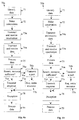
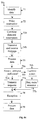
- the Figures 6a, 6b and 6c show in flow diagrams three embodiments 70a, 70b and 70c of the method according to the invention.
- the first step 71 of the first embodiment 70a shown in Figure 6a identifies the transmitted information is and estimates the transmission capacity required by the acknowledgement or response message.
- the second step 72 reserves the transmission capacity required by the supposed acknowledgement or response message.
- the third step 73a of the first embodiment 70a transmits the information about the transmission capacity reserved for the acknowledgement or response message from the first transmission unit to the second transmission unit.
- the message containing the payload information is transmitted from the first unit to the second unit.
- the second unit which received the message processes the information contained in the message and prepares the acknowledgement or response information required by the message.
- the second transmission unit checks whether the reserved transmission capacity is sufficient for the transmission of the desired acknowledgement or response information. If the reserved capacity is insufficient the second unit can transmit only a part of the information in the next step 76b and request in step 77b extra capacity for transmitting the rest of the information. If the reserved capacity is sufficient for transmitting the desired message the seventh step 77a of the embodiment transmits an acknowledgement or response message.
- the first transmission unit receives the message transmitted by the second transmission unit, and in the ninth step 79 of the method the first transmission unit processes the received message and on the basis of this information it performs any required operations, such as reservation of extra capacity if the response message contained a request for extra capacity.
- Figure 6b shows another embodiment 70b of the method according to the invention which differs from the first embodiment 70a shown in Figure 6a only regarding the processing order of the third and fourth steps 73b and 74b.
- the message containing the payload information is transmitted first, and the message containing information of the reserved capacity is transmitted only after that.
- the third embodiment 70c according to the Figure 6c differs from the above-presented first embodiment 70a only regarding the third and fourth steps 73b and 74b.
- the third step 73b of the third embodiment 70c combines the information about the transmission capacity reserved for the acknowledgement or response message with the payload information into a combined message, which in the fourth step 74b of the embodiment 70c is transmitted to the second transmission unit. Then both the payload information and the information about the transmission resource reserved for the acknowledgement or response are transmitted substantially simultaneously from the first transmission unit to the second transmission unit.
- FIG. 7 shows an embodiment 80 of the system according to the invention where the solution according to the invention uses the return channel of a cable television system or a point-to-multipoint system for reserving transmission capacity.
- the system 80 comprises an Interactive Network Adapter (INA) 81a and a Network Interface Unit (NIU) 81b.
- the network adapter 81a receives a message 88a from the TCP stack 84 and identifies the information contained in the message and estimates with the aid of the information estimating means 83 the transmission capacity required by any acknowledgement or response message. Then the network adapter 81a reserves the estimated transmission capacity with the aid of the resource management means 86.
- INA Interactive Network Adapter
- NNU Network Interface Unit
- the network adapter 81a transmits the information it gets from the TCP stack 84 with the aid of the Medium Access Control (MAC) means 82a as a message 88b to the network interface unit 81b, where corresponding MAC means 82b receives the message 88b.
- the message 88b can contain a combination of the transmitted payload information and the information about the reserved transmission capacity, as was presented in the description of Figure 6c above, or the message 88b can contain separate information 16 and reservation 51a, 51b messages according to Figure 4.
- the network interface unit 81b processes the received information and transmit it in a message 88c to a second TCP stack 85 to be transmitted further.
- the second TCP stack 85 transmits the response message 89a to the network interface unit 81b.
- the response message 89a can for instance be an acknowledgement signal according to the TCP standard.
- the network interface unit 81b processes the received response message 89a and transmits it as a message 89b to the MAC means 82a in the network adapter 81a, whereby the message 89b is transmitted through the transmission capacity allocated to that purpose according to the information which the network interface unit 81b obtained in the message 88b. If the received message 88b does not contain for instance a request for extra resources or any other information which is essential regarding the network adapter 81a, then the network adapter 81a transmits the information further to the TCP stack 84 for further transmission.
- the transmitted information relates only to the communication between the network adapter 81a and the network interface unit 81b, then no information communication with the TCP stacks 84 and 85 is required.
- An example of such a case is a status inquiry sent by the network adapter 81a to the network interface unit 81b, as the network interface unit 81b is itself able to answer that.
- the solution according to the invention is not limited only to the above-presented examples, but the solution according to the invention can vary within the scope defined in the claims. Particularly, the solution according to the invention is not limited only to the transmission resource management of a cable television system presented above, but it also covers other solutions based on timed division multiple access having a centralized management of a bi-directional transmission resource.
Landscapes
- Engineering & Computer Science (AREA)
- Computer Networks & Wireless Communication (AREA)
- Signal Processing (AREA)
- Radio Relay Systems (AREA)
- Mobile Radio Communication Systems (AREA)
- Two-Way Televisions, Distribution Of Moving Picture Or The Like (AREA)
Applications Claiming Priority (2)
| Application Number | Priority Date | Filing Date | Title |
|---|---|---|---|
| FI982530A FI982530A7 (fi) | 1998-11-23 | 1998-11-23 | Menetelmä ja järjestelmä tiedonsiirtokapasiteetin varaamiseksi |
| FI982530 | 1998-11-23 |
Publications (2)
| Publication Number | Publication Date |
|---|---|
| EP1005189A2 true EP1005189A2 (fr) | 2000-05-31 |
| EP1005189A3 EP1005189A3 (fr) | 2001-10-17 |
Family
ID=8552964
Family Applications (1)
| Application Number | Title | Priority Date | Filing Date |
|---|---|---|---|
| EP99122827A Ceased EP1005189A3 (fr) | 1998-11-23 | 1999-11-17 | Procédé et système pour réserver la capacité de transmission |
Country Status (3)
| Country | Link |
|---|---|
| US (1) | US6831894B1 (fr) |
| EP (1) | EP1005189A3 (fr) |
| FI (1) | FI982530A7 (fr) |
Cited By (2)
| Publication number | Priority date | Publication date | Assignee | Title |
|---|---|---|---|---|
| WO2006035027A1 (fr) * | 2004-09-27 | 2006-04-06 | Siemens Aktiengesellschaft | Procede d'acces multiple pour trafic de donnees isochrone ou quasi-isochrone |
| WO2010003441A1 (fr) * | 2008-07-11 | 2010-01-14 | Nokia Siemens Networks Oy | Affectation de ressource automatique pour une rétroaction arq |
Families Citing this family (3)
| Publication number | Priority date | Publication date | Assignee | Title |
|---|---|---|---|---|
| JP2009060213A (ja) * | 2007-08-30 | 2009-03-19 | Sony Corp | 無線通信装置、無線通信システム、無線通信方法及びプログラム |
| US20090161542A1 (en) * | 2007-12-21 | 2009-06-25 | Kah Kin Ho | Resource availability information sharing (rais) protocol |
| US20170019230A1 (en) * | 2015-07-13 | 2017-01-19 | Qualcomm Incorporated | Communicating a Data Payload and an Acknowledgment of the Data Payload on Different Channels |
Family Cites Families (17)
| Publication number | Priority date | Publication date | Assignee | Title |
|---|---|---|---|---|
| US4477809A (en) * | 1982-06-18 | 1984-10-16 | General Electric Company | Method for random-access radio-frequency data communications |
| JPS5995752A (ja) * | 1982-11-25 | 1984-06-01 | Pioneer Electronic Corp | デ−タ伝送方式 |
| KR950004881A (ko) | 1993-07-31 | 1995-02-18 | 김광호 | 칼라화상처리방법 및 장치 |
| FI98426C (fi) | 1994-05-03 | 1997-06-10 | Nokia Mobile Phones Ltd | Järjestelmä pakettidatan siirtämiseksi digitaalisen aikajakomonikäyttöön TDMA perustuvan solukkojärjestelmän ilmarajapinnassa |
| JP2856086B2 (ja) | 1994-12-26 | 1999-02-10 | 日本電気株式会社 | 衛星チャネルアクセス方式 |
| US5553083B1 (en) * | 1995-01-19 | 2000-05-16 | Starburst Comm Corp | Method for quickly and reliably transmitting frames of data over communications links |
| US5691709A (en) | 1995-10-10 | 1997-11-25 | Motorola, Inc. | Communication transceiver providing unscheduled acknowledge back responses and method therefor |
| US5966163A (en) * | 1995-10-20 | 1999-10-12 | Scientific-Atlanta, Inc. | Providing constant bit rate upstream data transport in a two way cable system by scheduling preemptive grants for upstream data slots using selected fields of a plurality of grant fields |
| US5684791A (en) * | 1995-11-07 | 1997-11-04 | Nec Usa, Inc. | Data link control protocols for wireless ATM access channels |
| US5745477A (en) * | 1996-01-25 | 1998-04-28 | Mitsubishi Electric Information Technology Center America, Inc. | Traffic shaping and ABR flow control |
| JP2968717B2 (ja) * | 1996-04-25 | 1999-11-02 | 静岡日本電気株式会社 | 時分割多重伝送装置 |
| US5903735A (en) * | 1996-12-24 | 1999-05-11 | Intel Corporation | Method and apparatus for transmitting data having minimal bandwidth requirements |
| JP2853701B2 (ja) * | 1997-03-18 | 1999-02-03 | 日本電気株式会社 | Atm網における端末間フロー制御方法 |
| US6023467A (en) * | 1997-05-08 | 2000-02-08 | Ericsson, Inc. | Operations and maintenance data flows over a point to multipoint broadband access network |
| US6137779A (en) * | 1997-05-22 | 2000-10-24 | Integrated Device Technology, Inc. | Transmission rate calculation scheme using table-lookup |
| US6157614A (en) * | 1997-10-22 | 2000-12-05 | Netro Corporation | Wireless ATM network with high quality of service scheduling |
| US6314110B1 (en) * | 1998-03-06 | 2001-11-06 | Cisco Technology, Inc. | Method and apparatus for distributed bandwidth allocation for a bi-directional ring media with spatial and local reuse |
-
1998
- 1998-11-23 FI FI982530A patent/FI982530A7/fi unknown
-
1999
- 1999-11-17 EP EP99122827A patent/EP1005189A3/fr not_active Ceased
- 1999-11-23 US US09/448,004 patent/US6831894B1/en not_active Expired - Lifetime
Cited By (2)
| Publication number | Priority date | Publication date | Assignee | Title |
|---|---|---|---|---|
| WO2006035027A1 (fr) * | 2004-09-27 | 2006-04-06 | Siemens Aktiengesellschaft | Procede d'acces multiple pour trafic de donnees isochrone ou quasi-isochrone |
| WO2010003441A1 (fr) * | 2008-07-11 | 2010-01-14 | Nokia Siemens Networks Oy | Affectation de ressource automatique pour une rétroaction arq |
Also Published As
| Publication number | Publication date |
|---|---|
| US6831894B1 (en) | 2004-12-14 |
| FI982530A7 (fi) | 2000-05-24 |
| EP1005189A3 (fr) | 2001-10-17 |
| FI982530A0 (fi) | 1998-11-23 |
Similar Documents
| Publication | Publication Date | Title |
|---|---|---|
| Peyravi | Medium access control protocols performance in satellite communications | |
| US5065398A (en) | TDMA satellite communication method and system | |
| US5734833A (en) | Shared communications channel with enhanced reservation and collision resolution protocols allows any subset of stations to transmit data after collision occured in contention slot | |
| US5461627A (en) | Access protocol for a common channel wireless network | |
| US6879579B1 (en) | Medium access control protocol for data communications | |
| CA1242537A (fr) | Systeme de communication a acces multiple | |
| EP0850516B1 (fr) | Procede et dispositif pour l'attribution de largeur de bande en partage entre plusieurs utilisateurs | |
| USRE40896E1 (en) | Method and arrangement in a radio communication system | |
| US20040218577A1 (en) | Group TDMA frame allocation method and apparatus | |
| CA2171978C (fr) | Procede et systeme afin de nantir une parade aux collisions entre liaison montante et liaison descendante | |
| EP1257096A2 (fr) | Procédé de programmation des permis de transmission de données en paquets sur canaux radio partagés par stations mobiles en systèmes GSM-GPRS | |
| US20040081089A1 (en) | Transmitting data on scheduled channels in a centralized network | |
| EP1021001A3 (fr) | Commande à bord d'un protocole d'accès multiples demande-assignation pour réseaux MTA à satellite | |
| CN101253781A (zh) | 媒体访问控制架构 | |
| HUT65532A (en) | Method for multipurpose utilizing signal sources in communication systems | |
| US7197313B1 (en) | Method for allocating wireless resource in wireless communication system | |
| EP1037405A3 (fr) | Protocole d'accès multiple pour satellite avec allocation basé sur la demande pour utilisation dans un système de communication utilisant un satellite avec traitement de données | |
| WO2005064823A1 (fr) | Procede et dispositif de transmission de paquets de donnees appartenant a plusieurs utilisateurs dans un seul paquet de protocole de transmission de donnees | |
| US20010043618A1 (en) | Method and apparatus for controlling access to a communication channel | |
| US6404753B1 (en) | Method and apparatus for controlling access to a communication channel | |
| US20030081577A1 (en) | Fast message exchange method for a radio communication system | |
| EP1005189A2 (fr) | Procédé et système pour réserver la capacité de transmission | |
| US7881328B2 (en) | Method and apparatus for controlling access to a communication channel | |
| US20040062229A1 (en) | Relay transmission of data in a centralized network | |
| Todd et al. | Capacity allocation in multiple access networks |
Legal Events
| Date | Code | Title | Description |
|---|---|---|---|
| PUAI | Public reference made under article 153(3) epc to a published international application that has entered the european phase |
Free format text: ORIGINAL CODE: 0009012 |
|
| AK | Designated contracting states |
Kind code of ref document: A2 Designated state(s): AT BE CH CY DE DK ES FI FR GB GR IE IT LI LU MC NL PT SE Kind code of ref document: A2 Designated state(s): DE FR GB IT |
|
| AX | Request for extension of the european patent |
Free format text: AL;LT;LV;MK;RO;SI |
|
| PUAL | Search report despatched |
Free format text: ORIGINAL CODE: 0009013 |
|
| AK | Designated contracting states |
Kind code of ref document: A3 Designated state(s): AT BE CH CY DE DK ES FI FR GB GR IE IT LI LU MC NL PT SE |
|
| AX | Request for extension of the european patent |
Free format text: AL;LT;LV;MK;RO;SI |
|
| RIC1 | Information provided on ipc code assigned before grant |
Free format text: 7H 04L 1/16 A, 7H 04L 1/18 B |
|
| RAP1 | Party data changed (applicant data changed or rights of an application transferred) |
Owner name: NOKIA CORPORATION |
|
| 17P | Request for examination filed |
Effective date: 20020228 |
|
| AKX | Designation fees paid |
Free format text: DE FR GB IT |
|
| 17Q | First examination report despatched |
Effective date: 20020809 |
|
| STAA | Information on the status of an ep patent application or granted ep patent |
Free format text: STATUS: THE APPLICATION HAS BEEN REFUSED |
|
| 18R | Application refused |
Effective date: 20060421 |