EP1005232B1 - Steuerung der Datenrate für einen MPEG-Transcoder ohne a-priori Kenntnis des Bildtyps - Google Patents
Steuerung der Datenrate für einen MPEG-Transcoder ohne a-priori Kenntnis des Bildtyps Download PDFInfo
- Publication number
- EP1005232B1 EP1005232B1 EP99120843A EP99120843A EP1005232B1 EP 1005232 B1 EP1005232 B1 EP 1005232B1 EP 99120843 A EP99120843 A EP 99120843A EP 99120843 A EP99120843 A EP 99120843A EP 1005232 B1 EP1005232 B1 EP 1005232B1
- Authority
- EP
- European Patent Office
- Prior art keywords
- picture
- gop
- pictures
- bitstream
- bit
- Prior art date
- Legal status (The legal status is an assumption and is not a legal conclusion. Google has not performed a legal analysis and makes no representation as to the accuracy of the status listed.)
- Expired - Lifetime
Links
Images





Classifications
-
- H—ELECTRICITY
- H04—ELECTRIC COMMUNICATION TECHNIQUE
- H04N—PICTORIAL COMMUNICATION, e.g. TELEVISION
- H04N21/00—Selective content distribution, e.g. interactive television or video on demand [VOD]
- H04N21/20—Servers specifically adapted for the distribution of content, e.g. VOD servers; Operations thereof
- H04N21/23—Processing of content or additional data; Elementary server operations; Server middleware
- H04N21/236—Assembling of a multiplex stream, e.g. transport stream, by combining a video stream with other content or additional data, e.g. inserting a URL [Uniform Resource Locator] into a video stream, multiplexing software data into a video stream; Remultiplexing of multiplex streams; Insertion of stuffing bits into the multiplex stream, e.g. to obtain a constant bit-rate; Assembling of a packetised elementary stream
- H04N21/2365—Multiplexing of several video streams
- H04N21/23655—Statistical multiplexing, e.g. by controlling the encoder to alter its bitrate to optimize the bandwidth utilization
-
- H—ELECTRICITY
- H04—ELECTRIC COMMUNICATION TECHNIQUE
- H04N—PICTORIAL COMMUNICATION, e.g. TELEVISION
- H04N19/00—Methods or arrangements for coding, decoding, compressing or decompressing digital video signals
- H04N19/10—Methods or arrangements for coding, decoding, compressing or decompressing digital video signals using adaptive coding
- H04N19/102—Methods or arrangements for coding, decoding, compressing or decompressing digital video signals using adaptive coding characterised by the element, parameter or selection affected or controlled by the adaptive coding
- H04N19/103—Selection of coding mode or of prediction mode
- H04N19/114—Adapting the group of pictures [GOP] structure, e.g. number of B-frames between two anchor frames
-
- H—ELECTRICITY
- H04—ELECTRIC COMMUNICATION TECHNIQUE
- H04N—PICTORIAL COMMUNICATION, e.g. TELEVISION
- H04N19/00—Methods or arrangements for coding, decoding, compressing or decompressing digital video signals
- H04N19/10—Methods or arrangements for coding, decoding, compressing or decompressing digital video signals using adaptive coding
- H04N19/134—Methods or arrangements for coding, decoding, compressing or decompressing digital video signals using adaptive coding characterised by the element, parameter or criterion affecting or controlling the adaptive coding
- H04N19/146—Data rate or code amount at the encoder output
- H04N19/152—Data rate or code amount at the encoder output by measuring the fullness of the transmission buffer
-
- H—ELECTRICITY
- H04—ELECTRIC COMMUNICATION TECHNIQUE
- H04N—PICTORIAL COMMUNICATION, e.g. TELEVISION
- H04N19/00—Methods or arrangements for coding, decoding, compressing or decompressing digital video signals
- H04N19/10—Methods or arrangements for coding, decoding, compressing or decompressing digital video signals using adaptive coding
- H04N19/134—Methods or arrangements for coding, decoding, compressing or decompressing digital video signals using adaptive coding characterised by the element, parameter or criterion affecting or controlling the adaptive coding
- H04N19/157—Assigned coding mode, i.e. the coding mode being predefined or preselected to be further used for selection of another element or parameter
-
- H—ELECTRICITY
- H04—ELECTRIC COMMUNICATION TECHNIQUE
- H04N—PICTORIAL COMMUNICATION, e.g. TELEVISION
- H04N19/00—Methods or arrangements for coding, decoding, compressing or decompressing digital video signals
- H04N19/10—Methods or arrangements for coding, decoding, compressing or decompressing digital video signals using adaptive coding
- H04N19/134—Methods or arrangements for coding, decoding, compressing or decompressing digital video signals using adaptive coding characterised by the element, parameter or criterion affecting or controlling the adaptive coding
- H04N19/157—Assigned coding mode, i.e. the coding mode being predefined or preselected to be further used for selection of another element or parameter
- H04N19/159—Prediction type, e.g. intra-frame, inter-frame or bidirectional frame prediction
-
- H—ELECTRICITY
- H04—ELECTRIC COMMUNICATION TECHNIQUE
- H04N—PICTORIAL COMMUNICATION, e.g. TELEVISION
- H04N19/00—Methods or arrangements for coding, decoding, compressing or decompressing digital video signals
- H04N19/10—Methods or arrangements for coding, decoding, compressing or decompressing digital video signals using adaptive coding
- H04N19/169—Methods or arrangements for coding, decoding, compressing or decompressing digital video signals using adaptive coding characterised by the coding unit, i.e. the structural portion or semantic portion of the video signal being the object or the subject of the adaptive coding
- H04N19/17—Methods or arrangements for coding, decoding, compressing or decompressing digital video signals using adaptive coding characterised by the coding unit, i.e. the structural portion or semantic portion of the video signal being the object or the subject of the adaptive coding the unit being an image region, e.g. an object
- H04N19/172—Methods or arrangements for coding, decoding, compressing or decompressing digital video signals using adaptive coding characterised by the coding unit, i.e. the structural portion or semantic portion of the video signal being the object or the subject of the adaptive coding the unit being an image region, e.g. an object the region being a picture, frame or field
-
- H—ELECTRICITY
- H04—ELECTRIC COMMUNICATION TECHNIQUE
- H04N—PICTORIAL COMMUNICATION, e.g. TELEVISION
- H04N19/00—Methods or arrangements for coding, decoding, compressing or decompressing digital video signals
- H04N19/10—Methods or arrangements for coding, decoding, compressing or decompressing digital video signals using adaptive coding
- H04N19/169—Methods or arrangements for coding, decoding, compressing or decompressing digital video signals using adaptive coding characterised by the coding unit, i.e. the structural portion or semantic portion of the video signal being the object or the subject of the adaptive coding
- H04N19/177—Methods or arrangements for coding, decoding, compressing or decompressing digital video signals using adaptive coding characterised by the coding unit, i.e. the structural portion or semantic portion of the video signal being the object or the subject of the adaptive coding the unit being a group of pictures [GOP]
-
- H—ELECTRICITY
- H04—ELECTRIC COMMUNICATION TECHNIQUE
- H04N—PICTORIAL COMMUNICATION, e.g. TELEVISION
- H04N19/00—Methods or arrangements for coding, decoding, compressing or decompressing digital video signals
- H04N19/40—Methods or arrangements for coding, decoding, compressing or decompressing digital video signals using video transcoding, i.e. partial or full decoding of a coded input stream followed by re-encoding of the decoded output stream
-
- H—ELECTRICITY
- H04—ELECTRIC COMMUNICATION TECHNIQUE
- H04N—PICTORIAL COMMUNICATION, e.g. TELEVISION
- H04N19/00—Methods or arrangements for coding, decoding, compressing or decompressing digital video signals
- H04N19/50—Methods or arrangements for coding, decoding, compressing or decompressing digital video signals using predictive coding
- H04N19/503—Methods or arrangements for coding, decoding, compressing or decompressing digital video signals using predictive coding involving temporal prediction
- H04N19/51—Motion estimation or motion compensation
- H04N19/577—Motion compensation with bidirectional frame interpolation, i.e. using B-pictures
-
- H—ELECTRICITY
- H04—ELECTRIC COMMUNICATION TECHNIQUE
- H04N—PICTORIAL COMMUNICATION, e.g. TELEVISION
- H04N19/00—Methods or arrangements for coding, decoding, compressing or decompressing digital video signals
- H04N19/60—Methods or arrangements for coding, decoding, compressing or decompressing digital video signals using transform coding
- H04N19/61—Methods or arrangements for coding, decoding, compressing or decompressing digital video signals using transform coding in combination with predictive coding
Definitions
- the present invention relates to a digital video transcoder and method for allocating bits for encoding successive pictures in a group of pictures (GOP) without a priori knowledge of the picture types in the GOP.
- GOP group of pictures
- input pictures can be coded in three different picture types, namely I, P and B.
- the three pictures require quite different numbers of bits for encoding because of the different nature of their temporal processing.
- an intelligent bit allocation strategy should assign a number of bits for encoding according to the picture's type. This implies a requirement of a priori knowledge of the picture types for a given bit budget. This requirement is not a problem for a standalone encoder as the encoder can determine the picture type for each input picture.
- the encoder can plan ahead for the types of the input pictures.
- a transcoder has no such a priori knowledge regarding a picture's type before actually processing the picture. This creates difficulty in allocating an appropriate number of bits for encoding pictures in a transcoder.
- the system should avoid a processing delay of about one GOP which would otherwise be incurred to extract the complete GOP structure information from a pre-compressed bit stream.
- the system should avoid the need to store the data corresponding to the GOP, thereby reducing the memory required for transcoding.
- the system should be compatible with both variable bit rate and constant bit rate bitstreams.
- the system should be compatible with statistical multiplexing and remultiplexing systems.
- the present invention provides an apparatus and method having the above and other advantages.
- the present invention relates to a digital video transcoder and method for allocating bits for encoding successive pictures in a group of pictures (GOP) without a priori knowledge of the arrangement of picture types in the GOP.
- GOP group of pictures
- a method for allocating bits for coding a progressive refresh sequence of pictures in a bitstream received at a digital video transcoder includes the steps of: (a) providing an assumed distance M' between a first picture of the bitstream and the next closest subsequent P-picture of the bitstream (in display order); (b) providing an assumed bit budget as a function of the assumed distance M'; (c) coding the first picture in accordance with the assumed bit budget; (d) determining a picture type of a second picture that immediately follows the first picture in the bitstream; (e) adjusting the assumed bit budget according to the picture type of the second picture; and (f) allocating bits for coding the second picture in accordance with the adjusted bit budget.
- bit budget for coding the pictures is initially assumed for the first picture, and the bit budget is updated as the second picture type is known.
- a target number of bits is allocated for coding each picture according to the bit budget.
- the first and second picture types generally indicate the picture distribution in the sequence.
- the assumed bit budget is proportional to the assumed distance and a bit rate of the bitstream, and inversely proportional to a frame rate of the bitstream.
- the pictures in the bitstream may form a progressive refresh sequence, where there is no GOP structure.
- the method includes the further step of: determining an actual distance M" between the first picture and the next closest subsequent P-picture (in display order) according to the picture type of the first picture and the picture type of the second picture.
- the actual distance M" is determined according to a difference between a temporal reference of the first picture, in a display order of the bitstream, and a temporal reference of the second picture, in the display order, plus one picture.
- the method may include the further step of allocating bits for coding the remaining M"-1 pictures following the first picture in accordance with the adjusted bit budget.
- the assumed bit budget is adjusted in the adjusting step (f) by +(M"-M')*"bit rate"/"frame rate", where "bit rate” is a bit rate of the bitstream, and "frame rate” is a frame rate of the bitstream.
- the method includes the further step of: determining an actual distance M" between the first picture and the next closest subsequent P-picture (in display order) according to the picture type of the first picture and the picture type of the second picture.
- the actual distance M" is determined according to a difference between a temporal reference of the second picture and a temporal reference of the first picture.
- the temporal references are determined in relation to a display order of the bitstream.
- the assumed bit budget is adjusted in the adjusting step (f) by -(M'-1)*"bit rate"/"frame rate", where "bit rate” is a bit rate of the bitstream, and "frame rate” is a frame rate of the bitstream.
- the method includes the further step of allocating bits for coding a series of M" pictures following an initial M" pictures that includes the first and second pictures in the bitstream in accordance with the adjusted bit budget.
- the adjustments to the bit budget in one series of pictures is carried over to the next series to allow correct coding of the next series.
- the invention enables transcoding to begin by assuming a reasonable set of GOP parameters, including M, the distance between each I-picture and the next P-picture, and N, the GOP length. M and N are adjusted during transcoding as additional information becomes available regarding the GOP structure, e.g., the distribution of picture types in the GOP and the length of the GOP.
- the assumed M can be corrected to the actual value within two frames, and the assumed N can be corrected to the actual value within one GOP.
- M should be verified, and adjusted if necessary, after each I- or P-picture, and N should be verified, and adjusted if necessary, after each I-picture.
- a bit rate R for coding the pictures, and n I , n P , and n B , the remaining numbers of I, P and B-pictures in the current GOP, respectively, are also adjusted.
- a method for allocating bits for coding a non-progressive refresh sequence of pictures in a bitstream received at a digital video transcoder includes the steps of: (a) providing an assumed length N' of a particular group of pictures (GOP) of the bitstream; (b) providing an assumed bit budget as a function of the assumed length N'; providing an assumed distance M' between the first picture and the next closest subsequent P-picture of the bitstream (in display order); (c) allocating bits for coding a first picture of the particular GOP in accordance with the assumed bit budget, and N' and M'; (d) determining a picture type of a second picture that immediately follows the first picture; (e) adjusting the assumed bit budget according to the picture type of the second picture; and (f) allocating bits for coding the second picture in accordance with the adjusted bit budget.
- GOP group of pictures
- the assumed bit budget is proportional to the assumed length N' and a bit rate of the bitstream, and inversely proportional to a frame rate of the bitstream.
- M" may change within a GOP.
- the method may include the step of periodically verifying M" throughout the GOP.
- M may be calculated at every I-picture and/or P-picture that follows the first I-picture.
- the assumed bit budget is adjusted each time in accordance with M".
- the method comprises the further step of:
- the actual distance M" is determined according to a difference between a temporal reference of the second picture, in a display order of the bitstream, and a temporal reference of the first picture, in the display order.
- the adjusting step (e) comprises the step of:
- the method comprises the further step of:
- the method comprises the further steps of: determining an actual distance M" between the first picture and the next closest subsequent P-picture (in display order) according to the picture type of the second picture; and adjusting the assumed length N' of the GOP in accordance with the actual distance M" to provide an adjusted assumed length N"; wherein: the adjusting step (e) is responsive to the adjusted assumed length N'.
- the adjusting step (e) comprises the step of: adjusting the assumed bit budget by a factor (N"-N')*"bit rate"/"frame rate", where "bit rate” is a bit rate of the bitstream, and "frame rate” is a frame rate of the bitstream.
- both the GOP length and the distance M are used to adjust the bit budget, which in turn affects the target bit allocation for each picture.
- the method includes the further step of allocating bits for coding the remaining pictures in the particular GOP following the second picture in accordance with the adjusted bit budget.
- the method comprises the further steps of: determining an actual distance M" between the first picture and the next closest subsequent P-picture (in display order) according to the picture type of the second picture; and adjusting the assumed length N' of the GOP in accordance with the actual distance M" to provide an adjusted assumed length N"; wherein: the adjusting step (e) is responsive to the adjusted assumed length N'.
- the adjusting step (e) comprises the step of:
- the method comprises the further steps of:
- the already adjusted bit budget may be further adjusted based on whether N" ⁇ N or N">N, and bits may be allocated for coding pictures in the bitstream following the N" coded pictures according to the further adjusted bit budget.
- the information learned regarding GOP length and M, the distance between I and/or P-pictures, in one GOP are used in coding the following GOPs.
- Target rates with incorrect starting GOP parameters will converge within a few GOPs.
- the present invention relates to a digital video transcoder and method for allocating bits for encoding successive pictures in a group of pictures (GOP) without a priori knowledge of the picture types in the GOP.
- GOP group of pictures
- a novel rate control scheme and apparatus is presented for a digital video transcoder, such as one conforming to the MPEG standard, that requires no a priori (e.g., beforehand) knowledge of the picture types. Studies indicate that the picture target rates determined by the proposed rate control system with and without a priori knowledge of the picture types are very close.
- MPEG defines three picture types in terms of temporal processing. They are the intra-frame coded picture (I-picture), forward temporal predictive coded picture (P-picture), and the bi-directional temporal predictive coded picture (B-picture).
- I-picture intra-frame coded picture
- P-picture forward temporal predictive coded picture
- B-picture bi-directional temporal predictive coded picture
- pictures of an input video sequence are often grouped into groups of pictures (GOPs), where each GOP may contain one I-picture, a number of P-pictures, and optionally one or more B-pictures between I or P-pictures.
- the structure of a GOP can often be described by two variables: (1) N - the number of pictures in a GOP, or the GOP length, and (2) M - the distance between I or P-pictures.
- the subscripts are the picture's temporal references, and the consecutive numbers denote consecutively displayed pictures.
- I-pictures require many more bits for encoding than P- and B-pictures because I-pictures do not take advantage of temporal correlations between successive pictures (e.g., frames).
- B-pictures use the least numbers of bits for encoding because they have two temporal references and can therefore be temporally predicted more efficiently than P-pictures.
- P-pictures use a number of bits for encoding that is generally between that used for B- and I-pictures.
- the bits assigned to each picture for encoding should be based on its type, or its need.
- a GOP can have all the three types of pictures, and the organization of the three picture types within a GOP can be very flexible. Therefore, to wisely allocate a bit budget for encoding the pictures within a GOP, it is necessary to have a priori knowledge of the types of pictures in the GOP, or the GOP structure. This requirement is not a problem for a standalone encoder (i.e., an encoder that is not part of a transcoder) since the encoder can decide the type for each picture, and plan ahead in allocating bits based on the type and arrangement of pictures in a GOP. In other words, the information on GOP structure is available to the encoder.
- a transcoder converts a pre-compressed bitstream into another bitstream at a new rate.
- the inputs to a transcoder are pre-compressed bitstreams.
- the transcoder Before processing a picture, the transcoder has no a priori knowledge of the picture's type, and hence no a priori knowledge of the GOP structures of the pre-compressed bitstreams.
- some transcoding schemes re-use the motion vector (MV) fields of the received pre-compressed bitstream for encoding the output bitstream at the new data rate.
- MV motion vector
- the GOP structure information is extracted from the pre-compressed bitstreams. For example, after scanning a pre-compressed bitstream by the first two I-pictures, a transcoder should be able to determine the GOP structure. However, this requires a processing delay of about one GOP and a requirement of extra memory to hold all the bits for the GOP.
- the present invention discloses a novel rate control system for a digital video transcoder, such as that conforming to the MPEG standard, with no requirement of a priori knowledge of the GOP structures of the pre-compressed bitstreams.
- a rate control scheme is disclosed that causes no processing delay and requires no extra memory. The scheme starts with any reasonable set of GOP parameters, and then gradually corrects these GOP parameters, if necessary, as successive pre-compressed pictures are received at the transcoder. The scheme compensates for changing GOP parameters used by the encoder(s).
- section 1 we will first overview the rate control for MPEG video coding.
- section 2 we present the novel rate control for MPEG transcoder.
- section 3 we analyze the differences in target rates determined by the proposed rate control with and without a priori knowledge of GOP structure.
- section 4 we present the simulation and comparison results. Conclusions are discussed in section 5.
- DCT block Discrete Cosine Transform
- P-pictures are first forward temporally predicted, and their temporal prediction difference images are then coded.
- the temporal prediction difference images usually contain much less information than the original pictures, and therefore need less bits for coding.
- B-pictures with two temporal references can often be better temporally predicted than P-pictures. Hence, B-pictures require the least number of bits.
- An intelligent bit allocation strategy should assign the bits to a picture based on the picture's type, or the picture's complexity.
- X n be the complexity measure for picture n in a GOP of N pictures.
- the complexity measure for a picture is defined as the product of the average quantization parameter used for the picture and the resulting number of bits.
- C is a constant.
- T n X n , t N I ⁇ X I + N P ⁇ X P + N B ⁇ X B ⁇ R GOP , N
- N I , N P and N B are the numbers of I, P and B-pictures, respectively, in the GOP.
- n 1 , n P and n B are, respectively, the remaining numbers of I, P and B-pictures in the current GOP
- eqn. (6) also assigns the same number of bits to the pictures of the same type as long as the encoder can meet the target rate at each picture. For example, assume that frame n is a B-picture. Frame n can actually be either an I, P or B-picture. The encoder meets the nominal rate, T n , for frame n.
- the target rate for frame n +1 , T n +1 depends upon only the type of frame n +1, i.e., X n +1, t .
- frame n +1 will be assigned the same number of bits according to its own type. This implies that equations (5) and (6) are actually the same if the pictures of the same type have the same complexity measure, and the encoder can meet the target rate at each picture. Equation (6) is, however, more practical as it addresses the changes in picture complexity measures and the difference between the target and actual rates at each picture.
- the quality requirement may not be the same for the different picture types.
- B-pictures are never used as references in the future temporal prediction. Hence, they can tolerate more distortion than I- and P-pictures.
- the bit allocation strategy (e.g., equations 5 and 6) requires a priori knowledge of GOP structure, i.e., the numbers of I-, P- and B-pictures in a GOP, N I , N P , and N B , or the remaining number of I, P and B-picture in the current GOP, n I , n P and n B
- N I , N P , and N B N - N P - N I.
- this information is unfortunately not available for a transcoder. Without a complete knowledge of the GOP structure of pre-compressed bitstreams, it is difficult to perform an intelligent bit allocation strategy.
- a transcoder can learn the GOP structure of a pre-compressed bitstream by scanning the bitstream through the first two I-pictures. This, however, may cause a processing delay by one GOP and require extra memory for holding the bits of the GOP.
- the proposed rate control system causes no processing delay and requires no extra memory. It can start with any reasonable set of GOP parameters, and then gradually corrects these GOP parameters as encoding progresses, if necessary.
- Table 1(a) shows all the possible picture organizations where the subscripts are the pictures' temporal references, in display order.
- Each picture refers to a frame or field, or portion thereof.
- the present invention is compatible with coding of video object planes (VOPs) as known from the MPEG-4 standard.
- VOPs video object planes
- the present invention is compatible with both progressive scan and interlaced scan video.
- sequence GOP(N,M) there are I-, P- and B-pictures.
- sequence GOP(M) there are only P- and B-pictures.
- the first four cases in Table 1(a) are non-progressive refresh sequences since they have I-pictures.
- An I-slice is an intra-coded portion of a picture typically extending horizontally across the picture. The location of the I-slice changes in successive P-pictures to refresh a different portion of the successive P-pictures.
- the GOP length N is no longer necessary in describing the picture organization. Nevertheless, M can still be used to indicate the distance between two consecutive P-pictures.
- the "distance” is measured in terms of number of pictures herein, although any corresponding measure, such as time, can be used.
- N M
- N I 0 (as there is no I pictures for progressive refresh sequence)
- the first GOP (e.g., initial or non-continuous GOP, designated GOP 0 ) in a video sequence with M ⁇ 1, there may not be any B-pictures before the first I or P-picture, as shown in Table 2(a).
- Table 2(a) shows possible picture organizations of the first (initial) GOP after a sequence header in a video stream, in display order.
- the initial GOPs are designated GOP 0 .
- GOP 0 (M) the first picture is designated P 0 .
- An initial GOP may be processed by a transcoder when a bitstream is initially acquired or re-acquired, for example.
- Table 2(b) shows the first GOP of Table 2(a) in encoding order.
- an initial GOP with M ⁇ 1 is shown, where the second I- or P-picture is encoded before any B-picture.
- the second picture in encoding order will be either an I or P-picture, as shown in Table 2(b).
- GOP(N,M 1): I m P m+1 P m+2 ... P m+N-1 I m+N P m+N+1 ...
- GOP(N M): I m B m-(M-1) B m-(M-1)+1 ... B m-1 I m+M B m+1 ...
- GOP(N,M): I m B m-(M-1) B m-(M-1)+1 ... B m-1 P m+M B m+1 ... B m+M-1 P m+2M ... I m+N ... GOP(M 1): P m P m+1 P m+2 ...
- FIG. 1(a) illustrates a progressive refresh sequence of pictures in display order for continuing GOPs.
- a first GOP 110 includes pictures P 7 , B 8 and B 9
- a second GOP 120 includes pictures P 10 , B 11 and B 12
- a third GOP 130 includes pictures P 13 , B 14 , and B 15 .
- the subscript "7" for P 7 is chosen simply as an example.
- a subsequent GOP includes P 16 as its first picture.
- FIG. 1(b) illustrates the sequence of pictures of FIG. 1(a) in encoding order.
- the encoded video sequence 150 corresponds to the sequence GOP(M) from Table 1(b). Since B 8 and B 9 are temporally backward predicted from P 10 , B 8 and B 9 follow P 10 in the encoded sequence 150. Similarly, B 11 and B 12 follow P 13 , and B 19 and B 15 follow P 16 .
- FIG. 2(a) illustrates a progressive refresh sequence of pictures in display order for an initial GOP in a bitstream followed by continuing GOPs.
- a first, initial GOP 210 includes pictures P 0 , B 1 and B 2
- a second, continuing GOP 220 includes pictures P 3 , B 4 and B 5
- a third, continuing GOP 230 includes pictures P 6 , B 7 , and B 8
- a subsequent GOP includes P 9 as its first picture.
- FIG. 2(b) illustrates the sequence of pictures of FIG. 2(a) in encoding order.
- the encoded video sequence 250 corresponds to the sequence GOP 0 (M) from Table 2(b). Since B 1 and B 2 are temporally backward predicted from P 3 , B 1 and B 2 follow P 3 in the encoded sequence 250. Essentially, the B-pictures that would use P 0 for backward temporal prediction are not present, so P 3 , B 1 and B 2 follow P 0 . Similarly, B 4 and B 5 follow P 6 , and B 7 and B 8 follow P 9 .
- FIG. 3 illustrates an MPEG-2 bitstream structure.
- a sequence layer 300 includes a sequence header 302, followed by a number of GOPs, e.g., GOPs 304, 306 and 308, followed by additional sequence headers and GOPs, including sequence header 312.
- a GOP layer 320 includes a GOP header 322, followed by data from a number of pictures, e.g., pictures 324, 326 and 328.
- a picture layer 330 includes a picture header 332, followed by a number of slices, e.g., slices 334 and 336.
- a slice layer 335 includes a slice header 337, followed by a number of macroblocks, e.g., macroblocks 338 and 339.
- a macroblock layer 340 includes a macroblock header 342, followed by a number of blocks, e.g., blocks 344, 346 and 348.
- a block layer includes DCT coefficients 352.
- the transcoder can start processing anywhere in the bitstream. Initially, the transcoder will skip all the bits until reaching the sequence header 300, which contains information about picture size, frame rate, and the like.
- the GOP header 322 may follow the sequence header 302 (for non-progressive refresh only). If a GOP header does follow the sequence header 302, the bitstream is definitely a non-progressive refresh sequence. Otherwise, the bitstream may, or may not, be of progressive refresh.
- the picture layer 330 then follows.
- the picture immediately following the sequence header (i.e., the first picture in the GOP, i.e., picture 324) can be either an I or P-picture. If it is an I-picture, the bitstream is a non-progressive refresh sequence. Otherwise, the bitstream is a progressive refresh sequence.
- the bit allocation procedures of the present invention for bitstreams with progressive refresh and non-progressive refresh are slightly different. In the following two subsections, we detail both.
- temp_ref_picture 1 and temp_ref_picture 2 be the temporal references for the first and second pictures, respectively.
- the temporal reference may be embedded in the picture header.
- the second picture is a B-picture, e.g., sequence ( GOP ( M )) in Table 1(b)
- temp_ref_picture1 is the temporal reference of P 10 (e.g., "10")
- temp_ref_picture2 is the temporal reference of B 8 (e.g., "8")
- the temporal references refer to the display order of the pictures.
- temp_ref_picture1 is the temporal reference of P 0 (e.g., "0")
- temp_ref_picture2 is the temporal reference of P 3 (e.g., "3")
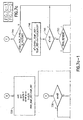
- FIG. 4(a) illustrates a coding method for a progressive refresh picture sequence in accordance with the present invention.
- the aforementioned bit allocation technique for progressive refresh sequences is summarized as follows.
- the pre-compressed digital video bitstream is received at a transcoder.
- the coded pictures are in an encoding order.
- the bitstream is processed to detect a sequence header.
- the picture type of the first picture following the sequence header is determined. If it is an I-picture, processing continues at block "A" in FIG. 4(b).
- an assumed distance M' is set.
- M' is defined herein as a distance between the first picture following the sequence header, and the next P-picture in the display order.
- an assumed bit budget R is determined based on M', the bit rate and the frame rate of the bitstream.
- a target bit rate T is set in accordance with eqn. 6b.
- the first picture is coded according to T.
- the next picture e.g., the second picture
- the actual distance M" is determined at block 435 according to eqn. 13.
- the bit budget R is adjusted using eqn. 15.
- M is set to M".
- the actual distance M" is determined at block 450 according to eqn. 12.
- the bit budget R is adjusted using eqn. 14.
- M is set to M".
- the target bit rate T is set (e.g., using eqn. 6).
- the remaining M-1 pictures are coded according to T at block 465.
- next picture is processed. This may be the first picture of the next series of M" pictures, for example.
- processing returns, e.g., to block 415.
- the values determined in the previous series of M" pictures may be used. Nevertheless, the actual distance M" may be verified, e.g., after every P-picture.
- a picture layer follows.
- the first picture immediately following a sequence header, or a GOP header has to be an I-picture.
- N and M For an intelligent bit allocation, we need to know both N and M .
- M M
- N N ", we will reach an I-picture after processing N" pictures - the beginning of the second GOP. We have a correct N , so we maintain it.
- the GOP length is shorter than the actual GOP length.
- the assumed GOP length is at least M pictures shorter than the actual GOP length because of the nature of the GOP structure (see Tables 1(b) and 2(b)). Here, we have assumed that the value of M will not change within a GOP.
- M may be checked periodically within a GOP, such as after each I- and/or P-picture, if there is a chance that M may change within a GOP. Additionally, if M changes within the GOP, N and R should be adjusted accordingly.
- the GOP length is longer than the actual GOP length.
- N the GOP length
- R GOP,N" -R is the number of bits used for encoding the first N pictures.
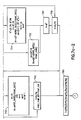
- FIG. 4(b) illustrates a coding method for a non-progressive refresh picture sequence in accordance with the present invention.
- the aforementioned bit allocation technique for non-progressive refresh sequences is summarized as follows.
- an assumed GOP length N'- is provided, and at block 502, an assumed distance M' is provided.
- M' here is a distance between the first I-picture in a GOP and the next I- or P-picture in the display order. This distance may or may not be the same as the GOP length.
- compatible values of N' and M' should be selected, for example, N'>M' and N' is dividable by M'.
- an assumed bit budget R is provided according to N', and at block 505, a target bit rate T is determined, e.g., using eqn. 6, for coding the pictures in the GOP.
- the first picture in the GOP is coded.
- processing continues at block 510, where the actual distance M" is determined using eqn. 13.
- M is set to M
- N is set to M since the distance M" and the GOP length are the same.
- bit budget is adjusted according to eqn. 16, and at block 524 processing returns, e.g., to block 500.
- N' and M' can be set to the values N and M, respectively, of the previous GOP. N and M can be verified for each GOP.
- next picture e.g., the second picture in the GOP
- M is set to M.
- the remaining number of B-pictures.in the current GOP, n B is adjusted using eqn. 18.
- the bit budget is adjusted using eqn. 19, and at block 540, the bit budget is adjusted again, using eqn. 19b, and processing continues at "B".
- next picture e.g., the second picture in the GOP
- M is set to M.
- the remaining number of B-pictures in the current GOP, n B is adjusted using eqn. 18.
- the bit budget is adjusted using eqn. 19, and processing continues at "B".
- FIG. 4(c) illustrates a continuation of the coding method of FIG. 4(b) in accordance with the present invention. Processing continues at "B” from FIG, 4(b).
- the target bit rate T is set using eqn. 6, and at block 554, a counter is set to one.
- the next picture in the GOP is coded.
- counter is incremented. "Counter” essentially tracks the position of the current picture in the GOP.
- FIG. 4(c) The coding method of FIG. 4(c) can be understood further with reference to FIG. 5.
- FIG. 5 illustrates an estimated GOP length N" in accordance with the present invention.
- a sequence of pictures is shown generally, in display order, at 500.
- a first GOP, GOP(N,M) 520 begins at an I-picture 502, and the next GOP 580 begins at an I-picture 510.
- a subsequent GOP begins at an I-picture 515.
- the estimated GOP length N" 530 is equal to the actual GOP length N. However, the estimated GOP length N" 540 is less than the actual GOP length N by two M distances 542 and 544.
- the estimated GOP length N" 540 extends from the I-picture 502 to a P-picture 504, the M-distance 542 extends from the P-picture 504 to a P-picture 506, and the M-distance 544 extends from the P-picture 506 to the I-picture 510.
- the estimated GOP length N" 550 extends from the I-picture 502 to a P-picture 512, and is therefore greater than the actual GOP length N.
- a C-language pseudo code for the bit-allocation procedure, both with and without progressive refresh, is shown below.
- the same algorithm is represented by the flowchart in FIGs 7(a)-7(d).
- a single bitstream can switch arbitrarily between the progressive refresh and I-picture (non-progressive) refresh modes.
- ni, np and nb are the same as n I , n P and n B , respectively, as used elsewhere.
- Box 702 denotes searching for the video sequence header in order to obtain parameters necessary to begin transcoding. Initialization for the loop over transcoded pictures occurs here.
- Box 704 is the call to "get_pict_header()" which consumes the picture header and all higher level syntax.
- the picture type (I, P or B picture) is returned.
- “GOP_flag” is true (non-zero) if a GOP header was encountered;
- “seq_hdr_flag” is true (non-zero) if a video sequence header occurred before the current coded picture and after the previous coded picture.
- Box 706 tests "seq_hdr_flag”. If true, "prog_refresh” is set to 1 (true) if the current picture is not an I-picture in box 708
- Box 710 is the switch statement based on picture types. Although not shown in the code or flowchart, an MPEG-2 D-picture is treated like an I-picture in this algorithm.
- bit_rate() returns the current target transcoder output bitrate which may change due to channel capacity or statistical multiplexing considerations.
- frame_rate () is the average coded frame rate, which is the frame rate specified in the video sequence header modified by the effects of the repeat_first_field flag in the various coded pictures.
- bit_rate() / frame_rate() denotes the desired current average coded picture size (in bits) to be output by the transcoder. It is an average because it does not consider the different MPEG picture types.
- N * bit_rate() / frame_rate() is N (the GOP length in pictures) times the average picture size.
- this mode is disabled because the current picture is an I-picture and N is set to the initial guess for GOP length (boxes 716 and 718).
- Box 726 resets the picture type down counters ("ni", "np”, “nb") according to the GOP type, the number of picture to go in the GOP (n), calculates the normalized I-picture complexity (X) and updates the previous picture type.
- Box 728 is the start of the P-picture case in the switch statement. If the previous picture was not a B-picture (box 730), then a new value of M (M") is calculated from the temporal references. The difference between the two 10-bit temporal reference number will be negative a wrap around occurred; this is why 1024 is added. When no wrap around occurs, the 0x3FF, which is the hexadecimal representation of the binary number 1111111111, removes the 2 10 bit leaving the positive difference; otherwise the addition of 1024 make the negative difference positive and this result is not modified by the bit-wise AND operation.
- M the difference between the two 10-bit temporal reference number
- n number of pictures left in the GOP
- nb number of B-picture left in the GOP
- R number of bits allocated for the remaining picture in the GOP
- Box 736 updates M (previously calculated in M").
- Box 742 calculates the normalized P-picture complexity, "X", and resets "prev temp ref” to be the current temporal reference.
- the new value of M is computed.(see box 746) from the difference in temporal reference. This calculation provide for the possibility that the 10-bit temporal reference may have wrapped around (hence the +1024 and the mask to 10 bits).
- a new normalized complexity for B-picture is computed in box 758.
- the target size, "T" for the next picture is calculated in box 760. This number is the intended size of the current picture when transcoded to the new bit rate. The actual size, returned by "transcode_picture()” is used to decrement R (see box 770). Following the calculation of "T”, the number of picture remaining in the GOP, "n”, and the number of pictures of the current type ("ni", “np” or “nb") must be decremented (see boxes 762 to 768).
- the target rate with a priori knowledge of the GOP structure is 1.7% lower than the rate without a priori knowledge of the GOP structure using the rate control system of the present invention.
- a longer GOP results in the assignment of more bits to all the pictures of three types.
- the target rate with a priori knowledge of the GOP structure is 17.0% higher than the rate without a priori knowledge of the GOP structure using the rate control system of the present invention.
- Relatively more bits are assigned to the pictures of the extended GOP since relatively fewer bits were assigned to the previous pictures. If the extended GOP of M pictures still cannot end the actual GOP of N pictures, we repeat the above procedure until reaching the end of the actual GOP.
- the differences in target rates for the pictures in the extended GOPs of M pictures will remain the same because all the extended GOPs of M pictures have the same pattern of picture organization and the same bit budget.
- the third actual GOP will be assigned R GOP,N bits. From the third actual GOP, there will be no difference in target rates.
- Target rates with respect to frame number for the two numerical examples were analyzed.
- the starting GOP is longer than the actual one, slightly more bits are assigned to the pictures in the first actual GOP and fewer bits for the pictures in the second actual GOP. From the third actual GOP, the target rates are the same.
- Test sequences were first coded at a bit rate of 15 Mbits/sec. with different sets of GOP parameters, as shown in Table I.
- N 15, 12, 12, 18, 18, 15, 15, 9, 9, 30.
- Target rates were analyzed at each GOP for the correct GOP length, and by using the previous GOP structure length as the starting GOP length for each GOP. The results were close with this stress test.
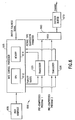
- FIG. 6 illustrates a rate control system in accordance with the present invention.
- Pre-compressed bitstreams e.g., program 1 and program 2 are provided to respective transcoders 620 and 630.
- One or several bitstreams and transcoders may be present.
- the bitstreams may be received real-time at the transcoders from a remote source, such as via a satellite broadcast, or may be provided from a local storage medium, for example.
- the transcoders.620, 630 partially decompress the respective bitstreams, and encode the partially decompressed data at a different data rate, typically by using a different quantization parameter, according to a target bit rate signal provided by a rate control processor 605.
- the rate control processor 605 receives information from the transcoders, including the picture type of the current picture, and the quantization parameter used to encode the current picture. This information is processed as described herein to set the target bit rates.
- the rate control processor 605 may include known processing circuitry, such as a central processing unit (CPU) 612, and a memory 614.
- the memory 614 may be a nonvolatile memory that stores data, for example, for providing the initial distances M' and N' discussed previously.
- the rate control processor includes computing circuitry for executing the C-language like pseudo-code discussed previously.
- a user interface 608 may communicate with the rate control processor 605 to set the default distances M' and N' or other relevant parameters in the rate control process.
- the transcoded data from the transcoders 620, 630 is provided to a multiplexer (MUX) 660, and then to an encoder buffer 670.
- MUX multiplexer
- a buffer fullness signal is provided from the encoder buffer 670 to the rate control processor 605.
- the encoded data is finally transmitted over a channel at its new transcoded data rate.
- the proposed rate control causes no processing delay and requires no extra memory. It can start with any reasonable set of GOP parameters, and then gradually corrects them when necessary as successive pictures are coded. Hence, it is able to address changes in the GOP structure of pre-compressed bitstreams, for example, when switching channels, inserting commercials, and the like. It has been shown that the target rates with correct and incorrect starting GOP parameters will converge within one or two GOPs. The differences in target rates are within a fairly small margin. Moreover, similar target rates correspond to a similar PSNR or picture quality.
Landscapes
- Engineering & Computer Science (AREA)
- Multimedia (AREA)
- Signal Processing (AREA)
- Compression Or Coding Systems Of Tv Signals (AREA)
- Detection And Prevention Of Errors In Transmission (AREA)
- Television Signal Processing For Recording (AREA)
Claims (24)
- Ein Verfahren zum Zuordnen von Bit zum Codieren von Bildern in einem Bitstrom, der an einem digitalen Videotranscoder empfangen wird, wobei die Bilder in dem Bitstrom eine progressive Auffrischsequenz bilden, die keine 1-Bilder enthält, wobei das Verfahren die folgenden Schritte beinhaltet:(a) Bereitstellen einer angenommenen Entfernung M' zwischen einem ersten Bild des Bitstroms und dem am nächsten folgenden P-Bild des Bitstroms in einer Darstellungsreihenfolge des Bitstroms;(b) Bereitstellen eines angenommenen Bit-Budgets als eine Funktion der angenommenen Entfernung M';(c) Codieren des ersten Bilds gemäß dem angenommenen Bit-Budget;(d) Bestimmen eines Bildtyps eines zweiten Bilds, das in einer Codierungsreihenfolge in dem Bitstrom direkt auf das erste Bild des Bitstroms folgt;(e) Anpassen des angenommenen Bit-Budgets entsprechend dem Bildtyp des zweiten Bilds; und(f) Zuordnen von Bit zum Codieren des zweiten Bilds gemäß dem angepassten Bit-Budget;(g) falls das erste Bild ein P-Bild ist und das zweite Bild ein B-Bild ist, beinhaltet das Verfahren des Weiteren Folgendes:Bestimmen einer tatsächlichen Entfernung M" zwischen dem ersten Bild und dem am nächsten folgenden P-Bild in der Darstellungsreihenfolge, entsprechend dem Bildtyp des zweiten Bilds.
- Verfahren gemäß Anspruch 1, wobei:das angenommene Bit-Budget proportional zu der angenommenen Entfernung und einer Bitfolgefrequenz des Bitstroms und umgekehrt proportional zu einer Rahmenfrequenz des Bitstroms ist.
- Verfahren gemäß Anspruch 1, wobei:die tatsächliche Entfernung M" entsprechend einer Differenz zwischen einer Bildnummer des zweiten Bilds, in der Darstellungsreihenfolge, und einer Bildnummer des ersten Bilds in der Darstellungsreihenfolge plus einem Bild bestimmt wird.
- Verfahren gemäß Anspruch 1, das des Weiteren folgenden Schritt beinhaltet:Zuordnen von Bit zum Codieren der restlichen M" - 1 Bilder, die auf das erste Bild folgen, gemäß dem angepassten Bit-Budget.
- Verfahren gemäß Anspruch 1, wobei:der Anpassungsschritt (e) den Schritt des Anpassens des angenommenen Bit-Budgets durch + (M" - M') * "Bitfolgefrequenz"/"Rahmenfrequenz" beinhaltet, wobei "Bitfolgefrequenz" eine Bitfolgefrequenz des Bitstroms ist und "Rahmenfrequenz" eine Rahmenfrequenz des Bitstroms ist.
- Verfahren gemäß Anspruch 1, das des Weiteren folgenden Schritt beinhaltet:Zuordnen von Bit zum Codieren einer Reihe von M" Bildern, die auf M" anfängliche Bilder folgen, die das erste und das zweite Bild in dem Bitstrom umfassen, gemäß dem angepassten Bit-Budget.
- Ein Verfahren zum Zuordnen von Bit zum Codieren von Bildern in einem Bitstrom, der an einem digitalen Videotranscoder empfangen wird, wobei die Bilder in dem Bitstrom eine progressive Auffrischsequenz bilden, die keine 1-Bilder enthält, wobei das Verfahren die folgenden Schritte beinhaltet:(a) Bereitstellen einer angenommenen Entfernung M' zwischen einem ersten Bild des Bitstroms und dem am nächsten folgenden P-Bild des Bitstroms in einer Darstellungsreihenfolge des Bitstroms;(b) Bereitstellen eines angenommenen Bit-Budgets als eine Funktion der angenommenen Entfernung M';(c) Codieren des ersten Bilds gemäß dem angenommenen Bit-Budget;(d) Bestimmen eines Bildtyps eines zweiten Bilds, das in einer Codierungsreihenfolge des Bitstroms direkt auf das erste Bild in dem Bitstrom folgt;(e) Anpassen des angenommenen Bit-Budgets entsprechend dem Bildtyp des zweiten Bilds; und(f) Zuordnen von Bit zum Codieren des zweiten Bilds gemäß dem angepassten Bit-Budget;(g) falls das erste und das zweite Bild P-Bilder sind, beinhaltet das Verfahren des Weiteren Folgendes:Bestimmen einer tatsächlichen Entfernung M" zwischen dem ersten Bild und dem am nächsten folgenden P-Bild in der Darstellungsreihenfolge entsprechend dem Bildtyp des zweiten Bilds.
- Verfahren gemäß Anspruch 7, wobei:das angenommene Bit-Budget proportional zu der angenommenen Entfernung und einer Bitfolgefrequenz des Bitstroms und umgekehrt proportional zu einer Rahmenfrequenz des Bitstroms ist.
- Verfahren gemäß Anspruch 7, wobei:die tatsächliche Entfernung M" entsprechend einer Differenz zwischen einer Bildnummer des zweiten Bilds in der Darstellungsreihenfolge und einer Bildnummer des ersten Bilds in der Darstellungsreihenfolge bestimmt wird.
- Verfahren gemäß Anspruch 7, wobei der Anpassungsschritt (e) folgenden Schritt beinhaltet: Anpassen des angenommenen Bit-Budgets durch - (M' -1) * "Bitfolgefrequenz"/"Rahmenfrequenz", wobei "Bitfolgefrequenz" eine Bitfolgefrequenz des Bitstroms ist und "Rahmenfrequenz" eine Rahmenfrequenz des Bitstroms ist.
- Verfahren gemäß Anspruch 7, das des Weiteren folgenden Schritt beinhaltet:Zuordnen von Bit zum Codieren der restlichen Bilder M" - 1, die auf das erste Bild folgen, gemäß dem angepassten Bit-Budget.
- Verfahren gemäß Anspruch 7, das des Weiteren folgenden Schritt beinhaltet:Zuordnen von Bit zum Codieren einer Reihe von M" Bildern, die auf M" anfängliche Bilder folgen, die das erste und das zweite Bild in dem Bitstrom umfassen, gemäß dem angepassten Bit-Budget.
- Ein Gerät zum Zuordnen von Bit zum Codieren von Bildern in einem Bitstrom, der an einem digitalen Videotranscoder empfangen wird, wobei die Bilder in dem Bitstrom eine progressive Auffrischsequenz bilden, die keine I-Bilder enthält, wobei das Gerät Folgenden beinhaltet:(a) ein Mittel zum Bereitstellen einer angenommenen Entfernung M' zwischen einem ersten Bild des Bitstroms und dem am nächsten folgenden P-Bild des Bitstroms in einer Darstellungsreihenfolge des Bitstroms;(b) ein Mittel zum Bereitstellen eines angenommenen Bit-Budgets als eine Funktion der angenommenen Entfernung M';(c) ein Mittel zum Codieren des ersten Bilds gemäß dem angenommenen Bit-Budget;(d) ein Mittel zum Bestimmen eines Bildtyps eines zweiten Bilds, das in einer Codierungsreihenfolge des Bitstroms direkt auf das erste Bild in dem Bitstrom folgt;(e) ein Mittel zum Anpassen des angenommenen Bit-Budgets entsprechend dem Bildtyp des zweiten Bilds; und(f) ein Mittel zum Zuordnen von Bit zum Codieren des zweiten Bilds gemäß dem angepassten Bit-Budget; wobei die Bilder in dem Bitstrom eine progressive Auffrischsequenz bilden, die keine I-Bilder enthält;(g) falls das erste Bild ein P-Bild ist und das zweite Bild ein B-Bild ist, beinhaltet das Gerät des Weiteren Folgendes:ein Mittel zum Bestimmen einer tatsächlichen Entfernung M" zwischen dem ersten Bild und dem am nächsten folgenden P-Bild in der Darstellungsreihenfolge entsprechend dem Bildtyp des zweiten Bilds.
- Gerät gemäß Anspruch 13, wobei:das angenommene Bit-Budget proportional zu der angenommenen Entfernung und einer Bitfolgefrequenz des Bitstroms und umgekehrt proportional zu einer Rahmenfrequenz des Bitstroms ist.
- Gerät gemäß Anspruch 13, wobei:die tatsächliche Entfernung M" entsprechend einer Differenz zwischen einer Bildnummer des zweiten Bilds in der Darstellungsreihenfolge und einer Bildnummer des ersten Bilds in der Darstellungsreihenfolge plus einem Bild bestimmt wird.
- Gerät gemäß Anspruch 13, das des Weiteren Folgendes beinhaltet:ein Mittel zum Zuordnen von Bit zum Codieren der restlichen M" -1 Bilder, die auf das erste Bild folgen, gemäß dem angepassten Bit-Budget.
- Gerät gemäß Anspruch 13, wobei:das Anpassungsmittel (e) ein Mittel zum Anpassen des angenommenen Bit-Budgets durch + (M" - M') * "Bitfolgefrequenz"/"Rahmenfrequenz" beinhaltet, wobei "Bitfolgefrequenz" eine Bitfolgefrequenz des Bitstroms ist und "Rahmenfrequenz" eine Rahmenfrequenz des Bitstroms ist.
- Gerät gemäß Anspruch 13, das des Weiteren Folgendes beinhaltet:ein Mittel zum Zuordnen von Bit zum Codieren einer Reihe von M" Bildern, die auf M" anfängliche Bilder folgen, die das erste und das zweite Bild in dem Bitstrom umfassen, gemäß dem angepassten Bit-Budget.
- Ein Gerät zum Zuordnen von Bit zum Codieren von Bildern in einem Bitstrom, der an einem digitalen Videotrariscoder empfangen wird, wobei die Bilder in dem Bitstrom eine progressive Auffrischsequenz bilden, die keine I-Bilder enthält, wobei das Gerät Folgendes beinhaltet:(a) ein Mittel zum Bereitstellen einer angenommenen Entfernung M' zwischen einem ersten Bild des Bitstroms und dem am nächsten folgenden P-Bild des Bitstroms in einer Darstellungsreihenfolge des Bitstroms;(b) ein Mittel zum Bereitstellen eines angenommenen Bit-Budgets als eine Funktion der angenommenen Entfernung M';(c) ein Mittel zum Codieren des ersten Bilds gemäß dem angenommenen Bit-Budget;(d) ein Mittel zum Bestimmen eines Bildtyps eines zweiten Bilds, das in einer Codierungsreihenfolge des Bitstroms direkt auf das erste Bild in dem Bitstrom folgt;(e) ein Mittel zum Anpassen des angenommenen Bit-Budgets entsprechend dem Bildtyp des zweiten Bilds; und(f) ein Mittel zum Zuordnen von Bit zum Codieren des zweiten Bilds gemäß dem angepassten Bit-Budget;(g) falls das erste und das zweite Bild P-Bilder sind, beinhaltet das Gerät des Weiteren Folgendes:ein Mittel zum Bestimmen einer tatsächlichen Entfernung M" zwischen dem ersten Bild und dem am nächsten folgenden P-Bild in der Darstellungsreihenfolge entsprechend dem Bildtyp des zweiten Bilds.
- Gerät gemäß Anspruch 19, wobei:das angenommene Bit-Budget proportional zu der angenommenen Entfernung und einer Bitfolgefrequenz des Bitstroms und umgekehrt proportional zu einer Rahmenfrequenz des Bitstroms ist.
- Gerät gemäß Anspruch 19, wobei:die tatsächliche Entfernung M" entsprechend einer Differenz zwischen einer Bildnummer des zweiten Bilds in der Darstellungsreihenfolge und einer Bildnummer des ersten Bilds in der Darstellungsreihenfolge bestimmt wird.
- Gerät gemäß Anspruch 19, wobei das Anpassungsmittel (e) Folgendes beinhaltet:ein Mittel zum Anpassen des angenommenen Bit-Budgets durch - (M' - 1) * "Bitfolgefrequenz"/"Rahmenfrequenz", wobei "Bitfolgefrequenz" eine Bitfolgefrequenz des Bitstroms ist und "Rahmenfrequenz" eine Rahmenfrequenz des Bitstroms ist.
- Gerät gemäß Anspruch 19, das des Weiteren Folgendes beinhaltet:ein Mittel zum Zuordnen von Bit zum Codieren der restlichen M" - 1 Bilder, die auf das erste Bild folgen, gemäß dem angepassten Bit-Budget.
- Gerät gemäß Anspruch 19, das des Weiteren Folgendes beinhaltet:ein Mittel zum Zuordnen von Bit zum Codieren einer Reihe von M" Bildern, die auf M" anfängliche Bilder folgen, die das erste und das zweite Bild in dem Bitstrom umfassen, gemäß dem angepassten Bit-Budget.
Applications Claiming Priority (2)
| Application Number | Priority Date | Filing Date | Title |
|---|---|---|---|
| US09/198,867 US6570922B1 (en) | 1998-11-24 | 1998-11-24 | Rate control for an MPEG transcoder without a priori knowledge of picture type |
| US198867 | 1998-11-24 |
Publications (3)
| Publication Number | Publication Date |
|---|---|
| EP1005232A2 EP1005232A2 (de) | 2000-05-31 |
| EP1005232A3 EP1005232A3 (de) | 2003-12-10 |
| EP1005232B1 true EP1005232B1 (de) | 2008-02-06 |
Family
ID=22735187
Family Applications (1)
| Application Number | Title | Priority Date | Filing Date |
|---|---|---|---|
| EP99120843A Expired - Lifetime EP1005232B1 (de) | 1998-11-24 | 1999-10-25 | Steuerung der Datenrate für einen MPEG-Transcoder ohne a-priori Kenntnis des Bildtyps |
Country Status (8)
| Country | Link |
|---|---|
| US (2) | US6570922B1 (de) |
| EP (1) | EP1005232B1 (de) |
| KR (1) | KR100880055B1 (de) |
| CN (1) | CN1269360C (de) |
| AT (1) | ATE385650T1 (de) |
| CA (1) | CA2286640C (de) |
| DE (1) | DE69938093T2 (de) |
| TW (1) | TW450006B (de) |
Families Citing this family (73)
| Publication number | Priority date | Publication date | Assignee | Title |
|---|---|---|---|---|
| GB2333657B (en) | 1998-01-22 | 2002-08-21 | Snell & Wilcox Ltd | Video signal compression |
| GB2333656B (en) * | 1998-01-22 | 2002-08-14 | British Broadcasting Corp | Compressed signals |
| GB2335104B (en) | 1998-03-06 | 2002-01-30 | British Broadcasting Corp | Cascading of up conversion and down conversion |
| GB2337389B (en) | 1998-05-15 | 2002-05-29 | Snell & Wilcox Ltd | Video signal processing |
| JP3129411B2 (ja) * | 1998-05-28 | 2001-01-29 | 日本電気株式会社 | 動画像圧縮装置と動画像圧縮方法 |
| WO1999063760A1 (en) * | 1998-05-30 | 1999-12-09 | Sgs-Thomson Microelectronics Asia Pacific (Pte) Ltd. | Sequence adaptive bit allocation for pictures encoding |
| GB9822094D0 (en) | 1998-10-09 | 1998-12-02 | Snell & Wilcox Ltd | Improvements in data compression |
| GB9822092D0 (en) | 1998-10-09 | 1998-12-02 | Snell & Wilcox Ltd | Analysis of compression decoded sequences |
| GB9822087D0 (en) * | 1998-10-09 | 1998-12-02 | Snell & Wilcox Ltd | Improvements in data compression |
| GB9824061D0 (en) | 1998-11-03 | 1998-12-30 | Snell & Wilcox Ltd | Film sequence detection (nt4) |
| US6927783B1 (en) | 1998-11-09 | 2005-08-09 | Broadcom Corporation | Graphics display system with anti-aliased text and graphics feature |
| US6661422B1 (en) * | 1998-11-09 | 2003-12-09 | Broadcom Corporation | Video and graphics system with MPEG specific data transfer commands |
| US7982740B2 (en) | 1998-11-09 | 2011-07-19 | Broadcom Corporation | Low resolution graphics mode support using window descriptors |
| US6573905B1 (en) | 1999-11-09 | 2003-06-03 | Broadcom Corporation | Video and graphics system with parallel processing of graphics windows |
| US6768774B1 (en) | 1998-11-09 | 2004-07-27 | Broadcom Corporation | Video and graphics system with video scaling |
| US6853385B1 (en) | 1999-11-09 | 2005-02-08 | Broadcom Corporation | Video, audio and graphics decode, composite and display system |
| US6798420B1 (en) | 1998-11-09 | 2004-09-28 | Broadcom Corporation | Video and graphics system with a single-port RAM |
| US6636222B1 (en) * | 1999-11-09 | 2003-10-21 | Broadcom Corporation | Video and graphics system with an MPEG video decoder for concurrent multi-row decoding |
| US7446774B1 (en) | 1998-11-09 | 2008-11-04 | Broadcom Corporation | Video and graphics system with an integrated system bridge controller |
| US7068724B1 (en) * | 1999-10-20 | 2006-06-27 | Prime Research Alliance E., Inc. | Method and apparatus for inserting digital media advertisements into statistical multiplexed streams |
| US6700623B1 (en) | 1998-12-10 | 2004-03-02 | Snell & Wilcox Limited | Video signal processing using triplets of pixels |
| GB2346282B (en) * | 1999-01-28 | 2003-02-19 | Snell & Wilcox Ltd | Bit rate control in compression encoding |
| US6975324B1 (en) | 1999-11-09 | 2005-12-13 | Broadcom Corporation | Video and graphics system with a video transport processor |
| JP2001145113A (ja) * | 1999-11-17 | 2001-05-25 | Sony Corp | 画像情報変換装置及び方法 |
| EP1169865A1 (de) * | 2000-01-14 | 2002-01-09 | Koninklijke Philips Electronics N.V. | Verfahren und gerät zur transkodierung |
| EP1139665A1 (de) * | 2000-03-29 | 2001-10-04 | Deutsche Thomson-Brandt Gmbh | Verfahren und Gerät für die Ausgabeverzögerungsänderung während der Video- oder Tonkodierung |
| GB2361126B (en) * | 2000-04-05 | 2004-04-21 | Snell & Wilcox Ltd | Spatial video processing |
| JP2004511976A (ja) * | 2000-10-10 | 2004-04-15 | コーニンクレッカ フィリップス エレクトロニクス エヌ ヴィ | ディジタルビデオ記録のためのビデオビットレート制御方法及び装置 |
| US8559797B2 (en) | 2000-10-10 | 2013-10-15 | Broadcom Corporation | System and method for personal video recording |
| EP1327360A1 (de) * | 2000-10-11 | 2003-07-16 | Koninklijke Philips Electronics N.V. | Skalierbare kodierung von multimedia-objekten |
| US6748020B1 (en) * | 2000-10-25 | 2004-06-08 | General Instrument Corporation | Transcoder-multiplexer (transmux) software architecture |
| US8391482B2 (en) * | 2001-05-04 | 2013-03-05 | Hewlett-Packard Development Company, L.P. | Signal format that facilitates easy scalability of data streams |
| US6940904B2 (en) * | 2001-05-29 | 2005-09-06 | Broadcom Corporation | Artifact-free displaying of MPEG-2 video in the progressive-refresh mode |
| US9894379B2 (en) * | 2001-07-10 | 2018-02-13 | The Directv Group, Inc. | System and methodology for video compression |
| US6959042B1 (en) * | 2001-10-01 | 2005-10-25 | Cisco Technology, Inc. | Methods and apparatus for measuring compressed video signals and applications to statistical remultiplexing |
| US7356079B2 (en) | 2001-11-21 | 2008-04-08 | Vixs Systems Inc. | Method and system for rate control during video transcoding |
| US7403564B2 (en) * | 2001-11-21 | 2008-07-22 | Vixs Systems, Inc. | System and method for multiple channel video transcoding |
| DE10300048B4 (de) | 2002-01-05 | 2005-05-12 | Samsung Electronics Co., Ltd., Suwon | Verfahren und Vorrichtung zur Bildcodierung und -decodierung |
| KR100624404B1 (ko) * | 2002-01-05 | 2006-09-18 | 삼성전자주식회사 | 사람의 시각적 특성을 고려한 적응적 부호화 방법 및 장치 |
| FI114527B (fi) | 2002-01-23 | 2004-10-29 | Nokia Corp | Kuvakehysten ryhmittely videokoodauksessa |
| KR100959573B1 (ko) | 2002-01-23 | 2010-05-27 | 노키아 코포레이션 | 비디오 코딩시 이미지 프레임들의 그루핑 |
| US7295610B2 (en) * | 2002-03-27 | 2007-11-13 | Scientific-Atlanta, Inc. | Hybrid rate control in a digital stream transcoder |
| US7190723B2 (en) * | 2002-03-27 | 2007-03-13 | Scientific-Atlanta, Inc. | Digital stream transcoder with a hybrid-rate controller |
| US7236521B2 (en) * | 2002-03-27 | 2007-06-26 | Scientific-Atlanta, Inc. | Digital stream transcoder |
| US20030215011A1 (en) * | 2002-05-17 | 2003-11-20 | General Instrument Corporation | Method and apparatus for transcoding compressed video bitstreams |
| KR20040076034A (ko) * | 2003-02-24 | 2004-08-31 | 삼성전자주식회사 | 동 영상의 가변 비트율 부호화 방법 및 장치 |
| US20040260827A1 (en) * | 2003-06-19 | 2004-12-23 | Nokia Corporation | Stream switching based on gradual decoder refresh |
| EP1496707A1 (de) * | 2003-07-09 | 2005-01-12 | Matsushita Electric Industrial Co., Ltd. | Kodieren und Dekodieren von Videobildern mit verzögerter Referenzbildauffrischung |
| CA2536587A1 (en) * | 2003-08-26 | 2005-03-03 | Samsung Electronics Co., Ltd. | Scalable video coding method and apparatus using pre-decoder |
| US7263126B2 (en) * | 2003-09-15 | 2007-08-28 | Sharp Laboratories Of America, Inc. | System and method for transcoding with adaptive bit rate control |
| US8063916B2 (en) | 2003-10-22 | 2011-11-22 | Broadcom Corporation | Graphics layer reduction for video composition |
| US20050226327A1 (en) * | 2004-03-30 | 2005-10-13 | Kim Seong-Bong | MPEG coding method, moving picture transmitting system and method using the same |
| US7818444B2 (en) | 2004-04-30 | 2010-10-19 | Move Networks, Inc. | Apparatus, system, and method for multi-bitrate content streaming |
| US7747095B2 (en) * | 2004-10-08 | 2010-06-29 | Nvidia Corporation | Methods and systems for rate control in image compression |
| US9544602B2 (en) * | 2005-12-30 | 2017-01-10 | Sharp Laboratories Of America, Inc. | Wireless video transmission system |
| US7885189B2 (en) * | 2006-09-20 | 2011-02-08 | Rgb Networks, Inc. | Methods and apparatus for rate estimation and predictive rate control |
| US20080141091A1 (en) * | 2006-12-06 | 2008-06-12 | General Instrument Corporation | Method and Apparatus for Recovering From Errors in Transmission of Encoded Video Over a Local Area Network |
| JP2008167061A (ja) * | 2006-12-27 | 2008-07-17 | Toshiba Corp | 符号化装置及び符号化方法 |
| KR101345295B1 (ko) * | 2007-06-11 | 2013-12-27 | 삼성전자주식회사 | 인트라 픽처만을 이용한 동영상 시퀀스의 부호화시의비트율 제어 방법 및 장치 |
| GB2460069A (en) * | 2008-05-15 | 2009-11-18 | Snell & Wilcox Ltd | Sampling conversion between formats in digital image processing |
| JP4460011B2 (ja) * | 2008-05-27 | 2010-05-12 | 国立大学法人広島大学 | 動画像配信システム、動画像配信方法、動画像配信システムにおけるサーバおよび動画像配信システムにおけるユーザ端末 |
| US9077937B2 (en) * | 2008-11-06 | 2015-07-07 | Alcatel Lucent | Method and apparatus for fast channel change |
| KR20100061908A (ko) * | 2008-12-01 | 2010-06-10 | 엘지전자 주식회사 | 영상표시장치, 영상전송장치, 영상전송방법 및 기록매체 |
| US20100333149A1 (en) * | 2009-06-24 | 2010-12-30 | Rgb Networks, Inc. | Delivery of pre-statistically multiplexed streams in a vod system |
| US9369723B2 (en) * | 2011-07-14 | 2016-06-14 | Comcast Cable Communications, Llc | Preserving image quality in temporally compressed video streams |
| US9094684B2 (en) | 2011-12-19 | 2015-07-28 | Google Technology Holdings LLC | Method for dual pass rate control video encoding |
| WO2013095627A1 (en) * | 2011-12-23 | 2013-06-27 | Intel Corporation | Content adaptive high precision macroblock rate control |
| CN103634594B (zh) * | 2012-08-21 | 2015-04-29 | 华为技术有限公司 | 一种获得视频编码压缩质量的方法及装置 |
| US9100636B2 (en) * | 2012-09-07 | 2015-08-04 | Intel Corporation | Motion and quality adaptive rolling intra refresh |
| US10186236B2 (en) * | 2013-05-23 | 2019-01-22 | Intel Corporation | Universal codec |
| US9787986B2 (en) * | 2014-06-30 | 2017-10-10 | Intel Corporation | Techniques for parallel video transcoding |
| EP3376766B1 (de) * | 2017-03-14 | 2019-01-30 | Axis AB | Verfahren und codierersystem zur bestimmung der gop-länge für videocodierung |
| US10225211B2 (en) | 2017-07-20 | 2019-03-05 | Arris Enterprises Llc | Statistical multiplexer with service priority weighting |
Family Cites Families (15)
| Publication number | Priority date | Publication date | Assignee | Title |
|---|---|---|---|---|
| US5887115A (en) | 1993-01-13 | 1999-03-23 | Hitachi America, Ltd. | Method and apparatus for implementing a video tape recorder for recording digital video signals having either a fixed or variable data transmission rate |
| US5477397A (en) | 1993-02-23 | 1995-12-19 | Matsushita Electric Corporation Of America | Digital high definition television receiver with features that facilitate trick-play modes on a digital VCR |
| KR950014858B1 (ko) | 1993-06-04 | 1995-12-16 | 대우전자주식회사 | 디지탈 영상 기록장치 |
| CA2126467A1 (en) * | 1993-07-13 | 1995-01-14 | Barin Geoffry Haskell | Scalable encoding and decoding of high-resolution progressive video |
| EP0803163B1 (de) * | 1994-04-20 | 2009-07-08 | Thomson Inc. | Multiplexsystem mit konstantbitratenkodierer |
| US5708473A (en) * | 1994-08-30 | 1998-01-13 | Hughes Aircraft Company | Two stage video film compression method and system |
| US5617142A (en) | 1994-11-08 | 1997-04-01 | General Instrument Corporation Of Delaware | Method and apparatus for changing the compression level of a compressed digital signal |
| US5619733A (en) | 1994-11-10 | 1997-04-08 | International Business Machines Corporation | Method and apparatus for synchronizing streaming and non-streaming multimedia devices by controlling the play speed of the non-streaming device in response to a synchronization signal |
| US5929916A (en) * | 1995-12-26 | 1999-07-27 | Legall; Didier J. | Variable bit rate encoding |
| US5686963A (en) * | 1995-12-26 | 1997-11-11 | C-Cube Microsystems | Method for performing rate control in a video encoder which provides a bit budget for each frame while employing virtual buffers and virtual buffer verifiers |
| US5933500A (en) | 1996-05-31 | 1999-08-03 | Thomson Consumer Electronics, Inc. | Adaptive decoding system for processing encrypted and non-encrypted broadcast, cable or satellite video data |
| US6115420A (en) * | 1997-03-14 | 2000-09-05 | Microsoft Corporation | Digital video signal encoder and encoding method |
| US5982436A (en) * | 1997-03-28 | 1999-11-09 | Philips Electronics North America Corp. | Method for seamless splicing in a video encoder |
| US5986712A (en) * | 1998-01-08 | 1999-11-16 | Thomson Consumer Electronics, Inc. | Hybrid global/local bit rate control |
| US6643327B1 (en) * | 2000-05-05 | 2003-11-04 | General Instrument Corporation | Statistical multiplexer and remultiplexer that accommodates changes in structure of group of pictures |
-
1998
- 1998-11-24 US US09/198,867 patent/US6570922B1/en not_active Expired - Lifetime
-
1999
- 1999-10-08 TW TW088117442A patent/TW450006B/zh not_active IP Right Cessation
- 1999-10-18 CA CA002286640A patent/CA2286640C/en not_active Expired - Lifetime
- 1999-10-25 DE DE69938093T patent/DE69938093T2/de not_active Expired - Lifetime
- 1999-10-25 EP EP99120843A patent/EP1005232B1/de not_active Expired - Lifetime
- 1999-10-25 AT AT99120843T patent/ATE385650T1/de not_active IP Right Cessation
- 1999-11-24 KR KR1019990052415A patent/KR100880055B1/ko not_active Expired - Lifetime
- 1999-11-24 CN CNB991250605A patent/CN1269360C/zh not_active Expired - Lifetime
-
2002
- 2002-04-22 US US10/131,414 patent/US7020198B2/en not_active Expired - Lifetime
Also Published As
| Publication number | Publication date |
|---|---|
| US7020198B2 (en) | 2006-03-28 |
| DE69938093T2 (de) | 2009-04-30 |
| CN1255022A (zh) | 2000-05-31 |
| US6570922B1 (en) | 2003-05-27 |
| CN1269360C (zh) | 2006-08-09 |
| KR20000035651A (ko) | 2000-06-26 |
| DE69938093D1 (de) | 2008-03-20 |
| TW450006B (en) | 2001-08-11 |
| EP1005232A2 (de) | 2000-05-31 |
| CA2286640A1 (en) | 2000-05-24 |
| ATE385650T1 (de) | 2008-02-15 |
| EP1005232A3 (de) | 2003-12-10 |
| CA2286640C (en) | 2009-07-14 |
| KR100880055B1 (ko) | 2009-01-22 |
| US20020159523A1 (en) | 2002-10-31 |
Similar Documents
| Publication | Publication Date | Title |
|---|---|---|
| US6570922B1 (en) | Rate control for an MPEG transcoder without a priori knowledge of picture type | |
| US8223847B2 (en) | Editing device, editing method, splicing device, splicing method, encoding device, and encoding method | |
| US6480539B1 (en) | Video encoding method and apparatus | |
| JP3533282B2 (ja) | 複数のプロセッサを使用したビデオ圧縮 | |
| EP0862835B1 (de) | Verfahren zur Veränderung kodierter digitaler Fernsehsignale zur besseren Kanalausnutzung mittels Reduzierung von kodierten B-Bilddaten | |
| US5862140A (en) | Method and apparatus for multiplexing video programs for improved channel utilization | |
| US6961376B2 (en) | Methods and apparatus for rate control during dual pass encoding | |
| US6982762B1 (en) | Sequence adaptive bit allocation for pictures encoding | |
| US6229849B1 (en) | Coding device and method | |
| US20100150168A1 (en) | Method and apparatus for multiplexing of digital video | |
| KR980011300A (ko) | 입체 디지털 비디오 인코딩을 위한 속도제어 | |
| US7373004B2 (en) | Apparatus for constant quality rate control in video compression and target bit allocator thereof | |
| JP2009207163A (ja) | 復号装置および方法、記録媒体 | |
| US6826228B1 (en) | Conditional masking for video encoder | |
| US6226326B1 (en) | Coding device and coding method | |
| US20040233984A1 (en) | Apparatus for variable bit rate control in video compression and target bit allocator thereof | |
| EP0888009B1 (de) | Vorrichtung und verfahren zur kodierung von bilddaten sowie verfahren zur bilddatenübertragung | |
| HK1027908A (en) | Rate control for an mpeg transcoder without a priori knowledge of picture type | |
| US20010000675A1 (en) | Video data encoding apparatus, video data encoding method, and video data transmission method | |
| Arachchi et al. | An intelligent rate control algorithm to improve the video quality at scene transitions for off-line MPEG-1/2 encoders | |
| MXPA99009808A (en) | Rate control for an mpeg transcoder without a priori knowledgeof picture type | |
| JP2004007571A (ja) | 符号化装置および方法、復号装置および方法、編集装置および方法、記録媒体、並びにプログラム | |
| Park et al. | Implementation of Bit-Rate Control for MPEG-2 Video MP@ HL |
Legal Events
| Date | Code | Title | Description |
|---|---|---|---|
| PUAI | Public reference made under article 153(3) epc to a published international application that has entered the european phase |
Free format text: ORIGINAL CODE: 0009012 |
|
| AK | Designated contracting states |
Kind code of ref document: A2 Designated state(s): AT BE CH CY DE DK ES FI FR GB GR IE IT LI LU MC NL PT SE |
|
| AX | Request for extension of the european patent |
Free format text: AL;LT;LV;MK;RO;SI |
|
| PUAL | Search report despatched |
Free format text: ORIGINAL CODE: 0009013 |
|
| RIC1 | Information provided on ipc code assigned before grant |
Ipc: 7H 04N 7/46 B Ipc: 7H 04N 7/58 B Ipc: 7H 04N 7/50 B Ipc: 7H 04N 7/26 A |
|
| AK | Designated contracting states |
Kind code of ref document: A3 Designated state(s): AT BE CH CY DE DK ES FI FR GB GR IE IT LI LU MC NL PT SE |
|
| AX | Request for extension of the european patent |
Extension state: AL LT LV MK RO SI |
|
| 17P | Request for examination filed |
Effective date: 20040218 |
|
| AKX | Designation fees paid |
Designated state(s): AT BE CH CY DE DK ES FI FR GB GR IE IT LI LU MC NL PT SE |
|
| 17Q | First examination report despatched |
Effective date: 20061108 |
|
| REG | Reference to a national code |
Ref country code: HK Ref legal event code: WD Ref document number: 1027908 Country of ref document: HK |
|
| GRAP | Despatch of communication of intention to grant a patent |
Free format text: ORIGINAL CODE: EPIDOSNIGR1 |
|
| GRAS | Grant fee paid |
Free format text: ORIGINAL CODE: EPIDOSNIGR3 |
|
| GRAA | (expected) grant |
Free format text: ORIGINAL CODE: 0009210 |
|
| AK | Designated contracting states |
Kind code of ref document: B1 Designated state(s): AT BE CH CY DE DK ES FI FR GB GR IE IT LI LU MC NL PT SE |
|
| REG | Reference to a national code |
Ref country code: GB Ref legal event code: FG4D |
|
| REG | Reference to a national code |
Ref country code: CH Ref legal event code: EP |
|
| REG | Reference to a national code |
Ref country code: IE Ref legal event code: FG4D |
|
| REF | Corresponds to: |
Ref document number: 69938093 Country of ref document: DE Date of ref document: 20080320 Kind code of ref document: P |
|
| REG | Reference to a national code |
Ref country code: DE Ref legal event code: R096 Ref document number: 69938093 Country of ref document: DE Effective date: 20080320 |
|
| PG25 | Lapsed in a contracting state [announced via postgrant information from national office to epo] |
Ref country code: FI Free format text: LAPSE BECAUSE OF FAILURE TO SUBMIT A TRANSLATION OF THE DESCRIPTION OR TO PAY THE FEE WITHIN THE PRESCRIBED TIME-LIMIT Effective date: 20080206 Ref country code: ES Free format text: LAPSE BECAUSE OF FAILURE TO SUBMIT A TRANSLATION OF THE DESCRIPTION OR TO PAY THE FEE WITHIN THE PRESCRIBED TIME-LIMIT Effective date: 20080517 |
|
| NLV1 | Nl: lapsed or annulled due to failure to fulfill the requirements of art. 29p and 29m of the patents act | ||
| PG25 | Lapsed in a contracting state [announced via postgrant information from national office to epo] |
Ref country code: AT Free format text: LAPSE BECAUSE OF FAILURE TO SUBMIT A TRANSLATION OF THE DESCRIPTION OR TO PAY THE FEE WITHIN THE PRESCRIBED TIME-LIMIT Effective date: 20080206 |
|
| ET | Fr: translation filed | ||
| PG25 | Lapsed in a contracting state [announced via postgrant information from national office to epo] |
Ref country code: BE Free format text: LAPSE BECAUSE OF FAILURE TO SUBMIT A TRANSLATION OF THE DESCRIPTION OR TO PAY THE FEE WITHIN THE PRESCRIBED TIME-LIMIT Effective date: 20080206 |
|
| PG25 | Lapsed in a contracting state [announced via postgrant information from national office to epo] |
Ref country code: SE Free format text: LAPSE BECAUSE OF FAILURE TO SUBMIT A TRANSLATION OF THE DESCRIPTION OR TO PAY THE FEE WITHIN THE PRESCRIBED TIME-LIMIT Effective date: 20080506 Ref country code: PT Free format text: LAPSE BECAUSE OF FAILURE TO SUBMIT A TRANSLATION OF THE DESCRIPTION OR TO PAY THE FEE WITHIN THE PRESCRIBED TIME-LIMIT Effective date: 20080707 Ref country code: NL Free format text: LAPSE BECAUSE OF FAILURE TO SUBMIT A TRANSLATION OF THE DESCRIPTION OR TO PAY THE FEE WITHIN THE PRESCRIBED TIME-LIMIT Effective date: 20080206 Ref country code: DK Free format text: LAPSE BECAUSE OF FAILURE TO SUBMIT A TRANSLATION OF THE DESCRIPTION OR TO PAY THE FEE WITHIN THE PRESCRIBED TIME-LIMIT Effective date: 20080206 |
|
| PLBE | No opposition filed within time limit |
Free format text: ORIGINAL CODE: 0009261 |
|
| STAA | Information on the status of an ep patent application or granted ep patent |
Free format text: STATUS: NO OPPOSITION FILED WITHIN TIME LIMIT |
|
| 26N | No opposition filed |
Effective date: 20081107 |
|
| REG | Reference to a national code |
Ref country code: DE Ref legal event code: R097 Ref document number: 69938093 Country of ref document: DE Effective date: 20081107 |
|
| PG25 | Lapsed in a contracting state [announced via postgrant information from national office to epo] |
Ref country code: MC Free format text: LAPSE BECAUSE OF NON-PAYMENT OF DUE FEES Effective date: 20081031 |
|
| REG | Reference to a national code |
Ref country code: CH Ref legal event code: PL |
|
| PG25 | Lapsed in a contracting state [announced via postgrant information from national office to epo] |
Ref country code: CY Free format text: LAPSE BECAUSE OF FAILURE TO SUBMIT A TRANSLATION OF THE DESCRIPTION OR TO PAY THE FEE WITHIN THE PRESCRIBED TIME-LIMIT Effective date: 20080206 |
|
| PG25 | Lapsed in a contracting state [announced via postgrant information from national office to epo] |
Ref country code: IT Free format text: LAPSE BECAUSE OF FAILURE TO SUBMIT A TRANSLATION OF THE DESCRIPTION OR TO PAY THE FEE WITHIN THE PRESCRIBED TIME-LIMIT Effective date: 20080206 |
|
| PG25 | Lapsed in a contracting state [announced via postgrant information from national office to epo] |
Ref country code: LI Free format text: LAPSE BECAUSE OF NON-PAYMENT OF DUE FEES Effective date: 20081031 Ref country code: IE Free format text: LAPSE BECAUSE OF NON-PAYMENT OF DUE FEES Effective date: 20081027 Ref country code: CH Free format text: LAPSE BECAUSE OF NON-PAYMENT OF DUE FEES Effective date: 20081031 |
|
| PG25 | Lapsed in a contracting state [announced via postgrant information from national office to epo] |
Ref country code: LU Free format text: LAPSE BECAUSE OF NON-PAYMENT OF DUE FEES Effective date: 20081025 |
|
| PG25 | Lapsed in a contracting state [announced via postgrant information from national office to epo] |
Ref country code: GR Free format text: LAPSE BECAUSE OF FAILURE TO SUBMIT A TRANSLATION OF THE DESCRIPTION OR TO PAY THE FEE WITHIN THE PRESCRIBED TIME-LIMIT Effective date: 20080507 |
|
| REG | Reference to a national code |
Ref country code: DE Ref legal event code: R082 Ref document number: 69938093 Country of ref document: DE Representative=s name: HOEGER, STELLRECHT & PARTNER PATENTANWAELTE, DE |
|
| REG | Reference to a national code |
Ref country code: GB Ref legal event code: 732E Free format text: REGISTERED BETWEEN 20130919 AND 20130925 |
|
| REG | Reference to a national code |
Ref country code: DE Ref legal event code: R082 Ref document number: 69938093 Country of ref document: DE Representative=s name: BETTEN & RESCH PATENT- UND RECHTSANWAELTE PART, DE Effective date: 20130823 Ref country code: DE Ref legal event code: R082 Ref document number: 69938093 Country of ref document: DE Representative=s name: HOEGER, STELLRECHT & PARTNER PATENTANWAELTE MB, DE Effective date: 20130823 Ref country code: DE Ref legal event code: R082 Ref document number: 69938093 Country of ref document: DE Representative=s name: HOEGER, STELLRECHT & PARTNER PATENTANWAELTE, DE Effective date: 20130823 Ref country code: DE Ref legal event code: R081 Ref document number: 69938093 Country of ref document: DE Owner name: GOOGLE TECHNOLOGY HOLDINGS LLC, MOUNTAIN VIEW, US Free format text: FORMER OWNER: GENERAL INSTRUMENT CORPORATION, HORSHAM, PA., US Effective date: 20130823 Ref country code: DE Ref legal event code: R081 Ref document number: 69938093 Country of ref document: DE Owner name: MOTOROLA MOBILITY LLC (N.D. GES. D. STAATES DE, US Free format text: FORMER OWNER: GENERAL INSTRUMENT CORPORATION, HORSHAM, PA., US Effective date: 20130823 Ref country code: DE Ref legal event code: R081 Ref document number: 69938093 Country of ref document: DE Owner name: MOTOROLA MOBILITY LLC (N.D. GES. D. STAATES DE, US Free format text: FORMER OWNER: GENERAL INSTRUMENT CORPORATION, HORSHAM, US Effective date: 20130823 |
|
| REG | Reference to a national code |
Ref country code: FR Ref legal event code: TP Owner name: MOTOROLA MOBILITY LLC, US Effective date: 20131230 |
|
| REG | Reference to a national code |
Ref country code: DE Ref legal event code: R082 Ref document number: 69938093 Country of ref document: DE Representative=s name: BETTEN & RESCH PATENT- UND RECHTSANWAELTE PART, DE Ref country code: DE Ref legal event code: R082 Ref document number: 69938093 Country of ref document: DE Representative=s name: HOEGER, STELLRECHT & PARTNER PATENTANWAELTE MB, DE |
|
| REG | Reference to a national code |
Ref country code: FR Ref legal event code: PLFP Year of fee payment: 17 |
|
| REG | Reference to a national code |
Ref country code: FR Ref legal event code: PLFP Year of fee payment: 18 |
|
| REG | Reference to a national code |
Ref country code: GB Ref legal event code: 732E Free format text: REGISTERED BETWEEN 20170831 AND 20170906 |
|
| REG | Reference to a national code |
Ref country code: FR Ref legal event code: PLFP Year of fee payment: 19 |
|
| REG | Reference to a national code |
Ref country code: FR Ref legal event code: TP Owner name: GOOGLE TECHNOLOGY HOLDINGS LLC, US Effective date: 20171214 |
|
| REG | Reference to a national code |
Ref country code: DE Ref legal event code: R082 Ref document number: 69938093 Country of ref document: DE Representative=s name: BETTEN & RESCH PATENT- UND RECHTSANWAELTE PART, DE Ref country code: DE Ref legal event code: R081 Ref document number: 69938093 Country of ref document: DE Owner name: GOOGLE TECHNOLOGY HOLDINGS LLC, MOUNTAIN VIEW, US Free format text: FORMER OWNER: MOTOROLA MOBILITY LLC (N.D. GES. D. STAATES DELAWARE), LIBERTYVILLE, ILL., US |
|
| REG | Reference to a national code |
Ref country code: FR Ref legal event code: PLFP Year of fee payment: 20 |
|
| PGFP | Annual fee paid to national office [announced via postgrant information from national office to epo] |
Ref country code: DE Payment date: 20181029 Year of fee payment: 20 |
|
| PGFP | Annual fee paid to national office [announced via postgrant information from national office to epo] |
Ref country code: FR Payment date: 20181025 Year of fee payment: 20 Ref country code: GB Payment date: 20181029 Year of fee payment: 20 |
|
| REG | Reference to a national code |
Ref country code: DE Ref legal event code: R071 Ref document number: 69938093 Country of ref document: DE |
|
| REG | Reference to a national code |
Ref country code: GB Ref legal event code: PE20 Expiry date: 20191024 |
|
| PG25 | Lapsed in a contracting state [announced via postgrant information from national office to epo] |
Ref country code: GB Free format text: LAPSE BECAUSE OF EXPIRATION OF PROTECTION Effective date: 20191024 |
|
| P01 | Opt-out of the competence of the unified patent court (upc) registered |
Effective date: 20230516 |