EP1006123A2 - Hüllproteine, Verfahren und Anwendungen - Google Patents
Hüllproteine, Verfahren und Anwendungen Download PDFInfo
- Publication number
- EP1006123A2 EP1006123A2 EP19990400735 EP99400735A EP1006123A2 EP 1006123 A2 EP1006123 A2 EP 1006123A2 EP 19990400735 EP19990400735 EP 19990400735 EP 99400735 A EP99400735 A EP 99400735A EP 1006123 A2 EP1006123 A2 EP 1006123A2
- Authority
- EP
- European Patent Office
- Prior art keywords
- envelope
- galv
- protein
- envelope protein
- domain
- Prior art date
- Legal status (The legal status is an assumption and is not a legal conclusion. Google has not performed a legal analysis and makes no representation as to the accuracy of the status listed.)
- Withdrawn
Links
- 101710091045 Envelope protein Proteins 0.000 title claims abstract 22
- 101710188315 Protein X Proteins 0.000 title claims abstract 22
- 102100021696 Syncytin-1 Human genes 0.000 title claims abstract 22
- 238000000034 method Methods 0.000 title claims 3
- 241000713813 Gibbon ape leukemia virus Species 0.000 claims abstract 11
- 102000039446 nucleic acids Human genes 0.000 claims abstract 10
- 108020004707 nucleic acids Proteins 0.000 claims abstract 10
- 150000007523 nucleic acids Chemical class 0.000 claims abstract 10
- 239000013598 vector Substances 0.000 claims abstract 6
- 241001430294 unidentified retrovirus Species 0.000 claims abstract 5
- 102000004169 proteins and genes Human genes 0.000 claims abstract 4
- 108090000623 proteins and genes Proteins 0.000 claims abstract 4
- 238000004519 manufacturing process Methods 0.000 claims abstract 3
- 241000700605 Viruses Species 0.000 claims abstract 2
- 239000000203 mixture Substances 0.000 claims abstract 2
- 239000002773 nucleotide Substances 0.000 claims 6
- 125000003729 nucleotide group Chemical group 0.000 claims 6
- 230000001177 retroviral effect Effects 0.000 claims 6
- 230000000799 fusogenic effect Effects 0.000 claims 5
- 210000004027 cell Anatomy 0.000 claims 4
- 210000004899 c-terminal region Anatomy 0.000 claims 3
- 230000001086 cytosolic effect Effects 0.000 claims 3
- 210000005260 human cell Anatomy 0.000 claims 2
- 238000000338 in vitro Methods 0.000 claims 2
- 238000004806 packaging method and process Methods 0.000 claims 2
- 101710177291 Gag polyprotein Proteins 0.000 claims 1
- 101710125418 Major capsid protein Proteins 0.000 claims 1
- 108010003533 Viral Envelope Proteins Proteins 0.000 claims 1
- 125000003275 alpha amino acid group Chemical group 0.000 claims 1
- 230000006378 damage Effects 0.000 claims 1
- 230000002950 deficient Effects 0.000 claims 1
- 238000012217 deletion Methods 0.000 claims 1
- 230000037430 deletion Effects 0.000 claims 1
- 210000004408 hybridoma Anatomy 0.000 claims 1
- 210000004962 mammalian cell Anatomy 0.000 claims 1
- 238000012986 modification Methods 0.000 claims 1
- 230000004048 modification Effects 0.000 claims 1
- 108010089520 pol Gene Products Proteins 0.000 claims 1
- 238000011084 recovery Methods 0.000 claims 1
- 230000001225 therapeutic effect Effects 0.000 claims 1
- 229960005486 vaccine Drugs 0.000 claims 1
Images







Classifications
-
- C—CHEMISTRY; METALLURGY
- C12—BIOCHEMISTRY; BEER; SPIRITS; WINE; VINEGAR; MICROBIOLOGY; ENZYMOLOGY; MUTATION OR GENETIC ENGINEERING
- C12N—MICROORGANISMS OR ENZYMES; COMPOSITIONS THEREOF; PROPAGATING, PRESERVING, OR MAINTAINING MICROORGANISMS; MUTATION OR GENETIC ENGINEERING; CULTURE MEDIA
- C12N15/00—Mutation or genetic engineering; DNA or RNA concerning genetic engineering, vectors, e.g. plasmids, or their isolation, preparation or purification; Use of hosts therefor
- C12N15/09—Recombinant DNA-technology
- C12N15/63—Introduction of foreign genetic material using vectors; Vectors; Use of hosts therefor; Regulation of expression
- C12N15/79—Vectors or expression systems specially adapted for eukaryotic hosts
- C12N15/85—Vectors or expression systems specially adapted for eukaryotic hosts for animal cells
- C12N15/86—Viral vectors
-
- C—CHEMISTRY; METALLURGY
- C07—ORGANIC CHEMISTRY
- C07K—PEPTIDES
- C07K14/00—Peptides having more than 20 amino acids; Gastrins; Somatostatins; Melanotropins; Derivatives thereof
- C07K14/005—Peptides having more than 20 amino acids; Gastrins; Somatostatins; Melanotropins; Derivatives thereof from viruses
-
- A—HUMAN NECESSITIES
- A61—MEDICAL OR VETERINARY SCIENCE; HYGIENE
- A61K—PREPARATIONS FOR MEDICAL, DENTAL OR TOILETRY PURPOSES
- A61K48/00—Medicinal preparations containing genetic material which is inserted into cells of the living body to treat genetic diseases; Gene therapy
-
- C—CHEMISTRY; METALLURGY
- C07—ORGANIC CHEMISTRY
- C07K—PEPTIDES
- C07K2319/00—Fusion polypeptide
-
- C—CHEMISTRY; METALLURGY
- C12—BIOCHEMISTRY; BEER; SPIRITS; WINE; VINEGAR; MICROBIOLOGY; ENZYMOLOGY; MUTATION OR GENETIC ENGINEERING
- C12N—MICROORGANISMS OR ENZYMES; COMPOSITIONS THEREOF; PROPAGATING, PRESERVING, OR MAINTAINING MICROORGANISMS; MUTATION OR GENETIC ENGINEERING; CULTURE MEDIA
- C12N2740/00—Reverse transcribing RNA viruses
- C12N2740/00011—Details
- C12N2740/10011—Retroviridae
- C12N2740/13011—Gammaretrovirus, e.g. murine leukeamia virus
- C12N2740/13022—New viral proteins or individual genes, new structural or functional aspects of known viral proteins or genes
-
- C—CHEMISTRY; METALLURGY
- C12—BIOCHEMISTRY; BEER; SPIRITS; WINE; VINEGAR; MICROBIOLOGY; ENZYMOLOGY; MUTATION OR GENETIC ENGINEERING
- C12N—MICROORGANISMS OR ENZYMES; COMPOSITIONS THEREOF; PROPAGATING, PRESERVING, OR MAINTAINING MICROORGANISMS; MUTATION OR GENETIC ENGINEERING; CULTURE MEDIA
- C12N2740/00—Reverse transcribing RNA viruses
- C12N2740/00011—Details
- C12N2740/10011—Retroviridae
- C12N2740/13011—Gammaretrovirus, e.g. murine leukeamia virus
- C12N2740/13041—Use of virus, viral particle or viral elements as a vector
- C12N2740/13043—Use of virus, viral particle or viral elements as a vector viral genome or elements thereof as genetic vector
-
- C—CHEMISTRY; METALLURGY
- C12—BIOCHEMISTRY; BEER; SPIRITS; WINE; VINEGAR; MICROBIOLOGY; ENZYMOLOGY; MUTATION OR GENETIC ENGINEERING
- C12N—MICROORGANISMS OR ENZYMES; COMPOSITIONS THEREOF; PROPAGATING, PRESERVING, OR MAINTAINING MICROORGANISMS; MUTATION OR GENETIC ENGINEERING; CULTURE MEDIA
- C12N2740/00—Reverse transcribing RNA viruses
- C12N2740/00011—Details
- C12N2740/10011—Retroviridae
- C12N2740/13011—Gammaretrovirus, e.g. murine leukeamia virus
- C12N2740/13051—Methods of production or purification of viral material
- C12N2740/13052—Methods of production or purification of viral material relating to complementing cells and packaging systems for producing virus or viral particles
Definitions
- the present invention relates to novel proteins and compositions. usable for the production of viruses, in particular recombinant retroviruses. It also relates to nucleic acids, vectors and cells modified, as well as their uses. The invention is more particularly on new proteins derived from the GALV virus and their uses.
- Retroviruses are used in many applications of biology, both experimental, diagnostic, vaccine and therapeutic. So retroviruses are used as a vector for the transfer of nucleic acids into cells, essentially the dividing cells, in vitro, ex vivo or in vivo. In vitro retroviruses thus allow, for example, to stably insert a nucleic acid of interest in the genome of a cell, so as to produce a protein or a recombinant peptide, to study the regulation of a gene, to study antiviral compounds, etc. In vivo and ex vivo, retroviruses have been used in clinical gene transfer protocols for therapeutic and / or vaccine. For review, see in particular Human Gene Therapy, December 1997. Retroviruses can also be used for gene transfer in non-human mammals, for example for therapeutic purposes, vaccine, or experimental (pathology models, study of bioavailability, etc.).
- the defective retroviral genome is however defective for all or part of the viral gag, pol and / or env genes.
- the absence of all or part viral genes makes the virus defective, that is to say incapable of autonomous replication in a cell. More preferably, all of the viral gag, pol and env genes are deleted.
- the defective retroviral genome also includes, in substitution for deleted viral sequences, any Nucleic acid of interest whose transfer into a cell is sought.
- the retroviral genome can come from different types of retroviruses, such as ecotropic viruses and / or amphotropic. They may in particular be retroviruses belonging to the family oncoviruses, lentiviruses or spumaviruses. In the family of oncoviruses, mention may in particular be made of slow, non-carrier oncoviruses oncogene, such as for example MoMLV, ALV, BLV, or MMTV and rapid oncoviruses, such as RSV for example. In the lentivirus family, there may be mentioned for example HIV, SIV, FIV, BIV or CAEV. A type of retrovirus particularly used is the Moloney virus, in particular murine (MoMLV).
- MoMLV murine
- the retroviral vector (defective retroviral genome or any construction comprising it) is generally introduced in a cell called "packaging", expressing steadily the deficient complement functions of the genome recombinant (i.e., gag, pol and / or env).
- Such lines are for example the PSICRIP lines (Danos and Mulligan, PNAS 85 (1988) p. 6460), PA317 (Miller and Buttimore, Mol. Cell. Biol. 6 (1986) p. 2895), or GP + Env AM12 (Markowitz et al. Virology 167 (1988) p. 400).
- retroviruses lie in their selectivity for dividing cells. Thus, under natural conditions, retroviruses do not are not able to effectively infect quiescent cells. Through elsewhere, the tropism of retroviruses is essentially determined by the envelope protein present in the capsid. So it is possible to build ecotropic retroviruses (i.e. whose tropism is restricted to the species from which the envelope originates) or amphotropes (i.e. whose tropism crosses the barriers of species).
- Envelopes particularly used for the construction of retroviruses are for example the envelopes 4070A, 10A1, VSV, HIV, rabies, GALV, or also cell envelopes, coding for example for a protein membrane allowing targeting of the viral particle on a ligand specific, in particular for a CD4 type receptor.
- the envelope of the GALV virus is of particular interest. Indeed, it has been described in the literature as the gibbon leukemia virus (GALV; "Gibbon Ape Leukemia Virus”), including its envelope, had a tropism particularly important for human cells, especially hematopoietic (stem cells, lymphocytes, dendritics, etc.). He has then In the prior art, consideration has been given to using recombinant retroviruses pseudotyped with the GALV envelope, i.e. recombinant retroviruses Moloney type for example, including a GALV envelope, so to improve the infection properties of human cells, in particular hematopoietic (Bunnel et al., PNAS 92 (1995) 7739). Some results particularly encouraging have been obtained with these retroviruses.
- the protein GALV envelope as described in the prior art could not be used effectively, for the production of recombinant retroviruses, that in some limited types of packaging cells. So while this GALV protein can be used to produce retroviruses in fibroblast cells murins (NIH 3T3) for example, this same envelope cannot be works effectively in packaging lines established from human cells in particular.
- the inventors of this applications have demonstrated that the env protein of the GALV virus such as described by Delassus et al. (Virology 173 (1989) 205) (see acid residues amines 1 to 667 as shown in FIG. 3 or SEQ ID NO: 5), expressed in different cell types with a receptor for the GALV envelope, produces an important fusogenic effect, leading to a fusion of cells in culture, preventing any production of retroviruses recombinants.
- the present invention now provides a solution to this problem.
- the present invention describes new constructions allowing production of a functional, non-fusogenic GALV-type envelope in cells.
- the present invention derives in particular from the demonstration of a non-fusogenic GALV envelope protein, and the construction of chimeric, artificial, truncated and / or areas having advantageous properties.
- the present invention also stems from the demonstration, by the inventors, that the fusogenicity of envelope proteins can be controlled by a region present in the C-terminal domain of the protein.
- the invention also describes novel retroviral envelope proteins (in particular of the GALV type), modified (in particular in the C-terminal region), exhibiting fusogenic activity, and their use for inducing destruction of cells, in vitro, ex vivo or in vivo.
- the invention resides in particular in chimerical, truncated and / or extended constructions of the GALV envelope, allowing to reduce or even eliminate the fusogenic properties of this protein in cells with a GALV envelope receptor.
- the invention describes chimeric envelopes of the GALV type, devoid of fusogenicity, characterized in that they comprise a heterologous C-terminal (or cytoplasmic) domain.
- the invention also describes a new GALV envelope protein, characterized by a C-terminal domain particular, also devoid of fusogenicity.
- the invention lies also in variants of these envelopes, nucleic acids and corresponding vectors, and their uses, especially for production of recombinant retroviral particles.
- the invention also relates modified cells, in particular packaging cells, including genetic constructs of the invention, as well as recombinant retroviruses and methods for their production.
- the present invention also resides in the use of the fusogenic properties of envelope proteins for induce cell destruction.
- the invention also describes the construction of modified fusogenic (retroviral) envelopes, in particular in their cytoplasmic region.
- the invention lies in the use of such fusogenic proteins as toxic molecules to induce the destruction of cells in vitro, ex vivo or in vivo.
- the invention further describes a method of preparation of fusogenic envelope proteins.
- the present invention therefore follows in particular the demonstration that genetic constructs can be prepared allowing the production of GALV type envelopes without fusogenic effect.
- the applicants have now highlighted the sequence of a GALV envelope protein lacking fusogenic activity.
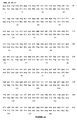
- the sequences of this protein and of the corresponding coding nucleic acid are shown in Figure 1 (SEQ ID NOS: 1 and 2). So, compared to the GALV envelope protein sequence as described in literature (SEQ ID NO: 5), it appears that this sequence includes several changes in the C-terminal region, including the replacement of the cysteine 667 with a valine, and the addition of 18 C-terminal amino acids additional.
- this envelope protein has a C-terminal end particular, of sequence Val-Lys-Ile-Leu-Val-Leu-Arg-Gln-Lys-Tyr-Gln-Ala-Leu-Glu-Asn-Glu-Gly-Asn-Leu (SEQ ID NO: 3).
- An object of the present invention therefore resides in a retroviral envelope protein GALV, characterized in that it comprises a C-terminal end of sequence SEQ ID NO: 3 or a functional variant thereof, i.e. a modified sequence, as detailed below, without inducing fusogenicity for the envelope protein.
- the invention relates to a GALV retroviral envelope protein, characterized in that it comprises an intracytoplasmic domain of sequence Lys-Leu-Val-Gln-Phe-lle-Asn-Asp-Arg-lle-Ser-Ala-Val-Lys-Ile-Leu-Val-Leu-Arg-Gln-Lys-Tyr-Gln -Ala-Leu-Glu-Asn-Glu-Gly-Asn-Leu (SEQ ID NO: 4) or a functional variant thereof.
- the present invention now shows that a GALV envelope protein such that defined above is not fusogenic, and can therefore be used for construction of recombinant retroviruses.
- the invention also relates to all antibody directed against the sequence SEQ ID NO: 3 defined above.
- the complete sequence of the GALV envelope protein is represented on the sequence SEQ ID NO: 2 ( Figure 1).
- the phase coding for the envelope protein extends from the nucleotide in position 1 to the nucleotide in position 2058 of the sequence SEQ ID NO: 1.
- TAA codon at positions 2056-2058 corresponds to the stop codon.
- the nucleotide in position 1 corresponds to nucleotide 5552 of the genome of the GALV virus (Delassus S. et al., Virology 173, 205-213 (1989)).
- the full GALV envelope encoded by this sequence therefore contains 685 amino acids, not 667 as described by Delassus and al. The results presented in the examples indicate that the expression of this complete protein does not induce the fusion of cells carrying the receptor Galv.
- the invention also shows that proteins chimeras can be constructed, keeping the tropism of the envelopes GALV, but devoid of fusogenicity, by deletion of all or part of the intracytoplasmic domain and substitution thereof with a domain heterologous intracyoplasmic.
- the invention indeed describes the minimum part of the C-terminal domain of the envelope which must be kept for abolish the fusogenic effect of envelope proteins.
- an object of the invention also resides in a protein chimeric envelope characterized in that it comprises at least one part of the extracellular domain of the envelope of the GALV virus or a variant functional of it.
- chimeric denotes a protein comprising at least two elements having a distinct origin. It could be for example from two elements coming from proteins of different species or having different properties.
- chimerical denotes a hybrid protein between two regions of at least two proteins heterologous envelope or between a region of an envelope and a region a separate protein, for example a cytoplasmic part and possibly transmembrane of an envelope protein and an N-terminal part from any other protein capable of imparting to the molecule a given tropism (antibodies or fragments or derivatives, ligands, receptor, etc.).
- the chimeric protein can be the result of a chemical association, genetic or biological. Generally, this is a genetic coupling, giving rise to a fusion protein, by expression in a cell appropriate.
- the envelope proteins according to the invention are therefore generally composed of three main functional areas, one area extracellular, a transmembrane domain and a cytoplasmic domain.
- the chimeric proteins of the invention comprise as N-terminal region (i), all or part of the extracellular domain of the protein GALV envelope or a functional variant thereof.
- the applicants have indeed shown that the character fusogenic GALV could be suppressed (or reduced), while retaining the extracellular domain (and therefore advantageous tropism) of this envelope. This result is all the more surprising since the extracellular domain, by its location (exposed on the surface of the cell membranes which produce, and also retroviral particles), could a priori be supposed to play an essential role in the phenomenon of fusion.
- the extracellular domain of the GALV envelope protein essentially corresponds to amino acid residues 1 to 490 (corresponding to nucleotides 1 to 1468) of the sequence SEQ ID NO: 1.
- the residues at positions 491 to 655 represent the transmembrane domain of the protein, and the residues at positions 656 to 685 (corresponding to nucleotides 1964 to 2058) represent the (intra) cytoplasmic domain of the GALV envelope.
- the chimeric proteins of the invention therefore include all or part of the extracellular domain of GALV envelope protein or a functional variant thereof.
- the expression "all or part” indicates that the chimeras of the invention can understand either the entire domain, or only a part of it.
- the part of the extracellular domain can comprise advantageously at least 50% of the domain residues, preferably 60% at least, even more preferably at least 75%. This part can be obtained by classical molecular biology techniques, involving by example enzymatic cleavage, ligation, amplification, cloning, etc, as illustrated in the experimental part.
- the term "functional variant” or “functional part” of the extracellular domain more specifically designates any part or variant retaining the ability to interact with the receptor of the envelope considered.
- the Glvr-1 receptor also known as PiT-1
- PiT-1 is the natural receptor for the GALV envelope. When this receptor is present on the surface of cells, these cells are permissive to the GALV virus.
- An advantageous property of chimeric envelopes according to the invention is that they have preferably the binding capacity to the Glvr-1 receptor.
- variant indicates any polypeptide comprising one or more several primary structure modifications, in particular one or more mutations, deletions, substitutions and / or additions of amino acid residues, preferably less than 30 amino acids.
- the chimeric proteins of the invention include all or part of the extracellular domain of the protein GALV envelope represented by amino acids 1 to 490 of the sequence SEQ ID NO: 1 or a functional variant thereof.
- a particular variant of the invention consists of a protein chimera comprising the extracellular domain of the envelope protein GALV represented by amino acids 1 to 490 of the sequence SEQ ID NO: 1.
- the N-terminal domain of chimeric proteins of the invention can also be composed of any protein domain likely to give the envelope a particular tropism (other envelope viral, cell envelope, antibody or fragment or derivative of antibody, ligand, etc.).
- proteins chimeras according to the invention comprise at least part or a variant functional domain of the extracellular domain of the GALV envelope protein, a heterologous transmembrane domain and a cytoplasmic domain heterologous.
- a more specific variant is a protein envelope comprising an extracellular domain represented by acids amines 1 to 490 of the sequence SEQ ID NO: 1, plus a domain transmembrane and a heterologous cytoplasmic domain.
- proteins chimeras according to the invention comprise at least part of the field extracellular and transmembrane domain of the GALV virus envelope or a functional variant thereof.
- the chimeric proteins of the invention comprise all or part of the extracellular and transmembrane domains of the protein GALV envelope represented by amino acids 1 to 655 of the sequence SEQ ID NO: 1 or a functional variant thereof.
- variant functional is defined as above. In the case of a domain transmembrane, it is any variant retaining the ability to insert in the cell membrane.
- the chimeric proteins of the invention comprise the entire extracellular domain of the GALV envelope protein.
- the chimeric proteins of the invention comprise the entire transmembrane domain of the GALV envelope protein.
- a particular embodiment of the invention is represented by a chimeric envelope protein characterized in that it comprises a GALV envelope region consisting of the sequence corresponding to amino acid residues 1 to 655 of the sequence SEQ ID NO: 1.
- the envelope proteins according to the present invention are more particularly characterized in that they include a field cytoplasmic of a heterologous envelope.
- envelope heterologous means any envelope protein other than the protein envelope of the GALV virus whose sequence is represented on SEQ ID NO: 5.
- it may be an envelope originating from a variant of GALV having a sequence different from the sequence SEQ ID NO: 5 (in particular a cytoplasmic domain of sequence SEQ ID NO: 4 or a functional variant thereof), of an envelope of a retrovirus of another type as GALV, of a cellular or synthetic envelope.
- the chimeric proteins according to the present invention may also include a domain heterologous transmembrane, that is to say any protein domain having the ability to insert into the cell membrane, other than the domain transmembrane of the envelope protein of the GALV virus whose sequence is shown in SEQ ID NO: 1. It can be the domain transmembrane of a heterologous envelope, or also of a domain artificial transmembrane or derived from any membrane protein (receiver, ion channel, etc.).
- the domain transmembrane is a domain of retroviral envelope protein, including GALV or a heterologous envelope.
- the heterologous envelope protein can be any protein envelope known to those skilled in the art, such as for example the protein envelope of viruses 4070A, 10A1, VSV, HIV, rabies virus, virus GALV, or also a cell envelope protein.
- the heterologous envelope protein is a envelope protein of a tropism for cells human, including an amphotropic retrovirus.
- Protein particularly preferred heterologous envelope within the meaning of the invention is the envelope protein of the 4070A retrovirus.
- This envelope protein has been described in the literature and is commonly used for the construction of recombinant retroviruses (see in particular Ott et al., J. Virol. Vol. 64, p757-766, 1990).
- the sequence of the cytoplasmic domain of this protein is represented on the sequence SEQ ID NO: 6: the cytoplasmic part extends amino acids 635 to 667 ( Figure 2) of the sequence SEQ ID NO: 6.
- the invention therefore relates to a chimeric envelope protein, comprising all or part of the domains extracellular and transmembrane envelope protein GALV and the cytoplasmic domain of the 4070A retrovirus envelope, plus specifically the amino acid sequence of the cytoplasmic domain represented from amino acid 635 to amino acid 667 in the sequence SEQ ID NO: 6.
- the invention relates to a chimeric envelope protein characterized in that it comprises, in N-terminal, amino acid residues 1 to 655 of the sequence SEQ ID NO: 1 fused to amino acid residues 635 to 667 of the sequence SEQ ID NO: 6 (in C-terminal).
- it is an envelope protein chimeric comprising a determined N-terminal region linked to the sequence between residues 491-685 of the sequence SEQ ID NO: 2 or a functional variant thereof.
- a variant is considered to be functional if the fusogenicity of the chimeric protein is not increased by more than 25% compared to the same protein with the cytoplasmic domain of reference.
- this methodology allows also, according to the present invention, to determine the cytoplasmic region minimum envelope proteins to avoid fusogenicity. Of such minimum regions can be used as region (iii) in proteins of the invention, for manufacturing non-fusogenic envelopes.
- the chimeric envelope proteins according to the invention comprise therefore advantageously an extracellular domain, a domain transmembrane and a cytoplasmic domain. These different areas are functionally linked to each other, that is, so that each domain retains activity in the chimeric protein.
- the domains are directly linked to each other, without the intervention of a spacer molecule (peptide).
- spacer molecule peptide
- spacer peptides are very small in size, in particular particular from 1 to 3 residues.
- the invention further relates to any composition comprising a protein or polypeptide of the invention.
- nucleic acid coding for a protein as defined above.
- This may include DNA (especially cDNA) or RNA. It can also be an acid synthetic or semi-synthetic nucleic acid, optimized for use of particular codons, or comprising one or more artificial introns in view to encourage expression, etc.
- the nucleic acid can be prepared by classical techniques of molecular biology (screening of banks, artificial synthesis, amplification, cuts / ligations, cloning, etc.). Generally, for the constitution of the nucleic acids of the invention, the region coding for the domain or domains of the GALV envelope is prepared, then assembled with the region coding for the domain (s) of the envelope heterologous.
- a particular object of the invention also resides in an acid nucleic acid encoding a GALV envelope protein comprising a C-terminal end of sequence SEQ ID NO: 3 as defined above, more particularly a cytoplasmic domain of sequence SEQ ID NO: 4 as defined above.
- a specific embodiment includes an acid nucleic acid as shown in the sequence SEQ ID NO: 1, of the nucleotide in position 1 to a nucleotide between positions 2056 and 2129 included in the sequence SEQ ID NO: 1.
- the invention also relates to the variants of the above sequences, such as in particular the sequences resulting from the degeneration of the code genetic and coding for a protein with the same primary structure, variants resulting from the polymorphism of the GALV virus, the variants exhibiting genetic alterations and coding for a type envelope protein Functional GALV, i.e. essentially non-fusogenic and capable to bind the Glvr-1 receptor.
- the invention further relates to any sequence hybridizing with the above sequences, preferably under conditions of high stringency, and encoding a GALV-like envelope protein functional.
- the present invention also relates to any vector comprising a nucleic acid as defined above.
- a vector according to the invention can be plasmid, episomal, chromosomal, viral, etc. It's about more particularly of a plasmid vector, for example constructed from of known plasmids such as pBR, pUC, pBS, pCl, etc.
- the nucleic acids of the invention are placed under the control of a transcriptional promoter.
- it may be a strong or weak transcriptional promoter, constitutive or selective, regulated or not, of cell origin (prokaryotic, eukaryotic, including mammal, of which human), viral or artificial. Promoters which can be used for this purpose are by example promoters CMV, PGK, TK, SV40, etc. The choice of promoter can be easily carried out by a person skilled in the art depending on the applications wanted.
- the vector of the invention further comprises a origin of replication, in particular an origin of functional replication in prokaryotic cells, allowing easy manipulation and production vectors in this type of host (for example in bacteria, including E. coli).
- the vector may also include a marker gene, used to select the cells in which the vector was introduced. It may especially be a resistance gene to a compound (e.g. an antibiotic).
- Another subject of the invention relates to any cell comprising a nucleic acid or a vector as defined above.
- a cell can be prokaryotic or eukaryotic.
- eukaryotes it may be a lower eukaryote (e.g. yeast) or higher eukaryote (plant, animal, human cell, etc.).
- the invention relates to any packaging cell of retrovirus, characterized in that it comprises a nucleic acid or a vector as defined above and a nucleic acid encoding them gag and pol retroviral proteins.
- a packaging cell is preferably a mammalian cell, such as an insect fibroblast, or, preferably, human (embryonic cell for example).
- a mammalian cell such as an insect fibroblast, or, preferably, human (embryonic cell for example).
- advantageously cultivable, non-pathogenic cells are used, and transfectable with nucleic acids. Examples particular are human kidney or retina embryonic cells, or human cancer lines.
- the nucleic acids or vectors can be introduced into cells by any known technique skilled in the art ("naked” DNA, electroporation, phosphate precipitation calcium, "gene gun", lipid, cationic, polymeric vector, etc.). After incubation, the cells are selected, either on the basis of the expression of the envelope, either on the basis of the expression of the marker gene (for example by culture in an antibiotic medium). These cells can then be maintained in culture, or cloned and / or stored in frozen form, for example.
- the invention also resides in the use of a nucleic acid or of a vector as defined above for the production of a retrovirus packaging.
- the invention further lies in a method of production of a retrovirus packaging cell, including the introduction, in a competent cell, a nucleic acid or a vector such as defined above and one or more nucleic acids encoding the gag and pol retroviral proteins.
- the different nucleic acids can be introduced simultaneously or sequentially, in any order.
- the competent cells are all cells as defined above.
- the GALV-type envelope proteins of the invention such as described above have advantageous functional properties, such as that in particular an absence of fusogenicity. So while the proteins GALVs known so far induce a fusion of human cells producing, the chimeric envelope proteins of the invention are preferably free of this drawback. These envelopes can therefore be advantageously used for the production of retroviruses recombinants in human cells. This is an advantage important compared to the prior art, since the retroviruses produced in the classical lines (murine fibroblasts) have determinants murine antigenics and are therefore potentially immunogenic.
- the invention also relates to a process for the production of defective recombinant retroviruses, including introduction into a cell of packaging according to the invention, of a retroviral vector, and the recovery of recombinant viruses produced.
- Viruses produced can be recovered by any conventional technique, such as harvesting the supernatant, possibly purification of retroviruses by centrifugation and / or chromatography.
- the invention also relates to any retrovirus comprising, in its structure, an envelope protein as described above. It is more particularly a recombinant retrovirus, in particular defective, for example produced according to the method described above.
- envelope proteins in particular retroviral, fusogenic to induce cell destruction.
- the invention also describes the construction of envelopes modified, fusogenic retrovirals, and their use as toxic molecules to induce the destruction of cells in vitro, ex vivo or in vivo.
- the present invention shows that it is possible to modify the structure of envelope proteins, in particular retrovirals to produce fusogenic polypeptides.
- the present invention also resides in the use of these fusogenic properties as agents of toxicity cellular. This use is advantageous since, unlike some known and used toxins, it does not manifest itself in certain types cellular and can therefore (i) allow production in large quantities in resistant cells and (ii) allow efficient destruction of cells in vitro, ex vivo or in vivo.
- the invention therefore also relates to the use of proteins fusogenic envelope (or any nucleic acid encoding such proteins) as a cell toxicity agent, i.e., to induce destruction of cells, in vitro, ex vivo or in vivo.
- the invention relates in particular to the use of fusogenic envelope proteins for the preparation of compositions (pharmaceutical) intended for the implementation of a method of therapeutic and / or vaccine treatment, in particular for the treatment of human cells in vitro, ex vivo or in vivo.
- the invention also relates to a method of destroying cells comprising contacting cells with a fusogenic envelope or any nucleic acid encoding a such an envelope.
- the invention also relates to a method of treatment. cells to make cells fusogenic, including contacting cells with a fusogenic envelope or any nucleic acid encoding a such an envelope.
- This application of the invention can be implemented as well to induce the destruction of cells, than to facilitate their fusion. So this application can be used to perform (or facilitate) cell fusion immortalized (e.g. tumor) with cells of interest (cells producing antibodies or presenting antigens, for example).
- a particular example relates to the preparation of hybridomas by fusion of antibody producing cells with immortalized cells (e.g. myeloma). In the presence of fusogenic proteins of the invention, this fusion is favored and the process for preparing hybridomas is improved. he can of course, this is a process for preparing any cell fusion, between animal, insect or plant cells possessing the receptor for extracellular domain of the envelope used.
- the fusogenic envelope proteins according to the invention are proteins of the retroviral type, that is to say derived from retroviral envelope proteins.
- retroviral envelope proteins usually it’s protein modified retroviral envelope in the C-terminal region.
- the present invention now shows that modification of the C-terminus of a retroviral envelope protein can induce the appearance of fusogenic properties in this protein.
- the present application shows especially that the cytoplasmic domain of envelope proteins retroviral has regions of significant homology, and that the modification (in particular the deletion) of all or part of this domain leads to the appearance of fusogenic properties.
- the present invention resides in the use of proteins modified fusogenic retroviral envelopes to treat cells and / or induce their destruction. More specifically, these are proteins of fusogenic retroviral envelope modified in the C-terminal region, especially in the cytoplasmic field. Even more particularly, it these are fusogenic retroviral envelope proteins comprising a deletion of all or part of their (intra) cytoplasmic domain.
- envelope proteins can be prepared from different envelopes, in particular retroviral, as mentioned above. It may in particular be an envelope of a retrovirus having a tropism for human cells, which helps generate protein fusogenic likely to induce the destruction of human cells. In this regard may be made more specifically to the envelopes of retroviruses of the type C, such as GALV, 4070A, 10A1, MuLV, VSV, HIV or rabies virus. As illustrated in Figure 6, the cytoplasmic domains of proteins envelope GALV, 4070A, 10A1, MuLV have regions of homology strong, which can be modified to produce fusogenic molecules.
- the invention also relates to a method for preparing a protein.
- fusogenic comprising (i) modification of the cytoplasmic region of a envelope protein, in particular retroviral, and (ii) the demonstration of the fusogenic activity of the protein, for example by incubation in the presence of cells expressing the envelope receptor.
- Changing the region cytoplasmic protein more specifically includes the deletion of any or part of this region, in particular a fragment of the C-terminal end comprising at least 5 amino acids, preferably at least 10 acids amino, even more preferably at least 15 amino acids.
- the modification may also include any other inactivation, such as mutations and / or inactivating insertions in the region concerned.
- the envelope protein is a type C retrovirus envelope protein, in particular GALV, 4070A, 10A1 or MuLV and the modification includes the deletion of a region of the cytoplasmic domain comprising at least all or part of the residues located on the C-terminal side of the LVL motif.
- the fusogenic envelope protein of the invention is a chimeric protein comprising a domain extracellular having a desired tropism, a transmembrane domain, and a cytoplasmic domain constructed as described above, so that confer on said protein a fusogenic activity.
- a chimeric protein comprising a domain extracellular having a desired tropism, a transmembrane domain, and a cytoplasmic domain constructed as described above, so that confer on said protein a fusogenic activity.
- Fusogenic envelope proteins thus constructed and tested can be produced, preferably in recombinant form. Preferably, they are produced from a retroviral vector (under form of retroviral particles incorporating such a vector).
- a retroviral vector comprising a nucleic sequence encoding a fusogenic protein according to the invention is introduced into a line of packaging of retrovirus, resistant to fusogenicity.
- Such a lineage is usually a cell line that does not (or only slightly) express the the envelope. So, in the particular case of the GALV envelope, we can use a line of murine packaging. In addition, it can be a line of packaging modified to no longer express a functional receptor to the envelope protein considered.
- the packaging line used is a line expressing the gag and pol regions of retroviruses, and possibly the env region of a retrovirus.
- the retroviral vector described above, comprising a nucleic sequence encoding a fusogenic protein according to the invention constitutes another object of the present invention.
- Such vector advantageously comprises an LTR sequence at each end and an packaging site.
- the envelope protein When the envelope protein is expressed from a particle retroviral, bringing cells to be treated (in particular to destroy) with the fusogenic envelope is produced by bringing the cells into contact in vitro, ex vivo or in vivo with retroviral particles. Infection of cells leads to the expression of the envelope in cell membranes. These envelope proteins are then able to induce cell fusion treated with any cell expressing the envelope receptor.
- the retroviral vector thus produced can be introduced into target human cells (e.g. cells cancer cells, cells infected with a virus or produced in the case of autoimmune diseases) to generate a toxic reaction for said cell, resulting from the fusogenic nature of the envelope.
- target human cells e.g. cells cancer cells, cells infected with a virus or produced in the case of autoimmune diseases
- fusogenic envelope proteins can also be produced by expression from any other vector system, in particular from a plasma or viral vector.
- a particular example is an adenoviral vector comprising a nucleic acid encoding an envelope as defined above.
- the preparation of such adenoviruses can be carried out according to techniques known to those skilled in the art, for example by deletion of all or part of the E1, E2, E3 and / or E4 region of the adenoviral genome, insertion into this genome of the coding nucleic acid, then introduction of the genome thus prepared in an appropriate packaging cell, for example derived from 293 cells, if present in the presence of plasmid (s) or virus helper.
- an appropriate packaging cell for example derived from 293 cells, if present in the presence of plasmid (s) or virus helper.
- it is not necessary that the line of packaging used is devoid of the envelope receiver, since the production phase leads to lysis of cells by adenoviruses.
- this use according to the invention can be applied to the destruction of cells sensitive to the envelope used, (by example GALV), in particular of cells possessing the the envelope used (the Glvr-1 receptor for GALV). Fusogenic properties can thus be applied to the treatment of human cells pathological (cancerous, restenosis, autoimmune, etc.).
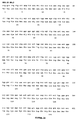
- FIGURE 1 is a diagrammatic representation of FIG. 1 :
- GALV envelope sequence (corresponding to part 3 'of the genome of the virus), from amino acid in position 1 to amino acid in position 685 (SEQ ID NO: 1).
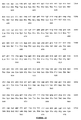
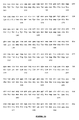
- FIGURE 2
- 4070A retrovirus envelope protein sequence (SEQ ID NO: 6).
- the cytoplasmic domain extends from residues 635 to 667.
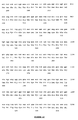
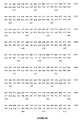
- FIGURE 3 is a diagrammatic representation of FIG. 1 :
- Sequence of the 3 'part of the GALV virus genome as described in the prior art (SEQ ID NO: 5).
- the region corresponding to the protein envelope extends from nucleotide 1 to nucleotide 2004, corresponding to nucleotides 5552 to 7555 of the genome.
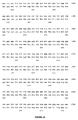
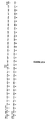
- FIGURE 4
- FIGURE 5
- fragments are obtained by PCR using a common "upper” oligonucleotide (OUGalv5'Nsi), and unique “lower” oligonucleotides for each fragment (OLCT1Cla, OLCT2Cla, OLCT3Cla, and CLCT4Cla), providing a stop codon in the three reading frames and in particular that specific to the env gene, followed by a Clal site.
- a common "upper” oligonucleotide OUGalv5'Nsi
- unique “lower” oligonucleotides for each fragment OLCT1Cla, OLCT2Cla, OLCT3Cla, and CLCT4Cla
- sequences of the oligonucleotides obtained from the sequence of the GALV, are: OUGalv5'Nsi (SEQ ID NO: 7): OLCT1Cla (SEQ ID NO: 8): OLCT2Cla (SEQ ID NO: 9): OLCT3CIa (SEQ ID NO: 10): OLCT4Cla (SEQ ID NO: 11):
- the DNA fragments obtained by PCR were then purified, digested by the enzymes Nsil and Clal, and cloned into the open CMV-GALV plasmid at the Nsil and Clal sites.
- the four resulting plasmids code for envelopes called GALV-CT1, GALV-CT2, GALV-CT3 and CMV-GALV-CT4.
- FBASALF Cosset et al., J. Virol. 69 (1995) 7430
- FBARIessSALF Lavillette et al., J. Virol. 1998, In press code for amphotropic, non-fus
- TE671 human cells are derived from rhabdomyosarcoma human (ATCC CRL8805), and NIH-3T3 cells are fibroblasts of mouse.
- TE671 cells seeded at 5 ⁇ 10 6 cells in 35 mm diameter dishes are transfected with 2 ⁇ g of the various plasmids by the calcium phosphate technique. 48 hrs post-transfection, the cells are trypsinized and re-seeded in 35 mm diameter boxes at a density of 2x10 6 cells per box. After adhesion of these cells producing envelope glycoproteins, indicator cells (either TE671 or 3T3) are added, at a density of 2x10 6 cells per box. The cocultures are then maintained for 24-48 hrs and the syncytiums are counted after fixing at the May-Grunwald-Giemsa.
- the results presented in Table 1 above show that the wild type GALV envelope, expressed from a construction genetic essentially consisting of the coding sequence (i.e., up to codon stop in position 2004) has an important fusogenic phenotype in human cells (GALV-CT4).
- GALV-CT4 the GALV envelope encoded by an expression vector in which the sequence from GALV contains the env gene and at least part of the region between this gene and LTR3 '(as well as, if appropriate, a piece of LTR3 ') is not fusogenic in syncytium test (GALV-CT1, GALV-CT2).
- the GALV envelope cDNA was cloned by PCR from the expression vector pMOV GALV (Miller et al., J. Virol. 65 (1991) 2220) in the commercial plasmid pCl (Stratagene) at the Nhe1 sites. and Xbal. The cDNA cloned at a size of 2004 base pairs (nt 5552 (gene ATG) to nt 7555 (stop codon)). Oligonucleotide 5 'Nhe1 (SEQ ID NO: 12) Oligonucleotide 3 'Xba1 (SEQ ID NO: 13)
- the cDNA of the GALV envelope gene is obtained by PCR, the 3 'part of the gene is extended to the Fst1 site which is located in the long repeat terminal (LTR).
- the cDNA cloned into the plasmid pC1 at the Nhe1-Xba1 sites has a size of 2118 base pairs (nt 5552 to nt 7670).
- Oligonucleotide 5 'Nhe1 SEQ ID NO: 12
- Oligonucleotide 3 'Xba1 SEQ ID NO: 14
- Plasmid pCMV-4070A is the plasmid pCl into which is cloned in the Nhe1-Xba1 sites, the cDNA of the amphotropic envelope gene 4070A (nt 37 to nt 2001, Ott et al. 1990).
- the human cell line H293 is an embryonic cell line kidney (ATCC CRL-1573).
- NIH-3T3 cells are fibroblasts of mouse.
- TelCeb6 cells are cells derived from the human line TE671 from a human rhabdomyosarcoma (ATCC CRL 8805) (Cosset FL, Lyon).
- Plasmids p-GALV-1 and p-GALV-2 were transfected into H293, NIH-3T3 and TelCeb6 cells by the calcium phosphate method.
- a GALV envelope gene has been cloned (plasmid pNp5000) and its sequence has been performed and analyzed. Surprisingly, this analysis made it possible to highlight a C-terminal domain extended relative to the sequence described in the prior art.
- the protein sequence of this envelope presented on the sequence SEQ ID NO: 2, in fact comprises 685 residues, and brings up a C-terminal end comprising the sequence Val-Lys-Ile-Leu-Val-Leu-Arg-Gln-Lys-Tyr-Gln-Ala-Leu-Glu-Asn-Glu-Gly-Asn-Leu (SEQ ID NO: 3).
- the intracytoplasmic domain of this protein envelope includes the sequence Lys-Leu-Val-Gln-Phe-lle-Asn-Asp-Arg-Ile-Ser-Ala-Val-Lys-Ile-Leu-Val-Leu-Arg-Gln-Lys-Tyr- Gln-Ala-Leu-Glu-Asn-Glu-Gly-Asn-Leu (SEQ ID NO: 4).
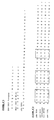
- a comparison of the domain sequence intracytoplasmic envelope protein determined above with the sequence SEQ ID NO: 5 is shown in Figures 4 and 5.
- Figure 6 shows the alignment of the protein sequences of the domains cytoplasmic of several envelopes of type C retrovirus. alignment brings up certain homologies, such as in particular the presence of a consensus LVL cleavage site. The presence of these homologies suggests that alteration of the cytoplasmic domains of proteins envelope, notably retroviral, makes it possible to produce proteins fusogenic, as in the case of the GALV envelope.
- the cytoplasmic part of the GALV envelope gene (from nt 7501 of the sequence SEQ ID NO 1 or 5) has been replaced by the part amphotropic virus envelope gene 4070A cytoplasmic (nt 1903 as of 2001), SEQ ID NO: 6.
- the cDNA cloned into the plasmid pCl therefore has a size of 2061 base pairs.
- Plasmids p-GALV-1 and p-GALV-3 were transfected into H293, NIH-3T3 and TelCeb6 cells by the calcium phosphate method. 5 ⁇ g of plasmids were transfected into each cell line in a 60 mm petri dish. 24 h after transfection the medium is changed. The presence or appearance of cell fusion is observed within 48 h to 72 h post transfection, according to the method described in Example 1.2. The results obtained are presented in Table 3 below.
Landscapes
- Life Sciences & Earth Sciences (AREA)
- Health & Medical Sciences (AREA)
- Genetics & Genomics (AREA)
- Chemical & Material Sciences (AREA)
- Organic Chemistry (AREA)
- Engineering & Computer Science (AREA)
- Bioinformatics & Cheminformatics (AREA)
- Virology (AREA)
- Biotechnology (AREA)
- General Engineering & Computer Science (AREA)
- Molecular Biology (AREA)
- Biophysics (AREA)
- Biomedical Technology (AREA)
- General Health & Medical Sciences (AREA)
- Wood Science & Technology (AREA)
- Zoology (AREA)
- Biochemistry (AREA)
- Physics & Mathematics (AREA)
- Microbiology (AREA)
- Plant Pathology (AREA)
- Gastroenterology & Hepatology (AREA)
- Medicinal Chemistry (AREA)
- Proteomics, Peptides & Aminoacids (AREA)
- Micro-Organisms Or Cultivation Processes Thereof (AREA)
- Peptides Or Proteins (AREA)
Applications Claiming Priority (2)
| Application Number | Priority Date | Filing Date | Title |
|---|---|---|---|
| FR9815302 | 1998-12-03 | ||
| FR9815302A FR2786773B1 (fr) | 1998-12-03 | 1998-12-03 | Proteines d'enveloppe, methodes et utilisations |
Publications (1)
| Publication Number | Publication Date |
|---|---|
| EP1006123A2 true EP1006123A2 (de) | 2000-06-07 |
Family
ID=9533561
Family Applications (1)
| Application Number | Title | Priority Date | Filing Date |
|---|---|---|---|
| EP19990400735 Withdrawn EP1006123A2 (de) | 1998-12-03 | 1999-03-25 | Hüllproteine, Verfahren und Anwendungen |
Country Status (2)
| Country | Link |
|---|---|
| EP (1) | EP1006123A2 (de) |
| FR (1) | FR2786773B1 (de) |
Cited By (4)
| Publication number | Priority date | Publication date | Assignee | Title |
|---|---|---|---|---|
| EP1692186A4 (de) * | 2003-11-12 | 2008-03-26 | Univ Inje | Verfahren zur verabreichung von auf krebszellen zielenden genen |
| US7641896B2 (en) | 2002-07-05 | 2010-01-05 | Folia Biotech Inc. | Adjuvant viral particle |
| US8101189B2 (en) | 2002-07-05 | 2012-01-24 | Folia Biotech Inc. | Vaccines and immunopotentiating compositions and methods for making and using them |
| US9107819B2 (en) | 2008-10-27 | 2015-08-18 | Roquette Freres | Water insoluble polymer: indigestible water-soluble polysaccharide film coatings for colon targeting |
Family Cites Families (5)
| Publication number | Priority date | Publication date | Assignee | Title |
|---|---|---|---|---|
| US5470726A (en) * | 1991-02-22 | 1995-11-28 | Fred Hutchinson Cancer Research Center | Retrovirus packaging and producer cell lines based on gibbon ape leukemia virus |
| US6479055B1 (en) * | 1993-06-07 | 2002-11-12 | Trimeris, Inc. | Methods for inhibition of membrane fusion-associated events, including respiratory syncytial virus transmission |
| US6051427A (en) * | 1993-06-11 | 2000-04-18 | Cell Genesys, Inc. | Method for production of high titer virus and high efficiency retroviral mediated transduction of mammalian cells |
| EP0966534B1 (de) * | 1997-03-11 | 2005-02-02 | Mayo Foundation for Medical Education and Research | Zusammensetzungen und verfahren zur eliminierung unerwünschter zellen |
| JP3954151B2 (ja) * | 1997-03-14 | 2007-08-08 | トランスジエヌ・エス・アー | フォーミーウイルスエンベロープタンパク質の発現 |
-
1998
- 1998-12-03 FR FR9815302A patent/FR2786773B1/fr not_active Expired - Fee Related
-
1999
- 1999-03-25 EP EP19990400735 patent/EP1006123A2/de not_active Withdrawn
Cited By (6)
| Publication number | Priority date | Publication date | Assignee | Title |
|---|---|---|---|---|
| US7641896B2 (en) | 2002-07-05 | 2010-01-05 | Folia Biotech Inc. | Adjuvant viral particle |
| US8101189B2 (en) | 2002-07-05 | 2012-01-24 | Folia Biotech Inc. | Vaccines and immunopotentiating compositions and methods for making and using them |
| US8282940B2 (en) | 2002-07-05 | 2012-10-09 | Folia Biotech Inc. | Adjuvant viral particle |
| US9339535B2 (en) | 2002-07-05 | 2016-05-17 | Folia Biotech, Inc. | Vaccines and immunopotentiating compositions and methods for making and using them |
| EP1692186A4 (de) * | 2003-11-12 | 2008-03-26 | Univ Inje | Verfahren zur verabreichung von auf krebszellen zielenden genen |
| US9107819B2 (en) | 2008-10-27 | 2015-08-18 | Roquette Freres | Water insoluble polymer: indigestible water-soluble polysaccharide film coatings for colon targeting |
Also Published As
| Publication number | Publication date |
|---|---|
| FR2786773B1 (fr) | 2002-03-08 |
| FR2786773A1 (fr) | 2000-06-09 |
Similar Documents
| Publication | Publication Date | Title |
|---|---|---|
| EP1071804B1 (de) | Verwendung von dns-sequenzen mit triplex-structur zum transfer von nukleotidsequenzen | |
| EP0738327B1 (de) | Wirt-vektor system zur anwendung in gentherapie | |
| EP0659216B1 (de) | Retroviraler vektor zum transfer und zur expression von therapeutischen genen in eukaryotezellen | |
| EP1761635B1 (de) | Nicht integrativer und nicht replikativer lentivirus, herstellung und verwendungen | |
| EP3455239B1 (de) | Teilchen für die einkapselung eines genomtechnischen systems | |
| FR2727689A1 (fr) | Nouveau procede de preparation d'un vecteur viral | |
| FR2751345A1 (fr) | Lignees d'encapsidation hautement productrices | |
| US20240254168A1 (en) | LIPID PARTICLES CONTAINING A TRUNCATED BABOON ENDOGENOUS RETROVIRUS (BaEV) ENVELOPE GLYCOPROTEIN AND RELATED METHODS AND USES | |
| US20140170709A1 (en) | Vector for gene therapy | |
| JP5122957B2 (ja) | 免疫不全ウイルス感染症の治療または予防のための核酸 | |
| EP1078094B1 (de) | Methoden und zusammensetzungen für die produktion von viruspartikeln | |
| EP1392838B1 (de) | Pseudotypierung von hiv vektoren mit mokola virenhüllen | |
| FR2786773A1 (fr) | Proteines d'enveloppe, methodes et utilisations | |
| FR2740344A1 (fr) | Application de la proteine gax au traitement de cancers | |
| AU741764B2 (en) | Retroviral vector particles produced in a baculovirus expression system | |
| FR2727429A1 (fr) | Lignees d'encapsidation et vecteurs d'expression pour la transcomplementation de vecteurs retroviraux defectifs | |
| EP2138584B1 (de) | Foamyvirale Hüllgene | |
| US8309071B2 (en) | Foamy viral envelope genes | |
| DE69829174T2 (de) | Exprimierung eines modifiziertem "foamy virus envelope protein" (hüllenprotein) |
Legal Events
| Date | Code | Title | Description |
|---|---|---|---|
| PUAI | Public reference made under article 153(3) epc to a published international application that has entered the european phase |
Free format text: ORIGINAL CODE: 0009012 |
|
| AK | Designated contracting states |
Kind code of ref document: A2 Designated state(s): AT BE CH CY DE DK ES FI FR GB GR IE IT LI LU MC NL PT SE |
|
| AX | Request for extension of the european patent |
Free format text: AL;LT;LV;MK;RO;SI |
|
| STAA | Information on the status of an ep patent application or granted ep patent |
Free format text: STATUS: THE APPLICATION IS DEEMED TO BE WITHDRAWN |
|
| 18D | Application deemed to be withdrawn |
Effective date: 20011001 |