EP1011057A1 - Identifikation einer Wortgruppe durch modifizierte Schlüsselwörter, die aus Transformationen von aufeinanderfolgenden Suffixen erzeugt sind - Google Patents
Identifikation einer Wortgruppe durch modifizierte Schlüsselwörter, die aus Transformationen von aufeinanderfolgenden Suffixen erzeugt sind Download PDFInfo
- Publication number
- EP1011057A1 EP1011057A1 EP99124936A EP99124936A EP1011057A1 EP 1011057 A1 EP1011057 A1 EP 1011057A1 EP 99124936 A EP99124936 A EP 99124936A EP 99124936 A EP99124936 A EP 99124936A EP 1011057 A1 EP1011057 A1 EP 1011057A1
- Authority
- EP
- European Patent Office
- Prior art keywords
- word
- suffix
- query word
- groups
- data
- Prior art date
- Legal status (The legal status is an assumption and is not a legal conclusion. Google has not performed a legal analysis and makes no representation as to the accuracy of the status listed.)
- Granted
Links
Images


Classifications
-
- G—PHYSICS
- G06—COMPUTING OR CALCULATING; COUNTING
- G06F—ELECTRIC DIGITAL DATA PROCESSING
- G06F16/00—Information retrieval; Database structures therefor; File system structures therefor
- G06F16/30—Information retrieval; Database structures therefor; File system structures therefor of unstructured textual data
- G06F16/33—Querying
- G06F16/3331—Query processing
- G06F16/3332—Query translation
- G06F16/3338—Query expansion
-
- Y—GENERAL TAGGING OF NEW TECHNOLOGICAL DEVELOPMENTS; GENERAL TAGGING OF CROSS-SECTIONAL TECHNOLOGIES SPANNING OVER SEVERAL SECTIONS OF THE IPC; TECHNICAL SUBJECTS COVERED BY FORMER USPC CROSS-REFERENCE ART COLLECTIONS [XRACs] AND DIGESTS
- Y10—TECHNICAL SUBJECTS COVERED BY FORMER USPC
- Y10S—TECHNICAL SUBJECTS COVERED BY FORMER USPC CROSS-REFERENCE ART COLLECTIONS [XRACs] AND DIGESTS
- Y10S707/00—Data processing: database and file management or data structures
- Y10S707/99931—Database or file accessing
- Y10S707/99933—Query processing, i.e. searching
- Y10S707/99935—Query augmenting and refining, e.g. inexact access
-
- Y—GENERAL TAGGING OF NEW TECHNOLOGICAL DEVELOPMENTS; GENERAL TAGGING OF CROSS-SECTIONAL TECHNOLOGIES SPANNING OVER SEVERAL SECTIONS OF THE IPC; TECHNICAL SUBJECTS COVERED BY FORMER USPC CROSS-REFERENCE ART COLLECTIONS [XRACs] AND DIGESTS
- Y10—TECHNICAL SUBJECTS COVERED BY FORMER USPC
- Y10S—TECHNICAL SUBJECTS COVERED BY FORMER USPC CROSS-REFERENCE ART COLLECTIONS [XRACs] AND DIGESTS
- Y10S707/00—Data processing: database and file management or data structures
- Y10S707/99931—Database or file accessing
- Y10S707/99933—Query processing, i.e. searching
- Y10S707/99936—Pattern matching access
Definitions
- the invention relates to identifying one of a number of groups of words.
- US-A-5,551,049 discloses a technique in which information about one of a number of groups of words is determined by matching an identifier of a received word.
- the identifier is compared with word identifiers grouped in sequence to represent synonym groups. When a match is found, the group of identifiers that includes the matching identifier is used to obtain synonym group that includes the received word.
- Frakes, W.B. "Stemming Algorithms", in Frakes, W.B., and Baeza-Yates, R., Eds., Information Retrieval , Prentice Hall, 1992, pp. 131-160, discloses a taxonomy for stemming algorithms that includes several automatic approaches.
- Affix removal algorithms remove suffixes and/or prefixes to obtain a stem, while table lookup methods perform lookup in a table in which terms and their corresponding stems are stored.
- Affix removal algorithms such as the Porter stemmer can, after removing characters according to a set of replacement rules, perform recoding, a context sensitive transformation, to change characters of the stem.
- Hull, D.A. "Stemming Algorithms: A Case Study for Detailed Evaluation", Journal of the American Society for Information Science , Vol. 47, No. 1, 1996, pp. 70-84, discloses a lexical database that can analyze and generate inflectional and derivational morphology.
- the inflectional database reduces each surface word to a dictionary form, while the derivational database reduces surface forms to stems that relate to the original in both form and semantics.
- the databases are constructed using finite state transducers (FSTs), which allows the conflation process to act in reverse, generating all conceivable surface forms from a single base form.
- FSTs finite state transducers
- a thesaurus can be used, for example, in an automatic indexing environment, and when a document contains a term such as "superconductivity" or (stem "superconduct”), that term may be replaced by a class identifier for a class of words with related meanings. The same operation can be used for a user query containing a word in the class. Should the document contain "superconductivity" while the query term is "cryogenic", a term match would result through thesaurus transformation. Rather than replacing an initial term with the corresponding class identifier, the thesaurus class identifier can be added to the original term.
- the invention addresses basic problems that arise in using a word, referred to herein as a "query word", to identify one of a number of groups of words.
- a query word referred to herein as a "query word”
- table lockup techniques FST techniques, and other techniques that rely on matching the query word
- an unknown query word will result in a failure.
- Affix algorithms like the Porter stemmer can stem any word, including an unknown query word, but conventional information retrieval techniques based on affix algorithms do not provide a fallback strategy if the first obtained stem does not relate the unknown word to any other word.
- the invention is based on the discovery of a new technique for using a query word to identify one of a number of word groups.
- the technique first determines whether the query word is in any of the groups. If not, the technique attempts to modify the query word in accordance with successive suffix relationships in a sequence until it obtains a modified query word that is in one of the groups.
- the new technique in effect provides two stages of word group lockup ⁇ the first stage can be implemented by rapidly comparing a query word with the words in the groups, while the second stage is slower, because it includes attempting to obtain modified query words in accordance with suffix relationships.
- the new technique can be implemented with an ordered list defining the sequence of suffix relationships, such as pairwise relationships. An attempt can be made to modify the query word in accordance with each relationship in the list until a modified query word is obtained that is in one of the groups.
- the relationships in the list can be ordered in accordance with their frequency of occurrence in a natural language, and modifications can be attempted beginning with the highest frequency suffix relationship.
- the ordered list can be automatically obtained as part of an automatic technique for producing the word groups.
- the new technique can be implemented to attempt modifications of the query word iteratively, with each iteration attempting to modify the query word in accordance with a respective suffix relationship. If an iteration obtains a modified query word, it also determines whether the modified query word is in any of the word groups.
- information identifying the word group can be provided, such as a representative of the group or a list of words in the group.
- the new technique can further be implemented in a system that includes a query word and a processor that determines whether the query word is in any of the word groups. If not, the processor attempts to modify the query word in accordance with successive suffix relationships in a sequence until a modified query word is obtained that is in one of the word groups.
- the system can also include stored word group data indicating the word groups, and the word group data can be an FST data structure.
- the system can also include stored suffix relationship sequence data indicating the sequence of suffix relationships.
- the new technique can also be implemented in an article of manufacture for use in a system that includes a storage medium access device.
- the article can include a storage medium and instruction data stored by the storage medium.
- the system's processor in executing the instructions indicated by the instruction data, determines whether the query word is in any of the word groups. If not, the processor attempts to modify the query word in accordance with successive suffix relationships in a sequence until a modified query word is obtained that is in one of the word groups.
- the new technique can also be implemented in a method of operating a first machine to transfer data to a second over a network, with the transferred data including instruction data as described above.
- the new technique is advantageous because it allows more robust word group identification than conventional techniques.
- the new technique is advantageous because it allows the use of an unknown word or a word that does not exactly match, which can arise, for example, when a user provides a query word that is not in any of the word groups.
- the new technique can continue to obtain modified query words until it finds one that is in one of the word groups, so that it does not fail if the first modified query word is not in any of the word groups.
- the new technique is also advantageous because it allows for fully automatic implementation.
- One fully automatic implementation automatically obtains an ordered list of suffix relationships in automatically producing a word group data structure.
- data refers herein to physical signals that indicate or include information.
- an item of data can indicate one of a number of possible alternatives, the item of data has one of a number of "values".
- a binary item of data also referred to as a "bit”
- data includes data existing in any physical form, and includes data that are transitory or are being stored or transmitted.
- data could exist as electromagnetic or other transmitted signals or as signals stored in electronic, magnetic, or other form.
- Circuitry or a “circuit” is any physical arrangement of matter that can respond to a first signal at one location or time by providing a second signal at another location or time. Circuitry "stores” a first signal when it receives the first signal at one time and, in response, provides substantially the same signal at another time. Circuitry "transfers" a first signal when it receives the first signal at a first location and, in response, provides substantially the same signal at a second location.
- a “data storage medium” or “storage medium” is a physical medium that can store data.
- Examples of data storage media include magnetic media such as diskettes, floppy disks, and tape; optical media such as laser disks and CD-ROMs; and semiconductor media such as semiconductor ROMs and RAMs.
- storage medium covers one or more distinct units of a medium that together store a body of data. For example, a set of diskettes storing a single body of data would together be a storage medium.
- a “storage medium access device” is a device that includes circuitry that can access data on a data storage medium. Examples include drives for accessing magnetic and optical data storage media.
- Memory circuitry or “memory” is any circuitry that can store data, and may include local and remote memory and input/output devices. Examples include semiconductor ROMs, RAMs, and storage medium access devices with data storage media that they can access.
- a “data processor” or “processor” is any component or system that can process data, and may include one or more central processing units or other processing components.
- a processor performs an operation or a function "automatically" when it performs the operation or function independent of concurrent human intervention or control.
- Any two components are "connected” when there is a combination of circuitry that can transfer signals from one of the components to the other.
- two components are “connected” by any combination of connections between them that permits transfer of signals from one of the components to the other.
- a “network” is a combination of circuitry through which a connection for transfer of data can be established between machines. An operation "establishes a connection over" a network if the connection does not exist before the operation begins and the operation causes the connection to exist.
- a processor "accesses" an item of data in memory by any operation that retrieves or modifies the item or information within the item, such as by reading or writing a location in memory that includes the item.
- a processor can be "connected for accessing" an item of data by any combination of connections with local or remote memory or input/output devices that permits the processor to access the item.
- a processor or other component of circuitry "uses" an item of data in performing an operation when the result of the operation depends on the value of the item.
- An “instruction” is an item of data that a processor can use to determine its own operation.
- a “processor” executes a set of instructions when it uses the instructions to determine its operations.
- a processor accesses a first item of data "with" a second item of data if the processor uses the second item of data in accessing the first, such as by using the second item to obtain a location of the first item of data or to obtain information from within the first item of data.
- To "obtain” or “produce” an item of data is to perform any combination of operations that begins without the item of data and that results in the item of data.
- To obtain a first item of data "based on” a second item of data is to use the second item to obtain the first item.
- An item of data "indicates" a thing, event, or characteristic when the item has a value that depends on the existence or occurrence of the thing, event, or characteristic can be obtained by operating on the item of data.
- An item of data "indicates" another value when the item's value is equal to or depends on the other value.
- An operation or event "transfers" an item of data from a first component to a second if the result of the operation or event is that an item of data in the second component is the same as an item of data that was in the first component prior to the operation or event.
- the first component "provides” the data
- the second component "receives” or “obtains” the data.
- a "natural language” is an identified system of symbols used for human expression and communication within a community, such as a country, region, or locality or an ethnic or occupational group, during a period of time. Some natural languages have a standard system that is considered correct, but the term "natural language” as used herein could apply to a dialect, vernacular, jargon, cant, argot, or patois, if identified as distinct due to differences such as pronunciation, grammar, or vocabulary.
- a "natural language set” is a set of one or more natural languages.
- Characters in the present day English language can thus include not only alphabetic and numeric elements, but also punctuation marks, diacritical marks, mathematical and logical symbols, and other elements used in written, printed, or phonetically transcribed English. More generally, characters can include, in addition to alphanumeric elements, phonetic, ideographic, or pictographic elements.
- a "word” is a string of one or more elements, each of which is a character or a combination of characters, where the string is treated as a semantic unit in at least one natural language.
- a word “occurs” in each language in which it is treated as a semantic unit.
- a "prefix” is a substring of characters occurring at the beginning of a word
- a "suffix” is a substring of characters occurring at the end of a word.
- a suffix "follows" a substring in a word and the substring "precedes” the suffix if the last character of the substring immediately precedes the first character of the suffix.
- a “relationship” between suffixes refers to the occurrence in a natural language set of a set of words that are related but that have different suffixes, which are thus “related suffixes”.
- a "pairwise relationship” is a relationship between two suffixes.
- a relationship between suffixes "occurs” when a natural language set includes a set of related words, each of which has one of the suffixes. If a part of speech is also indicated for each suffix, the relationship only “occurs” if the related word that has a suffix also has the indicated part of speech.
- Substrings that precede related suffixes in a set of different words are "equivalent" if the words are all related because of a relationship between the substrings. For example, it is conventional to make minor graphical changes in a substring that precedes a suffix during inflectional changes, such as by adding or deleting a diacritical mark or otherwise changing a character to indicate a change in pronunciation or by changing between a single character and a doubled character. Substrings that precede suffixes may also be equivalent because they are phonetic alternatives, because of a historical relationship through which one developed from the other or both developed from a common ancestor, because they are cognates in two different languages, or because of any of various other relationships.
- the "frequency of occurrence" of a suffix relationship in a set of words such as a natural language is the number of different subsets of words in the set that are related by the suffix relationship.
- a set of suffixes "relates" a set of words if each of the words can be obtained from any other in the set by a process that includes removing one of the suffixes and adding another of the suffixes.
- the process may also include other modifications, such as to a substring preceding the suffix or to a prefix that precedes the substring, but if there are no such other modifications, a prefix that includes the substring "occurs" with each of the suffixes in the set to form the set of related words.
- a set of words that all have the same suffix are "equivalent” if the substrings that precede the suffix in all the words are equivalent.
- Each word in the set is "an equivalent” of every other word in the set.
- a "representative" of a group is an item of data that is unique to the group so that it can be used to represent the group.
- a representative may be one of the members of a group of items of data or it may be an item of data obtained in some other way.
- one representative of the group can be a "normalized form” that can be obtained by "normalizing" a word in the group. Normalization of a word can involve operations such as removing suffixes and making appropriate modifications in the substring preceding the suffix. Depending on how normalization is performed, the normalized form of a group of words may be a dictionary form, a stem, or another version of the substring that precedes the suffix of a word in the group. Once the normalized forms of words are known, of course, an appropriate data structure can be produced to provide a word's normalized form in response to the word. Because normalization may produce the dictionary form of a word, the normalized form is sometimes called a "lemma". But normalization can also be performed on a lemma to obtain a normalized form.
- a word is "in" a group of words if the word itself, an equivalent of the word, or a normalized form of the word is in the group.
- An operation "identifies" a word group if the operation obtains information that is unique to the word group, such as a representative or other unique identifier of the group or a list of words in the group.
- a “query word” is simply a word that is used in an operation that identifies a group of words.
- a “modified query word” is a word obtained by modifying a query word.
- a finite state transducer is a data processing system having a finite number of states and transitions (or arcs), each transition originating in a state and leading to a state, and in which each transition has associated values on more than one level.
- an FST can respond to an input signal indicating a value on one of the levels by following a transition with a matching value on the level and by providing as output the transition's associated value at another level.
- a two-level transducer for example, can be used to map between input and output strings, and if the values are character types, the input and output strings can be words.
- a "finite state transducer data structure” or “FST data structure” is a data structure containing information sufficient to define the states and transitions of an FST.
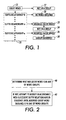
- FIG. 1-3 illustrate general features of the invention.
- Fig. 1 is a flow diagram that shows schematically how successive attempts to modify a query word can be made in accordance with successive suffix relationships in a sequence until a modified query word is obtained that is in a group.
- Query word 10 is not in any of a number of groups of words available to be identified, as shown in box 12. Nevertheless, query word 10 may be related to another word that is in one of the groups of words.
- Sequence 20 includes a number of suffix relationships, several of which are illustratively shown. Successive attempts to modify query word 10 can be made in accordance with successive suffix relationships in sequence 20.
- suffix relationship 0 (and illustratively also each of suffix relationships 1 through m-1 and m+1 through n-1) is that no word is obtained, as shown in box 30.
- the suffix relationship may not relate any suffix that is equivalent to a suffix of query word 10.
- suffix relationship m relates a suffix that is equivalent to a suffix of query word 10 to another suffix in a way that produces modified query word 32.
- Modified query word 32 like query word 10, is not in any of the word groups, as shown in box 34.
- modified query word 36 is in one of the word groups, as shown in box 38.
- suffix relationships following suffix relationship n in sequence 20 need not be used in attempting to modify query word 10 ⁇ a word group has been identified and can be accessed as appropriate.
- a technique determines whether a query word is in any of a number of word groups. If not, in box 42, the technique attempts to modify the query word in accordance with successive suffix relationships in a sequence. The technique continues until it obtains a modified query word that is in one of the word groups.
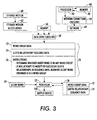
- Machine 50 in Fig. 3 includes processor 52 connected for obtaining query word 54 and also connected for accessing data in memory 56.
- Processor 52 is also connected for receiving data through data input circuitry 58, which can illustratively provide data received from connections to memory 60, storage medium access device 62, or network 64.
- Query word 54 could be obtained from any appropriate source, including user input circuitry (not shown), memory 56, or data input circuitry 58.
- Body of data 70 illustratively provided by data input circuitry 58 includes word group data 72, suffix relationship sequence data 74, and instruction data 76.
- processor 52 determines whether query word 54 is in any of the word groups defined by word group data 72. If not, processor 52 then attempts to modify query word 54 in accordance with successive suffix relationships in the sequence indicated by suffix relationship sequence data 74. Processor 52 continues until it obtains a modified query word that is in one of the word groups.
- FIG. 3 illustrates three possible sources from which data input circuitry 58 could provide data to processor 52--memory 60, storage medium access device 62, and network 64.
- Memory 60 could be any conventional memory within machine 50, including random access memory (RAM) or read-only memory (ROM), or could be a peripheral or remote memory device of any kind.
- RAM random access memory
- ROM read-only memory
- Storage medium access device 62 could be a drive or other appropriate device or circuitry for accessing storage medium 80, which could, for example, be a magnetic medium such as a set of one or more tapes, diskettes, or floppy disks; an optical medium such as a set of one or more CD-ROMs; or any other appropriate medium for storing data.
- Storage medium 80 could be a part of machine 50, a part of a server or other peripheral or remote memory device, or a software product. In each of these cases, storage medium 80 is an article of manufacture that can be used in a machine.
- Network 64 can provide a body of data from machine 90.
- Processor 92 in machine 90 can establish a connection with processor 52 over network 64 through network connection circuitry 94 and data input circuitry 58. Either processor could initiate the connection, and the connection could be established by any appropriate protocol. Then processor 92 can access a body of data stored in memory 96 and transfer the body of data to processor 52 over network 64. Processor 92 can store the body of data in memory 56 or elsewhere, and can then execute the instructions to perform lookup on the data.
- Fig. 3 also illustrates that processor 52 can be connected to output device 100 for providing results, such as to a user.
- system 120 includes the central processing unit (CPU) 122 of a Sun SPARC workstation, which is connected to display 124 for presenting images and to keyboard 126 and mouse 128 for providing signals from a user.
- CPU 122 is also connected so that it can access memory 130, which can illustratively include program memory 132 and data memory 134.
- the routines stored in program memory 132 can be grouped into several functions--suffix pair extraction routines 140, relational family construction routines 142, FST conversion routines 144, and lookup routines 146.
- Fig. 4 also shows several data structures stored in data memory 134 and accessed by CPU 122 during execution of routines in program memory 132 ⁇ inflectional lexicon 150; ordered list 152 of suffix pairs; FST data structure 154; input word data 156; modified word data 158; identified family data 160; and miscellaneous data structures 162, some of which are described below.
- Inflectional lexicon 150 can be any appropriate lexicon for the language in which input words will be received, such as Xerox lexicons for English or for French, both available from InXight Corporation, Palo Alto, California.
- suffix pair extraction routines 140 processor 122 can use inflectional lexicon 150 to automatically obtain ordered list 152, which lists a set of suffix pairs in the order of their frequency in lexicon 150.
- Ordered list 152 is therefore an implementation of suffix relationship sequence data 74 in Fig. 3.
- the suffix pairs can be viewed as strings for making a transition between pairs of related words, with one suffix being a string that is removed from one word in the pair to obtain a prefix and the other suffix being a string that is then added to the prefix, after any appropriate modifications in the prefix, to obtain the other word in the pair.
- processor 122 can cluster one or more sets of words using suffix pair frequencies. The result is a list of a set of word families, each of which is a subset of the clustered words.
- the word families obtained in this manner are referred to as "relational families" to distinguish them from conventional derivational families, which they resemble.
- processor 122 can obtain FST data structure 154 that provides an input-output pairing between each of the words in a family and a representative of the family.
- a family's representative could, for example, be its shortest word.
- FST data structure 154 can thus represent a two-level FST with a family level that accepts all the words in all of the families and with a representative level that accepts all of the representatives of families.
- FST data structure 154 can be accessed at the family level with a word in one of the families to read out the family's representative from the representative level.
- FST data structure 154 can be accessed at the representative level with the representative of one of the families to read out all of the words in the family from the family level.
- processor 122 attempts to identify one of the relational families.
- Processor 122 may, for example, identify a family that includes the word indicated by input word data 156 or that includes one of the words indicated by modified word data 158. Each modified word is obtained from the input word using ordered list 152 of suffix pairs.
- Identified group data 160 can indicate, for example, the representative of the identified family or a list of the words in the identified family.
- Suffix pair extraction routines 140 and lookup routines 146 can be implemented as described below.
- Relational family construction routines 142 and FST conversion routines 144 can be implemented as described in copending, coassigned U.S. Patent Application No. 09/ZZZ,ZZZ (Attorney Docket No. R/98022), entitled "Grouping Words with Equivalent Substrings by Automatic Clustering Based on Suffix Relationships", incorporated herein by reference.
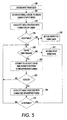
- Fig. 5 illustrates general acts performed by processor 122 in executing lookup routines 146.
- the act in box 180 begins upon receiving input word data 156, such as in a call to lookup routines 146.
- input word could be received from keyboard 126 or could be indicated by a selection from mouse 128.
- the act in box 182 then accesses inflectional lexicon 150, which can be implemented as an FST or in any other appropriate way, with the characters of the word indicated by input word data 156, to obtain a lemma or dictionary form and a part of speech for the input word.
- the inflectional lexicon may provide more than one (lemma+part of speech) pair, in which case subsequent acts can be performed on each lemma obtained.
- the act in box 182 can optionally also include normalization of the lemma, which can be done in the manner described in relation to box 256 in Fig.
- each output from box 182 whether a lemma or a normalized lemma, and whether or not accompanied by data indicating a part of speech or other such indicia, is referred to below as a "lemma string" and, in Fig. 5, simply as a "lemma”.
- the act in box 184 then accesses FST data structure 154 with the characters of each lemma string from box 182.
- the act in box 184 can be implemented with conventional FST lookup techniques, such as those described in Cutting et al., US-A 5,625,554, incorporated herein by reference.
- the act in box 190 then branches based on whether the act in box 184 was successful in matching the characters of a lemma string with a string of characters that is acceptable at the family level of FST data structure 154. For example, if box 184 reaches a state at which none of the outgoing transitions has a family level character that matches the next lemma string character, the lemma string, and hence the input word, is not acceptable. Similarly, if box 184 is able to match all of the lemma string characters with family level characters along a path of the FST data structure, but the last transition leads to a state that cannot occur at the end of an acceptable lemma string, the lemma string, and hence the input word, is not acceptable.
- box 184 is able to match all of the lemma string characters along a path at the family level of the FST data structure, and the path leads to a state at the end of an acceptable string, the lemma string, and hence the input word, can be treated as acceptable, subject to any part-of-speech or other post-character tags that might also be matched.
- the acts in boxes 184 and 186 thus implement the act in box 40 in Fig. 2, with the query word in box 40 being the lemma string obtained in box 182.
- the act in box 184 can save the representative level characters that are read out, thus obtaining the representative of the family that includes the lemma string, and hence includes the input word.
- the act in box 192 obtains and returns identified family data 160. If identified family data 160 is the representative of the family that includes the lemma string, the act in box 192 can return the representative read out during the act in box 184. If identified family data 160 is a list of the words in the family, the act in box 192 can use the representative read out in box 184 to read out the words from the family level of FST data structure 154, and then return them. In either case, the information indicated by identified family data 160 can be presented on display 124 as shown in Fig. 4.
- the act in box 200 begins an iterative loop that goes through the suffix pairs in ordered list 152, attempting to use each of them to obtain an acceptable string.
- the suffix pairs in ordered list 152 may have appended part of speech tags or the like.
- the act in box 202 attempts to use the next suffix pair on ordered list 152 in both directions to obtain a modified version of the lemma string from box 182.
- the act in box 204 branches based on the result; If box 202 was not successful, another iteration is begun in box 200, to handle the next suffix pair on ordered list 152. But if box 202 succeeded, the modified version of the lemma string might be in one of the families.
- the act in box 206 accesses FST data structure 154 with the characters of the modified version of the lemma string in the same way as in box 184, and the act in box 210 branches on the result in the same way as in box 190. If the modified version of the lemma string is an acceptable string, the act in box 192 obtains and returns identified family data 160, as described above. If not, another iteration is begun in box 200.
- the acts in boxes 200, 202, 204, 206, and 210 thus implement the act in box 42 in Fig. 2, with the query word being the lemma string from box 182 as noted above. Since ordered list 152 is sorted according to frequency, the implementation in Fig. 5 continues until it reaches the most frequent suffix pair that relates the lemma string to an acceptable string.
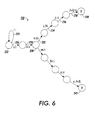
- Fig. 6 illustrates an FST data structure that can be used to implement the acts in boxes 202 and 204 in Fig. 5.
- FST data structure 220 has been constructed for the suffix relationship "ism+N:istic+Adj", which can take nouns with the suffix "-ism” into adjectives with the suffix "-istic” and vice versa. Examples of this relationship occur in idealism:idealistic, realism:realistic, and so forth.
- Box 202 in Fig. 5 can be implemented by beginning at start state 222 and searching for a path through data structure 220 using the lemma string from box 182.
- Each transition in data structure 220 has two labels, referred to herein as "left label” and "right label” even though the order has no significance.
- the search can, for example, attempt to match the left label with an input character and take the right label as output when the left label is matched.
- the search can also employ an output buffer to store and modify a string of output characters and a choices stack to save choice points for use in backtracking.
- the search can provide the contents of the output buffer as an output string upon matching an acceptable input string of characters before doing any further backtracking.
- the search for a path can begin by attempting to follow outgoing transition 224 from start state 222.
- Transition 224 can be followed with any character, and provides the same character as output, so that, after transition 224 is followed for all the character in the lemma string, the output buffer will contain the lemma string "idealistic+Adj" and the choices stack will indicate that choices occurred at least at the first, sixth, and ninth characters of the input string. But start state 222 does not occur at the end of an acceptable input string, so the search must backtrack.
- the search can first backtrack to the ninth character in the lemma string, leaving the output buffer containing the string "idealist”.
- the search can then follow transition 226, which can only be followed when the next character of the input string is an "i", and which provides an "i" as output.
- the search will not succeed, because the next input character is "c", so that the search cannot follow transition 228. Therefore the search must backtrack again.
- the search can next backtrack to the sixth character in the lemma string, leaving the output buffer containing the string "ideal”.
- the search can then follow transition 226 with the "i” and transition 228 with the "s", reaching state 230 with the output buffer containing "idealis”.
- the search can then follow the upper branch from state 230, matching the characters "t", “i”, “c”, and “+Adj” and obtaining "m+N” as output from transitions 232, 234, 236, and 238, because " ⁇ " labels are ignored. Therefore, the buffer contains "idealism+N".
- state 240 occurs at the end of an acceptable input string, as indicated by the "F”, so that the string "idealism+N" is output from the output buffer. Therefore, when the search is completed, the act in box 204 follows the branch to box 206, rather than returning to box 200 as it would if no output string were obtained in box 202.
- the search can again backtrack to see whether there are any other output strings.
- the search can next backtrack to the first character of the lemma string, leaving the output buffer empty.
- the search can then follow transition 226 with the "i” but cannot follow transition 228 with the "d", so that no more output strings can be obtained.
- Data structure 220 can conveniently go in either direction, from “-istic+Adj” to “-ism+N” as described above and also in the opposite direction, from “-ism+N” to "-istic+Adj", by following the transitions between state 230 and final state 242.
- Another approach that is within the scope of the invention is to combine a number of data structures like data structure 220 to obtain an FST data structure that defines a composite suffix relationship.
- This approach has been implemented by arbitrarily dividing the frequency-ordered list of pairwise suffix relationships into a relatively small number of sublists, such as five, and by then creating an FST data structure for each sublist. The five resulting FST data structures can be provided in a frequency-ordered list.
- Fig. 7 illustrates in more detail how suffix pair extraction routines 140 in Fig. 4 can be implemented.
- the implementation begins in box 250 by obtaining an inflectional lexicon FST data structure, such as the Xerox inflectional lexicons for English and French available from InXight Corporation of Palo Alto, California. These lexicons conclude each acceptable character string with a part-of-speech (POS) tag.
- the act in box 250 can include obtaining a handle to access a lexicon that is already stored in memory, as illustrated by inflectional lexicon 150 in Fig. 4.
- the act in box 252 extracts the non-inflected or lemma side of the FST data structure to obtain an unfiltered FSM data structure that accepts all character+POS strings that are acceptable to the lemma side of the FST data structure. Because the FST data structure typically accepts an infinite set of character+POS strings, including strings of numbers, the unfiltered FSM data structure typically also accepts an infinite set, although it could be finite if the FST only accepts a finite set of character+POS strings.
- the act in box 252 can be implemented with a conventional automatic FSM extraction utility.
- the act in box 254 filters the unfiltered FSM data structure from box 252 to produce a filtered FSM data structure that accepts only suitable character+POS strings.
- character strings can be filtered out that end with inappropriate POS tags, such as POS tags that indicate numbers of various kinds or that indicate other types of character strings that are inappropriate.
- POS tags such as POS tags that indicate numbers of various kinds or that indicate other types of character strings that are inappropriate.
- characters in which words can be created by concatenation such as German
- character strings may be filtered out that exceed a maximum appropriate length or a maximum appropriate number of concatenated parts, such as four.
- the act in box 254 can be implemented by composing the unfiltered FSM with a filtering FSM that defines the conditions for including a character string in the filtered FSM.
- the filtering FSM can be created using conventional techniques, similar to those described in US-A-5,625,554 and the Kaplan and Kay article.
- the act in box 256 uses the filtered FSM data structure from box 254 to create a prefixing FST data structure that outputs a normalized prefix-equivalent in response to an acceptable word.
- the input level of the prefixing FST accepts all of the character+POS strings accepted by the filtered FSM, and the output level provides, for each input character+POS string, a normalized p-character string that is p/q-equivalent to a prefix of the input character+POS string for some value of q.
- the notion of p/q equivalence can be understood from the description in copending, coassigned U.S. Patent Application No. 09/ZZZ,ZZZZ (Attorney Docket No. R/98022), entitled "Grouping Words with Equivalent Substrings by Automatic Clustering Based on Suffix Relationships", incorporated herein by reference.
- the act in box 256 can be implemented by creating an intermediate FST that responds to a character string by automatically normalizing characters until a string of p normalized characters is obtained; normalizing can include, for example, removing diacritical marks and possibly making replacements of characters and other modifications that produce equivalent prefixes.
- each normalizing operation replaces a character with another character, thus maintaining one-to-one or p/p-equivalence between characters; the implementation could readily be extended to normalize a doubled character as a single character or vice versa or to make other normalizations that change the number of characters.
- the intermediate FST can then be run on the word list indicated by the filtered FSM to produce a prefix FSM that indicates all the prefix-equivalents.
- the prefix FSM can be composed with the filtered FSM to produce the prefixing FST.
- the prefixing FST the (p+1)th and following characters along each path at the input level are paired with an epsilon at the output level, meaning that no output is provided in response to those characters.
- the act in box 260 inverts the prefixing FST from box 256 to produce an inverted prefixing FST with prefix equivalents at the input level and with acceptable words at the output level.
- the act in box 260 can be implemented by simply switching the elements in the label of each transition in the FST.
- the act in box 262 composes the prefixing FST from box 256 with the inverted prefixing FST from box 260, performing the composition so that the prefix-equivalents drop out and so that epsilons are added to lengthen the shorter of an input character+POS string to equal an output character+POS string, producing a prefix-group FST.
- the prefix-group FST accepts the word list of the filtered FSM from box 254 at its input level and can output every word that had the same prefix-equivalent in the prefixing FST from box 256.
- the composition in box 262 can be performed with conventional techniques similar to those described in US-A-5,625,554 and the Kaplan and Kay article..
- the act in box 264 uses the prefix-group FST from box 262 to produce a list of prefix+suffix alternatives.
- the act in box 264 can be implemented by reading out the character pairs along each path of the prefix-group FST and comparing the characters in each pair until a mismatch is found. Before finding a mismatch, only one character is saved for the prefix, but after a mismatch is found, both characters of each pair are saved for the suffix.
- the prefix+suffix alternatives could be represented by the following string: (p, r, o, d, u, c, ⁇ e:t ⁇ , ⁇ +V:i ⁇ , ⁇ :o ⁇ , ⁇ :n ⁇ , ⁇ :+N ⁇ ), where " ⁇ " characters have been included to compensate for the difference in length, and where "+V” and “+N” indicate a verb and a noun, respectively.
- the prefix of the path is thus “produc”, and the path has two alternative suffixes, "e+V” and "tion+N".
- the act in box 266 can then use the list produced in box 264 to produce a list of suffix pairs and frequencies. This list can be produced by converting the suffix alternatives of each item on the list from box 264 to a suffix pair. If the suffix pair matches a suffix pair on a list of previously obtained suffix pairs, the act in box 266 increments its frequency; if not, the suffix pair is added to the list with a frequency of one. After all items on the list from box 264 have been handled, the act in box 266 sorts the list by frequency to obtain ordered list 152 of suffix pairs, each of which can then be converted into an FST of the type shown in Fig. 6 using conventional techniques. The suffix pair FSTs can be used as described above in relation to boxes 202 and 204 of Fig. 5.
- the implementation described above attempts modifications in accordance with a sequence of suffix relationships indicated by an ordered list of suffix pairs, sorted according to frequency.
- the invention could be implemented to attempt modifications in accordance with a sequence indicated or obtained in any other way, such as from a relational database or from a list of words using Unix tools like findaffix, and the list of suffix pairs could be ordered in any other appropriate way, based for example on the probability of co-occurrence in a corpus of the language under consideration.
- a suffix relationship could relate more than two suffixes.
- the implementation described above uses a language's inflectional lexicon to obtain suffix pairs, but other information about a language could be used to obtain suffix pairs, such as a list or other data structure indicating words that are acceptable in the language, and suffix pairs could be obtained in a wide variety of ways, including from a list of words using Unix tools like findaffix.
- the implementation also uses the inflectional lexicon to obtain lemmas of input words, but the invention could be implemented by using input words directly rather than obtaining lemmas or with stemming or other operations to obtain uninflected forms of words.
- the implementation described above could be used in combination with other techniques for identifying a group of words that include or relate to an input word.
- the implementation described above uses an FST data structure to identify a group of families that includes a word, but groups of words could be stored in many other types of data structures in addition to an FST, such as in relational databases, and a group could accordingly be identified in any way appropriate to such other types of data structures.
- the implementation described above uses an FST that maps from a word to a representative of a relational family, which is similar to a derivational family.
- An FST could, however, map to any other appropriate information identifying a group that includes a word, and the groups need not be relational families, but could be other types of families or groups within which related words have related suffixes, such as inflectional families.
- the invention can be applied to automatically obtain a group of words that include or relate to an input word, and the group of words can then be used in formulating an information retrieval query. To improve information retrieval performance, this can be done for each word in a query.
Landscapes
- Engineering & Computer Science (AREA)
- Theoretical Computer Science (AREA)
- Computational Linguistics (AREA)
- Data Mining & Analysis (AREA)
- Databases & Information Systems (AREA)
- Physics & Mathematics (AREA)
- General Engineering & Computer Science (AREA)
- General Physics & Mathematics (AREA)
- Machine Translation (AREA)
- Information Retrieval, Db Structures And Fs Structures Therefor (AREA)
Applications Claiming Priority (2)
| Application Number | Priority Date | Filing Date | Title |
|---|---|---|---|
| US212662 | 1998-12-16 | ||
| US09/212,662 US6430557B1 (en) | 1998-12-16 | 1998-12-16 | Identifying a group of words using modified query words obtained from successive suffix relationships |
Publications (2)
| Publication Number | Publication Date |
|---|---|
| EP1011057A1 true EP1011057A1 (de) | 2000-06-21 |
| EP1011057B1 EP1011057B1 (de) | 2006-11-29 |
Family
ID=22791958
Family Applications (1)
| Application Number | Title | Priority Date | Filing Date |
|---|---|---|---|
| EP99124936A Expired - Lifetime EP1011057B1 (de) | 1998-12-16 | 1999-12-14 | Identifikation einer Wortgruppe durch modifizierte Schlüsselwörter, die aus Transformationen von aufeinanderfolgenden Suffixen erzeugt sind |
Country Status (4)
| Country | Link |
|---|---|
| US (1) | US6430557B1 (de) |
| EP (1) | EP1011057B1 (de) |
| JP (1) | JP2000181920A (de) |
| DE (1) | DE69934195T2 (de) |
Families Citing this family (23)
| Publication number | Priority date | Publication date | Assignee | Title |
|---|---|---|---|---|
| US5836771A (en) * | 1996-12-02 | 1998-11-17 | Ho; Chi Fai | Learning method and system based on questioning |
| US6498921B1 (en) * | 1999-09-01 | 2002-12-24 | Chi Fai Ho | Method and system to answer a natural-language question |
| TW388826B (en) * | 1998-12-21 | 2000-05-01 | Inventec Corp | Quickly word-identifying method |
| US6865532B2 (en) * | 2001-09-19 | 2005-03-08 | Mitsubishi Electric Research Laboratories, Inc. | Method for recognizing spoken identifiers having predefined grammars |
| US6886010B2 (en) * | 2002-09-30 | 2005-04-26 | The United States Of America As Represented By The Secretary Of The Navy | Method for data and text mining and literature-based discovery |
| US7941310B2 (en) * | 2003-09-09 | 2011-05-10 | International Business Machines Corporation | System and method for determining affixes of words |
| US20050120300A1 (en) * | 2003-09-25 | 2005-06-02 | Dictaphone Corporation | Method, system, and apparatus for assembly, transport and display of clinical data |
| US7617091B2 (en) * | 2003-11-14 | 2009-11-10 | Xerox Corporation | Method and apparatus for processing natural language using tape-intersection |
| CA2498728A1 (en) * | 2004-02-27 | 2005-08-27 | Dictaphone Corporation | A system and method for normalization of a string of words |
| US7409334B1 (en) * | 2004-07-22 | 2008-08-05 | The United States Of America As Represented By The Director, National Security Agency | Method of text processing |
| JPWO2006051966A1 (ja) * | 2004-11-12 | 2008-05-29 | 株式会社ジャストシステム | 文書管理装置及び文書管理方法 |
| US7805430B2 (en) * | 2005-12-22 | 2010-09-28 | Sap Ag | Evaluation of name prefix and suffix during a search |
| US9069547B2 (en) | 2006-09-22 | 2015-06-30 | Intel Corporation | Instruction and logic for processing text strings |
| US20080208566A1 (en) * | 2007-02-23 | 2008-08-28 | Microsoft Corporation | Automated word-form transformation and part of speech tag assignment |
| US9218336B2 (en) * | 2007-03-28 | 2015-12-22 | International Business Machines Corporation | Efficient implementation of morphology for agglutinative languages |
| KR101254362B1 (ko) * | 2007-05-18 | 2013-04-12 | 엔에이치엔(주) | 공통 접사를 이용한 키워드 순위를 제공하는 방법 및시스템 |
| US20100145854A1 (en) * | 2008-12-08 | 2010-06-10 | Motorola, Inc. | System and method to enable a secure environment for trusted and untrusted processes to share the same hardware |
| KR101485940B1 (ko) * | 2013-08-23 | 2015-01-27 | 네이버 주식회사 | 시멘틱 뎁스 구조 기반의 검색어 제시 시스템 및 방법 |
| US9971714B2 (en) * | 2015-05-05 | 2018-05-15 | Oath Inc. | Device interfacing |
| US10134388B1 (en) * | 2015-12-23 | 2018-11-20 | Amazon Technologies, Inc. | Word generation for speech recognition |
| US10831797B2 (en) * | 2018-03-23 | 2020-11-10 | International Business Machines Corporation | Query recognition resiliency determination in virtual agent systems |
| CN115438140B (zh) * | 2022-09-14 | 2025-08-19 | 广东外语外贸大学 | 一种基于后缀索引的敏感词检索方法及系统 |
| CN118333053B (zh) * | 2024-06-13 | 2024-11-12 | 苏州魔视智能科技有限公司 | 语言数据处理方法、装置、计算机设备及存储介质 |
Citations (3)
| Publication number | Priority date | Publication date | Assignee | Title |
|---|---|---|---|---|
| US4799188A (en) * | 1985-03-23 | 1989-01-17 | Brother Kogyo Kabushiki Kaisha | Electronic dictionary system having improved memory efficiency for storage of common suffix words |
| US4864501A (en) * | 1987-10-07 | 1989-09-05 | Houghton Mifflin Company | Word annotation system |
| US5551049A (en) * | 1987-05-26 | 1996-08-27 | Xerox Corporation | Thesaurus with compactly stored word groups |
Family Cites Families (11)
| Publication number | Priority date | Publication date | Assignee | Title |
|---|---|---|---|---|
| US5940624A (en) * | 1991-02-01 | 1999-08-17 | Wang Laboratories, Inc. | Text management system |
| US5488725A (en) * | 1991-10-08 | 1996-01-30 | West Publishing Company | System of document representation retrieval by successive iterated probability sampling |
| US5625554A (en) | 1992-07-20 | 1997-04-29 | Xerox Corporation | Finite-state transduction of related word forms for text indexing and retrieval |
| JPH0756933A (ja) * | 1993-06-24 | 1995-03-03 | Xerox Corp | 文書検索方法 |
| US5963940A (en) * | 1995-08-16 | 1999-10-05 | Syracuse University | Natural language information retrieval system and method |
| US6012053A (en) * | 1997-06-23 | 2000-01-04 | Lycos, Inc. | Computer system with user-controlled relevance ranking of search results |
| US6105023A (en) * | 1997-08-18 | 2000-08-15 | Dataware Technologies, Inc. | System and method for filtering a document stream |
| US6081774A (en) * | 1997-08-22 | 2000-06-27 | Novell, Inc. | Natural language information retrieval system and method |
| US6092065A (en) * | 1998-02-13 | 2000-07-18 | International Business Machines Corporation | Method and apparatus for discovery, clustering and classification of patterns in 1-dimensional event streams |
| US6101492A (en) * | 1998-07-02 | 2000-08-08 | Lucent Technologies Inc. | Methods and apparatus for information indexing and retrieval as well as query expansion using morpho-syntactic analysis |
| US6308149B1 (en) * | 1998-12-16 | 2001-10-23 | Xerox Corporation | Grouping words with equivalent substrings by automatic clustering based on suffix relationships |
-
1998
- 1998-12-16 US US09/212,662 patent/US6430557B1/en not_active Expired - Lifetime
-
1999
- 1999-12-09 JP JP11349937A patent/JP2000181920A/ja active Pending
- 1999-12-14 EP EP99124936A patent/EP1011057B1/de not_active Expired - Lifetime
- 1999-12-14 DE DE69934195T patent/DE69934195T2/de not_active Expired - Lifetime
Patent Citations (3)
| Publication number | Priority date | Publication date | Assignee | Title |
|---|---|---|---|---|
| US4799188A (en) * | 1985-03-23 | 1989-01-17 | Brother Kogyo Kabushiki Kaisha | Electronic dictionary system having improved memory efficiency for storage of common suffix words |
| US5551049A (en) * | 1987-05-26 | 1996-08-27 | Xerox Corporation | Thesaurus with compactly stored word groups |
| US4864501A (en) * | 1987-10-07 | 1989-09-05 | Houghton Mifflin Company | Word annotation system |
Non-Patent Citations (1)
| Title |
|---|
| PAICE C.D.: "Another Stemmer", SIGIR FORUM, vol. 24, no. 3, 1990, USA, pages 56 - 61, XP000900029 * |
Also Published As
| Publication number | Publication date |
|---|---|
| DE69934195T2 (de) | 2007-03-15 |
| EP1011057B1 (de) | 2006-11-29 |
| DE69934195D1 (de) | 2007-01-11 |
| US6430557B1 (en) | 2002-08-06 |
| JP2000181920A (ja) | 2000-06-30 |
Similar Documents
| Publication | Publication Date | Title |
|---|---|---|
| US6430557B1 (en) | Identifying a group of words using modified query words obtained from successive suffix relationships | |
| EP1011056B1 (de) | Wortgruppierung von Worten mit äquivalenten Teilketten durch automatische, auf suffix Beziehung basierte Clusterung | |
| US5794177A (en) | Method and apparatus for morphological analysis and generation of natural language text | |
| US6269189B1 (en) | Finding selected character strings in text and providing information relating to the selected character strings | |
| US5551049A (en) | Thesaurus with compactly stored word groups | |
| US7039636B2 (en) | Document retrieval method and document retrieval system | |
| Park et al. | Hybrid text mining for finding abbreviations and their definitions | |
| US6963871B1 (en) | System and method for adaptive multi-cultural searching and matching of personal names | |
| US8855998B2 (en) | Parsing culturally diverse names | |
| US6697801B1 (en) | Methods of hierarchically parsing and indexing text | |
| US9251294B2 (en) | Method and system for approximate string matching | |
| US6321192B1 (en) | Adaptive learning method and system that matches keywords using a parsed keyword data structure having a hash index based on an unicode value | |
| US6263333B1 (en) | Method for searching non-tokenized text and tokenized text for matches against a keyword data structure | |
| Baeza-Yates | Introduction to Data Structures and Algorithms Related to Information Retrieval. | |
| WO1997004405A9 (en) | Method and apparatus for automated search and retrieval processing | |
| EP0805404A1 (de) | Methode und System zur lexikalischen Bearbeitung von Text, der nur Grossbuchstaben und akzentfreie Buchstaben enthält | |
| JPH02271468A (ja) | データ処理方法 | |
| WO2005124599A2 (en) | Content search in complex language, such as japanese | |
| WO2002021324A1 (en) | Method and apparatus for summarizing multiple documents using a subsumption model | |
| US8682900B2 (en) | System, method and computer program product for documents retrieval | |
| JP2001184358A (ja) | カテゴリ因子による情報検索装置,情報検索方法およびそのプログラム記録媒体 | |
| EP0649106B1 (de) | Kompakt-gespeicherte Wortgruppen | |
| JP3720060B2 (ja) | 関連ワードを得る方法及びシステム | |
| Pearce et al. | Generating a Dynamic Hypertext environment with N-gram Analysis | |
| JPH0232467A (ja) | 機械翻訳方式 |
Legal Events
| Date | Code | Title | Description |
|---|---|---|---|
| PUAI | Public reference made under article 153(3) epc to a published international application that has entered the european phase |
Free format text: ORIGINAL CODE: 0009012 |
|
| AK | Designated contracting states |
Kind code of ref document: A1 Designated state(s): DE FR GB |
|
| AX | Request for extension of the european patent |
Free format text: AL;LT;LV;MK;RO;SI |
|
| 17P | Request for examination filed |
Effective date: 20001221 |
|
| AKX | Designation fees paid |
Free format text: DE FR GB |
|
| 17Q | First examination report despatched |
Effective date: 20050107 |
|
| GRAP | Despatch of communication of intention to grant a patent |
Free format text: ORIGINAL CODE: EPIDOSNIGR1 |
|
| RIN1 | Information on inventor provided before grant (corrected) |
Inventor name: CHANOD, JEAN-PIERRE Inventor name: GREFENSTETTE, GREGORY Inventor name: GAUSSIER, ERIC |
|
| GRAS | Grant fee paid |
Free format text: ORIGINAL CODE: EPIDOSNIGR3 |
|
| GRAA | (expected) grant |
Free format text: ORIGINAL CODE: 0009210 |
|
| AK | Designated contracting states |
Kind code of ref document: B1 Designated state(s): DE FR GB |
|
| REG | Reference to a national code |
Ref country code: GB Ref legal event code: FG4D |
|
| REF | Corresponds to: |
Ref document number: 69934195 Country of ref document: DE Date of ref document: 20070111 Kind code of ref document: P |
|
| ET | Fr: translation filed | ||
| PLBE | No opposition filed within time limit |
Free format text: ORIGINAL CODE: 0009261 |
|
| STAA | Information on the status of an ep patent application or granted ep patent |
Free format text: STATUS: NO OPPOSITION FILED WITHIN TIME LIMIT |
|
| 26N | No opposition filed |
Effective date: 20070830 |
|
| PGFP | Annual fee paid to national office [announced via postgrant information from national office to epo] |
Ref country code: DE Payment date: 20141121 Year of fee payment: 16 Ref country code: GB Payment date: 20141126 Year of fee payment: 16 |
|
| PGFP | Annual fee paid to national office [announced via postgrant information from national office to epo] |
Ref country code: FR Payment date: 20141217 Year of fee payment: 16 |
|
| REG | Reference to a national code |
Ref country code: DE Ref legal event code: R119 Ref document number: 69934195 Country of ref document: DE |
|
| GBPC | Gb: european patent ceased through non-payment of renewal fee |
Effective date: 20151214 |
|
| REG | Reference to a national code |
Ref country code: FR Ref legal event code: ST Effective date: 20160831 |
|
| PG25 | Lapsed in a contracting state [announced via postgrant information from national office to epo] |
Ref country code: DE Free format text: LAPSE BECAUSE OF NON-PAYMENT OF DUE FEES Effective date: 20160701 Ref country code: GB Free format text: LAPSE BECAUSE OF NON-PAYMENT OF DUE FEES Effective date: 20151214 |
|
| PG25 | Lapsed in a contracting state [announced via postgrant information from national office to epo] |
Ref country code: FR Free format text: LAPSE BECAUSE OF NON-PAYMENT OF DUE FEES Effective date: 20151231 |