EP1013387A2 - Verfahren und Vorrichtung zur Behandlung von Abfallprodukte - Google Patents
Verfahren und Vorrichtung zur Behandlung von Abfallprodukte Download PDFInfo
- Publication number
- EP1013387A2 EP1013387A2 EP99310441A EP99310441A EP1013387A2 EP 1013387 A2 EP1013387 A2 EP 1013387A2 EP 99310441 A EP99310441 A EP 99310441A EP 99310441 A EP99310441 A EP 99310441A EP 1013387 A2 EP1013387 A2 EP 1013387A2
- Authority
- EP
- European Patent Office
- Prior art keywords
- waste items
- path
- items
- blades
- fan
- Prior art date
- Legal status (The legal status is an assumption and is not a legal conclusion. Google has not performed a legal analysis and makes no representation as to the accuracy of the status listed.)
- Withdrawn
Links
Images




Classifications
-
- B—PERFORMING OPERATIONS; TRANSPORTING
- B02—CRUSHING, PULVERISING, OR DISINTEGRATING; PREPARATORY TREATMENT OF GRAIN FOR MILLING
- B02C—CRUSHING, PULVERISING, OR DISINTEGRATING IN GENERAL; MILLING GRAIN
- B02C21/00—Disintegrating plant with or without drying of the material
- B02C21/02—Transportable disintegrating plant
-
- B—PERFORMING OPERATIONS; TRANSPORTING
- B02—CRUSHING, PULVERISING, OR DISINTEGRATING; PREPARATORY TREATMENT OF GRAIN FOR MILLING
- B02C—CRUSHING, PULVERISING, OR DISINTEGRATING IN GENERAL; MILLING GRAIN
- B02C19/00—Other disintegrating devices or methods
- B02C19/0056—Other disintegrating devices or methods specially adapted for specific materials not otherwise provided for
- B02C19/0081—Other disintegrating devices or methods specially adapted for specific materials not otherwise provided for specially adapted for breaking-up bottles
-
- B—PERFORMING OPERATIONS; TRANSPORTING
- B29—WORKING OF PLASTICS; WORKING OF SUBSTANCES IN A PLASTIC STATE IN GENERAL
- B29B—PREPARATION OR PRETREATMENT OF THE MATERIAL TO BE SHAPED; MAKING GRANULES OR PREFORMS; RECOVERY OF PLASTICS OR OTHER CONSTITUENTS OF WASTE MATERIAL CONTAINING PLASTICS
- B29B17/00—Recovery of plastics or other constituents of waste material containing plastics
- B29B17/0026—Recovery of plastics or other constituents of waste material containing plastics by agglomeration or compacting
-
- B—PERFORMING OPERATIONS; TRANSPORTING
- B29—WORKING OF PLASTICS; WORKING OF SUBSTANCES IN A PLASTIC STATE IN GENERAL
- B29B—PREPARATION OR PRETREATMENT OF THE MATERIAL TO BE SHAPED; MAKING GRANULES OR PREFORMS; RECOVERY OF PLASTICS OR OTHER CONSTITUENTS OF WASTE MATERIAL CONTAINING PLASTICS
- B29B17/00—Recovery of plastics or other constituents of waste material containing plastics
- B29B17/0026—Recovery of plastics or other constituents of waste material containing plastics by agglomeration or compacting
- B29B17/0047—Compacting complete waste articles
- B29B17/0052—Hollow articles, e.g. bottles
-
- B—PERFORMING OPERATIONS; TRANSPORTING
- B30—PRESSES
- B30B—PRESSES IN GENERAL
- B30B9/00—Presses specially adapted for particular purposes
- B30B9/30—Presses specially adapted for particular purposes for baling; Compression boxes therefor
- B30B9/3082—Presses specially adapted for particular purposes for baling; Compression boxes therefor with compression means other than rams performing a rectilinear movement
-
- B—PERFORMING OPERATIONS; TRANSPORTING
- B29—WORKING OF PLASTICS; WORKING OF SUBSTANCES IN A PLASTIC STATE IN GENERAL
- B29B—PREPARATION OR PRETREATMENT OF THE MATERIAL TO BE SHAPED; MAKING GRANULES OR PREFORMS; RECOVERY OF PLASTICS OR OTHER CONSTITUENTS OF WASTE MATERIAL CONTAINING PLASTICS
- B29B17/00—Recovery of plastics or other constituents of waste material containing plastics
- B29B17/0026—Recovery of plastics or other constituents of waste material containing plastics by agglomeration or compacting
- B29B17/0047—Compacting complete waste articles
- B29B17/0052—Hollow articles, e.g. bottles
- B29B2017/0057—Externally powered deformation tools, e.g. tools being part of relatively big non domestic installations, powered by motors
-
- B—PERFORMING OPERATIONS; TRANSPORTING
- B29—WORKING OF PLASTICS; WORKING OF SUBSTANCES IN A PLASTIC STATE IN GENERAL
- B29B—PREPARATION OR PRETREATMENT OF THE MATERIAL TO BE SHAPED; MAKING GRANULES OR PREFORMS; RECOVERY OF PLASTICS OR OTHER CONSTITUENTS OF WASTE MATERIAL CONTAINING PLASTICS
- B29B17/00—Recovery of plastics or other constituents of waste material containing plastics
- B29B17/0026—Recovery of plastics or other constituents of waste material containing plastics by agglomeration or compacting
- B29B17/0047—Compacting complete waste articles
- B29B17/0052—Hollow articles, e.g. bottles
- B29B2017/0073—Removing caps or labels during deformation
-
- B—PERFORMING OPERATIONS; TRANSPORTING
- B29—WORKING OF PLASTICS; WORKING OF SUBSTANCES IN A PLASTIC STATE IN GENERAL
- B29B—PREPARATION OR PRETREATMENT OF THE MATERIAL TO BE SHAPED; MAKING GRANULES OR PREFORMS; RECOVERY OF PLASTICS OR OTHER CONSTITUENTS OF WASTE MATERIAL CONTAINING PLASTICS
- B29B17/00—Recovery of plastics or other constituents of waste material containing plastics
- B29B2017/0094—Mobile recycling devices, e.g. devices installed in truck trailers
-
- Y—GENERAL TAGGING OF NEW TECHNOLOGICAL DEVELOPMENTS; GENERAL TAGGING OF CROSS-SECTIONAL TECHNOLOGIES SPANNING OVER SEVERAL SECTIONS OF THE IPC; TECHNICAL SUBJECTS COVERED BY FORMER USPC CROSS-REFERENCE ART COLLECTIONS [XRACs] AND DIGESTS
- Y02—TECHNOLOGIES OR APPLICATIONS FOR MITIGATION OR ADAPTATION AGAINST CLIMATE CHANGE
- Y02W—CLIMATE CHANGE MITIGATION TECHNOLOGIES RELATED TO WASTEWATER TREATMENT OR WASTE MANAGEMENT
- Y02W30/00—Technologies for solid waste management
- Y02W30/50—Reuse, recycling or recovery technologies
- Y02W30/62—Plastics recycling; Rubber recycling
Definitions
- the present invention relates to apparatus and methods for processing waste products, such as discarded containers.
- the apparatus and methods are particularly suitable for processing plastic bottles, such as PET bottles.
- PET or HDPE containers have a tendency to "spring back” once the compressive force is removed, to at least partially regain their original shape.
- experience has shown that PET bottles with their screw caps in place are astonishingly strong, and resist compression even when great compressive forces are applied to them within the chamber. Therefore, conventionally the screw tops are manually removed before the bottles are placed in the chamber.
- the present invention proposes processing waste items in a manner which is particularly suitable for waste items such as plastic bottles.
- the invention provides an apparatus for processing waste items, the apparatus comprising means for conducting the waste items sequentially along a path through a plurality of processing stages, each stage including means for mechanically deforming the waste items.
- the deformation may include compressing the waste items.
- the present inventor has found that by repeatedly deforming a plastic bottle it is possible to obtain permanent deformation (compression) of the bottle, so that subsequent processing or disposal is made much more efficient.
- a first possibility is to arrange for the path along which the waste items are conducted to intersect with one or more rollers.
- two rollers may meet at or near the path of the waste items, so that the waste items must pass between them.
- the degree of compression effected by the rollers can then be chosen by arranging their closest curved surfaces to be at a predetermined spacing, by arranging the rollers to be resiliently urged together, or preferably, by arranging the rolling surface of the rollers to be resilient.
- the spacing, the force with which the rollers are urged together, or alternatively the degree of resilience of the rolling surface may, be adjustable.
- rollers instead of two rollers, it is possible for there to be one roller which presses waste items against another surface, such as a conveyer belt (a "rolling road").
- a conveyer belt a "rolling road”
- the spacing between the roller and the belt, or the force with which the roller presses the belt may be adjustable.
- the velocity of the rolling surface of the roller which faces the conveyor belt is substantially equal to the velocity of the belt itself.
- the roller(s) (and conveyor belt if present) may be driven by a conventional motor. It is envisaged that the roller(s) should preferably turn at at least 200 RPM, or more preferably at least 500 RPM. Rotation speeds of up to 200 RPM are presently envisaged.
- the rotation of the roller(s) and belt (if any) may constitute all or part of the means for conducting waste items along the path.
- the machine further includes a fan mechanism having blades.
- the fan may be arranged to generate an air flow which draws waste items into the apparatus through an input aperture and along at least part of the path.
- the blades of the fan may be arranged to intersect the path of the waste items, whereby when the blades collide with the waste items so as to deform them.
- the inventor has found that the arrangement of the fan and input aperture may be optimised depending upon the sort of waste items being processed. If the waste items are cans, then the fan and input aperture are preferably arranged so that the cans contact a radially inward portion of the blades, where they suffer severe mechanical deformation.
- the plastic bottles it is more preferable that the plastic bottles contact a radially outer area of the blades. In this location they suffer a lower degree of mechanical deformation, but this degree of deformation is adequate if it is combined with the deformation produced by later stages of the apparatus. That is, in the case of plastic bottles, a lower level of deformation applied several times is most efficient.
- roller and fan arrangements described above are preferably used as part of the multi-stage apparatus described, they in fact are not limited in this respect, and constitute independent aspects of the invention.
- a further independent aspect of the invention is a method of processing waste items using an apparatus as described above (i.e. with multi-stages, roller compression and/or fan deformation).
- an apparatus according to the invention may be operated in a location where members of the public have deposited waste items (e.g. a supermarket public recycling area). In this location the waste items are processed, including compression, so that they can be transported efficiently to a different site where they can be recycled, burnt, or otherwise processed.
- waste items e.g. a supermarket public recycling area.
- the waste items are processed, including compression, so that they can be transported efficiently to a different site where they can be recycled, burnt, or otherwise processed.
- an apparatus Rather than permanently siting an apparatus according to the invention in the public location, it is preferable to locate the apparatus on a vehicle (e.g. a lorry), so that it can be transported to the location where it is to be operated. Waste items can then be fed sequentially into the apparatus, and compressed to make a dense load for efficient transportation to the recycling site.
- a vehicle e.g. a lorry
- the embodiment includes an outer metal casing 1, and within it a motor 2 driven by petrol supplied from a tank 4.
- the motor is started using electrical power from battery 5.
- the output of the motor 2 is converted by a gear box 3, having an output axel which is co-axial with a fan located within a blade box 6.
- the fan is not shown in detail, it has six blades extending radially from a central hub 7.
- the blade box is preferably made from wear resilient, work-hardened steel.
- the blades themselves may be made of wear-resistant steel, but are not work-hardened, to prevent cracking.
- the blades preerably have a squared-off end profile as viewed along the axis of the fan (that is the radially-extending edges of the blade meet the circumferentially outer edge at respective corners).
- the interior of the blade box 6 communicates with an input aperture defined by a tube 8.
- the blade box 6 further communicates with a tube 12 which curves in the plane of the fan rotation.
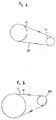
- the fan hub is connected by a belt 14 to a layshaft 16.
- the hub is rotated at about 3000 RPM, causing the layshaft to rotate at about 956 RPM.
- the layshaft 16 is in turn used to drive a drive belt 18 and a belt pulley 20.
- the layshaft 16 is further used to drive a belt 22, which in turn drives a wheel 24 and idlers 26, 28.
- the wheel 24 rotates at 763 RPM, while each of the idlers 26, 28 rotates at about 2091 RPM.
- the location of the idler 28 is made adjustable.
- Wheel 24 drives a belt 30, which turns a top pinch roller 32 at 1365 RPM.
- the belt roller 20 drives a belt 34 which turns a lower pinch roller 36 at the same angular velocity, that is 1365 RPM.
- the tube 8 is connected to a section of tubing, such as standard 12 inch diameter bore plastic reinforced with steel wire.
- the tube is flexible, and may have a length of say 30 metres. Its distal end is located near a supply of waste items such as plastic bottles.
- the bottles are sucked by the action of the fan along the flexible tube, through the input aperture defined by the tube 8 and into the interior of the blade box 6.
- the plastic tops e.g. screw tops
- the stream of air then forces the bottles in a path along the tube 12 to where an outer surface 38 of a tyre surrounding the wheel 24 contacts the belt 18.
- the belt 18 (“rolling road”) is supported by a steel sheet (not shown in the figures). Plastic bottles therefore pass between the belt 34 and the radially outer surface of the tyre 38.
- the primary purpose of the impact on the bottles by the surface 38 of the tyre is to drag them along the path within the apparatus.
- the tyre further achieves a flattening of the plastic bottles to about 20-30% of their original size.
- the path of the bottles leads the waste items between upper pinch roller 32 and lower pinch roller 36.
- These two rollers have respective radially outer surfaces 38, 40 between which the waste must pass.
- the rolling surface of the rollers 32, 36 is not resilient, and is preferably coated with a hardening material.
- the two pinch rollers perform additional flattening, reducing the size to about 10-15% of the original size. Because of the high speed of the pinch rollers 32, 36 the flattened bottles are ejected with some force out of an ouput aperture 44 of the apparatus.
- an additional pair of pinch rollers may be provided at this downstream portion of the path.
- the pinch rollers are provided within a housing 46 which is attachable to the frame 1.
- the additional pinch rollers 52, 54 consist of respective central hubs 56, 58, and have radially outer surfaces 60, 62.
- the additional pinch rollers 52, 54 are driven via respective belts 48, 50 from the upper and lower pinch rollers 32, 36 within the main frame 1.
- the optional additional pair of pinch rollers 52, 54 are designed to crease PET bottles better, thus ensuring maximum reduction of volume of the plastic bottles.
- the complete machine (frame 1 and additional housing) is designed to make the machine portable and robust enough to be handled by a fork-lift truck into the rear of a vehicle.
- the motor is a V twin petrol engine, Manufacture is Hyundai.
- the fan blade is driven directly from the motor with an integral shaft.
- the rotary fan being keyed to the shaft.
- the assembly has 6 blades to give the required air transference.
- the blades (impellers) are made of a wear resistant steel, such as ABRO 400.
- the cowl being in two parts, bolted together with a circular inlet and square outlet.
- the casing is made from a work hardening, wear-resistant steel, such as ABRO M.
- the belt conveyor has a steel bedplate with a crowned drive drum and an adjustable tail drum.
- the belt is a PVC reinforced belt with a vulcanised joint to accept high speed running.
- the rolling surfaces of the pinch rollers are coated with a plastic material to increase their hardness (e.g. a tank track material covering).
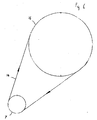
- the drive for the rolling road belt is a 25mm wide timing belt with a 98M20 pulley on the layshaft (229 dia) and a 38M20 pulley to the belt drum (76.39 dia).
Landscapes
- Engineering & Computer Science (AREA)
- Mechanical Engineering (AREA)
- Environmental & Geological Engineering (AREA)
- Food Science & Technology (AREA)
- Processing Of Solid Wastes (AREA)
- Treatment Of Fiber Materials (AREA)
- Perforating, Stamping-Out Or Severing By Means Other Than Cutting (AREA)
- Separation, Recovery Or Treatment Of Waste Materials Containing Plastics (AREA)
Applications Claiming Priority (2)
| Application Number | Priority Date | Filing Date | Title |
|---|---|---|---|
| GB9828390A GB9828390D0 (en) | 1998-12-22 | 1998-12-22 | Waste product processing apparatus and methods |
| GB9828390 | 1998-12-22 |
Publications (2)
| Publication Number | Publication Date |
|---|---|
| EP1013387A2 true EP1013387A2 (de) | 2000-06-28 |
| EP1013387A3 EP1013387A3 (de) | 2000-08-09 |
Family
ID=10844851
Family Applications (1)
| Application Number | Title | Priority Date | Filing Date |
|---|---|---|---|
| EP19990310441 Withdrawn EP1013387A3 (de) | 1998-12-22 | 1999-12-22 | Verfahren und Vorrichtung zur Behandlung von Abfallprodukte |
Country Status (2)
| Country | Link |
|---|---|
| EP (1) | EP1013387A3 (de) |
| GB (1) | GB9828390D0 (de) |
Cited By (2)
| Publication number | Priority date | Publication date | Assignee | Title |
|---|---|---|---|---|
| CN110370502A (zh) * | 2019-08-06 | 2019-10-25 | 李建民 | 一种具有低热感脱标功能的塑料瓶回收装置 |
| CN110900887A (zh) * | 2019-11-29 | 2020-03-24 | 张国红 | 一种水泥桶制备再生塑料预处理装置 |
Family Cites Families (8)
| Publication number | Priority date | Publication date | Assignee | Title |
|---|---|---|---|---|
| JPS5916879B2 (ja) * | 1980-06-30 | 1984-04-18 | 千代松 関根 | 缶プレス機 |
| US4987829A (en) * | 1989-09-29 | 1991-01-29 | Lummus Development Corp. | Perforator/crusher for plastic bottles |
| US5395061A (en) * | 1993-05-03 | 1995-03-07 | Larisan Incorporated | Mobile tire shredder |
| FR2711574B1 (fr) * | 1993-10-22 | 1996-10-04 | Metal Etudes | Dispositif de compactage de récipients plastiques et installation de collecte de récipients. |
| DE4338561A1 (de) * | 1993-11-05 | 1995-05-11 | R U T Recycling Und Umweltschu | Vorrichtung zur Vorbereitung/Vorbehandlung verpreßbarer Hohlkörper für Recycling |
| DE9319452U1 (de) * | 1993-12-17 | 1994-03-03 | Maba Spezialmaschinen GmbH, 06766 Wolfen | Presse zur Volumenverkleinerung von Plastebehältern |
| US5746378A (en) * | 1995-06-23 | 1998-05-05 | Marathon Equipment Company | Volume reduction machine |
| IT1279880B1 (it) * | 1995-11-17 | 1997-12-18 | Cms Spa | Dispositivo per schiacciare contenitori usati |
-
1998
- 1998-12-22 GB GB9828390A patent/GB9828390D0/en not_active Ceased
-
1999
- 1999-12-22 EP EP19990310441 patent/EP1013387A3/de not_active Withdrawn
Cited By (4)
| Publication number | Priority date | Publication date | Assignee | Title |
|---|---|---|---|---|
| CN110370502A (zh) * | 2019-08-06 | 2019-10-25 | 李建民 | 一种具有低热感脱标功能的塑料瓶回收装置 |
| CN110370502B (zh) * | 2019-08-06 | 2021-07-30 | 浙江嘉天禾环保科技有限公司 | 一种具有低热感脱标功能的塑料瓶回收装置 |
| CN110900887A (zh) * | 2019-11-29 | 2020-03-24 | 张国红 | 一种水泥桶制备再生塑料预处理装置 |
| CN110900887B (zh) * | 2019-11-29 | 2021-09-24 | 江苏立汉科技有限公司 | 一种水泥桶制备再生塑料预处理装置 |
Also Published As
| Publication number | Publication date |
|---|---|
| GB9828390D0 (en) | 1999-02-17 |
| EP1013387A3 (de) | 2000-08-09 |
Similar Documents
| Publication | Publication Date | Title |
|---|---|---|
| CA1324987C (en) | Apparatus and method for separating recyclable materials | |
| CN106807722B (zh) | 一种报废汽车整体资源化处理方法及设备 | |
| US4795103A (en) | Pulverizing apparatus | |
| US7909278B2 (en) | Auto vehicle capable of processing waste matter | |
| KR102035868B1 (ko) | 공압 재료처리 시스템의 재료처리 방법 및 장치 | |
| US4081143A (en) | Methods of handling waste | |
| JPH05253935A (ja) | 車両タイヤ等を破砕し、金属部分を非金属部分から分離する設備および方法 | |
| US5558284A (en) | Crushing apparatus | |
| EP1013387A2 (de) | Verfahren und Vorrichtung zur Behandlung von Abfallprodukte | |
| US20080041996A1 (en) | Methods and apparatus for processing recyclable containers | |
| US5685498A (en) | Method and apparatus for processing recyclable material | |
| JP3362945B2 (ja) | 廃棄物処理装置 | |
| US6581858B1 (en) | Method and apparatus for crushing fluorescent lamps and separating components thereof | |
| JP2003236474A (ja) | 風力選別装置 | |
| JP2009050802A (ja) | 回転式破砕選別機 | |
| JP2009082965A (ja) | 飲料用容器の減容装置及び飲料用容器の選別装置 | |
| US6471148B1 (en) | Method and apparatus for crushing glass | |
| KR20010001826A (ko) | 재활용쓰레기 선별 시스템 | |
| CN210358070U (zh) | 易拉罐自动分选及压扁设备 | |
| JP3282459B2 (ja) | 分別ごみの風力選別装置 | |
| KR200263178Y1 (ko) | 재활용품 분리기 | |
| KR200213516Y1 (ko) | 선별기의 인입롤러 | |
| CN218453479U (zh) | 一种用于90度弯头管件的输送限位理料装置 | |
| CN111940467A (zh) | 一种车轮橡胶的回收粉碎设备 | |
| JP2921807B2 (ja) | 資源化物選別方法 |
Legal Events
| Date | Code | Title | Description |
|---|---|---|---|
| PUAI | Public reference made under article 153(3) epc to a published international application that has entered the european phase |
Free format text: ORIGINAL CODE: 0009012 |
|
| PUAL | Search report despatched |
Free format text: ORIGINAL CODE: 0009013 |
|
| AK | Designated contracting states |
Kind code of ref document: A2 Designated state(s): AT BE CH CY DE DK ES FI FR GB GR IE IT LI LU MC NL PT SE |
|
| AX | Request for extension of the european patent |
Free format text: AL;LT;LV;MK;RO;SI |
|
| AK | Designated contracting states |
Kind code of ref document: A3 Designated state(s): AT BE CH CY DE DK ES FI FR GB GR IE IT LI LU MC NL PT SE |
|
| AX | Request for extension of the european patent |
Free format text: AL;LT;LV;MK;RO;SI |
|
| AKX | Designation fees paid |
Free format text: AT BE CH CY DE DK ES FI FR GB GR IE IT LI LU MC NL PT SE |
|
| STAA | Information on the status of an ep patent application or granted ep patent |
Free format text: STATUS: THE APPLICATION IS DEEMED TO BE WITHDRAWN |
|
| 18D | Application deemed to be withdrawn |
Effective date: 20010210 |