EP1013687B1 - Dispersions aqueuses pour l'ennoblissement textile - Google Patents
Dispersions aqueuses pour l'ennoblissement textile Download PDFInfo
- Publication number
- EP1013687B1 EP1013687B1 EP98124501A EP98124501A EP1013687B1 EP 1013687 B1 EP1013687 B1 EP 1013687B1 EP 98124501 A EP98124501 A EP 98124501A EP 98124501 A EP98124501 A EP 98124501A EP 1013687 B1 EP1013687 B1 EP 1013687B1
- Authority
- EP
- European Patent Office
- Prior art keywords
- component
- aqueous dispersion
- dispersion
- radical
- formula
- Prior art date
- Legal status (The legal status is an assumption and is not a legal conclusion. Google has not performed a legal analysis and makes no representation as to the accuracy of the status listed.)
- Expired - Lifetime
Links
- 239000006185 dispersion Substances 0.000 title claims abstract description 174
- 238000009988 textile finishing Methods 0.000 title description 3
- -1 glycidyl (2,3-epoxy-1-propyl) Chemical group 0.000 claims abstract description 38
- 150000001875 compounds Chemical class 0.000 claims abstract description 27
- IQPQWNKOIGAROB-UHFFFAOYSA-N isocyanate group Chemical group [N-]=C=O IQPQWNKOIGAROB-UHFFFAOYSA-N 0.000 claims abstract description 14
- 239000002253 acid Substances 0.000 claims abstract description 12
- 229920000768 polyamine Polymers 0.000 claims abstract description 6
- 150000004985 diamines Chemical class 0.000 claims abstract description 5
- 125000001931 aliphatic group Chemical group 0.000 claims abstract description 4
- 125000003118 aryl group Chemical group 0.000 claims abstract description 4
- 125000004430 oxygen atom Chemical group O* 0.000 claims abstract 2
- 239000000203 mixture Substances 0.000 claims description 49
- QTBSBXVTEAMEQO-UHFFFAOYSA-N Acetic acid Chemical compound CC(O)=O QTBSBXVTEAMEQO-UHFFFAOYSA-N 0.000 claims description 48
- VEXZGXHMUGYJMC-UHFFFAOYSA-N Hydrochloric acid Chemical compound Cl VEXZGXHMUGYJMC-UHFFFAOYSA-N 0.000 claims description 24
- 125000004432 carbon atom Chemical group C* 0.000 claims description 22
- 229920000742 Cotton Polymers 0.000 claims description 19
- 229920001577 copolymer Polymers 0.000 claims description 18
- 150000003254 radicals Chemical class 0.000 claims description 14
- IJGRMHOSHXDMSA-UHFFFAOYSA-N Atomic nitrogen Chemical compound N#N IJGRMHOSHXDMSA-UHFFFAOYSA-N 0.000 claims description 8
- 125000000217 alkyl group Chemical group 0.000 claims description 8
- 239000000178 monomer Substances 0.000 claims description 8
- 239000000047 product Substances 0.000 claims description 8
- 239000007795 chemical reaction product Substances 0.000 claims description 7
- 239000002270 dispersing agent Substances 0.000 claims description 7
- 239000000835 fiber Substances 0.000 claims description 7
- 125000002496 methyl group Chemical group [H]C([H])([H])* 0.000 claims description 7
- WHIVNJATOVLWBW-PLNGDYQASA-N (nz)-n-butan-2-ylidenehydroxylamine Chemical compound CC\C(C)=N/O WHIVNJATOVLWBW-PLNGDYQASA-N 0.000 claims description 6
- NIXOWILDQLNWCW-UHFFFAOYSA-M Acrylate Chemical compound [O-]C(=O)C=C NIXOWILDQLNWCW-UHFFFAOYSA-M 0.000 claims description 6
- 125000004435 hydrogen atom Chemical group [H]* 0.000 claims description 6
- 238000006243 chemical reaction Methods 0.000 claims description 5
- 238000000265 homogenisation Methods 0.000 claims description 5
- 229910052757 nitrogen Inorganic materials 0.000 claims description 4
- 239000004753 textile Substances 0.000 claims description 4
- PXAJQJMDEXJWFB-UHFFFAOYSA-N acetone oxime Chemical compound CC(C)=NO PXAJQJMDEXJWFB-UHFFFAOYSA-N 0.000 claims description 3
- 150000001450 anions Chemical group 0.000 claims description 3
- 125000002091 cationic group Chemical group 0.000 claims description 3
- 125000001495 ethyl group Chemical group [H]C([H])([H])C([H])([H])* 0.000 claims description 3
- 229920001519 homopolymer Polymers 0.000 claims description 3
- 229930195733 hydrocarbon Natural products 0.000 claims description 3
- 238000004519 manufacturing process Methods 0.000 claims description 3
- 125000004434 sulfur atom Chemical group 0.000 claims description 3
- 239000004215 Carbon black (E152) Substances 0.000 claims description 2
- 241001465754 Metazoa Species 0.000 claims description 2
- 125000003277 amino group Chemical group 0.000 claims description 2
- JZMJDSHXVKJFKW-UHFFFAOYSA-M methyl sulfate(1-) Chemical compound COS([O-])(=O)=O JZMJDSHXVKJFKW-UHFFFAOYSA-M 0.000 claims description 2
- 150000007522 mineralic acids Chemical class 0.000 claims description 2
- 150000007524 organic acids Chemical class 0.000 claims description 2
- 239000004627 regenerated cellulose Substances 0.000 claims description 2
- 210000002268 wool Anatomy 0.000 claims description 2
- 229910052739 hydrogen Inorganic materials 0.000 claims 4
- 239000001257 hydrogen Substances 0.000 claims 4
- 239000000463 material Substances 0.000 claims 2
- 229910052717 sulfur Inorganic materials 0.000 claims 1
- 238000002360 preparation method Methods 0.000 abstract description 20
- 125000005010 perfluoroalkyl group Chemical group 0.000 abstract description 7
- 229920000642 polymer Polymers 0.000 abstract description 5
- 125000003055 glycidyl group Chemical group C(C1CO1)* 0.000 abstract 1
- 239000012948 isocyanate Substances 0.000 abstract 1
- 150000002513 isocyanates Chemical class 0.000 abstract 1
- XLYOFNOQVPJJNP-UHFFFAOYSA-N water Substances O XLYOFNOQVPJJNP-UHFFFAOYSA-N 0.000 description 38
- DNIAPMSPPWPWGF-UHFFFAOYSA-N Propylene glycol Chemical compound CC(O)CO DNIAPMSPPWPWGF-UHFFFAOYSA-N 0.000 description 30
- 239000004744 fabric Substances 0.000 description 29
- 239000000243 solution Substances 0.000 description 26
- 229920001228 polyisocyanate Polymers 0.000 description 18
- 239000005056 polyisocyanate Substances 0.000 description 18
- YCKRFDGAMUMZLT-UHFFFAOYSA-N Fluorine atom Chemical compound [F] YCKRFDGAMUMZLT-UHFFFAOYSA-N 0.000 description 15
- 239000003054 catalyst Substances 0.000 description 15
- 229910052731 fluorine Inorganic materials 0.000 description 15
- 239000011737 fluorine Substances 0.000 description 15
- NLXLAEXVIDQMFP-UHFFFAOYSA-N Ammonia chloride Chemical compound [NH4+].[Cl-] NLXLAEXVIDQMFP-UHFFFAOYSA-N 0.000 description 14
- 239000002657 fibrous material Substances 0.000 description 13
- 230000000694 effects Effects 0.000 description 12
- 239000003995 emulsifying agent Substances 0.000 description 12
- 239000002904 solvent Substances 0.000 description 11
- 239000000126 substance Substances 0.000 description 11
- 239000000839 emulsion Substances 0.000 description 10
- XEKOWRVHYACXOJ-UHFFFAOYSA-N Ethyl acetate Chemical compound CCOC(C)=O XEKOWRVHYACXOJ-UHFFFAOYSA-N 0.000 description 9
- NTIZESTWPVYFNL-UHFFFAOYSA-N Methyl isobutyl ketone Chemical compound CC(C)CC(C)=O NTIZESTWPVYFNL-UHFFFAOYSA-N 0.000 description 9
- UIHCLUNTQKBZGK-UHFFFAOYSA-N Methyl isobutyl ketone Natural products CCC(C)C(C)=O UIHCLUNTQKBZGK-UHFFFAOYSA-N 0.000 description 9
- 238000004821 distillation Methods 0.000 description 9
- 239000007864 aqueous solution Substances 0.000 description 8
- 229920002678 cellulose Polymers 0.000 description 8
- 239000001913 cellulose Substances 0.000 description 8
- 238000001035 drying Methods 0.000 description 8
- 238000005108 dry cleaning Methods 0.000 description 7
- 239000005871 repellent Substances 0.000 description 7
- 238000003756 stirring Methods 0.000 description 7
- NAQMVNRVTILPCV-UHFFFAOYSA-N hexane-1,6-diamine Chemical compound NCCCCCCN NAQMVNRVTILPCV-UHFFFAOYSA-N 0.000 description 6
- HMZGPNHSPWNGEP-UHFFFAOYSA-N octadecyl 2-methylprop-2-enoate Chemical compound CCCCCCCCCCCCCCCCCCOC(=O)C(C)=C HMZGPNHSPWNGEP-UHFFFAOYSA-N 0.000 description 6
- 230000002940 repellent Effects 0.000 description 6
- 239000008399 tap water Substances 0.000 description 6
- 235000020679 tap water Nutrition 0.000 description 6
- OEPOKWHJYJXUGD-UHFFFAOYSA-N 2-(3-phenylmethoxyphenyl)-1,3-thiazole-4-carbaldehyde Chemical compound O=CC1=CSC(C=2C=C(OCC=3C=CC=CC=3)C=CC=2)=N1 OEPOKWHJYJXUGD-UHFFFAOYSA-N 0.000 description 4
- 239000004971 Cross linker Substances 0.000 description 4
- KFZMGEQAYNKOFK-UHFFFAOYSA-N Isopropanol Chemical compound CC(C)O KFZMGEQAYNKOFK-UHFFFAOYSA-N 0.000 description 4
- 239000002981 blocking agent Substances 0.000 description 4
- 238000004140 cleaning Methods 0.000 description 4
- 238000001816 cooling Methods 0.000 description 4
- 238000005406 washing Methods 0.000 description 4
- 238000009736 wetting Methods 0.000 description 4
- ZJCCRDAZUWHFQH-UHFFFAOYSA-N Trimethylolpropane Chemical compound CCC(CO)(CO)CO ZJCCRDAZUWHFQH-UHFFFAOYSA-N 0.000 description 3
- 235000019270 ammonium chloride Nutrition 0.000 description 3
- 238000000034 method Methods 0.000 description 3
- 238000010998 test method Methods 0.000 description 3
- DVKJHBMWWAPEIU-UHFFFAOYSA-N toluene 2,4-diisocyanate Chemical compound CC1=CC=C(N=C=O)C=C1N=C=O DVKJHBMWWAPEIU-UHFFFAOYSA-N 0.000 description 3
- ZWEHNKRNPOVVGH-UHFFFAOYSA-N 2-Butanone Chemical compound CCC(C)=O ZWEHNKRNPOVVGH-UHFFFAOYSA-N 0.000 description 2
- CSCPPACGZOOCGX-UHFFFAOYSA-N Acetone Chemical compound CC(C)=O CSCPPACGZOOCGX-UHFFFAOYSA-N 0.000 description 2
- DKPFZGUDAPQIHT-UHFFFAOYSA-N Butyl acetate Natural products CCCCOC(C)=O DKPFZGUDAPQIHT-UHFFFAOYSA-N 0.000 description 2
- CTQNGGLPUBDAKN-UHFFFAOYSA-N O-Xylene Chemical compound CC1=CC=CC=C1C CTQNGGLPUBDAKN-UHFFFAOYSA-N 0.000 description 2
- NBIIXXVUZAFLBC-UHFFFAOYSA-N Phosphoric acid Chemical compound OP(O)(O)=O NBIIXXVUZAFLBC-UHFFFAOYSA-N 0.000 description 2
- QAOWNCQODCNURD-UHFFFAOYSA-N Sulfuric acid Chemical compound OS(O)(=O)=O QAOWNCQODCNURD-UHFFFAOYSA-N 0.000 description 2
- 230000000903 blocking effect Effects 0.000 description 2
- 150000002148 esters Chemical class 0.000 description 2
- LYCAIKOWRPUZTN-UHFFFAOYSA-N ethylene glycol Substances OCCO LYCAIKOWRPUZTN-UHFFFAOYSA-N 0.000 description 2
- 239000003063 flame retardant Substances 0.000 description 2
- 238000010438 heat treatment Methods 0.000 description 2
- FUZZWVXGSFPDMH-UHFFFAOYSA-N hexanoic acid Chemical compound CCCCCC(O)=O FUZZWVXGSFPDMH-UHFFFAOYSA-N 0.000 description 2
- 230000002262 irrigation Effects 0.000 description 2
- 238000003973 irrigation Methods 0.000 description 2
- 238000002156 mixing Methods 0.000 description 2
- ADGJZVKOKVENDN-UHFFFAOYSA-N n-(butoxymethyl)-2-methylprop-2-enamide Chemical compound CCCCOCNC(=O)C(C)=C ADGJZVKOKVENDN-UHFFFAOYSA-N 0.000 description 2
- 239000012074 organic phase Substances 0.000 description 2
- 239000003960 organic solvent Substances 0.000 description 2
- 238000010992 reflux Methods 0.000 description 2
- 239000007921 spray Substances 0.000 description 2
- 239000008096 xylene Substances 0.000 description 2
- JNYAEWCLZODPBN-JGWLITMVSA-N (2r,3r,4s)-2-[(1r)-1,2-dihydroxyethyl]oxolane-3,4-diol Chemical class OC[C@@H](O)[C@H]1OC[C@H](O)[C@H]1O JNYAEWCLZODPBN-JGWLITMVSA-N 0.000 description 1
- ZAEWYZIRRZVKGT-UHFFFAOYSA-N 1,3-dihydroxy-4,5-bis(hydroxymethyl)imidazolidin-2-one Chemical compound OCC1C(CO)N(O)C(=O)N1O ZAEWYZIRRZVKGT-UHFFFAOYSA-N 0.000 description 1
- RNFJDJUURJAICM-UHFFFAOYSA-N 2,2,4,4,6,6-hexaphenoxy-1,3,5-triaza-2$l^{5},4$l^{5},6$l^{5}-triphosphacyclohexa-1,3,5-triene Chemical compound N=1P(OC=2C=CC=CC=2)(OC=2C=CC=CC=2)=NP(OC=2C=CC=CC=2)(OC=2C=CC=CC=2)=NP=1(OC=1C=CC=CC=1)OC1=CC=CC=C1 RNFJDJUURJAICM-UHFFFAOYSA-N 0.000 description 1
- ZEYUSQVGRCPBPG-UHFFFAOYSA-N 4,5-dihydroxy-1,3-bis(hydroxymethyl)imidazolidin-2-one Chemical compound OCN1C(O)C(O)N(CO)C1=O ZEYUSQVGRCPBPG-UHFFFAOYSA-N 0.000 description 1
- QTBSBXVTEAMEQO-UHFFFAOYSA-M Acetate Chemical compound CC([O-])=O QTBSBXVTEAMEQO-UHFFFAOYSA-M 0.000 description 1
- 241001136792 Alle Species 0.000 description 1
- LCFVJGUPQDGYKZ-UHFFFAOYSA-N Bisphenol A diglycidyl ether Chemical compound C=1C=C(OCC2OC2)C=CC=1C(C)(C)C(C=C1)=CC=C1OCC1CO1 LCFVJGUPQDGYKZ-UHFFFAOYSA-N 0.000 description 1
- 241000640882 Condea Species 0.000 description 1
- VGGSQFUCUMXWEO-UHFFFAOYSA-N Ethene Chemical compound C=C VGGSQFUCUMXWEO-UHFFFAOYSA-N 0.000 description 1
- 239000004606 Fillers/Extenders Substances 0.000 description 1
- 229920000877 Melamine resin Polymers 0.000 description 1
- MKYBYDHXWVHEJW-UHFFFAOYSA-N N-[1-oxo-1-(2,4,6,7-tetrahydrotriazolo[4,5-c]pyridin-5-yl)propan-2-yl]-2-[[3-(trifluoromethoxy)phenyl]methylamino]pyrimidine-5-carboxamide Chemical compound O=C(C(C)NC(=O)C=1C=NC(=NC=1)NCC1=CC(=CC=C1)OC(F)(F)F)N1CC2=C(CC1)NN=N2 MKYBYDHXWVHEJW-UHFFFAOYSA-N 0.000 description 1
- OAICVXFJPJFONN-UHFFFAOYSA-N Phosphorus Chemical compound [P] OAICVXFJPJFONN-UHFFFAOYSA-N 0.000 description 1
- 239000004698 Polyethylene Substances 0.000 description 1
- 239000004902 Softening Agent Substances 0.000 description 1
- LXEKPEMOWBOYRF-UHFFFAOYSA-N [2-[(1-azaniumyl-1-imino-2-methylpropan-2-yl)diazenyl]-2-methylpropanimidoyl]azanium;dichloride Chemical compound Cl.Cl.NC(=N)C(C)(C)N=NC(C)(C)C(N)=N LXEKPEMOWBOYRF-UHFFFAOYSA-N 0.000 description 1
- 238000010521 absorption reaction Methods 0.000 description 1
- 150000007513 acids Chemical class 0.000 description 1
- 150000001252 acrylic acid derivatives Chemical class 0.000 description 1
- 150000001298 alcohols Chemical class 0.000 description 1
- 125000002723 alicyclic group Chemical group 0.000 description 1
- 150000005215 alkyl ethers Chemical class 0.000 description 1
- 229910000147 aluminium phosphate Inorganic materials 0.000 description 1
- 150000001412 amines Chemical class 0.000 description 1
- 150000004945 aromatic hydrocarbons Chemical class 0.000 description 1
- QVGXLLKOCUKJST-UHFFFAOYSA-N atomic oxygen Chemical compound [O] QVGXLLKOCUKJST-UHFFFAOYSA-N 0.000 description 1
- 238000009835 boiling Methods 0.000 description 1
- 239000011248 coating agent Substances 0.000 description 1
- 238000000576 coating method Methods 0.000 description 1
- 238000004132 cross linking Methods 0.000 description 1
- 235000014113 dietary fatty acids Nutrition 0.000 description 1
- SZXQTJUDPRGNJN-UHFFFAOYSA-N dipropylene glycol Chemical compound OCCCOCCCO SZXQTJUDPRGNJN-UHFFFAOYSA-N 0.000 description 1
- WNAHIZMDSQCWRP-UHFFFAOYSA-N dodecane-1-thiol Chemical compound CCCCCCCCCCCCS WNAHIZMDSQCWRP-UHFFFAOYSA-N 0.000 description 1
- 230000007613 environmental effect Effects 0.000 description 1
- MGPYDQFQAJEDIG-UHFFFAOYSA-N ethene;urea Chemical class C=C.NC(N)=O MGPYDQFQAJEDIG-UHFFFAOYSA-N 0.000 description 1
- 238000000605 extraction Methods 0.000 description 1
- 239000000194 fatty acid Substances 0.000 description 1
- 229930195729 fatty acid Natural products 0.000 description 1
- 150000004665 fatty acids Chemical class 0.000 description 1
- 150000002191 fatty alcohols Chemical class 0.000 description 1
- 238000005187 foaming Methods 0.000 description 1
- 125000000524 functional group Chemical group 0.000 description 1
- 150000002430 hydrocarbons Chemical class 0.000 description 1
- 238000010409 ironing Methods 0.000 description 1
- 150000002576 ketones Chemical class 0.000 description 1
- 239000007788 liquid Substances 0.000 description 1
- JDSHMPZPIAZGSV-UHFFFAOYSA-N melamine Chemical compound NC1=NC(N)=NC(N)=N1 JDSHMPZPIAZGSV-UHFFFAOYSA-N 0.000 description 1
- 150000002734 metacrylic acid derivatives Chemical class 0.000 description 1
- 229910052760 oxygen Inorganic materials 0.000 description 1
- 239000001301 oxygen Substances 0.000 description 1
- 239000000546 pharmaceutical excipient Substances 0.000 description 1
- 229910052698 phosphorus Inorganic materials 0.000 description 1
- 239000011574 phosphorus Substances 0.000 description 1
- 229920000058 polyacrylate Polymers 0.000 description 1
- 229920000728 polyester Polymers 0.000 description 1
- 229920000573 polyethylene Polymers 0.000 description 1
- 229920001296 polysiloxane Polymers 0.000 description 1
- 239000004814 polyurethane Substances 0.000 description 1
- 229920002635 polyurethane Polymers 0.000 description 1
- 238000001556 precipitation Methods 0.000 description 1
- 230000002441 reversible effect Effects 0.000 description 1
- 229920002379 silicone rubber Polymers 0.000 description 1
- 238000005507 spraying Methods 0.000 description 1
- 239000007858 starting material Substances 0.000 description 1
- 150000005621 tetraalkylammonium salts Chemical class 0.000 description 1
- 238000013022 venting Methods 0.000 description 1
Classifications
-
- D—TEXTILES; PAPER
- D06—TREATMENT OF TEXTILES OR THE LIKE; LAUNDERING; FLEXIBLE MATERIALS NOT OTHERWISE PROVIDED FOR
- D06M—TREATMENT, NOT PROVIDED FOR ELSEWHERE IN CLASS D06, OF FIBRES, THREADS, YARNS, FABRICS, FEATHERS OR FIBROUS GOODS MADE FROM SUCH MATERIALS
- D06M13/00—Treating fibres, threads, yarns, fabrics or fibrous goods made from such materials, with non-macromolecular organic compounds; Such treatment combined with mechanical treatment
- D06M13/322—Treating fibres, threads, yarns, fabrics or fibrous goods made from such materials, with non-macromolecular organic compounds; Such treatment combined with mechanical treatment with compounds containing nitrogen
- D06M13/395—Isocyanates
-
- C—CHEMISTRY; METALLURGY
- C08—ORGANIC MACROMOLECULAR COMPOUNDS; THEIR PREPARATION OR CHEMICAL WORKING-UP; COMPOSITIONS BASED THEREON
- C08G—MACROMOLECULAR COMPOUNDS OBTAINED OTHERWISE THAN BY REACTIONS ONLY INVOLVING UNSATURATED CARBON-TO-CARBON BONDS
- C08G18/00—Polymeric products of isocyanates or isothiocyanates
- C08G18/06—Polymeric products of isocyanates or isothiocyanates with compounds having active hydrogen
- C08G18/28—Polymeric products of isocyanates or isothiocyanates with compounds having active hydrogen characterised by the compounds used containing active hydrogen
- C08G18/40—High-molecular-weight compounds
- C08G18/62—Polymers of compounds having carbon-to-carbon double bonds
- C08G18/6275—Polymers of halogen containing compounds having carbon-to-carbon double bonds; halogenated polymers of compounds having carbon-to-carbon double bonds
- C08G18/6279—Polymers of halogen containing compounds having carbon-to-carbon double bonds; halogenated polymers of compounds having carbon-to-carbon double bonds containing fluorine atoms
-
- C—CHEMISTRY; METALLURGY
- C08—ORGANIC MACROMOLECULAR COMPOUNDS; THEIR PREPARATION OR CHEMICAL WORKING-UP; COMPOSITIONS BASED THEREON
- C08G—MACROMOLECULAR COMPOUNDS OBTAINED OTHERWISE THAN BY REACTIONS ONLY INVOLVING UNSATURATED CARBON-TO-CARBON BONDS
- C08G18/00—Polymeric products of isocyanates or isothiocyanates
- C08G18/06—Polymeric products of isocyanates or isothiocyanates with compounds having active hydrogen
- C08G18/28—Polymeric products of isocyanates or isothiocyanates with compounds having active hydrogen characterised by the compounds used containing active hydrogen
- C08G18/40—High-molecular-weight compounds
- C08G18/64—Macromolecular compounds not provided for by groups C08G18/42 - C08G18/63
- C08G18/6415—Macromolecular compounds not provided for by groups C08G18/42 - C08G18/63 having nitrogen
- C08G18/6423—Polyalkylene polyamines; polyethylenimines; Derivatives thereof
-
- C—CHEMISTRY; METALLURGY
- C08—ORGANIC MACROMOLECULAR COMPOUNDS; THEIR PREPARATION OR CHEMICAL WORKING-UP; COMPOSITIONS BASED THEREON
- C08G—MACROMOLECULAR COMPOUNDS OBTAINED OTHERWISE THAN BY REACTIONS ONLY INVOLVING UNSATURATED CARBON-TO-CARBON BONDS
- C08G18/00—Polymeric products of isocyanates or isothiocyanates
- C08G18/06—Polymeric products of isocyanates or isothiocyanates with compounds having active hydrogen
- C08G18/70—Polymeric products of isocyanates or isothiocyanates with compounds having active hydrogen characterised by the isocyanates or isothiocyanates used
- C08G18/72—Polyisocyanates or polyisothiocyanates
- C08G18/80—Masked polyisocyanates
- C08G18/8003—Masked polyisocyanates masked with compounds having at least two groups containing active hydrogen
- C08G18/8006—Masked polyisocyanates masked with compounds having at least two groups containing active hydrogen with compounds of C08G18/32
- C08G18/8009—Masked polyisocyanates masked with compounds having at least two groups containing active hydrogen with compounds of C08G18/32 with compounds of C08G18/3203
- C08G18/8022—Masked polyisocyanates masked with compounds having at least two groups containing active hydrogen with compounds of C08G18/32 with compounds of C08G18/3203 with polyols having at least three hydroxy groups
- C08G18/8029—Masked aromatic polyisocyanates
-
- C—CHEMISTRY; METALLURGY
- C08—ORGANIC MACROMOLECULAR COMPOUNDS; THEIR PREPARATION OR CHEMICAL WORKING-UP; COMPOSITIONS BASED THEREON
- C08G—MACROMOLECULAR COMPOUNDS OBTAINED OTHERWISE THAN BY REACTIONS ONLY INVOLVING UNSATURATED CARBON-TO-CARBON BONDS
- C08G18/00—Polymeric products of isocyanates or isothiocyanates
- C08G18/06—Polymeric products of isocyanates or isothiocyanates with compounds having active hydrogen
- C08G18/70—Polymeric products of isocyanates or isothiocyanates with compounds having active hydrogen characterised by the isocyanates or isothiocyanates used
- C08G18/72—Polyisocyanates or polyisothiocyanates
- C08G18/80—Masked polyisocyanates
- C08G18/8061—Masked polyisocyanates masked with compounds having only one group containing active hydrogen
- C08G18/807—Masked polyisocyanates masked with compounds having only one group containing active hydrogen with nitrogen containing compounds
- C08G18/8077—Oximes
-
- D—TEXTILES; PAPER
- D06—TREATMENT OF TEXTILES OR THE LIKE; LAUNDERING; FLEXIBLE MATERIALS NOT OTHERWISE PROVIDED FOR
- D06M—TREATMENT, NOT PROVIDED FOR ELSEWHERE IN CLASS D06, OF FIBRES, THREADS, YARNS, FABRICS, FEATHERS OR FIBROUS GOODS MADE FROM SUCH MATERIALS
- D06M13/00—Treating fibres, threads, yarns, fabrics or fibrous goods made from such materials, with non-macromolecular organic compounds; Such treatment combined with mechanical treatment
- D06M13/322—Treating fibres, threads, yarns, fabrics or fibrous goods made from such materials, with non-macromolecular organic compounds; Such treatment combined with mechanical treatment with compounds containing nitrogen
- D06M13/402—Amides imides, sulfamic acids
- D06M13/432—Urea, thiourea or derivatives thereof, e.g. biurets; Urea-inclusion compounds; Dicyanamides; Carbodiimides; Guanidines, e.g. dicyandiamides
-
- D—TEXTILES; PAPER
- D06—TREATMENT OF TEXTILES OR THE LIKE; LAUNDERING; FLEXIBLE MATERIALS NOT OTHERWISE PROVIDED FOR
- D06M—TREATMENT, NOT PROVIDED FOR ELSEWHERE IN CLASS D06, OF FIBRES, THREADS, YARNS, FABRICS, FEATHERS OR FIBROUS GOODS MADE FROM SUCH MATERIALS
- D06M15/00—Treating fibres, threads, yarns, fabrics, or fibrous goods made from such materials, with macromolecular compounds; Such treatment combined with mechanical treatment
- D06M15/19—Treating fibres, threads, yarns, fabrics, or fibrous goods made from such materials, with macromolecular compounds; Such treatment combined with mechanical treatment with synthetic macromolecular compounds
- D06M15/21—Macromolecular compounds obtained by reactions only involving carbon-to-carbon unsaturated bonds
- D06M15/263—Macromolecular compounds obtained by reactions only involving carbon-to-carbon unsaturated bonds of unsaturated carboxylic acids; Salts or esters thereof
- D06M15/277—Macromolecular compounds obtained by reactions only involving carbon-to-carbon unsaturated bonds of unsaturated carboxylic acids; Salts or esters thereof containing fluorine
-
- D—TEXTILES; PAPER
- D06—TREATMENT OF TEXTILES OR THE LIKE; LAUNDERING; FLEXIBLE MATERIALS NOT OTHERWISE PROVIDED FOR
- D06M—TREATMENT, NOT PROVIDED FOR ELSEWHERE IN CLASS D06, OF FIBRES, THREADS, YARNS, FABRICS, FEATHERS OR FIBROUS GOODS MADE FROM SUCH MATERIALS
- D06M15/00—Treating fibres, threads, yarns, fabrics, or fibrous goods made from such materials, with macromolecular compounds; Such treatment combined with mechanical treatment
- D06M15/19—Treating fibres, threads, yarns, fabrics, or fibrous goods made from such materials, with macromolecular compounds; Such treatment combined with mechanical treatment with synthetic macromolecular compounds
- D06M15/37—Macromolecular compounds obtained otherwise than by reactions only involving carbon-to-carbon unsaturated bonds
- D06M15/39—Aldehyde resins; Ketone resins; Polyacetals
- D06M15/423—Amino-aldehyde resins
-
- D—TEXTILES; PAPER
- D06—TREATMENT OF TEXTILES OR THE LIKE; LAUNDERING; FLEXIBLE MATERIALS NOT OTHERWISE PROVIDED FOR
- D06M—TREATMENT, NOT PROVIDED FOR ELSEWHERE IN CLASS D06, OF FIBRES, THREADS, YARNS, FABRICS, FEATHERS OR FIBROUS GOODS MADE FROM SUCH MATERIALS
- D06M15/00—Treating fibres, threads, yarns, fabrics, or fibrous goods made from such materials, with macromolecular compounds; Such treatment combined with mechanical treatment
- D06M15/19—Treating fibres, threads, yarns, fabrics, or fibrous goods made from such materials, with macromolecular compounds; Such treatment combined with mechanical treatment with synthetic macromolecular compounds
- D06M15/37—Macromolecular compounds obtained otherwise than by reactions only involving carbon-to-carbon unsaturated bonds
- D06M15/55—Epoxy resins
-
- D—TEXTILES; PAPER
- D06—TREATMENT OF TEXTILES OR THE LIKE; LAUNDERING; FLEXIBLE MATERIALS NOT OTHERWISE PROVIDED FOR
- D06M—TREATMENT, NOT PROVIDED FOR ELSEWHERE IN CLASS D06, OF FIBRES, THREADS, YARNS, FABRICS, FEATHERS OR FIBROUS GOODS MADE FROM SUCH MATERIALS
- D06M15/00—Treating fibres, threads, yarns, fabrics, or fibrous goods made from such materials, with macromolecular compounds; Such treatment combined with mechanical treatment
- D06M15/19—Treating fibres, threads, yarns, fabrics, or fibrous goods made from such materials, with macromolecular compounds; Such treatment combined with mechanical treatment with synthetic macromolecular compounds
- D06M15/37—Macromolecular compounds obtained otherwise than by reactions only involving carbon-to-carbon unsaturated bonds
- D06M15/564—Polyureas, polyurethanes or other polymers having ureide or urethane links; Precondensation products forming them
-
- D—TEXTILES; PAPER
- D06—TREATMENT OF TEXTILES OR THE LIKE; LAUNDERING; FLEXIBLE MATERIALS NOT OTHERWISE PROVIDED FOR
- D06M—TREATMENT, NOT PROVIDED FOR ELSEWHERE IN CLASS D06, OF FIBRES, THREADS, YARNS, FABRICS, FEATHERS OR FIBROUS GOODS MADE FROM SUCH MATERIALS
- D06M2200/00—Functionality of the treatment composition and/or properties imparted to the textile material
- D06M2200/10—Repellency against liquids
- D06M2200/11—Oleophobic properties
-
- D—TEXTILES; PAPER
- D06—TREATMENT OF TEXTILES OR THE LIKE; LAUNDERING; FLEXIBLE MATERIALS NOT OTHERWISE PROVIDED FOR
- D06M—TREATMENT, NOT PROVIDED FOR ELSEWHERE IN CLASS D06, OF FIBRES, THREADS, YARNS, FABRICS, FEATHERS OR FIBROUS GOODS MADE FROM SUCH MATERIALS
- D06M2200/00—Functionality of the treatment composition and/or properties imparted to the textile material
- D06M2200/10—Repellency against liquids
- D06M2200/12—Hydrophobic properties
Definitions
- the invention relates to aqueous dispersions containing a compound which blocked Having isocyanate groups in the molecule, a method for producing such dispersions as well as the use of these dispersions for the treatment of fiber materials.
- Aqueous dispersions containing compounds having blocked isocyanate groups are known and for example in EP-A 196 309, EP-A 262 069, EP-A 537 578 and in EP-A 872 503. It is also known in the oil and water repellent Equipment of fiber materials Compounds with blocked isocyanate groups as extender to use in combination with perfluoroalkyl-containing polymers to their effects to reinforce. This use is for example in EP-A 196 309, EP-A 537 578 as well as in EP-A 872 503.
- aqueous dispersions known in the prior art which compounds with Contain blocked isocyanate groups, have the disadvantage that these together in use with perfluoroalkyl radicals containing polymers to achieve an oil and water repellent Equipment on cellulose-containing fiber materials sometimes not optimal Effects, especially the permanence of the effects after washing and dry-cleaning processes concerns.
- suitable components A) are, as already at the outset, known and, for example, without any claim to completeness, in the described writings described. Suitable are blocked aliphatic, alicyclic or aromatic Di-, tri- or polyisocyanates. Also suitable for blocking isocyanate groups Compounds are known to the person skilled in the art.
- the compounds suitable as component A) For example, by simultaneous or successive implementation of one or more di- or polyisocyanates with one or more compounds with functional groups which react with isocyanate groups, and subsequent reaction the still free isocyanate groups with known blocking agents, preferably with ketone oximes - For example, acetone oxime or butanone oxime - or mixtures thereof become.
- the components B) contained in the aqueous dispersions according to the invention are also known as such. These are obtainable by reacting a diepoxy compound of the formula (I) GO (LO) y -G or a mixture of compounds of the formula (I) with a di- or polyamine of the formula (II) H 2 N- (C j H 2j NH) z -H or a mixture of compounds of the formula (II) in the quantitative ratio mentioned with cooling and subsequent reaction of the resulting reaction product with an acid in said quantitative ratio, wherein the radicals and indices given have the meaning given.
- compounds B) in which the diepoxy compound of the formula corresponds to GOEOG, particularly preferably those in which E is a divalent aliphatic radical having 2-6 C atoms or a divalent aromatic radical having 6-18 C atoms, in particular the radical p - C 6 H 4 - (CH 3 ) C (CH 3 ) - p - C 6 H 4 -.
- E is a divalent aliphatic radical having 2-6 C atoms or a divalent aromatic radical having 6-18 C atoms, in particular the radical p - C 6 H 4 - (CH 3 ) C (CH 3 ) - p - C 6 H 4 -.
- the acid used is preferably either an organic acid, in particular acetic acid, or a strong inorganic acid, such as sulfuric acid, phosphoric acid and, above all, hydrochloric acid.
- organic acid in particular acetic acid
- a strong inorganic acid such as sulfuric acid, phosphoric acid and, above all, hydrochloric acid.
- other acids can be used. It is advantageous if the addition of the acid is rapid.
- the dispersions of the invention can by common dispersion of the components A) and B) with simultaneous use of component C), for example with the aid of a high speed stirrer, especially preferred are those which after dispersion by homogenization in finely divided dispersions be transferred.
- the homogenization can, for example, with a Hochlichhomogenisiermaschine (eg manufacturer Manton-Gaulin) at a pressure of 100 to 500 bar, preferably 200 to 300 bar are performed.
- Both dispersion and optionally mixture as well as high-pressure homogenization can be performed at normal or elevated temperature. Too low temperatures pose the risk of product precipitation from the dispersion, the upper limit of the temperature is determined by the boiling point of the mixture of water / solvent. Preferably worked at 20-40 ° C, the high-pressure homogenization expediently with cooling carried out.
- the dispersion containing component A) and B) is preferably an optional organic solvent removed, for example by distillation, if appropriate under vacuum.
- the solvent-free aqueous dispersions have in addition to the benefits of environmental friendliness and increased Flammddlings also the one of increased stability.
- the dispersions according to the invention advantageously comprise components A) and B) in a weight ratio of 100: 2.5 to 100: 30, preferably 100: 5 to 100: 15. Their water content is variable within wide limits and depends on production conditions, Stability requirements and their intended use.
- the dispersions according to the invention advantageously contain the components A) and C) in a weight ratio of 100: 1 to 100: 20, preferably 100: 1 to 100: 5.
- the dispersions according to the invention contain, in addition to the components A), B) and C) preferably additionally as component D) a perfluoroalkyl-containing oligomer, Homo or copolymer.
- Perfluoralkylreste containing oligo-, homo- or copolymers are known to the person skilled in the art are, for example, perfluoroalkyl-containing Acrylic polymers and polyurethanes.
- perfluoroalkyl containing copolymers are suitable also those which are composed of two or more, sometimes fluorine-free, monomers.
- oligo-, homo- or copolymers based on acrylates or Methacrylates with perfluoroalkyl groups Preferably suitable are oligo-, homo- or copolymers based on acrylates or Methacrylates with perfluoroalkyl groups.
- Inventive dispersions comprising the components A), B), C) and D) preferably by mixing a dispersion containing the components A) and B) and C), with a dispersion containing component D) and C) and further components, prepared component B) can also be used in the preparation of the dispersion of component D), together with component C).
- Dispersions by mixing a fluorine-free aqueous dispersion containing the components A), B) and C) with an aqueous Dispersion containing the components B), D) and C) are obtained are also suitable as dispersions of the invention.
- the monomers of the formula (V) may also be mixtures having different radicals R f .
- the monomers are contained in a weight ratio (V): (VI): (VII) of 20-99%: 1-30%: 0-20%.
- the dispersions according to the invention advantageously comprise components A) and D) in a weight ratio of 100: 40 to 100: 1500, preferably 100: 80 to 100: 250.
- the dispersions according to the invention are very suitable for the treatment of fiber materials, especially for the treatment of woven or knitted textile fabrics.
- Both fiber materials of native and regenerated cellulose are suitable, preferably Cotton, as well as fibers of animal origin, preferably wool, and also Fiber materials of synthetic organic fibers, such as polyester fibers, as well as mixtures thereof.
- suitable products such as cellulose crosslinkers, softeners, silicone elastomers or flame retardants, preferably by subjecting these products to the invention Adds dispersions. Suitable additional products to be used for this purpose are known in the art.
- compositions containing the components A), B), C) and D) are suitable preferably used for oil, water and dirt repellent equipment of Fiber materials.
- the fiber materials finished with the dispersions of the invention have good oil, water and dirt repellent effects with good permanence of the effects after washing and chemical cleaning operations, the effects being in a series of Cases by ironing the fiber materials after the washing and chemical cleaning operations can still be improved.
- the application of the dispersions according to the invention to fiber materials can be carried out with the customary, method known to the person skilled in the art, such as padding, coating, spraying, patting, Extraction process, etc. happen. Particularly preferred is the application by means Foulard.
- the expediently adjusted concentrations can be determined by a person skilled in the art easily determined.
- the fiber materials thus treated are treated in the usual way z. B. by drying, completed.
- the oil repellency was determined according to AATCC 118-1997. Here, wetting became tested by 8 different liquid hydrocarbons; the rating scale of this Test method includes grades from 1 to 8, of which grade 8 is the best (highest rejection effect) is.
- the water-repellent effect was according to both AATCC 22-1996 (so-called spray test) as also in accordance with DIN 53888 (so-called Bundesmann irrigation test).
- spray test the so-called "beading effect” is assessed visually (for each tissue three times, namely after 1, 5 and 10 minutes of irrigation), with grades from 1 (worst grade) to 5 (best note: water rolls off without wetting) and then the water absorption determined in% by weight.
- the above AATCC test methods are described in the AATCC (American Association of Textile Chemists and Colorists) Technical Manual "Vol 73, 1998, pages 62-63 and 186-188.
- dispersions of the components D1 to D3 can be prepared.
- KNITTEX FLC (Ciba Spezi Rundenchemie Pfersee) is a cellulose crosslinker based on etherified dimethyloldihydroxyethyleneurea
- KNITTEX catalyst MO (Ciba Spezi Rundenchemie Pfersee) is a crosslinking catalyst. Both latter products were added to the fleets to give the fabrics improved wrinkling properties.
- each of the liquors 1-4 was added with a certain amount of an aqueous dispersion containing at least one emulsifier and optionally further excipients a copolymer containing fluorine (component D), so that each liquor 1.2 g Contained fluorine / l.
- the equipment liquors thus obtained were made blue at room temperature by padding Cotton twill with a liquor pick-up of about 100% by weight, based on the weight of the fabric, applied.
- the tissues were then left for 10 minutes at 110 ° C in a drying oven dried and then condensed for 5 minutes at 150 ° C.
- the tissues were ironed after the washes or after the chemical cleaning.
- the in Examples 1 to 4 finished cotton fabrics have the test results listed in Table 1 on.
- the dispersions of Examples 1-4 differ from the dispersions of the invention in that although a component A) was present, but no component B).
- ARALDIT® GY 266 bisphenol A diglycidyl ether, Ciba Specialty Chemicals Inc.
- a vacuum and neutralized with nitrogen 235.6 g
- isopropanol added and the mixture brought to 29 ° C with stirring.
- they became slow 31.5 g of 90% molten hexamethylenediamine are added to the mixture while stirring, care was taken by cooling with an ice bath that the internal temperature 35 ° C was not exceeded. After all the hexamethylenediamine had been added, it was kept stirred until the solution had an opalescent, bluish appearance.
- the mixture was then passed through four passes through a high pressure homogenizer (Manufacturer Manton-Gaulin) homogenized at about 300 bar working pressure.
- the initial temperature of the mixture was 24 ° C
- the final temperature of the after fourth passage dispersion was 35 ° C. This gave a white, viscous dispersion.
- each liquor was admixed with a certain amount of an aqueous dispersion containing at least one emulsifier and optionally further auxiliaries of a copolymer which contains fluorine (component D), so that each liquor 1 , 2 g of fluorine / l.
- the following components (also used in Examples 1-4) were added:
- the furnish liquors thus obtained were padded at room temperature onto blue cotton twill having a wet pickup of about 100% by weight, based on the weight of the fabric.
- the fabrics were then dried for 10 minutes at 110 ° C in a drying oven and then left for 5 minutes 150 ° C condenses.
- the fabrics were ironed after the washes or after dry-cleaning.
- the cotton fabrics finished in Examples 5 to 8 have the test results shown in Table 2.
- the dispersion obtained was in a three-necked flask of 1 liter at 70 ° C bath temperature under vacuum (370-200 mbar absolute pressure) for 40 minutes of distillation subjected, wherein the solvents were distilled off together with a part of the water.
- 452 g of an aqueous dispersion with a dry matter of 27.1 were obtained Wt .-%, which was adjusted by the addition of water to 22.5 wt .-%.
- the resulting dispersion showed good stability against mechanical and thermal influences.
- each liquor was a certain amount of an aqueous, at least one emulsifier and optionally further auxiliaries dispersion of a copolymer containing fluorine (component D) was added, so that each liquor contained 1.2 g of fluorine / l ,
- component D a copolymer containing fluorine
- the following components (also used in Examples 1-4) were added:
- Example (fleet) Component D Fluorine content in dispersion Amount of dispersion 9 D1 6% 20 g / l 10 D2 6% 20 g / l 11 D3 20% 6 g / l 12 D4 19.5% 6.15 g / l
- the finishing liquors thus obtained were padded at room temperature onto blue cotton twill with a liquor pick-up of about 100% by weight, based on the weight of the fabric.
- the fabrics were then dried for 10 minutes at 110 ° C in a drying oven and then condensed for 5 minutes at 150 ° C.
- the fabrics were ironed after the washes or after dry-cleaning.
- the cotton fabrics finished in Examples 9 to 12 have the test results shown in Table 3.
- the dispersion obtained was in a three-necked flask of 1 liter at 70 ° C bath temperature under vacuum (370-200 mbar absolute pressure) for 40 minutes of distillation subjected, wherein the solvents were distilled off together with a part of the water. 473 g of an aqueous dispersion having a dry matter of 25.7 were obtained Wt .-%, which was adjusted by the addition of water to 22.5 wt .-%. The resulting dispersion showed good stability against mechanical and thermal influences.
- each liquor was a certain amount of an aqueous, at least one emulsifier and optionally further auxiliaries dispersion of a copolymer containing fluorine (component D) was added, so that each liquor contained 1.2 g of fluorine / l ,
- component D a copolymer containing fluorine
- the following components (also used in Examples 1-4) were added:
- the finishing liquors thus obtained were padded at room temperature onto blue cotton twill with a liquor pick-up of about 100% by weight, based on the weight of the fabric.
- the fabrics were then dried for 10 minutes at 110 ° C in a drying oven and then condensed for 5 minutes at 150 ° C.
- the fabrics were ironed after the washes or after dry-cleaning.
- the cotton fabrics finished in Examples 13 to 16 have the test results shown in Table 4.
- a fleet was scheduled with the following components: 2 g / l Acetic acid 60% by weight 20 g / l KNITTEX GM conc. 6 g / l KNITTEX Catalyst MO 10 g / l the dispersion of component A2 and component B1 6 g / l Dispersion of component D3 KNITTEX GM conc.
- Company Ciba Spezialltözialltuschenchemie Pfersee is a cellulose crosslinker based on Dimethyloldihydroxyethylenharnstoff and etherified methyloliertem melamine.
- a dispersion as in Examples 9-12 was prepared.
- a fleet was scheduled with the following components: 2 g / l Acetic acid 60% by weight 20 g / l KNITTEX GM conc. 6 g / l KNITTEX Catalyst MO 10 g / l the dispersion of component A2 6 g / l Dispersion of component D3
- the dispersion obtained was in a three-necked flask of 1 liter at 70 ° C bath temperature under vacuum (370-200 mbar absolute pressure) for 40 minutes of distillation subjected, wherein the solvents were distilled off together with a part of the water. 454 g of an aqueous dispersion with a dry matter of 27.3 were obtained Wt .-%, which was adjusted by the addition of water to 22.5 wt .-%. The resulting dispersion showed good stability against mechanical and thermal influences.
- a fleet was scheduled with the following components: 2 g / l Acetic acid 60% by weight 20 g / l KNITTEX GM conc. 6 g / l KNITTEX Catalyst MO 10 g / l the dispersion of component A3 and component B1 6 g / l Dispersion of component D3
- the mixture was then in four passages on a Hochdruckhomogenisiermaschine (Manufacturer Manton-Gaulin) homogenized at about 300 bar working pressure.
- the starting temperature the mixture was 25 ° C
- the final temperature of the obtained after the fourth passage Dispersion was 36 ° C.
- the dispersion obtained was in a three-necked flask of 1 liter at 70 ° C bath temperature under vacuum (370-200 mbar absolute pressure) for 40 minutes of distillation subjected, wherein the solvents were distilled off together with a part of the water.
- the resulting dispersion showed good stability against mechanical and thermal influences.
- a fleet was scheduled with the following components: 2 g / l Acetic acid 60% by weight 20 g / l KNITTEX GM conc. 6 g / l KNITTEX Catalyst MO 10 g / l the dispersion of the component A3 6 g / l Dispersion of component D3
- the dispersion obtained was in a three-necked flask of 1 liter at 70 ° C bath temperature under vacuum (370-200 mbar absolute pressure) for 40 minutes of distillation subjected, wherein the solvents were distilled off together with a part of the water. Due to strong foaming, the distillation was carried out at 250 mbar at the end. 437 g of an aqueous dispersion having a dry matter of 26.6 were obtained Wt .-%, which was adjusted by the addition of water to 22.5 wt .-%. The resulting dispersion showed good stability against mechanical and thermal influences.
- a fleet was scheduled with the following components: 2 g / l Acetic acid 60% by weight 20 g / l KNITTEX GM conc. 6 g / l KNITTEX Catalyst MO 10 g / l the dispersion of component A4 and component B1 6 g / l Dispersion of component D3
- the mixture was then in four passages on a Hochdruckhomogenisiermaschine (Manufacturer Manton-Gaulin) homogenized at about 300 bar working pressure.
- the starting temperature the mixture was 25 ° C
- the final temperature of the obtained after the fourth passage Dispersion was 36 ° C.
- the dispersion obtained was in a three-necked flask of 1 liter at 70 ° C bath temperature under vacuum (370-200 mbar absolute pressure) for 40 minutes of distillation subjected, wherein the solvents were distilled off together with a part of the water.
- 430 g of an aqueous dispersion having a dry matter of 26.7 were obtained Wt .-%, which was adjusted by the addition of water to 22.5 wt .-%.
- the resulting dispersion showed good stability against mechanical and thermal influences.
- a fleet was scheduled with the following components: 2 g / l Acetic acid 60% by weight 20 g / l KNITTEX GM conc. 6 g / l KNITTEX Catalyst MO 10 g / l the dispersion of component A4 6 g / l Dispersion of component D3
- a fleet was scheduled with the following components: 2 g / l Acetic acid 60% by weight 20 g / l KNITTEX GM conc. 6 g / l KNITTEX Catalyst MO 10 g / l the dispersion of component A1 and component B1 6 g / l Dispersion of component D3
- the finishing liquors obtained in Examples 17-23 were padded at room temperature onto blue cotton twill with a liquor pick-up of about 100% by weight, based on the weight of the fabric.
- the fabrics were then dried for 10 minutes at 110 ° C in a drying oven and then condensed for 5 minutes at 150 ° C.
- the fabrics were ironed after the washes or after dry-cleaning.
- the cotton fabrics finished in Examples 17 to 23 have the test results shown in Table 5.
- Example 24-32 the influence of different weight ratios of fluorocopolymer to compositions of the invention comprising the components A) and B) is examined.
- Nine liquors were prepared similarly to Example 7 with the following components: 2 g / l Acetic acid 60% by weight 20 g / l KNITTEX FLC 6 g / l KNITTEX Catalyst MO Dispersion containing components A1 and B1 from Examples 5-8 Component D3
- the finishing liquors thus obtained were padded at room temperature onto blue cotton twill with a liquor pick-up of about 100% by weight, based on the weight of the fabric.
- the fabrics were then dried for 10 minutes at 110 ° C in a drying oven and then condensed for 5 minutes at 150 ° C.
- the fabrics were ironed after the washes or after dry-cleaning.
- the cotton fabrics finished in Examples 24 to 32 have the test results listed in Table 6.
- a beaker was off 330 g of tap water, 20 g of propylene glycol, 7.5 g of the quaternary referred to in Examples 1-4 Ammonium chloride, 30 g of the aqueous solution of component B1 (prepared as for Examples 5-8) and 300 g of the solution of component A1 using a high-speed mixer (Ultra-Turrax) made a pre-emulsion.
- the pH of the resulting mixture was 7.4. This was adjusted to 2.5 by the addition of 3.7 g of concentrated (about 31%) hydrochloric acid.
- the mixture was then passed through four passes through a high pressure homogenizer (Manufacturer Manton-Gaulin) homogenized at about 300 bar working pressure.
- the Initial temperature of the mixture was 25 ° C, the final temperature after the fourth passage
- the dispersion obtained was 36 ° C.
- the dispersion obtained was in a three-necked flask of 1 liter at 70 ° C bath temperature under vacuum (280-200 mbar absolute pressure) for 45 minutes of distillation subjected to, wherein solvent was distilled off together with a part of the water. 373 g of an aqueous dispersion having a dry matter content of 28.4% by weight were obtained, which was adjusted by addition of water to 22.5 wt .-%. The resulting dispersion showed good stability against mechanical and thermal influences.
- Example 33 Similar to Example 33, dispersions were prepared but with different amounts (in grams) of components B) and C), namely: Example 33 Example 34 Example 35 Example 36 Example 37 Solution component B1 30 80 60 50 60 Quaternary ammonium chloride mentioned in Examples 1-4 7.5 0 0 2.5 5
- Example 34-37 one of the larger ones was used in the preparation of the dispersions Amount of the amount of aqueous solution of component B1 introduced amount of water corresponding lower amount of tap water used.
- the finishing liquors thus obtained were padded at room temperature onto blue cotton twill with a liquor pick-up of about 100% by weight, based on the weight of the fabric.
- the fabrics were then dried for 10 minutes at 110 ° C in a drying oven and then condensed for 5 minutes at 150 ° C.
- the fabrics were ironed after the washes or after dry-cleaning.
- the cotton fabrics finished in Examples 33 to 37 have the test results shown in Table 7.
Landscapes
- Chemical & Material Sciences (AREA)
- Chemical Kinetics & Catalysis (AREA)
- Engineering & Computer Science (AREA)
- Textile Engineering (AREA)
- Polymers & Plastics (AREA)
- Medicinal Chemistry (AREA)
- Health & Medical Sciences (AREA)
- Organic Chemistry (AREA)
- Treatments For Attaching Organic Compounds To Fibrous Goods (AREA)
- Polyurethanes Or Polyureas (AREA)
- Processes Of Treating Macromolecular Substances (AREA)
- Yarns And Mechanical Finishing Of Yarns Or Ropes (AREA)
- Emulsifying, Dispersing, Foam-Producing Or Wetting Agents (AREA)
Claims (16)
- Dispersion aqueuse contenant au moins trois composants A), B) et C), dans laquelle le composant A) est un composé qui contient deux groupes isocyanate ou plus bloqués dans la molécule, le composant C) est un dispersant ou un mélange de dispersants, caractérisé en ce que le composant B) est un produit que l'on peut obtenir en faisant réagir un composé diépoxy de formule (I)
et en faisant ensuite réagir le produit réactionnel obtenu avec un acide, dans un rapport quantitatif tel, que le rapport d'atome-gramme d'azote aux équivalents acides se situe dans la gamme de 1:0,25 à 1:2,
où les groupes et les indices indiqués ont, indépendamment les uns des autres, les significations suivantes :- G
- représente un groupe glycidyle (groupe 2,3-époxy-1-propyle)
- L
- représente un groupe bivalent de formule
- E
- représente un groupe hydrocarboné bivalent aromatique, aliphatique ou araliphatique possédant 1 à 18 atomes de C, éventuellement interrompu par un ou plusieurs atomes d'oxygène, de préférence un groupe aliphatique possédant 1 à 8 atomes de C ou un groupe aromatique possédant 6 à 24 atomes de C,
- c1 et c2
- valent, indépendamment l'un de l'autre, 0 ou 1,
- d
- vaut 0 ou 1
- c1 et c2 et d
- ne valant pas 0 en même temps si y vaut 1
- j
- vaut 0 ou 2 à 10
- y
- vaut 0 ou 1
- z
- vaut 1 à 3 ; toutefois, dans le cas où j vaut 0, z vaut 1.
- Dispersion aqueuse selon la revendication 1, caractérisée en ce que les groupes isocyanate du composant A) sont bloqués par une cétoxime ou un mélange de cétoximes, de préférence acétoxime ou butanoxime.
- Dispersion aqueuse selon la revendication 1 ou 2, caractérisée en ce que c1 et c2 valent 0 et y vaut 1.
- Dispersion aqueuse selon l'une quelconque ou plusieurs des revendications 1 à 3, caractérisée en ce que E représente un groupe aliphatique possédant 2 à 6 atomes de C ou un groupe aromatique possédant 6 à 18 atomes de C, de préférence le groupe p-C6H4-(CH3)C(CH3)-p-C6H4-.
- Dispersion aqueuse selon l'une quelconque ou plusieurs des revendications 1 à 4, caractérisée en ce que z vaut 1 et j vaut 2 à 6, de préférence j vaut 6.
- Dispersion aqueuse selon l'une quelconque ou plusieurs des revendications 1 à 5, caractérisée en ce que l'on met en oeuvre, pour la réaction du produit réactionnel, formé d'un composé diépoxy de formule (I) et d'une diamine ou d'une polyamine de formule (II), avec un acide, un acide organique, de préférence l'acide acétique, ou un acide inorganique fort, de préférence l'acide chlorhydrique.
- Dispersion aqueuse selon l'une quelconque ou plusieurs des revendications 1 à 6, caractérisée en ce que l'on peut obtenir la dispersion en dispersant conjointement les composants A), B) et C) et en homogénéisant de préférence la dispersion ainsi formée.
- Dispersion aqueuse selon l'une quelconque ou plusieurs des revendications 1 à 7, caractérisée en ce que la dispersion contient les composants A) et B) dans un rapport pondéral de 100:2,5 à 100:30, de préférence de 100:5 à 100:15.
- Dispersion aqueuse selon l'une quelconque ou plusieurs des revendications 1 à 8, caractérisée en ce que la dispersion contient au moins un dispersant non ionique, cationique ou pseudo-cationique, de préférence de formule (III) ou (IV)
- R4
- représente (CmH2mO)t-R3
- R3
- représente un atome d'hydrogène ou un groupe alkyle linéaire ou ramifié possédant 1 à 6 atomes de C
- R5
- représente un groupe alkyle ou alcényle linéaire possédant 8 à 24 atomes de C
- R6
- représente un atome d'hydrogène, un groupe méthyle ou éthyle
- a
- vaut 0, 1 ou 2
- b
- vaut 1 ou 2
- k
- vaut 2 à 6
- m
- vaut 2 à 4
- p
- représente la valence de X
- t
- vaut 1 à 20, de préférence 5 à 10
- X
- représente un anion, de préférence R1COO-, CH3SO4 -, SO4 2-, un ion halogénure, en particulier Cl-.
- Dispersion aqueuse selon l'une quelconque ou plusieurs des revendications 1 à 9, caractérisée en ce que la dispersion contient les composants A) et C) dans un rapport pondéral de 100:1 à 100:20, de préférence de 100:1 à 100:5.
- Dispersion aqueuse selon l'une quelconque ou plusieurs des revendications 1 à 10, caractérisée en ce qu'elle contient en plus, en tant que composant D), un oligomère, un homo- ou un co-polymère contenant des groupes perfluoroalkyle, de préférence à base de (méth)acrylate contenant des groupes perfluoroalkyle.
- Dispersion aqueuse selon la revendication 11, caractérisée en ce qu'elle contient, en tant que composant D), un copolymère contenant des groupes perfluoroalkyle, qui est formé principalement d'un monomère a) :dans lesquels les groupes et les indices indiqués ont, indépendamment les uns des autres, les significations suivantes :a)et d'un ou de plusieurs monomères b) et c) :
 b)
b)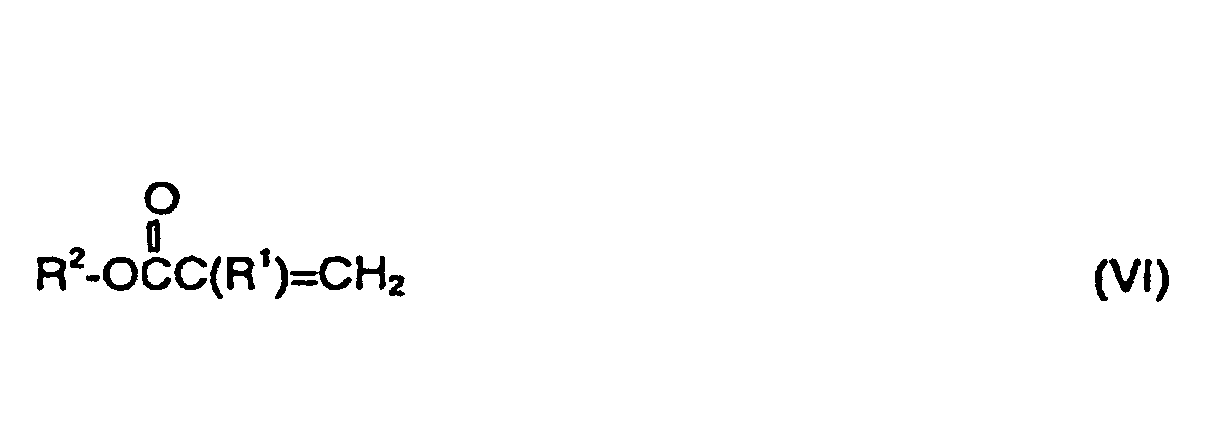 c)
c)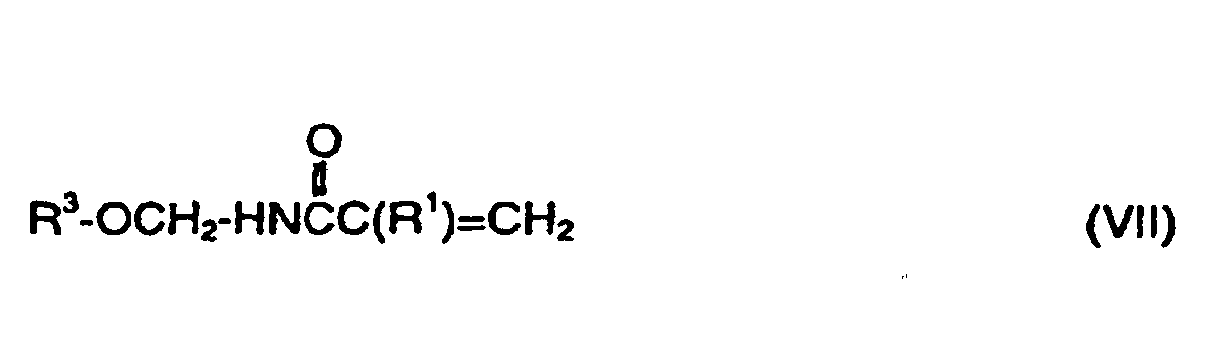
- A
- représente un groupe bivalent linéaire ou ramifié de formule -CnH2n-, -CnH2n-2- ou -S(O2)NR3-CmH2m-, où l'atome de S est lié à Rf
- Rf
- représente un groupe perfluoroalkyle possédant 4 à 20 atomes de C
- R1
- représente un atome d'hydrogène ou un groupe méthyle
- R2
- représente un groupe alkyle ou alcényle linéaire possédant 1 à 24 atomes de C, de préférence 4 à 24 atomes de C
- R3
- représente un atome d'hydrogène ou de préférence un groupe aklyle linéaire ou ramifié possédant 1 à 6 atomes de C
- m
- vaut 2 à 4
- n
- vaut 1 à 4.
- Dispersion aqueuse selon la revendication 11 ou 12, caractérisée en ce que la dispersion contient les composants A) et D) dans un rapport pondéral de 100:40 à 100:1500, de préférence de 100:80 à 100:250.
- Procédé de production d'une dispersion aqueuse selon l'une quelconque ou plusieurs des revendications 1 à 6 ou 9 à 13, caractérisé en ce que l'on disperse conjointement les composants A), B) et C) et que l'on homogénéise de préférence la dispersion ainsi formée, en ajoutant éventuellement après l'homogénéisation un oligomère, un homo- ou un co-polymère (composant D)) contenant des groupes perfluoroalkyle, de préférence sous forme de dispersion aqueuse, à la dispersion.
- Utilisation d'une dispersion aqueuse selon l'une quelconque ou plusieurs des revendications 1 à 13 pour le traitement de matières fibreuses, de préférence de surfaces textiles tissées ou tricotées.
- Utilisation selon la revendication 15, caractérisée en ce que les matières fibreuses sont composées de cellulose native ou régénérée, de préférence de coton, de fibres d'origine animale, de préférence de laine, de fibres organiques synthétiques ou de mélanges de ceux-ci.
Priority Applications (13)
| Application Number | Priority Date | Filing Date | Title |
|---|---|---|---|
| ES98124501T ES2239791T3 (es) | 1998-12-22 | 1998-12-22 | Dispersiones acuosas para acabados textiles. |
| EP98124501A EP1013687B1 (fr) | 1998-12-22 | 1998-12-22 | Dispersions aqueuses pour l'ennoblissement textile |
| AT98124501T ATE293135T1 (de) | 1998-12-22 | 1998-12-22 | Wässrige dispersionen für die textilveredlung |
| DE59812738T DE59812738D1 (de) | 1998-12-22 | 1998-12-22 | Wässrige Dispersionen für die Textilveredlung |
| TW088120421A TW548361B (en) | 1998-12-22 | 1999-11-23 | Aqueous dispersions for textile finishing |
| JP34441099A JP4375856B2 (ja) | 1998-12-22 | 1999-12-03 | 紡織繊維加工用の水性分散液 |
| US09/465,867 US6306958B1 (en) | 1998-12-22 | 1999-12-16 | Aqueous dispersions for textile finishing |
| TR1999/03124A TR199903124A2 (xx) | 1998-12-22 | 1999-12-16 | Tekstilde bitirme i�lemleri i�in sulu dispersiyonlar. |
| AU65335/99A AU757311C (en) | 1998-12-22 | 1999-12-17 | Aqueous dispersions for textile finishing |
| IDP991156A ID24112A (id) | 1998-12-22 | 1999-12-20 | Dispersi dalam air untuk proses akhir tekstil |
| KR1019990059662A KR100618930B1 (ko) | 1998-12-22 | 1999-12-21 | 직물 처리용 수성 분산액 및 이의 제조방법 |
| CNB99126925XA CN1138887C (zh) | 1998-12-22 | 1999-12-21 | 用于织物整理的水分散体 |
| BRPI9905953-3A BR9905953B1 (pt) | 1998-12-22 | 1999-12-22 | dispersÕes aquosas para o refinamento tÊxtil, processo para sua preparaÇço e aplicaÇço das mesmas. |
Applications Claiming Priority (1)
| Application Number | Priority Date | Filing Date | Title |
|---|---|---|---|
| EP98124501A EP1013687B1 (fr) | 1998-12-22 | 1998-12-22 | Dispersions aqueuses pour l'ennoblissement textile |
Publications (2)
| Publication Number | Publication Date |
|---|---|
| EP1013687A1 EP1013687A1 (fr) | 2000-06-28 |
| EP1013687B1 true EP1013687B1 (fr) | 2005-04-13 |
Family
ID=8233220
Family Applications (1)
| Application Number | Title | Priority Date | Filing Date |
|---|---|---|---|
| EP98124501A Expired - Lifetime EP1013687B1 (fr) | 1998-12-22 | 1998-12-22 | Dispersions aqueuses pour l'ennoblissement textile |
Country Status (13)
| Country | Link |
|---|---|
| US (1) | US6306958B1 (fr) |
| EP (1) | EP1013687B1 (fr) |
| JP (1) | JP4375856B2 (fr) |
| KR (1) | KR100618930B1 (fr) |
| CN (1) | CN1138887C (fr) |
| AT (1) | ATE293135T1 (fr) |
| AU (1) | AU757311C (fr) |
| BR (1) | BR9905953B1 (fr) |
| DE (1) | DE59812738D1 (fr) |
| ES (1) | ES2239791T3 (fr) |
| ID (1) | ID24112A (fr) |
| TR (1) | TR199903124A2 (fr) |
| TW (1) | TW548361B (fr) |
Families Citing this family (9)
| Publication number | Priority date | Publication date | Assignee | Title |
|---|---|---|---|---|
| DE19937477A1 (de) * | 1999-08-07 | 2001-02-08 | Ciba Sc Pfersee Gmbh | Silikonhaltige Zusammensetzungen für die Behandlung von Wollematerialien |
| DE10139126A1 (de) | 2001-08-09 | 2003-02-20 | Ciba Sc Pfersee Gmbh | Zusammensetzungen aus Polysiloxanen, Fluorpolymeren und Extendern |
| DE10208567A1 (de) * | 2002-02-27 | 2003-09-11 | Degussa Construction Chem Gmbh | Wässriges fluormodifiziertes Polyurethansystem für Anti-Graffiti- und Anti-Soiling-Beschichtungen |
| EP1496073A1 (fr) * | 2003-07-08 | 2005-01-12 | Ciba Spezialitätenchemie Pfersee GmbH | Extenseurs pour le traitement de matériaux fibreux |
| US7344758B2 (en) * | 2004-09-07 | 2008-03-18 | E.I. Du Pont De Nemours And Company | Hydrocarbon extenders for surface effect compositions |
| WO2006110350A2 (fr) * | 2005-03-29 | 2006-10-19 | The Board Of Trustees Of The Leland Stanford Junior University | Procede de fabrication de bicouches lipidiques sur supports solides |
| US20060240730A1 (en) * | 2005-04-26 | 2006-10-26 | Demott Roy P | Wash durable anti-static treatment for textiles and textiles so treated |
| KR101603560B1 (ko) * | 2014-04-09 | 2016-03-15 | 채금옥 | 합성 섬유 원단 강화용 조성물 및 이를 사용하는 합성 섬유 원단 강화 방법 |
| CN106884319B (zh) * | 2017-02-07 | 2020-06-26 | 苏州经贸职业技术学院 | 织物整理剂和织物整理的方法 |
Family Cites Families (11)
| Publication number | Priority date | Publication date | Assignee | Title |
|---|---|---|---|---|
| US4310646A (en) * | 1979-04-09 | 1982-01-12 | Basf Aktiengesellschaft | Self-crosslinking cationic binders and their preparation |
| JPS575974A (en) * | 1980-06-06 | 1982-01-12 | Unitika Ltd | Production of polyester fiber with good adheherence with rubbers |
| DE3435618A1 (de) | 1984-09-28 | 1986-04-10 | Chemische Fabrik Pfersee Gmbh, 8900 Augsburg | Verfahren zur erzielung wasch- und reinigungsbestaendiger textilausruestungen mit reaktiven (co)polymeren bzw. vorkondensaten |
| US4761337A (en) | 1986-09-26 | 1988-08-02 | Basf Corporation | Cationic electrodepositable resin compositions containing polyurethane resin dispersions |
| US4976833A (en) * | 1989-10-04 | 1990-12-11 | E. I. Du Pont De Nemours And Company | Electrodeposition coatings containing blocked tetramethylxylene diisocyanate crosslinker |
| US5508370A (en) | 1991-10-17 | 1996-04-16 | Bayer Aktiengesellschaft | Water-dispersible blocked isocyanates, method of manufacture, and use thereof |
| JPH05155980A (ja) * | 1991-12-05 | 1993-06-22 | Kansai Paint Co Ltd | 水性分散液 |
| DE4413059A1 (de) * | 1994-04-15 | 1996-01-25 | Hoechst Ag | Wäßrige Beschichtungsmittel enthaltend lösungsmittelfrei dispergierbare Härter |
| US5725789A (en) * | 1995-03-31 | 1998-03-10 | Minnesota Mining And Manufacturing Company | Aqueous oil and water repellent compositions |
| JPH09143882A (ja) * | 1995-11-21 | 1997-06-03 | Miki Riken Kogyo Kk | 合成繊維に耐久性のある制電撥水加工方法 |
| DE19715416A1 (de) | 1997-04-14 | 1998-10-15 | Ciba Sc Pfersee Gmbh | Umsetzungsprodukte von Isocyanaten mit Hydroxyverbindungen für die Textilveredelung |
-
1998
- 1998-12-22 ES ES98124501T patent/ES2239791T3/es not_active Expired - Lifetime
- 1998-12-22 EP EP98124501A patent/EP1013687B1/fr not_active Expired - Lifetime
- 1998-12-22 AT AT98124501T patent/ATE293135T1/de not_active IP Right Cessation
- 1998-12-22 DE DE59812738T patent/DE59812738D1/de not_active Expired - Lifetime
-
1999
- 1999-11-23 TW TW088120421A patent/TW548361B/zh not_active IP Right Cessation
- 1999-12-03 JP JP34441099A patent/JP4375856B2/ja not_active Expired - Fee Related
- 1999-12-16 TR TR1999/03124A patent/TR199903124A2/xx unknown
- 1999-12-16 US US09/465,867 patent/US6306958B1/en not_active Expired - Lifetime
- 1999-12-17 AU AU65335/99A patent/AU757311C/en not_active Ceased
- 1999-12-20 ID IDP991156A patent/ID24112A/id unknown
- 1999-12-21 KR KR1019990059662A patent/KR100618930B1/ko not_active Expired - Fee Related
- 1999-12-21 CN CNB99126925XA patent/CN1138887C/zh not_active Expired - Lifetime
- 1999-12-22 BR BRPI9905953-3A patent/BR9905953B1/pt not_active IP Right Cessation
Also Published As
| Publication number | Publication date |
|---|---|
| AU6533599A (en) | 2000-06-29 |
| CN1138887C (zh) | 2004-02-18 |
| CN1261115A (zh) | 2000-07-26 |
| EP1013687A1 (fr) | 2000-06-28 |
| TR199903124A3 (tr) | 2000-07-21 |
| ID24112A (id) | 2000-07-06 |
| TW548361B (en) | 2003-08-21 |
| KR20000062219A (ko) | 2000-10-25 |
| BR9905953B1 (pt) | 2009-01-13 |
| ATE293135T1 (de) | 2005-04-15 |
| BR9905953A (pt) | 2000-08-29 |
| ES2239791T3 (es) | 2005-10-01 |
| JP2000186130A (ja) | 2000-07-04 |
| JP4375856B2 (ja) | 2009-12-02 |
| US6306958B1 (en) | 2001-10-23 |
| AU757311B2 (en) | 2003-02-13 |
| KR100618930B1 (ko) | 2006-09-01 |
| AU757311C (en) | 2003-07-03 |
| TR199903124A2 (xx) | 2000-07-21 |
| DE59812738D1 (de) | 2005-05-19 |
Similar Documents
| Publication | Publication Date | Title |
|---|---|---|
| EP0872503B1 (fr) | Produits de réaction d'isocyanates avec des composés hydroxyles pour l'apprêt textile | |
| EP0429983B1 (fr) | Composition hydro- et oléophobante | |
| DE10325094B4 (de) | Zubereitungen für die öl- und wasserabweisende Ausrüstung von Flächengebilden und deren Anwendung | |
| EP1088929B1 (fr) | Compositions pour le finissage oléo-et hydrofuge de matériaux fibreuses | |
| WO1986002115A1 (fr) | Procede d'obtention d'un revetement pour textiles resistant au lavage et au nettoyage compose de (co)polymeres reactifs contenant des radicaux perfluoriques et/ou des precondensats | |
| EP0127061A2 (fr) | Polyuréthanes contenant des groupes alkyle perfluorés et procédé pour leur fabrication | |
| DE10211549A1 (de) | Zubereitungen auf Basis von Wasser und/oder organischen Lösemitteln und deren Anwendung als Appretur auf Flächengebilden | |
| EP2302130A1 (fr) | Composition pour l'équipement oléofuge et/ou hydrofuge de matériaux en fibres | |
| EP0560161B1 (fr) | Composition et procédé de traitement de textiles | |
| EP0452774B1 (fr) | Polymères greffés comprenant des groupes perfluoroalkyles | |
| EP1013687A1 (fr) | Dispersions aqueuses pour l'ennoblissement textile | |
| EP0213580A2 (fr) | Uréthanes contenant des groupements perfluoralcoyle et épichlorhydrine, leur dispersion aqueuse et leur application | |
| EP0491248A2 (fr) | Produit pour le traitement de matériaux fibreux | |
| EP0322759A1 (fr) | Méthanes préparés de fluoro alcools, isocyanates et composés aromatiques substituées, procédé de leur préparation et leur utilisation | |
| DE602004009072T2 (de) | Extender für die behandlung von fasermaterialien | |
| DE69310156T2 (de) | Schmutzabweisende fluorcarbamate | |
| EP4298154B1 (fr) | Agent hydrophobique à effet permanent | |
| JP2000186130A6 (ja) | 紡織繊維加工用の水性分散液 | |
| EP0621366A1 (fr) | Procédé de traitement infroisse de matériaux fibreux contenant de la cellulose | |
| DD249267A5 (de) | Perfluoralkyl- und epichlorhydrin-gruppen enthaltende urethane, diese urethane enthaltende waessrige dispersionen und ihre verwendung | |
| DE1419404C (de) | Verfahren zum gleichzeitigen Ol und Wasserabweisendmachen von Textilien | |
| DE4022443A1 (de) | Perfluoraliphatische gruppen enthaltende copolymere mit urethan- und siloxaneinheiten | |
| DE1419402B (de) | Verfahren zum gleichzeitigen Olabwei sendmach und Hydrophobieren von Textilien | |
| MXPA99011938A (en) | Aqueous dispersions for textile finishing |
Legal Events
| Date | Code | Title | Description |
|---|---|---|---|
| PUAI | Public reference made under article 153(3) epc to a published international application that has entered the european phase |
Free format text: ORIGINAL CODE: 0009012 |
|
| AK | Designated contracting states |
Kind code of ref document: A1 Designated state(s): AT BE CH DE DK ES FR GB IT LI NL PT SE |
|
| AX | Request for extension of the european patent |
Free format text: AL;LT;LV;MK;RO;SI |
|
| 17P | Request for examination filed |
Effective date: 20000807 |
|
| AKX | Designation fees paid |
Free format text: AT BE CH DE DK ES FR GB IT LI NL PT SE |
|
| 17Q | First examination report despatched |
Effective date: 20040402 |
|
| GRAP | Despatch of communication of intention to grant a patent |
Free format text: ORIGINAL CODE: EPIDOSNIGR1 |
|
| GRAS | Grant fee paid |
Free format text: ORIGINAL CODE: EPIDOSNIGR3 |
|
| GRAA | (expected) grant |
Free format text: ORIGINAL CODE: 0009210 |
|
| AK | Designated contracting states |
Kind code of ref document: B1 Designated state(s): AT BE CH DE DK ES FR GB IT LI NL PT SE |
|
| PG25 | Lapsed in a contracting state [announced via postgrant information from national office to epo] |
Ref country code: NL Free format text: LAPSE BECAUSE OF FAILURE TO SUBMIT A TRANSLATION OF THE DESCRIPTION OR TO PAY THE FEE WITHIN THE PRESCRIBED TIME-LIMIT Effective date: 20050413 |
|
| REG | Reference to a national code |
Ref country code: GB Ref legal event code: FG4D Free format text: NOT ENGLISH |
|
| REG | Reference to a national code |
Ref country code: CH Ref legal event code: EP |
|
| REF | Corresponds to: |
Ref document number: 59812738 Country of ref document: DE Date of ref document: 20050519 Kind code of ref document: P |
|
| GBT | Gb: translation of ep patent filed (gb section 77(6)(a)/1977) |
Effective date: 20050615 |
|
| PG25 | Lapsed in a contracting state [announced via postgrant information from national office to epo] |
Ref country code: SE Free format text: LAPSE BECAUSE OF FAILURE TO SUBMIT A TRANSLATION OF THE DESCRIPTION OR TO PAY THE FEE WITHIN THE PRESCRIBED TIME-LIMIT Effective date: 20050713 Ref country code: DK Free format text: LAPSE BECAUSE OF FAILURE TO SUBMIT A TRANSLATION OF THE DESCRIPTION OR TO PAY THE FEE WITHIN THE PRESCRIBED TIME-LIMIT Effective date: 20050713 |
|
| PG25 | Lapsed in a contracting state [announced via postgrant information from national office to epo] |
Ref country code: PT Free format text: LAPSE BECAUSE OF FAILURE TO SUBMIT A TRANSLATION OF THE DESCRIPTION OR TO PAY THE FEE WITHIN THE PRESCRIBED TIME-LIMIT Effective date: 20050913 |
|
| REG | Reference to a national code |
Ref country code: ES Ref legal event code: FG2A Ref document number: 2239791 Country of ref document: ES Kind code of ref document: T3 |
|
| NLV1 | Nl: lapsed or annulled due to failure to fulfill the requirements of art. 29p and 29m of the patents act | ||
| PLBE | No opposition filed within time limit |
Free format text: ORIGINAL CODE: 0009261 |
|
| STAA | Information on the status of an ep patent application or granted ep patent |
Free format text: STATUS: NO OPPOSITION FILED WITHIN TIME LIMIT |
|
| ET | Fr: translation filed | ||
| 26N | No opposition filed |
Effective date: 20060116 |
|
| REG | Reference to a national code |
Ref country code: CH Ref legal event code: PFA Owner name: HUNTSMAN TEXILE EFFECTS (GERMANY) GMBH Free format text: CIBA SPEZIALITAETENCHEMIE PFERSEE GMBH#REHLINGER STRASSE 1#86462 LANGWEID A.L. (DE) -TRANSFER TO- HUNTSMAN TEXILE EFFECTS (GERMANY) GMBH#REHLINGER STRASSE 1#86462 LANGWEID (DE) |
|
| REG | Reference to a national code |
Ref country code: CH Ref legal event code: PK Free format text: BEI DER FIRMENAENDERUNG VOM 07.09.2006 WURDE DER NAME FALSCH ERFASST. |
|
| PGFP | Annual fee paid to national office [announced via postgrant information from national office to epo] |
Ref country code: AT Payment date: 20081110 Year of fee payment: 11 |
|
| PG25 | Lapsed in a contracting state [announced via postgrant information from national office to epo] |
Ref country code: AT Free format text: LAPSE BECAUSE OF NON-PAYMENT OF DUE FEES Effective date: 20091222 |
|
| REG | Reference to a national code |
Ref country code: FR Ref legal event code: PLFP Year of fee payment: 18 |
|
| PGFP | Annual fee paid to national office [announced via postgrant information from national office to epo] |
Ref country code: CH Payment date: 20151026 Year of fee payment: 18 Ref country code: GB Payment date: 20151125 Year of fee payment: 18 |
|
| PGFP | Annual fee paid to national office [announced via postgrant information from national office to epo] |
Ref country code: FR Payment date: 20151124 Year of fee payment: 18 |
|
| REG | Reference to a national code |
Ref country code: CH Ref legal event code: PL |
|
| GBPC | Gb: european patent ceased through non-payment of renewal fee |
Effective date: 20161222 |
|
| REG | Reference to a national code |
Ref country code: FR Ref legal event code: ST Effective date: 20170831 |
|
| PG25 | Lapsed in a contracting state [announced via postgrant information from national office to epo] |
Ref country code: LI Free format text: LAPSE BECAUSE OF NON-PAYMENT OF DUE FEES Effective date: 20161231 Ref country code: CH Free format text: LAPSE BECAUSE OF NON-PAYMENT OF DUE FEES Effective date: 20161231 Ref country code: FR Free format text: LAPSE BECAUSE OF NON-PAYMENT OF DUE FEES Effective date: 20170102 |
|
| PG25 | Lapsed in a contracting state [announced via postgrant information from national office to epo] |
Ref country code: GB Free format text: LAPSE BECAUSE OF NON-PAYMENT OF DUE FEES Effective date: 20161222 |
|
| PGFP | Annual fee paid to national office [announced via postgrant information from national office to epo] |
Ref country code: BE Payment date: 20171213 Year of fee payment: 20 Ref country code: IT Payment date: 20171218 Year of fee payment: 20 |
|
| PGFP | Annual fee paid to national office [announced via postgrant information from national office to epo] |
Ref country code: DE Payment date: 20171221 Year of fee payment: 20 Ref country code: ES Payment date: 20180105 Year of fee payment: 20 |
|
| REG | Reference to a national code |
Ref country code: DE Ref legal event code: R071 Ref document number: 59812738 Country of ref document: DE |
|
| REG | Reference to a national code |
Ref country code: BE Ref legal event code: MK Effective date: 20181222 |
|
| REG | Reference to a national code |
Ref country code: ES Ref legal event code: FD2A Effective date: 20200902 |
|
| PG25 | Lapsed in a contracting state [announced via postgrant information from national office to epo] |
Ref country code: ES Free format text: LAPSE BECAUSE OF EXPIRATION OF PROTECTION Effective date: 20181223 |