EP1014249B1 - System und Verfahren für automatischen authentifizierten Zugang zu einer Mehrzahl von Netzbetreibern durch eine einzige Anmeldung - Google Patents
System und Verfahren für automatischen authentifizierten Zugang zu einer Mehrzahl von Netzbetreibern durch eine einzige Anmeldung Download PDFInfo
- Publication number
- EP1014249B1 EP1014249B1 EP99125760A EP99125760A EP1014249B1 EP 1014249 B1 EP1014249 B1 EP 1014249B1 EP 99125760 A EP99125760 A EP 99125760A EP 99125760 A EP99125760 A EP 99125760A EP 1014249 B1 EP1014249 B1 EP 1014249B1
- Authority
- EP
- European Patent Office
- Prior art keywords
- user
- local security
- security server
- server
- local
- Prior art date
- Legal status (The legal status is an assumption and is not a legal conclusion. Google has not performed a legal analysis and makes no representation as to the accuracy of the status listed.)
- Expired - Lifetime
Links
Images


Classifications
-
- G—PHYSICS
- G06—COMPUTING OR CALCULATING; COUNTING
- G06F—ELECTRIC DIGITAL DATA PROCESSING
- G06F15/00—Digital computers in general; Data processing equipment in general
- G06F15/16—Combinations of two or more digital computers each having at least an arithmetic unit, a program unit and a register, e.g. for a simultaneous processing of several programs
-
- H—ELECTRICITY
- H04—ELECTRIC COMMUNICATION TECHNIQUE
- H04L—TRANSMISSION OF DIGITAL INFORMATION, e.g. TELEGRAPHIC COMMUNICATION
- H04L63/00—Network architectures or network communication protocols for network security
- H04L63/08—Network architectures or network communication protocols for network security for authentication of entities
- H04L63/0815—Network architectures or network communication protocols for network security for authentication of entities providing single-sign-on or federations
-
- G—PHYSICS
- G06—COMPUTING OR CALCULATING; COUNTING
- G06F—ELECTRIC DIGITAL DATA PROCESSING
- G06F21/00—Security arrangements for protecting computers, components thereof, programs or data against unauthorised activity
- G06F21/30—Authentication, i.e. establishing the identity or authorisation of security principals
- G06F21/31—User authentication
- G06F21/41—User authentication where a single sign-on provides access to a plurality of computers
Definitions
- This invention relates to an apparatus and method for automating authorized user access to a geographically dispersed network from any one of a plurality of workstations.
- IT information technology
- Distributed computer systems often have a global extent and may include many thousands of workstations in diverse geographic locations. Such systems are particularly useful to business travelers who may desire to access their network from virtually anywhere in the world. For example, a business traveler at a remote site may want to retrieve the latest cost data, obtain the status of a pending order, place a new order or simply read e-mail.
- client-server networks installed today include a wide variety of independent network server resources that prevent, or at least complicate this task. "Independent" in this context means that the network resource has an independent, as opposed to a shared user database.
- routing and authentication information such as a network server ID, user identification and password to access the local independent network resource in which their account is maintained.
- Forgetting passwords and accessing the wrong service or application are but two of the frustrations that users attempt to eliminate by choosing easily remembered passwords and even writing logon information down in readily accessible places. In doing so, however, they are undermining security.
- Computer savvy users familiar with network naming conventions can easily overcome the inconvenience of signing onto one's workstation from a remote location while the large majority of other network users must either postpone completing a task or possibly resort to other non-network means of obtaining the information.
- Prior art network access services have been developed to address the problems created when users attempt to access distributed networks from remote locations. These services provide user access to remote network resources through the use of authentication data stored in local memory.
- US - A - 5,483,652 discloses a method and related apparatus for permitting a client entity to request access to a service or resource without knowledge of any more than a common name for the service or resource.
- US - A - 5,598,536 discloses an apparatus and method for providing remote users with access to their local computer network via a remote access network server.
- a remote user enters a unique user ID string to gain access to a remote computer. Once the remote user is authenticated, that remote user is granted access to the local network. While this system has overcome many of the inconveniences that existed prior to its conception, it still requires a user to utilize two different authentication strings, depending upon whether he/she is attempting to log onto their local network server from either a local or remotely located workstation.
- US - A - 5,655,077 discloses a method and system for authenticating access to heterogenous computing services from a plurality of user workstations while minimizing the number of user interactions.
- a user designates a primary logon provider to provide an initial user interface.
- the user enters identification information and the computer system executes a logon sequence which first invokes the identified primary logon provider.
- the system authenticates the collected identification information to provide the user access to the network computer services. If the system logon procedure is not successful, then a logon sequence displays an additional screen to collect additional logon information.
- the logon sequence then invokes the logon routines of other logon providers to enable them to authenticate already collected identification information without displaying additional user interfaces. While this system attempts to log a user onto a network with the least amount of user interaction, it does require a user to designate a primary logon provider and then enter up to two strings of user authentication information before granting the user access to the network.
- An additional problem confronting network users wishing to log onto a remotely located network server is the necessity of communicating across the Internet and interfacing with the multiple protocols that operate on the Internet (e.g., IPX, TCP/IP, NetBEUI, etc.)
- IPX IPX
- TCP/IP Transmission Control Protocol
- NetBEUI NetBEUI
- a user wishing to communicate across multiple boundaries could not easily do so because of language and communication barriers between the user and the various network entities.
- the user had to know, and adapt to the specific protocol of each data storage entity in order to communicate requests for information to the entity in cognizable form and to translate information once received.
- Existing devices are limited in that they simply provide the capability to utilize a single protocol to communicate across the network.
- X.500 standard database protocol
- CITT International Committee
- CITT The Directory-Overview Concepts, Models, and Services, X.500 Series Recommendation, Document AP IX-47-E. X.500 allows users to find information such as telephone numbers, addresses and other details of individuals and organizations in a convenient structure.
- X.500 directories are also characterized by their ability to efficiently handle large volumes of highly distributed information.
- the subject invention dramatically simplifies the procedures for signing onto a network through the use of a single sign on procedure.
- a logon procedure such as embodied in the procedure identified as AUTOSECURE TM Single Sign On (SSO) described in the Features Guide for V5.1 entitled “Autosecure SSO,” copyrighted by Platinum technology, inc., 1997, wherein a user enters a user name and password
- the system does the rest by enabling transparent access to all authorized applications and services and providing a simple, integrated view of the computer network.
- the single sign on capability functions whether a service is resident on a local or a remote network server, and it lets users sign on anywhere - even when they're traveling to remote locations.
- the present invention is not restricted to securing only a particular (homogenous) environment. It operates across heterogenous platforms, which means that it can be used to control systems from any vendor or mix of vendors. This makes it far more applicable to an enterprise environment which can include any number of different vendors' platforms - both now and in the future.
- a distributed computing network that provides an adaptive capability to log a user located at one of a plurality of user workstations, onto one of a plurality of predetermined network servers, through the use of a single logon.
- a primarily local security server adapted to be connected to a user workstation, authenticates user identification information entered by a user at the workstation, or generates a failed logon signal in the event the user-provided authentication information is not valid for granting access to the local security server.
- a person server operating on the local security server then receives the failed logon signal from the local security server, identifies an alternate local security server ID in which the previously entered user name corresponds to a valid user, and transmits the alternate local security server ID back to the first local security server.
- the first local security server receives the alternate local security server ID, it transmits the user identification information to the alternate local security server and the user is validated on the alternate local security server and logged onto the computer network.
- server refers to a software process or set of processes that support some functionality.
- a local security server is a security access control software process to which end-users must authenticate before they can gain access to applications and systems on the computer network.
- LSSs local security servers
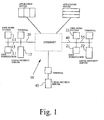
- FIG. 1 depicts a singular user workstation coupled to each LSS, it should be apparent to those of ordinary skill in the art that any number of workstations could be coupled to each LSS.
- Each local security server (12 and 22) is configured to allow multi-user access to the server only upon user authentication to the server. Once a user is granted access to the network via an LSS (12 and 22), the LSS acts as a gateway to provide the user access to all network services the server is otherwise authorized to access.
- An LSS can be designated as a default, primary, and/or standby LSS, depending upon the context.
- a default LSS is an LSS designated in client software by a system administrator to act as a particular workstation's principal server such that when anyone attempts to access the network using the user workstation, the system will automatically route the request to the workstation's default LSS.
- a primary server is an LSS that has been designated by a system administrator to function as the server that a particular user will always be logged onto whenever the user attempts to access the network.
- a standby server correspondingly, is an LSS with the same user information as a primary server. A standby server can be used when a user's primary server is unavailable for any reason. Each primary server can have one or more standby servers.
- LSS 12 can act as a default LSS for user workstation 11 and a standby server for user workstation 21, as well as a primary LSS for a particular user.
- one LSS can be the default LSS for some user workstations, the standby LSS for other workstations as well as the primary LSS for some users.
- a client software process 40 (as shown in FIG. 2) operates on each computer workstation 11 and 21.
- the client operating on the user workstation communicates the request for network access to a default LSS for authentication.
- the logical location and identity of a workstation's default LSS is a data value stored in the workstation's client.
- the default LSS may be the server located closest to the workstation or it may be another LSS operating elsewhere on the network.
- LSS 12 or LSS 22 in FIG. 1 could be the default server to workstation 11.
- LSS 22 or LSS 12 could also be the default server to workstation 21. It is important to note that the default LSS assigned to a workstation can be easily modified by a system administrator.
- a system administrator creates a new local authentication database record (FIG. 3) and copies the record into the internal memory of the LSS that is to become the new user's primary LSS.
- the primary LSS will automatically route a copy of the new user record to all of the primary LSS's standby servers, as specified in the service mapping file (to be discussed later) which will result in the new user being automatically stored as a valid user in the standby server's memory.
- the entire record or at a minimum the user name and password can be encrypted prior to transmission to the standby server and then decrypted after receipt.
- the service mapping file 41 contains a listing of all network LSSs with the name and logical location of their associated standby servers.
- the standby server is another LSS on the network with the same user information in its local authentication database as the default LSS.
- a standby server is associated with a particular LSS through a network database entry. An example of one type of record which could be stored is described in FIG. 5. This network database entry may be entered into the system by a system administrator.
- Each record of the network database 43 is comprised of an LSS with its logical location and associated standby server names and logical locations together with the names of users authorized to log onto the LSS.
- the network database may be resident on disk storage of the LSS in the format of an X.500 or other suitable database.
- Each LSS may be further coupled to the Internet or a similar computer network via communication links 20 and 40, respectively.
- each LSS has access to a local authentication database 42 and a network database 43. These databases may be stored on either internal or external disk storage or any other suitable memory storage systems.
- a typical database record for the local authentication database 42 is depicted in FIG. 3.
- each record at a minimum is comprised of a user name, password and user role.
- a user can have several local authentication database entries, each corresponding to a different role for the user. Examples of roles can include, but are not limited to "executive”, “manager”, “employee”, etc. Roles can be related to, among other things, particular departments or positions within an organization.
- the user's role determines which network services can be accessed by the user.
- a network service may be an application program that has been properly installed on a server's internal disk memory.
- the services available and operable on each local security server are specified by a system administrator and installed on the server's disk storage when the local security is added to the network.
- Network services can be easily added, deleted or modified at any time by a system administrator. While this specification describes the invention with respect to a limited number of network services, it should be apparent to those of ordinary skill in the art that the number of network services is virtually unlimited.
- the local authentication database 42 is resident on disk storage of the LSS in the format of an X.500 or other suitable database. As is known by those of ordinary skill in the art, the X.500 database may also be resident in an external storage area.
- each LSS is comprised of a person server 31 and a service mapping file (SMF) server.
- the person server 31 is a software process operating on the LSS that receives all requests to log onto the network from a client 40, processes the requests and returns the results of a logon request back to the client 40.
- the person server 31 utilizes the user name/password combination received from the client to index into the local authentication database 42 stored in the server's disk storage. If the corresponding user name/password is stored in the local authentication database 42, the user will be connected to the local server. If the username/password combination is not found in the local authentication database, then the person server 31 searches the network database 43 (directory) to determine whether the user name exists on the enterprise.
- the user authentication request is routed to the identified LSS for processing of the request. If, on the other hand, the user name is not found in the network database, the system will either deny the user's request or it may query the user to provide more information in order to process the authentication request.
- the SMF server stores the service mapping file 41 on each LSS.
- the service mapping file 41 contains operational details of all servers on the enterprise.
- the SMF server 32 maintains an up-to-date "map" of the enterprise by periodically polling the network databases. All LSS's are defined in the network database under their server name and connection information (i.e., comms address). It is created from information in the network database 43 and it is updated regularly and passed down by the person server 31 to all workstations. While the preferred embodiment envisions a network wherein the person server 31 and the SMF server 32 are resident on the same platform, it also is possible for the person server and the SMF server to be resident on different platforms.
- multiple local computer networks may be coupled to the Internet to form a network of geographically separated and smaller computer networks consisting of a wide variety of computers and peripherals.
- the process of granting the user access to the computer network begins when a user at a workstation 11 attempts to log onto the computer network.
- the client 40 operating on the workstation presents a logon screen to the user (Step 600).
- the user initiates the attempt to gain access by entering a user name and password into the local computer 11.
- the user name is a predetermined alphanumeric character string which uniquely identifies the user. It is typically assigned to the user by the system administrator who must ensure that the names are unique throughout the enterprise.
- the client 40 operating on the local computer captures the user's inputs and then in step 620, transmits the user-supplied information and the version number (FIG. 4) of the service mapping file 41 to the workstation's default LSS via communication link 15 or 35 (depending upon the particular workstation).
- the version number is essentially a time-stamp that indicates when the service mapping file was created.
- the LSS compares the client's service mapping file version number to the version number held by the SMF server 32. If the client's copy is out of date, the LSS returns the latest copy to the client 40. In this way, the client 40 always has the latest connection information for all LSSs on the network.
- the client In the event that a client's default LSS is not available, requiring the client 40 to access a standby LSS, the client would retrieve the connection information for a standby server on the network by accessing its copy of the service mapping file 41 stored in each workstation's disk storage (step 640). If a standby server is identified (step 650), the process returns to step 620 where the client 40 transmits the user information to the identified server. If a standby server is not identified, the client 40 displays a failed logon message (step 660) on the workstation's screen and the process terminates.
- the person server 31 operating on the LSS searches the local authentication database 42 (step 670) and attempts in step 680 to identify a single user name that corresponds to the entered user name and password. If a matching user name and password is found, the user is logged onto the network in step 690.
- the client software evaluates the user role associated with the previously provided user name and password combination to determine the complement of network services that the user will be entitled to access. For example, a user logged onto the network as a manager will be permitted to access those services available on the network that managers are authorized to utilize. If a user is logged onto a network as an employee, he/she will be permitted to access those services normally available to all employees. It is envisioned that the services available to a manager will likely be different than those available to all employees.
- the person server 31 searches the network database 43 (step 690) to determine whether the user name is recognized on the enterprise. In step 710, if no entry is found or if more than one matching entry is found, the person server 31 returns a failed logon message to the client 40 (step 720). Upon receipt of the message, the client 40 in step 730 displays the message on the workstation's display and the process terminates. While this specification describes the invention as if multiple matching entries from the network database 43 would lead to a failed logon response, it should be apparent to those of ordinary skill in the art that a number of other options could be employed without departing from the scope and intent of this invention.
- the system could provide the user with an opportunity to manually input his/her LSS name or the system could give the user an opportunity to select a user name/LSS combination from a drop-down menu of retrieved user names.
- the person server 31 returns the LSS name back to the client 40 and processing resumes in step 750.
- this specification describes the invention wherein the person server transmits a local security ID back to a user workstation prior to the user workstation accessing the second local security, it should be apparent to those skilled in the art that the person server can establish a network connection, and therefore log a user onto the network, without returning logon functions to the user workstation.
- the person server 31 in step 750 transmits the name of the user's primary LSS back to the client 40.
- the process returns to step 620 where the client 40 retrieves the logical location of the new LSS from its service mapping file 41 and transmits the user information to the identified server.
- the person server 31 (step 760) returns a failed logon message to the client 40.
- the client 40 (step 770) displays the message on the workstation's display and the process terminates.
- the Person server 31 may log all failed attempts to access a local security server in an audit log to be periodically reviewed by the system administrator as a way of identifying security holes.
- the local security server may also monitor the number of failed attempts and may disable the terminal after a database number of failed attempts have been exceeded.
- the method and apparatus to permit automated server determination for foreign system logon of the present invention may be used for automating authorized user access to a geographically dispersed network from any one of a plurality of user workstations. Moreover, the method and apparatus may be utilized where it is desirable to provide the capability for a user to log onto a network from any workstation on the network through the use of a single password. Furthermore, the method and apparatus to permit automated server determination for foreign system logon of the present invention may be used where it is desirable to provide the capability for a network to automatically identify a user's home server and to log the user onto the system in response to a user's entry of a single user name and password.
- a method and apparatus is proposed for providing automatic user access authentication of any user who is a member of a set of authorized users of a computer enterprise from any one of a plurality of geographically dispersed user workstations, onto one of a plurality of predetermined local security servers, through the use of a single logon.
- a person server resident on a local security server compares the user-provided identification information to entries contained in a local authentication database. If the person server finds a match, the user is granted access to the local security server. If the person server does not find a match, the user-provided authentication information is not valid for granting access to the local security server and the person server then searches a network database to determine whether the entered user name is known to the enterprise.
- the person server finds a single user name matching the previously entered user name, it returns the name of the local security server associated with the computer enterprise whose local authentication database may have the information necessary for allowing proper authentication of the user.
- the client Upon receiving the name of the newly-identified server, the client then automatically retrieves the server's logical location from a service mapping file and then repeats the authentication request to the new local security server. If the person server finds more than one user with the entered user name or if the person server fails to find any user name matching the previously entered user name, then it returns a failed logon request to the client.
- the system provides the capability to operate across a number of network protocols through its use of a standard directory protocol, such as the X.500 standard.
Landscapes
- Engineering & Computer Science (AREA)
- Computer Hardware Design (AREA)
- Computer Security & Cryptography (AREA)
- Theoretical Computer Science (AREA)
- General Engineering & Computer Science (AREA)
- Physics & Mathematics (AREA)
- General Physics & Mathematics (AREA)
- Software Systems (AREA)
- Computing Systems (AREA)
- Signal Processing (AREA)
- Computer Networks & Wireless Communication (AREA)
- Computer And Data Communications (AREA)
- Information Transfer Between Computers (AREA)
- Storage Device Security (AREA)
- Collating Specific Patterns (AREA)
Claims (20)
- Vorrichtung für die automatische Nutzer-Zugriffs-Authentisierung durch einen beliebigen Nutzer, der Mitglied einer Gruppe von autorisierten Nutzem eines Computer-Unternehmens ist, von einem beliebigen, von einer Mehrzahl von geografisch verteilten, mit dem Computer-Unternehmen operativ verknüpften Arbeitsplatzrechnern aus, aufweisend:Client-Software, die auf jedem der verknüpften Arbeitsplatzrechner zur interaktiven Kommunikation mit einem potentiellen Nutzer, der Authentifizierung für den Zugriff auf das Computer-Unternehmen wünscht, betrieben wird, um Identifikations-Daten von dem potentiellen Nutzer zu erhalten, der an dem verknüpften Arbeitsplatzrechner Zugang begehrt;eine Mehrzahl lokaler Sicherheits-Server, die operativ mit den mit dem Computer-Unternehmen verknüpften Arbeitsplatzrechnern verbunden sind, um die von jedem potentiellen Nutzer bereitgestellte Identifikations-Information zu empfangen und authentifizieren, wobei jeder der lokalen Sicherheits-Server mit einem oder mehreren, aber nicht allen, der verknüpften Arbeitsplatzrechner verbunden ist und umfaßt:eine lokale Authentisierungs-Datenbank, die über die notwendigen Informationen zur Gewährung ordnungsgemäßer Authentifizierung einiger, aber nicht notwendiger Weise aller Nutzer aus der gesamten Gruppe der autorisierten Nutzer des Computer-Unternehmens verfügt;ein Netzwerk-Datenbank-Verzeichnis, das über die notwendigen Informationen zur Identifizierung eines lokalen, mit dem Computer-Unternehmen verbundenen Sicherheits-Servers verfügt, dessen lokale Authentisierungs-Datenbank über die zur Gewährung einer ordnungsgemäßen Authentifizierung notwendigen Informationen für die gesamte Gruppe der autorisierten Nutzer des Computer-Unternehmens verfügt; undeinen Personen-Server zur:Ermöglichung der Authentisierung für den Zugang eines potentiellen Nutzers, wenn die von der dient-Software an einem verknüpften Arbeitsplatzrechner empfangenen Identifikations-Daten mit den Daten übereinstimmen, die in der Authentisierungs-Datenbank, die mit dem lokalen Sicherheits-Server verknüpft ist, enthalten sind; undKommunikation mit der Netzwerk-Datenbank, um einen zweiten lokalen, mit dem Computer-Unternehmen verknüpften Sicherheits-Server zu identifizieren, dessen lokale Authentisierungs-Datenbank die notwendigen Informationen für die Ermöglichung einer ordnungsgemäßen Authentifizierung aufweisen kann, und um eine Versorgung des zweiten lokalen Sicherheits-Servers mit den Identifikations-Informationen zu bewirken, um die Authentifizierung des Nutzers zu ermöglichen, ohne weitere Aktivität des Nutzers zu benötigen, wenn der Nutzer nicht über die lokale Authentisierungs-Datenbank identifiziert werden kann.
- Vorrichtung gemäß Anspruch 1, dadurch gekennzeichnet, daß jeder der lokalen Sicherheits-Server eine Dienst-Zuordnungs-Datei enthält zur
Pflege einer aktualisierten Dienst-Zuordnungs-Datei, die vorzugsweise eine Liste der lokalen Sicherheits-Server mit ihren zugehörigen Verknüpfungsinformationen und eine Versionsnummer der Datei enthält, und zur
Bereitstellung der aktualisierten Dienst-Zuordnungs-Datei für die Mehrzahl der mit dem lokalen Sicherheits-Server verbundenen Nutzer-Arbeitsplatzrechnern. - Vorrichtung gemäß Anspruch 2, dadurch gekennzeichnet, daß der lokale Sicherheits-Server durch die Client-Software mit einer Versionsnummer einer auf dem Nutzer-Arbeitsplatzrechner gespeicherten Dienst-Zuordnungs-Datei versorgt wird, wenn der Client versucht, sich bei einem der Mehrzahl von lokalen Sicherheits-Servern anzumelden, insbesondere wobei der Dienst-Zuordnungs-Datei-Server die Versionsnummer der Client-Software mit der Versionsnummer der auf einem der Mehrzahl von lokalen Sicherheits-Servern gespeicherten Dienst-Zuordnungs-Datei vergleicht und eine aktualisierte Dienst-Zuordnungs-Datei zu dem Nutzer-Arbeitplatzrechner überträgt, für den Fall, daß die Differenz zwischen den beiden Versionsnummern einen Wert der Datenbank übersteigt.
- Vorrichtung nach einem der voranstehenden Ansprüche, dadurch gekennzeichnet, daß einer der Mehrzahl von lokalen Sicherheits-Servern die Versorgung des zweiten lokalen Sicherheits-Servers mit den Identifikations-Informationen bewirkt mittels Übertragung der Identifikation des zweiten lokalen Sicherheits-Servers zu der Client-Software, vorzugsweise wobei die Client-Software die Authentisierungs-Informationen zu dem zweiten lokalen Sicherheits-Server automatisch überträgt, um die Authentifizierung des Nutzers durch den zweiten lokalen Sicherheits-Server zu ermöglichen, ohne weitere Nutzeraktivität zu benötigen, wobei vorzugsweise die Client-Software auf eine auf dem Nutzer-Arbeitsplatzrechner gespeicherte Dienst-Zuordnungs-Datei zugreift, um den logischen Ort des zweiten lokalen Sicherheits-Servers zu identifizieren.
- Vorrichtung gemäß einem der voranstehenden Ansprüche, dadurch gekennzeichnet, daß eine der Mehrzahl von lokalen Sicherheits-Servern die Versorgung des zweiten lokalen Sicherheits-Servers mit den Authentisierungs-Informationen bewirkt, mittels der Übertragung der Identifikation des zweiten lokalen Sicherheits-Servers zu dem zweiten lokalen Sicherheits-Server, und/oder die Identifikations-Information aus einem Nutzer-Namen, einem Nutzer-Passwort und einer Nutzer-Rolle bzw. -Funktion besteht, und/oder die lokale Authentisierungs-Datenbank aus einer Liste der für den Zugriff auf eine der Mehrzahl von lokalen Sicherheits-Servern autorisierten Nutzern mit ihren zugehörigen Passworten und Nutzer-Rollen bzw. -Funktionen besteht, vorzugsweise wobei die Client-Software
eine Datenbank der Nutzer-Rollen bzw. -Funktionen mit wenigstens einem für jede Nutzer-Rolle bzw. Funktion verbundenen autorisierten Netzwerk-Dienst pflegt und
einem angemeldeten Nutzer den Zugriff auf wenigstens einen zu der Nutzer-Rolle bzw. -Funktion korrespondierenden Netzwerk-Dienst ermöglicht. - Vorrichtung gemäß einem der voranstehenden Ansprüche, dadurch gekennzeichnet, daß die lokale Authentisierungs-Datenbank verschlüsselt ist, vorzugsweise wobei der Personen-Server das in der lokalen Authentisierungs-Datenbank enthaltene Nutzer-Passwort vor der Zugriffs-Authentifizierung eines Nutzers entschlüsselt und/oder die Netzwerk-Datenbank aus einer Liste der lokalen Sicherheits-Server mit ihren zugehörigen Verknüpfungs-Informationen, autorisierten Nutzern und lokalen Ersatz-Sicherheits-Servem besteht, vorzugsweise wobei der lokale Ersatz-Sicherheits-Server ein lokaler Sicherheits-Server ist, dessen lokale Authentisierungs-Datenbank identisch mit der lokalen Authentisierungs-Datenbank seines zugehörigen lokalen Sicherheits-Servers ist, und/oder vorzugsweise wobei die Netzwerk-Datenbank-Liste ferner den Betriebsstatus eines jeden der Mehrzahl von lokalen Sicherheits-Servern beinhaltet, insbesondere wobei der Personen-Server mit der Netzwerk-Datenbank kommuniziert, um den zugeordneten lokalen Ersatz-Sicherheits-Server zu identifizieren, für den Fall, daß der lokale Sicherheits-Server nicht betriebsbereit ist.
- Vorrichtung nach einem der voranstehenden Ansprüche, dadurch gekennzeichnet, daß die Mehrzahl von lokalen Sicherheits-Servern für jeden gescheiterten Versuch des Nutzers, auf den lokalen Sicherheits-Server zuzugreifen, einen Prüf-Eintrag erzeugt, vorzugsweise wobei der Prüf-Eintrag die Identität des Arbeitsplatzrechners mit dem Datum und der Zeit des fehlgeschlagenen Anmeldeversuchs umfaßt, und/oder vorzugsweise wobei die Mehrzahl der lokalen Sicherheits-Server einen Arbeitsplatzrechner abschalten, für den Fall, daß die Anzahl der fehlgeschlagenen Anmeldeversuche einen Wert der Datenbank überschreitet.
- Vorrichtung für die automatische Nutzer-Zugriff-Authentisierung durch einen beliebigen Nutzer, der Mitglied einer Gruppe autorisierter Nutzer des Computer-Unternehmens ist, von irgendeinem einer Mehrzahl geografisch verteilter Arbeitsplatzrechner aus, die mit dem Computer-Unternehmen operativ verknüpft sind, vorzugsweise gemäß einem der voranstehenden Ansprüche, wobei die Vorrichtung aufweist:eine Mehrzahl von lokalen Sicherheits-Servern, die mit den zu dem Computer-Unternehmen gehörigen Arbeitsplatzrechnern operativ verbunden sind, um die von jedem potentiellen Nutzer zur Verfügung gestellten Identifikations-Informationen zu empfangen und zu authentifizieren, wobei jeder der lokalen Sicherheits-Server mit einem oder mehreren, aber nicht allen, der zugehörigen Arbeitsplatzrechner verbunden ist und umfaßt:ein Netzwerk-Datenbank-Verzeichnis, das über die für die Identifizierung eines lokalen, mit dem Computer-Unternehmen verknüpften Sicherheits-Servers notwendigen Informationen verfügt, wobei das Unternehmen über die notwendigen Informationen zur Gewährung der ordnungsgemäßen Authentifizierung der gesamten Gruppen aller autorisierten Nutzer des Computer-Unternehmens verfügt;einen Personen-Server zur
Ermöglichung der Zugriffsauthentifizierung eines potentiellen Nutzers, wenn die Identifikationsdaten des Nutzers mit den Daten übereinstimmen, die in der mit dem lokalen Sicherheits-Server verknüpften Authentisierungs-Datenbank enthalten sind; und
Kommunikation mit der Netzwerk-Datenbank zur Identifizierung eines zweiten, mit dem Computer-Unternehmen verbundenen Sicherheits-Server, der über die notwendigen Informationen zur Gewährung ordnungsgemäßer Authentisierung des Nutzers verfügen kann, und um eine Rücksendung der Identifikations-Informationen des zweiten lokalen Sicherheits-Servers zu dem Nutzer-Arbeitsplatzrechner zu bewirken, wenn der Nutzer durch den ersten lokalen Sicherheits-Server nicht authentifiziert werden kann;einen Dienst-Zuordnungs-Datei-Server zur:Pflege oder Aufrechterhaltung einer aktualisierten Dienst-Zuordnungs-Datei;Verfügbarmachung der aktualisierten Dienst-Zuordnungs-Datei für die Mehrzahl der mit dem lokalen Sicherheits-Server verbundenen Nutzer-Arbeitsplatzrechner; undeine Client-Software, die mit jedem der verknüpften Arbeitsplatzrechner arbeitet zur:interaktiven Kommunikation mit einem potentiellen Nutzer, der eine Authentisierung für den Zugriff auf das Computer-Unternehmen wünscht, um Identifikations-Daten von dem potentiellen Nutzer abzurufen, der Zugriff von dem verbundenen Nutzer-Arbeitsplatzrechner aus begehrt;interaktiven Kommunikation mit einem ersten lokalen Sicherheits-Server, um die aktualisierte Dienst-Zuordnungs-Datei zu empfangen und den potentiellen Nutzer für den Zugriff auf den ersten lokalen Sicherheits-Server zu authentifizieren;Aufnahme einer ID eines zweiten lokalen Sicherheits-Servers von dem ersten lokalen Sicherheits-Server, wenn der Nutzer durch den ersten lokalen Sicherheits-Server nicht authentifiziert werden kann; undWeiterleitung der Authentisierungs-Informationen zu dem zweiten lokalen Sicherheits-Server unter Nutzung der aktualisierten Dienst-Zuordnungs-Datei, um den potentiellen Nutzer für den Zugriff auf den zweiten lokalen Sicherheits-Server zu authentifizieren, ohne weitere Nutzer-Aktivität zu benötigen. - Vorrichtung gemäß einem der voranstehenden Ansprüche, dadurch gekennzeichnet, daß die Dienst-Zuordnungs-Datei aus einer Versionsnummer mit einer Liste der lokalen Sicherheits-Server und ihrer zugehörigen logischen Orte besteht, vorzugsweise wobei die Client-Software die Versorgung des ersten lokalen Sicherheits-Servers mit der Versionsnummer einer auf dem Nutzer-Arbeitsplatzrechner gespeicherten Dienst-Zuordnungs-Datei bewirkt, immer wenn die Client-Software versucht, sich bei dem ersten Sicherheits-Server anzumelden, vorzugsweise wobei der Dienst-Zuordnungs-Datei-Server diese Versionsnummer des Clients mit der Versionsnummer der auf dem ersten Sicherheits-Server gespeicherten Dienst-Zuordnungs-Datei vergleicht und eine aktualisierte Dienst-Zuordnungs-Datei zu dem Client überträgt, für den Fall, daß die Differenz zwischen den beiden Versionsnummern einen Wert der Datenbank überschreitet.
- Vorrichtung gemäß einem der voranstehenden Ansprüche, dadurch gekennzeichnet, daß jede der Mehrzahl von lokalen Sicherheits-Servern darüber hinaus jeweils eine lokale Authentisierungs-Datenbank aufweist, die die notwendigen Informationen zur Ermöglichung ordnungsgemäßer Authentifizierung einiger, aber nicht notwendiger Weise aller der gesamten Gruppe der autorisierten Nutzer des Computer-Unternehmens aufweist, vorzugsweise wobei die Identifikations-Information aus einem Nutzer-Namen, einem Nutzer-Passwort und einer Nutzer-Rolle bzw. -Funktion besteht, und/oder vorzugsweise wobei die lokale Authentisierungs-Datenbank aus einer Liste der für einen Zugriff auf den lokalen Sicherheits-Server autorisierten Nutzer mit den zugehörigen Passworten und Nutzer-Rollen bzw. -Funktionen besteht, vorzugsweise wobei die Client-Software eine Datenbank der Nutzer-Rollen bzw. -Funktionen mit wenigstens einem für jede Nutzer-Rolle bzw. -Funktion autorisierten Netzwerk-Dienst pflegt und einem angemeldeten Nutzer den Zugang zu den Netzwerk-Diensten ermöglicht, die zu der Nutzer-Rolle bzw. -Funktion korrespondieren.
- Vorrichtung gemäß einem der voranstehenden Ansprüche, dadurch gekennzeichnet, daß die lokale Authentisierungs-Datenbank verschlüsselt ist, vorzugsweise wobei der Personen-Server das in der lokalen Authentisierungs-Datenbank enthaltene Nutzer-Passwort vor der Zugriffs-Authentifizierung eines Nutzers, entschlüsselt und/oder daß die Netzwerk-Datenbank einer Liste jedes lokalen Sicherheits-Servers mit ihren zugeordneten Verbindungsinformationen, den autorisierten Nutzern und den lokalen Ersatz-Sicherheits-Servern umfaßt, vorzugsweise wobei der lokale Ersatz-Sicherheits-Server ein lokaler Sicherheits-Server ist, dessen lokale Authentisierungs-Datenbank identisch ist zu der lokalen Authentisierungs-Datenbank seines zugehörigen lokalen Sicherheits-Servers, und/oder vorzugsweise wobei die Netzwerk-Datenbank-Liste ferner den Betriebsstatus jedes lokalen Sicherheits-Servers beinhaltet, insbesondere wobei der lokale Sicherungs-Server mit der Netzwerk-Datenbank kommuniziert, um einen verbundenen lokalen Ersatz-Sicherheits-Server in dem Fall zu identifizieren, daß einer der Mehrzahl von lokalen Sicherheits-Servern nicht betriebsbereit ist.
- Vorrichtung gemäß einem der voranstehenden Ansprüche, dadurch gekennzeichnet, daß die Mehrzahl von lokalen Sicherheits-Servern für jeden gescheiterten Versuch, auf den Personen-Server zuzugreifen, einen Prüf-Eintrag generiert, vorzugsweise wobei der Prüf-Eintrag die Identität des Arbeitsplatzrechners mit dem Datum und der Zeit des fehlgeschlagenen Anmeldeversuchs umfaßt, und/oder vorzugsweise wobei einer der Mehrzahl von lokalen Sicherheits-Servern einen Nutzer-Arbeitplatzrechner in dem Fall abschaltet, daß die Anzahl der fehlgeschlagenen Anmeldeversuche einen Wert der Datenbank überschreitet.
- Vorrichtung gemäß einem der voranstehenden Ansprüche, dadurch gekennzeichnet, daß die lokale Authentisierungs- und Netzwerk-Datenbanken X.500- oder kompatible Datenbanken sind.
- Verfahren für die automatische Nutzer-Authentisierung durch einen beliebigen Nutzer, der Mitglied einer Gruppe autorisierter Nutzer des Computer-Unternehmens ist, von irgendeinem einer Mehrzahl geografisch verteilter Arbeitsplatzrechner aus, die mit dem Computer-Unternehmen betriebsbereit bzw. operativ verknüpft sind, wobei das Computer-Unternehmen eine Mehrzahl von lokalen Sicherheits-Servern umfaßt, von denen jeder mit auf einem Nutzer-Arbeitsplatzrechner betriebener Client-Software verbunden ist, wobei jeder der lokalen Sicherheits-Server mit einem oder mehreren, aber nicht allen, dem Computer-Unternehmen zugeordneten Arbeitsplatzrechnern verbunden ist, wobei jeder lokale Sicherheits-Server aus einem Personen-Server, einer lokalen Authentisierungs-Datenbank, einem Dienst-Zuordnung-Datei-Server und einer Netzwerk-Datenbank besteht, wobei das Verfahren die folgenden computerimplementierten Schritte aufweist:Empfangen von Identifikations-Daten durch einen Client und Weiterleitung der Authentisierungs-Daten von der bzw. durch die Client-Software zu einem ersten lokalen Sicherheits-Server;Ermöglichen der Zugriffs-Authentifizierung eines potentiellen Nutzers durch den ersten lokalen Sicherheits-Server, wenn die durch die Client-Software empfangenen Identifikationsdaten mit den in der Authentisierungs-Datenbank enthaltenen Daten übereinstimmen, die dem ersten lokalen Sicherheits-Server zugeordnet ist; undKommunizieren mit der Netzwerk-Datenbank, um einen zweiten lokalen, mit dem Computer-Unternehmen verknüpften Sicherheits-Server zu ermitteln, dessen lokale Authentisierungs-Datenbank die notwendigen Informationen für die Ermöglichung einer ordnungsgemäßen Nutzer-Authentifizierung aufweisen kann, und um eine Versorgung des zweiten lokalen Sicherheits-Servers mit den Identifikations-Informationen zu bewirken, um die Authentifizierung des Nutzers zur ermöglichen, ohne weitere Aktivität des Nutzers zu benötigen, wenn der Nutzer nicht über die lokale, dem ersten lokalen Sicherheits-Server zugeordnete Authentisierungs-Datenbank identifiziert werden kann.
- Verfahren gemäß Anspruch 14, dadurch gekennzeichnet, daß der Dienst-Zuordnungs-Datei-Server die folgenden, computerimplementierten Schritte ausführt:Pflegen oder Aufrechterhalten einer aktualisierten Dienst-Zuordnungs-Datei; undVerfügbarmachen der aktualisierten Dienst-Zuordnungs-Datei für die Mehrzahl der dem lokalen Sicherheits-Server zugeordneten Nutzer-Arbeitsplatzrechner.
- Verfahren nach Anspruch 15, dadurch gekennzeichnet, daß die Dienst-Zuordnungs-Datei aus einer Versionsnummer mit einer Liste der lokalen Sicherheits-Server und den ihnen zugeordneten logischen Orten besteht, vorzugsweise wobei die Client-Software den Schritt ausführt, der bewirkt, daß eine auf dem Nutzer-Arbeitsplatzrechner gespeicherte Versionsnummer einer Dienst-Zuordnungs-Datei dem ersten lokalen Sicherheits-Server zur Verfügung gestellt wird, wenn der Client versucht, sich an dem ersten lokalen Sicherheits-Server anzumelden, vorzugsweise wobei der Dienst-Zuordnungs-Datei-Server den computerimplementierten Schritt des Vergleichs der Versionsnummer des Clients mit der Versionsnummer der auf dem ersten lokalen Sicherheits-Server gespeicherten Dienst-Zuordnungs-Datei ausführt und eine aktualisierte Dienst-Zuordnungs-Datei zu dem Client überträgt, wenn die Differenz zwischen den beiden Versionsnummern einen Wert der Datenbank übersteigt.
- Verfahren nach Anspruch 15 oder 16, dadurch gekennzeichnet, daß der Schritt der Versorgung des zweiten lokalen Sicherheits-Servers mit den Identifikations-Informationen den computerimplementierten Schritt des Übertragens, der Identifikation des zweiten lokalen Sicherheits-Servers von dem ersten lokalen Sicherheits-Server zu dem Nutzer-Arbeitsplatzrechner aufweist, vorzugsweise wobei die Client Software die computerimplementierten Schritte des Empfangens einer lokalen Sicherheits-Server-ID von dem ersten lokalen Sicherheits-Server und das Weiterleiten der Authentisierungs-Informationen zu dem zweiten lokalen Sicherheits-Server ausführt, um den potentiellen Nutzer für den Zugriff auf den zweiten lokalen Sicherheits-Server zu authentifizieren, ohne weitere Nutzer-Aktivitäten zu erfordern, vorzugsweise wobei der Schritt des Weiterleitens der Authentisierungs-Informationen zu dem zweiten lokalen Sicherheits-Server den Schritt des Zugreifens auf die Dienst-Zuordnungs-Datei aufweist, um den logischen Ort des zweiten lokalen Sicherheits-Servers zu identifizieren.
- Verfahren nach einem der Ansprüche 14 bis 17, dadurch gekennzeichnet, daß der Schritt der Veranlassung der Zuführung der Identifikations-Informationen zu einem zweiten lokalen Sicherheits-Server den computerimplementierten Schritt des Übertragens der Authentisierungs-Informationen direkt zu dem zweiten lokalen Sicherheits-Server von dem ersten lokalen Sicherheits-Server aufweist, und/oder daß die Identifikations-Informationen aus einem Nutzer-Namen, einem Nutzer-Passwort und einer Nutzer-Rolle bzw. -Funktion bestehen, und/oder jede lokale Authentisierungs-Datenbank aus einer Liste der für den Zugriff auf jede der Mehrzahl von lokalen Sicherheits-Servern autorisierten Nutzern mit den ihnen zugeordneten Passworten und Nutzer-Rollen bzw. -Funktionen besteht, vorzugsweise wobei die Client-Software die folgenden computergenerierten Schritte ausführt:Pflegen oder Aufrechterhalten einer Liste der Nutzer-Rollen bzw. -Funktionen mit wenigstens einem für jede Rolle bzw. Funktion autorisierten Netzwerk-Dienst; undVersorgen eines angemeldeten Nutzers mit dem Zugriff auf die Netzwerk-Dienste, die zu der Nutzer-Rolle bzw. -Funktion korrespondieren.
- Verfahren nach einem der Ansprüche 14 bis 18, dadurch gekennzeichnet, daß die lokale Authentisierungs-Datenbank verschlüsselt ist, vorzugsweise wobei der Personen-Server ein in der lokalen Authentisierungs-Datenbank enthaltenes Nutzer-Passwort entschlüsselt, bevor ein Nutzer für den Zugriff authentifiziert wird, und/oder daß die Netzwerk-Datenbank aus einer Liste der lokalen Sicherheits-Server mit ihren zugeordneten Verbindungs-Informationen, autorisierten Nutzern und lokalen Ersatz-Sicherheits-Servern besteht, vorzugsweise wobei der lokale Ersatz-Sicherheits-Server ein lokaler Sicherheits-Server ist, dessen lokale Authentisierungs-Datenbank identisch zu der lokalen Authentisierungs-Datenbank seines zugeordneten lokalen Sicherheits-Servers ist, und/oder vorzugsweise wobei die Netzwerk-Datenbank-Liste ferner den Betriebsstatus jedes lokalen Sicherheits-Servers beinhaltet, insbesondere wobei der Schritt des Kommunizierens mit der Netzwerk-Datenbank zur Identifikation eines zweiten lokalen, mit dem Computer-Unternehmen assoziierten Sicherheits-Servers ferner den computerimplementierten Schritt des Identifizierens eines zugeordneten lokalen Ersatz-Sicherheits-Server für den Fall, daß der lokale Sicherheits-Server nicht betriebsfähig ist, aufweist.
- Verfahren nach einem der Ansprüche 14 bis 19, dadurch gekennzeichnet, daß der Personen-Server den Schritt des Erzeugens eines Prüf-Eintrags für jeden fehlgeschlagenen Zugriffsversuch auf den Personen-Server durchführt, und/oder daß der Prüf-Eintrag aus einer Arbeitsplatzrechner-Identität mit dem Datum und der Uhrzeit des fehlgeschlagenen Anmeldeversuchs besteht, vorzugsweise wobei der Personen-Server zusätzlich den Schritt des Abschaltens eines Nutzer-Arbeitsplatzrechners vornimmt, wenn die Anzahl der fehlgeschlagenen Anmeldeversuche einen Wert der Datenbank übersteigt, und/oder daß die lokalen Authentisierungs- und Netzwerk-Datenbanken X.500- oder kompatible Datenbanken sind.
Applications Claiming Priority (2)
| Application Number | Priority Date | Filing Date | Title |
|---|---|---|---|
| US09/219,854 US6826692B1 (en) | 1998-12-23 | 1998-12-23 | Method and apparatus to permit automated server determination for foreign system login |
| US219854 | 1998-12-23 |
Publications (2)
| Publication Number | Publication Date |
|---|---|
| EP1014249A1 EP1014249A1 (de) | 2000-06-28 |
| EP1014249B1 true EP1014249B1 (de) | 2004-03-10 |
Family
ID=22821048
Family Applications (1)
| Application Number | Title | Priority Date | Filing Date |
|---|---|---|---|
| EP99125760A Expired - Lifetime EP1014249B1 (de) | 1998-12-23 | 1999-12-23 | System und Verfahren für automatischen authentifizierten Zugang zu einer Mehrzahl von Netzbetreibern durch eine einzige Anmeldung |
Country Status (10)
| Country | Link |
|---|---|
| US (1) | US6826692B1 (de) |
| EP (1) | EP1014249B1 (de) |
| KR (1) | KR100389160B1 (de) |
| CN (1) | CN1124001C (de) |
| AT (1) | ATE261593T1 (de) |
| BR (1) | BR9913815A (de) |
| CA (1) | CA2293103A1 (de) |
| DE (1) | DE69915441T2 (de) |
| ES (1) | ES2217681T3 (de) |
| IL (1) | IL133660A (de) |
Cited By (1)
| Publication number | Priority date | Publication date | Assignee | Title |
|---|---|---|---|---|
| US9020913B2 (en) | 2007-10-25 | 2015-04-28 | International Business Machines Corporation | Real-time interactive authorization for enterprise search |
Families Citing this family (58)
| Publication number | Priority date | Publication date | Assignee | Title |
|---|---|---|---|---|
| US7444390B2 (en) * | 1999-10-20 | 2008-10-28 | Cdimensions, Inc. | Method and apparatus for providing a web-based active virtual file system |
| KR20010058088A (ko) * | 1999-12-24 | 2001-07-05 | 김상동 | 네트워크 사용자와 다중 서버 사이의 신분 인증 방법 및시스템 |
| AU3065301A (en) * | 2000-01-28 | 2001-08-07 | Telefonaktiebolaget Lm Ericsson (Publ) | Single logon system and method for distributed software applications |
| KR100504088B1 (ko) * | 2000-05-24 | 2005-07-27 | 박원식 | 네트워크를 통한 계좌 통합 관리 시스템 및 그 방법 |
| KR100375718B1 (ko) * | 2000-06-13 | 2003-03-15 | 주식회사 지지21 | 사용자 아이디로 분산된 위치정보 도메인 서버를 이용한사용자의 위치정보 등록 및 검색방법과 그 시스템 |
| WO2002061707A2 (en) * | 2000-09-08 | 2002-08-08 | Honeywell International Inc. | Pilot internet practice system and methods |
| KR100419826B1 (ko) * | 2000-11-10 | 2004-02-21 | 김희석 | 컴퓨터장치간의 원격 시동 및 자료전송시스템 |
| US8117254B2 (en) * | 2000-12-15 | 2012-02-14 | Microsoft Corporation | User name mapping in a heterogeneous network |
| US8095624B2 (en) * | 2000-12-28 | 2012-01-10 | CenterBeam Inc. | Architecture for serving and managing independent access devices |
| US7096266B2 (en) * | 2001-01-08 | 2006-08-22 | Akamai Technologies, Inc. | Extending an Internet content delivery network into an enterprise |
| US20090144382A1 (en) * | 2001-01-09 | 2009-06-04 | Benninghoff Iii Charles F | Method for certifying and unifying delivery of electronic packages |
| US7590745B2 (en) * | 2001-03-02 | 2009-09-15 | International Business Machines Corporation | System and method for analyzing a router in a shared network system |
| US7275258B2 (en) * | 2001-07-19 | 2007-09-25 | International Business Machines Corporation | Apparatus and method for multi-threaded password management |
| US7441016B2 (en) * | 2001-10-03 | 2008-10-21 | Accenture Global Services Gmbh | Service authorizer |
| US7640006B2 (en) * | 2001-10-03 | 2009-12-29 | Accenture Global Services Gmbh | Directory assistance with multi-modal messaging |
| US7254384B2 (en) * | 2001-10-03 | 2007-08-07 | Accenture Global Services Gmbh | Multi-modal messaging |
| US7233655B2 (en) * | 2001-10-03 | 2007-06-19 | Accenture Global Services Gmbh | Multi-modal callback |
| US7472091B2 (en) | 2001-10-03 | 2008-12-30 | Accenture Global Services Gmbh | Virtual customer database |
| JP2003141020A (ja) * | 2001-10-31 | 2003-05-16 | Toshiba Tec Corp | 情報保管出力システム及び情報保管出力サービス |
| US7412720B1 (en) * | 2001-11-02 | 2008-08-12 | Bea Systems, Inc. | Delegated authentication using a generic application-layer network protocol |
| US7246230B2 (en) * | 2002-01-29 | 2007-07-17 | Bea Systems, Inc. | Single sign-on over the internet using public-key cryptography |
| US9635540B2 (en) * | 2002-03-25 | 2017-04-25 | Jeffrey D. Mullen | Systems and methods for locating cellular phones and security measures for the same |
| JP2003304268A (ja) * | 2002-04-12 | 2003-10-24 | Nec Corp | サーバ及び該サーバを備える利用者限定型ホームサーバアクセスシステム並びにアクセス制御方法 |
| JP4018450B2 (ja) * | 2002-05-27 | 2007-12-05 | キヤノン株式会社 | 文書管理システム、文書管理装置、認証方法、コンピュータ読み取り可能なプログラム、及び記憶媒体 |
| US20040054791A1 (en) * | 2002-09-17 | 2004-03-18 | Krishnendu Chakraborty | System and method for enforcing user policies on a web server |
| EP1540914B1 (de) * | 2002-09-21 | 2007-08-15 | Telefonaktiebolaget LM Ericsson (publ) | Verfahren zur anfrage des zugangs eines teilnehmers zu einer anwendung |
| JP3697437B2 (ja) * | 2002-10-10 | 2005-09-21 | 株式会社東芝 | ネットワークシステムおよびネットワークシステムの構築方法 |
| EP1408391A1 (de) * | 2002-10-11 | 2004-04-14 | Telefonaktiebolaget LM Ericsson (publ) | Verfahren zum Zuordnen von Authentifizierungsinformation eines vertrauten Gerätes zur Identifizierung eines unvertrauten Gerätes |
| US8032931B2 (en) * | 2002-10-30 | 2011-10-04 | Brocade Communications Systems, Inc. | Fabric manager multiple device login |
| US20040117386A1 (en) * | 2002-12-12 | 2004-06-17 | Sun Microsystems, Inc. | Syncronization facility for information domains employing dissimilar protective transformations |
| JP3791489B2 (ja) * | 2002-12-13 | 2006-06-28 | ソニー株式会社 | ポータブルサーバ |
| US7421492B1 (en) * | 2003-01-24 | 2008-09-02 | Unisys Corporation | Control arrangement for operating multiple computer systems |
| US20040193919A1 (en) * | 2003-03-31 | 2004-09-30 | Dabbish Ezzat A. | Method and apparatus for identifying trusted devices |
| JP2004318552A (ja) * | 2003-04-17 | 2004-11-11 | Kddi Corp | Idsログ分析支援装置、idsログ分析支援方法及びidsログ分析支援プログラム |
| US7890477B2 (en) * | 2003-08-20 | 2011-02-15 | Total Training Network, Inc. | Systems and methods for providing digital content |
| US7437736B2 (en) | 2004-03-10 | 2008-10-14 | Citibank, N.A. | Method and apparatus for managing workflow in a single sign-on framework |
| US7934101B2 (en) * | 2004-04-16 | 2011-04-26 | Cisco Technology, Inc. | Dynamically mitigating a noncompliant password |
| JP2006035849A (ja) * | 2004-06-25 | 2006-02-09 | Ricoh Co Ltd | ネットワーク装置 |
| US7698734B2 (en) * | 2004-08-23 | 2010-04-13 | International Business Machines Corporation | Single sign-on (SSO) for non-SSO-compliant applications |
| US7447900B2 (en) * | 2004-09-15 | 2008-11-04 | Hewlett-Packard Development Company, L.P. | Method and a system for designating a user selected console device as the primary console device for a particular computer |
| US7493373B2 (en) | 2004-12-27 | 2009-02-17 | Nokia Corporation | Providing service distribution between distributed applications |
| US9438683B2 (en) * | 2005-04-04 | 2016-09-06 | Aol Inc. | Router-host logging |
| JP4708862B2 (ja) * | 2005-05-26 | 2011-06-22 | キヤノン株式会社 | 光走査装置及びそれを用いた画像形成装置 |
| US20070067830A1 (en) * | 2005-09-20 | 2007-03-22 | Kabushiki Kaisha Toshiba And Toshiba Tec Kabushiki Kaisha | System and method for network device administration |
| US8032790B2 (en) * | 2005-10-27 | 2011-10-04 | International Business Machines Corporation | Testing of a system logging facility using randomized input and iteratively changed log parameters |
| US7606937B2 (en) * | 2005-12-02 | 2009-10-20 | Microsoft Corporation | Next site for distributed service connections |
| US7575163B2 (en) | 2006-07-18 | 2009-08-18 | At&T Intellectual Property I, L.P. | Interactive management of storefront purchases |
| US8305604B2 (en) * | 2007-04-18 | 2012-11-06 | Hewlett-Packard Development Company, L.P. | System and method of network printing |
| EP2023260A1 (de) * | 2007-08-08 | 2009-02-11 | Hurra Communications GmbH | Zentraler Profilserver und Verfahren zum Betreiben eines Client-Server Systems |
| KR101177456B1 (ko) | 2007-09-05 | 2012-08-27 | 삼성전자주식회사 | 서버를 통한 사용자 인증 방법 및 이를 이용한화상형성장치 |
| US20100088364A1 (en) * | 2008-10-08 | 2010-04-08 | International Business Machines Corporation | Social networking architecture in which profile data hosting is provided by the profile owner |
| US8424065B2 (en) * | 2009-11-25 | 2013-04-16 | International Business Machines Corporation | Apparatus and method of identity and virtual object management and sharing among virtual worlds |
| US9628583B2 (en) * | 2010-04-29 | 2017-04-18 | Nokia Technologies Oy | Method and apparatus for coordinating service information across multiple server nodes |
| US9032488B2 (en) * | 2012-04-17 | 2015-05-12 | Salesforce.Com, Inc. | Cross instance user authentication architecture |
| CN103678242B (zh) * | 2013-12-09 | 2017-07-21 | 腾讯科技(深圳)有限公司 | 用户资料发送方法及装置 |
| CN105737814B (zh) * | 2014-12-10 | 2018-08-03 | 上海机电工程研究所 | 地空导弹武器系统实时标定的方法 |
| US9736259B2 (en) | 2015-06-30 | 2017-08-15 | Iheartmedia Management Services, Inc. | Platform-as-a-service with proxy-controlled request routing |
| WO2020195687A1 (ja) * | 2019-03-22 | 2020-10-01 | 日本電気株式会社 | 情報処理システム、情報処理方法、およびプログラム |
Family Cites Families (29)
| Publication number | Priority date | Publication date | Assignee | Title |
|---|---|---|---|---|
| JP3061842B2 (ja) | 1990-09-07 | 2000-07-10 | 日本電気株式会社 | ログオンホスト自動選択方式 |
| US5642515A (en) | 1992-04-17 | 1997-06-24 | International Business Machines Corporation | Network server for local and remote resources |
| US5241594A (en) | 1992-06-02 | 1993-08-31 | Hughes Aircraft Company | One-time logon means and methods for distributed computing systems |
| US5586260A (en) | 1993-02-12 | 1996-12-17 | Digital Equipment Corporation | Method and apparatus for authenticating a client to a server in computer systems which support different security mechanisms |
| US5548724A (en) | 1993-03-22 | 1996-08-20 | Hitachi, Ltd. | File server system and file access control method of the same |
| JPH06282527A (ja) | 1993-03-29 | 1994-10-07 | Hitachi Software Eng Co Ltd | ネットワーク管理システム |
| GB2281645A (en) * | 1993-09-03 | 1995-03-08 | Ibm | Control of access to a networked system |
| US5483652A (en) | 1994-01-24 | 1996-01-09 | Digital Equipment Corporation | Mechanism for locating without search discrete application resources known by common name only in a distributed network computing environment |
| US5598536A (en) | 1994-08-09 | 1997-01-28 | Shiva Corporation | Apparatus and method for providing remote users with the same unique IP address upon each network access |
| US5604490A (en) | 1994-09-09 | 1997-02-18 | International Business Machines Corporation | Method and system for providing a user access to multiple secured subsystems |
| US5655077A (en) | 1994-12-13 | 1997-08-05 | Microsoft Corporation | Method and system for authenticating access to heterogeneous computing services |
| US5689638A (en) | 1994-12-13 | 1997-11-18 | Microsoft Corporation | Method for providing access to independent network resources by establishing connection using an application programming interface function call without prompting the user for authentication data |
| US5764890A (en) * | 1994-12-13 | 1998-06-09 | Microsoft Corporation | Method and system for adding a secure network server to an existing computer network |
| US5682478A (en) | 1995-01-19 | 1997-10-28 | Microsoft Corporation | Method and apparatus for supporting multiple, simultaneous services over multiple, simultaneous connections between a client and network server |
| US5592611A (en) | 1995-03-14 | 1997-01-07 | Network Integrity, Inc. | Stand-in computer server |
| US5696895A (en) | 1995-05-19 | 1997-12-09 | Compaq Computer Corporation | Fault tolerant multiple network servers |
| US5678041A (en) | 1995-06-06 | 1997-10-14 | At&T | System and method for restricting user access rights on the internet based on rating information stored in a relational database |
| US5729682A (en) | 1995-06-07 | 1998-03-17 | International Business Machines Corporation | System for prompting parameters required by a network application and using data structure to establish connections between local computer, application and resources required by application |
| US5774551A (en) * | 1995-08-07 | 1998-06-30 | Sun Microsystems, Inc. | Pluggable account management interface with unified login and logout and multiple user authentication services |
| US5742759A (en) | 1995-08-18 | 1998-04-21 | Sun Microsystems, Inc. | Method and system for facilitating access control to system resources in a distributed computer system |
| US5978813A (en) * | 1995-09-25 | 1999-11-02 | International Business Machines Corporation | System for providing synchronization between a local area network and a distributing computer environment |
| US5818936A (en) * | 1996-03-15 | 1998-10-06 | Novell, Inc. | System and method for automically authenticating a user in a distributed network system |
| US5684950A (en) | 1996-09-23 | 1997-11-04 | Lockheed Martin Corporation | Method and system for authenticating users to multiple computer servers via a single sign-on |
| US5944824A (en) * | 1997-04-30 | 1999-08-31 | Mci Communications Corporation | System and method for single sign-on to a plurality of network elements |
| JPH1141252A (ja) | 1997-07-23 | 1999-02-12 | Nippon Telegr & Teleph Corp <Ntt> | クライアント・サーバシステム |
| US6144959A (en) * | 1997-08-18 | 2000-11-07 | Novell, Inc. | System and method for managing user accounts in a communication network |
| US6131120A (en) * | 1997-10-24 | 2000-10-10 | Directory Logic, Inc. | Enterprise network management directory containing network addresses of users and devices providing access lists to routers and servers |
| US6192405B1 (en) * | 1998-01-23 | 2001-02-20 | Novell, Inc. | Method and apparatus for acquiring authorized access to resources in a distributed system |
| US6530024B1 (en) * | 1998-11-20 | 2003-03-04 | Centrax Corporation | Adaptive feedback security system and method |
-
1998
- 1998-12-23 US US09/219,854 patent/US6826692B1/en not_active Expired - Lifetime
-
1999
- 1999-12-22 IL IL13366099A patent/IL133660A/en not_active IP Right Cessation
- 1999-12-23 DE DE69915441T patent/DE69915441T2/de not_active Expired - Lifetime
- 1999-12-23 AT AT99125760T patent/ATE261593T1/de not_active IP Right Cessation
- 1999-12-23 KR KR10-1999-0061098A patent/KR100389160B1/ko not_active Expired - Fee Related
- 1999-12-23 ES ES99125760T patent/ES2217681T3/es not_active Expired - Lifetime
- 1999-12-23 CA CA002293103A patent/CA2293103A1/en not_active Abandoned
- 1999-12-23 BR BR9913815-8A patent/BR9913815A/pt not_active IP Right Cessation
- 1999-12-23 CN CN99127274A patent/CN1124001C/zh not_active Expired - Fee Related
- 1999-12-23 EP EP99125760A patent/EP1014249B1/de not_active Expired - Lifetime
Cited By (1)
| Publication number | Priority date | Publication date | Assignee | Title |
|---|---|---|---|---|
| US9020913B2 (en) | 2007-10-25 | 2015-04-28 | International Business Machines Corporation | Real-time interactive authorization for enterprise search |
Also Published As
| Publication number | Publication date |
|---|---|
| CN1265495A (zh) | 2000-09-06 |
| BR9913815A (pt) | 2001-06-26 |
| CA2293103A1 (en) | 2000-06-23 |
| DE69915441D1 (de) | 2004-04-15 |
| DE69915441T2 (de) | 2005-01-13 |
| IL133660A (en) | 2004-01-04 |
| ES2217681T3 (es) | 2004-11-01 |
| KR20000052556A (ko) | 2000-08-25 |
| EP1014249A1 (de) | 2000-06-28 |
| HK1034581A1 (en) | 2001-10-26 |
| ATE261593T1 (de) | 2004-03-15 |
| IL133660A0 (en) | 2001-04-30 |
| KR100389160B1 (ko) | 2003-06-25 |
| US6826692B1 (en) | 2004-11-30 |
| CN1124001C (zh) | 2003-10-08 |
Similar Documents
| Publication | Publication Date | Title |
|---|---|---|
| US6826692B1 (en) | Method and apparatus to permit automated server determination for foreign system login | |
| US7827598B2 (en) | Grouped access control list actions | |
| EP0998091B1 (de) | System und Verfahren zur Web-Server Benutzerauthentifizierung | |
| US10505930B2 (en) | System and method for data and request filtering | |
| US5748890A (en) | Method and system for authenticating and auditing access by a user to non-natively secured applications | |
| US6052785A (en) | Multiple remote data access security mechanism for multitiered internet computer networks | |
| US7194764B2 (en) | User authentication | |
| US7249369B2 (en) | Post data processing | |
| US7350229B1 (en) | Authentication and authorization mapping for a computer network | |
| US5991807A (en) | System for controlling users access to a distributive network in accordance with constraints present in common access distributive network interface separate from a server | |
| US6311269B2 (en) | Trusted services broker for web page fine-grained security labeling | |
| US7464162B2 (en) | Systems and methods for testing whether access to a resource is authorized based on access information | |
| US8719433B2 (en) | Methods and apparatus for scalable secure remote desktop access | |
| EP0915600A2 (de) | Verteiltes Objektsystem und Verfahren zum Anbieten von Dienstleistungen darin | |
| WO1999041888A1 (en) | System and method for controlling access to stored documents | |
| US20040236760A1 (en) | Systems and methods for extending a management console across applications | |
| US7636852B1 (en) | Call center dashboard | |
| US20090260066A1 (en) | Single Sign-On To Administer Target Systems with Disparate Security Models | |
| US7430600B2 (en) | Method and device for making a portal in a computer system secure | |
| JP2001188758A (ja) | 外部システムにログインするための自動サーバ決定を可能にする方法と装置 | |
| HK1034581B (en) | Method and apparatus for automatic user authentication to a plurality of servers through single logon | |
| HK1030071A (en) | Method and apparatus to permit automated server determination for foreign system login | |
| HK1029015A (en) | System and method for web server user authentication |
Legal Events
| Date | Code | Title | Description |
|---|---|---|---|
| PUAI | Public reference made under article 153(3) epc to a published international application that has entered the european phase |
Free format text: ORIGINAL CODE: 0009012 |
|
| AK | Designated contracting states |
Kind code of ref document: A1 Designated state(s): AT BE CH CY DE DK ES FI FR GB GR IE IT LI LU MC NL PT SE |
|
| AX | Request for extension of the european patent |
Free format text: AL;LT;LV;MK;RO;SI |
|
| 17P | Request for examination filed |
Effective date: 20001019 |
|
| AKX | Designation fees paid |
Free format text: AT BE CH CY DE DK ES FI FR GB GR IE IT LI LU MC NL PT SE |
|
| REG | Reference to a national code |
Ref country code: GB Ref legal event code: FG4D |
|
| GRAH | Despatch of communication of intention to grant a patent |
Free format text: ORIGINAL CODE: EPIDOS IGRA |
|
| GRAS | Grant fee paid |
Free format text: ORIGINAL CODE: EPIDOSNIGR3 |
|
| GRAA | (expected) grant |
Free format text: ORIGINAL CODE: 0009210 |
|
| AK | Designated contracting states |
Kind code of ref document: B1 Designated state(s): AT BE CH CY DE DK ES FI FR GB GR IE IT LI LU MC NL PT SE |
|
| PG25 | Lapsed in a contracting state [announced via postgrant information from national office to epo] |
Ref country code: NL Free format text: LAPSE BECAUSE OF FAILURE TO SUBMIT A TRANSLATION OF THE DESCRIPTION OR TO PAY THE FEE WITHIN THE PRESCRIBED TIME-LIMIT Effective date: 20040310 Ref country code: LI Free format text: LAPSE BECAUSE OF FAILURE TO SUBMIT A TRANSLATION OF THE DESCRIPTION OR TO PAY THE FEE WITHIN THE PRESCRIBED TIME-LIMIT Effective date: 20040310 Ref country code: FI Free format text: LAPSE BECAUSE OF FAILURE TO SUBMIT A TRANSLATION OF THE DESCRIPTION OR TO PAY THE FEE WITHIN THE PRESCRIBED TIME-LIMIT Effective date: 20040310 Ref country code: CY Free format text: LAPSE BECAUSE OF FAILURE TO SUBMIT A TRANSLATION OF THE DESCRIPTION OR TO PAY THE FEE WITHIN THE PRESCRIBED TIME-LIMIT Effective date: 20040310 Ref country code: CH Free format text: LAPSE BECAUSE OF FAILURE TO SUBMIT A TRANSLATION OF THE DESCRIPTION OR TO PAY THE FEE WITHIN THE PRESCRIBED TIME-LIMIT Effective date: 20040310 Ref country code: BE Free format text: LAPSE BECAUSE OF FAILURE TO SUBMIT A TRANSLATION OF THE DESCRIPTION OR TO PAY THE FEE WITHIN THE PRESCRIBED TIME-LIMIT Effective date: 20040310 Ref country code: AT Free format text: LAPSE BECAUSE OF FAILURE TO SUBMIT A TRANSLATION OF THE DESCRIPTION OR TO PAY THE FEE WITHIN THE PRESCRIBED TIME-LIMIT Effective date: 20040310 |
|
| REG | Reference to a national code |
Ref country code: CH Ref legal event code: EP |
|
| REG | Reference to a national code |
Ref country code: IE Ref legal event code: FG4D |
|
| REF | Corresponds to: |
Ref document number: 69915441 Country of ref document: DE Date of ref document: 20040415 Kind code of ref document: P |
|
| PG25 | Lapsed in a contracting state [announced via postgrant information from national office to epo] |
Ref country code: SE Free format text: LAPSE BECAUSE OF FAILURE TO SUBMIT A TRANSLATION OF THE DESCRIPTION OR TO PAY THE FEE WITHIN THE PRESCRIBED TIME-LIMIT Effective date: 20040610 Ref country code: GR Free format text: LAPSE BECAUSE OF FAILURE TO SUBMIT A TRANSLATION OF THE DESCRIPTION OR TO PAY THE FEE WITHIN THE PRESCRIBED TIME-LIMIT Effective date: 20040610 Ref country code: DK Free format text: LAPSE BECAUSE OF FAILURE TO SUBMIT A TRANSLATION OF THE DESCRIPTION OR TO PAY THE FEE WITHIN THE PRESCRIBED TIME-LIMIT Effective date: 20040610 |
|
| REG | Reference to a national code |
Ref country code: HK Ref legal event code: GR Ref document number: 1034581 Country of ref document: HK |
|
| NLV1 | Nl: lapsed or annulled due to failure to fulfill the requirements of art. 29p and 29m of the patents act | ||
| REG | Reference to a national code |
Ref country code: CH Ref legal event code: PL |
|
| REG | Reference to a national code |
Ref country code: ES Ref legal event code: FG2A Ref document number: 2217681 Country of ref document: ES Kind code of ref document: T3 |
|
| ET | Fr: translation filed | ||
| PG25 | Lapsed in a contracting state [announced via postgrant information from national office to epo] |
Ref country code: LU Free format text: LAPSE BECAUSE OF NON-PAYMENT OF DUE FEES Effective date: 20041223 |
|
| PG25 | Lapsed in a contracting state [announced via postgrant information from national office to epo] |
Ref country code: MC Free format text: LAPSE BECAUSE OF NON-PAYMENT OF DUE FEES Effective date: 20041231 |
|
| PLBE | No opposition filed within time limit |
Free format text: ORIGINAL CODE: 0009261 |
|
| STAA | Information on the status of an ep patent application or granted ep patent |
Free format text: STATUS: NO OPPOSITION FILED WITHIN TIME LIMIT |
|
| 26N | No opposition filed |
Effective date: 20041213 |
|
| PGFP | Annual fee paid to national office [announced via postgrant information from national office to epo] |
Ref country code: IE Payment date: 20060103 Year of fee payment: 7 |
|
| PG25 | Lapsed in a contracting state [announced via postgrant information from national office to epo] |
Ref country code: IE Free format text: LAPSE BECAUSE OF NON-PAYMENT OF DUE FEES Effective date: 20061228 |
|
| REG | Reference to a national code |
Ref country code: IE Ref legal event code: MM4A |
|
| PG25 | Lapsed in a contracting state [announced via postgrant information from national office to epo] |
Ref country code: PT Free format text: LAPSE BECAUSE OF NON-PAYMENT OF DUE FEES Effective date: 20040810 |
|
| PGFP | Annual fee paid to national office [announced via postgrant information from national office to epo] |
Ref country code: IT Payment date: 20081224 Year of fee payment: 10 |
|
| PGFP | Annual fee paid to national office [announced via postgrant information from national office to epo] |
Ref country code: FR Payment date: 20081212 Year of fee payment: 10 Ref country code: ES Payment date: 20090120 Year of fee payment: 10 |
|
| PGFP | Annual fee paid to national office [announced via postgrant information from national office to epo] |
Ref country code: GB Payment date: 20081217 Year of fee payment: 10 |
|
| GBPC | Gb: european patent ceased through non-payment of renewal fee |
Effective date: 20091223 |
|
| REG | Reference to a national code |
Ref country code: FR Ref legal event code: ST Effective date: 20100831 |
|
| PG25 | Lapsed in a contracting state [announced via postgrant information from national office to epo] |
Ref country code: FR Free format text: LAPSE BECAUSE OF NON-PAYMENT OF DUE FEES Effective date: 20091231 |
|
| PG25 | Lapsed in a contracting state [announced via postgrant information from national office to epo] |
Ref country code: GB Free format text: LAPSE BECAUSE OF NON-PAYMENT OF DUE FEES Effective date: 20091223 |
|
| REG | Reference to a national code |
Ref country code: ES Ref legal event code: FD2A Effective date: 20110330 |
|
| PG25 | Lapsed in a contracting state [announced via postgrant information from national office to epo] |
Ref country code: IT Free format text: LAPSE BECAUSE OF NON-PAYMENT OF DUE FEES Effective date: 20091223 |
|
| PG25 | Lapsed in a contracting state [announced via postgrant information from national office to epo] |
Ref country code: ES Free format text: LAPSE BECAUSE OF NON-PAYMENT OF DUE FEES Effective date: 20110317 |
|
| PG25 | Lapsed in a contracting state [announced via postgrant information from national office to epo] |
Ref country code: ES Free format text: LAPSE BECAUSE OF NON-PAYMENT OF DUE FEES Effective date: 20091224 |
|
| REG | Reference to a national code |
Ref country code: DE Ref legal event code: R082 Ref document number: 69915441 Country of ref document: DE Representative=s name: VON ROHR PATENTANWAELTE PARTNERSCHAFT MBB, DE |
|
| PGFP | Annual fee paid to national office [announced via postgrant information from national office to epo] |
Ref country code: DE Payment date: 20181211 Year of fee payment: 20 |
|
| REG | Reference to a national code |
Ref country code: DE Ref legal event code: R071 Ref document number: 69915441 Country of ref document: DE |