EP1014673A2 - Procédé pour la transmission d'informations de taxation - Google Patents
Procédé pour la transmission d'informations de taxation Download PDFInfo
- Publication number
- EP1014673A2 EP1014673A2 EP99403198A EP99403198A EP1014673A2 EP 1014673 A2 EP1014673 A2 EP 1014673A2 EP 99403198 A EP99403198 A EP 99403198A EP 99403198 A EP99403198 A EP 99403198A EP 1014673 A2 EP1014673 A2 EP 1014673A2
- Authority
- EP
- European Patent Office
- Prior art keywords
- communication
- radio
- network
- information
- data
- Prior art date
- Legal status (The legal status is an assumption and is not a legal conclusion. Google has not performed a legal analysis and makes no representation as to the accuracy of the status listed.)
- Withdrawn
Links
Images







Classifications
-
- H—ELECTRICITY
- H04—ELECTRIC COMMUNICATION TECHNIQUE
- H04M—TELEPHONIC COMMUNICATION
- H04M15/00—Arrangements for metering, time-control or time indication ; Metering, charging or billing arrangements for voice wireline or wireless communications, e.g. VoIP
- H04M15/83—Notification aspects
-
- H—ELECTRICITY
- H04—ELECTRIC COMMUNICATION TECHNIQUE
- H04M—TELEPHONIC COMMUNICATION
- H04M15/00—Arrangements for metering, time-control or time indication ; Metering, charging or billing arrangements for voice wireline or wireless communications, e.g. VoIP
- H04M15/08—Metering calls to called party, i.e. B-party charged for the communication
-
- H—ELECTRICITY
- H04—ELECTRIC COMMUNICATION TECHNIQUE
- H04M—TELEPHONIC COMMUNICATION
- H04M15/00—Arrangements for metering, time-control or time indication ; Metering, charging or billing arrangements for voice wireline or wireless communications, e.g. VoIP
- H04M15/28—Arrangements for metering, time-control or time indication ; Metering, charging or billing arrangements for voice wireline or wireless communications, e.g. VoIP with meter at substation or with calculation of charges at terminal
-
- H—ELECTRICITY
- H04—ELECTRIC COMMUNICATION TECHNIQUE
- H04M—TELEPHONIC COMMUNICATION
- H04M15/00—Arrangements for metering, time-control or time indication ; Metering, charging or billing arrangements for voice wireline or wireless communications, e.g. VoIP
- H04M15/80—Rating or billing plans; Tariff determination aspects
- H04M15/8033—Rating or billing plans; Tariff determination aspects location-dependent, e.g. business or home
-
- H—ELECTRICITY
- H04—ELECTRIC COMMUNICATION TECHNIQUE
- H04M—TELEPHONIC COMMUNICATION
- H04M15/00—Arrangements for metering, time-control or time indication ; Metering, charging or billing arrangements for voice wireline or wireless communications, e.g. VoIP
- H04M15/80—Rating or billing plans; Tariff determination aspects
- H04M15/8038—Roaming or handoff
-
- H—ELECTRICITY
- H04—ELECTRIC COMMUNICATION TECHNIQUE
- H04M—TELEPHONIC COMMUNICATION
- H04M15/00—Arrangements for metering, time-control or time indication ; Metering, charging or billing arrangements for voice wireline or wireless communications, e.g. VoIP
- H04M15/81—Dynamic pricing, e.g. change of tariff during call
-
- H—ELECTRICITY
- H04—ELECTRIC COMMUNICATION TECHNIQUE
- H04M—TELEPHONIC COMMUNICATION
- H04M2215/00—Metering arrangements; Time controlling arrangements; Time indicating arrangements
- H04M2215/01—Details of billing arrangements
- H04M2215/0112—Dynamic pricing, e.g. change of tariff during call
-
- H—ELECTRICITY
- H04—ELECTRIC COMMUNICATION TECHNIQUE
- H04M—TELEPHONIC COMMUNICATION
- H04M2215/00—Metering arrangements; Time controlling arrangements; Time indicating arrangements
- H04M2215/32—Involving wireless systems
-
- H—ELECTRICITY
- H04—ELECTRIC COMMUNICATION TECHNIQUE
- H04M—TELEPHONIC COMMUNICATION
- H04M2215/00—Metering arrangements; Time controlling arrangements; Time indicating arrangements
- H04M2215/34—Roaming
-
- H—ELECTRICITY
- H04—ELECTRIC COMMUNICATION TECHNIQUE
- H04M—TELEPHONIC COMMUNICATION
- H04M2215/00—Metering arrangements; Time controlling arrangements; Time indicating arrangements
- H04M2215/62—Called party billing, e.g. reverse billing, freephone, collect call, 0800 or 0900
-
- H—ELECTRICITY
- H04—ELECTRIC COMMUNICATION TECHNIQUE
- H04M—TELEPHONIC COMMUNICATION
- H04M2215/00—Metering arrangements; Time controlling arrangements; Time indicating arrangements
- H04M2215/74—Rating aspects, e.g. rating parameters or tariff determination apects
- H04M2215/7435—Location dependent, e.g. Bussiness or home
-
- H—ELECTRICITY
- H04—ELECTRIC COMMUNICATION TECHNIQUE
- H04M—TELEPHONIC COMMUNICATION
- H04M2215/00—Metering arrangements; Time controlling arrangements; Time indicating arrangements
- H04M2215/74—Rating aspects, e.g. rating parameters or tariff determination apects
- H04M2215/7442—Roaming
-
- H—ELECTRICITY
- H04—ELECTRIC COMMUNICATION TECHNIQUE
- H04M—TELEPHONIC COMMUNICATION
- H04M2215/00—Metering arrangements; Time controlling arrangements; Time indicating arrangements
- H04M2215/82—Advice-of-Charge [AOC], i.e. notify subscriber of charges/cumulative charge; meter at the substation
Definitions
- This invention relates to a communication apparatus that is capable of managing communication charges.
- a roaming service for communication between neighboring zones has been achieved in roaming radio communications systems [the PDC (Personal Digital Cellular) system, PHS (Personal Handyphone System) and GSM (Global System for Mobile communications)].
- PDC Personal Digital Cellular
- PHS Personal Handyphone System
- GSM Global System for Mobile communications
- a radio communication system capable of roaming on a world-wide scale has recently been developed and is referred to as "IMT 2000" [FPLMTS (Future Public Land Mobile Telecommunication Systems)].
- a radio terminal apparatus is now available having a function for storing and managing the communication history of the apparatus by using a caller number.
- a service for giving notification of the caller number it is possible to specify a communicating party on the side of the radio terminal apparatus.
- the communication-history management function of the conventional radio terminal apparatus is considered to be an extension of the application of the communication-history management function used by a wired terminal apparatus.
- the main purpose of this function therefore, is to manage when and with whom communication took place. In other words, no improvement in the management of the communication history of the radio terminal apparatus is provided. Accordingly, the calculation of a communication charge from communication-history information that is possible with a wired terminal apparatus is not possible with a radio (wireless) terminal apparatus.
- Information for the purpose of recognizing a communication route is merely an additional dial number entered when a call is originated. More specifically, in a case where selection of a connecting network is left up to the radio network or a case where a response is made to a collect call, the connecting network cannot be recognized at the radio terminal apparatus. As a result, communication begins without the user of the radio terminal knowing how much the charge will be over a fixed period of time. This can lead to one being billed later for an unexpectedly high communication fee.
- an object of the present invention is to give notification of accurate communication charges.
- Another object of the present invention is to make possible the notification of accurate communication charges even if roaming is performed.
- a further object of the present invention is to prevent an increase in the amount of data in communication performed at call origination or termination for the purpose of informing of communication charges.
- a further object of the present invention is to give notification of the communication charge involved in a collect call.
- Still another object of the present invention is to give notification of accurate communication charge that conforms to the route of the connection to the communicating party.
- W-CDMA mobile communication system which is a candidate for an IMT (International Mobile Telecommunication) 2000 system.
- IMT International Mobile Telecommunication
- the latter is a radio communication system contrived for roaming.
- Fig. 1A is a diagram conceptually illustrating the roaming of a radio terminal apparatus in a W-CDMA mobile communication system.
- radio service zones 101, 111 are provided by respective communications carriers.
- the service zones (service zones A and B) are each composed of a combination of radio cells formed by formed by individual radio base stations, not shown.
- Each of the radio base stations is controlled by radio channel control units 102, 112 of the respective carriers.
- a communication network 100 connects the radio channel control units 102, 112.
- Fig. 1B is a block diagram illustrating the mobile radio communication system shown in Fig. 1A.
- the radio channel control units 102, 112 are connected by connecting networks 100A, 100B and 100C, which construct the communication network 100 shown in Fig. 1A.
- a radio channel control unit 122 (not shown in Fig. 1A) of a carrier C is connected to the connecting networks 100A and 100B.
- the radio channel control units 102, 112 respectively include interfaces 102A, 112A for connecting the communication network 100, interfaces 102B, 112B for connecting radio base stations (BS), switches 102C, 112C for connecting the interfaces 102A, 102B and the interfaces 112A, 112B, controllers 102D, 112D, and memories 102E, 112E.
- interfaces 102A, 112A for connecting the communication network 100
- interfaces 102B, 112B for connecting radio base stations (BS)
- switches 102C, 112C for connecting the interfaces 102A, 102B and the interfaces 112A, 112B
- controllers 102D, 112D and memories 102E, 112E.
- radio base stations BS One of radio base stations BS is indicated at 150.
- the radio base station 150 includes an interface 150A for connecting the radio channel control unit 102, an interface 150B for connecting the radio terminal A103 via a radio channel, a controller 150C and a memory 150D.
- the radio terminal A103 registered as a subscriber with the carrier A moves into the service zone 111 controlled by the carrier B, a radio connection becomes possible within the service zone 111, whereby basic service (outgoing and incoming call service) is assured.
- the stipulated points of the standardized interfaces are the radio areas and control within the radio areas is unified.
- the line numbers used in order to make outgoing calls in each of the service zones and the connecting network that intervenes in the communication route when a line is connected are quite likely to differ from carrier to carrier owing to the backbone network used, national policy, etc.
- a terminal user merely obtains communication-history information (the times at which communication started and stopped, information relating to communicating parties, etc.) used as an extension of the conventional wired communication services and is incapable of calculating a communication charge from communication-history information.
- the radio network e.g., the radio channel control unit 112 and the radio base stations BS
- the radio network e.g., the radio channel control unit 112 and the radio base stations BS
- the roaming terminal can manage communication-history information that makes calculation of communication charges possible.
- country information and wireless carrier information e.g., information identifying the carrier B
- carrier information e.g., information identifying the carrier B
- connecting network information e.g., information identifying connecting networks 100A, 100B and 100C
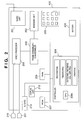
- Fig. 2 is a block diagram illustrating the structure of the radio terminal apparatus 103.
- the radio terminal apparatus 103 includes a radio unit 201 for performing wireless sending and receiving; a baseband unit 202 for modulating and demodulating data; and a keypad 203 having a send key for making an outgoing call, a plurality of one-touch keys through which line numbers are registered, function keys such as abbreviated dialing keys pressed when abbreviated dialing is selected, and various other operating keys. A variety of information is entered by operating the keypad.
- the radio terminal apparatus 103 further includes a voice processor 204 for coding and decoding voice data; a frame assembler/disassembler 205 for assembling and disassembling send/receive data in accordance with a send/receive frame format; a RAM 206 used as a work area in which various data is stored temporarily; a ROM 207 in which a control program and various control data area stored; and a controller 208, which is constituted by a CPU 208C, etc., for controlling the overall apparatus.
- a voice processor 204 for coding and decoding voice data
- a frame assembler/disassembler 205 for assembling and disassembling send/receive data in accordance with a send/receive frame format
- a RAM 206 used as a work area in which various data is stored temporarily
- ROM 207 in which a control program and various control data area stored
- a controller 208 which is constituted by a CPU 208C, etc., for controlling the overall apparatus.
- the controller 208 is divided into a recognition section for recognizing in which radio network, from among a plurality of radio networks, the radio terminal apparatus 103 currently resides, a timekeeping section calibrated by input of reference time information, an outgoing/incoming call control section and a creation section for creating communication-history information using various information, which is obtained from the network, as basic information.
- the radio terminal apparatus 103 further includes a battery 209 for driving the apparatus, handsets 210, 211, and a display unit 212 for displaying a communication charge per unit time, the line number of a communicating party, etc.
- Numeral 213 denotes a removable IC card having a memory.
- Fig. 3 is a diagram showing a procedure for reporting network area information at execution of a position-registration processing sequence in a W-CDMA mobile communication system.
- a base station on the side of the radio network sends a terminal a notification signal 301 to report information (carrier identifying information, base-station identifying information, etc.) concerning the network to which the base station belongs.
- communication channel set-up (communication channel set-up request 302 and communication channel set-up acceptance) and access link set-up (access link set-up request 304 and access link set-up acceptance 305) is performed, in regard to the radio network transmitting the notification signal, by a trigger from the radio terminal that has recognized the necessity for position registration processing.
- the terminal issues a position registration request 306 to the network when an exchange of logical control information has become possible.
- the network executes authentication processing (authentication request 307 and authentication answer 308) with respect to the terminal, thereby verifying that the terminal is not unauthorized.
- network area information namely connecting network identification number information and country information on the network side
- information 311 on the side of the network is reported to the terminal as necessary (as when the position of this terminal is registered with the network for the first time).
- the terminal verifies (312) that network area information has been received normally, the network completes terminal position registration and sends back position registration acceptance (313).
- the controller 102D of the radio channel control unit 112 Upon receiving the position registration request 306 via, e.g., the base station 155, the controller 102D of the radio channel control unit 112 determines whether identification information of the radio terminal A103 included in the position registration request 306 has already been registered in the memory 112E. If the identification information of the radio terminal A103 has not yet been registered in the memory 112E, controller 102D stores the identification information of the radio terminal A103 in the memory 112E in association with the identification information of the base station 155 and sends the radio terminal A103 the network information notification 311.
- the controller 112D of the radio channel control unit 112 does not send the terminal the network information notification 311.
- the identification information of the radio terminal A103 has been registered in association with a base station other than the base station 155
- the identification information of the radio terminal A103 that has been registered in association with the base station other than base station 155 is erased and the identification information of the radio terminal A103 is registered in association with the base station 155.
- the radio channel control unit 112 stores the network area information in the memory 112E.
- the connecting network identification number information is information composed of numbers for identifying respective ones of the connecting networks 100A, 100B and 100C.
- the country number information is the number of the country in which the carrier is present.
- the network area information includes information indicating the time in the country in which the carrier is present.
- the network area information further includes standard billing information of the carrier. For example, if the radio terminal roams into the zone of carrier B, the network area information will contain information regarding this carrier's billing per unit time.
- the network area information further includes the network utilization method, such as the access number system.
- the user of this radio terminal is capable of acquiring basic information necessary to create communication-history information in regard to the network area into which the terminal roams.
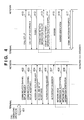
- Fig. 4 is a diagram illustrating an outgoing-call sequence
- Fig. 5 is a diagram illustrating an incoming-call sequence.
- an outgoing call operation 401 serves as a trigger to set up a radio channel (communication channel set-up request 402, communication channel set-up acceptance 403, access link set-up request 404 and access link set-up acceptance 405) and execute authentication processing (authentication request 406 and authentication answer 407).
- an incoming-call signal 501 arriving at the terminal serves as a trigger to set up a radio channel (communication channel set-up request 502, communication channel set-up acceptance 503, access link set-up request 504 and access link set-up acceptance 505) and execute authentication processing (authentication request 506 and authentication answer 507).
- the network side notifies (network area information notification 408, 508) the radio terminal of its own network area information (connecting network identification number information, country number information and network utilization method, such as the access number system) as necessary (as when the network area information is changed on the network side and a radio terminal, whose position was registered before the change, places an outgoing call or receives an incoming call the first time after the change).
- network area information notification 408, 508 the radio terminal of its own network area information (connecting network identification number information, country number information and network utilization method, such as the access number system) as necessary (as when the network area information is changed on the network side and a radio terminal, whose position was registered before the change, places an outgoing call or receives an incoming call the first time after the change).
- the radio channel control unit 112 stores the identification information of the radio terminal, the position of which has been registered, in the memory 112E and the network area information is changed, it is determined whether notification of the changed network area information has been given to each of the radio terminals whose identification information has been stored in the memory 112E.
- radio terminal After the radio terminal verifies that the network area information has been received normally (network area information verification 409, 509), a call set-up sequence on the outgoing-call side (call set-up 410, call set-up acceptance 411 and paging 412) and a call set-up sequence on the incoming-call side (call set-up 510, call set-up acceptance 511 and paging 512).
- network area information verification 409, 509 After the radio terminal verifies that the network area information has been received normally (network area information verification 409, 509), a call set-up sequence on the outgoing-call side (call set-up 410, call set-up acceptance 411 and paging 412) and a call set-up sequence on the incoming-call side (call set-up 510, call set-up acceptance 511 and paging 512).
- the terminal requests the network side for connecting network information (connecting network information request 413, 513) and accepts from the network side, in the form of a connecting network information request answer message (connecting network information request answer 414, 514), the connecting network information (connecting network identification information and standard billing information, etc.) being used in the currently set-up route of the communication line.
- the standard billing information contained in the connecting network information is the charge, per unit time, which the connecting network collects from the user.
- the radio channel control unit 112 transmits, via the radio base station, an incoming-call signal onto which has been added data indicating whether the incoming call is a collect call. On the basis of this data, the radio terminal judges whether the received incoming-call signal is a collect call or not.
- the communicating party answers (answer 415, answer verification 416) in case of an outgoing call.
- the terminal answers (answer 515, answer verification 516).
- a transition is then made to the communicating state (communication in progress 417, 517) in both cases.
- network area information is reported from the network to the radio terminal as necessary.
- a radio terminal that has come under the control of this radio network because of roaming or some other reason a radio terminal that has already had its position registered prior to a change in the network area information on the network side (a change in the access number system, etc.) is informed of the latest network area information content and method of utilization.
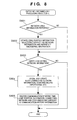
- Fig. 6 is a flowchart showing processing for accepting notification of network area information in a radio terminal apparatus activated when network area information is received at the time of position registration, an outgoing call and an incoming call.
- the processing program is stored in the ROM 207 and is executed by the CPU 208C, which is a microcomputer within the controller 208.
- step S601 When the network area information has been received (311, 408, 508), first it is determined whether the content of the received network area information (country number information, carrier access number information, area information, etc.) is different from the content that has been registered in the RAM 206 (step S601).
- the zone position information carrier identification information and country information
- selectable connecting network information and reference timekeeping information time
- the received network area information may be stored in the RAM 206 if desired regardless of whether the registered content has been changed or not.
- step S603 When the network area information is received, it is determined whether the radio terminal is currently executing outgoing-call connection processing (step S603). If outgoing-call connection processing has not started, processing for accepting the network area information notification is terminated directly.
- step S604 it is determined (step S604) whether the fact that the digits of the line number entered for the sake of an outgoing call have been changed has been reported by the network area information (408 in Fig. 4). If a change in the number digits is unnecessary, processing for accepting the network area information notification is terminated directly.
- step S605 processing for accepting network area information notification is terminated.
- the selection number of the connecting network 100A prevailing prior to a change is entered and an outgoing-call operation is performed. If the network area information gives notification of the fact that the number for selecting the connecting network 100A has changed, the number for selecting the connecting network is changed to the number of which notification has been given by the network area information.
- the radio channel control unit stores the selection number of the connecting network in the memory 112E before hand and the selection number of this connecting network is changed, network area information indicating that the selection number of the trunk system has changed is reported to the radio terminal.
- the radio terminal without any operation being performed by the user, is capable of acquiring basic information for creating communication-history information conforming to the network zone that is the destination of roaming.
- Fig. 7 is a diagram showing the content of communication-history information that has been stored in the RAM 206.
- the communication-history information includes communication starting time, communication end time, zone location, destination, connecting network, communication category and communication charge.
- Fig. 8 is a flowchart showing processing at success of outgoing/incoming call processing when various items of communication-history information are stored.
- the processing program is stored in the ROM 207 and is executed by the CPU 208C within the controller 208. This processing starts in the radio terminal apparatus when processing for an outgoing/incoming call has succeeded.
- step S801 it is determined whether the network side has reported a change in the network area information (network area information notification 408, 508) (step S801).
- the reported basic information zone position information, selectable connecting network information, reference timekeeping information, standard billing information, etc.
- step S802 the basic information in the RAM 206 is retained as is.
- step S803 It is determined whether it is necessary to verify the connecting network information.
- a request for connecting network information is not made in the case of an outgoing call in which the terminal specifies a connecting network for which the basic information (standard billing information, etc.) has already been identified, in the case of an outgoing call based upon a collect call for which a communication charge is not incurred on the terminal side, and in the case of an ordinary (non-collect) incoming call.
- connecting network information requests 413, 513 The basic information (in-use connecting network information, standard billing information, etc.) that has been stored in the RAM 206 is updated in accordance with the answer information (connecting network information request answer 414, 514) from the network side (step S804).
- the standard billing information is the charge per unit time which the connecting network being used collects from the user.
- the radio channel control unit 112 transmits, via the radio base station, an incoming-call signal that includes data indicating whether the call is a collect call. On the basis of this data, the radio terminal determines whether the incoming-call signal is a collect call.
- an outgoing call is one that did or did not specify a connecting network is determined by whether a number for specifying the connecting network was entered with a number entered from the keypad 203 for the purpose of placing an outgoing call.
- communication starting time, zone position (carrier + country information), destination (line number of communication party + carrier + country information), connecting network and communication category (outgoing call, incoming call, collect call or not, etc.) are stored in the communication-history information of RAM 206 in accordance with the content of the basic information (step S805) and processing is then terminated.
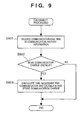
- Fig. 9 is a flowchart showing disconnect processing when a communication line is disconnected.
- the processing program is stored in the ROM 207 and is executed by the CPU 208C within the controller 208.
- step S901 the time at which communication ended is stored in the communication-history information in accordance with the content of the basic information.
- step S902 it is determined from the communication category whether the communication charge is to be borne by oneself.
- the communication charge is calculated based upon standard billing information, which is being retained as the basic information, after the time that was necessary for communication is calculated, and the calculated communication charge is then stored in the communication-history information (step S903). Processing is then terminated.
- the communication charge calculated is displayed on the display unit 202.
- the standard billing information for calculating the communication charge from the communication time, zone position (carrier + country information), destination (line number of communication party + carrier + country information) and connecting network has been stored in the RAM 206 in advance.
- the CPU 208C calculates the communication charge by referring to the information stored in RAM 206.
- step S902 If it is found at step S902 that the communication charge is not to be borne by oneself, processing is terminated directly.
- Fig. 10 is a flowchart showing processing at success of handover processing.
- the processing program is stored in the ROM 207 and is executed by the CPU 208C within the controller 208. This processing starts when handover processing has succeeded.
- Handover is a function in which communication is allowed to continue without interruption even when a radio terminal moves from one radio cell to another radio cell during communication. In case of handover not accompanied by roaming, processing is terminated directly. It should be noted that handover not accompanied by roaming refers to a case where the radio terminal moves from one cell to another within a service zone provided by a single carrier.
- communication end time at the previous zone position of the terminal is recorded in the communication-history information.
- communication start time at the new zone position of the terminal, the zone position (carrier + country information), destination (line number of the communicating party + carrier + country information), connecting network, communication category (outgoing call, incoming call, collect call or not) are stored in the communication-history information (step S1002).
- the new zone position (carrier + country information) and the connecting network is reported from the network into which the radio terminal roamed.
- step S1003 It is determined from the communication category whether the communication charge is to be borne by oneself (step S1003). If the charge is to be borne by oneself, the communication charge is calculated based upon standard billing information, which is being retained as the basic information, and the communication time, zone position (carrier + country information), destination (carrier line number + carrier + country information) and connecting network, after the time that was necessary for communication at the previous position is calculated, and the calculated communication charge is then stored in the communication-history information that prevailed at the previous zone position (step S1004). Processing is then terminated. If the charge is not to be borne by oneself, then processing is terminated directly.
- standard billing information which is being retained as the basic information, and the communication time, zone position (carrier + country information), destination (carrier line number + carrier + country information) and connecting network, after the time that was necessary for communication at the previous position is calculated, and the calculated communication charge is then stored in the communication-history information that prevailed at the previous zone position (step S1004). Processing is
- management of communication charges on the side of the radio terminal apparatus can be achieved by managing communication-history information even in a case where handover is performed.
- the foregoing illustrates a method of acquiring basic information for creating communication-history information as well as an example of creation of the communication-history information. Described next will be processing for when an incoming call that is a collect call is received.
- Fig. 11 is a flowchart showing processing for referring to a received call set-up message in a case where an incoming collect call is accepted.
- the processing program is stored in the ROM 207 and is executed by the CPU 208C, which is a microcomputer within the controller 208. This processing starts when a call set-up message has been received.
- the radio base station transmits a call set-up message (the incoming-call signal 501 in Fig. 5) that includes data indicative of the collect call.
- the terminal refers to the call set-up message that accompanies the incoming call and determines whether the incoming call is a collect call (step S1101). If the call is not a collect call, processing is terminated directly. If the call is a collect call, the network is requested for the basic information concerning the connecting network used in this incoming call (step S1102; 513 in Fig. 5).
- step S1103 It is determined whether the connecting network information acceptance message (514 in Fig. 5) that is in response to this request could be recognized normally (step S1103). If the message could be recognized normally, the fact that the incoming call is a collect call, the connecting network of this incoming call and a communication charge estimate per unit time are stored in the RAM 206 (the communication-history information of Fig. 7). The connecting networks of this incoming call and the communication charge estimate per unit time are capable of being stored on the IC card 213. If the message could not be recognized normally, on the other hand, the fact that the incoming call is a collect call is displayed on the display unit 212 (step S1105). Processing is then terminated.
- the user of the radio terminal apparatus is capable of recognizing that an incoming call is a collect call and of ascertaining a summary of the communication cost before performing an answering operation.
- a radio network reports radio network information to a radio communication terminal as necessary after execution of processing for authentication performed between the radio network and the radio communication terminal when a radio channel is connected between the network and terminal.
- a radio communication terminal that has come under control of a new radio network as a result of roaming or the like recognizes information concerning this radio network (connecting network identification information, country information, reference timekeeping information, standard billing information, etc.) autonomously and temporarily stores this information temporarily as basic information for communication-history information.
- the radio communication terminal When set-up of a communication line has been completed, the radio communication terminal requests the network for information relating to the connecting network, as a result of which information concerning the connecting network (connecting network identification information, billing information, etc.) is recognized autonomously and stored temporarily as basic information for history information.
- information such as time, zone position, connecting network used and communication charge calculated based upon the basic information also is stored, thereby implementing communication charge management on the side of the radio terminal based upon the communication-history information.
- information as to whether an incoming call is a collect call is added onto the call set-up message from the side of the network when an incoming call arrives.
- the radio communication terminal senses whether the communication charge of an incoming call is to be borne by the terminal. If the charge is to be borne, the radio terminal queries the network for the information concerning the connecting network of the incoming call before answering, calculates the per-unit-time communication charge of the incoming call based upon the information concerning the connecting network and displays the charge on a display unit. As a result, before the radio terminal answers the incoming call, it is possible for the radio terminal to ascertain a summary of the per-unit-time communication cost of the incoming call.
- the radio network When selection of a connecting network is left to the radio network, the radio network is queried for information concerning the connecting network of an outgoing call after a communication line is set up (i.e., after a paging message is received from the radio network), the per-unit-time communication charge of the outgoing call is calculated from the information concerning the connecting network, and the charge is displayed on the display unit.
- a communication charge calculated based upon a per-unit-time communication charge for each call is stored with the communication-history information, thereby making it possible to implement management of communication charges on the side of the radio terminal based upon more detailed communication-history information.
- the example illustrated in the foregoing embodiment is that of a W-CDMA mobile communication system, which is a candidate for an IMT (International Mobile Telecommunication) 2000 system that is a radio communication system contrived for roaming.
- the present invention is effective also in a case where communication-history information is managed in a system (a narrow-band CDMA mobile communication system, GSM, PDC, etc.) that presumes a roaming connection.
- the communication-history information may be stored on the IC card 213 or in the RAM 206 storing the user information (line number, etc.) .
- the content of communication-history information that has been stored on the removable IC card 213 having a memory or in the RAM 206 can be viewed by an operation which the user performs using the keypad 203.
- a password may be entered beforehand to assure that privacy is protected.
- the invention is applicable also to a case where the object of the invention is attained by supplying a radio terminal with a program.
- the storage medium storing the program represented by software for achieving the present invention to be read out to a system or apparatus, whereby the system or apparatus would manifest the effects of the invention.
- Fig. 12 is a diagram showing a memory map of the ROM 207 serving as the storage medium.
- the ROM 207 stores a module indicated by the flowchart of Fig. 6, namely the module of a processing program for accepting notification of network area information, amodule indicated by the flowchart of Fig. 8, namely the module of a processing program for processing at success of outgoing/incoming call processing, a module indicated by the flowchart of Fig. 9, namely the module of a disconnect processing program, a module indicated by the flowchart of Fig. 10, namely the module of a processing program for processing at success of handover processing, and a module indicated by the flowchart of Fig. 11, namely the module of a processing program for referring to a received call set-up message.
- the storage medium supplying the program modules is not limited to a ROM but can be a floppy disk, hard disk, optical disk, magneto-optical disk, CD-ROM, CD-R, DVD, magnetic tape or non-volatile type memory card.
- the present invention further covers a case where, after the program codes read from the storage medium are written in a function expansion board inserted into the computer or in a memory provided in a function extension unit connected to the computer, a CPU or the like contained in the function expansion board or function expansion unit performs a part of or the entire process in accordance with the designation of program codes and implements the function of the above embodiment.
Landscapes
- Engineering & Computer Science (AREA)
- Computer Networks & Wireless Communication (AREA)
- Signal Processing (AREA)
- Business, Economics & Management (AREA)
- General Business, Economics & Management (AREA)
- Mobile Radio Communication Systems (AREA)
- Meter Arrangements (AREA)
Applications Claiming Priority (2)
| Application Number | Priority Date | Filing Date | Title |
|---|---|---|---|
| JP10375884A JP2000188644A (ja) | 1998-12-21 | 1998-12-21 | 無線通信装置、無線通信システム、無線通信方法および記憶媒体 |
| JP37588498 | 1998-12-21 |
Publications (2)
| Publication Number | Publication Date |
|---|---|
| EP1014673A2 true EP1014673A2 (fr) | 2000-06-28 |
| EP1014673A3 EP1014673A3 (fr) | 2004-12-15 |
Family
ID=18506212
Family Applications (1)
| Application Number | Title | Priority Date | Filing Date |
|---|---|---|---|
| EP99403198A Withdrawn EP1014673A3 (fr) | 1998-12-21 | 1999-12-17 | Procédé pour la transmission d'informations de taxation |
Country Status (3)
| Country | Link |
|---|---|
| US (1) | US6980794B1 (fr) |
| EP (1) | EP1014673A3 (fr) |
| JP (1) | JP2000188644A (fr) |
Cited By (5)
| Publication number | Priority date | Publication date | Assignee | Title |
|---|---|---|---|---|
| DE19918848C2 (de) * | 1999-04-19 | 2003-08-14 | Vodafone Holding Gmbh | Gebührenanzeigen-Berechnung im Mobilfunkendgerät |
| CN100407850C (zh) * | 2004-03-24 | 2008-07-30 | 华为技术有限公司 | 一种实现边界漫游计费的方法 |
| EP2066106A1 (fr) * | 2007-11-27 | 2009-06-03 | Gemplus | Procédé de mise à disposition, à la demande, de la tarification actualisée d'un service réparti et dispositif associé |
| EP2043337A4 (fr) * | 2006-07-12 | 2012-09-05 | Nec Corp | Dispositif de téléphonie mobile et procédé d'enregistrement d'appel entrant utilisé avec celui-ci |
| CN114553353A (zh) * | 2020-11-25 | 2022-05-27 | 成都鼎桥通信技术有限公司 | 校时方法、装置和车载无线通信盒子 |
Families Citing this family (17)
| Publication number | Priority date | Publication date | Assignee | Title |
|---|---|---|---|---|
| JP3394952B2 (ja) | 2001-03-05 | 2003-04-07 | 株式会社東芝 | 通信装置 |
| US6726092B2 (en) | 2001-12-28 | 2004-04-27 | Interdigital Technology Corporation | Portable device service payments by multiple means |
| JP4024052B2 (ja) | 2002-02-07 | 2007-12-19 | シャープ株式会社 | 端末、通信システムおよび端末の通信方法を実現するためのプログラム |
| JP2003284156A (ja) * | 2002-03-19 | 2003-10-03 | Matsushita Electric Ind Co Ltd | 無線通信システム及び無線通信基地局並びに無線通信端末 |
| JP4555288B2 (ja) * | 2003-09-02 | 2010-09-29 | パナソニック株式会社 | 携帯端末及び発着信履歴管理方法 |
| FI20040781A0 (fi) * | 2004-06-07 | 2004-06-07 | Nokia Corp | Tiedon toimittaminen viestintäjärjestelmässä |
| US20060077943A1 (en) * | 2004-10-12 | 2006-04-13 | Mino Holdings, Inc. C/O M&C Corporate Services Limited | Method and system for processing international calls using a voice over IP process |
| JP4602046B2 (ja) * | 2004-10-22 | 2010-12-22 | 株式会社エヌ・ティ・ティ・ドコモ | 管理サーバ |
| JP2006180410A (ja) * | 2004-12-24 | 2006-07-06 | Sharp Corp | 携帯端末 |
| JP4629482B2 (ja) * | 2005-04-13 | 2011-02-09 | 大日本印刷株式会社 | 移動通信端末、icカード、移動通信システム、プログラム及び通信料金通知方法 |
| US20070280441A1 (en) * | 2006-05-03 | 2007-12-06 | Mino Holdings, Inc. | Method And System For Using Advertisement To Sponsor International Mobile Phone Calls For Cellular Telephone Networks |
| US20080020755A1 (en) * | 2006-05-16 | 2008-01-24 | Mino Holdings, Inc. | Method and system for international roaming using virtual sim card |
| US20080175209A1 (en) * | 2007-01-23 | 2008-07-24 | Sherif Abdel-Kader | Passively Scanning According to WLAN Regulatory Domain |
| US20080259882A1 (en) * | 2007-04-18 | 2008-10-23 | Research In Motion Limited | Determining a WLAN Regulatory Domain |
| US8175034B2 (en) * | 2007-10-31 | 2012-05-08 | Hewlett-Packard Development Company, L.P. | Configuration techniques for wireless communications devices |
| JP7428025B2 (ja) * | 2020-03-11 | 2024-02-06 | 株式会社Jvcケンウッド | 管理装置、プログラム |
| US12108359B2 (en) * | 2022-08-19 | 2024-10-01 | Internet Initiative Japan Inc. | Method, information processing apparatus, and system |
Family Cites Families (21)
| Publication number | Priority date | Publication date | Assignee | Title |
|---|---|---|---|---|
| EP0482989B1 (fr) | 1990-10-22 | 1997-07-09 | Canon Kabushiki Kaisha | Appareil de central téléphonique |
| JPH04290097A (ja) | 1991-03-19 | 1992-10-14 | Fujitsu Ltd | 携帯電話システム利用処理方式 |
| EP0504795A3 (en) | 1991-03-19 | 1993-02-10 | Fujitsu Limited | Communication system having portable station |
| US5303297A (en) | 1991-07-25 | 1994-04-12 | Motorola, Inc. | Dynamic pricing method and apparatus for communication systems |
| JPH0530025A (ja) | 1991-07-25 | 1993-02-05 | Canon Inc | コードレス電話装置 |
| US6324404B1 (en) * | 1991-12-26 | 2001-11-27 | Sycord Limited Partnership | Cellular telephone system that uses position of a mobile unit to make call management decisions |
| JPH05191343A (ja) | 1992-01-09 | 1993-07-30 | Nippon Telegr & Teleph Corp <Ntt> | 移動通信方式 |
| US5732132A (en) | 1992-05-11 | 1998-03-24 | Canon Kabushiki Kaisha | Telephone updating via network provided information |
| GB9223586D0 (en) | 1992-11-11 | 1992-12-23 | Vodafone Ltd | Radio telecommunication systems and methods |
| US5442806A (en) * | 1993-06-08 | 1995-08-15 | Oki Telecom | Preferred carrier selection method for selecting any available cellular carrier frequency when neither home nor preferred cellular carrier frequencies are available |
| EP0647055A1 (fr) | 1993-10-04 | 1995-04-05 | AT&T Corp. | Système de gestion de taxation pour téléphonie cellulaire |
| TW288240B (fr) * | 1995-01-31 | 1996-10-11 | Qualcomm Inc | |
| US5915214A (en) * | 1995-02-23 | 1999-06-22 | Reece; Richard W. | Mobile communication service provider selection system |
| EP0734144A3 (fr) | 1995-03-20 | 1999-08-18 | Siemens Aktiengesellschaft | Procédé et dispositif de détermination de tarification dans un équipement d'abonné |
| US6018652A (en) * | 1995-08-31 | 2000-01-25 | Telefonaktiebolaget Lm Ericsson (Publ.) | Cellular telephone system having mobile charging region and area based pricing method and apparatus |
| US5974308A (en) * | 1996-11-13 | 1999-10-26 | Telefonaktiebolaget Lm Ericsson | Selective broadcasting of charge rates |
| US5881105A (en) | 1996-12-03 | 1999-03-09 | Ericsson, Inc. | System and method for the non-sequential transmission of control signals within a speech transmission |
| GB2324226A (en) | 1997-02-10 | 1998-10-14 | Motorola Inc | Call Charge Notification for a mobile Subscriber |
| US6408174B1 (en) * | 1997-05-13 | 2002-06-18 | Telefonaktiebolaget Lm Ericsson (Publ) | Communication method, system, and device for reducing processor load at tariff switch |
| US6195543B1 (en) * | 1997-06-20 | 2001-02-27 | Telefonaktiebolaget Lm Ericsson (Publ) | Method and apparatus for providing advice of charge parameters for mobile radio telephone calls |
| US6138006A (en) * | 1997-09-20 | 2000-10-24 | Telefonaktiebolaget L M Ericsson | System and method of delivering collect calls in a radio telecommunications network |
-
1998
- 1998-12-21 JP JP10375884A patent/JP2000188644A/ja active Pending
-
1999
- 1999-12-10 US US09/459,037 patent/US6980794B1/en not_active Expired - Fee Related
- 1999-12-17 EP EP99403198A patent/EP1014673A3/fr not_active Withdrawn
Cited By (6)
| Publication number | Priority date | Publication date | Assignee | Title |
|---|---|---|---|---|
| DE19918848C2 (de) * | 1999-04-19 | 2003-08-14 | Vodafone Holding Gmbh | Gebührenanzeigen-Berechnung im Mobilfunkendgerät |
| CN100407850C (zh) * | 2004-03-24 | 2008-07-30 | 华为技术有限公司 | 一种实现边界漫游计费的方法 |
| EP2043337A4 (fr) * | 2006-07-12 | 2012-09-05 | Nec Corp | Dispositif de téléphonie mobile et procédé d'enregistrement d'appel entrant utilisé avec celui-ci |
| EP2066106A1 (fr) * | 2007-11-27 | 2009-06-03 | Gemplus | Procédé de mise à disposition, à la demande, de la tarification actualisée d'un service réparti et dispositif associé |
| CN114553353A (zh) * | 2020-11-25 | 2022-05-27 | 成都鼎桥通信技术有限公司 | 校时方法、装置和车载无线通信盒子 |
| CN114553353B (zh) * | 2020-11-25 | 2023-09-19 | 成都鼎桥通信技术有限公司 | 校时方法、装置和车载无线通信盒子 |
Also Published As
| Publication number | Publication date |
|---|---|
| US6980794B1 (en) | 2005-12-27 |
| JP2000188644A (ja) | 2000-07-04 |
| EP1014673A3 (fr) | 2004-12-15 |
Similar Documents
| Publication | Publication Date | Title |
|---|---|---|
| US6980794B1 (en) | Communication apparatus | |
| JP2813466B2 (ja) | 電話システムの電話発呼を完成させる方法 | |
| EP1042900B1 (fr) | Communication d'annonces publicitaires aux utilisateurs d'un systeme de telecommunications | |
| JP4261501B2 (ja) | 通信システムおよび同システムの移動局 | |
| AU701960B2 (en) | A method for improving charging criteria in a mobile telephone network | |
| EP0712563B1 (fr) | Procede d'etablissement de communications | |
| AU6972794A (en) | Method for call establishment | |
| EP1173970B1 (fr) | Taxation d'appels dans un reseau de telecommunications | |
| US7224975B2 (en) | Procedure and system for setting up a telecommunication connection | |
| CN101146266B (zh) | 为用户增加特殊用途号码的方法及系统 | |
| JP4908719B2 (ja) | 周辺装置へ呼出しをルーティングする方法 | |
| US7103345B1 (en) | Call information output in a telecommunication network | |
| US20020098827A1 (en) | Charge advice in a mobile telecommunications system | |
| KR100441122B1 (ko) | 이동통신시스템에서호전환부가서비스실시방법 | |
| US20070190972A1 (en) | Method and system for implementing wireless intelligent services | |
| KR101002284B1 (ko) | 가입 통신망 식별자 표시 서비스 방법 및 시스템 | |
| KR100736493B1 (ko) | 이동통신망을 통한 파일 전송 서비스 제공방법 | |
| JP3667157B2 (ja) | 無線端末装置 | |
| WO2001022757A1 (fr) | Procede de traitement des informations de taxation | |
| JP2785869B2 (ja) | 接続域自動切替システム | |
| KR100605642B1 (ko) | 통신 단말기의 톨 프리 콜 방법 | |
| JPH05308674A (ja) | 移動通信方式 | |
| WO2006056230A1 (fr) | Execution d'un appel dans un systeme de radiotelecommunications lorsqu'un canal de radiocommunication devient disponible | |
| JP2000184039A (ja) | コ―ルバック装置、コ―ルバック方法及び記憶媒体 | |
| KR20070099157A (ko) | 이동통신망에서 통화중 수신자 부담 과금 서비스 시스템 및방법 |
Legal Events
| Date | Code | Title | Description |
|---|---|---|---|
| PUAI | Public reference made under article 153(3) epc to a published international application that has entered the european phase |
Free format text: ORIGINAL CODE: 0009012 |
|
| AK | Designated contracting states |
Kind code of ref document: A2 Designated state(s): AT BE CH CY DE DK ES FI FR GB GR IE IT LI LU MC NL PT SE |
|
| AX | Request for extension of the european patent |
Free format text: AL;LT;LV;MK;RO;SI |
|
| PUAL | Search report despatched |
Free format text: ORIGINAL CODE: 0009013 |
|
| AK | Designated contracting states |
Kind code of ref document: A3 Designated state(s): AT BE CH CY DE DK ES FI FR GB GR IE IT LI LU MC NL PT SE |
|
| AX | Request for extension of the european patent |
Extension state: AL LT LV MK RO SI |
|
| 17P | Request for examination filed |
Effective date: 20050418 |
|
| AKX | Designation fees paid |
Designated state(s): DE FI FR GB SE |
|
| 17Q | First examination report despatched |
Effective date: 20071220 |
|
| STAA | Information on the status of an ep patent application or granted ep patent |
Free format text: STATUS: THE APPLICATION IS DEEMED TO BE WITHDRAWN |
|
| 18D | Application deemed to be withdrawn |
Effective date: 20140630 |