EP1016964A2 - System und Verfahren zum Gewähren des Zugangs von mehreren Anwenderprozessen zu einem einzelnen Netzwerkprozess - Google Patents
System und Verfahren zum Gewähren des Zugangs von mehreren Anwenderprozessen zu einem einzelnen Netzwerkprozess Download PDFInfo
- Publication number
- EP1016964A2 EP1016964A2 EP99125893A EP99125893A EP1016964A2 EP 1016964 A2 EP1016964 A2 EP 1016964A2 EP 99125893 A EP99125893 A EP 99125893A EP 99125893 A EP99125893 A EP 99125893A EP 1016964 A2 EP1016964 A2 EP 1016964A2
- Authority
- EP
- European Patent Office
- Prior art keywords
- socket
- network process
- message
- network
- thread
- Prior art date
- Legal status (The legal status is an assumption and is not a legal conclusion. Google has not performed a legal analysis and makes no representation as to the accuracy of the status listed.)
- Withdrawn
Links
Images


Classifications
-
- G—PHYSICS
- G06—COMPUTING OR CALCULATING; COUNTING
- G06F—ELECTRIC DIGITAL DATA PROCESSING
- G06F9/00—Arrangements for program control, e.g. control units
- G06F9/06—Arrangements for program control, e.g. control units using stored programs, i.e. using an internal store of processing equipment to receive or retain programs
- G06F9/46—Multiprogramming arrangements
- G06F9/54—Interprogram communication
- G06F9/546—Message passing systems or structures, e.g. queues
Definitions
- the present invention relates generally to operating systems used in modern day computing environments and more specifically to a network architecture and related methods for permitting one or more user processes to access a single network process.
- the invention has practical application in operating environments wherein multiple user processes need access to device driver software through a single network process.
- the network topology incorporates a mechanism for allocating network resources amongst all processes while at the same time assuring that multiple user access to those resources is handled efficiently and in a structured manner.
- Operating systems offering robust time and space partitioning are one example of such a network topology.
- space partitioning means that the software executing on one process cannot affect the operation of another process.
- space partitioning can be defined at the process level.
- a process is comprised of multiple threads each of which has its own context.
- the context for a particular thread may contain the instruction pointer to a software instruction currently in execution.
- the operating system can then switch to a second thread in the process without losing its point of execution in the first thread.
- the contents of the CPU registers changes from the context of the executing thread to the context of the second thread, the overall integrity of the process is maintained.
- a set of functions and operations which may be employed in an application to provide access by multiple user processes to a single network process.
- the invention has practical application within the context of an operating system that provides for multiple processes and multiple threads within a process such as a space and time partitioning operating system.
- An example application would be in the aviation industry where certification is expensive due to the increasing complexity of modern avionics control systems.
- the network process contains the device driver software for a plurality of network devices and components which a user may wish to access.
- the socket library provides the interface mechanism to the network process and can be created as a static or dynamically linked library.
- API Application Programmer Interface
- the socket library communicates with the network process.
- the socket library formats a message containing all the information necessary for the network process to fulfill the intent of the API call.
- the message may also include any required data.
- the socket library then sends the message to the network process.
- the network process receives the message, it performs whatever activity is necessary to fulfill the intent of the API call.
- the network process sends a message to the user process that placed the call containing a return value and any related data.
- the socket library receives the message on behalf of the user process and, in turn, transmits to the user process the return value and any data received from the network process.
- the socket library and network process communicate using a mailbox.
- a mailbox is a method of communicating between processes. Mailboxes are aperiodic so that information can be transmitted at any time.
- the invention utilizes point to point communications so that a message is sent to a specific mailbox which is owned by a specific process and the sending process must have been granted access by the receiving process to send that message. Otherwise the send will fail.
- a technical advantage of the present invention is that access to the network interface is established and relinquished dynamically.
- Another technical advantage of the present invention is that balance between performance and resource utilization is easily adjusted.
- Still another advantage of the present invention is that the number of threads that can access the network interface is easily adjusted.
- API Application Programmer Interface
- Mailboxes allow processes to communicate with each other in an aperiodic manner.
- any thread in the creating process can retrieve messages from it, and any thread in a process which has been explicitly granted access to the mailbox can send a message to it.
- An Operating System (OS) Integration Tool can be used to permit implementation of both dynamic and static mailboxes.
- OS Operating System
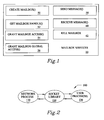
- FIG 1 shows the mailbox services 22 according to one embodiment. Each service is described below as follows.
- createMailboxo 50 This function creates a dynamic mailbox that is accessible by all threads in the calling process. Static mailboxes are created automatically by the OS, and are named, and cannot be deleted. Dynamic mailboxes are created via this service, have no names, and they can be deleted. CreateMailboxo 50 returns a mailbox handle which is used by other mailbox related services. Since dynamic mailboxes have no names, the handle must somehow be communicated to other processes in order for those other processes to access the mailbox. One way this might be done is to send the handle of a dynamically created mailbox to another process' static mailbox, where that other process expects to get a mailbox handle.
- the following routine illustrates the interface with the createMailboxo 50 function: Parameter Description MessageSizeInBytes
- MessageSizeInBytes In one embodiment, only page sized messages can be used with mailboxes.
- QueueSizeInMessages The total number of pages/messages that can be queued in the mailbox at any particular time. This space comes out of the callers RAM budget, which is defined in the OS Integration Tool. Handle Returned as a handle to the new mailbox
- Warnings/Restrictions When a mailbox is initially created, it contains no messages. When a mailbox is initially created, no other process in the system has the access rights necessary to send a message to it, including the creating process itself.
- getMailboxHandleo 52 This function is used to obtain a handle to a "static" mailbox in a specified process. All static mailboxes for a process are automatically created by the OS when the process is started. This service provides the ability to get a mailbox handle from an integration time assigned mailbox name ID.
- the following routine illustrates the interface to the getMailboxHandleo 52 function: Parameter Description MailboxName The name of the mailbox assigned at integration time via the OS Integration Tool. ProcessHandle Handle to the process which created the mailbox. Handle Returned is a handle to the mailbox.
- Ipc Valid The mailbox was found in the specified process, and a handle to it was returned.
- IpcInvalid The static mailbox named mailboxName does not exist in the specified process.
- IpcInvalidProcessHandle The specified process handle is invalid.
- Warnings/Restrictions There are no access rights checks when obtaining a mailbox handle. Access rights are only checked when sending or receiving messages via the returned handle.
- the following routine illustrates the interface with the grantMailboxAccess() 54 function: Parameter Description Handle Handle to the mailbox for which access is being granted. ProcessHandle Handle to the process which will be granted access to the mailbox.
- IpcInvalidMailboxHandle The specified mailbox handle is not valid. It could have been modified by the user inadvertently, or another thread in the callers process could have deleted the mailbox.
- IpcInvalidProcessHandle The specified process handle is not valid. It could have been modified by the user inadvertently, or the process could have been deleted.
- IpcInsufficientPrivilege The calling process is not the process which created the mailbox. Only the owner of a mailbox can change the access rights.
- Warnings/Restrictions Only the process which owns a mailbox can change its access rights.
- the following routine illustrates the interface with the grantMailboxGlobalAccess() 56 function: Parameter Description Handle Handle to the mailbox who access list is to be changed.
- Ipc Valid The specified access was granted to the specified process.
- IpcInvalidMailboxHandle The specified mailbox handle is not valid. It could have been modified by the user inadvertently, or another thread in the callers process could have deleted the mailbox.
- IpcInsufficientPrivilege The calling process is not the process which created the mailbox. Only the owner of a mailbox can change the access rights.
- Warnings/Restrictions only the process which owns a mailbox can change its access rights.
- sendMessage() 58 This service is used to send a message to a specified mailbox.
- the following routine illustrates the interface to the sendMessage() 58 function: Parameter Description Handle Handle to the mailbox to send the message to. MessageBuffer Pointer to structure in caller space containing the message to send. MessageLengthInDwords Number of DWORDS to copy messageBuffer onto the envelope (page needed to queue the message in the mailbox) BlockIfMailboxFull When false, and the destination mailbox is full, the message will not be sent and the ipcQuotaExceeded will be immediately returned. When true, and the destination mailbox is full, the calling thread will be blocked until the message can be queued. When a message is received from a mailbox, a OS event is pulsed which readies all the blocked senders to the mailbox.
- Exactly which blocked sender gets to send its message is based on priority. If multiple blocked senders have the same priority, the one which gets to send its message is selected arbitrarily. Note that multiple senders can be located in multiple processes, depending on how the mailbox owner has granted access to it.
- IpcInvalid The message was send and queued in the specified mailbox.
- IpcInvalidMessageLength When sending a message, an envelope has to be created and the message is copied onto the envelope. An envelope is 4K, but sendMessage uses the first 4 bytes as a message length. MessageLengthInDWords cannot exceed 4092 bytes.
- ipcInvalid In order to send a message, an envelope has to be created. In this case, the envelope could not be created. For more details on why this could fail, refer to the createEnvelope () primitive below. IpcNoMessage The primitive sendEnvelope () failed for some reason. Refer to it in the primitives section below for additional information. IpcInsufficientPrivilege The calling process does has not been granted access to the specified mailbox.
- receiveMessage() 60 This service is used to receive a message from a mailbox. If there are multiple messages in the mailbox, the message that has been in the queue the longest is returned (i.e., its a FIFO queue).
- the following routine illustrates the interface to the receiveMessage () 60 function: Parameter Description Handle Handle to the mailbox to receive a message from. MessageBuffer Pointer to structure to store the message in. MaxMessageSizeInDWords When the message was sent, its length was identified. By default, that many unsigned words (4 bytes) will be copied into messageBuffer. The service will copy the proper number of unsigned words (the number of bytes sent), but will stop copying when maxMessageSize words have been copied. WaitForMessage When false, and the mailbox is empty, no message will be received and the call will immediately return with the ipcNoMessage status code. When true, and the mailbox is empty, the calling thread will be blocked until a message is sent to the mailbox and received by the thread. Note that if there are multiple receiving threads blocked on the mailbox, the message will be given to the highest priority thread. If there are multiple threads of the same highest priority blocked on the mailbox, the thread selection is arbitrary.
- killMailbox() 62 This service is used to destroy a dynamic mailbox. Static mailboxes cannot be killed. When a mailbox is killed, the envelopes allocated to the mailbox are returned to the process' quota of envelopes. The time required to perform this service may vary, and is dependent on the number of sendMessage() 58 requests in progress, receiveMessage() 60 requests in process, getMailboxHandle() 52 requests in progress, etc.
- the killMailbox() 62 service will first mark the mailbox as invalid, preventing any new requests of it, but it allows any in progress services to complete before freeing up the resources.
- the following routine illustrates the interface to the killMailbox() 62 function: Parameter Description Handle Handle to the mailbox to delete.
- Ipc Valid The mailbox has been destroyed.
- IpcInvalidMailboxHandle The specified mailbox handle is invalid.
- IpcInsufficient Privilege The calling process is not the process which created the mailbox.
- IpcCantDeleteStatic The specified mailbox is a static mailbox and cannot be deleted.
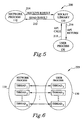
- FIG. 2 illustrates the elements of a network application 100 according to one embodiment of the invention.
- any process can be a Network Application Process (NAP).
- NAP Network Application Process
- a NAP can communicate with external devices over an Ethernet interface.
- the NAP makes calls to functions in a socket library to communicate with one or more devices.
- the elements of implementing a NAP include the network process 110, the socket library 120 and the user process 130.
- the network process 110 contains the device driver for the network hardware.
- the network process 110 is loaded onto the OS platform and included as a static process in the platform registry if network applications are to be used.
- the user is responsible for adding a static process based on the network process 110 template to the appropriate platform configuration using the OS Integration Tool.
- the socket library 120 is linked to the user process 130 and provides the interface to the network process 110.
- Process 150 begins at step 152 when a thread in a user process 130 establishes a connection to the network process 100 by calling the init() function within the socket library 120.
- the network process 110 creates a thread to service the requesting thread in the user process 130.
- steps 156 and 158 each thread in the user process 130 that calls init() causes another thread in the network process 110 to be created.
- This scheme provides an independent thread, step 158, in the network process 110 for each thread in the user process 130 that calls init().
- threads in the user process 130 can independently communicate with their corresponding external devices. A problem in accessing one device will not prevent other threads from accessing their devices.
- the number of threads that can call init() may be changed by the user via the platform registry.
- FIG. 4 illustrates the process, denoted generally as 170, for writing a network application.
- Process 170 starts at step 172 wherein a process requiring network access calls the function startup() in the socket library 120.
- the socket library 120 can be provided with a mutex to support multi-threaded applications.
- threads requiring network access call the function init() in the socket library 120.
- the threads in the NAP should not use this mutex.
- a single call to init() is required by each thread that makes socket calls.
- the parameter specifies a dynamic thread template.
- the thread template refers to one of the dynamic threads that is defined for the network process 110. Their rates and budgets can be set according to the needs of the application.
- Threads that called init() can call the function cleanup() when they no longer network access, step 178. If a dynamic process or thread is going to be deleted, cleanup() should be called prior to deletion. Each thread that calls init() should call cleanup(). On the other hand, a thread that always makes socket calls does not have to call cleanup(). The cleanup() function frees up resources in the network process 110.
- init() When init() is called, a thread is started in the network process 110 to service the thread that called the init() function.
- the network process 110 When the cleanup() function is called at step 178, the network process 110 deletes the thread that was created as a result of the call to init() at step 180, and makes the thread available for recreation if needed, step 182.
- a user process 130 that fails to call the cleanup() function could needlessly exhaust all resources of the network process 110 if that process is repeatedly - created and deleted. In this case, all subsequent calls to init() by any user process 130 would fail, resulting in the network application being unable to perform network communications.
- the socket library 120 communicates with the network process 110 using mailboxes. Whenever a socket call is made, a message is sent to the network process 110, which handles the request and sends back a response. Blocking mailboxes may be used for this purpose.
- Blocking mailboxes allow for control to be transferred between the user process 130 and the network process 110 more than once in a period. Therefore, more than one socket call can be completed in a period. Note that a thread that makes a socket call is "blocked" during the time that it waits for a response from the network process 110. This means it is not executing and is not using its budget of CPU time. When the response from the network process 130 is available, the thread is made running.
- the sequence 200 begins when a user process 130 calls a function in the socket library 120. The call is indicated by the arrow 210.
- the socket library 120 sends a message 212 to the network process 110 containing the information necessary for the network process 110 to fulfill the intent of the call 210.
- the network process 110 receives the message and performs whatever activity is necessary to fulfill the intent of the call 210.
- the network process 110 sends a message 214 to the user process 130 containing the return value to the call 210 and any related data.
- the socket library 120 receives the message on behalf of the user process 130.
- the socket library 120 returns 216 to the user process 130, providing the return value and data received from the network process 214.
- a function in the socket library 120 is called to establish access to the device driver software in the network process 110.
- This init() function may be called by each thread that requires access to the network process 110. Access to the network interface uses resources in the network process 110 and thus it is desirable that a thread be able to free them up when they are no longer needed. This can be accomplished by a call to another function which is referred to as cleanup().
- cleanup() By dynamically establishing and relinquishing access to the network interface, the use of dynamic threads and processes is supported by the present invention.
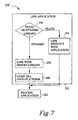
- a feature of the present invention is the one-to-one relationship between threads created by the user process 130 and those created in the network process 110. This relationship is illustrated in figure 6 and denoted generally as 225.
- the user process 130 and the network process 110 create a communications link between a pair of threads.
- Thread1 in the user process 130 makes a call 210, it will be handles by a corresponding Thread1 in the network process 110.
- Thread1 and Thread2 are able to communicate with different external devices independently. For example, if Thread1 attempts to receive data from its external device and the call 210 blocks, communications between Thread2 and its external devices are unaffected. In the prior art, this would not be the case since all threads are handled by a single thread in the network process.
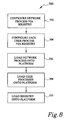
- Process 250 begins at step 252 when an application is linked with the socket library 120.
- the socket library 120 may be static (socket.lib) or dynamic (socket.dll), step 254.
- a static library it is directly linked with the application, step 256.
- the pplication is linked with an import library,(socket.imp), step 258, and the DLL is loaded onto the platform, step 260.
- the application is loaded onto the platform, it is linked with the DLL, step 262.
- Process 300 starts at step 302 wherein the network process 110 is properly configured for successful network communications via registry.
- Configuring the network process 110 involves configuring each user process via the platform registry, step 304, for the network process 110 and all user processes 130.
- the network process 110 is loaded onto the platform at step 306.
- the platform registry entries provided below are the minimum required to support a user process 130.
- a particular user process 130 may need different entries depending on the resources it uses.
- the user processes are loaded onto the platform, step 308, as well as the platform registry, step 310.
- the network process 110 can be configured for the needs of the platform. Dynamic thread templates can be added, deleted or modified as needed.
- Max Dynamic,Threads The number of threads on the platform that call init(), and can be expected to be active simultaneously. Max Dynamic Mailboxes One for each possible dynamic thread. The following entries may be applied to the threads that are created as a result of calling the function init().
- the socket library is based on an industry standard well known to those skilled in the art.
- Socket descriptor A value specifying a valid socket.
- SOCKET_ERROR The call to the Ethernet device driver software (in the Network process) encountered an error, or no connection requests were pending on socket s.
- SOCKET_ERROR_INIT_NOT_ CALLED The calling thread has not called init(). It must be called before calls to other socket functions (except startup()).
- SOCKET_ERROR_MESSAGE_NOT _SENT An error occurred in attempting to send a message to the Network process.
- SOCKET_ERROR_MESSAGE_NOT _RECEIVED An error occurred in attempting to receive a message from the Network process.
- SOCKET_ERROR_INIT_NOT_ CALLED The calling thread has not called init(). It must be called before calls to other socket functions (except startup()).
- SOCKET_ERROR_MESSAGE_NOT _SENT An error occurred in attempting to send a message to the Network process.
- SOCKET_ERROR_MESSAGE_NOT _RECEIVED An error occurred in attempting to receive a message from the Network process.
- Threads that call init() should call cleanup() when they no longer will be making socket calls. If a dynamic process or thread is going to be deleted, cleanup() should be called prior to deletion. Note that each thread that calls init() should call cleanup(). If a thread is always going to make socket calls because it has no other purpose in life, cleanup() does not have to be called. This is a OS-specific function.
- SOCKET_ERROR_INIT_NOT_ CALLED The calling thread has not called init(). It must be called before calls to other socket functions (except startup()).
- SOCKET_ERROR_MESSAGE_ NOT_SENT An error occurred in attempting to send a message to the Network process.
- SOCKET_ERROR_MESSAGE_ NOT_RECEIVED An error occurred in attempting to receive a message from the Network process.
- a null pointer is returned for several error conditions: init() has not been called for this thread; an error occurred in attempting to send a message to the Network process; an error occurred in attempting to receive a message from the Network process; the call to the Ethernet device driver software (in the Network process) encountered an error.
- getlasterror() can be called to retrieve additional information about the error. This function returns the most recent error caused by the calling thread.
- Non-zero value The error value associated with the most recent value error caused by the calling thread.
- SOCKET_ERROR_INIT_NOT_ CALLED The calling thread has not called init(). It must be called before calls to other socket functions except startup()).
- SOCKET_ERROR_MESSAGE_ NOT_SENT An error occurred in attempting to send a message to the Network process.
- SOCKET_ERROR_MESSAGE_ NOT_RECEIVED An error occurred in attempting to receive a message from the Network process.
- SOCKET_ERROR_INIT_NOT_ CALLED The calling thread has not called init(). It must be called before calls to other socket functions (except startup()).
- SOCKET_ERROR_MESSAGE_ NOT_SENT An error occurred in attempting to send a message to the Network process.
- SOCKET_ERROR_MESSAGE_ NOT_RECEIVED An error occurred in attempting to receive a message from the Network process.
- SO_ NAGLE The Nagle Algorithm prohibits sending of small TCP packets while there is an any outstanding output data which has not been acknowledged. The default is the Nagle Algorithm enabled.
- SO_ DELAY_ ACK Delay sending TCP acknowledgment for up to 200 milliseconds. In a stream of full-size packets, every other packet will be acknowledged. The default is to delay the acknowledgments.
- SO_REUSE SOCK Enable/disables ability to reuse a socket in the timed-wait state if no other sockets are available. The default is not to reuse the socket.
- SO_TCP_ NO_COPY Enables/disables copying of TCP input/output data directly to input/ output packets. The default is no copy mode disabled.
- SO_UDPC KSUM_IN Enables/disables checking input packet checksums. The default is to check the checksums.
- SO_UDPC KSUM_ OUT Enable/disables generating checksums for output packets. The default is to generate checksums.
- SOCKET_ERROR_INIT_NOT_ CALLED The calling thread has not called init(). It must be called before calls to other socket functions (except startup()).
- SOCKET_ERROR_MESSAGE_ NOT_SENT An error occurred in attempting to send a message to the Network process.
- SOCKET_ERROR_MESSAGE_ NOT_RECEIVED An error occurred in attempting to receive a message from the Network process.
- a single call to init() which is a OS-specific function, is required by each thread that will be making socket calls.
- the parameter specifies a dynamic thread template.
- the thread template refers to one of the dynamic threads that is defined for the network process.
- INIT_STATUS_SUCCESS Successful initialization.
- INIT_STATUS_STRUCTURE_ FULL The Network process and the socket library use a data structure to map mailbox handles to threads. This structure can handle up to 64 threads. An attempt to start more than 64 threads in the Network process results in this return value.
- INIT_STATUS_THREAD_NOT_ CREATED An attempt by the Network process to create a dynamic thread from the template specified by threadSpecifier failed. The template ID must be consistent with the platform registry entries for the Network process.
- INIT_STATUS_NO_MAILBOX_ ACCESS An attempt to give the Network process access to the mailbox created by this process failed.
- INIT_STATUS_MESSAGE_NOT _SENT An error occurred in attempting to send a message to the Network process.
- INIT_STATUS_MESSAGE_NOT _RECEIVED An error occurred in attempting to receive a message from the Network process.
- INIT_STATUS_ENVELOPE_ CREATION_FAILED A mailbox envelope could not be created by the socket library.
- SOCKET_ERROR_INIT_NOT_ CALLED The calling thread has not called init(). It must be called before calls to other socket functions (except startup()).
- SOCKET_ERROR_MESSAGE_ NOT_SENT An error occurred in attempting to send a message to the Network process.
- SOCKET_ERROR_MESSAGE_ NOT_RECEIVED An error occurred in attempting to receive a message from the Network process.
- SOCKET_ERROR_INIT_NOT_ CALLED The calling thread has not called init(). It must be called before calls to other socket functions (except startup()).
- SOCKET_ERROR_MESSAGE_ NOT_SENT An error occurred in attempting to send a message to the Network process.
- SOCKET_ERROR_MESSAGE_ NOT_RECEIVED An error occurred in attempting to receive a message from the Network process.
- SOCKET_ERROR_INIT_NOT_ CALLED The calling thread has not called init(). It must be called before calls to other socket functions (except startup()).
- SOCKET_ERROR_MESSAGE_ NOT_SENT An error occurred in attempting to send a message to the Network process.
- SOCKET_ERROR_MESSAGE_ NOT_RECEIVED An error occurred in attempting to receive a message from the Network process.
- SOCKET_ERROR_INIT_NOT_ CALLED The calling thread has not called init(). It must be called before calls to other socket functions (except startup()).
- SOCKET_ERROR_MESSAGE_ NOT_SENT An error occurred in attempting to send a message to the Network process.
- SOCKET_ERROR_MESSAGE_ NOT_RECEIVED An error occurred in attempting to receive a message from the Network process.
- SOCKET_ERROR_INIT_NOT_ CALLED The calling thread has not called init(). It must be called before calls to other socket functions (except startup()).
- SOCKET_ERROR_MESSAGE_ NOT_SENT An error occurred in attempting to send a message to the Network process.
- SOCKET_ERROR_MESSAGE_ NOT_RECEIVED An error occurred in attempting to receive a message from the Network process.
- SOCKET_ERROR_INIT_NOT_ CALLED The calling thread has not called init(). It must be called before calls to other socket functions (except startup()).
- SOCKET_ERROR_MESSAGE_ NOT_SENT An error occurred in attempting to send a message to the Network process.
- SOCKET_ERROR_MESSAGE_ NOT_RECEIVED An error occurred in attempting to receive a message from the Network process.
- SOCKET_ERROR_INIT_NOT_ CALLED The calling thread has not called init(). It must be called before calls to other socket functions (except startup()).
- SOCKET_ERROR_MESSAGE_ NOT_SENT An error occurred in attempting to send a message to the Network process.
- SOCKET_ERROR_MESSAGE_ NOT_RECEIVED An error occurred in attempting to receive a message from the Network process.
- SOCKET_ERROR_INIT_NOT_ CALLED The calling thread has not called init(). It must be called before calls to other socket functions (except startup()).
- SOCKET_ERROR_MESSAGE_ NOT_SENT An error occurred in attempting to send a message to the Network process.
- SOCKET_ERROR_MESSAGE_ NOT_RECEIVED An error occurred in attempting to receive a message from the Network process.
- Socket descriptor Success SOCKET_ERROR The call to the Ethernet device driver software (in the Network process) encountered an error.
- SOCKET_ERROR_INIT_NOT_ CALLED The calling thread has not called init(). It must be called before calls to other socket functions (except startup()).
- SOCKET_ERROR_MESSAGE_ NOT_SENT An error occurred in attempting to send a message to the Network process.
- SOCKET_ERROR_MESSAGE_ NOT_RECEIVED An error occurred in attempting to receive a message from the Network process.
- a single call to startup() is required by each network application process (NAP) before any other calls to the socket library.
- the socket library requires a mutex to support multi-threaded applications.
- STARTUP_STATUS_SUCCESS Successful startup.
- STARTUP_STATUS_NO_ MAILBOX_HANDLE The handle to the Network process' static mailbox could not be obtained.
- STARTUP_STATUS_NO_ PROCESS_HANDLE The handle of the Network process could not be obtained.
Landscapes
- Engineering & Computer Science (AREA)
- Software Systems (AREA)
- Theoretical Computer Science (AREA)
- Physics & Mathematics (AREA)
- General Engineering & Computer Science (AREA)
- General Physics & Mathematics (AREA)
- Data Exchanges In Wide-Area Networks (AREA)
- Computer And Data Communications (AREA)
- Stored Programmes (AREA)
Applications Claiming Priority (2)
| Application Number | Priority Date | Filing Date | Title |
|---|---|---|---|
| US223084 | 1998-12-29 | ||
| US09/223,084 US6802065B1 (en) | 1998-12-29 | 1998-12-29 | System and methods for permitting access to a singular network process by multiple user processes |
Publications (2)
| Publication Number | Publication Date |
|---|---|
| EP1016964A2 true EP1016964A2 (de) | 2000-07-05 |
| EP1016964A3 EP1016964A3 (de) | 2005-03-09 |
Family
ID=22834968
Family Applications (1)
| Application Number | Title | Priority Date | Filing Date |
|---|---|---|---|
| EP99125893A Withdrawn EP1016964A3 (de) | 1998-12-29 | 1999-12-24 | System und Verfahren zum Gewähren des Zugangs von mehreren Anwenderprozessen zu einem einzelnen Netzwerkprozess |
Country Status (2)
| Country | Link |
|---|---|
| US (1) | US6802065B1 (de) |
| EP (1) | EP1016964A3 (de) |
Families Citing this family (3)
| Publication number | Priority date | Publication date | Assignee | Title |
|---|---|---|---|---|
| US7013465B1 (en) * | 1999-08-17 | 2006-03-14 | Emc Corporation | System, device and method for interprocessor communication in a computer system |
| US6922727B2 (en) * | 2001-06-26 | 2005-07-26 | International Business Machines Corporation | Method and system for managing parallel data transfer through multiple sockets to provide scalability to a computer network |
| US9405515B1 (en) * | 2015-02-04 | 2016-08-02 | Rockwell Collins, Inc. | Computing systems utilizing controlled dynamic libraries and isolated execution spaces |
Family Cites Families (8)
| Publication number | Priority date | Publication date | Assignee | Title |
|---|---|---|---|---|
| US5805885A (en) * | 1992-12-24 | 1998-09-08 | Microsoft Corporation | Method and system for aggregating objects |
| US6182108B1 (en) * | 1995-01-31 | 2001-01-30 | Microsoft Corporation | Method and system for multi-threaded processing |
| US6466962B2 (en) * | 1995-06-07 | 2002-10-15 | International Business Machines Corporation | System and method for supporting real-time computing within general purpose operating systems |
| US6321274B1 (en) * | 1996-06-28 | 2001-11-20 | Microsoft Corporation | Multiple procedure calls in a single request |
| JPH1049381A (ja) * | 1996-07-04 | 1998-02-20 | Internatl Business Mach Corp <Ibm> | 複数のデータ処理要求の処理方法及び処理システム、プログラムの実行方法及びシステム |
| US6304564B1 (en) * | 1996-11-29 | 2001-10-16 | Lucent Technologies Inc. | Method for transmitting messages in wireless communication system using a server process |
| US6345296B1 (en) * | 1997-07-02 | 2002-02-05 | Unisys Corporation | Method system and computer program product for providing pull model data communication |
| US6477586B1 (en) * | 1998-06-29 | 2002-11-05 | International Business Machines Corporation | Remote procedure calls in distributed systems |
-
1998
- 1998-12-29 US US09/223,084 patent/US6802065B1/en not_active Expired - Lifetime
-
1999
- 1999-12-24 EP EP99125893A patent/EP1016964A3/de not_active Withdrawn
Non-Patent Citations (2)
| Title |
|---|
| ANONYMOUS: "STREAMS Programming Guide" SUN MICROSYSTEMS SOLARIS 7 SOFTWARE DEVELOPER COLLECTION, [Online] October 1998 (1998-10), XP002313800 Retrieved from the Internet: URL:http://docs-pdf.sun.com/805-4038/805-4038.pdf> [retrieved on 2005-01-17] * |
| POWELL M L ET AL: "SunOS Multithread Architecture" PROCEEDINGS OF THE WINTER USENIX CONFERENCE, XX, XX, 21 January 1991 (1991-01-21), XP002238158 * |
Also Published As
| Publication number | Publication date |
|---|---|
| EP1016964A3 (de) | 2005-03-09 |
| US6802065B1 (en) | 2004-10-05 |
Similar Documents
| Publication | Publication Date | Title |
|---|---|---|
| EP0891585B1 (de) | Verfahren und vorrichtung für klientverwaltete flusssteuerung in einem rechnersystem mit begrenztem speicher | |
| JP3868013B2 (ja) | コードのリモート実行方法およびシステム | |
| US6157959A (en) | Method and apparatus for providing portable kernel-mode support for fast interprocess communication | |
| US6983285B2 (en) | Apparatus and method for dynamically verifying information in a distributed system | |
| US6182108B1 (en) | Method and system for multi-threaded processing | |
| US5680551A (en) | Electronic messaging method of and system for heterogeneous connectivity and universal and generic interfacing for distributed applications and processes residing in wide variety of computing platforms and communication transport facilities | |
| US7171446B2 (en) | Apparatus and method for processing servlets | |
| JP3853592B2 (ja) | 分散ウェブアプリケーションサーバ | |
| JP3229237B2 (ja) | 通信プロセス・プール内の実行ユニットを動的に管理するための方法 | |
| JP3478538B2 (ja) | 共通ルーチンを用いた移植性の資源共用ファイルサーバ | |
| US6636900B2 (en) | Method and apparatus for executing distributed objects over a network | |
| US20090178057A1 (en) | Wireless device operating system (os) application programmer's interface (api) | |
| US6047338A (en) | System for transferring a data directly from/to an address space of a calling program upon the calling program invoking a high performance interface for computer networks | |
| US20030097401A1 (en) | Method for determining on demand right size buffering within a socket server implementation | |
| JP2002505466A (ja) | 遠隔メソッド呼出し方法及び装置 | |
| JP2001522114A (ja) | 分散を意識させない態様で分散ソフトウェア開発を容易にするための方法およびシステム | |
| JP2004536382A (ja) | 置換可能なサービス品質機能のあるネットワーク通信チャネルコンポーネントを選択するために、置換可能なコンポーネントを用いるシステム、方法及び製造物 | |
| US7089263B2 (en) | Apparatus and method for dynamically verifying information in a distributed system | |
| US6802065B1 (en) | System and methods for permitting access to a singular network process by multiple user processes | |
| US7716017B2 (en) | Distributed plug-and-play logging services | |
| US6490623B1 (en) | System, method and computer readable code for encapsulating system, language and device independent communications socket functionality in a lightweight uniform communications object model | |
| JP2002505478A (ja) | 分散形システムにおけるイベント通知のためのオブジェクトの据置き復元及び遠隔ローディング | |
| JPH1145220A (ja) | Tcp/ipソケット・アプリケーションを使用したシステム資源削減装置および方法 | |
| KR19980086586A (ko) | Tcp/ip 소켓 애플리케이션을 이용한 시스템 자원 저감 툴 | |
| KR19980086589A (ko) | Tcp/ip 소켓 애플리케이션을 이용한 시스템 자원 저감 툴 |
Legal Events
| Date | Code | Title | Description |
|---|---|---|---|
| PUAI | Public reference made under article 153(3) epc to a published international application that has entered the european phase |
Free format text: ORIGINAL CODE: 0009012 |
|
| AK | Designated contracting states |
Kind code of ref document: A2 Designated state(s): AT BE CH CY DE DK ES FI FR GB GR IE IT LI LU MC NL PT SE |
|
| AX | Request for extension of the european patent |
Free format text: AL;LT;LV;MK;RO;SI |
|
| PUAL | Search report despatched |
Free format text: ORIGINAL CODE: 0009013 |
|
| AK | Designated contracting states |
Kind code of ref document: A3 Designated state(s): AT BE CH CY DE DK ES FI FR GB GR IE IT LI LU MC NL PT SE |
|
| AX | Request for extension of the european patent |
Extension state: AL LT LV MK RO SI |
|
| RIC1 | Information provided on ipc code assigned before grant |
Ipc: 7G 06F 9/54 B Ipc: 7G 06F 9/46 A |
|
| 17P | Request for examination filed |
Effective date: 20050506 |
|
| AKX | Designation fees paid |
Designated state(s): DE GB |
|
| STAA | Information on the status of an ep patent application or granted ep patent |
Free format text: STATUS: THE APPLICATION IS DEEMED TO BE WITHDRAWN |
|
| 18D | Application deemed to be withdrawn |
Effective date: 20100701 |