EP1016997B1 - System und Verfahren zur Präsentation und Bearbeitung von Dokumenten im Internet - Google Patents
System und Verfahren zur Präsentation und Bearbeitung von Dokumenten im Internet Download PDFInfo
- Publication number
- EP1016997B1 EP1016997B1 EP99126157A EP99126157A EP1016997B1 EP 1016997 B1 EP1016997 B1 EP 1016997B1 EP 99126157 A EP99126157 A EP 99126157A EP 99126157 A EP99126157 A EP 99126157A EP 1016997 B1 EP1016997 B1 EP 1016997B1
- Authority
- EP
- European Patent Office
- Prior art keywords
- electronic
- user
- information
- print stream
- document
- Prior art date
- Legal status (The legal status is an assumption and is not a legal conclusion. Google has not performed a legal analysis and makes no representation as to the accuracy of the status listed.)
- Expired - Lifetime
Links
Images

Classifications
-
- G—PHYSICS
- G06—COMPUTING OR CALCULATING; COUNTING
- G06Q—INFORMATION AND COMMUNICATION TECHNOLOGY [ICT] SPECIALLY ADAPTED FOR ADMINISTRATIVE, COMMERCIAL, FINANCIAL, MANAGERIAL OR SUPERVISORY PURPOSES; SYSTEMS OR METHODS SPECIALLY ADAPTED FOR ADMINISTRATIVE, COMMERCIAL, FINANCIAL, MANAGERIAL OR SUPERVISORY PURPOSES, NOT OTHERWISE PROVIDED FOR
- G06Q30/00—Commerce
- G06Q30/04—Billing or invoicing
-
- G—PHYSICS
- G06—COMPUTING OR CALCULATING; COUNTING
- G06F—ELECTRIC DIGITAL DATA PROCESSING
- G06F40/00—Handling natural language data
- G06F40/10—Text processing
- G06F40/166—Editing, e.g. inserting or deleting
- G06F40/174—Form filling; Merging
-
- G—PHYSICS
- G06—COMPUTING OR CALCULATING; COUNTING
- G06Q—INFORMATION AND COMMUNICATION TECHNOLOGY [ICT] SPECIALLY ADAPTED FOR ADMINISTRATIVE, COMMERCIAL, FINANCIAL, MANAGERIAL OR SUPERVISORY PURPOSES; SYSTEMS OR METHODS SPECIALLY ADAPTED FOR ADMINISTRATIVE, COMMERCIAL, FINANCIAL, MANAGERIAL OR SUPERVISORY PURPOSES, NOT OTHERWISE PROVIDED FOR
- G06Q20/00—Payment architectures, schemes or protocols
- G06Q20/08—Payment architectures
- G06Q20/10—Payment architectures specially adapted for electronic funds transfer [EFT] systems; specially adapted for home banking systems
- G06Q20/102—Bill distribution or payments
Definitions
- the present invention relates to an electronic mail delivery mechanism, particularly for the use via the Internet.
- a public utility such as an electrical power generating company may generate and send out hundreds of thousands of bills to its customers each month.
- a company may wish to send targeted marketing information, such as a sales letter to prospective customers on a mailing list.
- the company may wish to augment the bill or basic sales letter with additional secondary material generally referred to as "inserts", which, in many cases, are related to specific information about the particular customer or prospective customer to which it is sent.
- Various companies produce mail inserting systems, such as the Pitney Bowes Production Mail Center 2000, for purposes of generating mass mailings with such inserts.
- Venaser computer systems due to the relative age of the computer hardware and software to generate the print data stream. These "legacy” computer systems are still found to be effective for purposes of doing mass billings and thus it is desirable to continue to use the output print stream from such computer systems for purposes of generating electronic mass mailings.
- Applicant's co-pending European Patent Publication Number 0917075 describes such a system and method for electronic and physical mass mailing in which such legacy computer systems are used and in particular, where an electronic data stream can be derived from the mainframe print stream output so as to divert some or all of the print stream information which would otherwise be sent to a physical mail delivery system to an electronic delivery system.
- an electronic inserter can use the electronic delivery print stream so as to generate a plurality of electronic documents and from there to generate electronic mail pieces which via a message router, can be delivered to the intended recipient.
- the electronic mail pieces each contain an electronic document and possibly one or more electronic inserts.
- the electronic router can output such information via e-mail, pager, fax, printer or the like.
- European Patent Publication Number 0917076 further details a mail delivery system and method in which mass electronic mailing is accomplished by use of a database that includes a plurality of instruction templates, with each template corresponding to one of a plurality of electronic delivery mechanisms.
- An electronic inserter operates so as to generate electronic insert mail pieces while a computer processor is provided for associating each mail piece with at least one instruction template where each template corresponds to one of a plurality of electronic delivery mechanisms.
- the electronic mail piece is then delivered by the specified electronic delivery mechanism such as a worldwide web (web) browser, electronic mail (e-mail, pager, fax or printer).
- U.S. Patent Application Number 08/968,498 (publication number 5,281,574 ) describes a process for distributing messages from a sender to a recipient according to distribution preferences of the sender and the reception preferences of the recipient so that a sender can compose a message and define a set of preferences that indicate a destination, method of delivery, delivery media, class of service, carrier and other requirements pertaining to the message while the recipient can define preferences that indicate how that recipient prefers to receive messages, as well as the methods that are available for transmission.
- the sender thereby dispatches the message according to the sender's preferences and the recipient's preferences are analyzed to develop a set of routing rules that govern the message delivery process. Conflicts in the routing rules are resolved so that the message can be reformatted if needed, and feedback about the distribution can be provided to the sender so as to assist the sender in ascertaining the quality of service with respect to the delivery of the message to the recipient.
- the present invention is directed to an improved system and method for presenting and processing primary documents, especially primary customer documents such as bills, where such primary documents may further be presented with one or more secondary documents (called “inserts").
- a digital document delivery system for presentation of an electronic bill for user viewing electronically
- the digital document delivery system comprises: A) an electronic inserter that generates an electronic print stream output with information to be presented to users of the system, said information containing information regarding at least one primary document containing said bill and information concerning N secondary documents to be associated with the primary document, where N is an integer greater than zero; B) a bill processing server communicating with the electronic inserter, wherein the bill processing server interacts with an associated account database for maintaining information concerning the primary document delivered to the user and any response from the user concerning said primary document; C) an interactive bill presentation server for receipt of the electronic print stream from the electronic inserter, for generating electronically viewable data corresponding to the primary document as well as for presenting electronic information related to any associated secondary documents, the interactive bill presentation server communicating with the bill processing server and with the user, including receipt of response information from the user for presentation to the bill processing server; and D) an electronic enrollment application module for receipt of information from a prospective or current user so as to create or
- a method of delivering digital documents for presentation of an electronic bill for user viewing electronically comprising the steps of: A) generating an electronic print stream output with information to be presented to users, said information containing information regarding at least one primary document containing said bill and information concerning N secondary documents to be associated with the primary document, where N is an integer greater than zero; B) interacting with an associated account database for maintaining information concerning the primary document delivered to the user and any response from the user concerning said primary document; C) receiving the electronic print stream for generating electronically viewable data corresponding to the primary document as well as for presenting electronic information related to any associated secondary documents, and communicating with the user, including receipt of response information from the user for modifying the account database; D) enrolling users and receiving information so as to create or modify a user preference file, wherein the information concerning user's preferences is recorded in the user preference file and using the information to determine which secondary documents, if any, should be associated with a particular user's primary document as part of the output electronic print stream; and E) using
- the following describes a digital document delivery system and method, particularly for use on the internet and particularly for presentation of electronic bills to a customer with a mechanism for payment thereof by the customer.
- the digital document delivery system comprises subsystems which work together so as to provide a generalized capability to allow an end-user with an internet browser to view an electronic version of the customer's bill which would have otherwise been printed, but which is now presented in hypertext markup language (HTML) or similar format. The recipient can then pay the bill that he or she is viewing.
- HTML hypertext markup language
- the digital document delivery system comprises four subsystems which typically execute on four separate servers.
- a print stream separator in combination with an electronic inserter determines which primary and secondary documents are to be presented electronically to the customer. In order to perform this task, the print stream separator separates an incoming print stream into a physical and electronic delivery print steam, with this separation based upon customer preference data. The electronic inserter then determines what secondary or "insert" documents are to be electronically referenced to the primary document as sent to a customer. These insert documents are generally referenced to the primary documents by hypertext links (sometimes called “hotlinks”).
- a router instruction processor (RIP) receives "send requests” messages from the electronic inserter and generates "bill request" therefrom. Each bill request is sent to a bill processing server (BPS). The RIP is responsible for collecting status information regarding the bill to be processed, as well as to make such information available to the submitting process.
- the BPS acts as a fulfillment center and is responsible for monitoring the status of an interactive bill presentation server (IBPS) so as to determine when the IBPS has received the print stream data which will be transformed into a viewable electronic document.
- IBPS interactive bill presentation server
- the BPS is able to respond to IBPS requests for data, including links to other worldwide web sites.
- the BPS is able to send e-mail messages to bill recipients so as to notify them when their electronic bill is ready for viewing.
- the BPS is also able to respond to bill payment requests from the end-user and to appropriately control the modification of customer debt, remittance and status data as stored in an account database.
- the IBPS is responsible for interactivity with a customer's web browser.
- the IBPS takes the print stream data and converts it to a form viewable using a web browser. It also sends status information back to the BPS regarding the status of the bill, including if the customer has requested that the bill be paid while viewing same.
- the document delivery system presents an electronic document to a customer by use of incoming traditional print stream data.
- the document delivery systems includes a router instruction processor, a bill processing server receiving instructions from the router instruction processor, and an interactive bill presentation server for receipt of instructions from the bill processing server and in response to said instructions and receipt of the print stream data, generating an electronic version of the print stream data for presentation in an electronic form, as well as for receipt of response information from the customer concerning a document presented to the recipient, including presenting the response information to the bill processing server.
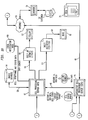
- a digital document delivery system 10 comprises a number of functional elements which combine to provide a system for electronically delivering documents to a recipient which would typically otherwise be generated in hard copy form.
- a digital computer 12 is shown which in many applications may be a mainframe computer of the legacy type commonly used for generating customer billing.
- This computer generates a print data stream 14 which typically represents a stream of customer bills or the like.
- This print data stream is presented to a print stream separator 16.
- the print stream separator also receives customer preference data forming part of a customer preference file 18 via data path 19.
- the customer preference file forms part of the customer preference database 20 for all of the customers.
- this customer database contains information concerning the customers of a company which periodically generates bills to its customers.
- This information typically includes customer account information, mail address information, electronic mail (e-mail) address, and other demographic information concerning the customer (e.g., age, sex, hobbies, occupation) which may be relevant for purposes of generating billing or insert information.
- the information relevant to deciding whether a specific customer desires electronic delivery of documents, and, if so, the demographic information relevant to secondary document selection is transferred to the print separator via data path 19.
- the print stream separator receives this information along with the print data stream 14 and determines which print data should be sent to a high speed printer 22 via hard copy output data stream 24 and which information should be presented to an electronic inserter 26.
- the print data sent to the electronic inserter includes an electronic print stream 25 representing the primary document to be electronically delivered.
- the print data also includes electronic mail run data in a specific format known as Electronic Mail Run Data File Specification (EMRDF) by means of an electronic output data stream 28. This data contains information concerning secondary documents to be associated with the primary document, with the secondary document data based upon the specific customer preference file.
- EMRF Electronic Mail Run Data File Specification
- the electronic inserter also receives customer account information and general customer information via data path 30 which forms part of the customer preference file 18.
- the account information contains general customer information, such as postal mailing addresses, e-mail addresses, bank account information and the like. It is also directly transferred from the customer preference database to the electronic inserter via data path 30. Of course, other information could be included, such as customer facsimile number, beeper number and the like for purposes of primary document notification.
- the electronic inserter performs a function similar to that performed by inserting systems that generate inserts to accompany customer bills when bills are generated in hard copy.
- the electronic inserter also receives information from a job set-up application module 32 which contains information concerning the types of inserts which are available for insertion by the electronic inserter and the electronic slot location for these inserts.
- This information concerning the specific job is known as job set-up data and contains information concerning hypertext links to electronic locations where such insert information is available.
- the electronic inserter need not actually generate the specific insert information to accompany the customer bill, but, rather, need only include the electronic link to such information for ultimate presentation to the customer in an electronic form.
- accompanying a customer utility bill might be one or more links which when clicked upon in a browser, such as the Netscape Navigator TM browser or Internet Explorer TM browser, would cause the user to connect to that link for presentation of specific insert information, which may be an advertisement, informational data or the like.
- the electronic inserter 26 thus performs a function analogous to a hard copy inserting system but without the need for electronically generating an analogous electronic copy of each insert but rather electronically generating information regarding a link for obtaining such information when the customer desires to view it.
- the output of the electronic inserter is typically a file in AFP format. This output is presented on data path 34 of the electronic inserter. In this way, the file structure for the bill is in the same format as that which would be presented if print output were to be generated. Of course, other file formats could be used.
- the electronic inserter communicates with a router instruction processor (RIP) 36.
- the RIP communicates with the electronic inserter via communication path 38 so as to send status information to the electronic inserter as well as to receive bill requests (BR) from the electronic inserter.
- the bill request instructs the RIP to generate a bill request via communication path 40 to a bill processing server (BPS) 42.
- BPS bill processing server
- the bill processing server also communicates via communication path 40 with the RIP to send bill status information to the RIP.
- Information regarding secondary documents to be associated with the primary document is also transferred to the RIP by the electronic inserter.
- the RIP sends the bill request to the BPS so as to initiate the generation of a notification to the appropriate customer.
- the BPS monitors the interactive bill presentation server (IBPS) 44 via communication path 46.
- the IBPS is responsible for receiving the electronic print data stream files via communication path 34 and processing these documents so as to be later presentable to the customer. It is only after the documents have been so pre-processed that the customer can actually view the primary document (bill) and the associated secondary documents (inserts) via a web browser over communication path 48 forming part of the Internet.
- the IBPS is also responsible for generating account information known generally as bill status update information which is communicated to the BPS. This bill status update information typically includes the customer account number, the date the bill was run, whether the bill has been loaded, whether it has been accessed by the customer, whether it has been paid by the customer and the like. Some of this information as generated by the IBPS is received via communication path 48 from the customer at his or her computer via the associated browser software 54 that is run on the customer's computer 52.
- the IBPS generates the Internet browser viewable data stream when requested by the customer by use of the @Work Technologies Internet billing system known as the WorkOutTM Internet Billing System for generating browser viewable information such as in hypertext markup language (HTML) or other browser compatible languages (now or in the future) such as Extensible Markup Language (XML) and Java.
- HTTP Hypertext markup language
- XML Extensible Markup Language
- the IBPS receives the raw print data from the electronic inserter and generates an intermediate document corresponding to this print data using the XML language, which in turn is stored and indexed in intermediate document database 61, such as an Oracle TM database.
- intermediate document database 61 such as an Oracle TM database.
- Part of the information for generating this intermediate document is derived from design and build document templates 63.
- the location for placement of secondary document links based upon the received priority of the secondary document from the EMRDF file, and the overall design of the primary document, can be stored in these templates.
- the IBPS receives the specific links (called “hotlinks") for the secondary document from the BPS.
- the BPS also acts as an electronic "traffic cop", by not allowing the IBPS to generate viewable documents unless the BPS has determined that all related documents and account information is ready for viewing.
- the BPS 42 communicates with a bill remittance and status data database 56 via communication path 58 for retrieving and updating bill remittance and status data concerning customer bills based upon information received by the bill processing server from the IBPS which in turn receives information from the customer via the Internet and the associated browser communicating with the Internet.
- the BPS furthermore is responsible for notifying the customer that a bill or other information is available for viewing via the Internet.
- the BPS performs this task in any of a plurality of manners, such as by generating an e-mail notification message which can be sent over the Internet to the customer's e-mail address as diagrammatically shown by e-mail event 60.
- e-mail notification message which can be sent over the Internet to the customer's e-mail address as diagrammatically shown by e-mail event 60.
- other methods could be used by the BPS to notify the customer, such as generating a facsimile message and sending it via facsimile to the customer's facsimile machine, by generating a beeper message for presentation to the customer's beeper; or even by generating a print mail message to be delivered to the customer's mail address.
- the BPS is also responsible for generating daily reports concerning the overall status of the digital document delivery system. These reports can be communicated to a biller module 62 via communication path 64 and may contain such information as daily account receivable reports, information concerning customers that have not paid their respective bills for a certain period of time, customers who have not viewed a bill after a certain period of time, etc.
- the BPS is responsible for generating information for presentation to an associated bank 66 via communication path 68.
- Such information would typically include daily ACH Batch Feed File information and any other information which the proprietor of the digital document delivery system wants to communicate with its associated bank.
- Table 1 ACRONYMS DEFINITIONS ACH Automated Clearing House AFP Advanced Format for Printing ASCII American Standard Code for Information Exchange CORBA Common Object Request Broker Architecture EBCDIC Extended Binary Coded Decimal Interchange Code HTML Hypertext Markup Language HTTP Hypertext Transport Protocol IIOP Internet Inter-ORB Protocol JDBC JAVA Database Connectivity MRDF Mail Run Date File ORB Object Request Broker PDF Portable Document Format SMTP Simple Mail Transfer Protocol XML Extended Markup Language
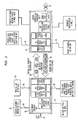
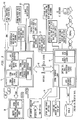
- FIGS 2 and 3 show details of the modules as well as the objects and language protocols used in the preferred example of the present invention.
- the print stream separator, electronic inserter, RIP, BPS and IBPS can be implemented on computer servers; e.g. Intel processor based servers using Microsoft Windows NT TM on UNIX TM operating systems.
- a high level object oriented language e.g. Sun Microsystems' JAVA language can be preferably used to implement the specific instructions for performing above-described tasks.
- Table 2 MODULE FUNCTION Enrollment Application Module 27 Capture customer account number, full name of customer, email address of customer, checking account number, customer's account bank name, bank routing number, WEB password Print Stream Separator 16 Based on customer account number, split out documents destined by digital delivery, send these documents as AFP file.
- Electronic Inserter 26 Get data from Job Setup Module 32, customer preference file from customer preference database 20, print stream separator 16 and EMRDF output, compose bill request objects (BR), receive status messages from RIP, control AFP feed to IBPS.
- Job Setup Application 32 Produce file of inserts in the form of hotlinks that are logically assigned to physical inserter bins.
- Router Instruction Processor (RIP) 36 Service incoming requests from multiple clients (Els), route requests to FAX, EMAIL, WEB, LOCAL PRINT, and PAGER, issue notifications based on status received, process status back to clients.
- Database Account 56 Store remittance data, bill data, and status data for digital bills.
- Bill Processing Server (BPS) 42 Save and retrieve bill data to the database, service CORBA requests for hotlinks from IBPS, process bill status messages from IBPS back to the RIP, issue reports and initiate payments feeds.
- Interactive Bill Present Server (IBPS) 44 Process interactive events performed on the bill by customers, render HTML to customers based on downloaded servlets and stored XML rules, design document templates.
- the overall operation of the digital document delivery system is to generate a print stream of data, typically in a format compatible with that used in current hard copy printer print stream data, such as in the AFP file.
- This information is generated via an electronic inserter which receives data concerning a customer's bill as well as inserts to be presented in that customer's bill based upon the associated customer's preference file.
- This information is communicated to an interactive bill presentation server which takes the information and generates an output (based upon pre-processed information and downloaded servlets concerning the design of the bill) which is compatible for viewing such information over the Internet by means of browser software executed on the customer's personal computer so as to generate screens of information which look essentially similar to a hard copy bill and associated inserts that the customer would receive had the bill been generated by traditional print means.
- an interactive bill presentation server which takes the information and generates an output (based upon pre-processed information and downloaded servlets concerning the design of the bill) which is compatible for viewing such information over the Internet by means of browser software executed on the customer's personal computer so as to generate screens of information which look essentially similar to a hard copy bill and associated inserts that the customer would receive had the bill been generated by traditional print means.
- FIGs 1A and 1B This is shown diagrammatically in Figures 1A and 1B as bill 70 with its associated inserts.
- the interactive bill presentation server is under the control of the bill processing server which, in turn, is responsible for updating associated account database that contains information concerning the status of bills, payments thereof, etc., by the associated customer, as well as for notifying the customer of an existence of a bill for viewing via a web browser.
- the bill processing server communicates with a router instruction processor which interacts with the electronic inserter, as well as informing the bill processing server of the generation of an electronic print stream associated with a bill and associated inserts for presentation to the interactive bill presentation server.
- the interactive bill presentation server receives instructions from the customer via the Internet which, in turn, are communicated to the bill processing server for updating bill remittance data and the like, upon the customer indicating his or her desire to pay an associated bill received electronically. Bills are only made available to a customer when all necessary information for viewing has been pre-processed.
- An enrollment application module is also made available to prospective/current customers to allow them to create/update information in their customer preference file.
- the overall result of the present digital document delivery system and method is an electronic analog of the traditional hard copy printed bills generated by traditional high speed printer and mail inserting systems and associated computers that instruct such systems with regard to generating bills and associated inserts.
- the present invention eliminates the paper associated with traditional print systems, provides an electronic analog to the bill received so that the bill format is familiar to the customer, provides easy means for the customer to pay such bills, as well as to view associated inserts having links sent with the bill.
- the overall digital document delivery system and method allows the proprietor of such an overall system to monitor the activities of its customers with respect to when they view their bills, what inserts they retrieve, when they pay their bill(s), etc., thereby giving the proprietor of the digital document delivery system better information concerning its customer base, their likes and dislikes, based upon their viewing or not viewing associated insert information, and the like.
- This allows the proprietor of the digital document delivery system to modify the customer preference file for associated customers so as to present to such customers inserts which would be more desirable for viewing by that customer, and thereby enhancing the overall delivery of bills and inserts to its customers.
- any electronic communication means including an Intranet or any other form of electronic delivery which is viewable by a customer with the customer's associated viewing equipment (which would typically be a browser program run on a personal computer), could be utilized for presentation and receipt of electronic information to the associated customers of the proprietor of the digital document delivery system.
- the digital document delivery system provides a primary document (such as a bill) and associated secondary documents (such as inserts) for each identified user (customer) having an associated customer preference file.
- the selection of secondary documents can be based upon information in a customer's preference file.
- the customer can communicate with the digital document delivery system, obtain information therefrom, and perform tasks therewith (e.g., pay a bill).
Landscapes
- Business, Economics & Management (AREA)
- Engineering & Computer Science (AREA)
- Accounting & Taxation (AREA)
- Theoretical Computer Science (AREA)
- Finance (AREA)
- General Physics & Mathematics (AREA)
- Development Economics (AREA)
- Physics & Mathematics (AREA)
- General Business, Economics & Management (AREA)
- Strategic Management (AREA)
- Economics (AREA)
- General Health & Medical Sciences (AREA)
- Artificial Intelligence (AREA)
- Audiology, Speech & Language Pathology (AREA)
- Computational Linguistics (AREA)
- Health & Medical Sciences (AREA)
- General Engineering & Computer Science (AREA)
- Marketing (AREA)
- Information Transfer Between Computers (AREA)
Claims (17)
- Digitales-Dokument-Zustellungssystem zur Präsentation einer elektronischen Rechnung für einen elektronisch betrachtenden Benutzer, wobei das Digitales-Dokument-Zustellungssystem umfasst:A) einen elektronischen Einfüger (26), der eine elektronische Druckstromausgabe (34) mit einer Information erzeugt, die Benutzern des Systems zu präsentieren ist, wobei die Information eine Information bezüglich wenigstens eines Primärdokumentes, das die Rechnung enthält, und eine Information mit Bezug zu N Sekundärdokumenten enthält, die mit dem Primärdokument zu verknüpfen sind, wobei N eine ganze Zahl größer als Null ist;B) einen Rechnungsverarbeitungsserver (42), der mit dem elektronischen Einfüger (26) kommuniziert, wobei der Rechnungsverarbeitungsserver mit einer verknüpften Kontendatenbank (56) zum Aufrechterhalten einer Information mit Bezug zu dem an den Benutzer gelieferten Primärdokument und irgendeiner Antwort von dem Benutzer bezüglich des Primärdokumentes interagiert;C) einen interaktiven Rechnungspräsentationsserver (44) zum Empfang des elektronischen Druckstroms von dem elektronischen Einfüger (26), zum Erzeugen elektronisch betrachtbarer Daten entsprechend dem Primärdokument als auch zum Präsentieren einer elektronischen Information, die einen Bezug zu irgendwelchen verknüpften Sekundärdokumenten hat, wobei der interaktive Rechnungspräsentationsserver mit dem Rechnungsverarbeitungsserver und mit dem Benutzer kommuniziert, einschließlich eines Empfangs einer Antwortinformation von dem Benutzer zur Präsentation an den Rechnungsverarbeitungsserver; undD) ein Elektronische-Eintragung-Anwendungsmodul (27) zum Empfang einer Information von einem voraussichtlichen oder aktuellen Benutzer, um eine Benutzerpräferenzdatei zu erschaffen oder zu modifizieren, wobei die Information mit Bezug zu einem Benutzer, wie in der Benutzerpräferenzdatei aufgezeichnet, durch den elektronischen Einfüger (26) verwendet wird, um jedes Sekundärdokument zu bestimmen, wenn es eines gibt, das mit einem Primärdokument eines bestimmten Benutzers zu verknüpfen ist;wobei wenigstens manche der Daten in der Benutzerpräferenzdatei an einen Druckstromseparator (16) kommuniziert werden, wobei der Druckstromseparator (16) einen Eingang zum Empfang von Druckstromdaten hat und ausgestaltet ist zum Trennen der Druckstromdaten in einen Physikalische-Zustellung-Druckstrom oder einen Elektronische-Zustellung-Druckstrom auf Grundlage der Daten von der Benutzerpräferenzdatei (18), wodurch der Elektronische-Zustellung-Druckstrom dem elektronischen Einfüger (26) präsentiert wird, wobei der Druckstromseparator (16) ferner ausgestaltet ist zum Bereitstellen einer Elektronische-Post-Verlaufsdatendateispezifizierung, die mit dem Elektronische-Zustellung-Druckstrom verknüpft ist, zur Präsentation an den elektronischen Einfüger (26), um anzugeben, welche Sekundärdokumente erzeugt werden sollen, als Teil des ausgegebenen elektronischen Druckstroms des elektronischen Einfügers, und wobei der Druckstromseparator den Physikalische-Zustellung-Druckstrom zur Erzeugung einer Hardkopie-Druckausgabe für diese Benutzer erzeugt, die wünschen, Hardkopie-Primärdokumente zu empfangen.
- Digitales-Dokument-Zustellungssystem wie in Anspruch 1 definiert, wobei jeder Benutzer eine Elektronische-Post-Adresse hat, und wobei der Rechnungsverarbeitungsserver einen spezifischen Benutzer informiert, dass ein elektronisches Dokument zur Betrachtung verfügbar ist, durch Erzeugen einer Elektronische-Post-Nachricht, die an die Elektronische-Post-Adresse des spezifischen Benutzers gerichtet ist.
- Digitales-Dokument-Zustellungssystem wie in Anspruch 1 definiert, wobei der Rechnungsverarbeitungsserver ferner eine Einrichtung hat zum Erzeugen einer Berichtinformation mit Bezug zu der täglichen Aktivität der elektronischen Primärdokumente, die durch zugehörige Benutzer betrachtet sind, als auch irgendwelchen Antworten für diese Benutzer.
- Digitales-Dokument-Zustellungssystem wie in Anspruch 3 definiert, wobei der Rechnungsverarbeitungsserver ferner eine Einrichtung umfasst zum Erzeugen periodischer Daten mit Bezug zu den Aktivitäten des Benutzers zur Präsentation an eine Institution eines Dritten.
- Digitales-Dokument-Zustellungssystem wie in Anspruch 1 definiert, wobei der interaktive Rechnungspräsentationsserver das Benutzer-betrachtbare Primärdokument erzeugt und mit jeder zugehörigen Sekundärdokument-Information verknüpft, im Hypertext-Markup-Sprachformat.
- Digitales-Dokument-Zustellungssystem wie in Anspruch 1 definiert, wobei der elektronische Einfüger ferner Jobaufbaudaten von einem zugehörigen Jobaufbau-Anwendungsmodul empfängt, was eine Information bezüglich des Benutzers enthält.
- Digitales-Dokument-Zustellungssystem wie in Anspruch 6 definiert, wobei der elektronische Einfüger eine Steuerund Statusinformation mit Bezug zu dem Betrieb des elektronischen Einfügers erzeugt, und wobei das Digitales-Dokument-Zustellungssystem ferner ein Steuerund Berichtmodul zum Empfang der Steuer- und Statusinformation von dem elektronischen Einfüger umfasst.
- Digitales-Dokument-Zustellungssystem wie in Anspruch 1 definiert, wobei die Elektronische-Post-Datenverlaufsdateispezifizierung, die mit dem Elektronische-Zustellung-Druckstrom verknüpft ist, zur Präsentation an den elektronischen Einfüger (26), relative Eigenschaften von Sekundärdokumenten angibt, die als Teil des ausgegebenen elektronischen Druckstroms des elektronischen Einfügers (26) zu erzeugen sind.
- Digitales-Dokument-Zustellungssystem wie in Anspruch 1 definiert, wobei die durch den elektronischen Einfüger erzeugten Daten in dem AFP-Format sind.
- Digitales-Dokument-Zustellungssystem wie in Anspruch 1 definiert, wobei der Rechnungsverarbeitungsserver mit dem elektronischen Einfüger über einen Router-Anweisungsprozessor kommuniziert, der wiederum Befehle von dem elektronischen Einfüger bezüglich Dokumenten empfängt, die an Benutzer lieferbar sein sollen, und
wobei der Router-Anweisungsprozessor diese Befehle verarbeitet und diese Befehle an den Rechnungsverarbeitungsserver kommuniziert. - Digitales-Dokument-Zustellungssystem wie in Anspruch 1 definiert, wobei der Rechnungsverarbeitungsserver ferner eine Einrichtung hat zum Erzeugen einer an den Benutzer gerichteten Benachrichtigungsnachricht zum Informieren des Benutzers über die Existenz von wenigstens einem elektronischen Primärdokument zum Betrachten durch den Benutzer.
- Digitales-Dokument-Zustellungssystem wie in Anspruch 11 definiert, wobei die durch den interaktiven Rechnungspräsentationsserver erzeugten, elektronisch betrachtbaren Daten in einer Form zum Betrachten durch ein Browser-Programm sind.
- Verfahren zum Zustellen digitaler Dokumente zur Präsentation einer elektronischen Rechnung für einen elektronisch betrachtenden Benutzer, mit den Schritten zum:A) Erzeugen einer elektronischen Druckstromausgabe mit einer Information, die Benutzern zu präsentieren ist,
wobei die Information eine Information bezüglich wenigstens eines Primärdokumentes, das die Rechnung enthält, und eine Information mit Bezug zu N Sekundärdokumenten enthält, die mit dem Primärdokument zu verknüpfen sind, wobei N eine ganze Zahl größer als Null ist;B) Interagieren mit einer verknüpften Kontendatenbank (56) zum Aufrechterhalten einer Information mit Bezug zu dem an den Benutzer gelieferten Primärdokument und irgendeiner Antwort von dem Benutzer bezüglich des Primärdokumentes;C) Empfangen des elektronischen Druckstroms zum Erzeugen elektronisch betrachtbarer Daten entsprechend dem Primärdokument als auch zum Präsentieren einer elektronischen Information, die einen Bezug zu irgendwelchen verknüpften Sekundärdokumenten hat, und Kommunizieren mit dem Benutzer, einschließlich eines Empfangs einer Antwortinformation von dem Benutzer zum Modifizieren der Kontendatenbank;D) Eintragen von Benutzern und Empfangen einer Information, um eine Benutzerpräferenzdatei (18) zu erschaffen oder zu modifizieren, wobei die Information mit Bezug zu Benutzerpräferenzen in der Benutzerpräferenzdatei (18) aufgezeichnet wird, und Verwenden der Information, um zu bestimmen, welche Sekundärdokumente, wenn es irgendwelche gibt, mit einem Primärdokument eines bestimmten Benutzers zu verknüpfen sind, als Teil des ausgegebenen elektronischen Druckstroms; undE) Verwenden wenigstens mancher der Daten in der Benutzerpräferenzdatei (18), um zu identifizieren, ob bestimmte Benutzer elektronische Primärdokumente oder physikalische Primärdokumente empfangen möchten;wobei der elektronische Druckstrom in einen Physikalische-Zustellung-Druckstrom oder einen elektronischen Druckstrom auf Grundlage der Daten von der Benutzerpräferenzdatei (18) aufteilt wird; und eine Electronic Mail Run Data File Specification bereitgestellt wird, die mit dem Elektronische-Zustellung-Druckstrom verknüpft wird, um anzugeben, welche Sekundärdokumente erzeugt werden sollen, als Teil des ausgegebenen elektronischen Druckstroms; und ein Physikalische-Zustellung-Druckstrom zur Erzeugung einer Hardkopie-Druckausgabe für diese Benutzer erzeugt wird, die wünschen, Hardkopie-Primärdokumente zu empfangen. - Verfahren wie in Anspruch 13 definiert, wobei jeder Benutzer eine Elektronische-Post-Adresse hat, und wobei das Verfahren ferner den Schritt umfasst zum Informieren eines spezifischen Benutzers, dass ein elektronisches Dokument zur Betrachtung verfügbar ist, durch Erzeugen einer Elektronische-Post-Nachricht, die an die Elektronische-Post-Adresse des spezifischen Benutzers gerichtet ist.
- Verfahren wie in Anspruch 13 definiert, wobei das Verfahren ferner den Schritt umfasst zum Erzeugen einer Berichtinformation mit Bezug zu der täglichen Aktivität der elektronischen Primärdokumente, die durch zugehörige Benutzer betrachtet sind, als auch irgendwelchen Antworten für diese Benutzer.
- Verfahren wie in Anspruch 13 definiert, wobei die elektronisch betrachtbaren Daten und die elektronische Information, mit Bezug zu irgendeinem zugehörigen Sekundärdokument, im Hypertext-Markup-Sprachformat ist.
- Verfahren wie in Anspruch 13 definiert, mit ferner dem Schritt zum Erzeugen einer Benachrichtigungsnachricht, die an den Benutzer gerichtet ist, zum Informieren des Benutzers über die Existenz von wenigstens einem elektronischen Primärdokument zur Betrachtung durch den Benutzer.
Applications Claiming Priority (2)
| Application Number | Priority Date | Filing Date | Title |
|---|---|---|---|
| US222196 | 1981-01-02 | ||
| US09/222,196 US6725429B1 (en) | 1998-12-29 | 1998-12-29 | System and method for presenting and processing documents on the internet |
Publications (3)
| Publication Number | Publication Date |
|---|---|
| EP1016997A2 EP1016997A2 (de) | 2000-07-05 |
| EP1016997A3 EP1016997A3 (de) | 2002-03-13 |
| EP1016997B1 true EP1016997B1 (de) | 2009-07-22 |
Family
ID=22831275
Family Applications (1)
| Application Number | Title | Priority Date | Filing Date |
|---|---|---|---|
| EP99126157A Expired - Lifetime EP1016997B1 (de) | 1998-12-29 | 1999-12-29 | System und Verfahren zur Präsentation und Bearbeitung von Dokumenten im Internet |
Country Status (4)
| Country | Link |
|---|---|
| US (2) | US6725429B1 (de) |
| EP (1) | EP1016997B1 (de) |
| CA (1) | CA2293764C (de) |
| DE (1) | DE69941145D1 (de) |
Families Citing this family (21)
| Publication number | Priority date | Publication date | Assignee | Title |
|---|---|---|---|---|
| US6910184B1 (en) * | 1997-07-25 | 2005-06-21 | Ricoh Company, Ltd. | Document information management system |
| CA2293203A1 (en) | 1998-12-29 | 2000-06-29 | Pitney Bowes Inc. | Bill processing server and method for a digital document delivery system |
| US6483599B1 (en) * | 1998-12-29 | 2002-11-19 | Pitney Bowes Inc. | System and method for separating a print stream into an electronic document print stream and a physical document print stream |
| US6829591B1 (en) * | 1999-04-12 | 2004-12-07 | Pitney Bowes Inc. | Router instruction processor for a digital document delivery system |
| US8311946B1 (en) * | 1999-10-15 | 2012-11-13 | Ebrary | Method and apparatus for improved information transactions |
| US7536561B2 (en) | 1999-10-15 | 2009-05-19 | Ebrary, Inc. | Method and apparatus for improved information transactions |
| US7124354B1 (en) * | 2000-03-24 | 2006-10-17 | Hewlett-Packard Development Company, L.P. | Enterprise application transactions as shared active documents |
| US6656103B1 (en) * | 2000-11-28 | 2003-12-02 | Vijuk Equipment, Inc. | Informational item forming machine and method |
| US7421650B2 (en) * | 2001-05-01 | 2008-09-02 | General Electric Company | Method and system for publishing electronic media to a document management system in various publishing formats independent of the media creation application |
| CA2355785C (en) * | 2001-08-16 | 2010-06-01 | Ibm Canada Limited-Ibm Canada Limitee | Electronic presentation of invoices using a trusted document repository |
| US20030115169A1 (en) * | 2001-12-17 | 2003-06-19 | Hongzhuan Ye | System and method for management of transcribed documents |
| US20040064789A1 (en) * | 2002-07-10 | 2004-04-01 | Csg Systems, Inc. | System and method for generating invoices using a markup language |
| US20050004893A1 (en) * | 2003-07-02 | 2005-01-06 | Sangroniz James M. | Workflow management devices and systems, and workflow assignment and management methods |
| CA2438951A1 (en) * | 2003-08-29 | 2005-02-28 | Bob Richards | Feeder system and method |
| US20050187806A1 (en) * | 2004-02-20 | 2005-08-25 | Idt Corporation | Global animation studio |
| US7258277B2 (en) * | 2004-12-17 | 2007-08-21 | Pitney Bowes Inc. | Method for enhancing mail piece processing system |
| US7433869B2 (en) * | 2005-07-01 | 2008-10-07 | Ebrary, Inc. | Method and apparatus for document clustering and document sketching |
| US20070214078A1 (en) * | 2005-09-28 | 2007-09-13 | Transpayment, Inc. | Bill payment apparatus and method |
| US20090006170A1 (en) * | 2007-06-26 | 2009-01-01 | Wachovia Corporation | Production center system |
| US20090244600A1 (en) * | 2007-11-27 | 2009-10-01 | Todd Haycock | Billing and remittance payment system |
| US10600030B2 (en) * | 2011-01-06 | 2020-03-24 | Pitney Bowes Inc. | Systems and methods for providing secure document delivery and management including scheduling |
Family Cites Families (47)
| Publication number | Priority date | Publication date | Assignee | Title |
|---|---|---|---|---|
| US6289322B1 (en) | 1998-03-03 | 2001-09-11 | Checkfree Corporation | Electronic bill processing |
| US5383113A (en) | 1991-07-25 | 1995-01-17 | Checkfree Corporation | System and method for electronically providing customer services including payment of bills, financial analysis and loans |
| EP0692119A1 (de) | 1992-10-22 | 1996-01-17 | American Express Travel Related Services Company, Inc. | Automatisches zentralisiertes abrechnungssystem und -verfahren |
| US5479411A (en) | 1993-03-10 | 1995-12-26 | At&T Corp. | Multi-media integrated message arrangement |
| US5513126A (en) | 1993-10-04 | 1996-04-30 | Xerox Corporation | Network having selectively accessible recipient prioritized communication channel profiles |
| US5465206B1 (en) | 1993-11-01 | 1998-04-21 | Visa Int Service Ass | Electronic bill pay system |
| US5493692A (en) | 1993-12-03 | 1996-02-20 | Xerox Corporation | Selective delivery of electronic messages in a multiple computer system based on context and environment of a user |
| US5768521A (en) * | 1994-05-16 | 1998-06-16 | Intel Corporation | General purpose metering mechanism for distribution of electronic information |
| US5696965A (en) * | 1994-11-03 | 1997-12-09 | Intel Corporation | Electronic information appraisal agent |
| CA2168484C (en) * | 1995-03-13 | 2000-12-05 | Mehmet Reha Civanlar | Client-server architecture using internet and public switched networks |
| US5710884A (en) * | 1995-03-29 | 1998-01-20 | Intel Corporation | System for automatically updating personal profile server with updates to additional user information gathered from monitoring user's electronic consuming habits generated on computer during use |
| US5832460A (en) | 1995-06-02 | 1998-11-03 | International Business Machines Corporation | Method and system for bill presentation and payment reconciliation |
| US6430282B1 (en) * | 1995-09-29 | 2002-08-06 | Nortel Networks Limited | Methods and apparatus for originating voice calls |
| US5699528A (en) * | 1995-10-31 | 1997-12-16 | Mastercard International, Inc. | System and method for bill delivery and payment over a communications network |
| US6836763B1 (en) * | 1995-12-29 | 2004-12-28 | Csg Systems, Inc. | Billing system and method |
| US5761650A (en) | 1995-12-29 | 1998-06-02 | Csg Systems, Inc. | Billing system and method |
| US5802498A (en) | 1996-01-11 | 1998-09-01 | Comesanas; Jorge | Computer-aided prepaid transmittal charge billing system |
| US5815665A (en) * | 1996-04-03 | 1998-09-29 | Microsoft Corporation | System and method for providing trusted brokering services over a distributed network |
| US5956693A (en) | 1996-07-19 | 1999-09-21 | Geerlings; Huib | Computer system for merchant communication to customers |
| US5845267A (en) * | 1996-09-06 | 1998-12-01 | At&T Corp | System and method for billing for transactions conducted over the internet from within an intranet |
| CA2267951C (en) | 1996-10-09 | 2003-12-30 | Visa International Service Association | Electronic statement presentment system |
| US6968319B1 (en) * | 1996-10-18 | 2005-11-22 | Microsoft Corporation | Electronic bill presentment and payment system with bill dispute capabilities |
| US5790790A (en) | 1996-10-24 | 1998-08-04 | Tumbleweed Software Corporation | Electronic document delivery system in which notification of said electronic document is sent to a recipient thereof |
| US6285999B1 (en) * | 1997-01-10 | 2001-09-04 | The Board Of Trustees Of The Leland Stanford Junior University | Method for node ranking in a linked database |
| US5961593A (en) * | 1997-01-22 | 1999-10-05 | Lucent Technologies, Inc. | System and method for providing anonymous personalized browsing by a proxy system in a network |
| US6006205A (en) * | 1997-02-28 | 1999-12-21 | Walker Asset Management Limited Partnership | Credit card billing method and system |
| US6058170A (en) * | 1997-03-10 | 2000-05-02 | At&T Corp | Telephone billing with summary information |
| US6278465B1 (en) * | 1997-06-23 | 2001-08-21 | Sun Microsystems, Inc. | Adaptive font sizes for network browsing |
| US6044362A (en) | 1997-09-08 | 2000-03-28 | Neely; R. Alan | Electronic invoicing and payment system |
| US6820094B1 (en) * | 1997-10-08 | 2004-11-16 | Scansoft, Inc. | Computer-based document management system |
| US6047268A (en) * | 1997-11-04 | 2000-04-04 | A.T.&T. Corporation | Method and apparatus for billing for transactions conducted over the internet |
| US6253229B1 (en) * | 1997-11-19 | 2001-06-26 | International Business Machines Corporation | Hotspots only interfaces to links in hypertext document pages in network display stations |
| US6078907A (en) * | 1998-02-18 | 2000-06-20 | Lamm; David | Method and system for electronically presenting and paying bills |
| US6282552B1 (en) * | 1998-02-27 | 2001-08-28 | Daleen Technologies, Inc. | Customizable electronic invoice with optional security |
| US6304857B1 (en) * | 1998-06-08 | 2001-10-16 | Microsoft Corporation | Distributed electronic billing system with gateway interfacing biller and service center |
| US6279013B1 (en) * | 1998-07-20 | 2001-08-21 | Xerox Corporation | Interactive newspaper |
| US6925595B1 (en) * | 1998-08-05 | 2005-08-02 | Spyglass, Inc. | Method and system for content conversion of hypertext data using data mining |
| US6256624B1 (en) * | 1998-08-17 | 2001-07-03 | Qwest Communications International, Inc. | Computing system for operating report production facilities |
| US6442588B1 (en) * | 1998-08-20 | 2002-08-27 | At&T Corp. | Method of administering a dynamic filtering firewall |
| US6145031A (en) * | 1998-08-26 | 2000-11-07 | International Business Machines Corporation | Multiple insertion point queue to order and select elements to be processed |
| US6175823B1 (en) * | 1998-09-15 | 2001-01-16 | Amazon.Com, Inc. | Electronic gift certificate system |
| US6032134A (en) * | 1998-11-18 | 2000-02-29 | Weissman; Steven I. | Credit card billing system for identifying expenditures on a credit card account |
| US6208977B1 (en) * | 1998-12-04 | 2001-03-27 | Apogee Networks, Inc. | Accounting and billing based on network use |
| US6453162B1 (en) * | 1998-12-10 | 2002-09-17 | Nortel Networks Limited | Method and system for subscriber provisioning of wireless services |
| US6483599B1 (en) * | 1998-12-29 | 2002-11-19 | Pitney Bowes Inc. | System and method for separating a print stream into an electronic document print stream and a physical document print stream |
| US6829591B1 (en) * | 1999-04-12 | 2004-12-07 | Pitney Bowes Inc. | Router instruction processor for a digital document delivery system |
| US6928416B1 (en) * | 1999-07-07 | 2005-08-09 | Michael L. Bertash | Virtual client discount pricing |
-
1998
- 1998-12-29 US US09/222,196 patent/US6725429B1/en not_active Expired - Lifetime
-
1999
- 1999-12-23 CA CA002293764A patent/CA2293764C/en not_active Expired - Fee Related
- 1999-12-29 EP EP99126157A patent/EP1016997B1/de not_active Expired - Lifetime
- 1999-12-29 DE DE69941145T patent/DE69941145D1/de not_active Expired - Lifetime
-
2004
- 2004-03-05 US US10/794,485 patent/US20040225608A1/en not_active Abandoned
Also Published As
| Publication number | Publication date |
|---|---|
| CA2293764A1 (en) | 2000-06-29 |
| EP1016997A2 (de) | 2000-07-05 |
| EP1016997A3 (de) | 2002-03-13 |
| CA2293764C (en) | 2004-03-09 |
| US20040225608A1 (en) | 2004-11-11 |
| US6725429B1 (en) | 2004-04-20 |
| DE69941145D1 (de) | 2009-09-03 |
Similar Documents
| Publication | Publication Date | Title |
|---|---|---|
| US6725429B1 (en) | System and method for presenting and processing documents on the internet | |
| EP1016958B1 (de) | System und Verfahren um einen Druckerdatenfluss in einen elektronischen Dokumentdatenfluss und einen physischen Dokumentdatenfluss zu trennen | |
| EP0917075B2 (de) | System und Verfahren zur Massenverteilung von elektronischer und nichtelektronischer Post | |
| US20080086369A1 (en) | Method and apparatus for message campaigns | |
| US7715032B2 (en) | Bulk communications process using multiple delivery media | |
| US6934691B1 (en) | System and method for managing mail/bills through a central location | |
| EP2323323A1 (de) | System und Verfahren zur Bereitstellung redundanter Kundenkommunikationszustellung mit hybriden Zustellungskanälen | |
| EP2000983A1 (de) | Intelligente Dokumentzusammenstellung für die Postverarbeitung | |
| US6829591B1 (en) | Router instruction processor for a digital document delivery system | |
| US6429946B1 (en) | System and method for bar code recognition in an electronic printstream | |
| US20060144260A1 (en) | Mail distribution methods and apparatus | |
| US20070061224A1 (en) | Method and system for ordering and performing printing services and postal services | |
| CA2253970C (en) | System and method for electronic mass mailing | |
| WO2000068853A2 (en) | Corporate intranet banking system and method | |
| EP1016996A2 (de) | Server und Verfahren zum Verarbeiten von Rechnungen für ein System zum Ausliefern von digitalen Dokumenten | |
| WO2001020504A1 (en) | An account system | |
| JP4371410B2 (ja) | 支払情報通知システムとその方法 | |
| AU781623B2 (en) | An account system | |
| AU2003249755B2 (en) | A bulk communications process using multiple delivery media |
Legal Events
| Date | Code | Title | Description |
|---|---|---|---|
| PUAI | Public reference made under article 153(3) epc to a published international application that has entered the european phase |
Free format text: ORIGINAL CODE: 0009012 |
|
| AK | Designated contracting states |
Kind code of ref document: A2 Designated state(s): AT BE CH CY DE DK ES FI FR GB GR IE IT LI LU MC NL PT SE Kind code of ref document: A2 Designated state(s): DE FR GB |
|
| AX | Request for extension of the european patent |
Free format text: AL;LT;LV;MK;RO;SI |
|
| PUAL | Search report despatched |
Free format text: ORIGINAL CODE: 0009013 |
|
| AK | Designated contracting states |
Kind code of ref document: A3 Designated state(s): AT BE CH CY DE DK ES FI FR GB GR IE IT LI LU MC NL PT SE |
|
| AX | Request for extension of the european patent |
Free format text: AL;LT;LV;MK;RO;SI |
|
| 17P | Request for examination filed |
Effective date: 20020904 |
|
| AKX | Designation fees paid |
Free format text: DE FR GB |
|
| GRAP | Despatch of communication of intention to grant a patent |
Free format text: ORIGINAL CODE: EPIDOSNIGR1 |
|
| RIC1 | Information provided on ipc code assigned before grant |
Ipc: G06Q 30/00 20060101AFI20090212BHEP |
|
| GRAS | Grant fee paid |
Free format text: ORIGINAL CODE: EPIDOSNIGR3 |
|
| GRAA | (expected) grant |
Free format text: ORIGINAL CODE: 0009210 |
|
| AK | Designated contracting states |
Kind code of ref document: B1 Designated state(s): DE FR GB |
|
| REG | Reference to a national code |
Ref country code: GB Ref legal event code: FG4D |
|
| REF | Corresponds to: |
Ref document number: 69941145 Country of ref document: DE Date of ref document: 20090903 Kind code of ref document: P |
|
| PLBE | No opposition filed within time limit |
Free format text: ORIGINAL CODE: 0009261 |
|
| STAA | Information on the status of an ep patent application or granted ep patent |
Free format text: STATUS: NO OPPOSITION FILED WITHIN TIME LIMIT |
|
| 26N | No opposition filed |
Effective date: 20100423 |
|
| REG | Reference to a national code |
Ref country code: FR Ref legal event code: PLFP Year of fee payment: 17 |
|
| REG | Reference to a national code |
Ref country code: FR Ref legal event code: PLFP Year of fee payment: 18 |
|
| PGFP | Annual fee paid to national office [announced via postgrant information from national office to epo] |
Ref country code: GB Payment date: 20161228 Year of fee payment: 18 |
|
| PGFP | Annual fee paid to national office [announced via postgrant information from national office to epo] |
Ref country code: FR Payment date: 20161227 Year of fee payment: 18 |
|
| PGFP | Annual fee paid to national office [announced via postgrant information from national office to epo] |
Ref country code: DE Payment date: 20161229 Year of fee payment: 18 |
|
| REG | Reference to a national code |
Ref country code: DE Ref legal event code: R119 Ref document number: 69941145 Country of ref document: DE |
|
| GBPC | Gb: european patent ceased through non-payment of renewal fee |
Effective date: 20171229 |
|
| REG | Reference to a national code |
Ref country code: FR Ref legal event code: ST Effective date: 20180831 |
|
| PG25 | Lapsed in a contracting state [announced via postgrant information from national office to epo] |
Ref country code: FR Free format text: LAPSE BECAUSE OF NON-PAYMENT OF DUE FEES Effective date: 20180102 Ref country code: DE Free format text: LAPSE BECAUSE OF NON-PAYMENT OF DUE FEES Effective date: 20180703 |
|
| PG25 | Lapsed in a contracting state [announced via postgrant information from national office to epo] |
Ref country code: GB Free format text: LAPSE BECAUSE OF NON-PAYMENT OF DUE FEES Effective date: 20171229 |