EP1017561B1 - Verfahren sowie gerät zum einlegen von früchten - Google Patents
Verfahren sowie gerät zum einlegen von früchten Download PDFInfo
- Publication number
- EP1017561B1 EP1017561B1 EP97934198A EP97934198A EP1017561B1 EP 1017561 B1 EP1017561 B1 EP 1017561B1 EP 97934198 A EP97934198 A EP 97934198A EP 97934198 A EP97934198 A EP 97934198A EP 1017561 B1 EP1017561 B1 EP 1017561B1
- Authority
- EP
- European Patent Office
- Prior art keywords
- fruit
- tank
- infusing
- juice
- sugar
- Prior art date
- Legal status (The legal status is an assumption and is not a legal conclusion. Google has not performed a legal analysis and makes no representation as to the accuracy of the status listed.)
- Expired - Lifetime
Links
- 235000013399 edible fruits Nutrition 0.000 title claims description 167
- 238000000034 method Methods 0.000 title claims description 67
- 240000001717 Vaccinium macrocarpon Species 0.000 claims description 75
- 235000021019 cranberries Nutrition 0.000 claims description 69
- 235000000346 sugar Nutrition 0.000 claims description 59
- 238000001802 infusion Methods 0.000 claims description 51
- 235000011389 fruit/vegetable juice Nutrition 0.000 claims description 43
- 235000015203 fruit juice Nutrition 0.000 claims description 39
- 239000007788 liquid Substances 0.000 claims description 39
- XLYOFNOQVPJJNP-UHFFFAOYSA-N water Substances O XLYOFNOQVPJJNP-UHFFFAOYSA-N 0.000 claims description 34
- 238000012545 processing Methods 0.000 claims description 22
- 240000000851 Vaccinium corymbosum Species 0.000 claims description 20
- 235000003095 Vaccinium corymbosum Nutrition 0.000 claims description 20
- 235000017537 Vaccinium myrtillus Nutrition 0.000 claims description 20
- 235000021014 blueberries Nutrition 0.000 claims description 20
- 230000003204 osmotic effect Effects 0.000 claims description 19
- 238000001035 drying Methods 0.000 claims description 14
- 230000000694 effects Effects 0.000 claims description 11
- 240000009088 Fragaria x ananassa Species 0.000 claims description 10
- 230000018044 dehydration Effects 0.000 claims description 10
- 238000006297 dehydration reaction Methods 0.000 claims description 10
- 235000021012 strawberries Nutrition 0.000 claims description 10
- 238000012546 transfer Methods 0.000 claims description 9
- 241000167854 Bourreria succulenta Species 0.000 claims description 8
- 239000006227 byproduct Substances 0.000 claims description 8
- 235000019693 cherries Nutrition 0.000 claims description 8
- 235000021022 fresh fruits Nutrition 0.000 claims description 8
- 235000021016 apples Nutrition 0.000 claims description 7
- 238000003825 pressing Methods 0.000 claims description 7
- 235000006040 Prunus persica var persica Nutrition 0.000 claims description 6
- 235000021013 raspberries Nutrition 0.000 claims description 6
- 230000003750 conditioning effect Effects 0.000 claims description 3
- 238000002156 mixing Methods 0.000 claims description 3
- 244000144730 Amygdalus persica Species 0.000 claims description 2
- 108010059820 Polygalacturonase Proteins 0.000 claims description 2
- 241000219094 Vitaceae Species 0.000 claims description 2
- 108010093305 exopolygalacturonase Proteins 0.000 claims description 2
- 235000021021 grapes Nutrition 0.000 claims description 2
- 238000009428 plumbing Methods 0.000 claims description 2
- 238000005086 pumping Methods 0.000 claims 2
- 244000070406 Malus silvestris Species 0.000 claims 1
- 244000235659 Rubus idaeus Species 0.000 claims 1
- 230000003247 decreasing effect Effects 0.000 claims 1
- 239000008369 fruit flavor Substances 0.000 claims 1
- 235000021028 berry Nutrition 0.000 description 14
- 239000000047 product Substances 0.000 description 14
- 235000020374 simple syrup Nutrition 0.000 description 8
- 239000000499 gel Substances 0.000 description 7
- 239000000243 solution Substances 0.000 description 7
- 235000020357 syrup Nutrition 0.000 description 7
- 239000006188 syrup Substances 0.000 description 7
- 240000007087 Apium graveolens Species 0.000 description 6
- 235000015849 Apium graveolens Dulce Group Nutrition 0.000 description 6
- 235000010591 Appio Nutrition 0.000 description 6
- 235000011299 Brassica oleracea var botrytis Nutrition 0.000 description 6
- 235000017647 Brassica oleracea var italica Nutrition 0.000 description 6
- 240000003259 Brassica oleracea var. botrytis Species 0.000 description 6
- 241000220225 Malus Species 0.000 description 6
- 235000012545 Vaccinium macrocarpon Nutrition 0.000 description 6
- 235000002118 Vaccinium oxycoccus Nutrition 0.000 description 6
- 239000002253 acid Substances 0.000 description 6
- KRKNYBCHXYNGOX-UHFFFAOYSA-N citric acid Chemical compound OC(=O)CC(O)(C(O)=O)CC(O)=O KRKNYBCHXYNGOX-UHFFFAOYSA-N 0.000 description 6
- 235000004634 cranberry Nutrition 0.000 description 6
- 240000007651 Rubus glaucus Species 0.000 description 5
- 239000012530 fluid Substances 0.000 description 5
- 239000001814 pectin Substances 0.000 description 5
- 229920001277 pectin Polymers 0.000 description 5
- 235000010987 pectin Nutrition 0.000 description 5
- 240000005809 Prunus persica Species 0.000 description 4
- 229930006000 Sucrose Natural products 0.000 description 4
- CZMRCDWAGMRECN-UGDNZRGBSA-N Sucrose Chemical compound O[C@H]1[C@H](O)[C@@H](CO)O[C@@]1(CO)O[C@@H]1[C@H](O)[C@@H](O)[C@H](O)[C@@H](CO)O1 CZMRCDWAGMRECN-UGDNZRGBSA-N 0.000 description 4
- RAHZWNYVWXNFOC-UHFFFAOYSA-N Sulphur dioxide Chemical compound O=S=O RAHZWNYVWXNFOC-UHFFFAOYSA-N 0.000 description 4
- 238000010923 batch production Methods 0.000 description 4
- 235000013569 fruit product Nutrition 0.000 description 4
- 239000005720 sucrose Substances 0.000 description 4
- 238000001704 evaporation Methods 0.000 description 3
- 230000008020 evaporation Effects 0.000 description 3
- 239000000796 flavoring agent Substances 0.000 description 3
- 235000019634 flavors Nutrition 0.000 description 3
- 235000013305 food Nutrition 0.000 description 3
- 239000000203 mixture Substances 0.000 description 3
- 239000000049 pigment Substances 0.000 description 3
- 238000013517 stratification Methods 0.000 description 3
- 150000008163 sugars Chemical class 0.000 description 3
- 235000013311 vegetables Nutrition 0.000 description 3
- 238000010792 warming Methods 0.000 description 3
- 244000000626 Daucus carota Species 0.000 description 2
- 235000002767 Daucus carota Nutrition 0.000 description 2
- 229930091371 Fructose Natural products 0.000 description 2
- 239000005715 Fructose Substances 0.000 description 2
- RFSUNEUAIZKAJO-ARQDHWQXSA-N Fructose Chemical compound OC[C@H]1O[C@](O)(CO)[C@@H](O)[C@@H]1O RFSUNEUAIZKAJO-ARQDHWQXSA-N 0.000 description 2
- WQZGKKKJIJFFOK-GASJEMHNSA-N Glucose Natural products OC[C@H]1OC(O)[C@H](O)[C@@H](O)[C@@H]1O WQZGKKKJIJFFOK-GASJEMHNSA-N 0.000 description 2
- 240000006365 Vitis vinifera Species 0.000 description 2
- 235000014787 Vitis vinifera Nutrition 0.000 description 2
- WQZGKKKJIJFFOK-VFUOTHLCSA-N beta-D-glucose Chemical compound OC[C@H]1O[C@@H](O)[C@H](O)[C@@H](O)[C@@H]1O WQZGKKKJIJFFOK-VFUOTHLCSA-N 0.000 description 2
- 239000012267 brine Substances 0.000 description 2
- 239000012467 final product Substances 0.000 description 2
- 239000008103 glucose Substances 0.000 description 2
- 235000021581 juice product Nutrition 0.000 description 2
- 239000003755 preservative agent Substances 0.000 description 2
- HPALAKNZSZLMCH-UHFFFAOYSA-M sodium;chloride;hydrate Chemical compound O.[Na+].[Cl-] HPALAKNZSZLMCH-UHFFFAOYSA-M 0.000 description 2
- 238000003860 storage Methods 0.000 description 2
- 238000011144 upstream manufacturing Methods 0.000 description 2
- 241000894006 Bacteria Species 0.000 description 1
- 108090000790 Enzymes Proteins 0.000 description 1
- 102000004190 Enzymes Human genes 0.000 description 1
- 240000004808 Saccharomyces cerevisiae Species 0.000 description 1
- 235000019486 Sunflower oil Nutrition 0.000 description 1
- 150000007513 acids Chemical class 0.000 description 1
- 238000013019 agitation Methods 0.000 description 1
- 235000021452 apple slice Nutrition 0.000 description 1
- 230000015572 biosynthetic process Effects 0.000 description 1
- 238000009835 boiling Methods 0.000 description 1
- 239000001913 cellulose Substances 0.000 description 1
- 229920002678 cellulose Polymers 0.000 description 1
- 239000003795 chemical substances by application Substances 0.000 description 1
- 238000004040 coloring Methods 0.000 description 1
- 150000001875 compounds Chemical class 0.000 description 1
- 239000012141 concentrate Substances 0.000 description 1
- 239000000470 constituent Substances 0.000 description 1
- 238000009792 diffusion process Methods 0.000 description 1
- 238000010790 dilution Methods 0.000 description 1
- 239000012895 dilution Substances 0.000 description 1
- 150000002016 disaccharides Chemical class 0.000 description 1
- 239000002657 fibrous material Substances 0.000 description 1
- 235000021433 fructose syrup Nutrition 0.000 description 1
- 238000005470 impregnation Methods 0.000 description 1
- 238000002386 leaching Methods 0.000 description 1
- 230000007774 longterm Effects 0.000 description 1
- 239000012528 membrane Substances 0.000 description 1
- 235000019645 odor Nutrition 0.000 description 1
- 230000002028 premature Effects 0.000 description 1
- 230000002335 preservative effect Effects 0.000 description 1
- 229920006395 saturated elastomer Polymers 0.000 description 1
- 239000007921 spray Substances 0.000 description 1
- 238000003756 stirring Methods 0.000 description 1
- 239000002600 sunflower oil Substances 0.000 description 1
- 229920001864 tannin Polymers 0.000 description 1
- 239000001648 tannin Substances 0.000 description 1
- 235000018553 tannin Nutrition 0.000 description 1
- 238000005496 tempering Methods 0.000 description 1
- 238000010257 thawing Methods 0.000 description 1
- 238000005406 washing Methods 0.000 description 1
Images


Classifications
-
- A—HUMAN NECESSITIES
- A23—FOODS OR FOODSTUFFS; TREATMENT THEREOF, NOT COVERED BY OTHER CLASSES
- A23B—PRESERVATION OF FOODS, FOODSTUFFS OR NON-ALCOHOLIC BEVERAGES; CHEMICAL RIPENING OF FRUIT OR VEGETABLES
- A23B7/00—Preservation of fruit or vegetables; Chemical ripening of fruit or vegetables
- A23B7/08—Preserving with sugars
- A23B7/085—Preserving with sugars in a solution of sugar
-
- A—HUMAN NECESSITIES
- A23—FOODS OR FOODSTUFFS; TREATMENT THEREOF, NOT COVERED BY OTHER CLASSES
- A23B—PRESERVATION OF FOODS, FOODSTUFFS OR NON-ALCOHOLIC BEVERAGES; CHEMICAL RIPENING OF FRUIT OR VEGETABLES
- A23B7/00—Preservation of fruit or vegetables; Chemical ripening of fruit or vegetables
- A23B7/08—Preserving with sugars
-
- A—HUMAN NECESSITIES
- A23—FOODS OR FOODSTUFFS; TREATMENT THEREOF, NOT COVERED BY OTHER CLASSES
- A23B—PRESERVATION OF FOODS, FOODSTUFFS OR NON-ALCOHOLIC BEVERAGES; CHEMICAL RIPENING OF FRUIT OR VEGETABLES
- A23B7/00—Preservation of fruit or vegetables; Chemical ripening of fruit or vegetables
- A23B7/14—Preserving or ripening with chemicals not covered by group A23B7/08 or A23B7/10
- A23B7/153—Preserving or ripening with chemicals not covered by group A23B7/08 or A23B7/10 in the form of liquids or solids
- A23B7/158—Apparatus for preserving using liquids
-
- A—HUMAN NECESSITIES
- A23—FOODS OR FOODSTUFFS; TREATMENT THEREOF, NOT COVERED BY OTHER CLASSES
- A23L—FOODS, FOODSTUFFS OR NON-ALCOHOLIC BEVERAGES, NOT OTHERWISE PROVIDED FOR; PREPARATION OR TREATMENT THEREOF
- A23L2/00—Non-alcoholic beverages; Dry compositions or concentrates therefor; Preparation or treatment thereof
- A23L2/02—Non-alcoholic beverages; Dry compositions or concentrates therefor; Preparation or treatment thereof containing fruit or vegetable juices
- A23L2/04—Extraction of juices
Definitions
- the present invention relates generally to a method and apparatus for infusing fruit, and more particularly to such a method and apparatus wherein there is a substantial juice byproduct and the fruit does not appear to have been dehydrated during processing, the fruit having the characteristics of juiciness and sweetness.
- US Patent 4,626,434, assigned to Rich Products relates to a single step process for infusing fruit.
- the fruit is placed into a 70% fructose syrup bath maintained at a temperature of approximately 65-71° C. (150-160° F).
- sucrose which is a disaccharide consisting of fructose and glucose chemically bonded together.
- sucrose During processing the sucrose will be "inverted", i.e., the bond will be shattered and the sucrose will end up as fructose and glucose.)
- the sugar syrup bath a portion of the fruit juice (water and aromatics) within the fruit will pass through the outer membranes of the fruit osmotically, and as the water tends to dilute the sugar syrup, the sugar syrup will be maintained at or near its initial sugar percentage by introducing concentrated sugar syrups.
- equal amounts of diluted syrup are withdrawn and subsequently treated, the final byproduct being a sugar syrup which is reintroduced into the bath.
- the disadvantage of the Rich Products process is that the water goes out of the fruit faster than the sugar goes in, causing osmotic dehydration of the fruit.
- the fruit Once the fruit is osmotically dehydrated, it cannot be "plumped up,” i.e., re-infused with a plumping liquid so that it does not appear to be dehydrated. In addition, there are no juice by-products. The juice is irretrievably mixed with the syrup.
- US patent 5,320,861 assigned to Ocean Spray, discloses a two step process for infusing fruit.
- a decharacterized fruit product is produced by a countercurrent "leaching" process.
- the countercurrent process up to 94% of the fruit juice content is extracted and is replaced by water. This process does not cause osmotic dehydration as the osmotic transfer rates of the water and fruit juices are substantially the same.
- the decharacterized fruit is substantially nothing more than cellulose and water.
- the byproduct of this process is 3% fruit juice, which can be changed by evaporation to 8%.
- the second step of the process also uses a countercurrent process, the apparatus being substantially identical to that used in the first step of the process.
- an aqueous blend (or liquor) of sucrose and cranberry fruit juice components (or other equivalent fruit components) is used to infuse the decharacterized fruit.
- fruit flavorings and food colorings must be added to the infusing liquor used in the second step of the process in order to make the infused fruit resemble a cranberry.
- the result is a new fruit product in the way of infused cranberry having the sweetened flavor of the infusing liquor and cranberry juice.
- the resultant fruit product is dried and optimally has a sugar to water by weight ratio of about 70%. This sugar to water weight ratio is commonly referred to as Brix in the industry, and this term will be used in the remained of this specification.
- the disadvantage of this process is that the augers used by the countercurrent process is rough on soft or fragile fruit, causing too many undesirable fines.
- the water will dilute the infusing liquor, and the augers cause mixing of dilute infusing liquor with the initial concentrated infusing liquor.
- the fruit is next washed, diced, and washed again.
- the fruit now needs to be dyed in order to have any color.
- the infusion portion of the process disclosed in Mathews is a sequential batch process and is illustrated best in FIG. 1 of the Mathews patent.
- tanks 6, 7, & 8 are filled with the fruit to be processed, and a front of sugar heated to 49-60° C (120-140° F) is initially introduced into the base of tank 6, the sugar initially having a high sugar content.
- 49-60° C 120-140° F
- a further object of the present invention is to extract juice and infuse sugar into a fruit in one step, while still producing a substantially pure juice product.
- a still further object of the present invention is to reduce the need for use of evaporators to recycle and reuse infusing liquor.
- fruit is infused with sugar by flowing an infusing liquor containing dissolved sugar and fruit juice through the processed fruit.
- the infusing liquor has strata of progressively higher concentrations of sugar.
- the flow rate is controlled so that the strata with the progressively higher concentrations of sugar only just slightly exceeds the sugar content of the fruit being infused.
- the infusing is done at a rate slow enough so that as fruit juice leaves the fruit it will be replaced with sugar during an osmotic transfer without causing osmotic dehydration. This slight differential in sugar contents is necessary in order to prevent osmotic dehydration. This infusion continues until the fruit reaches saturation.
- the liquid inside the fruit gels, firming the fruit so that the infused fruit has a firmness similar to the firmness of the raw fruit.
- the fruit Before infusion, the fruit may be initially processed to condition it for infusion.
- the initial processing of the fruit may include pressing it, to remove a desired quantity of juice, typically about 50-80% of the fruit juice. (The amount of juice removed may be that necessary to leave a soluble acid concentration substantially equal to that desired in the fully infused fruit.)
- care is exercised during processing to insure that the pressing does not substantially rupture the cells within the fruit.
- the fruit is plumped up (or plumped) by replacing the juice which has been pressed out (or removed by other initial processing) with other fluids by immersing the fruit in a mixture of water, juice and sugar. After this step has been completed, the fruit is then infused in the manner set forth above.
- FIG. 1 The operation of the process illustrated in FIG. 1 is a continuous batch process.
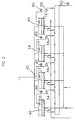
- four tanks 10, 12, 14, and 16 are used for infusing fruit, these tanks being interconnected with suitable plumbing to establish a flow path from tank 10 to tank 12 to tank 14 to tank 16 and back to tank 10.
- a bleed or overflow tank 18 is also provided.
- Fresh (which includes freshly processed) fruit is placed in the first tank in the series, and then fresh fruit is introduced sequentially in each subsequent tank in the series after suitable time intervals.
- fresh fruit is loaded into tank 10
- a second time interval (which might be 6 hours later) fresh fruit is loaded into tank 12, and so on.
- Fresh fruit is always loaded into a tank just before it is processed to avoid premature spoilage of the fruit.
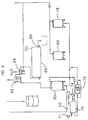
- Cranberries which have been frozen in a conventional manner, are taken from the freezer and placed into a cold room 20 to temper to approximately -9.5° C (15° F). From the cold room, the still frozen cranberries proceed on a conveyor to an Urschel slicer 22, where they are sliced. (Any type of industrial slicer which will give a satisfactory product will do). After slicing, the still frozen cranberries are dropped onto the top screen 24 (FIG. 2) of a two screen vibratory separator 26. While in the separator, the cranberries are warmed to a higher temperature.
- a 65-71° C (150-160° F) warming liquid (initially water, and then water mixed with cranberry juice).
- the seeds and other fines will be washed through the top screen 24, but not the second or bottom screen 28, and will be discharged from the bottom screen into tank 30 for subsequent disposal.
- the warming liquid passes through both screens 24 and 28 and is received in vessel 31.
- This liquid is then pumped via pump 32 into a heat exchanger 33 to raise its temperature back to 65-71° C (150-160° F) and is used again to spray further cranberries which have been discharged onto the screen 24.
- the flow of the warming liquid is preferably controlled in such a manner that there is neither net gain or loss of liquid, and the process is continuous.
- the vibratory separator on conveyor belt 34 As the sliced cranberries leave the vibratory separator on conveyor belt 34, they are in a "semi-thawed" state. They are conveyed to a hopper 35 for holding until they can be transferred to a press 36 where they are pressed to extract approximately 50% of the juice by weight from within the cranberries.
- the press may be of the type shown in US patents 4,892,665 or 5,275,097.
- the juice from the press is received in holding tank 37.
- the juice becomes a by-product of the process of this invention and may be used to make commercial fruit juices or other products that require fresh fruit juices.
- the press dumps the cranberries onto a further conveyor belt 38 which carries the cranberries to the infuser tanks.
- the pressed cranberries move from the belt 38 to the first infusion tank 10 to a depth not greater than 61 mm (24 inches).
- 61 mm 24 inches
- some fruit require thinner layers.
- sliced strawberries are infused best if the layers are not greater than 7.5 mm or 3 inches.
- a plumping liquid is also placed in the tank 10 so that the 61 mm deep product is fully submerged. (The tank may be 6-10 feet wide or wider).
- the plumping liquid may consist of pure fruit juice, or it may consist of a mixture of juice, water, and dissolved sugars, the sugar (including the sugars in the fruit juice) to water by weight ratio being at or slightly below the sugar content of the cranberries.
- the sugar content of the cranberries is 8%, and therefore, the sugar to water weight ratio will be at or slightly below 8% (commonly referred to in the industry as Brix.)
- the berries are maintained in the 8 Brix plumping liquid for the first time interval to allow the cranberries to "plump" or take on water. Because the prime purpose of the infusion process is to replace fluids in the cranberries with sugar, this replacement of pressed-out juice during plumping becomes crucial.
- the final product will not be satisfactory.
- the fruit is covered with a screen 40 which may be secured to tank 10 in any conventional manner. The screen secures the fruit within the tank and prevents it from floating downstream to the next tank with the flow of infusing liquor from one tank to the next.
- tank 12 is filled with fresh berries and a plumping liquid in the same manner that the tank 10 was filled.
- tank 12 is filled with berries and the plumping liquid, it is covered with screen 42 (FIG. 3), and the contents in tanks 10 and 12 are allowed to plump for the remainder of the second time interval.
- infusing liquor which consists of a fruit juice evaporated to 13 Brix via evaporator 48, and which has been fortified with additional sugar to bring it to 70 Brix, is now slowly introduced into the bottom of tank 10 from tank 50 by pump 52 (FIG. 4) to progressively infuse the berries from the bottom up.
- pump 52 FIG. 4
- suitable valves are opened to permit plumping liquid to flow from tank 10 to the bottom of tank 12, and also to permit plumping liquid to flow from tank 12 into the bottom of tank 14.
- the flow from tank 10 to tank 12 is controlled by pump 54, and the flow from tank 12 to tank 14 is controlled by pump 56.
- umps 58 and 59 are also provided to control flow from tank 14 to tank 16, and from tank 16 to tank 10, respectively.
- stratification of the infusing liquor will occur.
- the initial strata of the 70 Brix infusing liquor will be diluted as fruit juice leaves the fruit through osmosis, until the leading downstream strata is essentially pure fruit juice with a Brix just slightly greater than that of the fruit, for example just above 8 Brix if the fruit has a Brix of 8.
- Infusing liquor which has had its Brix reduced to that of the fruit is now considered to be a plumping liquid or juice product.
- the 70 Brix infusing liquor is still introduced into tank 10, and the plumping liquor in tank 14 is pumped via pump 56 into the bottom of tank 16 as fresh berries are introduced into tank 16 and held in place by screen 46.
- the end of the fourth time interval full, or substantially full, stratification of the infusing liquor has been achieved, and there will be no danger, or virtually no danger, of osmotic dehydration of the pressed fruit in tanks 14 and 16, as the stratified column of infusing liquor is caused to flow into these tanks, although there may have been some osmotic dehydration in tank 12, and there was osmotic dehydration to the berries in tank 10 during start-up.
- the batch process will now be continuously operated in the manner set forth below under the heading CONTINUOUS BATCH PROCESSING.
- This phenomenon may be examined in detail by examining a layer of cranberries having a thickness of one cranberry through each pass of infusing liquor.
- the cranberries Before plumping, the cranberries are at a Brix of approximately 8-9. The plumping liquid is held at approximately 8 Brix.
- the first layer of cranberries will have an 8.5 Brix concentration.
- the infusing liquor of 70 Brix is slowly introduced into the bottom of tank 10, and the first strata of 70 Brix infusing liquor contacts the first layer of cranberries for osmotic transfer.
- the Brix of the first layer of cranberries increases to 38.75, and the Brix of the first strata will drop to 38.75. This infusion of the first layer will take a few minutes.
- the second strata of infusing liquor is now slowly introduced into the bottom of the tank to contact the first layer of cranberries, the first strata of infusing liquor being forced up into contact with the second layer of cranberries.
- the second strata also has an initial Brix of 70, so the Brix of the first layer of cranberries will be raised to 54.38.
- the first strata now at 38.75 Brix, will contact the second layer of berries.
- the second layer will have a Brix of 23+, along with the first strata. This process repeats until the first layer and then each succeeding layer of cranberries reach saturation. Saturation occurs when the infusing liquor which has diffused into the fruit reacts with the pectin and the acid left in the fruit to form a gel. For cranberries, saturation and gel formation occurs at approximately 50-55 Brix. Exposure to 70 Brix infusing liquor after this point involves almost no osmotic transfer at the preferred operating temperature of 13-16° C (55-60° F).
- the process is preferably conducted at a temperature not in excess of 16° C (60° F), so that the fruit after infusion maintains the attributes of a fresh fruit, i.e., taste and color.
- the sugar from the infusion liquor replaces the juice in the cranberries in an almost one to one ratio as evidenced by the above formula.
- the juice in the fruit is increasingly tied up in a gel, so the process of osmotic transfer slows down.
- the cranberries in the tank to be dumped are at about 55 Brix, while the infusing liquor is at or near 70 Brix.
- the stratified column of infusing liquor passes through all of the cranberries in tank 10 and proceeds through tanks 12, 14, and 16. Each tank holds approximately 24 inches of cranberries below the screen, plus an additional reservoir of fluid above the screen.
- the cranberries, for example in tank 14, reach saturation after three cycles of plumping and infusing, about 18 hours. Although cranberries reach saturation at 55 Brix, the Brix of the infusing liquor is preferably 70 Brix, since a 70 Brix solution will not spoil over an extended period of time. After infusion is completed in any tank, the cranberries are removed from the tank for further processing.
- the stratified liquor which is used to treat the fruit has a length of about 11 ⁇ 2 tanks.
- the infusing liquor in tank 10 is at 70 Brix, and in the next 11 ⁇ 2 tanks (12 and 14) it is stratified.
- the sugar concentration in the bottom of tank 12 is 70 Brix
- the sugar concentration at the top of tank 12 is in the range of 25 - 30 Brix.
- the infusion liquor in the bottom half of tank 14 is partially stratified, the sugar concentration in the bottom being 25-30 Brix, and this stratification continues to about midway up the tank, where the Brix content drops to about 8.
- the infusion liquor in the top half of tank 14 is at 8 Brix, having given up its excess sugar, it can be considered as plumping liquid.
- the liquid in tank 16, the last tank in the series is at 8 Brix, which 8 Brix solution is used to plump the fruit in tank 16.
- tank 10 During cycle n, which may be as long as 6 hours, tank 10 must be isolated from the flow of infusion liquor, it must be dumped, and it must be refilled with fresh cranberries and plumping liquid, the fresh cranberries being secured in place with screen 40.
- tank 10 is isolated from the other tanks 12-18 by closing off suitable valves (not numbered).
- flow from the infusion liquor tank 50 is directed to the bottom of tank 12 by opening a suitable valve.
- the flow from tank 16 is directed to overflow tank 18 by opening a suitable valve.
- These valves may be manually operated, or they may be solenoid operated.
- infusing liquor will be pumped into tank 12, and plumping liquid will be pumped into overflow tank 18.
- the flow rate of pump 50 is adjusted to maintain the length of the stratified column to 11 ⁇ 2 tanks.
- refractometers 60 are provided in the fluid lines which convey infusing liquor from the top of one tank to the bottom of the next tank, the refractometers measuring the Brix of the liquor as it exits a tank. If the Brix is too high, pump 50 is slowed up. If the Brix is too low, the output of pump 50 is increased.
- tank 10 Once tank 10 has been isolated and flow has been established through tanks 12 to 18, during a second time period of cycle n, the cranberries and infusing liquor surrounding the berries in tank 10 are dumped for further processing in the manner set forth below.
- tank 10 is refilled with fresh cranberries and plumping liquid from overflow tank 18.
- the berries are secured in place with screen 40.
- the juice (or plumping liquid) absorbed during plumping may be substantially equal to the juice (or plumping liquid) driven off during the infusion process.
- tank 12 is isolated, the output from tank 16 is connected to tank 10, and the output from 10 is connected to overflow tank 18 during a first time period.
- Tank 12 will now be dumped and refilled in the same manner as tank 10.
- the continuous operation may be generalized as follows. At any given time, during continuous operation, one tank in the process will be isolated out of the cycle for emptying and refilling. The tank immediately downstream of the isolated tank will be receiving only pure 70 Brix infusing liquor, and the fruit within it will be approaching saturation. A third tank, which is immediately downstream of the second tank, will be receiving stratified liquor pumped from the second tank. Finally, a fourth tank, which is immediately downstream of the third tank, will be receiving only low Brix plumping liquid pumped from the third tank, and will cause the fruit within that tank to become plumped. Excess fluid from the most downstream tank will be pumped into the holding tank 18 until it is used later on. While 70 Brix has been used in the example set forth above, the infusion liquor could be at other Brix, for example 72.
- the cranberries and infusion liquor dumped from one of the processing tanks 10 - 16 may now be separated by use of a vibratory separator 62.
- the infusion liquor separated from the cranberries are sent back to tank 50 and is reused as pure 70 Brix infusion liquor.
- the berries which leave screen 62 are washed on a vibratory screen 64, and then are suitably dried by a drier 66 to a water activity level suitable for long term shelf storage life.
- the drying should be done at a temperature sufficiently low so that most aromatics remain with the fruit.
- the cranberries are sent from the washer 64 to a conveyor 68 which passes through a dryer 66.
- the drying process occurs by passing heated air over a thin layer of cranberries laid on the conveyor belt.
- a SANDVIK model 2 dryer system is used. During the drying process, the cranberries shrink slightly but the temperature is low enough to keep the cranberries' natural aromatics inside the cranberries.
- the drying process contains at least three drying stages. In the first stage, the cranberries are dried from a moisture content of approximately 55% to a moisture content of approximately 38% by drying for approximately 40 minutes.
- the air temperature for the first stage is 95-105° C (203-221° F).
- the cranberries are mixed, equilibrated, re-doubled, and sent to stage two.
- the air temperature is 80-95° C (176-203° F) and the moisture content is further reduced to 23% by drying for approximately 80 minutes.
- the cranberries are mixed, equilibrated, and sent to stage three.
- Stage three air temperature is 75-80° C (167-176° F). and the moisture content is reduced to its final value of 13% by drying in stage three for approximately 80 minutes. At this resultant moisture content, the water activity of the cranberries is approximately 0.45-0.49 at room temperature.
- This drying process produces cranberries that possess uniformity in size and a good appearance. After drying, the cranberries are lightly misted with sunflower oil to keep the cranberries from sticking to each other or to other products with which the cranberries may be mixed. These cranberries are the final dried product and can now be used with a stable shelf life.
- the present invention infuses many different types of fruit in addition to cranberries. While specific fruits are discussed below, the invention is not limited to the specific fruits set forth in this application.
- Blueberries can be processes in two ways. If desired the blueberries may be frozen and stemmed. Then the frozen blueberries are placed directly into a first tank of the series of four interconnected tank for plumping and then infusion. Blueberries have a natural Brix content of 12 to 15 Brix so the plumping liquid is concentrated to the natural Brix content of the blueberries, and is warmed to slightly thaw the blueberries. After the blueberries have been plumped, they are infused in the same manner as cranberries. The infusion liquor is formed from suitably concentrated blueberry juice, water, and sugar, and/or citric acid, the blueberry infusion liquor also being at 70 Brix. If desired, fresh blueberries may be infused.
- the skin of the blueberry must be pierced after the blueberries are stemmed.
- the blueberries are then placed directly into infusion process tank without squeezing, and are infused to saturation which is about 58 Brix.
- blueberry juice is extracted from the fruit during the infusing process.
- a column of substantially pure fruit juice will precede the stratified column which is common to all of the fruits mentioned below which do not require squeezing as a step in the initial processing.
- Part of this column of substantially pure juice is apportioned off to the juice tank 69 for further juice processing in the place of the juice which is squeezed from other fruits like cranberries.
- This juice can be used to make commercial fruit juices or other products that require fresh fruit juices.
- the remaining portion of the fruit juice is recirculated as the plumping liquid be being pumped to the plumping tank 18 and sent through the infusion tanks.
- the berries may be suitably dried to the desired water activity level, in the same manner as cranberries.
- the blueberries can be packages as a final product directly from the infusion tanks.
- Strawberries are frozen and then tempered to approximately -9.5° C (15° F).
- the natural Brix of strawberries has a wide range , typically within the range of 8 to 15 Brix, depending upon the source of the strawberries, and how ripe they were when picked. (This is typical for virtually all fruits. In this connection it is best to measure the Brix of the fruit before making up the plumping liquid.)
- the plumping liquid is concentrated to match the natural content of the strawberries and the solution is warmed to continue thawing the strawberries slightly.
- the strawberries are infused to approximately 62 Brix. If desired, the strawberries may be sliced and/or diced after tempering and before infusion.
- Raspberries are frozen and then placed into an infusion process tank. Raspberries are not squeezed. Raspberries have a natural Brix content ranging from 10 to 12 Brix. The plumping liquid is concentrated to approximately 10 to 12 Brix and warmed so as to thaw the raspberries slightly. The raspberries are infused to saturation, approximately 62 Brix.
- Cherries are frozen and pitted and the skin is broken. No squeezing is performed on the cherries.
- the cherries are placed directly into the infusing process.
- Cherries have a natural Brix content of 14 so the plumping liquid starts at 14 Brix. Since the cherries are frozen when placed in the infusing process, the plumping liquid is warmed to slightly thaw the cherries. The cherries will be infused to approximately 55 Brix.
- Fruit juice will be produced in the same manner as blueberries, and the resulting product may also be suitably dried.
- Grapes are squeezed and then infused. This infusion process produces a raisin that is sweeter and less chewy than raisins produced in the normal manner.
- Apples are processed by slicing raw (but not frozen) apples very thin and squeezing the apple slices so that 40-50% of the juice is extracted. The apples are then placed in one of the infusion process tanks and infused. Apples have a natural Brix content of 12 so the plumping liquid is concentrated to approximately 12 Brix. The apples are infused to saturation and may be suitably dried to the desired water activity level.
- Peaches are processed in a manner similar to apples with a few distinctions. Raw peaches are sliced thin and squeezed. Then the peach slices are infused. Peaches have a natural Brix content of 12. The peaches are infused to approximately 55 Brix.
- the present invention has also been shown to work well with vegetables like broccoli, celery and carrots.
- the broccoli and celery are diced and then infused.
- the Brix content of natural celery is 7 or 8.
- the Brix content of natural broccoli is 5 or 6.
- Celery is infused to approximately 30 Brix and broccoli is infused to approximately 40 Brix. Infused celery and broccoli are suitable for use in stuffing.
- the infusing liquor is initially made in mixer 70 from sugar syrup received from tank 71 and fruit juice either received from evaporator 48 where it is evaporated up to the desired starting Brix, or from evaporator bypass.
- fruit juice When making up the liquor for cranberries, it is necessary to evaporate the 8 Brix juice in order to have soluble acid and a concentration of pigments which equal the concentration of the soluble acid and pigments desired in the finished product.
- the juice may be received directly from the overflow tank 18 via evaporator bypass 72. Because the pressed juice may contain soluble pectin, the infusing liquor may turn into a gel.
- the juice may be initially treated with pectinase from conditioner tank 74. Infusion liquors for other fruit may require the addition of other conditioning agents, such as citric acid for blueberries.
Landscapes
- Chemical & Material Sciences (AREA)
- Life Sciences & Earth Sciences (AREA)
- Engineering & Computer Science (AREA)
- Polymers & Plastics (AREA)
- Food Science & Technology (AREA)
- Zoology (AREA)
- Wood Science & Technology (AREA)
- General Chemical & Material Sciences (AREA)
- Chemical Kinetics & Catalysis (AREA)
- Health & Medical Sciences (AREA)
- Nutrition Science (AREA)
- Preparation Of Fruits And Vegetables (AREA)
- Storage Of Fruits Or Vegetables (AREA)
- Non-Alcoholic Beverages (AREA)
- Jellies, Jams, And Syrups (AREA)
Claims (21)
- Verfahren zum Infundieren von Früchten, die einen beträchtlichen Gehalt an natürlichem mit Zucker enthalten, und zum Erzeugen von einem im wesentlichen reinen Fruchtsaft als Nebenprodukt, wobei das Verfahren die folgenden Schritte umfasst:(a) Bereitstellen von einem oder mehreren Behältern, um einen Strömungspfad von der Unterseite von jedem Behälter zu der Oberseite von jedem Behälter zur Verfügung zu stellen;(b) Einbringen von Früchten, die Aromen, Farbe und Saft natürlicher Früchte enthalten, in einen Behälter, um eine Charge aus Früchten zu bilden, wobei die Früchte für Infusion empfänglich sind;(c) Vorbereiten einer infundierenden Flüssigkeit, die eine Konzentration an Zucker enthält, zum Infundieren der Charge aus Früchten;(d) Bewirken, dass die infundierende Flüssigkeit durch die Charge aus Früchten über den Strömungspfad mit einer Geschwindigkeit langsam nach oben strömt, die nicht wesentlich größer ist als die Geschwindigkeit der Infusion von Zucker aus der infundierenden Flüssigkeit in die Früchte, um einen osmotischen Transfer von Zucker aus der infundierenden Flüssigkeit in die Früchte zu bewirken und um einen osmotischen Transfer von Fruchtsaft aus den Früchten in die infundierende Flüssigkeit zu bewirken, wobei die Flüssigkeit in der Strömungsrichtung entlang des Strömungspfades aufeinanderfolgende Schichten aus infundierenden Flüssigkeiten mit abnehmender Konzentration an Zucker beinhaltet, und wobei dieser Schritt bei einer Temperatur, die 38° C nicht übersteigt, und bei einer Geschwindigkeit durchgeführt wird, die ausreichend gering ist, um eine osmotische Dehydratation der Früchte zu verhindern;(e) Fortsetzen von Schritt (d), bis die Charge aus Früchten eine gewünschte Konzentration an darin infundiertem Zucker enthält;(f) Extrahieren und Auffangen von Fruchtsaft aus den Früchten; und(g) Auffangen der infundierten Früchte.
- Verfahren nach Anspruch 1, bei dem Schritt (d) mit einer Geschwindigkeit durchgeführt wird, die ausreichend gering ist, so dass eine beträchtliche Vermischung von Schichten mit unterschiedlichen Zucker-Konzentrationen vermieden wird.
- Verfahren nach einem der vorhergehenden Ansprüche, bei dem die Schritte der Fruchtverarbeitung bei einer Temperatur durchgeführt werden, die nicht größer als etwa 16° C ist.
- Verfahren zum Infundieren von Früchten mit Zucker nach einem der vorhergehenden Ansprüche, bei dem die Früchte vor Schritt (b) vorbereitend verarbeitet werden, um die Früchte für das Infundieren empfänglich zu machen, und bei dem der Fruchtsaft während des vorbereitenden Verarbeitungsschrittes aus den Früchten extrahiert und aufgefangen wird.
- Verfahren nach Anspruch 4, bei dem der Fruchtsaft durch Pressen der Früchte extrahiert und aufgefangen wird, wobei die Zellen in den Früchten durch das Pressen im wesentlichen nicht zerstört werden und wobei nach dem Pressen ein Teil des Saftes in den Früchten verbleibt.
- Verfahren nach Anspruch 5, bei dem die gepressten Früchte in einer dickliche Flüssigkeit infundiert werden, die einen Brix-Grad von etwa gleich oder etwas weniger als dem der Früchte hat, wobei die Früchte, die Äpfel oder Pfirsiche oder Trauben oder Preiselbeeren sein können, auf etwa das gleiche oder nahezu das gleiche Volumen verdickt werden, das sie hatten, bevor der Fruchtsaft extrahiert wurde.
- Verfahren zum Infundieren von Früchten mit Zucker nach Anspruch 1, 2 oder 3, bei dem der Fruchtsaft im Verlauf von Schritt (d) extrahiert und aufgefangen wird.
- Verfahren nach Anspruch 7, bei dem die zu verarbeitenden Früchte, die Erdbeeren oder Himbeeren oder Blaubeeren oder Kirschen sein können, vor dem Schritt (b) anfänglich gefroren sind.
- Verfahren nach Anspruch 7 oder 8, bei dem der Fruchtsaft, der aus dem am weitesten stromabwärts gelegenen Gebiet aufgefangen wird, zur Wiederverwendung als eine infundierende Flüssigkeit für eine nachfolgende Charge aus Früchten weiter vorbereitet wird.
- Verfahren nach Anspruch 9, außerdem mit dem Behandeln des entfernten Fruchtsaftes mit einem Pektinase-Enzym behandelt wird und mit dem Verwenden des behandelten Fruchtsaftes, um die infundierende Flüssigkeit zu bilden.
- Verfahren nach einem der vorhergehenden Ansprüche, außerdem mit dem Trocknen der infundierten Früchte, die in dem letzten Schritt aufgefangen wurden, auf eine Zucker-Konzentration, die in einen Bereich von etwa 70 Brix bis etwa 88 Brix fällt.
- Verfahren nach Anspruch 11, bei dem die getrockneten infundierten Früchte einen Wasser-Aktivitätspegel haben, der von etwa 0,50 bis etwa 0,65 reicht.
- Verfahren nach Anspruch 11 oder Anspruch 12, bei dem die infundierten Früchte in dem letzten Schritt aufgefangen werden, wenn die Konzentration an Zucker in den Früchten bei einer Konzentration liegt, die von etwa 30 Brix bis etwa 62 Brix reicht.
- Verfahren nach Anspruch 1, bei dem eine Vielzahl von Behältern vorgesehen ist, die in Reihe miteinander gekoppelt sind, und bei dem Schritt (b) das Einbringen aufeinanderfolgender Chargen von Früchten in aufeinanderfolgende Behälter in der Reihe beinhaltet, wobei sich alle Chargen der Früchte in einem Strömungspfad der infundierenden Flüssigkeit befinden, so dass dann, wenn sich die infundierende Flüssigkeit durch den Strömungspfad über die Charge von Früchten in jedem Tank, bis auf den letzten in der Reihe, hinaus bewegt hat, jener Teil der infundierenden Flüssigkeit hinter einer solchen Charge in den nächsten nachfolgenden Behälter in der Reihe in einer solchen Weise übertragen wird, um eine Strömungsgeschwindigkeit beizubehalten, die nicht wesentlich größer ist als die Geschwindigkeit der Infusion von Zucker aus der infundierenden Flüssigkeit in die Früchte.
- Verfahren nach Anspruch 14, bei dem jede aufeinanderfolgende Charge aus Früchten in den nächsten aufeinanderfolgenden Behälter eingebracht wird, und zwar unmittelbar vor dem Übertragen der am meisten stromabwärts gelegenen Schichten der infundierenden Flüssigkeit in diesen Behälter.
- Verfahren nach einem der Ansprüche 14 oder 15 außerdem mit dem Sichern der Charge aus Früchten in dem Behälter, um so zu verhindern, dass die Früchte entlang der Strömungsrichtung wandern.
- Verfahren nach Anspruch 16, bei dem das Sichern durch Anordnen eines Gitters über der Charge aus Früchten erfolgt.
- Vorrichtung zum Infundieren von Früchten mit Zucker und zum Erzeugen eines beträchtlichen Saft-Nebenprodukts, wobei die Vorrichtung aufweist:eine Vielzahl von Behältern (40, 42, 44, 46) zur Aufnahme von Früchten, die in der Lage sind; Früchte aufzunehmen, die infundiert werden sollen;Installationseinrichtungen, mittels derer die Behälter miteinander verbunden sind, um einen Strömungspfad von der Oberseite eines Behälters zu der Unterseite des nächsten Behälters einzurichten;einen Infusionsflüssigkeitsbehälter (50) für infundierende Flüssigkeiten;Pumpeinrichtungen (52) zum Pumpen von Infusionsflüssigkeiten aus dem Flüssigkeitstank in Lagen aus Früchten in den die Früchte aufnehmenden Behältern zu Schichten infundierender Flüssigkeiten mit progressiv höherem Zuckergehalt, um einen osmotischen Transfer von Zucker aus den infundierenden Flüssigkeiten in die Früchte zu bewirken und um einen osmotischen Transfer von Fruchtsaft aus den Früchten in die infundierenden Flüssigkeiten zu bewirken, wobei die Pumpeinrichtungen mit einer Geschwindigkeit arbeiten, die ausreichend gering ist, um eine osmotische Dehydratation der Früchte zu verhindern, und mit einer Geschwindigkeit arbeiten, die ausreichend gering ist, so dass eine wesentliche Vermischung der Schichten mit verschiedenen Zucker-Konzentrationen vermieden wird, wobei sich die infundierenden Flüssigkeiten durch die Früchte in jedem Früchte aufnehmenden Behälter nach oben bewegen;eine Fruchtsaft-Auffangeinrichtung (37, 69) zum Aufnehmen des Fruchtsaft-Nebenprodukts; undeine Konditionierungseinrichtung (18, 22, 26, 31, 32, 33, 34, 36) zum Konditionieren der frischen Früchte für das Infundieren.
- Vorrichtung nach Anspruch 18, bei der die Konditionierungseinrichtung eine Presseinrichtung (36) aufweist, die dazu ausgestaltet ist, um 50-80% des Fruchtsaftes aus den Früchten zu pressen, wobei die Vorrichtung außerdem eine Fruchtsaft-Auffangeinrichtung (37) aufweist, die Saft aus der Presseinrichtung empfängt.
- Vorrichtung nach Anspruch 18, außerdem mit einem Entlüftungsbehälter (18) zur Aufnahme von verdickter Flüssigkeit, und mit einer Einrichtung (39) zur Wiedergewinnung von Fruchtsaft aus der verdickten Flüssigkeit.
- Vorrichtung nach Anspruch 18, außerdem mit einer Trocknungseinrichtung (66), die dazu ausgestaltet ist, um die Früchte auf eine Wasseraktivität von unter 0,65 und bei einer Temperatur zu trocknen, die ausreichend gering ist, so dass der größte Teil der Aromen in den Früchten verbleibt.
Applications Claiming Priority (5)
| Application Number | Priority Date | Filing Date | Title |
|---|---|---|---|
| US2219096P | 1996-07-19 | 1996-07-19 | |
| US22190P | 1996-07-19 | ||
| US3249096P | 1996-12-18 | 1996-12-18 | |
| US32490P | 1996-12-18 | ||
| PCT/US1997/012508 WO1998003072A1 (en) | 1996-07-19 | 1997-07-18 | Method and apparatus for infusing fruit |
Publications (3)
| Publication Number | Publication Date |
|---|---|
| EP1017561A4 EP1017561A4 (de) | 2000-07-12 |
| EP1017561A1 EP1017561A1 (de) | 2000-07-12 |
| EP1017561B1 true EP1017561B1 (de) | 2005-06-08 |
Family
ID=26695648
Family Applications (1)
| Application Number | Title | Priority Date | Filing Date |
|---|---|---|---|
| EP97934198A Expired - Lifetime EP1017561B1 (de) | 1996-07-19 | 1997-07-18 | Verfahren sowie gerät zum einlegen von früchten |
Country Status (5)
| Country | Link |
|---|---|
| US (2) | US6159527A (de) |
| EP (1) | EP1017561B1 (de) |
| CA (1) | CA2261074C (de) |
| DE (1) | DE69733499T2 (de) |
| WO (1) | WO1998003072A1 (de) |
Cited By (1)
| Publication number | Priority date | Publication date | Assignee | Title |
|---|---|---|---|---|
| WO2016145386A1 (en) * | 2015-03-11 | 2016-09-15 | Dale Wettlaufer | Apparatus and method for multi-stage cutting and juice pressing |
Families Citing this family (35)
| Publication number | Priority date | Publication date | Assignee | Title |
|---|---|---|---|---|
| US6254919B1 (en) * | 1999-06-29 | 2001-07-03 | Maine Wild Blueberry Company | Preparation of shelf stable blueberries and moist shelf stable blueberry product |
| US6440483B1 (en) | 1999-12-28 | 2002-08-27 | Decas Cranberry Products, Inc. | Method and apparatus for producing a fruit product |
| US7045161B2 (en) * | 2001-02-23 | 2006-05-16 | Kabushiki Kaisha Hayashibara Seibutsu Kagaku Kenkyujo | Method of producing processed food |
| US20020192350A1 (en) * | 2001-04-30 | 2002-12-19 | Hynes Michael P. | Food products |
| US6457403B1 (en) * | 2002-02-16 | 2002-10-01 | Dale E. Wettlaufer | Apparatus for processing fruit in multiple layers |
| US7105197B2 (en) * | 2003-01-30 | 2006-09-12 | Kraft Foods Holdings, Inc. | Process for preparing intermediate moisture vegetables |
| US7008665B2 (en) * | 2003-02-24 | 2006-03-07 | Kraft Foods Holdings, Inc. | Non-brittle dried fruits and vegetables |
| WO2005006879A2 (en) * | 2003-07-03 | 2005-01-27 | California Giant, Inc. | Nutritious strawberry fruit juice drink and method of making the same |
| US7326432B2 (en) * | 2003-07-22 | 2008-02-05 | Graceland Fruit, Inc. | Process for converting brined sweet cherries into sweetened dried red tart cherry-like products and stabilized black cherry-like products |
| US7118772B2 (en) * | 2003-09-18 | 2006-10-10 | General Mills, Inc. | Inulin infused fruit and method of preparation |
| FR2851723B1 (fr) * | 2004-03-10 | 2009-02-06 | Oxades | Procede de conservation de vegetaux, et en particulier de fruits |
| US7767242B2 (en) * | 2005-08-05 | 2010-08-03 | Kellogg Company | Peeled infused dried buoyant cranberries and method for making same |
| WO2007019507A2 (en) * | 2005-08-05 | 2007-02-15 | Kellogg Company | Scarified infused dried buoyant cranberries and method for making same |
| US8460740B2 (en) * | 2005-11-10 | 2013-06-11 | Meduri Farms, Inc. | Fruit breaking method and apparatus |
| WO2008137712A1 (en) | 2007-05-03 | 2008-11-13 | Mazin, Samuel R. | System and method for producing a dehydrated food product |
| US20090047400A1 (en) * | 2007-08-16 | 2009-02-19 | Varadharajan Radhami Basker | Apparatus and method for hybrid infusion of food pieces |
| US8071150B2 (en) * | 2007-12-21 | 2011-12-06 | Frito-Lay North America, Inc. | Processing technique to thaw partially frozen fruits and vegetables and incorporating solids |
| US20100009060A1 (en) * | 2008-07-14 | 2010-01-14 | Smith Jonathan D | Method for processing raw fruit to produce enhanced fruit products and the fruit products produced by the method |
| BE1019587A3 (nl) * | 2011-01-19 | 2012-08-07 | Geldhof Tony | Cuberdonzoetmiddel. |
| CN107259963A (zh) * | 2013-05-10 | 2017-10-20 | 竹斯柔公司 | 榨汁系统和方法 |
| US11344052B2 (en) | 2014-06-11 | 2022-05-31 | Goodnature Products, Inc. | Partial or whole food hopper, grinder and cold press counter-top juicing machine, system and method |
| AU2015274621B2 (en) | 2014-06-11 | 2019-12-12 | Dale Wettlaufer | Juice press apparatus and methods |
| EP3653060B1 (de) * | 2015-01-16 | 2024-05-01 | Cocoterra Company | Schokoladenverarbeitungssystem und -verfahren |
| US10543652B2 (en) | 2016-03-03 | 2020-01-28 | Fresh Press LLC | Press |
| US10645966B2 (en) * | 2017-11-30 | 2020-05-12 | Goodnature Products, Inc. | Apparatus for grinding food |
| WO2019125432A1 (en) * | 2017-12-20 | 2019-06-27 | General Mills, Inc. | Infused fruit compositions and method of processing fruit |
| WO2020050810A1 (ru) * | 2018-09-07 | 2020-03-12 | Александр Георгиевич РОВЕНСКИЙ | Способ извлечения и консервирования сока, ягод и плодов садовых и огородных культур, приготовления напитков |
| US11470853B2 (en) | 2019-03-15 | 2022-10-18 | CocoTerra Company | Interface and application for designing a chocolate-making experience |
| US11844466B2 (en) | 2019-05-24 | 2023-12-19 | Goodnature Products, Inc. | Juicing devices with a removable grinder |
| USD918656S1 (en) | 2019-09-12 | 2021-05-11 | Goodnature Products, Inc. | Pusher |
| USD914465S1 (en) | 2019-09-12 | 2021-03-30 | Goodnature Products, Inc. | Juicing device |
| USD914464S1 (en) | 2019-09-12 | 2021-03-30 | Goodnature Products, Inc. | Press box |
| USD915156S1 (en) | 2020-09-15 | 2021-04-06 | Goodnature Products, Inc. | Press box |
| USD916565S1 (en) | 2020-09-15 | 2021-04-20 | Goodnature Products, Inc. | Juicing device |
| US12696992B2 (en) | 2022-01-13 | 2026-08-04 | Goodnature Products, Inc. | Juicing devices and methods |
Family Cites Families (14)
| Publication number | Priority date | Publication date | Assignee | Title |
|---|---|---|---|---|
| US1534050A (en) * | 1923-04-19 | 1925-04-21 | Barrielle Paul | Manufacture of preserved fruits |
| US1717258A (en) * | 1926-01-08 | 1929-06-11 | Rambaud Augustin Anne Francois | Manufacture of preserved fruits |
| US1906295A (en) * | 1929-07-03 | 1933-05-02 | John J Naugle | Method of preparing fruit confections and the like |
| US2785071A (en) * | 1953-12-21 | 1957-03-12 | S & W Fine Foods Inc | Method of impregnating fruit with a sugar solution |
| US3032419A (en) * | 1958-09-11 | 1962-05-01 | Limpert Bros Inc | Process for manufacturing preserved fruits |
| US4032419A (en) * | 1975-06-11 | 1977-06-28 | Research Corporation | Method and apparatus for separating uranium isotopes |
| US4350711A (en) * | 1977-01-28 | 1982-09-21 | Rich Products Corporation | Methods of infusing fruits |
| US4626434A (en) * | 1983-02-15 | 1986-12-02 | Rich Products Corporation | Fruit infusion using a syrup which has been subjected to enzyme treatment and concentrated |
| DE3316637C2 (de) * | 1983-05-06 | 1986-01-02 | Karl 8200 Rosenheim Hetzel | Vorrichtung zur Fahrhilfe bei schwierigen Bodenverhältnissen, insbesondere für LKW |
| JPS6078536A (ja) * | 1983-10-03 | 1985-05-04 | Nikken Sutamii Kk | 多糖生果実の製造法 |
| US4892665A (en) * | 1983-12-05 | 1990-01-09 | Wettlaufer Dale E | Method and press for pressing liquid from thin layers of liquid containing masses |
| US4713252A (en) * | 1985-09-12 | 1987-12-15 | Maine Wild Blueberry Co. | Process for producing a semi-moist fruit product and the products therefrom |
| US5320861A (en) * | 1992-01-03 | 1994-06-14 | Ocean Spray Cranberries, Inc. | Fruit extraction and infusion |
| US5275097A (en) * | 1992-05-26 | 1994-01-04 | Wettlaufer Dale E | Press assembly for extracting liquids from solids |
-
1997
- 1997-07-18 DE DE69733499T patent/DE69733499T2/de not_active Expired - Fee Related
- 1997-07-18 CA CA002261074A patent/CA2261074C/en not_active Expired - Lifetime
- 1997-07-18 EP EP97934198A patent/EP1017561B1/de not_active Expired - Lifetime
- 1997-07-18 US US09/230,024 patent/US6159527A/en not_active Expired - Lifetime
- 1997-07-18 WO PCT/US1997/012508 patent/WO1998003072A1/en not_active Ceased
-
2000
- 2000-09-25 US US09/669,311 patent/US6479092B1/en not_active Expired - Lifetime
Cited By (1)
| Publication number | Priority date | Publication date | Assignee | Title |
|---|---|---|---|---|
| WO2016145386A1 (en) * | 2015-03-11 | 2016-09-15 | Dale Wettlaufer | Apparatus and method for multi-stage cutting and juice pressing |
Also Published As
| Publication number | Publication date |
|---|---|
| EP1017561A4 (de) | 2000-07-12 |
| DE69733499D1 (de) | 2005-07-14 |
| US6159527A (en) | 2000-12-12 |
| CA2261074C (en) | 2006-04-25 |
| EP1017561A1 (de) | 2000-07-12 |
| US6479092B1 (en) | 2002-11-12 |
| DE69733499T2 (de) | 2006-03-23 |
| WO1998003072A1 (en) | 1998-01-29 |
| CA2261074A1 (en) | 1998-01-29 |
Similar Documents
| Publication | Publication Date | Title |
|---|---|---|
| US6159527A (en) | Method and apparatus for infusing fruit | |
| RU2499405C2 (ru) | Усовершенствованный способ инфузии для производства жареных под вакуумом фруктовых и овощных закусочных продуктов питания | |
| CA1209398A (en) | Fruit infusion | |
| CN101925303A (zh) | 解冻微冻水果和蔬菜并加入固体的加工方法 | |
| US4626434A (en) | Fruit infusion using a syrup which has been subjected to enzyme treatment and concentrated | |
| NO310052B1 (no) | Fruktekstraksjon og tilsetning | |
| US7935378B2 (en) | Nectarine juice drink | |
| US4775545A (en) | Process for producing sweetened fruit | |
| US8128979B2 (en) | Method for processing raw fruit to provide enhanced fruit products and the fruit products produced by the method | |
| US3930034A (en) | Simulated strawberry slices and method of preparing the same | |
| US6387438B1 (en) | Processed cranberry product and process for preparing the same | |
| US20040142072A1 (en) | Process and apparatus for infusing cranberry | |
| JP2610297B2 (ja) | 果実加工品及びその製造方法 | |
| US2443866A (en) | Method of treating apples | |
| Maftoonazad | Use of osmotic dehydration to improve fruits and vegetables quality during processing | |
| EP1449440A2 (de) | Verfahren zur Konservierung von pflanzlichen Produkten , insbesondere Obst | |
| USH1014H (en) | Method of making cherries of maraschino type | |
| US2824810A (en) | Process for firming cherries | |
| Gupta | CHAPTER-4 PROCESSING TECHNOLOGY FOR INTERMEDIATE MOISTURE FOODS | |
| CN121867316A (zh) | 一种溏心蜜橘干瓣及其制备方法与真空浸提设备 | |
| JPH0413971B2 (de) | ||
| Kalla et al. | Osmotic Dehydration: Principles and Applications in the Dairy Industry | |
| NZ513880A (en) | Preserving fruit using increasing concentration sugar solutions | |
| PISALKAR | XokjikBk tsy dk lao kgd, oa ijkljf. kd-lokag d'kq" du | |
| NZ336698A (en) | Preserving comprising immersing fruit in a sugar solution and drying the fruit to less than 50% of its original moisture content |
Legal Events
| Date | Code | Title | Description |
|---|---|---|---|
| PUAI | Public reference made under article 153(3) epc to a published international application that has entered the european phase |
Free format text: ORIGINAL CODE: 0009012 |
|
| 17P | Request for examination filed |
Effective date: 19990217 |
|
| A4 | Supplementary search report drawn up and despatched |
Effective date: 19991216 |
|
| AK | Designated contracting states |
Kind code of ref document: A4 Designated state(s): DE FR GB NL Kind code of ref document: A1 Designated state(s): DE FR GB NL |
|
| 17Q | First examination report despatched |
Effective date: 20010627 |
|
| GRAP | Despatch of communication of intention to grant a patent |
Free format text: ORIGINAL CODE: EPIDOSNIGR1 |
|
| GRAS | Grant fee paid |
Free format text: ORIGINAL CODE: EPIDOSNIGR3 |
|
| GRAA | (expected) grant |
Free format text: ORIGINAL CODE: 0009210 |
|
| AK | Designated contracting states |
Kind code of ref document: B1 Designated state(s): DE FR GB NL |
|
| REG | Reference to a national code |
Ref country code: GB Ref legal event code: FG4D |
|
| REF | Corresponds to: |
Ref document number: 69733499 Country of ref document: DE Date of ref document: 20050714 Kind code of ref document: P |
|
| PLBE | No opposition filed within time limit |
Free format text: ORIGINAL CODE: 0009261 |
|
| STAA | Information on the status of an ep patent application or granted ep patent |
Free format text: STATUS: NO OPPOSITION FILED WITHIN TIME LIMIT |
|
| 26N | No opposition filed |
Effective date: 20060309 |
|
| EN | Fr: translation not filed | ||
| PG25 | Lapsed in a contracting state [announced via postgrant information from national office to epo] |
Ref country code: FR Free format text: LAPSE BECAUSE OF FAILURE TO SUBMIT A TRANSLATION OF THE DESCRIPTION OR TO PAY THE FEE WITHIN THE PRESCRIBED TIME-LIMIT Effective date: 20060804 |
|
| PGFP | Annual fee paid to national office [announced via postgrant information from national office to epo] |
Ref country code: DE Payment date: 20060920 Year of fee payment: 10 |
|
| PG25 | Lapsed in a contracting state [announced via postgrant information from national office to epo] |
Ref country code: DE Free format text: LAPSE BECAUSE OF NON-PAYMENT OF DUE FEES Effective date: 20080201 |
|
| PG25 | Lapsed in a contracting state [announced via postgrant information from national office to epo] |
Ref country code: FR Free format text: LAPSE BECAUSE OF FAILURE TO SUBMIT A TRANSLATION OF THE DESCRIPTION OR TO PAY THE FEE WITHIN THE PRESCRIBED TIME-LIMIT Effective date: 20050731 |
|
| PG25 | Lapsed in a contracting state [announced via postgrant information from national office to epo] |
Ref country code: FR Free format text: LAPSE BECAUSE OF FAILURE TO SUBMIT A TRANSLATION OF THE DESCRIPTION OR TO PAY THE FEE WITHIN THE PRESCRIBED TIME-LIMIT Effective date: 20050608 |
|
| PGFP | Annual fee paid to national office [announced via postgrant information from national office to epo] |
Ref country code: GB Payment date: 20100614 Year of fee payment: 14 |
|
| GBPC | Gb: european patent ceased through non-payment of renewal fee |
Effective date: 20110718 |
|
| PG25 | Lapsed in a contracting state [announced via postgrant information from national office to epo] |
Ref country code: GB Free format text: LAPSE BECAUSE OF NON-PAYMENT OF DUE FEES Effective date: 20110718 |
|
| PGFP | Annual fee paid to national office [announced via postgrant information from national office to epo] |
Ref country code: NL Payment date: 20160729 Year of fee payment: 20 |
|
| REG | Reference to a national code |
Ref country code: NL Ref legal event code: MK Effective date: 20170717 |