EP1018848A2 - Unité pour le traitement d'information de canal pour une station de base - Google Patents
Unité pour le traitement d'information de canal pour une station de base Download PDFInfo
- Publication number
- EP1018848A2 EP1018848A2 EP00100116A EP00100116A EP1018848A2 EP 1018848 A2 EP1018848 A2 EP 1018848A2 EP 00100116 A EP00100116 A EP 00100116A EP 00100116 A EP00100116 A EP 00100116A EP 1018848 A2 EP1018848 A2 EP 1018848A2
- Authority
- EP
- European Patent Office
- Prior art keywords
- base station
- station radio
- channel
- communication
- radio
- Prior art date
- Legal status (The legal status is an assumption and is not a legal conclusion. Google has not performed a legal analysis and makes no representation as to the accuracy of the status listed.)
- Withdrawn
Links
- 230000010365 information processing Effects 0.000 title 1
- 238000004891 communication Methods 0.000 claims abstract description 209
- 230000002093 peripheral effect Effects 0.000 claims description 30
- 230000006870 function Effects 0.000 claims description 15
- 230000004044 response Effects 0.000 claims description 8
- 230000005540 biological transmission Effects 0.000 claims description 4
- 238000001514 detection method Methods 0.000 abstract description 8
- 230000002452 interceptive effect Effects 0.000 abstract description 4
- 108091006146 Channels Proteins 0.000 description 410
- 238000010586 diagram Methods 0.000 description 7
- 230000015654 memory Effects 0.000 description 3
- 238000000034 method Methods 0.000 description 1
- 238000012986 modification Methods 0.000 description 1
- 230000004048 modification Effects 0.000 description 1
- 238000001228 spectrum Methods 0.000 description 1
Images


Classifications
-
- H—ELECTRICITY
- H04—ELECTRIC COMMUNICATION TECHNIQUE
- H04W—WIRELESS COMMUNICATION NETWORKS
- H04W28/00—Network traffic management; Network resource management
- H04W28/16—Central resource management; Negotiation of resources or communication parameters, e.g. negotiating bandwidth or QoS [Quality of Service]
- H04W28/18—Negotiating wireless communication parameters
-
- H—ELECTRICITY
- H04—ELECTRIC COMMUNICATION TECHNIQUE
- H04W—WIRELESS COMMUNICATION NETWORKS
- H04W72/00—Local resource management
- H04W72/50—Allocation or scheduling criteria for wireless resources
- H04W72/54—Allocation or scheduling criteria for wireless resources based on quality criteria
- H04W72/542—Allocation or scheduling criteria for wireless resources based on quality criteria using measured or perceived quality
-
- H—ELECTRICITY
- H04—ELECTRIC COMMUNICATION TECHNIQUE
- H04W—WIRELESS COMMUNICATION NETWORKS
- H04W24/00—Supervisory, monitoring or testing arrangements
-
- H—ELECTRICITY
- H04—ELECTRIC COMMUNICATION TECHNIQUE
- H04W—WIRELESS COMMUNICATION NETWORKS
- H04W36/00—Hand-off or reselection arrangements
- H04W36/06—Reselecting a communication resource in the serving access point
-
- H—ELECTRICITY
- H04—ELECTRIC COMMUNICATION TECHNIQUE
- H04W—WIRELESS COMMUNICATION NETWORKS
- H04W72/00—Local resource management
- H04W72/20—Control channels or signalling for resource management
-
- H—ELECTRICITY
- H04—ELECTRIC COMMUNICATION TECHNIQUE
- H04W—WIRELESS COMMUNICATION NETWORKS
- H04W88/00—Devices specially adapted for wireless communication networks, e.g. terminals, base stations or access point devices
- H04W88/12—Access point controller devices
Definitions
- the present invention relates to a radio communication processing unit which controls data communications made by radio between a mobile terminal and a host server connected to a network in a state where a base station radio unit(s) intervenes therebetween and which manages/controls the frequencies for use in radio communications between the base station radio unit and the mobile terminal, and further relates to a recording medium, readable by a computer, which retains a radio communication processing program.
- radio communication network systems have been proposed for realizing the mobile computing; some are made up of, for example, a user side mobile terminal(s) (which will hereinafter be referred to simply as a mobile terminal(s)) for conducting transmission/receive of data by virtue of radio, a plurality of servers connected to a network, and a base station radio unit(s) connected to these servers for transferring data, transmitted from the mobile terminal by radio, to the server and further for transmitting data, directed to the mobile terminal from the network side, through the server to the addressed mobile terminal by radio.
- a user side mobile terminal(s) which will hereinafter be referred to simply as a mobile terminal(s)
- a base station radio unit(s) connected to these servers for transferring data, transmitted from the mobile terminal by radio, to the server and further for transmitting data, directed to the mobile terminal from the network side, through the server to the addressed mobile terminal by radio.
- each of communication frequencies for use in communications with a mobile terminal is a frequency which does not have influence on the communication frequencies put to use within the communicable areas of different base station radio units.
- FIG. 7A shows a mobile terminal ML exists in a place where the communicable areas A, B and C of three base station radio units (in the illustration, each is shown as a base station radio) BS1, BS2 and BS3 overlap with each other.
- a frequency f1 the base station ratio unit BS1 uses is extremely close to a frequency f2 the base station radio unit BS2 uses (for example,
- 12.5 kHz ), a high-order distortion occurs in the frequency spectrum the mobile terminal ML receives because of the non-linearity of a receiving circuit or the like in the interior of the mobile terminal ML, as just shown in FIG. 7B.
- the mobile terminal ML cannot receive a radio wave from the base station radio unit BS3 because of interference (or fault) resulting from the intermodulation.
- the frequency switching takes place without considering the frequencies being in use in the other base station radio units; accordingly, the switched frequency interferes with the frequencies being used in the other base station units to incur the above-mentioned interference stemming from the intermodulation, which can constitute a hindrance to communications between a mobile terminal and a base station radio unit.
- the present invention has been developed in consideration of these situations, and it is an object of the invention to provide a radio communication processing unit and a recording medium therefor, capable of, at setting or switching of a communication frequency for each of base station radio units, presenting a frequency which does not interfere with the communication frequencies being in use in the other base station units.
- a radio communication processing unit for handling communication processing between each of a plurality of mobile terminals and a host server connected to a network, with each of the plurality of mobile terminals being connected to at least one base station radio unit within a communicable area of the base station radio unit connected thereto to establish a radio communication network system in which a communication is made by radio between the mobile terminals and the host server in a state where the base station radio unit intervenes therebetween,
- the radio communication processing unit comprising storage means for storing at least communication frequencies being used in all the base station radio units existing within the radio communication network system, frequency setting means for determining, on the basis of the contents stored in the storage means, a communication frequency for use in the base station radio unit connected to its own self to set the determined communication frequency in the base station radio unit, reporting means for reporting channel information including information indicative of the base station radio unit connected to its own self and information indicative of the communication frequency being currently in use in the base station radio unit through the network to a different radio communication
- the respective radio communication processing units communicate the communication frequencies the base station radio units connected to the processing units are using currently to each other through the use of the reporting means and storage means to learn the communication frequencies being used by all the base station radio units existing in the radio communication network system; therefore, when setting a frequency to be used in the base station radio unit connected, each of the radio communication processing units can select a frequency which does not interfere with the communication frequencies being currently in use in the base station radio units connected to the other radio communication processing units.
- this radio communication processing unit further comprises channel information requesting means for, when there arises a need to set or change the communication frequency to be used in the base station radio unit connected to its own self, outputting a channel information requesting signal to make a request for transmission of the channel information on the base station radio units connected to all the other radio communication processing units, to all the other radio communication processing units, when receiving the channel information requesting signal from the channel information requesting means of the other radio communication processing unit, the reporting means referring to the contents of the storage means for transmitting the channel information on the base station radio unit connected to its own self to the channel information requesting signal issuing radio communication processing unit, and further the frequency setting means determining a communication frequency to be used in the base station radio unit connected to its own self, on the basis of the contents in the storage means updated in the storage editing means in accordance with each of the channel information transmitted from all the other radio communication processing units in response to the request from its own channel information request means.
- the channel information requesting means transmits a channel information requesting signal to all the other radio communication processing units. Furthermore, upon receipt of the channel information requesting signal, each of all the other radio communication processing units transmits the channel information in the base station radio unit connected thereto to the channel information requesting signal issuing radio communication processing unit. Accordingly, the channel information requesting signal issuing radio communication processing unit updates the contents in the storage means in accordance with each of the channel information sent from all the other radio communication processing units and determines, on the basis of the updated contents, a communication frequency to be used in the base station radio unit connected to its own self.
- the frequency setting means determines a communication frequency, to be used in the base station radio unit connected to its own self, on the basis of the contents stored in the storage means, while the reporting means reports information on the channel, determined by the frequency setting means, to be used in the base station radio unit connected to its own self to all the other radio communication processing units.
- a communication frequency to be used in the base station radio unit connected to its own self is first determined on the basis of the contents in the storage means, and the channel information depending upon the determined communication frequency is then communicated to all the other radio communication processing units. Accordingly, all the other radio communication processing units update the contents of their own storage means on the basis of the communicated channel information through use of their own storage editing means.
- the frequency setting means when determining a communication frequency to be used in the base station radio unit connected to its own self, the frequency setting means makes the frequency determination under a first condition that, of a plurality of predetermined communication frequencies, a communication frequency which is not being put to use in the base station radio unit existing on the periphery of (adjacent to) the base station radio unit being a determined communication frequency using unit is determined as the communication frequency to be used therein, and if there exist a plurality of communication frequencies falling under the first condition, the frequency setting means makes the frequency determination under a second condition that a communication frequency which does not cause interference due to intermodulation is determined as the communication frequency to be used therein considering the frequencies being used in the peripheral base station radio unit and in the base station radio unit existing on the periphery of the peripheral base station radio unit, and if there exist a plurality of communication frequencies falling under the second condition or if there exist a plurality of frequencies falling under the first condition but not falling under the second condition, the frequency setting means determines the highest communication
- a computer-readable recording medium recording a radio communication processing program for handling communication processing between each of a plurality of mobile terminals and a host server connected to a network, with each of the plurality of mobile terminals being present within a radio communication network system in which a communication is made by radio between each of the mobile terminals and the host server in a state where base station radio units intervenes therebetween, and with the radio communication processing program being run by a communication processing computer connected to at least one base station radio unit, and even with each of the mobile terminals existing in a communicable area of the base station radio unit connected to the communication processing computer, the radio communication processing program making the communication processing computer fulfill functions of storing, in storage means, at least communication frequencies being used in all the base station radio units existing within the radio communication network system, determining, on the basis of the contents stored in the storage means, a communication frequency for use in the base station radio unit connected to its own unit to set the determined communication frequency in the same base station radio unit, reporting channel information
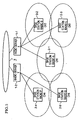
- FIG. 1 is a block diagram schematically showing a configuration of a radio communication network system to which radio communication processing units (which will be referred to hereinafter as radio servers) according to the embodiments of this invention is applicable.
- radio communication processing units which will be referred to hereinafter as radio servers
- reference numerals 1-1 and 1-2 designate radio servers connected to a network 3, with the radio server 1-1 being named X while the radio server 1-2 being named Y.
- Numerals 2-1 to 2-5 denote base station radio units, with the base station radio units 2-1 to 2-3 being connected to the radio server 1-1, while the base station radio units 2-4 and 2-5 being connected to the radio server 1-2.
- These base station radio units are named A, B, C, P and Q, respectively, and each of these base station radio units is in connection with a mobile terminal(s) existing the communicable area (an area indicated by a dotted line surrounding each of the base station radio units in Fig. 1) of its own self.
- the communicable area of each of the base station radio units is determined as a range having a radius corresponding to the distance within which the base station radio unit can receive a radio wave transmitted from a mobile terminal.
- channels which can be used for the above-mentioned base station radio units 2-1 to 2-5 to make a communication with a non-shown mobile terminal
- channels CH1 to CH6 there are taken six channels CH1 to CH6.
- Each of the base station radio units 2-1 to 2-5 uses any one of these channels CH1 to CH6 to establish a communication with each of mobile terminals existing within its own communicable area.
- the radio server 1-1 manages communications between each of mobile terminals lying in each of the communicable areas of the base station radio units 2-1 and 2-3 and a host server (not shown) connected to the network 3.
- the radio server 1-2 manages communications between each of mobile terminals existing in each of the communicable areas of the base station radio units 2-4 and 2-5 and the host server connected to the network 3.
- each of the radio servers 1-1 and 1-2 when a mobile terminal comes in the communicable area of the base station radio unit (which will be referred to hereinafter as a subordinate base station radio unit) it manages, conducts a registration certifying operation for this mobile terminal, an IP address issuing operation, or the like, and then controls data communications between a host computer connected to the network 3 and the same mobile terminal.
- the base station radio unit which will be referred to hereinafter as a subordinate base station radio unit
- each of the radio servers 1-1 and 1-2 has a function to set a channel to be put to use and gives a channel switching instruction to its own subordinate base station radio units. Still additionally, each of the radio servers 1-1 and 1-2 has a section (which will be referred to hereinafter as a channel selection instructing section) for realizing this function, with its configuration including a storage means storing at least the channels being in use (each of which will be referred to hereinafter as an active channel) in all the base station radio units existing in the radio communication network system, and further including a frequency setting means for determining a channel to be used in each of the subordinate base station radio units on the basis of the contents stored in this storage means to set the determined channel in each of the subordinate base station radio units.
- a storage means storing at least the channels being in use (each of which will be referred to hereinafter as an active channel) in all the base station radio units existing in the radio communication network system
- a frequency setting means for determining a channel to be used in each of the
- each of the base station radio units establishes a communication with a mobile terminal existing within its own communicable area through the use of the channel set by the frequency setting means of the radio server which manages its own self.
- each of the radio servers determines a channel to be given to the subordinate base station radio units with the following channel selection conditions:
- each of the radio servers 1-1 and 1-2 comprises a reporting means for reporting channel information, including information indicative of its subordinate base station radio units and information indicative of active communication frequencies in the subordinate base station radio units, through the network 3 to the other radio servers. Additionally, each of the radio servers 1-1 and 1-2 comprises a storage editing means to update the contents stored in the storage means on the basis of the channel information given from the reporting means of the other radio servers.
- the radio server 1-1 notifies the radio server 1-2 of the channel information of its subordinate base station radio units 2-1, 2-2 and 2-3, while the radio server 1-2 communicates the channel information of the its subordinate base station radio units 2-4 and 2-5 to the radio server 1-1.
- each of the radio servers 1-1 and 1-2 updates the channel for use in each of the base station radio units, stored in the storage means, on the basis of the channel information communicated therefrom.
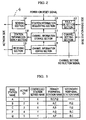
- FIG. 2 is a block diagram schematically showing a configuration of a channel selection instructing section, denoted at numeral 4, in each of the radio servers 1-1 and 1-2 according to a first embodiment of this invention.
- reference numeral 11 depicts a channel information storage section which, as shown in FIG.
- a non-volatile memory can be employed as the channel information storage section 11.
- the contents of the aforesaid 1) to 4) are predetermined but not altered.
- numeral 12 denotes a fault detection section for detecting a fault occurring within the communicable areas of the subordinate base station radio terminals and further recognizing the name of the base station radio unit in which the fault has occurred.
- Numeral 13 signifies a station (base station radio unit) information requesting section which, if receiving a power-on signal for when the power supply of the radio server to which it pertains is turned on, if receiving a reset signal for when the radio server to which it pertains is reset, or if the fault detection section 12 has detected a fault, refers to the contents stored in the channel information storage section 11 for outputting a channel information requesting signal to advance a request for information (which will be referred to hereinafter as channel information) indicative of the names of the subordinate base station radio units and representative of the active channels (the channels being in use) to all the other radio servers.
- channel information which will be referred to hereinafter as channel information
- Numeral 14 depicts a sending section for transmitting the channel information requesting signal outputted from the station information requesting section 13 to the network 3.
- Numeral 15 represents a receiving section for receiving channel information transmitted from the other radio servers through the network 3, a channel information requesting signal transmitted from the other radio servers, and other information and signals.
- Numeral 16 signifies a channel information editing section for, when the receiving section 15 receives channel information sent from the other radio server in response to a channel information requesting signal outputted from the station information requesting section 13 of the radio server to which it pertains, updating (editing) the contents of the item "ACTIVE CH" in the channel information storage section 11 on the basis of that channel information.
- the channel information has not been sent from the other radio server in response to the channel information requesting signal outputted from the station information requesting section 13, then the updating of the information about the active channel in the subordinate base station radio unit of that radio server does not take place.
- Numeral 17 indicates a channel setting section for, when the channel information editing section 16 has updated the contents of the channel information storage section 11, determining a channel to be set or a channel to which switching is to be made and for giving an instruction about the determined channel to each of the subordinate base station radio units. Additionally, when the operator designates a subordinate base station radio unit and inputs a channel setting instruction signal indicative of a channel to be used in this base station radio unit, the channel setting section 17 sets the active channel of the designated base station radio unit in accordance with the contents of the channel setting instruction signal. Still additionally, upon the completion of the setting of a channel, in the channel information storage section 11, the contents of the item "ACTIVE CH" on the base station radio unit related to the instruction about the change of the channel given by the operator is updated to the set channel.
- Numeral 18 depicts a station (base station radio unit) information reply section which, when the receiving section 15 has received a channel information requesting signal from the other radio server, refers to the contents stored in the channel information storage section 11 for transmitting the channel information of each of the subordinate base station radio units of the radio server, to which it pertains, through the receiving section 14 to the radio server which transmitted the aforesaid channel information requesting signal.
- the description will start at an operation to be conducted for when, for example, the radio server 1-2 is in operation and the power supply of the radio server 1-1 is turned on (power-on).
- the channels the base station radio units 2-4 and 2-5 subordinate to the radio server 1-2 are using are CH4 and CH5, respectively, while the channels the base station radio units 2-1, 2-2 and 2-3 subordinate to the radio server 1-1 was using immediately before the turning-off of the power supply (power-off) of the radio server 1-1 are CH1, CH2 and CH3, respectively.
- the channel CH6 is not put to use for any base station radio unit.
- the station information requesting section 13 Upon the power-on of the radio server 1-1, on the basis of the contents in the channel information storage section 11, the station information requesting section 13 transmits a channel information requesting signal related to the base station radio units 2-4 and 2-5 through the sending section 14 to the radio server 1-2.
- the station information reply section 18 refers to the channel information storage section 11 for reading out the active channels of the subordinate base station radio units 2-4 and 2-5 to send the read active channel information together with the name of each of the base station radio units as channel information through the sending section 14 to the radio server 1-1.
- the channel information editing section 16 updates the active channel information for the base station radio units 2-4 and 2-5 in the channel information storage section 11.
- the channel setting section 17 determines channels for the base station radio units 2-1, 2-2 and 2-3 on the basis of the updated contents in the channel information storage section 11.
- the channel setting section 16 of the radio server 1-1 selects the channels for the base station radio units 2-1, 2-2 and 2-3, which do not interfere with the active channels in the subordinate base station radio units of the radio server 1-2, according to the above-mentioned conditions 1) to 3), and communicates the selected channels to the corresponding base station radio units 2-1, 2-2 and 2-3.
- a method of selecting the channels which do not interfere with the active channels of the base station radio units subordinate to the radio server 1-2 will be described herein later.
- the above-mentioned operation similarly applies to the case in which a reset signal is inputted to the station information requesting section 13.
- the station information requesting section 13 inquires at the radio server 1-2 about the channels being used currently (active channels) in the base station radio units 2-4 and 2-5.
- the station information reply section 18 reads out the active channels in the base station radio units 2-4 and 2-5 stored in the channel information storage section 11 and transmits the channel information of each of the base station radio units subordinate to the radio server 1-2 through the sending section 14 to the radio server 1-1.
- the receiving section 15 of the radio server 1-1 receives this channel information, and the channel information editing section 16 updates (edits) the contents of the channel information storage section 11. Thereafter, the channel setting section 17 makes a decision on (finds) a channel being not in use in the peripheral base station radio units on the basis of the updated contents of the channel information storage section 11 (the foregoing channel selection condition 1)).
- the channel in which the fault occurred is CH1
- the channels being in use in the base station radio units 2-2, 2-3, 2-4 and 2-5 existing on the periphery of the base station radio unit 2-1 are CH2, CH3, CH4 and CH5, respectively, the inactive channel is CH6 only.
- the channel setting section 17 gives an instruction for use of the channel CH6 to the base station radio unit 2-1.
- the channel setting section 17 changes the active channel of the base station radio unit 2-1 from CH1 to CH6 in the channel information storage section 11.
- the fault detection section 12 in the radio server 1-2 detects a fault occurring in the communicable area of the base station radio unit 2-4 (whose active channel is CH4).
- the station information requesting section 13 in the radio server 1-2 inquires at the radio server 1-1 about the channels being used currently in the base station radio units 2-1, 2-2 and 2-3.
- the station information reply section 18 in response to the aforesaid inquiry received through the receiving section 15, refers to the contents of the channel information storage section 11 for transmitting the channel information on each of the base station radio units 2-1 to 2-3 through the sending section 14 to the radio server 1-2.
- the receiving section receives this channel information, and the channel setting section 17 makes a decision on a channel being not in use in the peripheral base station radio units (the foregoing channel selection condition 1)).
- the channel in which the fault occurred is CH4 and the active channels of the base station radio units 2-1 and 2-5 existing on the periphery of the base station radio unit 2-4 are CH6 and CH5, respectively, the available channels are CH1 to CH3.
- the channel setting section 17 selects, of the available channels CH1 to CH3, a channel which does not undergo the intermodulation interference with the active channels of the other base station radio units (the foregoing channel selection condition 2)). Concretely, in the case of the above-mentioned state, the channel setting section 17 selects a channel which is not subjected to the intermodulation interference occurring with the following combinations of two channels:
- the channel setting section 17 of the radio server 1-2 gives instructions for the use of that channel to the base station radio unit 2-4.
- the channel setting section 17 gives instructions for the use of the highest- frequency channel of these plurality of channels to the base station radio unit 2-4 (the foregoing channel selection condition 3)).
- the active channel of the base station radio unit 2-1 is CH1
- the active channel of the base station radio unit 2-2 is CH2
- the active channel of the base station radio unit 2-3 is CH3
- the active channel of the base station radio unit 2-4 is CH4
- the active channel of the base station radio unit 2-5 is CH5, and the operator changes the active channel of the base station radio unit 2-3 manually.
- the operator inputs an instruction for the change of the channel of the base station radio unit 2-3 to the channel CH6 through the use of a keyboard or the like in the radio server 1-1 managing the base station radio unit 2-3.
- a channel setting instruction signal including the contents of this instruction is inputted to the channel setting section 17 in FIG. 2.
- the channel setting section 17 issues instructions for the use of the channel CH6 to the base station radio unit 2-3.
- the channel setting section 17 updates the contents of the item "ACTIVE CH" on the base station radio unit 2-3 in the channel intonation storage section 11 from the channel CH3 to the channel CH6.
- the radio server 1-1 will send the channel CH6 as the channel being used currently in the base station radio unit 2-3 to the radio server 1-2.
- the channel setting section 17 gives an instruction on the channel to be used in the base station radio unit designated by the operator to that base station radio unit to update the contents of the channel information storage section 11, before notifying the other radio servers of the information about the channel indicated.
- a channel information reporting section 19 is provided which, when the channel setting section 17 gives instructions on a channel to be used in the base station radio unit designated by the operator to that base station radio unit to update the contents of the channel information storage section 11, reports the updated channel information on the base station radio unit through the sending section 14 to all the other radio servers.
- the channel information editing section 16 when receiving the channel information from the channel information reporting section 19 through the receiving section 15, the channel information editing section 16 updates the contents of the item "ACTIVE CH" on the base station radio unit, designated manually by the operator for the channel change, in their own channel information storage section 11.
- this embodiment differs therefrom in that, after an instruction for the setting or change of a channel is given to its own subordinate base station radio units, the information about the channel designated is reported to the other radio servers.
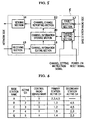
- FIG. 5 is a block diagram schematically showing a configuration of a channel selection instructing section, denoted at numeral 5, according to the second embodiment of this invention.
- the parts corresponding those in FIG. 2 are marked with the same reference numerals, and the description thereof will be omitted for brevity.
- the difference of the configuration in FIG. 5 from that in FIG. 2 is as follows.
- Numeral 20 represents a channel information storage section, which, as shown in FIG. 6, stores, in relation to each of the base station radio units 2-1 to 2-5 (in the illustration, "A”, “B", “C”, “P” and “Q” in the item “BASE STATION NAME”), 1) channels being used currently (in the illustration, the item “ACTIVE CH”), 2) managing server names (in the illustration, the item “CONTROL RADIO SERVER NAME”), 3) channels being used in peripheral base station radio units (in the illustration, the item “PRIMARY STATION ACTIVE CH”), and 4) channels being used in secondary peripheral base station radio units (in the illustration, the item “SECONDARY STATION ACTIVE CH”).
- the channel information storage section 20 involves a non-volatile memory.
- Numeral 21 depicts a channel setting section which, when a power-on signal or a reset signal is inputted or when the fault detection section 12 detects a fault such as an interfering wave in a subordinate base station radio unit, determines a channel to be set or to which switch is made and gives an instruction as to the determined channel to each of the subordinate base station radio units 20.
- Numeral 22 signifies a channel change reporting section which, when the channel setting section 21 gives an instruction for the setting or switching to a channel to be used to a subordinate base station radio unit, refers to the contents of the channel information storage section 20 for reporting the channel information related to this subordinate base station radio unit through the sending section 14 to all the other radio servers connected to the network 3.
- the channel setting section 21 gives an instruction for the use of the channel stored in the channel information storage section 20 and used immediately before the previous turning-off of the subordinate base station radio unit.
- the channels used immediately before the power-off in the base station radio units 2-1, 2-2 and 2-3 are CH1, CH2 and CH3, respectively, instructions as to these channels are given to the respective subordinate base station radio units.
- the channel change reporting section 22 refers to the contents of the channel information storage section 20 for reporting the information on the channels set in the subordinate base station radio units through the sending section 14 to the other radio servers.
- the channel information editing section 16 receives the channel information from the radio server 1-1 through the receiving section 15, the contents about the active channels of the base station radio units 2-1, 2-2 and 2-3 are updated in the channel information storage section 20.
- the channel setting section 21 instructs the base station radio unit 2-1 of the channel to which switching is to be made.
- the peripheral base station radio units 2-2 to 2-5 are using CH2 to CH5, respectively, and the base station radio unit 2-1 has used the channel CH1, an instruction for the use of the spare channel CH6 is naturally given to the base station radio unit 2-1.
- the channel setting section 21 changes the stored portions corresponding to the channel CH1 in each item in the channel information storage section 20. That is, in the “ACTIVE CH” to A in the “BASE STATION NAME” and in the “PRIMARY STATION ACTIVE CH” to B, C, P and Q in “BASE STATION NAME", the values on the channel CH1 are changed to the values on the channel CH6.
- the channel change reporting section 22 communicates the change of the active channel to the channel CH6 in the base station radio unit 2-1 through the sending section 14 to the radio server 1-2.
- the channel information editing section 16 updates the contents related to the active channel of the base station radio unit 2-1 from the channel CH1 to the channel CH6 in the channel information storage section 20.
- the fault detection section 12 in the radio server 1-2 detects a fault occurring in the communicable area of the base station radio unit 2-5 (whose active channel is CH5).
- the channel setting section 21 in the radio server 1-2 makes a decision about a channel being inactive in the peripheral base station radio units (the foregoing channel selection condition 1)).
- the channel in which the fault occurred is CH5 and the active channels of the base station radio units (base station radio units 2-1 and 2-4) existing on the periphery of the base station radio unit 2-5 are CH6 and CH4, the channels CH1 to CH3 form the available channels.
- the channel setting section 21 selects, of the available channels CH1 to CH3, a channel which does not undergo the intermodulation interference by the active channels of the other base station radio units (the foregoing channel selection condition 2)). That is, in the above-mentioned case, a channel is selected which is not affected by the intermodulation distortion occurring with the following two-channel combinations:
- the channel setting section 21 of the radio server 1-2 gives instructions for the use of that channel to the base station radio unit 2-5.
- the channel setting section 21 gives instructions for the use of the highest- frequency channel of these plurality of channels to the base station radio unit 2-5 (the foregoing channel selection condition 3)).
- the channel setting section 21 changes the stored portions related to the channel CH to those related to the channel, the channel setting section 21 has instructed the base station radio unit 2-4 of, in each of the items in the channel information storage section 20. That is, in the item “ACTIVE CH” to the "BASE STATION NAME” Q, In the item “PRIMARY STATION ACTIVE CH” to the “BASE STATION NAME” A and P and in the item “SECONDARY STATION ACTIVE CH” to the “BASE STATION NAME” B and C, the values of the channel CH5 are changed to the values of the channel the channel setting section 21 has instructed the base station radio unit 2-4 of.
- the channel change reporting section 22 reports the channel information after the change instruction, related to the base station radio unit 2-5 through the sending section 14 to the radio server 1-1. Accordingly, in the radio server 1-1, the channel information editing section 16 changes the portions stored as the channel CH5 in each of the items in the channel information storage section 20 to the reported channel.
- the operator of a radio server manually changes the channel to be used in a base station radio unit.
- the active channel of the base station radio unit 2-1 is CH1
- the active channel of the base station radio unit 2-2 is CH2
- the active channel of the base station radio unit 2-3 is CH3
- the active channel of the base station radio unit 2-4 is CH4
- the active channel of the base station radio unit 2-5 is CH5, and the operator changes the active channel of the base station radio unit 2-3 manually.
- the operator inputs an instruction for changing the channel of the base station radio unit 2-3 to the channel 6 through the use of a keyboard or the like in the radio server 1-1 managing the base station radio unit 2-3.
- a channel setting instruction signal including the contents of the aforesaid instruction is inputted to the channel setting section 21 in FIG. 5.
- the channel setting section 21 issues an instruction for the use of the channel CH6 to the base station radio unit 2-3.
- the channel setting section 21 updates the portions stored as the channel CH3 to the channel CH6 in each of the items in the channel information storage section 20. Still additionally, on the completion of this updating, the channel change reporting section 22 reports the channel information on the base station radio unit 2-3 through the sending section 14 to the radio server 1-2 while, in the radio server 1-2, the channel information editing section 16 updates the portions stored as the channel CH3 to the channel CH6 in each of the items in the channel information storage section 20.
- a radio server first gives an instruction for setting or change of a channel to the base station radio units subordinate to its own self, and then the other servers update the information on the channel set or changed.
- the other servers update the information on the channel set or changed.
- a program for realizing the processing functions shown in FIGs. 2 and 5 is recorded on a recording medium readable by a computer and the computer reads out the program recorded in this recording medium for fulfilling the functions to manage/control the frequencies to be used for communications between base station radio units and mobile terminals.
- computer system is a term including hardware such as OSs and peripheral devices.
- computer-readable recording medium signifies storage devices, such as floppy disks, magneto-optical disks, ROMs, CD-ROMs, and hard disks to be incorporated into computers.
- computer-readable recording medium includes communication lines to be used in transmitting the program through a network such as the Internet or a communication circuit such as a telephone circuit, which dynamically retain the program for a short time, and further includes volatile memories in the interior of a computer system constituting a server or client, which retain the program for a given period of time.
- the foregoing program can also be for realizing a portion of the aforesaid functions, or it can also be designed to realize the functions in corporation with the programs already stored in a computer system.
- the communication processing computer is operated to realize a channel information requesting function for outputting, to other communication processing computers, a channel information requesting signal which is for making a request for the transmission of the channel information on the base station radio units connected to the other communication processing computers, or that, upon receipt of a channel information requesting signal from the other communication processing computer, the communication processing computer is driven to realize a function to send the channel information on the base station radio units connected to its own self to the channel information requesting signal sending communication processing computer for updating the information on the communication frequencies being used in all the base station radio units existing within the radio communication network system in accordance with each of the channel information sent from all the other communication processing computers in response to the request by its own channel information requesting function and further to determine communication frequencies to be used in the base station radio units connected to its own self on the
- the aforesaid communication processing computer is operated to realize a function to determine a communication frequency to be used in the base station radio unit connected to its own communication processing computer on the basis of the information, already stored, on the communication frequencies being used in all the base station radio units existing within the radio communication network system and subsequently to report the determined channel information on the base station radio unit to all the other communication processing computers.
- the foregoing program makes the aforesaid communication processing computer selectively determine, as the frequency to be used, a communication frequency being not in use in the base station radio units existing on the periphery of the communication frequency determination base station radio unit from a plurality of predetermined communication frequencies according to a first condition, and if there are a plurality of communication frequencies falling under the first condition, determine, as the communication frequency to be used, a communication frequency which does not cause the interference due to intermodulation in consideration of the communication frequencies being used in the peripheral base station radio units and in the base station radio units existing on the periphery of the peripheral base station radio units according to a second condition, and further, when there are a plurality of communication frequencies falling under the second condition or when every communication frequency does not fall under the second condition, determine, as the communication frequency to be used, the highest communication frequency of these plurality of channels.
- a plurality of radio communication processing units report the communication frequencies being in use in the base station radio units connected to these units to each other; therefore, they can seize the communication frequencies being used in all the base station radio units lying within a radio communication network system, and when setting a frequency to be used in each of the base station radio units connected to their own selves, they can select a communication frequency which does not interfere with the communication frequencies being used in the base station radio units connected to the other radio communication units, thus enabling stable data communications in a radio communication network system.
Landscapes
- Engineering & Computer Science (AREA)
- Quality & Reliability (AREA)
- Computer Networks & Wireless Communication (AREA)
- Signal Processing (AREA)
- Mobile Radio Communication Systems (AREA)
Applications Claiming Priority (2)
| Application Number | Priority Date | Filing Date | Title |
|---|---|---|---|
| JP00235999A JP3334658B2 (ja) | 1999-01-07 | 1999-01-07 | 無線通信処理装置およびその記録媒体 |
| JP235999 | 1999-01-07 |
Publications (2)
| Publication Number | Publication Date |
|---|---|
| EP1018848A2 true EP1018848A2 (fr) | 2000-07-12 |
| EP1018848A3 EP1018848A3 (fr) | 2001-01-17 |
Family
ID=11527082
Family Applications (1)
| Application Number | Title | Priority Date | Filing Date |
|---|---|---|---|
| EP00100116A Withdrawn EP1018848A3 (fr) | 1999-01-07 | 2000-01-05 | Unité pour le traitement d'information de canal pour une station de base |
Country Status (3)
| Country | Link |
|---|---|
| US (1) | US20040025182A1 (fr) |
| EP (1) | EP1018848A3 (fr) |
| JP (1) | JP3334658B2 (fr) |
Cited By (1)
| Publication number | Priority date | Publication date | Assignee | Title |
|---|---|---|---|---|
| EP2519056A4 (fr) * | 2009-12-22 | 2015-07-29 | Zte Corp | Procédé et système de réduction d'interférences entre stations de base dans un mode dégradé |
Families Citing this family (12)
| Publication number | Priority date | Publication date | Assignee | Title |
|---|---|---|---|---|
| JP4014823B2 (ja) | 2001-05-25 | 2007-11-28 | 株式会社エヌ・ティ・ティ・ドコモ | 通信チャネル設定方法及び通信制御装置 |
| US20060252430A1 (en) * | 2005-02-08 | 2006-11-09 | Nokia Corporation | Frequency layer dispersion |
| EP2247136B1 (fr) * | 2005-10-13 | 2016-04-27 | Mitsubishi Electric R&D Centre Europe B.V. | Détermination de la domaine d'operation d'une station de base dans un réseau cellulaire |
| US8861483B2 (en) * | 2007-02-13 | 2014-10-14 | Sk Telecom Co., Ltd. | Method for allocating a beacon slot using a beacon table in wireless personal area network (WPAN) and WPAN device |
| JP5195902B2 (ja) * | 2008-03-28 | 2013-05-15 | 富士通株式会社 | 携帯端末装置および携帯端末装置の省電力制御方法 |
| JP4825855B2 (ja) * | 2008-09-09 | 2011-11-30 | 東芝テック株式会社 | 無線通信システム |
| US8458684B2 (en) * | 2009-08-19 | 2013-06-04 | International Business Machines Corporation | Insertion of operation-and-indicate instructions for optimized SIMD code |
| US20110047358A1 (en) * | 2009-08-19 | 2011-02-24 | International Business Machines Corporation | In-Data Path Tracking of Floating Point Exceptions and Store-Based Exception Indication |
| JP5962670B2 (ja) * | 2012-01-26 | 2016-08-03 | ソニー株式会社 | 無線通信装置及び無線通信方法、並びに無線通信システム |
| CN110208727B (zh) * | 2019-07-12 | 2022-06-14 | 上海金智晟东电力科技有限公司 | 故障指示器精度校验测试的处理方法、处理装置与系统 |
| EP3997922A4 (fr) * | 2019-07-18 | 2023-08-02 | Aura Intelligent Systems, Inc. | Économie d'énergie pour radar numérique |
| US11240748B1 (en) * | 2020-03-04 | 2022-02-01 | Sprint Communications Company L.P. | Multi-frequency data communication service over multiple wireless access nodes |
Family Cites Families (17)
| Publication number | Priority date | Publication date | Assignee | Title |
|---|---|---|---|---|
| US5134709A (en) * | 1990-12-14 | 1992-07-28 | At&T Bell Laboratories | Process and apparatus for flexible channel assignment in cellular radiotelephone systems |
| JP2692418B2 (ja) * | 1991-05-17 | 1997-12-17 | 日本電気株式会社 | 無線チャネル割当方式 |
| AU670955B2 (en) * | 1992-08-04 | 1996-08-08 | Koninklijke Philips Electronics N.V. | Mobile radio system |
| US5491837A (en) * | 1994-03-07 | 1996-02-13 | Ericsson Inc. | Method and system for channel allocation using power control and mobile-assisted handover measurements |
| FR2717329B1 (fr) * | 1994-03-08 | 1996-07-05 | Alcatel Mobile Comm France | Système cellulaire de radiocommunications mobiles. |
| AU2595595A (en) * | 1994-05-19 | 1995-12-18 | Airnet Communications Corporation | System for dynamically allocating channels among base stations in a wireless communication system |
| US5649292A (en) * | 1994-10-31 | 1997-07-15 | Airnet Communications Corporation | Obtaining improved frequency reuse in wireless communication systems |
| US5898928A (en) * | 1996-02-29 | 1999-04-27 | Telefonaktiebolaget Lm Ericsson | Adaptive frequency allocation in a telecommunication system |
| EP0906673A4 (fr) * | 1996-03-08 | 2000-09-06 | Watkins Johnson Co | Systeme de communication sans fil a attribution dynamique de canaux |
| US6108321A (en) * | 1996-06-28 | 2000-08-22 | Lucent Technologies Inc. | Interference based dynamic channel assignment |
| US5822698A (en) * | 1996-08-08 | 1998-10-13 | Northern Telecom Limited | Microcell frequency planning |
| US6009332A (en) * | 1996-08-28 | 1999-12-28 | Telefonaktiebolaget Lm Ericsson | Method and system for autonomously allocating a frequency hopping traffic channel in a private radio system |
| US6023459A (en) * | 1996-12-04 | 2000-02-08 | Northern Telecom Limited | Frequency assignment in wireless networks |
| US5960351A (en) * | 1997-02-26 | 1999-09-28 | Ericsson Inc. | Radio frequency planning and assignment in a discontiguous spectrum environment |
| JP3000974B2 (ja) * | 1997-08-28 | 2000-01-17 | 日本電気株式会社 | セルラシステムの周波数キャリア割り当て方法 |
| US6049717A (en) * | 1998-02-02 | 2000-04-11 | Telefonaktiebolaget L M Ericsson | Operator assisted tool and method for frequency plan revision within a cellular telephone system |
| US6424836B1 (en) * | 1999-02-09 | 2002-07-23 | Innowave Eci Wireless Systems Ltd. | Method for allocating frequency channels for sectors of a cell in cellular systems |
-
1999
- 1999-01-07 JP JP00235999A patent/JP3334658B2/ja not_active Expired - Fee Related
-
2000
- 2000-01-05 EP EP00100116A patent/EP1018848A3/fr not_active Withdrawn
-
2003
- 2003-07-30 US US10/629,622 patent/US20040025182A1/en not_active Abandoned
Cited By (1)
| Publication number | Priority date | Publication date | Assignee | Title |
|---|---|---|---|---|
| EP2519056A4 (fr) * | 2009-12-22 | 2015-07-29 | Zte Corp | Procédé et système de réduction d'interférences entre stations de base dans un mode dégradé |
Also Published As
| Publication number | Publication date |
|---|---|
| JP3334658B2 (ja) | 2002-10-15 |
| EP1018848A3 (fr) | 2001-01-17 |
| JP2000201372A (ja) | 2000-07-18 |
| US20040025182A1 (en) | 2004-02-05 |
Similar Documents
| Publication | Publication Date | Title |
|---|---|---|
| EP1018848A2 (fr) | Unité pour le traitement d'information de canal pour une station de base | |
| JP4409512B2 (ja) | ワイヤレスマイクロホン用通信システム | |
| US20200382947A1 (en) | Terminal setting change notification | |
| US6393261B1 (en) | Multi-communication access point | |
| US7120459B2 (en) | Mobility control apparatus, mobile communication terminal and mobile communication system | |
| US20090029736A1 (en) | Mobile terminal and sim indicative information display method thereof | |
| KR20000005748A (ko) | 무선통신시스템의핸드오프제어장치및그방법 | |
| US20080008109A1 (en) | Method and apparatus for bridging wireless control networks | |
| EP4080824A1 (fr) | Procédé et appareil de configuration de paramètres de communication, dispositif, et support de stockage | |
| KR20140112331A (ko) | 통신 연결 제어 방법 및 이를 지원하는 전자 장치 | |
| JP2024158651A (ja) | 無線通信機及び無線通信ネットワークシステム | |
| US12193083B2 (en) | Wireless device and operating method of wireless communication system | |
| US6181930B1 (en) | Method for automatic setting of area code in code division multiple access (CDMA) mobile telephone system | |
| KR100443315B1 (ko) | 통신 시스템에서의 페이징 제어 방법 및 페이징 제어시스템 | |
| CN109714722B (zh) | 室内天线的管理方法、装置、电子设备及存储介质 | |
| CN117641506A (zh) | 基于多链路的无线投屏控制方法、装置、设备及介质 | |
| US7171463B1 (en) | System and method for denoting and communicating with computer network mobile sites | |
| CN113727442B (zh) | 一种信息配置方法、装置、设备及可读存储介质 | |
| JPS5919448A (ja) | 移動局と固定局との最適化送受信方法 | |
| US20060253866A1 (en) | Mobile station assisted control and display of media content | |
| JP2659342B2 (ja) | 移動端末情報管理システム | |
| JP2665194B2 (ja) | Mcaシステムおよびその位置登録方法 | |
| KR100429527B1 (ko) | 이동단말기의 아이피 제어 장치 및 방법 | |
| WO2025156809A1 (fr) | Procédé de communication par satellite, et dispositif et support de stockage | |
| CN117880926A (zh) | 动态组网方法、装置、电子设备及存储介质 |
Legal Events
| Date | Code | Title | Description |
|---|---|---|---|
| PUAI | Public reference made under article 153(3) epc to a published international application that has entered the european phase |
Free format text: ORIGINAL CODE: 0009012 |
|
| AK | Designated contracting states |
Kind code of ref document: A2 Designated state(s): DE FR GB |
|
| AX | Request for extension of the european patent |
Free format text: AL;LT;LV;MK;RO;SI |
|
| PUAL | Search report despatched |
Free format text: ORIGINAL CODE: 0009013 |
|
| AK | Designated contracting states |
Kind code of ref document: A3 Designated state(s): AT BE CH CY DE DK ES FI FR GB GR IE IT LI LU MC NL PT SE |
|
| AX | Request for extension of the european patent |
Free format text: AL;LT;LV;MK;RO;SI |
|
| RIC1 | Information provided on ipc code assigned before grant |
Free format text: 7H 04Q 7/38 A, 7H 04Q 7/36 B |
|
| 17P | Request for examination filed |
Effective date: 20010716 |
|
| AKX | Designation fees paid |
Free format text: DE FR GB |
|
| STAA | Information on the status of an ep patent application or granted ep patent |
Free format text: STATUS: THE APPLICATION IS DEEMED TO BE WITHDRAWN |
|
| 18D | Application deemed to be withdrawn |
Effective date: 20050802 |