EP1019848B1 - Masque de saisie associant des donnees a un type de champ correspondant - Google Patents
Masque de saisie associant des donnees a un type de champ correspondant Download PDFInfo
- Publication number
- EP1019848B1 EP1019848B1 EP98912617A EP98912617A EP1019848B1 EP 1019848 B1 EP1019848 B1 EP 1019848B1 EP 98912617 A EP98912617 A EP 98912617A EP 98912617 A EP98912617 A EP 98912617A EP 1019848 B1 EP1019848 B1 EP 1019848B1
- Authority
- EP
- European Patent Office
- Prior art keywords
- data
- input
- item
- data entry
- data item
- Prior art date
- Legal status (The legal status is an assumption and is not a legal conclusion. Google has not performed a legal analysis and makes no representation as to the accuracy of the status listed.)
- Expired - Lifetime
Links
Images

Classifications
-
- G—PHYSICS
- G06—COMPUTING OR CALCULATING; COUNTING
- G06F—ELECTRIC DIGITAL DATA PROCESSING
- G06F3/00—Input arrangements for transferring data to be processed into a form capable of being handled by the computer; Output arrangements for transferring data from processing unit to output unit, e.g. interface arrangements
- G06F3/16—Sound input; Sound output
-
- G—PHYSICS
- G06—COMPUTING OR CALCULATING; COUNTING
- G06F—ELECTRIC DIGITAL DATA PROCESSING
- G06F40/00—Handling natural language data
- G06F40/10—Text processing
- G06F40/166—Editing, e.g. inserting or deleting
- G06F40/174—Form filling; Merging
Definitions
- the present invention relates to an improved system for document completion or form filling in the context of a word-processing system or for the entry of data into a database, in particular, to a data entry system comprising input means for the input of items of data; database means for storing a plurality of records, each record consisting of one or more data items, each data item being defined as being in one of a number of data categories; and means for storing at least one document format or data entry form, the document format or data entry form having at least one field for the addition of a data item from a predetermined category.
- a data entry system comprising input means for the input of items of data; database means for storing a plurality of records, each record consisting of one or more data items, each data item being defined as being in one of a number of data categories; and means for storing at least one document format or data entry form, the document format or data entry form having at least one field for the addition of a data item from a predetermined category.
- This document describes a system for the automatic filling in of data in forms for a database.
- this prior art system it is necessary to perform the data entry operation in a particular manner, firstly, by giving a navigation command and then selecting, in turn, from a menu of sub-menus and value lists.
- the system can only operate in a relatively rigid manner because of the hierarchical arrangement of data items within each form section.
- this system does not provide a solution to the problem identified by the present applicant, that is, to provide a data input form which can easily be used by unskilled users.
- International application WO 96/13009 is directed at an improved scheme for setting up data input forms using a hierarchical menu and value lists structure. It does not serve to facilitate navigation around the form in a manner which is of assistance to unskilled users.
- GUI graphical user interface
- a data entry system characterised in that it comprises means for receiving a data item input at the input means and for comparing it with stored reference data to find a match for the input data item, and, hence, to identify the data category to which said input data item belongs; said means for receiving being operable to add the input data item to the document format or data entry form.at a field associated with the data category so identified.
- the stored reference data comprises at least one register of information derived from at least some of the plurality of records stored in the database means but separate from them. This has the advantage over using the records in the database means themselves for reference purposes that a more sophisticated search package can be used to generate and search the register or registers, allowing speedier operation and more efficient comparison.
- the data entry system comprises.at least one register of commands; the means for receiving a data item input at the input means being operable to compare the said data item with the content of the register of commands to find a matching item and, hence, to identify commands input at the input means.
- the user can simply input data and commands without the need to identify commands to the system, making the system easier for an unskilled user to use.
- the input means includes a voice recognition system capable of converting audible speech into electrical signals suitable for input to the means for receiving data items.
- Voice recognition systems are in increasingly widespread use as an easy means for using computers or other electronic systems. In general, they permit the user to speak commands to the device in question. When incorporated into direct dictation systems, they also allow the user to dictate text directly into a word-processing system without the need for a keyboard or an intermediary skilled in typing. It will be appreciated that such systems allow input of two kinds; direct commands, for example, OPEN FILE, which cause operation of programs, and text or data, which is to be added as such to documents or records.
- direct commands for example, OPEN FILE, which cause operation of programs, and text or data, which is to be added as such to documents or records.
- the invention provides a method of generating a data entry system of the kind referred to above for a particular application, the method comprising analysing a pre-existing document format or data entry form used in the said application to identify and characterise fields provided for the addition of data and to generate additional code for inclusion in operating software under which the application is to run and/or the application software for the application under which data is to be entered, and adding the code generated to the operating and/or application software, respectively; the added code acting in use to cause comparison of each input data item with the stored reference data and to add the input data item to the document format or data entry form at a field associated with the data category identified.
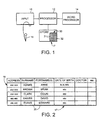
- a preferred embodiment of a system in accordance with the invention comprises a direct dictation unit 10 including a voice recognition system, a processor 12 which interfaces with both the direct dictation unit 10 and with a word-processor or database storage 14 or both.
- the three units 10, 12 and 14 may effectively be implemented using the processor of a single personal computer ('pc'), for example, a 486 series pc or a pc containing a pentium processor supplied by Intel Corporation provided with 16 or 32 Mb of RAM and 30 Mb of hard disc space.
- the system requires a suitable microphone 16, for example, the microphone supplied by Talking Technologies under the trade mark 'TALK MIC' which is particularly suitable for use in voice activated or direct dictation systems since it is capable of transmitting accurately the user's voice without corruption and free of extraneous background noise.
- a suitable microphone for example, the microphone supplied by Talking Technologies under the trade mark 'TALK MIC' which is particularly suitable for use in voice activated or direct dictation systems since it is capable of transmitting accurately the user's voice without corruption and free of extraneous background noise.
- the direct dictation unit 10 which is used for voice activation of the system may, for example, be implemented by using one of a number of commercially available software packages, for example, IBM Voicetype, supplied by IBM Corporation, or Kurzweil Voice, supplied by Xerox Corporation and a suitable pc. These packages transform the input from the microphone 16 into input capable of recognition by the word processing system being used to generate the finished document or by data input software accessed by means of a form of the kind described above.
- the system is particularly advantageous when used in combination with stored data held in computer memory 17, for example, a conventional database or other organised memory of some kind.
- the database may be used to store data, for example, lists of patients' names and addresses, dates of birth, and the like.
- the database 17 may be associated with one or more documents of a word-processing system, as a source of external data, or may be associated with one or more forms, by means of which data can be added to the database or both.
- the screen of the pc may carry a display which serves both functions; the display may represent the format of a document, which can be printed off or stored as a complete file for further use, while, at the same time, functioning as a form for data entry.
- items of data of different types or categories may be associated or linked to form a single record 18. This can best be explained by likening the database to a grid of boxes or fields capable of storing information, as shown in Figure 2.
- Each row 19 of boxes (or 'record') may be used to store information about a single individual, each column 20 storing information of a particular type (or 'data category'), for example, dates of birth for a plurality of individuals.
- the user calls up a standard form, if data is to be entered, or document, which may be a letter or other document template.
- the form or document template 22 comprises of a number of boxes or fields 23 into which information of a particular kind is to be entered, in a similar manner to completing a conventional paper form.(See Figure 3).
- Data and commands can be input using the voice recognition unit 10 or, more conventionally, by using a keyboard (not shown).
- the user can then start to add data to the document or form 22 by inputting data using the voice recognition unit 10.
- the invention provides that it is not necessary for the user to identify the category of information being input.
- the processor 12 takes the input from the voice recognition unit 10 and compares it with stored data until it finds a match.
- the processor 12 will compare the information which has been inputted with the data items of a first category 20 within the database, for example, it may first compare the inputted surname with the column of data representing addresses. It will not, of course, find a matching data item in this first category and will then move on to compare the inputted data with items stored in the second category and so on.
- the processor 12 When a matching item is found, the processor 12 causes the information to be added by the word-processor 14 to the selected document or form, inserting it at the appropriate field or 'box' 23 according to the category or type 20 of data item with which the processor 12 matched it. So, if the inputted data item matches a surname held in the database storage, the data will be added to the document in the box 23 which corresponds to the patient's surname on the form.
- searching and indexing packages available may permit the grouping or clustering or terms, in effect, a two-tier indexing allowing terms to be grouped together, for example, all conditions affecting the eye might be grouped or 'clustered' within the registry 31 or index for 'diagnoses' so that once it has been determined that a particular patient suffers from an eye problem, a match is sought only among those conditions which affect the eye.
- a separate registry 31 may be stored for each data category 20, some will in effect be a simple alphabetical or numeric listing of all data items in a category, others may be more complex.
- some registries may contain purely numeric data, for example, dates of birth, and others alphabetic data. Using suitable software for searching and indexing, the system can recognise, for example, purely numeric data, and will consequently not look for a match in categories containing alphabetic information.
- Each registry 31 will, however, be associated with a single data category so that, if a match is found, it should in most cases provide a clear indication as to the category to which data should be added.
- the user can input further items of data using the voice activation unit 10, each further data item being checked by the processor 12 against stored information in either the database 17 itself, or, preferably, the registries held in the memory 30. Once a match has been found, each additional data item can be added to the document or form 22 at the appropriate location 23.
- the first step will, of course, be to select the required record 19. This can be achieved by using the same data matching procedure as is described above in connection with selection of an appropriate data category 20. Most users will, for speed, select a data item which is unique or nearly unique to a particular record 19, for example, the patient's surname. However, the user might only be able to recall a data item from the required record of the kind likely to give rise to multiple matches during the checking operation.
- the software causes all records containing a matched data item to be displayed so as to allow the user to select the required record 19.
- a logical AND operation For example, a doctor might recall simply that a patient whose record is to be updated, was admitted on a particular date with a particular condition.
- suitable search software it is straightforward to locate a record which contains data items matching the admission ate and the patient's condition.
- the system is such that identification of the required record 19 in the database by the processor 12 causes the all data items from that record 19 for which there are corresponding boxes or locations 23 on the displayed form or document 22 to be displayed at the appropriate locations 23 in the document or form 22 automatically.
- the database storage also holds details of a patient's forenames, address, date of birth and doctor's name, these items can be added to the form 22, if the form has appropriate fields 23 for entry of these data items, automatically on finding a match for the input data item in a record held in the database 17.
- the document or form 22 may include further fields or boxes 23 to which free text can be added by the user at will, using the voice activation or direct dictation unit 10.
- the document or form might, in the example referred to above, include one or more fields into which a patient's case notes may be added by dictation.
- the voice recognition system or other input means 10 may also allow the user to input commands for navigating around the document or form 22 directly, for closing a particular operation or application or for selecting another form or document. It is possible, using the system of indexes or registries described above to avoid any need for the user to distinguish commands from other spoken input to the system.
- the stored data held in the memory 30 may include a registry 32 of command words so that if the input is matched against an item in the commands registry 32 it is treated by the system as a command not as text or other data to be matched.
- the registry of commands might, for example, include words such as 'up', 'down' and 'next', as well as labels identifying particular fields 23, such as 'surname', 'doctor', 'd.o.b' used for moving from field to field 23 within a chosen form or document. It might also include a list of document and/or form names to enable the user to select the required form or document easily.
- the commands registry 32 might include more general commands such as 'open', 'close' or 'print' which can be used with any form or document.
- the system described allows for very easy and quick completion of documents and forms for printing or addition of data to database systems and records for storage by unskilled users, lessening or eliminating errors due to operator errors(bias) and making data entry consistent by permitting specific data items to be entered always in the same manner and format.
- the Active X Technology has developed from a tool previously known as o bject l inking & e mbedding - OLE - widely used by software developers to provide specific capabilities not available within the development environment. Such capabilities can be engineered by writing specific instructions to the computer's operating system or to other applications and then encapsulating these as a tool that 'plugs and plays'.
- the Active X technology permits the same object linking as was previously possible through OLE, it is a much broader concept and encompasses a much wider functionality, automating several tasks in one or more applications and having them called from another.
- the Active X technology is a medium for creating simple or complex objects, applying properties to them, giving them methods, raising events and then providing a common shell of functionality and connectivity to the development space of the development programming language. Because the Active X technology consists of consistent methods which are recognised by major development languages as well as the operating systems found in a pc environment, the Active X technology allows for better communication and connectivity than was possible with OLE. Most major software suppliers now write their software products to be compatible with Active X technology.
- the term 'object' is used to describe any virtual or abstract item which is capable of having properties, and methods and raising events.
- an application package like Microsoft Word is an object, as is a spreadsheet or a collection of data cells (a database), a single data cell or a text box.
- the term 'object' is limited to those objects, sometimes referred to as 'component objects' or 'window objects' which meet the requirements of a standard known as the Component Object Model ('COM').
- the COM requires:
- the Active X control we have developed analyses the form or document in great detail and writes 'script codes' which allow the input means, for example, the voice recognition software referred to above, to communicate with the form or document without any skilled user involvement.
- a form consists of a plurality of 'controls' which consist of defined 'events', 'properties' and 'methods'. Events are actions built into the form; they may self-refer or may act on other events by means of 'methods', eg, 'open', 'close' or 'click'. 'Properties' relate to name, size and other similar descriptors. Examples of events are:
- the Active X control analyses the content of the form, its structure, the relationships between the contents of the form, and the relationship between the content of the form and any associated database. This is possible because the development software, in the example given, Visual Basic, complies with the component object model (COM). In particular, our Active X control identifies all events within the form, all methods which can be called and all properties which can be modified. It also lists and names all controls within a given form and their relative locations, which are generally defined by reference to the control's 'tab' property.
- COM component object model
- the Active X control also analyses the controls themselves, again identifying all events, methods or properties associated with each control. any links between the form and any associated database.
- the Active X control then performs a decision making process co determine which items on the form need coding for recognition by the input means, in the example given above, voice recognition software. It then generates codes automatically for the items selected by the decision making process and inserts these codes into the voice recognition software. These codes permit the input means 10 to recognise as commands input intended to enable further actions to be taken, or as control and navigation information allowing movement within the form or another record, to another form or to close the form. In addition codes are inserted into the voice recognition software to allow the system to identify the locations on the form or document 22 where converted speech input should be placed as text.
- the voice recognition software when the voice recognition software is selected by the user, the voice recognition software will have in its stored list of recognised commands all the words which will be needed to navigate around a form, select a particular location for entry of text or enter the text itself within selected locations on the form.
- the Active X control may, in addition, automatically generate codes for inclusion in the commands registry 32 or in the registries 31 or indexes used as described above to allocate input data to the correct data category 20 in a given record 19. So, as each data item is input it will be checked against existing entries and, if none is found, the Active X control will cause the required code for the new entry to be added to the relevant register for that data category once the user has identified it.
- the Active X control is equally effective whether the template under analysis is a document for completion and printing or a data entry form for the input of data to a database or other record system. It will operate on any form or document generated using development software compatible with Active X technology.
Landscapes
- Engineering & Computer Science (AREA)
- Theoretical Computer Science (AREA)
- General Engineering & Computer Science (AREA)
- General Health & Medical Sciences (AREA)
- Physics & Mathematics (AREA)
- Health & Medical Sciences (AREA)
- General Physics & Mathematics (AREA)
- Audiology, Speech & Language Pathology (AREA)
- Human Computer Interaction (AREA)
- Artificial Intelligence (AREA)
- Computational Linguistics (AREA)
- Document Processing Apparatus (AREA)
- Information Retrieval, Db Structures And Fs Structures Therefor (AREA)
Claims (18)
- Système de saisie de données comprenant :un moyen d'entrée (10) pour l'entrée d'éléments de données ;un moyen de base de données (17) pour stocker une pluralité d'enregistrements (19), chaque enregistrement (19) consistant en un ou plusieurs éléments de données, chaque élément de données étant défini comme appartenant à l'une d'un nombre de catégories de données (20) ; etun moyen (12) pour stocker au moins un format de document ou formulaire de saisie de données, le format de document ou formulaire de saisie de données ayant au moins un champ pour l'ajout d'un élément de données d'une catégorie prédéterminée (20) ; le système étant caractérisé en ce qu'il comprendun moyen (12) pour recevoir un élément de données entré au niveau du moyen d'entrée (10) et pour le comparer à des données de référence stockées afin de trouver une concordance pour l'élément de données entré, et, ainsi, identifier la catégorie de données (20) à laquelle appartient ledit élément de données entré ; ledit moyen (12) pour recevoir étant exploitable pour ajouter l'élément de données entré au format de document ou formulaire de saisie de données au niveau d'un champ associé à la catégorie de données (20) ainsi identifiée.
- Système de saisie de données selon la revendication 1, dans lequel les données de référence stockées comprennent au moins certains de la pluralité d'enregistrements (19) stockés dans le moyen de base de données (17).
- Système de saisie de données selon la revendication 1, dans lequel les données de référence stockées comprennent au moins un registre (31) d'informations dérivées d'au moins certains de la pluralité d'enregistrements (19) stockés dans le moyen de base de données (17) mais distinct d'eux.
- Système de saisie de données selon l'une quelconque des revendications précédentes, dans lequel le moyen (10) pour recevoir un élément de données entré est exploitable pour comparer l'élément de données entré à des données de référence stockées afin de trouver une concordance pour l'élément de données entré, et, ainsi, identifier un enregistrement (19) stocké dans le moyen de base de données (17).
- Système de saisie de données selon la revendication 4, dans lequel l'identification d'un enregistrement (19) force l'ajout d'un ou de plusieurs éléments de données supplémentaires de l'enregistrement (19) dans lequel l'élément concordant est détenu dans le format de document ou formulaire de saisie de données au niveau de champs en fonction des catégories (20) desdits un ou plusieurs éléments supplémentaires.
- Système de saisie de données selon l'une quelconque des revendications précédentes, comprenant au moins un registre (31) de commandes ; le moyen pour recevoir un élément de données entré au niveau du moyen d'entrée (10) étant exploitable pour comparer ledit élément de données au contenu du registre (31) de commandes afin de trouver un élément concordant et, ainsi, identifier des commandes entrées au niveau du moyen d'entrée.
- Système de saisie de données selon l'une quelconque des revendications précédentes, dans lequel le moyen d'entrée comprend un système de reconnaissance de parole capable de convertir la parole audible en signaux électriques pouvant être entrés dans le moyen (10) pour recevoir des éléments de données.
- Procédé de saisie de données comprenant :le stockage dans un moyen de base de données d'une pluralité d'enregistrements, consistant chacun en un ou plusieurs éléments de données, chaque élément de données étant défini comme appartenant à l'une d'un nombre de catégories de données ;le stockage d'au moins un format de document ou formulaire de saisie de données, chaque format de document ou formulaire de saisie de données ayant au moins un champ pour l'ajout d'un élément de données d'une catégorie prédéterminée ; etl'entrée d'un élément de données ; le procédé étant caractérisé parla réception d'un élément de données entré; la comparaison de l'élément de données entré à des données de référence stockées afin de trouver une concordance pour l'élément de données entré, et, ainsi, identifier la catégorie de données à laquelle appartient ledit élément de données entré ; et l'ajout de l'élément de données entré au format de document ou formulaire de saisie de données au niveau d'un champ associé à la catégorie de données ainsi identifiée.
- Procédé de saisie de données selon la revendication 8, dans lequel l'élément de données entré est comparé à des données de référence stockées comprenant au moins certains de la pluralité d'enregistrements stockés dans le moyen de base de données.
- Procédé de saisie de données selon la revendication 8, dans lequel l'élément de données entré est comparé à des données de référence stockées comprenant au moins un registre d'informations dérivées d'au moins certains de la pluralité d'enregistrements stockés dans le moyen de base de données mais distinct d'eux.
- Procédé de saisie de données selon l'une quelconque des revendications 8 à 10, dans lequel un élément de données entré est comparé à des données de référence stockées afin de trouver une concordance pour l'élément de données entré, et, ainsi, identifier un enregistrement stocké dans le moyen de base de données.
- Procédé de saisie de données selon la revendication 11, dans lequel l'identification d'un enregistrement force l'ajout d'un ou de plusieurs éléments de données supplémentaires de l'enregistrement dans lequel l'élément concordant est détenu au format de document ou formulaire de saisie de données au niveau de champs en fonction des catégories desdits un ou plusieurs éléments supplémentaires.
- Procédé de saisie de données selon l'une quelconque des revendications 8 à 12, comprenant en outre le stockage d'au moins un registre de commandes ; et la comparaison d'un élément de données entré au contenu du registre de commandes afin de trouver un élément concordant et, ainsi, identifier des commandes entrées au niveau du moyen d'entrée.
- Système de saisie de données selon l'une quelconque des revendications précédentes, dans lequel les éléments de données sont entrés oralement au moyen d'un système de reconnaissance de parole capable de convertir la parole audible en éléments de données pouvant être comparés à des données de référence stockées.
- Procédé de génération d'un système de saisie de données selon la revendication 1 pour une application particulière, le procédé comprenant l'analyse d'un format de document ou formulaire de saisie de données préexistant utilisé dans ladite application pour identifier et caractériser des champs fournis pour l'ajout de données et générer un code supplémentaire à inclure dans le logiciel d'exploitation sous lequel l'application est exécutée et/ou le logiciel d'application de l'application sous laquelle les données doivent être entrées, et l'ajout du code généré au logiciel d'exploitation et/ou d'application, respectivement ; le code ajouté servant durant l'utilisation à lancer une comparaison de chaque élément de données entré aux données de référence stockées et à ajouter l'élément de données entré au format de document ou formulaire de saisie de données au niveau d'un champ associé à la catégorie de données identifiée.
- Procédé selon la revendication 15, dans lequel le code généré entraíne aussi la dérivée d'au moins un registre d'informations à partir d'au moins certains de la pluralité d'enregistrements stockés dans le moyen de base de données pour leur comparaison à des éléments de données entrés, le code servant durant l'utilisation à ajouter audit registre d'informations quand chaque élément de données suivant est entré.
- Procédé selon la revendication 15 ou 16, dans lequel l'application est une application de modèle d'objet composant et le format de document ou formulaire de saisie de données est analysé et le code pour l'ajout au logiciel d'exploitation et/ou d'application est généré au moyen d'une commande Active X telle que définie précédemment.
- Commande Active X telle que définie précédemment, destinée à être utilisée dans la génération d'un système de saisie de données conformément à la revendication 1 pour une application particulière.
Applications Claiming Priority (3)
| Application Number | Priority Date | Filing Date | Title |
|---|---|---|---|
| GBGB9705926.5A GB9705926D0 (en) | 1997-03-21 | 1997-03-21 | Improved document completion |
| GB9705926 | 1997-03-21 | ||
| PCT/GB1998/000879 WO1998043181A1 (fr) | 1997-03-21 | 1998-03-23 | Masque de saisie associant des donnees a un type de champ correspondant |
Publications (2)
| Publication Number | Publication Date |
|---|---|
| EP1019848A1 EP1019848A1 (fr) | 2000-07-19 |
| EP1019848B1 true EP1019848B1 (fr) | 2004-11-10 |
Family
ID=10809660
Family Applications (1)
| Application Number | Title | Priority Date | Filing Date |
|---|---|---|---|
| EP98912617A Expired - Lifetime EP1019848B1 (fr) | 1997-03-21 | 1998-03-23 | Masque de saisie associant des donnees a un type de champ correspondant |
Country Status (4)
| Country | Link |
|---|---|
| EP (1) | EP1019848B1 (fr) |
| DE (1) | DE69827519D1 (fr) |
| GB (1) | GB9705926D0 (fr) |
| WO (1) | WO1998043181A1 (fr) |
Cited By (2)
| Publication number | Priority date | Publication date | Assignee | Title |
|---|---|---|---|---|
| US8935299B2 (en) * | 2012-07-19 | 2015-01-13 | Facebook, Inc. | Identifying relevant data for pages in a social networking system |
| US9696890B2 (en) | 2015-05-06 | 2017-07-04 | International Business Machines Corporation | File-centric form selection based on number of mandatory and optional input fields of a form satisfied by a selection of files |
Families Citing this family (13)
| Publication number | Priority date | Publication date | Assignee | Title |
|---|---|---|---|---|
| KR100549482B1 (ko) | 2001-03-22 | 2006-02-08 | 캐논 가부시끼가이샤 | 정보 처리 장치, 정보처리 방법, 및 프로그램을 기억하는 컴퓨터 판독가능 기억 매체 |
| US7370032B2 (en) | 2002-04-30 | 2008-05-06 | Sap Ag | Data gathering |
| US20030204498A1 (en) * | 2002-04-30 | 2003-10-30 | Lehnert Bernd R. | Customer interaction reporting |
| US7251656B2 (en) | 2002-07-26 | 2007-07-31 | Checkfree Corporation | Electronic payments using multiple unique payee identifiers |
| US7444285B2 (en) | 2002-12-06 | 2008-10-28 | 3M Innovative Properties Company | Method and system for sequential insertion of speech recognition results to facilitate deferred transcription services |
| US7774694B2 (en) * | 2002-12-06 | 2010-08-10 | 3M Innovation Properties Company | Method and system for server-based sequential insertion processing of speech recognition results |
| US7500178B1 (en) * | 2003-09-11 | 2009-03-03 | Agis Network, Inc. | Techniques for processing electronic forms |
| US8825715B1 (en) * | 2010-10-29 | 2014-09-02 | Google Inc. | Distributed state/mask sets |
| US9141707B2 (en) | 2012-07-19 | 2015-09-22 | Facebook, Inc. | Context-based object retrieval in a social networking system |
| US9569535B2 (en) * | 2012-09-24 | 2017-02-14 | Rainmaker Digital Llc | Systems and methods for keyword research and content analysis |
| KR102458338B1 (ko) * | 2017-11-30 | 2022-10-25 | 삼성전자주식회사 | 컴퓨팅 장치의 정보 입력 방법 및 그 컴퓨팅 장치 |
| CN110399434A (zh) * | 2019-07-25 | 2019-11-01 | 北京明略软件系统有限公司 | 字段分类方法及装置、存储介质、电子装置 |
| CN113779065B (zh) * | 2021-08-23 | 2024-09-06 | 深圳价值在线信息科技股份有限公司 | 数据比对的验证方法、装置、终端设备及介质 |
Family Cites Families (4)
| Publication number | Priority date | Publication date | Assignee | Title |
|---|---|---|---|---|
| US5168548A (en) * | 1990-05-17 | 1992-12-01 | Kurzweil Applied Intelligence, Inc. | Integrated voice controlled report generating and communicating system |
| EP0598598B1 (fr) * | 1992-11-18 | 2000-02-02 | Canon Information Systems, Inc. | Processeur de conversion texte-parole et utilisation d'un analyseur dans un tel processeur |
| DE69326431T2 (de) * | 1992-12-28 | 2000-02-03 | Kabushiki Kaisha Toshiba, Kawasaki | Spracherkennungs-Schnittstellensystem, das als Fenstersystem und Sprach-Postsystem verwendbar ist |
| US5619708A (en) * | 1994-10-25 | 1997-04-08 | Korteam International, Inc. | System and method for generating database input forms |
-
1997
- 1997-03-21 GB GBGB9705926.5A patent/GB9705926D0/en not_active Ceased
-
1998
- 1998-03-23 EP EP98912617A patent/EP1019848B1/fr not_active Expired - Lifetime
- 1998-03-23 WO PCT/GB1998/000879 patent/WO1998043181A1/fr not_active Ceased
- 1998-03-23 DE DE69827519T patent/DE69827519D1/de not_active Expired - Lifetime
Cited By (3)
| Publication number | Priority date | Publication date | Assignee | Title |
|---|---|---|---|---|
| US8935299B2 (en) * | 2012-07-19 | 2015-01-13 | Facebook, Inc. | Identifying relevant data for pages in a social networking system |
| US9696890B2 (en) | 2015-05-06 | 2017-07-04 | International Business Machines Corporation | File-centric form selection based on number of mandatory and optional input fields of a form satisfied by a selection of files |
| US9857951B2 (en) | 2015-05-06 | 2018-01-02 | International Business Machines Corporation | File-centric form selection based on number of mandatory and optional input fields of a form satisfied by a selection of files |
Also Published As
| Publication number | Publication date |
|---|---|
| WO1998043181A1 (fr) | 1998-10-01 |
| EP1019848A1 (fr) | 2000-07-19 |
| DE69827519D1 (de) | 2004-12-16 |
| GB9705926D0 (en) | 1997-05-07 |
Similar Documents
| Publication | Publication Date | Title |
|---|---|---|
| US5211563A (en) | Computer assisted learning support system and processing method therefor | |
| EP1019848B1 (fr) | Masque de saisie associant des donnees a un type de champ correspondant | |
| US7370275B2 (en) | System and method for providing context to an input method by tagging existing applications | |
| US6684188B1 (en) | Method for production of medical records and other technical documents | |
| US5535323A (en) | Method of and system for displaying context sensitive and application independent help information | |
| RU2332728C2 (ru) | Обеспечение контекстно-зависимых инструментов и справочного информационного наполнения в документах, создаваемых на компьютере | |
| AU713225B2 (en) | Automated document classification system | |
| US5600781A (en) | Method and apparatus for creating a portable personalized operating environment | |
| US7110939B2 (en) | Process of automatically generating translation-example dictionary, program product, computer-readable recording medium and apparatus for performing thereof | |
| US8131756B2 (en) | Apparatus, system and method for developing tools to process natural language text | |
| US8112402B2 (en) | Automatic disambiguation based on a reference resource | |
| US6286131B1 (en) | Debugging tool for linguistic applications | |
| US5890181A (en) | System and method for remotely grouping contents of an action history stack | |
| US5842198A (en) | Data management system, that enables a user to connect existing data to an external file and a program to process that data | |
| EP2162833A1 (fr) | Procédé, système et programme informatique permettant une annotation de texte intelligente | |
| JPH09282330A (ja) | データベース作成方法 | |
| US20080301176A1 (en) | Electronic voice-enabled laboratory notebook | |
| US7555716B2 (en) | Terminology customization in a processing environment | |
| EP1909170A1 (fr) | Procédé et système pour générer automatiquement une interface de communication | |
| US6345269B1 (en) | System and method for communicating with various electronic archive systems | |
| EP1574950B1 (fr) | Dénomination de tâche structurée | |
| JP4096972B2 (ja) | データベース作成装置 | |
| Selby | An investigation of object-oriented interfaces for human computer interaction | |
| NANCY | MARTIN, a Computer Software Program | |
| DIEKELMANN | ROBERT SCHUSTER SUI-LUN LAM |
Legal Events
| Date | Code | Title | Description |
|---|---|---|---|
| PUAI | Public reference made under article 153(3) epc to a published international application that has entered the european phase |
Free format text: ORIGINAL CODE: 0009012 |
|
| 17P | Request for examination filed |
Effective date: 19990608 |
|
| AK | Designated contracting states |
Kind code of ref document: A1 Designated state(s): BE DE FR GB |
|
| 17Q | First examination report despatched |
Effective date: 20010430 |
|
| GRAP | Despatch of communication of intention to grant a patent |
Free format text: ORIGINAL CODE: EPIDOSNIGR1 |
|
| GRAS | Grant fee paid |
Free format text: ORIGINAL CODE: EPIDOSNIGR3 |
|
| GRAA | (expected) grant |
Free format text: ORIGINAL CODE: 0009210 |
|
| AK | Designated contracting states |
Kind code of ref document: B1 Designated state(s): BE DE FR GB |
|
| REG | Reference to a national code |
Ref country code: GB Ref legal event code: FG4D |
|
| REF | Corresponds to: |
Ref document number: 69827519 Country of ref document: DE Date of ref document: 20041216 Kind code of ref document: P |
|
| PG25 | Lapsed in a contracting state [announced via postgrant information from national office to epo] |
Ref country code: DE Free format text: LAPSE BECAUSE OF FAILURE TO SUBMIT A TRANSLATION OF THE DESCRIPTION OR TO PAY THE FEE WITHIN THE PRESCRIBED TIME-LIMIT Effective date: 20050211 |
|
| PLBE | No opposition filed within time limit |
Free format text: ORIGINAL CODE: 0009261 |
|
| STAA | Information on the status of an ep patent application or granted ep patent |
Free format text: STATUS: NO OPPOSITION FILED WITHIN TIME LIMIT |
|
| 26N | No opposition filed |
Effective date: 20050811 |
|
| ET | Fr: translation filed | ||
| PGFP | Annual fee paid to national office [announced via postgrant information from national office to epo] |
Ref country code: FR Payment date: 20110421 Year of fee payment: 14 |
|
| PGFP | Annual fee paid to national office [announced via postgrant information from national office to epo] |
Ref country code: BE Payment date: 20120314 Year of fee payment: 15 |
|
| PGFP | Annual fee paid to national office [announced via postgrant information from national office to epo] |
Ref country code: GB Payment date: 20120425 Year of fee payment: 15 |
|
| REG | Reference to a national code |
Ref country code: FR Ref legal event code: ST Effective date: 20121130 |
|
| PG25 | Lapsed in a contracting state [announced via postgrant information from national office to epo] |
Ref country code: FR Free format text: LAPSE BECAUSE OF NON-PAYMENT OF DUE FEES Effective date: 20120402 |
|
| BERE | Be: lapsed |
Owner name: *MEDICAL TALK SYSTEMS LTD Effective date: 20130331 |
|
| GBPC | Gb: european patent ceased through non-payment of renewal fee |
Effective date: 20130323 |
|
| PG25 | Lapsed in a contracting state [announced via postgrant information from national office to epo] |
Ref country code: GB Free format text: LAPSE BECAUSE OF NON-PAYMENT OF DUE FEES Effective date: 20130323 Ref country code: BE Free format text: LAPSE BECAUSE OF NON-PAYMENT OF DUE FEES Effective date: 20130331 |