EP1022666A2 - Positionnement de signets à distance pour clients "sans fil" - Google Patents
Positionnement de signets à distance pour clients "sans fil" Download PDFInfo
- Publication number
- EP1022666A2 EP1022666A2 EP00300449A EP00300449A EP1022666A2 EP 1022666 A2 EP1022666 A2 EP 1022666A2 EP 00300449 A EP00300449 A EP 00300449A EP 00300449 A EP00300449 A EP 00300449A EP 1022666 A2 EP1022666 A2 EP 1022666A2
- Authority
- EP
- European Patent Office
- Prior art keywords
- bookmark
- compact
- wireless client
- request
- client device
- Prior art date
- Legal status (The legal status is an assumption and is not a legal conclusion. Google has not performed a legal analysis and makes no representation as to the accuracy of the status listed.)
- Withdrawn
Links
Images


Classifications
-
- H—ELECTRICITY
- H04—ELECTRIC COMMUNICATION TECHNIQUE
- H04L—TRANSMISSION OF DIGITAL INFORMATION, e.g. TELEGRAPHIC COMMUNICATION
- H04L9/00—Cryptographic mechanisms or cryptographic arrangements for secret or secure communications; Network security protocols
- H04L9/40—Network security protocols
-
- H—ELECTRICITY
- H04—ELECTRIC COMMUNICATION TECHNIQUE
- H04L—TRANSMISSION OF DIGITAL INFORMATION, e.g. TELEGRAPHIC COMMUNICATION
- H04L69/00—Network arrangements, protocols or services independent of the application payload and not provided for in the other groups of this subclass
- H04L69/16—Implementation or adaptation of Internet protocol [IP], of transmission control protocol [TCP] or of user datagram protocol [UDP]
-
- G—PHYSICS
- G06—COMPUTING OR CALCULATING; COUNTING
- G06F—ELECTRIC DIGITAL DATA PROCESSING
- G06F16/00—Information retrieval; Database structures therefor; File system structures therefor
- G06F16/90—Details of database functions independent of the retrieved data types
- G06F16/95—Retrieval from the web
- G06F16/955—Retrieval from the web using information identifiers, e.g. uniform resource locators [URL]
- G06F16/9562—Bookmark management
-
- H—ELECTRICITY
- H04—ELECTRIC COMMUNICATION TECHNIQUE
- H04L—TRANSMISSION OF DIGITAL INFORMATION, e.g. TELEGRAPHIC COMMUNICATION
- H04L69/00—Network arrangements, protocols or services independent of the application payload and not provided for in the other groups of this subclass
- H04L69/30—Definitions, standards or architectural aspects of layered protocol stacks
- H04L69/32—Architecture of open systems interconnection [OSI] 7-layer type protocol stacks, e.g. the interfaces between the data link level and the physical level
- H04L69/322—Intralayer communication protocols among peer entities or protocol data unit [PDU] definitions
- H04L69/329—Intralayer communication protocols among peer entities or protocol data unit [PDU] definitions in the application layer [OSI layer 7]
Definitions
- the present invention relates to wireless client devices and, more particularly, to a remote bookmarking for wireless client devices.
- Wireless client devices e.g., two-way pagers, cellular phones, palm sized computing devices and personal digital assistants (PDAs)
- wireless network protocols have been designed which permit interactive access to remote information services (e.g., directory services, financial information, new services, sport information and traffic & weather reports) through a variety of wireless and wired networks, most notably the World Wide Web (WWW) service of the Internet.
- WWW World Wide Web
- the primary method of data entry for most wireless client devices is by a keypad. Due to size constraints and cost considerations, the keypads of these wireless client devices are particularly cumbersome. Keypads usually have between 16 and 24 keys, which is a sufficient number for numeric input but very inefficient when dealing with a standard alphanumeric data set (i.e., ASCII).
- a user requesting information from the Internet accesses information servers using a web browser. For example, a user requesting information on stock purchases, might input the following string:
- Bookmarks for a web browser operate very similar in function to the bookmarks used to hold a place (a page or section of interest) in a book.
- the bookmark is electronic and the place being held is an electronic document (e.g., a web page) located on an information server and particularly identified by a uniform resource locator (URL).
- a user bookmarks a web page of interest using a menu selection provided by an user interface of the web browser.
- Microsoft Explorer have a "favourites" menu that allows a user to provide a bookmark (and a title or label for the bookmark) to the web page currently being viewed by the web browser.
- Bookmarks offer two very significant conveniences: 1) Bookmarks free users from having to remember or write down uniform resource locators (URLs) for information sites of interest; and 2) Bookmarks significantly increase information site access speeds by minimizing navigation actions with the user interface. In today's fast paced techno-environment such conveniences have become very important for service providers and users alike.
- URLs uniform resource locators
- Acceptance of wireless client devices with network access will be significantly improved if users can be presented with an user interface that helps to minimize the limitations (e.g., limited processing/memory capabilities and a cumbersome user interface) of these devices.
- the use of bookmarks in conjunction with these devices will represent a significant advance in the desired direction.
- the existing approaches to use of bookmarks on wireless client devices have various problems.
- One problem with existing approaches is that several navigation actions are required to select a single bookmark. Each navigation action is time consuming and leads to user dissatisfaction.
- Another problem associated with using bookmarks in conjunction with wireless client devices is that transmission efficiency when using bookmarks is low because URLs, which can be lengthy, need to be transmitted from the wireless client devices in requests for the bookmarked documents identified by the URLs.
- Still another problem is that with existing approaches to bookmarks the URLs for the bookmarks need to be provided on or obtained by and stored in the wireless client device seeking to make use of a bookmark.
- bookmarks and their associated URLs are not significantly impact the memory resources of desktop and laptop computers
- storage of bookmarks and their associated URLs does represent a significant burden on the limited memory resources of wireless client devices.
- Bandwidth requirements for transmissions over wireless networks is a primary consideration for both service provider and user alike.
- Some of the URLs can be rather lengthy requiring considerable bandwidth and airtime.
- the invention relates to improved techniques that enable wireless devices to implement bookmarks with improved transmission efficiency, reduced user navigation and/or reduced amounts of memory resources.
- One aspect of the invention pertains to use of a compact request from a wireless device to an intermediate server when requesting a document or file by selection of a bookmark.
- Another aspect of the invention is the ability of a user to select a bookmark to request the associated document or file with reduced user interaction (e.g., a single button action).
- Still another aspect of the invention is that memory resources of the wireless devices need not be consumed to store network addresses (e.g., URLs) for the bookmarks.
- the invention can be implemented in numerous ways, including as a method, an apparatus, a system, and a computer readable medium. Several embodiments of the invention are discussed below.
- one embodiment of the invention includes the operations of obtaining a compact bookmark identifier for a selected bookmarked document, and transmitting a compact request including the compact bookmark identifier to a translation server. Neither the compact bookmark identifier nor the compact request include a universal resource locator for the selected bookmarked document.
- one embodiment of the invention includes the operations of: selecting one of a plurality of bookmarks available to the wireless client device; transmitting a compact request for the document or file represented by the selected bookmark from the wireless client device to an intermediate server; obtaining, from the intermediate server, a universal resource locator for the document or file represented by the selected bookmark; preparing a non-compact request for the document or file represented by the selected bookmark, the non-compact request including the universal resource locator for the document or file represented by the selected bookmark; and forwarding the non-compact request for the document or file represented by the selected bookmark to a remote server identified by at least a portion of the universal resource locator.
- one embodiment of the invention includes the operations of: providing a dual function key on the keypad of the wireless client device, the dual function key having a primary function and a secondary function; executing the primary function if the dual function key is pressed for less than a predetermined time period; executing the secondary function if the dual function key is pressed for a time period greater than or equal to the predetermined time period, the execution of the secondary function producing a compact bookmark request; and forwarding the compact bookmark request to an intermediate server device over a wireless network using a first communications protocol.
- the compact bookmark request is used to access bookmark information available to the intermediate server device to produce a request to one of the plurality of information servers that couple to the intermediate server device through a wired network using a second communications protocol.
- one embodiment of the invention includes: computer program code for obtaining a compact bookmark identifier for a selected bookmarked page; computer program code for producing a compact request for the selected bookmarked page, the compact request including the compact bookmark identifier and not including a universal resource locator for the selected bookmarked page; and computer program code for transmitting a compact request to a translation server.
- one embodiment of the invention includes: computer program code for selecting one of a plurality of bookmarks available to the wireless client device; computer program code for transmitting a compact request for the document or file represented by the selected bookmark from the wireless client device to an intermediate server; computer program code for obtaining, from the intermediate server, a universal resource locator for the document or file represented by the selected bookmark; computer program code for preparing a non-compact request for the document or file represented by the selected bookmark, the non-compact request including the universal resource locator for the document or file represented by the selected bookmark; and computer program code for forwarding the non-compact request for the document or file represented by the selected bookmark to a remote server identified by at least a portion of the universal resource locator.
- one embodiment of the invention includes a plurality of wireless client devices and a server device coupled to a wireless network servicing the wireless client devices.
- Each of the wireless devices including a keypad, a memory, a screen display and a processor.
- the processor operates to execute computer program code to generate a compact bookmark when a key on the keypad is depressed and held for a predetermined time period.
- the server device provides storage for bookmark information for the wireless client devices.
- the bookmark information is stored associated with user accounts for the wireless communication devices.
- the server Upon receiving a compact bookmark from one of the wireless communication devices, the server produces a request to a remote server storing a document or file associated with the compact bookmark, where the request is formed based on the compact bookmark and bookmark information.
- bookmarks are able to be selected with greater speed and ease.
- an intermediate server e.g., proxy server
- a compact request format is used so as to substantially reduce the amount of data to be transmitted for a request.
- memory storage at the wireless client device to support bookmarks is reduced.
- the invention relates to improved techniques that enable wireless devices to implement bookmarks with improved transmission efficiency, reduced user navigation and/or reduced amounts of memory resources.
- One aspect of the invention pertains to use of a compact request from a wireless device to an intermediate server when requesting a document or file by selection of a bookmark.
- Another aspect of the invention is the ability of a user to select a bookmark to request the associated document or file with reduced user interaction (e.g., a single button action).
- Still another aspect of the invention is that memory resources of the wireless devices need not be consumed to store network addresses (e.g., URLs) for the bookmarks.
- Wireless client devices also referred to as two-way interactive communication or mobile devices, include but are not limited to personal digital assistant (PD A) like devices, cellular phones, or wireless capable remote controllers. Such devices typically have significantly less memory and processing capability than is found in desktop and laptop computers.
- PD A personal digital assistant
- These wireless client devices which are not a combination of a computer and a wireless communications module, have a small display screen and a limited keypad as opposed to the keyboards associated with desktop computers.
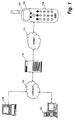
- FIG. 1 is a block diagram of an information retrieval system according to one embodiment of the invention.
- the information retrieval system allows a plurality of two-way wireless interactive communication devices 100 to retrieve information from remote information servers.
- the plurality of two-way wireless interactive communication devices 100 referred to as wireless client devices or mobile devices herein, are serviced by airnet 112.
- the airnet 112 is a wireless network and can be implemented in a variety of types of wireless networks. Examples of commonly used wireless networks include Cellular Digital Packet Data (CDPD), Global System for Mobile Communications (GSM), Code Division Multiple Access (CDMA) and Time Division Multiple Access (TDMA), to name a few.
- CDPD Cellular Digital Packet Data
- GSM Global System for Mobile Communications
- CDMA Code Division Multiple Access
- TDMA Time Division Multiple Access
- landnet 120 which is a landline network. More generally, landnet 120 is a wired network.
- landnet 120 may be the Internet, an Intranet or other data network.
- PC personal computer
- Information server device 124 may be a commonly available laptop or desktop computer and run a HyperText Markup Language (HTML) browser, such as Netscape Navigator from Netscape Communications Corporation ( www.netscape.com ).
- HTML HyperText Markup Language
- the HTML browser can communicate with the information server device 124 via landnet 120 using HyperText Transfer Protocol (HTTP) to thus access information stored in the information server device 124.
- the information server device 124 is a workstation computer such as available from SUN Microsystems Inc. ( www.sun.com ).
- the information stored in the information server device 124 may be hypermedia information.
- various other servers or computers are connected to landnet 120.
- a proxy server device 116 is coupled between landnet 120 and airnet 112.
- the proxy server device 116 is also known as a network gateway server.
- the proxy server device 116 can be implemented as a workstation computer or a personal computer.
- the communication protocol used in airnet 112 is different from that used in landnet 120.
- one of the functions that proxy server device 116 performs is to map or translate from one communication protocol to another, thereby wireless device 100 coupled to airnet 112 can communicate with any of the information server devices (e.g. information server 124) coupled to landnet 120 via proxy server device 116.
- the proxy server device 116 also store or provide access to accounting services, configuration management services, and dedicated storage for applications and files for user accounts. These applications and services may be resident on proxy server device 116 or on a separate server device accessible via landnet 120.
- the communication protocol used by information server device 124 is the well known HyperText Transfer Protocol (HTTP) or its secure version (HTTPS).
- HTTP operates on Transmission Control Protocol (TCP) and controls the interaction of personal computer 128 and information server 124 with landnet 120.
- TCP Transmission Control Protocol
- information server 124 operates as a HTTP server and personal computer 128 operates a HTML browser.
- the communication protocol between wireless client device 100 and proxy server device 116 via airnet 112 is, for example, Handheld Device Transport Protocol (HDTP) (formerly known as Secure Uplink Gateway Protocol (SUGP)) or Wireless Access Protocol (WAP).
- HDTP and WAP can run on User Datagram Protocol (UDP).
- UDP User Datagram Protocol
- the interaction between proxy server device 116 and wireless client device 100 uses HDTP over UDP.
- the wireless client device 100 operates a Handheld Device Markup Language (HDML) browser (also known as a micro-browser).
- HDML Handheld Device Markup Language
- HDTP is a session-level protocol that resembles HTTP but without incurring the overhead thereof and is highly optimized for use in thin devices, such as mobile devices that have significantly less computing power and memory than a desktop personal computer.
- UDP does not require a connection to be established between a client and a server before information can be exchanged, which eliminates the need of exchanging a large number of packets during a session creation between a client and a server. Exchanging a very small number of packets during a transaction is a desired feature for a mobile device with very limited computing power and memory to effectively interact with a landline device.
- HDML is a tag based document language and comprises a set of commands or statements specified in a card that specifies how information displayed on a small screen 104 of the wireless client device 100. Normally, a number of cards are grouped into a deck that is a unit of HDML information exchanged between wireless client device 100 and proxy server device 116.
- the specifications of HDTP, entitled “HDTP Specification” and HDML, entitled “HDML 2.0 Language Reference” are incorporated herein by reference in their entirety.
- the communication protocols (HDTP, HTTP, and HTTPs) and the markup languages (HDML and HTML) are presented for purposes of illustration and not limitation.
- WSP Wireless Session Protocol
- markup languages e.g., Compact HyperText Markup Language (cHTML) and Wireless Markup Language (WML).
- wireless client device 100 includes a display screen 104 and a phone keypad 108 which allow a user thereof to interact with wireless client device 100.
- Phone keypad 108 preferably provides a typical phone keypad, a pair of generic buttons, and at least a pair navigation buttons.
- the typical phone keypad as commonly seen, has twelve buttons. Of the twelve buttons, ten buttons are consecutively numbered (0 to 9), one button is designated "*", and the other button is designated "#". Further, it is to be understood by those of ordinary skill in the art that the present invention may be practised using various other types of input interfaces and arrangements (e.g., softkeys, iconic screens).
- wireless client device 100 there is a working memory (not shown) in wireless client device 100.
- Compiled and linked processes are typically stored in the working memory as a client module that causes wireless client device 100 to interact with a remote server, such as proxy server device 116.
- a remote server such as proxy server device 116.
- wireless client device 100 Upon activation of a predetermined key utilizing keypad 108, for example, wireless client device 100 initiates a communication session with proxy server device 116 using the client module in the working memory.
- the wireless client device 100 requests certain information (e.g., a document) from information server 124 or proxy server device 116.
- wireless client device 100 in response to the request, wireless client device 100 typically receives a single HDML deck (from or through proxy server device 116 and stores (caches) the deck in the working memory.
- an HDML deck comprises one or more cards and each card includes the information required to generate a screen display on display screen 104. The number of cards in a card deck can be selected to facilitate efficient use of the resources
- a display screen is the physical display apparatus in a wireless client device, such as a 4-line by 20-character Liquid Crystal Display (LCD) screen.
- LCD Liquid Crystal Display
- a screen display is an image presented or displayed on the display screen.
- a display screen having display lines is only for illustrative purpose and many display screens in reality are graphics-based and do not necessarily have distinct display lines and it will be appreciated that the principles of this invention are equally applicable thereto.
- the information retrieval system illustrated in Figure 1 includes the proxy server device 116, it should be understood that the information retrieval system does not require that a proxy server device be present. Instead, the airnet 112 could couple the landnet 120 directly which would allow the wireless client device 100 to access information servers, such as the information server 124.
- wireless client device 100 and proxy server device 116 together provide bookmark features to the information retrieval system.
- a user of the wireless client device is able to utilize the bookmark features to gain rapid and easy access to previously bookmarked locations (e.g., remote information servers) or documents thereon.
- a bookmark is a shortcut feature that allows a user to access a remote location or document identified by a uniform resource locator (URL) without having to type in the URL.
- URL uniform resource locator
- the bookmarks for wireless client device 100 are stored in proxy server device 116 (or some other remote server coupled to landnet) and not normally stored in wireless client device 100.
- proxy server device 116 supports a large number of subscribers or wireless client devices, the bookmarks for each subscriber or wireless client device are stored separately along with other information (e.g., account, configuration, and preference information).
- Bookmarks for a subscriber or wireless client device 100 can be entered using personal computer 128 or wireless client device 100.
- personal computer 128 can access to proxy server device 116 through the landnet using, for example, a web browser to edit, create and delete bookmarks for the wireless client device 100.
- a user of the wireless client device 100 can interact with the keypad 108 and other buttons or input areas to edit, create and delete bookmarks for the wireless client device 100.
- a bookmark When a bookmark is created it can also be provided with a shortened name that can be displayed on display screen 104 as needed or requested to remind the user of the previously assigned bookmarks.
- the bookmarks are assigned to particular keys on keypad 108 of wireless client device 100.
- a user wishing to access information server 124 (e.g., a document or file on information server 124) from wireless client device 100 using a previously defined bookmark need only press and hold the assigned key. Pressing and holding the assigned key causes wireless client device 100 to generate a compact bookmark identifier which is transmitted to proxy server device 116 in a compact request for the bookmarked document (or file).
- the proxy server device 116 will intercept the compact request from the wireless client device 116 and convert the compact request into a normal request. Namely, the compact request using the compact bookmark identifier, whereas the normal request uses the appropriate URL previously associated with the bookmark.
- the appropriate URL is stored at proxy server device 116 (or accessible thereto) and is associated with a device identifier associated with wireless client device 100 or a subscriber identifier associated with the subscriber.
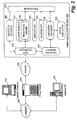
- FIG. 2 is a block diagram of an information retrieval system according to another embodiment of the invention.
- the information retrieval system includes wireless client device 200, personal computer 270, proxy server device 254, and information server 280.
- Proxy server device 254, information server 280 and personal computer 270 respectively correspond to proxy server device 116, information server 124, and personal computer 128 of Figure 1.
- the wireless client device 200 is, for example, a detailed embodiment of wireless client device 100. To avoid obscuring the principle aspects of the present invention, well known methods, procedures, components and circuitry in wireless client device 200 are not described in detail.
- Wireless client device 200 includes a Wireless Control Protocol (WCP) interface 236 that couples to airnet 250 via a RF transceiver (not shown) to receive incoming and outgoing data signals.
- WCP Wireless Control Protocol
- ID Device identifier
- Storage 208 supplies a device ID to WCP interface 236.
- the device ID identifies a specific code that is associated with wireless client device 200 and directly corresponds to the device ID in a subscriber (user) account provided in proxy server device 260.
- wireless client device 200 includes a client module 212 with an interface engine 216 which works in conjunction with processor 204 and working memory 240 to perform the processing tasks performed by wireless client device 200 including establishing a communication session with proxy server device 254 via airnet 250, requesting and receiving data via airnet 250, displaying information on a display screen through the use of display circuitry 220, and receiving user input from a user via a keypad controlled by keypad circuit 224.
- the client module 212 operates, among other things, a browser, commonly referred to as micro-browser, requiring much less computing power and memory than well-known HTML browsers do.
- the micro-browser is, for example, a HDML micro-browser available from Unwired Planet, Inc.
- Wireless client device 200 also includes the voice circuitry 232 (e.g., a speaker and a microphone) and the associated hardware (e.g., encoder/decoder 228, processor 204 and keypad circuitry 224) which allows it to switch to a telephone mode of operation which is separate and distinct from a network (data) mode of operation used when interfacing with proxy server device 254 and other devices on landnet 260.
- voice circuitry 232 e.g., a speaker and a microphone
- the associated hardware e.g., encoder/decoder 228, processor 204 and keypad circuitry 224
- a user desiring to obtain information from information server 280 places wireless client device 200 in the network mode of operation and presses and holds a pre-assigned key on the keypad of wireless client device 200.
- the software stored in client module 212 causes the key that was pressed and held to be recognized in a unique manner than that same key would be recognized in the telephone mode of operation.
- a compact bookmark identifier is generated.
- Wireless client device 200 establishes a connection with proxy server device 254 via airnet 250 and transmits a compact request for the document identified by the compact bookmark identifier.
- the compact bookmark identifier is used to access previously stored bookmark information on proxy server device 254.
- proxy server device 254 uses the stored bookmark information to generate a normal request for the document originally identified by the compact bookmark identifier.
- the normal request is then forwarded over landnet 260 to information server 280 (where the requested documents resides).
- wireless client device 200 is in a non-network mode (e.g., telephone mode) of operation then software within wireless client device 200 can cause wireless client device 200 to be placed in the network mode of operation upon detecting that a pre-assigned key has been press and held so as to select a previously assigned bookmark.
- card decks contain one or more cards of HDML or WML documents.
- an interface card deck can be provided on wireless client device 200 to facilitate a user creating, modifying or deleting bookmarks.
- the bookmarks are assigned to the keys associated with the keypad on wireless client device 200. It is important to note that any key on the keypad of wireless client device 200 can be assigned as a bookmark.
- an interface card deck can control the user interface provided to the user via the display screen. As noted above, the bookmarks can also be created, modified or deleted through use of personal computer 270.
- an interface card deck is received by wireless client device 200 and is loaded into working memory 240.
- the interface card deck is then processed by processor 204 and client module 212 to produce a user interface on the screen display.
- the interface card deck is comprised of one or more markup language entities, which contribute to the functionality of the user interface on wireless client device 200.
- the functions provided include: 1) information display; 2) list selection; 3) input operations; and 4) control functions. These functions will enable the user interface of the wireless client device 200 to function more efficiently during bookmark creation, modification, and deletion.
- the interface card deck is navigated using the previously described microbrowser. For example, the interface card deck can be used to prompt the user for input (e.g., "Address for the Site is?", "Name for the Site?", "Press the Key You Want to Assign" ).
- bookmark assignment and utilization may be practised using user interfaces other than keypads (e.g., iconic interfaces, generic buttons, special buttons, soft buttons).
- user interfaces other than keypads (e.g., iconic interfaces, generic buttons, special buttons, soft buttons).
- selection of a previously established bookmark is achieved through a press and hold of a pre-assigned key, the selection of a bookmark can be achieved in other ways, including a double-click of a button, a short sequence of buttons, etc.
- an interface card deck can also display a list of bookmarks that have already been assigned.
- the list of bookmarks that have already been assigned can be provided to and displayed by the wireless client device by pressing and holding a predetermined key (e.g., "0") on the keypad. A user could then navigate through the list to select a bookmark from the list. This type of selection, however, does not offer the advantages of minimal user actions to obtain a selection as does the simple selection of a pre-assigned button.
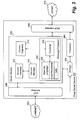
- FIG. 3 is a detailed block diagram of a proxy server device 300 according to one embodiment of the invention.
- Proxy server device 300 comprises a server module 308 coupled between LCP interface 348 and WCP interface 304.
- Server module 308 which is typically loaded in memory, performs traditional server processing as well as protocol conversion processing from one communication protocol to another communication protocol. More particularly, server module 308 is coupled to a landnet 352, which uses a first communication protocol (e.g., HyperText Transfer protocol (HTTP) or Secure HyperText Transfer Protocol (HTTPS)), and to an airnet 310 which uses a second communication protocol (e.g., Handheld Device Transport Protocol (HDTP) or Wireless Access Protocol (WAP)).
- HTTP HyperText Transfer protocol
- HTTPS Secure HyperText Transfer Protocol
- WAP Wireless Access Protocol
- a server device used herein which may perform as proxy server device 254 and be coupled to landnet 260, refers to a piece of hardware equipment that comprises one or more microprocessors, working memory, buses and necessary interfaces and other components.
- a server module refers to compiled and linked processes of the disclosed system loaded into the working memory to perform designated functions through the parts and components in the server device.
- Server module 308 comprises a control engine 312, a message processor 324, an account manager 316, and an account interface 320.
- Control engine 312 interacts with the client module of wireless client device (not shown) through airnet 310 and coordinates the reception of requests.
- Message processor 324 receives messages from landnet 352 and performs a series of processing and management activities. The processing performed by message processor 324 includes protocol conversion between the different protocols used on airnet 310 and landnet 352.
- Account manager 316 manages through account interface 320 a number of subscriber (user) accounts for all the wireless client devices serviced by proxy server device 300.
- Each of the wireless client devices serviced by proxy server device 300 is assigned a device identifier (ID).
- Device ID can be a phone number of the device or an IP address or a combination of an IP address and a port number, for example: 204.163.165.132:01905 where 204.163.165.132 is the IP address and 01905 is the port number.
- the device ID is further associated with a subscriber ID created and administrated by a carrier and stored in proxy server device 300 as part of the procedures to activate a subscriber account for a wireless client device.
- the subscriber ID may take the form of, for example, 861234567-10900_pn.mobile.att.net by AT&T Wireless Service, and is a unique identification to a wireless client device.
- proxy server device 300 Upon receiving a compact request having a compact bookmark identifier for a previously assigned bookmark, proxy server device 300 accesses the subscriber account (corresponding to the subscriber identification number of the wireless client device that sent the compact bookmark identifier) contained within proxy server device 300 or in a remote server accessed via landnet 352.
- the subscriber account contains bookmark information that has been previously stored.
- the bookmark information includes a Uniform Resource Locator (URL) for the selected bookmark being identified by the compact bookmark identifier.
- the bookmark information can also include a short name for the bookmark.
- Proxy server device 300 can also forward a wireless client device a interface card deck for a menu list of previously assigned keys that can be displayed on the display screen of the requesting wireless client device so that a user can determine which keys are assigned to which bookmarks.
- the short names serve to inform the user of the location or document of the bookmark.
- a short name is "Acme” for the full name "Acme Corporation - Home Page”.
- Such short names are more likely able to fit on the limited size screen display and more likely to be more descriptive of the bookmark.
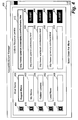
- FIG 4 is an exemplary screen shot 400 for a Keypad Bookmark Manager according to one embodiment of the invention.
- a user wishing to create, modify or delete bookmarks for a wireless client device can access Keypad Bookmark Manager using a computer (e.g., computer 128 of Figure 1) with network connectivity (e.g., the Internet) and a web browser (e.g., Netscape Navigator).
- a computer e.g., computer 128 of Figure 1
- network connectivity e.g., the Internet
- a web browser e.g., Netscape Navigator
- an iconic symbol 404 representing a "0" key shows that this key has been previously assigned to a location (e.g., document or web page address) having a specific URL 412.
- the specific URL in this example is: http://www.uplanet.bookmarks.smethers.com .
- the short name for the bookmark assigned to the "0" key is "Keypad Menu" as shown in field 408.
- the fields in 408 and 412 are pre-set and are not normally able to be modified.
- the other fields displayed in the screen shot 400 of Keypad Bookmark Manager may be assigned by the user.
- the screen shot 400 shows that bookmarks for keys “1", “2” and “3” have been assigned by the user, and that key "4" is as yet unassigned. With respect to key “1", the screen shot 400 show that the bookmark has a short name of "My Stocks” in field 420 and a URL of " http://www.uplanet.com/stocks.html/ " in filed 424. Keys "2" and “3” are also shown in the screen shot 400 has having been assigned in accordance with information in fields 436, 440, 452 and 456.
- the "SUBMIT" button associated with the assigned key see iconic buttons 428, 444, 460 and 476).
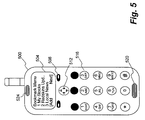
- Figure 5 is an exemplary wireless client device 500 for use with the invention.
- pressing and holding an assigned key while the device is in the network (data) mode of operation will cause a compact request including the compact bookmark identifier to be obtained and forwarded to the associated proxy server device.
- pressing and holding the "0" key will cause the compact bookmark identifier for that key to be generated and forwarded to the proxy server device in a compact request.
- the compact bookmark identifier is preferably two bytes in size.
- the compact bookmark identifier can be two characters, a control character indicating a bookmark and a number for the particular bookmark.
- the proxy server device retrieves the bookmark associated with the "0" key (i.e., http://www.uplanet.bookmarks.com/smethers.html and forwards a request for the page identified by the retrieved URL.
- the information server containing that document responds to the request and forwards the requested document or file to the wireless client device.
- the retrieved URL happens to address a HDML file residing on the proxy server device.
- This HDML file contain a listing the assigned keys to bookmarks and the associated short names that can be displayed on the screen display.
- the URLs address documents or files on an information server located anywhere on the landnet.
- the wireless client device thereafter receives the requested document or file and displays information on the display screen 504.
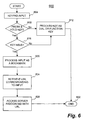
- FIG. 6 is a flowchart illustrating bookmark selection and processing 600 according to one embodiment of the present invention.
- the processing 600 begins at block 604 where a key press on a keypad is received.
- a determination is made as to whether or not the pressed key is a press and hold key.
- press and hold keys are those keys that are eligible for press and hold entries.
- the press and hold are those keys that are eligible to be assigned to a bookmark. If the pressed key is not a press and hold key, then the pressed key will be processed as a normal input from an alphanumeric or function key at block 612. On the other hand, if the pressed key is a press and hold key, then a determination is made as to whether the press key has also been held at block 616.
- the processing 600 also performs block 612. If the pressed key is determined not to have been held, then the processing 600 also performs block 612. If, on the other hand, the pressed key was held, then the pressed key is processed as a bookmark at block 620.
- the pressed key is determined to be held is the key was pressed and held for a predetermined time period (e.g., 2 seconds). Hence, if the pressed key was pressed and released before the predetermined time period had expired, the pressed key is processed as a normal input from a alphanumeric or function key at block 612.
- a bookmark request and a compact bookmark identifier will be generated and forwarded to the proxy server device storing the user's bookmark information.
- the proxy server device will use the compact bookmark identifier to retrieve the associated URL with the bookmark at block 624. Then, a request will be generated and forwarded by the proxy server device to the information server identified by the URL at block 628. Following block 628, as well as following block 612, the processing 600 is complete and ends.
- FIG 7 is a flow diagram of client-side request processing 700 according to one embodiment of the invention.
- the client-side request processing 700 is, for example, performed by the client module 212 of the wireless client device 200 illustrated in Figure 2.
- the client-side request processing 700 begins with a decision block 702 that determines whether the user has requested a bookmarked document.
- the client-side request processing 700 is essentially initiated when a user interacts with the wireless client device to select a bookmarked document that is to be requested.
- a user can request a bookmarked document in a variety of ways.
- a bookmarked document is requested by the press and hold of a pre-assigned key of the wireless client device.
- the compact bookmark identifier is a short identifier of at most a few bytes that identifies the particular bookmark that has been selected by the user.
- the telephone keypad 516 includes at least twelve buttons, namely buttons labelled 0-9, * and #. Each one of these at least twelve buttons can operate as a bookmark.
- buttons labelled 0-9, * and # Each one of these at least twelve buttons can operate as a bookmark.
- the compact bookmark identifier can be "&1".
- a compact bookmark identifier only two bytes are need to identify the bookmark, a single bite for a bookmark control signal ("&") and another byte for a numeric value of the bookmark identifier ("1").
- the compact request is a request for the bookmarked document that is sent to the translation server.
- the compact request is constructed such that to identify the bookmarked document, the compact bookmark identifier is contained within the compact request.
- the compact request will also, among other things, contain a device identifier (ID), a destination address and a source address.
- a decision block determines whether a response has been received. Once a response has been received, the response includes the selected bookmarked document that was previously requested. Hence, at block 710, the selected bookmarked document causes information to be displayed on a screen display of the wireless client device. Following block 710, the client-side request processing 700 is complete and ends.
- FIG 8 is a flow diagram of intermediate request processing 800 according to one embodiment of the invention.
- the intermediate request processing 800 is, for example, performed by the proxy server device 116 illustrated in Figure 1.
- the intermediate request processing can be performed by any other remote server coupled to the landnet (including the translation server of Figure 7).
- the intermediate request processing 800 begins with a decision block 802 that determines whether a compact request has been received from a wireless client device. In other words, the intermediate request processing 800 is activated or begins when a compact request has been received from the wireless client device through the airnet.
- the compact nature of the compact request means that its size in terms of number of bytes is limited so that minimal bandwidth is consumed or needed and rapid transmission through the airnet 112 can be obtained.
- the decision block 802 determines that a compact request has been received
- the compact bookmark identifier is extracted from the compact request at block 804.
- the compact bookmark identifier is embedded within the compact request, typically as a field within the compact request. Hence, block 804 operates to parse the compact request to obtain the compact bookmark identifier.
- a URL associated with the compact bookmark identifier is obtained at block 806.
- the remote server stores a table for each subscriber supported by the airnet system. These tables store the URLs as associated with the subscriber's bookmarks as utilized on their wireless client devices.
- a device identifier is obtained from the incoming compact request and used to obtain a subscriber ID which, in turn, identifies the table associated with the subscriber.
- the compact bookmark identifier can be used to look-up within the table the appropriate URL (address) for the requested bookmarked document.
- a standard request i.e., no longer compact in nature
- the standard request will, among other things, contain the obtained URL, the device identifier (ID), the destination address and the source address.
- the remote server operates to form a traditional request using the URL that has been obtained from the table associated with the subscriber.
- the request is transmitted to an information server at block 810.
- block 810 may not be required. Following block 810, the intermediate request processing 800 is complete and ends.
- Figure 9 is a partial flow diagram of intermediate server response processing 900 according to one embodiment of the invention.
- the intermediate server will act as a network gateway or a proxy server for the wireless client device.
- the response to the request that is transmitted to the information server (block 810) is returned to the wireless client device through the intermediate server.
- the intermediate server response processing 900 explains the return of the response from the information server through the intermediate server to the wireless client device.
- a decision block 902 determines whether the response has been received. If the response has not yet been received, the intermediate server response processing 900 is effectively waiting to receive the response.
- the intermediate server performs protocol conversion at block 904.
- the protocol conversion can be from HTML to HDML.
- the response is forwarded to the wireless client device at block 906.
- the response being forwarded to the wireless client device includes the selected bookmarked document that was originally requested by the wireless client device using the selection of a previously defined bookmark.
- the intermediate server response processing 900 is complete and ends.
- the invention can also be embodied as computer readable code on a computer readable medium.
- the computer readable medium is any data storage device that can store data which can be thereafter be read by a computer system. Examples of the computer readable medium include read-only memory, random-access memory, CD-ROMs, magnetic tape, optical data storage devices.
- the computer readable medium can also be distributed over a network coupled computer systems so that the computer readable code is stored and executed in a distributed fashion.
- the present invention provides an efficient means for users of wireless client devices to navigate information services over a network using bookmarks stored on a remote server.
- This invention allows users to navigate such information services with a minimal amount of input interaction (i.e., key strokes) and with efficient use of the wireless client devices' bandwidth.
- bookmarks are able to be selected with greater speed and ease.
- an intermediate server e.g., proxy server
- a compact request format is used so as to substantially reduce the amount of data to be transmitted for a request.
- memory storage at the wireless client device to support bookmarks is reduced.
Landscapes
- Engineering & Computer Science (AREA)
- Computer Security & Cryptography (AREA)
- Computer Networks & Wireless Communication (AREA)
- Signal Processing (AREA)
- Databases & Information Systems (AREA)
- Theoretical Computer Science (AREA)
- General Physics & Mathematics (AREA)
- General Engineering & Computer Science (AREA)
- Physics & Mathematics (AREA)
- Data Mining & Analysis (AREA)
- Information Transfer Between Computers (AREA)
- Mobile Radio Communication Systems (AREA)
- Computer And Data Communications (AREA)
- Telephonic Communication Services (AREA)
- Information Retrieval, Db Structures And Fs Structures Therefor (AREA)
- Data Exchanges In Wide-Area Networks (AREA)
- Small-Scale Networks (AREA)
- Communication Control (AREA)
Applications Claiming Priority (2)
| Application Number | Priority Date | Filing Date | Title |
|---|---|---|---|
| US09/235,231 US6560640B2 (en) | 1999-01-22 | 1999-01-22 | Remote bookmarking for wireless client devices |
| US235231 | 1999-01-22 |
Publications (2)
| Publication Number | Publication Date |
|---|---|
| EP1022666A2 true EP1022666A2 (fr) | 2000-07-26 |
| EP1022666A3 EP1022666A3 (fr) | 2001-01-17 |
Family
ID=22884656
Family Applications (1)
| Application Number | Title | Priority Date | Filing Date |
|---|---|---|---|
| EP00300449A Withdrawn EP1022666A3 (fr) | 1999-01-22 | 2000-01-21 | Positionnement de signets à distance pour clients "sans fil" |
Country Status (5)
| Country | Link |
|---|---|
| US (1) | US6560640B2 (fr) |
| EP (1) | EP1022666A3 (fr) |
| JP (1) | JP2000236349A (fr) |
| KR (1) | KR20000071277A (fr) |
| CN (1) | CN1263398A (fr) |
Cited By (10)
| Publication number | Priority date | Publication date | Assignee | Title |
|---|---|---|---|---|
| GB2365162A (en) * | 2000-05-22 | 2002-02-13 | Bango Net Ltd | Addressing remote data objects via a computer network |
| GB2366690A (en) * | 2000-08-29 | 2002-03-13 | Nokia Mobile Phones Ltd | Transfer of bookmark information |
| DE10049146A1 (de) * | 2000-10-04 | 2002-04-11 | Orga Kartensysteme Gmbh | Informationsübertragung über den Signalisierungskanal eines Mobilfunknetzes |
| EP1213662A1 (fr) * | 2000-12-07 | 2002-06-12 | Alcatel | Dispositif de navigation Web, procédé associé et module de logiciel associé |
| WO2002021233A3 (fr) * | 2000-09-05 | 2002-07-18 | Paradox Software Ltd | Communications de donnees |
| FR2820582A1 (fr) * | 2001-02-06 | 2002-08-09 | Sagem | Procede d'exploitation de donnees par un terminal d'un reseau de radiotelephonie |
| FR2842056A1 (fr) * | 2002-07-08 | 2004-01-09 | Speeq | Procede, terminal et serveur de telecommunications |
| US7571124B2 (en) | 2001-09-24 | 2009-08-04 | International Business Machines Corporation | Location based services virtual bookmarking |
| EP2124157A4 (fr) * | 2007-01-04 | 2010-01-20 | Alibaba Group Holding Ltd | Système et procédé de navigation dans des sites web |
| US11943227B2 (en) | 2021-09-17 | 2024-03-26 | Bank Of America Corporation | Data access control for augmented reality devices |
Families Citing this family (183)
| Publication number | Priority date | Publication date | Assignee | Title |
|---|---|---|---|---|
| US20040107208A1 (en) * | 1997-12-09 | 2004-06-03 | Seet Siew Shon | Method and apparatus for bookmarking telephone numbers for efficient access by wireless phone devices |
| US20020059468A1 (en) * | 1999-11-18 | 2002-05-16 | Freeny Charles C. | Split personal computer system |
| US6868433B1 (en) | 1998-09-11 | 2005-03-15 | L.V. Partners, L.P. | Input device having positional and scanning capabilities |
| US7440993B1 (en) | 1998-09-11 | 2008-10-21 | Lv Partners, L.P. | Method and apparatus for launching a web browser in response to scanning of product information |
| US6823388B1 (en) | 1998-09-11 | 2004-11-23 | L.V. Parners, L.P. | Method and apparatus for accessing a remote location with an optical reader having a programmable memory system |
| US7159037B1 (en) | 1998-09-11 | 2007-01-02 | Lv Partners, Lp | Method and apparatus for utilizing an existing product code to issue a match to a predetermined location on a global network |
| US7392945B1 (en) | 1998-09-11 | 2008-07-01 | Lv Partners, L.P. | Portable scanner for enabling automatic commerce transactions |
| US7191247B1 (en) | 1998-09-11 | 2007-03-13 | Lv Partners, Lp | Method for connecting a wireless device to a remote location on a network |
| US7284066B1 (en) | 1998-09-11 | 2007-10-16 | Lv Partners, Lp | Method and apparatus for matching a user's use profile in commerce with a broadcast |
| US6636896B1 (en) | 1998-09-11 | 2003-10-21 | Lv Partners, L.P. | Method and apparatus for utilizing an audibly coded signal to conduct commerce over the internet |
| US7386600B1 (en) | 1998-09-11 | 2008-06-10 | Lv Partners, L.P. | Launching a web site using a personal device |
| US7493384B1 (en) * | 1998-09-11 | 2009-02-17 | Rpx-Lv Acquisition Llc | Controlling a PC using a tone from a cellular telephone |
| US7370114B1 (en) | 1998-09-11 | 2008-05-06 | Lv Partners, L.P. | Software downloading using a television broadcast channel |
| US6745234B1 (en) | 1998-09-11 | 2004-06-01 | Digital:Convergence Corporation | Method and apparatus for accessing a remote location by scanning an optical code |
| US20060069657A1 (en) * | 1998-10-01 | 2006-03-30 | Freeny Charles C Jr | Multiple customer and multiple location PC service provider system |
| WO2000046963A1 (fr) * | 1999-02-04 | 2000-08-10 | Apion Telecoms Limited | Passerelle de communications |
| US6631496B1 (en) * | 1999-03-22 | 2003-10-07 | Nec Corporation | System for personalizing, organizing and managing web information |
| FI111760B (fi) * | 1999-04-16 | 2003-09-15 | Metso Automation Oy | Kenttälaitteen langaton ohjaus teollisuusprosessissa |
| GB2349546A (en) * | 1999-04-26 | 2000-11-01 | Nokia Mobile Phones Ltd | A terminal for providing an application using a browser |
| AU4979400A (en) * | 1999-05-14 | 2000-12-05 | Pivia, Inc. | Applications and services supported by a client-server independent intermediary mechanism |
| AU5097600A (en) * | 1999-06-07 | 2000-12-28 | Nokia Mobile Phones Limited | A cellular communication terminal, a method and a system for accessing servers |
| EP1069500A1 (fr) * | 1999-07-12 | 2001-01-17 | International Business Machines Corporation | Interface utilisateur téléchargeable |
| KR100312786B1 (ko) * | 1999-09-08 | 2001-11-03 | 윤종용 | 인터넷 접속 무선 단말기의 오브젝트 수행방법 |
| US7392308B2 (en) * | 1999-09-10 | 2008-06-24 | Ianywhere Solutions, Inc. | System, method, and computer program product for placement of channels on a mobile device |
| DE19956023B4 (de) * | 1999-10-01 | 2019-10-02 | Ipcom Gmbh & Co. Kg | Verfahren zur Übertragung von Nachrichten zwischen mindestens einer Zentrale und einem Endgerät und Anpassungsvorrichtung dafür |
| US6950881B1 (en) * | 1999-11-02 | 2005-09-27 | Mshift, Inc. | System for converting wireless communications for a mobile device |
| US7136930B1 (en) * | 1999-11-05 | 2006-11-14 | Nokia Corporation | System and method for effective use of air link between mobile stations and gateway servers |
| JP4207337B2 (ja) * | 1999-11-11 | 2009-01-14 | ソニー株式会社 | 通信システム及び通信方法 |
| US7016973B1 (en) * | 1999-11-19 | 2006-03-21 | At&T Corp. | Apparatus and methods for providing translucent proxies in a communications network |
| US6968365B2 (en) * | 1999-12-01 | 2005-11-22 | Telefonaktiebolaget L M Ericsson (Publ) | Device and a method for operating an electronic utility device from a portable telecommunication apparatus |
| US8458286B2 (en) * | 2000-02-29 | 2013-06-04 | Hewlett-Packard Development Company, L.P. | Flexible wireless advertisement integration in wireless software applications |
| JP4498523B2 (ja) * | 2000-02-29 | 2010-07-07 | パナソニック株式会社 | ブックマークリスト表示方法、及び携帯電話機 |
| US6977917B2 (en) * | 2000-03-10 | 2005-12-20 | Telefonaktiebolaget Lm Ericsson (Publ) | Method and apparatus for mapping an IP address to an MSISDN number within a service network |
| US6675163B1 (en) * | 2000-04-06 | 2004-01-06 | International Business Machines Corporation | Full match (FM) search algorithm implementation for a network processor |
| US20010037405A1 (en) * | 2000-04-07 | 2001-11-01 | Sideek Sinnathambi Mohamed | Wireless web generation from conventional web sites by pattern identification and dynamic content extraction |
| US20030080996A1 (en) * | 2000-04-13 | 2003-05-01 | Daniel Lavin | Software for a navigation control unit for use with a wireless computer resource access device and associated system |
| US20030084098A1 (en) * | 2000-04-13 | 2003-05-01 | Daniel Lavin | Navigation server for use with, for example, a wireless web access device having a navigation control unit |
| US6665710B1 (en) * | 2000-05-11 | 2003-12-16 | International Business Machines Corporation | Searching local network addresses |
| WO2001089171A2 (fr) * | 2000-05-16 | 2001-11-22 | Mshift, Inc. | Systeme pour fournir un contenu de reseau a des dispositifs sans fil |
| US6968380B1 (en) * | 2000-05-30 | 2005-11-22 | International Business Machines Corporation | Method and system for increasing ease-of-use and bandwidth utilization in wireless devices |
| US6985933B1 (en) | 2000-05-30 | 2006-01-10 | International Business Machines Corporation | Method and system for increasing ease-of-use and bandwidth utilization in wireless devices |
| US6961751B1 (en) * | 2000-05-31 | 2005-11-01 | International Business Machines Corporation | Method, apparatus, and article of manufacture for providing enhanced bookmarking features for a heterogeneous environment |
| EP1305690B1 (fr) * | 2000-06-05 | 2009-03-25 | Unipier Mobile Ltd. | Procede de navigation a travers le contenu d'un reseau cellulaire |
| US8166384B1 (en) * | 2000-06-14 | 2012-04-24 | Adobe Systems Incorporated | Environment-based bookmark media |
| US7134073B1 (en) * | 2000-06-15 | 2006-11-07 | International Business Machines Corporation | Apparatus and method for enabling composite style sheet application to multi-part electronic documents |
| US20020002627A1 (en) * | 2000-06-20 | 2002-01-03 | Graham Stead | Method and system for interconnecting remote intelligent devices with a network |
| US7346848B1 (en) | 2000-06-21 | 2008-03-18 | Microsoft Corporation | Single window navigation methods and systems |
| JP4522650B2 (ja) | 2000-06-21 | 2010-08-11 | マイクロソフト コーポレーション | スプレッドシートとワードプロセッシングの表を統合するシステムと方法 |
| US7000230B1 (en) | 2000-06-21 | 2006-02-14 | Microsoft Corporation | Network-based software extensions |
| US6883168B1 (en) | 2000-06-21 | 2005-04-19 | Microsoft Corporation | Methods, systems, architectures and data structures for delivering software via a network |
| US7624356B1 (en) | 2000-06-21 | 2009-11-24 | Microsoft Corporation | Task-sensitive methods and systems for displaying command sets |
| US7155667B1 (en) | 2000-06-21 | 2006-12-26 | Microsoft Corporation | User interface for integrated spreadsheets and word processing tables |
| US7117435B1 (en) | 2000-06-21 | 2006-10-03 | Microsoft Corporation | Spreadsheet fields in text |
| US7191394B1 (en) | 2000-06-21 | 2007-03-13 | Microsoft Corporation | Authoring arbitrary XML documents using DHTML and XSLT |
| US6948135B1 (en) | 2000-06-21 | 2005-09-20 | Microsoft Corporation | Method and systems of providing information to computer users |
| US7894803B2 (en) * | 2000-07-03 | 2011-02-22 | Access Co., Ltd. | Mobile information terminal device, storage, server, and method for providing storage region |
| US7797447B1 (en) | 2000-07-10 | 2010-09-14 | Fuji Xerox Co., Ltd. | Data detector for creating links from web content for mobile devices |
| US6674453B1 (en) * | 2000-07-10 | 2004-01-06 | Fuji Xerox Co., Ltd. | Service portal for links separated from Web content |
| JP2002041905A (ja) * | 2000-07-13 | 2002-02-08 | Internatl Business Mach Corp <Ibm> | 商品購買システム、商品購買方法および商品購買方法を実行するためのプログラムが記憶された記憶媒体 |
| US7590681B1 (en) * | 2000-08-07 | 2009-09-15 | Trimble Navigation Limited | Method and system for managing and delivering web content to internet appliances |
| US20030154055A1 (en) * | 2000-11-07 | 2003-08-14 | Kazuyoshi Yoshimura | System for measurement and display of environmental data |
| JP2002077452A (ja) * | 2000-09-01 | 2002-03-15 | Matsushita Electric Ind Co Ltd | 情報通信装置、情報通信方法および記録媒体 |
| JP2002084561A (ja) * | 2000-09-06 | 2002-03-22 | Nec Corp | 接続システムとその接続方法、及び接続プログラムを記録した記録媒体 |
| US20020161928A1 (en) * | 2000-10-10 | 2002-10-31 | Awele Ndili | Smart agent for providing network content to wireless devices |
| US20020099734A1 (en) * | 2000-11-29 | 2002-07-25 | Philips Electronics North America Corp. | Scalable parser for extensible mark-up language |
| US6961567B1 (en) * | 2000-12-07 | 2005-11-01 | Palm, Inc. | Generic activation and registration framework for wireless devices |
| US20020078102A1 (en) * | 2000-12-18 | 2002-06-20 | International Business Machines Corporation | Method and system for customized modification and presentation of remotely saved web content |
| US20020083160A1 (en) * | 2000-12-21 | 2002-06-27 | Don Middleton | Method and apparatus for managing applications and data in a mobile device |
| FI20002823A7 (fi) * | 2000-12-21 | 2002-06-22 | Nokia Corp | Tiedonsiirto |
| JP3745270B2 (ja) * | 2000-12-28 | 2006-02-15 | キヤノン株式会社 | 複合機能装置およびデータ処理方法および制御プログラムおよび記憶媒体 |
| US20020087621A1 (en) * | 2000-12-29 | 2002-07-04 | Hendriks Chris L. | Method and system to manage internet user navigation data |
| US7555571B1 (en) * | 2001-01-05 | 2009-06-30 | Palm, Inc. | Activation of mobile computing device on a cellular network |
| US6795710B1 (en) * | 2001-01-05 | 2004-09-21 | Palmone, Inc. | Identifying client patterns using online location-based derivative analysis |
| US9183571B2 (en) * | 2007-09-14 | 2015-11-10 | Qualcomm Incorporated | System and method for providing advertisement data to a mobile computing device |
| US8504074B2 (en) * | 2001-01-05 | 2013-08-06 | Palm, Inc. | System and method for providing advertisement data to a mobile computing device |
| US8458754B2 (en) | 2001-01-22 | 2013-06-04 | Sony Computer Entertainment Inc. | Method and system for providing instant start multimedia content |
| US20020099784A1 (en) * | 2001-01-25 | 2002-07-25 | Tran Trung M. | System and method for storing and retrieving bookmark information |
| DE60139507D1 (de) * | 2001-02-08 | 2009-09-17 | Nokia Corp | Ositionsprofilen in mobil-mehrwertdiensten |
| US7320107B2 (en) * | 2001-02-10 | 2008-01-15 | Samsung Electronics Co., Ltd. | Bookmark frame and method of launching browsers using the bookmark in an internet terminal |
| US7228342B2 (en) * | 2001-02-20 | 2007-06-05 | Sony Computer Entertainment America Inc. | System for utilizing an incentive point system based on disc and user identification |
| US20020116283A1 (en) * | 2001-02-20 | 2002-08-22 | Masayuki Chatani | System and method for transfer of disc ownership based on disc and user identification |
| US7293069B2 (en) * | 2001-02-28 | 2007-11-06 | Hewlett-Packard Development Company, L.P. | Method and apparatus for supplying network path bookmark information remotely to a mobile device |
| US8812398B2 (en) * | 2001-05-08 | 2014-08-19 | Qualcomm Incorporated | Key for a wireless-enabled device |
| US20020177454A1 (en) * | 2001-05-23 | 2002-11-28 | Nokia Mobile Phones Ltd | System for personal messaging |
| US7127679B2 (en) * | 2001-06-29 | 2006-10-24 | Softrek, Inc. | Method for generating and navigating a plurality of menus using a database and a menu template |
| FR2827466B1 (fr) * | 2001-07-11 | 2003-10-31 | Orange France Sa | Systeme et procede de gestion d'acces d'un terminal mobile a un reseau de communication |
| US7624162B2 (en) * | 2001-08-13 | 2009-11-24 | Hewlett-Packard Development Company, L.P. | Methods, systems, devices and computer-readable media for accessing network accessible devices |
| US7313525B1 (en) * | 2001-09-26 | 2007-12-25 | Sprint Spectrum L.P. | Method and system for bookmarking navigation points in a voice command title platform |
| US7062491B2 (en) * | 2001-10-22 | 2006-06-13 | Pocketthis, Inc. | Data synchronization mechanism for information browsing systems |
| US20030078993A1 (en) * | 2001-10-22 | 2003-04-24 | Jesse Hull | Data synchronization mechanism for information browsing systems |
| US8285880B2 (en) * | 2001-11-30 | 2012-10-09 | Oracle International Corporation | Servicing requests that are issued in a protocol other than the protocol expected by the service |
| JP2003296226A (ja) * | 2002-04-05 | 2003-10-17 | Hitachi Ltd | ウェブアクセス提供方法およびサーバ装置 |
| JP4224250B2 (ja) * | 2002-04-17 | 2009-02-12 | パイオニア株式会社 | 音声認識装置、音声認識方法および音声認識プログラム |
| US7623824B2 (en) * | 2002-12-16 | 2009-11-24 | Nokia Corporation | Broadcast media bookmarks |
| US7551888B2 (en) * | 2002-04-22 | 2009-06-23 | Nokia Corporation | Method and system of displaying content associated with broadcast program |
| US7599689B2 (en) * | 2002-04-22 | 2009-10-06 | Nokia Corporation | System and method for bookmarking radio stations and associated internet addresses |
| BR0309408A (pt) * | 2002-04-22 | 2005-02-01 | Nokia Corp | Método e sistema de mìdia para prover um ou mais itens de contéudo para ao menos um terminal do usuário do sistema de rádio, e, terminal do usuário |
| US20050181722A1 (en) * | 2002-04-22 | 2005-08-18 | Toni Kopra | Method, system and user terminal for collecting information on audience of broadcast media stream |
| US7860974B2 (en) * | 2002-05-31 | 2010-12-28 | Sap Ag | Providing stateful favorites |
| US20030229716A1 (en) * | 2002-06-08 | 2003-12-11 | David Holland | System and method for transferring financial information |
| US7570943B2 (en) * | 2002-08-29 | 2009-08-04 | Nokia Corporation | System and method for providing context sensitive recommendations to digital services |
| US7127082B2 (en) * | 2002-09-27 | 2006-10-24 | Hrl Laboratories, Llc | Active fiducials for augmented reality |
| US7881658B2 (en) * | 2002-10-10 | 2011-02-01 | Znl Enterprises, Llc | Method and apparatus for entertainment and information services delivered via mobile telecommunication devices |
| US8561069B2 (en) | 2002-12-19 | 2013-10-15 | Fujitsu Limited | Task computing |
| US7415672B1 (en) | 2003-03-24 | 2008-08-19 | Microsoft Corporation | System and method for designing electronic forms |
| US7275216B2 (en) * | 2003-03-24 | 2007-09-25 | Microsoft Corporation | System and method for designing electronic forms and hierarchical schemas |
| US7370066B1 (en) | 2003-03-24 | 2008-05-06 | Microsoft Corporation | System and method for offline editing of data files |
| US7913159B2 (en) | 2003-03-28 | 2011-03-22 | Microsoft Corporation | System and method for real-time validation of structured data files |
| US7296017B2 (en) | 2003-03-28 | 2007-11-13 | Microsoft Corporation | Validation of XML data files |
| US7516145B2 (en) | 2003-03-31 | 2009-04-07 | Microsoft Corporation | System and method for incrementally transforming and rendering hierarchical data files |
| US7168035B1 (en) | 2003-06-11 | 2007-01-23 | Microsoft Corporation | Building a view on markup language data through a set of components |
| US7451392B1 (en) | 2003-06-30 | 2008-11-11 | Microsoft Corporation | Rendering an HTML electronic form by applying XSLT to XML using a solution |
| US7197515B2 (en) | 2003-06-30 | 2007-03-27 | Microsoft Corporation | Declarative solution definition |
| US7581177B1 (en) | 2003-08-01 | 2009-08-25 | Microsoft Corporation | Conversion of structured documents |
| US7406660B1 (en) | 2003-08-01 | 2008-07-29 | Microsoft Corporation | Mapping between structured data and a visual surface |
| US7334187B1 (en) | 2003-08-06 | 2008-02-19 | Microsoft Corporation | Electronic form aggregation |
| US7305435B2 (en) * | 2003-08-25 | 2007-12-04 | Nokia Corporation | Internet access via smartphone camera |
| US7730054B1 (en) * | 2003-09-30 | 2010-06-01 | Google Inc. | Systems and methods for providing searchable prior history |
| WO2005048130A1 (fr) * | 2003-11-14 | 2005-05-26 | Research In Motion Limited | Systeme et procede d'extraction et de presentation d'un contenu partiel (saute) de document |
| US7523096B2 (en) | 2003-12-03 | 2009-04-21 | Google Inc. | Methods and systems for personalized network searching |
| CN1627293A (zh) * | 2003-12-09 | 2005-06-15 | 皇家飞利浦电子股份有限公司 | 一种电子书签 |
| US8117280B2 (en) * | 2003-12-12 | 2012-02-14 | Fujitsu Limited | Task computing |
| US7113981B2 (en) * | 2003-12-29 | 2006-09-26 | Mixxer, Inc. | Cellular telephone download locker |
| US8819072B1 (en) | 2004-02-02 | 2014-08-26 | Microsoft Corporation | Promoting data from structured data files |
| US7430711B2 (en) | 2004-02-17 | 2008-09-30 | Microsoft Corporation | Systems and methods for editing XML documents |
| US7318063B2 (en) | 2004-02-19 | 2008-01-08 | Microsoft Corporation | Managing XML documents containing hierarchical database information |
| US7689924B1 (en) * | 2004-03-26 | 2010-03-30 | Google Inc. | Link annotation for keyboard navigation |
| JP3839820B2 (ja) * | 2004-04-21 | 2006-11-01 | 株式会社エヌ・ティ・ティ・ドコモ | データ通信装置およびデータ通信方法 |
| US7496837B1 (en) | 2004-04-29 | 2009-02-24 | Microsoft Corporation | Structural editing with schema awareness |
| US20050286497A1 (en) * | 2004-05-06 | 2005-12-29 | Brad Zutaut | Directional facilitator system for transferring media content between a computer and a mobile device via a data network |
| US7568101B1 (en) | 2004-05-13 | 2009-07-28 | Microsoft Corporation | Digital signatures with an embedded view |
| US7281018B1 (en) | 2004-05-26 | 2007-10-09 | Microsoft Corporation | Form template data source change |
| US7774620B1 (en) | 2004-05-27 | 2010-08-10 | Microsoft Corporation | Executing applications at appropriate trust levels |
| KR100630165B1 (ko) * | 2004-06-01 | 2006-09-29 | 삼성전자주식회사 | 휴대단말기의 전화번호 검색방법 |
| US7516399B2 (en) | 2004-09-30 | 2009-04-07 | Microsoft Corporation | Structured-document path-language expression methods and systems |
| US7692636B2 (en) | 2004-09-30 | 2010-04-06 | Microsoft Corporation | Systems and methods for handwriting to a screen |
| US8487879B2 (en) | 2004-10-29 | 2013-07-16 | Microsoft Corporation | Systems and methods for interacting with a computer through handwriting to a screen |
| US7584417B2 (en) | 2004-11-15 | 2009-09-01 | Microsoft Corporation | Role-dependent action for an electronic form |
| US7712022B2 (en) | 2004-11-15 | 2010-05-04 | Microsoft Corporation | Mutually exclusive options in electronic forms |
| US7721190B2 (en) | 2004-11-16 | 2010-05-18 | Microsoft Corporation | Methods and systems for server side form processing |
| US7509353B2 (en) | 2004-11-16 | 2009-03-24 | Microsoft Corporation | Methods and systems for exchanging and rendering forms |
| US20060128418A1 (en) * | 2004-12-14 | 2006-06-15 | Nokia Corporation | Phone functions triggered by broadcast data |
| US7904801B2 (en) | 2004-12-15 | 2011-03-08 | Microsoft Corporation | Recursive sections in electronic forms |
| US7437376B2 (en) | 2004-12-20 | 2008-10-14 | Microsoft Corporation | Scalable object model |
| US8065336B2 (en) * | 2004-12-20 | 2011-11-22 | Fujitsu Limited | Data semanticizer |
| US7937651B2 (en) | 2005-01-14 | 2011-05-03 | Microsoft Corporation | Structural editing operations for network forms |
| US7725834B2 (en) | 2005-03-04 | 2010-05-25 | Microsoft Corporation | Designer-created aspect for an electronic form template |
| US8010515B2 (en) | 2005-04-15 | 2011-08-30 | Microsoft Corporation | Query to an electronic form |
| US20060271550A1 (en) * | 2005-05-26 | 2006-11-30 | Siemens Communications, Inc. | Method and system for remote document editing using a wireless communication device |
| US7543228B2 (en) | 2005-06-27 | 2009-06-02 | Microsoft Corporation | Template for rendering an electronic form |
| US8200975B2 (en) | 2005-06-29 | 2012-06-12 | Microsoft Corporation | Digital signatures for network forms |
| US7613996B2 (en) | 2005-08-15 | 2009-11-03 | Microsoft Corporation | Enabling selection of an inferred schema part |
| US20070078659A1 (en) * | 2005-09-30 | 2007-04-05 | Ukrit Visitkitjakarn | Wireless communication device for providing reliable voice-based web browsing |
| JP2007102780A (ja) * | 2005-10-04 | 2007-04-19 | Forval Technology Inc | ブックマーク管理装置およびブックマーク管理方法 |
| US9998585B2 (en) * | 2005-10-05 | 2018-06-12 | SITO Mobile R&D IP, LLC | Content selection and delivery of complementary information |
| US8001459B2 (en) | 2005-12-05 | 2011-08-16 | Microsoft Corporation | Enabling electronic documents for limited-capability computing devices |
| WO2007070842A2 (fr) * | 2005-12-15 | 2007-06-21 | Josef Berger | Système et procédés permettant d'exécuter, mettre à jour et fournir des informations personnalisées au moyen d'un serveur de communication |
| US7779343B2 (en) | 2006-01-30 | 2010-08-17 | Microsoft Corporation | Opening network-enabled electronic documents |
| US8972872B2 (en) | 2006-03-27 | 2015-03-03 | Fujitsu Limited | Building computing applications based upon metadata |
| US7516418B2 (en) * | 2006-06-01 | 2009-04-07 | Microsoft Corporation | Automatic tracking of user data and reputation checking |
| US20080065002A1 (en) * | 2006-09-07 | 2008-03-13 | Neurosystec Corporation | Catheter for Localized Drug Delivery and/or Electrical Stimulation |
| TWI327706B (en) * | 2007-01-11 | 2010-07-21 | Ind Tech Res Inst | Web service accessing device and method for simplifying service interface |
| KR101349811B1 (ko) * | 2007-02-23 | 2014-01-10 | 엘지전자 주식회사 | 이동통신 단말기 및 이동통신 단말기를 이용한 인터넷접속방법 |
| US8996409B2 (en) | 2007-06-06 | 2015-03-31 | Sony Computer Entertainment Inc. | Management of online trading services using mediated communications |
| US9483405B2 (en) | 2007-09-20 | 2016-11-01 | Sony Interactive Entertainment Inc. | Simplified run-time program translation for emulating complex processor pipelines |
| US8136034B2 (en) | 2007-12-18 | 2012-03-13 | Aaron Stanton | System and method for analyzing and categorizing text |
| US20090227238A1 (en) * | 2008-03-10 | 2009-09-10 | Sony Ericsson Mobile Communications Ab | Methods, cellular wireless handsets, systems, and computer program products for providing universal resource locators to web browsers in cellular wireless handsets |
| US8447421B2 (en) * | 2008-08-19 | 2013-05-21 | Sony Computer Entertainment Inc. | Traffic-based media selection |
| US8290604B2 (en) * | 2008-08-19 | 2012-10-16 | Sony Computer Entertainment America Llc | Audience-condition based media selection |
| US8688083B2 (en) | 2008-11-26 | 2014-04-01 | Qualcomm Incorporated | System and method for providing advertisement data or other content |
| US10325266B2 (en) | 2009-05-28 | 2019-06-18 | Sony Interactive Entertainment America Llc | Rewarding classes of purchasers |
| US20110016182A1 (en) | 2009-07-20 | 2011-01-20 | Adam Harris | Managing Gifts of Digital Media |
| JP2011035849A (ja) * | 2009-08-05 | 2011-02-17 | Canon Inc | 情報処理システム、その制御方法、及びプログラム |
| MX2012011749A (es) * | 2010-04-09 | 2012-12-17 | Citibank Na | Sistema implementado por computadora y metodo para una ubicacion del ususario en un ambiente virtual. |
| US8433759B2 (en) | 2010-05-24 | 2013-04-30 | Sony Computer Entertainment America Llc | Direction-conscious information sharing |
| US10019731B1 (en) * | 2010-06-23 | 2018-07-10 | Google Llc | Tracking user conversions across mobile applications and browsers |
| US10142292B2 (en) * | 2010-06-30 | 2018-11-27 | Pulse Secure Llc | Dual-mode multi-service VPN network client for mobile device |
| US8484219B2 (en) | 2010-09-21 | 2013-07-09 | Sony Computer Entertainment America Llc | Developing a knowledge base associated with a user that facilitates evolution of an intelligent user interface |
| US8504487B2 (en) | 2010-09-21 | 2013-08-06 | Sony Computer Entertainment America Llc | Evolution of a user interface based on learned idiosyncrasies and collected data of a user |
| US9105178B2 (en) | 2012-12-03 | 2015-08-11 | Sony Computer Entertainment Inc. | Remote dynamic configuration of telemetry reporting through regular expressions |
| US9288118B1 (en) | 2013-02-05 | 2016-03-15 | Google Inc. | Setting cookies across applications |
| US9552138B2 (en) * | 2013-05-10 | 2017-01-24 | Lg Electronics Inc. | Mobile terminal and method for controlling the same |
| US10232551B2 (en) | 2016-04-15 | 2019-03-19 | Cc3D Llc | Head and system for continuously manufacturing composite hollow structure |
Family Cites Families (25)
| Publication number | Priority date | Publication date | Assignee | Title |
|---|---|---|---|---|
| CA1220830A (fr) | 1984-12-28 | 1987-04-21 | David S. Drynan | Transmission de numeros d'ordre d'information dans un systeme de transmission de donnees par paquet |
| US5199104A (en) | 1988-12-15 | 1993-03-30 | Sony Corporation | Electronic organizer with electronic book marker |
| US5278673A (en) * | 1992-09-09 | 1994-01-11 | Scapa James R | Hand-held small document image recorder storage and display apparatus |
| US5425077A (en) | 1993-07-08 | 1995-06-13 | U.S. West Advanced Technologies, Inc. | Mobile telephone user interface including fixed and dynamic function keys and method of using same |
| US6243071B1 (en) | 1993-11-03 | 2001-06-05 | Apple Computer, Inc. | Tool set for navigating through an electronic book |
| US5481539A (en) | 1994-06-29 | 1996-01-02 | General Electric Company | Datagram communication service over a cellular telephone network |
| US5797098A (en) | 1995-07-19 | 1998-08-18 | Pacific Communication Sciences, Inc. | User interface for cellular telephone |
| US5751708A (en) | 1995-10-25 | 1998-05-12 | Lucent Technologies Inc. | Access method for broadband and narrowband networks |
| US5692032A (en) | 1995-11-27 | 1997-11-25 | Nokia Mobile Phones Ltd. | Mobile terminal having one key user message acknowledgment function |
| CA2239408A1 (fr) | 1995-12-11 | 1997-06-19 | Hewlett-Packard Company | Procede pour acceder a des elements de ressources de services prevus pour etre utilises dans un systeme de telecommunication |
| US5809415A (en) | 1995-12-11 | 1998-09-15 | Unwired Planet, Inc. | Method and architecture for an interactive two-way data communication network |
| US5737560A (en) | 1995-12-29 | 1998-04-07 | Silicon Graphics, Inc. | Graphical method and system for accessing information on a communications network |
| US5761280A (en) | 1996-09-04 | 1998-06-02 | 8×8, Inc. | Telephone web browser arrangement and method |
| JP3515669B2 (ja) | 1996-09-06 | 2004-04-05 | 日本電信電話株式会社 | 数字型情報アドレス入力装置 |
| FI103546B (fi) * | 1996-09-16 | 1999-07-15 | Nokia Telecommunications Oy | Datapalvelu matkaviestinverkossa |
| US6138151A (en) * | 1996-09-23 | 2000-10-24 | Motorola, Inc. | Network navigation method for printed articles by using embedded codes for article-associated links |
| US6049831A (en) * | 1996-11-08 | 2000-04-11 | Gte Laboratories Incorporated | System for transmitting network-related information where requested network information is separately transmitted as definitions and display information |
| US6208839B1 (en) * | 1996-12-19 | 2001-03-27 | Motorola, Inc. | Remote token based information acquistion system |
| US5895471A (en) * | 1997-07-11 | 1999-04-20 | Unwired Planet, Inc. | Providing a directory of frequently used hyperlinks on a remote server |
| US6243739B1 (en) | 1997-07-11 | 2001-06-05 | Phone.Com, Inc. | Reducing perceived latency in servicing user requests on low-bandwidth communication channels |
| US6182113B1 (en) * | 1997-09-16 | 2001-01-30 | International Business Machines Corporation | Dynamic multiplexing of hyperlinks and bookmarks |
| US6173316B1 (en) * | 1998-04-08 | 2001-01-09 | Geoworks Corporation | Wireless communication device with markup language based man-machine interface |
| US5930472A (en) * | 1998-04-29 | 1999-07-27 | Motorola, Inc. | Method and apparatus in a wireless communication system for splitting a browser functionality between a wireless client and an infrastructure portion |
| US6138158A (en) * | 1998-04-30 | 2000-10-24 | Phone.Com, Inc. | Method and system for pushing and pulling data using wideband and narrowband transport systems |
| US6272129B1 (en) * | 1999-01-19 | 2001-08-07 | 3Com Corporation | Dynamic allocation of wireless mobile nodes over an internet protocol (IP) network |
-
1999
- 1999-01-22 US US09/235,231 patent/US6560640B2/en not_active Expired - Lifetime
-
2000
- 2000-01-20 JP JP2000011637A patent/JP2000236349A/ja active Pending
- 2000-01-21 EP EP00300449A patent/EP1022666A3/fr not_active Withdrawn
- 2000-01-21 KR KR1020000002918A patent/KR20000071277A/ko not_active Withdrawn
- 2000-01-21 CN CN00101143A patent/CN1263398A/zh active Pending
Cited By (12)
| Publication number | Priority date | Publication date | Assignee | Title |
|---|---|---|---|---|
| GB2365162A (en) * | 2000-05-22 | 2002-02-13 | Bango Net Ltd | Addressing remote data objects via a computer network |
| GB2365163A (en) * | 2000-05-22 | 2002-02-13 | Bango Net Ltd | Addressing remote data objects via a computer network |
| GB2366690A (en) * | 2000-08-29 | 2002-03-13 | Nokia Mobile Phones Ltd | Transfer of bookmark information |
| WO2002021233A3 (fr) * | 2000-09-05 | 2002-07-18 | Paradox Software Ltd | Communications de donnees |
| DE10049146A1 (de) * | 2000-10-04 | 2002-04-11 | Orga Kartensysteme Gmbh | Informationsübertragung über den Signalisierungskanal eines Mobilfunknetzes |
| EP1213662A1 (fr) * | 2000-12-07 | 2002-06-12 | Alcatel | Dispositif de navigation Web, procédé associé et module de logiciel associé |
| FR2820582A1 (fr) * | 2001-02-06 | 2002-08-09 | Sagem | Procede d'exploitation de donnees par un terminal d'un reseau de radiotelephonie |
| US7571124B2 (en) | 2001-09-24 | 2009-08-04 | International Business Machines Corporation | Location based services virtual bookmarking |
| FR2842056A1 (fr) * | 2002-07-08 | 2004-01-09 | Speeq | Procede, terminal et serveur de telecommunications |
| WO2004008341A1 (fr) * | 2002-07-08 | 2004-01-22 | Speeq | Procede, terminal et serveur pour la selection d'une adresse du serveur |
| EP2124157A4 (fr) * | 2007-01-04 | 2010-01-20 | Alibaba Group Holding Ltd | Système et procédé de navigation dans des sites web |
| US11943227B2 (en) | 2021-09-17 | 2024-03-26 | Bank Of America Corporation | Data access control for augmented reality devices |
Also Published As
| Publication number | Publication date |
|---|---|
| CN1263398A (zh) | 2000-08-16 |
| US20030055870A1 (en) | 2003-03-20 |
| US6560640B2 (en) | 2003-05-06 |
| JP2000236349A (ja) | 2000-08-29 |
| KR20000071277A (ko) | 2000-11-25 |
| EP1022666A3 (fr) | 2001-01-17 |
Similar Documents
| Publication | Publication Date | Title |
|---|---|---|
| US6560640B2 (en) | Remote bookmarking for wireless client devices | |
| KR100852229B1 (ko) | 셀룰러 통신 시스템에서 서버로부터 내용을 페치하는 방법및 시스템 | |
| US6473609B1 (en) | Method and architecture for interactive two-way communication devices to interact with a network | |
| EP1164765B1 (fr) | Procede et appareil pour utiliser en commun de contenus dans un reseaux sans fil | |
| US6813503B1 (en) | Wireless communication terminal for accessing location information from a server | |
| EP0953926A2 (fr) | Procédé et dispositif pour connecter flexiblement en utilisant des alias | |
| KR19990072732A (ko) | 복합신청을사용하여하이퍼텍스트페이지내버게이션을가속시키기위한방법및장치 | |
| US20020197981A1 (en) | Receiving device and repeating device | |
| JP2000322361A (ja) | 無線網における加入者の状態及び位置の利用方法並びにシステム | |
| KR100556530B1 (ko) | 무선 인터넷 정보 검색 방법 | |
| GB2353919A (en) | A wireless communication terminal for accessing location information from a server | |
| KR100757757B1 (ko) | 무선 인터넷 정보 검색 방법 및 무선 인터넷 정보 검색장치 | |
| KR100474741B1 (ko) | 단축번호를 이용한 웹사이트 자동 접속방법 | |
| US20030073433A1 (en) | Mobile telecommunications device | |
| EP2175382B1 (fr) | Procédés, module et serveur de réseau pour la fourniture d'informations à un téléphone mobile | |
| KR100687660B1 (ko) | 무선 인터넷 정보 검색 방법 | |
| KR20020063976A (ko) | 디스플레이 된 웹 페이지를 제어할 수 있는 전용브라우저와 이를 이용한 정보전달 시스템 및 정보전달제어방법 | |
| JP2002149524A (ja) | Url情報識別システム |
Legal Events
| Date | Code | Title | Description |
|---|---|---|---|
| PUAI | Public reference made under article 153(3) epc to a published international application that has entered the european phase |
Free format text: ORIGINAL CODE: 0009012 |
|
| AK | Designated contracting states |
Kind code of ref document: A2 Designated state(s): AT BE CH CY DE DK ES FI FR GB GR IE IT LI LU MC NL PT SE |
|
| AX | Request for extension of the european patent |
Free format text: AL;LT;LV;MK;RO;SI |
|
| PUAL | Search report despatched |
Free format text: ORIGINAL CODE: 0009013 |
|
| AK | Designated contracting states |
Kind code of ref document: A3 Designated state(s): AT BE CH CY DE DK ES FI FR GB GR IE IT LI LU MC NL PT SE |
|
| AX | Request for extension of the european patent |
Free format text: AL;LT;LV;MK;RO;SI |
|
| RIC1 | Information provided on ipc code assigned before grant |
Free format text: 7G 06F 17/30 A, 7H 04L 29/12 B |
|
| 17P | Request for examination filed |
Effective date: 20010717 |
|
| AKX | Designation fees paid |
Free format text: AT BE CH CY DE DK ES FI FR GB GR IE IT LI LU MC NL PT SE |
|
| 17Q | First examination report despatched |
Effective date: 20020225 |
|
| GRAH | Despatch of communication of intention to grant a patent |
Free format text: ORIGINAL CODE: EPIDOS IGRA |
|
| STAA | Information on the status of an ep patent application or granted ep patent |
Free format text: STATUS: THE APPLICATION IS DEEMED TO BE WITHDRAWN |
|
| 18D | Application deemed to be withdrawn |
Effective date: 20030624 |
|
| P01 | Opt-out of the competence of the unified patent court (upc) registered |
Effective date: 20230520 |