EP1027174B1 - Procede et systeme pour reconnaitre des informations de routage sur des envois - Google Patents
Procede et systeme pour reconnaitre des informations de routage sur des envois Download PDFInfo
- Publication number
- EP1027174B1 EP1027174B1 EP98951225A EP98951225A EP1027174B1 EP 1027174 B1 EP1027174 B1 EP 1027174B1 EP 98951225 A EP98951225 A EP 98951225A EP 98951225 A EP98951225 A EP 98951225A EP 1027174 B1 EP1027174 B1 EP 1027174B1
- Authority
- EP
- European Patent Office
- Prior art keywords
- video coding
- results
- processing unit
- unambiguous
- address
- Prior art date
- Legal status (The legal status is an assumption and is not a legal conclusion. Google has not performed a legal analysis and makes no representation as to the accuracy of the status listed.)
- Expired - Lifetime
Links
Images






Classifications
-
- B—PERFORMING OPERATIONS; TRANSPORTING
- B07—SEPARATING SOLIDS FROM SOLIDS; SORTING
- B07C—POSTAL SORTING; SORTING INDIVIDUAL ARTICLES, OR BULK MATERIAL FIT TO BE SORTED PIECE-MEAL, e.g. BY PICKING
- B07C3/00—Sorting according to destination
- B07C3/20—Arrangements for facilitating the visual reading of addresses, e.g. display arrangements coding stations
-
- G—PHYSICS
- G06—COMPUTING OR CALCULATING; COUNTING
- G06V—IMAGE OR VIDEO RECOGNITION OR UNDERSTANDING
- G06V10/00—Arrangements for image or video recognition or understanding
- G06V10/98—Detection or correction of errors, e.g. by rescanning the pattern or by human intervention; Evaluation of the quality of the acquired patterns
- G06V10/987—Detection or correction of errors, e.g. by rescanning the pattern or by human intervention; Evaluation of the quality of the acquired patterns with the intervention of an operator
Definitions
- the invention relates to a method and an arrangement for Recognize distribution information on shipments according to the Preambles of independent claims 1 and 4.
- Machines with a short delay line only process the items online using reading electronics.
- the downstream coding system is operated offline (US-49 92 649).
- Machines with longer delays can also process some of the shipments online in the coding system (DE 43 24 255).
- Another disadvantage is the high level of demands on the skills of the video coding staff.
- the image of a program to be processed is after scanning fed to an automatic reader. It is advantageous here for reasons of predictability of system behavior first a fast automatic online reader as a primary reader entrusted with the task of trying to broadcast to process without interaction or interruption. So that gets one sure a result in the time that the broadcast in the machine lingers, so immediately because of this result can be distributed. If this attempt to read fails, so the picture of the broadcast of the arrangement according to the invention an OCR processing unit 11 which both the use remaining machine time, as well as completely independently including a distribution result for another machine run can determine.
- This OCR processing unit 11 consists of various function groups, which are partly parallel to the program, partly also edit sequentially.
- a shipment is coded for delivery to the recipient, at the same time, however, the validity of a stamp be recognized.
- the modules communicate via one of the operating system provided socket interface that it allows the individual units to be optionally on one Computer or on various connected via Ethernet. computers to place.
- the CCR processing unit 11 tries to process the shipment completely. Different processing steps are usually carried out linearly or partially cyclically. In principle, each of these processing steps has its specific problems to come to a clear result and is therefore a candidate for video coding-assisted processing. The problems encountered are the same as those set forth in the description of the prior art.
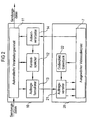
- Figure 1 shows the various processing steps in the OCR processing unit 11 and the resulting ones Coding steps. Steps that are independent are editable by each other, parallelized while sequential steps are sequenced.
- the shipment data are accepted in accordance with FIG. 2 by the automatic OCR processing unit 11 and processed in accordance with the task that is currently to be solved in accordance with the processing chain explained in FIG. 1.
- a broadcast context is built up from the input data and the present partial / results and stored in the context memory 12. If the partial results cannot be reduced to an unambiguous end result, the OCR processing unit 11 initially failed in its task. In this state, the OCR processing unit 11 interrupts its recognition and interpretation process and remains in its processing context. The standard mechanisms of modern multitask operating systems are used for this.
- An order formulator 13 evaluates the program context and uses it to formulate an order for the video coding device 20 for the task to be solved. An order is therefore formulated for the video coding device 20, which consists of the picture or picture sections of the program, corresponding attribute data and an operation to be carried out ,
- an order distributor 21 is constantly waiting for incoming orders.
- the orders are analyzed with regard to the operation to be carried out and a suitable coding location 7 is selected from the pool of available coding locations 7 to solve the task.
- a suitable coding location 7 is selected from the pool of available coding locations 7 to solve the task.
- an order rejection is sent back to a response processor 14.
- the selected coding location 7 receives the order data and presents the program image to the encoder on a high-resolution screen. This carries out the required coding performance.
- the result is sent back to response processor 14.
- the latter inserts the response data into the mailing context, deletes the ambiguous data and ensures that the recognition and interpretation process of the OCR processing unit 11 is continued.
- the address block search fails completely or only takes place through computationally intensive parallel verification very many candidates the right address, but often leads to the online processing time being exceeded.
- closing a gap will make the automatic Processing possible until the complete result. If not, this step can be done arbitrarily often be repeated for a broadcast.
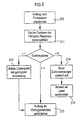
- Figure 3 describes the operation of the order formulator 13, as long as the context memory 12 after ambiguous or nonexistent regions until just searched areas that are still clear and therefore not to be processed stay.
- the search for ambiguous or not found regions 111 After the region search 110 has been accepted, the search for ambiguous or not found regions 111. Become regions the same meaning is found, a corresponding selection order 112 formulated the data of the corresponding found Regions are inserted 113. Do not become regions an order 114 for entering a region is found formulated the searched meaning 115. Were all regions processed, an order is sent to the video coding device 20 forwarded 116.
- the remote station in the video coding device 20 is the order distributor 21, who does not analyze the entire order, however, the type of job needs to be determined from its coding location database 22 of all currently available video coding places 7 to select the operator whose solution to this Task possesses the skills required. This task is of great importance for the efficiency of this process because each encoder can be supplied with enough coding orders must to avoid unnecessary breaks.
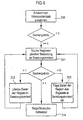
- FIG. 4 describes the operation of the order distributor 21st
- FIG. 5 shows the graphic processing of the data on the coding station. The selection is made using the numeric keypad, so that the encoder also performs other keyboard-based coding tasks can take over.
- the result of the encoder entry is used to return the data of this region to the To send back OCR processing unit 11.
- the answer processor 14 of the region search deletes the ambiguous Regions in the broadcast context and adds the result regions on. So there is now one for each region to be processed clear result available.
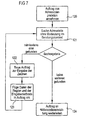
- the flowchart shown in FIG. 6 describes the mode of operation of the answer processor 14. After acceptance 310 of the Answer from the video coding device 20 is checked whether regions were determined as the search result. Isn't that If so, the region search is carried out in the OCR processing unit 11 continued 314, then aborting processing takes place. Was the region search in the Video encoder 20 successful, will be in context memory 12 checked whether there corresponding regions with the same Meaning exist. If so, it will be deleted Data 312. Is data about this region in context memory no longer exists, so the data from the video coding inserted into context memory 12 313.
- the shipment context is passed on to the following Processing unit (s) passed on.
- Processing unit In this example is both stamp recognition and character processing (OCR) because these two units are not affected by the results depend on each other.
- the stamp recognition comes here for simple tasks without further encoder interaction out, since the stamp either is clear enough to be unambiguously based on its shape recognize or it is so smeared that an interaction with a video encoder does not significantly increase the result brings.
- the output of the character processing reaches the broadcast context to the address interpretation.
- This processing unit tries the meaning of the individual Capture words and give them a consistent address construct that assigned a unique distribution information can be.
- the resulting address variants are compared using a database that contains all relevant addresses.
- the address variants result from iteration over several steps, in which individual address parts (eg postcode and city) are processed. If individual words in the address cannot be assigned a clear meaning, the address interpretation calls up an order formulator 13, which searches the mailing context for address parts whose meaning is unclear, for example because the characters could only be recognized incompletely.
- the mode of operation of the order formulator 13 is described in the flow diagram in FIG. After accepting the order for character input 120, address parts with no clear meaning are searched for in the context memory 121. If the search is positive, an input order for the unclear characters is formulated 122, with the data of the region and the input method being inserted 123. All unclear address parts have been determined and corresponding orders are formulated, an entire order is forwarded 124 to the video coding device 20.
- the remote station of the video coding device 20, the order distributor 21, determines the type of Order to 22 in his coding station database available video coding locations to search 221, its operator have the skills required to accomplish this task and the lowest if there are several video coding stations Utilization shows 222. Was the corresponding video coding place an order is forwarded to it 225. Can not determine an available video coding place a rejection response is formulated 223, which is forwarded to the OCR processing unit 11 becomes 224 (see Figure 8).
- FIG. 9 shows the graphic preparation of the data on the coding station.
- the entry is made via the standard keyboard.
- the input method (eg the first 3 characters of the first word and the digits) is determined by the request, since it depends on the access methods of the database used.
- the response interpreter 14 of the address interpretation deletes the ambiguous characters and words of the unrecognized regions in the broadcast context and inserts the characters from the result. This means that a clear result is now available for each region to be processed.
- the flowchart in FIG. 10 describes the mode of operation of the answer processor 14. After acceptance 320 of the response from the video coding device 20, it is checked whether there is a response to the order. If this is not the case, the address interpretation is continued 324 in the OCR processing unit, with the processing then being terminated. If a successful video coding was carried out, the regions of no importance are searched 321 in the context memory 12. If such regions are found, the corresponding characters are deleted 322, the character data from the video coding are inserted 323 into the broadcast context and the address interpretation is continued 324.
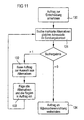
- a decision maker searches the mailing context for all alternative meanings of a partial address or address as part of the address interpretation. On the basis of various decision criteria (e.g. the credibility of the individual alternatives, defined error rate), the decision maker tries to achieve a clear result or builds a list of possible candidates. The list of possible candidates reduced by the decision maker is marked and the corresponding order formulator is commissioned. The flowchart in FIG. 11 describes the functioning of the order formulator 13. After accepting the order for decision 130 of address alternatives, selected alternatives of the same addresses / address parts are searched 131 in the mailing context. If the search is positive, a selection order 132 is formulated. The alternatives and the region are inserted 133 in the order. If all the marked alternatives have been found, a corresponding order is forwarded 134 to the video coding device.
- various decision criteria e.g. the credibility of the individual alternatives, defined error rate
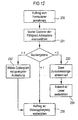
- the remote station in the video coding device 20 of the order distributor determine Art of the order to get the or to search the available video coding places 231, their operators have the skills required to accomplish this task and that of several video coding stations determined the lowest utilization has 232. Was this video coding place an order is forwarded to it 235. Can not have one available for this task Video coding position are determined, a rejection response formulated 233 to the OCR processing unit 11 is forwarded 234 (see Figure 12).
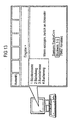
- FIG. 13 shows the graphic preparation of the data on the coding station. The entry is made via the standard keyboard.
- the answer processor for the decision order deletes the alternatives of the processed address parts and inserts the data from the result.
- the flowchart in FIG. 14 describes the mode of operation. After acceptance 330 of the response from the video coding device 20, it is checked whether there is a response to the order. If this is not the case, the decision process is continued 334 in the OCR processing unit 20, with an abort then taking place. If successful video coding has been carried out, the alternative address parts are searched 331 in the context memory 12 and deleted 332. Then the address part from the video coding is inserted 333 in the context memory and the decision-making process is continued 334 with the output of the result.
Landscapes
- Engineering & Computer Science (AREA)
- Quality & Reliability (AREA)
- Physics & Mathematics (AREA)
- General Physics & Mathematics (AREA)
- Multimedia (AREA)
- Theoretical Computer Science (AREA)
- Character Discrimination (AREA)
- Sorting Of Articles (AREA)
- Character Input (AREA)
Claims (11)
- Procédé pour la reconnaissance d'informations de distribution sur des envois avec lecture automatique à l'aide du traitement OCR des images reçues et mémorisées des surfaces d'envoi contenant les informations de distribution, dans lequel la lecture automatique est effectuée dans des étapes de procédé s'exécutant parallèlement et successivement, par exemple la détermination des zones intéressantes (1) (ROI), la lecture de timbres (2), la séparation de lignes, la segmentation, la reconnaissance de caractères et de mots (4), l'interprétation d'adresse (5) avec analyse d'adresse et ajustement d'adresse dans des bases de données d'adresses, dans lequel l'étape de procédé respectivement suivante n'est effectuée que si la précédente s'est terminée avec un résultat univoque, avec codage vidéo d'informations de distribution non reconnues automatiquement de manière univoque dans un dispositif de codage vidéo (20) comportant des postes de codage vidéo (7) sur les écrans à haute résolution desquels sont présentées les images correspondantes transmises avec les informations de distribution,
caractérisé par le fait que,
en cas de résultats équivoques dans l'une des étapes de procédé respectives s'exécutant automatiquement (1 à 6) pour la lecture, cette étape est bloquée dans l'état actuel, à partir des résultats et des résultats intermédiaires, univoques et équivoques, déterminés jusque là à cet effet, une tâche pour le codage vidéo avec indication des résultats équivoques et manquants et avec indication des opérations à exécuter pour atteindre des résultats univoques de cette étape de traitement est transmise automatiquement à un ou plusieurs postes de codage vidéo (7) et, avec les résultats univoques du codeur qui remplacent les résultats équivoques, l'étape de traitement bloquée de la lecture automatique est terminée avec succès et l'étape de traitement suivante est lancée. - Procédé selon la revendication 1,
caractérisé par le fait que,
lors du codage vidéo, on représente sur l'écran du poste de codage vidéo (7) respectif une image qui contient l'information de distribution à lire, la ou les tâches à résoudre et les résultats et/ou résultats partiels déterminés jusque là à cet effet. - Procédé selon la revendication 1,
caractérisé par le fait que,
dans le dispositif de codage vidéo, chaque poste de codage vidéo (7) n'est compétent que pour une partie des différentes tâches de codage vidéo et que les tâches de codage sont distribuées aux postes de codage vidéo en fonction des classes de tâches et des postes de codage vidéo compétents pour celles-ci et en fonction de la charge momentanée des postes de codage vidéo (7). - Dispositif pour la reconnaissance d'informations de distribution sur des envois, contenantcaractérisé par le fait queune unité de traitement OCR automatique (11) avec différents groupes fonctionnels, par exemple pour la détermination des zones intéressantes ROI, pour la séparation de lignes, pour la segmentation, pour la reconnaissance de caractères et de mots, pour l'analyse d'adresse, pour l'ajustement d'adresse dans une base de données d'adresses raccordée, les résultats, les résultats partiels, l'état de la détermination d'information de distribution et les données d'entrée étant mémorisés dans une mémoire de contexte (12),un dispositif de codage vidéo (20) avec au moins un poste de codage vidéo (7) pour les informations de distribution qui ne sont pas lues de manière univoque par l'unité de traitement OCR (11),
l'unité de traitement OCR (11) automatique est conçue de telle sorte que, si les résultats intermédiaires et/ou résultats des groupes fonctionnels ne sont pas univoques ou sont manquants, ces groupes fonctionnels sont bloqués à chaque fois dans l'état actuel et un message de tâche est alors envoyé au dispositif de codage vidéo (20) pour le codage vidéo des tâches non résolues de manière univoque et, après la réception des résultats de codeur vidéo univoques, l'unité de traitement OCR (11) poursuit avec ceux-ci le traitement interrompu. - Dispositif selon la revendication 4,
caractérisé par le fait que
il est raccordé à l'unité de traitement OCR (11) au moins un dispositif de formulation de tâche (13) qui reçoit le signal de tâche pour la fonction de lecture respective, qui cherche dans la mémoire de contexte (12) les résultats non univoques ou non trouvés pour la fonction de lecture respective, qui formule à partir de là une tâche, constituée d'une reproduction de la surface d'envoi avec les informations de distribution cherchées et/ou à lire, des résultats non univoques déterminés par le groupe fonctionnel respectif de l'unité de traitement OCR (11) et de la tâche de codage, et qui envoie cette tâche au dispositif de codage vidéo (20). - Dispositif selon la revendication 4 ou 5,
caractérisé par le fait que
il est branché du côté aval de chaque groupe fonctionnel de l'unité de traitement OCR (11) un dispositif de formulation de tâche (13) relié au dispositif de codage vidéo (20). - Dispositif selon la revendication 4,
caractérisé par le fait que
il est raccordé à l'unité de traitement OCR (11) au moins un préparateur de réponse (14) qui est relié au dispositif de codage vidéo (20), qui insère les données de réponse du dispositif de codage vidéo (20) dans la mémoire de contexte (12), qui efface les résultats non univoques et qui envoie à l'unité de traitement OCR (11) un signal pour la poursuite du processus de lecture. - Dispositif selon les revendications 4 et 7,
caractérisé par le fait que
il est raccordé à chaque module de l'unité de traitement OCR (11) un préparateur de réponse (14) qui est relié au dispositif de codage vidéo (20). - Dispositif selon la revendication 4,
caractérisé par le fait que
chaque poste de codage vidéo (7) n'est compétent que pour une partie des tâches de codage et que les postes de codage vidéo (7) sont reliés par l'intermédiaire d'un distributeur de tâches (21) à l'entrée du dispositif de codage vidéo (20), le distributeur de tâches (21) distribuant les tâches de codage vidéo aux postes de codage vidéo (7) en fonction des compétences en matière de tâche mémorisées dans une base de données de postes de codage (22) raccordée et en fonction de messages d'état de charge des postes de codage vidéo. - Dispositif selon les revendications 4 à 9,
caractérisé par le fait que
un lecteur d'informations de distribution en ligne automatique et rapide est branché du côté amont de l'unité de traitement OCR (11) automatique et que, seulement en cas de résultat de lecture non univoque, l'image correspondante est transmise avec une tâche de lecture à l'unité de traitement OCR automatique (11). - Dispositif selon les revendications 4 à 10,
caractérisé par le fait que
plusieurs images avec des informations de distribution à déterminer sont traitées simultanément.
Applications Claiming Priority (3)
| Application Number | Priority Date | Filing Date | Title |
|---|---|---|---|
| DE19748702 | 1997-11-04 | ||
| DE19748702A DE19748702C1 (de) | 1997-11-04 | 1997-11-04 | Verfahren und Anordnung zum Erkennen von Verteilinformationen auf Sendungen |
| PCT/DE1998/002512 WO1999022883A1 (fr) | 1997-11-04 | 1998-08-26 | Procede et systeme pour reconnaitre des informations de routage sur des envois |
Publications (3)
| Publication Number | Publication Date |
|---|---|
| EP1027174A1 EP1027174A1 (fr) | 2000-08-16 |
| EP1027174B1 true EP1027174B1 (fr) | 2002-07-17 |
| EP1027174B3 EP1027174B3 (fr) | 2011-10-05 |
Family
ID=7847587
Family Applications (1)
| Application Number | Title | Priority Date | Filing Date |
|---|---|---|---|
| EP98951225A Expired - Lifetime EP1027174B3 (fr) | 1997-11-04 | 1998-08-26 | Procede et systeme pour reconnaitre des informations de routage sur des envois |
Country Status (9)
| Country | Link |
|---|---|
| US (1) | US6520407B1 (fr) |
| EP (1) | EP1027174B3 (fr) |
| JP (1) | JP3740366B2 (fr) |
| KR (1) | KR100532800B1 (fr) |
| CN (1) | CN1126608C (fr) |
| CA (1) | CA2309453C (fr) |
| DE (2) | DE19748702C1 (fr) |
| TW (1) | TW438629B (fr) |
| WO (1) | WO1999022883A1 (fr) |
Families Citing this family (62)
| Publication number | Priority date | Publication date | Assignee | Title |
|---|---|---|---|---|
| US8352400B2 (en) | 1991-12-23 | 2013-01-08 | Hoffberg Steven M | Adaptive pattern recognition based controller apparatus and method and human-factored interface therefore |
| US7966078B2 (en) | 1999-02-01 | 2011-06-21 | Steven Hoffberg | Network media appliance system and method |
| JP3709305B2 (ja) * | 1999-07-01 | 2005-10-26 | 日立オムロンターミナルソリューションズ株式会社 | 地名文字列照合方法、地名文字列照合装置、地名文字列認識装置及び郵便物区分システム |
| US6539098B1 (en) † | 1999-09-24 | 2003-03-25 | Mailcode Inc. | Mail processing systems and methods |
| AU3002501A (en) * | 2000-02-07 | 2001-08-20 | Crisplant A/S | A parcel self-servicing machine |
| CN100492403C (zh) * | 2001-09-27 | 2009-05-27 | 佳能株式会社 | 文字图像分行方法和装置以及文字图像识别方法和装置 |
| DE20218212U1 (de) * | 2002-08-12 | 2003-12-24 | Mit Management Intelligenter Technologien Gmbh | Vorrichtung zur automatischen Adressblockmarkierung |
| FR2844618B1 (fr) * | 2002-09-16 | 2006-06-23 | Solystic | Procede pour le codage video d'images comportant une information d'adresse |
| DE10326145A1 (de) * | 2003-06-06 | 2004-12-23 | Böwe Bell + Howell GmbH | Verfahren zum Sortieren von Briefen |
| US20040264564A1 (en) * | 2003-06-26 | 2004-12-30 | Senger Michael D. | System and method for efficiently using video encoding resources |
| TWI256239B (en) * | 2003-09-17 | 2006-06-01 | Avision Inc | Mail recognizing and processing system and method |
| US7590260B2 (en) * | 2003-09-25 | 2009-09-15 | Siemens Aktiengesellschaft | Method and apparatus for video coding by validation matrix |
| CN1332768C (zh) * | 2003-10-10 | 2007-08-22 | 虹光精密工业(苏州)有限公司 | 邮件辨识处理系统与方法 |
| FR2864664B1 (fr) * | 2003-12-24 | 2008-08-15 | Solystic | Procede de traitement d'envois postaux avec prise en compte d'un surcroit d'erreur de distribution |
| US7707039B2 (en) * | 2004-02-15 | 2010-04-27 | Exbiblio B.V. | Automatic modification of web pages |
| US8442331B2 (en) | 2004-02-15 | 2013-05-14 | Google Inc. | Capturing text from rendered documents using supplemental information |
| US8799303B2 (en) * | 2004-02-15 | 2014-08-05 | Google Inc. | Establishing an interactive environment for rendered documents |
| US20060041484A1 (en) * | 2004-04-01 | 2006-02-23 | King Martin T | Methods and systems for initiating application processes by data capture from rendered documents |
| US7812860B2 (en) * | 2004-04-01 | 2010-10-12 | Exbiblio B.V. | Handheld device for capturing text from both a document printed on paper and a document displayed on a dynamic display device |
| US10635723B2 (en) | 2004-02-15 | 2020-04-28 | Google Llc | Search engines and systems with handheld document data capture devices |
| USRE50599E1 (en) | 2004-04-01 | 2025-09-23 | Kyocera Corporation | Search engines and systems with handheld document data capture devices |
| US7990556B2 (en) | 2004-12-03 | 2011-08-02 | Google Inc. | Association of a portable scanner with input/output and storage devices |
| US9143638B2 (en) | 2004-04-01 | 2015-09-22 | Google Inc. | Data capture from rendered documents using handheld device |
| US20080313172A1 (en) * | 2004-12-03 | 2008-12-18 | King Martin T | Determining actions involving captured information and electronic content associated with rendered documents |
| US8793162B2 (en) * | 2004-04-01 | 2014-07-29 | Google Inc. | Adding information or functionality to a rendered document via association with an electronic counterpart |
| US8146156B2 (en) | 2004-04-01 | 2012-03-27 | Google Inc. | Archive of text captures from rendered documents |
| US20070300142A1 (en) * | 2005-04-01 | 2007-12-27 | King Martin T | Contextual dynamic advertising based upon captured rendered text |
| US20060098900A1 (en) | 2004-09-27 | 2006-05-11 | King Martin T | Secure data gathering from rendered documents |
| US20060081714A1 (en) | 2004-08-23 | 2006-04-20 | King Martin T | Portable scanning device |
| US8081849B2 (en) * | 2004-12-03 | 2011-12-20 | Google Inc. | Portable scanning and memory device |
| US8621349B2 (en) * | 2004-04-01 | 2013-12-31 | Google Inc. | Publishing techniques for adding value to a rendered document |
| US7894670B2 (en) | 2004-04-01 | 2011-02-22 | Exbiblio B.V. | Triggering actions in response to optically or acoustically capturing keywords from a rendered document |
| US9116890B2 (en) | 2004-04-01 | 2015-08-25 | Google Inc. | Triggering actions in response to optically or acoustically capturing keywords from a rendered document |
| US20100185538A1 (en) * | 2004-04-01 | 2010-07-22 | Exbiblio B.V. | Content access with handheld document data capture devices |
| FR2868711B1 (fr) * | 2004-04-07 | 2006-06-09 | Solystic Sa | Procede pour retarder l'impression d'un code d'identification sur un envoi postal |
| US8713418B2 (en) * | 2004-04-12 | 2014-04-29 | Google Inc. | Adding value to a rendered document |
| US8874504B2 (en) | 2004-12-03 | 2014-10-28 | Google Inc. | Processing techniques for visual capture data from a rendered document |
| US8620083B2 (en) | 2004-12-03 | 2013-12-31 | Google Inc. | Method and system for character recognition |
| US8489624B2 (en) | 2004-05-17 | 2013-07-16 | Google, Inc. | Processing techniques for text capture from a rendered document |
| US9460346B2 (en) | 2004-04-19 | 2016-10-04 | Google Inc. | Handheld device for capturing text from both a document printed on paper and a document displayed on a dynamic display device |
| DE102004030415A1 (de) * | 2004-06-24 | 2006-01-19 | Siemens Ag | Verfahren zur automatischen Ermittlung operativer Leistungsdaten von Lesesystemen |
| US8346620B2 (en) | 2004-07-19 | 2013-01-01 | Google Inc. | Automatic modification of web pages |
| US20100092095A1 (en) * | 2008-10-14 | 2010-04-15 | Exbiblio B.V. | Data gathering in digital and rendered document environments |
| US20110075228A1 (en) * | 2004-12-03 | 2011-03-31 | King Martin T | Scanner having connected and unconnected operational behaviors |
| CN1300739C (zh) * | 2005-01-25 | 2007-02-14 | 邮政科学上海研究所 | 信函校验识别方法 |
| US8019649B2 (en) * | 2005-04-18 | 2011-09-13 | The Devereux Group | Method of managing prospective business |
| DE102006016602B4 (de) * | 2006-04-06 | 2007-12-13 | Siemens Ag | Verfahren zur Erkennung einer Postsendungsinformation |
| EP2067119A2 (fr) | 2006-09-08 | 2009-06-10 | Exbiblio B.V. | Scanners optiques, tels que des scanners optiques portables |
| US7925046B2 (en) | 2007-05-02 | 2011-04-12 | Lockheed Martin Corporation | Implicit video coding confirmation of automatic address recognition |
| FR2918782B1 (fr) * | 2007-07-10 | 2009-10-30 | Neopost Technologies Sa | Procede d'affranchissement a correction d'erreurs. |
| US8005260B2 (en) | 2008-05-15 | 2011-08-23 | Graham Packaging Company L.P. | Correcting video coding errors using an automatic recognition result |
| US8418055B2 (en) | 2009-02-18 | 2013-04-09 | Google Inc. | Identifying a document by performing spectral analysis on the contents of the document |
| US8447066B2 (en) | 2009-03-12 | 2013-05-21 | Google Inc. | Performing actions based on capturing information from rendered documents, such as documents under copyright |
| EP2406767A4 (fr) | 2009-03-12 | 2016-03-16 | Google Inc | Fourniture automatique de contenu associé à des informations capturées, de type informations capturées en temps réel |
| US9081799B2 (en) | 2009-12-04 | 2015-07-14 | Google Inc. | Using gestalt information to identify locations in printed information |
| US9323784B2 (en) | 2009-12-09 | 2016-04-26 | Google Inc. | Image search using text-based elements within the contents of images |
| CN101844135B (zh) * | 2010-05-11 | 2013-05-08 | 上海邮政科学研究院 | 一种地址信息库驱动下的邮政信函按址分拣方法 |
| US8904517B2 (en) | 2011-06-28 | 2014-12-02 | International Business Machines Corporation | System and method for contexually interpreting image sequences |
| US9449239B2 (en) | 2014-05-30 | 2016-09-20 | Apple Inc. | Credit card auto-fill |
| US9565370B2 (en) | 2014-05-30 | 2017-02-07 | Apple Inc. | System and method for assisting in computer interpretation of surfaces carrying symbols or characters |
| US9251431B2 (en) * | 2014-05-30 | 2016-02-02 | Apple Inc. | Object-of-interest detection and recognition with split, full-resolution image processing pipeline |
| FR3081355B1 (fr) * | 2018-05-24 | 2020-06-12 | Solystic | Procede de tri de bagages en aeroport avec videocodage optimise |
Family Cites Families (12)
| Publication number | Priority date | Publication date | Assignee | Title |
|---|---|---|---|---|
| JPS60147887A (ja) * | 1984-01-12 | 1985-08-03 | Toshiba Corp | 郵便物区分装置 |
| US4992649A (en) * | 1988-09-30 | 1991-02-12 | United States Postal Service | Remote video scanning automated sorting system |
| US5031223A (en) * | 1989-10-24 | 1991-07-09 | International Business Machines Corporation | System and method for deferred processing of OCR scanned mail |
| US5387783A (en) * | 1992-04-30 | 1995-02-07 | Postalsoft, Inc. | Method and apparatus for inserting and printing barcoded zip codes |
| US5446667A (en) * | 1992-06-18 | 1995-08-29 | Pitney Bowes Inc. | Just-in-time mail delivery system and method |
| US5734568A (en) | 1992-08-21 | 1998-03-31 | International Business Machines Corporation | Data processing system for merger of sorting information and redundancy information to provide contextual predictive keying for postal addresses |
| EP0589119A1 (fr) | 1992-09-25 | 1994-03-30 | International Business Machines Corporation | Système et méthode pour améliorer le traitement de courrier analysé par reconnaissance optique de caractères |
| DE4324255C2 (de) * | 1993-07-20 | 1998-02-05 | Siemens Ag | Verfahren und Vorrichtung zum Sortieren von mit Adreßinformationen versehenen Sendungen |
| US5917925A (en) * | 1994-04-14 | 1999-06-29 | Moore; Lewis J. | System for dispensing, verifying and tracking postage and other information on mailpieces |
| DE69629859T2 (de) | 1995-02-08 | 2004-07-08 | Kabushiki Kaisha Toshiba, Kawasaki | Gerät und Verfahren zum Videokodieren |
| JP3441249B2 (ja) | 1995-07-24 | 2003-08-25 | 株式会社東芝 | コーディングシステム及び郵便物処理システム |
| US6156988A (en) * | 1999-09-24 | 2000-12-05 | Baker; Christopher A. | Inter-departmental mail sorting system and method |
-
1997
- 1997-11-04 DE DE19748702A patent/DE19748702C1/de not_active Expired - Fee Related
-
1998
- 1998-08-26 WO PCT/DE1998/002512 patent/WO1999022883A1/fr not_active Ceased
- 1998-08-26 JP JP2000518802A patent/JP3740366B2/ja not_active Expired - Fee Related
- 1998-08-26 DE DE59804832T patent/DE59804832D1/de not_active Expired - Lifetime
- 1998-08-26 CN CN98809865A patent/CN1126608C/zh not_active Expired - Fee Related
- 1998-08-26 KR KR10-2000-7004885A patent/KR100532800B1/ko not_active Expired - Fee Related
- 1998-08-26 US US09/530,651 patent/US6520407B1/en not_active Expired - Lifetime
- 1998-08-26 EP EP98951225A patent/EP1027174B3/fr not_active Expired - Lifetime
- 1998-08-26 CA CA002309453A patent/CA2309453C/fr not_active Expired - Fee Related
- 1998-09-23 TW TW087115839A patent/TW438629B/zh active
Also Published As
| Publication number | Publication date |
|---|---|
| EP1027174A1 (fr) | 2000-08-16 |
| CA2309453A1 (fr) | 1999-05-14 |
| CA2309453C (fr) | 2004-04-20 |
| TW438629B (en) | 2001-06-07 |
| JP3740366B2 (ja) | 2006-02-01 |
| EP1027174B3 (fr) | 2011-10-05 |
| KR20010031815A (ko) | 2001-04-16 |
| US6520407B1 (en) | 2003-02-18 |
| KR100532800B1 (ko) | 2005-12-05 |
| JP2001521821A (ja) | 2001-11-13 |
| CN1126608C (zh) | 2003-11-05 |
| DE19748702C1 (de) | 1998-11-05 |
| WO1999022883A1 (fr) | 1999-05-14 |
| DE59804832D1 (de) | 2002-08-22 |
| CN1273542A (zh) | 2000-11-15 |
Similar Documents
| Publication | Publication Date | Title |
|---|---|---|
| EP1027174B3 (fr) | Procede et systeme pour reconnaitre des informations de routage sur des envois | |
| DE10021734C1 (de) | Verfahren und Vorrichtung zum Ermitteln von Gebieten mit Verteilinformationen auf Sendungen | |
| DE69528023T2 (de) | Anlage und Verfahren zur automatischen Interpretation von Eingabeausdrucken mittels neuer a posteriori Washscheinlichkeitmasse und optimal trainierter Datenverarbeitungsnetzwerken | |
| EP0980293B1 (fr) | Procede et dispositif de reconnaissance d'information de distribution de courrier | |
| EP0938719B1 (fr) | Procede et systeme de reconnaissance de l'information de distribution figurant sur les envois | |
| DE60308025T2 (de) | Identifikationsmarkieren von poststücken durch bildsignatur und zugehörige postbearbeitungsmaschine | |
| DE69432114T2 (de) | System zum Identifizieren und Verarbeiten von Formularen | |
| DE69604481T2 (de) | Verfahren und gerät zum trennen des vordergrunds und hintergrunds in textenthaltenden bildern | |
| DE69423254T2 (de) | Verfahren und Gerät zur automatischen Spracherkennung von Dokumenten | |
| DE69016572T3 (de) | System und Verfahren zur aufgeschobenen Bearbeitung von OCR-abgetasteten Postsachen. | |
| EP0975442B2 (fr) | Procede de traitement d'objets postaux | |
| EP1015138B1 (fr) | Procede et dispositif de reconnaissance des donnees de distribution figurant sur les envois postaux | |
| DE69230092T2 (de) | Verfahren und Gerät zur Zeichenerkennung | |
| EP3428834A1 (fr) | Lecteur de code optoélectronique et procédé de lecture de code optique | |
| EP1259932B1 (fr) | Procede et dispositif pour lire les adresses d'envois postaux | |
| EP2082357A1 (fr) | Dispositif, procédé et programme d'ordinateur pour identifier des caractères sur une image | |
| DE2435889A1 (de) | Verfahren und einrichtung zum unterscheiden von zeichengruppen | |
| DE69030614T2 (de) | Gerät zur Erkennung handgeschriebener Zeichen | |
| EP0107083B1 (fr) | Dispositif de traitement de documents comprenant un circuit de correction et un dispositif d'affichage | |
| DE3414455C2 (de) | Verfahren und Vorrichtung zum Lesen und Verarbeiten von Information, die aus dekodierbarer Schriftinformation und/oder nichtdekodierbarer Graphikinformation besteht | |
| DE60102928T2 (de) | Verfahren und vorrichtung zur bildverarbeitung | |
| DE69431393T2 (de) | Anlage zur Bilderkennung alphanumerischen Zeichen | |
| DE10212085A1 (de) | Verfahren und Vorrichtung zum Lesen der Adressen von Sendungen | |
| EP0850458B1 (fr) | Dispositif d'affichage pour correction d'erreurs lors de la reconnaissance des formes | |
| EP0094952B1 (fr) | Procede et dispositif de lecture de signes apparaissant par contraste |
Legal Events
| Date | Code | Title | Description |
|---|---|---|---|
| PUAI | Public reference made under article 153(3) epc to a published international application that has entered the european phase |
Free format text: ORIGINAL CODE: 0009012 |
|
| 17P | Request for examination filed |
Effective date: 20000417 |
|
| AK | Designated contracting states |
Kind code of ref document: A1 Designated state(s): CH DE FR GB IT LI NL |
|
| GRAG | Despatch of communication of intention to grant |
Free format text: ORIGINAL CODE: EPIDOS AGRA |
|
| GRAG | Despatch of communication of intention to grant |
Free format text: ORIGINAL CODE: EPIDOS AGRA |
|
| GRAH | Despatch of communication of intention to grant a patent |
Free format text: ORIGINAL CODE: EPIDOS IGRA |
|
| 17Q | First examination report despatched |
Effective date: 20011219 |
|
| GRAH | Despatch of communication of intention to grant a patent |
Free format text: ORIGINAL CODE: EPIDOS IGRA |
|
| GRAA | (expected) grant |
Free format text: ORIGINAL CODE: 0009210 |
|
| AK | Designated contracting states |
Kind code of ref document: B1 Designated state(s): CH DE FR GB IT LI NL |
|
| REG | Reference to a national code |
Ref country code: GB Ref legal event code: FG4D Free format text: NOT ENGLISH |
|
| REG | Reference to a national code |
Ref country code: CH Ref legal event code: EP |
|
| REF | Corresponds to: |
Ref document number: 59804832 Country of ref document: DE Date of ref document: 20020822 |
|
| REG | Reference to a national code |
Ref country code: CH Ref legal event code: NV Representative=s name: SIEMENS SCHWEIZ AG |
|
| GBT | Gb: translation of ep patent filed (gb section 77(6)(a)/1977) |
Effective date: 20021003 |
|
| PGFP | Annual fee paid to national office [announced via postgrant information from national office to epo] |
Ref country code: CH Payment date: 20021108 Year of fee payment: 5 |
|
| ET | Fr: translation filed | ||
| PLBE | No opposition filed within time limit |
Free format text: ORIGINAL CODE: 0009261 |
|
| 26N | No opposition filed |
Effective date: 20030422 |
|
| PG25 | Lapsed in a contracting state [announced via postgrant information from national office to epo] |
Ref country code: LI Free format text: LAPSE BECAUSE OF NON-PAYMENT OF DUE FEES Effective date: 20030831 Ref country code: CH Free format text: LAPSE BECAUSE OF NON-PAYMENT OF DUE FEES Effective date: 20030831 |
|
| REG | Reference to a national code |
Ref country code: CH Ref legal event code: PL |
|
| PGFP | Annual fee paid to national office [announced via postgrant information from national office to epo] |
Ref country code: IT Payment date: 20070829 Year of fee payment: 10 |
|
| PG25 | Lapsed in a contracting state [announced via postgrant information from national office to epo] |
Ref country code: IT Free format text: LAPSE BECAUSE OF NON-PAYMENT OF DUE FEES Effective date: 20080826 |
|
| PLCP | Request for limitation filed |
Free format text: ORIGINAL CODE: EPIDOSNLIM1 |
|
| PLCQ | Request for limitation of patent found admissible |
Free format text: ORIGINAL CODE: 0009231 |
|
| LIM1 | Request for limitation found admissible |
Free format text: SEQUENCE NO: 1; FILED AFTER OPPOSITION PERIOD Filing date: 20100428 |
|
| PLCO | Limitation procedure: reply received to communication from examining division + time limit |
Free format text: ORIGINAL CODE: EPIDOSNLIR3 |
|
| REG | Reference to a national code |
Ref country code: DE Ref legal event code: R097 Ref document number: 59804832 Country of ref document: DE |
|
| PLCR | Communication despatched that request for limitation of patent was allowed |
Free format text: ORIGINAL CODE: 0009245 |
|
| REG | Reference to a national code |
Ref country code: DE Ref legal event code: R056 Ref document number: 59804832 Country of ref document: DE Effective date: 20110414 |
|
| REG | Reference to a national code |
Ref country code: DE Ref legal event code: R084 Ref document number: 59804832 Country of ref document: DE |
|
| PLCN | Payment of fee for limitation of patent |
Free format text: ORIGINAL CODE: EPIDOSNRAL3 |
|
| PUAM | (expected) publication of b3 document |
Free format text: ORIGINAL CODE: 0009410 |
|
| STAA | Information on the status of an ep patent application or granted ep patent |
Free format text: STATUS: THE PATENT HAS BEEN LIMITED |
|
| REG | Reference to a national code |
Ref country code: DE Ref legal event code: R084 Ref document number: 59804832 Country of ref document: DE Effective date: 20110726 |
|
| REG | Reference to a national code |
Ref country code: CH Ref legal event code: AEN Free format text: BESCHRAENKUNGANTRAG GUTGEHEISSEN |
|
| REG | Reference to a national code |
Ref country code: NL Ref legal event code: T3 |
|
| PGFP | Annual fee paid to national office [announced via postgrant information from national office to epo] |
Ref country code: NL Payment date: 20140803 Year of fee payment: 17 |
|
| PGFP | Annual fee paid to national office [announced via postgrant information from national office to epo] |
Ref country code: GB Payment date: 20140815 Year of fee payment: 17 |
|
| GBPC | Gb: european patent ceased through non-payment of renewal fee |
Effective date: 20150826 |
|
| REG | Reference to a national code |
Ref country code: NL Ref legal event code: MM Effective date: 20150901 |
|
| PG25 | Lapsed in a contracting state [announced via postgrant information from national office to epo] |
Ref country code: NL Free format text: LAPSE BECAUSE OF NON-PAYMENT OF DUE FEES Effective date: 20150901 |
|
| PG25 | Lapsed in a contracting state [announced via postgrant information from national office to epo] |
Ref country code: GB Free format text: LAPSE BECAUSE OF NON-PAYMENT OF DUE FEES Effective date: 20150826 |
|
| REG | Reference to a national code |
Ref country code: FR Ref legal event code: PLFP Year of fee payment: 19 |
|
| PGFP | Annual fee paid to national office [announced via postgrant information from national office to epo] |
Ref country code: FR Payment date: 20160823 Year of fee payment: 19 |
|
| PGFP | Annual fee paid to national office [announced via postgrant information from national office to epo] |
Ref country code: DE Payment date: 20161020 Year of fee payment: 19 |
|
| REG | Reference to a national code |
Ref country code: DE Ref legal event code: R119 Ref document number: 59804832 Country of ref document: DE |
|
| REG | Reference to a national code |
Ref country code: FR Ref legal event code: ST Effective date: 20180430 |
|
| PG25 | Lapsed in a contracting state [announced via postgrant information from national office to epo] |
Ref country code: DE Free format text: LAPSE BECAUSE OF NON-PAYMENT OF DUE FEES Effective date: 20180301 |
|
| PG25 | Lapsed in a contracting state [announced via postgrant information from national office to epo] |
Ref country code: FR Free format text: LAPSE BECAUSE OF NON-PAYMENT OF DUE FEES Effective date: 20170831 |