EP1027180B1 - Feinguss - Google Patents
Feinguss Download PDFInfo
- Publication number
- EP1027180B1 EP1027180B1 EP98954632A EP98954632A EP1027180B1 EP 1027180 B1 EP1027180 B1 EP 1027180B1 EP 98954632 A EP98954632 A EP 98954632A EP 98954632 A EP98954632 A EP 98954632A EP 1027180 B1 EP1027180 B1 EP 1027180B1
- Authority
- EP
- European Patent Office
- Prior art keywords
- shell
- casting
- cast
- vacuum
- ceramic
- Prior art date
- Legal status (The legal status is an assumption and is not a legal conclusion. Google has not performed a legal analysis and makes no representation as to the accuracy of the status listed.)
- Expired - Lifetime
Links
- 238000005495 investment casting Methods 0.000 title description 8
- 229910052751 metal Inorganic materials 0.000 claims abstract description 22
- 239000002184 metal Substances 0.000 claims abstract description 22
- 239000000919 ceramic Substances 0.000 claims abstract description 21
- 238000005266 casting Methods 0.000 claims description 35
- 238000000034 method Methods 0.000 claims description 29
- 238000000576 coating method Methods 0.000 claims description 20
- 239000002002 slurry Substances 0.000 claims description 18
- 239000011248 coating agent Substances 0.000 claims description 16
- 239000000945 filler Substances 0.000 claims description 13
- 239000008187 granular material Substances 0.000 claims description 12
- XLYOFNOQVPJJNP-UHFFFAOYSA-N water Substances O XLYOFNOQVPJJNP-UHFFFAOYSA-N 0.000 claims description 9
- 239000000463 material Substances 0.000 claims description 8
- 229910001338 liquidmetal Inorganic materials 0.000 claims description 7
- 229910045601 alloy Inorganic materials 0.000 claims description 6
- 239000000956 alloy Substances 0.000 claims description 6
- 239000011261 inert gas Substances 0.000 claims description 5
- 229910000601 superalloy Inorganic materials 0.000 claims description 5
- 239000011230 binding agent Substances 0.000 claims description 4
- 230000008018 melting Effects 0.000 claims description 3
- 238000002844 melting Methods 0.000 claims description 3
- 238000007598 dipping method Methods 0.000 claims description 2
- 238000000465 moulding Methods 0.000 claims description 2
- 230000001681 protective effect Effects 0.000 claims description 2
- 239000004576 sand Substances 0.000 abstract description 8
- 239000011257 shell material Substances 0.000 description 36
- VYPSYNLAJGMNEJ-UHFFFAOYSA-N Silicium dioxide Chemical compound O=[Si]=O VYPSYNLAJGMNEJ-UHFFFAOYSA-N 0.000 description 14
- 238000010304 firing Methods 0.000 description 6
- PXHVJJICTQNCMI-UHFFFAOYSA-N Nickel Chemical compound [Ni] PXHVJJICTQNCMI-UHFFFAOYSA-N 0.000 description 4
- 238000001035 drying Methods 0.000 description 4
- 238000010438 heat treatment Methods 0.000 description 4
- 239000007789 gas Substances 0.000 description 3
- 239000012855 volatile organic compound Substances 0.000 description 3
- 229910052845 zircon Inorganic materials 0.000 description 3
- GFQYVLUOOAAOGM-UHFFFAOYSA-N zirconium(iv) silicate Chemical compound [Zr+4].[O-][Si]([O-])([O-])[O-] GFQYVLUOOAAOGM-UHFFFAOYSA-N 0.000 description 3
- XKRFYHLGVUSROY-UHFFFAOYSA-N Argon Chemical compound [Ar] XKRFYHLGVUSROY-UHFFFAOYSA-N 0.000 description 2
- XEEYBQQBJWHFJM-UHFFFAOYSA-N Iron Chemical compound [Fe] XEEYBQQBJWHFJM-UHFFFAOYSA-N 0.000 description 2
- 229910000831 Steel Inorganic materials 0.000 description 2
- 239000010941 cobalt Substances 0.000 description 2
- 229910017052 cobalt Inorganic materials 0.000 description 2
- GUTLYIVDDKVIGB-UHFFFAOYSA-N cobalt atom Chemical compound [Co] GUTLYIVDDKVIGB-UHFFFAOYSA-N 0.000 description 2
- 239000008119 colloidal silica Substances 0.000 description 2
- 230000007547 defect Effects 0.000 description 2
- HNPSIPDUKPIQMN-UHFFFAOYSA-N dioxosilane;oxo(oxoalumanyloxy)alumane Chemical group O=[Si]=O.O=[Al]O[Al]=O HNPSIPDUKPIQMN-UHFFFAOYSA-N 0.000 description 2
- 238000004519 manufacturing process Methods 0.000 description 2
- 229910052759 nickel Inorganic materials 0.000 description 2
- 230000035699 permeability Effects 0.000 description 2
- 230000035939 shock Effects 0.000 description 2
- 239000000377 silicon dioxide Substances 0.000 description 2
- 239000010959 steel Substances 0.000 description 2
- 239000002699 waste material Substances 0.000 description 2
- VYZAMTAEIAYCRO-UHFFFAOYSA-N Chromium Chemical compound [Cr] VYZAMTAEIAYCRO-UHFFFAOYSA-N 0.000 description 1
- LFQSCWFLJHTTHZ-UHFFFAOYSA-N Ethanol Chemical compound CCO LFQSCWFLJHTTHZ-UHFFFAOYSA-N 0.000 description 1
- 230000006978 adaptation Effects 0.000 description 1
- 239000004411 aluminium Substances 0.000 description 1
- 229910052782 aluminium Inorganic materials 0.000 description 1
- XAGFODPZIPBFFR-UHFFFAOYSA-N aluminium Chemical compound [Al] XAGFODPZIPBFFR-UHFFFAOYSA-N 0.000 description 1
- PNEYBMLMFCGWSK-UHFFFAOYSA-N aluminium oxide Inorganic materials [O-2].[O-2].[O-2].[Al+3].[Al+3] PNEYBMLMFCGWSK-UHFFFAOYSA-N 0.000 description 1
- 229910000323 aluminium silicate Inorganic materials 0.000 description 1
- 229910052786 argon Inorganic materials 0.000 description 1
- 230000001413 cellular effect Effects 0.000 description 1
- 238000005056 compaction Methods 0.000 description 1
- 238000005336 cracking Methods 0.000 description 1
- 238000010586 diagram Methods 0.000 description 1
- 238000006073 displacement reaction Methods 0.000 description 1
- 230000008030 elimination Effects 0.000 description 1
- 238000003379 elimination reaction Methods 0.000 description 1
- 230000007613 environmental effect Effects 0.000 description 1
- 239000004794 expanded polystyrene Substances 0.000 description 1
- -1 for example Substances 0.000 description 1
- 230000008014 freezing Effects 0.000 description 1
- 238000007710 freezing Methods 0.000 description 1
- 239000005350 fused silica glass Substances 0.000 description 1
- 229910052742 iron Inorganic materials 0.000 description 1
- NLYAJNPCOHFWQQ-UHFFFAOYSA-N kaolin Chemical compound O.O.O=[Al]O[Si](=O)O[Si](=O)O[Al]=O NLYAJNPCOHFWQQ-UHFFFAOYSA-N 0.000 description 1
- QSHDDOUJBYECFT-UHFFFAOYSA-N mercury Chemical compound [Hg] QSHDDOUJBYECFT-UHFFFAOYSA-N 0.000 description 1
- 229910052753 mercury Inorganic materials 0.000 description 1
- 239000004033 plastic Substances 0.000 description 1
- 229920003023 plastic Polymers 0.000 description 1
- 239000002994 raw material Substances 0.000 description 1
Images

Classifications
-
- B—PERFORMING OPERATIONS; TRANSPORTING
- B22—CASTING; POWDER METALLURGY
- B22D—CASTING OF METALS; CASTING OF OTHER SUBSTANCES BY THE SAME PROCESSES OR DEVICES
- B22D18/00—Pressure casting; Vacuum casting
- B22D18/06—Vacuum casting, i.e. making use of vacuum to fill the mould
-
- B—PERFORMING OPERATIONS; TRANSPORTING
- B22—CASTING; POWDER METALLURGY
- B22C—FOUNDRY MOULDING
- B22C7/00—Patterns; Manufacture thereof so far as not provided for in other classes
- B22C7/02—Lost patterns
-
- B—PERFORMING OPERATIONS; TRANSPORTING
- B22—CASTING; POWDER METALLURGY
- B22C—FOUNDRY MOULDING
- B22C9/00—Moulds or cores; Moulding processes
- B22C9/02—Sand moulds or like moulds for shaped castings
-
- B—PERFORMING OPERATIONS; TRANSPORTING
- B22—CASTING; POWDER METALLURGY
- B22C—FOUNDRY MOULDING
- B22C9/00—Moulds or cores; Moulding processes
- B22C9/02—Sand moulds or like moulds for shaped castings
- B22C9/04—Use of lost patterns
-
- B—PERFORMING OPERATIONS; TRANSPORTING
- B22—CASTING; POWDER METALLURGY
- B22C—FOUNDRY MOULDING
- B22C9/00—Moulds or cores; Moulding processes
- B22C9/08—Features with respect to supply of molten metal, e.g. ingates, circular gates, skim gates
- B22C9/082—Sprues, pouring cups
Definitions
- This invention relates to the casting of articles of molten metal and is particularly concerned with casting by the so-called investment or lost wax process.
- a very accurate model of the required product is produced in wax.
- a ceramic shell is then formed around the wax by applying successive coats of ceramic slurry and stucco.
- the wax is dipped into a tank of slurry; on removal, excess slurry adhering to the wax model is drained off and dry granular ceramic stucco is applied to the surface either by raining it over the model, or by immersing the model in a fluidised bed containing the stucco.
- the first coating must be dried before the next coating can be applied.
- the resultant shell is then cooled to room temperature, repaired and cleaned of any internal debris, after which it is heated for several hours in a pre-heat furnace before being taken to a casting furnace or casting station to be filled with metal while at high temperature.
- Pre-heating is necessary to avoid thermal shock and to ensure that the mould fills completely, especially in thin sections. In many foundries, the same furnace is used for all firing and pre-heating operations which reduces capital investment but leads to logistical and productivity constraints.
- Investment casting offers a manufacturing process capable of producing components of high definition, good dimensional accuracy and excellent surface finish. Its drawbacks, however are that it is limited in the size of components which can be cast and it is expensive to operate. One problem is caused by the fact that wax expands on heating and this can cause the surrounding ceramic shell to crack. It is one object of this invention to address these drawbacks by providing a casting process capable of delivering the benefits of investment casting but which is applicable over a greater size range and is cheaper to operate.
- EP-A- 474 078 discloses an investment casting method using vacuum for filling the mould formed by a ceramic shell, which, apart from step 8) of claim 8, namely applying a vacuum to the granular filler surrounding the shell, comprises all the steps mentioned in claim 8.
- At least the initial slurry used for coating the wax pattern is water based.
- the thickness of the thin-walled shell mould produced by the coating is about 2.5 mm.
- the temperature of firing and steam treatment in an autoclave to remove the wax is 135-176°C; a further firing treatment in order to improve gas permeability is not necessary, cf. such a step missing in the claims of the EP-A, but is mentioned taking place at 985°C in the description of the EP-A.
- the shell mould is placed in a box within loose particulate refractory media which are densified by vibration. A vacuum is not applied to the particulate refractory media but to the interior of the shell before and during the metal pouring step.
- US-A-3 933 190 discloses investment casting of turbine blades from Ni- or Co-based superalloys.
- the invention provides a method of casting an article of molten metal, the method comprising casting the liquid metal into a supported thin ceramic shell having a smooth surface and which has not been pre-heated before ingress of the liquid metal and including the preliminary step of supporting the shell in a bed of compacted granular material and applying a vacuum to the compact granular material while the liquid metal is being cast into the shell whereby to draw all the metal into the shell.
- a mould which is cast hot must be strong enough to withstand being handled at high temperature and also to avoid breakout during pouring. This is achieved by building up a substantial thickness of shell consisting of as many as 15 dip coats.
- the mould is cold at the point when the molten metal is poured. into it and it is supported in a bed of loose sand compacted to a high bulk density. In this process it is normal to apply only 5 to 7 coats depending on the size and geometry of the casting being produced leading to very significant savings in moulding materials, mould manufacturing lead time, work in progress and waste disposal costs.
- VOC volatile organic compound
- moulds are cast cold, it is possible to cast several components together from a single large charge of metal. (Pre-heated, investment cast moulds are usually cast individually, each mould requiring a small, single billet of metal to be melted and poured, which is time consuming and costly.)
- the ceramic shell is supported in a bed of granular material, for example, sand, while the molten metal is being cast into the shell. It is also preferred that the bed of granular material be at or near ambient temperature.
- the sand is compacted, preferably by vibration, before pouring and it is further compacted by applying a vacuum while the metal is being poured.
- the vibration is preferably of high frequency and low amplitude, typically 40 - 50 Hz and 0.045 mm RMS (root mean square) to optimise compaction of the backing material and to provide acceptable support for the mould.
- the thickness of the ceramic shell is typically around 3 mm, i.e. relatively thin compared to most investment casting shells and is made by applying a relatively small number of slurry and stucco coat; each coat being dried before the next is applied. For most castings only five coats need to be applied to provide the necessary shell thickness.
- the ceramic slurries used to form the coatings which make up the shell mould are preferably water-based. Suitable materials for use in these slurries include, but are not restricted to, zircon, silica, alumina and the alumino-silicate group of materials.
- the invention provides a method of casting an article of molten metal, the method comprising the steps of:
- the casting method is applicable to a wide range of alloys including iron, steel, aluminium, cobalt/ chrome and nickel based superalloys.
- a further adaptation of this process is its application to vacuum cast alloys, e.g. nickel-based or cobalt-based superalloys.
- the alloy to be cast is melted under vacuum in a vacuum melting furnace.
- a bed of granular material containing the mould is positioned inside the casting chamber of the furnace; the granular material in the bed having been vibrated in advance to compact it.
- An inert gas e.g. argon
- a pump is activated which draws the inert gas through the mould and the bed of granular material and then re-admits it into the casting chamber.
- the invention includes components cast by the method.
- the second and subsequent coatings were of back-up material, comprising a slurry of fused silica filler and water-based colloidal silica binder and a stucco of MolochiteTM, an alumino-silicate material produced from china clay.
- five coatings were applied, including the primary coat. Drying times between coats ranged from 36 minutes between coats 1 and 2 to 54 minutes between coats 4 and 5. After coat 5 was applied, the mould was left for 20 hours in the drying room before removing the wax in a steam autoclave and firing at 1050°C in a gas fired kiln to remove all traces of wax. Drying conditions used throughout mould build and final dry were 23°C dry bulb temperature and 55% relative humidity.
- the cold shell S was placed in a mould box 3 measuring 1m x 1m x 1m.
- Sub-angular silica sand 4 was then poured into the bed around the outside of the mould.
- the box was vibrated at a frequency of 40 - 50 Hz and displacement of 0.045 mm RMS (root mean square) for a period of 90 seconds. This compacted the sand ensuring a high bulk density and intimate contact of the sand with all areas of the mould.
- a vacuum of approximately 500 mm measured at the pump mercury gauge was drawn in the sand bed and steel was then poured into the cold shell via a plenum chamber 5 in the base of the box.
- the invention is not limited to the embodiments shown.
- the top of the box may be covered by a sheet and/or protective gas may be supplied during casting.
Landscapes
- Engineering & Computer Science (AREA)
- Mechanical Engineering (AREA)
- Molds, Cores, And Manufacturing Methods Thereof (AREA)
- Pyridine Compounds (AREA)
- Soil Working Implements (AREA)
- Dental Prosthetics (AREA)
- Mold Materials And Core Materials (AREA)
- Sorption Type Refrigeration Machines (AREA)
- Control Of Steam Boilers And Waste-Gas Boilers (AREA)
Claims (11)
- Verfahren zum Gießen eines Artikels aus geschmolzenem Metall, wobei das Verfahren ein Gießen des flüssigen Metalls in einen gestützten dünnen Keramikmantel umfasst, der eine glatte Oberfläche aufweist und vor dem Eindringen des flüssigen Metalls nicht vorgeheizt worden ist, und den vorhergehenden Schritt des Stützens des Mantels in einem Bett aus verdichtetem granularen Material und Anlegen eines Vakuums an das dichte granulare Material umfasst, während das flüssige Metall in den Mantel gegossen wird, wodurch das gesamte Metall in den Mantel gezogen wird.
- Verfahren nach Anspruch 1, wobei eine einzige Charge geschmolzenen Metalls verwendet wird, um eine Zahl von Komponenten zu gießen, wobei ein Keramikmantel in einer Gießoperation gebildet wird.
- Verfahren nach Anspruch 2, das dazu ausgelegt ist, eine Zahl von Kraftfahrzeug- oder allgemeinen industriellen Gußerzeugnissen zu gießen.
- Verfahren nach einem der vorhergehenden Ansprüche, wobei die Wanddicke des Keramikmantels weniger als ungefähr 3 mm beträgt.
- Verfahren nach Anspruch 4, umfassend den vorhergehenden Schritt des Formens des Keramikmantels durch aufeinanderfolgendes Aufbringen von Schichten eines Beschichtungsmaterials auf ein Wachsmuster, um die definierte Wanddicke zu bilden, und durch Entfernen des Wachsmusters, um einen handhabbaren Keramikmantel zu bilden.
- Verfahren nach Anspruch 5, wobei das Beschichtungsmaterial keramischer Schlamm auf Wasserbasis und ein trockener granularer Keramikstuck ist.
- Verfahren nach einem der vorhergehenden Ansprüche, wobei das flüssige Metall unter einer Inertgas-Schutzatmosphäre gegossen wird.
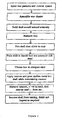
- Verfahren nach Anspruch 1, wobei das Verfahren die Schritte umfasst:1) Bilden eines Musters der zu gießenden Komponente(n) und des zugeordneten Angußsystems aus Wachs;2) Eintauchen des Wachsmusters in einen Tank mit keramischem Schlamm, umfassend einen feuerfesten Füller sowie ein Bindemittel auf Wasserbasis, um eine Beschichtung auf dem Muster zu bilden;3) Ablaufenlassen des überschüssigen Schlamms und Aufbringen von feuerfesten Körnern auf die Beschichtung, um eine Stuckschicht darauf zu bilden, und anschließendes Trocknenlassen der Beschichtung;4) Wiederholen der Schritte (3) und (4), um eine Beschichtung mit einer Dicke von ungefähr 3 mm zu bilden;5) Entfernen des Wachses und Abkühlenlassen des resultierenden Mantels auf Raumtemperatur;6) Anordnen des Mantels in einen Formkasten und Umgeben desselben mit granularem Füller;7) Schütteln des Kastens, um den Füller auf eine hohe Fülldichte zu verdichten;8) Anlegen eines Vakuums an den granularen Füller;9) Gießen geschmolzenen Metalls in den Mantel, während das Vakuum beibehalten wird;10) Entfernen des Vakuums, Abkühlenlassen des Gußerzeugnisses und anschließendes Trennen desselben vom Füller; und11) Entfernen des Mantels, um ein Gußerzeugnis zu liefern, das eine im Wesentlichen glatte Außenoberfläche aufweist.
- Verfahren nach Anspruch 8, bei dem der Schlamm ein Schlamm auf Wasserbasis ist.
- Verfahren nach Anspruch 8 oder 9, wobei verschiedene Artikel in dem einen Formkasten unter Verwendung der einzigen Charge geschmolzenen Metalls gegossen werden.
- Verfahren nach einem der Ansprüche 8 bis 10, angewandt auf das Gießen von Artikeln aus einer Superlegierung, wobei im folgenden Schritt (7) der Formkasten in die Gießkammer eines Vakuumschmelzofens gesetzt wird, ein Inertgas in die Kammer eingelassen und eine Pumpe eingeschaltet wird, um Inertgas durch den Formkasten zu saugen, und die Legierung unter Vakuum geschmolzen und in den Kasten gegossen wird, um hierdurch einen Artikel aus der Superlegierung und mit einer glatten Ausführung zu bilden.
Applications Claiming Priority (3)
| Application Number | Priority Date | Filing Date | Title |
|---|---|---|---|
| GB9724568 | 1997-11-19 | ||
| GBGB9724568.2A GB9724568D0 (en) | 1997-11-19 | 1997-11-19 | Investment casting |
| PCT/GB1998/003472 WO1999025511A1 (en) | 1997-11-19 | 1998-11-18 | Investment casting |
Publications (2)
| Publication Number | Publication Date |
|---|---|
| EP1027180A1 EP1027180A1 (de) | 2000-08-16 |
| EP1027180B1 true EP1027180B1 (de) | 2005-01-05 |
Family
ID=10822391
Family Applications (1)
| Application Number | Title | Priority Date | Filing Date |
|---|---|---|---|
| EP98954632A Expired - Lifetime EP1027180B1 (de) | 1997-11-19 | 1998-11-18 | Feinguss |
Country Status (5)
| Country | Link |
|---|---|
| EP (1) | EP1027180B1 (de) |
| AT (1) | ATE286443T1 (de) |
| DE (1) | DE69828523T2 (de) |
| GB (1) | GB9724568D0 (de) |
| WO (1) | WO1999025511A1 (de) |
Families Citing this family (4)
| Publication number | Priority date | Publication date | Assignee | Title |
|---|---|---|---|---|
| US7258158B2 (en) | 2004-07-28 | 2007-08-21 | Howmet Corporation | Increasing stability of silica-bearing material |
| IL234824A (en) | 2014-09-23 | 2016-02-29 | Ofer Hen | Foundry system, molding method, method of manufacture and method of casting using it |
| CN104439074A (zh) * | 2014-11-27 | 2015-03-25 | 宁波通达精密铸造有限公司 | 一种熔模精密铸造方法 |
| KR101755832B1 (ko) * | 2015-08-31 | 2017-07-10 | 현대자동차주식회사 | 자동차 배기계용 정밀주조부품 제조방법 |
Family Cites Families (4)
| Publication number | Priority date | Publication date | Assignee | Title |
|---|---|---|---|---|
| US3933190A (en) * | 1974-12-16 | 1976-01-20 | United Technologies Corporation | Method for fabricating shell molds for the production of superalloy castings |
| US4026344A (en) * | 1976-06-23 | 1977-05-31 | General Electric Company | Method for making investment casting molds for casting of superalloys |
| US4222429A (en) * | 1979-06-05 | 1980-09-16 | Foundry Management, Inc. | Foundry process including heat treating of produced castings in formation sand |
| CA2049228C (en) * | 1990-09-06 | 1996-10-15 | George D. Chandley | Countergravity casting using particulate supported thin walled investment shell mold |
-
1997
- 1997-11-19 GB GBGB9724568.2A patent/GB9724568D0/en not_active Ceased
-
1998
- 1998-11-18 AT AT98954632T patent/ATE286443T1/de not_active IP Right Cessation
- 1998-11-18 WO PCT/GB1998/003472 patent/WO1999025511A1/en not_active Ceased
- 1998-11-18 EP EP98954632A patent/EP1027180B1/de not_active Expired - Lifetime
- 1998-11-18 DE DE69828523T patent/DE69828523T2/de not_active Expired - Fee Related
Also Published As
| Publication number | Publication date |
|---|---|
| WO1999025511A1 (en) | 1999-05-27 |
| ATE286443T1 (de) | 2005-01-15 |
| DE69828523D1 (de) | 2005-02-10 |
| GB9724568D0 (en) | 1998-01-21 |
| DE69828523T2 (de) | 2005-10-13 |
| EP1027180A1 (de) | 2000-08-16 |
Similar Documents
| Publication | Publication Date | Title |
|---|---|---|
| US5297615A (en) | Complaint investment casting mold and method | |
| CA2492579C (en) | Method of heating casting mold | |
| EP0115402B1 (de) | Keramische Maskenformen, Herstellung und Verwendung | |
| AU635858B2 (en) | Countergravity casting using particulate supported thin walled investment shell mold | |
| US2961751A (en) | Ceramic metal casting process | |
| CN1583317A (zh) | 用于钛合金精密铸造的低成本氧化物陶瓷型壳的制备方法 | |
| US2948935A (en) | Process of making refractory shell for casting metal | |
| US3196506A (en) | Method of making a shell mold by lost wax process | |
| CN111203514A (zh) | 一种高温合金复杂薄壁铸件精密铸造方法 | |
| US2815552A (en) | Method of making a mold by the lost-wax process | |
| EP0020373B1 (de) | Verfahren zum herstellen und verwenden einer keramischen schalenform | |
| US3441078A (en) | Method and apparatus for improving grain structures and soundness of castings | |
| EP1027180B1 (de) | Feinguss | |
| US7503379B2 (en) | Method of improving the removal of investment casting shells | |
| CN111496185A (zh) | 一种消失模铸造铸件生产工艺 | |
| US4223716A (en) | Method of making and using a ceramic shell mold | |
| RU2048955C1 (ru) | Способ изготовления отливок из черных и цветных металлов | |
| GB2148760A (en) | Casting metal in a sand backed shell mould | |
| GB2253400A (en) | Casting mould | |
| MXPA05001489A (es) | Proceso de colada con mejor revestimiento. | |
| RU2142352C1 (ru) | Способ изготовления отливки по выплавляемым моделям | |
| EP3135399B1 (de) | Verfahren zur herstellung von präzisionsgussteilen für fahrzeugabgassysteme | |
| RU2829906C1 (ru) | Способ изготовления керамических оболочковых форм для литья по песчано-полимерным выжигаемым моделям, полученным методом 3d печати | |
| RU1808463C (ru) | Способ изготовлени крупногабаритных тонкостенных отливок сцециального назначени литьем по выплавл емым модел м | |
| US3257693A (en) | Method and pattern material for precision investment casting |
Legal Events
| Date | Code | Title | Description |
|---|---|---|---|
| PUAI | Public reference made under article 153(3) epc to a published international application that has entered the european phase |
Free format text: ORIGINAL CODE: 0009012 |
|
| 17P | Request for examination filed |
Effective date: 20000204 |
|
| AK | Designated contracting states |
Kind code of ref document: A1 Designated state(s): AT BE CH DE DK ES FI FR GB GR IE IT LI LU NL PT SE |
|
| 17Q | First examination report despatched |
Effective date: 20021025 |
|
| GRAP | Despatch of communication of intention to grant a patent |
Free format text: ORIGINAL CODE: EPIDOSNIGR1 |
|
| GRAS | Grant fee paid |
Free format text: ORIGINAL CODE: EPIDOSNIGR3 |
|
| GRAA | (expected) grant |
Free format text: ORIGINAL CODE: 0009210 |
|
| AK | Designated contracting states |
Kind code of ref document: B1 Designated state(s): AT BE CH DE DK ES FI FR GB GR IE IT LI LU NL PT SE |
|
| PG25 | Lapsed in a contracting state [announced via postgrant information from national office to epo] |
Ref country code: NL Free format text: LAPSE BECAUSE OF FAILURE TO SUBMIT A TRANSLATION OF THE DESCRIPTION OR TO PAY THE FEE WITHIN THE PRESCRIBED TIME-LIMIT Effective date: 20050105 Ref country code: LI Free format text: LAPSE BECAUSE OF FAILURE TO SUBMIT A TRANSLATION OF THE DESCRIPTION OR TO PAY THE FEE WITHIN THE PRESCRIBED TIME-LIMIT Effective date: 20050105 Ref country code: IT Free format text: LAPSE BECAUSE OF FAILURE TO SUBMIT A TRANSLATION OF THE DESCRIPTION OR TO PAY THE FEE WITHIN THE PRESCRIBED TIME-LIMIT;WARNING: LAPSES OF ITALIAN PATENTS WITH EFFECTIVE DATE BEFORE 2007 MAY HAVE OCCURRED AT ANY TIME BEFORE 2007. THE CORRECT EFFECTIVE DATE MAY BE DIFFERENT FROM THE ONE RECORDED. Effective date: 20050105 Ref country code: FI Free format text: LAPSE BECAUSE OF FAILURE TO SUBMIT A TRANSLATION OF THE DESCRIPTION OR TO PAY THE FEE WITHIN THE PRESCRIBED TIME-LIMIT Effective date: 20050105 Ref country code: CH Free format text: LAPSE BECAUSE OF FAILURE TO SUBMIT A TRANSLATION OF THE DESCRIPTION OR TO PAY THE FEE WITHIN THE PRESCRIBED TIME-LIMIT Effective date: 20050105 Ref country code: BE Free format text: LAPSE BECAUSE OF FAILURE TO SUBMIT A TRANSLATION OF THE DESCRIPTION OR TO PAY THE FEE WITHIN THE PRESCRIBED TIME-LIMIT Effective date: 20050105 Ref country code: AT Free format text: LAPSE BECAUSE OF FAILURE TO SUBMIT A TRANSLATION OF THE DESCRIPTION OR TO PAY THE FEE WITHIN THE PRESCRIBED TIME-LIMIT Effective date: 20050105 |
|
| REG | Reference to a national code |
Ref country code: GB Ref legal event code: FG4D |
|
| REG | Reference to a national code |
Ref country code: CH Ref legal event code: EP |
|
| REG | Reference to a national code |
Ref country code: IE Ref legal event code: FG4D |
|
| REF | Corresponds to: |
Ref document number: 69828523 Country of ref document: DE Date of ref document: 20050210 Kind code of ref document: P |
|
| RAP2 | Party data changed (patent owner data changed or rights of a patent transferred) |
Owner name: CASTINGS TECHNOLOGY INTERNATIONAL |
|
| PG25 | Lapsed in a contracting state [announced via postgrant information from national office to epo] |
Ref country code: SE Free format text: LAPSE BECAUSE OF FAILURE TO SUBMIT A TRANSLATION OF THE DESCRIPTION OR TO PAY THE FEE WITHIN THE PRESCRIBED TIME-LIMIT Effective date: 20050405 Ref country code: GR Free format text: LAPSE BECAUSE OF FAILURE TO SUBMIT A TRANSLATION OF THE DESCRIPTION OR TO PAY THE FEE WITHIN THE PRESCRIBED TIME-LIMIT Effective date: 20050405 Ref country code: DK Free format text: LAPSE BECAUSE OF FAILURE TO SUBMIT A TRANSLATION OF THE DESCRIPTION OR TO PAY THE FEE WITHIN THE PRESCRIBED TIME-LIMIT Effective date: 20050405 |
|
| PG25 | Lapsed in a contracting state [announced via postgrant information from national office to epo] |
Ref country code: ES Free format text: LAPSE BECAUSE OF FAILURE TO SUBMIT A TRANSLATION OF THE DESCRIPTION OR TO PAY THE FEE WITHIN THE PRESCRIBED TIME-LIMIT Effective date: 20050416 |
|
| NLT2 | Nl: modifications (of names), taken from the european patent patent bulletin |
Owner name: CASTINGS TECHNOLOGY INTERNATIONAL |
|
| NLV1 | Nl: lapsed or annulled due to failure to fulfill the requirements of art. 29p and 29m of the patents act | ||
| REG | Reference to a national code |
Ref country code: CH Ref legal event code: PL |
|
| REG | Reference to a national code |
Ref country code: FR Ref legal event code: CD |
|
| PLBE | No opposition filed within time limit |
Free format text: ORIGINAL CODE: 0009261 |
|
| STAA | Information on the status of an ep patent application or granted ep patent |
Free format text: STATUS: NO OPPOSITION FILED WITHIN TIME LIMIT |
|
| PG25 | Lapsed in a contracting state [announced via postgrant information from national office to epo] |
Ref country code: LU Free format text: LAPSE BECAUSE OF NON-PAYMENT OF DUE FEES Effective date: 20051130 |
|
| ET | Fr: translation filed | ||
| 26N | No opposition filed |
Effective date: 20051006 |
|
| REG | Reference to a national code |
Ref country code: GB Ref legal event code: FG4D |
|
| PGFP | Annual fee paid to national office [announced via postgrant information from national office to epo] |
Ref country code: IE Payment date: 20060201 Year of fee payment: 8 |
|
| PG25 | Lapsed in a contracting state [announced via postgrant information from national office to epo] |
Ref country code: IE Free format text: LAPSE BECAUSE OF NON-PAYMENT OF DUE FEES Effective date: 20061120 |
|
| REG | Reference to a national code |
Ref country code: IE Ref legal event code: MM4A |
|
| PG25 | Lapsed in a contracting state [announced via postgrant information from national office to epo] |
Ref country code: PT Free format text: LAPSE BECAUSE OF NON-PAYMENT OF DUE FEES Effective date: 20050605 |
|
| PGFP | Annual fee paid to national office [announced via postgrant information from national office to epo] |
Ref country code: FR Payment date: 20071031 Year of fee payment: 10 |
|
| PGFP | Annual fee paid to national office [announced via postgrant information from national office to epo] |
Ref country code: DE Payment date: 20080124 Year of fee payment: 10 |
|
| REG | Reference to a national code |
Ref country code: FR Ref legal event code: ST Effective date: 20090731 |
|
| PG25 | Lapsed in a contracting state [announced via postgrant information from national office to epo] |
Ref country code: DE Free format text: LAPSE BECAUSE OF NON-PAYMENT OF DUE FEES Effective date: 20090603 |
|
| PGFP | Annual fee paid to national office [announced via postgrant information from national office to epo] |
Ref country code: GB Payment date: 20091012 Year of fee payment: 12 |
|
| GBPC | Gb: european patent ceased through non-payment of renewal fee |
Effective date: 20101118 |
|
| PG25 | Lapsed in a contracting state [announced via postgrant information from national office to epo] |
Ref country code: FR Free format text: LAPSE BECAUSE OF NON-PAYMENT OF DUE FEES Effective date: 20081130 |
|
| PG25 | Lapsed in a contracting state [announced via postgrant information from national office to epo] |
Ref country code: GB Free format text: LAPSE BECAUSE OF NON-PAYMENT OF DUE FEES Effective date: 20101118 |