EP1027358B1 - Complexes bismuthes anhydres et mononucleaires de type tris(beta-dicetonate) utilises pour le depot de couches contenant du bismuth, et leur procede de fabrication - Google Patents
Complexes bismuthes anhydres et mononucleaires de type tris(beta-dicetonate) utilises pour le depot de couches contenant du bismuth, et leur procede de fabrication Download PDFInfo
- Publication number
- EP1027358B1 EP1027358B1 EP98957373A EP98957373A EP1027358B1 EP 1027358 B1 EP1027358 B1 EP 1027358B1 EP 98957373 A EP98957373 A EP 98957373A EP 98957373 A EP98957373 A EP 98957373A EP 1027358 B1 EP1027358 B1 EP 1027358B1
- Authority
- EP
- European Patent Office
- Prior art keywords
- bismuth
- diketonato
- heptanedionato
- anhydrous mononuclear
- tris
- Prior art date
- Legal status (The legal status is an assumption and is not a legal conclusion. Google has not performed a legal analysis and makes no representation as to the accuracy of the status listed.)
- Expired - Lifetime
Links
- 229910052797 bismuth Inorganic materials 0.000 title claims description 83
- JCXGWMGPZLAOME-UHFFFAOYSA-N bismuth atom Chemical compound [Bi] JCXGWMGPZLAOME-UHFFFAOYSA-N 0.000 title claims description 81
- 239000007983 Tris buffer Substances 0.000 title claims description 43
- 239000000203 mixture Substances 0.000 title claims description 14
- 230000008021 deposition Effects 0.000 title claims description 11
- 238000004519 manufacturing process Methods 0.000 title claims description 6
- 239000002243 precursor Substances 0.000 claims description 35
- 239000000463 material Substances 0.000 claims description 20
- 230000015572 biosynthetic process Effects 0.000 claims description 18
- 230000008018 melting Effects 0.000 claims description 18
- 238000002844 melting Methods 0.000 claims description 18
- 238000000034 method Methods 0.000 claims description 16
- 238000005229 chemical vapour deposition Methods 0.000 claims description 14
- 239000002904 solvent Substances 0.000 claims description 14
- 238000000151 deposition Methods 0.000 claims description 13
- 239000000010 aprotic solvent Substances 0.000 claims description 12
- 238000003786 synthesis reaction Methods 0.000 claims description 11
- 238000006243 chemical reaction Methods 0.000 claims description 10
- 150000001875 compounds Chemical class 0.000 claims description 10
- UHOVQNZJYSORNB-UHFFFAOYSA-N Benzene Chemical compound C1=CC=CC=C1 UHOVQNZJYSORNB-UHFFFAOYSA-N 0.000 claims description 9
- YXFVVABEGXRONW-UHFFFAOYSA-N Toluene Chemical compound CC1=CC=CC=C1 YXFVVABEGXRONW-UHFFFAOYSA-N 0.000 claims description 9
- 230000008016 vaporization Effects 0.000 claims description 9
- DIOQZVSQGTUSAI-UHFFFAOYSA-N decane Chemical compound CCCCCCCCCC DIOQZVSQGTUSAI-UHFFFAOYSA-N 0.000 claims description 8
- 239000000758 substrate Substances 0.000 claims description 7
- OFBQJSOFQDEBGM-UHFFFAOYSA-N Pentane Chemical compound CCCCC OFBQJSOFQDEBGM-UHFFFAOYSA-N 0.000 claims description 6
- WYURNTSHIVDZCO-UHFFFAOYSA-N Tetrahydrofuran Chemical compound C1CCOC1 WYURNTSHIVDZCO-UHFFFAOYSA-N 0.000 claims description 6
- TVMXDCGIABBOFY-UHFFFAOYSA-N octane Chemical compound CCCCCCCC TVMXDCGIABBOFY-UHFFFAOYSA-N 0.000 claims description 5
- 150000001335 aliphatic alkanes Chemical class 0.000 claims description 4
- -1 aliphatic ethers Chemical class 0.000 claims description 4
- JHXKRIRFYBPWGE-UHFFFAOYSA-K bismuth chloride Chemical compound Cl[Bi](Cl)Cl JHXKRIRFYBPWGE-UHFFFAOYSA-K 0.000 claims description 4
- 238000004377 microelectronic Methods 0.000 claims description 4
- 125000003118 aryl group Chemical group 0.000 claims description 3
- 239000007795 chemical reaction product Substances 0.000 claims description 3
- 150000004292 cyclic ethers Chemical class 0.000 claims description 3
- YLQBMQCUIZJEEH-UHFFFAOYSA-N tetrahydrofuran Natural products C=1C=COC=1 YLQBMQCUIZJEEH-UHFFFAOYSA-N 0.000 claims description 3
- 230000000694 effects Effects 0.000 claims description 2
- 239000010408 film Substances 0.000 description 18
- 239000003570 air Substances 0.000 description 10
- 150000001621 bismuth Chemical class 0.000 description 9
- 239000010409 thin film Substances 0.000 description 8
- 238000009834 vaporization Methods 0.000 description 7
- KFZMGEQAYNKOFK-UHFFFAOYSA-N Isopropanol Chemical compound CC(C)O KFZMGEQAYNKOFK-UHFFFAOYSA-N 0.000 description 6
- 239000003446 ligand Substances 0.000 description 5
- 239000007788 liquid Substances 0.000 description 5
- 229920000768 polyamine Polymers 0.000 description 4
- 239000007787 solid Substances 0.000 description 4
- IJGRMHOSHXDMSA-UHFFFAOYSA-N Atomic nitrogen Chemical compound N#N IJGRMHOSHXDMSA-UHFFFAOYSA-N 0.000 description 3
- 230000007812 deficiency Effects 0.000 description 3
- 230000015654 memory Effects 0.000 description 3
- 239000012071 phase Substances 0.000 description 3
- 239000006200 vaporizer Substances 0.000 description 3
- XKRFYHLGVUSROY-UHFFFAOYSA-N Argon Chemical compound [Ar] XKRFYHLGVUSROY-UHFFFAOYSA-N 0.000 description 2
- XTHFKEDIFFGKHM-UHFFFAOYSA-N Dimethoxyethane Chemical compound COCCOC XTHFKEDIFFGKHM-UHFFFAOYSA-N 0.000 description 2
- QVGXLLKOCUKJST-UHFFFAOYSA-N atomic oxygen Chemical compound [O] QVGXLLKOCUKJST-UHFFFAOYSA-N 0.000 description 2
- 229910000416 bismuth oxide Inorganic materials 0.000 description 2
- 239000013078 crystal Substances 0.000 description 2
- 238000000354 decomposition reaction Methods 0.000 description 2
- 238000005137 deposition process Methods 0.000 description 2
- TYIXMATWDRGMPF-UHFFFAOYSA-N dibismuth;oxygen(2-) Chemical compound [O-2].[O-2].[O-2].[Bi+3].[Bi+3] TYIXMATWDRGMPF-UHFFFAOYSA-N 0.000 description 2
- 230000001747 exhibiting effect Effects 0.000 description 2
- 239000001301 oxygen Substances 0.000 description 2
- 229910052760 oxygen Inorganic materials 0.000 description 2
- 238000000746 purification Methods 0.000 description 2
- 239000000376 reactant Substances 0.000 description 2
- 238000001953 recrystallisation Methods 0.000 description 2
- 239000000243 solution Substances 0.000 description 2
- 239000011877 solvent mixture Substances 0.000 description 2
- 239000007858 starting material Substances 0.000 description 2
- 239000002887 superconductor Substances 0.000 description 2
- 238000001947 vapour-phase growth Methods 0.000 description 2
- XLYOFNOQVPJJNP-UHFFFAOYSA-N water Substances O XLYOFNOQVPJJNP-UHFFFAOYSA-N 0.000 description 2
- 0 C*([*-]C1*2)**1OC(*)C([N+](C)[O-])O*********[Og]CC*[N+]2[O-] Chemical compound C*([*-]C1*2)**1OC(*)C([N+](C)[O-])O*********[Og]CC*[N+]2[O-] 0.000 description 1
- KWYHDKDOAIKMQN-UHFFFAOYSA-N N,N,N',N'-tetramethylethylenediamine Chemical compound CN(C)CCN(C)C KWYHDKDOAIKMQN-UHFFFAOYSA-N 0.000 description 1
- 125000001931 aliphatic group Chemical group 0.000 description 1
- 239000012080 ambient air Substances 0.000 description 1
- 229910052786 argon Inorganic materials 0.000 description 1
- 150000001622 bismuth compounds Chemical class 0.000 description 1
- 150000004770 chalcogenides Chemical class 0.000 description 1
- 238000012512 characterization method Methods 0.000 description 1
- 239000003153 chemical reaction reagent Substances 0.000 description 1
- 125000001309 chloro group Chemical group Cl* 0.000 description 1
- 239000000470 constituent Substances 0.000 description 1
- 230000001627 detrimental effect Effects 0.000 description 1
- SBZXBUIDTXKZTM-UHFFFAOYSA-N diglyme Chemical compound COCCOCCOC SBZXBUIDTXKZTM-UHFFFAOYSA-N 0.000 description 1
- 229910001873 dinitrogen Inorganic materials 0.000 description 1
- 238000004090 dissolution Methods 0.000 description 1
- 125000001153 fluoro group Chemical group F* 0.000 description 1
- 125000005843 halogen group Chemical group 0.000 description 1
- 238000010348 incorporation Methods 0.000 description 1
- 238000010884 ion-beam technique Methods 0.000 description 1
- DWFKOMDBEKIATP-UHFFFAOYSA-N n'-[2-[2-(dimethylamino)ethyl-methylamino]ethyl]-n,n,n'-trimethylethane-1,2-diamine Chemical compound CN(C)CCN(C)CCN(C)CCN(C)C DWFKOMDBEKIATP-UHFFFAOYSA-N 0.000 description 1
- 229910052757 nitrogen Inorganic materials 0.000 description 1
- UKODFQOELJFMII-UHFFFAOYSA-N pentamethyldiethylenetriamine Chemical compound CN(C)CCN(C)CCN(C)C UKODFQOELJFMII-UHFFFAOYSA-N 0.000 description 1
- 230000002028 premature Effects 0.000 description 1
- 239000000047 product Substances 0.000 description 1
- 230000002035 prolonged effect Effects 0.000 description 1
- 239000003586 protic polar solvent Substances 0.000 description 1
- 238000004467 single crystal X-ray diffraction Methods 0.000 description 1
- 239000000126 substance Substances 0.000 description 1
- ZUHZGEOKBKGPSW-UHFFFAOYSA-N tetraglyme Chemical compound COCCOCCOCCOCCOC ZUHZGEOKBKGPSW-UHFFFAOYSA-N 0.000 description 1
- 238000001757 thermogravimetry curve Methods 0.000 description 1
- ZHXAZZQXWJJBHA-UHFFFAOYSA-N triphenylbismuthane Chemical compound C1=CC=CC=C1[Bi](C=1C=CC=CC=1)C1=CC=CC=C1 ZHXAZZQXWJJBHA-UHFFFAOYSA-N 0.000 description 1
- 238000011144 upstream manufacturing Methods 0.000 description 1
- 239000012808 vapor phase Substances 0.000 description 1
- 230000004580 weight loss Effects 0.000 description 1
Images


Classifications
-
- C—CHEMISTRY; METALLURGY
- C07—ORGANIC CHEMISTRY
- C07F—ACYCLIC, CARBOCYCLIC OR HETEROCYCLIC COMPOUNDS CONTAINING ELEMENTS OTHER THAN CARBON, HYDROGEN, HALOGEN, OXYGEN, NITROGEN, SULFUR, SELENIUM OR TELLURIUM
- C07F9/00—Compounds containing elements of Groups 5 or 15 of the Periodic Table
- C07F9/94—Bismuth compounds
Definitions
- This invention relates to the synthesis and production of anhydrous mononuclear tris( ⁇ -diketonate) bismuth compositions, e.g., anhydrous mononuclear tris(2,2,6,6-tetramethyl-3,5-heptanedionato) bismuth.
- Such bismuth-containing compositions have utility as precursors for chemical vapor deposition of bismuth, bismuth oxide, bismuth-containing oxides and bismuth-containing chalcogonides.
- Ferroelectric random access memories rely on high-integrity ferroelectric thin-films as critical components of memory cell architecture.
- ferroelectric oxides such as SrBi 2 Ta 2 O 9 (SBT) show a strong dependence on the identity of the precursor used in depositing the Bi component in the ferroelectric material.
- a Bi precursor such as triphenyl bismuth results in poor stoichiometric control, high substrate temperatures to decompose the precursor, strong surface dependence, and extreme dependence of the precursor incorporation efficiency on reactor pressure and partial pressure of oxygen during deposition.
- the ligand "2,2,6,6-tetramethyl-3,5-heptanedionato" is sometimes referred to by the designation "thd.”
- the present invention relates to anhydrous mononuclear tris( ⁇ -diketonate) bismuth compositions, and to a method of synthesis thereof.
- Such anhydrous mononuclear bismuth precursors have been discovered as novel compositions having unexpectedly superior properties in relation to dinuclear ( ⁇ -diketonate) bismuth compositions of the prior art, in respect of their volatilization and deposition characteristics which render the anhydrous mononuclear bismuth precursors of the present invention particularly suitable as CVD precursors.
- the anhydrous mononuclear bismuth compositions of the present invention therefore constitute a substantial advance in the art over the dinuclear tris( ⁇ -diketonate) bismuth precursors heretofore available.
- the ⁇ -diketonato ligand of the anhydrous mononuclear tris( ⁇ -diketonate) bismuth compositions of the present invention may be any suitable type, including the illustrative ⁇ -diketonato ligand species set out in Table I below: ⁇ -diketonato ligand Abbreviation 2,2,6,6-tetramethyl-3,5-heptanedionato thd 1,1,1-trifluoro-2,4-pentanedionato tfac 1,1,1,5,5,5-hexafluoro-2,4-pentanedionato hfac 6,6,7,7,8,8,8-heptafluoro-2,2-dimethyl-3,5-octanedionato fod 2,2,7-trimethyl-3,5-octanedionato tod 1,1,1,5,5,6,6,7,7,7-decafluoro-2,4-heptanedionato
- the anhydrous mononuclear tris( ⁇ -diketonato) bismuth compositions of the invention have utility as precursors for the vapor-phase deposition of bismuth, as for example in the formation of ferroelectric thin films of SrBi 2 Ta 2 O 9 (SBT), or in the formation of superconductor films containing Bi.
- SBT SrBi 2 Ta 2 O 9
- the use of the anhydrous mononuclear Bi source material provides for better thermal transport and flash vaporization leading to Bi-containing films of significantly improved stoichiometry, morphology and ferroelectric/superconducting character.
- anhydrous mononuclear tris ( ⁇ -diketonato) bismuth complexes of the present invention may be carried out in an aprotic solvent medium under anaerobic conditions, by reacting the corresponding Na( ⁇ -diketonato) compound with a Bi trihalide compound.
- Purification of the isolated reaction product bismuth complex e.g., by recrystallization, should also be carried out in an aprotic medium under anaerobic conditions.
- the present invention relates to a method of synthesis of anhydrous mononuclear tris(2,2,6,6-tetramethyl-3,5-heptanedionato) bismuth, by reaction of Na(2,2,6,6-tetramethyl-3,5-heptanedionato) and BiCl 3 in an aprotic solvent under anaerobic conditions.
- the anhydrous mononuclear tris(2,2,6,6-tetramethyl-3,5-heptanedionato) bismuth precursor of the invention may be usefully employed for depositing bismuth or a bismuth-containing film on a substrate, by vaporizing the anhydrous mononuclear tris( ⁇ -diketonato) bismuth to form a vaporized precursor, and contacting the vaporized precursor with the substrate to deposit bismuth or a bismuth-containing film thereon.
- Such deposition may employ liquid delivery and flash vaporization of the anhydrous mononuclear tris( ⁇ -diketonato) bismuth precursor to form the precursor vapor, and the deposition may be effected by various techniques such as chemical vapor deposition (CVD), including any of various assisted (e.g., plasma-assisted, photoactivated, ion beam-assisted, etc.) CVD methods.
- CVD chemical vapor deposition
- the present invention relates to the discovery of anhydrous mononuclear forms of tris( ⁇ -diketonato) bismuth compositions, e.g., tris(2,2,6,6-tetramethyl-3,5-heptanedionato) bismuth, which overcome deficiencies of the prior art dinuclear bismuth complex [Bi(thd) 3 ] 2 .
- the bismuth complex of the present invention provides improved thermal transport and more controlled and reproducible gas-phase concentrations than are possible with the prior art dinuclear complex. These characteristics provide the mononuclear bismuth complexes of the present invention with the ability to form Bi-containing films of superior stoichiometry, morphology and functional performance characteristics, in relation to the films of the prior art formed from the aforementioned dinuclear bismuth complex [Bi(thd) 3 ] 2 .
- the previously commercially available dinuclear Bi-thd complex is markedly inferior in respect of its volatility, transport and vaporization properties, being less volatile and more easily decomposed during transport and flash vaporization than desired, and producing higher levels of residue in process equipment upstream of the deposition chamber.
- the ready susceptibility of the prior art dinuclear bismuth complex [Bi(thd) 3 ] 2 to decomposition of the precursor is severely detrimental in a liquid delivery flash vaporization process, where such decomposition leads to premature clogging of the vaporizer as well as undesirable changes in gas-phase concentrations during the deposition process.
- Such gas-phase concentration variations in turn yield undesirable gradients in deposited film thickness, and in film stoichiometry where the bismuth component is deposited in a multicomponent film.
- the discovery of the mononuclear Bi( ⁇ -diketonate) 3 complexes of the present invention has provided a solution to such deficiencies of the prior art Bi(thd) 3 precursor material.
- the mononuclear Bi( ⁇ -diketonate) 3 complexes of the present invention are markedly superior to the corresponding dinuclear species, providing improved vaporizer performance, extended vaporizer lifetimes and better control of the Bi-containing film stoichiometry than [Bi(thd) 3 ] 2 .
- the Bi( ⁇ -diketonate) 3 mononuclear complexes of the present invention lead to a more highly reproducible CVD process and improved quality of the deposited film, based on film stoichiometry and uniformity.
- anhydrous mononuclear tris( ⁇ -diketonato) bismuth complexes of the present invention are usefully employed in a wide variety of chemical vapor deposition processes for the formation of bismuth-containing films, the complexes have particular utility as a precursor for the vapor-phase deposition of bismuth or bismuth oxide in the formation of ferroelectric thin films and Bi-based superconducting thin film materials.
- a most preferred use of such mononuclear tris( ⁇ -diketonato) bismuth complexes is in the formation of ferroelectric Bi-containing thin films for the manufacture of devices such as ferroelectric random access memories. The same materials may be used to deposit bismuth-containing chalcogenides and skutteurdites.
- the mononuclear tris( ⁇ -diketonato) bismuth complexes of the invention may be deposited in any suitable manner.
- the bismuth deposition process may employ liquid delivery and flash vaporization of the anhydrous mononuclear tris( ⁇ -diketonato) bismuth precursor to form the precursor vapor, and the deposition itself may be effected by chemical vapor deposition (CVD), including any of various assisted (e.g., plasma-assisted) CVD methods, or in any other suitable manner.
- CVD chemical vapor deposition
- the anhydrous mononuclear tris( ⁇ -diketonato) bismuth may be dissolved in any suitable solvent medium, e.g., a single solvent or a multicomponent solvent mixture, compatible with such bismuth reagent.
- a suitable multicomponent solvent mixture for such purpose is a solvent composition comprising solvent species A, B and C, wherein A is a C 6 -C 8 alkane, B is a C 8 -C 12 alkane, and C is a glyme-based solvent (glyme, diglyme, tetraglyme, etc.) or a polyamine, in the proportion A:B:C wherein A is from about 3 to about 7 parts by volume, B is from about 2 to about 6 parts by volume, and C is from 0 to about 3 parts by volume.
- a highly preferred solvent composition of such type comprises octane, decane and a polyamine in approximately 5:4:1 proportion by volume.
- Polyamine species potentially useful as component C in the above-described solvent composition include N, N, N', N'-tetramethylethylenediamine, N, N, N', N", N"-pentamethyldiethylenetriamine, N, N, N', N", N''', N''-hexamethyltriethylenetetramine, or other suitable polyamine component.
- anhydrous mononuclear tris ( ⁇ -diketonato) bismuth complexes of the present invention may be readily carried out in an aprotic solvent medium under anaerobic conditions, and at room temperature and pressure, by reaction of the corresponding Na( ⁇ -diketonato) compound with BX 3 , wherein X is halo (bromo, chloro, iodo, or fluoro), and most preferably chloro.
- Purification of the isolated reaction product bismuth complex e.g., by recrystallization, is also advantageously performed in an aprotic medium under anaerobic conditions.
- the aprotic solvent may suitably comprise one or more alkanes such as pentane, octane, or decane, aliphatic or cyclic ethers such as tetrahydrofuran, aryl solvent species such as benzene or toluene, and/or any other suitable aprotic solvent(s) for solution of the Na( ⁇ -diketonato) and BiX 3 starting materials, wherein such solvents do not preclude the reaction of such Na( ⁇ -diketonato) and BiX 3 starting materials to form the mononuclear ( ⁇ -diketonato) bismuth product.
- alkanes such as pentane, octane, or decane
- aliphatic or cyclic ethers such as tetrahydrofuran
- aryl solvent species such as benzene or toluene
- the foregoing synthesis reaction is carried out under anaerobic conditions, i.e., in the substantial absence, and preferably substantially complete absence, of oxygen.
- Such anaerobic conditions may for example comprise carrying out the reaction under inert or oxygen-free atmosphere, such as under a nitrogen or argon blanket over the reaction vessel containing the reactants and the aprotic solvent medium.
- the solvents and reactants should be dry and free from water and other protic source constituents.
- anhydrous mononuclear tris(2,2,6,6-tetramethyl-3,5-heptanedionato) bismuth may be synthesized in accordance with the present invention by reaction of Na(2,2,6,6-tetramethyl-3,5-heptanedionato) with BiCl 3 in octane, and under a nitrogen gas environment.
- the anhydrous mononuclear tris ( ⁇ -diketonato) bismuth complexes of the invention may be converted to the corresponding dinuclear species, if desired, by exposure of the mononuclear tris ( ⁇ -diketonato) bismuth complex to air and/or protic media such as water, isopropanol, etc.
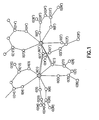
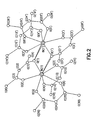
- Figures 1 and 2 are x-ray crystallographic structural depictions reported in the literature (PRIOR ART) for the dinuclear bismuth complex [Bi(thd) 3 ] 2 , which is a crystalline white solid with a melting point of 117°C.
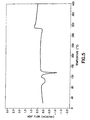
- Figure 3 is a plot of precursor transport (TGA) and melting point (DSC) curves for a representative dinuclear bismuth complex [Bi(thd) 3 ] 2 of the prior art, having a melting point of 117°C.
- the literature has variously reported the melting point of such material as being in the range of 112-115°C. This material is inferior in precursor transport properties, as reflected by the TGA plot, showing a gradual weight loss over a wide temperature range during the STA examination.
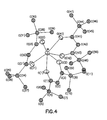
- Figure 4 is an x-ray crystallographic structural depiction for the anhydrous mononuclear tris(2,2,6,6-tetramethyl-3,5-heptanedionato) bismuth complex of the present invention.
- This material represents a new form of Bi(thd) 3 .
- Figure 5 is a plot of a melting point (DSC) curve for anhydrous mononuclear tris(2,2,6,6-tetramethyl-3,5-heptanedionato) bismuth complex of the present invention, exhibiting a melting point of about 139°C.
- the IR and NMR characteristics of this material are consistent with the mononuclear character of Bi(thd) 3 .
- Figure 6 is a plot of melting point (DSC) curves for the anhydrous mononuclear tris(2,2,6,6-tetramethyl-3,5-heptanedionato) bismuth complex of the present invention in "fresh" synthesized condition (curve A), after exposure to air/moisture for 48 hours (curve B) and after exposure to air/moisture for 96 hours (curve C), showing the complete conversion of the anhydrous mononuclear tris(2,2,6,6-tetramethyl-3,5-heptanedionato) bismuth complex after 96 hours of air/moisture exposure into the lower melting point dinuclear tris(2,2,6,6-tetramethyl-3,5-heptanedionato) bismuth complex, [Bi(thd) 3 ] 2 .
- DSC melting point
- ambient air/moisture exposure gradually converts the mononuclear precursor to the lower melting dinuclear material having a melting point in the range of 117-120°C.
- Prolonged direct air exposure over an extended period of time is also observed to result in the formation of a white, wet solid and eventually a clear liquid.
- the dissolution of solid mononuclear Bi(thd) 3 material in isopropanol or other protic solvent has also been found to effect a conversion of the mononuclear material to the dinuclear complex, [Bi(thd) 3 ] 2 .
- Single crystal x-ray diffraction structural determination conclusively show the Bi(thd) 3 material of the present invention to be of mononuclear form.
- Such material has a melting point which is more than 20°C above that reported in the literature.
- the prior art literature reports an x-ray crystal structure which is a dinuclear complex, [Bi(thd) 3 ] 2 , with excess Hthd ligand in the crystal lattice.
- the prior art literature reports the previously known Bi-thd complex as being air and moisture stable. This is untrue for the dinuclear complex, [Bi(thd) 3 ] 2 , and is also untrue for the anhydrous mononuclear Bi(thd) 3 material of the present invention, as shown in the plot of Figure 6.
- the mononuclear Bi(thd) 3 can be converted to the known dinuclear complex, [Bi(thd) 3 ] 2 by air exposure or exposure to protic media such as isopropanol.
- the Bi(thd) 3 material of the present invention thus is a mononuclear complex heretofore unknown, and represents a significant advance in the art in the provision of a precursor material having highly attractive characteristics for vaporization, vapor-phase transport, and bismuth deposition, in a wide variety of applications in which bismuth or bismuth-containing films are employed in the fabrication of microelectronic, ferroelectric and superconducting devices or structures.
- the anhydrous mononuclear tris( ⁇ -diketonato) bismuth complexes of the present invention have utility for chemical vapor deposition of bismuth-containing films, for fabrication of microelectronic devices such as high-integrity ferroelectric thin-film random access memory devices and bismuth-containing high-temperature superconductors.
- the bismuth precursors of the present invention permit the formation of bismuth-containing films for such applications, having significantly improved stoichiometry, morphology and ferroelectric/superconducting character, relative to films produced using precursors of the prior art.
Landscapes
- Chemical & Material Sciences (AREA)
- Organic Chemistry (AREA)
- Chemical Vapour Deposition (AREA)
Claims (14)
- Tris(β-dicétonato)bismuth mononucléaire et anhydre, qui n'est pas stable à l'air et à l'humidité, et qui se dégrade à partir d'une forme mononucléaire et anhydre en une forme dinucléaire lors d'une exposition à l'air et à l'humidité.
- Tris(β-dicétonato)bismuth mononucléaire et anhydre selon la revendication 1, dans lequel le β-dicétonato est choisi dans le groupe formé par les groupes :2,2,6,6-tétraméthyl-3,5-heptanedionato ;1,1,1-difluoro-2,4-pentanedionato ;1,1,1,5,5,5-hexafluoro-2,4-pentanedionato ;6,6,7,7,8,8,8-heptafluoro-2,2-diméthyl-3,5-octanedionato ;2,2,7-triméthyl-3,5-octanedionato ;1,1,1,5,5,6,6,7,7,7-décafluoro-2,4-heptanedionato ; et1,1,1-trifluoro-6-méthyl-2,4-heptanedionato.
- Tris(β-dicétonato)bismuth mononucléaire et anhydre selon la revendication 1, comprenant le tris(2,2,6,6-tétraméthyl-3,5-heptanedionato)bismuth mono-nucléaire et anhydre.
- Tris(β-dicétonato)bismuth mononucléaire et anhydre selon la revendication 1, possédant un point de fusion d'environ 139°C, et possédant la structure cristallographique aux rayons X présentée dans la figure 4.
- Procédé de synthèse d'un complexe tris(β-dicétonato)bismuth mononucléaire et anhydre comprenant l'étape où l'on fait réagir un composé Na(β-dicétonato) correspondant avec un composé trihalogénure de Bi dans un milieu à base de solvant aprotique dans des conditions anaérobies pendant une durée suffisante et à une température suffisante pour obtenir ledit complexe tris(β-dicétonato)bismuth mono-nucléaire et anhydre sous la forme d'un produit de réaction de celui-ci, dans lequel ledit complexe tris(β-dicétonato)bismuth mononucléaire et anhydre n'est pas stable à l'air et à l'humidité, et se dégrade à partir d'une forme mononucléaire et anhydre en une forme dinucléaire lors d'une exposition à l'air et à l'humidité.
- Procédé selon la revendication 5, dans lequel le milieu à base de solvant aprotique comprend un solvant choisi dans le groupe formé par les alcanes, les éthers aliphatiques, les éthers cycliques, et les composés aryle.
- Procédé selon la revendication 5, dans lequel le milieu à base de solvant aprotique comprend un solvant choisi dans le groupe formé par le pentane, l'octane, le décane, le tétrahydrofuranne, le benzène et le toluène.
- Procédé selon la revendication 5, dans lequel le composé Na(β-dicétonato) comprend une fraction β-dicétonato choisie dans le groupe formé par les groupes :2,2,6,6-tétraméthyl-3,5-heptanedionato ;1,1,1-difluoro-2,4-pentanedionato ;1,1,1,5,5,5-hexafluoro-2,4-pentanedionato ;6,6,7,7,8,8,8-heptafluoro-2,2-diméthyl-3,5-octanedionato ;2,2,7-triméthyl-3,5-octanedionato ;1,1,1,5,5,6,6,7,7,7-décafluoro-2,4-heptanedionato ; et1,1,1-trifluoro-6-méthyl-2,4-heptanedionato.
- Procédé selon la revendication 5, dans lequel le composé trihalogénure de Bi est le BiCl3.
- Procédé, selon la revendication 5, de synthèse du tri(2,2,6,6-tétraméthyl-3,5-heptanedionato)bismuth mononucléaire et anhydre, comprenant la réaction de Na(2,2,6,6-tétraméthyl-3,5-heptanedionato) et de BiCl3 dans un milieu à base de solvant aprotique dans des conditions anaérobies.
- Procédé selon la revendication 10, dans lequel le milieu à base de solvant aprotique comprend un solvant choisi dans le groupe formé par les alcanes, les éthers aliphatiques, les éthers cycliques, et les composés aryle.
- Procédé selon la revendication 10, dans lequel le milieu à base de solvant aprotique comprend un solvant choisi dans le groupe formé par le pentane, l'octane, le décane, le tétrahydrofuranne, le benzène et le toluène.
- Procédé de fabrication d'un dispositif ou structure micro-électronique, ferroélectrique ou supraconducteur, impliquant la formation d'une matière contenant du bismuth sur un substrat, comprenant les étapes de vaporisation d'un composé selon la revendication 1 pour former une vapeur précurseur correspondante, et de mise en contact de la vapeur précurseur correspondante avec le substrat pour effectuer un dépôt de bismuth sur le substrat, à partir de ladite vapeur précurseur correspondante.
- Utilisation du composé de la revendication 1 pour la fabrication d'une composition précurseur pour dépôt chimique en phase vapeur destinée à déposer du bismuth sur un substrat dans des conditions de dépôt chimique en phase vapeur, en tant que composant d'un dispositif ou structure micro-électronique, ferroélectrique ou supraconducteur.
Applications Claiming Priority (3)
| Application Number | Priority Date | Filing Date | Title |
|---|---|---|---|
| US08/960,915 US5859274A (en) | 1997-10-30 | 1997-10-30 | Anhydrous mononuclear tris(β-diketonate) bismuth compositions for deposition of bismuth-containing films, and method of making the same |
| US960915 | 1997-10-30 | ||
| PCT/US1998/022608 WO1999023103A1 (fr) | 1997-10-30 | 1998-10-26 | Complexes bismuthes anhydres et mononucleaires de type tris(beta-dicetonate) utilises pour le depot de couches contenant du bismuth, et leur procede de fabrication |
Publications (3)
| Publication Number | Publication Date |
|---|---|
| EP1027358A1 EP1027358A1 (fr) | 2000-08-16 |
| EP1027358A4 EP1027358A4 (fr) | 2001-02-28 |
| EP1027358B1 true EP1027358B1 (fr) | 2003-12-17 |
Family
ID=25503809
Family Applications (1)
| Application Number | Title | Priority Date | Filing Date |
|---|---|---|---|
| EP98957373A Expired - Lifetime EP1027358B1 (fr) | 1997-10-30 | 1998-10-26 | Complexes bismuthes anhydres et mononucleaires de type tris(beta-dicetonate) utilises pour le depot de couches contenant du bismuth, et leur procede de fabrication |
Country Status (8)
| Country | Link |
|---|---|
| US (1) | US5859274A (fr) |
| EP (1) | EP1027358B1 (fr) |
| JP (1) | JP2001521940A (fr) |
| KR (1) | KR20010031587A (fr) |
| AU (1) | AU1364999A (fr) |
| DE (1) | DE69820668T2 (fr) |
| TW (1) | TW412519B (fr) |
| WO (1) | WO1999023103A1 (fr) |
Families Citing this family (21)
| Publication number | Priority date | Publication date | Assignee | Title |
|---|---|---|---|---|
| US6111124A (en) | 1997-10-30 | 2000-08-29 | Advanced Technology Materials, Inc. | Lewis base adducts of anhydrous mononuclear tris(β-diketonate) bismuth compositions for deposition of bismuth-containing films, and method of making the same |
| US6511706B1 (en) | 1990-07-06 | 2003-01-28 | Advanced Technology Materials, Inc. | MOCVD of SBT using tetrahydrofuran-based solvent system for precursor delivery |
| US5916359A (en) * | 1995-03-31 | 1999-06-29 | Advanced Technology Materials, Inc. | Alkane and polyamine solvent compositions for liquid delivery chemical vapor deposition |
| US6444264B2 (en) * | 1995-03-31 | 2002-09-03 | Advanced Technology Materials, Inc. | Method for liquid delivery CVD utilizing alkane and polyamine solvent compositions |
| US6303391B1 (en) * | 1997-06-26 | 2001-10-16 | Advanced Technology Materials, Inc. | Low temperature chemical vapor deposition process for forming bismuth-containing ceramic films useful in ferroelectric memory devices |
| US6350643B1 (en) | 1997-12-18 | 2002-02-26 | Advanced Technology Materials, Inc. | Reduced degradation of metal oxide ceramic due to diffusion of a mobile specie therefrom |
| US7012292B1 (en) * | 1998-11-25 | 2006-03-14 | Advanced Technology Materials, Inc | Oxidative top electrode deposition process, and microelectronic device structure |
| US6204158B1 (en) | 1998-12-18 | 2001-03-20 | Advanced Technology Materials, Inc. | Reduced diffusion of a mobile specie from a metal oxide ceramic into the substrate |
| US6316797B1 (en) * | 1999-02-19 | 2001-11-13 | Advanced Technology Materials, Inc. | Scalable lead zirconium titanate(PZT) thin film material and deposition method, and ferroelectric memory device structures comprising such thin film material |
| US6683061B1 (en) * | 1999-07-22 | 2004-01-27 | Newbiotics, Inc. | Enzyme catalyzed therapeutic activation |
| US6623656B2 (en) | 1999-10-07 | 2003-09-23 | Advanced Technology Materials, Inc. | Source reagent composition for CVD formation of Zr/Hf doped gate dielectric and high dielectric constant metal oxide thin films and method of using same |
| US7094284B2 (en) * | 1999-10-07 | 2006-08-22 | Advanced Technology Materials, Inc. | Source reagent compositions for CVD formation of high dielectric constant and ferroelectric metal oxide thin films and method of using same |
| US6348705B1 (en) | 1999-12-22 | 2002-02-19 | Advanced Technology Materials, Inc. | Low temperature process for high density thin film integrated capacitors and amorphously frustrated ferroelectric materials therefor |
| US6740586B1 (en) | 2002-11-06 | 2004-05-25 | Advanced Technology Materials, Inc. | Vapor delivery system for solid precursors and method of using same |
| US9312557B2 (en) * | 2005-05-11 | 2016-04-12 | Schlumberger Technology Corporation | Fuel cell apparatus and method for downhole power systems |
| US8524931B2 (en) * | 2007-01-17 | 2013-09-03 | Advanced Technology Materials, Inc. | Precursor compositions for ALD/CVD of group II ruthenate thin films |
| US7750173B2 (en) * | 2007-01-18 | 2010-07-06 | Advanced Technology Materials, Inc. | Tantalum amido-complexes with chelate ligands useful for CVD and ALD of TaN and Ta205 thin films |
| CN101633674B (zh) * | 2009-08-11 | 2013-11-06 | 广东工业大学 | 一种铁电材料有机金属硼酸盐及其制备方法与应用 |
| WO2014124056A1 (fr) | 2013-02-08 | 2014-08-14 | Advanced Technology Materials, Inc. | Processus de dépôt de couche atomique (ald) pour films de bitao à faible courant de fuite et à faible épaisseur équivalente oxyde |
| CN115260018B (zh) * | 2022-10-08 | 2022-12-23 | 苏州源展材料科技有限公司 | 一种三(2,2,6,6-四甲基-3,5-庚二酸)铋的制备方法 |
| WO2025221024A1 (fr) * | 2024-04-15 | 2025-10-23 | 주식회사 유피케미칼 | Composé précurseur de bismuth, son procédé de préparation et procédé de formation d'une couche contenant du bismuth l'utilisant |
Family Cites Families (1)
| Publication number | Priority date | Publication date | Assignee | Title |
|---|---|---|---|---|
| US5648114A (en) * | 1991-12-13 | 1997-07-15 | Symetrix Corporation | Chemical vapor deposition process for fabricating layered superlattice materials |
-
1997
- 1997-10-30 US US08/960,915 patent/US5859274A/en not_active Expired - Lifetime
-
1998
- 1998-10-26 KR KR1020007004637A patent/KR20010031587A/ko not_active Ceased
- 1998-10-26 EP EP98957373A patent/EP1027358B1/fr not_active Expired - Lifetime
- 1998-10-26 AU AU13649/99A patent/AU1364999A/en not_active Abandoned
- 1998-10-26 DE DE69820668T patent/DE69820668T2/de not_active Expired - Fee Related
- 1998-10-26 JP JP2000518973A patent/JP2001521940A/ja active Pending
- 1998-10-26 WO PCT/US1998/022608 patent/WO1999023103A1/fr not_active Ceased
- 1998-10-29 TW TW087117930A patent/TW412519B/zh not_active IP Right Cessation
Also Published As
| Publication number | Publication date |
|---|---|
| WO1999023103A1 (fr) | 1999-05-14 |
| DE69820668T2 (de) | 2004-10-07 |
| KR20010031587A (ko) | 2001-04-16 |
| US5859274A (en) | 1999-01-12 |
| EP1027358A4 (fr) | 2001-02-28 |
| JP2001521940A (ja) | 2001-11-13 |
| EP1027358A1 (fr) | 2000-08-16 |
| TW412519B (en) | 2000-11-21 |
| DE69820668D1 (de) | 2004-01-29 |
| AU1364999A (en) | 1999-05-24 |
Similar Documents
| Publication | Publication Date | Title |
|---|---|---|
| US5859274A (en) | Anhydrous mononuclear tris(β-diketonate) bismuth compositions for deposition of bismuth-containing films, and method of making the same | |
| EP1068214B1 (fr) | Adduits a base de lewis pour composition de tris(beta-dicetonato)bismuth mononucleaire anhydre, pour le depot de films contenant du bismuth, et leur procede de fabrication | |
| KR100343822B1 (ko) | 화학적증착법에유용한탄탈륨및니오븀시약,및상기시약을이용하여피막을침착하는방법 | |
| US5248787A (en) | Volatile organic barium, strontium and calcium compounds | |
| US6177135B1 (en) | Low temperature CVD processes for preparing ferroelectric films using Bi amides | |
| US6504015B2 (en) | Tetrahydrofuran-adducted group II β-diketonate complexes as source reagents for chemical vapor deposition | |
| US20080286464A1 (en) | Group 2 Metal Precursors For Depositing Multi-Component Metal Oxide Films | |
| US5319118A (en) | Volatile barium precursor and use of precursor in OMCVD process | |
| JPH0597762A (ja) | 揮発性アルカリ土類金属錯体及びその用途 | |
| US6180420B1 (en) | Low temperature CVD processes for preparing ferroelectric films using Bi carboxylates | |
| JP3931683B2 (ja) | 化学気相成長法によるpzt薄膜の製造方法 | |
| KR100338196B1 (ko) | 유기금속착물, 이의 제조방법 및 이를 이용한유기금속화학증착법 | |
| KR100508113B1 (ko) | 유기 금속착물 및 이의 제조방법 | |
| JP4225607B2 (ja) | ビスマス含有複合金属酸化膜の製造方法 | |
| US5348631A (en) | Method and apparatus for synthesizing lead β-diketonates | |
| JP3503790B2 (ja) | Bi層状構造強誘電体薄膜の製造方法 | |
| JP2004059562A (ja) | 化学気相成長用のチタン錯体とそれを用いたpzt薄膜の製造方法 | |
| US8247617B2 (en) | Group 2 metal precursors for depositing multi-component metal oxide films | |
| JPH04134044A (ja) | 薄膜形成用金属錯体 | |
| JP2003321475A (ja) | トリス(ジイソブチリルメタナート)ランタンとその製法およびそれを用いた化学気相成長法によるplzt薄膜の製造方法 | |
| JP2003321417A (ja) | トリス(ジイソブチリルメタナート)ランタノイドとその製法およびそれを用いた化学気相成長法によるランタノイド置換チタン酸ビスマス強誘電体薄膜の製造方法 | |
| KR20250152024A (ko) | 비스무스 전구체 화합물, 이의 제조방법, 및 이를 이용한 비스무스-함유 막의 형성 방법 | |
| KR20090020075A (ko) | 반도체 소자 박막용 유기금속화합물을 이용한 박막제조방법 |
Legal Events
| Date | Code | Title | Description |
|---|---|---|---|
| PUAI | Public reference made under article 153(3) epc to a published international application that has entered the european phase |
Free format text: ORIGINAL CODE: 0009012 |
|
| 17P | Request for examination filed |
Effective date: 20000502 |
|
| AK | Designated contracting states |
Kind code of ref document: A1 Designated state(s): BE DE FR GB IT |
|
| RIN1 | Information on inventor provided before grant (corrected) |
Inventor name: CHAPPUIS, MARGARET Inventor name: BHANDARI, GAUTAM Inventor name: BAUM, THOMAS, H. |
|
| RIC1 | Information provided on ipc code assigned before grant |
Free format text: 7C 07F 9/94 A, 7C 23C 16/40 B |
|
| A4 | Supplementary search report drawn up and despatched |
Effective date: 20010116 |
|
| AK | Designated contracting states |
Kind code of ref document: A4 Designated state(s): BE DE FR GB IT |
|
| 17Q | First examination report despatched |
Effective date: 20020423 |
|
| GRAH | Despatch of communication of intention to grant a patent |
Free format text: ORIGINAL CODE: EPIDOS IGRA |
|
| GRAS | Grant fee paid |
Free format text: ORIGINAL CODE: EPIDOSNIGR3 |
|
| GRAA | (expected) grant |
Free format text: ORIGINAL CODE: 0009210 |
|
| AK | Designated contracting states |
Kind code of ref document: B1 Designated state(s): BE DE FR GB IT |
|
| REG | Reference to a national code |
Ref country code: GB Ref legal event code: FG4D |
|
| REF | Corresponds to: |
Ref document number: 69820668 Country of ref document: DE Date of ref document: 20040129 Kind code of ref document: P |
|
| ET | Fr: translation filed | ||
| PLBE | No opposition filed within time limit |
Free format text: ORIGINAL CODE: 0009261 |
|
| STAA | Information on the status of an ep patent application or granted ep patent |
Free format text: STATUS: NO OPPOSITION FILED WITHIN TIME LIMIT |
|
| PG25 | Lapsed in a contracting state [announced via postgrant information from national office to epo] |
Ref country code: GB Free format text: LAPSE BECAUSE OF NON-PAYMENT OF DUE FEES Effective date: 20041026 |
|
| PG25 | Lapsed in a contracting state [announced via postgrant information from national office to epo] |
Ref country code: BE Free format text: LAPSE BECAUSE OF NON-PAYMENT OF DUE FEES Effective date: 20041031 |
|
| 26N | No opposition filed |
Effective date: 20040920 |
|
| BERE | Be: lapsed |
Owner name: *ADVANCED TECHNOLOGY MATERIALS INC. Effective date: 20041031 |
|
| PG25 | Lapsed in a contracting state [announced via postgrant information from national office to epo] |
Ref country code: DE Free format text: LAPSE BECAUSE OF NON-PAYMENT OF DUE FEES Effective date: 20050503 |
|
| GBPC | Gb: european patent ceased through non-payment of renewal fee |
Effective date: 20041026 |
|
| PG25 | Lapsed in a contracting state [announced via postgrant information from national office to epo] |
Ref country code: FR Free format text: LAPSE BECAUSE OF NON-PAYMENT OF DUE FEES Effective date: 20050630 |
|
| REG | Reference to a national code |
Ref country code: FR Ref legal event code: ST |
|
| PG25 | Lapsed in a contracting state [announced via postgrant information from national office to epo] |
Ref country code: IT Free format text: LAPSE BECAUSE OF NON-PAYMENT OF DUE FEES Effective date: 20051026 |
|
| BERE | Be: lapsed |
Owner name: *ADVANCED TECHNOLOGY MATERIALS INC. Effective date: 20041031 |