EP1029246B1 - Ein verfahren und gerät zur vorbeugung von immunglobulindegradation in externen sekretionen - Google Patents
Ein verfahren und gerät zur vorbeugung von immunglobulindegradation in externen sekretionen Download PDFInfo
- Publication number
- EP1029246B1 EP1029246B1 EP98956035A EP98956035A EP1029246B1 EP 1029246 B1 EP1029246 B1 EP 1029246B1 EP 98956035 A EP98956035 A EP 98956035A EP 98956035 A EP98956035 A EP 98956035A EP 1029246 B1 EP1029246 B1 EP 1029246B1
- Authority
- EP
- European Patent Office
- Prior art keywords
- zinc gluconate
- immunoglobulins
- container
- degradation
- fecal
- Prior art date
- Legal status (The legal status is an assumption and is not a legal conclusion. Google has not performed a legal analysis and makes no representation as to the accuracy of the status listed.)
- Expired - Lifetime
Links
Images



Classifications
-
- B—PERFORMING OPERATIONS; TRANSPORTING
- B01—PHYSICAL OR CHEMICAL PROCESSES OR APPARATUS IN GENERAL
- B01L—CHEMICAL OR PHYSICAL LABORATORY APPARATUS FOR GENERAL USE
- B01L3/00—Containers or dishes for laboratory use, e.g. laboratory glassware; Droppers
- B01L3/50—Containers for the purpose of retaining a material to be analysed, e.g. test tubes
- B01L3/508—Rigid containers without fluid transport within
-
- A—HUMAN NECESSITIES
- A61—MEDICAL OR VETERINARY SCIENCE; HYGIENE
- A61K—PREPARATIONS FOR MEDICAL, DENTAL OR TOILETRY PURPOSES
- A61K31/00—Medicinal preparations containing organic active ingredients
- A61K31/28—Compounds containing heavy metals
- A61K31/315—Zinc compounds
-
- A—HUMAN NECESSITIES
- A61—MEDICAL OR VETERINARY SCIENCE; HYGIENE
- A61K—PREPARATIONS FOR MEDICAL, DENTAL OR TOILETRY PURPOSES
- A61K39/00—Medicinal preparations containing antigens or antibodies
- A61K39/395—Antibodies; Immunoglobulins; Immune serum, e.g. antilymphocytic serum
- A61K39/39591—Stabilisation, fragmentation
-
- C—CHEMISTRY; METALLURGY
- C07—ORGANIC CHEMISTRY
- C07K—PEPTIDES
- C07K16/00—Immunoglobulins [IG], e.g. monoclonal or polyclonal antibodies
- C07K16/12—Immunoglobulins [IG], e.g. monoclonal or polyclonal antibodies against material from bacteria
- C07K16/1203—Gram-negative bacteria
- C07K16/1207—Gram-negative bacteria from Spirochaetales (O), e.g. Treponema, Leptospira
-
- C—CHEMISTRY; METALLURGY
- C07—ORGANIC CHEMISTRY
- C07K—PEPTIDES
- C07K16/00—Immunoglobulins [IG], e.g. monoclonal or polyclonal antibodies
- C07K16/12—Immunoglobulins [IG], e.g. monoclonal or polyclonal antibodies against material from bacteria
- C07K16/1203—Gram-negative bacteria
- C07K16/1228—Enterobacterales (O), e.g. Citrobacter (G), Serratia (G), Proteus (G), Providencia (G), Morganella (G) or Yersinia (G)
- C07K16/1232—Escherichia (G)
-
- C—CHEMISTRY; METALLURGY
- C07—ORGANIC CHEMISTRY
- C07K—PEPTIDES
- C07K16/00—Immunoglobulins [IG], e.g. monoclonal or polyclonal antibodies
- C07K16/12—Immunoglobulins [IG], e.g. monoclonal or polyclonal antibodies against material from bacteria
- C07K16/1203—Gram-negative bacteria
- C07K16/1239—Gram-negative bacteria from Vibrionaceae (G)
-
- G—PHYSICS
- G01—MEASURING; TESTING
- G01N—INVESTIGATING OR ANALYSING MATERIALS BY DETERMINING THEIR CHEMICAL OR PHYSICAL PROPERTIES
- G01N33/00—Investigating or analysing materials by specific methods not covered by groups G01N1/00 - G01N31/00
- G01N33/48—Biological material, e.g. blood, urine; Haemocytometers
- G01N33/50—Chemical analysis of biological material, e.g. blood, urine; Testing involving biospecific ligand binding methods; Immunological testing
- G01N33/68—Chemical analysis of biological material, e.g. blood, urine; Testing involving biospecific ligand binding methods; Immunological testing involving proteins, peptides or amino acids
- G01N33/6854—Immunoglobulins
-
- Y—GENERAL TAGGING OF NEW TECHNOLOGICAL DEVELOPMENTS; GENERAL TAGGING OF CROSS-SECTIONAL TECHNOLOGIES SPANNING OVER SEVERAL SECTIONS OF THE IPC; TECHNICAL SUBJECTS COVERED BY FORMER USPC CROSS-REFERENCE ART COLLECTIONS [XRACs] AND DIGESTS
- Y02—TECHNOLOGIES OR APPLICATIONS FOR MITIGATION OR ADAPTATION AGAINST CLIMATE CHANGE
- Y02A—TECHNOLOGIES FOR ADAPTATION TO CLIMATE CHANGE
- Y02A50/00—TECHNOLOGIES FOR ADAPTATION TO CLIMATE CHANGE in human health protection, e.g. against extreme weather
- Y02A50/30—Against vector-borne diseases, e.g. mosquito-borne, fly-borne, tick-borne or waterborne diseases whose impact is exacerbated by climate change
Definitions
- the present invention relates to the employment of a method for inhibiting the degradation of substances in external secretions.
- the inventive compounds protect the proteins from the otherwise extensive degradation that takes place in such secretions, including in feces.
- the invention relates to a method which substantially protects immunoglobulins in fecal samples. Collection devices are also provided.
- Infectious diseases in particular enteric infections such as diarrhoea and typhoid fever constitute a serious health problem throughout the world. Protection against these infections is provided by the gastrointestinal immune system, and considerable efforts have been made to develop oral vaccines that may stimulate the mucosal immune system in the gut.
- Bacterial infections of the gastrointestinal tract, as well as oral vaccines produce a secretory IgA immune response in the intestine, which may be accompanied by a more widespread response with specific secretory immunoglobulin A (SIgA) detectable in the external secretions of other distant mucosal surfaces. This pattern of response has been reported to occur without the corresponding presence of detectable specific antibodies in serum.
- SIgA secretory immunoglobulin A
- enteric diseases For immune mediated protection against enteric diseases, the induction of strong local intestinal immune responses is required.
- An assessment of the immunogenicity of orally administered enteric vaccines has frequently relied on indirect measurements of intestinal antibodies, such as the determination of levels of specific antibody in serum, colostrum or saliva and more recently, by the quantitation of specific antibody producing circulating peripheral blood lymphocytes, i.e. antibody secreting cells (ASCs).
- ASCs antibody secreting cells
- the available methods for the evaluation of antigen-specific immune responses in the intestine include; the measurement of IgA in jejunal fluid by intestinal intubation or in intestinal lavage fluids, and by the quantitation of ASCs in peripheral blood. These methods are not applicable to large-scale immunogenicity studies. Moreover, intestinal intubation and lavage methods are very labour-intensive, invasive (intubation) and time-consuming procedures that are highly unpleasant for the individuals undergoing them and are contradicted in an important population group, namely children. Furthermore, clinical studies and experiments in animals show that measurements of various components of the systemic immune system (serum antibodies, cytokines, circulating cells) are rarely reliable indices of local mucosal immunity. Therefore, simple and reliable methods for the measurement of local mucosal immune responses are crucial for the evaluation of the natural history of enteric infectious diseases and for the development of enteric vaccines.
- US 5,103,836 discloses a method and device for collecting immunoglobulins from the oral cavity by inserting an absorbent pad impregnated with the salts of a hypertonic solution to enhance the recovery of said substances.
- the pad may be immersed in a preservative solution, e.g. containing chlorhexidine gluconate.
- US 5,022,409 discloses a method and kit for the collection of immunoglobulins from the oral cavity by rinsing the oral cavity with a hypertonic solution.
- the present invention provides a method for the collection, storage and extraction of immunoglobulins from fecal samples, the extracted immunoglobulins being then suitable for use in immunoassays.
- the method involves the collection of fecal samples in a solution which prevents the degradation of immunoglobulins to an extent that allows the extraction and subsequent use of the extracted immunoglobulins in basic antigen-antibody testing techniques for the screening of diseases as well as provides a valuable tool for evaluating the immunogenicity of potential orally administered vaccines.
- the above objectives of the present invention are obtained by collecting fecal samples in a solution containing an optimum concentration of zinc gluconate. Coproantibodies suitable for use in relevant immunoassays are then extracted from the fecal samples by a simple 2-step extraction procedure as detailed below.
- the present invention is concerned with a method of inhibiting the degradation of substances in external secretions wherein the method comprises the addition of a solution comprising zinc gluconate to external secretions.
- One aspect of the present invention is concerned with the collection of fecal samples in a solution that significantly prevents the degradation of coproantibodies.
- the compound or the solution prepared from this compound is harmless and non-toxic.
- the compound of the present invention significantly protect fecal antibodies from breakdown for several hours at 20-37°C.
- the fecal samples are collected in disposable single-use tubes or syringes containing this protective solution. This method thus allows safe transport of the fecal samples to the laboratory where the fecal antibodies can be extracted from the sample for diagnostic and research purposes.
- the method and the device provided is particularly attractive since the method involves the collection of external secretions, the inherent risks with the collection of blood and serum are thus circumvented. Moreover, the fact that the collection procedure is non-invasive makes it more attractive for the sample donor. Most importantly, as outlined above, measuring mucosal antibodies is more relevant than estimating serum antibodies for the evaluation of a local mucosal immune response. This is especially true for several important infections affecting the mucosal systems, i.e. the respiratory, gastrointestinal and the genito-urinary tracts.
- coproantibodies such as IgA and IgM antibodies are significantly protected from the otherwise extensive degradation which takes place in feces stored for several hours at 20-37°C. Furthermore, the coproantibodies are, after having been extracted from the fecal samples by a simple 2-step procedure stable for several months (> 4 months) at -20°C. We assume that the mechanism of action of the compound is by the inhibition of proteolytic degradation of immunoglobulins. However, the exact mechanism of action needs to be established.
- a device can include a container, e.g. a plastic tube, containing the protective solution, a lid which can be screwed onto the container to seal its contents, and optionally a spoon attached to the lid in order to facilitate the collection of the fecal sample.
- a container e.g. a plastic tube
- a lid which can be screwed onto the container to seal its contents
- a spoon attached to the lid in order to facilitate the collection of the fecal sample.
- a syringe optionally divided into a plurality of separate compartments.
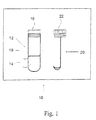
- the device 10 consists of a container 12 and a spoon 20.
- the container 12 includes a solution 14 comprising the compound of the present invention, optionally in combination with additional preservatives. Alternatively, this solution can be added to the container after the fecal sample has been transferred to the container 12.
- the container 12 is closed by means of a lid or cap 16.
- the device 10 can preferably be provided with a membrane 18 encasing the solution 14 and thus preventing the accidental spillage of solution 14, before the fecal sample is introduced into container 12.
- the device 10 consists of a spoon 20 for the collection of the fecal sample.
- the spoon 20 is provided with a cap or stopper 22 adapted to fit the container 12.
- the stopper 22 will thus securely seal the container 12.
- the membrane 18 is pierced and the fecal sample is brought in contact with the solution 14.
- the container 12 is sealed and the sample is dispersed in the solution 14 by vigorously shaking the container 12.
- the collection device 10' includes a container 12' containing the protective solution 14' of the present invention.
- the device 10' is provided with a membrane 18' encasing the solution 14', thus preventing the accidental spillage of solution 14', before the fecal sample is introduced into container 12'.
- the device 10' has a lid 16' to which is attached a foldable or collapsible spoon 20'.
- the fecal sample is collected by first opening the device 10' and then opening the spoon 20'.
- the insertion of the spoon 20' pierces the membrane 18' ( Figure 2b), thus allowing the fecal sample to come in contact with the protective solution 14'.
- the container, the cap and the spoon are made of any suitable material such as polyethylene, polypropylene etc.
- the membrane can be made of materials such as PVC or other plastic materials. The membrane is impermeable to an aqueous solution.
- An embodiment of the device as shown in figure 1 or 2 comprises a container that is adapted to fit directly into a centrifuge.
- FIG. 3 A further embodiment of a device in accordance with the invention is shown in figure 3. This is actually a syringe 10" provided with one or several compartments 22" separated by separating membranes 26".
- the syringe is further provided with a piston 24".
- a most preferred embodiment of this syringe contains zinc gluconate in dry form, i.e. as a powder, in a first compartment, and a suitable buffer solution such as for example PBS in a second compartment.
- the syringe can be provided with a third empty compartment, and/or optionally a fourth compartment containing additional preservatives.
- the syringe is also provided with a removable cap, e.g. a screw cap which securely seals the syringe 10".
- the volume of the container or syringe may vary.
- 2 ml of a solution of zinc gluconate is added to the collection device for the collection of fecal samples or fecal swabs.
- Accidental spillage of the protective solution while using the collection device, is prevented by the presence of the thin membrane.
- the collection devices are preferably kept at +4°C until use.
- concentrations of the compound in the solution can be in the range of from 0.01 to 20 % w/v, preferably from 5 to 15 % w/v.
- a preferred embodiment of the device of the invention comprises a 10 % (w/v) solution of zinc gluconate.
- Preferably additional preservative compounds can be added to the solution.
- Compounds contemplated as a preservative include anti-bacterial agents, anti-fungal agents, bacteriostatic agents, fungistatic agents and enzyme inhibitors. Benzoic acid and sorbic acid are examples of antifungicides. Bactenocides includes thiomersal, phenyl mercuric acetate, phenyl mercuric nitrate and sodium azide. Protease inhibitors include but are not restricted to Bestatin, AEBSF, Aprotinin and Leupeptin. Other preservatives commonly used are ethyl alcohol, chlorhexidine gluconate and detergents such as benzalkonium chloride. The preservatives can be used in the range of about 0.01 % w/v to about 0.5% w/v.
- Approximately one level spoon of a freshly passed fecal sample or a recently collected fecal swab is placed into the collection device or syringe, the lid is closed tightly and the device is shaken vigorously to disperse the feces into the protective solution.
- the collected samples are then placed in a refrigerator until the samples can be sent to a laboratory for further processing, a process which in certain field conditions can take up to 6-7 hours.
- the coproantibodies are extracted after addition of standard commercially available protease inhibitors (Bestatin, AEBSF, Aprotinin, Leupeptin) followed by centrifuging at 13 500 rpm for 15 min.
- the supernatants contain the protected coproantibodies and can be analyzed directly in relevant immunoassays or stored at -20°C for later analysis. Because zinc gluconate mediate a substantial protection of the antibodies (see below), it is highly probable that the addition of commercial protease inhibitors during terminal processing of the fecal samples at the laboratory is unnecessary. Further studies will clarify this issue.
- an embodiment of the invention relates to a method of analyzing immunoglobulins in fecal samples wherein the method comprising the steps of:
- inhibitors are intended to mean that the solution of the present invention is capable of preserving or stabilizing the structure of said substances sufficiently to be able to analyze the said substances in basic immunological detection techniques.
- fecal sample indicates a swab that has briefly been inserted into the anal opening or a sample of freshly passed feces.
- coproantibodies indicates antibodies present in feces such as IgA, IgM, IgG and IgE.
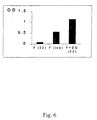
- fecal samples are spiked with a single analyte of interest, i.e. a predetermined amount of a high titered anti-Borrelia IgM serum is added to fecal samples in order to determine the extent to which the protective solution of the present invention prevents the degradation of the particular analyte added.
- Zinc gluconate inhibits the degradation of IgM
- protease inhibitor cocktail 0.2 mM 4- ⁇ 2-aminoethyl ⁇ benzenesulfonylfluoride [Calbiochem], 1 ⁇ g of aprotinin [Sigma] per ml, 10 ⁇ M leupeptin [Sigma], and 3.25 ⁇ M bestatin [Boehringer Mannheim, Indianapolis, USA] was added. After vortexing, the tubes were centrifuged at 13,000 x g for 10 min.
- the supernatants were stored at -70°C or immediately tested in a commercially available anti-Borrelia IgM ELISA (IDELATM Borrelia burgdorferi IgM, DAKO Diagnostics Ltd., Cambridgeshire, UK).
- IDELATM Borrelia burgdorferi IgM DAKO Diagnostics Ltd., Cambridgeshire, UK.
- 50 ⁇ l of anti-Borrelia IgM serum was run in the immunoassay.
- Y-axis ELISA results (O.D. value);
- X-axis F+S; feces plus anti-Borrelia IgM serum incubated at 30°C or on ice for 5 hours, F+S+ZG; feces plus anti-Borrelia IgM serum plus zinc gluconate incubated at 30°C for 5 hours. All values are depicted at a 1:1620 dilution of the original supernatant/control serum.
- the addition of a 10% solution of zinc gluconate during the incubation of the fecal samples at 30°C for 5 hours substantially inhibits the degradation of the added analyte i.e. the anti-Borrelia IgM antibodies.
- the degradation of proteins such as antibodies is related to the incubation temperature, i.e. the degradation is higher at 30°C than at 0°C.
- antibody degradation at 30°C with the addition of zinc gluconate is lower than at 0°C without the addition of zinc gluconate.
- the mechanism of action is not fully established but it is anticipated that zinc gluconate inhibits various proteinases, i.e. protein hydrolyzing enzymes. Thus, it is anticipated that zinc gluconate will also inhibit the degradation of other immunoglobulins, and possibly also other proteins.
- Example 1 The fecal extracts described in Example 1 were stored at -70°C for 4 months, and then re-analyzed in the anti-Borrelia IgM ELISA to check the long term stability of the antibodies stored in the presence or absence of 10% zinc gluconate.
- Y-axis ELISA results (O.D. value),
- X-axis N-PBS; feces plus normotonic PBS, N-ZG; feces plus anti-Borrelia IgM serum plus normotonic zinc gluconate-PBS, N-MgCl2; feces plus anti-Borrelia IgM serum plus normotonic MgCl 2 -PBS, N-MG; feces plus anti-Borrelia IgM serum plus normotonic magnesium gluconate-PBS, N-NaCl; feces plus anti-Borrelia IgM serum plus normotonic NaCl-PBS.
- the experiment shows that the specific zinc compound, i.e. zinc gluconate, significantly protects the added analyte, i.e. anti-Borrelia IgM antibodies, from degradation during prolonged incubation at high ambient temperatures.
- the added analyte i.e. anti-Borrelia IgM antibodies
- a Swedish volunteer was recruited after giving informed consent. The protocol was approved by the Swedish National Pharmaceutical Agency and the Human Research Ethical Committee of the medical faculty, University of G ⁇ teborg, Sweden. The volunteer was given three doses at 2-week intervals of the prototype oral enterotoxigenic Escherichia coli vaccine ( ⁇ hren et al ., 1993, Vaccine 11, 929) containing a mixture of cholera B subunit (CTB) and formalin-killed E. coli bacteria. 23 days following the initial immunization, a fecal sample from the volunteer was collected in a small plastic cup. 50 mg of this sample was transferred to three 1.5 ml micro-centrifuge tubes each containing 300 ⁇ l of PBS or zinc gluconate.
- CTB cholera B subunit
- Y-axis ELISA results (O.D. value);
- X-axis F; feces from a volunteer collected 23 days after receiving two doses of the prototype oral cholera vaccine, incubated at 33°C for 5 hours or on ice for 5 hours.
- F+ZG feces from a volunteer collected in a zinc gluconate solution and incubated at 33°C for 5 hours. The feces was collected 23 days after receiving two doses of the prototype oral cholera vaccine
- Quantitation of specific anti-LT IgA and total IgA in the fecal extracts was performed by a CTB-GM1-ELISA and a modified microplate ELISA, respectively, as described elsewhere ( ⁇ hren et al ., 1993, Vaccine 11, 929).
- the anti-LT antibody titres were divided by the total IgA concentration in the sample to yield the anti-LT IgA index which adjusts for variations in the total IgA content in the fecal samples collected from different children.
- Figure 7 shows the mean and 95% confidence intervals of the log transformed anti-LT IgA indices in children known and not known to be infected with LT-ETEC during the last 40 days, as identified by examination of weekly collected stool samples with DNA-DNA hybridization for LT-ETEC.
- the fold-difference in the geometric mean anti-LT IgA indices between the two groups was 2.8; the t-test for this difference yielded a p value of 0.02 while the non-parametric Mann-Whitney U-test yielded a p value of 0.03, showing that the children known to be infected with LT-ETEC dunng the last 40 days had significantly higher anti-LT IgA indices than those not known to have been infected.
Landscapes
- Health & Medical Sciences (AREA)
- Chemical & Material Sciences (AREA)
- Life Sciences & Earth Sciences (AREA)
- General Health & Medical Sciences (AREA)
- Medicinal Chemistry (AREA)
- Immunology (AREA)
- Organic Chemistry (AREA)
- Molecular Biology (AREA)
- Proteomics, Peptides & Aminoacids (AREA)
- Engineering & Computer Science (AREA)
- Biochemistry (AREA)
- Hematology (AREA)
- Genetics & Genomics (AREA)
- Biophysics (AREA)
- Pharmacology & Pharmacy (AREA)
- Analytical Chemistry (AREA)
- Urology & Nephrology (AREA)
- Biomedical Technology (AREA)
- Microbiology (AREA)
- Veterinary Medicine (AREA)
- Public Health (AREA)
- Animal Behavior & Ethology (AREA)
- Epidemiology (AREA)
- Food Science & Technology (AREA)
- Chemical Kinetics & Catalysis (AREA)
- General Physics & Mathematics (AREA)
- Cell Biology (AREA)
- Physics & Mathematics (AREA)
- Biotechnology (AREA)
- Bioinformatics & Cheminformatics (AREA)
- Clinical Laboratory Science (AREA)
- Pathology (AREA)
- Mycology (AREA)
- Investigating Or Analysing Biological Materials (AREA)
- Preparation Of Compounds By Using Micro-Organisms (AREA)
- Medicines Containing Antibodies Or Antigens For Use As Internal Diagnostic Agents (AREA)
- Sampling And Sample Adjustment (AREA)
Claims (16)
- Verfahren zur Inhibierung des des Abbaus von Proteinen in externen Ausscheidungen, dadurch gekennzeichnet, daß das Verfahren das Zusetzen von Zinkgluconat zu den externen Ausscheidungen umfaßt.
- Verfahren nach Anspruch 1, dadurch gekennzeichnet, daß die Zinkgluconatkonzentration im Bereich von 0,01 bis 20 % (Gew./Vol.), bevorzugt im Bereich von 5 bis 15 % (Gew./Vol.) liegt und am meisten bevorzugt etwa 10 % (Gew./Vol.) beträgt.
- Verfahren nach Anspruch 1, dadurch gekennzeichnet, daß die Proteine Immunoglobuline sind.
- Verfahren nach Anspruch 3, dadurch gekennzeichnet, daß die Immunoglobuline ausgewählt sind aus der Gruppe bestehend aus IgG, IgA, IgM, IgD und IgE.
- Verfahren nach Anspruch 4, dadurch gekennzeichnet, daß die Immunoglobuline Antikörper, ausgewählt aus der Gruppe bestehend aus Antikörpern gegen enterische Pathogene wie z.B. V. cholerae, S.typhi, Shigella species, Salmonella, E. histolytica, G. lamblia, durchfallerregende E. coli, sowie Antikörper gegen Helicobacter pylori, Rotavirus, HIV-1, Hepatitis A, Hepatitis B, Hepatitis E, Hepatitis F, Lebensmittelantigene, einschließlich Gluten, und Allergene sind.
- Verfahren nach Anspruch 1, dadurch gekennzeichnet, daß die externen Ausscheidungen ausgewählt sind aus der Gruppe bestehend aus Fäzes, Urin, Speichel, Nasensekrete und Vaginalsekrete.
- Verfahren nach einem der vorhergehenden Ansprüche, dadurch gekennzeichnet, daß die Lösung außerdem ein oder mehrere Konservierungsmittel, wie z.B. antibakterielle Mittel, Anti-Pilzmittel, bakteriostatische Mittel, fungistatische Mittel und Enzyminhibitoren, umfaßt.
- Anwendung von Zinkgluconat in einem immunologischen Verfahren zur Analyse von Immunoglobulinen in einer Fäzesprobe, bei welchem Verfahren das Zinkgluconat sofort nach Einsammlung der Fäzesprobe dieser zugesetzt und mit ihr vermischt wird um den Abbau der Immunoglobuline zu inhibieren und somit die Herstellung von hohen Konzentrationen von Immunoglobulinen zu ermöglichen, wonach die Immunoglobuline mittels eines Enzym-gebundenen immunosorbent-Tests (ELISA) oder eines jeden anderen Tests zur Detektierung von Immunoglobulinen, wie z.B. Radioimmun-Tests, Western Blot usw. analysiert werden.
- Vorrichtung (10,10',10") für die Einsammlung und Aufbewahrung von Stoffen einer Fäzesprobe im Hinblick auf ein späteres Testen, dadurch gekennzeichnet, daß die Vorrichtung (10,10',10") einen das Zinkgluconat umfassenden Behälter (12,12') umfaßt, wobei der Behälter (12,12') mit einer Haube oder einem Deckel (16,16',16") geschlossen ist.
- Vorrichtung (10) nach Anspruch 9, dadurch gekennzeichnet, daß die Vorrichtung (10) außerdem einen Löffel (20) umfaßt, welcher Löffel an einem Deckel (22) befestigt ist, welcher derart ausgefertigt ist, daß er in den Behälter (12) paßt und diesen versiegelt.
- Vorrichtung (10) nach Anspruch 9 oder 10, dadurch gekennzeichnet, daß der Behälter (12) mit einer Membrane (18) versehen ist.
- Vorrichtung (10') nach Anspruch 9, dadurch gekennzeichnet, daß die Vorrichtung (10') außerdem einen faltbaren oder zusammenklappbaren Löffel (20') umfaßt, welcher Löffel an dem Deckel (16') befestigt ist, welcher derart ausgefertigt ist, daß er in den Behälter (12') paßt und diesen versiegelt.
- Vorrichtung (10') nach Anspruch 12, dadurch gekennzeichnet, daß der Behälter (12') mit einer Membrane (18') versehen ist.
- Vorrichtung (10") nach Anspruch 9, dadurch gekennzeichnet, daß die Vorrichtung die Form einer Spritze (10") mit einer Vielzahl von Abteilungen (22") (Kammern) hat, wobei eine der Abteilungen Zinkgluconat enthält, und wobei der Kolben (24"), wenn dieser zum Einsaugen der Fäzesprobe in die Spritze zurückgezogen wird, die Trennmembrane(n) (26") zwischen den unabhängigen Abteilungen (22") durchbricht.
- Vorrichtung (10") nach Anspruch 14, dadurch gekennzeichnet, daß eine der Abteilungen (22") Zinkgluconat in trockener Form umfaßt, und eine andere Abteilung (22") eine passende Pufferlösung, wie z.B. eine phosphatgepufferte Salzlösung (PBS), umfaßt.
- Vorrichtung (10") nach Anspruch 13 oder 14, dadurch gekennzeichnet, daß die Spritze (10") außerdem eine leere Abteilung (22") umfaßt.
Applications Claiming Priority (3)
| Application Number | Priority Date | Filing Date | Title |
|---|---|---|---|
| NO975229A NO306275B1 (no) | 1997-11-14 | 1997-11-14 | FremgangsmÕte for inhibering av degradering av proteiner i eksterne sekresjoner, samt anordning for innsamling og lagring av pröver |
| NO975229 | 1997-11-14 | ||
| PCT/NO1998/000338 WO1999026068A1 (en) | 1997-11-14 | 1998-11-12 | A method and device for preventing immunoglobulin degradation in external secretions |
Publications (2)
| Publication Number | Publication Date |
|---|---|
| EP1029246A1 EP1029246A1 (de) | 2000-08-23 |
| EP1029246B1 true EP1029246B1 (de) | 2004-08-04 |
Family
ID=19901326
Family Applications (1)
| Application Number | Title | Priority Date | Filing Date |
|---|---|---|---|
| EP98956035A Expired - Lifetime EP1029246B1 (de) | 1997-11-14 | 1998-11-12 | Ein verfahren und gerät zur vorbeugung von immunglobulindegradation in externen sekretionen |
Country Status (6)
| Country | Link |
|---|---|
| EP (1) | EP1029246B1 (de) |
| AT (1) | ATE272843T1 (de) |
| AU (1) | AU1264899A (de) |
| DE (1) | DE69825468D1 (de) |
| NO (1) | NO306275B1 (de) |
| WO (1) | WO1999026068A1 (de) |
Families Citing this family (1)
| Publication number | Priority date | Publication date | Assignee | Title |
|---|---|---|---|---|
| US20110059111A1 (en) | 2009-09-01 | 2011-03-10 | Los Angeles Biomedical Research Institute At Harbor-Ucla Medical Center | Mammalian receptors as targets for antibody and active vaccination therapy against mold infections |
Family Cites Families (2)
| Publication number | Priority date | Publication date | Assignee | Title |
|---|---|---|---|---|
| US5094845A (en) * | 1991-03-04 | 1992-03-10 | David G. Vlock | Oral compositions containing zinc gluconate complexes |
| JPH06201684A (ja) * | 1992-12-10 | 1994-07-22 | Sutemu:Kk | 試料採取用器具 |
-
1997
- 1997-11-14 NO NO975229A patent/NO306275B1/no unknown
-
1998
- 1998-11-12 AT AT98956035T patent/ATE272843T1/de not_active IP Right Cessation
- 1998-11-12 DE DE69825468T patent/DE69825468D1/de not_active Expired - Lifetime
- 1998-11-12 AU AU12648/99A patent/AU1264899A/en not_active Abandoned
- 1998-11-12 EP EP98956035A patent/EP1029246B1/de not_active Expired - Lifetime
- 1998-11-12 WO PCT/NO1998/000338 patent/WO1999026068A1/en not_active Ceased
Also Published As
| Publication number | Publication date |
|---|---|
| EP1029246A1 (de) | 2000-08-23 |
| DE69825468D1 (de) | 2004-09-09 |
| AU1264899A (en) | 1999-06-07 |
| NO975229L (no) | 1999-05-18 |
| NO306275B1 (no) | 1999-10-11 |
| NO975229D0 (no) | 1997-11-14 |
| ATE272843T1 (de) | 2004-08-15 |
| WO1999026068A1 (en) | 1999-05-27 |
Similar Documents
| Publication | Publication Date | Title |
|---|---|---|
| Reddy et al. | Secretory IgA in protein-calorie malnutrition. | |
| US20020015663A1 (en) | Oral collection device and kit | |
| Quesnel et al. | Comparative analysis of methods for collection and measurement of immunoglobulins in cervical and vaginal secretions of women | |
| Chen et al. | An evaluation of Pasteurella pestis fraction-1-specific antibody for the confirmation of plague infections | |
| Jones et al. | Human toxocariasis in a rural community | |
| US20040087874A1 (en) | Saliva collection system | |
| Tajima et al. | Diabetes mellitus in cattle infected with bovine viral diarrhea mucosal disease virus | |
| EP1029246B1 (de) | Ein verfahren und gerät zur vorbeugung von immunglobulindegradation in externen sekretionen | |
| Vetvik et al. | Mucosal antibodies can be measured in air-dried samples of saliva and feces | |
| Wallgren et al. | Relationship between the amounts of antibodies to Actinobacillus pleuropneumoniae serotype 2 detected in blood serum and in fluids collected from muscles of pigs | |
| Stewart, CG*, Reyers, F.** & Snyman | The relationship in dogs between primary renal disease and antibodies to Encephalitozoon cuniculi | |
| Berrocal | Prevalence of Toxocara canis in babies and in adults as determined by the ELISA test | |
| RU2234704C2 (ru) | Анализ антител | |
| CN102288768A (zh) | 弓形虫IgG抗体免疫印迹试剂盒及其制备方法 | |
| Culhane et al. | Specimen types, collection, and transport for influenza A viruses of swine | |
| RU2021614C1 (ru) | Способ дифференциальной диагностики пищевых токсикоинфекций | |
| CN104931700B (zh) | 沙门氏菌乳胶法检测试剂盒 | |
| Akhtar et al. | Gastrointestinal adenovirus infections in a tertiary referral centre in Saudi Arabia | |
| Washington et al. | Collection and handling of specimens | |
| US20060199175A1 (en) | Novel field testing method and device for detection of equine protozoal myeloencephalitis | |
| Baer et al. | Direct migration inhibition with measles antigen: effect of measles vaccination | |
| Blanchard | Sampling techniques for the diagnosis of digestive disease | |
| Mârdh | Chlamydial pelvic inflammatory disease | |
| Hussein et al. | Isolation and diagnosis of Entamoeba histolytica in patients with diarrhea in Baghdad city by more diagnostic method and cultivation of parasite at modified culture media. | |
| RU2197730C2 (ru) | Способ оценки антибактериального иммунитета к дифтерии |
Legal Events
| Date | Code | Title | Description |
|---|---|---|---|
| PUAI | Public reference made under article 153(3) epc to a published international application that has entered the european phase |
Free format text: ORIGINAL CODE: 0009012 |
|
| 17P | Request for examination filed |
Effective date: 20000614 |
|
| AK | Designated contracting states |
Kind code of ref document: A1 Designated state(s): AT BE CH CY DE DK ES FI FR GB GR IE IT LI LU MC NL PT SE |
|
| GRAP | Despatch of communication of intention to grant a patent |
Free format text: ORIGINAL CODE: EPIDOSNIGR1 |
|
| GRAS | Grant fee paid |
Free format text: ORIGINAL CODE: EPIDOSNIGR3 |
|
| GRAA | (expected) grant |
Free format text: ORIGINAL CODE: 0009210 |
|
| AK | Designated contracting states |
Kind code of ref document: B1 Designated state(s): AT BE CH CY DE DK ES FI FR GB GR IE IT LI LU MC NL PT SE |
|
| PG25 | Lapsed in a contracting state [announced via postgrant information from national office to epo] |
Ref country code: NL Free format text: LAPSE BECAUSE OF FAILURE TO SUBMIT A TRANSLATION OF THE DESCRIPTION OR TO PAY THE FEE WITHIN THE PRESCRIBED TIME-LIMIT Effective date: 20040804 Ref country code: LI Free format text: LAPSE BECAUSE OF FAILURE TO SUBMIT A TRANSLATION OF THE DESCRIPTION OR TO PAY THE FEE WITHIN THE PRESCRIBED TIME-LIMIT Effective date: 20040804 Ref country code: IT Free format text: LAPSE BECAUSE OF FAILURE TO SUBMIT A TRANSLATION OF THE DESCRIPTION OR TO PAY THE FEE WITHIN THE PRE;WARNING: LAPSES OF ITALIAN PATENTS WITH EFFECTIVE DATE BEFORE 2007 MAY HAVE OCCURRED AT ANY TIME BEFORE 2007. THE CORRECT EFFECTIVE DATE MAY BE DIFFERENT FROM THE ONE RECORDED.SCRIBED TIME-LIMIT Effective date: 20040804 Ref country code: FR Free format text: LAPSE BECAUSE OF FAILURE TO SUBMIT A TRANSLATION OF THE DESCRIPTION OR TO PAY THE FEE WITHIN THE PRESCRIBED TIME-LIMIT Effective date: 20040804 Ref country code: FI Free format text: LAPSE BECAUSE OF FAILURE TO SUBMIT A TRANSLATION OF THE DESCRIPTION OR TO PAY THE FEE WITHIN THE PRESCRIBED TIME-LIMIT Effective date: 20040804 Ref country code: CY Free format text: LAPSE BECAUSE OF FAILURE TO SUBMIT A TRANSLATION OF THE DESCRIPTION OR TO PAY THE FEE WITHIN THE PRESCRIBED TIME-LIMIT Effective date: 20040804 Ref country code: CH Free format text: LAPSE BECAUSE OF FAILURE TO SUBMIT A TRANSLATION OF THE DESCRIPTION OR TO PAY THE FEE WITHIN THE PRESCRIBED TIME-LIMIT Effective date: 20040804 Ref country code: BE Free format text: LAPSE BECAUSE OF FAILURE TO SUBMIT A TRANSLATION OF THE DESCRIPTION OR TO PAY THE FEE WITHIN THE PRESCRIBED TIME-LIMIT Effective date: 20040804 Ref country code: AT Free format text: LAPSE BECAUSE OF FAILURE TO SUBMIT A TRANSLATION OF THE DESCRIPTION OR TO PAY THE FEE WITHIN THE PRESCRIBED TIME-LIMIT Effective date: 20040804 |
|
| REG | Reference to a national code |
Ref country code: GB Ref legal event code: FG4D |
|
| REG | Reference to a national code |
Ref country code: CH Ref legal event code: EP |
|
| REG | Reference to a national code |
Ref country code: IE Ref legal event code: FG4D |
|
| REF | Corresponds to: |
Ref document number: 69825468 Country of ref document: DE Date of ref document: 20040909 Kind code of ref document: P |
|
| PG25 | Lapsed in a contracting state [announced via postgrant information from national office to epo] |
Ref country code: SE Free format text: LAPSE BECAUSE OF FAILURE TO SUBMIT A TRANSLATION OF THE DESCRIPTION OR TO PAY THE FEE WITHIN THE PRESCRIBED TIME-LIMIT Effective date: 20041104 Ref country code: GR Free format text: LAPSE BECAUSE OF FAILURE TO SUBMIT A TRANSLATION OF THE DESCRIPTION OR TO PAY THE FEE WITHIN THE PRESCRIBED TIME-LIMIT Effective date: 20041104 Ref country code: DK Free format text: LAPSE BECAUSE OF FAILURE TO SUBMIT A TRANSLATION OF THE DESCRIPTION OR TO PAY THE FEE WITHIN THE PRESCRIBED TIME-LIMIT Effective date: 20041104 |
|
| PG25 | Lapsed in a contracting state [announced via postgrant information from national office to epo] |
Ref country code: DE Free format text: LAPSE BECAUSE OF FAILURE TO SUBMIT A TRANSLATION OF THE DESCRIPTION OR TO PAY THE FEE WITHIN THE PRESCRIBED TIME-LIMIT Effective date: 20041105 |
|
| PG25 | Lapsed in a contracting state [announced via postgrant information from national office to epo] |
Ref country code: LU Free format text: LAPSE BECAUSE OF NON-PAYMENT OF DUE FEES Effective date: 20041112 Ref country code: IE Free format text: LAPSE BECAUSE OF NON-PAYMENT OF DUE FEES Effective date: 20041112 Ref country code: GB Free format text: LAPSE BECAUSE OF NON-PAYMENT OF DUE FEES Effective date: 20041112 |
|
| PG25 | Lapsed in a contracting state [announced via postgrant information from national office to epo] |
Ref country code: ES Free format text: LAPSE BECAUSE OF FAILURE TO SUBMIT A TRANSLATION OF THE DESCRIPTION OR TO PAY THE FEE WITHIN THE PRESCRIBED TIME-LIMIT Effective date: 20041115 |
|
| PG25 | Lapsed in a contracting state [announced via postgrant information from national office to epo] |
Ref country code: MC Free format text: LAPSE BECAUSE OF NON-PAYMENT OF DUE FEES Effective date: 20041130 |
|
| NLV1 | Nl: lapsed or annulled due to failure to fulfill the requirements of art. 29p and 29m of the patents act | ||
| REG | Reference to a national code |
Ref country code: CH Ref legal event code: PL |
|
| PLBE | No opposition filed within time limit |
Free format text: ORIGINAL CODE: 0009261 |
|
| STAA | Information on the status of an ep patent application or granted ep patent |
Free format text: STATUS: NO OPPOSITION FILED WITHIN TIME LIMIT |
|
| GBPC | Gb: european patent ceased through non-payment of renewal fee |
Effective date: 20041112 |
|
| 26N | No opposition filed |
Effective date: 20050506 |
|
| EN | Fr: translation not filed | ||
| REG | Reference to a national code |
Ref country code: IE Ref legal event code: MM4A |
|
| PG25 | Lapsed in a contracting state [announced via postgrant information from national office to epo] |
Ref country code: PT Free format text: LAPSE BECAUSE OF NON-PAYMENT OF DUE FEES Effective date: 20050104 |