EP1030300A2 - Appareil d'enregistrement et de reproduction magnétique - Google Patents
Appareil d'enregistrement et de reproduction magnétique Download PDFInfo
- Publication number
- EP1030300A2 EP1030300A2 EP00300478A EP00300478A EP1030300A2 EP 1030300 A2 EP1030300 A2 EP 1030300A2 EP 00300478 A EP00300478 A EP 00300478A EP 00300478 A EP00300478 A EP 00300478A EP 1030300 A2 EP1030300 A2 EP 1030300A2
- Authority
- EP
- European Patent Office
- Prior art keywords
- recording
- magnetic
- reproducing
- rotating drum
- azimuth angle
- Prior art date
- Legal status (The legal status is an assumption and is not a legal conclusion. Google has not performed a legal analysis and makes no representation as to the accuracy of the status listed.)
- Withdrawn
Links
Images










Classifications
-
- G—PHYSICS
- G11—INFORMATION STORAGE
- G11B—INFORMATION STORAGE BASED ON RELATIVE MOVEMENT BETWEEN RECORD CARRIER AND TRANSDUCER
- G11B5/00—Recording by magnetisation or demagnetisation of a record carrier; Reproducing by magnetic means; Record carriers therefor
- G11B5/48—Disposition or mounting of heads or head supports relative to record carriers ; arrangements of heads, e.g. for scanning the record carrier to increase the relative speed
- G11B5/52—Disposition or mounting of heads or head supports relative to record carriers ; arrangements of heads, e.g. for scanning the record carrier to increase the relative speed with simultaneous movement of head and record carrier, e.g. rotation of head
- G11B5/53—Disposition or mounting of heads on rotating support
- G11B5/531—Disposition of more than one recording or reproducing head on support rotating cyclically around an axis
- G11B5/534—Disposition of more than one recording or reproducing head on support rotating cyclically around an axis inclined relative to the direction of movement of the tape, e.g. for helicoidal scanning
-
- G—PHYSICS
- G11—INFORMATION STORAGE
- G11B—INFORMATION STORAGE BASED ON RELATIVE MOVEMENT BETWEEN RECORD CARRIER AND TRANSDUCER
- G11B5/00—Recording by magnetisation or demagnetisation of a record carrier; Reproducing by magnetic means; Record carriers therefor
- G11B5/02—Recording, reproducing, or erasing methods; Read, write or erase circuits therefor
- G11B5/09—Digital recording
-
- G—PHYSICS
- G11—INFORMATION STORAGE
- G11B—INFORMATION STORAGE BASED ON RELATIVE MOVEMENT BETWEEN RECORD CARRIER AND TRANSDUCER
- G11B15/00—Driving, starting or stopping record carriers of filamentary or web form; Driving both such record carriers and heads; Guiding such record carriers or containers therefor; Control thereof; Control of operating function
- G11B15/02—Control of operating function, e.g. switching from recording to reproducing
- G11B15/12—Masking of heads; circuits for Selecting or switching of heads between operative and inoperative functions or between different operative functions or for selection between operative heads; Masking of beams, e.g. of light beams
- G11B15/125—Masking of heads; circuits for Selecting or switching of heads between operative and inoperative functions or between different operative functions or for selection between operative heads; Masking of beams, e.g. of light beams conditioned by the operating function of the apparatus
-
- G—PHYSICS
- G11—INFORMATION STORAGE
- G11B—INFORMATION STORAGE BASED ON RELATIVE MOVEMENT BETWEEN RECORD CARRIER AND TRANSDUCER
- G11B15/00—Driving, starting or stopping record carriers of filamentary or web form; Driving both such record carriers and heads; Guiding such record carriers or containers therefor; Control thereof; Control of operating function
- G11B15/18—Driving; Starting; Stopping; Arrangements for control or regulation thereof
- G11B15/1808—Driving of both record carrier and head
- G11B15/1875—Driving of both record carrier and head adaptations for special effects or editing
-
- G—PHYSICS
- G11—INFORMATION STORAGE
- G11B—INFORMATION STORAGE BASED ON RELATIVE MOVEMENT BETWEEN RECORD CARRIER AND TRANSDUCER
- G11B15/00—Driving, starting or stopping record carriers of filamentary or web form; Driving both such record carriers and heads; Guiding such record carriers or containers therefor; Control thereof; Control of operating function
- G11B15/18—Driving; Starting; Stopping; Arrangements for control or regulation thereof
- G11B15/46—Controlling, regulating, or indicating speed
- G11B15/467—Controlling, regulating, or indicating speed in arrangements for recording or reproducing wherein both record carriers and heads are driven
- G11B15/4671—Controlling, regulating, or indicating speed in arrangements for recording or reproducing wherein both record carriers and heads are driven by controlling simultaneously the speed of the tape and the speed of the rotating head
- G11B15/4672—Controlling, regulating, or indicating speed in arrangements for recording or reproducing wherein both record carriers and heads are driven by controlling simultaneously the speed of the tape and the speed of the rotating head with provision for information tracking
-
- G—PHYSICS
- G11—INFORMATION STORAGE
- G11B—INFORMATION STORAGE BASED ON RELATIVE MOVEMENT BETWEEN RECORD CARRIER AND TRANSDUCER
- G11B15/00—Driving, starting or stopping record carriers of filamentary or web form; Driving both such record carriers and heads; Guiding such record carriers or containers therefor; Control thereof; Control of operating function
- G11B15/18—Driving; Starting; Stopping; Arrangements for control or regulation thereof
- G11B15/46—Controlling, regulating, or indicating speed
- G11B15/467—Controlling, regulating, or indicating speed in arrangements for recording or reproducing wherein both record carriers and heads are driven
- G11B15/4673—Controlling, regulating, or indicating speed in arrangements for recording or reproducing wherein both record carriers and heads are driven by controlling the speed of the tape while the head is rotating
- G11B15/4675—Controlling, regulating, or indicating speed in arrangements for recording or reproducing wherein both record carriers and heads are driven by controlling the speed of the tape while the head is rotating with provision for information tracking
-
- G—PHYSICS
- G11—INFORMATION STORAGE
- G11B—INFORMATION STORAGE BASED ON RELATIVE MOVEMENT BETWEEN RECORD CARRIER AND TRANSDUCER
- G11B5/00—Recording by magnetisation or demagnetisation of a record carrier; Reproducing by magnetic means; Record carriers therefor
- G11B5/008—Recording on, or reproducing or erasing from, magnetic tapes, sheets, e.g. cards, or wires
- G11B5/00813—Recording on, or reproducing or erasing from, magnetic tapes, sheets, e.g. cards, or wires magnetic tapes
- G11B5/00847—Recording on, or reproducing or erasing from, magnetic tapes, sheets, e.g. cards, or wires magnetic tapes on transverse tracks
- G11B5/0086—Recording on, or reproducing or erasing from, magnetic tapes, sheets, e.g. cards, or wires magnetic tapes on transverse tracks using cyclically driven heads providing segmented tracks
-
- H—ELECTRICITY
- H04—ELECTRIC COMMUNICATION TECHNIQUE
- H04N—PICTORIAL COMMUNICATION, e.g. TELEVISION
- H04N9/00—Details of colour television systems
- H04N9/79—Processing of colour television signals in connection with recording
- H04N9/7921—Processing of colour television signals in connection with recording for more than one processing mode
-
- G—PHYSICS
- G11—INFORMATION STORAGE
- G11B—INFORMATION STORAGE BASED ON RELATIVE MOVEMENT BETWEEN RECORD CARRIER AND TRANSDUCER
- G11B5/00—Recording by magnetisation or demagnetisation of a record carrier; Reproducing by magnetic means; Record carriers therefor
- G11B5/008—Recording on, or reproducing or erasing from, magnetic tapes, sheets, e.g. cards, or wires
- G11B5/00813—Recording on, or reproducing or erasing from, magnetic tapes, sheets, e.g. cards, or wires magnetic tapes
- G11B5/00847—Recording on, or reproducing or erasing from, magnetic tapes, sheets, e.g. cards, or wires magnetic tapes on transverse tracks
- G11B5/0086—Recording on, or reproducing or erasing from, magnetic tapes, sheets, e.g. cards, or wires magnetic tapes on transverse tracks using cyclically driven heads providing segmented tracks
- G11B5/00865—Recording on, or reproducing or erasing from, magnetic tapes, sheets, e.g. cards, or wires magnetic tapes on transverse tracks using cyclically driven heads providing segmented tracks for transducing on more than one segment simultaneously
-
- G—PHYSICS
- G11—INFORMATION STORAGE
- G11B—INFORMATION STORAGE BASED ON RELATIVE MOVEMENT BETWEEN RECORD CARRIER AND TRANSDUCER
- G11B5/00—Recording by magnetisation or demagnetisation of a record carrier; Reproducing by magnetic means; Record carriers therefor
- G11B5/008—Recording on, or reproducing or erasing from, magnetic tapes, sheets, e.g. cards, or wires
- G11B5/00813—Recording on, or reproducing or erasing from, magnetic tapes, sheets, e.g. cards, or wires magnetic tapes
- G11B5/00878—Recording on, or reproducing or erasing from, magnetic tapes, sheets, e.g. cards, or wires magnetic tapes transducing different track configurations or formats on the same tape
- G11B5/00891—Recording on, or reproducing or erasing from, magnetic tapes, sheets, e.g. cards, or wires magnetic tapes transducing different track configurations or formats on the same tape formats only, e.g. analog and digital
-
- H—ELECTRICITY
- H04—ELECTRIC COMMUNICATION TECHNIQUE
- H04N—PICTORIAL COMMUNICATION, e.g. TELEVISION
- H04N9/00—Details of colour television systems
- H04N9/79—Processing of colour television signals in connection with recording
- H04N9/797—Processing of colour television signals in connection with recording for recording the signal in a plurality of channels, the bandwidth of each channel being less than the bandwidth of the signal
- H04N9/7973—Processing of colour television signals in connection with recording for recording the signal in a plurality of channels, the bandwidth of each channel being less than the bandwidth of the signal by dividing the luminance or colour component signal samples or frequency bands among a plurality of recording channels
-
- H—ELECTRICITY
- H04—ELECTRIC COMMUNICATION TECHNIQUE
- H04N—PICTORIAL COMMUNICATION, e.g. TELEVISION
- H04N9/00—Details of colour television systems
- H04N9/79—Processing of colour television signals in connection with recording
- H04N9/80—Transformation of the television signal for recording, e.g. modulation, frequency changing; Inverse transformation for playback
- H04N9/802—Transformation of the television signal for recording, e.g. modulation, frequency changing; Inverse transformation for playback involving processing of the sound signal
Definitions
- This invention relates to an apparatus to record and reproduce digital signals on magnetic tape by utilizing a rotating head and relates in particular to a magnetic recording / reproducing apparatus having a plurality of record/reproduction modes according to the transmission rates of the digital signals.
- Japanese Patent Application No. 6-317947 Japanese Patent Laid-open Publication No. Hei 8-180580
- a magnetic recording / reproducing apparatus having a plurality of record/playback modes according to the transmission rates of the digital signals and compatible with a conventional analog recording VTR.
- This magnetic recording / reproducing apparatus records and reproduces digital signals in standard mode using a first and a second magnetic head positioned to face each other at 180 degrees, and in long-time record/reproducing mode performs record/reproduction by utilizing a first magnetic head and third magnetic head placed in proximity to the first magnetic head, and in high transmission rate mode performs record/reproduction of high definition video (HDTV) signals by using a second and third magnetic heads as well as a fourth and a fifth magnetic head positioned to face each other at 180 degrees.
- HDTV high definition video
- the object of this invention is therefore to provide a magnetic recording apparatus and a magnetic reproducing apparatus having a plurality of record/playback modes for recording and reproducing digital signals for long periods of time and at high recording and reproduction rates, and further maintaining compatibility between apparatus with different head configurations.
- this invention comprises a digital recording means for recording digital signals on a helical track on magnetic tape utilizing a plurality of magnetic heads having a positive or a negative azimuth and respectively arranged on a rotating drum, and a tracking control pulse record means to record a tracking control pulse CTL synchronously with the rotation period of a rotating drum on the linear track on a magnetic tape, and a servo means to rotate the rotating drum at a specified speed and drive the magnetic tape at a rotation speed 1/K of the drive speed (drive speed in standard (STD) mode), wherein the digital recording means records per each K rotations of the rotating drum on two tracks, comprised of a first track having a positive azimuth angle and a second track having a negative azimuth angle, and the tracking control pulse record means records a CTL tracking control pulse signal at the point where a specified time has elapsed since recording in the valid region of the second track by the specified magnetic head having a negative azimuth angle as well as the point at each rotation of the rotating drum
- the digital signal recorded on the helical track of the magnetic tape and the tracking control pulse recorded on the linear track are thus established at a physical position so that compatibility can be maintained even between apparatus having different head configurations.
- Figure 1 is a block diagram of an embodiment of the magnetic recording / reproducing apparatus of this invention.
- the figure shows a magnetic recording / reproducing apparatus of the present invention but is also the same for autonomous record apparatus and reproduction apparatus.
- the reference numerals 1a and 1b denote analog video signal magnetic record/reproducing heads
- 2a and 2b are analog audio signal and digital signal magnetic record/reproducing heads
- 3a, 3b, 4a and 4b are exclusively for digital signal magnetic record/reproducing heads
- 5 is a tracking control pulse magnetic record/reproducing head
- 6 is a rotating drum
- 7 is a magnetic tape
- 8 is a capstan to control the driving of the magnetic tape
- 9 is the pinch roller
- 13 is the recording / reproducing amplifier for recording and reproducing with the magnetic heads 1a and 1b
- 23 is the record/reproducing amplifier for recording and reproducing with the magnetic heads 2a and 2b
- 33 is the record/reproducing amplifier for recording and reproducing with the magnetic heads 3a and 3b
- 43 is the record
- an analog video signal input from an input terminal 11 and an analog audio signal input from an input terminal 21 are respectively converted into the record signals SRV, SRF by an analog video signal recording / reproducing circuit 12 and an analog audio signal recording / reproducing circuit 22.
- the analog video signal is amplified to the specified level by means of the recording / reproducing amplifier 13, input to the magnetic heads 1a and 1b, and recorded onto the magnetic tape 7.
- the analog audio signal is input to the recording / reproducing amplifier 23 by way of the switching circuit 60, amplified to the specified level, and recorded onto the magnetic tape 7 by the magnetic heads 2a and 2b.
- a servo circuit 51 controls the speed of the rotating drum 6 so as to synchronize the rotating drum 6 with the vertical synchronizing signal (SYNCH) of the video signal output from the analog video signal recording / reproducing circuit 12.
- the tracking control pulse CTL is recorded by the magnetic head 5, one time for each rotation of the rotating drum 6, at a specified timing onto the magnetic tape 7.
- the capstan 8 is controlled by the tracking control pulse CTL or the reproducing signals SPV or SPF to achieve optimum tracking.
- the analog audio signal reproduced by the magnetic heads 2a, 2b and the analog video signal reproduced by the magnetic heads 1a, 1b are respectively amplified by the recording / reproducing amplifiers 13 and 23 and then input to the analog video signal recording / reproducing circuit 12 and the analog audio signal recording / reproducing circuit 22, the specified processing is performed and the amplified signals output from the output terminals 14 and 24.
- the drive speed of the magnetic tape 7 becomes slow. In other words, only the track pitch becomes narrower and the recording / reproducing operation is the same as during normal recording / reproducing.
- the drive speed of the magnetic tape 7 in long-time recording / reproducing mode is set for instance at 1/3rd the normal speed.
- the video signal is recorded and reproduced utilizing the long-time recording / reproducing mode magnetic head (not shown in drawing) placed in close proximity to the respective magnetic heads 1a and 1b.
- the track pitch during normal analog signal recording / reproducing is for example 58 ⁇ m.
- the azimuth angle of the magnetic heads 1a, 1b is for example ⁇ 6 degrees, and the azimuth angle of the magnetic heads 2a and 2b is for example ⁇ 30 degrees.
- STD standard digital signal recording / reproducing mode
- the digital signal input from the input terminal 31 is converted into a specified type of recording signal SRA by the digital signal recording / reproducing circuit 32.
- the recording signal SRA is input to the recording / reproducing amplifier 23 by way of the switching circuit 60, amplified to a specified level and recorded onto a magnetic tape 7 by the magnetic heads 2a, 2b.
- the servo circuit 51 controls the rotation of the rotating drum 6 so that the rotation is synchronized with the reference signal REF output from the digital signal recording / reproducing circuit 32.
- the tracking control pulse CTL is recorded by the magnetic head 5 at each rotation of the rotating drum 6 at a specified timing on the magnetic tape 7.
- the rotation speed of the rotating drum 6 at this time is for instance 30 rps, the same as during analog signal recording, and the drive speed of the magnetic tape is set at one-half of the speed during normal analog signal recording.
- the capstan 8 is controlled for optimal tracking by the tracking control pulse CTL or the reproducing signal SPA.
- the digital signals reproduced by the magnetic heads 2a, 2b are amplified by the recording / reproducing amplifier 23 and then input to the digital signal recording / reproducing circuit 32 by way of the switching circuit 60, specified processes such as error correction are performed and the amplified digital signals then output from the output terminal 34.
- Fig. 2 Typical contents of a digital signal recorded on one track are shown on Fig. 2.
- the reference numeral 103 denotes a sub-code record region for recording a sub-code such as the program information, time information, 107 is a data recording region for recording digital signals, 102 and 106 are preambles of the respective recording regions 103 and 107, 104 and 108 are postambles of the respective recording regions, 105 denotes a gap between the respective recording regions, and 101 and 109 are the margins at the ends of the tracks.
- FIG. 3 A typical configuration of a block of a data recording region 107 is shown in Fig. 3.
- the reference numeral 111 denotes a synchronization signal
- 112 is ID information such as the block address
- 113 is the header
- 114 is the data
- 115 is the parity (C1 parity) for first error detection/correction.
- the data recording region is for instance configured of a synchronization signal 111 of 2 bytes, and ID information 112 of 3 bytes, a header 113 of 3 bytes, a data 114 of 96 bytes and a C1 parity 115 of 8 bytes, so that one block is comprised of 112 bytes.
- Figure 4 is a drawing showing the data configuration of one track in the data recording region 107.
- the data recording region 107 is for instance comprised of 336 blocks.
- the initial 306 blocks are the data 114 and the next 30 blocks are recorded with a second error correction code (C2) parity 116.
- the C2 parity 116 is for instance, recorded in units of 6 tracks, so that 306 blocks ⁇ 6 tracks are divided by 18, and the 10 blocks of C2 parity are added to the respective 102 blocks of data.
- a Reed-Solomon code can for instance be utilized for an error correction code.
- FIG. 5 is a timing chart during record in the standard mode of the digital signal.
- the reference signal REF is output to the servo circuit 51 from the digital signal recording / reproducing circuit 32.
- the servo circuit 51 controls the rotation of the rotating drum 6 according to the reference signal REF and also supplies a head switching signal SWA (SW2) to the digital signal recording / reproducing circuit 32.
- the servo circuit 51 generates a head switching signal SWA (SW2) at a timing suitable for the magnetic heads 2a, 2b to scan the specified position on the magnetic head 7, and synchronizes the head switching signal SWA (SW2) with the reference signal REF.
- a recording signal SRA is output from the digital signal recording / reproducing circuit 32 based on the head switching signal SWA (SW2), and is recorded on a specified position of the magnetic tape 7 by the magnetic heads 2a, 2b.
- the timing chart shown in Fig. 5, shows the reference signal REF output at the beginning of the plus (+) azimuth track however, the output timing for the reference signal can of course be output at another position.
- the reference signal REF need not be output one time for each one rotation of the drum 6, but may for instance be output one time for each one/half rotation.
- the servo circuit 51 supplies the tracking control pulse CTL to the magnetic head 5 at a specific timing of one time for one rotation of the rotating drum 6 and records the tracking control pulse CTL on the magnetic tape 7 in order to allow tracking during reproducing.
- An arrow ⁇ in Fig. 5, indicates the rising edge of the tracking control pulse CTL.
- Figure 6 is a pattern of the recording track in the standard mode on the magnetic tape 7 at this time.
- the reference numeral 73a denotes the plus (+) azimuth track
- 73b is the minus (-) azimuth track
- 75 is the recording track for the tracking control pulse CTL
- 76 is the rising edge (Section in Fig. 5 shown by the arrow ⁇ .) of the tracking control pulse CTL.
- the tracking pitch Tp is for instance 29 ⁇ m.
- This invention is characterized here by the record timing of the tracking control pulse CTL.
- the record timing of the rising edge (shown by the arrow ⁇ ) of the tracking control pulse CTL is set to a specified time ( ⁇ T) after recording has ended by means of the - minus azimuth magnetic head 2b, for instance at a point after approximately 0.6 ms has elapsed since the point where the recording ended, and this time is not only the same as the STD mode, but also the same as other recording / reproducing modes related later on.
- the physical position of the rising edge of the tracking control pulse CTL and the digital signal recording track of the magnetic tape 7 are determined by the distance shown for example by the X value in Fig. 6 regardless of the relative head placement and recording / reproducing mode so that reproducing can be achieved even with different head configurations and compatibility can be maintained.
- Figure 7 is a timing diagram during record in the high rate mode (called HS mode) corresponding to a high definition video (HDTV) signal on the magnetic tape.
- HS mode high rate mode
- the number of rotations of the rotating drum 6 is set to the same figure as the previously mentioned STD mode, and only the drive speed of the magnetic tape 7 is set to twice that of STD mode, and recording on two channels is performed utilizing the magnetic heads 3a, 3b, 4a, and 4b.
- the rate at which the digital signal is recorded can be set to twice the STD mode, and the track pitch Tp as well as the recording frequency can be set to same as the STD mode.
- the reference signal REF is the same as the STD mode in Fig. 5.
- the servo circuit 51 not only controls the rotation of the rotating drum 6 based on this reference signal REF but also outputs the head switching signals SWA (SW3) and SWB (SW4) synchronized with the rotation of the rotating drum 6, to the digital signal recording / reproducing circuit 32.
- the servo circuit 51 generates the head switching signals SWA (SW3) and SWB (SW4) at a timing to allow the magnetic heads 3a, 3b and the magnetic heads 4a, 4b to respectively scan the specified positions on the magnetic tape 7, and synchronizes these head switching signals SWA (SW3) and SWB (SW4) with the reference signal REF.
- the record signals SRA and SRB are then output from the digital signal recording / reproducing circuit 32 based on the head switching signals SWA (SW3) and SWB (SW4).
- the record signal SRA is input to the recording / reproducing amplifier 33 by way of the switching circuit 53, amplified to a specified level and recorded onto a specified position on the magnetic tape 7 by the magnetic heads 3a, 3b.
- the recording signal SRB is input to the recording / reproducing amplifier 43 by way of the switching circuit 53, amplified to a specified level and recorded onto a specified portion of the magnetic tape 7 by the magnetic heads 4a, 4b.
- the servo circuit 51 then outputs a tracking control pulse CTL to the magnetic head 5 at a timing the same as the previously mentioned timing, one time for each one rotation of the rotating drum 6, and records the tracking control pulse CTL on the magnetic tape 7.
- the recording timing of the rising edge (shown by the arrow ⁇ ) of the tracking control pulse CTL is set by means of the minus (-) azimuth magnetic head 4b to a specified time ( ⁇ T) that has elapsed after recording ended.
- Figure 8 is a drawing showing the recording pattern on the magnetic tape 7 at this time.
- the above record timing thus causes the X value shown in the figure to largely equal the value during STD mode, allowing compatibility to be maintained during reproduction.
- the X value shown in the figure can be set to the same value as during STD mode.
- the tracking control pulse CTL is recorded one time for each one rotation of the rotating drum 6 so that four tracks are recorded at one time, however the number of recording pulses per the drive time of the magnetic tape 7 is the same as in STD mode so that control of the drive of the magnetic tape 7 during reproducing can be made the same as in STD mode.
- the azimuth angle of the magnetic heads 3a, 3b, 4a and 4b of course are set for instance to ⁇ 30 degrees the same as for the magnetic heads 2a, 2b using STD mode.
- the capstan 8 is controlled by the servo 51 to optimize the tracking by means of the tracking control pulse CTL or the reproducing signal SPA or the SPB level.
- the digital signals reproduced with the magnetic heads 3a, 3b, 4a and 4b after being amplified by the recording / reproducing amplifiers 33 and 34, are input to the digital signal recording / reproducing circuit 32 by way of the switching circuit 60, the specified error correction processing performed and then output from the output terminal 34.
- Tracking may be performed so that the sum of the SPA and SPB 2-channel reproducing signals is at a maximum. Tracking can thus be optimized on two-channel tracks from which the signals are simultaneously reproduced. Tracking can also be performed so that the reproduction level for each respective channel reaches at least a fixed level.
- the rotating speed (rpm) of the rotating drum is set the same as in STD mode and only the drive speed of the magnetic tape 7 is set slower to change the recording timing.
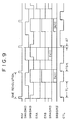
- Figure 9 is a timing chart showing the record timing in 2 ⁇ long-time recording / reproducing mode (hereafter referred to as LS2 mode) in which the drive speed of the magnetic tape 7 is set to 1/2 that of STD mode.
- the reference signal REF is the same as the STD mode in Fig. 5.
- the servo circuit 51 Besides controlling the rotation of the rotating drum 6 based on this reference signal REF, the servo circuit 51 outputs the head switching signals SWA (SW2) and SWB (SW3) synchronized with the rotation of the rotating drum 6, to the digital signal recording / reproducing circuit 32.
- the servo circuit 51 generates the head switching signals SWA (SW2) and SWB (SW3) at a timing to allow the magnetic heads 2a, 2b and the magnetic heads 3a, 3b to respectively scan the specified positions on the magnetic tape 7, and synchronizes these head switching signals SWA (SW3) and SWB (SW4) with the reference signal REF.
- the recording control signals ERA and ERB indicating the recording signals SRA, SRB and their effective region based on the head switching signals SWA and SWB are output from the digital signal recording / reproducing circuit 32.
- the record signal SRA is input to the recording / reproducing amplifier 23 by way of the switching circuit 60, amplified to a specified level and recorded onto a specified position on the magnetic tape 7 only by the magnetic head 2b.
- the recording signal SRB is input to the recording / reproducing amplifier 33 by way of the switching circuit 60, amplified to a specified level and recorded onto a specified portion of the magnetic tape 7 only by the magnetic head 3b.
- the recording / reproducing amplifier 23, 33 may be set in constant recording mode and for instance, when performing after-recording (latter recording) of the sub-code region, control of the recording / reproducing mode may be performed by means of the record control signals ERA, ERB.
- the recording signals SRA and SRB as shown in the figure, are both output one time for each two rotations of the rotating drum 6 and then recorded. In other words, recording is performed at a ratio of two tracks for each two rotations of the rotating drum 6.
- the digital signal rate that can be recorded becomes half that of the STD mode but the track pitch Tp and the recording frequency can be set to the same as the STD mode.
- the tracking control pulse CTL is the same period as the STD mode of Fig. 5 and the HS mode of Fig. 7, in other words a ratio of one time for each rotation of the rotating drum 6.
- the record timing of this tracking control pulse CTL is also the same as the STD mode and HS mode.
- the timing for the rising edge of the tracking control pulse CTL (shown by the arrow ⁇ ), is set to a specified time ( ⁇ T) that has elapsed after recording has ended by means of the minus (-) azimuth magnetic head 2b.
- the tracking control pulse CTL is also recorded with differing pulse widths TL or TS, once for each two rotations of the rotating drum 6.
- the timing for changing this record pulse width may for instance be accomplished by adjusting the pulse width TL to match the recording performed by the magnetic head 3b plus (+) azimuth.
- the tracking will then prove effective during reproducing of the magnetic tape 7 signals.
- Table 1 shows a typical TL and TS pulse width duty cycle for the tracking control pulse. Pulse "L” (TL) Pulse "S” (TS) Pulse "0" 62.5 ⁇ 0.5% 57.5 ⁇ 0.5% Pulse "1" 30 ⁇ 0.5% 25 ⁇ 0.5%
- a recording pattern for the magnetic tape 7 during this LS2 mode is shown in Fig. 10.
- the X value shown in the figure becomes largely the same value as during the STD mode and the HS mode, and compatibility is maintained during reproduction.
- the X value shown in the figure can be set to the same value as when in STD mode.
- the X value can be set to the same value in all modes, by making corrections according to the drive speed differential of the magnetic tape 7 with the time ( ⁇ T) in each mode.
- the record pulse count with respect to the drive time of the magnetic tape 7 is the same as the STD mode and the HS mode so that during reproducing of digital signals, control of the drive of the magnetic tape 7 can be made the same as for the STD mode and HS mode.
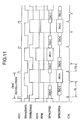
- Figure 11 is a timing diagram showing the timing during reproduction of signals in LS2 mode.
- the reference signal REF and the head switching signals SWA, SWB has the same timing as the reproduction timing of Fig. 9.
- the servo circuit 51 controls the drive speed of the magnetic tape 7 so that the reproduced tracking control pulses CTL maintain a fixed phase with the reference signal REF and the drive speed of the magnetic tape 7 is consequently the same as during recording.
- the magnetic heads 2b and 3b at this time respectively scan each track twice and from among these tracks the head scans accurately only one time. Then, as shown in the figure, reproducing may be performed by generating the reproducing reference signals EPA, EPB for one out of every two tracks to for instance achieve an H level.
- reproducing reference signals EPA, EPB then detect the reproduction signals SPA, SPB when these reproducing reference signals EPA, EPB are at H level, and perform tracking so that the sum or either of the two levels is maximized, and this reproducing signal then input to the digital signal recording / reproducing circuit 32 and reproducing processing performed.
- These reproducing reference signals EPA, EPB can be easily generated by detecting the pulse width of the reproduced tracking control pulse CTL.
- the reproducing reference signal EPB for instance, may be aligned with the so timing that the plus (+) azimuth of the magnetic head 3b scans the magnetic tape 7 at the rotation of the detected pulse width TL.
- the reproducing reference signal EPA for instance, may be aligned with the timing that the minus (-) azimuth of the magnetic head 2b scans the magnetic tape 7 at the rotation of the detected pulse width TL. In this way, tracking can be easily performed during reproduction, by changing and recording the pulse width of the tracking control pulse CTL.
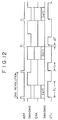
- Figure 12 is a timing chart showing the recording timing of 3 ⁇ long-time recording mode (Hereafter called LS3 mode.) in which the drive speed of the magnetic tape 7 is one-third the speed in STD mode.
- the reference signal REF is the same as the STD mode of Fig. 5, and the recording signal SPA is output at a rate of one time for three tracks and recorded on the magnetic tape 7 by means of the magnetic heads 2a and 2b.
- the recording of the two tracks is performed at three rotations of the rotating drum 6.
- the rate at which the digital signal can be recorded therefore becomes one-third of that of STD mode but the track pitch Tp and the record frequency can be set identical to STD modes.
- the tracking control pulse CTL is set at a period identical to the STD mode of Fig. 5, or in other words, recorded at a rate of one time for each one rotation of the rotating drum 6.
- the record timing of this tracking control pulse CTL is also the same as the STD mode, HS mode and LS2 modes, and the timing for the rising edge of the tracking control pulse CTL (shown by the arrow ⁇ ), is set to a specified time ( ⁇ T) that has elapsed after recording has ended by means of the minus (-) azimuth magnetic head 2b.
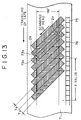
- the X value as shown in Fig. 13 is therefore largely the same as that in the STD mode, HS mode and LS2 mode so that compatibility with different head configurations can be maintained.
- tracking control pulse CTL is recorded one time per each one rotation of the rotating drum 6, recording is performed at a rate of three times for each two tracks however the number of recording pulses per the drive time of the magnetic tape 7 is the same as in STD mode so that the same drive control of the magnetic tape 7 can be performed during reproduction as is performed in STD mode.
- the different pulse widths of the tracking control pulse CTL are recorded at a ratio of one time for three rotations of the rotating drum 6, the same as in LS2 mode.
- the timing for changing the recording pulse width is obtained by matching the pulse width TL with the rotations at which recording is performed by the plus (+) azimuth of the recording head 2a so that tracking is easily performed during reproduction.
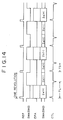
- the reproduction timing in the LS3 mode is shown in Fig. 14.
- the reference signal REF and the head switching signal SWA are the same recording timing as in Fig. 12.
- the servo circuit 51 controls the drive speed of the magnetic tape 7 so that the tracking control pulse CTL maintains a fixed phase with the reference signal REF so that the drive speed of the magnetic tape 7 is the same as during record.
- Each of the magnetic heads 2a and 2b makes three scans of each track and the head scans accurately only one time.
- a reproducing reference signal EPA having an H level is for instance generated at a ratio of one for every three tracks, this reproducing reference signal EPA detects the reproducing signal SPA during H level, performs tracking so this level will be a maximum, inputs this reproducing signal into the digital signal recording / reproducing circuit 32 and reproduction processing is then performed.
- This reproducing reference signal EPA can be easily generated by detecting the pulse width of the tracking control pulse CTL that was reproduced.
- the timing for scanning the magnetic tape 7 at the rotation where the plus (+) azimuth of the magnetic head 2a detected the pulse width TL may be matched with the timing that the minus (-) azimuth of the magnetic head 2b scans the magnetic tape 7 at the next rotation. In this way, tracking can easily be performed during reproducing by changing and recording the pulse width of the tracking control pulse CTL, the same as in the LS2 mode.
- a record signal may be recorded or reproduced on or from two tracks, at a ratio of two tracks for each N rotations of the rotating drum 6 during recording/reproducing.
- N is an odd multiple such as 3 times
- recording / reproducing of a signal can be performed utilizing the magnetic heads 2a and 2b, the same as in STD mode.
- the timing of the tracking control pulse CTL for recording at a ratio of one time for one rotation of the rotating drum 6 is of course the point at which the time ⁇ T has elapsed after recording has ended by the minus (-) azimuth of the recording head at the rising edge of the tracking control pulse CTL, the same as with the other previously related modes.
- the timing for recording various pulse widths of the tracking control pulse CTL at a ratio of one time for N rotations of the rotating drum 6, can also be set the sane as the LS2 and LS3 modes so that for instance, the rotations for performing recording with the plus (+) azimuth recording head can be matched with the pulse width TL.
- FIG. 15 is a block diagram of the switching circuit 60.
- the reference numeral 61 is a switching circuit for switching the analog audio recording signal SRF and the digital recording signal SRA.
- a control signal DIG that indicates whether the signal is analog or digital, causes an analog signal to be connected to a terminal "a" and a digital signal to be connected to a terminal "b".
- the reference numeral 62 is a switching circuit to switch the digital recording signals SRA, SRB
- the reference numeral 64 is a switching circuit to switch the head switching signals SWA, SWB.
- the switching circuits 62 and 64 are both controlled by the digital mode control signal MODE.
- terminal "a” is connected in the case of STD mode, LS2 mode and LS3 mode, while terminal "b” is connected in the case of HS mode.
- the relations of the magnetic head used in each mode and the recording / reproducing signals can therefore be set as described above by means of this configuration.
- the switching circuit 61 is not required in cases where the magnetic heads 2a and 2b are exclusively for recording / reproducing digital signal and separate heads are installed for recording / reproducing analog signals.
- the switch 62 can easily be incorporated and integrated into the digital signal recording / reproducing circuit 32, and the switching circuit 64 can easily be incorporated and integrated into the servo circuit 51.
- the switching circuit 63 is for analog signal switching however the switching circuit 63 can also be incorporated and integrated into the digital signal recording / reproducing circuit 32.
- Figure 16 is a block diagram of the digital signal recording / reproducing circuit 32.
- the reference numerals 301, 304 are interface circuits
- 302 is a recording / reproducing circuit
- 303 is a timing generator circuit
- 311 and 312 are modulator circuits
- 321 and 322 are A/D converter circuits
- 331 and 332 are clock recovery circuits
- 341 and 342 are equalizer circuits
- 351 and 352 are Viterbi decoder circuits.
- a digital signal input from the input terminal 31 is input to the recording / reproducing circuit 302 from the input terminal 301.
- processing is performed to add an error correction code, modulation performed in the modulator circuit 311 and a recording signal SRA generated at the timing shown in Fig. 5 or Fig. 12.
- the output from the modulator circuit 312 is stopped at this time.
- analog/digital conversion is performed in the A/D converter circuit 321 on the reproducing signal SPA that was input, equalization performed in the equalizer circuit 341, Viterbi decoding performed in the Viterbi decoder circuit 351 and the signal then input to the recording / reproducing circuit 302.
- a clock is reproduced in synchronization with the bit period of the recorded digital signal.
- the clock output from the clock recovery circuit 332 is stopped, and the operation of the A/D converter circuit 322, the equalizer 342 and the Viterbi decoder 352 are also stopped. Error correction processing is performed in the recording / reproducing circuit 302 and then supplied to the output terminal 34 by way of the interface circuit 304.
- the digital signal input from the input terminal 31 is input to the recording / reproducing circuit 302 by way of the interface circuit 301, processing to add an error correction code is performed the same as for the STD mode and the LS3 mode and after separating the signal into two channels, modulation is performed by the respective modulator circuits 311 and 312, and the recording signals SRA, SRB generated at the timing shown in Fig. 7 or Fig. 9.
- the reproduction signals SPA and SPB input to the two channels are respectively converted in the A/D converter circuits 321 and 322, equalized in the equalizer circuits 341 and 342, Viterbi-decoded in the Viterbi decoding circuits 351 and 352 and input to the recording / reproducing circuit 302.
- processing such as error correction processing is performed the same as in the STD mode and the LS3 mode and then supplied to the output terminal 34 by way of the interface circuit 304.
- the timing generator circuit 303 is supplied with the analog/digital control signal DIG and the digital mode control signal MODE from the control circuit 52, and along with output of the servo reference signal, also generates the overall timing signal for the digital signal recording / reproducing circuit 32.
- Figure 17 is a drawing showing a typical head placement corresponding to all of the above described modes.
- the analog video signal magnetic recording / reproducing heads 1a and 1b, the STD mode digital signal magnetic recording / reproducing heads 2a and 2b, and the HS mode digital signal magnetic recording / reproducing heads 3a, 3b, 4a, 4b are respectively placed at spaced 45 degree intervals.
- the magnetic heads 2b and 3b are used to record/reproduce the LS2 mode digital signal, and the magnetic heads 2a and 2b are used the same as in STD mode, to record/reproduce the LS3 mode digital signal.
- Figure 18 is a drawing showing the head the respective head height differentials corresponding to the head placement of Fig. 17.
- the height differential Hb between the magnetic heads 2b and 3b used for recording / reproducing in the LS2 mode is given as follows with ⁇ b as the distributed angle differential and Tp as the track pitch.
- ⁇ b the distributed angle differential
- Tp the track pitch.
- Hp Tp/8 when ⁇ b equals 45 degrees.
- Hb (Tp ⁇ 2) ⁇ ( ⁇ b ⁇ 180° )
- settings can be made based on the analog standards for a conventional VTR when using the magnetic heads 2a and 2b also for recording / reproducing of analog signals as well as digital signals; and if the magnetic heads 2a and 2b are only for recording / reproducing digital signals, then appropriate settings may be made regardless of the standards of the conventional VTR.
- Fig. 17 had a distributed angle differential of 45 degrees for the ⁇ b and the ⁇ c, however this invention is not limited to this 45 degree angle, and a desired setting can be made for the distributed angle differential ⁇ b and ⁇ c, and compatibility can still be maintained with differing head configurations.
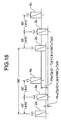
- Figure 19 is a drawing showing another head placement.
- the magnetic heads 1a, 1b and the magnetic heads 2a, 2b and the magnetic heads 4a, 4b are spaced at respective 60 degree intervals.
- the magnetic heads 3a, 3b are each place in the proximity to the magnetic heads 2a, 2b.
- the combination of magnetic heads used in each mode are identical to Fig. 17.
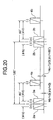
- Figure 20 is a drawing showing the head height differential corresponding to the head placement of Fig. 19.
- the head height differential Hb for the magnetic heads 2b, 3b is the same as shown in equation 1
- the head height differential Hc for the magnetic heads 3a and 4a, and for 3b and 4b is the same as shown in equation 2. Consequently, the head height differential Hb becomes equivalent to zero (0) and ( ⁇ b ⁇ 0 degrees) and head height differential Hc becomes equivalent to Tp/3 ( ⁇ c ⁇ 60 degrees).
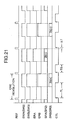
- Figure 21 is a timing chart showing the record timing in the LS2 mode for the head configuration of Fig. 19 and the head height differentials of Fig. 20.
- the section differing from the recording timing of Fig. 9 is only the relative change in timing of the recording signals SRA and SRB as well as the head switching signals SWA and SWB, that accompanies the change in the distributed angle differential ⁇ b ( ⁇ b is equivalent to 0 degrees). All other sections are the same as in Fig. 9.
- the timing of the tracking control pulse CTL (shown by the arrow ⁇ ), is set to a specified time ( ⁇ T) elapsing after recording has ended by means of the minus (-) azimuth magnetic head 2b, and further in that the pulse width of the tracking control pulse CTL is made to vary at a ratio of one time for two revolutions of the rotating drum 6, and also in that the timing for changing this recording pulse width for example, by changing the pulse width TL to match the rotations of recording performed by means of the plus (+) azimuth magnetic head 3b, is the same as in Fig. 9.
- the recording pattern on the magnetic tape 7 for this LS2 mode is consequently, identical to the recording pattern of Fig. 10, and compatibility between devices with different head configurations can be maintained.
- the recording timing for the STD mode and the LS3 mode is completely identical to the record timing of Fig. 5 and Fig. 12, and only the relative timing of the head switching signals SWA and SWB as well as the recording signals SRA and SRB are changed to accompany the change in the distributed angle differential ⁇ c ( ⁇ c ⁇ 60 degrees) in the HS mode recording timing, and in all other respects is identical to the record timing of Fig. 7.
- Figure 22 is a drawing showing the reproducing timing of the LS2 mode for the head height differential of Fig. 20 and the head configuration of Fig. 19.
- the section differing from the reproducing timing of Fig. 11 is only that, the same as the recording timing, the relative timing of the head switching signals SWA and SWB as well as the recording signals SPA and SPB were changed to accompany the change in the distributed angle differential ⁇ b ( ⁇ b ⁇ 0 degrees), and in all other respects is identical to Fig. 11.
- the generation of the reproducing reference signals EPA and EPB, by detecting the pulse width of the reproduced tracking control pulse CTL is also the same.
- Figure 23 is a drawing showing still another variation in the head placement.
- the magnetic heads 1a, 1b, the magnetic heads 2a, 2b and the magnetic heads 4a, 4b are respectively installed at 60 degree intervals, and the magnetic heads 3a, 3b are respectively installed in proximity to the magnetic heads 4a, 4b.
- the combination of magnetic heads used in each respective mode is basically the same as Fig. 17 and Fig. 19, however in this case other combinations are more efficient. More specifically, the magnetic heads 3a, 3b, 4a, 4b are used during recording / reproducing in HS mode, and in all modes other than HS mode the magnetic heads 3b, 4b are used.
- the magnetic heads 3b, 4b are used during /reproducing in LS2 mode, and the magnetic heads 2a, 2b are used during reproducing in LS3 mode and STD mode.
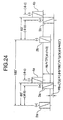
- Figure 24 is a drawing showing the head height differential when the above magnetic head combination is employed for the head placement of Fig. 23.
- the head height differential Hc for the magnetic heads 3a and 4a as well as 3b and 4b is shown in equation 2 the same as in Fig. 18 and Fig. 20, with Hc equivalent to Tp ( ⁇ c ⁇ 0 degrees).
- the heads used in the LP2 mode were changed, so in regards to the height differential Hb of the magnetic heads 2b and 3b, there is no need to specify equation 1.
- the head height differential Hb shown in equation 3 is for instance set equivalent to Tp/3 ( ⁇ b ⁇ 60 degrees). In this way, in STD mode the scan track for the magnetic heads 3b and 4b during recording, can match with the scan track for the magnetic heads 2a and 2b during reproducing.
- Hb Tp ⁇ ( ⁇ b ⁇ 180° )
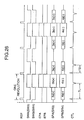
- Figure 25 is recording timing diagrams in STD mode, LS2 mode, and LS3 mode for the head height differential of Fig. 24 and the head configuration of Fig. 23. As related above, all three of these modes use only the magnetic heads 3b and 4b for recording.
- the timing of the tracking control pulse CTL (shown by the arrow ⁇ ), is set to a specified time ( ⁇ T) elapsing after recording has ended by means of the minus (-) azimuth magnetic head 4b, and further in that in LS3 mode the pulse width of the tracking control pulse CTL is made to vary at a ratio of one time for three revolutions of the rotating drum 6 and in LS2 mode at one time per two rotations of the rotating drum 6, and in that the timing for changing this recording pulse width, is achieved for example by changing the rotations of the recording performed by means of the plus (+) azimuth magnetic head 3b to match the pulse width TL.
- the recording pattern on the magnetic tape 7 is consequently identical to the recording patterns of Fig. 6, Fig. 10 and Fig. 13 and compatibility between devices with different head configurations can be maintained.
- the record timing for the HS mode is different only in that the relative timing of the head switching signals SWA and SWB as well as the recording signals SRA and SRB were changed to accompany the change in the distributed angle differential ⁇ c ( ⁇ c ⁇ 0 degrees), and in all other respects is identical to the record timing of Fig. 7.
- the recording pattern also, is identical to the recording pattern of Fig. 8.
- Figure 26 is a reproducing timing diagram for LS2 mode for the head height differential of Fig. 24 and the head configuration of Fig. 23.
- the difference versus the reproduction timing in Fig. 11 and Fig. 22 is only that the relative timing of the head switching signals SWA and SWB as well as the reproduction signals SPA and SPB has changed along with the distributed angle differential ⁇ c ( ⁇ b ⁇ 0 degrees) that is used, and all other sections are identical.
- the generation of the reproducing reference signals EPA and EPB by detecting the pulse width of the reproduced tracking control pulse CTL is also the same.
- the reproduction timing in LS3 mode uses the magnetic heads 2a and 2b and so is the same as the reproduction timing of Fig. 14.
- the digital signals recorded by the above apparatus may be video signals and audio signals digitally compressed by methods such as MPEG (Moving Picture Experts Group).
- MPEG Motion Picture Experts Group
- trick playback video data is recorded along the head scanning track (locus) during trick playback, and a method used to reproduce this video data during trick playback.
- the trick playback data recorded in the STD, or long-time (LS2, LS3, etc.) mode in this invention is reproduced (or played back) utilizing the magnetic heads 2a and 2b facing each other at mutually opposite azimuths of 180 degrees.
- the magnetic heads 3a and 3b facing each other at a plus (+) azimuth of 180 degrees are utilized for trick playback in the forward direction
- the magnetic heads 4a, 4b facing each other at a minus (-) azimuth of 180 degrees are utilized during trick playback in the reverse direction.
- This method is not limited to the above described head placement and can also be applied to all types of head placements so that compatibility can therefore be maintained between apparatus with different head configurations.
- This invention as described above, can therefore establish the physical position of the tracking control pulse CTL and the digital signal recording track on the magnetic tape 7 so that compatibility can be maintained between apparatus having different head configurations.
- tracking of signals that can only be reproduced at a ratio of two tracks for N rotations of the rotating drum can be easily performed by recording tracking control pulses having different pulse widths, at a ratio of one time for N rotations of the rotating drum.
Landscapes
- Engineering & Computer Science (AREA)
- Signal Processing (AREA)
- Multimedia (AREA)
- Adjustment Of The Magnetic Head Position Track Following On Tapes (AREA)
- Signal Processing For Digital Recording And Reproducing (AREA)
- Digital Magnetic Recording (AREA)
Applications Claiming Priority (2)
| Application Number | Priority Date | Filing Date | Title |
|---|---|---|---|
| JP3680699 | 1999-02-16 | ||
| JP11036806A JP2000235748A (ja) | 1999-02-16 | 1999-02-16 | 磁気記録装置及び記録再生装置 |
Publications (2)
| Publication Number | Publication Date |
|---|---|
| EP1030300A2 true EP1030300A2 (fr) | 2000-08-23 |
| EP1030300A3 EP1030300A3 (fr) | 2003-02-05 |
Family
ID=12480038
Family Applications (1)
| Application Number | Title | Priority Date | Filing Date |
|---|---|---|---|
| EP00300478A Withdrawn EP1030300A3 (fr) | 1999-02-16 | 2000-01-21 | Appareil d'enregistrement et de reproduction magnétique |
Country Status (3)
| Country | Link |
|---|---|
| EP (1) | EP1030300A3 (fr) |
| JP (1) | JP2000235748A (fr) |
| KR (1) | KR100331196B1 (fr) |
Cited By (9)
| Publication number | Priority date | Publication date | Assignee | Title |
|---|---|---|---|---|
| US8797682B1 (en) | 2013-08-21 | 2014-08-05 | International Business Machines Corporation | Quasi-statically tilted magnetic tape head having backward compatibility |
| US8810957B1 (en) | 2013-09-05 | 2014-08-19 | International Business Machines Corporation | Quasi-statically tilted head having dilated transducer pitch |
| US9007712B1 (en) | 2013-12-16 | 2015-04-14 | International Business Machines Corporation | Backward compatible head for quasi-static tilted reading and/or recording |
| US9117470B1 (en) | 2014-07-17 | 2015-08-25 | International Business Machines Corporation | Write delay to de-skew data in read while write function for tape storage devices |
| US9129614B2 (en) | 2013-05-01 | 2015-09-08 | International Business Machines Corporation | Magnetic head having canted arrays |
| US9208809B2 (en) | 2013-05-01 | 2015-12-08 | International Business Machines Corporation | Magnetic head and system having offset arrays |
| US9214164B2 (en) | 2013-09-16 | 2015-12-15 | International Business Machines Corporation | Miniskirt tape head having quasi-statically tilted transducer arrays |
| US9218838B2 (en) | 2013-12-12 | 2015-12-22 | International Business Machines Corporation | Quasi-statically tilted head having offset reader/writer transducer pairs |
| US9449628B2 (en) | 2013-05-01 | 2016-09-20 | International Business Machines Corporation | Quasi-statically oriented, bi-directional tape recording head |
Family Cites Families (5)
| Publication number | Priority date | Publication date | Assignee | Title |
|---|---|---|---|---|
| JPS5525805A (en) * | 1978-08-09 | 1980-02-23 | Hitachi Ltd | Servo circuit of video tape recorder |
| JP2619531B2 (ja) * | 1989-06-16 | 1997-06-11 | 株式会社日立製作所 | 情報記録再生装置 |
| US5506733A (en) * | 1993-01-05 | 1996-04-09 | Goldstar Co., Ltd. | Apparatus for recording and reproducing digital and analog video signals using two analog record/reproduce heads and two digital record/reproduce heads, respectively |
| JPH09507943A (ja) * | 1994-10-31 | 1997-08-12 | フィリップス エレクトロニクス ネムローゼ フェンノートシャップ | トラック形態を有する磁気テープ及びこのような磁気テープと共同する装置 |
| US6104862A (en) * | 1994-12-19 | 2000-08-15 | Hitachi, Ltd. | Video signal recording and reproducing apparatus compatible with analog and digital video signal recording and reproducing |
-
1999
- 1999-02-16 JP JP11036806A patent/JP2000235748A/ja active Pending
-
2000
- 2000-01-21 EP EP00300478A patent/EP1030300A3/fr not_active Withdrawn
- 2000-02-16 KR KR1020000007235A patent/KR100331196B1/ko not_active Expired - Fee Related
Cited By (23)
| Publication number | Priority date | Publication date | Assignee | Title |
|---|---|---|---|---|
| US9449628B2 (en) | 2013-05-01 | 2016-09-20 | International Business Machines Corporation | Quasi-statically oriented, bi-directional tape recording head |
| US9754616B2 (en) | 2013-05-01 | 2017-09-05 | International Business Machines Corporation | Magnetic head and system having offset arrays |
| US9721601B2 (en) | 2013-05-01 | 2017-08-01 | International Business Machines Corporation | Quasi-statically oriented, bi-directional tape recording head |
| US9129614B2 (en) | 2013-05-01 | 2015-09-08 | International Business Machines Corporation | Magnetic head having canted arrays |
| US9208809B2 (en) | 2013-05-01 | 2015-12-08 | International Business Machines Corporation | Magnetic head and system having offset arrays |
| US9607639B2 (en) | 2013-05-01 | 2017-03-28 | International Business Machines Corporation | Magnetic head and system having offset arrays |
| US9595276B2 (en) | 2013-05-01 | 2017-03-14 | International Business Machines Corporation | Magnetic head and system having offset arrays |
| US8797682B1 (en) | 2013-08-21 | 2014-08-05 | International Business Machines Corporation | Quasi-statically tilted magnetic tape head having backward compatibility |
| US8902528B1 (en) | 2013-09-05 | 2014-12-02 | International Business Machines Corporation | Quasi-statically tilted head having dilated transducer pitch |
| US9263087B2 (en) | 2013-09-05 | 2016-02-16 | International Business Machines Corporation | Quasi-statically tilted head having dilated transducer pitch |
| US8810957B1 (en) | 2013-09-05 | 2014-08-19 | International Business Machines Corporation | Quasi-statically tilted head having dilated transducer pitch |
| US9472210B2 (en) | 2013-09-16 | 2016-10-18 | International Business Machines Corporation | Miniskirt tape head having quasi-statically tilted transducer arrays |
| US9214164B2 (en) | 2013-09-16 | 2015-12-15 | International Business Machines Corporation | Miniskirt tape head having quasi-statically tilted transducer arrays |
| US9330686B2 (en) | 2013-09-16 | 2016-05-03 | International Business Machines Corporation | Miniskirt tape head having quasi-statically tilted transducer arrays |
| US9576596B2 (en) | 2013-09-16 | 2017-02-21 | International Business Machines Corporation | Miniskirt tape head having quasi-statically tilted transducer arrays |
| US9299365B2 (en) | 2013-09-16 | 2016-03-29 | International Business Machines Corporation | Miniskirt tape head having quasi-statically tilted transducer arrays |
| US9715886B2 (en) | 2013-09-16 | 2017-07-25 | International Business Machines Corporation | Miniskirt tape head having quasi-statically tilted transducer arrays |
| US9355665B2 (en) | 2013-12-12 | 2016-05-31 | International Business Machines Corporation | Quasi-statically tilted head having offset reader/writer transducer pairs |
| US9218838B2 (en) | 2013-12-12 | 2015-12-22 | International Business Machines Corporation | Quasi-statically tilted head having offset reader/writer transducer pairs |
| US9251825B2 (en) | 2013-12-16 | 2016-02-02 | Globalfoundries Inc. | Backward compatible head for quasi-static tilted reading and/or recording |
| US9007712B1 (en) | 2013-12-16 | 2015-04-14 | International Business Machines Corporation | Backward compatible head for quasi-static tilted reading and/or recording |
| US9318138B2 (en) | 2014-07-17 | 2016-04-19 | International Business Machines Corporation | Write delay to de-skew data in read while write function for tape storage devices |
| US9117470B1 (en) | 2014-07-17 | 2015-08-25 | International Business Machines Corporation | Write delay to de-skew data in read while write function for tape storage devices |
Also Published As
| Publication number | Publication date |
|---|---|
| KR20000058059A (ko) | 2000-09-25 |
| JP2000235748A (ja) | 2000-08-29 |
| EP1030300A3 (fr) | 2003-02-05 |
| KR100331196B1 (ko) | 2002-04-06 |
Similar Documents
| Publication | Publication Date | Title |
|---|---|---|
| US20020102096A1 (en) | Video signal recording apparatus and video signal recording and reproducing apparatus | |
| JPS58128002A (ja) | 記録再生装置 | |
| EP1030300A2 (fr) | Appareil d'enregistrement et de reproduction magnétique | |
| JPH05290455A (ja) | 再生装置 | |
| JP2753173B2 (ja) | 複数セグメント記録におけるトラッキング制御装置 | |
| US6091561A (en) | Magnetic recording/reproduction apparatus which simultaneously scans two continuous tracks in both standard and long play modes | |
| US6195499B1 (en) | Magnetic recording and/or reproducing apparatus | |
| JP3312433B2 (ja) | ディジタル信号記録再生装置 | |
| JPH0373454A (ja) | ビデオテープレコーダ | |
| US6349012B1 (en) | Magnetic recording and/or reproducing apparatus | |
| US6452738B1 (en) | Magnetic recording apparatus and reproducing apparatus | |
| EP0624872A2 (fr) | Appareil d'enregistrement et/ou de reproduction magnétique | |
| JPH11283226A (ja) | データストリーム記録再生装置 | |
| EP0706182B1 (fr) | Appareil d'enregistrement et de reproduction magnétique | |
| JP2000306223A (ja) | 磁気記録及び/或いは再生装置 | |
| US5953172A (en) | High speed recording and reproducing apparatus for avoiding cross talk during insert-recording | |
| EP0729154B1 (fr) | Méthode et appareil d'enregistrement d'une piste de contrôle | |
| JP3042553B2 (ja) | 信号再生装置および方法 | |
| JP4264576B2 (ja) | 磁気テープ記録装置および記録方法 | |
| US6681076B1 (en) | Magnetic recording and reproducing apparatus for automatically setting the traveling speed of the recording medium in accordance with the transmission rate of the input digital signal | |
| JP3275464B2 (ja) | 磁気記録再生装置 | |
| US6621981B1 (en) | Video signal recording/reproducing apparatus and reproducing apparatus | |
| JPH041403B2 (fr) | ||
| US6674961B1 (en) | Magnetic recording device and method, magnetic reproduction device and method, and tape recording medium | |
| JP3014837B2 (ja) | 磁気記録再生装置 |
Legal Events
| Date | Code | Title | Description |
|---|---|---|---|
| PUAI | Public reference made under article 153(3) epc to a published international application that has entered the european phase |
Free format text: ORIGINAL CODE: 0009012 |
|
| 17P | Request for examination filed |
Effective date: 20000210 |
|
| AK | Designated contracting states |
Kind code of ref document: A2 Designated state(s): AT BE CH CY DE DK ES FI FR GB GR IE IT LI LU MC NL PT SE |
|
| AX | Request for extension of the european patent |
Free format text: AL;LT;LV;MK;RO;SI |
|
| PUAL | Search report despatched |
Free format text: ORIGINAL CODE: 0009013 |
|
| AK | Designated contracting states |
Designated state(s): AT BE CH CY DE DK ES FI FR GB GR IE IT LI LU MC NL PT SE |
|
| AX | Request for extension of the european patent |
Extension state: AL LT LV MK RO SI |
|
| RIC1 | Information provided on ipc code assigned before grant |
Ipc: 7H 04N 9/79 B Ipc: 7G 11B 5/53 B Ipc: 7G 11B 15/12 B Ipc: 7G 11B 15/18 B Ipc: 7G 11B 5/008 B Ipc: 7G 11B 15/467 A |
|
| AKX | Designation fees paid |
Designated state(s): DE FR GB |
|
| STAA | Information on the status of an ep patent application or granted ep patent |
Free format text: STATUS: THE APPLICATION IS DEEMED TO BE WITHDRAWN |
|
| 18D | Application deemed to be withdrawn |
Effective date: 20030806 |