EP1030561B1 - Activite antimicrobienne des lacases - Google Patents
Activite antimicrobienne des lacases Download PDFInfo
- Publication number
- EP1030561B1 EP1030561B1 EP98951297A EP98951297A EP1030561B1 EP 1030561 B1 EP1030561 B1 EP 1030561B1 EP 98951297 A EP98951297 A EP 98951297A EP 98951297 A EP98951297 A EP 98951297A EP 1030561 B1 EP1030561 B1 EP 1030561B1
- Authority
- EP
- European Patent Office
- Prior art keywords
- alkyl
- laccase
- enhancers
- group
- treatment
- Prior art date
- Legal status (The legal status is an assumption and is not a legal conclusion. Google has not performed a legal analysis and makes no representation as to the accuracy of the status listed.)
- Expired - Lifetime
Links
- CUZWBYFXTXXDDX-UHFFFAOYSA-N COc(c(O)cc(N)c1)c1O Chemical compound COc(c(O)cc(N)c1)c1O CUZWBYFXTXXDDX-UHFFFAOYSA-N 0.000 description 1
- 0 COc1cc(C(*)=O)cc(OC)c1O Chemical compound COc1cc(C(*)=O)cc(OC)c1O 0.000 description 1
Images


Definitions
- the present invention relates to a method of antimicrobial treatment using a combination of a laccase enzyme and an enhancer capable of killing or inhibiting microorganisms, more specifically microorganisms present in laundry, on hard surface, on skin, teeth or mucous membranes; and for preserving food products, cosmetics, paints, coatings, etc., the composition comprising a Laccase enzyme, an enhancing agent acting as an electron donor.
- WO 94/04127 discloses stabilized dentifrice compositions which are capable of producing antimicrobially effective concentrations of hypothiocyanite ions.
- the compositions contain an oxidase capable of producing hydrogen peroxide and a peroxidase enzyme capable of oxidizing thiocyanate ions, which are normally present in saliva, to antimicrobial hypothiocyanite ions.
- Suitable peroxidases include lactoperoxidase, myeloperoxidase, salivary peroxidase and chloro-peroxidase.
- EP-A-0 500 387 enzymatic antimicrobial compositions comprising a haloperoxidase, e.g. myeloperoxidase, eosinophil oxidase, lactoperoxidase and chloroperoxidase, which selectively binds to and inhibits the growth of target microorganisms in the presence of peroxide and halide.
- a haloperoxidase e.g. myeloperoxidase, eosinophil oxidase, lactoperoxidase and chloroperoxidase
- WO 95/27046 discloses an antimicrobial composition
- an antimicrobial composition comprising a Vanadium chloroperoxidase, halide ions, and hydrogen peroxide or a hydrogen peroxide-generating agent.
- Laccase is an enzyme catalyzing the oxidation of substrates according to the general formula:
- the enzyme has been used in the paper and pulp industry (WO 94/29510, for bleaching purposes in laundry washing (WO 91/05839, EP 91610032, DE4008894, JP-A64-60693), but the use of the enzyme in for antimicrobial purposes was not suggested.
- WO 96/10079 discloses a method for oxidizing a compound with a phenol oxidizing enzyme in the presence of an enhancer of the general formula: for bleaching dyes in solution.
- WO 97/28257 and WO 97/00038 discloses a methods for inactivating a microorganism or virus with polyphenol oxidases derived from the bacterium of the genus Bacillus in the presence of oxygen and an enhancer.
- WO 97/41215 discloses substantially water-free liquid compositions containing enzymes, substrates and cofactors.
- the enzyme may be laccase and the substrates may be alkyl syringates.
- WO 97/43383 discloses a detergent composition comprising a laccase and an enhancing agent, and use thereof for sanitization of the treated surface.
- WO 97/42825 discloses an enzymatic antimicrobial composition comprising a Coprinus peroxidase, an enhancing agent and hydrogen peroxide.
- US 4,478,683 and US 4,370,199 both disclose methods of killing and inhibiting the growth of microorganisms in industrial process streams with peroxidase or laccase in the presence of hydrogen peroxide or oxygen, and a phenolic compound.
- the object of this invention is to provide a method for antimicrobial treatment of microbial cells or microorganisms, i.e. for disinfection or preservation, which is easy to use and an effective alternative to the known disinfecting and preserving methods.
- Treatment of microorganisms and/or viruses comprising treating said microorganisms and/or viruses with an effective amount of fungal Laccase enzymes and an effective amount of one or more enhancers in the presence of oxygen (O 2 ), the enhancer being of the formula: has surprisingly shown a hitherto unknown synergistic antimicrobial effect.
- an enzymatic antimicrobial method comprising treatment of microorganisms and/or viruses with effective amounts of Laccase and said enhancers in the presence of oxygen (O 2 ) or a source of oxygen (O 2 ).
- the invention is useful wherever antimicrobial treatment is needed, for example for the preservation of food, beverages, cosmetics, contact lens products, food ingredients paints or enzyme compositions; for antimicrobial treatment of e.g. on human or animal skin, hair, oral cavity, mucous membranes, wounds, bruises or in the eye; for antimicrobial treatment of laundry; and for antimicrobial treatment in connection with hard surface cleaning or disinfection.
- the present invention provides a method for antimicrobial treatment of microorganisms and/or viruses present on laundry and/or in a liquid used for soaking, washing or rinsing the laundry, e.g. in a washing machine; a method for antimicrobial treatment of microorganisms and/or viruses on or in a cosmetic product; a method for antimicrobial treatment of microorganisms and/or viruses on or in contact lenses and a method of antimicrobial treatment of microorganisms and/or viruses present on or in a hard surface.
- antimicrobial is to be understood as bactericidal, bacteriostatic, fungicidal or fungistatic.
- bacteriaicidal is to be understood as capable of killing bacterial cells.
- bacteriostatic is to be understood as capable of inhibiting bacterial growth, i.e. inhibiting growing bacterial cells.
- fungicidal is to be understood as capable of killing fungal cells.
- fungistatic is to be understood as capable of inhibiting fungal growth, i.e. inhibiting growing fungal cells.
- microorganism denotes a virus, a bacterium or cells thereof, a fungus or cells thereof.
- hard surface as used herein relates to any surface which is essentially non-permeable for microorganisms.
- hard surfaces are surfaces made from metal, e.g. stainless steel alloys, plastics/synthetic polymers, rubber, board, glass, wood, paper, textile, concrete, rock, marble, gypsum and ceramic materials which optionally may be coated, e.g. with paint, enamel, polymers and the like.
- the key reaction in the antimicrobial effect of the combined Laccase/enhancer system of the present invention is the oxidation of essential protein and enzyme sulphydryl groups or other cellular sites.
- Laccase enzymes are able to catalyze O 2 -dependent oxidation of an electron-donor, e.g. an enhancer.
- the oxidized enhancer make an electrophilic attack on microbial components, resulting in chemical modification of essential enzymes, transport systems, and other functional components.
- Sulphydryl groups are especially susceptible to electrophilic attack, and are usually present in higher amounts than other easily oxidized groups.
- Aromatic amino acid residues are also susceptible to attack.
- Most aspects of antimicrobial action can be correlated with chemical modification of these nucleophilic components.
- Antimicrobial activity is favored by influences that increase the stability of the oxidized agent, provided that these influences do not interfere with their electrophilic character, or their ability to penetrate microbial membranes.
- O 2 itself is an oxidizing agent, the O 2 molecule is stabilized and reacts only slowly with biological materials.
- the laccase catalyzed oxidation of the enhancer preserves the oxidizing power O 2 into forms that reacts more readily.
- the oxygen can be supplied from air either by diffusion or by aeration or can be generated by an oxygen liberating compound.
- the antimicrobial effect may be obtained against various microorganisms like bacteria, fungi and/or virus.
- the antimicrobial effect may be greater towards certain strains over other strains, e.g. bacteria over fungi or vice versa or gram positive bacteria over gram negative or vice versa.
- laccases include enzymes comprised by the enzyme classification E.C. 1.10.3.2.
- the laccase employed is derived from a strain of Polyporus sp., in particular a strain of Polyporus pinisitus or Polyporus versicolor, or a strain of Myceliophthera sp., e.g. M. thermophila or a strain of Rhizoctonia sp., in particular a strain of Rhizoctonia praticola or Rhizoctonia solani, or a strain of a Rhus sp., in particular Rhus vernicifera.
- the oxidoreductase is a laccase, such as a Polyporus sp. laccase especially the Polyporus pinisitus laccase (also called Trametes villosa laccase) described in WO 96/00290 (from Novo Nordisk Biotech., inc.) or a Myceliophthera sp. laccase especially the Myceliophthera thermophila laccase described in WO 95/33836 (from Novo Nordisk Biotech inc.).
- a laccase such as a Polyporus sp. laccase especially the Polyporus pinisitus laccase (also called Trametes villosa laccase) described in WO 96/00290 (from Novo Nordisk Biotech., inc.) or a Myceliophthera sp. laccase especially the Myceliophthera thermophila laccase described in WO 95/33836 (from Novo Nordisk Biotech inc.).
- the laccase may be a Scytalidium sp. laccase, such as the S. thermophilium laccase described in WO 95/33837 (from Novo Nordisk Biotech inc.) or a Pyricularia sp. laccase, such as the Pyricularia oryzae laccase which can be purchased from SIGMA under the trade name SIGMA no. L5510, or a Coprinus sp. laccase, such as a C. cinereus laccase, especially a C. cinereus IFO 30116 laccase, or a Rhizoctonia sp. laccase, such as a Rh. solani laccase, especially the neutral Rh. solani laccase described WO 95/07988 (from Novo Nordisk A/S) having a pH optimum in the range from 6.0 to 8.5.
- the laccase may also be derived from a fungi such as Collybia, Fomes, Lentinus, Pleurotus, Aspergillus, Neurospora, Podospora, Phlebia, e.g. P. radiata (WO 92/01046), Coriolus sp., e.g. C. hirsitus (JP 2-238885), or Botrytis.
- fungi such as Collybia, Fomes, Lentinus, Pleurotus, Aspergillus, Neurospora, Podospora, Phlebia, e.g. P. radiata (WO 92/01046), Coriolus sp., e.g. C. hirsitus (JP 2-238885), or Botrytis.
- enhancers acting as electron donors for laccases for various purposes are known (e.g. WO 94/12620, WO 94/12621, WO 95/01626 and WO 96/00179).
- One or more enhancers being of the formula has however in the context of the invention shown to be surprisingly effective.
- a specific embodiment of the invention relates to an antimicrobial composition
- an antimicrobial composition comprising a laccase enzyme (EC 1.10.3.2) and at least two different enhancers of the formula: wherein A, B and C may be substituents as mentioned vide supra, and the laccase and the enhancers are present in the composition in antimicrobially effective amounts.
- the composition may be a solid granular or powder formulation or it may be a liquid.
- a solid granular composition may prepared as disclosed in US 4,106,991, US 4,661,452, WO 97/31088 or WO 95/33039 and may optionally be coated by methods known to the art.
- a liquid composition may be prepared as a stabile liquid composition by addition of conventional stabilizers, a slurry composition or a composition with the enzyme in a protected form.
- Protected enzymes may be prepared according to the method disclosed in EP 238,216 A or WO 97/41215.
- Said enhancers are commercially available or can be made by methods known to the art.
- the Laccase may be present in the medium to be antimicrobially treated i.e. washing liquor, cosmetics, food or beverages; or in the medium used for antimicrobial treatment of other items i.e. washing liquor, disinfecting liquid, preserving liquid, foot bath etc. in 0.00001-100 mg/L, preferably 0.001-10 mg/L, e.g. 0.1-5 mg/L.
- the Laccase may be present in the medium to be antimicrobially treated i.e. washing liquor, cosmetics, food or beverages; or in the medium used for antimicrobial treatment of other items i.e. washing liquor, disinfecting liquid, preserving liquid, foot bath etc. in 0.00001-500 mM, preferably 0.0001-5 mM, e.g. 0.001-0.050 mM.
- the medium in which the catalytic reaction between the laccase and the enhancer is intended to occur is preferably aqueous and may be a liquid, an aerosol, a gel, a paste or a slurry, depending on the intended use of the invention.
- the laccase and the enhancer may also be comprised, either separately or together, in solid formulations intended for preparation of said mediums.
- the antimicrobial efficiency of the invention depends, inter alia, on the properties of the medium, which thus may be matched to the intended use of the invention.
- the properties to be matched may, inter alia, be solubility or mobility of the laccase, the enhancer and/or O 2 , the rate of the catalytic reaction, which then again depends on e.g. pH, temperature and buffer of the medium.
- the medium may also affect the half-life of radical, which the enhancer forms upon the catalytic reaction with the laccase and O 2 .
- radical the enhancer forms upon the catalytic reaction with the laccase and O 2 .
- the half-life of the radical depends on, inter alia, the pH, the temperature and the buffer of the medium.
- the medium may also comprise auxiliary agents such as wetting agents, thickening agents, buffer, stabilizers, perfume, colorants, fillers, chelators and the like (e.g. from a detergent composition).
- auxiliary agents such as wetting agents, thickening agents, buffer, stabilizers, perfume, colorants, fillers, chelators and the like (e.g. from a detergent composition).
- Useful wetting agents are surfactants, i.e. non-ionic, anionic, amphoteric or zwitterionic surfactants.
- Laccases are, among other reasons, well suited in the context of the invention since they catalyze oxidation by molecular oxygen.
- reactions which take place in vessels open to the atmosphere (or in other reaction vessels into which air - or for that matter another oxygen-containing gas - is introduced) and which involve an oxidase as enzyme will be able to utilize gaseous oxygen as oxidant; it may, however, be desirable to forcibly aerate the liquid medium during the reaction to ensure an adequate supply of oxygen.
- the pH in the medium employed should normally be in the range of 5-11, often preferably in the range 6-10, e.g. 6.5-8.5.
- temperatures in the range of 10-65°C, more preferably 30-50°C, should be employed.
- Treatment times depends, inter alia, on the treatment type, the type of item to be treated, the properties of the medium, e.g. temperature and pH and the type and amounts of enzyme and enhancer employed.
- treatment times may be in the range of depending of the expected lifetime of the item to be preserved.
- treatment times in the range of 1-120 minutes may be employed. In many cases a treatment time in the range of 5-20 minutes will be suitable.
- the present invention provides a method for antimicrobial treatment of microorganisms or viruses present on laundry and/or in a liquid used for soaking, washing or rinsing the laundry, e.g. in a washing machine.
- the laccase and the enhancer may be incorporated in a detergent composition.
- the detergent compositions according to the present invention comprise a surfactant system, wherein the surfactant can be selected from non-ionic and/or anionic and/or cationic and/or ampholytic and/or zwitterionic and/or semi-polar surfactants.
- the surfactant is typically present at a level from 0.1% to 60% by weight.
- the surfactant is preferably formulated to be compatible with enzyme components present in the composition.
- the surfactant is most preferably formulated in such a way that it promotes, or at least does not degrade, the stability of any enzyme in these compositions.
- Preferred systems to be used according to the present invention comprise as a surfactant one or more of the non-ionic and/or anionic surfactants described herein.
- Polyethylene, polypropylene, and polybutylene oxide condensates of alkyl phenols are suitable for use as the non-ionic surfactant of the surfactant systems of the present invention, with the polyethylene oxide condensates being preferred.
- These compounds include the condensation products of alkyl phenols having an alkyl group containing from about 6 to about 14 carbon atoms, preferably from about 8 to about 14 carbon atoms, in either a straight chain or branched-chain configuration with the alkylene oxide.
- the ethylene oxide is present in an amount equal to from about 2 to about 25 moles, more preferably from about 3 to about 15 moles, of ethylene oxide per mole of alkyl phenol.
- non-ionic surfactants of this type include Igepal TM CO-630, marketed by the GAP Corporation; and Triton TM X-45, X-114, X-100 and X-102, all marketed by the Rohm & Haas Company. These surfactants are commonly referred to as alkylphenol alkoxylates (e.g., alkyl phenol ethoxylates).
- the condensation products of primary and secondary aliphatic alcohols with about 1 to about 25 moles of ethylene oxide are suitable for use as the non-ionic surfactant of the non-ionic surfactant systems of the present invention.
- the alkyl chain of the aliphatic alcohol can either be straight or branched, primary or secondary, and generally contains from about 8 to about 22 carbon atoms.
- About 2 to about 7 moles of ethylene oxide and most preferably from 2 to 5 moles of ethylene oxide per mole of alcohol are present in said condensation products.
- non-ionic surfactants of this type include Tergitol TM 15-S-9 (The condensation product of C 11 -C 15 linear alcohol with 9 moles ethylene oxide), Tergitol TM 24-L-6 NMW (the condensation product of C 12 -C 14 primary alcohol with 6 moles ethylene oxide with a narrow molecular weight distribution), both marketed by Union carbide Corporation; Neodol TM 45-9 (the condensation product of C 14 -C 15 linear alcohol with 9 moles of ethylene oxide), Neodol TM 23-3 (the condensation product of C 12 -C 13 linear alcohol with 3.0 moles of ethylene oxide), Neodol TM 45-7 (the condensation product of C 14 -C 15 linear alcohol with 7 moles of ethylene oxide), Neodol TM 45-5 (the condensation product of C 14 -C 15 linear alcohol with 5 moles of ethylene oxide) marketed by Shell Chemical Company, Kyro TM EOB (the condensation product of C 13 -C 15 alcohol with 9 moles ethylene oxide), marketed by
- alkylpolysaccharides disclosed in US 4,565,647, having a hydrophobic group containing from about 6 to about 30 carbon atoms, preferably from about 10 to about 16 carbon atoms and a polysaccharide, e.g. a polyglycoside, hydrophilic group containing from about 1.3 to about 10, preferably from about 1.3 to about 3, most preferably from about 1.3 to about 2.7 saccharide units.
- Any reducing saccharide containing 5 or 6 carbon atoms can be used, e.g., glucose, galactose and galactosyl moieties can be substituted for the glycosyl moieties (optionally the hydrophobic group is attached at the 2-, 3-, 4-, etc. positions thus giving a glucose or galactose as opposed to a glycoside or galactoside).
- the intersaccharide bonds can be, e.g., between the one position of the additional saccharide units and the 2-, 3-, 4-, and/or 6-positions on the preceding saccharide units.
- the preferred alkylpolyglycosides have the formula R 2 O(C n H 2n O) t (glycosyl) x wherein R 2 is selected from the group consisting of alkyl, alkylphenyl, hydroxyalkyl, hydroxyalkylphenyl, and mixtures thereof in which the alkyl groups contain from about 10 to about 18, preferably from about 12 to about 14, carbon atoms; n is 2 or 3, preferably 2; t is from 0 to about 10, preferably 0; and x is from about 1.3 to about 10, preferably from about 1.3 to about 3, most preferably from about 1.3 to about 2.7.
- the glycosyl is preferably derived from glucose.
- the alcohol or alkylpolyethoxy alcohol is formed first and then reacted with glucose, or a source of glucose, to form the glycoside (attachment at the 1-position).
- the additional glycosyl units can then be attached between their 1-position and the preceding glycosyl units 2-, 3-, 4-, and/or 6-position, preferably predominantly the 2-position.
- the condensation products of ethylene oxide with a hydrophobic base formed by the condensation of propylene oxide with propylene glycol are also suitable for use as the additional non-ionic surfactant systems of the present invention.
- the hydrophobic portion of these compounds will preferably have a molecular weight from about 1500 to about 1800 and will exhibit water insolubility.
- the addition of polyoxyethylene moieties to this hydrophobic portion tends to increase the water solubility of the molecule as a whole, and the liquid character of the product is retained up to the point where the polyoxyethylene content is about 50% of the total weight of the condensation product, which corresponds to condensation with up to about 40 moles of ethylene oxide.
- Examples of compounds of this type include certain of the commercially available Pluronic TM surfactants, marketed by BASF.
- non-ionic surfactant of the non-ionic surfactant system of the present invention are the condensation products of ethylene oxide with the product resulting from the reaction of propylene oxide and ethylenediamine.
- the hydrophobic moiety of these products consists of the reaction product of ethylenediamine and excess propylene oxide, and generally has a molecular weight of from about 2500 to about 3000.
- This hydrophobic moiety is condensed with ethylene oxide to the extent that the condensation product contains from about 40% to about 80% by weight of polyoxyethylene and has a molecular weight of from about 5,000 to about 11,000.
- this type of non-ionic surfactant include certain of the commercially available Tetronic TM compounds, marketed by BASF.
- Preferred for use as the non-ionic surfactant of the surfactant systems of the present invention are polyethylene oxide condensates of alkyl phenols, condensation products of primary and secondary aliphatic alcohols with from about 1 to about 25 moles of ethyleneoxide, alkylpolysaccharides, and mixtures hereof. Most preferred are C 8 -C 14 alkyl phenol ethoxylates having from 3 to 15 ethoxy groups and C 8 -C 18 alcohol ethoxylates (preferably C 10 avg.) having from 2 to 10 ethoxy groups, and mixtures thereof.
- Highly preferred non-ionic surfactants are polyhydroxy fatty acid amide surfactants of the formula wherein R 1 is H, or R 1 is C 1-4 hydrocarbyl, 2-hydroxyethyl, 2-hydroxypropyl or a mixture thereof, R 2 is C 5-31 hydrocarbyl, and Z is a polyhydroxyhydrocarbyl having a linear hydrocarbyl chain with at least 3 hydroxyls directly connected to the chain, or an alkoxylated derivative thereof.
- R 1 is methyl
- R 2 is straight C 11-15 alkyl or C 16-18 alkyl or alkenyl chain such as coconut alkyl or mixtures thereof
- Z is derived from a reducing sugar such as glucose, fructose, maltose or lactose, in a reductive amination reaction.
- Highly preferred anionic surfactants include alkyl alkoxylated sulphate surfactants.
- Examples hereof are water soluble salts or acids of the formula RO(A) m SO3M wherein R is an unsubstituted C 10 -C- 24 alkyl or hydroxyalkyl group having a C 10- C 24 alkyl component, preferably a C 12 -C 20 alkyl or hydroxyalkyl, more preferably C 12 -C 18 alkyl or hydroxyalkyl, A is an ethoxy or propoxy unit, m is greater than zero, typically between about 0.5 and about 6, more preferably between about 0.5 and about 3, and M is H or a cation which can be, for example, a metal cation (e.g., sodium, potassium, lithium, calcium, magnesium, etc.), ammonium or substituted-ammonium cation.
- R is an unsubstituted C 10 -C- 24 alkyl or hydroxyalkyl group having a C 10-
- Alkyl ethoxylated sulphates as well as alkyl propoxylated sulphates are contemplated herein.
- Specific examples of substituted ammonium cations include methyl-, dimethyl, trimethyl-ammonium cations and quaternary ammonium cations such as tetramethyl-ammonium and dimethyl piperdinium cations and those derived from alkylamines such as ethylamine, diethylamine, triethylamine, mixtures thereof, and the like.
- Exemplary surfactants are C 12 -C 18 alkyl polyethoxylate (1.0) sulphate (C 12 -C 18 E(1.0)M), C 12 -C 18 alkyl polyethoxylate (2.25) sulphate (C 12 -C 18 (2.25)M, and C 12 -C 18 alkyl polyethoxylate (3.0) sulphate (C 12 -C 18 E(3.0)M), and C 12 -C 18 alkyl polyethoxylate (4.0) sulphate (C 12 -C 18 E(4.0)M), wherein M is conveniently selected from sodium and potassium.
- Suitable anionic surfactants to be -used are alkyl ester sulphonate surfactants including linear esters of C 8 -C 20 carboxylic acids (i.e., fatty acids) which are sulphonated with gaseous SO 3 according to "The Journal of the American Oil Chemists Society", 52 (1975), pp. 323-329.
- Suitable starting materials would include natural fatty substances as derived from tallow, palm oil, etc.
- the preferred alkyl ester sulphonate surfactant especially for laundry applications, comprise alkyl ester sulphonate surfactants of the structural formula: wherein R 3 is a C 8 -C 20 hydrocarbyl, preferably an alkyl, or combination thereof, R 4 is a C 1 -C 6 hydrocarbyl, preferably an alkyl, or combination thereof, and M is a cation which forms a water soluble salt with the alkyl ester sulphonate.
- Suitable salt-forming cations include metals such as sodium, potassium, and lithium, and substituted or unsubstituted ammonium cations, such as monoethanolamine, diethonolamine, and triethanolamine.
- R 3 is C 10 -C 16 alkyl
- R 4 is methyl, ethyl or isopropyl.
- methyl ester sulphonates wherein R 3 is C 10 -C 16 alkyl.
- alkyl sulphate surfactants which are water soluble salts or acids of the formula ROSO 3 M wherein R preferably is a C 10 -C 24 hydrocarbyl, preferably an alkyl or hydroxyalkyl having a C 10 -C 20 alkyl component, more preferably a C 12 -C 18 alkyl or hydroxyalkyl, and M is H or a cation, e.g., an alkali metal cation (e.g. sodium, potassium, lithium), or ammonium or substituted ammonium (e.g.
- alkylamines such as ethylamine, diethylamine, triethylamine, and mixtures thereof, and the like.
- alkyl chains of C 12 -C 16 are preferred for lower wash temperatures (e.g. below about 50°C) and C 16 -C 18 alkyl chains are preferred for higher wash temperatures (e.g. above about 50°C) .
- anionic surfactants useful for detersive purposes can also be included in the laundry detergent compositions of the present invention. Theses can include salts (including, for example, sodium, potassium, ammonium, and substituted ammonium salts such as mono- di- and triethanolamine salts) of soap, C 8- C 22 primary or secondary alkanesulphonates, C 8 -C 24 olefinsulphonates, sulphonated polycarboxylic acids prepared by sulphonation of the pyrolyzed product of alkaline earth metal citrates, e.g., as described in British patent specification No.
- salts including, for example, sodium, potassium, ammonium, and substituted ammonium salts such as mono- di- and triethanolamine salts
- C 8- C 22 primary or secondary alkanesulphonates C 8 -C 24 olefinsulphonates
- sulphonated polycarboxylic acids prepared by sulphonation of the pyrolyzed product of alkaline earth metal cit
- alkylpolyglycolethersulfates (containing up to 10 moles of ethylene oxide); alkyl glycerol sulphonates, fatty acyl glycerol sulphonates, fatty oleyl glycerol sulphates, alkyl phenol ethylene oxide ether sulphates, paraffin sulphonates, alkyl phosphates, isethionates such as the acyl isethionates, N-acyl taurates, alkyl succinamates and sulphosuccinates, monoesters of sulphosuccinates (especially saturated and unsaturated C 12 -C 18 monoesters) and diesters of sulphosuccinates (especially saturated and unsaturated C 6 -C 12 diesters), acyl sarcosinates, sulphates of alkylpolysaccharides such as the sulphates of alkylpolygly
- Alkylbenzene sulphonates are highly preferred. Especially preferred are linear (straight-chain) alkyl benzene sulphonates (LAS) wherein the alkyl group preferably contains from 10 to 18 carbon atoms.
- LAS linear (straight-chain) alkyl benzene sulphonates
- the laundry detergent compositions of the present invention typically comprise from about 1% to about 40%, preferably from about 3% to about 20% by weight of such anionic surfactants.
- the laundry detergent compositions of the present invention may also contain cationic, ampholytic, zwitterionic, and semi-polar surfactants, as well as the non-ionic and/or anionic surfactants other than those already described herein.
- Cationic detersive surfactants suitable for use in the laundry detergent compositions of the present invention are those having one long-chain hydrocarbyl group.
- cationic surfactants include the ammonium surfactants such as alkyltrimethylammonium halogenides, and those surfactants having the formula: [R 2 (OR 3 ) y ] [R 4 (OR 3 ) y ] 2 R 5 N+X- wherein R 2 is an alkyl or alkyl benzyl group having from about 8 to about 18 carbon atoms in the alkyl chain, each R 3 is selected form the group consisting of -CH 2 CH 2 -, -CH 2 CH(CH 3 )-, -CH 2 CH(CH 2 OH)-, -CH 2 CH 2 CH 2 -, and mixtures thereof; each R 4 is selected from the group consisting of C 1 -C 4 alkyl, C 1 -C 4 hydroxyalkyl, benzyl ring structures formed by joining the two R 4 groups, -
- Highly preferred cationic surfactants are the water soluble quaternary ammonium compounds useful in the present composition having the formula: R 1 R 2 R 3 R 4 N + X - (i) wherein R 1 is C 8 -C 16 alkyl, each of R 2 , R 3 and R 4 is independently C 1 -C 4 alkyl, C 1 -C 4 hydroxy alkyl, benzyl, and -(C 2 H 40 ) x H where x has a value from 2 to 5, and X is an anion. Not more than one of R 2 , R 3 or R 4 should be benzyl.
- the preferred alkyl chain length for R 1 is C 12 -C 15 , particularly where the alkyl group is a mixture of chain lengths derived from coconut or palm kernel fat or is derived synthetically by olefin build up or OXO alcohols synthesis.
- R 2 R 3 and R 4 are methyl and hydroxyethyl groups and the anion X may be selected from halide, methosulphate, acetate and phosphate ions.
- the laundry detergent compositions of the present invention typically comprise from 0.2% to about 25%, preferably from about 1% to about 8% by weight of such cationic surfactants.
- Ampholytic surfactants are also suitable for use in the laundry detergent compositions of the present invention. These surfactants can be broadly described as aliphatic derivatives of secondary or tertiary amines, or aliphatic derivatives of heterocyclic secondary and tertiary amines in which the aliphatic radical can be straight- or branched-chain.
- One of the aliphatic substituents contains at least about 8 carbon atoms, typically from about 8 to about 18 carbon atoms, and at least one contains an anionic water-solubilizing group, e.g. carboxy, sulphonate, sulphate. See US 3,929,678 (column 19, lines 18-35) for examples of ampholytic surfactants.
- the laundry detergent compositions of the present invention typically comprise from 0.2% to about 15%, preferably from about 1% to about 10% by weight of such ampholytic surfactants.
- Zwitterionic surfactants are also suitable for use in laundry detergent compositions. These surfactants can be broadly described as derivatives of secondary and tertiary amines, derivatives of heterocyclic secondary and tertiary amines, or derivatives of quaternary ammonium, quaternary phosphonium or tertiary sulphonium compounds. See US 3,929,678 (column 19, line 38 through column 22, line 48) for examples of zwitterionic surfactants.
- the laundry detergent compositions of the present invention typically comprise from 0.2% to about 15%, preferably from about 1% to about 10% by weight of such zwitterionic surfactants.
- Semi-polar non-ionic surfactants are a special category of non-ionic surfactants which include water-soluble amine oxides containing one alkyl moiety of from about 10 to about 18 carbon atoms and 2 moieties selected from the group consisting of alkyl groups and hydroxyalkyl groups containing from about 1 to about 3 carbon atoms; water-soluble phosphine oxides containing one alkyl moiety of from about 10 to about 18 carbon atoms and 2 moieties selected from the group consisting of alkyl groups and hydroxyalkyl groups containing from about 1 to about 3 carbon atoms; and water-soluble sulphoxides containing one alkyl moiety from about 10 to about 18 carbon atoms and a moiety selected from the group consisting of alkyl and hydroxyalkyl moieties of from about 1 to about 3 carbon atoms.
- Semi-polar non-ionic detergent surfactants include the amine oxide surfactants having the formula: wherein R 3 is an alkyl, hydroxyalkyl, or alkyl phenyl group or mixtures thereof containing from about 8 to about 22 carbon atoms; R 4 is an alkylene or hydroxyalkylene group containing from about 2 to about 3 carbon atoms or mixtures thereof; x is from 0 to about 3: and each R 5 is an alkyl or hydroxyalkyl group containing from about 1 to about 3 carbon atoms or a polyethylene oxide group containing from about 1 to about 3 ethylene oxide groups.
- the R 5 groups can be attached to each other, e.g., through an oxygen or nitrogen atom, to form a ring structure.
- amine oxide surfactants in particular include C 10- C 18 alkyl dimethyl amine oxides and C 8 -C 12 alkoxy ethyl dihydroxy ethyl amine oxides.
- the laundry detergent compositions of the present invention typically comprise from 0.2% to about 15%, preferably from about 1% to about 10% by weight of such semi-polar non-ionic surfactants.
- compositions according to the present invention may further comprise a builder system.
- a builder system Any conventional builder system is suitable for use herein including aluminosilicate materials, silicates, polycarboxylates and fatty acids, materials such as ethylenediamine tetraacetate, metal ion sequestrants such as aminopolyphosphonates, particularly ethylenediamine tetramethylene phosphonic acid and diethylene triamine pentamethylenephosphonic acid.
- phosphate builders can also be used herein.
- Suitable builders can be an inorganic ion exchange material, commonly an inorganic hydrated aluminosilicate material, more particularly a hydrated synthetic zeolite such as hydrated zeolite A, X, B, HS or MAP.
- SKS-6 is a crystalline layered silicate consisting of sodium silicate (Na 2 Si 2 O 5 ).
- Suitable polycarboxylates containing one carboxy group include lactic acid, glycolic acid and ether derivatives thereof as disclosed in Belgian Patent Nos. 831,368, 821,369 and 821,370.
- Polycarboxylates containing two carboxy groups include the water-soluble salts of succinic acid, malonic acid, (ethylenedioxy) diacetic acid, maleic acid, diglycollic acid, tartaric acid, tartronic acid and fumaric acid, as well as the ether carboxylates described in German Offenle-enschrift 2,446,686, and 2,446,487, US 3,935,257 and the sulphinyl carboxylates described in Belgian Patent No. 840,623.
- Polycarboxylates containing three carboxy groups include, in particular, water-soluble citrates, aconitrates and citraconates as well as succinate derivatives such as the carboxymethyloxysuccinates described in British Patent No. 1,379,241, lactoxysuccinates described in Netherlands Application 7205873, and the oxypolycarboxylate materials such as 2-oxa-1,1,3-propane tricarboxylates described in British Patent No. 1,387,447.
- Polycarboxylates containing four carboxy groups include oxydisuccinates disclosed in British Patent No. 1,261,829, 1,1,2,2,-ethane tetracarboxylates, 1,1,3,3-propane tetracarboxylates containing sulpho substituents include the sulphosuccinate derivatives disclosed in British Patent Nos. 1,398,421 and 1,398,422 and in US 3,936,448, and the sulphonated pyrolyzed citrates described in British Patent No. 1,082,179, while polycarboxylates containing phosphone substituents are disclosed in British Patent No. 1,439,000.
- Alicyclic and heterocyclic polycarboxylates include cyclopentane-cis,cis-cis-tetracarboxylates, cyclopentadienide pentacarboxylates, 2,3,4,5-tetrahydro-furan - cis, cis, cis-tetracarboxylates, 2,5-tetrahydro-furan-cis, discarboxylates, 2,2,5,5,-tetrahydrofuran - tetracarboxylates, 1,2,3,4,5,6-hexane - hexacarboxylates and carboxymethyl derivatives of polyhydric alcohols such as sorbitol, mannitol and xylitol.
- Aromatic polycarboxylates include mellitic acid, pyromellitic acid and the phthalic acid derivatives disclosed in British Patent No. 1,425,343.
- the preferred polycarboxylates are hydroxy-carboxylates containing up to three carboxy groups per molecule, more particularly citrates.
- Preferred builder systems for use in the present compositions include a mixture of a water-insoluble aluminosilicate builder such as zeolite A or of a layered silicate (SKS-6), and a water-soluble carboxylate chelating agent such as citric acid.
- a water-insoluble aluminosilicate builder such as zeolite A or of a layered silicate (SKS-6)
- a water-soluble carboxylate chelating agent such as citric acid.
- a suitable chelator for inclusion in the detergent compositions in accordance with the invention is ethylenediamine-N,N'-disuccinic acid (EDDS) or the alkali metal, alkaline earth metal, ammonium, or substituted ammonium salts thereof, or mixtures thereof.
- EDDS compounds are the free acid form and the sodium or magnesium salt thereof. Examples of such preferred sodium salts of EDDS include Na 2 EDDS and Na 4 EDDS. Examples of such preferred magnesium salts of EDDS include MgEDDS and Mg 2 EDDS. The magnesium salts are the most preferred for inclusion in compositions in accordance with the invention.
- Preferred builder systems include a mixture of a water-insoluble aluminosilicate builder such as zeolite A, and a water soluble carboxylate chelating agent such as citric acid.
- Suitable water-soluble organic salts are the homo- or co-polymeric acids or their salts, in which the polycarboxylic acid comprises at least two carboxyl radicals separated form each other by not more than two carbon atoms.
- Polymers of this type are disclosed in GB-A-1,596,756.
- Examples of such salts are polyacrylates of MW 2000-5000 and their copolymers with maleic anhydride, such copolymers having a molecular weight of from 20,000 to 70,000, especially about 40,000.
- Detergency builder salts are normally included in amounts of from 5% to 80% by weight of the composition. Preferred levels of builder for liquid detergents are from 5% to 30%.
- Preferred detergent compositions in addition to the enzyme preparation of the invention, comprise other enzyme(s) which provides cleaning performance and/or fabric care benefits.
- proteases include proteases, lipases, cutinases, amylases, cellulases, peroxidases, other oxidases (e.g. laccases).
- proteases Any protease suitable for use in alkaline solutions can be used. Suitable proteases include those of animal, vegetable or microbial origin. Microbial origin is preferred. Chemically or genetically modified mutants are included.
- the protease may be a serine protease, preferably an alkaline microbial protease or a trypsin-like protease.
- alkaline proteases are subtilisins, especially those derived from Bacillus, e.g., subtilisin Novo, subtilisin Carlsberg, subtilisin 309, subtilisin 147 and subtilisin 168 (described in WO 89/06279).
- trypsin-like proteases are trypsin (e.g. of porcine or bovine origin) and the Fusarium protease described in WO 89/06270.
- Preferred commercially available protease enzymes include those sold under the trade names Alcalase, Savinase, Primase, Durazym, and Esperase by Novo Nordisk A/S (Denmark), those sold under the trade name Maxatase, Maxacal, Maxapem, Properase, Purafect and Purafect OXP by Genencor International, and those sold under the trade name Opticlean and Optimase by Solvay Enzymes.
- Protease enzymes may be incorporated into the compositions in accordance with the invention at a level of from 0.00001% to 2% of enzyme protein by weight of the composition, preferably at a level of from 0.0001% to 1% of enzyme protein by weight of the composition, more preferably at a level of from 0.001% to 0.5% of enzyme protein by weight of the composition, even more preferably at a level of from 0.01% to 0.2% of enzyme protein by weight of the composition.
- Lipases Any lipase suitable for use in alkaline solutions can be used. Suitable lipases include those of bacterial or fungal origin. Chemically or genetically modified mutants are included.
- useful lipases include a Humicola lanuginosa lipase, e.g., as described in EP 258 068 and EP 305 216, a Rhizomucor miehei lipase, e.g., as described in EP 238 023, a Candida lipase, such as a C. antarctica lipase, e.g., the C. antarctica lipase A or B described in EP 214 761, a Pseudomonas lipase such as a P. alcalicer nes and P. pseudoalcalicrenes lipase, e.g., as described in EP 218 272, a P.
- a Humicola lanuginosa lipase e.g., as described in EP 258 068 and EP 305 216
- a Rhizomucor miehei lipase e.g., as described in EP 238 023
- a Candida lipase
- cepacia lipase e.g., as described in EP 331 376, a P. stutzeri lipase, e.g., as disclosed in GB 1,372,034, a P. fluorescens lipase, a Bacillus lipase, e.g., a B. subtilis lipase (Dartois et al., (1993), Biochemica et Biophysica acta 1131, 253-260), a B. stearothermophilus lipase (JP 64/744992) and a B. pumilus lipase (WO 91/16422).
- cloned lipases may be useful, including the Penicillium camembertii lipase described by Yamaguchi et al., (1991), Gene 103, 61-67), the Geotricum candidum lipase (Schimada, Y. et al., (1989), J. Biochem., 106, 383-388), and various Rhizopus lipases such as a R. delemar lipase (Hass, M.J et al., (1991), Gene 109, 117-113), a R. niveus lipase (Kugimiya et al., (1992), Biosci. Biotech. Biochem. 56, 716-719) and a R. oryzae lipase.
- R. delemar lipase Hass, M.J et al., (1991), Gene 109, 117-113
- R. niveus lipase Kugimiya
- cutinases may also be useful, e.g., a cutinase derived from Pseudomonas mendocina as described in WO 88/09367, or a cutinase derived from Fusarium solani pisi (e.g. described in WO 90/09446).
- lipases such as M1 Lipase TM , Luma fast TM and Lipomax TM (Genencor), Lipolase TM and Lipolase Ultra TM (Novo Nordisk A/S), and Lipase P "Amano” (Amano Pharmaceutical Co. Ltd.).
- the lipases are normally incorporated in the detergent composition at a level of from 0.00001% to 2% of enzyme protein by weight of the composition, preferably at a level of from 0.0001% to 1% of enzyme protein by weight of the composition, more preferably at a level of from 0.001% to 0.5% of enzyme protein by weight of the composition, even more preferably at a level of from 0.01% to 0.2% of enzyme protein by weight of the composition.
- Amylases Any amylase ( ⁇ and/or ⁇ ) suitable for use in alkaline solutions can be used. Suitable amylases include those of bacterial or fungal origin. Chemically or genetically modified mutants are included. Amylases include, for example, ⁇ -amylases obtained from a special strain of B.
- amylases are Duramyl TM , Termamyl TM , Fungamyl TM and BAN TM (available from Novo Nordisk A/S) and Rapidase TM and Maxamyl P TM (available from Genencor).
- the amylases are normally incorporated in the detergent composition at a level of from 0.00001% to 2% of enzyme protein by weight of the composition, preferably at a level of from 0.0001% to 1% of enzyme protein by weight of the composition, more preferably at a level of from 0.001% to 0.5% of enzyme protein by weight of the composition, even more preferably at a level of from 0.01% to 0.2% of enzyme protein by weight of the composition.
- Cellulases Any cellulase suitable for use in alkaline solutions can be used. Suitable cellulases include those of bacterial or fungal origin. Chemically or genetically modified mutants are included. Suitable cellulases are disclosed in US 4,435,307, which discloses fungal cellulases produced from Humicola insolens. Especially suitable cellulases are the cellulases having colour care benefits. Examples of such cellulases are cellulases described in European patent publication No. 0 495 257.
- Celluzyme TM produced by a strain of Humicola insolens, (Novo Nordisk A/S), and KAC-500(B) TM (Kao Corporation).
- Cellulases are normally incorporated in the detergent composition at a level of from 0.00001% to 2% of enzyme protein by weight of the composition, preferably at a level of from 0.0001% to 1% of enzyme protein by weight of the composition, more preferably at a level of from 0.001% to 0.5% of enzyme protein by weight of the composition, even more preferably at a level of from 0.01% to 0.2% of enzyme protein by weight of the composition.
- Peroxidases/Oxidases Peroxidase enzymes are used in combination with hydrogen peroxide or a source thereof (e.g. a percarbonate, perborate or persulphate). Oxidase enzymes are used in combination with oxygen. Both types of enzymes are used for "solution bleaching", i.e.
- Suitable peroxidases/oxidases include those of plant, bacterial or fungal origin. Chemically or genetically modified mutants are included.
- Peroxidase and/or oxidase enzymes are normally incorporated in the detergent composition at a level of from 0.00001% to 2% of enzyme protein by weight of the composition, preferably at a level of from 0.0001% to 1% of enzyme protein by weight of the composition, more preferably at a level of from 0.001% to 0.5% of enzyme protein by weight of the composition, even more preferably at a level of from 0.01% to 0.2% of enzyme protein by weight of the composition.
- Mixtures of the above mentioned enzymes are encompassed herein, in particular a mixture of a protease, an amylase, a lipase and/or a cellulase.
- the enzyme of the invention is normally incorporated in the detergent composition at a level from 0.00001% to 2% of enzyme protein by weight of the composition, preferably at a level from 0.0001% to 1% of enzyme protein by weight of the composition, more preferably at a level from 0.001% to 0.5% of enzyme protein by weight of the composition, even more preferably at a level from 0.01% to 0.2% of enzyme protein by weight of the composition.
- Bleaching agents Additional optional detergent ingredients that can be included in the detergent compositions of the present invention include bleaching agents such as PB1, PB4 and percarbonate with a particle size of 400-800 microns.
- bleaching agent components can include one or more oxygen bleaching agents and, depending upon the bleaching agent chosen, one or more bleach activators. When present oxygen bleaching compounds will typically be present at levels of from about 1% to about 25%. In general, bleaching compounds are optional added components in non-liquid formulations, e.g. granular detergents.
- the bleaching agent component for use herein can be any of the bleaching agents useful for detergent compositions including oxygen bleaches as well as others known in the art.
- the bleaching agent suitable for the present invention can be an activated or non-activated bleaching agent.
- oxygen bleaching agent that can be used encompasses percarboxylic acid bleaching agents and salts thereof. Suitable examples of this class of agents include magnesium monoperoxyphthalate hexahydrate, the magnesium salt of meta-chloro perbenzoic acid, 4-nonylamino-4-oxoperoxybutyric acid and diperoxydodecanedioic acid.
- Such bleaching agents are disclosed in US 4,483,781, US 740,446, EP 0 133 354 and US 4,412,934.
- Highly preferred bleaching agents also include 6-nonylamino-6-oxoperoxycaproic acid as described in US 4,634,551.
- bleaching agents that can be used encompasses the halogen bleaching agents.
- hypohalite bleaching agents include trichloro isocyanuric acid and the sodium and potassium dichloroisocyanurates and N-chloro and N-bromo alkane sulphonamides. Such materials are normally added at 0.5-10% by weight of the finished product, preferably 1-5% by weight.
- the hydrogen peroxide releasing agents can be used in combination with bleach activators such as tetra-acetylethylene-diamine (TAED), nonanoyloxybenzenesulfonate (NOBS, described in US 4,412,934), 3,5-trimethyl-hexsanoloxybenzenesulfonate (ISONOBS, described in EP 120 591) or pentaacetylglucose (PAG), which are perhydrolyzed to form a peracid as the active bleaching species, leading to improved bleaching effect.
- bleach activators such as tetra-acetylethylene-diamine (TAED), nonanoyloxybenzenesulfonate (NOBS, described in US 4,412,934), 3,5-trimethyl-hexsanoloxybenzenesulfonate (ISONOBS, described in EP 120 591) or pentaacetylglucose (PAG), which are perhydrolyzed to form
- bleach activators C8(6-octanamido-caproyl) oxybenzene-sulphonate, C9(6-nonanamido caproyl) oxybenzenesulphonate and C10 (6-decanamido caproyl) oxybenzenesulphonate or mixtures thereof.
- acylated citrate esters such as disclosed in European Patent Application No. 91870207.7.
- bleaching agents including peroxyacids and bleaching systems comprising bleach activators and peroxygen bleaching compounds for use in cleaning compositions according to the invention are described in application USSN 08/136,626.
- the hydrogen peroxide may also be present by adding an enzymatic system (i.e. an enzyme and a substrate therefore) which is capable of generation of hydrogen peroxide at the beginning or during the washing and/or rinsing process.
- an enzymatic system i.e. an enzyme and a substrate therefore
- Such enzymatic systems are disclosed in European Patent Publication EP 0 537 381.
- Bleaching agents other than oxygen bleaching agents are also known in the art and can be utilised herein.
- One type of non-oxygen bleaching agent of particular interest includes photo-activated bleaching agents such as the sulphonated zinc and/or aluminium phthalocyanines. These materials can be deposited upon the substrate during the washing process. Upon irradiation with light, in the presence of oxygen, such as by hanging clothes out to dry in the daylight, the sulphonated zinc phthalocyanine is activated and, consequently, the substrate is bleached.
- Preferred zinc phthalocyanine and a photo-activated bleaching process are described in US 4,033,718.
- detergent composition will contain about 0.025% to about 1.25%, by weight, of sulphonated zinc phthalocyanine.
- Bleaching agents may also comprise a manganese catalyst.
- the manganese catalyst may, e.g., be one of the compounds described in "Efficient manganese catalysts for low-temperature bleaching", Nature 369, 1994, pp. 637-639.
- Suds suppressors Another optional ingredient is a suds suppressor, exemplified by silicones, and silica-silicone mixtures. Silicones can generally be represented by alkylated polysiloxane materials, while silica is normally used in finely divided forms exemplified by silica aerogels and xerogels and hydrophobic silicas of various types.
- suds suppressor can be incorporated as particulates, in which the suds suppressor is advantageously releasably incorporated in a water-soluble or water-dispersible, substantially non surface-active detergent impermeable carrier.
- the suds suppressor can be dissolved or dispersed in a liquid carrier and applied by spraying on to one or more of the other components.
- a preferred silicone suds controlling agent is disclosed in US 3,933,672.
- Other particularly useful suds suppressors are the self-emulsifying silicone suds suppressors, described in German Patent Application DTOS 2,646,126.
- An example of such a compound is DC-544, commercially available form Dow Corning, which is a siloxaneglycol copolymer.
- Especially preferred suds controlling agent are the suds suppressor system comprising a mixture of silicone oils and 2-alkyl-alkanols. Suitable 2-alkyl-alkanols are 2-butyl-octanol which are commercially available under the trade name Isofol 12 R.
- compositions can comprise a silicone/ silica mixture in combination with fumed nonporous silica such as Aerosil R .
- the suds suppressors described above are normally employed at levels of from 0.001% to 2% by weight of the composition, preferably from 0.01% to 1% by weight.
- Other components may be employed such as soil-suspending agents, soil-releasing agents, optical brighteners, abrasives, bactericides, tarnish inhibitors, coloring agents, and/or encapsulated or non-encapsulated perfumes.
- encapsulating materials are water soluble capsules which consist of a matrix of polysaccharide and polyhydroxy compounds such as described in GB 1,464,616.
- Suitable water soluble encapsulating materials comprise dextrins derived from ungelatinized starch acid esters of substituted dicarboxylic acids such as described in US 3,455,838. These acid-ester dextrins are, preferably, prepared from such starches as waxy maize, waxy sorghum, sago, tapioca and potato. Suitable examples of said encapsulation materials include N-Lok manufactured by National Starch. The N-Lok encapsulating material consists of a modified maize starch and glucose. The starch is modified by adding mono-functional substituted groups such as octenyl succinic acid anhydride.
- Anti-redeposition and soil suspension agents suitable herein include cellulose derivatives such as methylcellulose, carboxymethylcellulose and hydroxyethylcellulose, and homo- or co-polymeric polycarboxylic acids or their salts.
- Polymers of this type include the polyacrylates and maleic anhydride-acrylic acid copolymers previously mentioned as builders, as well as copolymers of maleic anhydride with ethylene, methylvinyl ether or methacrylic acid, the maleic anhydride constituting at least 20 mole percent of the copolymer. These materials are normally used at levels of from 0.5% to 10% by weight, more preferably form 0.75% to 8%, most preferably from 1% to 6% by weight of the composition.
- Preferred optical brighteners are anionic in character, examples of which are disodium 4,4'-bis-(2-diethanolamino-4-anilino -s- triazin-6-ylamino)stilbene-2:2' disulphonate, disodium 4, - 4'-bis-(2-morpholino-4-anilino-s-triazin-6-ylamino-stilbene-2:2' - disulphonate, disodium 4,4' - bis-(2,4-dianilino-s-triazin-6-ylamino)stilbene-2:2'-disulphonate, monosodium 4',4"-bis-(2,4-dianilino-s-tri-azin-6 ylamino)stilbene-2-sulphonate, disodium 4,4' -bis-(2-anilino-4-(N-methyl-N-2-hydroxyethylamino)-s-triazin-6-ylamino)stilbene-2,2' - dis
- polyethyleneglycols particularly those of molecular weight 1000-10000, more particularly 2000 to 8000 and most preferably about 4000. These are used at levels of from 0.20% to 5% more preferably from 0.25% to 2.5% by weight. These polymers and the previously mentioned homo- or co-polymeric polycarboxylate salts are valuable for improving whiteness maintenance, fabric ash deposition, and cleaning performance on clay, proteinaceous and oxidizable soils in the presence of transition metal impurities.
- Soil release agents useful in compositions of the present invention are conventionally copolymers or terpolymers of terephthalic acid with ethylene glycol and/or propylene glycol units in various arrangements. Examples of such polymers are disclosed in US 4,116,885 and 4,711,730 and EP 0 272 033.
- a particular preferred polymer in accordance with EP 0 272 033 has the formula: (CH 3 (PEG) 43 ) 0.75 (POH) 0.25 [T-PO) 2.8 (T-PEG) 0.4 ]T(POH) 0.25 ((PEG) 43 CH 3 ) 0.75 where PEG is -(OC 2 H 4 )0-, PO is (OC 3 H 6 O) and T is (pOOC 6 H 4 CO).
- modified polyesters as random copolymers of dimethyl terephthalate, dimethyl sulphoisophthalate, ethylene glycol and 1,2-propanediol, the end groups consisting primarily of sulphobenzoate and secondarily of mono esters of ethylene glycol and/or 1,2-propanediol.
- the target is to obtain a polymer capped at both end by sulphobenzoate groups, "primarily", in the present context most of said copolymers herein will be endcapped by sulphobenzoate groups.
- some copolymers will be less than fully capped, and therefore their end groups may consist of monoester of ethylene glycol and/or 1,2-propanediol, thereof consist “secondarily” of such species.
- the selected polyesters herein contain about 46% by weight of dimethyl terephthalic acid, about 16% by weight of 1,2-propanediol, about 10% by weight ethylene glycol, about 13% by weight of dimethyl sulfobenzoic acid and about 15% by weight of sulphoisophthalic acid, and have a molecular weight of about 3.000.
- the polyesters and their method of preparation are described in detail in EP 311 342.
- Softening agents Fabric softening agents can also be incorporated into laundry detergent compositions in accordance with the present invention. These agents may be inorganic or organic in type.
- Inorganic softening agents are exemplified by the smectite clays disclosed in GB-A-1 400898 and in US 5,019,292.
- Organic fabric softening agents include the water insoluble tertiary amines as disclosed in GB-A1 514 276 and EP 0 011 340 and their combination with mono C 12 -C 14 quaternary ammonium salts are disclosed in EP-B-0 026 528 and di-long-chain amides as disclosed in EP 0 242 919.
- Other useful organic ingredients of fabric softening systems include high molecular weight polyethylene oxide materials as disclosed in EP 0 299 575 and 0 313 146.
- Levels of smectite clay are normally in the range from 5% to 15%, more preferably from 8% to 12% by weight, with the material being added as a dry mixed component to the remainder of the formulation.
- Organic fabric softening agents such as the water-insoluble tertiary amines or dilong chain amide materials are incorporated at levels of from 0.5% to 5% by weight, normally from 1% to 3% by weight whilst the high molecular weight polyethylene oxide materials and the water soluble cationic materials are added at levels of from 0.1% to 2%, normally from 0.15% to 1.5% by weight.
- the detergent compositions according to the present invention may also comprise from 0.001% to 10%, preferably from 0.01% to 2%, more preferably form 0.05% to 1% by weight of polymeric dye- transfer inhibiting agents.
- Said polymeric dye-transfer inhibiting agents are normally incorporated into detergent compositions in order to inhibit the transfer of dyes from colored fabrics onto fabrics washed therewith. These polymers have the ability of complexing or adsorbing the fugitive dyes washed out of dyed fabrics before the dyes have the opportunity to become attached to other articles in the wash.
- Especially suitable polymeric dye-transfer inhibiting agents are polyamine N-oxide polymers, copolymers of N-vinylpyrrolidone and N-vinylimidazole, polyvinylpyrrolidone polymers, polyvinyloxazolidones and polyvinylimidazoles or mixtures thereof.
- the detergent composition according to the invention can be in liquid, paste, gels, bars or granular forms.
- Non-dusting granulates may be produced, e.g., as disclosed in US 4,106,991 and 4,661,452 (both to Novo Industri A/S) and may optionally be coated by methods known in the art.
- waxy coating materials are poly(ethylene oxide) products (polyethyleneglycol, PEG) with mean molecular weights of 1000 to 20000; ethoxylated nonylphenols having from 16 to 50 ethylene oxide units; ethoxylated fatty alcohols in which the alcohol contains from 12 to 20 carbon atoms and in which there are 15 to 80 ethylene oxide units; fatty alcohols; fatty acids; and mono- and di- and triglycerides of fatty acids.
- film-forming coating materials suitable for application by fluid bed techniques are given in GB 1483591.
- Granular compositions according to the present invention can also be in "compact form", i.e. they may have a relatively higher density than conventional granular detergents, i.e. form 550 to 950 g/1; in such case, the granular detergent compositions according to the present invention will contain a lower amount of "Inorganic filler salt", compared to conventional granular detergents; typical filler salts are alkaline earth metal salts of sulphates and chlorides, typically sodium sulphate; "Compact" detergent typically comprise not more than 10% filler salt.
- the liquid compositions according to the present invention can also be in "concentrated form", in such case, the liquid detergent compositions according to the present invention will contain a lower amount of water, compared to conventional liquid detergents. Typically, the water content of the concentrated liquid detergent is less than 30%, more preferably less than 20%, most preferably less than 10% by weight of the detergent compositions.
- compositions of the invention may for example, be formulated as hand and machine laundry detergent compositions including laundry additive compositions and compositions suitable for use in the pre-treatment of stained fabrics, rinse added fabric softener compositions, and compositions for use in general household hard surface cleaning operations and dishwashing operations.
- compositions for the present invention are not necessarily meant to limit or otherwise define the scope of the invention.
- a granular fabric cleaning composition in accordance with the invention may be prepared as follows: Sodium linear C 12 alkyl benzene sulphonate 6.5 Sodium sulphate 15.0 Zeolite A 26.0 Sodium nitrilotriacetate 5.0 Enzyme of the invention 0.1 PVP 0.5 TAED 3.0 Boric acid 4.0 Perborate 18.0 Phenol sulphonate 0.1 Minors Up to 100
- a compact granular fabric cleaning composition in accord with the invention may be prepared as follows: 45AS 8.0 25E3S 2.0 25E5 3.0 25E3 3.0 TFAA 2.5 Zeolite A 17.0 NaSKS-6 12.0 citric acid 3.0 Carbonate 7.0 MA/AA 5.0 CMC 0.4 Enzyme of the invention 0.1 TAED 6.0 Percarbonate 22.0 EDDS 0.3 Granular suds suppressor 3.5 water/minors Up to 100%
- Granular fabric cleaning compositions in accordance with the invention which are especially useful in the laundering of coloured fabrics were prepared as follows: LAS 10.7 - TAS 2.4 - TFAA - 4.0 45AS 3.1 10.0 45E7 4.0 - 25E3S - 3.0 68E11 1.8 - 25E5 - 8.0 Citrate 15.0 7.0 Carbonate - 10 Citric acid 2.5 3.0 Zeolite A 32.1 25.0 Na-SKS-6 - 9.0 MA/AA 5.0 5.0 DETPMP 0.2 0.8 Enzyme of the invention 0.10 0.05 Silicate 2.5 - Sulphate 5.2 3.0 PVP 0.5 - Poly (4-vinylpyridine)-N-Oxide/copolymer of vinylimidazole and vinylpyrrolidone - 0.2 Perborate 1.0 - Phenol sulphonate 0.2 - Water/Minors Up to 100%
- Granular fabric cleaning compositions in accordance with the invention which provide "Softening through the wash” capability may be prepared as follows: 45AS - 10.0 LAS 7.6 - 68AS 1.3 - 45E7 4.0 - 25E3 - 5.0 Coco-alkyl-dimethyl hydroxyethyl ammonium chloride 1.4 1.0 Citrate 5.0 3.0 Na-SKS-6 - 11.0 Zeolite A 15.0 15.0 MA/AA 4.0 4.0 DETPMP 0.4 0.4 Perborate 15.0 - Percarbonate - 15.0 TAED 5.0 5.0 Smectite clay 10.0 10.0 HMWPEO - 0.1 Enzyme of the invention 0.10 0.05 Silicate 3.0 5.0 Carbonate 10.0 10.0 Granular suds suppressor 1.0 4.0 CMC 0.2 0.1 Water/Minors Up to 100%
- Heavy duty liquid fabric cleaning compositions in accordance with the invention may be prepared as follows: I II LAS acid form - 25.0 citric acid 5.0 2.0 25AS acid form 8.0 - 25AE2S acid form 3.0 - 25AE7 8.0 - CFAA 5 - DETPMP 1.0 1.0 Fatty acid 8 - Oleic acid - 1.0 Ethanol 4.0 6.0 Propanediol 2.0 6.0 Enzyme of the invention 0.10 0.05 Coco-alkyl dimethyl hydroxy ethyl ammonium chloride - 3.0 Smectite clay - 5.0 PVP 2.0 - Water / Minors Up to 100%
- the invention provides a method for antimicrobial treatment of microorganisms or viruses present on or in human or animal skin, hair, oral cavities, mucous membranes, teeth, eyes, wounds or bruises.
- the invention may be useful for disinfection, e.g. treatment of acne or other skin infections, infections in the eye or the mouth, microbial growth on feet, in armpits; teeth (oral care), wounds, bruises and the like.
- the treatment may be applied by use of an aerosol, liquid, emulsion, gel, slurry, paste or solid comprising said laccase and said enhancer.
- the invention may be useful for preservation of food, beverages, cosmetics such as lotions, creams, gels, ointments, soaps, shampoos, conditioners, antiperspirants, deodorants, mouth wash, contact lens products, foot bath products; enzyme formulations, or food ingredients.
- the invention may be applied to the unpreserved food, beverages, cosmetics, food ingredients in an amounts effective for obtaining the desired antimicrobial effect.
- the invention may be useful for cleaning and/or antimicrobial treatment of contact lenses.
- the present invention provides a method, which is useful for antimicrobial treatment of any hard surface as defined earlier.
- the treatment may be applied for general disinfection purposes, e.g. disinfection of hospital wards, operation rooms, rooms for food processing or other facilities, which require disinfection.
- the hard surface can also be a process equipment member of a cooling tower, a water treatment plant, a dairy, a processing plant for food or food additives, a chemical or pharmaceutical process plant.
- the hard surface may also be a medical device or a water sanitation equipment.
- the invention provides an antimicrobial method, which is useful in a conventional cleaning-in-place (C-I-P) system.
- the laccase and the enhancer employed in the context of the invention may, through a medium, be brought in contact with the surface in question and should be present in amounts, which is has an antimicrobial effect.
- paint is construed as a substance comprising a solid coloring matter dissolved or dispersed in a liquid vehicle such as water, organic solvent and/or oils, which when spread over a surface, dries to leave a thin colored, decorative and/or protective coating.
- a liquid vehicle such as water, organic solvent and/or oils
- isothiazoliones such as 5-chlor-2-methyl-4-thia-zoli-3-on, has been added to the paint as biocides at dosages in the range of about 0.05-0.5% to inhibit/prevent microbial growth in the paint.
- the method of the invention can however suitably be applied in this field, thereby solving the problem of the ever present environmental bio-hazards of using toxic organic biocides by replacing these toxic biocides with environmentally compatible enzymes.
- the invention provides a method for conservation of a paint comprising contacting said paint with a laccase and one or more enhancers of the invention. Further the invention provides a paint composition comprising a laccase and one or more enhancers of the invention.
- the paint is preferably a water based paint, i.e. the solids of the paint is dispersed in an aqueous solution.
- the paint may contain 0-20 % organic solvent, preferable 0-10%, e.g. 0-5%.
- the enzyme may be added the paint in an amount of 0.0001-100 mg active enzyme protein per litre paint, preferable 0.001-10 mg/L, e.g. 0.01-1 mg/L, while the enhancer may be added in an amount of 10-500 ⁇ M, preferably 25-250 ⁇ M, e.g. 100 ⁇ M of the paint composition.
- the antimicrobial activity i.e. bactericidal activity
- rMtL Myceliophthera laccase
- rPpL recombinant Polyporus laccase
- pH 6 The antimicrobial activity (i.e. bactericidal activity) of recombinant Myceliophthera laccase (rMtL, WO 95/33836) and recombinant Polyporus laccase (rPpL, WO 96/00290), was tested at pH 6 by use of methylsyringate (MeS), cinnamic acid, chlorogenic acid, syringaldehyd and ppt as enhancer.
- MeS methylsyringate
- Bactericidal activity was evaluated in 0.05 M MES-buffer (2-[N-morpholino]ethanesulfonic acid) (pH 6), which were flushed with air for 5 min before filter sterilisation.
- the bactericidal activity was determined against Pseudomonas aeruginosa (ATCC10145) and Staphylococcus epidermidis (DSM20042).
- Cells were grown in Tryptone Soya Broth (Oxoid CM129) at 30°C for 24 h and diluted in the MES-buffer to a final cell concentration of approximately 10 4 cfu/ml.
- the cell suspensions were mixed with laccase (3 mg/L) and enhancer (0.1 mM) for 20 min at 40°C.
- the bactericidal activity was determined by incubation in Malthus. Detection times measured by the Malthus instrument were converted to cfu/ml by a calibration curve.
- Either direct or indirect Malthus measurements were used when enumerating total survival cells (Malthus Flexi M2060, Malthus Instrument Limited). By the direct measurements, the cell metabolism was determined by conductance measurements in the growth substrate.
- 3 ml of growth medium was transferred to the outer chamber of the indirect Malthus cells, and 0.5 ml of sterile KOH (0.1 M) was transferred to the inner chamber.
- the cell suspensions were after enzyme treatment transferred to the outer chamber of the Malthus cell. As cells are growing in the outer chamber they produce CO 2 which will dissolve in the KOH in the inner chamber and thereby change the conductance of the KOH. The amount of CO 2 formed by the respiring cells surviving the enzyme treatment was used for estimating the number of viable cells. When the conductance change is measurable by the Malthus, a detection time (dt) will be recorded. The dt's were converted to colony counts by use of a calibration curve relating cfu/ml to dt (Johansen et al. 1995. Journal of Applied Bacteriology 78:297-303, Johansen et al. 1997, Applied and Environmental Microbiology 63:3724-3728).
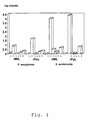
- rMtL/MeS or rPpL/MeS The bactericidal activity of rMtL/MeS or rPpL/MeS was particularly pronounced against S. epidermidis (Fig. 1) which was 100% killed (pH 6) by the rPpL/MeS and only a few cells survived the treatment with rMtL/MeS. Whereas the bactericidal activity against P. aeruginosa was observed as a cell reduction of 1-2 log units (Fig. 1).
- Antimicrobial activity i.e. bactericidal activity
- rMtL Myceliophthera laccase
- MeS methylsyringate
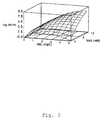
- Bactericidal activity against P. aeruginosa ATCC10145 was obtained at MeS concentrations between 5 - 10 mM. Increasing the rMtL concentration from 2.5 to 5 mg/L resulted in a decreased bactericidal activity, thus the optimal concentration of enzyme will be below 5 mg/L for a bactericidal activity against P. aeruginosa at these particular conditions.
- the bactericidal activity obtained at high MeS concentrations at pH 6 was very close to a 100% bactericidal activity (Fig. 2). At pH 4, a 100% bactericidal activity was obtained.
- Antimicrobial activity i.e. bactericidal activity
- rMtL and rPpL with MeS as enhancer was determined at pH 4 - 10 by use of the following buffer systems; homopipes (pH 4 and 5), MES (pH 6), HEPES (pH 7 and 8), HEPES/CAPS (pH 9) and CAPS (pH 10).
- Bactericidal activity was evaluated against Staphylococcus epidermidis at 40°C as described in Example 1.
- the bactericidal activity of rPpL and rMtL increased at decreasing pH-values, however, at the tested concentrations of MeS the bactericidal activity was limited at pH values above 5.
- Bactericidal activity can be obtained at different conditions (pH, temperature etc.) by selecting a laccase and an enhancer, which are active at the particular desired conditions.
- Antimicrobial activity i.e. bactericidal activity
- Acetosyringon, methylsyringate, ethylsyringate, butylsyringate and laurylsyringate were evaluated as electron-donors in the concentration of 0.2 mM.
- Acetosyringon, methylsyringate, ethylsyringate and butylsyringate resulted in a 100% bactericidal activity against S. epidermidis when combined with Polyporus laccase. Whereas the bactericidal activity obtained with Myceliophthera laccase and acetosyringon was decreased compared to both the activity of Polyporus laccase and the activity obtained with the other syringate compounds. The different syringate-compounds were also evaluated against Pseudomonas aeruginosa which are more resistant than S. epidermidis. Acetosyringon was found to be the most bactericidal enhancer against P. aeruginosa.
- the sensitivity of various microorganisms depends on the used enhancer, thus a broad spectrum of antimicrobial activity may be obtained by combining the different enhancers and applying them simultaneously.
- the total antimicrobial activity against a mixed culture of different microorganisms is expected to be significantly increased if a mix of enhancers is used.
- the enhancers are tested in a sublethal concentration (less than 100 % bactericidal activity), and tested in different combinations against microorganisms with different physiology. Synergistic effects may be determined by a multi-factorial experiment with a laccase and enhancers like eg acetosyringon, methylsyringate, ethylsyringate, butylsyringate and laurylsyringate.
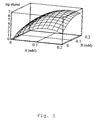
- Antimicrobial activity of laccases with two enhancers was determined against Pseudomonas aeruginosa (ATCC 10145) and Staphylococcus epidermidis (DSM 20042) at pH 6 as described in example 1. Methylsyringate and acetosyringon was used as enhancers and the laccase was rPpL (1 mg/L) and the antimicrobial activity was determined by use of a 3 2 factorial experimental design.
- Conservation of a paint may be achieved by preparing a paint sample comprising the enzymatic antimicrobial system by adding an amount of laccase and enhancer, e.g. 1 mg Myceliophthera laccase and 10 ⁇ moles of methylsyringate (sterile filtered), to 100 mL sterile water based paint in a sterile jar. To this paint sample and to a 100 mL sterile reference sample of paint without the enzyme system is now added 200 ⁇ L 10 8 cfu/ml mixed culture sample of Pseudomonas sp. and Bacillus sp. The cultures are mixed into the paints and the jars are closed and placed at 30 or 40 °C.
- laccase and enhancer e.g. 1 mg Myceliophthera laccase and 10 ⁇ moles of methylsyringate (sterile filtered)
Landscapes
- Detergent Compositions (AREA)
Claims (21)
- Composition antimicrobienne comprenant une enzyme laccase (EC 1.10.3.2) et au moins deux amplificateurs différents de formule:

- Composition selon la revendication 1, dans laquelle les amplificateurs sont de formule:

- Méthode pour un traitement antimicrobien de microorganismes et/ou virus, laquelle n'est pas une méthode de traitement thérapeutique du corps humain ou animal, comprenant le traitement desdits microorganismes et/ou virus avec une quantité efficace d'une enzyme laccase fongique (EC 1.10.3.2) et au moins deux amplificateurs différents en présence d'oxygène, O2, les amplificateurs étant de formule:

- Méthode selon la revendication 3, dans laquelle les amplificateurs sont choisis parmi le groupe ayant la formule:

- Méthode selon la revendication 3 ou 4, dans laquelle le traitement comprend l'utilisation simultanée de deux amplificateurs différents.
- Méthode selon la revendication 3 ou 4, dans laquelle le traitement comprend l'utilisation simultanée de trois amplificateurs différents.
- Méthode selon la revendication 3 ou 4, dans laquelle la Laccase est obtenue à partir d'un champignon choisi parmi le groupe constitué de Myceliophthora species, Polyporus species, Coprinus species, Rhizoctonia species, Scytalidium species et Pyricularia sp.
- Méthode selon la revendication 7, dans laquelle la Laccase est susceptible d'être obtenue à partir du champignon Myceliophthora thermophila ou Polyporus pinsitus.
- Méthode selon l'une quelconque des revendications 3-8, pour le traitement antimicrobien de microorganismes et/ou virus présents dans la lessive et/ou un liquide utilisé pour le détrempage, lavage ou rinçage de la lessive.
- Méthode selon la revendication 9, dans laquelle la lessive est traitée dans une machine à laver.
- Méthode selon l'une quelconque des revendications 3-8, pour le traitement antimicrobien de microorganismes et/ou virus dans un produit cosmétique.
- Méthode selon l'une quelconque des revendications 3-8, pour le traitement antimicrobien (conservation ou désinfection) de lentilles de contact.
- Méthode selon l'une quelconque des revendications 3-8, pour le traitement antimicrobien d'une surface dure.
- Méthode selon la revendication 13, dans laquelle la surface dure est une structure, qui requiert une désinfection.
- Méthode selon la revendication 14, dans laquelle la structure est une pièce d'hôpital, une pièce de transformation de la nourriture ou d'additifs alimentaires, une pièce de traitement de l'eau, une pièce de transformation du papier et/ou de la pâte, une pièce de transformation chimique ou pharmaceutique.
- Méthode selon la revendication 13, dans laquelle la surface dure est un équipement de transformation dans une tour de réfrigération, une usine de traitement de l'eau, une laiterie, une usine de transformation de la nourriture ou d'additifs alimentaires, une usine de transformation du papier et/ou de la pâte, une usine de transformation chimique ou pharmaceutique.
- Méthode selon la revendication 13, dans laquelle la surface dure est une surface d'un équipement d'assainissement de l'eau.
- Méthode selon la revendication 13, dans laquelle la surface dure est une surface d'un appareil médical.
- Méthode selon l'une quelconque des revendications 3-8 et des revendications 11-18, pour le traitement antimicrobien dans un système de nettoyage en place (C.I.P).
- Méthode pour conserver une peinture de base aqueuse comprenant la mise en contact de ladite peinture avec une laccase (EC 1.10.3.2) et un ou plus des amplificateurs de la revendication 1.
- Composition comprenant une peinture, une laccase (EC 1.10.3.2) et un amplificateur.
Applications Claiming Priority (5)
| Application Number | Priority Date | Filing Date | Title |
|---|---|---|---|
| DK127397 | 1997-11-10 | ||
| DK127397 | 1997-11-10 | ||
| WOPCT/DK98/01144 | 1998-09-10 | ||
| DK9801144 | 1998-09-10 | ||
| PCT/DK1998/000477 WO1999023887A1 (fr) | 1997-11-10 | 1998-11-04 | Activite antimicrobienne des lacasses |
Publications (2)
| Publication Number | Publication Date |
|---|---|
| EP1030561A1 EP1030561A1 (fr) | 2000-08-30 |
| EP1030561B1 true EP1030561B1 (fr) | 2006-07-26 |
Family
ID=56289870
Family Applications (1)
| Application Number | Title | Priority Date | Filing Date |
|---|---|---|---|
| EP98951297A Expired - Lifetime EP1030561B1 (fr) | 1997-11-10 | 1998-11-04 | Activite antimicrobienne des lacases |
Country Status (3)
| Country | Link |
|---|---|
| EP (1) | EP1030561B1 (fr) |
| AT (1) | ATE333797T1 (fr) |
| DE (1) | DE69835370T2 (fr) |
Cited By (1)
| Publication number | Priority date | Publication date | Assignee | Title |
|---|---|---|---|---|
| EP4211233A4 (fr) * | 2020-09-08 | 2024-12-25 | Curie Co. Inc. | Compositions et leurs procédés d'utilisation |
-
1998
- 1998-11-04 AT AT98951297T patent/ATE333797T1/de not_active IP Right Cessation
- 1998-11-04 DE DE69835370T patent/DE69835370T2/de not_active Expired - Fee Related
- 1998-11-04 EP EP98951297A patent/EP1030561B1/fr not_active Expired - Lifetime
Cited By (1)
| Publication number | Priority date | Publication date | Assignee | Title |
|---|---|---|---|---|
| EP4211233A4 (fr) * | 2020-09-08 | 2024-12-25 | Curie Co. Inc. | Compositions et leurs procédés d'utilisation |
Also Published As
| Publication number | Publication date |
|---|---|
| ATE333797T1 (de) | 2006-08-15 |
| DE69835370T2 (de) | 2007-09-27 |
| EP1030561A1 (fr) | 2000-08-30 |
| DE69835370D1 (de) | 2006-09-07 |
Similar Documents
| Publication | Publication Date | Title |
|---|---|---|
| EP0912097B1 (fr) | Compositions antimicrobiennes de peroxydase | |
| US6228128B1 (en) | Antimicrobial activity of laccases | |
| US6287585B1 (en) | Methods for laundry using polycations and enzymes | |
| US6030933A (en) | Detergent compositions comprising immobilized enzymes | |
| WO1999023887A1 (fr) | Activite antimicrobienne des lacasses | |
| US5707950A (en) | Detergent compositions containing lipase and protease | |
| US5968883A (en) | Peroxidase variants | |
| US5837010A (en) | Detergent compositions containing a lipase variant at low levels | |
| EP0996785B1 (fr) | Procede de traitement de tissus en polyester | |
| WO1996013568A1 (fr) | Compositions de nettoyage contenant des xylanases | |
| EP0877787A1 (fr) | Compositions detergentes contenant des enzymes immobilisees | |
| EP1030561B1 (fr) | Activite antimicrobienne des lacases | |
| US20010025018A1 (en) | Antimicrobial activity of laccases | |
| CA2245951A1 (fr) | Produit de nettoyage contenant de la peroxydase | |
| US6165770A (en) | Alkaline stable amylase from Thermoalcalibacter | |
| EP0747470A1 (fr) | Compositions de nettoyage contenant du kératanase | |
| WO1996041861A1 (fr) | Compositions de nettoyage contenant de la chondroitinase |
Legal Events
| Date | Code | Title | Description |
|---|---|---|---|
| PUAI | Public reference made under article 153(3) epc to a published international application that has entered the european phase |
Free format text: ORIGINAL CODE: 0009012 |
|
| 17P | Request for examination filed |
Effective date: 20000613 |
|
| AK | Designated contracting states |
Kind code of ref document: A1 Designated state(s): AT BE CH DE DK ES FI FR GB GR IE IT LI NL PT SE |
|
| RAP1 | Party data changed (applicant data changed or rights of an application transferred) |
Owner name: NOVOZYMES A/S |
|
| 17Q | First examination report despatched |
Effective date: 20020614 |
|
| GRAP | Despatch of communication of intention to grant a patent |
Free format text: ORIGINAL CODE: EPIDOSNIGR1 |
|
| GRAC | Information related to communication of intention to grant a patent modified |
Free format text: ORIGINAL CODE: EPIDOSCIGR1 |
|
| RIC1 | Information provided on ipc code assigned before grant |
Ipc: C09D 5/14 20060101ALI20060202BHEP Ipc: G02C 13/00 20060101ALI20060202BHEP Ipc: C11D 3/48 20060101ALI20060202BHEP Ipc: C11D 3/386 20060101ALI20060202BHEP Ipc: A01N 35/04 20060101ALI20060202BHEP Ipc: A01N 37/10 20060101ALI20060202BHEP Ipc: A01N 63/04 20060101AFI20060202BHEP |
|
| GRAS | Grant fee paid |
Free format text: ORIGINAL CODE: EPIDOSNIGR3 |
|
| GRAA | (expected) grant |
Free format text: ORIGINAL CODE: 0009210 |
|
| AK | Designated contracting states |
Kind code of ref document: B1 Designated state(s): AT BE CH DE DK ES FI FR GB GR IE IT LI NL PT SE |
|
| PG25 | Lapsed in a contracting state [announced via postgrant information from national office to epo] |
Ref country code: NL Free format text: LAPSE BECAUSE OF FAILURE TO SUBMIT A TRANSLATION OF THE DESCRIPTION OR TO PAY THE FEE WITHIN THE PRESCRIBED TIME-LIMIT Effective date: 20060726 Ref country code: IT Free format text: LAPSE BECAUSE OF FAILURE TO SUBMIT A TRANSLATION OF THE DESCRIPTION OR TO PAY THE FEE WITHIN THE PRE;WARNING: LAPSES OF ITALIAN PATENTS WITH EFFECTIVE DATE BEFORE 2007 MAY HAVE OCCURRED AT ANY TIME BEFORE 2007. THE CORRECT EFFECTIVE DATE MAY BE DIFFERENT FROM THE ONE RECORDED.SCRIBED TIME-LIMIT Effective date: 20060726 Ref country code: FI Free format text: LAPSE BECAUSE OF FAILURE TO SUBMIT A TRANSLATION OF THE DESCRIPTION OR TO PAY THE FEE WITHIN THE PRESCRIBED TIME-LIMIT Effective date: 20060726 Ref country code: AT Free format text: LAPSE BECAUSE OF FAILURE TO SUBMIT A TRANSLATION OF THE DESCRIPTION OR TO PAY THE FEE WITHIN THE PRESCRIBED TIME-LIMIT Effective date: 20060726 |
|
| REG | Reference to a national code |
Ref country code: GB Ref legal event code: FG4D |
|
| REG | Reference to a national code |
Ref country code: CH Ref legal event code: EP |
|
| REG | Reference to a national code |
Ref country code: IE Ref legal event code: FG4D |
|
| REF | Corresponds to: |
Ref document number: 69835370 Country of ref document: DE Date of ref document: 20060907 Kind code of ref document: P |
|
| PG25 | Lapsed in a contracting state [announced via postgrant information from national office to epo] |
Ref country code: SE Free format text: LAPSE BECAUSE OF FAILURE TO SUBMIT A TRANSLATION OF THE DESCRIPTION OR TO PAY THE FEE WITHIN THE PRESCRIBED TIME-LIMIT Effective date: 20061026 Ref country code: DK Free format text: LAPSE BECAUSE OF FAILURE TO SUBMIT A TRANSLATION OF THE DESCRIPTION OR TO PAY THE FEE WITHIN THE PRESCRIBED TIME-LIMIT Effective date: 20061026 |
|
| PG25 | Lapsed in a contracting state [announced via postgrant information from national office to epo] |
Ref country code: IE Free format text: LAPSE BECAUSE OF NON-PAYMENT OF DUE FEES Effective date: 20061106 Ref country code: ES Free format text: LAPSE BECAUSE OF FAILURE TO SUBMIT A TRANSLATION OF THE DESCRIPTION OR TO PAY THE FEE WITHIN THE PRESCRIBED TIME-LIMIT Effective date: 20061106 |
|
| PG25 | Lapsed in a contracting state [announced via postgrant information from national office to epo] |
Ref country code: PT Free format text: LAPSE BECAUSE OF FAILURE TO SUBMIT A TRANSLATION OF THE DESCRIPTION OR TO PAY THE FEE WITHIN THE PRESCRIBED TIME-LIMIT Effective date: 20061226 |
|
| NLV1 | Nl: lapsed or annulled due to failure to fulfill the requirements of art. 29p and 29m of the patents act | ||
| ET | Fr: translation filed | ||
| PLBE | No opposition filed within time limit |
Free format text: ORIGINAL CODE: 0009261 |
|
| STAA | Information on the status of an ep patent application or granted ep patent |
Free format text: STATUS: NO OPPOSITION FILED WITHIN TIME LIMIT |
|
| 26N | No opposition filed |
Effective date: 20070427 |
|
| PG25 | Lapsed in a contracting state [announced via postgrant information from national office to epo] |
Ref country code: GR Free format text: LAPSE BECAUSE OF FAILURE TO SUBMIT A TRANSLATION OF THE DESCRIPTION OR TO PAY THE FEE WITHIN THE PRESCRIBED TIME-LIMIT Effective date: 20061027 |
|
| PGFP | Annual fee paid to national office [announced via postgrant information from national office to epo] |
Ref country code: CH Payment date: 20081124 Year of fee payment: 11 |
|
| PGFP | Annual fee paid to national office [announced via postgrant information from national office to epo] |
Ref country code: BE Payment date: 20081015 Year of fee payment: 11 |
|
| PGFP | Annual fee paid to national office [announced via postgrant information from national office to epo] |
Ref country code: FR Payment date: 20081030 Year of fee payment: 11 |
|
| PGFP | Annual fee paid to national office [announced via postgrant information from national office to epo] |
Ref country code: DE Payment date: 20090128 Year of fee payment: 11 |
|
| PGFP | Annual fee paid to national office [announced via postgrant information from national office to epo] |
Ref country code: GB Payment date: 20081029 Year of fee payment: 11 |
|
| BERE | Be: lapsed |
Owner name: *NOVOZYMES A/S Effective date: 20091130 |
|
| REG | Reference to a national code |
Ref country code: CH Ref legal event code: PL |
|
| GBPC | Gb: european patent ceased through non-payment of renewal fee |
Effective date: 20091104 |
|
| REG | Reference to a national code |
Ref country code: FR Ref legal event code: ST Effective date: 20100730 |
|
| PG25 | Lapsed in a contracting state [announced via postgrant information from national office to epo] |
Ref country code: LI Free format text: LAPSE BECAUSE OF NON-PAYMENT OF DUE FEES Effective date: 20091130 Ref country code: FR Free format text: LAPSE BECAUSE OF NON-PAYMENT OF DUE FEES Effective date: 20091130 Ref country code: CH Free format text: LAPSE BECAUSE OF NON-PAYMENT OF DUE FEES Effective date: 20091130 Ref country code: BE Free format text: LAPSE BECAUSE OF NON-PAYMENT OF DUE FEES Effective date: 20091130 |
|
| PG25 | Lapsed in a contracting state [announced via postgrant information from national office to epo] |
Ref country code: DE Free format text: LAPSE BECAUSE OF NON-PAYMENT OF DUE FEES Effective date: 20100601 |
|
| PG25 | Lapsed in a contracting state [announced via postgrant information from national office to epo] |
Ref country code: GB Free format text: LAPSE BECAUSE OF NON-PAYMENT OF DUE FEES Effective date: 20091104 |