EP1032896B1 - Informationsmanagement und wiedergewinnung von schlüsselbegriffen - Google Patents
Informationsmanagement und wiedergewinnung von schlüsselbegriffen Download PDFInfo
- Publication number
- EP1032896B1 EP1032896B1 EP98954628A EP98954628A EP1032896B1 EP 1032896 B1 EP1032896 B1 EP 1032896B1 EP 98954628 A EP98954628 A EP 98954628A EP 98954628 A EP98954628 A EP 98954628A EP 1032896 B1 EP1032896 B1 EP 1032896B1
- Authority
- EP
- European Patent Office
- Prior art keywords
- word
- words
- word group
- group
- groups
- Prior art date
- Legal status (The legal status is an assumption and is not a legal conclusion. Google has not performed a legal analysis and makes no representation as to the accuracy of the status listed.)
- Expired - Lifetime
Links
Images

Classifications
-
- G—PHYSICS
- G06—COMPUTING OR CALCULATING; COUNTING
- G06F—ELECTRIC DIGITAL DATA PROCESSING
- G06F16/00—Information retrieval; Database structures therefor; File system structures therefor
- G06F16/30—Information retrieval; Database structures therefor; File system structures therefor of unstructured textual data
-
- Y—GENERAL TAGGING OF NEW TECHNOLOGICAL DEVELOPMENTS; GENERAL TAGGING OF CROSS-SECTIONAL TECHNOLOGIES SPANNING OVER SEVERAL SECTIONS OF THE IPC; TECHNICAL SUBJECTS COVERED BY FORMER USPC CROSS-REFERENCE ART COLLECTIONS [XRACs] AND DIGESTS
- Y10—TECHNICAL SUBJECTS COVERED BY FORMER USPC
- Y10S—TECHNICAL SUBJECTS COVERED BY FORMER USPC CROSS-REFERENCE ART COLLECTIONS [XRACs] AND DIGESTS
- Y10S707/00—Data processing: database and file management or data structures
- Y10S707/99931—Database or file accessing
- Y10S707/99933—Query processing, i.e. searching
Definitions
- This invention lies in the field of methods and apparatus for data management and retrieval and finds particular application to the field of methods and apparatus for identifying key data items within data sets.
- a problem associated with these increasing information resources is that of locating and identifying data sets (e.g. magazine articles, news articles, technical disclosures and other information) of interest to the individual user of these systems.
- data sets e.g. magazine articles, news articles, technical disclosures and other information
- Information retrieval tools such as search engines and Web guides are one means for assisting users to locate data sets of interest.
- Proactive tools and services e.g. News groups, broadcast services such as the POINTCASTTM system available on the Internet at www.pointcast.com or tools like the JASPER agent detailed in the applicant's co-pending international patent application PCT GB96/00132
- a summary or a set of key words is often identified for any data set located by the tool, so that users can form an impression of the subject matter of the data set by reviewing this set of key words or by reviewing the summary.
- Summarising tools typically use the key words that occur within a data set as a means of generating a summary. Key words are typically identified by stripping out conjunctures such as “and”, “with”, and other so-called low value words such as “it”, “are”, “they” etc, all of which do not tend to be indicative of the subject matter of the data set being investigated by the summarising tool.
- Advanced profiling tools also use similarity matrices and clustering techniques to identify data sets of relevance to a user's profile.
- the JASPER tool referred to above, is an example of such a tool that uses profiling techniques for this purpose.
- the phrase “bread and butter” has two meanings. The first relates to food and the second relates to a person's death or a person's means of survival. Similarly, in the English language, the term “bread and water” again relates to food and also has a second meaning that is often used to imply hardship.
- an apparatus for managing data sets having: input means for receiving a data set as input; means to identify, within a received data set, a first set of words comprising one or more word groups of one or more words, conforming to a first predetermined distribution pattern within said received data set, wherein said words in said word groups occur consecutively in said received data set; characterised by means to identify, within said first set, a sub-set of words comprising one or more of said word groups, conforming to a second predetermined distribution pattern within said received data set; means to eliminate said sub-set of words from said first set thereby forming a set of key terms of said received data set; and output means for outputting at least one said key term.
- embodiments of the present invention identify, within a received data set, a first set of word groups of one or more words according to a first pattern within the data set and then identify a second pattern of word groups from within the first set.
- the key terms are those groups of one or more words within the first set that do not conform to the second pattern.
- said first distribution pattern requires that each word group in the first set occurs more than once in said data set and preferably said second distribution pattern requires that each word group in the sub-set comprises a word or a string of words that occurs within a larger word group in the first set.
- embodiments of the present invention pick out any repeated words and phrases, and then eliminate any word or phrase already contained in a longer one. For instance, if a document refers to "Internet search engines” more than once, the whole phrase will become a key term but "Internet” and “search engine” on their own would be eliminated, as would “search” and "engine” as single words.
- said first aspect includes means for modifying said word groups, adapted to remove low value words occurring before the first high value word in a word group and adapted to remove low value words occurring after the last high value word in a word group.
- said word group itself will be eliminated.
- said second aspect includes the step of:
- Removing low value words from the beginning and end of word groups improves the quality of the word groups returned by the key term extractor.
- the first aspect includes means for weighting each said word group in said first set according to how frequently each said word group occurs in said first set and means for modifying said weighting of at least a first word group in proportion to a weighting of a second word group in said sub-set and means for selecting said key terms for output in dependence upon said weightings.
- the second aspect includes the steps of:
- Weighting word groups according to their frequency of occurrence provides a mechanism for ordering the identified key terms.
- Modifying weightings according to the weighting of terms in the sub-set enables terms eliminated from the first set to influence the weightings of those terms that remain and of which the eliminated terms form sub-strings. In this way, a sub-string that occurs frequently within the data set may have an appropriate influence on the identification of key terms.
- the first aspect includes means for modifying any word in any word group, adapted to remove any prefix and adapted to remove any suffix from a word to form a stemmed word.
- the second aspect includes the step of:
- prefixes and suffixes allow each word to be reduced to a neutral form so that weightings independent of prefixes and suffixes can be calculated.
- the first aspect includes means for storing said prefix or suffix in association with said stemmed word thereby enabling said prefix or suffix to be restored to said stemmed word.
- the second aspect includes the step of:
- the present invention is likely to be of particular value in the field of data management and retrieval tools.
- any data management and retrieval tool with a need to the extract key terms from data sets, and to use such key terms may benefit from the present invention.
- key terms may be used within data management tools such as document summarisers, profiling tools, search engines and proactive data management tools such as the JASPER tool referred to above.
- the present invention may extract key terms from data sets without first stripping away conjunctive words and other so-called "low-value words" from the data set.
- Conjunctive and low-value words can often introduce subtleties to the meanings of key terms and phrases. By retaining the conjunctive and low-value words, these subtleties may be retained. This improves the quality of extracted key terms and phrases in comparison with prior art systems, both from a user's perception of the key terms themselves and in relation to improvements in the operation of other data management tools using such key terms as input.
- automatically extracted key terms may be used in two main ways. They may be used by a data management tool, or they may be presented directly to a user. Data management tools are often less concerned with the quality of presentation of key terms. Data management tools may accept key terms including words in a word-stemmed state, or words having dubious capitalisation, with little effect on the tools' output.
- phrases with high presentation value are required. For example even one rogue term, say with dubious capitalisation, can impact heavily on the perceived quality of a tool's output. Phrases (which may have appeared in the document with various capitalisations and word endings) are preferably well-formatted. Key terms may preferably be limited in number, ensuring that those that are presented are likely to be of higher value to the user.
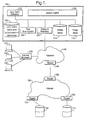
- the tool set comprises a key term extractor component 100, a JASPER agent 105, a page store 110, a profile store 115, a text summariser 120, a network interface 122 and a low value word and abbreviations database 125.
- the file server 130 communicates with a network 145 via the network interface 122.
- the network 145 may for example be a private corporate network, for example one using Internet protocols, a public switched telephone network (PSTN) or a public data network.
- the network 145 may include a router 148 providing a gateway access to the Internet 160.
- Users of the information management tools residing on the server 130 may gain access over the network 145 using an appropriate Internet viewer 135, such as a conventional Internet browser product running on a personal computer, linked to the network 145, with user interfaces 140 provided by the personal computers themselves or by work stations.
- information management tools incorporated within the server 130 may gain access to the Internet 160 via the network 145, its router 148 and an Internet router 150.
- Internet service provider servers 155 may be accessed over the Internet 160 via appropriate routers 165 as required.
- An information management and retrieval tool set might use the above components of Figure 1 to enable an operator of a user interface 140 to locate information via the Internet 160.
- the JASPER agent 105 may have accessed a user profiles, stored in the profile store 115, in order to perform an overnight search for documents, accessible over the Internet 160, of potential interest to users.
- the JASPER agent 105 stores information about retrieved documents in the page store 110.
- the JASPER agent 105 may then access the page store 115 and compare key terms in the user's profile with the document information held in the page store 110.
- the key term extractor 100 of the present invention may be applied both to generation of terms for use in user profiles and in extracting key terms from retrieved documents for use in gauging a document's relevance.
- PCT GB96/00132 for further detail on the JASPER agent 105 of this embodiment, reference may be made to international patent application number PCT GB96/00132.
- the key term extractor 100 may be an active tool that continuously monitors pages downloaded from an Internet service provider's file server 155. The key term extractor 100 may then pass these key terms to other tools such as the JASPER agent 105, where further processing determines whether further action should be taken by the information management and retrieval tool set in respect of a downloaded page.
- the key term extractor 100 may be cailed by the JASPER agent 105 or by the summarising tool 120 in response to a page being selected for storage in the page store 110.
- the key term extractor tool 100 will analyse the page and extract from it key terms, preferably independently of operator input.
- the key terms may be simply stored by information management and retrieval tools as a headline summary of a particular document for use by users at a later date.
- the key terms may be passed on to a profile tool (within the JASPER agent 105) which may use these key terms to update either or both of a user's profile or a particular document term matrix.
- a profile tool within the JASPER agent 105
- PCT GB96/00132 for further information on the profile tool or on document term matrices, reference may be made to international patent application number PCT GB96/00132).
- the key terms (and possibly some associated processing results from the key term extractor 100) may be passed on to the summarising tool 120, which may include some of all of them in a generated summary.
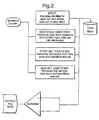
- an input 200 receives data sets including portions of text, allocating to each data set an identifier and storing each data set in a data store 205.
- a sentence identifier 210 operates on a stored data set to divide included text into sentences and to store the sentences in the data store 205 as appropriate.
- a first set identifier 215 operates to identify a first set of word groups from stored sentences relating to a particular data set. The first set identifier may apply any appropriate selection criteria to the selection of word groups for inclusion in the first set.
- a sub-set identifier 220 operates to identify a sub-set of word groups from a first set using any appropriate selection criteria.
- the sentence identifier 210, first set identifier 215 and sub-set identifier 220 operate in conjunction with a sentence counter 225 to enable sentences identified within a particular data set to be scanned as required.
- a subtractor 230 is arranged to receive a first set from the first set identifier 215 at a "+ " input and a corresponding sub-set from the sub-set identifier 220 at a "-" input.
- the subtractor 230 may performs a "subtraction" to eliminate word groups of the received sub-set from those of the received first set to result in a set of key terms, to be output by the output 235.
- Embodiments of the present invention may be applied to tools for the management of data sets containing text information, where this management relies at least in part on word sequences that occur more than once in a data set and where these word sequences are not sub-strings of any other word sequences that occur more than once.
- word sequences that occur more than once in a data set and where these word sequences are not sub-strings of any other word sequences that occur more than once.
- Such selection criteria may be demonstrated by way of the following example.
- capital letters such as A, B, P, Q, etc. are used to represent words, strings of these letters being used to represent sentences.
- the present example uses the following "sentences", identified within a received data set:
- a first set of word groups may be selected according to the criterion that they occur more than once in the above data set (a more detailed description of this process and its implementation will be presented below):
- the following key terms may be selected from the first set above according to the second criterion that a word group does not form a sub-string of a longer word group in the first set:
- sub-strings 'CD' 'CDE' and 'EF' are not included as key terms. This is because all are sub-strings of the larger terms 'BCDE' or 'BEF'. However, if for example that larger term 'BCDE' only occurred once, then 'CDE' would feature as a key term.
- a representative weighting for the term 'Jasper agent' can be computed. For example, if 'Jasper agent' occurs infrequently, and 'agent' with a similar frequency to 'Jasper agent', but the term 'Jasper' has a higher frequency, then the compound term 'Jasper agent' could be weighted against other key terms of the data set in recognition of this.
- the information management tool may ask the user to act in response to key terms presented, for example to accept or reject them, and an interface may offer the facility to select partial elements of key terms.
- a tool may be a profiling tool, for example, that allows a user to refine their personal profile by altering terms entered.
- Preferred embodiments may also use full stops and other punctuation marks to break word sequences. This helps limit the length of the potential key terms.
- Embodiments may implement further criteria for selection of word groups for the first set of the sub-set or both.
- word groups may be selected having no leading or trailing low-value words.
- Low-value words include conjunctions, adverbs, and some common words such as: they, are, it, has, of, in, etc.
- step 330 candidate word groups are eliminated from the list at the first instance of being identified as a sub-string of a longer word group. It is possible to propagate each sub-string all the way to the top of the list and to increase the weighting of each word group in which the candidate term is a sub-string. This process may preferably be used as an alternate means of weighting the key terms. However, it does not alter the outcome of the terms retained.
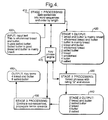
- Stage 1 processing 410 may also involve capitalisation - the process of identifying those words that need to begin with a capital letter (such as a person's name) and those words that do not, for example words at the start of a sentence. Most acronyms contain capitals as do other abbreviations. identifying those words that need capitalisation allow them to be presented in this form by step 350. Typically, capitalisation information is stored in association with the particular word so that it may be retrieved by step 350.
- Stage 2 processing 430 under the control of key term engine 470, removes all word groups of weight 1 from the stage 1 output 420 to leave the following set of word groups as stage 2 output 440:
- Stage 3 processing 450 Stage 3 (propagate terms upwards) Stage 4 (step 310) (term splitting 1, split "bread and butter”) Repeat Stage 3 (propagate terms upwards) Repeat Stage 4 (no change: terms of maximum length or less) Stage 5 (step 340) (Scale terms by their length) 4 bread and butter 4 bread 8 salted butter 8 salted butter 4 salted butter 8 salted butter 4 butter 4 bread 4 bread 8 salted butter
- a preferred method for splitting long word groups is to find a word towards the centre of the group that is unlikely to be contained within sub-string of a longer term.
- a preferred strategy would be first to look for words with a disjunctive nature: for example 'but' and 'or' before considering conjunctive terms such as 'and' or 'of' .
- This step is included because it has been found through observation to enhance the reliability of key terms produced. It is believed that normalisation operates to compensate for the additional weightings that longer terms may receive. This compromise may be preferred as some, but not all longer terms may contain more concentrated information about the subject matter of a data set than short terms. And, vice versa, some, but not all short terms may contain more concentrated information about the subject matter of a data set than some long terms.
- step 350 may map the stemmed phrase back to a single, representative phrase for display, involving resolving case differences and choosing which word endings to apply.
- a sensible choice may be:
- case resolution in general, lower case is preferred unless there is an upper case first letter of a sentence. In that situation, case information is considered unreliable (unless the rest of the word also has some capitalisation).
- suffix reconstruction a set of empirically-determined rules may be applied. First a list may be made of all the endings of a particular word that occur in the text. This information may previously have been stored at step 320.
- the longest form (or one of the longest forms) of the word may be taken.
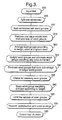
- step 305 may be implemented without difficulty using a known text scanning technique to identify sentences with reference to the abbreviations database 125 and using standard rules on punctuation as required.
- the output from step 305 in the present demonstration provides the following identified sentences, as used above:
- the first sentence "a b C d E F" would be split, by step 310, into the following word groups: a b C d E F b C d E F C d E F d E F E F F a b C d E b C d E C d E d E E E a b C d b C d C d d a b C b C C a b b a
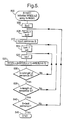
- a flow diagram is provided to show a preferred algorithm for splitting identified sentences into word groups, implementing step 310 of Figure 3.
- the sentence splitting algorithm generates an array of word groups similar to those above, each word group being contained within an element of an array variable "WG[S,k,i]", where "S” is a number identifying a sentence, "k” represents a word position within the sentence S at which the word group begins and "i" is the length of the word group.
- each element of the word group array is set to a null and a sentence counter S is initialised to zero. It is assumed that the array is dimensioned to accommodate the largest expected input text.
- the sentence counter S is incremented, initially to select the first sentence identified from Step 305 of Figure 3, and the word position counter k is initialised to zero.
- the sentence S is input.
- the word position counter is incremented, initially to point to the first word of sentence S, and the word group length "i" is initialised to zero.
- the word group length "i” is incremented at Step 520 and, at Step 525, a new word group is constructed using the previously constructed word group of length i-1, starting at word position k of sentence S, (WG[S,k,O] is assumed to be null for all values of S and k), to which is appended the next following word in the sentence, occurring at word position i+k-1.
- WS(S,i) returns the word at word position i in sentence S.
- a test is performed to detect whether any words remain for use in constructing longer word groups from the sentence S, beginning from word position k, using knowledge of the length of the sentence S. If the end of the sentence has not been reached, then the processing returns to Step 520, incrementing the word group length i. However, if the end of the sentence has been reached, then at Step 535 a test determines whether the word position counter k is pointing to the last word of the sentence S. If not, then the processing returns to Step 515 and the word position for new word groups in sentence S is advanced by one and the length variable i reset to zero as above.
- Step 540 a test determines whether the last sentence has been processed. If not, then processing returns to Step 505 and the next identified sentence is selected. If, at Step 540, all sentences have been processed, then this algorithm and hence Step 310 of Figure 3 is complete and an array WG[] of all the possible word groups has been constructed from the identified sentences from Step 305.
- step 315 in the method of Figure 3 is to remove any "low value" words from the beginning and end of each word group.
- Low value words are words such as 'is', 'it', 'are', 'they' 'and' etc that do not tend to reflect the subject matter of the data set (e.g. text) from which key terms are being extracted, particularly when they occur in leading or trailing positions within word groups.
- low value words may be identified with reference to the low value word and abbreviations database 125.
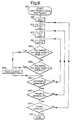
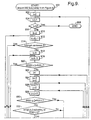
- FIG. 6 a flow diagram is provided to show a preferred algorithm for removing low value words.
- This algorithm operates on the basis that, with all possible word groups now contained in a word group array, including word groups with and without leading or trailing low value words, removal of a low value word will simply result in a misleading duplicate of one of the other word groups. Therefore, rather than actually remove leading and trailing low value words from word groups, the algorithm of Figure 6 simply eliminates from the WG[] array all word groups having leading or trailing low value words by setting the appropriate array element to null. The result will be an array containing all the possible word groups without leading and trailing low value words.
- the algorithm begins at Step 600 by importing the word group array resulting from the algorithm of Figure 5 (step 310). After initialising the sentence counter S at Step 605, the algorithm performs three nested analysis loops to scan all elements of the WG[] array.
- the outer loop begins at Step 610 by incrementing the sentence counter, initially to select the first identified sentence, and initialising the word group length i.
- the word group length is incremented, initially to select word group array elements having length 1, and the word position counter k is initialised.
- the word position counter k is incremented, initially to select word groups of length i beginning with the first word in sentence S.
- Step 625 tests for any leading low value word in the selected word group WG[S,k,i]. If none is found, then at Step 630, any trailing low value words are sought. If none are found, then the word group is preserved and processing moves to the next word group element by way of Step 640, in a similar way to Step 530 above. If either a leading or trailing low value word is found in steps 625 or 630 respectively in the selected word group WG[S,k,i], then at Step 635 that word group element is set to null, so eliminating that particular word group from the array, and processing proceeds to Step 640. As with Step 530 of Figure 5, Step 640 determines whether any further word groups of length i exist from sentence S beginning at word position k, using knowledge of the length of sentence S.
- Step 645 determines whether the word group length i is now equal to the length of the current sentence S and hence no word groups of length greater than i can exist. If not equal to the length of sentence S, processing on the middle loop returns to Step 615 where the length variable i is incremented and the next longer word groups may be analysed. If the longest word groups have now been analysed at Step 645, then at Step 650 the last sentence is tested for. If sentence S is not the last, then processing on the outer loop returns to Step 610, otherwise the algorithm ends at Step 655, the word groups having leading and trailing low value words having been eliminated from the word group array.
- step 320 in the algorithm of Figure 3, is to arrange word groups according to length and to implement word stemming.
- ordering word groups by length is not specifically required given the nature of the word group array WG[], unless required for display purposes.
- Word stemming is the removal of prefixes and suffixes from words. For example, the process of stemming would reduce the word groups "surfing the net” and “surfs the net” to the same word group, namely "surf the net”. This is achieved by removing both the suffixes "ing” and “s” respectively from the two occurrences of the word "surf".
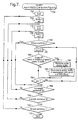
- FIG. 7 a flow diagram is provided to show a preferred algorithm for stemming words and recording an association between the stemmed word and any prefixes or suffixes removed.
- the algorithms of Figure 6 and Figure 7 may be combined.
- the method of scanning the array of word groups is identical between the two algorithms.
- the algorithm of Figure 7 begins at Step 700 by importing the word group array resulting from operation of the algorithm of Figure 6 (step 315). After initialising the sentence counter S at Step 705, the algorithm performs three nested analysis loops to scan all elements of the WG[] array, identically with Figure 6, beginning at steps 710, 715 and 720 respectively, with corresponding end-of-loop tests at steps 765, 760 and 755 respectively.
- Processing within the inner scanning loop of the algorithm of Figure 7 begins, after initialising a word counter x, at Step 725 with a check that the selected word group array element WG[S,k,i] has not been set to null. If it is null, then processing skips immediately to the end-of-inner-loop test at Step 755 without further processing of that word group element. If, at Step 725, the selected word group is not null, then, at Step 730 the word counter x is incremented, initially to point to the first word of the selected word group. Step 735 tests for one or both of a prefix and suffix in the selected word x.
- Step 750 the word counter is compared with the selected word group length i to determine whether the last word of the word group has been processed. If words remain to be processed in sentence S, then processing returns to Step 730 to increment the word pointer x to select the next word of the word group. If, at Step 735, any prefix or suffix is found, then at Step 740, it is removed and, at Step 745, a record is made to associate the removed prefix or suffix with the resulting stemmed word, enabling later restoration. Processing then continues to Step 750 as above.
- Step 750 If, at Step 750, all words of the selected word group WG[S,k,i] have been processed, then the inner array scanning loop test at Step 755 is reached and the remainder of the word group array is scanned in the same way as in the algorithm of Figure 6.
- step 325 of Figure 3 assigns a weighting to each of the remaining word groups and eliminates those word groups occurring only once in the text of the input data set.
- the weighting assigned at this stage is equal to the frequency of occurrence of the word group in the data set.
- other measures may be applied at this stage to weight word groups and to set a threshold for eiimination of word groups.
- Step 325 and the following algorithm of Figure 8 may complete steps in operation of the first set identifier 215 of a preferred key term extractor 100.
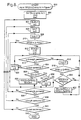
- FIG. 8 a flow diagram is presented to show a preferred algorithm for weighting word groups according to frequency and for eliminating those word groups occurring only once in the input data set.
- the algorithm of Figure 8 eliminates duplicate occurrences of a particular word group from the array as it proceeds so that, on completion, only a single occurrence of each distinct word group remains within the array, with an associated record of its weighting. Weightings are recorded in an array f[S,k,i], one element for each possible corresponding element of word group array WG[S,k,i].
- the algorithm of Figure 8 also identifies, for later use, the longest remaining word group, using a variable "m". In outline, the algorithm of Figure 8 operates by scanning the word group array WG[] in the same way as the algorithms of Figures 5, 6 and 7.
- word group element WG[S,k,i] having selected a particular word group element WG[S,k,i], and having established that it is not null, remaining word groups having the same length i, i.e. those with a higher value of k within the same sentence and those in later sentences only, are checked for matching word groups. For each match found, the weighting of word group WG[S,k,i] is incremented and the matching word group is set to null to remove the duplicate.
- the algorithm of Figure 8 begins at Step 800 by importing the word group array WG[] resulting from the processing of Figure 7.
- each element of the weightings array f[] is initialised to zero, as is the maximum word group length variable m and sentence counter S.
- the WG[] is scanned in three loops, beginning in Figure 8 with steps 804, 806 and 808 respectively and having corresponding end-of-loop tests at steps 840, 838 and 836 respectively.
- WG[S,k,i] Having selected a particular word group element WG[S,k,i] at Step 808, a check is made, at Step 810, for a null. If the selected element is null, then the next word group element, if any, is selected via end-of-loop Step 836.
- Step 812 sets the corresponding weighting for that element to unity and initialises two further scanning variables x and y.
- Variable x is a sentence counter to enable word groups of the same length in the current and later sentences to be checked for a match with WG[S,k,i].
- Variable y is a word position counter, equivalent to k.
- Variables x and y are initialised to the current values of S and k respectively by Step 812.
- Step 814 a check is made for further possible word groups of length i within the current sentence x, beginning word positions later than position y. If any remain, then at Step 816, y is incremented to point to the next word group. If, at Step 818, the next word group is null, then processing returns to Step 814 to search for further word groups of the same length.
- Step 820 a comparison is made with the selected word group WG[S,k,i]. If no match is found, then processing returns to Step 814 to search for further word groups of the same length as above. However, if a match is found at Step 820, then at Step 822, the weighting of word group WG[S,k,i] is incremented and the matching word group element WG[x,y,i] is set to null, having being counted, to eliminate the duplicate. Processing then returns to Step 814 to search for further word groups of the same length as above.
- Step 824 a determination is made as to whether or not the last sentence has now been searched for matching word groups. If a sentence remains to be searched, then at Step 826 the sentence counter x is incremented and the word position counter y is reset to search all word groups of length i in the next sentence. if, at Step 824, the last sentence has been searched, then at Step 828 the accumulated weighting f[x,y,i] of word group WG[x,y,i] is checked.
- Step 828 the word group WG[x,y,i] occurred only once in the data set, then it is set to null and its associated weighting is set to zero. Processing proceeds with Step 836, to continue scanning the word group array as described above in relation to the algorithm of Figure 6.
- the word group array WG[] contains a single entry for each distinct word group occurring more than once in the input data set, each with a corresponding weighting recorded in the weightings array f[].
- the word group array and corresponding weightings array may constitute the first set as generated by first set identifier 215. This preferred algorithm also yields a record, in the variable m, of the length of the longest surviving word group, mainly for use in the next algorithm to increase processing efficiency.
- variable m is equal to 3.
- step 330 eliminates those remaining word groups forming sub-strings of longer remaining word groups, increasing the corresponding weightings of those longer word groups by the weightings of the eliminated sub-strings that they contain,
- This step may implement part of the selection criteria of the sub-set identifier 220. Processing to achieve this step begins with the shortest remaining word groups from step 325 and proceeds up through the word group hierarchy until all shorter sub-string word groups are eliminated..
- a flow diagram is presented to show a preferred algorithm for eliminating such sub-string word groups and for increasing the weighting of corresponding longer word groups accordingly.
- the algorithm searches all remaining word groups at the next longer length, and so on, until it finds a word group containing the word group WG[S,K,i] as a sub-string.
- the algorithm of Figure 9 begins at Step 900 by importing the word group array WG[], the weightings array f[] and the value m output on completion of the algorithm of Figure 8 (step 325 of Figure 3).
- an outer loop begins at Step 904 to process word groups of one length i at a time, beginning by incrementing the value of i, initially to analyse word groups of length 1.
- a test is performed at Step 906 to determine whether the current length i is the length of the longest remaining word group, identified from Figure 8. If so, then no word groups of greater length remain and processing ends at Step 908.
- Step 910 the sentence counter S is initialised at Step 910 and, at Step 912, the first of two loops begin to scan all remaining word groups of length i, incrementing the sentence counter S.
- Step 914 included for increased processing efficiency, a check is made to determine whether the current word group length i is greater than the length of the currently selected sentence S. If no word groups are likely to be found of length i from sentence S, then processing of this sentence need not continue and may, instead, skip to Step 946 to select the next sentence, if any.
- Step 916 the word position counter k is initialised and at Step 918 the second of the scanning loops begins by incrementing the word position counter k. Having selected a particular word group element WG[S,K,i] following Step 918, that element is checked for a null, at Step 920, with processing skipping to Step 944 to select the next word group array element of length i if the element is found to be null.
- Step 922 processing begins at Step 922 to explore longer word groups for one containing WG[S,K,i] as a sub-string.
- Step 922 initialises a word group length counter j to be equal to the length i of WGIS,K,i].
- Step 924 j is incremented to begin scanning the next longer word groups, and a sentence counter x is initialised to zero.
- two loops now search the remaining word groups from each sentence x, beginning at Step 926 by incrementing the sentence counter x, initially to search WG[] array elements from the first sentence, and initialising a word pointer y.
- the second searching loop begins at Step 928 by incrementing the word pointer y.
- the currently searched word group element WG[x,y,j] is tested for a null. If not null, then at Step 932, it is determined whether or not word group WG[x,y,j] contains word group WG[S,K,i] as a sub-string. If it does, then at Step 934, the weighting frequency f[x,y,j] of WG[x,y,j] is increased by the weighting f[S,K,i] of WG[S,K,i] and, at step 936, word group WG[S,K,i] is eliminated by setting it to null and reducing its weighting to zero. Processing then proceeds to Step 944 to select the next word group of length i, if any remain.
- Step 930 If, at Step 930, currently searched word group element WG[x,y,j] is null, or if, at Step 932, word group element WG[x,y,j] does not contain WG[S,K,i] as a sub-string, then searching moves on to the next word group element of length j, if any remain, via Steps 938 and 940, in a similar fashion to the array scanning steps of Figures 5 to 8 above.
- Step 942 a test is made to determine whether any longer word groups remain to be searched, comparing j with the known maximum word group length m. If j is equal to m, then no more longer word groups remain to be searched and processing proceeds to Step 944 to select the next word group of length i, if any remain, as above. If, at Step 942, further longer word groups are likely to remain to be searched, then processing returns to Step 924 to increment the length variable j, as above.
- Steps 944 and 946 control the scanning of the word group array for each value of length i in the same way as the equivalent array scanning steps from figures 5 to 8 described above.
- a final set of key terms remain in the word group array WG[] with corresponding weightings in the weightings array f[].
- These arrays may constitute an output from subtractor 230.
- step 335 applies a rejection criterion to eliminate remaining word groups of a length exceeding a predetermined threshold. None of the remaining word groups will be eliminated on this basis in the present example. However, in practice, word groups of length 6 or above may, for example, be eliminated at this stage.
- word group weightings may be scaled, for example according to word group length, and sorted for presentation according to weight.
- the weight of CdE may divided by 3
- the weight of EF may be divided 2
- the weight of P is divided by 1 resulting in the following ordered list of key terms:
- the number of key terms may be constrained according to a predetermined criterion, dependent for example upon the use to be made of the key terms. Preferably, if any terms are to be eliminated at this stage, they may be selected from those of lower overall weight.
- a thesaurus may recognise them as being equivalent terms on the basis of the equivalence of their final words as synonyms.
- this process of identifying and rejecting similar key terms may allow a terms rejected at step 345 to be reinstated, preferably the term with the next highest weighting, although an iterative process may be required to ensure that the next term is not similar to any key terms already included in the list.
- the above methods of extracting key phrases from data set may be used by a number of information management and retrieval tools.
- the search engine will store a summary or a set of key words of the site in its data base.
- the search engine compares the search words entered against the data base so as to locate relevant sites.
- One application of the present invention is to use the key phrase extractor for generating a search engine database of key words relating to sites examined by the search engine.
- a further application is for use in a text summariser.
- a set of key phrases may be identified according to the process described above. Once these key phrases have been identified, sentences and paragraphs containing these key phrases can be extracted from the text. Next, these sentences/paragraphs can be weighted according to the number of key phrases they contain.
- a summary can then be generated by reproducing those sentences/paragraphs above a threshold weighting or in order of highest weighting until a pre-determined percentage of the data set or a pre-determined number of words is contained in the summary.
Landscapes
- Engineering & Computer Science (AREA)
- Theoretical Computer Science (AREA)
- Data Mining & Analysis (AREA)
- Databases & Information Systems (AREA)
- Physics & Mathematics (AREA)
- General Engineering & Computer Science (AREA)
- General Physics & Mathematics (AREA)
- Information Retrieval, Db Structures And Fs Structures Therefor (AREA)
- Machine Translation (AREA)
- Document Processing Apparatus (AREA)
- Communication Control (AREA)
Claims (15)
- Vorrichtung für das Management von Datenmengen, die umfaßt: Eingangsmittel für den Empfang einer Datenmenge; Mittel, die in einer empfangenen Datenmenge eine erste Menge von Wörtern, die eine oder mehrere Wortgruppen aus einem oder mehreren Wörtern, die mit einem vorgegebenen Verteilungsmuster in der empfangenen Datenmenge übereinstimmen, umfaßt, identifizieren, wobei die Wörter in den Wortgruppen in der empfangenen Datenmenge nacheinander auftreten; gekennzeichnet durch Mittel, die in der ersten Menge eine Untermenge von Wörtern identifizieren, die eine oder mehrere der Wortgruppen umfaßt, die mit einem zweiten vorgegebenen Verteilungsmuster in der empfangenen Datenmenge übereinstimmen; Mittel, die die Untermenge von Wörtern aus der ersten Menge entfernen, um dadurch eine Menge von Schlüsselausdrücken der empfangenen Datenmenge zu bilden; und Ausgangsmittel, die wenigstens einen der Schlüsselausdrücke ausgeben.
- Vorrichtung nach Anspruch 1, bei der das erste Verteilungsmuster fordert, daß jede Wortgruppe in der ersten Menge wenigstens zweimal in der empfangenen Datenmenge auftritt.
- Vorrichtung nach Anspruch 1 oder Anspruch 2, bei der das zweite Verteilungsmuster fordert, daß jede Wortgruppe in der Untermenge ein Wort oder eine Folge von Wörtern umfaßt, die in einer größeren Wortgruppe in der ersten Menge auftreten.
- Vorrichtung nach einem der vorhergehenden Ansprüche, die Mittel enthält, die die Wortgruppen modifizieren und so beschaffen sind, daß sie niedrigwertige Wörter, die vor dem ersten hochwertigen Wort in einer Wortgruppe auftreten, entfernen, und so beschaffen sind, daß sie niedrigwertige Wörter, die nach dem letzten hochwertigen Wort in einer Wortgruppe auftreten, entfernen.
- Vorrichtung nach einem der vorhergehenden Ansprüche, die Mittel enthält, die irgendein Wort in irgendeiner Wortgruppe modifizieren und so beschaffen sind, daß sie irgendein Präfix entfernen, und so beschaffen sind, daß sie irgendein Suffix aus einem Wort entfernen, um ein Stammwort zu bilden.
- Vorrichtung nach Anspruch 5, die Mittel enthält, die das Präfix oder das Suffix in Zuordnung mit dem Stammwort speichern, um dadurch die Wiederherstellung des Präfix oder des Suffix in Verbindung mit dem Stammwort zu ermöglichen.
- Vorrichtung nach einem der Ansprüche 1 bis 6, die Mittel enthält, die jede der Wortgruppen in der ersten Menge in Übereinstimmung damit gewichten, wie häufig jede der Wortgruppen in der empfangenen Datenmenge auftritt, sowie Mittel enthält, die die Gewichtung wenigstens einer ersten Wortgruppe in der ersten Menge im Verhältnis zu einer Gewichtung einer zweiten Wortgruppe in der Untermenge modifiziert, und Mittel enthält, die die Schlüsselausdrücke auswählt, um sie in Abhängigkeit von den Gewichtungen auszugeben.
- Vorrichtung nach einem der Ansprüche 1 bis 7, die ferner Mittel umfaßt, die Schlüsselausdrücke auswählen, um sie in Abhängigkeit von den Gewichtungen und wenigstens einer vorgegebenen Regel auszugeben.
- Verfahren für das Management von Datenmengen, das die folgenden Schritte umfaßt:1) Empfangen einer Datenmenge als Eingang;2) Identifizieren einer ersten Menge von Wörtern, die mit einem ersten Verteilungsmuster übereinstimmen, in der Datenmenge, wobei die erste Menge eine oder mehrere Wortgruppen aus einem oder mehreren Wörtern umfaßt, wobei die Wörter in den Wortgruppen nacheinander in der Datenmenge auftreten;
gekennzeichnet durch die folgenden Schritte:3) Identifizieren einer Untermenge von Wortgruppen in der ersten Menge, wobei die Untermenge einem zweiten Verteilungsmuster in der Datenmenge gemäß ist;4) Entfernen der Untermenge aus der ersten Menge, um dadurch eine Menge von Schlüsselausdrücken zu identifizieren; und5) Ausgeben der Schlüsselausdrücke. - Verfahren nach Anspruch 9, bei dem das erste Verteilungsmuster fordert, daß jede der Wortgruppen in der ersten Menge mehr als einmal in der Datenmenge auftritt.
- Verfahren nach Anspruch 9 oder 10, bei dem das zweite Verteilungsmuster fordert, daß jede der Wortgruppen der Untermenge eine Unterfolge aus einer längeren Wortgruppe in der ersten Menge umfaßt.
- Verfahren nach einem der Ansprüche 9 bis 11, das den folgenden Schritt umfaßt:6) Entfernen irgendeines niedrigwertigen Wortes, das vor dem ersten hochwertigen Wort in einer Wortgruppe auftritt, und Entfernen eines niedrigwertigen Wortes, das nach dem letzten hochwertigen Wort in einer Wortgruppe auftritt.
- Verfahren nach einem der Ansprüche 9 bis 12, das den folgenden Schritt umfaßt:7) Modifizieren irgendeines Wortes in irgendeiner der Wortgruppen durch Entfernen eines Präfix oder eines Suffix aus dem Wort, um dadurch ein Stammwort zu bilden.
- Verfahren nach Anspruch 13, das den folgenden Schritt umfaßt:8) Speichern des entfernten Präfix oder Suffix in Zuordnung mit dem Stammwort, um dadurch die Wiederherstellung des Präfix oder des Suffix in Verbindung mit dem Stammwort zu ermöglichen.
- Verfahren nach einem der Ansprüche 9 bis 14, das die folgenden Schritte umfaßt:9) Gewichten jeder Wortgruppe in der ersten Menge in Übereinstimmung damit, wie häufig jede der Wortgruppen in der Datenmenge auftritt;10) Modifizieren der Gewichtungen wenigstens einer ersten Wortgruppe in der ersten Menge im Verhältnis zu einer Gewichtung einer zweiten Wortgruppe in der Untermenge;11) Auswählen der Schlüsselausdrücke, um sie in Abhängigkeit von den Gewichtungen auszugeben.
Priority Applications (1)
| Application Number | Priority Date | Filing Date | Title |
|---|---|---|---|
| EP98954628A EP1032896B1 (de) | 1997-11-24 | 1998-11-18 | Informationsmanagement und wiedergewinnung von schlüsselbegriffen |
Applications Claiming Priority (4)
| Application Number | Priority Date | Filing Date | Title |
|---|---|---|---|
| EP97309446 | 1997-11-24 | ||
| EP97309446 | 1997-11-24 | ||
| EP98954628A EP1032896B1 (de) | 1997-11-24 | 1998-11-18 | Informationsmanagement und wiedergewinnung von schlüsselbegriffen |
| PCT/GB1998/003468 WO1999027469A1 (en) | 1997-11-24 | 1998-11-18 | Information management and retrieval |
Publications (2)
| Publication Number | Publication Date |
|---|---|
| EP1032896A1 EP1032896A1 (de) | 2000-09-06 |
| EP1032896B1 true EP1032896B1 (de) | 2002-03-27 |
Family
ID=8229632
Family Applications (1)
| Application Number | Title | Priority Date | Filing Date |
|---|---|---|---|
| EP98954628A Expired - Lifetime EP1032896B1 (de) | 1997-11-24 | 1998-11-18 | Informationsmanagement und wiedergewinnung von schlüsselbegriffen |
Country Status (9)
| Country | Link |
|---|---|
| US (1) | US6338057B1 (de) |
| EP (1) | EP1032896B1 (de) |
| JP (1) | JP4467791B2 (de) |
| AU (1) | AU746743B2 (de) |
| CA (1) | CA2309499C (de) |
| DE (1) | DE69804495T2 (de) |
| ES (1) | ES2175813T3 (de) |
| NZ (1) | NZ504304A (de) |
| WO (1) | WO1999027469A1 (de) |
Cited By (1)
| Publication number | Priority date | Publication date | Assignee | Title |
|---|---|---|---|---|
| US8171039B2 (en) | 2008-01-11 | 2012-05-01 | International Business Machines Corporation | String pattern analysis |
Families Citing this family (60)
| Publication number | Priority date | Publication date | Assignee | Title |
|---|---|---|---|---|
| US7447626B2 (en) * | 1998-09-28 | 2008-11-04 | Udico Holdings | Method and apparatus for generating a language independent document abstract |
| US7505974B2 (en) * | 1999-02-12 | 2009-03-17 | Gropper Robert L | Auto update utility for digital address books |
| US6883000B1 (en) * | 1999-02-12 | 2005-04-19 | Robert L. Gropper | Business card and contact management system |
| US6928404B1 (en) * | 1999-03-17 | 2005-08-09 | International Business Machines Corporation | System and methods for acoustic and language modeling for automatic speech recognition with large vocabularies |
| US20090307577A1 (en) * | 2001-08-28 | 2009-12-10 | Lee Eugene M | System for providing a binding cost for foreign filing a patent application |
| US6678678B2 (en) * | 2000-03-09 | 2004-01-13 | Braodcom Corporation | Method and apparatus for high speed table search |
| US6728701B1 (en) * | 2000-04-18 | 2004-04-27 | Claritech Corporation | Method and apparatus for database retrieval utilizing vector optimization |
| DE10057634C2 (de) * | 2000-11-21 | 2003-01-30 | Bosch Gmbh Robert | Verfahren zur Verarbeitung von Text in einer Rechnereinheit und Rechnereinheit |
| US7047420B2 (en) | 2001-01-17 | 2006-05-16 | Microsoft Corporation | Exclusive encryption |
| US7027987B1 (en) * | 2001-02-07 | 2006-04-11 | Google Inc. | Voice interface for a search engine |
| US7043637B2 (en) | 2001-03-21 | 2006-05-09 | Microsoft Corporation | On-disk file format for a serverless distributed file system |
| US6981138B2 (en) | 2001-03-26 | 2005-12-27 | Microsoft Corporation | Encrypted key cache |
| US7062490B2 (en) * | 2001-03-26 | 2006-06-13 | Microsoft Corporation | Serverless distributed file system |
| ATE278989T1 (de) * | 2001-05-16 | 2004-10-15 | Exentis | Prozess zum extrahieren von schlüsselwörtern |
| US6988124B2 (en) | 2001-06-06 | 2006-01-17 | Microsoft Corporation | Locating potentially identical objects across multiple computers based on stochastic partitioning of workload |
| US7478431B1 (en) * | 2002-08-02 | 2009-01-13 | Symantec Corporation | Heuristic detection of computer viruses |
| US7024526B2 (en) * | 2002-10-31 | 2006-04-04 | Hitachi, Ltd. | Apparatus and method of null data skip remote copy |
| US6917936B2 (en) * | 2002-12-18 | 2005-07-12 | Xerox Corporation | Method and apparatus for measuring similarity between documents |
| US20050086234A1 (en) * | 2003-10-15 | 2005-04-21 | Sierra Wireless, Inc., A Canadian Corporation | Incremental search of keyword strings |
| US20050114317A1 (en) * | 2003-11-26 | 2005-05-26 | Bhide Manish A. | Ordering of web search results |
| US7587307B2 (en) * | 2003-12-18 | 2009-09-08 | Xerox Corporation | Method and apparatus for evaluating machine translation quality |
| US20060074900A1 (en) * | 2004-09-30 | 2006-04-06 | Nanavati Amit A | Selecting keywords representative of a document |
| TWI269193B (en) * | 2004-10-01 | 2006-12-21 | Inventec Corp | Keyword sector-index data-searching method and it system |
| US7761286B1 (en) * | 2005-04-29 | 2010-07-20 | The United States Of America As Represented By The Director, National Security Agency | Natural language database searching using morphological query term expansion |
| JP4772378B2 (ja) * | 2005-05-26 | 2011-09-14 | 株式会社東芝 | Webページから時系列データを生成する方法及び装置 |
| US7536295B2 (en) * | 2005-12-22 | 2009-05-19 | Xerox Corporation | Machine translation using non-contiguous fragments of text |
| US7542893B2 (en) * | 2006-05-10 | 2009-06-02 | Xerox Corporation | Machine translation using elastic chunks |
| US20080071783A1 (en) * | 2006-07-03 | 2008-03-20 | Benjamin Langmead | System, Apparatus, And Methods For Pattern Matching |
| US8015175B2 (en) * | 2007-03-16 | 2011-09-06 | John Fairweather | Language independent stemming |
| WO2009079875A1 (en) * | 2007-12-14 | 2009-07-02 | Shanghai Hewlett-Packard Co., Ltd | Systems and methods for extracting phrases from text |
| US8311795B2 (en) | 2008-01-11 | 2012-11-13 | International Business Machines Corporation | String pattern conceptualization from detection of related concepts by analyzing substrings with common prefixes and suffixes |
| US8661422B2 (en) * | 2008-02-08 | 2014-02-25 | Reservoir Labs, Inc. | Methods and apparatus for local memory compaction |
| US9858053B2 (en) | 2008-02-08 | 2018-01-02 | Reservoir Labs, Inc. | Methods and apparatus for data transfer optimization |
| US8930926B2 (en) * | 2008-02-08 | 2015-01-06 | Reservoir Labs, Inc. | System, methods and apparatus for program optimization for multi-threaded processor architectures |
| US8572590B2 (en) * | 2008-09-17 | 2013-10-29 | Reservoir Labs, Inc. | Methods and apparatus for joint parallelism and locality optimization in source code compilation |
| US8688619B1 (en) | 2009-03-09 | 2014-04-01 | Reservoir Labs | Systems, methods and apparatus for distributed decision processing |
| WO2010127173A2 (en) * | 2009-04-30 | 2010-11-04 | Reservoir Labs, Inc. | System, apparatus and methods to implement high-speed network analyzers |
| US9760634B1 (en) * | 2010-03-23 | 2017-09-12 | Firstrain, Inc. | Models for classifying documents |
| US8892483B1 (en) | 2010-06-01 | 2014-11-18 | Reservoir Labs, Inc. | Systems and methods for planning a solution to a dynamically changing problem |
| US8914601B1 (en) | 2010-10-18 | 2014-12-16 | Reservoir Labs, Inc. | Systems and methods for a fast interconnect table |
| US9134976B1 (en) | 2010-12-13 | 2015-09-15 | Reservoir Labs, Inc. | Cross-format analysis of software systems |
| JP5768492B2 (ja) * | 2011-05-18 | 2015-08-26 | ソニー株式会社 | 情報処理装置、情報処理方法、およびプログラム |
| US8468145B2 (en) | 2011-09-16 | 2013-06-18 | Google Inc. | Indexing of URLs with fragments |
| US8438155B1 (en) * | 2011-09-19 | 2013-05-07 | Google Inc. | Impressions-weighted coverage monitoring for search results |
| US9489180B1 (en) | 2011-11-18 | 2016-11-08 | Reservoir Labs, Inc. | Methods and apparatus for joint scheduling and layout optimization to enable multi-level vectorization |
| US9830133B1 (en) | 2011-12-12 | 2017-11-28 | Significs And Elements, Llc | Methods and apparatus for automatic communication optimizations in a compiler based on a polyhedral representation |
| US9280347B2 (en) | 2012-03-15 | 2016-03-08 | International Business Machines Corporation | Transforming non-contiguous instruction specifiers to contiguous instruction specifiers |
| US9459864B2 (en) * | 2012-03-15 | 2016-10-04 | International Business Machines Corporation | Vector string range compare |
| US9454366B2 (en) | 2012-03-15 | 2016-09-27 | International Business Machines Corporation | Copying character data having a termination character from one memory location to another |
| US9710266B2 (en) | 2012-03-15 | 2017-07-18 | International Business Machines Corporation | Instruction to compute the distance to a specified memory boundary |
| US9459867B2 (en) | 2012-03-15 | 2016-10-04 | International Business Machines Corporation | Instruction to load data up to a specified memory boundary indicated by the instruction |
| US9715383B2 (en) * | 2012-03-15 | 2017-07-25 | International Business Machines Corporation | Vector find element equal instruction |
| US9454367B2 (en) | 2012-03-15 | 2016-09-27 | International Business Machines Corporation | Finding the length of a set of character data having a termination character |
| US9588762B2 (en) * | 2012-03-15 | 2017-03-07 | International Business Machines Corporation | Vector find element not equal instruction |
| US9459868B2 (en) | 2012-03-15 | 2016-10-04 | International Business Machines Corporation | Instruction to load data up to a dynamically determined memory boundary |
| US9268566B2 (en) | 2012-03-15 | 2016-02-23 | International Business Machines Corporation | Character data match determination by loading registers at most up to memory block boundary and comparing |
| US9798588B1 (en) | 2012-04-25 | 2017-10-24 | Significs And Elements, Llc | Efficient packet forwarding using cyber-security aware policies |
| US10936569B1 (en) | 2012-05-18 | 2021-03-02 | Reservoir Labs, Inc. | Efficient and scalable computations with sparse tensors |
| US9684865B1 (en) | 2012-06-05 | 2017-06-20 | Significs And Elements, Llc | System and method for configuration of an ensemble solver |
| CN107330124A (zh) * | 2013-03-11 | 2017-11-07 | 曹华诚 | 内容推荐方法 |
Family Cites Families (15)
| Publication number | Priority date | Publication date | Assignee | Title |
|---|---|---|---|---|
| US4342085A (en) * | 1979-01-05 | 1982-07-27 | International Business Machines Corporation | Stem processing for data reduction in a dictionary storage file |
| US5325298A (en) * | 1990-11-07 | 1994-06-28 | Hnc, Inc. | Methods for generating or revising context vectors for a plurality of word stems |
| US5940624A (en) * | 1991-02-01 | 1999-08-17 | Wang Laboratories, Inc. | Text management system |
| JPH05324726A (ja) * | 1992-05-25 | 1993-12-07 | Fujitsu Ltd | 文書データ分類装置及び文書分類機能構築装置 |
| JP3220885B2 (ja) * | 1993-06-18 | 2001-10-22 | 株式会社日立製作所 | キーワード付与システム |
| US6081804A (en) * | 1994-03-09 | 2000-06-27 | Novell, Inc. | Method and apparatus for performing rapid and multi-dimensional word searches |
| US5745602A (en) * | 1995-05-01 | 1998-04-28 | Xerox Corporation | Automatic method of selecting multi-word key phrases from a document |
| US5794177A (en) * | 1995-07-19 | 1998-08-11 | Inso Corporation | Method and apparatus for morphological analysis and generation of natural language text |
| US5931907A (en) * | 1996-01-23 | 1999-08-03 | British Telecommunications Public Limited Company | Software agent for comparing locally accessible keywords with meta-information and having pointers associated with distributed information |
| US5987446A (en) * | 1996-11-12 | 1999-11-16 | U.S. West, Inc. | Searching large collections of text using multiple search engines concurrently |
| US5774888A (en) * | 1996-12-30 | 1998-06-30 | Intel Corporation | Method for characterizing a document set using evaluation surrogates |
| US5924105A (en) * | 1997-01-27 | 1999-07-13 | Michigan State University | Method and product for determining salient features for use in information searching |
| US5937422A (en) * | 1997-04-15 | 1999-08-10 | The United States Of America As Represented By The National Security Agency | Automatically generating a topic description for text and searching and sorting text by topic using the same |
| US6044376A (en) * | 1997-04-24 | 2000-03-28 | Imgis, Inc. | Content stream analysis |
| US6026398A (en) * | 1997-10-16 | 2000-02-15 | Imarket, Incorporated | System and methods for searching and matching databases |
-
1998
- 1998-11-18 EP EP98954628A patent/EP1032896B1/de not_active Expired - Lifetime
- 1998-11-18 US US09/194,944 patent/US6338057B1/en not_active Expired - Lifetime
- 1998-11-18 AU AU11678/99A patent/AU746743B2/en not_active Ceased
- 1998-11-18 ES ES98954628T patent/ES2175813T3/es not_active Expired - Lifetime
- 1998-11-18 JP JP2000522537A patent/JP4467791B2/ja not_active Expired - Lifetime
- 1998-11-18 CA CA002309499A patent/CA2309499C/en not_active Expired - Fee Related
- 1998-11-18 NZ NZ504304A patent/NZ504304A/en unknown
- 1998-11-18 WO PCT/GB1998/003468 patent/WO1999027469A1/en not_active Ceased
- 1998-11-18 DE DE69804495T patent/DE69804495T2/de not_active Expired - Lifetime
Cited By (1)
| Publication number | Priority date | Publication date | Assignee | Title |
|---|---|---|---|---|
| US8171039B2 (en) | 2008-01-11 | 2012-05-01 | International Business Machines Corporation | String pattern analysis |
Also Published As
| Publication number | Publication date |
|---|---|
| DE69804495D1 (de) | 2002-05-02 |
| DE69804495T2 (de) | 2002-10-31 |
| EP1032896A1 (de) | 2000-09-06 |
| WO1999027469A1 (en) | 1999-06-03 |
| CA2309499A1 (en) | 1999-06-03 |
| AU1167899A (en) | 1999-06-15 |
| JP2001524717A (ja) | 2001-12-04 |
| AU746743B2 (en) | 2002-05-02 |
| ES2175813T3 (es) | 2002-11-16 |
| US6338057B1 (en) | 2002-01-08 |
| NZ504304A (en) | 2002-03-01 |
| JP4467791B2 (ja) | 2010-05-26 |
| CA2309499C (en) | 2007-06-19 |
Similar Documents
| Publication | Publication Date | Title |
|---|---|---|
| US6338057B1 (en) | Information management and retrieval | |
| US7231399B1 (en) | Ranking documents based on large data sets | |
| US5940624A (en) | Text management system | |
| US6654717B2 (en) | Multi-language document search and retrieval system | |
| EP0976069B1 (de) | Datenzusammenfassungsgerät. | |
| US7587420B2 (en) | System and method for question answering document retrieval | |
| EP0590858B1 (de) | Verfahren zur Durchführung der Suche nach Ähnlichkeiten mit einer Abfrage in einer Dokumentenmenge | |
| JP5740029B2 (ja) | 対話型サーチクエリーを改良するためのシステム及び方法 | |
| US6947920B2 (en) | Method and system for response time optimization of data query rankings and retrieval | |
| US20040117352A1 (en) | System for answering natural language questions | |
| US20040249808A1 (en) | Query expansion using query logs | |
| US20040034632A1 (en) | Automatic query refinement | |
| US20020138528A1 (en) | Text summarization using relevance measures and latent semantic analysis | |
| WO2003060767A2 (en) | System, method and software for automatic hyperlinking of persons’ names in documents to professional directories | |
| Chandrasekar et al. | Gleaning information from the web: Using syntax to filter out irrelevant information | |
| JP2004054882A (ja) | 類義語検索装置、方法、プログラム及び記憶媒体 | |
| KR20020054254A (ko) | 사전구조를 이용한 한국어 형태소 분석방법 | |
| EP0592402B1 (de) | Ein textverwaltungssystem | |
| Parapar et al. | Sentence retrieval with LSI and topic identification | |
| WO2001046838A1 (en) | Answer retrieval technique | |
| EP1258815B1 (de) | Prozess zum Extrahieren von Schlüsselwörtern | |
| JP2024128597A (ja) | 類似文書検索装置、類似文書検索方法およびプログラム |
Legal Events
| Date | Code | Title | Description |
|---|---|---|---|
| PUAI | Public reference made under article 153(3) epc to a published international application that has entered the european phase |
Free format text: ORIGINAL CODE: 0009012 |
|
| 17P | Request for examination filed |
Effective date: 20000502 |
|
| AK | Designated contracting states |
Kind code of ref document: A1 Designated state(s): BE CH DE ES FI FR GB IE IT LI NL SE |
|
| GRAG | Despatch of communication of intention to grant |
Free format text: ORIGINAL CODE: EPIDOS AGRA |
|
| RTI1 | Title (correction) |
Free format text: INFORMATION MANAGEMENT AND KEY-WORD RETRIEVAL |
|
| RTI1 | Title (correction) |
Free format text: INFORMATION MANAGEMENT AND KEY-WORD RETRIEVAL |
|
| 17Q | First examination report despatched |
Effective date: 20010212 |
|
| GRAG | Despatch of communication of intention to grant |
Free format text: ORIGINAL CODE: EPIDOS AGRA |
|
| GRAG | Despatch of communication of intention to grant |
Free format text: ORIGINAL CODE: EPIDOS AGRA |
|
| GRAH | Despatch of communication of intention to grant a patent |
Free format text: ORIGINAL CODE: EPIDOS IGRA |
|
| GRAH | Despatch of communication of intention to grant a patent |
Free format text: ORIGINAL CODE: EPIDOS IGRA |
|
| REG | Reference to a national code |
Ref country code: GB Ref legal event code: IF02 |
|
| GRAA | (expected) grant |
Free format text: ORIGINAL CODE: 0009210 |
|
| AK | Designated contracting states |
Kind code of ref document: B1 Designated state(s): BE CH DE ES FI FR GB IE IT LI NL SE |
|
| PG25 | Lapsed in a contracting state [announced via postgrant information from national office to epo] |
Ref country code: FI Free format text: LAPSE BECAUSE OF FAILURE TO SUBMIT A TRANSLATION OF THE DESCRIPTION OR TO PAY THE FEE WITHIN THE PRESCRIBED TIME-LIMIT Effective date: 20020327 |
|
| RTI1 | Title (correction) |
Free format text: INFORMATION MANAGEMENT AND KEY TERM RETRIEVAL |
|
| REG | Reference to a national code |
Ref country code: CH Ref legal event code: EP |
|
| REF | Corresponds to: |
Ref document number: 69804495 Country of ref document: DE Date of ref document: 20020502 |
|
| REG | Reference to a national code |
Ref country code: IE Ref legal event code: FG4D |
|
| REG | Reference to a national code |
Ref country code: CH Ref legal event code: NV Representative=s name: JACOBACCI & PARTNERS S.P.A. |
|
| ET | Fr: translation filed | ||
| REG | Reference to a national code |
Ref country code: ES Ref legal event code: FG2A Ref document number: 2175813 Country of ref document: ES Kind code of ref document: T3 |
|
| PLBE | No opposition filed within time limit |
Free format text: ORIGINAL CODE: 0009261 |
|
| STAA | Information on the status of an ep patent application or granted ep patent |
Free format text: STATUS: NO OPPOSITION FILED WITHIN TIME LIMIT |
|
| 26N | No opposition filed |
Effective date: 20021230 |
|
| REG | Reference to a national code |
Ref country code: HK Ref legal event code: WD Ref document number: 1031928 Country of ref document: HK |
|
| PGFP | Annual fee paid to national office [announced via postgrant information from national office to epo] |
Ref country code: NL Payment date: 20081017 Year of fee payment: 11 Ref country code: IE Payment date: 20081016 Year of fee payment: 11 Ref country code: CH Payment date: 20081024 Year of fee payment: 11 |
|
| PGFP | Annual fee paid to national office [announced via postgrant information from national office to epo] |
Ref country code: BE Payment date: 20081128 Year of fee payment: 11 Ref country code: SE Payment date: 20081020 Year of fee payment: 11 |
|
| PGFP | Annual fee paid to national office [announced via postgrant information from national office to epo] |
Ref country code: ES Payment date: 20091123 Year of fee payment: 12 |
|
| PGFP | Annual fee paid to national office [announced via postgrant information from national office to epo] |
Ref country code: IT Payment date: 20091126 Year of fee payment: 12 |
|
| BERE | Be: lapsed |
Owner name: BRITISH *TELECOMMUNICATIONS P.L.C. Effective date: 20091130 |
|
| REG | Reference to a national code |
Ref country code: NL Ref legal event code: V1 Effective date: 20100601 |
|
| EUG | Se: european patent has lapsed | ||
| REG | Reference to a national code |
Ref country code: CH Ref legal event code: PL |
|
| REG | Reference to a national code |
Ref country code: IE Ref legal event code: MM4A |
|
| PG25 | Lapsed in a contracting state [announced via postgrant information from national office to epo] |
Ref country code: NL Free format text: LAPSE BECAUSE OF NON-PAYMENT OF DUE FEES Effective date: 20100601 Ref country code: LI Free format text: LAPSE BECAUSE OF NON-PAYMENT OF DUE FEES Effective date: 20091130 Ref country code: IE Free format text: LAPSE BECAUSE OF NON-PAYMENT OF DUE FEES Effective date: 20091118 Ref country code: CH Free format text: LAPSE BECAUSE OF NON-PAYMENT OF DUE FEES Effective date: 20091130 Ref country code: BE Free format text: LAPSE BECAUSE OF NON-PAYMENT OF DUE FEES Effective date: 20091130 |
|
| PG25 | Lapsed in a contracting state [announced via postgrant information from national office to epo] |
Ref country code: SE Free format text: LAPSE BECAUSE OF NON-PAYMENT OF DUE FEES Effective date: 20091119 |
|
| PG25 | Lapsed in a contracting state [announced via postgrant information from national office to epo] |
Ref country code: IT Free format text: LAPSE BECAUSE OF NON-PAYMENT OF DUE FEES Effective date: 20101118 |
|
| REG | Reference to a national code |
Ref country code: ES Ref legal event code: FD2A Effective date: 20120110 |
|
| PG25 | Lapsed in a contracting state [announced via postgrant information from national office to epo] |
Ref country code: ES Free format text: LAPSE BECAUSE OF NON-PAYMENT OF DUE FEES Effective date: 20101119 |
|
| REG | Reference to a national code |
Ref country code: FR Ref legal event code: PLFP Year of fee payment: 18 |
|
| REG | Reference to a national code |
Ref country code: FR Ref legal event code: PLFP Year of fee payment: 19 |
|
| REG | Reference to a national code |
Ref country code: FR Ref legal event code: PLFP Year of fee payment: 20 |
|
| PGFP | Annual fee paid to national office [announced via postgrant information from national office to epo] |
Ref country code: DE Payment date: 20171121 Year of fee payment: 20 Ref country code: FR Payment date: 20171121 Year of fee payment: 20 |
|
| PGFP | Annual fee paid to national office [announced via postgrant information from national office to epo] |
Ref country code: GB Payment date: 20171123 Year of fee payment: 20 |
|
| REG | Reference to a national code |
Ref country code: DE Ref legal event code: R071 Ref document number: 69804495 Country of ref document: DE |
|
| REG | Reference to a national code |
Ref country code: GB Ref legal event code: PE20 Expiry date: 20181117 |
|
| PG25 | Lapsed in a contracting state [announced via postgrant information from national office to epo] |
Ref country code: GB Free format text: LAPSE BECAUSE OF EXPIRATION OF PROTECTION Effective date: 20181117 |