EP1037670B1 - Mittel zur gentherapie von tumorerkrankungen, neurodegenerativen, herzkreislauf- und autoimmunerkrankungen - Google Patents
Mittel zur gentherapie von tumorerkrankungen, neurodegenerativen, herzkreislauf- und autoimmunerkrankungen Download PDFInfo
- Publication number
- EP1037670B1 EP1037670B1 EP98966568A EP98966568A EP1037670B1 EP 1037670 B1 EP1037670 B1 EP 1037670B1 EP 98966568 A EP98966568 A EP 98966568A EP 98966568 A EP98966568 A EP 98966568A EP 1037670 B1 EP1037670 B1 EP 1037670B1
- Authority
- EP
- European Patent Office
- Prior art keywords
- peg
- liposomes
- gene
- genes
- tumor
- Prior art date
- Legal status (The legal status is an assumption and is not a legal conclusion. Google has not performed a legal analysis and makes no representation as to the accuracy of the status listed.)
- Expired - Lifetime
Links
Images

Classifications
-
- A—HUMAN NECESSITIES
- A61—MEDICAL OR VETERINARY SCIENCE; HYGIENE
- A61K—PREPARATIONS FOR MEDICAL, DENTAL OR TOILETRY PURPOSES
- A61K48/00—Medicinal preparations containing genetic material which is inserted into cells of the living body to treat genetic diseases; Gene therapy
-
- A—HUMAN NECESSITIES
- A61—MEDICAL OR VETERINARY SCIENCE; HYGIENE
- A61P—SPECIFIC THERAPEUTIC ACTIVITY OF CHEMICAL COMPOUNDS OR MEDICINAL PREPARATIONS
- A61P25/00—Drugs for disorders of the nervous system
-
- A—HUMAN NECESSITIES
- A61—MEDICAL OR VETERINARY SCIENCE; HYGIENE
- A61P—SPECIFIC THERAPEUTIC ACTIVITY OF CHEMICAL COMPOUNDS OR MEDICINAL PREPARATIONS
- A61P25/00—Drugs for disorders of the nervous system
- A61P25/28—Drugs for disorders of the nervous system for treating neurodegenerative disorders of the central nervous system, e.g. nootropic agents, cognition enhancers, drugs for treating Alzheimer's disease or other forms of dementia
-
- A—HUMAN NECESSITIES
- A61—MEDICAL OR VETERINARY SCIENCE; HYGIENE
- A61P—SPECIFIC THERAPEUTIC ACTIVITY OF CHEMICAL COMPOUNDS OR MEDICINAL PREPARATIONS
- A61P35/00—Antineoplastic agents
-
- A—HUMAN NECESSITIES
- A61—MEDICAL OR VETERINARY SCIENCE; HYGIENE
- A61P—SPECIFIC THERAPEUTIC ACTIVITY OF CHEMICAL COMPOUNDS OR MEDICINAL PREPARATIONS
- A61P37/00—Drugs for immunological or allergic disorders
- A61P37/02—Immunomodulators
-
- A—HUMAN NECESSITIES
- A61—MEDICAL OR VETERINARY SCIENCE; HYGIENE
- A61P—SPECIFIC THERAPEUTIC ACTIVITY OF CHEMICAL COMPOUNDS OR MEDICINAL PREPARATIONS
- A61P9/00—Drugs for disorders of the cardiovascular system
Definitions
- the invention relates to agents for gene therapy of Tumor diseases, neurodegenerative, cardiovascular and Autoimmune diseases. Fields of application of the invention are medicine and the pharmaceutical industry.
- Colon and rectal tumors are after bronchial carcinoma in men and breast tumors in women most common malignant (malignant) tumors in Germany.
- the main thing for high mortality colorectal cancer is metastasis (a. 1. Place liver metastasis). If not metastatic surgery Treatment is more possible, remains in everything Usually intensive chemotherapy as a last resort Choice.
- liposomes and polymers offers the Possibility modified in the pharmacological Intervene properties of chemotherapy drugs.
- Liposomes can also be used as gene transfer systems become.
- HSV-tk herpes simplex thymidine kinase
- Tumor cells using a retroviral vector.
- HSV-tk transfected Cells are made for the anti-virus substance Ganciclovir sensitive.
- Ganciclovir is made by HSV-tk in one Nucleotide-like precursor, which after further Phosphorylation is incorporated into the DNA dividing cells and leads to a halt in DNA synthesis and cell death.
- Tumors e.g. multiple liver metastases, brain tumors
- retro or adenoviral vectors still problematic, quite apart of the emerging treatment risks with viral Infections.
- the invention is based, completely new task Starting points for a locoregional therapy of tumors, especially of liver metastases, through a combined Use of different liposomes / plasmid-DNA complexes Deliver composition, size and load.
- Genetic materials are preferably DNA, RNA, ribozymes, Antisense oligonucleotides and particularly preferred Therapy genes, e.g. Suicide genes, cytokine genes, chemoking genes (MIP1 ⁇ , MCP) anti-angiogenic genes such as vascular endothial Growth factor (VEGF), apoptosis genes, e.g. Apoptin, Natural born killer (NbK), possibly in combination with marker genes, such as e.g. Green Fluorescence Protein (GFP), galactosidase gene (LacZ) under possibly inducible, tissue-specific promoters.
- Suicide genes e.g. cytokine genes, chemoking genes (MIP1 ⁇ , MCP) anti-angiogenic genes such as vascular endothial Growth factor (VEGF), apoptosis genes, e.g. Apoptin, Natural born killer (NbK), possibly in combination with marker genes, such as e.g. Green Fluorescence Protein (GFP),
- DNA more densely packed proteins, such as nuclear Capsid Protein (NCP 7), HMG and / or synthetic substances, such as. Polyethyleneimine, poly-L-lysine or protamine sulfate contains.
- NCP 7 nuclear Capsid Protein
- HMG HMG
- synthetic substances such as. Polyethyleneimine, poly-L-lysine or protamine sulfate contains.
- Preferred suicide genes are herpes simplex virus Thymidine kinase gene (HSVtk), deaminase gene, NR / CB1954, pyrine Nucleoside phosphorylase and / or the cytokine genes IL-2, IL-4, IL-6, IL-10, IL-12 and / or IL-15.
- HSVtk herpes simplex virus Thymidine kinase gene
- deaminase gene NR / CB1954
- pyrine Nucleoside phosphorylase and / or the cytokine genes IL-2, IL-4, IL-6, IL-10, IL-12 and / or IL-15.
- the quantitative ratios a: b: c are preferably in the molar ratio 1: 0.3: 0.1 to 1: 1: 0.1 or up to 1: 1: 0.5 and c: d in the molar ratio 2: 1 to 10: 1.
- the steroid used is cholesterol, diethoxycholesterol or sitosterol.
- the charged lipid component is the anion of the Dicetyl phosphate, palmitic acid, stearic acid, the Anion of a phospholipid, e.g. phosphatidylserine, Phosphatidic acid or the anion of a sphingolipid, e.g. Sulfatide, or polyethylene glycol (PEG), e.g. MPEG-DSPE.
- a phospholipid e.g. phosphatidylserine, Phosphatidic acid
- a sphingolipid e.g. Sulfatide
- PEG polyethylene glycol
- a preferred embodiment of the agent is that the charged lipid component is fluorinated.
- the starch particles on average are preferably lyophilized in a size of 40-90 .mu.m and are in physiological saline in a concentration of 5 to 70 mg / ml.
- the starch particles particularly preferably have a grain size of 60 to 90 ⁇ m.
- the agent according to the invention contains iodine Contrast agents with single or multiple iodine phenyl derivatives, preferred iopromide, ioxitalamate, ioxaglate, iopamidol, Iohexol, Iotralon, Metrizamid or Ultravist.
- Fluorinated lipids are also used as contrast agents Consideration.
- a very suitable embodiment is an agent which 30 to 90 mg of lyophilized or degradable starch particles and 5 to 100 mg encapsulated or unencapsulated genetic Contains material.
- the remedies are made by taking 30 to 90 mg lyophilized or degradable starch particles and / or gelatin and / or polymer particles dissolves in 3 to 6 ml of contrast medium and then the therapeutically necessary amount of a genetic Adds material.
- the therapeutic amount of a genetic is preferred Materials and possibly a complexing agent in one or several lipids dissolved and with starch particles and one Contrast agent added.
- the agents according to the invention are used for Gene transfer and for gene therapy, in particular for the therapy of Liver metastases, tumors of the lungs, bladder, head and neck, Genitourinary organs, lymph nodes, breast, for glioblastomas, Arthritis and asthma.
- a particular advantage is that the organism hardly when using these liposomes / plasmid-DNA complexes shows an immunological reaction (repeated use is unrestrictedly possible), beyond that none could Toxicity can be determined.
- Multilamellar polyethylene glycol liposomes are loaded with DNA (suicide gene) and used together with the drug carrier embolization system (DCES) intra-arterially to treat rat liver metastases.
- DCES drug carrier embolization system
- the rats with 2 animals each are kept on a litter of sawdust (autoclaved at 121 ° C for 12min).
- sawdust autoclaved at 121 ° C for 12min.
- the animals receive experimental animal diet for rats from the Sniff company and water ad libitum.
- the CC531 cell line is cultivated in RPMI 1640 medium.
- the medium contains 10% fetal calf serum, 100U / ml penicillin G, 100 ⁇ g / ml streptomycin sulfate and 0.25 ⁇ g / ml amphotericine.
- the cells are incubated in the cell incubator at 5% CO 2 , 95% humidity and at 37 ° C.
- Hydrogenated soy phosphatidylcholine, cholesterol, Polyethylene glycol is in a molar ratio of 1: 1: 0.1 in Chloroform dissolved. In the rotary evaporator this becomes Chloroform solution completely evaporated and a lipid film arises.
- the lipid film is distilled with aqua dest. over 12h under Shake incubated. MLV-PEG liposomes are formed during shaking. For the production of liposomes / DNA complexes is in the aqua dest. Phase the desired DNA concentration added and shaken with the lipid film as described. The DNA is stored between the ones that are formed Lipid bilayers.
- the rats are anesthetized for all animal experiments. For this, they are placed in an ether pot for approx. 1 ⁇ 2-1min and taken up when immobilization begins.
- the injection anesthetics are applied via a 1 ml syringe in the (thigh muscles). Only after the anesthetic and analgesic effects have fully started (after approx. 10 minutes) will the further treatment be continued.
- narcotics dose 1.
- Xylazine Rompun®, 2%, Bayer AG, Leverkusen
- Ketamine hydrochloride Ketamine hydrochloride (Ketanest®, 50mg / ml, PARKE-DAVIS GmbH, Berlin) 80mg / kg body weight
- the rats are shorn on the abdomen for surgical interventions (Shearing machine).
- the bound and fixed animals are cleaned on the shaved surface and with 70% ethanol disinfected.
- the RPMI medium is aspirated from the cell culture bottle and the cell lawn is briefly washed off with 3-4ml trypsin solution. Then 1ml (25cm 3 cell culture bottle) or 1.5ml (75cm 3 cell culture bottle) trypsin solution is added to the cells and incubated for 10min in the incubator. The bottle is then removed and placed in 5 ml (25 cm 3 cell culture bottle) or 10 ml (75 cm 3 cell culture bottle) RPMI medium. For the enumeration of the vital cells, 50 ⁇ l of the cell suspension is stained with 50ml trypan blue (live-death stain). Dead cells turn blue due to the increased cell permeability.
- the anesthetized rats have their abdomen opened in the Linea alba, caudal des Xyphoides (approx. 2 cm long). The left lobe of the liver is then exposed. For this purpose, a sterile gauze bandage (5cm x 5cm) soaked with 0.9% NaCl solution is used, in which the liver lobe is carefully grasped with the gauze cloth and pulled out about 3-4cm. The liver portion is placed on damp abdominal compresses on the abdominal wall. The freshly prepared cell suspension is slowly injected via a subcapsular puncture into the left lobe of the liver (cannula: 27G x in ", No.
- the anesthetized rats open their abdomen parallel to the costal arches, caudal des Xyphoides, approx. 5-6cm long. With the help of moistened gauze compresses, the liver parts are pushed cranially and the intestinal parts caudally, so that the deeper regions can be viewed without obstacle.
- the further steps are carried out under microsurgical conditions. Under the microscope 5-8x magnification, the common artery (hepatic artery), gastroduodenal artery and hepatic arterylitis are dissected.
- Rats with ganciclovir sodium (Cymeven® IV, Hoffmann-La Roche, Grenzach-Wyhlen).
- the animals are treated once a day 100 mg / kg body weight ganciclovir administered intraperitoneally. Therefore the rats are gripped with one hand on the neck and from the Cage lifted.
- Via a 1 ml syringe with a sterile cannula (27G x 3 ⁇ 4 ", No.20, 0.4 x 20mm, TERMUO, Madrid) will be in the area the midline after testing aspiration into the abdomen injected slowly.
- the rats are anesthetized and, after the onset of complete analgesia and anesthesia, punctured intracardially (ic) with a 1 ml syringe (Omnifix®-F, disposable syringe, B. Braun Melsungen AG, Melsungen).
- the individual animal is placed on its back and inserted into the thorax at the level of an imaginary connecting line between the two elbows so that the cannula (25G x 5/8, 0.5 x 16mm) is guided to the right of the sternum in the craniodorsal direction.
- the heart is punctured until the animal exits (approx. 4-6ml whole blood).
- the blood obtained is left for 1-2 hours at room temperature or overnight at 4 ° C.
- the resulting blood cake is then carefully removed from the tube wall and at max. Centrifuged at 3000 rpm for 5 min. Then the supernatant (serum) is carefully siphoned off and, if necessary, centrifuged again in order to remove red blood cell admixtures.
- the serum obtained in this way is then frozen and stored at -20 ° C.
- the abdomen and thorax are opened to the dead rats, and the required organs (liver tumor, liver, kidney, Pancreas, spleen, heart, lungs, lymph nodes (from Bowel and armpits)) are removed. All organs will with 2-methylbutane (Roth, Düsseldorf) as a refrigeration agent -40 ° C frozen and stored at -70 ° C.
- the tumor diameters are measured twice in each animal (day 10 and day 30).
- the serum samples obtained are examined for 16 different blood parameters using the Vet Test 8008 veterinary analyzer (IDEXX GmbH, Wörrstadt, Germany) (photometric measurement).
- the following substances and enzymes were involved: substrates intracellular enzymes excretory enzymes Albumin [g / dl] Creatine kinase [mg / dl] ⁇ -amylase [IU] Total billirubin [mg / dl] Aspartate aminotransferase [IU] Lipase [IU] Cholesterol [mg / dl] Alanine aminotransferase [IUJ Creatinine [mg / dl] Lactate dehydrogenase [IU] BUN (urea) [mg / dl] Alkaline Phosphatase [IU] Glucose [mg / dl] ⁇ -glutamyl transferase [IU] Ammonia [mg / dl]
- cryotome (cryostat from LEICA Instruments GmbH; Nut hole) 8-12 ⁇ m thick frozen sections made.
- the Cuts are glass slide coated on poly-L-lysine grown and dried at room temperature. Depending on the cuts are further used in 2% Paraformaldehyde solution at 4 ° C for 5min or for 5min in ice-cold acetone fixed. The cuts are then air dried and stored at -20 ° C or immediately afterwards colored.
- the frozen sections are stained as follows.
- the paraformaldehyde-fixed frozen sections are washed twice for 5-10 minutes in PBS at room temperature and immediately transferred to the freshly prepared incubation solution * and incubated for 4-24 hours at 37 ° C (development of the blue color).
- the cuts are briefly in aqua dest. rinsed and incubated in eosin for approx. 30s-1min.
- the sections are then dewatered over the ascending alcohol row to the xylene and covered with Eukitt®.
- the tumor-bearing rats are treated on day 10 with the DCES pUT651 (10 ⁇ g) applied. 5 days later is the expected Transfection of the lacZ reporter gene construct around the tumor strongest around and the animals are killed. Subsequently the organs are removed and processed as above described. 12 ⁇ m thin frozen sections are made, with 2% paraformaldehyde solution. fixed, washed and overnight in prepared X-Gal solution, incubated at 37 ° C. The blue one ⁇ -galactosidase color complex is in the area of the edge of the tumor clearly visible. That means that with this system in the sensitive growth zone of the tumor targeted DNA can be transfected. All other organs are in the Usually not affected.
- the tumor-bearing rats are administered on day 10 with the DCES pUT649 (10mg).
- the tumor size is measured during the operation. 5 days later, the expected transfection of the suicide gene construct around the tumor is strongest and GCV administration is started in the animals (1 x daily 100 mg / kg body weight). The animals are killed on day 30.
- the tumor is then dimensioned, the blood and organs are removed and processed as described above. 12 ⁇ m thin frozen sections are made with 2% paraformaldehyde solution. fixed, washed and stained with the hematoxylin / eosin stain. The evaluation showed a statistically significant reduction in liver metastases compared to the control group. No complete tumor regression was found. (see diagram in the appendix)
- the tumor-bearing rats are administered on day 10 with the DCES pUT649 (20mg).
- the tumor size is measured during the operation. 5 days later, the expected transfection of the suicide gene construct around the tumor is strongest and GCV administration is started in the animals (1 x daily 100 mg / kg body weight). The animals are killed on day 30.
- the tumor is then dimensioned, the blood and organs are removed and processed as described above. 12 ⁇ m thin frozen sections are made with 2% paraformaldehyde solution. fixed, washed and stained with the hematoxylin / eosin stain. The evaluation shows a statistically significant reduction in liver metastases compared to the control group. No complete tumor regression is found. (see diagram in the appendix)
- the tumor-bearing rats are administered on day 10 with the DCES pBS-tk (10mg).
- the tumor size is measured during the operation. 5 days later, the expected transfection of the suicide gene construct around the tumor is strongest and GCV administration is started in the animals (1 x daily 100 mg / kg body weight). The animals are killed on day 30.
- the tumor is then dimensioned, the blood and organs are removed and processed as described above. 12 ⁇ m thin frozen sections are made with 2% paraformaldehyde solution. fixed, washed and stained with the hematoxylin / eosin stain. The evaluation shows that, due to the weaker promoter, no statistically significant reduction in liver metastases can be achieved in comparison with the control group. (see diagram in the appendix)
Landscapes
- Health & Medical Sciences (AREA)
- Life Sciences & Earth Sciences (AREA)
- Animal Behavior & Ethology (AREA)
- Chemical & Material Sciences (AREA)
- Engineering & Computer Science (AREA)
- Veterinary Medicine (AREA)
- Medicinal Chemistry (AREA)
- Public Health (AREA)
- Pharmacology & Pharmacy (AREA)
- General Health & Medical Sciences (AREA)
- Organic Chemistry (AREA)
- Chemical Kinetics & Catalysis (AREA)
- Nuclear Medicine, Radiotherapy & Molecular Imaging (AREA)
- General Chemical & Material Sciences (AREA)
- Bioinformatics & Cheminformatics (AREA)
- Biomedical Technology (AREA)
- Neurology (AREA)
- Neurosurgery (AREA)
- Immunology (AREA)
- Hospice & Palliative Care (AREA)
- Molecular Biology (AREA)
- Biotechnology (AREA)
- Genetics & Genomics (AREA)
- Psychiatry (AREA)
- Epidemiology (AREA)
- Cardiology (AREA)
- Heart & Thoracic Surgery (AREA)
- Medicinal Preparation (AREA)
- Medicines That Contain Protein Lipid Enzymes And Other Medicines (AREA)
- Pharmaceuticals Containing Other Organic And Inorganic Compounds (AREA)
Description
- Wählbarkeit der Zusammensetzung, Ladung, Größe und Stabilität je nach Fragestellung.
- Möglichkeit des vollständigen biologischen Abbaus.
- kaum vorhandene immunologische und toxische Reaktionen.
- Häufig veränderte Pharmakokinetik der liposomal verkapselten Substanz.
- Veränderte Organverteilung und Tropie zu bestimmten Organen.
- Möglichkeiten für verschiedene Methoden des Targetings (Antikörper, Lectine)
- eine oder mehrere unverkapselte oder in PEG-, Immuno-, Immuno/PEG-, kationischen, ggf. Polymer-modifizierten, Liposomen verkapselte genetische Materialien,
- lyophilisierte oder abbaubare Stärkepartikel und/oder Gelatine und/oder Polymerpartikel, wie z.B. Nanopartikel und
- jod-, gadolinium-, magnetit- oder fluor-haltige Kontrastmittel.
Das natürliche, halbsynthetische oder vollsynthetische Amphiphil ist bevorzugt ein Lipid, Tensid, Emulgator, Polyethylenglykol (PEG) oder Lipid-PEG, wobei das Amphiphil eine Verbindung der allgemeinen Formel I ist

Bevorzugt liegen die genetischen Materialien in
- SUV (Small unilamellar vesicles)-PEG-Liposomen,
- LUV (Large unilamellar vesicles)-PEG-Liposomen,
- REV (Reversed face evaporation vesicles)-PEG-Liposomen,
- MLV (Multilamellar vesicles)-PEG-Liposomen,
- Anti-Ki-67-Immun-PEG-Liposomen,
- Anti-CEA-PEG-Liposomen oder
- PEG DAC-Chol-Liposomen vor.
Besonders bevorzugt weisen die Stärkepartikel eine Korngröße von 60 bis 90 um auf.
dadurch gekennzeichnet, daß es
- Markergen LacZ und Suizidgen pUT HSVtk,
- verkapselt in MLV-PEG,
- als Stärkepartikel Spherex oder Gelfoam und
- ein fluoriertes Kontrastmittel enthält.
- zur intraarteriellen Therapie von Lebermetastasen, Pankreastumoren, Metastasen im kleinen Becken,
- zur Behandlung von neurodegenerativen und Autoimmunerkrankungen,
- bei Parkinsonscher, Alzheimer Krankheit und Multipler Sklerose,
- bei Diabetes Typ I,
- zur Begleitung von Transplantationen,
- zur Restenosebehandlung und
- bei Bluthochdruck.
Es werden multilamellare Polyethylenglykol-Liposomen (MLV-PEG-Liposomen) mit DNA (Suizidgen) beladen und zusammen mit dem Drug Carrier Embolisation System (DCES) intraarteriell zur Behandlung von Lebermetastasen der Ratte eingesetzt.
- Reportergen pUT 651 kodiert das E. coli lacZ Gen (β-Galactosidase) CMV-Promoter
- Suizidgen pUT 649 kodiert das Herpes simplex Virus-Thymidin Kinase CMV-Promoter
- Suizidgen pBS-CEA-tk kodiert das Herpes simplex Virus-Thymidin Kinase CEA-Promoter
| Narkotika | Dosis |
| 1. Xylazin (Rompun®, 2%, Bayer AG, Leverkusen) | 12mg/kg KGW |
| 2. Ketaminhydrochlorid (Ketanest®, 50mg/ml, PARKE-DAVIS GmbH, Berlin) | 80mg/kg KGW |
Die Zellsuspension wird 2 mal bei 8000-1000Upm 3-5 min mitPhosphat gepufferte Saline (PBS) gewaschen und dann mit dem benötigten PBS-Volumen (3 x 10⁵/ 100µlPBS /Tier) aufgefüllt.
10-14 Tage nach der Tumorinokulation ist ein tastbarer (ca. 1cm3) Tumor in der Leber gewachsen.

Das gewonnene Blut wird für 1-2 Stunden bei Zimmertemperatur oder über Nacht bei 4°C stehen gelassen. Der entstandene Blutkuchen wird dann vorsichtig von der Röhrchenwand gelößt und bei max. 3000UpM 5min zentrifugiert. Danach wird vorsichtig der Überstand (Serum) abgehebert und eventuell nochmals zentrifugiert, um Erythrozytenbeimengungen zu beseitigen. Das so gewonnene Serum wird dann tiefgefroren und bei -20°C gelagert.
| Substrate | intrazelluläre Enzyme | exkretorische Enzyme |
| Albumin [g/dl] | Creatininkinase [mg/dl] | α-Amylase [IU] |
| Total Billirubin [mg/dl] | Aspartat-Aminotransferase [IU] | Lipase [IU] |
| Cholesterin [mg/dl] | Alanin-Aminotransferase [IUJ | |
| Creatinin [mg/dl] | Lactat-Dehydrogenase [IU] | |
| BUN (Harnstoff) [mg/dl] | Alkalische Phosphatase [IU] | |
| Glukose [mg/dl] | γ-Glutamyl-Transferase [IU] | |
| Ammoniak [mg/dl] |
| * X-Gal Inkubationslösung: | ||
| für 80ml = | 84ml | 1,1mM MgCl2 (22,36mg in 100ml PBS(pH7,2) |
| 6ml | 50mM K3[Fe(CN)6] (1,645g in 100ml H2O) | |
| 6ml | 50mM K4[Fe(CN)6] (2,112g in 100ml H2O) | |
| 2,1ml | 20mg/ml X-Gal in N,N-Dimethylformamid |
| Tag 0 | Tumorinokulation | 3 x 10⁵ vitale CC531 Zellen in 100µl PBS werden subkabsulär in die Leber gespritzt; |
| 10 - 14 Tage danach | in der Leber ist ein 1cm3 großer, solider Tumor gewachsen; | |
| Tag 10 | intraarterielle OP | das liposomale DCES mit dem Suizidgen wird über die Leberarterie appliziert; |
| Tag 15 | Ganciclovirgabe | Beginn mit der GCV Applikation (i.p.) 100mg/kg Körpergewicht 1 x täglich 14 Tage lang; |
| Tag 30 | Tötung | unter intracardialem Blutentzug |


| Ergebnisse: | ||||
| Beispiel | Plasmid | Liposomen | Embolisat | Verdünnung |
| 1 | 10µg pUT651 | 50µl MLV-PEG | 100µl Spherex® | 250µl Ringerlsg. |
| 2 | 10µg pUT649 | 50µl MLV-PEG | 100µl Spherex® | 250µl Ringerlsg. |
| 3 | 20µg pUT649 | 50µl MLV-PEG | 100µl Spherex® | 250µl Ringerlsg. |
| 4 | 10µg pBS-tk | 50µl MLV-PEG | 100µl Spherex® | 250µl Ringerlsg. |
| Kontrolle | ohne | ohne | ohne | 250µl Ringerlsg |
(siehe Diagramm im Anhang)
(siehe Diagramm im Anhang)
(siehe Diagramm im Anhang)
- CEA
- Promoter des Carcino-Embryonic Antigen
- CMV
- Promoter des Cytomegalovirus
- DCES
- Drug Carrier Embolisat System
- HSV-tk
- Herpes Simplex Virus-thymidin kinase
- i.a.
- intraarteriel
- i.p.
- intraperitoneal
- KGW
- Körpergewicht
- lacZ gen
- Reportergen, codiert die β-Galaktosidase
- MLV-PEG
- multilamellar vesicles-polyethylenglycol
- OP
- Operation
Claims (10)
- Pharmazeutische Mittel umfassendeine oder mehrere unverkapselte oder in PEG-, Immuno-, Immuno/PEG-, kationischen, ggf. Polymer-modifizierten, Liposomen verkapselte genetische Materialien, insbesondere DNA, RNA, Ribozyme, Antisense-Oligonukleotide,lyophilisierte oder abbaubare Stärkepartikel und/oder Gelatine und/oder Polymerpartikel, wie z.B. Nanopartikel undjod-, gadolinium-, magnetit- oder Fluor-haltige Kontrastmittel.
- Mittel nach Anspruch 1,
dadurch gekennzeichnet, daß es als genetische Materialien Therapiegene, wie z.B.ggf. in Kombination mit Markergenen, wie z.B. Green Fluorescence Protein (GFP), Galactosidasegen (LacZ) unter ggf. induzierbaren, ggf. gewebespezifischen Promotoren,Suizidgene, insbesondere die Suizidgene Herpes simplex Virus Thymidinkinasegen (HSVtk), Deaminasegen, NR/CB1954, Pyrin Nukleosid Phosphorylase und/oder die Zytokingene IL-2, IL-4, IL-6, IL-10, IL-12 und/oder IL-15,Zytokingene, insbesondere die Zytokingene IL-2, IL-4, IL-6, IL-10, IL-12 und/oder IL-15,Chemokingene (MIP1α, MCP),Antiangiogenesegene,Vascular Endothial Growth Factor (VEGF),Apoptosegene, wie z.B. Apoptin, Natural born Killer (NbK),
ggf. in Kombination mit die DNA dichter packende Proteine wie Nuclear Capsid Protein (NCP 7), HMG und/oder synthetische Substanzen, wie z.B. Polyethylenimin, Poly-L-Lysin oder Protaminsulfat enthält. - Mittel nach einem der Ansprüche 1 oder 2
dadurch gekennzeichnet, daß die Liposomen aus einema) natürlichen, halbsynthetischen oder vollsynthetischen Amphiphil, insbesondere einem Lipid, Tensid, Emulgator, Polyethylenglykol (PEG) oder Lipid-PEG,b) einem Steroid, insbesondere Cholesterol, Diethoxycholesterol oder Sitosterolc) einer geladenen Lipidkomponente, insbesondere dem Anion des Dicetylphosphats, der Palmitinsäure, der Stearinsäure, dem Anion eines Phospholipids, wie z.B. Phosphatidylserin, Phosphatidsäure oder dem Anion eines Sphingolipids, wie z.B. Sulfatid, oder Polyethylenglykol (PEG), wie z.B. MPEG-DSPE, wobei die Lipidkomponente ggf. fluoriert ist,d) dem wasser- oder lipidlöslichen genetischen Material und/odere) einer Trägerflüssigkeit und ggf. zusätzlichen Hilfsstoffen, insbesondere Polymerpartikel in Form einer 25 %igen wäßrigen Lösung von Poloxamer bestehen. - Mittel nach Anspruch 3,
dadurch gekennzeichnet, daß die Mengenverhältnisse a:b:c im Molverhältnis 1:0,3:0,1 bis 1:1:0,1 oder bis 1:1:0,5 und c:d im Molverhältnis 2:1 bis 10:1 sind. - Mittel nach Anspruch 3,
dadurch gekennzeichnet, daßworin R1 und R2 = C10 - C20 - Alkanoyl, - Alkenoyl, - Alkyl, -Alkenyl bedeuten.a) das Amphiphil eine Verbindung der allgemeinen Formel I ist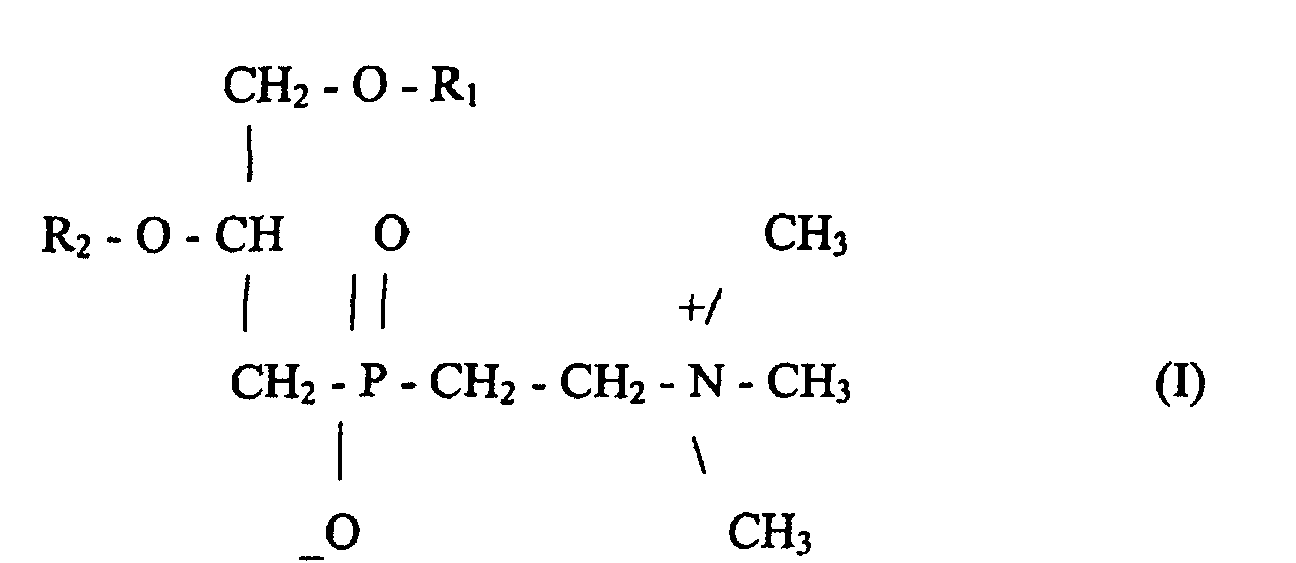
- Mittel nach einem der Ansprüche 1 bis 5,
dadurch gekennzeichnet, daß die genetischen Materialien inSUV (Small unilamellar vesicles)-PEG- Liposomen,LUV (Large unilamellar vesicles)-PEG- Liposomen,REV (Reversed face evaporation vesicles)-PEG-Liposomen,MLV (Multilamellar vesicles)-PEG-Liposomen,Anti-Ki-67-Immun-PEG-Liposomen,Anti-CEA-PEG-Liposomen oderPEG DAC-Chol-Liposomen vorliegen. - Mittel nach einem der Ansprüche 1 bis 6,
dadurch gekennzeichnet, daßdie Stärkepartikel lyophilisiert vorliegen in einer Größe von 40-90 µm und sie sich in physiologischer Kochsalzlösung in der Konzentration von 5 bis 70 mg/ml befinden,die Stärkepartikel eine Korngröße von 60 bis 90 µm aufweisen,absorbierbares Gelatinepuder enthalten ist,es als jodhaltiges Kontrastmittel ein- oder mehrfach jodierte Phenylderivate, insbesondere Iopromid, Ioxitalamat, Ioxaglat, Iopamidol, Iohexol, Iotralon, Metrizamid oder Ultravist enthält,es als Kontrastmittel fluorierte Lipide enthält und/oderdaß es 30 bis 90 mg lyophilisierte oder abbaubare Stärkepartikel und 5 bis 100 mg verkapseltes oder unverkapseltes genetisches Material enthält. - Mittel nach einem der Ansprüche 1 bis 7,
dadurch gekennzeichnet, daß esMarkergen LacZ und Suizidgen pUT HSVtk,verkapselt in MLV-PEG,Stärkepartikel Spherex oder Gelfoam undein fluoriertes Kontrastmittel enthält. - Verfahren zur Herstellung eines Mittels gemäß einem der Ansprüche 1 bis 8, dadurch gekennzeichnet, daß man30 bis 90 mg lyophilisierte oder abbaubare Stärkepartikel und/oder Gelatine und/oder Polymerpartikel in 3 bis 6 ml Kontrastmittel löst und danach die therapeutisch notwendige Menge eines genetischen Materials zusetzt oderdie therapeutische Menge eines genetischen Materials und ggf. ein komplexierendes Agens in einem oder mehreren Lipiden löst und mit Stärkepartikeln und einem Kontrastmittel versetzt.
- Verwendung von einem Mittel gemäß einem der Ansprüche 1 bis 9 zur Herstellung eines Arzneimittelszum Gentransfer und zur Gentherapie, insbesondere zur Therapie von Lebermetastasen, Tumoren der Lunge, Blase, Kopf und Hals, Urogenitalien, Lymphknoten, Mamma, bei Glioblastomen, Arthritis und Asthma,zur lokalen Gentherapie,zur intraarteriellen Therapie von Lebermetastasen,zur Behandlung von neurodegenerativen und Autoimmunerkrankungen,bei Parkinsonscher, Alzheimer Krankheit und Multipler Sklerose,bei Diabetes Typ I,zur Begleitung von Transplantationen,zur Restenosebehandlung und/oderbei Bluthochdruck.
Applications Claiming Priority (3)
| Application Number | Priority Date | Filing Date | Title |
|---|---|---|---|
| DE19756309 | 1997-12-12 | ||
| DE19756309 | 1997-12-12 | ||
| PCT/DE1998/003763 WO1999030741A2 (de) | 1997-12-12 | 1998-12-14 | Mittel zur gentherapie von tumorerkrankungen, neurodegenerativen, herzkreislauf- und autoimmunerkrankungen |
Publications (2)
| Publication Number | Publication Date |
|---|---|
| EP1037670A2 EP1037670A2 (de) | 2000-09-27 |
| EP1037670B1 true EP1037670B1 (de) | 2003-11-05 |
Family
ID=7852377
Family Applications (1)
| Application Number | Title | Priority Date | Filing Date |
|---|---|---|---|
| EP98966568A Expired - Lifetime EP1037670B1 (de) | 1997-12-12 | 1998-12-14 | Mittel zur gentherapie von tumorerkrankungen, neurodegenerativen, herzkreislauf- und autoimmunerkrankungen |
Country Status (5)
| Country | Link |
|---|---|
| EP (1) | EP1037670B1 (de) |
| JP (1) | JP2002508337A (de) |
| AT (1) | ATE253379T1 (de) |
| DE (2) | DE19859526A1 (de) |
| WO (1) | WO1999030741A2 (de) |
Families Citing this family (2)
| Publication number | Priority date | Publication date | Assignee | Title |
|---|---|---|---|---|
| WO2003093303A1 (en) | 2002-05-06 | 2003-11-13 | Board Of Regents, The University Of Texas System | Targeting proteins to deliver therapeutic or diagnostic reagents |
| KR102005446B1 (ko) | 2012-09-05 | 2019-07-31 | 삼성전자주식회사 | 과산화수소 민감성 금속 나노 입자, 그의 제조 방법 및 그를 포함하는 과산화수소 검출 시스템 |
Family Cites Families (5)
| Publication number | Priority date | Publication date | Assignee | Title |
|---|---|---|---|---|
| JPS6021764A (ja) * | 1983-07-14 | 1985-02-04 | 日立化成工業株式会社 | ゼラチン球状粒子の製造法 |
| CA2174244A1 (en) * | 1993-11-01 | 1995-05-11 | Nir Kossovsky | Biochemically active agents for chemical catalysis and cell receptor activation |
| DE4341478C2 (de) * | 1993-12-02 | 1998-10-08 | Max Delbrueck Centrum | Mittel zur Antitumortherapie |
| ATE252894T1 (de) * | 1995-01-05 | 2003-11-15 | Univ Michigan | Oberflächen-modifizierte nanopartikel und verfahren für ihre herstellung und verwendung |
| CA2288292A1 (en) * | 1997-04-24 | 1998-10-29 | Nycomed Imaging As | Embolus therapy using insoluble microparticles or vesicles containing contrast agents |
-
1998
- 1998-12-14 EP EP98966568A patent/EP1037670B1/de not_active Expired - Lifetime
- 1998-12-14 DE DE19859526A patent/DE19859526A1/de not_active Withdrawn
- 1998-12-14 JP JP2000538719A patent/JP2002508337A/ja active Pending
- 1998-12-14 AT AT98966568T patent/ATE253379T1/de active
- 1998-12-14 WO PCT/DE1998/003763 patent/WO1999030741A2/de not_active Ceased
- 1998-12-14 DE DE59810105T patent/DE59810105D1/de not_active Expired - Lifetime
Also Published As
| Publication number | Publication date |
|---|---|
| WO1999030741A2 (de) | 1999-06-24 |
| DE19859526A1 (de) | 1999-08-19 |
| JP2002508337A (ja) | 2002-03-19 |
| EP1037670A2 (de) | 2000-09-27 |
| ATE253379T1 (de) | 2003-11-15 |
| WO1999030741A3 (de) | 1999-08-19 |
| DE59810105D1 (de) | 2003-12-11 |
Similar Documents
| Publication | Publication Date | Title |
|---|---|---|
| Stewart et al. | Gene transfer in vivo with DNA–liposome complexes: safety and acute toxicity in mice | |
| DE69837274T2 (de) | Verfahren zur verkapselung von nukleinsäuren in lipiddoppelschichten | |
| DE69232497T2 (de) | Behandlung von krankheiten durch ortsspezifische instillation von zellen oder ortsspezifische transformation von zellen sowie ausrüstung dafür | |
| US6592894B1 (en) | Hydrogel-isolated cochleate formulations, process of preparation and their use for the delivery of biologically relevant molecules | |
| Saito et al. | Tissue affinity of the infusate affects the distribution volume during convection-enhanced delivery into rodent brains: implications for local drug delivery | |
| DE60030970T2 (de) | Verfahren und zusammensetzungen für nichtvirale gentherapie zur behandlung von hyperproliferativen krankheiten | |
| DE69837754T2 (de) | Kombinierte tumor suppressor-gen-therapie und chemotherapie bei der neoplasmabehandlung | |
| CN112076159B (zh) | 具有不对称膜结构的载药聚合物囊泡及制备方法与在制备治疗急性髓系白血病药物中的应用 | |
| EP1674081A1 (de) | Herstellung von lipidbasierten Nanopartikeln unter Einsatz einer dualen asymmetrischen Zentrifuge | |
| CN114209653B (zh) | 一种仿生纳米递送系统及其制备方法和应用 | |
| DE69830249T2 (de) | Zielgerichtete liposomen zur verabreichung von genen | |
| CN110960688A (zh) | 用于提高胰腺癌疗效的低毒仿生化纳米系统及制备方法 | |
| US20190224238A1 (en) | Tumor therapeutic drug | |
| EP0731689A1 (de) | Verfahren zur erhöhung der stabilität von hydrophile wirkstoffe enthaltenden liposomensuspensionen | |
| DE69624355T2 (de) | Verfahren zur arzneistoffabgabe mittels gentherapie | |
| Zhang et al. | Integrated platform of oxygen self-enriched nanovesicles: SP94 peptide-directed chemo/sonodynamic therapy for liver cancer | |
| Lin et al. | Exosome-based rare earth nanoparticles for targeted in situ and metastatic tumor imaging with chemo-assisted immunotherapy | |
| CN109125306A (zh) | 靶向肝癌的自噬siRNA-Fingolimod共递送纳米载药系统 | |
| US7462703B2 (en) | Agent for gene transfer | |
| DE69732710T2 (de) | Mononukleare phagozyten zur verabreichung von therapeutischen arzneimitteln | |
| EP1037670A2 (de) | Mittel zur gentherapie von tumorerkrankungen, neurodegenerativen, herzkreislauf- und autoimmunerkrankungen | |
| CN101455641A (zh) | 对射线敏感的抗癌药物脂质体制剂 | |
| Dass et al. | Modified microplex vector enhances transfection of cells in culture while maintaining tumour-selective gene delivery in-vivo | |
| CN112569189A (zh) | 一种同时调节肿瘤微环境和靶向杀伤肿瘤细胞的低毒仿生化纳米系统及构建方法 | |
| CN118436606A (zh) | 一种以吡柔比星为靶向分子的DNase I核靶向递送系统及其构建方法和应用 |
Legal Events
| Date | Code | Title | Description |
|---|---|---|---|
| PUAI | Public reference made under article 153(3) epc to a published international application that has entered the european phase |
Free format text: ORIGINAL CODE: 0009012 |
|
| 17P | Request for examination filed |
Effective date: 20000707 |
|
| AK | Designated contracting states |
Kind code of ref document: A2 Designated state(s): AT BE CH DE DK FI FR GB IT LI NL SE |
|
| RIC1 | Information provided on ipc code assigned before grant |
Ipc: 7A 61P 25/28 B Ipc: 7A 61P 35/00 B Ipc: 7A 61K 48/00 A |
|
| GRAH | Despatch of communication of intention to grant a patent |
Free format text: ORIGINAL CODE: EPIDOS IGRA |
|
| RIC1 | Information provided on ipc code assigned before grant |
Ipc: 7A 61P 25/28 B Ipc: 7A 61P 35/00 B Ipc: 7A 61K 48/00 A |
|
| GRAH | Despatch of communication of intention to grant a patent |
Free format text: ORIGINAL CODE: EPIDOS IGRA |
|
| 17Q | First examination report despatched |
Effective date: 20030701 |
|
| GRAA | (expected) grant |
Free format text: ORIGINAL CODE: 0009210 |
|
| AK | Designated contracting states |
Kind code of ref document: B1 Designated state(s): AT BE CH DE DK FI FR GB IT LI NL SE |
|
| PG25 | Lapsed in a contracting state [announced via postgrant information from national office to epo] |
Ref country code: FI Free format text: LAPSE BECAUSE OF FAILURE TO SUBMIT A TRANSLATION OF THE DESCRIPTION OR TO PAY THE FEE WITHIN THE PRESCRIBED TIME-LIMIT Effective date: 20031105 |
|
| REG | Reference to a national code |
Ref country code: GB Ref legal event code: FG4D Free format text: NOT ENGLISH |
|
| REG | Reference to a national code |
Ref country code: CH Ref legal event code: EP |
|
| REF | Corresponds to: |
Ref document number: 59810105 Country of ref document: DE Date of ref document: 20031211 Kind code of ref document: P |
|
| PG25 | Lapsed in a contracting state [announced via postgrant information from national office to epo] |
Ref country code: SE Free format text: LAPSE BECAUSE OF FAILURE TO SUBMIT A TRANSLATION OF THE DESCRIPTION OR TO PAY THE FEE WITHIN THE PRESCRIBED TIME-LIMIT Effective date: 20040205 Ref country code: DK Free format text: LAPSE BECAUSE OF FAILURE TO SUBMIT A TRANSLATION OF THE DESCRIPTION OR TO PAY THE FEE WITHIN THE PRESCRIBED TIME-LIMIT Effective date: 20040205 |
|
| GBT | Gb: translation of ep patent filed (gb section 77(6)(a)/1977) |
Effective date: 20040204 |
|
| REG | Reference to a national code |
Ref country code: CH Ref legal event code: NV Representative=s name: BOVARD AG PATENTANWAELTE |
|
| ET | Fr: translation filed | ||
| PLBE | No opposition filed within time limit |
Free format text: ORIGINAL CODE: 0009261 |
|
| STAA | Information on the status of an ep patent application or granted ep patent |
Free format text: STATUS: NO OPPOSITION FILED WITHIN TIME LIMIT |
|
| 26N | No opposition filed |
Effective date: 20040806 |
|
| REG | Reference to a national code |
Ref country code: CH Ref legal event code: PFA Owner name: MAX-DELBRUECK-CENTRUM FUER MOLEKULARE MEDIZIN Free format text: MAX-DELBRUECK-CENTRUM FUER MOLEKULARE MEDIZIN#ROBERT-ROESSLE-STRASSE 10#13125 BERLIN (DE) -TRANSFER TO- MAX-DELBRUECK-CENTRUM FUER MOLEKULARE MEDIZIN#ROBERT-ROESSLE-STRASSE 10#13125 BERLIN (DE) |
|
| PG25 | Lapsed in a contracting state [announced via postgrant information from national office to epo] |
Ref country code: IT Free format text: LAPSE BECAUSE OF NON-PAYMENT OF DUE FEES Effective date: 20101214 |
|
| PGFP | Annual fee paid to national office [announced via postgrant information from national office to epo] |
Ref country code: NL Payment date: 20120628 Year of fee payment: 14 Ref country code: CH Payment date: 20120622 Year of fee payment: 14 |
|
| PGFP | Annual fee paid to national office [announced via postgrant information from national office to epo] |
Ref country code: GB Payment date: 20120621 Year of fee payment: 14 Ref country code: FR Payment date: 20120705 Year of fee payment: 14 |
|
| PGFP | Annual fee paid to national office [announced via postgrant information from national office to epo] |
Ref country code: IT Payment date: 20120623 Year of fee payment: 14 |
|
| PGFP | Annual fee paid to national office [announced via postgrant information from national office to epo] |
Ref country code: BE Payment date: 20120622 Year of fee payment: 14 |
|
| PGFP | Annual fee paid to national office [announced via postgrant information from national office to epo] |
Ref country code: DE Payment date: 20120628 Year of fee payment: 14 |
|
| PGFP | Annual fee paid to national office [announced via postgrant information from national office to epo] |
Ref country code: AT Payment date: 20120620 Year of fee payment: 14 |
|
| BERE | Be: lapsed |
Owner name: *MAX-DELBRUCK-CENTRUM FUR MOLEKULARE MEDIZIN Effective date: 20121231 |
|
| REG | Reference to a national code |
Ref country code: NL Ref legal event code: V1 Effective date: 20130701 |
|
| REG | Reference to a national code |
Ref country code: CH Ref legal event code: PL |
|
| REG | Reference to a national code |
Ref country code: AT Ref legal event code: MM01 Ref document number: 253379 Country of ref document: AT Kind code of ref document: T Effective date: 20121214 |
|
| GBPC | Gb: european patent ceased through non-payment of renewal fee |
Effective date: 20121214 |
|
| REG | Reference to a national code |
Ref country code: FR Ref legal event code: ST Effective date: 20130830 |
|
| PG25 | Lapsed in a contracting state [announced via postgrant information from national office to epo] |
Ref country code: BE Free format text: LAPSE BECAUSE OF NON-PAYMENT OF DUE FEES Effective date: 20121231 |
|
| REG | Reference to a national code |
Ref country code: DE Ref legal event code: R119 Ref document number: 59810105 Country of ref document: DE Effective date: 20130702 |
|
| PG25 | Lapsed in a contracting state [announced via postgrant information from national office to epo] |
Ref country code: NL Free format text: LAPSE BECAUSE OF NON-PAYMENT OF DUE FEES Effective date: 20130701 Ref country code: LI Free format text: LAPSE BECAUSE OF NON-PAYMENT OF DUE FEES Effective date: 20121231 Ref country code: DE Free format text: LAPSE BECAUSE OF NON-PAYMENT OF DUE FEES Effective date: 20130702 Ref country code: AT Free format text: LAPSE BECAUSE OF NON-PAYMENT OF DUE FEES Effective date: 20121214 Ref country code: CH Free format text: LAPSE BECAUSE OF NON-PAYMENT OF DUE FEES Effective date: 20121231 |
|
| PG25 | Lapsed in a contracting state [announced via postgrant information from national office to epo] |
Ref country code: FR Free format text: LAPSE BECAUSE OF NON-PAYMENT OF DUE FEES Effective date: 20130102 Ref country code: GB Free format text: LAPSE BECAUSE OF NON-PAYMENT OF DUE FEES Effective date: 20121214 |
|
| PG25 | Lapsed in a contracting state [announced via postgrant information from national office to epo] |
Ref country code: IT Free format text: LAPSE BECAUSE OF NON-PAYMENT OF DUE FEES Effective date: 20121214 |