EP1040414B1 - Verfahren zum umsetzen eines systemaufrufs - Google Patents
Verfahren zum umsetzen eines systemaufrufs Download PDFInfo
- Publication number
- EP1040414B1 EP1040414B1 EP98964366A EP98964366A EP1040414B1 EP 1040414 B1 EP1040414 B1 EP 1040414B1 EP 98964366 A EP98964366 A EP 98964366A EP 98964366 A EP98964366 A EP 98964366A EP 1040414 B1 EP1040414 B1 EP 1040414B1
- Authority
- EP
- European Patent Office
- Prior art keywords
- operating system
- reference value
- call
- emulation routine
- referenced
- Prior art date
- Legal status (The legal status is an assumption and is not a legal conclusion. Google has not performed a legal analysis and makes no representation as to the accuracy of the status listed.)
- Expired - Lifetime
Links
Images


Classifications
-
- G—PHYSICS
- G06—COMPUTING OR CALCULATING; COUNTING
- G06F—ELECTRIC DIGITAL DATA PROCESSING
- G06F9/00—Arrangements for program control, e.g. control units
- G06F9/06—Arrangements for program control, e.g. control units using stored programs, i.e. using an internal store of processing equipment to receive or retain programs
- G06F9/44—Arrangements for executing specific programs
- G06F9/455—Emulation; Interpretation; Software simulation, e.g. virtualisation or emulation of application or operating system execution engines
- G06F9/45533—Hypervisors; Virtual machine monitors
- G06F9/45537—Provision of facilities of other operating environments, e.g. WINE
Definitions
- the invention relates to a method for implementing a system call for a source operating system in a system call for a target operating system.
- the operating system port required for this procedure on the target computer is complex. Around Maintaining backward compatibility often has to be technical Compromises are made that affect performance of the new operating system.
- a computer system is known from US-A-5 414 848 an operating system that runs a DOS environment emulated by multiple DOS virtual machines.
- the emulation is carried out by a call-return sequence, with the Emulation a conversion of pointers takes place.
- the invention is based on the basic idea, system calls (system calls, supervisor calls) of the application program the original operating system through special emulation routines intercept and in calls to the target operating system implement. It is essential for the invention to be suitable To provide implementation procedures for reference structures. Structures are to be referred to as reference structures that not only contain the actual data, but also have a reference value by means of which access referenced elements (data, functions, private areas the operating system, ...) is possible. In many cases becomes only the reference value for procedure or system calls passed, for example a pointer or an index or an identifier.
- structure is used here Use of language in the broadest sense as any arrangement of data and / or references to understand and should in particular not on the data type of a "structure” in the programming language C may be limited.
- the invention offers the possibility of application programs implement new and further developed systems. If the Machine languages of the original and new systems match (binary code compatibility), the application program can unchanged or with minimal modifications run on the target system. Otherwise, must be known Appropriate implementation procedures. For example, an emulator for machine language of the application program are provided, or it can use techniques of static or dynamic object code transformation be used. With all of these techniques the invention can be used to implement to worry about system calls.
- the invention can also be used if a Client / server architecture from uncoordinated Client and server components should be built.
- the method according to the invention is of an adapter executed, which is connected between the client and server or that surrounds the server as an intermediate layer (Wrapping).
- IDL interface definition language
- the invention is general always usable when system calls with reference structures may occur. This can be calls to a (local) application program or non-local calls act (remote procedure call or remote system call).
- the Emulation routines at least predominantly, implementation functions (as opposed to operating system functions). Preferably is the share of implementation functions over 70% or over 90%, and the share of other functions is low. This will do the essential work of the target operating system done.
- the emulation routines can then be relatively compact are kept and are far less complex to develop, than it would be the porting of an operating system.
- the referenced element may also act as an element that cannot be further interpreted.
- it can be an element of an abstract data type his.
- a conversion table is preferably provided, for reference values according to the conventions of origin and assign the target operating system to each other.
- the conversion table can be implemented by any means that provide this mapping functionality.
- the referenced Element be a function.
- the emulation routine then preferably replaces the original reference value with a new reference value that refers to an adapter function.
- the adapter function can be generic or with the Implementation specifically depending on the type or others Properties of the original function are created. The use of a table can also be provided here his.
- this is referenced Element a system file and / or a tuple and / or a chained data structure and / or a date and / or a time specification and / or a context and / or an array and / or a string.
- the referenced element is one from the emulation routine have interpretable meaning. The implementation then takes place so that this meaning is preserved as much as possible.
- a target system 10 executes an application program 12 out.
- the target system 10 includes a Target operating system 14 that calls a variety of system able to process.
- the application program 12 is for a Source operating system provided that is different from the target operating system 14 something different. As a result, they are in the Application program 12 does not completely contain system calls with those provided by the target operating system 14 System services compatible. Even if the functions of the roughly match individual system calls usually the type of parameter and result transfer as well as the data types of the parameters and results (Value ranges and coding of the values).
- emulation routines are provided, of which in Fig. 1 is shown with the reference numeral 16.
- the emulation routines are "between" the application program 12 and the target operating system 14 switched. If the application program 12 makes a system call that follows the conventions of the original operating system, this is in a call 18 of the emulation routine 16 implemented.
- the emulation routine 16 in turn provides the necessary conversions the parameter and then lists at least one the target operating system 14 aligned system call 20.
- Result values that the target operating system 14 may have returns are in turn converted by the emulation routine 16 and forwarded to the application program 12.
- the Details of the conversion of different data types are given explained in more detail below.
- the sequence code (machine instruction set) is of the target system 10 binary compatible with that of the original system.
- the application program 12 can therefore are executed directly by the target system 10.
- the emulation routines 16 are thus included in the call chain, that appropriate handlers for system calls to the target operating system 14 are entered.
- Character types are treated analogously to numeric types, where different character encodings in the origin and Target system must be taken into account (see also section 2.4).
- Enumeration types (for example the UNIX type "idop_t") generally implemented like numeric types. However, this applies then not if the values of an enumeration type are one Have meaning that affects operating system functions. For example enumeration types are often used as function codes Determine a subfunction of a system call or as Error code used to report an exceptional situation. In these cases, some embodiments deal with the invention an element of an enumeration type as a reference structure, that have a specific operating system function or a specific one Result referenced. The implementation then takes place so that the meaning of the enumeration type element is as possible largely preserved.
- the emulation routine 16 executes that system call of the Target operating system 14 from the desired functionality provides. Depending on the circumstances of the individual case either another system call or another Function code can be used. Accordingly, one of the Target operating system 20 returned error code as best as possible mapped to an error code of the original operating system. Depending on the operating system, a finer fanning out the error code provides, is either a summary code of the original operating system for several Codes of the target operating system 20 are generated, or are just some of the source operating system error codes, namely the one that best matches.
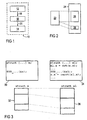
- Fig. 2 shows an example in which an address space 22 (of application programs usable address area) of the origin system is smaller than an address space 24 of the target system 10.
- the address space 22 is in this case embedded in the address space 24, as indicated by the dashed lines in FIG. 2 is indicated.
- system calls 20 for the target operating system 14 as Results only deliver pointer values that are within the address space 24 embedded in the area of the original Show address space 22.
- the original Address space 22 in several separate areas 26, 28 in the Address space 24 of the target system 10 are embedded.
- Target address space 24 is smaller than the original one Address space 22 is only such application programs 12 executable on the target system 10, which is not the full original Take advantage of address space 22. In this case, only a unique one for some of the original addresses Mapping can be defined in the target address space 24. If pointer values or addresses outside the defined part of the original address space and are to be handed over when the system is called up affected emulation routine 16 a corresponding one Exception.
- an element of a pointer type points to one unspecified data structure that no further must be interpreted. In the C language notation this is expressed by the type specification "void *". If not the case must be next to the one just described Implementation of the pointer value also the referenced data structure be converted. Examples of this are given below in sections 2.1, 2.2, 2.3, 2.4 and 2.5 are dealt with in more detail. Regarding the further special case of a pointer to a Function is referred to section 4.
- a product data type is called C in the programming language "struct" or "structure”.
- the elements of a product data type are referred to here as tuples to avoid confusion with the concept of a data structure in a broader sense avoid.
- the affected emulation routine 16 copies a complete system call of the application program 12 Tuple field by field and passes a pointer to the copy the target operating system 14. If the target operating system 14 changes the copied tuple, then the emulation routine converts 16 the changes back to the original Tuples. Copying and converting the tuple can may also be necessary if the layout (number, order and alignment of the fields) of the tuple in the origin system does not meet the conventions in target system 10.
- Fig. 3 shows an example of a section 30 from the in the Language C written application program 12 in which a Tuple 32 defines and one of the conventions of the origin system corresponding system call is carried out. This Call is made from a section 34 of the emulation routine 16 processed as described above. The emulation routine 16 creates a converted tuple 36, calls the target operating system 14 and transfers any changes back to tuple 32.
- Date and time types are mostly numerical values or Tuples.
- the emulation routines 16 apply predetermined conversion rules to different formats and layouts convert into each other. If two-digit for a date type Convert the year into a four-digit year , heuristic procedures must be applied become.
- time_t For data types for the specification of times (for example the UNIX type "hrtime_t") may have to be different Resolution or granularity are taken into account. In particular must have two timestamps different in origin type also be different in the target type. If the resolution in If the target type is less than the original type, the emulation routine is delayed 16 if necessary, the system call 20 to a Get timestamp that is also in time resolution the origin type is new.
- a context type denotes a tuple that is the complete or partial processor status (including register contents, Command counter, ...) at a certain time (for example at an interruption time).
- the processor architecture of the original system is different is that of the target system 10, the differ Contiguous tuple, as a rule, considerably. So that the application program 12 executable on the target system without recompilation is either the original processor on the target processor emulated, or the application program 12 is on Object code level transformed dynamically or statically.
- the emulator manages the emulated one Context of the original processor.
- Any emulation routine 16 for a system call that process a context and / or to deliver as a result uses this emulated one Context and passes it to the application program 12 back.
- Arrays are analogous to those described in section 2.1 Treated product data types. Here are some common ones To consider special cases. This is especially true for strings that represent a special case of arrays.
- the individual Characters are implemented if they are different in the original system than are encoded in the target system 10 (for example in the case of a EBCDIC coding on the one hand and ASCII coding on the other).
- a conversion can be carried out even with the same character code may be necessary if the memory representation a character string in the original system and in the target system 10 differs.
- a string with a terminating Complete characters (as in the programming language C) while in the other system the length of the string is specified in a separate length field. In such cases the emulation routine in question generates 12 copies of the character strings in the other representation.
- a System service for example the UNIX service "uname" information about the system architecture and version of the target system 10 in the form of a string.
- the application program 12 expects information about the origin system here. This information is provided by the emulation routine concerned 16 according to the emulated system version self-generated without the corresponding service of the target operating system 14 is claimed. Becomes analog proceed when the application program 12 such information expected as a tuple.
- data structures in particular tuples or arrays, in turn Contain references to other data structures, then may also need these referenced data structures be converted.
- a parameter or result type can be a data structure that contains both fields that are created by the application program 12 are interpreted as well as fields reserved for the system. are (partially abstract data type). In this case the reserved fields are treated like abstract data types, which are described in Section 3 below. The interpretable fields are like normal data structures implemented.
- the result of a system call 20 can have a value (handle, Index), which is used to access internal data structures serves, but no further from the application program 12 can and may be interpreted.
- the application program 12 can only keep the received value as a reference to pass it to another system call later as a parameter.
- the abstract data type is identical to the type of used Reference values. For example, serve for the abstract data type "File” file descriptors as reference values. This File descriptors are often numeric in UNIX Data type "int" declared.
- a section 38 of the application program 12 contains two system calls, which are intercepted by the emulation routine 16.
- the Emulation routine 16 in turn executes that in a section 40 system calls 20 shown by.
- a conversion table 42 is assigned to the emulation routine 16.
- the conversion table 42 can be organized as a hash table, for example. she provides the link between the reference values according to the Conventions of the target operating system 14 or the Application program 12 ago.
- the corresponding emulation routine 16 sets this call in those shown in the first line of section 40 System call 20 of the target operating system 14 around.
- the system call 20 deliver the reference value between these as a result Value is from the emulation routine 16 in the conversion table 42 wanted.
- the emulation routine chooses 16 a new value uw from the value range of Origin type that is not yet in the conversion table 42 is included.
- the pair of values (uw, zw) is now in the conversion table 42 entered, and the value uw of the origin type is returned to the application program 12.
- the values of the original type can be interpreted as numbers become. New values can then simply be passed through Get count up.
- the application program 12 uses the value uw in obtained other system calls as parameters. With such a call, which is shown in the last line of section 38, the emulation routine 16 in turn provides the necessary Implementation by looking up the value uw in the conversion table 42 and is replaced by the value zw. The emulation routine 16 then routes the system call with the reference value zw to the target operating system 14, as in the last one Line of section 40 shown.
- functions e.g. error handling routines
- UNIX system call "signal" the case in which the transferred function as Interrupt handler is used.
- To pass a function transfer their entry address (function address).
- the function call conventions of the original system with those of the target system 10 match, so that a direct call to an original Function by the target operating system 14 is not possible.
- the function call conventions of the original system with those of the target system 10 match, so that a direct call to an original Function by the target operating system 14 is not possible.
- the invention is therefore one (or both) of the following treatment methods provided by function addresses as parameters.
- FIG. 5 This variant is shown in FIG. 5.
- a function f of the application program 12 is declared and passed as a parameter of a system call.
- the corresponding Emulation routine 16 a section of which in FIG. 5 46, generates the code for a dynamically Adapter function 48, which according to the conventions of the target system 10 can be called (first line of section 46).
- the address of this adapter function 48 is then from the Emulation routine 16 instead of the original function address passed to the target operating system 14 (last line from section 46).
- the adapter function 48 is set up for any parameters to convert according to the procedures described here and finally the original function f with the converted ones Parameters.
- the emulation routines run 16 Book about which original function addresses adapter functions have already been generated. Thereby it is avoided that several adapter functions for one and the same function address are generated.
- At least a universal adapter function 50 is provided which called according to the conventions of the target operating system 14 can be used as a "stepping stone" for several by the application program 12 transferred functions.
- a call table 52 is used to enter and assign the latter functions.
- a system call of the application program 12 a Function address is passed as a parameter (last line from section 44)
- the emulation routine 16 carries the intercepts this call 18, the function address under one corresponding index in the call table 52.
- the target operating system 14 is used by the emulation routine 16 as a function address the address of the universal adapter function 50 passed (system call in section 46). If later that Target operating system 14 the universal adapter function 50 calls, the latter converts any parameters, loads the original function address from the call table 52 and calls this function.
- Contents of files may have been on the original System and 10 different formats on the target system (for example regarding the representation of binary coded numerical values or with regard to the used Character codes).
- application-specific files are not implemented.
- System files i.e. files whose structure is determined by the operating system is determined, on the other hand, both in one version for the application program 12 as well as in a synchronized with it Version for the target operating system 14 provided.
- System files for example the file "terminfo" with UNIX
- This Name serves as a reference value that gives access to the actual file allows.
- Target system 10 copies of the system files of the original system in front lie on the Target system 10 copies of the system files of the original system in front. These are usually not on the target system 10 under the same path as on the original system available because the corresponding target system-specific are already there Files.
- the files and from the original system the system files of the target system 10 can be different Way to be synchronized.
- a Daemon should be provided which periodically files each matched in pairs.
- the emulation routines 16 be designed in such a way that with every write access update both versions to a system file.
- a System file with the help of a special compiler from one Source code is generated (such as the UNIX system file "terminfo" with the compiler "tic"), then next to the Compiler of the target operating system 14 a copy of the corresponding one Compilers started from the original system to generate both variants of the system file.
- a modified compiler which always generates both versions.
Landscapes
- Engineering & Computer Science (AREA)
- Software Systems (AREA)
- Theoretical Computer Science (AREA)
- Physics & Mathematics (AREA)
- General Engineering & Computer Science (AREA)
- General Physics & Mathematics (AREA)
- Devices For Executing Special Programs (AREA)
- Executing Machine-Instructions (AREA)
Description
- unterschiedliche Adreßbereiche und/oder Adreßraumtopologien (z.B. Übergang von einem 32-Bit- auf ein 64-Bit-System),
- unterschiedliche Reihenfolge der Bytes binärer numerischer Werte im Speicher (z.B. Übergang von einem Little-Endian- auf ein Big-Endian-System), und
- unterschiedliche Codierung von Zeichen (z.B. Übergang von einem ASCII- auf ein EBCDIC-System).
Claims (13)
- Verfahren zum Umsetzen eines Systemaufrufs für ein Ursprungs-Betriebssystem in einen Systemaufruf (20) für ein Ziel-Betriebssystem (14), bei dem:wobei zumindest der Referenzwert des Systemaufrufs für das Ursprungs-Betriebssystem aufrufübergreifend gespeichert ist.a) eine Emulationsroutine (16) aufgerufen wird,b) die Emulationsroutine (16) eine Referenzstruktur, die einen Referenzwert und zumindest ein referenziertes Element aufweist, umsetzt, indem zumindest der Referenzwert umgesetzt wird, undc) die Emulationsroutine (16) den Systemaufruf (20) für das Ziel-Betriebssystem (14) durchführt,
- Verfahren nach Anspruch 1,
dadurch gekennzeichnet, daß die Emulationsroutine (16) überwiegend, vorzugsweise im wesentlichen ausschließlich, Umsetzungsfunktionen ausführt. - Verfahren nach Anspruch 1 oder 2,
dadurch gekennzeichnet, daß in Schritt b) ferner das mindestens eine referenzierte Element zumindest teilweise umgesetzt wird. - Verfahren nach Anspruch 1 oder 2,
dadurch gekennzeichnet, daß der Referenzwert ein nicht weiter von der Emulationsroutine (16) interpretierbares Element referenziert. - Verfahren nach einem der Ansprüche 1 bis 4,
dadurch gekennzeichnet, daß die Emulationsroutine (16) zum Umsetzen des Referenzwertes auf eine Umsetztabelle (42) zugreift, in der je ein Referenzwert in dem Systemaufruf für das Ursprungs-Betriebssystem und ein Referenzwert in dem Systemaufruf (20) für das Ziel-Betriebssystem (14) einander zugeordnet sind. - Verfahren nach Anspruch 5,
dadurch gekennzeichnet, daß überprüft wird, ob ein Referenzwert, der als Ergebnis eines Systemaufrufs (20) für das Ziel-Betriebssystem (14) erhalten wurde, in der Umsetztabelle (42) enthalten ist, und daß, wenn dies nicht der Fall ist, diesem Referenzwert in der Umsetztabelle (42) ein neuer Referenzwert, der gemäß den Konventionen des Ursprungs-Betriebssystems gebildet wurde, zugeordnet wird. - Verfahren nach einem der Ansprüche 1 bis 4,
dadurch gekennzeichnet, daß das referenzierte Element eine Funktion ist, und daß die Emulationsroutine (16) bei der Umsetzung einen neuen Referenzwert erzeugt, der auf eine Adapterfunktion (48, 50) verweist. - Verfahren nach Anspruch 7,
dadurch gekennzeichnet, daß die Adapterfunktion (48) bei der Umsetzung in Abhängigkeit von der durch den ursprünglichen Referenzwert referenzierten Funktion gebildet wird. - Verfahren nach Anspruch 7,
dadurch gekennzeichnet, daß der neue Referenzwert auf eine universelle Adapterfunktion (50) verweist, die dazu eingerichtet ist, auf eine Aufruftabelle (52) zuzugreifen, um die durch den ursprünglichen Referenzwert referenzierte Funktion zu bestimmen. - Verfahren nach einem der Ansprüche 1 bis 4,
dadurch gekennzeichnet, daß das referenzierte Element eine erste Systemdatei gemäß den Konventionen entweder des Ursprungs-Betriebssystems oder des Ziel-Betriebssystems (14) ist, und daß der Referenzwert auf eine zweite Systemdatei umgesetzt wird, die mit der ersten Systemdatei synchronisiert ist, aber gemäß den Konventionen des je anderen Betriebssystems aufgebaut ist. - Verfahren nach einem der Ansprüche 1 bis 3,
dadurch gekennzeichnet, daß das referenzierte Element ein Element eines Produktdatentyps und/oder eine verkettete Datenstruktur ist, und daß bei der Umsetzung das referenzierte Element, soweit erforderlich, feld- und/oder elementweise kopiert und umgesetzt wird. - Verfahren nach einem der Ansprüche 1 bis 3,
dadurch gekennzeichnet, daß das referenzierte Element eine von der Emulationsroutine (16) interpretierbare Bedeutung hat, und daß diese Bedeutung bei der Umsetzung des referenzierten Elements im wesentlichen erhalten wird. - Verfahren nach Anspruch 12,
dadurch gekennzeichnet, daß das referenzierte Element ein Element eines Datumstyps und/oder eines Zeittyps und/oder eines Kontexttyps und/oder eines Zeichenkettentyps und/oder eines zumindest einen'der genannten Typen als Komponente aufweisenden Produkttyps ist.
Applications Claiming Priority (3)
| Application Number | Priority Date | Filing Date | Title |
|---|---|---|---|
| DE19756181 | 1997-12-17 | ||
| DE19756181 | 1997-12-17 | ||
| PCT/DE1998/003484 WO1999031584A1 (de) | 1997-12-17 | 1998-11-26 | Verfahren zum umsetzen eines systemaufrufs |
Publications (2)
| Publication Number | Publication Date |
|---|---|
| EP1040414A1 EP1040414A1 (de) | 2000-10-04 |
| EP1040414B1 true EP1040414B1 (de) | 2002-07-10 |
Family
ID=7852305
Family Applications (1)
| Application Number | Title | Priority Date | Filing Date |
|---|---|---|---|
| EP98964366A Expired - Lifetime EP1040414B1 (de) | 1997-12-17 | 1998-11-26 | Verfahren zum umsetzen eines systemaufrufs |
Country Status (5)
| Country | Link |
|---|---|
| US (1) | US6725451B1 (de) |
| EP (1) | EP1040414B1 (de) |
| JP (1) | JP2002508565A (de) |
| DE (1) | DE59804749D1 (de) |
| WO (1) | WO1999031584A1 (de) |
Cited By (1)
| Publication number | Priority date | Publication date | Assignee | Title |
|---|---|---|---|---|
| WO2004104827A3 (en) * | 2003-05-22 | 2005-01-20 | Hewlett Packard Development Co | Concurrent cluster environment with emulators for running non-native applications |
Families Citing this family (20)
| Publication number | Priority date | Publication date | Assignee | Title |
|---|---|---|---|---|
| US7574346B2 (en) * | 2000-10-30 | 2009-08-11 | Microsoft Corporation | Kernel emulator for non-native program modules |
| US7107584B2 (en) * | 2001-10-23 | 2006-09-12 | Microsoft Corporation | Data alignment between native and non-native shared data structures |
| US7272827B2 (en) * | 2002-04-03 | 2007-09-18 | International Business Machines Corporation | Statically detecting externally referenced interfaces of a program |
| US8549114B2 (en) | 2002-06-12 | 2013-10-01 | Bladelogic, Inc. | Method and system for model-based heterogeneous server configuration management |
| TWI324309B (en) * | 2002-08-26 | 2010-05-01 | Interdigital Tech Corp | Communication circuit |
| GB2397665A (en) * | 2003-01-27 | 2004-07-28 | Hewlett Packard Co | Operating system data management |
| US8424023B2 (en) * | 2003-10-24 | 2013-04-16 | Hewlett-Packard Development Company, L.P. | Program interface architecture |
| CN100359471C (zh) * | 2004-09-30 | 2008-01-02 | 中国科学院计算技术研究所 | 二进制翻译中的库函数调用处理方法 |
| CN101091162B (zh) * | 2004-12-30 | 2010-09-08 | Nxp股份有限公司 | 数据处理装置和运行该装置的方法 |
| US7818410B1 (en) * | 2005-09-27 | 2010-10-19 | Sprint Communications Company L.P. | System and method of implementing major application migration |
| US20070201270A1 (en) * | 2005-12-30 | 2007-08-30 | Stmicroelectronics Pvt. Ltd. | Read only memory device with bitline leakage reduction |
| US20070234307A1 (en) * | 2006-03-06 | 2007-10-04 | Chi-Keung Luk | Methods and apparatus to inline conditional software instrumentation |
| US20080127180A1 (en) * | 2006-07-31 | 2008-05-29 | James John Glogowski | Operating system automated application porting tool |
| US7779429B2 (en) * | 2006-08-18 | 2010-08-17 | Research In Motion Limited | Method and machine-readable medium for building distributed software |
| US20100319010A1 (en) | 2009-06-12 | 2010-12-16 | International Business Machines Corporation | Systems and Methods for Operating System Identification and Web Application Execution |
| EP2400452A1 (de) * | 2010-06-25 | 2011-12-28 | France Telecom | Datenanzeigeverfahren sowie entsprechende Vorrichtung und entsprechendes Computerprogrammprodukt |
| US10133655B1 (en) * | 2017-06-12 | 2018-11-20 | Sony Interactive Entertainment Inc. | Emulation of target system using JIT compiler and bypassing translation of selected target code blocks |
| US11403100B2 (en) * | 2020-08-31 | 2022-08-02 | Microsoft Technology Licensing, Llc | Dual architecture function pointers having consistent reference addresses |
| GB2632091A (en) * | 2023-06-21 | 2025-01-29 | Ibm | Eye-catcher injection into library transformation |
| US12327113B2 (en) * | 2023-08-15 | 2025-06-10 | International Business Machines Corporation | Adapting scripts from a source platform to be utilized in a target platform |
Family Cites Families (12)
| Publication number | Priority date | Publication date | Assignee | Title |
|---|---|---|---|---|
| US5313614A (en) | 1988-12-06 | 1994-05-17 | At&T Bell Laboratories | Method and apparatus for direct conversion of programs in object code form between different hardware architecture computer systems |
| US5339422A (en) * | 1991-03-07 | 1994-08-16 | Digital Equipment Corporation | System and method for jacketing cross-domain calls in a multi-code execution and debugging system within a multi-architecture environment |
| US5414848A (en) | 1993-04-01 | 1995-05-09 | Intel Corporation | Method and apparatus for sharing a common routine stored in a single virtual machine with other virtual machines operating in a preemptive muli-tasking computer system |
| US5481684A (en) | 1994-01-11 | 1996-01-02 | Exponential Technology, Inc. | Emulating operating system calls in an alternate instruction set using a modified code segment descriptor |
| US5600790A (en) | 1995-02-10 | 1997-02-04 | Research In Motion Limited | Method and system for loading and confirming correct operation of an application program in a target system |
| CA2173695A1 (en) * | 1995-04-14 | 1996-10-15 | Panagiotis Kougiouris | Method and system for providing interoperability among processes written to execute on different operating systems |
| US6247067B1 (en) * | 1996-03-29 | 2001-06-12 | Sun Microsystems, Inc. | Transparently converting program calls between interfaces |
| US5987512A (en) * | 1996-06-12 | 1999-11-16 | Sun Microsystems, Inc. | Method and apparatus for access to remote gateway servers |
| US5935242A (en) * | 1996-10-28 | 1999-08-10 | Sun Microsystems, Inc. | Method and apparatus for initializing a device |
| US6493870B1 (en) * | 1998-03-20 | 2002-12-10 | Sun Microsystems, Inc. | Methods and apparatus for packaging a program for remote execution |
| US6199196B1 (en) * | 1998-03-20 | 2001-03-06 | Sun Microsystems, Inc. | Methods and apparatus for linking a program for remote execution |
| US6363421B2 (en) * | 1998-05-31 | 2002-03-26 | Lucent Technologies, Inc. | Method for computer internet remote management of a telecommunication network element |
-
1998
- 1998-11-26 EP EP98964366A patent/EP1040414B1/de not_active Expired - Lifetime
- 1998-11-26 US US09/581,443 patent/US6725451B1/en not_active Expired - Lifetime
- 1998-11-26 DE DE59804749T patent/DE59804749D1/de not_active Expired - Lifetime
- 1998-11-26 JP JP2000539414A patent/JP2002508565A/ja active Pending
- 1998-11-26 WO PCT/DE1998/003484 patent/WO1999031584A1/de not_active Ceased
Cited By (1)
| Publication number | Priority date | Publication date | Assignee | Title |
|---|---|---|---|---|
| WO2004104827A3 (en) * | 2003-05-22 | 2005-01-20 | Hewlett Packard Development Co | Concurrent cluster environment with emulators for running non-native applications |
Also Published As
| Publication number | Publication date |
|---|---|
| EP1040414A1 (de) | 2000-10-04 |
| DE59804749D1 (de) | 2002-08-14 |
| WO1999031584A1 (de) | 1999-06-24 |
| JP2002508565A (ja) | 2002-03-19 |
| US6725451B1 (en) | 2004-04-20 |
Similar Documents
| Publication | Publication Date | Title |
|---|---|---|
| EP1040414A1 (de) | Verfahren zum umsetzen eines systemaufrufs | |
| DE3486267T2 (de) | Verfahren zum dynamischen Aufruf eines Dienstprogramms von einem Anwendungsprogramm aus. | |
| DE69321255T2 (de) | Vorrichtung zur ausführung vom mehreren programmteilen mit verschiedenen objektcodetypen in einem einzigen programm oder in einer prozessorumgebung | |
| DE69636887T2 (de) | System und Verfahren,um verschiedenen Anbietern von Namen zu ermöglichen,sich dynamisch einer Namensföderation anzuschliessen | |
| DE69328162T2 (de) | Gerät und Verfahren zum Verfügbarstellen eines Teiles eines Namensraumes als ein Teil eines anderen Namensraumes | |
| DE69424597T2 (de) | Erweiterbares Dateiensystem | |
| DE3751645T2 (de) | Anteilige Nutzung von Kopie-beim-Schreiben-Segmenten in einer Datenverarbeitungsanlage mit virtuellen Maschinen und virtuellem Speicher | |
| DE68926345T2 (de) | Datenverarbeitungsnetzwerk | |
| DE69424842T2 (de) | Durchführung von Programmen eines ersten Systems auf einem zweiten System | |
| EP0604431B1 (de) | Verfahren zur adaption einer objektorientierten applikation | |
| DE69802437T2 (de) | Feinkörniger übereinstimmungsmechanismus für optimistische parallelsteuerung mit verriegelungsgruppen | |
| DE69129479T2 (de) | Verteiltes Rechnersystem | |
| DE69618221T2 (de) | Mechanismus zur wartung objektorientierter "methoden" der keine unterbrechung des computersystems erfordert | |
| DE69232165T2 (de) | Verfahren und Gerät, um Daten und Komponenten von Informationssammlungen von anderen Komponenten in einer verteilten Umgebung zu isolieren | |
| DE69615978T2 (de) | Verfahren und Vorrichtung zum Verpackung und Entpackung von Daten in objectreferenzspezifischen Datenformaten anhand generischen Stubs | |
| DE69613594T2 (de) | Rechnersicherungssystem mit offenen Dateien | |
| DE69425318T2 (de) | Verfahren und System für Fernausführung von Codes | |
| DE69706440T2 (de) | Schutzmittel in einem verteilten rechnersystem | |
| DE68926775T2 (de) | System und Verfahren für eine allgemeine Schnittstelle für Anwendungsprogramme | |
| DE69309704T2 (de) | Datenverarbeitungssystem und betriebssystem | |
| DE69605568T2 (de) | Verfahren zum schaffen eines benutzerglobalen namenraums in einem mehrbenutzer-betriebssystem | |
| DE69230450T2 (de) | Programmverarbeitungssystem und -verfahren | |
| DE69621975T2 (de) | Verfahren und System zum Ermöglichen der Zusammenarbeit von zur Ausführung auf unterschiedlichen Betriebssystemen geschriebenen Prozessen | |
| DE69523142T2 (de) | Verteiltes datenbanksystem | |
| DE3786069T2 (de) | Virtueller Programmablauf auf einem Mehrfachverarbeitungssystem. |
Legal Events
| Date | Code | Title | Description |
|---|---|---|---|
| PUAI | Public reference made under article 153(3) epc to a published international application that has entered the european phase |
Free format text: ORIGINAL CODE: 0009012 |
|
| 17P | Request for examination filed |
Effective date: 20000525 |
|
| AK | Designated contracting states |
Kind code of ref document: A1 Designated state(s): DE GB |
|
| 17Q | First examination report despatched |
Effective date: 20010525 |
|
| GRAG | Despatch of communication of intention to grant |
Free format text: ORIGINAL CODE: EPIDOS AGRA |
|
| GRAG | Despatch of communication of intention to grant |
Free format text: ORIGINAL CODE: EPIDOS AGRA |
|
| GRAH | Despatch of communication of intention to grant a patent |
Free format text: ORIGINAL CODE: EPIDOS IGRA |
|
| GRAH | Despatch of communication of intention to grant a patent |
Free format text: ORIGINAL CODE: EPIDOS IGRA |
|
| GRAA | (expected) grant |
Free format text: ORIGINAL CODE: 0009210 |
|
| AK | Designated contracting states |
Kind code of ref document: B1 Designated state(s): DE GB |
|
| GBT | Gb: translation of ep patent filed (gb section 77(6)(a)/1977) |
Effective date: 20020717 |
|
| REF | Corresponds to: |
Ref document number: 59804749 Country of ref document: DE Date of ref document: 20020814 |
|
| PLBE | No opposition filed within time limit |
Free format text: ORIGINAL CODE: 0009261 |
|
| STAA | Information on the status of an ep patent application or granted ep patent |
Free format text: STATUS: NO OPPOSITION FILED WITHIN TIME LIMIT |
|
| 26N | No opposition filed |
Effective date: 20030411 |
|
| PGFP | Annual fee paid to national office [announced via postgrant information from national office to epo] |
Ref country code: GB Payment date: 20161123 Year of fee payment: 19 Ref country code: DE Payment date: 20161123 Year of fee payment: 19 |
|
| REG | Reference to a national code |
Ref country code: DE Ref legal event code: R119 Ref document number: 59804749 Country of ref document: DE |
|
| GBPC | Gb: european patent ceased through non-payment of renewal fee |
Effective date: 20171126 |
|
| PG25 | Lapsed in a contracting state [announced via postgrant information from national office to epo] |
Ref country code: DE Free format text: LAPSE BECAUSE OF NON-PAYMENT OF DUE FEES Effective date: 20180602 |
|
| PG25 | Lapsed in a contracting state [announced via postgrant information from national office to epo] |
Ref country code: GB Free format text: LAPSE BECAUSE OF NON-PAYMENT OF DUE FEES Effective date: 20171126 |