EP1042953A2 - Utilisation de cétones, d'alcools, d'aldéhydes, de nitriles et d'esters acycliques et carbocycliques pour repousser ou attirer les insectes - Google Patents
Utilisation de cétones, d'alcools, d'aldéhydes, de nitriles et d'esters acycliques et carbocycliques pour repousser ou attirer les insectes Download PDFInfo
- Publication number
- EP1042953A2 EP1042953A2 EP00113370A EP00113370A EP1042953A2 EP 1042953 A2 EP1042953 A2 EP 1042953A2 EP 00113370 A EP00113370 A EP 00113370A EP 00113370 A EP00113370 A EP 00113370A EP 1042953 A2 EP1042953 A2 EP 1042953A2
- Authority
- EP
- European Patent Office
- Prior art keywords
- compound
- aedes
- repelling
- mole percent
- insect
- Prior art date
- Legal status (The legal status is an assumption and is not a legal conclusion. Google has not performed a legal analysis and makes no representation as to the accuracy of the status listed.)
- Withdrawn
Links
- 0 CC(C)([C@@]1[C@]2(C3)[C@]3CC1)C2=CC* Chemical compound CC(C)([C@@]1[C@]2(C3)[C@]3CC1)C2=CC* 0.000 description 7
- UDACLCJJOKUWPD-UHFFFAOYSA-N CC1C(COC(OC)=O)C(C)C=C(C)C1 Chemical compound CC1C(COC(OC)=O)C(C)C=C(C)C1 UDACLCJJOKUWPD-UHFFFAOYSA-N 0.000 description 1
- DXAYIIQSALQYPP-UHFFFAOYSA-N CCOC(OC(C)C1C(C)CC(C)=CC1)=O Chemical compound CCOC(OC(C)C1C(C)CC(C)=CC1)=O DXAYIIQSALQYPP-UHFFFAOYSA-N 0.000 description 1
- YZBJWSDASHVXPT-UHFFFAOYSA-N CCOCC(OCC1C(C)C=C(C)CC1C)=O Chemical compound CCOCC(OCC1C(C)C=C(C)CC1C)=O YZBJWSDASHVXPT-UHFFFAOYSA-N 0.000 description 1
Images




Classifications
-
- A—HUMAN NECESSITIES
- A01—AGRICULTURE; FORESTRY; ANIMAL HUSBANDRY; HUNTING; TRAPPING; FISHING
- A01N—PRESERVATION OF BODIES OF HUMANS OR ANIMALS OR PLANTS OR PARTS THEREOF; BIOCIDES, e.g. AS DISINFECTANTS, AS PESTICIDES OR AS HERBICIDES; PEST REPELLANTS OR ATTRACTANTS; PLANT GROWTH REGULATORS
- A01N35/00—Biocides, pest repellants or attractants, or plant growth regulators containing organic compounds containing a carbon atom having two bonds to hetero atoms with at the most one bond to halogen, e.g. aldehyde radical
- A01N35/04—Biocides, pest repellants or attractants, or plant growth regulators containing organic compounds containing a carbon atom having two bonds to hetero atoms with at the most one bond to halogen, e.g. aldehyde radical containing aldehyde or keto groups, or thio analogues thereof, directly attached to an aromatic ring system, e.g. acetophenone; Derivatives thereof, e.g. acetals
Definitions
- This invention relates to the use of dimethyl substituted oxymethyl cyclohexane derivatives defined according to the structure: and geranial having the structure: (wherein Z is methylene; n is 0 or 1; each of the wavy lines represents a carbon-carbon single bond or no bond (when n is 0); the dashed line represents a carbon-carbon double bond or a carbon-carbon single bond; each of R 2 , R 5 , R 6 , R 7 and R 8 represent hydrogen or methyl; and R 1 is hydrogen acetyl or ethoxycarbonyl as insect repellents against house flies ( Musca domestica L .(Diptera:Muscidae)), mosquitoes including those set forth on the following species list:
- This invention also relates to the use of the compound having the structure: as an attractant for the insect species:
- dimethyl substituted oxymethyl cyclohexane derivatives useful in the practice of our invention are those having the following structures:
- the dimethyl substituted oxymethyl cyclohexane derivatives of our invention may be in the form of racemic mixtures or they may be in the form of sterioisomers.
- representations of such sterioisomers are representations having the following structures: and wherein R 1 is methyl or ethyl and R 2 is hydrogen or methyl.
- the instant invention also applies to the uses of (i) the compound having the structure: and/or (ii) the compound having the structure: as repellents against the mosquito species Aedes aegyptae .
- Our invention also sets forth processes for repelling the mosquito species Aedes aegyptae consisting essentially of exposing a three dimensional space inhabited by said Aedes aegyptae to an Aedes aegyptae -repelling effective concentration and quantity of at least one of the following carbocyclic aldehydes or ketones:
- our invention also relates to the use of the foregoing insect repellent compositions in personal soap compositions, for example, the insect repellent soap composition described in U.S. Letters Patent No. 4,707,496 issued on November 17, 1987.
- insect repellent soap composition comprises:
- the soap from the resulting composite tablet is useable until the core is washed clean and contains functional ingredients, e.g., the repellents described, supra, and optionally, aromatizing agent until the core is washed clean.
- functional ingredients e.g., the repellents described, supra, and optionally, aromatizing agent until the core is washed clean.
- This obviates the wastage of soap which normally occurs as a conventional soap tablet becomes very thin on use and at the same time gives rise to a continuously functional ingredient containing soap, (e.g., repellent and optionally aromatizing agent) tablet.
- this invention also relates to detergent bars having a plastic core containing an appropriate insect repellent-containing compositions of our invention containing composition and optionally, an additional perfume.
- this invention relates to detergent bars intended for conventional toilet soap uses either as hand soaps or bath or shower soaps which are elastic or inelastic in nature but which contain a solid plastic core containing insect repellent and optionally perfume giving them unique properties which alleviate wastage thereof and causes the environment surrounding the soap on use thereof to be both insect repellent and optionally aromatized in an aesthetically pleasing manner.
- Yet another aspect of our invention relates to the use of the insect repellent-containing compositions of our invention taken further in combination with N-(methyl toluyl)-methyl piperidines defined according to the structure: as described in U.S. Letters Patent No. 3,463,855 issued on August 26, 1969.
- the compounds defined according to the structure: include:
- the proportions of compounds defined according to the structure: to the insect repellent-containing compositions described, supra, are between about 1 part N-(meta-toluyl) methylpiperidine:99 parts appropriate insect repellent-containing compositions of our invention down to 99 parts appropriate insect repellent-containing compositions of our invention:1 part N-(meta-toluyl)-methylpiperidines.
- compositions useful in repelling insects of our invention can also contain 1-nonen-3-ol described and claimed in U.S. Letters Patent Nos. 4,693,890 and 4,759,228 issued on July 26, 1988.
- the ratio of 1-nonen-3-ol:appropriate insect repellent-containing compositions of our invention useful in repellent compositions may vary from about 1 part 1-nonen-3-ol:99 parts appropriate insect repellent-containing compositions of our invention down to 99 parts 1-nonen-3-ol:1 part appropriate insect repellent-containing compositions of our invention.
- repelling articles containing the appropriate insect repellent-containing compositions of our invention that is, articles useful for repelling house flies ( Musca domestica L .(Diptera:Muscidae)) or the mosquitoes (Aedes aegypti ) or other insect species:
- another aspect of our invention relates to the formation of appropriate insect repellent-containing polymeric pellets by means of introduction into a single or twin screw extruder, in series, a thermoplastic polymer followed by the appropriate insect repellent-containing composition of our invention which is compatible with the thermoplastic polymer, in turn, (optionally) followed by introduction of gaseous blowing agent or blowing agent which will produce a gas which is inert to the polymer and to the appropriate insect repellent-containing composition previously introduced into the extruder.
- extruders utilized in the process of our invention to form the appropriate insect repellent-containing composition-containing polymer particles of our invention may be either single screw or double screw.
- the types of extruder that can be used are disclosed at pages 246-267 and 332-349 of the Modern Plastics Encylopedia, 1982-1983, published by the McGraw-Hill Publishing Company. More specifically, examples of extruders which are useable in carrying out one or more of the processes of our invention (with modification for introduction of the appropriate insect repellent-containing compositions of our invention) downstream from the introduction of the polymer and with further modification that the gaseous blowing agent is introduced still further downstream from the point of introduction of the appropriate insect repellent-containing compositions of our invention are as follows:
- various polymers may be utilized, for example, low density polyethylene, high density polyethylene, polypropylene, the co-polymer of ethylene and vinyl acetate, and polyvinyl chloride. More specifically, the polymers used in the practice of our invention may be co-polymers of ethylene and a polar vinyl monomer selected from (a) vinyl acetate; (b) ethyl acrylate; (c) methyl acrylate; (d) butyl acrylate and (e) acrylic acid including the hydrolyzed co-polymer of ethylene and vinyl acetate.
- Preferred co-polymers are ethylene/vinyl acetate with about 9 to 60% vinyl acetate and ethylene/ethyl acrylate with about 6 to 18% ethyl acrylate.
- Resins of the type disclosed for use as co-polymers are commerically available in the molding powder form; for example, ethylene vinyl acetate co-polymers are marketed by the E. I. duPont Nemours Company under the tradename "ELVAX® and by the Arco Polymer Division under the trademark "DYLAND® and by the Exxon Corporation of Linden, New Jersey under the trademark "DEXXON®. Ethylene/ethyl acrylate co-polymers are marketed by Union Carbide Corporation under the trademark "EEA RESIN®.
- the polymer is added to the single screw or twin screw extruder at a feed rate in the range of from about 80 up to about 300 pounds per hour while maintaining the temperature of the screw extruder between about 160°C and about 240°C. If the polymer or co-polymer powder is added to the extruder at a reference "barrel segment", then the appropriate insect repellent-containing composition of our invention is added to the extruder under pressure downstream from the retention point of the polymer at one or more of "barrel segments” (S-2, S-3, S-5, S-6, S-7, S-8 or S-9)(referring to Figure 9 briefly described, supra, and described in detail, infra).
- the proportion of the appropriate insect repellent-containing composition (taken further together with other insect repelling materials, if desired) to resin can vary from small but effective amounts on the order of about 1% of the weight of the resin body up about 45% by weight of the resin body. In general, it is preferred to use between about 5% up to about 30% based on the weight of the resin body of insect repellent composition of our invention. This is an optimum amount balancing the proportion of the insect repellent composition of our invention against the time period over which the article emits the insect repellent composition and against the tendency of the components of the insect repellent composition to oil out either individually or in combination. This "oiling out” is specifically avoided as a result of the use of the foaming agent discussed, infra.
- poly(epsilon caprolactone) homopolymers as set forth, for example, in U.S. Letters Patent No. 4,496,467 are those having the structures: and wherein n represents an integer of from about 500 up to about 1200 with the proviso that the average "n" varies from about 600 up to about 800.
- the gaseous or liquid containing blowing agent may be added (e.g., at "barrel segments” (S-5, S-6, S-7, S-8, S-9 or S-10) using the polymer addition "barrel segment” as a refrence "barrel segment” S-1.
- gaseous blowing agents examples include carbon dioxide, nitrogen, mixtures of nitrogen and carbon dioxide in proportions of from 1 up to 99% by volume nitrogen and from 99 down to 1% by volume carbon dioxide, helium, mixtures of helium and nitrogen, mixtures of helium and carbon dioxide and other gases which are inert at the temperature and pressure of the polymer at the time of the extrusion operation.
- gas containing oxygen or other reactive gases e.g., hydrogen
- the pressure of the gas blowing agent being added to the extruder at the point of addition may vary from about 80 to about 150 psig. Higher pressures may be used without adversely affecting the usefulness of the foamed insect repellent composition-containing particle.
- the feed rate range of insect repellent compositions which contain but which are not limited to the insect repellent-containing compositions of our invention, may be between about 0.5% up to about 45% by weight of the polymer. It must be emphasized at this point that the insect repellent composition of our invention are in and of themselves aromatizing materials. However, the maximum quantity of the combination of other aromatizing materials and the appropriate insect repellent-containing compositions of our invention is 45%.
- the dies of the extruder may create rod, sheet, film or ribbon.
- the resulting product may then, if desired, be pelletized to form insect repellent composition-containing polymer particles or the ribbon may be used "as is" as an insect repellent-containing polymeric article of manufacture itself.
- blowing agents may be added at the same point on the extruder which will create gaseous voids in the insect repellent-containing polymer articles of our invention and these "blowing agents" are well known to one having ordinary skill in the art.
- non-gaseous containing materials which yield gases on admixture with the polymer in the extruder but which are still insert to the insect repellent (or attractant in the event of formulation of microporous polymeric particles containing the compound having the structure: for use in insect traps as the case may be) are as follows:
- the resulting extruded (and, if desired, pelletized) material may then be, for example, injection molded to form a useful article.
- injection molding can be carried out in accordance with the procedure as set forth in U.S. Letters Patent No. 3,268,636 issued on August 23, 1966.
- our invention relates to candle body materials which on use are both insect repellent and perfuming which contain the appropriate insect repellent-containing compositions of our invention and, if desired, other insect repellent materials including, for example, at least one of the compounds having the structure: in order to repel house flies ( Musca domestica L .(Diptera:Muscidae)) and/or the mosquitoes, Aedes aegypti , and/or the insect species:
- the house fly, Horn fly and mosquito-repellent-perfuming compositions which form part of the candle body materials are within the following specifications:
- the foregoing formula may require a solubilizing agent, e.g., the methyl ester of dihydroabietic acid (commerical name: HERCOLYN D®), benzyl benzoate, isopropyl myristate and/or C 12 -C 14 isoparaffin hydrocarbons.
- a solubilizing agent e.g., the methyl ester of dihydroabietic acid (commerical name: HERCOLYN D®), benzyl benzoate, isopropyl myristate and/or C 12 -C 14 isoparaffin hydrocarbons.
- the candle base composition can be standard paraffin wax, or it can be transparent or pastel shaded as more particularly described in U.S. Letters Patent No. 3,615,289 issued on October 26, 1971 and wherein the candle body comprises as the basic components a mixture of:
- the weight ratio of candle body:insect repellent/perfumant substance or our invention may vary from about 0.8% up to about 10% with a range of from about 0.8% up to about 2.0% being preferred when no additional non-insect repelling perfume oil is used in conjunction with the appropriate insect repellent-containing composition of our invention; and with a range of from about 1.5% up to about 10% by weight of the overall composition being preferred when an additional non-insect repelling perfume oil is used in conjunction with the appropriate insect repellent-containing composition of our invention.
- the polyamide may be a "VERSAMID® resin which is a thermoplastic condensation product of polymerized linoleic acid with various polyamine compounds such as ethylene diamine, ethylene triamine and the like.
- VERSAMID® compounds are “VERSAMID® 900”, “VERSAMID® 930", “VERSAMID® 940", “VERSAMID® 948”, “VERSAMID® 950” and “VERSAMID® 1635”. These compounds are products of the Henkel Chemical Corporation of Minneapolis, Minnesota.
- Another substance required in the clear candle composition consists of about 20-55% by weight of an alkanol amine or alkanol amide prepared by the reaction of a fatty acid ester and amine whereby the ester and the amine are in substantially equal proportions, for example, compounds such as BARLOL® 12C2 (manufactured by the Baroid Chemical Company) a monoalkyl diethanolamine having 8 to 18% carbon atoms in the alkyl chain.
- a third component of the clear plastic candle composition comprises one or more stearic acid esters or a mixture of stearic acid esters and stearic acid. These esters include such compounds as isopropyl isostearate, butyl stearate and hexadecyl stearate.
- These stearic acid compounds serve as stabilizing agents which permit the ready incorporation of the insect repellent/perfumant compositions of our invention up to a level of approximately 5% (total proportion of perfume oil-insect repellent composition). They are carriers for the perfumant/insect repellent and may be used in a proportion of between 1 and 50% by weight of the composition although the preferable range is between 20 to 30%. In this connection it is possible to use up to about 10% by weight of a perfumant/insect repellent if part of the formula is replaced by the material "NEVEX® 100", a product which is a coumarin-indene copolymer resin of very little unsaturation manufactured by the Neville Chemical Company.
- the candle base of our invention may be an oil gel that has as its base a light mineral oil, an inexpensive natural oil or a combination of such oils which oil gel has a non-greasy surface and feel and sufficient rigidity to be self-supporting at room temperature.
- oil gel is disclosed in U.S. Letters Patent No. 3,645,705 issued on February 29, 1972.
- compositions of matter include:
- insect attractant-containing polymers of our invention may be insect attractant-containing biodegradable polymers as set forth, supra.
- Figure 1A is a series of graphs depicted in three dimensions (in a rectangular mode for the "X" and "Y" axes) showing the relative attractiveness or repellency of air, FLORALOL having the structure: and ISOCYCLOGERANIOL having the structure: The graphs are based on experiments run for a period of one hour with six intervals of ten minutes each using as the insect to be tested the mosquito, Aedes aegypti . The results are tabulated in Table I(A), infra.
- Figure 1B is a series of graphs depicted in three dimensions (in a rectangular mode for the "X" and "Y” axes) showing the relative attractiveness or repellency of air, FLORALOL having the structure: and ISOCYCLOGERANIOL having the structure: The graphs are based on experiments run for a period of six hours with six intervals of one hour each using as the insect to be tested the mosquito, Aedes aegypti . The results are tabulated in Table I(B), infra.
- Figure 2A is a series of graphs depicted in three dimensions (in a rectangular mode for the "X" and "Y” axes) showing the relative attractiveness or repellency of air, ISOCYCLOGERANIOL having the structure: FLORALATE having the structure: and DIHYDROFLORALOL having the structure:
- the graphs are based on experiments run for a period of one hour with six intervals of ten minutes each using as the insect to be tested the mosquito, Aedes aegypti . The results are tabulated in Table II(A), infra.
- Figure 2B is a series of graphs depicted in three dimensions (in a rectangular mode for the "X" and "Y” axes) showing the relative attractiveness or repellency of air, ISOCYCLOGERANIOL having the structure: FLORALATE having the structure: and DIHYDROFLORALOL having the structure:
- the graphs are based on experiments run for a period of eighteen hours with six intervals of three hours each using as the insect to be tested the mosquito, Aedes aegypti . The results are tabulated in Table II(A), infra.
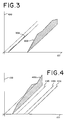
- Figure 3 is a series of graphs depicted in three dimensions (in a rectangular mode for the "X" and "Y” axes) showing the relative attractiveness or repellency of air and DIHYDROFLORALOL having the structure:
- the graphs are based on experiments run for a period of one hour with six intervals of ten minutes each using as the insect to be tested the Horn fly, Haematobia irritans [L.]. The results are tabulated in Table III, infra.
- Figure 4 is a series of graphs depicted in three dimensions (in a rectangular mode for the "X" and "Y” axes) showing the relative attractiveness or repellency of air, ISOCYCLOGERANIOL having the structure: FLORALATE having the structure: and FLORALOL having the structure:
- the graphs are based on experiments run for a period of one hour with six intervals of ten minutes each using as the insect to be tested the Horn fly, Haematobia irritans [L.]. The results are tabulated in Table IV, infra.
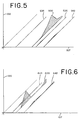
- Figure 5 is a series of graphs depicted in three dimensions (in a rectangular mode for the "X" and "Y" axes) showing the relative attractiveness or repellency of air, CAMEKOL DH having the structure: FLORALOL having the structure: and DIHYDROFLORALOL having the structure:
- the graphs are based on experiments run for a period of one hour with six intervals of ten minutes each using as the insect to be tested the Horn fly, Haematobia irritans [L.]. The results are tabulated in Table V, infra.
- Figure 6 is a series of graphs depicted in three dimensions (in a rectangular mode for the "X" and "Y" axes) showing the relative attractiveness or repellency of air, FLORALATE having the structure: and DIHYDROFLORALOL having the structure:
- the graphs are based on experiments run for a period of one hour with six intervals of ten minutes each using as the insect to be tested the house fly, Musca domestica L .(Diptera:Muscidae). The results are tabulated in Table VI, infra.
- Figure 7 is a series of graphs depicted in three dimensions (in a rectangular mode for the "X" and "Y" axes) showing the relative attractiveness or repellency of air and FLORALOL having the structure:
- the graphs are based on experiments run for a period of one hour with six intervals of ten minutes each using as the insect to be tested the house fly, Musca domestica L .(Diptera:Muscidae). The results are tabulated in Table VII, infra.
- Figure 8A is a bar graph showing the mean number of insects attracted (on the "Y” axis) versus the treatment substance (on the "X” axis) using the semiochemical field trap of Figure 21 with six ports and three infra-red light emitting diodes, showing treatment with:
- Figure 8B is a bar graph showing the mean number of insects (on the "Y” axis) trapped versus treatment substance (on the "X” axis) using the semiochemical field trap of Figure 21 having six ports with three infra-red light emitting diodes.
- the treatment substances used are:
- Figure 8C is a bar graph showing the mean number of insects attracted (on the "Y” axis) versus treatment substance (on the "X” axis) using the semiochemical field trap of Figure 21 (described, infra) using treatment substances:
- Figure 9 is a cut-away side elevation schematic diagram of a screw extruder during the compounding of a resin with insect attractants or repellents including the insect repellent-containing compositions of our invention, while simultaneously adding foaming agent into the hollow portion of the barrel of the extruder, and incorporates the pelletizing apparatus used in the pelletizing of the extruded foamed tow product produced as a result of the extrusion operation.
- Figure 10 is a cut-away side elevation view of the base section of the olfactometer apparatus of U.S. Letters Patent 5,134,892 used in carrying out the testing of the attractants or repellents of our invention indicating in schematic block flow diagram form the utilization of computer-assisted efficacy measuring apparatus; but showing only an air supply entry into the side ports of the olfactometer apparatus with the treatment agent being contained in a control release matrix upstream from the air supply source.
- Figure 11 is a perspective view of an ellipsoidally shaped detergent tablet containing a solid core which includes fused foamed polymeric particles which contain insect repellents which are one of the insect repellent-containing compositions of our invention and, if desired, also containing an additional polymer, e.g., polyethylene.
- the polymer particles may, if desired, also contain additional aromatizing agents.
- Figure 12 is the top view of the ellipsoidally-shaped detergent tablet of Figure 11.
- Figure 13 is a cut-away front view of the ellipsoidally-shaped detergent tablet of Figure 11 in the direction of the arrows in Figure 12.
- Figure 14 is a side-view of the ellipsoidally-shaped detergent tablet of Figure 11.
- Figure 15 is a perspective view of a rectangular parallelepiped-shaped detergent tablet containing a rectangular parallelepiped-shaped core comprising a major proportion of fused foamed polymeric particles which contain insect repellents (e.g., one of the insect repellent-containing compositions of our invention) and may or may not be additionally aromatized and, if desired, an additional polymer which may or may not contain insect repellent compositions and which may or may not be additionally aromatized.
- insect repellents e.g., one of the insect repellent-containing compositions of our invention
- Figure 16 is a top view of the rectangular parallelepiped-shaped detergent tablet of Figure 15.
- Figure 17 is a cut-away front view of the rectangular parallelepiped-shaped tablet of Figure 15 looking in the direction of the arrows in Figure 16.
- Figure 18 is a perspective view of an ellipsoidally-shaped detergent tablet containing a hollow insect repellent agent (and if desired, an additional aromatizing agent) containing core which includes fused foamed polymeric particles containing insect repellent and if desired additional aromatizing agent or, in the alternative, a hollow core of fused foamed polymer wherein the insect repellent which is also an aroma imparting agent (and if desired, an additional aroma imparting agent) is in the solid polymer and not in the void of the plastic core.
- a hollow insect repellent agent and if desired, an additional aromatizing agent
- Figure 19 is a top view of the ellipsoidally-shaped detergent tablet of Figure 18.
- Figure 20 is a front cut-away view of the ellipsoidally-shaped detergent tablet of Figure 18 looking in the direction of the arrows in Figure 19, the core thereof being hollow and either containing an insect repellent material of our invention (and if desired, an additional aroma imparting liquid) or in the alternative being a hollow core wherein the insect repellent material of our invention (and if desired, the additional aroma imparting material) is in the solid fused foamed polymeric particles which make up the core and wherein the void does not contain anything.
- Figure 21 is a perspective view of the semiochemical field trap for testing the attractiveness or repellency for blood feeding arthropods using the insect repellent-containing repellency compositions of our invention or the attractant of our invention which is the compound having the structure:
- Figure 22 is a bar graph showing the mean number of feeding contacts (on the "Y” axis) versus the particular treatment substance (on the "X” axis) for air, FLORALATE having the structure: and geranial having the structure: for a mean feeding contact time of one hour.
- Figure 23 is a bar graph showing the mean number of feeding contacts (on the "Y” axis) versus the particular treatment substance (on the "X” axis) for air, FLORALATE having the structure: and geranial having the structure: for a mean 2-6 hour feeding contact time.
- Figure 24A is a series of graphs depicted in three dimensions (in a rectangular mode for the "x" and “y” axes) showing the relative attractiveness or repellency for mosquitoes ( Aedes aegyptae ) of the compositions of matter:
- Figure 24B is a series of graphs depicted in three dimensions (in a rectangular mode for the "x" and "y” axes) showing the relative attractiveness or repellency for mosquitoes ( Aedes aegyptae ) of the compositions of matter:
- Figure 25A is a series of graphs depicted in three dimensions (in a rectangular mode for the "x" and “y” axes) showing the relative attractiveness or repellency for mosquitoes ( Aedes aegyptae ) of the compositions of matter:
- Figure 25B is a series of graphs depicted in three dimensions (in a rectangular mode for the "x" and "y” axes) showing the relative attractiveness or repellency for mosquitoes ( Aedes aegyptae ) of the following compositions of matter:
- Figure 26A is a series of graphs depicted in three dimensions (in a rectangular mode for the "x" and "y” axes) showing the relative attractiveness or repellency of methyl anthranilate having the structure: and air for mosquitoes ( Aedes aegyptae ).
- the graphs are based on experiments run for a period of one hour with 6 intervals of 10 minutes each using as the insect to be tested the mosquito ( Aedes aegyptae ).
- the results are tabulated in Table X(A), infra.
- Figure 26B is a series of graphs depicted in three dimensions (in a rectangular mode for the "x" and "y” axes) showing the relative attractiveness or repellency for mosquitoes ( Aedes aegyptae ) of methyl anthranilate having the structure: and air.
- the graphs are based on experiments run for a total of 6 hours with 6 intervals of 1 hour each. The results are tabulated in Table X(B), infra.
- Figure 26C is a series of graphs depicted in three dimensions (in a rectangular mode for the "x" and "y” axes) showing the relative attractiveness or repellency for mosquitoes ( Aedes aegyptae ) of methyl anthranilate and air.
- the graphs are based on experiments run for a total of 12 hours with 6 intervals of 2 hours each. The results are tabulated in Table X(C), infra.
- Figure 27A is a series of graphs depicted in three dimensions (in a rectangular mode for the "x" and "y” axes) showing the relative attractiveness or repellency for mosquitoes ( Aedes aegyptae ) of LAVONAXTM having the structure: and MELOZONETM defined according to the structure: (a 50:50 mixture of the compounds having the structures: and a mixture containing 81 mole percent of geraniol having the structure: 14 mole percent of citronellol having the structure: and 5% nerol having the structure: and air.
- the graphs are based on experiments run for a total of 1 hour with 6 intervals of 10 minutes each. The results are tabulated in Table XI(A), infra.
- Figure 27B is a series of graphs depicted in three dimensions (in a rectangular mode for the "x" and "y” axes) showing the relative attractiveness or repellency for mosquitoes ( Aedes aegyptae ) of LAVONAXTM; MELOZONETM; air; and the mixture of compounds, to wit: 81 mole percent geraniol having the structure: 14 mole percent citronellol having the structure: and 5 mole percent nerol having the structure:
- the graphs are based on experiments run for a total of 6 hours with 6 intervals of 1 hour each. The results are tabulated in Table XI(B), infra.
- Figure 28A is a series of graphs depicted in three dimensions in a rectangular mode for the "x" and "y” axes) showing the relative attractiveness or repellency of: "CYCLEMONE ATM", a mixture containing 51 mole percent of the compound having the structure: 17 mole percent of the compound having the structure: and 32 mole percent of the compound having the structure: air and a mixture containing 81.8% geraniol having the structure: 11.66 mole percent citronellol having the structure: and 6.53 mole percent nerol having the structure:
- the graphs are based on experiments run for a total of 1 hour with 6 intervals of 10 minutes each. The results are tabulated in Table XII(A), infra.
- Figure 28B is a series of graphs depicted in three dimensions (in a rectangular mode for the "x" and “y” axes) showing the relative attractiveness or repellency of CYCLEMONE ATM; air; and a mixture containing 81.8% geraniol having the structure: 11.66 mole percent citronellol having the structure: and 6.53 mole percent nerol having the structure:
- the graphs are based on experiments run for a total of 6 hours with 6 intervals of 1 hour each. The results are tabulated in Table XII(B), infra.
- air supply source 3634 provides air to mixing station 3636 wherein the air is mixed with treatment agent from treatment agent source 3635 (source of, for example, the repellent composition which is an appropriate insect repellent-containing composition or the attractant having the structure:
- treatment agent source 3635 source of, for example, the repellent composition which is an appropriate insect repellent-containing composition or the attractant having the structure:
- the resulting mixture passes through tube 3636g and enters the apparatus through the side portals.
- the entry is through a spacer plate and above base plate 3625 .
- the entry of the air-treatment agent is in a direction parallel to the surface of base plate 3625 .
- the base plate 3625 is separated from spacer plate 3629 for the air-treatment agent (e.g., the appropriate insect repellent-containing composition of our invention).
- the air exit is indicated by reference numeral 3537 .
- light is supplied from beneath the enclosed insect feeding and/or stimulating means through light guides 3652 , from light source 3551 which is powered by electric power supply 3550 marketed by RADIO SHACK® Division of Tandy Corporation of Fort Worth, Texas 76102 under the trademark ARCHER®, Catalog No. 276-228 ("1.0 mm optical plastic fiber length 5 meter").
- light source 3551 is KRATOS Monochromatic Illuminator GM 100 Miniature VIS-IR Grating Monochromator (Model No. GM 100-1, GM 100-2, GM 100-3 or GM 100-4) as manufactured by KRATOS Analytical Instruments Corporation, 170 Williams Drive, Ramsey, New Jersey 07446.
- Another light supply source is the KRATOS GM 200 Double Grating Monochromator.
- Another example of a useful light source is the KRATOS GM 252 High Intensity Grating Monochromator.
- the base plate 3625 is also separated from the spacer plate 3629 for the light guides 3652 whereby the light guides 3652 are held in place in the base plate 3625 whereby the light (or other forms of radiation) is directed in a direction perpendicular to the electrical sensor element 3610 .
- Air supply source from location 3634 and treatment agent from location 3635 is mixed at mixing station 3636 whereupon treatment agent and air in admixture is passed through lines 3636a and 3636g through portals located in the spacer element 3628 in a direction along a directional vector parallel to the electrical sensing element 3610 held in place by holders 3610a and 3610b .
- the electrical sensing elements are located directly below the horizontally positioned insect feeding and/or stimulating microporous substantially planar lamina 3670 which is held in place by ring 3660 located on spacer plate 3629 spaced from the base plate 3625 by spacer ring 3628 .
- spacer plate 3629, spacer ring 3628 and base plate 3625 enclose the entire "enclosed insect feeding and/or stimulating means" which have controlled limited access to the external environment surrounding the apparatus and in which the insects to be tested, e.g., mosquitoes, Horn flies or house flies are placed.
- the insect attractant quantitative detecting means made up of wires 3699 (the entire grid being denoted using reference numeral 3610 ) is located immediately beneath the porous membrane 3670 , the outer surface of which contains a feeding stimulant composition or stimulant composition for insects (for example, agar). Immersed in the feeding stimulate composition or stimulant composition for insects (e.g., agar) is electrode 3679 connected to wire 3619 which connects with either wire 3619a or 3619b which is connected to the grid wires 3699 (which make up the insect attractant quantitative detecting means located immediately below lamina 3670 ).
- the sensor causes an electrical impulse caused by the pressure of the insects landing to proceed through wires 3619a and 3619b to an electrically biased differential amplifier 3639 (using electrical power supply 3539 ) also connected to wire 3619c which is connected to the electrode 3679 which is immersed in the feeding stimulant composition or stimulant for the insect and then to a multi-channel A.C. converter 3523 .
- Converter 3523 is associated with program tape storage 3524 , printer 3520 and data link to digital computer 3521 .
- Differential amplifer 3639 is connected in series to electrical bias for psuedo host 3669 which in turn is connected to wire 3619 which in turn is connected to the electrode 3679 immersed in the insect stimulant composition located on the surface of porous lamina 3670 .
- the semiochemical field trap 1000 for blood feeding arthopods, field trap 1000 is located in a three-space with axes perpendicular to one another.
- the semiochemical field trap 1000 is shown in perspective view in Figure 21 comprising:
- the semiochemical field trap 1000 of Figure 21 is disclosed in detail in U.S. Letters Patent 5,228,233 issued on July 20, 1993.
- Figure 1A is a series of graphs depicted in three-dimensions (in a rectangular mode for the "X" and "Y" axes) showing the relative attractiveness or repellency of air, ISOCYCLOGERANIOL having the structure: and FLORALOL having the structure: with respect to attractiveness or repellency of the mosquito, Aedes aegypti .
- the graph indicated by reference numeral 150a is for air.
- the graph indicated by reference numeral 145a is for ISOCYCLOGERANIOL.
- the graph indicated by reference numeral 176a is for FLORALOL.
- the "X" axis along which the particular materials are measured insofar as their attractiveness or repellency is concerned is indicated by reference numeral 107 .
- Figure 1B is a series of graphs depicted in three-dimensions (in a rectangular mode for the "X" and "Y" axes) showing the relative attractiveness or repellency of air, ISOCYCLOGERANIOL and FLORALOL with reference to attractiveness or repellency for Aedes aegypti .
- the graphs are based on experiments run for a period of six hours with six intervals of one hour each.
- the graph indicated by reference numeral 145b is for ISOCYCLOGERANIOL.
- the graph indicated by reference numeral 150b is for air.
- the graph indicated by reference numeral 176b is for FLORALOL.
- Table I(B) Composition Tested Graph No. Insects Collected per Interval ISOCYCLOGERANIOL 145b 3 0 2 5 4 0 Air 150b 494 547 580 566 559 533 FLORALOL 176b 0 5 1 4 2 0
- Figure 2A is a series of graphs depicted in three-dimensions (in a rectangular mode for the "X" and "Y" axes) showing the relative attractiveness or repellency of the materials:
- Figure 2B is a series of graphs depicted in three-dimensions (in a rectangular mode for the "X" and "Y" axes) showing the relative attractiveness or repellency of the materials:
- Figure 3 is a series of graphs depicted in three-dimensions (in a rectangular mode for the "X” and "Y" axes) showing the relative attractiveness or repellency of the materials:
- Figure 4 is a series of graphs depicted in three dimensions (in a rectangular mode for the "X" and "Y" axes) showing the relative attractiveness or repellency of the materials:
- the graphs are based on experiments run for a period of one hour with six intervals of ten minutes each using as the insect to be tested the Horn fly ( Haematobia irritans [L.]).
- the graph indicated by reference numeral 400 is for air.
- the graph indicated by reference numeral 445 is for ISOCYCLOGERANIOL.
- the graph indicated by reference numeral 443 is for FLORALATE.
- the graph indicated by reference numeral 426 is for FLORALOL.
- Table IV Composition Tested Graph No.
- Figure 5 is a series of graphs depicted in three dimensions (in a rectangular mode for the "X" and "Y" axes) showing the relative attractiveness or repellency of the materials:
- the graphs are based on experiments run for a period of one hour with six intervals of ten minutes each using as the insect to be tested the Horn fly ( Haematobia irritans [L.]).
- the graph indicated by reference numeral 500 is for air.
- the graph indicated by reference numeral 536 is for CAMEKOL DH.
- the graph indicated by reference numeral 526 is for FLORALOL.
- the graph indicated by reference numeral 542 is for DIHYDROFLORALOL.
- Table V The results are tabulated in Table V as follows: Composition Tested Graph No. Insects Collected per Interval CAMEKOL DH 536 1 1 0 0 1 0 Air 500 1 5 73 170 43 8 FLORALOL 526 4 1 1 0 0 0 DIHYDROFLORALOL 542 0 6 0 1 0 0
- Figure 6 is a series of graphs depicted in three dimensions (in a rectangular mode for the "X' and "Y" axes) showing the relative attractiveness or repellency of the materials:
- the graphs are based on experiments run for a period of one hour with six intervals of ten minutes each using as the insect to be tested the house fly ( Musca domestica L .(Diptera:Muscidae)).
- the graph indicated by reference numeral 643 is for FLORALATE.
- the graph indicated by reference numeral 600 is for air.
- the graph indicated by reference numeral 642 is for DIHYDROFLORALOL.
- Table VI Composition Tested Graph No. Insects Collected per Interval FLORALATE 643 0 3 0 0 0 2 Air 600 0 62 1 1 1 19 DIHYDROFLORALOL 642 0 6 3 0 2 7
- Figure 7 is a series of graphs depicted in three dimensions (in a rectangular mode for the "X" and "Y" axes) showing the relative attractiveness or repellency of the materials:
- the graphs are based on experiments run for a period of one hour with six intervals of ten minutes each using as the insect to be tested the house fly, Musca domestica L .(Diptera:Muscidae).
- the graph indicated by reference numeral 700 is for air.
- the graph indicated by reference numeral 726 is for FLORALOL.
- the results are tabulated in Table VII as follows: C omposition Tested Graph No. Insects Collected per Interval FLORALOL 726 2 8 0 3 0 0 Air 700 172 17 0 2 0 0
- Figure 8A is a graph showing the mean number of mosquitoes collected (on the "Y” axis) versus the treatment substance (on the "X” axis) using the field trap of Figure 21 having six ports and three infra-red light emitting diodes and using the following materials:
- the bar graph showing the mean number of insects collected using the mixture of air and carbon dioxide is indicated by reference numeral 8000a .
- the bar graph indicating the mean number of mosquitoes collected using CAMEKOL DH is indicated by reference number 8036a .
- the bar graph using ISOCYCLOGERANIOL is indicated by reference numeral 8045a .
- Figure 8B is a series of bar graphs showing the mean number of mosquitoes collected on the "Y" axis versus the treatment substance on the "X' axis using the semiochemical field trap of Figure 21 having six ports with three infra-red light emitting diodes.
- the substances used are:
- Figure 8C is a series of bar graphs indicating the mean number of mosquitoes trapped on the "Y" axis versus the treatment substance on the "X" axis using a semiochemical field trap as illustrated in Figure 21 having six ports with three infra-red light emitting diodes using the following substances:
- the bar graph showing the results using the mixture of air and carbon dioxide is indicated by reference numeral 8000c .
- the bar graph showing the results using FLORALOL is indicated by reference numeral 8026c .
- the bar graph showing the results using FLORALATE is indicated by reference numeral 8043c .
- polymer 12 and 13 is admixed in vessel 14 and added at barrel segment S-1 of barrel 16 to the extruder which is powered by motor 15 held in place by bracket 23A .
- barrel segment S-6 one of segments 18a, 18b, 18c or 18d
- the repellent/perfumant mixture is pumped through pump 23 into barrel segment 18c / S-6 .
- foaming agent is added from vessel 19 into barrel segment S-8 from barrel segment S-10 , a foamed tow containing polymer having imbedded therein insect repellent/perfume is passed through cooling bath 20 and the cooled tow 22 is then passed into mascerating machine 21 wherein the tow is chopped into particles and held in container 21a for future use, e.g., for use in conjunction with the manufacture of the insect repellent soap or detergent bars described in detail, infra.
- a preferred embodiment of our invention comprises an ellipsoidally shaped detergent tablet 830 .
- a preferred embodiment of our invention comprises an ellipsoidally-shaped detergent tablet 830 containing a solid plastic core 832 which can be fabricated from, for example, polyethylene, polypropylene, nylon, a biodegradable polymer such as poly(epsilon caprolactone) or any polymer capable of having therein microvoids from which an insect repelling/perfuming substance, e.g., at least one of the appropriate insect repellent-containing compositions of our invention will be controllably transported from the plastic core into and through the soap cake over a reasonable period of time during the use of the soap cake.
- Such polymers can be microporous polymers, such as those described in U.S. Letters Patent No. 4,247,498 issued on January 27, 1981.
- detergent 830' Surrounding the central plastic core containing insect repellent 832 , is detergent 830' which is in the solid phase at ambient conditions, e.g., room temperature and atmospheric pressure.
- workable detergents 830' are "elastic" detergents such as those described in U.S. Letters Patent No. 4,181,632 issued on January 1, 1980, or "transparent” soaps such as those set forth in U.S. Letters Patent No. 4,165,293 issued on August 21, 1979.
- Other examples of the detergent 830' useful in our invention are those set forth as "variegated soaps" in Canadian Letters Patent No. 1,101,165 issued on May 19, 1981.
- the insect repellent agent originally located in plastic core 832 is transported at a steady state from core 832 through core surface 831 through the detergent 830' and finally through the surface of the detergent bar at, for example, 833 , 834 , 835 and 836 .
- the detergent bar or tablet 830 of our invention may be of any geometric shape, for example, a rectangular parallelepiped tablet as is shown in Figures 15, 16 and 17 containing solid plastic core 839 .
- the insect repellent located in solid plastic core 839 on use of the detergent bar passes through at steady state, surface 837 of Figure 16, detergent 838 and finally surface 839 at, for example, locations 840 , 841 , 842 and 843 .
- the environment surrounding the detergent bar on use thereof is then treated with the insect repellent at 843 , 844 and 845 , for example.
- aromatizing agent can also be contained in the detergent bar (if desired) and so the environment surrounding the detergent bar on use thereof would also be aesthetically aromatized at 843 , 844 and 845 , for example, if the appropriate insect repellent-containing composition of our invention is insufficient for such aromatization. In certain instances such appropriate insect repellent-containing compositions are indeed sufficient for such aromatization.
- the plastic core of the detergent tablet 830 may have a single finite void at its center 851 (of Figures 19 and 20) in which the insect repellent agent and optionally any additional aromatizing agents are contained.
- the plastic core is a shell 848 having outer surface 852 (shown in Figures 19 and 20).
- the insect repellent agent (and optionally any additional aromatizing agent) contained in the void in the plastic core permeates through shell 848 , past surfce 852 at a steady state, through the detergent 847 and to the environment at, for example, 856 , 857 858 and 859 .
- the core can also contain other materials for therapeutic use, for example, bacteriastats, deodorizing agents and the like which are compatible with the appropriate insect repellent-containing compositions of our invention.
- the plastic core of the detergent tablet of Figures 18, 19 and 20 may have an empty single finite void at its center 851 with the insect repellent contained in the shell 848 .
- the hollow core or the solid core can be used as an insect imparting and aroma imparting or air freshener household article.
- the detergent tablet of Figures 18, 19 and 20 can be so fabricated that it will float on the surface of the liquid in which it is being used and this physical attribute has certain obvious advantages.
- Figures 18, 19 and 20 may have an empty single finite void at its center 851 with the insect repellent contained in the shell 848 .
- the hollow core or the solid core can be used as an insect imparting and aroma imparting or air freshener household article.
- the detergent tablet of Figures 18, 19 and 20 can be so fabricated that it will float on the surface of the liquid in which it is being used and this physical attribute has certain obvious advantages.
- Figure 22 is a series of bar graphs showing the feeding contact for a mean feeding contact for a mean one hour feeding contact period of time using the olfactometer apparatus of Figure 10.
- the number of feeding contacts are set forth on the "Y" axis and the treatment substance is set forth on the "X” axis.
- the bar graph indicated by reference numeral 2200 is for air and shows the results using said air.
- the bar graph indicated by reference numeral 2243 shows the results using FLORALATE having the structure:
- the bar graph indicated by reference numeral 2244 shows the results using geranial having the structure:
- Figure 23 is a series of bar graphs showing on the "Y" axis the mean 2-6 hour number of feeding contacts for mosquitoes Aedes aegypti using the olfactometer of Figure 10 versus the treatment substance on the "X' axis.
- the graph indicated by reference numeral 2300 is the graph showing the results using air.
- the graph indicated by reference numeral 2343 is the bar graph showing the results using FLORALATE having the structure:
- the graph indicated by reference numeral 2344 is the bar graph showing the results of this experiment using geranial having the structure:
- Figure 24A is a series of graphs depicted in three dimensions (in a rectangular mode for the "x" and "y" axes) showing the relative attractiveness or repellency of the following compositions of matter:
- the graph indicated by reference numeral 32a is for air.
- the graph indicated by reference numeral 30a is for the compound having the structure:
- the graphs show the attractancy or repellency for mosquitoes ( Aedes aegyptae ) using the apparatus of Figure 10.
- the graphs are based on experiments run for a total of 1 hour with six intervals of 10 minutes each.
- the results are tabulated in Table VIII(A) as follows:
- Figure 24B is a series of graphs depicted in three dimensions (in a rectangular mode for the "x" and "y" axes) showing the relative attractiveness or repellency of the following compositions of matter:
- the graph indicated by reference numeral 30b is for the compound having the structure:
- the graph indicated by reference numeral 32b is for air.
- the graphs show the attractancy or repellency for mosquitoes ( Aedes aegyptae ) using the apparatus of Figure 10.
- the graphs are based on experiments run for a total of 6 hours with 6 intervals of 1 hour each. The results are tabulated in Table VIII(B) below:
- Figure 25A is a series of graphs depicted in three dimensions (in a rectangular mode for the "x" and "y" axes) showing the relative attractiveness or repellency of several compositions of matter.
- the graph indicated by reference numeral 40a is for the compound having the structure:
- the graph indicated by reference numeral 42a is for air.
- the graph indicated by reference numeral 44a is for a mixture containing 81 mole percent geraniol having the structure: 14 mole percent nerol having the structure: and 5 mole percent citronellol having the structure:
- the graphs show the attractancy or repellency for mosquitoes ( Aedes aegyptae ) using the apparatus of Figure 10.
- the graphs are based on experiments run for a total of 1 hour with six intervals of 10 minutes each.
- the results are tabulated in Table IX(A) as follows:
- Figure 4B is a series of graphs depicted in three dimensions (in a rectangular mode for the "x" and "y" axes) showing the relative attractiveness or repellency of several compositions of matter.
- the graph indicated by reference numeral 40b is for the compound having the structure:
- the graph indicated by reference numeral 42b is for air.
- the graph indicated by reference numeral 44b is for a mixture containing 81 mole percent geraniol, 14 mole percent nerol and 5 mole percent citronellol.
- the graphs show the attractancy or repellency for mosquitoes ( Aedes aegyptae ) using the apparatus of Figure 10.
- the graphs are based on experiments run for a total of 6 hours with six intervals of 1 hour each.
- the results are tabulated in Table IX(B) as follows:
- Figure 26A is a series of graphs depicted in three dimensions (in a rectangular mode for the "x" and "y" axes) showing the relative attractiveness or repellency of several compositions of matter.
- the graph indicated by reference numeral 1030a is for methyl anthranilate having the structure:
- the graph indicated by reference numeral 1032a is for air.
- the graphs show the attractancy or repellency for the mosquito species Aedes aegyptae using the apparatus of Figure 10.
- the graphs are based on experiments run for a total of one hour with six intervals of ten minutes each.
- the results are tabulated in Table X(A) as follows: Composition Tested Graph No. Insects Collected Per Interval Methyl anthranilate 1030a 0 0 0 0 0 0 Air 1032a 68 87 204 105 97 227
- Figure 26B is a series of graphs depicted in three dimensions (in a rectangular mode for the "x" and "y" axes) showing the relative attractiveness or repellency of several compositions of matter.
- the graph indicated by reference numeral 1030b is for methyl anthranilate.
- the graph indicated by reference numeral 1032b is for air.
- the graphs show the attractancy or repellency for the mosquito species Aedes aegyptae using the apparatus of Figure 10.
- the graphs are based on experiments run for a total of six hours with six intervals of one hour each. The results are tabulated in Table X(B) below as follows: Composition Tested Graph No. Insects Collected Per Interval Methyl anthranilate 1030b 0 0 0 0 0 0 Air 1032b 227 142 205 229 175 256
- Figure 26C is a series of graphs depicted in three dimensions (in a rectangular mode for the "x" and "y" axes) showing the relative attractiveness or repellency of several compositions of matter.
- the graph indicated by reference numeral 1030c is for methyl anthranilate.
- the graph indicated by reference numeral 1032c is for air.
- the graphs show the attractancy or repellancy for the mosquito species Aedes aegyptae using the apparatus of Figure 10.
- the graphs are based on experiments run for a total of twelve hours with six intervals of two hours each.
- the results are tabulated in Table X(C) as follows: Composition Tested Graph No. Insects Collected Per Interval Methyl anthranilate 1030c 1 4 0 0 0 1 Air 1032c 226 383 374 340 289 292
- Figure 27A is a series of graphs depicted in three dimensions (in a rectangular mode for the "x" and "y" axes) showing the relative attractiveness or repellency of several compositions of matter.
- the graph indicated by reference numeral 1040a is for LAVONAXTM having the structure:
- the graph indicated by reference numeral 1041a is for MELOZONETM, defined according to the structure: a 50:50 mixture of the compound having the structure: and the compound having the structure:
- the graph indicated by reference numeral 1042a is for air.
- the graph indicated by reference numeral 1043a is for a mixture containing 81 mole percent geraniol having the structure: 14 mole percent citronellol having the structure: and 5 mole percent nerol having the structure:
- the graphs shows the attractancy or repellency for the mosquito species Aedes aegyptae using the apparatus of Figure 10. The graphs are based on experiments run for a total of one hour with six intervals of ten minutes each. The results are tabulated in Table XI(A) as follows:
- Figure 27B is a series of graphs depicted in three dimensions (in a rectangular mode for the "x" and "y" axes) showing the relative attractiveness or repellency of several compositions of matter.
- the graph indicated by reference numeral 1040b is for LAVONAXTM.
- the graph indicated by reference numeral 1041b is for MELOZONETM.
- the graph indicated by reference numeral 1042b is for air.
- the graph indicated by reference numeral 1043b is for the 81 mole percent:14 mole percent:5 mole percent mixture of geraniol:citronellol:nerol.
- the graphs shows the attractancy or repellency for mosquitoes Aedes aegyptae using the apparatus of Figure 10.
- the graphs are based on experiments run for a total of six hours with six intervals of one hour each. The results are tabulated in Table XI(B) below:
- Figure 28A is a series of graphs depicted in three dimensions (in a rectangular mode for the "x" and "y" axes) showing the relative attractiveness or repellency of several compositions of matter.
- the graph indicated by reference numeral 1050a is for CYCLEMONE ATM, a mixture of 51 mole percent of the compound having the structure: 17 mole percent of the compound having the structure: and 32 mole percent of the compound having the structure:
- the graph indicated by reference numeral 1052a is for air.
- the graph indicated by reference numeral 1053a is for a mixture containing 81.8 mole percent geraniol having the structure: 11.66 mole percent citronellol having the structure: and 6.53 mole percent nerol having the structure:
- the graphs show the attractancy or repellency for the mosquito species Aedes aegyptae using the apparatus of Figure 10.
- the graphs are based on experiments run for a total of one hour with six intervals of ten minutes each. The results are tabulated in Table XII(A) as follows: Composition Tested Graph No.
- Figure 28B is a series of graphs depicted in three dimensions (in a rectangular mode for the "x" and "y" axes) showing the relative attractiveness or repellency of several compositions of matter.
- the graph indicated by reference numeral 1050b is for CYCLEMONE ATM.
- the graph indicated by reference numeral 1052b is for air.
- the graph indicated by reference numeral 1053b is for an 81.8 mole percent:11.66 mole percent:6.53 mole percent mixture of geraniol:citronellol:nerol.
- the graphs show the attractancy or repellency for the mosquito species Aedes aegyptae using the apparatus of Figure 10.
- a transparent candle base mixture is produced by intimately admixing the following ingredients: Ingredients Parts by Weight VERSAMID® 1635 34.0 Barlol 12C2 51.0 Butyl Stearate 3.5 NEVEX® 100 5.0 SPAN® 1.5 Isopropyl Isostearate 4.0 Isopropyl Myristate 4.0
- the autoclave is sealed and heated to 180°C under 25 atmospheres pressure and maintained with vigorous shaking for a period of five hours. At the end of the five hour period, the autoclave is depressurized (being under a nitrogen pressure atmosphere) and the autoclave is opened and the contents are then poured into cylindrical candle molds 4" in height and 2" in diameter containing 0.125" wicks.
- the resulting candles have efficacious Aedes aegypti , Aedes albopictus , and Musca domestica L . repellencies and have aesthetically pleasing aromas on use.
- the candles are effective in preventing house flies and the mosquito species Aedes aegypti and Aedes albopictus from entering a room in which four candles have been burning for 15 minutes, the said room having dimensions of 6' x 15' x 15' and having a 2' x 2' open portal adjacent to a house fly and mosquito-infested region in the month of August, 1992 in the temperate zone of Highlands, New Jersey adjacent Raritan Bay.
- Candle “A” contained 95% Paraffin Wax and 5% of ISOCYCLOGERANIOL ethyl carbonate having the structure:
- Candle “B” contained 90% Paraffin Wax and 10% citronella oil.
- Candle “C” contained only Paraffin Wax.
- the candles are allowed to burn for 20 minutes and the number of house flies ( Musca domestica L .(Diptera:Muscidae)) and mosquitoes ( Aedes aegypti and Aedes albopictus ) repelled is recorded for the next 60 minutes with the following equipment and procedure:
- the evaluation was conducted in a 28.3 cubic meter chamber with airing ports.
- a screened cage measuring 15 cm x 15 cm x 47.5 cm was attached inside an upper airing port, and a screened repellency observation cage measuring 15 cm x 15 cm x 32.5 cm was attached outside the upper airing port.
- the two cages were held together by a Masonite plate which fit firmly in the airing port.
- a 4-cm hole located in the center of each Masonite plate provided an escape for the test insects. A barrier was used to close the hole.
- a caged grey mouse was used as an attractant and was placed inside the chamber in the larger section of the repellency cage.
- the number of house flies, Aedes aegypti mosquitoes and Aedes albopictus mosquitoes repelled were those escaping to the outside cage. For the control, counts were made in a similar manner, but no candle was burned.
- the overall average percent of house flies, Aedes aegypti and Aedes albopictus mosquitoes repelled for each candle for 60 minutes was as follows:
- Paraffin wax is intimately admixed at 150°C and 10 atmospheres pressure with the mixture of the compound having the structure: and the compound having the structure: in an autoclave with intensive shaking.
- the autoclave pressure is maintained with a nitrogen atmosphere.
- the autoclave is depressurized, the autoclave is opened and the resulting mixture is poured into cylindrical candle molds containing wicks.
- the resulting candles on use evolve an aesthetically pleasing aroma and, in addition, give rise to efficacious mosquito repellency (repellency against Aedes aegyptae ).
- the candles are effective in preventing mosquitoes from entering a room in which one candle is burning for a period of 10 minutes, the said room having the dimensions of 6' x 15' x 15' having a 3' x 3' open portal adjacent to a mosquito infested region ( Aedes aegyptae infested region) in the month of August in the temperate zone (location: Highlands, New Jersey next to Raritan Bay).
- a transparent candle base mixture is produced by intimately admixing the following ingredients: Ingredients Parts by Weight VERSAMID® 1635 34.0 Barlol 12C2 51.0 Butyl Stearate 3.5 NEVEX® 100 5.0 SPAN® 1.5 Isopropyl Isostearate 4.0 Isopropyl Myristate 4.0
- the foregoing mixture is placed in an autoclave and intimately admixed with a perfuming-insect repellent composition containing 5 parts by weight of the compound having the structure: and 1 part by weight of the compound having the structure: based on the total candle base composition.
- the autoclave is sealed and heated to 180°C under 15 atmospheres pressure and maintained with vigorous shaking for a period of 5 hours. At the end of the 5 hour period, the autoclave is depressurized (being a nitrogen pressure atmosphere) and the autoclave is opened and the contents are then poured into cylindrical candle molds 4" in height and 2" in diameter containing 0.125" wicks.
- the resulting candles have efficacious Aedes aegyptae repellencies and have aesthetically pleasing aromas on use.
- the candles are effective in preventing Aedes aegyptae from entering a room in which two candles have been burning for 15 minutes, the said room having dimensions of 6' x 15' x 15' and having a 3' x 3' open portal adjacent a Aedes aegyptae -infested region in the month of August, in the temperate zone of Highlands, New Jersey adjacent Raritan Bay.
- the mixture is poured into molds following the conventional practice in the manufacture of molded candles. As the candles cool they harden. The candles are then freed from the molds and tested for Aedes aegyptae repellency.
- the candles are effective in preventing Aedes aegyptae from entering a room in which two candles have been burning for 15 minutes, and said room having dimensions of 6' x 15' x 15' and having a 3' x 3' open portal adjacent to an Aedes aegyptae -infested swamp region in the month of August in the temperate zone of Highlands, New Jersey adjacent Raritan Bay.
- Paraffin wax is intimately admixed at 150°C and 10 atmospheres pressure with the mixture of LAVONAXTM and Methyl anthranilate in an autoclave with intensive shaking.
- the autoclave pressure is maintained with a nitrogen atmosphere.
- the autoclave is depressurized, the autoclave is opened and the resulting mixture is poured into cylindrical candle molds containing wicks.
- the resulting candles on use evolve an aesthetically pleasing aroma and, in addition, give rise to efficacious mosquito repellency ( Aedes aegyptae ).
- the candles are effective in preventing mosquitoes from entering a room in which one candle is burning for a period of 10 minutes, the said room having the dimensions 6' x 15' x 15' having a 3' x 3' open portal adjacent to a mosquito ( Aedes aegyptae )-infested region in the month of August in the temperate zone (location: Highlands, New Jersey next to Raritan Bay).
- a transparent candle base mixture is produced by intimately admixing the following ingredients: Ingredients Parts by Weight VERSAMID® 1635 34.0 Barlol 12C2 51.0 Butyl Stearate 3.5 NEVEX® 100 5.0 SPAN® 1.5 Isopropyl Isostearate 4.0 Isopropyl Myristate 4.0
- the foregoing mixture is placed in an autoclave and intimately admixed with a perfuming-insect repelling composition containing 3 parts by weight of a mixture containing 60% of the compound having the structure: and 40% of the compound having the structure: (MELOZONETM) and 4 parts by weight of CYCLEMONE ATM, a mixture containing 51 mole percent of the compound having the structure: 17 mole percent of the compound having the structure: and 32 mole percent of the compound having the structure: at the rate of 8% by weight of the total candle base composition.
- a perfuming-insect repelling composition containing 3 parts by weight of a mixture containing 60% of the compound having the structure: and 40% of the compound having the structure: (MELOZONETM) and 4 parts by weight of CYCLEMONE ATM, a mixture containing 51 mole percent of the compound having the structure: 17 mole percent of the compound having the structure: and 32 mole percent of the compound having the structure: at the rate of 8% by weight of the total candle base composition
- the autoclave is sealed and heated to 180°C under 15 atmospheres pressure and maintained with vigorous shaking for a period of 5 hours. At the end of the 5 hour period, the autoclave is depressurized (being under a nitrogen pressure atmosphere) and the autoclave is opened and the contents are then poured into cylindrical candle molds four inches in height and two inches in diameter containing 0.125" wicks.
- the resulting candles have efficacious mosquito ( Aedes aegyptae ) repellencies and have aesthetically pleasing aromas on use.
- the candles are effective in preventing mosquitoes ( Aedes aegyptae ) from entering a room in which two candles have been burning for 15 minutes, the said room having dimensions of 6' x 15' x 15' and having a 3' x 3' open portal adjacent a mosquito (Aedes aegyptae)-infested region in the month of August, in the temperate zone of Highlands, New Jersey adjacent Raritan Bay.
Landscapes
- Life Sciences & Earth Sciences (AREA)
- Agronomy & Crop Science (AREA)
- Plant Pathology (AREA)
- Health & Medical Sciences (AREA)
- Engineering & Computer Science (AREA)
- Dentistry (AREA)
- General Health & Medical Sciences (AREA)
- Wood Science & Technology (AREA)
- Zoology (AREA)
- Environmental Sciences (AREA)
- Agricultural Chemicals And Associated Chemicals (AREA)
- Organic Low-Molecular-Weight Compounds And Preparation Thereof (AREA)
Applications Claiming Priority (8)
| Application Number | Priority Date | Filing Date | Title |
|---|---|---|---|
| US61044 | 1993-05-14 | ||
| US08/061,044 US5464626A (en) | 1993-05-14 | 1993-05-14 | Dimethyl substituted oxymethyl cyclohexane derivatives and uses thereof for their insect attractancy properties |
| US15704393A | 1993-11-26 | 1993-11-26 | |
| US157420 | 1993-11-26 | ||
| US157043 | 1993-11-26 | ||
| US08/157,420 US5354783A (en) | 1993-11-26 | 1993-11-26 | Method for repelling Aedes aegyptae using carbocyclic ketones, and aldehyde in admixture |
| EP97115942A EP0815728A3 (fr) | 1993-05-14 | 1994-05-13 | Cétones, alcools, aldéhydes, nitriles et esters acycliques et carbocycliques et leurs utilisations pour leurs propriétés répulsives d'insectes |
| EP19940303455 EP0629344B1 (fr) | 1993-05-14 | 1994-05-13 | Cétones, alcools, aldéhydes, nitriles et esters acycliques ou carbocycliques et leurs utilisations pour leurs propiétes répulsives et attractives d'insectes |
Related Parent Applications (1)
| Application Number | Title | Priority Date | Filing Date |
|---|---|---|---|
| EP97115942A Division EP0815728A3 (fr) | 1993-05-14 | 1994-05-13 | Cétones, alcools, aldéhydes, nitriles et esters acycliques et carbocycliques et leurs utilisations pour leurs propriétés répulsives d'insectes |
Publications (2)
| Publication Number | Publication Date |
|---|---|
| EP1042953A2 true EP1042953A2 (fr) | 2000-10-11 |
| EP1042953A3 EP1042953A3 (fr) | 2000-12-13 |
Family
ID=27514164
Family Applications (1)
| Application Number | Title | Priority Date | Filing Date |
|---|---|---|---|
| EP00113370A Withdrawn EP1042953A3 (fr) | 1993-05-14 | 1994-05-13 | Utilisation de cétones, d'alcools, d'aldéhydes, de nitriles et d'esters acycliques et carbocycliques pour repousser ou attirer les insectes |
Country Status (1)
| Country | Link |
|---|---|
| EP (1) | EP1042953A3 (fr) |
Cited By (2)
| Publication number | Priority date | Publication date | Assignee | Title |
|---|---|---|---|---|
| US20120232160A1 (en) * | 2009-12-03 | 2012-09-13 | Phillip Edward Kaufman | Materials and Methods for Pest Control |
| JP2013177342A (ja) * | 2012-02-28 | 2013-09-09 | Kao Corp | 昆虫防除剤 |
Family Cites Families (2)
| Publication number | Priority date | Publication date | Assignee | Title |
|---|---|---|---|---|
| JPS54110321A (en) * | 1978-02-20 | 1979-08-29 | Ajinomoto Co Inc | Insecticide |
| US4507225A (en) * | 1983-04-21 | 1985-03-26 | International Flavors & Fragrances Inc. | Process for augmenting or enhancing the aroma of perfume compositions, colognes and perfumed articles with 1-phenylpenten-4-one-1 and methyl homologues thereof |
-
1994
- 1994-05-13 EP EP00113370A patent/EP1042953A3/fr not_active Withdrawn
Cited By (2)
| Publication number | Priority date | Publication date | Assignee | Title |
|---|---|---|---|---|
| US20120232160A1 (en) * | 2009-12-03 | 2012-09-13 | Phillip Edward Kaufman | Materials and Methods for Pest Control |
| JP2013177342A (ja) * | 2012-02-28 | 2013-09-09 | Kao Corp | 昆虫防除剤 |
Also Published As
| Publication number | Publication date |
|---|---|
| EP1042953A3 (fr) | 2000-12-13 |
Similar Documents
| Publication | Publication Date | Title |
|---|---|---|
| US6143288A (en) | Insect repellent and attractant compositions and methods for using same | |
| US5665781A (en) | Use of unsaturated aldehyde and alkanol derivatives for their mosquito repellency properties | |
| US5441988A (en) | Housefly, horn fly, and mosquito repellents and apparatus useful in testing efficacy of same | |
| US5205065A (en) | Use of ketone, alcohol and schiff base-containing compositions for repelling blood feeding arthropods and apparatus for determining repellency and attractancy of semio-chemicals against and for blood feeding arthropods | |
| US5635173A (en) | Insect repellent and attractant compositions and methods for using same | |
| US5855903A (en) | Use of dimethyl substituted oxymethyl cyclohexane derivatives for their insect repellency properties | |
| US4696676A (en) | Use of 1-nonen-3-ol for repelling insects | |
| US4693890A (en) | Use of 1-nonen-3-ol for repelling insects | |
| US5633236A (en) | Insect repellent compositions and methods for using same | |
| US5472701A (en) | Use of dimethyl substituted oxymethyl cyclohexene derivatives for their repellency properties | |
| US5321048A (en) | Use of ketone and alcohol-containing compositions for repelling blood feeding arthropods | |
| US5683687A (en) | Insect attractant compositions and methods for using same | |
| US5447714A (en) | Method for repelling aedes aegyptae using carbocyclic ketones, aldehydes and esters | |
| US4759228A (en) | Process for determination of repellency and attractancy | |
| US5281621A (en) | Use of ketone, alcohol and Schiff base-containing compositions for repelling blood feeding arthropods and apparatus for determining repellency and attractancy of semiochemicals against and for blood feeding arthropods | |
| US5387418A (en) | Method for repelling Aedes aegyptae using oxy-substituted carbocyclic compounds | |
| US4818526A (en) | Use of dibutyl succinate, dimethyl disulfide and mixtures of same as mosquito attractants | |
| US4748860A (en) | Apparatus for determination of insect repellency and attractancy | |
| US5204372A (en) | Use of ketone, alcohol and schiff base-containing compositions for repelling blood feeding arthropods and apparatus for determining repellency and attractancy of semiochemicals against and for blood feeding arthropods | |
| EP0629344B1 (fr) | Cétones, alcools, aldéhydes, nitriles et esters acycliques ou carbocycliques et leurs utilisations pour leurs propiétes répulsives et attractives d'insectes | |
| EP1042953A2 (fr) | Utilisation de cétones, d'alcools, d'aldéhydes, de nitriles et d'esters acycliques et carbocycliques pour repousser ou attirer les insectes | |
| US4801448A (en) | Use of dibutyl succinate, dimethyl disulfide and mixtures of same as insect attractants | |
| US4911906A (en) | Use of dibutyl succinate as an insect attractants | |
| US5458882A (en) | Method for repelling aedes aegyptae using 3,7-dimethyl-6-octenenitrile and/or 2(3,3-dimethyl-2-norbornylidene)ethanol-1 | |
| US4808403A (en) | Use of N,N-diethyl-m-toluamide and/or the ethyl ester of 2-methyl-3-pentenoic acid as insect attractants |
Legal Events
| Date | Code | Title | Description |
|---|---|---|---|
| PUAI | Public reference made under article 153(3) epc to a published international application that has entered the european phase |
Free format text: ORIGINAL CODE: 0009012 |
|
| 17P | Request for examination filed |
Effective date: 20000623 |
|
| AC | Divisional application: reference to earlier application |
Ref document number: 815728 Country of ref document: EP Ref document number: 629344 Country of ref document: EP |
|
| AK | Designated contracting states |
Kind code of ref document: A2 Designated state(s): DE ES FR IT |
|
| PUAL | Search report despatched |
Free format text: ORIGINAL CODE: 0009013 |
|
| AK | Designated contracting states |
Kind code of ref document: A3 Designated state(s): DE ES FR IT |
|
| RIN1 | Information on inventor provided before grant (corrected) |
Inventor name: BUTLER, JERRY F. Inventor name: WARREN, CRAIG B. Inventor name: NARULA, ANUBHAV P.S. Inventor name: MARIN, ANNA B. |
|
| AKX | Designation fees paid |
Free format text: DE ES FR IT |
|
| STAA | Information on the status of an ep patent application or granted ep patent |
Free format text: STATUS: THE APPLICATION IS DEEMED TO BE WITHDRAWN |
|
| 18D | Application deemed to be withdrawn |
Effective date: 20010614 |