EP1045247A2 - Procédé de séparation et d'analyse des lipoprotéines, dispositif pour la mise-en-oeuvre dudit procédé, ainsi qu'un système comportant ce dispositif - Google Patents
Procédé de séparation et d'analyse des lipoprotéines, dispositif pour la mise-en-oeuvre dudit procédé, ainsi qu'un système comportant ce dispositif Download PDFInfo
- Publication number
- EP1045247A2 EP1045247A2 EP00108157A EP00108157A EP1045247A2 EP 1045247 A2 EP1045247 A2 EP 1045247A2 EP 00108157 A EP00108157 A EP 00108157A EP 00108157 A EP00108157 A EP 00108157A EP 1045247 A2 EP1045247 A2 EP 1045247A2
- Authority
- EP
- European Patent Office
- Prior art keywords
- predetermined component
- specimen
- lipoprotein
- modification
- sample
- Prior art date
- Legal status (The legal status is an assumption and is not a legal conclusion. Google has not performed a legal analysis and makes no representation as to the accuracy of the status listed.)
- Granted
Links
- 102000004895 Lipoproteins Human genes 0.000 title claims abstract description 165
- 108090001030 Lipoproteins Proteins 0.000 title claims abstract description 165
- 238000000034 method Methods 0.000 title claims abstract description 83
- 238000012986 modification Methods 0.000 claims abstract description 126
- 230000004048 modification Effects 0.000 claims abstract description 126
- 238000001962 electrophoresis Methods 0.000 claims abstract description 62
- 108010007622 LDL Lipoproteins Proteins 0.000 claims description 106
- 102000007330 LDL Lipoproteins Human genes 0.000 claims description 106
- 239000003550 marker Substances 0.000 claims description 43
- 238000010586 diagram Methods 0.000 claims description 42
- 239000003153 chemical reaction reagent Substances 0.000 claims description 26
- LFQSCWFLJHTTHZ-UHFFFAOYSA-N Ethanol Chemical compound CCO LFQSCWFLJHTTHZ-UHFFFAOYSA-N 0.000 claims description 22
- 238000002360 preparation method Methods 0.000 claims description 22
- 102000004190 Enzymes Human genes 0.000 claims description 17
- 108090000790 Enzymes Proteins 0.000 claims description 17
- 238000006356 dehydrogenation reaction Methods 0.000 claims description 16
- 238000010186 staining Methods 0.000 claims description 16
- 239000011543 agarose gel Substances 0.000 claims description 12
- 230000003287 optical effect Effects 0.000 claims description 11
- 238000012545 processing Methods 0.000 claims description 10
- 239000002075 main ingredient Substances 0.000 claims description 9
- 239000000203 mixture Substances 0.000 claims description 8
- 239000000523 sample Substances 0.000 description 148
- HVYWMOMLDIMFJA-DPAQBDIFSA-N cholesterol Chemical compound C1C=C2C[C@@H](O)CC[C@]2(C)[C@@H]2[C@@H]1[C@@H]1CC[C@H]([C@H](C)CCCC(C)C)[C@@]1(C)CC2 HVYWMOMLDIMFJA-DPAQBDIFSA-N 0.000 description 71
- 230000037230 mobility Effects 0.000 description 49
- 229920000936 Agarose Polymers 0.000 description 35
- 235000012000 cholesterol Nutrition 0.000 description 35
- 210000002966 serum Anatomy 0.000 description 31
- 102000006410 Apoproteins Human genes 0.000 description 23
- 108010083590 Apoproteins Proteins 0.000 description 23
- 239000010409 thin film Substances 0.000 description 23
- 150000002632 lipids Chemical class 0.000 description 22
- 238000000926 separation method Methods 0.000 description 20
- 108010010234 HDL Lipoproteins Proteins 0.000 description 14
- 102000015779 HDL Lipoproteins Human genes 0.000 description 14
- 108010062497 VLDL Lipoproteins Proteins 0.000 description 14
- 238000005259 measurement Methods 0.000 description 12
- 230000008569 process Effects 0.000 description 12
- 238000011161 development Methods 0.000 description 9
- 238000013508 migration Methods 0.000 description 9
- 230000005012 migration Effects 0.000 description 9
- 230000005856 abnormality Effects 0.000 description 8
- 208000011775 arteriosclerosis disease Diseases 0.000 description 8
- 201000010099 disease Diseases 0.000 description 8
- 208000037265 diseases, disorders, signs and symptoms Diseases 0.000 description 8
- 206010003210 Arteriosclerosis Diseases 0.000 description 6
- 238000003556 assay Methods 0.000 description 6
- 230000008859 change Effects 0.000 description 6
- 238000005194 fractionation Methods 0.000 description 6
- 108091003079 Bovine Serum Albumin Proteins 0.000 description 5
- 229940098773 bovine serum albumin Drugs 0.000 description 5
- 239000003814 drug Substances 0.000 description 5
- 239000000499 gel Substances 0.000 description 5
- 239000000243 solution Substances 0.000 description 5
- 229940081735 acetylcellulose Drugs 0.000 description 4
- 239000007853 buffer solution Substances 0.000 description 4
- 238000005251 capillar electrophoresis Methods 0.000 description 4
- 229920002301 cellulose acetate Polymers 0.000 description 4
- 230000000694 effects Effects 0.000 description 4
- 239000010408 film Substances 0.000 description 4
- 208000019423 liver disease Diseases 0.000 description 4
- 229910052751 metal Inorganic materials 0.000 description 4
- 239000002184 metal Substances 0.000 description 4
- 239000002245 particle Substances 0.000 description 4
- 235000018102 proteins Nutrition 0.000 description 4
- 102000004169 proteins and genes Human genes 0.000 description 4
- 108091008012 small dense LDL Proteins 0.000 description 4
- QTBSBXVTEAMEQO-UHFFFAOYSA-N Acetic acid Chemical compound CC(O)=O QTBSBXVTEAMEQO-UHFFFAOYSA-N 0.000 description 3
- 229920001817 Agar Polymers 0.000 description 3
- 208000015163 Biliary Tract disease Diseases 0.000 description 3
- 108010004103 Chylomicrons Proteins 0.000 description 3
- RTAQQCXQSZGOHL-UHFFFAOYSA-N Titanium Chemical compound [Ti] RTAQQCXQSZGOHL-UHFFFAOYSA-N 0.000 description 3
- 239000008272 agar Substances 0.000 description 3
- 230000008901 benefit Effects 0.000 description 3
- 208000029078 coronary artery disease Diseases 0.000 description 3
- 229940079593 drug Drugs 0.000 description 3
- 230000002440 hepatic effect Effects 0.000 description 3
- 230000037356 lipid metabolism Effects 0.000 description 3
- VMGAPWLDMVPYIA-HIDZBRGKSA-N n'-amino-n-iminomethanimidamide Chemical compound N\N=C\N=N VMGAPWLDMVPYIA-HIDZBRGKSA-N 0.000 description 3
- 108090000623 proteins and genes Proteins 0.000 description 3
- BOLDJAUMGUJJKM-LSDHHAIUSA-N renifolin D Natural products CC(=C)[C@@H]1Cc2c(O)c(O)ccc2[C@H]1CC(=O)c3ccc(O)cc3O BOLDJAUMGUJJKM-LSDHHAIUSA-N 0.000 description 3
- 239000003381 stabilizer Substances 0.000 description 3
- 239000000126 substance Substances 0.000 description 3
- 208000024172 Cardiovascular disease Diseases 0.000 description 2
- 238000000862 absorption spectrum Methods 0.000 description 2
- BFNBIHQBYMNNAN-UHFFFAOYSA-N ammonium sulfate Chemical compound N.N.OS(O)(=O)=O BFNBIHQBYMNNAN-UHFFFAOYSA-N 0.000 description 2
- 229910052921 ammonium sulfate Inorganic materials 0.000 description 2
- 235000011130 ammonium sulphate Nutrition 0.000 description 2
- 238000001514 detection method Methods 0.000 description 2
- 206010012601 diabetes mellitus Diseases 0.000 description 2
- 238000003745 diagnosis Methods 0.000 description 2
- 238000009826 distribution Methods 0.000 description 2
- 238000000338 in vitro Methods 0.000 description 2
- 239000012528 membrane Substances 0.000 description 2
- 238000002156 mixing Methods 0.000 description 2
- 230000007935 neutral effect Effects 0.000 description 2
- 229930027945 nicotinamide-adenine dinucleotide Natural products 0.000 description 2
- BOPGDPNILDQYTO-NNYOXOHSSA-N nicotinamide-adenine dinucleotide Chemical compound C1=CCC(C(=O)N)=CN1[C@H]1[C@H](O)[C@H](O)[C@@H](COP(O)(=O)OP(O)(=O)OC[C@@H]2[C@H]([C@@H](O)[C@@H](O2)N2C3=NC=NC(N)=C3N=C2)O)O1 BOPGDPNILDQYTO-NNYOXOHSSA-N 0.000 description 2
- 229920003023 plastic Polymers 0.000 description 2
- 229920002401 polyacrylamide Polymers 0.000 description 2
- 238000011160 research Methods 0.000 description 2
- 238000012216 screening Methods 0.000 description 2
- 238000007873 sieving Methods 0.000 description 2
- 238000012360 testing method Methods 0.000 description 2
- UFTFJSFQGQCHQW-UHFFFAOYSA-N triformin Chemical compound O=COCC(OC=O)COC=O UFTFJSFQGQCHQW-UHFFFAOYSA-N 0.000 description 2
- XLYOFNOQVPJJNP-UHFFFAOYSA-N water Chemical compound O XLYOFNOQVPJJNP-UHFFFAOYSA-N 0.000 description 2
- ZAMLGGRVTAXBHI-UHFFFAOYSA-N 3-(4-bromophenyl)-3-[(2-methylpropan-2-yl)oxycarbonylamino]propanoic acid Chemical compound CC(C)(C)OC(=O)NC(CC(O)=O)C1=CC=C(Br)C=C1 ZAMLGGRVTAXBHI-UHFFFAOYSA-N 0.000 description 1
- 206010002383 Angina Pectoris Diseases 0.000 description 1
- 201000001320 Atherosclerosis Diseases 0.000 description 1
- KCXVZYZYPLLWCC-UHFFFAOYSA-N EDTA Chemical compound OC(=O)CN(CC(O)=O)CCN(CC(O)=O)CC(O)=O KCXVZYZYPLLWCC-UHFFFAOYSA-N 0.000 description 1
- 206010061216 Infarction Diseases 0.000 description 1
- WSMYVTOQOOLQHP-UHFFFAOYSA-N Malondialdehyde Chemical compound O=CCC=O WSMYVTOQOOLQHP-UHFFFAOYSA-N 0.000 description 1
- 241000124008 Mammalia Species 0.000 description 1
- 108091005461 Nucleic proteins Proteins 0.000 description 1
- 208000001647 Renal Insufficiency Diseases 0.000 description 1
- 229930006000 Sucrose Natural products 0.000 description 1
- CZMRCDWAGMRECN-UGDNZRGBSA-N Sucrose Chemical compound O[C@H]1[C@H](O)[C@@H](CO)O[C@@]1(CO)O[C@@H]1[C@H](O)[C@@H](O)[C@H](O)[C@@H](CO)O1 CZMRCDWAGMRECN-UGDNZRGBSA-N 0.000 description 1
- 230000002159 abnormal effect Effects 0.000 description 1
- 238000002835 absorbance Methods 0.000 description 1
- 238000010521 absorption reaction Methods 0.000 description 1
- 125000000218 acetic acid group Chemical group C(C)(=O)* 0.000 description 1
- 238000004458 analytical method Methods 0.000 description 1
- 230000003064 anti-oxidating effect Effects 0.000 description 1
- 238000013459 approach Methods 0.000 description 1
- 229960002319 barbital Drugs 0.000 description 1
- 229960000796 barbital sodium Drugs 0.000 description 1
- FTOAOBMCPZCFFF-UHFFFAOYSA-N barbitone sodium Natural products CCC1(CC)C(=O)NC(=O)NC1=O FTOAOBMCPZCFFF-UHFFFAOYSA-N 0.000 description 1
- 210000004369 blood Anatomy 0.000 description 1
- 239000008280 blood Substances 0.000 description 1
- 201000008247 brain infarction Diseases 0.000 description 1
- 206010008118 cerebral infarction Diseases 0.000 description 1
- 238000006243 chemical reaction Methods 0.000 description 1
- 150000001840 cholesterol esters Chemical class 0.000 description 1
- 239000013065 commercial product Substances 0.000 description 1
- 238000004891 communication Methods 0.000 description 1
- 238000012790 confirmation Methods 0.000 description 1
- 238000010276 construction Methods 0.000 description 1
- 238000005520 cutting process Methods 0.000 description 1
- 235000005911 diet Nutrition 0.000 description 1
- 230000000378 dietary effect Effects 0.000 description 1
- 235000013681 dietary sucrose Nutrition 0.000 description 1
- 239000006185 dispersion Substances 0.000 description 1
- 239000012153 distilled water Substances 0.000 description 1
- 238000011841 epidemiological investigation Methods 0.000 description 1
- 238000000605 extraction Methods 0.000 description 1
- 201000005577 familial hyperlipidemia Diseases 0.000 description 1
- 235000021588 free fatty acids Nutrition 0.000 description 1
- 230000005484 gravity Effects 0.000 description 1
- 230000036541 health Effects 0.000 description 1
- XLYOFNOQVPJJNP-ZSJDYOACSA-N heavy water Substances [2H]O[2H] XLYOFNOQVPJJNP-ZSJDYOACSA-N 0.000 description 1
- 229910052739 hydrogen Inorganic materials 0.000 description 1
- 239000001257 hydrogen Substances 0.000 description 1
- 125000004435 hydrogen atom Chemical group [H]* 0.000 description 1
- 208000003532 hypothyroidism Diseases 0.000 description 1
- 230000002989 hypothyroidism Effects 0.000 description 1
- 238000001727 in vivo Methods 0.000 description 1
- 230000007574 infarction Effects 0.000 description 1
- 201000006370 kidney failure Diseases 0.000 description 1
- 230000031700 light absorption Effects 0.000 description 1
- 210000004185 liver Anatomy 0.000 description 1
- 210000002540 macrophage Anatomy 0.000 description 1
- 229940118019 malondialdehyde Drugs 0.000 description 1
- 230000002503 metabolic effect Effects 0.000 description 1
- VKWNTWQXVLKCSG-UHFFFAOYSA-N n-ethyl-1-[(4-phenyldiazenylphenyl)diazenyl]naphthalen-2-amine Chemical compound CCNC1=CC=C2C=CC=CC2=C1N=NC(C=C1)=CC=C1N=NC1=CC=CC=C1 VKWNTWQXVLKCSG-UHFFFAOYSA-N 0.000 description 1
- 231100000252 nontoxic Toxicity 0.000 description 1
- 230000003000 nontoxic effect Effects 0.000 description 1
- 102000039446 nucleic acids Human genes 0.000 description 1
- 108020004707 nucleic acids Proteins 0.000 description 1
- 150000007523 nucleic acids Chemical class 0.000 description 1
- 230000000414 obstructive effect Effects 0.000 description 1
- 239000007800 oxidant agent Substances 0.000 description 1
- 108010071584 oxidized low density lipoprotein Proteins 0.000 description 1
- 150000003904 phospholipids Chemical class 0.000 description 1
- 239000011148 porous material Substances 0.000 description 1
- 238000004321 preservation Methods 0.000 description 1
- 235000004252 protein component Nutrition 0.000 description 1
- 239000008213 purified water Substances 0.000 description 1
- 238000005070 sampling Methods 0.000 description 1
- RGHFKWPGWBFQLN-UHFFFAOYSA-M sodium;5,5-diethylpyrimidin-3-ide-2,4,6-trione Chemical compound [Na+].CCC1(CC)C([O-])=NC(=O)NC1=O RGHFKWPGWBFQLN-UHFFFAOYSA-M 0.000 description 1
- 241000894007 species Species 0.000 description 1
- 238000003860 storage Methods 0.000 description 1
- 229960004793 sucrose Drugs 0.000 description 1
- 125000003831 tetrazolyl group Chemical group 0.000 description 1
- 229940124597 therapeutic agent Drugs 0.000 description 1
- 238000005199 ultracentrifugation Methods 0.000 description 1
- 230000002792 vascular Effects 0.000 description 1
Images






Classifications
-
- G—PHYSICS
- G01—MEASURING; TESTING
- G01N—INVESTIGATING OR ANALYSING MATERIALS BY DETERMINING THEIR CHEMICAL OR PHYSICAL PROPERTIES
- G01N27/00—Investigating or analysing materials by the use of electric, electrochemical, or magnetic means
- G01N27/26—Investigating or analysing materials by the use of electric, electrochemical, or magnetic means by investigating electrochemical variables; by using electrolysis or electrophoresis
- G01N27/416—Systems
- G01N27/447—Systems using electrophoresis
- G01N27/44704—Details; Accessories
- G01N27/44717—Arrangements for investigating the separated zones, e.g. localising zones
- G01N27/44721—Arrangements for investigating the separated zones, e.g. localising zones by optical means
-
- G—PHYSICS
- G01—MEASURING; TESTING
- G01N—INVESTIGATING OR ANALYSING MATERIALS BY DETERMINING THEIR CHEMICAL OR PHYSICAL PROPERTIES
- G01N27/00—Investigating or analysing materials by the use of electric, electrochemical, or magnetic means
- G01N27/26—Investigating or analysing materials by the use of electric, electrochemical, or magnetic means by investigating electrochemical variables; by using electrolysis or electrophoresis
- G01N27/416—Systems
- G01N27/447—Systems using electrophoresis
Definitions
- the present invention relates to separation and assay of lipids in a sample such as serum or plasma in the field of medical researches, biological researches and the like. More specifically, the present invention relates to a method for separating and assaying lipoproteins contained in serum or plasma by means of electrophoresis; an assembly for performing such a method; and a system including such an assembly for separating and assaying lipoproteins, using an electrophoresis to estimate the modification of lipoprotein by detecting quantitative and qualitative abnormalities of apoprotein in the lipoprotein.
- Lipoprotein in serum or plasma is a complex of lipid and protein, which includes cholesterol, phospholipid, and neutral fat. Therefore, an abnormality of lipoprotein reflects an abnormality of lipid metabolism, which can be estimated by the process including the step of separating lipoproteins contained in serum or plasma and performing the quantitative and qualitative analyses of the lipoprotein fraction with respect to any abnormalities thereof.
- a method for separating and assaying lipoprotein is one of important clinical tests for diagnosis and treatment of a disease affecting lipid metabolism such as hyperlipemia, coronary arteriosclerosis, hypothyroidism, obstructive liver disease, diabetes mellitus, and renal insufficiency.
- the electrophoresis uses an agarose film, a cellulose-acetate film, or a polyacrylamide gel(PAG) as a plate.
- lipoproteins in serum can be separated from each other with respect to their respective specific gravities.
- the resulting fractions are generally referred as: High Density Lipoprotein (HDL); Low Density Lipoprotein(LDL); Very low Density Lipoprotein(VDL); and Chylomicron(CM), respectively.
- lipoproteins in the solution can be fractionated mainly with respect to the difference in their electrophoretic mobilities.
- the conditions of lipoprotein separation can be grasped visually.
- the electrophoretic separation is used in the method for separating and assaying lipoproteins in a sample. It is noted that the results of both electrophoretic and ultracentrigual procedures for separating lipoproteins show good correlation with each other.
- lipoprotein is separated into the fractions of a (HDL), pre ⁇ (VLDL), ⁇ (LDL), and the point of origin(cylomicron).
- each lipoprotein fraction obtained by the prior art ultracentrifugal separation is described in the parentheses attached to each fraction name of the above electrophoresis.
- the fundamental structure of lipoprotein is composed of a core part formed of a neutral fat(triglyceride) and cholesterol ester, a single hydrophilic lipid membrane that covers the core part, and one or more apoproteins adhered to the surface of such a membrane.
- the type of the apoprotein differs by each fraction of lipoprotein. That is, mainly, apoproteins in HDL are apoprotein A-I, A- II, A-IV, C-I, C-II, C-III, and E.
- Apoproteins in VLDL are apoprotein C-I, C-II, E, and B-100.
- Apoprotein in LDL is apoprotein B-100.
- Apoproteins in chylomicron are apoprotein A-I, A-II, A-IV, C-I, C-II, C-III, E, and B-48.
- difference in isoelectric point of each apoprotein contained in the lipoprotein is reflected as a difference in mobility of each fraction.
- arteriosclerosis is a cause of adult diseases such as coronary arteriosclerosis, it is an important problem in the fundamental and clinical medicine to prevent or treat arteriosclerosis.
- management of lipid in serum is required to be stricter.
- serum cholesterol value, especially cholesterol value in low-density lipoprotein(LDL) is concerned as a most important factor of atherosclerosis which is a cause of coronary artery diseases.
- the cause of cholesterol in LDL causing arteriosclerosis is that a macrophage is foamed by taking in modified LDL through a particular receptor, and the remnant adheres onto the vascular wall. Therefore, screening examination of the modified LDL is necessary.
- modified LDL is a generic name of variously modified LDL such as oxidized LDL, acetyl LDL, saccharized LDL, and MDA-LDL(malondialdehyde LDL).
- modification used in the present specification means modification in a broad sense as normally used by a skill in the art for modification of lipid or protein.
- a lipoprotein component contained in a blood sample it includes not only modification caused by changes in physical or chemical environment in vivo such as lipid metabolic anomaly in the body but also modification caused by changes in physical or chemical environment in vitro after sampling, which will be obvious to an ordinary skill in the art without describing practical examples.
- the ratio of small-dense LDL using the PAG electrophoretic process there is a method using a relative distance between each fractions with respect to the position of VLDL fraction.
- electrophoresis using polyacrylamide gel is carried out, where the electrophoretic migration distance from the central position of VLDL fraction to the central position of LDL fraction is defined as "x”, and the electrophoretic migration distance from the central position of VLDL fraction to the central position of HDL fraction is defined as "y”, a relative electrophoretic migration distance(Rf value or Rm value) is determined by the ratio(x/y) of these distances.
- the obtained value is compared with a value obtained for a normal standard sample in which LDL is not small-dense.
- the normal value means a value obtained by the same method for lipoprotein in which LDL is not small-dense.
- an object of prior art method for separating and assaying lipoprotein by the PAG electrophoretic process is to determine the ratio of small-dense LDL in lipoprotein, wherein a relative migration distance of LDL fraction is determined with respect to both VLDL and HDL fractions after electrophoresis.
- the relative migration distance reflects the difference in particle sizes, but not reflects qualitative anomalies or quantitative anomalies of specific apoproteins each having different types or different number of apoproteins.
- the lipoprotein fractionation utilizing the PAG electrophoresis is not preferable to make a comparison between the normal LDL fraction having non-modified and the modified LDL fraction in which the apoprotein B-100 is subject to some modification.
- an apoprotein in lipoprotein is directly responsible for a lipid metabolism in the body, so that the detection of an abnormality of the apoprotein may be very useful from a clinical standpoint.
- a first object of the present invention is to provide a method for separating and assaying lipoprotein in a sample such as serum or plasma of human or mammals.
- a second object of the present invention is to provide an assembly for performing such a novel method.
- a third object of the present invention is to provide a system that includes such an assembly and optionally a computing device for controlling the assembly.
- an assembly for separating and assaying lipoprotein to determine a degree of modification of a predetermined component in a specimen using an electrophoretic pattern of a standard sample containing a lipoprotein having the predetermined component and an electrophoretic pattern of the specimen containing a lipoprotein having component of a same kind as the predetermined component characterized by comprising:
- the standard sample may be a standard serum not containing modified lipoprotein and the specimen may be a serum.
- the predetermined component may be a low-density lipoprotein.
- the predetermined component may be a lipid.
- the electrophoresis may be carried out by an electrophoretic apparatus using a plate characterized by comprising agarose gel as a main ingredient.
- the standard sample may be a standard serum not containing modified lipoprotein
- the specimen may be a serum
- the indicator sample may be a serum stored by adding a stabilizer.
- the standard sample may be a standard serum not containing modified lipoprotein
- the specimen may be a serum
- the indicator sample may contain an alcohol dehydrogenation enzyme capable of being a marker.
- the fourth means may be a means for simultaneously determining the distance "b" and the distance "c” by subjecting a mixture of the indicator sample and the specimen to electrophoresis.
- the first predetermined component may be low-density lipoprotein.
- the first predetermined component may be lipid.
- the electrophoresis may be carried out by an electrophoretic apparatus using a plate characterized by comprising agarose gel as a main ingredient.
- a method for separating and assaying lipoprotein to determine a degree of modification of a predetermined component in a specimen using an electrophoretic pattern of a standard sample containing a lipoprotein having the predetermined component and an electrophoretic pattern of the specimen containing a lipoprotein having component of a same kind as the predetermined component characterized by comprising:
- the standard sample may be a standard serum not containing modified lipoprotein and the specimen may be a serum.
- the predetermined component may be a low-density lipoprotein.
- the predetermined component may be a lipid.
- the electrophoresis may be carried out by an electrophoretic apparatus using a plate characterized by comprising agarose gel as a main ingredient.
- a recording medium storing a programming for performing the above method for separating and assaying lipoprotein.
- a system for separating and assaying lipoprotein characterized by comprising: a computer for performing programming stored in the above recording medium, and an assembly for separating and assaying lipoprotein operating according to an instruction based on the programming from the computer.
- the standard sample may be a standard serum not containing modified lipoprotein
- the specimen may be a serum
- the indicator sample may be a serum stored by adding a stabilizer.
- the standard sample may be a standard serum not containing modified lipoprotein
- the specimen may be a serum
- the indicator sample may contain an alcohol dehydrogenation enzyme capable of being a marker.
- the fourth step and the fifth step are simultaneously performed by subjecting a mixture of the indicator sample and the specimen to electrophoresis.
- the first predetermined component may be a low-density lipoprotein.
- the first predetermined component may be a lipid.
- the electrophoresis may be carried out by an electrophoretic apparatus using a plate characterized by comprising agarose gel as a main ingredient.
- a recording medium storing a programming for performing the above method for separating and assaying lipoprotein.
- a system for separating and assaying lipoprotein characterized by comprising: a computer for performing programming stored in the above recording medium, and an assembly for separating and assaying lipoprotein operating according to an instruction based on the programming from the computer.
- thin film of agarose is used for the plate.
- a thin film characterized by comprising a mixture of agarose and agar can also be used (such a plate is hereinafter referred to as agarose gel).
- This agarose plate in the form of agarose or agarose gel is preferably prepared from a solution using in a concentration range of 0.4%(W/W) to 1.2%(W/W), more preferably 0.5%(W/W) to 0.8%(W/W) to the buffer solution.
- the applied voltage during electrophoresis is preferably 200 to 500V when an agarose thin film of 120mm in length, 130 mm in width and 500 ⁇ m in film thickness is used. Still further, it is preferable that a plate characterized by comprising agarose gel contains bovine serum albumin (BSA) of about 0.01 to 0.5%(W/W).
- BSA bovine serum albumin
- an electrophoretic apparatus using a plate based on cellulose acetate, agar and the like or a capillary electrophoretic apparatus can be used.
- the method for separating and assaying lipoprotein according to the present invention uses an electrophoresis to determine a degree of modification of lipoprotein, for example, the degree of modification of modified LDL according to a change in isoelectric point caused by quantitative and qualitative anomalies of apoprotein contained in lipoprotein by a simple procedure.
- LDL will be mainly described as an example which carries cholesterol synthesized in the liver to other tissues.
- LDL is a dangerous factor of arteriosclerosis diseases (myocardiac infarction, stenocardia, brain infarction, and the like), and it is important for treatment of arteriosclerosis diseases to investigate quantitative and qualitative anomalies of LDL.
- LDL apoprotein is composed only of B-100, when lipid component constituting LDL is modified, the amount of negative charge of apoprotein B-100 changes. Therefore, when a sample containing LDL having modified lipid is subjected to electrophoresis at isoelectric point, the modified LDL shows different mobility from that of LDL of a standard sample (it is assumed to be not containing modified lipid).
- the inventors have accomplished the method for separating and assaying lipoprotein using electrophoresis as will be described below with an eye on a difference between normal LDL and modified LDL.
- the method for separating and assaying lipoprotein according to the present invention utilizes an electrophoretic process using a plate based on agarose or cellulose acetate as a main ingredient.
- an electrophoretic process using agarose as a plate is described.
- Agarose is used as a plate in electrophoresis of nucleic acid and protein because molecules thereof are hydrogen bonded with each other to form a network structure, preparation of a solution is easy, is nontoxic, and extraction operation after electrophoresis is simple.
- agarose concentration for enabling separation of lipoprotein is studied, and it is determined that agarose is dissolved and used in a concentration range of 0.5%(W/W) to 1.2%(W/W) in a buffer solution such as tris-barbital, barbital sodium trisin or the like.
- applied voltage in electrophoresis is set to about 300 to 500V, 30 to 70mA.
- temperature of the agarose plate is required to be constant in range of generally 10°C to 25°C during electrophoresis. Temperature distribution on the plate is preferably within ⁇ 1°C, more preferably within ⁇ 0.5°C, because the mobility changes with temperature.
- the plate comprising agarose used in the present invention contains the predetermined amount 0.01% to 0.5%, more preferably 0.04% to 0.2% of bovine serum albumin (BSA). This is because if free fatty acid in serum exceeds a predetermined amount, it affects separation rate of HDL, VLDL, LDL and the like, however, by containing BSA in the plate, the separation rate can be prevented from being changed.
- BSA bovine serum albumin
- types of electrophoretic apparatus there are known a horizontal type and a vertical type, and either of these types can be used. However, in the present embodiment use of a horizontal type of electrophoretic apparatus is described. In the present invention, REP of HELENA LABORATORIES CORPORATION (U.S.A. ) is used as an electrophoretic apparatus, however, the present invention is not limited to this type.
- reference numeral 100 indicates an electrophoretic pattern (hereinafter simply referred to as pattern) formed on an agarose plate (also called agarose thin film), 101 is a sample hole formed in the plate(also called an application point), and 102 and 103 are holes utilized when positioning the plate on a densitometer (which will be described later).
- pattern an electrophoretic pattern formed on an agarose plate (also called agarose thin film)
- 101 is a sample hole formed in the plate(also called an application point)
- 102 and 103 are holes utilized when positioning the plate on a densitometer (which will be described later).
- Fig. 1 five electrophoretic patterns are obtained by applying five different types of samples into five sample holes 101 and subjecting them to electrophoresis.
- the first sample (hereinafter also referred to as standard sample (1)) is a standard serum. That is, it has been sampled from healthy young people not having diseases affecting serum lipoprotein such as cardiovascular diseases, in which it is assumed that modification of LDL is not substantially noted.
- Fig. 1 fractions of LDL (low density lipoprotein), VLDL (very low density lipoprotein), and HDL (high density lipoprotein) obtained by electrophoresis of the standard sample (1) are shown. The distance from the application point 101 to the central position of LDL fraction is represented as "a".
- the second sample (hereinafter also referred to as specimen (2) is serum which is highly possible to contain modified LDL, sampled from a patient having or suspected to have a disease affecting serum lipoprotein such as cardiovascular diseases.
- the specimen (2) have potential for modification of LDL.
- fractions of LDL, VLDL, and HDL are obtained as with the first sample.
- mobility of each fraction is different from the standard sample (1).
- the distance from the application point 101 of the specimen (2) to the central position of a fraction 104 corresponding to LDL (hereinafter simply referred to as LDL fraction) is represented to as "b".
- predetermined component denotes a specific lipid such as cholesterol or a protein such as apoprotein contained in lipoprotein.
- degree of modification of predetermined component denotes a ratio, frequency, classification symbol, percentage, or the like of modification degree of the predetermined component such as LDL or lipid, in addition to a relative mobility itself.
- the relative mobility "z” takes on “1(one)” if the specimen is not modified and then the ratio of modification "M” of the specimen takes on “0(zero)". If the ratio of modification "M” takes on the value larger than zero (i.e., M > 0), it is determined that the LDL is a modified one. If the ratio of modification "M” takes on the value smaller than zero (i.e., M ⁇ 0), we judge that the LDL is a modified one with an abnormality of its component. If the ratio of modification "M” takes on a negative value, in general, it is suspected that there is a hepatic or biliary tract disease and the like.
- the modification frequency "M'" of lipoprotein can be represented as an integer by the following equation (2) in which the constant "k” (k > 0) can be appropriately and selectively from any values.
- the modification frequency "M'” can be also represented as a classification symbol such as “large”, “medium”, and “small”.
- the modification frequency of LDL can be also represented as a ratio of the distance "a” from an application point of the standard sample when the modification frequency "M' " is represented as a percentage of " a/a+b ".
- a disease corresponding to the specimen(2) can be determined by input distance "b" of the specimen(2) and distance "a” of the standard sample(1), and comparison those distances with inputted data.
- control(3) comprises human serum, for example, prepared as shown below. That is, fresh sera of total cholesterol and total triglyceride values within normal range are collected, to which a mixture of 100 mg of EDTA ⁇ 2Na ⁇ 2H 2 O and 25 g of saccharose is added as a stabilizer in an amount of 2.5 g to 10 cc of serum. Next, the mixture is divided into small items and freeze-dried or frozen at -20°C for preservation. The freeze-dried and stored control(3) is dissolved with equal volume of distilled water or purified water prior to use. The frozen control(3) is thawed at room temperature prior to use.
- a fourth sample (hereinafter also referred to as sample(4)) is a sample prepared by adding a marker comprising a horse-originated alcohol dehydrogenation enzyme to the specimen.
- a fifth sample (hereinafter also referred to as sample(5)) is a sample prepared by adding a marker comprising a bacteria-originated alcohol dehydrogenation enzyme to the specimen.
- the alcohol dehydrogenation enzyme is prepared into an ammonium sulfate dispersion and prepared so that when 1 ⁇ L of alcohol dehydrogenation enzyme is added to 50 ⁇ L of sample, a color development amount is about 80 mg/dL in cholesterol concentration, and mixing ratio of each enzyme and ammonium sulfate is adjusted.
- a degree of modification of cholesterol contained in the lipoprotain when investigating a degree of modification of cholesterol contained in the lipoprotain, to develop color of the marker (for example, TITAN GEL S CHOLESTEROL commercialized from HELENA LABORATORIES CO., LTD. (Japan)) comprising alcohol dehydrogenation enzyme, 1 ⁇ L of ethanol is added as a plate of the alcohol dehydrogenation enzyme to 1 mL of cholesterol measuring reagent.
- the marker for example, TITAN GEL S CHOLESTEROL commercialized from HELENA LABORATORIES CO., LTD. (Japan)
- 1 ⁇ L of ethanol is added as a plate of the alcohol dehydrogenation enzyme to 1 mL of cholesterol measuring reagent.
- NADH + H may be detected by fluorescent measurement using fluorescent measuring reagent such as REP Flur Cholesterol Profile-Kit commercialized from HELENA LABORATORIES CORPORATION (U.S.A. ).
- an electrophoretic pattern as shown in Fig. 1 is obtained.
- a sample(4) comprising the marker and the specimen is used, the marker is separated from the specimen and a marker fraction 106 is obtained which is positioned at the opposite side to LDL fraction 104 contained in the specimen to the application point.
- This fraction 106 is regarded as the fraction corresponding to LDL fraction of the already described standard sample(1).
- the marker fraction 107 generated between VLDL fraction and HDL fraction is regarded as fraction corresponding to LDL of the standard sample(1).
- the degree of modification of modified LDL in the specimen can be investigated using the same procedure as the case of using the control(3).
- the sample(4) there is an advantage that quantitative determination of other fractions can be easily performed without adding the marker fraction.
- the case of using the sample(5) has an advantage that it is not necessary to perform temperature control so strictly during electrophoresis.
- a marker comprising horse or bacteria-originated alcohol dehydrogenation enzyme can be added to the control(3) and used.
- the degree of modification in the present invention may be not only comparison of the standard sample or the indicator sample and the specimen but also comparison of between conspecific samples. For example, when modification of conspecific sample in vitro to an original sample is examined, the original sample as a standard sample is used and inputted a positive integer 1 on item of the relative mobility.
- the above-described separation and assay of lipoprotein is method by electrophoresis using agarose plate can be used in a system constructed as shown below.
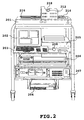
- Fig. 2 is a diagram showing a construction example of the system for separating and assying lipoprotein according to the present invention.
- the system for separating and assying lipoprotein comprises an automatic electrophoretic apparatus 201 for performing separation of lipoprotein, a densitometer 206 for reading the electrophoretic pattern obtained by the automatic electrophoretic apparatus 201, and a computer main body 204 for controlling operation of the automatic electrophoretic apparatus 201 and the densitometer 206 and processing data from the densitometer 206 according to method for separating and assying lipoprotein of the present invention and outputting or storing the processing results to the display screen, storage medium, printer or the like.
- the automatic electrophoretic apparatus 201 has the same configuration as a commonly used electophoretic apparatus having a sample table 214, an applicator 212, a reagent bottle stand 218, and an electrophoretic chamber 216.
- the densitometer 206 is a device for measuring density of each component fractionated by electrophoresis utilizing absorption and reflection of light, which is connected to the computer main body 204 and operation thereof is controlled by the computer.
- the computer comprises the computer main body 204, input devices(keyboard 203, mouse 208), a display device(CRT) 202, and an output device(printer) 205.
- Reference numeral 207 in the figure indicates a power supply for supplying power to the electrophoretic apparatus 201.
- fractionation of lipoprotein using the automatic electrophoretic apparatus 201 and preparation of electrophoretic pattern of the lipoprotein are performed. Since the ordinary operation of electrophoretic process is well known to a skill in the art except for points specific to the present invention, description will be simplified.
- Development of the sample can be performed, as shown in Fig. 1, by a combination of the standard sample(1) with specimen(2), or a combination of specimen(2) with control (3).
- development of each sample can be performed in combination with the specimen(2) or alone by mixing with the specimen(2).
- an agarose thin film used for the plate of the electrophoretic apparatus is prepared by solidifying a predetermined amount of agarose solution.
- a plastic thin film provided with set pin holes 102 and 103(see Fig. 1) and a metal die provided with pins for corresponding to these holes and enabling positioning are used.
- the metal die is thick at the electrode part for holding the buffer solution, and patterned so that a sample hole 101 is formed at a sample application part.
- the set pin holes 102 and 103 of the plastic thin film are aligned to the above metal die, pressed with a flat plate from the upper side, then agarose solution is poured into the metal die, and solidified to prepare the agarose thin film.
- the agarose thin film may be previously prepared and stored, or a commercial product such as REP LIPO 30 PLATE commercialized from HELENA LABORATORIES CO., LTD. (Japan) be used.
- two set pin holes 102 and 103(see Fig. 1) of the agarose thin film used in the assay are inserted to set pins(not shown) of the electrophoretic chamber 216 to closely contact with the bottom of the electrophoretic chamber 216.
- a reagent development rod having magnetic bodies at both ends and an electrode rod are attracted to the electrode as a magnet so as to contact with the agarose thin film(electrophoretic plate), and the door of the electrophoretic chamber is closed.
- a cholesterol reagent bottle is prepared on the reagent bottle stand 218, and sample is taken on the sample table 214.
- electrophoresis is started to prepare an electrophoretic pattern.
- an electrophoresis starting instruction is inputted from the keyboard 203. This sends electrophoresis starting instruction from the computer to the electrophoretic apparatus.
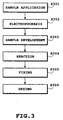
- the electrophoretic apparatus 201 When the electrophoretic apparatus 201 received the electrophoresis starting instruction from the computer main body 204, the sample on the sample table 214 is injected in a sample groove 101 (S301).
- the agarose thin film is applied with an electric voltage to start electrophoresis (S302).
- color development reagent such as cholesterol measuring reagent is developed (S303).
- the agarose thin film is impregnated and reacted with the color development reagent to stain the agarose thin film for a predetermined time and at a predetermined temperature (e.g. 30°C) (S304).
- a predetermined temperature e.g. 30°C
- a cholesterol measuring reagent such as TITAN GEL S CHOLESTEROL commercialized from HELENA LABORATORIES CO., LTD. (Japan) can be used.
- the stained agarose thin film is fixed with 5% acetic acid (S305) and dried (S306).
- electrophoretic pattern as shown in Fig. 1 (hereinafter referred to as electrophoretic pattern) is obtained.
- concentration and position of each fraction constituting the electrophoretic pattern developed on the agarose thin film are read by the densitometer 206.
- the agarose thin film depicted with the electrophoretic pattern is set in position on the densitometer 206(Fig. 2). That is, pins of an electrophoretic pattern feed 522(Fig. 5) are positioned with the agarose thin film set pin holes 102 and 103 (Fig. 1). Setting of scanning condition of the electrophoretic pattern can be carried out on the screen displayed on CRT202 connected to the computer main body 204. An example of such a screen is shown in Fig. 4.
- a programming(predetermined application) stored in the computer main body 204 is read to display a scanning condition setting screen (that is, scan parameter setting screen 401) as shown in Fig. 4 on CRT 202.
- scan parameter setting screen 401 name of item to be examined is selected from item name 402, and then scan 403 is instructed to start measurement.
- "Cholesterol" is selected in the item name 402.
- Setting of further detailed scan condition is performed on parameter setting part 404 at the lower part of the screen, and input of each parameter(condition) is performed utilizing the mouse 208 and the keyboard 203.
- a previously set default may be used.
- scan button 403 is clicked by the mouse 208 or a predetermined short cut key on the keyboard 203 is pressed.
- Fig. 5 is a block diagram for explaining the configuration of the densitometer and the computer. In the following, for simplicity of explanation, a case where a combination of the specimen(2) and the control(3) is subjected to electrophoresis will be explained.
- Beam measurement light (arrow B in the figure) transmitted from an optical system 524 (Fig. 5) passes through a slit (not shown) and through electrophoretic pattern 100.
- a slit not shown
- electrophoretic pattern 100 By passing the beam measurement light B through the electrophoretic pattern 100, part of light is absorbed by the electrophoretic pattern 100 to become a change in the beam measurement light B, and the amount of change is caught as an electromotive force by a light -receiving device 526.
- the amount of change caught by the light receiving device 526 is logarithmic-amplified by a logarithmic amplifier 528, converted to a digital value by an A/D converter 530, and stored on a recording medium (for example, hard disk) incorporated in the computer main body 204.
- a graph 532 plotting an integrated value on the axis of ordinate against the scan direction on the axis of abscissa can be displayed on CRT 202, or outputted to the printer 205.
- the computer main body 204 based on the integrated value of waveform, converts each fraction to percentage, and concentration of each fraction can be determined from already determined total concentration.
- Each fraction of lipoprotein containing cholesterol, stained with a cholesterol measuring reagent shows a specific light absorption spectrum depending on the color development reagent.
- a cholesterol measuring reagent such as TITAN GEL S CHOLESTEROL commercialized from HELENA LABORATORIES CO., LTD. (Japan)
- cholesterol component in lipoprotein reacts with a component in the cholesterol measuring reagent to form formazan. Therefore, the electrophoretic pattern can be scanned at a wavelength of 570 nm corresponding to the absorption spectrum of formazan.
- the obtained graph on lipoprotein fraction (cholesterol) is stored on a recording medium such as hard disk. Examples of graph on lipoprotein fraction thus stored on a recording medium are shown in Figs. 10 to 12 (will be described later).
- the computer main body 204 synchronizes with the electrophoretic pattern feed 522 to obtain positional information of the electrophoretic pattern feed.
- the keyboard 203 is used when inputting an instruction or data to the computer main body 204.
- the printer 205 is used for preparing an examination result report.
- An I/O converter 534 is used for communication such as data exchange with terminals of an external computer.
- Figs. 6 and 7 are screens displayed on CRT 202 connected with the computer, for performing input or registration of the application position, control values (data) and the like.
- the application position 604(Fig. 6) is clicked with the mouse(Fig. 2) to set the sample application point on the plate for electrophoresis.
- "cholesterol" is instructed on the item name 601.
- data are inputted to scan start (begin) 602 and scan end (end) 603.
- the application position 604 is clicked with the mouse 208 (Fig. 2)
- data of the application position for example, numeral "1590” is displayed at the application position 607(Fig. 6).
- the numeral displayed at the application position 607 (here, "1590") must be a numeral lying between numeral "2003" displayed at scan start 602 and numeral "1535" displayed at scan end 603.
- a step copy 606 is clicked with the mouse 208 (Fig. 2) to instruct all step numbers, and the registration 608 (Fig. 6) is clicked to instruct registration. Since, by such operation, data is recorded on the recording medium of the computer, thereafter when fractionation measurement of "cholesterol" is performed, repeated input is unnecessary.
- a confirmation button 605 is clicked with the mouse 208, slit beam light moves to position of the application point to confirm whether or not the application position is exactly caught.
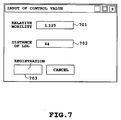
- relative mobility 701 (Fig. 7) and LDL distance 702(here, "64") are inputted on the screen shown in Fig. 7.
- the relative mobility 701 is the ratio of the value c of control(3) to the value a of the standard sample(1).
- the LDL distance 702 shows a distance "c" from the application point of the control (3) to the central position of LDL fraction.
- the LDL distance 702 is also used for the purpose of correcting delicate differences between various thin films usable as plates for electrophoresis.
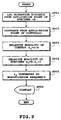
- a first method will be described with reference to the flow chart shown in Fig.8.
- dot used herein, for example, if the measurement range(scanning range) is specified as 256 dots, means that the measurement range is divided by 256.
- This value "0.273” can be divided by a predetermined value to determine a modification frequency (S804). However, it is necessary to determine how many steps the ratio of modification "0.273” is divided to is appropriate for representing the modification frequency, and the range per division as a predetermined value is incorporated in the program. For example, when the range per division is "0.1", the ratio of modification "0.273” is represented as the modification frequency "2.73" (S805).
- previously obtained value can be displayed by the symbol of large, medium, or small corresponding to the value. Still further, the obtained value can also be displayed in percentage.
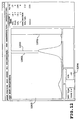
- Figs. 10 to 12 are diagrams showing CRT screen showing graphs showing result of assay by the computer of information obtained by the densitometer (cholesterol concentration and positional distribution).
- the axis of abscissa represents fraction development position and the axis of ordinate represents an optical density or an absorbance.
- ratios and concentrations of HDL, VLDL, LDL and the like detected by cholesterol are displayed, and in the lower part thereof, ratio of HDL and LDL is shown.
- Fig. 10 shows a case where modified LDL is not contained in the specimen(2) (corresponding to the standard sample(1)).
- straight line 1001 shows the position of the application point
- straight line 1002 shows the central position(at the peak of the curve) of LDL fraction of the standard sample(1) of no modification
- the central position(at the peak of the curve) of LDL fraction of the specimen(2) The modification frequency is displayed at 1003, however, since in Fig. 10, the position of the standard sample(1) and the central position of LDL of the specimen(2) are overlapped, the modification frequency shows zero.
- Fig. 11 shows a case where modified LDL is contained in the specimen.
- straight line 1101 shows the position of the application point
- straight line 1102 shows the central position(at the peak of the curve) of LDL fraction of standard sample (1)
- straight line 1103 shows the central position(at the peak of the curve) of LDL fraction of the specimen (2). Since the modification frequency 1104 is displayed as "+86", it is understood that LDL is modified.
- Fig. 12 shows a case where modified LDL is contained in the specimen (2), and the modification frequency is a negative value.
- straight line 1201 shows the position of the application point
- straight line 1202 shows the central position(at the peak of the curve) of LDL fraction of the standard sample (1)
- straight line 1203 shows the central position(at the peak of the curve) of LDL fraction of the specimen (2). Since the central position of standard LDL fraction is at the left side of the central position of LDL fraction of the specimen (2), and distance from the application point to the central position is long, modification 1204 is a negative value as "-42".
- a negative value of modification frequency shows that electrophoretic speed of LDL of specimen (2) is slower than LDL electrophoretic speed of the standard sample (1), which is useful for the detection of abnormal LDL appearing in hepatic or biliary tract diseases.
- modification frequency is automatically determined using result of separating and assaying lipoprotein by electrophoresis as described above, it is easy to establish plans for diagnosis and dietary treatment or drug treatment according to the diagnostic results.
- the graphs displayed on the above screens can be outputted from the printer 205(Fig. 5) by operator instruction.
- the method for separating and assaying lipoprotein according to the present invention can also be applied to samples separated by electrophoresis using various thin films that can be used as plates such as cellulose acetate, agar, and the like. Still further, the method for separating and assaying lipoprotein according to the present invention can be applied not only to electrophoresis using various thin films but also to a case of using capillary electrophoresis.
- a capillary electrophoretic device it is possible to perform the method for separating and assaying lipoproteins in accordance with the procedures as described above after the steps of subjecting a standard or marker sample to the capillary electrophoresis before or after the electrophoresis of a specimen and then obtaining a degree of relative mobility of the desired lipoprotein from a distance between the application point of each sample and the center point of the LDL fraction or the time that elapsed before the separation is completed.
- a marker may be a standard substance to be generally used in the capillary electrophoresis.
- modified lipid concerning arteriosclerosis that is, the degree of modification and the modification frequency of modified LDL can be determined
- qualitative anomaly of lipid can be easily and effectively performed.
- the results of the method for separating and assaying lipoproteins can be used in the follow-up of drug efficacy (e.g., efficacy of an anti-oxidizing agent) to observe a curative effect of the drug on the disease. Therefore, it becomes possible to contribute to the cutting of health expenditures in addition to a simplification of making treatment policies (e.g., prescription of therapeutic agent) to take.
- drug efficacy e.g., efficacy of an anti-oxidizing agent
Landscapes
- Health & Medical Sciences (AREA)
- Life Sciences & Earth Sciences (AREA)
- Molecular Biology (AREA)
- Chemical & Material Sciences (AREA)
- Chemical Kinetics & Catalysis (AREA)
- Electrochemistry (AREA)
- Physics & Mathematics (AREA)
- Analytical Chemistry (AREA)
- Biochemistry (AREA)
- General Health & Medical Sciences (AREA)
- General Physics & Mathematics (AREA)
- Immunology (AREA)
- Pathology (AREA)
- Investigating Or Analysing Biological Materials (AREA)
- Investigating Or Analysing Materials By Optical Means (AREA)
- Measuring Or Testing Involving Enzymes Or Micro-Organisms (AREA)
Applications Claiming Priority (4)
| Application Number | Priority Date | Filing Date | Title |
|---|---|---|---|
| JP10725899 | 1999-04-14 | ||
| JP10725899 | 1999-04-14 | ||
| JP2000107103 | 2000-04-07 | ||
| JP2000107103A JP4588835B2 (ja) | 1999-04-14 | 2000-04-07 | リポ蛋白分離分析法、リポ蛋白分離分析装置、およびリポ蛋白分離分析システム |
Publications (3)
| Publication Number | Publication Date |
|---|---|
| EP1045247A2 true EP1045247A2 (fr) | 2000-10-18 |
| EP1045247A3 EP1045247A3 (fr) | 2001-10-17 |
| EP1045247B1 EP1045247B1 (fr) | 2004-02-11 |
Family
ID=26447298
Family Applications (1)
| Application Number | Title | Priority Date | Filing Date |
|---|---|---|---|
| EP00108157A Expired - Lifetime EP1045247B1 (fr) | 1999-04-14 | 2000-04-13 | Procédé de séparation et d'analyse des lipoprotéines, dispositif pour la mise-en-oeuvre dudit procédé, ainsi qu'un système comportant ce dispositif |
Country Status (5)
| Country | Link |
|---|---|
| US (1) | US6576106B1 (fr) |
| EP (1) | EP1045247B1 (fr) |
| JP (1) | JP4588835B2 (fr) |
| DE (1) | DE60008159T2 (fr) |
| ES (1) | ES2214185T3 (fr) |
Cited By (4)
| Publication number | Priority date | Publication date | Assignee | Title |
|---|---|---|---|---|
| EP1444526A4 (fr) * | 2001-11-13 | 2007-08-22 | Univ California | Analyse de mobilite ionique de particules biologiques |
| US8247235B2 (en) | 2007-06-08 | 2012-08-21 | Quest Diagnostics Investments Incorporated | Lipoprotein analysis by differential charged-particle mobility |
| US9250211B2 (en) | 2010-12-30 | 2016-02-02 | Quest Diagnostics Investments Incorporated | Magnetic separation of lipoproteins using dextran sulfate |
| US9354200B1 (en) | 2008-08-07 | 2016-05-31 | Quest Diagnostics Investments Incorporated | Detection apparatus for differential-charged particle mobility analyzer |
Families Citing this family (5)
| Publication number | Priority date | Publication date | Assignee | Title |
|---|---|---|---|---|
| WO2004053500A1 (fr) * | 2002-12-06 | 2004-06-24 | Denka Seiken Co., Ltd. | Procede permettant de quantifier une lipoproteine de petite taille et de basse densite |
| JP4645211B2 (ja) * | 2005-02-07 | 2011-03-09 | パナソニック株式会社 | Hdl−コレステロール分析用ディスク、及びhdl−コレステロール分析用装置 |
| JP5081814B2 (ja) | 2006-05-01 | 2012-11-28 | デンカ生研株式会社 | 家族性複合型高脂血症の検出方法 |
| RU2360256C1 (ru) * | 2007-12-28 | 2009-06-27 | Государственное образовательное учреждение высшего профессионального образования Томский политехнический университет (ГОУ ВПО ТПУ) | Способ определения фракций липопротеинов крови у больных ишемической болезнью сердца |
| JP5116800B2 (ja) * | 2010-05-10 | 2013-01-09 | デンカ生研株式会社 | 動脈硬化の検出方法 |
Family Cites Families (11)
| Publication number | Priority date | Publication date | Assignee | Title |
|---|---|---|---|---|
| US5625041A (en) * | 1990-09-12 | 1997-04-29 | Delta Biotechnology Limited | Purification of proteins |
| US4420383A (en) * | 1980-07-10 | 1983-12-13 | Olympus Optical Co., Ltd. | Fractionating method in electrophoreses |
| JPS60102546A (ja) * | 1983-11-09 | 1985-06-06 | Omron Tateisi Electronics Co | リポタンパク自動泳動装置 |
| US4920498A (en) * | 1985-08-17 | 1990-04-24 | Olympus Optical Co., Ltd. | Method of processing and analyzing electrophoretic image, and method of displaying electrophoregram and a medium for recording electrophoregram |
| US4909920A (en) * | 1987-03-16 | 1990-03-20 | Helena Laboratories | Automatic electrophoresis apparatus and method |
| US5068019A (en) * | 1989-05-19 | 1991-11-26 | Fuji Photo Film Co., Ltd. | Electrophoresis film support |
| US5316908A (en) * | 1990-07-13 | 1994-05-31 | Life Technologies, Inc. | Size markers for electrophoretic analysis of DNA |
| FR2684998B1 (fr) * | 1991-12-11 | 1994-10-28 | Sebia Sa | Procede de separation de la lp(a) par electrophorese, gels pour la mise en óoeuvre de ce procede, et application a la determination in vitro du risque atherogene lie a la presence de la lp(a). |
| FR2693209B1 (fr) * | 1992-07-03 | 1994-09-30 | Inst Nat Sante Rech Med | Procédé de détermination de la taille en nucléotides de fragments d'ADN. |
| US6068753A (en) * | 1996-05-06 | 2000-05-30 | Helena Laboratories Corporation | Automatic electrophoresis apparatus with fluorescent and visible scanning |
| JP3091176B2 (ja) * | 1998-02-18 | 2000-09-25 | 株式会社ヘレナ研究所 | 分離分析検査データ処理装置 |
-
2000
- 2000-04-07 JP JP2000107103A patent/JP4588835B2/ja not_active Expired - Fee Related
- 2000-04-13 DE DE60008159T patent/DE60008159T2/de not_active Expired - Lifetime
- 2000-04-13 EP EP00108157A patent/EP1045247B1/fr not_active Expired - Lifetime
- 2000-04-13 ES ES00108157T patent/ES2214185T3/es not_active Expired - Lifetime
- 2000-04-14 US US09/549,925 patent/US6576106B1/en not_active Expired - Lifetime
Cited By (15)
| Publication number | Priority date | Publication date | Assignee | Title |
|---|---|---|---|---|
| US7713744B2 (en) | 2001-11-13 | 2010-05-11 | The Regents Of The University Of California | Determining the risk of cardiovascular disease using ion mobility of lipoproteins |
| US7851224B2 (en) | 2001-11-13 | 2010-12-14 | The Regents Of The University Of California | Method of assessing a lipid-related health risk based on ion mobility analysis of lipoproteins |
| EP1444526A4 (fr) * | 2001-11-13 | 2007-08-22 | Univ California | Analyse de mobilite ionique de particules biologiques |
| US10948503B2 (en) | 2007-06-08 | 2021-03-16 | Quest Diagnostics Investments Incorporated | Lipoprotein analysis by differential charged-particle mobility |
| US8247235B2 (en) | 2007-06-08 | 2012-08-21 | Quest Diagnostics Investments Incorporated | Lipoprotein analysis by differential charged-particle mobility |
| US8709818B2 (en) | 2007-06-08 | 2014-04-29 | Quest Diagnostics Investments Incorporated | Lipoprotein analysis by differential charged-particle mobility |
| US9046539B2 (en) | 2007-06-08 | 2015-06-02 | Quest Diagnostics Investments Incorporated | Lipoprotein analysis by differential charged-particle mobility |
| US12055554B2 (en) | 2007-06-08 | 2024-08-06 | Quest Diagnostics Investments Incorporated | Lipoprotein analysis by differential charged-particle mobility |
| US11680949B2 (en) | 2007-06-08 | 2023-06-20 | Quest Diagnostics Investments Incorporated | Lipoprotein analysis by differential charged-particle mobility |
| US9791464B2 (en) | 2007-06-08 | 2017-10-17 | Quest Diagnostics Investments Incorporated | Lipoprotein analysis by differential charged-particle mobility |
| US10119971B2 (en) | 2008-08-07 | 2018-11-06 | Quest Diagnostics Investments Incorporated | Detection apparatus for differential-charged particle mobility analyzer |
| US10488419B2 (en) | 2008-08-07 | 2019-11-26 | Quest Diagnostics Investments Incorporated | Detection apparatus for differential-charged particle mobility analyzer |
| US9354200B1 (en) | 2008-08-07 | 2016-05-31 | Quest Diagnostics Investments Incorporated | Detection apparatus for differential-charged particle mobility analyzer |
| US10308680B2 (en) | 2010-12-30 | 2019-06-04 | Quest Diagnostics Investments Incorporated | Magnetic separation of lipoproteins using dextran sulfate |
| US9250211B2 (en) | 2010-12-30 | 2016-02-02 | Quest Diagnostics Investments Incorporated | Magnetic separation of lipoproteins using dextran sulfate |
Also Published As
| Publication number | Publication date |
|---|---|
| JP4588835B2 (ja) | 2010-12-01 |
| EP1045247B1 (fr) | 2004-02-11 |
| US6576106B1 (en) | 2003-06-10 |
| EP1045247A3 (fr) | 2001-10-17 |
| JP2000356641A (ja) | 2000-12-26 |
| ES2214185T3 (es) | 2004-09-16 |
| DE60008159T2 (de) | 2004-12-23 |
| DE60008159D1 (de) | 2004-03-18 |
Similar Documents
| Publication | Publication Date | Title |
|---|---|---|
| Bronzert et al. | New micromethod for measuring cholesterol in plasma lipoprotein fractions. | |
| Chin et al. | Separation and quantitative analysis of serum lipoproteins by means of electrophoresis on cellulose acetate | |
| US5200345A (en) | Methods and apparatus for quantifying tissue damage, determining tissue type, monitoring neural activity, and determining hematocrit | |
| JP5981433B2 (ja) | 体液内のリポ蛋白粒子レベルを決定する分析 | |
| EP1045247B1 (fr) | Procédé de séparation et d'analyse des lipoprotéines, dispositif pour la mise-en-oeuvre dudit procédé, ainsi qu'un système comportant ce dispositif | |
| Papadopoulos et al. | Determination of human serum lipoprotein patterns by agarose gel electrophoresis | |
| CA1096757A (fr) | Methode de dosage des lipoproteines et du cholesterol | |
| JP5433839B2 (ja) | Cntセンサーによる過酸化物を電気的に測定する方法 | |
| Robertson et al. | An evaluation of cholesterol determinations in serum and serum lipoprotein fractions by a semi-automated fluorimetric method | |
| JP4885396B2 (ja) | アルブミン含有試料中のアルブミン輸送特性の変化のesr分光検出方法、前記方法を実施するための分光計、及び診断目的とアルブミン含有製剤の管理への前記方法の利用 | |
| US4167467A (en) | Clinical procedure for measuring lipoprotein free cholesterols | |
| Albers et al. | Type III hyperlipoproteinemia: a comparative study of current diagnostic techniques | |
| US6963822B1 (en) | Method and apparatus for separation, analysis and evaluation of data | |
| Grönwall | On paper electrophoresis in the clinical laboratory | |
| US20160109471A1 (en) | Lipoprotein particle number from measurements of lipoprotein particle phospholipid concentration in lipoprotein particle membrane bilayer | |
| Warnick et al. | Interlaboratory proficiency survey of high-density lipoprotein cholesterol measurement. | |
| WO2002006832A1 (fr) | Moyen d'examen pour la nephropathie | |
| Jain | Thin-layer chromatography in clinical chemistry | |
| JP2002090365A5 (ja) | 腎障害の検査方法 | |
| RU2253115C2 (ru) | Способ определения общего белка, белковых фракций и липидных компонентов сыворотки крови | |
| Hoshimiya | Evaluation of dry chemicals by photoacoustic imaging | |
| McNamara et al. | Dynamic analytical chemistry: a kinetic study of the labeling of normal and age fractionated human erythrocytes with monobromobimane | |
| Raka | Thin-Layer Chromatography in Clinical Chemistry | |
| Henry | News from FACSS in Kansas City: Raman spectra of breast tissue | |
| Tallet et al. | Total automated method for determination of cholesterol concentration in high density lipoprotein by heparin-magnesium-albumin precipitation |
Legal Events
| Date | Code | Title | Description |
|---|---|---|---|
| PUAI | Public reference made under article 153(3) epc to a published international application that has entered the european phase |
Free format text: ORIGINAL CODE: 0009012 |
|
| AK | Designated contracting states |
Kind code of ref document: A2 Designated state(s): AT BE CH CY DE DK ES FI FR GB GR IE IT LI LU MC NL PT SE Kind code of ref document: A2 Designated state(s): DE ES FR GB IT |
|
| AX | Request for extension of the european patent |
Free format text: AL;LT;LV;MK;RO;SI |
|
| PUAL | Search report despatched |
Free format text: ORIGINAL CODE: 0009013 |
|
| RIC1 | Information provided on ipc code assigned before grant |
Free format text: 7G 01N 27/447 A, 7G 01N 33/92 B, 7G 01N 33/487 B |
|
| AK | Designated contracting states |
Kind code of ref document: A3 Designated state(s): AT BE CH CY DE DK ES FI FR GB GR IE IT LI LU MC NL PT SE |
|
| AX | Request for extension of the european patent |
Free format text: AL;LT;LV;MK;RO;SI |
|
| 17P | Request for examination filed |
Effective date: 20020328 |
|
| AKX | Designation fees paid |
Free format text: DE ES FR GB IT |
|
| 17Q | First examination report despatched |
Effective date: 20020725 |
|
| GRAP | Despatch of communication of intention to grant a patent |
Free format text: ORIGINAL CODE: EPIDOSNIGR1 |
|
| GRAS | Grant fee paid |
Free format text: ORIGINAL CODE: EPIDOSNIGR3 |
|
| GRAA | (expected) grant |
Free format text: ORIGINAL CODE: 0009210 |
|
| AK | Designated contracting states |
Kind code of ref document: B1 Designated state(s): DE ES FR GB IT |
|
| REG | Reference to a national code |
Ref country code: GB Ref legal event code: FG4D |
|
| REF | Corresponds to: |
Ref document number: 60008159 Country of ref document: DE Date of ref document: 20040318 Kind code of ref document: P |
|
| REG | Reference to a national code |
Ref country code: ES Ref legal event code: FG2A Ref document number: 2214185 Country of ref document: ES Kind code of ref document: T3 |
|
| ET | Fr: translation filed | ||
| PLBE | No opposition filed within time limit |
Free format text: ORIGINAL CODE: 0009261 |
|
| STAA | Information on the status of an ep patent application or granted ep patent |
Free format text: STATUS: NO OPPOSITION FILED WITHIN TIME LIMIT |
|
| 26N | No opposition filed |
Effective date: 20041112 |
|
| PGFP | Annual fee paid to national office [announced via postgrant information from national office to epo] |
Ref country code: ES Payment date: 20100317 Year of fee payment: 11 |
|
| PGFP | Annual fee paid to national office [announced via postgrant information from national office to epo] |
Ref country code: GB Payment date: 20100322 Year of fee payment: 11 |
|
| GBPC | Gb: european patent ceased through non-payment of renewal fee |
Effective date: 20110413 |
|
| PG25 | Lapsed in a contracting state [announced via postgrant information from national office to epo] |
Ref country code: GB Free format text: LAPSE BECAUSE OF NON-PAYMENT OF DUE FEES Effective date: 20110413 |
|
| REG | Reference to a national code |
Ref country code: ES Ref legal event code: FD2A Effective date: 20120604 |
|
| PG25 | Lapsed in a contracting state [announced via postgrant information from national office to epo] |
Ref country code: ES Free format text: LAPSE BECAUSE OF NON-PAYMENT OF DUE FEES Effective date: 20110414 |
|
| REG | Reference to a national code |
Ref country code: FR Ref legal event code: PLFP Year of fee payment: 17 |
|
| PGFP | Annual fee paid to national office [announced via postgrant information from national office to epo] |
Ref country code: FR Payment date: 20160225 Year of fee payment: 17 |
|
| PGFP | Annual fee paid to national office [announced via postgrant information from national office to epo] |
Ref country code: DE Payment date: 20160425 Year of fee payment: 17 |
|
| PGFP | Annual fee paid to national office [announced via postgrant information from national office to epo] |
Ref country code: IT Payment date: 20160324 Year of fee payment: 17 |
|
| REG | Reference to a national code |
Ref country code: DE Ref legal event code: R119 Ref document number: 60008159 Country of ref document: DE |
|
| REG | Reference to a national code |
Ref country code: FR Ref legal event code: ST Effective date: 20171229 |
|
| PG25 | Lapsed in a contracting state [announced via postgrant information from national office to epo] |
Ref country code: FR Free format text: LAPSE BECAUSE OF NON-PAYMENT OF DUE FEES Effective date: 20170502 Ref country code: DE Free format text: LAPSE BECAUSE OF NON-PAYMENT OF DUE FEES Effective date: 20171103 |
|
| PG25 | Lapsed in a contracting state [announced via postgrant information from national office to epo] |
Ref country code: IT Free format text: LAPSE BECAUSE OF NON-PAYMENT OF DUE FEES Effective date: 20170413 |