EP1045547A2 - Überwachung vom individuellen Gebrauch von Internet - Google Patents
Überwachung vom individuellen Gebrauch von Internet Download PDFInfo
- Publication number
- EP1045547A2 EP1045547A2 EP00301826A EP00301826A EP1045547A2 EP 1045547 A2 EP1045547 A2 EP 1045547A2 EP 00301826 A EP00301826 A EP 00301826A EP 00301826 A EP00301826 A EP 00301826A EP 1045547 A2 EP1045547 A2 EP 1045547A2
- Authority
- EP
- European Patent Office
- Prior art keywords
- monitoring
- user
- application
- client
- resource locator
- Prior art date
- Legal status (The legal status is an assumption and is not a legal conclusion. Google has not performed a legal analysis and makes no representation as to the accuracy of the status listed.)
- Withdrawn
Links
Images




Classifications
-
- G—PHYSICS
- G06—COMPUTING OR CALCULATING; COUNTING
- G06Q—INFORMATION AND COMMUNICATION TECHNOLOGY [ICT] SPECIALLY ADAPTED FOR ADMINISTRATIVE, COMMERCIAL, FINANCIAL, MANAGERIAL OR SUPERVISORY PURPOSES; SYSTEMS OR METHODS SPECIALLY ADAPTED FOR ADMINISTRATIVE, COMMERCIAL, FINANCIAL, MANAGERIAL OR SUPERVISORY PURPOSES, NOT OTHERWISE PROVIDED FOR
- G06Q30/00—Commerce
- G06Q30/02—Marketing; Price estimation or determination; Fundraising
-
- H—ELECTRICITY
- H04—ELECTRIC COMMUNICATION TECHNIQUE
- H04L—TRANSMISSION OF DIGITAL INFORMATION, e.g. TELEGRAPHIC COMMUNICATION
- H04L67/00—Network arrangements or protocols for supporting network services or applications
- H04L67/50—Network services
- H04L67/75—Indicating network or usage conditions on the user display
Definitions
- the present invention relates to monitoring the activity of a user of a data network, such as the Internet.
- Online services today offer a variety of services to their users. Users may access news, weather, financial, sports, and entertainment services, participate in and retrieve information from online discussion groups, and send and receive email.
- a user of an online service typically accesses the service using specialized communication software (i.e., client application or client software) that establishes and manages a connection from the user's computer (or client) to the service provider's host computers (or servers) and facilitates the user's interactions with the service.
- client application or client software i.e., client application or client software
- Interactions between the user's computer and the service are facilitated by a variety of software protocols (i.e., communication conventions, rules and structures), including application level protocols, for managing the transfer of data across the network and to the client application on the user's computer.
- a protocol may be proprietary or exclusive to a service such that only client software from the service provider may be used to communicate with the server software.
- an online service that supports electronic mail, discussion groups, chat groups, news services, etc. may define and use specific protocols for each type of service so that appropriate information is exchanged between the participants (i.e., clients and servers).
- Each application-specific protocol may be based on a common, underlying protocol.
- the Internet and World Wide Web (“web”), comprised of a vast array of international computer networks, provide online service users with considerable information resources and other content. Typically, this content is accessed using a web browser, such as Microsoft Internet Explorer or Netscape Navigator, capable of understanding the HyperText Markup Language (HTML) used to create the documents found on the web and the HyperText Transfer Protocol (HTTP) used to navigate the web.
- HTTP HyperText Transfer Protocol
- Email and Usenet discussion groups are typically accessed through companion software to the browser.
- web browsers typically have varying levels of functionality or sophistication, retrieved content is displayed in content pages according to views or presentations specific to the web document currently presented by the web browser. Typically, the views and presentations are different than those provided by the communication software from the online service because the web browser is, in fact, a separate client application displaying web documents containing presentation directives.
- a requested web page is typically identified using its URL ⁇ uniform resource locator.
- the URL is a reference (or address) to a resource available on a TCP/IP network such as the Internet.
- a URL is composed of a character string, and may have a number of parts. These parts include a top level domain name, second level domain name, directory name, and file name. URLs may identify a file located on a web server. URLs may also point to other resources on the network such as database queries and command output. The determination and use of URLs is well known in the art and is not discussed further herein.
- resource locator is used.
- the term is defined as a string or code which uniquely identifies a resource on a network.
- the URL is a species of resource locator.
- a user can connect to the Internet.
- a user can subscribe to a proprietary on-line network, such as, for example, America Online.
- a user can subscribe to an Internet Service Provider (ISP).
- ISP Internet Service Provider
- users typically connect to the Internet using a computer with a communications device such as an analog modem, an Ethernet adapter, DSL adapter or cable modem. Such connections may be analog or digital, dial-up or constantly-connected.
- Subscribers typically pay a fee for their subscriptions to proprietary non-line networks and ISPs. These fees typically are in the form of a sign-up fee, plus on-line charges which are fixed (i.e., unlimited monthly access for a fixed fee) or based upon the amount of time the user is connected. The fees generally increase with bandwidth.
- the client monitoring application 110 can obtain information about the individuals' use of his browser: (1) by monitoring URLs in the address bar of the browser application 160, (2) by monitoring the stream of URLs transmitted by the browser application 160 to the data access network 120, and (3) by grabbing information from the browser application's display pane 210. Each of these three techniques is described below in turn with reference to Figure 5.
- On-line and Internet content and service providers often derive revenue by displaying advertisements to users. For example, when a user accesses a web page on the Web, an advertisement may be displayed to the user as part of the web page. Advertisements are also shown to users of some proprietary on-line services. Often in such systems, each user accessing a certain screen or site is shown the same advertisement. Sophisticated systems have the capability to change the advertisement after a certain period of time.
- Advertisers find it desirable to target advertisements to relevant potential customers. For example, an advertiser of stockings would prefer to target women rather than men with its advertising. A Boston restaurant would prefer to target residents of Boston and business travelers rather than children living in San Francisco. Moreover, advertisers prefer to pay for advertising based upon the number of relevant consumers who are actually exposed to the advertisement. For typical on-line systems and networks, including the Web, it is often difficult for an advertiser to precisely determine whether its advertisements were actually viewed by a user and for how long, and whether the advertisement induced a response. Accordingly, there exists a need for a targeted advertisement system that also can provide information as to the characteristics of those who were exposed to each advertisement, for how long the user was exposed, and at what times.
- the on-line activities of an on-line user are monitored and stored.
- Information regarding the user's activities are used as a basis for targeting advertisements to the user.
- Monitoring is performed by a client monitoring application, which performs monitoring without intruding on the user's activities.
- URLs in the address bar of the browser application are obtained by the client monitoring application.
- the stream of URLs transmitted by the browser application are obtained by the client monitoring application.
- information in displayed web pages is obtained by the client monitoring application.
- the system of the invention enables data to be sent to individuals based upon: the individual's geographic location; the individual's interactive data; the individual's network usage data; the individual's personal profile information; the scheduling requirements of the data to be sent; and the demographic requirements of the data to be sent.
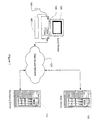
- Figure 1 there is shown a block diagram of a network data distribution system in accordance with the invention in conjunction with a source of web pages.
- Figure 1 includes a local device 100, a data access network 120, a monitoring server 130 and a web server 150.
- the local device 100, the data access network 120 and the monitoring server 130 comprise the network data distribution system.
- the local device 100 preferably comprises a client computer which is configured to access the monitoring server 130 via the local access network 120.
- the client computer may be, for example, a PC running a Microsoft Windows operating system.
- the local device 100 preferably includes an output device, such as display 101, and an input device, such as keyboard 102 and / or pointing device 103 (e.g., mouse, track ball, light pen, or data glove).
- the local device 100 may also be, for example, an Internet appliance, network computer (NC), or an appropriately Internet-enabled device such as a portable digital assistant (PDA), mobile phone, refrigerator, etc.
- NC network computer
- PDA portable digital assistant
- the particular type of device of the local device 100 is not considered to be important so long as the local device 100 provides some measure of individual user interactivity with a source of web pages.
- the data access network 120 provides lower layer network support for the local device 100 to interact with the monitoring server 130 and the web server 150.
- the data access network 120 preferably comprises a common or private bi-directional telecommunications network (e.g., a public switched telephone network (PSTN), a cable-based telecommunication network, a LAN, a WAN, a wireless network), coupled with or overlayed by a TCP/IP network (e.g., the Internet or an intranet).
- PSTN public switched telephone network
- TCP/IP network e.g., the Internet or an intranet
- the web server 150 may be of the type known in the art and has the ability to serve web pages to the local device 100, as requested in the manner known in the art. It should be appreciated that the web server 150 is generic for any source of web pages available to the local device 100. Thus, for example, the web server 150 could be accessible from the Internet, or it could be a part of an intranet and represents any number of web servers.
- the monitoring server 130 preferably is a computer system, such as a server computer.
- the monitoring server 130 acts as a recipient of certain information transmitted by the local device 100, as described further below.
- the monitoring server 130 preferably also transmits certain data to the local device 100 as described further below.
- a browser application such as Microsoft Internet Explorer or Netscape Navigator is preferably installed on the local device 100.
- the local device 100 is connected to the web server 150 through the data access network 120, the user of the local device browses the web server 150 from the local device 100 using the browser application.
- the browser application itself need not be stored on the local device 100. The important aspect is that the user, from the local device 100, can exercise control over what web pages are requested and thus displayed by the local device 100.
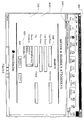
- FIG. 2 there is shown a window 400 generated by a browser application, here Microsoft Internet Explorer.
- the browser window 400 is familiar to those skilled in the art, so the particulars are not described further herein. Further information regarding the use of most browser applications and their technical specifications is abundantly available.
- the display pane 410 is a region of the browser window 400 wherein the browser application causes web pages received by the browser application to be displayed.
- the address bar 420 is another region of the browser window 400 and the browser application displays URLs in the address bay 420 corresponding to the web page currently displayed in the display pane 410.
- the user can also enter a URL into the address bar 420, and the browser application will attempt to load the web page or other object to which the entered URL points.
- the primary feature of the title bar 430 is that it displays the title of the browser application. Another feature of most browsers is that the title bar 430 displays the title of the web page then displayed in the display pane 410.
- address bar refers either the address bar display 420 or the address bar object, depending on the context.
- address bar display is indicated with its reference number, 420.
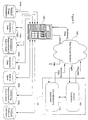
- the system comprises a client monitoring application 110, the data access network 120, the monitoring server 130 and data stores 140a-g (collectively, 140).
- a browser application 160 is also shown.
- the client monitoring application 110 is a program operative on local device 100, and preferably an independent application program or a DLL.
- the client monitoring application 110 preferably retrieves certain network data, displays certain network data, transmits geographic location data, transmits interactive user data, transmits network usage data and transmits personal profile information as described above.
- the client monitoring application is preferably a fully-featured client application which also sets up and maintains the connection to the data access network 120.
- the data stores 140 store and provide this geographic information data 140d, network usage data 140a, interactive usage data 140b, personal profile information 140g, data to be sent 140e, schedule for transmitting data 140f and demographics for transmitting data 140c.
- the client monitoring application 110 and the monitoring server establish a session.
- the client monitoring application 110 transmits certain information regarding the user of the local device 100 and his use of the local device 100 while connected to the data access network 120.
- the monitoring server 130 uses the information from the client monitoring application 100 to determine information which should be sent to the client monitoring application 110.
- the information from the client monitoring application 110 is used by the monitoring server 130 to select advertisements to the local device 100.
- the client monitoring application then causes these advertisements to be displayed on the local device's output device 101.
- the information from the client monitoring application 110 regarding the user preferably includes geographic data and personal profile information.
- Geographic data indicating the user's current location preferably is sent from the client monitoring application 110 to the monitoring server 130, which then stores the geographic data in the data store 140d.
- This geographic data can be something simple, like a phone number.
- the user preferably provides personal profile information on a periodic basis which is stored in the data store 140g and used by the monitoring server 130. This information consists of (but is not limited to) things such as: age, sex, marriage status, home address and personal interests.
- the information regarding the user's use of the local device 100 includes email and web usage and advertisement click-throughs.
- the user's interactions and feedback with the web server 150 provided through the browser application 160 are preferably captured by the client monitoring application 110, analyzed by the monitoring server 130 and stored in the data store 140b. This includes the user's feedback and responses to the data delivered to the browser application 160.
- the user's activities on the web server 150 provided through the browser application 160 are preferably captured by the client monitoring application 110, analyzed by the monitoring server 130 and stored in the data store 140a. This includes the type of network data the users requests and accesses. This data is preferably summarized and classified into multiple demographic profiles.
- the data to be sent to users preferably has scheduling requirements that dictate when it should be sent. These scheduling requirements include (but are not limited to): frequency, maximum number of times to send to an individual, minimum number of times to send to an individual, time of day to send, and first and last days to send.
- the data to be sent to users can have demographic requirements that dictate to whom it should be sent. These include (but are not limited to): personal profile, interactive data, network usage information and geographic location.
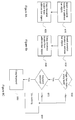
- FIG. 4 there is shown a flow chart of a method of distributing data in a network in accordance with the invention.
- the components 110, 120, 130, 140 work together to deliver data that meets the geographic and demographic criteria.
- the user preferably uses the client monitoring application 110 to connect to the data access network 120, and then the monitoring server 130 (step 410). If this is the first time the user has connected (step 415), then the user is required to submit personal profile information (step 420).
- the monitoring server 130 periodically will request (step 425) that the client monitoring application 110 have the individual update this profile (step 430).
- the client monitoring application 110 preferably sends data indicating the local device's current geographic location to the monitoring server 130 (step 435).
- a number of processes are started (step 440).
- the client monitoring application 110 sends feedback information respecting this interaction to the monitoring server 120.
- the monitoring server 120 then summarizes and classifies the feedback information into multiple demographic profiles, and stores these profiles in the data store 140.
- the client monitoring application 110 sends feedback information respecting these requests and data accesses to the monitoring server 130.
- the monitoring server 130 then summarizes and classifies this feedback information into multiple demographic profiles, and stores these profiles in the data store 140.
- the monitoring server 130 determines which targeted data needs to be sent to the client monitoring application 110 and then transmits this targeted data to the client monitoring application 110.
- the monitoring server 130 accomplishes this by:
- one of the processes relates to the user's use of his browser application 160.
- the client monitoring application 110 is activated on the local device 100 (step 510).
- the client monitoring application 100 may be installed during manufacture of the local device 100, during use of the local device 100 at the instigation of the user, or may occur automatically as a consequence of other processes. Although at least some aspects of the client monitoring application 110 should be operable from the local device 100, the client monitoring application 100 need not be not stored on the local device 100 and can be run from a remote location.
- the browser application 160 is activated on the local device 100 (step 515).
- the browser application 160 may be activated manually, or automatically by a script or through commands issued by the client monitoring application 110. It should be appreciated that the browser application 160 may be activated prior to activation of the client monitoring application 110, though in such a case, the functionality of the client monitoring application 110 will not be available as described below with respect to grabbing URLs from the address bar 220.
- the user requests that the browser application 160 display a desired web page (step 520).
- a desired web page (step 520).
- Figure 6 shows the browser window 200 with a web page 610.
- the address bar 220 displays the URL for the displayed web page 610, www.arterhadden.com/alpha.htm.
- the displayed web page 610 includes a number of common features to web pages. These features are hyperlinks such as hyperlink 620, buttons such as button 630, and data entry fields such as data entry field 640.
- hyperlinks such as hyperlink 620, buttons such as button 630, and data entry fields such as data entry field 640.
- One way for the user to request that the browser application display a desired web page is to enter a URL into the address bar 220.
- the user could use the keyboard 102 to type the URL www.arterhadden.com./alpha.htm into the address bar 220.
- the user could paste the URL into the address bar 220, or use automated means such a script.
- a second way for the user to request that the browser application 160 display a desired web page is to activate a hyperlink displayed on the currently displayed page. For example, to go to the home page on the Arter & Hadden LLP web site, the user could use the pointing device 103 to activate (e.g., click with his mouse on) the hyperlink 620.
- a third way for the user to request that the browser application 160 display a desired web page is through entry of a keyword into a data entry field in a web page displayed in the display pane 210.
- a keyword For example, to search for an attorney with the firm of Arter & Hadden LLP, the user could use the keyboard 102 to type the attorney's last name into the data entry field 640 and click on the Search button 630. It is well known that some data entry fields may be activated by simply typing keywords into the data entry field and typing Enter, and this is also within the scope of the invention.
- a displayed web page may be a static or a dynamic page.
- the monitoring application 110 obtains identifying information about the requested web page (step 530).
- identifying information about the requested web page there are at least three techniques for obtaining information about a requested web page, and these techniques are further described with respect to Figures 8A, 8B and 8C, respectively.
- the client monitoring application 110 grabs URLs from the address bar.
- the browser application 160 inserts in the address bar the URL corresponding to the web page desired by the user (step 810). This is a normal part of the operation of browser applications such as Microsoft Internet Explorer and Netscape Navigator.
- the browser application will display a new web page in the display pane 210, such as web page 710 shown in Figure 7.
- the browser application inserts the new URL in the address bar before actually displaying the page identified by the URL.
- the browser application has inserted the URL of the displayed web page 710 in the address bar 220.
- Figure 7 also shows a new title in the title bar 230 ⁇ that of the currently displayed page.
- the client monitoring application 110 copies the URL from the address bar (step 820).
- the client monitoring application monitors the title bar 230. This can be done by setting an appropriate hook, in the manner known in the art. The client monitoring application recognizes if the title has changed, and if so, copies the new URL from the address bar. Other techniques for recognizing that the URL in the address bar have changed are within the scope of the invention.
- the client monitoring application 110 grabs URLs from the communications stream between the browser application 160 and the web server 150.
- the browser application 160 transmits the URL of the desired web page to the web server 150 (step 830).
- the URL will be available within the local device 100 at a number of software and hardware levels, and the client monitoring application 110 can set hooks or create traps at any of these levels as may be desired.
- the client monitoring application 110 copies the URL from the transmission (step 840).
- the client monitoring application 110 grabs information from the browser application's display pane 210, or the object corresponding to the display pane 210.
- client monitoring application 110 determines if the displayed page (e.g., page 610) includes a data entry field (step 850). If not, then the client monitoring application 110 has nothing to do (step 860). However, if the displayed web page has a data entry field, then the client monitoring application 110 determines if the user has entered anything in the data entry field (step 870). If the user has not entered anything into the data entry field, then the client monitoring application 110 has nothing to do (step 860).
- the client monitoring application 110 copies these keywords (step 880).
- keywords There are a number of ways to test if a web page has a data entry field, and to copy entered keywords. These include screen scraping, parsing web pages received by the local device 100, copying keystrokes, etc. If the user selects a hyperlink, the client monitoring application 110 can obtain the URL associated with the hyperlink from the HTML source of the displayed page having the hyperlink.
- the client monitoring application 110 parses the copied information, and derives monitoring information from the copied information (step 535). As described above, the client monitoring application 110 will have grabbed a URL, keywords, or other information.
- the monitoring information is used for targeting advertising to the user.
- useful information which is desirable for monitoring includes the top level domain name and the second level domain name. Other useful information are keywords entered by the user into data entry fields.
- the client monitoring application 110 preferably recognizes when the user is browsing a search engine, and in such a case grabs the search terms (keywords) entered by the user in the search box (data entry field).
- the client monitoring application 110 preferably can recognize the major search engines from their second level domain names, e.g. "yahoo,” “excite,” “altavista,” “lycos,” “infoseek” and “go”.
- the client monitoring application 110 it might be desirable for the client monitoring application 110 to transmits the entire URL to the monitoring server 130.
- the client monitoring application 110 next transmits the monitoring information to the monitoring server 130 (step 540).
- the monitoring information should be transmitted in a coded or secure format.
- the monitoring information should be transmitted in a batch form. The process then loops back to step 520 and continues until the client monitoring application 110 or the browser application 160 is de-activated (e.g., closed).
- this process permits browsing by the user, and monitoring of that browsing, without interfering with the user's use of the browser application.
Landscapes
- Engineering & Computer Science (AREA)
- Business, Economics & Management (AREA)
- Strategic Management (AREA)
- Accounting & Taxation (AREA)
- Development Economics (AREA)
- Finance (AREA)
- Economics (AREA)
- Game Theory and Decision Science (AREA)
- Entrepreneurship & Innovation (AREA)
- Marketing (AREA)
- Physics & Mathematics (AREA)
- General Business, Economics & Management (AREA)
- General Physics & Mathematics (AREA)
- Theoretical Computer Science (AREA)
- Computer Networks & Wireless Communication (AREA)
- Signal Processing (AREA)
- Information Transfer Between Computers (AREA)
Applications Claiming Priority (4)
| Application Number | Priority Date | Filing Date | Title |
|---|---|---|---|
| US324747 | 1989-03-21 | ||
| US349325 | 1999-06-03 | ||
| US09/324,747 US6366298B1 (en) | 1999-06-03 | 1999-06-03 | Monitoring of individual internet usage |
| US09/349,325 US6505201B1 (en) | 1999-06-03 | 1999-07-08 | Apparatus for monitoring individual internet usage |
Publications (2)
| Publication Number | Publication Date |
|---|---|
| EP1045547A2 true EP1045547A2 (de) | 2000-10-18 |
| EP1045547A3 EP1045547A3 (de) | 2002-06-19 |
Family
ID=26984615
Family Applications (1)
| Application Number | Title | Priority Date | Filing Date |
|---|---|---|---|
| EP00301826A Withdrawn EP1045547A3 (de) | 1999-03-09 | 2000-03-06 | Überwachung vom individuellen Gebrauch von Internet |
Country Status (3)
| Country | Link |
|---|---|
| EP (1) | EP1045547A3 (de) |
| AU (1) | AU2074300A (de) |
| CA (1) | CA2299773C (de) |
Cited By (28)
| Publication number | Priority date | Publication date | Assignee | Title |
|---|---|---|---|---|
| GB2356783A (en) * | 2000-03-14 | 2001-05-30 | Speed Trap Com Ltd | Monitoring of services provided over a network |
| GB2382947A (en) * | 2001-12-07 | 2003-06-11 | Hewlett Packard Co | Network usage monitoring |
| EP1202528A3 (de) * | 2000-10-31 | 2004-01-28 | Alcatel USA Sourcing, L.P. | Browser-basierte Verfahren und Vorrichtung zur Überwachung von IP-basierten Diensten |
| WO2002013064A3 (en) * | 2000-08-08 | 2004-05-21 | America Online Inc | Searching systems and processes |
| EP1444590A4 (de) * | 2001-10-18 | 2006-01-25 | Claria Corp | System zum sammeln von informationen über einen netzwerkbenutzer |
| US7007008B2 (en) | 2000-08-08 | 2006-02-28 | America Online, Inc. | Category searching |
| EP1399835A4 (de) * | 2001-06-29 | 2006-03-15 | Claria Corp | System und verfahren zur verwendung kontinuierlicher nachrichteneinheiten in einer netzwerkarchitektur |
| DE102004047815A1 (de) * | 2004-09-29 | 2006-04-06 | Web.De Ag | Verfahren zum gezielten Steuern von Werbung und System dafür |
| US7047229B2 (en) | 2000-08-08 | 2006-05-16 | America Online, Inc. | Searching content on web pages |
| EP1540547A4 (de) * | 2002-07-26 | 2006-09-20 | Arbitron Inc | Media-datenbenutzungsmessung und meldesysteme und verfahren |
| US7225180B2 (en) | 2000-08-08 | 2007-05-29 | Aol Llc | Filtering search results |
| WO2007122645A1 (en) * | 2006-04-21 | 2007-11-01 | Blurum S.R.L. | Users profiling method |
| US7359951B2 (en) | 2000-08-08 | 2008-04-15 | Aol Llc, A Delaware Limited Liability Company | Displaying search results |
| EP2093706A1 (de) * | 2008-02-19 | 2009-08-26 | The Nielsen Company (US), LLC. | Verfahren und Vorrichtung zur Überwachung der Werbungsdarbietung |
| EP2216747A3 (de) * | 2009-02-10 | 2012-01-25 | The Nielsen Company (US), LLC | Verfahren und Vorrichtung zur Verknüpfung demographischer und geographischer Informationen mit maßgeblichen Verbraucherbeziehungen |
| WO2012162816A1 (en) * | 2011-06-03 | 2012-12-06 | 1722779 Ontario Inc. | System and method for semantic knowledge capture |
| US8346953B1 (en) | 2007-12-18 | 2013-01-01 | AOL, Inc. | Methods and systems for restricting electronic content access based on guardian control decisions |
| WO2012120257A3 (en) * | 2011-03-07 | 2013-04-25 | Celebrus Technologies Limited | Controlling web page behaviour |
| US20140207676A1 (en) * | 2013-01-22 | 2014-07-24 | Karma Mobility Inc. | Portable bandwidth router |
| JP2014520329A (ja) * | 2011-06-17 | 2014-08-21 | マイクロソフト コーポレーション | ビュアーフィードバックを介した広告選択 |
| US9083666B2 (en) | 2000-12-29 | 2015-07-14 | Facebook, Inc. | Message screening system utilizing supervisory screening and approval |
| WO2016053135A1 (ru) * | 2014-10-01 | 2016-04-07 | Алишер Акрамович МУРТАЗАЕВ | Способ учета посещений интернет сайтов |
| US10367860B2 (en) | 2004-03-15 | 2019-07-30 | Oath Inc. | Social networking permissions |
| EP3518169A1 (de) * | 2010-09-22 | 2019-07-31 | The Nielsen Company (US), LLC | Verfahren und vorrichtung zur bestimmung von eindrücken mithilfe verteilter demografischer informationen |
| US10489795B2 (en) | 2007-04-23 | 2019-11-26 | The Nielsen Company (Us), Llc | Determining relative effectiveness of media content items |
| AU2020213400B2 (en) * | 2010-09-22 | 2022-10-20 | The Nielsen Company (Us), Llc | Methods and apparatus to determine impressions using distributed demographic information |
| US11968413B2 (en) | 2013-10-10 | 2024-04-23 | The Nielsen Company (Us), Llc | Methods and apparatus to measure exposure to streaming media |
| US12482010B2 (en) | 2006-06-29 | 2025-11-25 | The Nielsen Company (Us), Llc | Methods and apparatus to monitor consumer behavior associated with location-based web services |
Families Citing this family (13)
| Publication number | Priority date | Publication date | Assignee | Title |
|---|---|---|---|---|
| US7475404B2 (en) | 2000-05-18 | 2009-01-06 | Maquis Techtrix Llc | System and method for implementing click-through for browser executed software including ad proxy and proxy cookie caching |
| US8086697B2 (en) | 2005-06-28 | 2011-12-27 | Claria Innovations, Llc | Techniques for displaying impressions in documents delivered over a computer network |
| US8521827B2 (en) | 2001-10-18 | 2013-08-27 | Carhamm Ltd., Llc | Presentation of information to end-users |
| US7162522B2 (en) * | 2001-11-02 | 2007-01-09 | Xerox Corporation | User profile classification by web usage analysis |
| US7603341B2 (en) | 2002-11-05 | 2009-10-13 | Claria Corporation | Updating the content of a presentation vehicle in a computer network |
| US7640336B1 (en) | 2002-12-30 | 2009-12-29 | Aol Llc | Supervising user interaction with online services |
| US8170912B2 (en) | 2003-11-25 | 2012-05-01 | Carhamm Ltd., Llc | Database structure and front end |
| US8078602B2 (en) | 2004-12-17 | 2011-12-13 | Claria Innovations, Llc | Search engine for a computer network |
| US8255413B2 (en) | 2004-08-19 | 2012-08-28 | Carhamm Ltd., Llc | Method and apparatus for responding to request for information-personalization |
| US7693863B2 (en) | 2004-12-20 | 2010-04-06 | Claria Corporation | Method and device for publishing cross-network user behavioral data |
| US8645941B2 (en) | 2005-03-07 | 2014-02-04 | Carhamm Ltd., Llc | Method for attributing and allocating revenue related to embedded software |
| US8073866B2 (en) | 2005-03-17 | 2011-12-06 | Claria Innovations, Llc | Method for providing content to an internet user based on the user's demonstrated content preferences |
| US8620952B2 (en) | 2007-01-03 | 2013-12-31 | Carhamm Ltd., Llc | System for database reporting |
Family Cites Families (2)
| Publication number | Priority date | Publication date | Assignee | Title |
|---|---|---|---|---|
| US5987611A (en) * | 1996-12-31 | 1999-11-16 | Zone Labs, Inc. | System and methodology for managing internet access on a per application basis for client computers connected to the internet |
| US5796952A (en) * | 1997-03-21 | 1998-08-18 | Dot Com Development, Inc. | Method and apparatus for tracking client interaction with a network resource and creating client profiles and resource database |
-
2000
- 2000-02-28 CA CA002299773A patent/CA2299773C/en not_active Expired - Lifetime
- 2000-03-06 EP EP00301826A patent/EP1045547A3/de not_active Withdrawn
- 2000-03-08 AU AU20743/00A patent/AU2074300A/en not_active Abandoned
Cited By (60)
| Publication number | Priority date | Publication date | Assignee | Title |
|---|---|---|---|---|
| GB2356783A (en) * | 2000-03-14 | 2001-05-30 | Speed Trap Com Ltd | Monitoring of services provided over a network |
| GB2357680A (en) * | 2000-03-14 | 2001-06-27 | Speed Trap Com Ltd | Monitoring of services provided over a network with determination of interactive content of web pages |
| GB2357679A (en) * | 2000-03-14 | 2001-06-27 | Speed Trap Com Ltd | Monitoring of services provided over a network with recording and redisplay of user interactions with a web page |
| GB2356783B (en) * | 2000-03-14 | 2001-12-05 | Speed Trap Com Ltd | Monitoring Operation of Services provided over a Network |
| GB2357680B (en) * | 2000-03-14 | 2002-02-13 | Speed Trap Com Ltd | Monitoring operation of services provided over a network |
| GB2357679B (en) * | 2000-03-14 | 2002-02-13 | Speed Trap Com Ltd | Monitoring user interactions with services provided over a network |
| US7558805B2 (en) | 2000-08-08 | 2009-07-07 | Aol Llc | Searching content on web pages |
| US9116966B2 (en) | 2000-08-08 | 2015-08-25 | Microsoft Technology Licensing, Llc | Displaying search results |
| WO2002013064A3 (en) * | 2000-08-08 | 2004-05-21 | America Online Inc | Searching systems and processes |
| US7984061B1 (en) | 2000-08-08 | 2011-07-19 | Aol Inc. | Displaying search results |
| US7523103B2 (en) | 2000-08-08 | 2009-04-21 | Aol Llc | Category searching |
| US7007008B2 (en) | 2000-08-08 | 2006-02-28 | America Online, Inc. | Category searching |
| US9128992B2 (en) | 2000-08-08 | 2015-09-08 | Microsoft Technology Licensing, Llc | Displaying search results |
| US7359951B2 (en) | 2000-08-08 | 2008-04-15 | Aol Llc, A Delaware Limited Liability Company | Displaying search results |
| US7047229B2 (en) | 2000-08-08 | 2006-05-16 | America Online, Inc. | Searching content on web pages |
| US7970750B2 (en) | 2000-08-08 | 2011-06-28 | Aol Inc. | Category searching |
| US9122731B2 (en) | 2000-08-08 | 2015-09-01 | Microsoft Technology Licensing, Llc | Displaying search results |
| US7225180B2 (en) | 2000-08-08 | 2007-05-29 | Aol Llc | Filtering search results |
| EP1202528A3 (de) * | 2000-10-31 | 2004-01-28 | Alcatel USA Sourcing, L.P. | Browser-basierte Verfahren und Vorrichtung zur Überwachung von IP-basierten Diensten |
| US9621501B2 (en) | 2000-12-29 | 2017-04-11 | Facebook, Inc. | Message screening system utilizing supervisory screening and approval |
| US9083666B2 (en) | 2000-12-29 | 2015-07-14 | Facebook, Inc. | Message screening system utilizing supervisory screening and approval |
| US7149704B2 (en) | 2001-06-29 | 2006-12-12 | Claria Corporation | System, method and computer program product for collecting information about a network user |
| EP1399835A4 (de) * | 2001-06-29 | 2006-03-15 | Claria Corp | System und verfahren zur verwendung kontinuierlicher nachrichteneinheiten in einer netzwerkarchitektur |
| EP1444590A4 (de) * | 2001-10-18 | 2006-01-25 | Claria Corp | System zum sammeln von informationen über einen netzwerkbenutzer |
| GB2382947A (en) * | 2001-12-07 | 2003-06-11 | Hewlett Packard Co | Network usage monitoring |
| GB2382947B (en) * | 2001-12-07 | 2004-12-08 | Hewlett Packard Co | Enhanced system and method for network usage monitoring |
| US11159399B2 (en) | 2002-07-26 | 2021-10-26 | The Nielsen Company (Us), Llc | Media data usage measurement and reporting systems and methods |
| US7627872B2 (en) | 2002-07-26 | 2009-12-01 | Arbitron Inc. | Media data usage measurement and reporting systems and methods |
| US10103951B2 (en) | 2002-07-26 | 2018-10-16 | The Nielsen Company (Us), Llc | Media data usage measurement and reporting systems and methods |
| AU2003261180C1 (en) * | 2002-07-26 | 2009-03-26 | Arbitron Inc. | Media data usage measurement and reporting systems and methods |
| US9426240B2 (en) | 2002-07-26 | 2016-08-23 | The Nielsen Company (Us), Llc | Media data usage measurement and reporting systems and methods |
| AU2003261180B2 (en) * | 2002-07-26 | 2008-10-16 | Arbitron Inc. | Media data usage measurement and reporting systems and methods |
| US10848399B2 (en) | 2002-07-26 | 2020-11-24 | The Nielsen Company (Us), Llc | Media data usage measurement and reporting systems and methods |
| EP1540547A4 (de) * | 2002-07-26 | 2006-09-20 | Arbitron Inc | Media-datenbenutzungsmessung und meldesysteme und verfahren |
| US10367860B2 (en) | 2004-03-15 | 2019-07-30 | Oath Inc. | Social networking permissions |
| DE102004047815B4 (de) * | 2004-09-29 | 2007-07-26 | 1&1 Internet Ag | Verfahren zum gezielten Steuern von Werbung und System dafür |
| DE102004047815A1 (de) * | 2004-09-29 | 2006-04-06 | Web.De Ag | Verfahren zum gezielten Steuern von Werbung und System dafür |
| WO2007122645A1 (en) * | 2006-04-21 | 2007-11-01 | Blurum S.R.L. | Users profiling method |
| US12482010B2 (en) | 2006-06-29 | 2025-11-25 | The Nielsen Company (Us), Llc | Methods and apparatus to monitor consumer behavior associated with location-based web services |
| US10489795B2 (en) | 2007-04-23 | 2019-11-26 | The Nielsen Company (Us), Llc | Determining relative effectiveness of media content items |
| US11222344B2 (en) | 2007-04-23 | 2022-01-11 | The Nielsen Company (Us), Llc | Determining relative effectiveness of media content items |
| US8346953B1 (en) | 2007-12-18 | 2013-01-01 | AOL, Inc. | Methods and systems for restricting electronic content access based on guardian control decisions |
| US8302120B2 (en) | 2008-02-19 | 2012-10-30 | The Nielsen Company (Us), Llc | Methods and apparatus to monitor advertisement exposure |
| EP2093706A1 (de) * | 2008-02-19 | 2009-08-26 | The Nielsen Company (US), LLC. | Verfahren und Vorrichtung zur Überwachung der Werbungsdarbietung |
| EP2216747A3 (de) * | 2009-02-10 | 2012-01-25 | The Nielsen Company (US), LLC | Verfahren und Vorrichtung zur Verknüpfung demographischer und geographischer Informationen mit maßgeblichen Verbraucherbeziehungen |
| AU2020213400B2 (en) * | 2010-09-22 | 2022-10-20 | The Nielsen Company (Us), Llc | Methods and apparatus to determine impressions using distributed demographic information |
| EP3518169A1 (de) * | 2010-09-22 | 2019-07-31 | The Nielsen Company (US), LLC | Verfahren und vorrichtung zur bestimmung von eindrücken mithilfe verteilter demografischer informationen |
| US11580576B2 (en) | 2010-09-22 | 2023-02-14 | The Nielsen Company (Us), Llc | Methods and apparatus to determine impressions using distributed demographic information |
| EP4167169A1 (de) * | 2010-09-22 | 2023-04-19 | The Nielsen Company (US), LLC | Verfahren und vorrichtung zur bestimmung von eindrücken mit verteilten demografischen informationen |
| US12148007B2 (en) | 2010-09-22 | 2024-11-19 | The Nielsen Company (Us), Llc | Methods and apparatus to determine impressions using distributed demographic information |
| US11068944B2 (en) | 2010-09-22 | 2021-07-20 | The Nielsen Company (Us), Llc | Methods and apparatus to determine impressions using distributed demographic information |
| US10430037B2 (en) | 2011-03-07 | 2019-10-01 | D4T4 Solutions Plc | Controlling web page behaviour |
| WO2012120257A3 (en) * | 2011-03-07 | 2013-04-25 | Celebrus Technologies Limited | Controlling web page behaviour |
| US20140026081A1 (en) * | 2011-03-07 | 2014-01-23 | Celbrus Technologies Limited | Controlling web page behaviour |
| WO2012162816A1 (en) * | 2011-06-03 | 2012-12-06 | 1722779 Ontario Inc. | System and method for semantic knowledge capture |
| JP2014520329A (ja) * | 2011-06-17 | 2014-08-21 | マイクロソフト コーポレーション | ビュアーフィードバックを介した広告選択 |
| US20140207676A1 (en) * | 2013-01-22 | 2014-07-24 | Karma Mobility Inc. | Portable bandwidth router |
| US11968413B2 (en) | 2013-10-10 | 2024-04-23 | The Nielsen Company (Us), Llc | Methods and apparatus to measure exposure to streaming media |
| US12184913B2 (en) | 2013-10-10 | 2024-12-31 | The Nielsen Company (Us), Llc | Methods and apparatus to measure exposure to streaming media |
| WO2016053135A1 (ru) * | 2014-10-01 | 2016-04-07 | Алишер Акрамович МУРТАЗАЕВ | Способ учета посещений интернет сайтов |
Also Published As
| Publication number | Publication date |
|---|---|
| AU2074300A (en) | 2000-09-14 |
| CA2299773C (en) | 2003-12-09 |
| EP1045547A3 (de) | 2002-06-19 |
| CA2299773A1 (en) | 2000-09-09 |
Similar Documents
| Publication | Publication Date | Title |
|---|---|---|
| CA2299773C (en) | Monitoring of individual internet usage | |
| US6505201B1 (en) | Apparatus for monitoring individual internet usage | |
| US6928615B1 (en) | Independent internet client object with ad display capabilities | |
| US6983311B1 (en) | Access to internet search capabilities | |
| US6766369B1 (en) | Internet service error tracking | |
| US7844491B1 (en) | Sponsorship/advertising for an internet client | |
| US6847992B1 (en) | Data pass-through to sponsors | |
| US7020690B1 (en) | Inactivity timer for an internet client | |
| US7937288B2 (en) | Targeting of advertisements to users of an online service | |
| US6934697B1 (en) | Creating customized internet access client user interface | |
| EP1083504A2 (de) | Dynamische Zielrichtung von Werbung durch einen Interner-Server | |
| US7305452B2 (en) | Information delivery system, advertisement delivery system, information delivery program, server, information delivery server, advertisement information delivery method and saver page display method | |
| WO2000054201A2 (en) | Dynamic ad targeting by an internet server | |
| US8527869B2 (en) | Method and system for web page personalization | |
| US7054900B1 (en) | Automatic, profile-free web page recommendation | |
| US20120253933A1 (en) | Method of introducing advertisements and providing the advertisements by using access intentions of internet users and a system thereof | |
| US20140059136A1 (en) | System and Method for Enabling Identification of Network Users Having Similar Interests and Facilitating Communication Between Them | |
| WO2001086390A2 (en) | Method and system for providing a link in an electronic file being presented to a user | |
| US8645856B1 (en) | Ticker for internet client | |
| AU5260099A (en) | System and method of using E-mail centered internet interaction | |
| US20030187731A1 (en) | System and method for providing incentives to users who browse information through a computerized network | |
| JP3710680B2 (ja) | インターネット上の広告・情報提供システム | |
| KR20000036823A (ko) | 마우스 포인터(또는 마우스 포인터를 따라 다니는윈도우)를 이용한 정보제공 방법 | |
| JP2003108868A (ja) | 情報提供装置及び情報提供方法 | |
| KR20020007601A (ko) | 개인 포털 사이트 서비스 방법 및 그 시스템 |
Legal Events
| Date | Code | Title | Description |
|---|---|---|---|
| PUAI | Public reference made under article 153(3) epc to a published international application that has entered the european phase |
Free format text: ORIGINAL CODE: 0009012 |
|
| AK | Designated contracting states |
Kind code of ref document: A2 Designated state(s): AT BE CH CY DE DK ES FI FR GB GR IE IT LI LU MC NL PT SE |
|
| AX | Request for extension of the european patent |
Free format text: AL;LT;LV;MK;RO;SI |
|
| PUAL | Search report despatched |
Free format text: ORIGINAL CODE: 0009013 |
|
| AK | Designated contracting states |
Kind code of ref document: A3 Designated state(s): AT BE CH CY DE DK ES FI FR GB GR IE IT LI LU MC NL PT SE |
|
| AX | Request for extension of the european patent |
Free format text: AL;LT;LV;MK;RO;SI |
|
| RIC1 | Information provided on ipc code assigned before grant |
Free format text: 7G 06F 17/60 A, 7H 04L 29/06 B, 7G 06F 11/34 B |
|
| STAA | Information on the status of an ep patent application or granted ep patent |
Free format text: STATUS: THE APPLICATION IS DEEMED TO BE WITHDRAWN |
|
| AKX | Designation fees paid | ||
| REG | Reference to a national code |
Ref country code: DE Ref legal event code: 8566 |
|
| 18D | Application deemed to be withdrawn |
Effective date: 20021001 |