EP1050170B1 - Verfahren und kommunikationssystem zur behandlung von alarmen durch ein mehrere managementebenen aufweisendes managementnetz - Google Patents
Verfahren und kommunikationssystem zur behandlung von alarmen durch ein mehrere managementebenen aufweisendes managementnetz Download PDFInfo
- Publication number
- EP1050170B1 EP1050170B1 EP98966813A EP98966813A EP1050170B1 EP 1050170 B1 EP1050170 B1 EP 1050170B1 EP 98966813 A EP98966813 A EP 98966813A EP 98966813 A EP98966813 A EP 98966813A EP 1050170 B1 EP1050170 B1 EP 1050170B1
- Authority
- EP
- European Patent Office
- Prior art keywords
- agent
- manager
- alarms
- parameter
- alarm data
- Prior art date
- Legal status (The legal status is an assumption and is not a legal conclusion. Google has not performed a legal analysis and makes no representation as to the accuracy of the status listed.)
- Expired - Lifetime
Links
- 238000000034 method Methods 0.000 title claims description 34
- 238000004891 communication Methods 0.000 title claims description 24
- 238000012545 processing Methods 0.000 title description 2
- 230000005540 biological transmission Effects 0.000 claims description 15
- 239000003795 chemical substances by application Substances 0.000 description 122
- 238000007726 management method Methods 0.000 description 64
- 230000004044 response Effects 0.000 description 10
- 230000001419 dependent effect Effects 0.000 description 8
- 238000010295 mobile communication Methods 0.000 description 8
- 238000012913 prioritisation Methods 0.000 description 5
- 238000012423 maintenance Methods 0.000 description 4
- 230000001276 controlling effect Effects 0.000 description 3
- 230000002596 correlated effect Effects 0.000 description 3
- 238000010586 diagram Methods 0.000 description 3
- 238000012546 transfer Methods 0.000 description 3
- 230000000875 corresponding effect Effects 0.000 description 2
- 238000011161 development Methods 0.000 description 2
- 230000018109 developmental process Effects 0.000 description 2
- 238000012544 monitoring process Methods 0.000 description 2
- 101000864232 Euglena gracilis Delta(8)-fatty-acid desaturase Proteins 0.000 description 1
- 230000009471 action Effects 0.000 description 1
- 230000008901 benefit Effects 0.000 description 1
- 239000000872 buffer Substances 0.000 description 1
- 230000008859 change Effects 0.000 description 1
- 230000006735 deficit Effects 0.000 description 1
- 238000001514 detection method Methods 0.000 description 1
- 238000011156 evaluation Methods 0.000 description 1
- 230000002349 favourable effect Effects 0.000 description 1
- 230000036541 health Effects 0.000 description 1
- 230000007246 mechanism Effects 0.000 description 1
- 230000011664 signaling Effects 0.000 description 1
- 230000008685 targeting Effects 0.000 description 1
- 230000007704 transition Effects 0.000 description 1
- 230000001960 triggered effect Effects 0.000 description 1
Images



Classifications
-
- H—ELECTRICITY
- H04—ELECTRIC COMMUNICATION TECHNIQUE
- H04L—TRANSMISSION OF DIGITAL INFORMATION, e.g. TELEGRAPHIC COMMUNICATION
- H04L41/00—Arrangements for maintenance, administration or management of data switching networks, e.g. of packet switching networks
- H04L41/02—Standardisation; Integration
- H04L41/0213—Standardised network management protocols, e.g. simple network management protocol [SNMP]
-
- H—ELECTRICITY
- H04—ELECTRIC COMMUNICATION TECHNIQUE
- H04L—TRANSMISSION OF DIGITAL INFORMATION, e.g. TELEGRAPHIC COMMUNICATION
- H04L41/00—Arrangements for maintenance, administration or management of data switching networks, e.g. of packet switching networks
- H04L41/04—Network management architectures or arrangements
- H04L41/044—Network management architectures or arrangements comprising hierarchical management structures
-
- H—ELECTRICITY
- H04—ELECTRIC COMMUNICATION TECHNIQUE
- H04L—TRANSMISSION OF DIGITAL INFORMATION, e.g. TELEGRAPHIC COMMUNICATION
- H04L41/00—Arrangements for maintenance, administration or management of data switching networks, e.g. of packet switching networks
- H04L41/04—Network management architectures or arrangements
- H04L41/046—Network management architectures or arrangements comprising network management agents or mobile agents therefor
-
- H—ELECTRICITY
- H04—ELECTRIC COMMUNICATION TECHNIQUE
- H04L—TRANSMISSION OF DIGITAL INFORMATION, e.g. TELEGRAPHIC COMMUNICATION
- H04L41/00—Arrangements for maintenance, administration or management of data switching networks, e.g. of packet switching networks
- H04L41/06—Management of faults, events, alarms or notifications
-
- H—ELECTRICITY
- H04—ELECTRIC COMMUNICATION TECHNIQUE
- H04L—TRANSMISSION OF DIGITAL INFORMATION, e.g. TELEGRAPHIC COMMUNICATION
- H04L41/00—Arrangements for maintenance, administration or management of data switching networks, e.g. of packet switching networks
- H04L41/06—Management of faults, events, alarms or notifications
- H04L41/0631—Management of faults, events, alarms or notifications using root cause analysis; using analysis of correlation between notifications, alarms or events based on decision criteria, e.g. hierarchy, tree or time analysis
-
- H—ELECTRICITY
- H04—ELECTRIC COMMUNICATION TECHNIQUE
- H04Q—SELECTING
- H04Q3/00—Selecting arrangements
- H04Q3/0016—Arrangements providing connection between exchanges
- H04Q3/0062—Provisions for network management
- H04Q3/0075—Fault management techniques
Definitions
- the invention relates to a method and a corresponding Communication system for the treatment of alarms by a management network comprising several management levels, wherein for alarm data synchronization between a management level agent and at least one manager of a next higher one Management level the alarm data of active alarms are transmitted.
- TMN principles Telecommunications Management Network
- TMN principles Telecommunications Management Network
- the agent plays here the active role by making mistakes of its own management level timely and accurate and recognizes the manager of the next higher Level as alarms transmits.
- the transmission of Alarm data from the agent to the manager is not critical, as long as the Communication mechanism between these systems is not disturbed is. If the connection between the two management levels, So between agent and manager, for a certain Time is no longer guaranteed, the agent must cache alarms that occurred during this interval, to make sure that after restoring the Communication possibility to the manager on the one hand as possible quickly an overview of the z.Zt. active alarms - e.g. in Form of a list - is provided, and the manager on the other hand a possible complete alarm history ("alarm history") of both the active and the finished Can build up alarms (“cleared alarms").
- an alarm data alignment (alarm realignment) between agent and manager every time you connect after a connection abort or after an initialization of the agent or manager. All Alarm data of active alarms, including errors in the agent are not resolved - recognizable that they are not as "cleared alarms" are marked - are, therefore as soon as possible and completely to the next higher management level to provide.
- All M-EVENT REPORTS defined in this M-ACTION are closed the respective request by using correlation information clearly correlated. This allows the manager associate these M-EVENT REPORTS with a specific requirement and beyond that, other "regular" M-EVENT REPORTS to distinguish.
- the object of the invention is to provide such a method and Communication system for the treatment of alarms by a indicate management network comprising several management levels, by an alarm data synchronization between an agent and at least one manager is further improved.
- the invention assumes that for an alarm data comparison between an agent of a management level and at least a manager of a next highest level of management Alarm data of active alarms are transmitted. Furthermore The manager will request one or more request messages sent to the agent to submit the alarm data, and correlation information for an association of the respective ones Requirement to those subsequently sent by the agent Receive messages with the alarm data. According to the invention The alarm data adjustment depends on the manager at least controlled by a parameter sent to the agent.
- the subject of the invention is the alarm data comparison for the manager can be parametrized in relation to the basic functionality, i.e. no longer all active alarms necessarily have to sent by the agent, but only those transmitted by the agent Defined in more detail.
- the possibility of controlling influence matching with simple means and using standardized messages increase the flexibility of the Managers and reduces the flow of news and information considerably. Only through the parameterizable alignment functionality According to the invention, for example, a prioritization alarms and / or active order control the requested alarms are achieved.
- the manager the parameter (s) in each request message sent to the agent.
- the parameterization desired by the manager takes place the alarm data comparison before the first request message together for multiple requirements, for the unique setting contained in the setting message of the Manager has validity.
- An embodiment of the subject invention provides that from the agent the alarm data of the alarms with the oldest date of origin first and the alarm data of the alarms with the most recent date of origin and sent.
- the manager can do the job on the functionality particularly critical and thus Targeting important alarms for him, and doing so Interface to the agent by only on certain alarms limited information flow compared to the conventional one Method of automatic notification of all alarms essential relieve.
- the embodiment describes the invention with reference to a TMN concept for the management of a mobile communication system, for example, network facilities of a mobile network according to the GSM standard.
- the invention is however not limited to mobile networks, but can be on Telecommunication networks of all kinds, providing a TMN management network use, apply.
- a mobile communication system is a hierarchically structured one System of various network devices, in which the lowest hierarchical level formed by the mobile stations becomes. These mobile stations communicate via a radio interface with the next hierarchical level forming radio stations, which are referred to as base stations.
- the example Mobile stations in a radio area of a radio cell serving base stations are preferably for coverage a larger radio area summarized and with higher-level network facilities, the base station controls connected.
- the base stations and base station controllers belong to a base station system (Base Station Subsystem) of the mobile communication system.
- the base station controllers communicate via defined interfaces with one or more switching centers, the mobile switching centers, about the u.a. also the transition to others Communication networks is done.
- the mobile services together with a plurality of databases form the switching system (Switching Subsystem) of the mobile communication system.
- Operations and Maintenance Centers the u.a. for configuring and monitoring the network devices serves.
- Monitoring measures and configuration measures are mostly from the operation and maintenance center remotely controlled, usually in the field the mobile switching centers are arranged.
- An operating The maintenance center communicates with a base station system or mediation systems over a defined Interface.
- Another task of the operating and Maintenance system is the implementation of the configuration management (Configuration Management), in addition to error management represents one of five management functional areas, that identify the TMN principles.
- the configuration management defines a set of services that make a change the structure and thus the behavior of a telecommunications network by the operator. Get these services always on instances of managed objects, the Overall, the network-specific management information base form.
- a managed object in terms of configuration management is a logical abstraction of a resource in the mobile communication system.
- hardware-related Managed objects that are a manufacturer-specific Realization of a function describe
- function-related managed objects which are each at the abstraction of a manufacturer-independent functionality is.
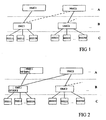
- the TMN principles have multiple levels (“levels”), of which in the present example three levels with reference to the Figures 1 and 2 are explained below.
- Figures 1 and 2 show three levels A, B and C of the Management network, of which management level C is the network equipment level ("Network Element Level") with several base station systems BSS11, BSS12 ... BSS1N and BSS21, BSS22 ... contains BSS2M.
- Management level B identifies the Network Management Layer ("Network Element Management Level "), in the operation and maintenance centers OMC1 and OMC2 in each case the manufacturer-specific management functionality for individual subsystems, as in this example the operating and maintenance center OMC1 for the base station systems BSS11, BSS12 ... BSS1N and the operation and maintenance center OMC2 for the base station systems BSS21, BSS22 ... BSS2M.
- Network Element Management Level the Network Management Layer
- OMC1 and OMC2 the manufacturer-specific management functionality for individual subsystems, as in this example the operating and maintenance center OMC1 for the base station systems BSS11, BSS12 ... BSS1N and the operation and maintenance center OMC2 for the base station systems BSS
- Management level A identifies the network management level ("Network Management Level"), in the network management centers NMC1 and NMC2 each have an integrated, from the manufacturer realize independent management functionality.
- Network Management Level Several network management centers can access this the same network facility at the next lower management level B have, in this example, the network management centers NMC1 and NMC2 of the next higher management level C to Operations and maintenance center OMC1 of the next lower management level B.
- Different between the network devices Management levels are defined interfaces to Information transmission provided.
- FIGS. 1 and 2 The difference in the representations according to FIGS. 1 and 2 lies in the fact that an agent-manager relationship to the treatment of alarms for one or more alarm data comparisons in Figure 1 between the operation and maintenance center OMC1 (Agent) and a network management center NMC1 (Manager) or several - physically separate - network management centers NMC1, NMC2 (Manager) and in Figure 2 between the base station system BSS11 (Agent) and two different applications OF1 and OF2 (Manager) in the Operations and Maintenance Center OMC1 or between the operation and maintenance center OMC1 (Agent) and two different applications NF1 and NF2 (Manager) in the network management center NMC1.
- NMC2 To enter the Network management centers NMC1, NMC2 always an overview ensure that the error situation is and maintenance center OMC1 which - due to example within the supervised base station systems BSS11 ... BSS1N errors - stored alarm data active alarms and parallel to both managers sent on request. This is preferably done after one Connection aborted or after initialization of the Agent or manager. Likewise, several requirements also in succession from a single manager, e.g. the Network Management Center NMC1 to the agent, e.g. the operating and maintenance center OMC1. FIG.
- 1 shows the Structure for multiply emitted according to the invention requirements for alarm data synchronization, in this example parallel between the management level B, in which the Agent in the form of the Operations and Maintenance Center OMC1, and the next highest management level A, in which the managers of at least two network management centers NMC1, NMC2 formed will expire.
- the management level B e.g. in the operating and Maintenance Center OMC1 always an overview of the error situation ensure are from the base station system BSS11 which - due for example within the supervised Base stations and base station controllers occurring Errors - stored alarm data of active alarms provided and parallel to at least two managers of the operating and maintenance center OMC1 in the form of different Applications OF1 and OF2, both of one and the same physical device OMC1 to be executed. This is also preferably done after a connection abort or after an initialization of the agent or of the manager. A serial transmission of several times through a single manager, e.g. the operation and maintenance center OMC1, initiated requests to the agent, e.g. the base station system BSS11, is also possible.
- an agent manager relationship can also between the operation and maintenance center OMC1 (one agent) and the network management center NMC1 (a manager) to the serial Exchange of requests and alarm data or parallel Exchange of requirements and alarm data for at least two different applications NF1 and NF2 (two Manager) exist in the network management center NMC1.
- FIG. 2 shows the structure for parallel according to the invention Alarm data comparisons between the management level B, in the the managers are located as applications OF1 and OF2, and the next lowest management level C in which the Agent is located.
- the manager / the manager of the alarm data comparison also as Realignment procedure or realignment procedure, started, according to the invention by the manager of the alarm data comparison parameter-dependent is controlled. It starts the alarm data synchronization in this example first between the base station system, e.g. BSS11, and the applications OF1, OF2 in the operation and maintenance center OMC1 parallel and then sits down between the operation and maintenance center OMC1 and its parent network management centers NMC1, NMC2 continue in parallel. At the end of these procedures is the error situation in both the OMC and the NMC again updated.
- the realignment procedure can of course on the update of alarm data between agent and Managers in two directly adjacent management levels, e.g. Level B and Level A, be restricted.
- FIG. 3 shows a schematic representation of the structure of FIG Agent AG and manager MA1, MA2 with the to carry out simultaneously - with two or more managers - or serially - with only one manager - expiring realignment procedures required Institutions.
- Each manager MA1, MA2 and Agent AG has a control device M-CTR or A-CTR, which the Generate and evaluate messages for alarm data synchronization can. Likewise, they show - not shown - Send / Receive facilities for sending and receiving the messages as well as storage facilities for storing the alarm data and other payload and signaling information on.
- the controllers M-CTR add the manager MA1, MA2 in the respective request message for transmission the alarm data by the agent to assign the request Correlation information used for subsequently sent messages one that is unique and causes the Transfer to the agent.
- the facilities add M-CTR of the managers MA1, MA2 for controlling the alarm data comparison one or more parameters par in each request message individually or in one of the request messages prefixed set message to specific, by different parameter values marked alarms to request.
- the respective request message or the separate Set message is par with the agent AG sent. Only through the parameterizable alignment functionality According to the invention, for example, a Prioritization of alarms and / or active control of the Order of requested alarms can be achieved.
- the control device A-CTR of the agent AG receives the corresponding Message with par parameters, evaluates them, and starts the realignment to the managers MA1, MA2 Returns of the managers specifically requested Alarms.
- the managers MA1, MA2 enter the request message registered unique correlation information used to correlate the requirements, and respectively a message with further correlation information to associate the messages subsequently sent by the agent (alarm notifications) to the respectively started realignment sent to the next higher management level.
- the further correlation information is unique.
- the managers MA1, MA2 assignable and controllable by them filter functions EFD1, EFD2 (Event Forwarding Discriminators) with filter criteria for the messages generated by Agent AG so that the messages with the alarm data only routed to the managers MA1, MA2 when the filter criteria are met become.
- the controller M-CTR of the manager is able to set up such filter functions in Agent AG, to clear and set the filter criteria to depending on their individual requirements the message flow to be able to control. Therefore, the case may occur that the filter function setting varies from manager to manager is, so by the simultaneously running realignment procedures contentwise different alarms with associated Alarm data are treated.
- FIG. 4 shows the message flow between an agent AG - in the example shown according to the figure 1 the operating and Maintenance center OMC1 or in the illustrated example of the figure 2 the base station system BSS11 - and the manager MA1, MA2 - in the example according to the figure 1 the different network management centers NMC1, NMC2 or in the example of FIG different applications OF1, OF2.
- the message flow is preferably carried out using standardized M-EVENT REPORT messages coming in one too Initiated M-ACTION request request and into one embedded to the end initiated M-ACTION response response are.
- These are generic CMISE-standardized (Common Management Information Service Element) Procedures According to ITU-T X.710 are defined.
- the ITU-T X.733 defines the content a standardized alarm transmission (alarm report), which is carried out according to the M-EVENT-REPORT services.
- the Correlation information is included in the news or in certain message fields entered.
- the managers MA1, MA2 the parameters for controlling the Alarm data synchronization with certain parameter values and wear they individually or repeatedly in the respective request message one.
- the example in Figure 4 shows the message flow only on the basis of individual messages, these being parallel between the agent AG and the managers MA1, MA2 or serial between the agent AG and the single manager MA1 can be.
- each manager sends MA1, MA2 the M-ACTION request Request with a request message repAA (report Active Alarms) for transmitting the alarm data.
- a request message repAA Report Active Alarms
- the parameter values relEN ... are in one according to the standard specified message field of the M-ACTION request request included to share already existing and defined fields to be able to.
- a cheap variant involving the time is that from the agent the alarm data of the Alarms with the oldest origins first and the Alarm data of the alarms with the most recent date of origin last provided and sent.
- a particularly suitable Variant of the combination of parameter values with regard to Time and urgency is that of the agent Alarm data of alarms with critical urgency, in which the functionality is assumed to be no longer given, first and the alarm data of the alarms with uncritical urgency, when the functionality is assumed to have been given will be last provided and sent.
- Agent AG the alarm data synchronization by generating a message staAA (start Alarm Alignment) and insert another one Correlation information aliNI (alignment Notification Id) in this message.
- the correlation information entered by Agent AG AliNI allows a direct correlation subsequent alarms for the respectively started alarm data synchronization.
- the correlation information alaAH is also contained in a specific message field.
- the correlation information For example, aliNI is standardized in the Message notification notification field staAA registered. Both information will be alaAH, aliNI together in the message staAA from agent AG to the managers MA1, MA2 sent out.
- correlation information alaAH directly correlate the following messages staAA and repAA, because they also have the correlation information alaAH contain.
- the alNO messages are about the correlation information aliNI is directly correlated with the message staAA.
- the manager can send the request message repAA with the subsequent news alNO indirectly about the two in the message staAA contained correlation information alaAH and aliNI correlate.
- the agent initiates the M-ACTION response immediately after sending the message staAA.
- the correlation information alaAH, aliNI for unambiguous assignment multiple requirements - possible simultaneous realignments too multiple managers or serial realignments into a single Managers - will still be in the agent-manager relationship generated facilities and in the Messages repAA, staAA sent.
- FIG. 5 shows the message flow according to FIG. 4 when used of two different parameter values, in the present Example formed by the parameter values priSV and relTI are.
- the parameter value priSV takes on the value TRUE, which is the Agent signals that he is in the sending order of the alarms prioritize according to different urgency levels should.
- the agent dispenses with the prioritization according to urgency values. Will that be optional Field from the manager to control the requested Alarms not even used, all active alarms, the have an assumed urgency transmit (default mode).
- the second parameter value relTI contains a sequence of two values inst (Interval Start) and inen (Interval End), which has a start time and an end time for Mark a time interval.
- the alarm data of the selected Alarms using the M-EVENT-REPORT service Posted in the message staAA following messages alNO the alarm data of the selected Alarms using the M-EVENT-REPORT service Posted.
- the individual messages alNO have besides the Correlation information aliNI a value for urgency SV (perceived severity) of the alarm and a time of origin evT (event time) of the alarm.
- the different ones Emergency values range from "critical” cri (critical) about "important" maj (major), “less important” min (minor) up to "uncritical” was (warning). As critical becomes An alarm is conceived in which the functionality is not considered is given more given while being uncritical Alarm the functionality is assumed to have been given. If the manager received the urgency value, he concludes this alarm as a warning regarding possible impairment the functions of the agent.
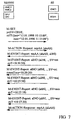
- FIG. 7 shows the message flow associated with the procedure of FIG when setting the already described to FIG 5 both parameters priSV, relTI.
- both parameters priSV, relTI In contrast to FIG. 5 become inst by the start time and the end time fixed time interval as parameter value relTI - Only in this time window should the agent register alerts and prioritized according to urgency - and the Urgency as parameter value priSV from the manager to the Setting message M-SET inserted and sent in advance to the agent. Keep the settings for all subsequent request messages its validity until a new setting message M-SET overwrites the previous parameters or invalidates them explained.
- the alNO messages contain the same parameter values, those exemplified in FIG 5 and according to the associated Embodiments are described.
- the manager For this purpose, the manager generates an M-GET request Request with the parameter values to be queried - in Example the parameter values priSV, relTI - and send them to the agent. In response, the requesting manager receives a Message M-GET Response with the currently valid in the agent Settings for the given parameter values.
Landscapes
- Engineering & Computer Science (AREA)
- Computer Networks & Wireless Communication (AREA)
- Signal Processing (AREA)
- Computer And Data Communications (AREA)
- Data Exchanges In Wide-Area Networks (AREA)
Description
- die von ausgewählten Agenteinheiten stammen,
- für die eine Dringlichkeit angenommen wird,
- anhand dessen der Agent eine Priorisierung beim Senden der angeforderten Alarme nach deren Dringlichkeit, vorzugsweise anhand unterschiedlicher Dringlichkeitswerte, vornimmt,
- die innerhalb eines durch einen Anfangszeitpunkt und einen Endzeitpunkt definierten Zeitintervalls entstehen,
- anhand dessen der Agent beim Senden eine Priorisierung der Alarme nach dem Entstehungszeitpunkt der Alarme vornimmt.
- FIG 1
- das Blockschaltbild eines Managementnetzes für ein Mobil-Kommunikationssystem mit Agent-Manager-Beziehung zwischen einem Betriebs- und Wartungszentrum und einem oder mehreren Netzmanagementzentren,
- FIG 2
- das Blockschaltbild des Managementnetzes gemäß Figur 1 mit Agent-Manager-Beziehung zwischen einem Basisstationssystem und einem Betriebs- und Wartungszentrum zur Durchführung von zumindest zwei Anwendungen für das Basisstationssystem,
- FIG 3
- das Blockschaltbild von Agent und Manager zur Behandlung der Alarme für parallel oder seriell ablaufende Alarmdatenabgleiche,
- FIG 4
- den Nachrichtenfluß zwischen dem Manager und dem Agent zur individuellen parameterabhängigen Steuerung des Alarmdatenabgleichs in jeder Anforderungsnachricht,
- FIG 5
- den Nachrichtenfluß nach FIG 4 am Beispiel der Verwendung von zwei verschiedenen Parameterwerten.
- FIG 6
- den Nachrichtenfluß zwischen dem Manager und dem Agent zur parameterabhängigen Steuerung des Alarmdatenabgleichs durch eine einmalige Einstellung für mehrere Anforderungsnachrichten.
- FIG 7
- den Nachrichtenfluß nach FIG 6 am Beispiel der Verwendung von zwei verschiedenen Parameterwerten, und
- FIG 8
- den Nachrichtenfluß zwischen dem Manager und dem Agent zur Abfrage der für den Alarmdatenabgleich benutzten Parameterwerte nach FIG 7.
- die von ausgewählten Agenteinheiten stammen (relEN),
- für die eine Dringlichkeit angenommen wird (relPS),
- anhand dessen der Agent beim Senden eine Priorisierung der angeforderten Alarme nach deren Dringlichkeit, vorzugsweise anhand unterschiedlicher Dringlichkeitswerte (priSV), vornimmt,
- die innerhalb eines durch einen Anfangszeitpunkt und einen Endzeitpunkt definierten Zeitintervalls entstehen (relTI),
- anhand dessen der Agent beim Senden eine Priorisierung der Alarme nach dem Entstehungszeitpunkt der Alarme vornimmt (priDT).
Claims (19)
- Verfahren zur Behandlung von Alarmen in einem Kommunikationssystem durch ein mehrere Managementebenen (A, B, C) aufweisendes Managementnetz, wobei für einen Alarmdatenabgleich zwischen einem Agent (AG) einer Managementebene (B, C) und zumindest einem Manager (MA1, MA2) einer nächsthöheren Managementebene (A, B) die Alarmdaten aktiver Alarme übertragen werden, bei demvon dem Manager (MA1, MA2) jeweils eine oder mehrere Anforderungsnachrichten (repAA) zum Übermitteln der Alarmdaten an den Agent (AG) gesendet werden,von dem Manager (MA1, MA2) Korrelationsinformationen (alaAH, aliNI) für eine Zuordnung der jeweiligen Anforderung zu den vom Agent (AG) nachfolgend gesendeten Nachrichten (alNO) mit den Alarmdaten empfangen werden, undvon dem Manager (MA1, MA2) der Alarmdatenabgleich abhängig von zumindest einem zum Agent (AG) gesendeten Parameter (par) gesteuert wird.
- Verfahren nach Anspruch 1, bei dem
von dem Manager (MA1, MA2) der oder die Parameter (par) in jeder Anforderungsnachricht (repAA) zu dem Agent (AG) gesendet werden. - Verfahren nach Anspruch 1, bei dem
von dem Manager (MA1, MA2) der oder die Parameter (par) in einer den Anforderungsnachrichten (repAA) vorangestellten Setznachricht (M-SET) zu dem Agent (AG) gesendet werden. - Verfahren nach einem der vorhergehenden Ansprüche, bei dem ein Parameter (par) von dem Manager (MA1, MA2) mit einem Parameterwert (relEN) versehen wird, durch den vom Agent (AG) Alarme angefordert werden, die von ausgewählten Agenteinheiten stammen.
- Verfahren nach einem der vorhergehenden Ansprüche, bei dem ein Parameter (par) von dem Manager (MA1, MA2) mit einem Parameterwert (relPS) versehen wird, durch den vom Agent (AG) Alarme angefordert werden, für die eine Dringlichkeit angenommen wird.
- Verfahren nach Anspruch 5, bei dem
von dem Manager (MA1, MA2) ein zusätzlicher Parameterwert (priPS) benutzt wird, anhand dessen der Agent (AG) beim Senden eine Priorisierung der angeforderten Alarme nach deren Dringlichkeit vornimmt. - Verfahren nach Anspruch 6, bei dem
der Agent (AG) die Priorisierung der zu dem Manager (MA1, MA2) zu übertragenden Alarme nach unterschiedlichen Dringlichkeitswerten (cri, maj, min, war) vornimmt. - Verfahren nach einem der vorhergehenden Ansprüche, bei dem ein Parameter (par) von dem Manager (MA1, MA2) mit einem Parameterwert (relTI) versehen wird, durch den vom Agent (AG) Alarme angefordert werden, die innerhalb eines durch einen Anfangszeitpunkt (inst) und einen Endzeitpunkt (inen) definierten Zeitintervalls entstehen.
- Verfahren nach einem der vorhergehenden Ansprüche, bei dem von dem Manager (MA1, MA2) ein zusätzlicher Parameterwert (priDT) benutzt wird, anhand dessen der Agent (AG) beim Senden eine Priorisierung der Alarme nach dem Entstehungszeitpunkt (evT) der Alarme vornimmt.
- Verfahren nach Anspruch 9, bei dem
von dem Agent (AG) die Alarmdaten der Alarme mit den ältesten Entstehungszeitpunkten (evT) zuerst und die Alarmdaten der Alarme mit den jüngsten Entstehungszeitpunkten (evT) zuletzt bereitgestellt und gesendet werden. - Verfahren nach Anspruch 9 oder 10, bei dem
von dem Agent (AG) die Alarmdaten der Alarme mit kritischer Dringlichkeit, bei der die Funktionalität als nicht mehr gegeben angenommen wird, zuerst und die Alarmdaten der Alarme mit unkritischer Dringlichkeit, bei der die Funktionalität als noch gegeben angenommen wird, zuletzt bereitgestellt und gesendet werden. - Kommunikationssystem zur Behandlung von Alarmen durch ein mehrere Managementebenen (A, B, C) aufweisendes Managementnetz, wobei für einen Alarmdatenabgleich zwischen einem Agent (AG) einer Managementebene (z.B. B) und zumindest einem Manager (MA1, MA2) einer nächsthöheren Managementebene (z.B. A) die Alarmdaten aktiver Alarme übertragen werden,Einrichtungen (M-CTR) in dem Manager (MA1, MA2) für das Senden einer oder mehrerer Anforderungsnachrichten (repAA) zum Übermitteln der Alarmdaten an den Agent (OMC1), undEinrichtungen (M-CTR) in dem Manager (MA1, MA2) für das Empfangen von Korrelationsinformationen (alaAH, aliNI) für eine Zuordnung der jeweiligen Anforderung zu den vom Agent (AG) nachfolgend gesendeten Nachrichten (alNO) mit den Alarmdaten, undEinrichtungen (M-CTR) in dem Manager (MA1, MA2) für eine Steuerung des Alarmdatenabgleich abhängig von zumindest einem zum Agent (AG) gesendeten Parameter (par).
- Kommunikationssystem nach Anspruch 12, bei dem
die Einrichtungen (M-CTR) in dem Manager (MA1, MA2) den oder die Parameter (par) in jede Anforderungsnachricht (repAA) einfügen. - Kommunikationssystem nach Anspruch 12, bei dem
die Einrichtungen (M-CTR) in dem Manager (MA1, MA2) den oder die Parameter (par) in eine den Anforderungsnachrichten (repAA) vorangestellte, zu dem Agent (AG) gesendete Setznachricht (M-SET) einfügen. - Kommunikationssystem nach einem der Ansprüche 12 bis 14, bei dem von dem Manager (MA1, MA2) ein Parameter (par) mit einem Parameterwert (relEN) versehen ist, durch den vom Agent (AG) Alarme angefordert werden, die von ausgewählten Agenteinheiten stammen.
- Kommunikationssystem nach einem der Ansprüche 12 bis 15, bei dem ein Parameter (par) von dem Manager (MA1, MA2) mit einem Parameterwert (relPS) versehen ist, durch den vom Agent (AG) Alarme angefordert werden, für die eine Dringlichkeit angenommen wird.
- Kommunikationssystem nach Anspruch 16, bei dem
von dem Manager (MA1, MA2) ein zusätzlicher Parameterwert (priPS) benutzt ist, anhand dessen der Agent (AG) beim Senden eine Priorisierung der angeforderten Alarme nach deren Dringlichkeit vornimmt. - Kommunikationssystem nach einem der Ansprüche 12 bis 17, bei dem ein Parameter (par) von dem Manager (MA1, MA2) mit einem Parameterwert (relTI) versehen ist, durch den vom Agent (AG) Alarme angefordert werden, die innerhalb eines durch einen Anfangszeitpunkt (inst) und einen Endzeitpunkt (inen) definierten Zeitintervalls entstehen.
- Kommunikationssystem nach Anspruch 18, bei dem
von dem Manager (MA1, MA2) ein zusätzlicher Parameterwert (priDT) benutzt ist, anhand dessen der Agent (AG) eine Priorisierung beim Senden der Alarme nach dem Entstehungszeitpunkt (evT) der Alarme vornimmt.
Applications Claiming Priority (3)
| Application Number | Priority Date | Filing Date | Title |
|---|---|---|---|
| DE19801784A DE19801784C2 (de) | 1998-01-19 | 1998-01-19 | Verfahren und Kommunikationssystem zur Behandlung von Alarmen durch ein mehrere Managementebenen aufweisendes Managementnetz |
| DE19801784 | 1998-01-19 | ||
| PCT/DE1998/003807 WO1999037101A1 (de) | 1998-01-19 | 1998-12-28 | Verfahren und kommunikationssystem zur behandlung von alarmen durch ein mehrere managementebenen aufweisendes managementnetz |
Publications (2)
| Publication Number | Publication Date |
|---|---|
| EP1050170A1 EP1050170A1 (de) | 2000-11-08 |
| EP1050170B1 true EP1050170B1 (de) | 2005-10-26 |
Family
ID=7855015
Family Applications (1)
| Application Number | Title | Priority Date | Filing Date |
|---|---|---|---|
| EP98966813A Expired - Lifetime EP1050170B1 (de) | 1998-01-19 | 1998-12-28 | Verfahren und kommunikationssystem zur behandlung von alarmen durch ein mehrere managementebenen aufweisendes managementnetz |
Country Status (5)
| Country | Link |
|---|---|
| US (1) | US6351213B1 (de) |
| EP (1) | EP1050170B1 (de) |
| CN (1) | CN1123164C (de) |
| DE (2) | DE19801784C2 (de) |
| WO (1) | WO1999037101A1 (de) |
Families Citing this family (131)
| Publication number | Priority date | Publication date | Assignee | Title |
|---|---|---|---|---|
| US8520068B2 (en) * | 1999-07-20 | 2013-08-27 | Comcast Cable Communications, Llc | Video security system |
| US9300921B2 (en) * | 1999-07-20 | 2016-03-29 | Comcast Cable Communications, Llc | Video security systems and methods |
| DE19940048A1 (de) | 1999-08-24 | 2001-08-23 | Siemens Ag | Generisches Alignment-Verfahren in einer Multi-Manager-Umgebung |
| JP3812236B2 (ja) * | 1999-09-10 | 2006-08-23 | 株式会社日立製作所 | イベント制御手段を備えたネットワーク管理システム |
| EP1148742A1 (de) * | 2000-04-19 | 2001-10-24 | Siemens Aktiengesellschaft | Verfahren und Managementsystem zum Behandeln von Ereignis-Berichten in einem Telekommunikationsnetz |
| US6658091B1 (en) | 2002-02-01 | 2003-12-02 | @Security Broadband Corp. | LIfestyle multimedia security system |
| US7920509B2 (en) * | 2002-08-22 | 2011-04-05 | At&T Mobility Ii Llc | Remote node access in wireless telecommunication systems |
| US20050120100A1 (en) * | 2003-12-01 | 2005-06-02 | Daniel Dufour | Method and system for updating synchronization status of managed objects |
| US20050125515A1 (en) * | 2003-12-06 | 2005-06-09 | Daniel Dufour | Method and system for verifying managed object status before update |
| EP1553722A1 (de) * | 2004-01-09 | 2005-07-13 | Siemens Aktiengesellschaft | Verfahren und Agent zur Überwachung von Verbindungen in einem Managementsystem eines Kommunikationsnetzes mittels eines Heartbeat-Service |
| US11368429B2 (en) | 2004-03-16 | 2022-06-21 | Icontrol Networks, Inc. | Premises management configuration and control |
| US8963713B2 (en) | 2005-03-16 | 2015-02-24 | Icontrol Networks, Inc. | Integrated security network with security alarm signaling system |
| US9609003B1 (en) | 2007-06-12 | 2017-03-28 | Icontrol Networks, Inc. | Generating risk profile using data of home monitoring and security system |
| US11343380B2 (en) | 2004-03-16 | 2022-05-24 | Icontrol Networks, Inc. | Premises system automation |
| US10313303B2 (en) | 2007-06-12 | 2019-06-04 | Icontrol Networks, Inc. | Forming a security network including integrated security system components and network devices |
| US10522026B2 (en) | 2008-08-11 | 2019-12-31 | Icontrol Networks, Inc. | Automation system user interface with three-dimensional display |
| US11489812B2 (en) | 2004-03-16 | 2022-11-01 | Icontrol Networks, Inc. | Forming a security network including integrated security system components and network devices |
| US11316958B2 (en) | 2008-08-11 | 2022-04-26 | Icontrol Networks, Inc. | Virtual device systems and methods |
| US20170118037A1 (en) | 2008-08-11 | 2017-04-27 | Icontrol Networks, Inc. | Integrated cloud system for premises automation |
| US9191228B2 (en) | 2005-03-16 | 2015-11-17 | Icontrol Networks, Inc. | Cross-client sensor user interface in an integrated security network |
| US11811845B2 (en) | 2004-03-16 | 2023-11-07 | Icontrol Networks, Inc. | Communication protocols over internet protocol (IP) networks |
| US10382452B1 (en) | 2007-06-12 | 2019-08-13 | Icontrol Networks, Inc. | Communication protocols in integrated systems |
| US8988221B2 (en) | 2005-03-16 | 2015-03-24 | Icontrol Networks, Inc. | Integrated security system with parallel processing architecture |
| US10444964B2 (en) | 2007-06-12 | 2019-10-15 | Icontrol Networks, Inc. | Control system user interface |
| US11244545B2 (en) | 2004-03-16 | 2022-02-08 | Icontrol Networks, Inc. | Cross-client sensor user interface in an integrated security network |
| US11113950B2 (en) | 2005-03-16 | 2021-09-07 | Icontrol Networks, Inc. | Gateway integrated with premises security system |
| US11582065B2 (en) | 2007-06-12 | 2023-02-14 | Icontrol Networks, Inc. | Systems and methods for device communication |
| US11277465B2 (en) | 2004-03-16 | 2022-03-15 | Icontrol Networks, Inc. | Generating risk profile using data of home monitoring and security system |
| US9141276B2 (en) | 2005-03-16 | 2015-09-22 | Icontrol Networks, Inc. | Integrated interface for mobile device |
| US12063220B2 (en) | 2004-03-16 | 2024-08-13 | Icontrol Networks, Inc. | Communication protocols in integrated systems |
| US10200504B2 (en) | 2007-06-12 | 2019-02-05 | Icontrol Networks, Inc. | Communication protocols over internet protocol (IP) networks |
| US10375253B2 (en) | 2008-08-25 | 2019-08-06 | Icontrol Networks, Inc. | Security system with networked touchscreen and gateway |
| US8635350B2 (en) | 2006-06-12 | 2014-01-21 | Icontrol Networks, Inc. | IP device discovery systems and methods |
| US10156959B2 (en) | 2005-03-16 | 2018-12-18 | Icontrol Networks, Inc. | Cross-client sensor user interface in an integrated security network |
| US10237237B2 (en) | 2007-06-12 | 2019-03-19 | Icontrol Networks, Inc. | Communication protocols in integrated systems |
| US11201755B2 (en) | 2004-03-16 | 2021-12-14 | Icontrol Networks, Inc. | Premises system management using status signal |
| US10721087B2 (en) | 2005-03-16 | 2020-07-21 | Icontrol Networks, Inc. | Method for networked touchscreen with integrated interfaces |
| US9729342B2 (en) | 2010-12-20 | 2017-08-08 | Icontrol Networks, Inc. | Defining and implementing sensor triggered response rules |
| US10339791B2 (en) | 2007-06-12 | 2019-07-02 | Icontrol Networks, Inc. | Security network integrated with premise security system |
| US11159484B2 (en) | 2004-03-16 | 2021-10-26 | Icontrol Networks, Inc. | Forming a security network including integrated security system components and network devices |
| US10348575B2 (en) | 2013-06-27 | 2019-07-09 | Icontrol Networks, Inc. | Control system user interface |
| US10142392B2 (en) | 2007-01-24 | 2018-11-27 | Icontrol Networks, Inc. | Methods and systems for improved system performance |
| US7711796B2 (en) | 2006-06-12 | 2010-05-04 | Icontrol Networks, Inc. | Gateway registry methods and systems |
| US8335842B2 (en) | 2004-03-16 | 2012-12-18 | Icontrol Networks, Inc. | Premises management networking |
| US11677577B2 (en) | 2004-03-16 | 2023-06-13 | Icontrol Networks, Inc. | Premises system management using status signal |
| US20090077623A1 (en) | 2005-03-16 | 2009-03-19 | Marc Baum | Security Network Integrating Security System and Network Devices |
| US9531593B2 (en) | 2007-06-12 | 2016-12-27 | Icontrol Networks, Inc. | Takeover processes in security network integrated with premise security system |
| US11916870B2 (en) | 2004-03-16 | 2024-02-27 | Icontrol Networks, Inc. | Gateway registry methods and systems |
| DE102004015558A1 (de) * | 2004-03-30 | 2006-01-26 | Siemens Ag | Verfahren und Einrichtungen zur Verteilung von Management-Informationen in einem Managementnetz eines Kommunikationssystems |
| EP1612993B1 (de) * | 2004-06-29 | 2007-10-10 | Siemens Aktiengesellschaft | Verfahren und Einrichtung zum Wechsel des Betriebsmodus eines Agenten eines Managementnetzes |
| CN100407639C (zh) * | 2004-07-08 | 2008-07-30 | 中兴通讯股份有限公司 | 一种动态自适应的智能网网管系统及实现方法 |
| US11615697B2 (en) | 2005-03-16 | 2023-03-28 | Icontrol Networks, Inc. | Premise management systems and methods |
| US20170180198A1 (en) | 2008-08-11 | 2017-06-22 | Marc Baum | Forming a security network including integrated security system components |
| US20110128378A1 (en) | 2005-03-16 | 2011-06-02 | Reza Raji | Modular Electronic Display Platform |
| US11700142B2 (en) | 2005-03-16 | 2023-07-11 | Icontrol Networks, Inc. | Security network integrating security system and network devices |
| US20120324566A1 (en) | 2005-03-16 | 2012-12-20 | Marc Baum | Takeover Processes In Security Network Integrated With Premise Security System |
| US11496568B2 (en) | 2005-03-16 | 2022-11-08 | Icontrol Networks, Inc. | Security system with networked touchscreen |
| US10999254B2 (en) | 2005-03-16 | 2021-05-04 | Icontrol Networks, Inc. | System for data routing in networks |
| US9306809B2 (en) | 2007-06-12 | 2016-04-05 | Icontrol Networks, Inc. | Security system with networked touchscreen |
| US20150054947A1 (en) | 2005-03-16 | 2015-02-26 | Paul J. Dawes | Device for data routing in networks |
| EP1734689A1 (de) * | 2005-06-16 | 2006-12-20 | Siemens Aktiengesellschaft | Veto-Operation für ein Managementsystem mit einer Multi-Manager-Konfiguration |
| GB2431067B (en) | 2005-10-07 | 2008-05-07 | Cramer Systems Ltd | Telecommunications service management |
| GB2432992B (en) * | 2005-11-18 | 2008-09-10 | Cramer Systems Ltd | Network planning |
| US8069452B2 (en) * | 2005-12-01 | 2011-11-29 | Telefonaktiebolaget L M Ericsson (Publ) | Method and management agent for event notifications correlation |
| GB2433675B (en) * | 2005-12-22 | 2008-05-07 | Cramer Systems Ltd | Communications circuit design |
| GB2435362B (en) * | 2006-02-20 | 2008-11-26 | Cramer Systems Ltd | Method of configuring devices in a telecommunications network |
| JP5011827B2 (ja) * | 2006-06-01 | 2012-08-29 | 株式会社デンソー | 報知制御装置および報知情報送信装置 |
| US10079839B1 (en) | 2007-06-12 | 2018-09-18 | Icontrol Networks, Inc. | Activation of gateway device |
| US12063221B2 (en) | 2006-06-12 | 2024-08-13 | Icontrol Networks, Inc. | Activation of gateway device |
| US11706279B2 (en) | 2007-01-24 | 2023-07-18 | Icontrol Networks, Inc. | Methods and systems for data communication |
| US7633385B2 (en) | 2007-02-28 | 2009-12-15 | Ucontrol, Inc. | Method and system for communicating with and controlling an alarm system from a remote server |
| US8451986B2 (en) | 2007-04-23 | 2013-05-28 | Icontrol Networks, Inc. | Method and system for automatically providing alternate network access for telecommunications |
| US12003387B2 (en) | 2012-06-27 | 2024-06-04 | Comcast Cable Communications, Llc | Control system user interface |
| US11212192B2 (en) | 2007-06-12 | 2021-12-28 | Icontrol Networks, Inc. | Communication protocols in integrated systems |
| US11423756B2 (en) | 2007-06-12 | 2022-08-23 | Icontrol Networks, Inc. | Communication protocols in integrated systems |
| US11316753B2 (en) | 2007-06-12 | 2022-04-26 | Icontrol Networks, Inc. | Communication protocols in integrated systems |
| US12283172B2 (en) | 2007-06-12 | 2025-04-22 | Icontrol Networks, Inc. | Communication protocols in integrated systems |
| US11601810B2 (en) | 2007-06-12 | 2023-03-07 | Icontrol Networks, Inc. | Communication protocols in integrated systems |
| US10051078B2 (en) | 2007-06-12 | 2018-08-14 | Icontrol Networks, Inc. | WiFi-to-serial encapsulation in systems |
| US10666523B2 (en) | 2007-06-12 | 2020-05-26 | Icontrol Networks, Inc. | Communication protocols in integrated systems |
| US10423309B2 (en) | 2007-06-12 | 2019-09-24 | Icontrol Networks, Inc. | Device integration framework |
| US11646907B2 (en) | 2007-06-12 | 2023-05-09 | Icontrol Networks, Inc. | Communication protocols in integrated systems |
| US11218878B2 (en) | 2007-06-12 | 2022-01-04 | Icontrol Networks, Inc. | Communication protocols in integrated systems |
| US10389736B2 (en) | 2007-06-12 | 2019-08-20 | Icontrol Networks, Inc. | Communication protocols in integrated systems |
| US11237714B2 (en) | 2007-06-12 | 2022-02-01 | Control Networks, Inc. | Control system user interface |
| US10498830B2 (en) | 2007-06-12 | 2019-12-03 | Icontrol Networks, Inc. | Wi-Fi-to-serial encapsulation in systems |
| US12184443B2 (en) | 2007-06-12 | 2024-12-31 | Icontrol Networks, Inc. | Controlling data routing among networks |
| US10523689B2 (en) | 2007-06-12 | 2019-12-31 | Icontrol Networks, Inc. | Communication protocols over internet protocol (IP) networks |
| US10616075B2 (en) | 2007-06-12 | 2020-04-07 | Icontrol Networks, Inc. | Communication protocols in integrated systems |
| US11089122B2 (en) | 2007-06-12 | 2021-08-10 | Icontrol Networks, Inc. | Controlling data routing among networks |
| US12541237B2 (en) | 2007-08-10 | 2026-02-03 | Icontrol Networks, Inc. | Integrated security system with parallel processing architecture |
| US10223903B2 (en) | 2010-09-28 | 2019-03-05 | Icontrol Networks, Inc. | Integrated security system with parallel processing architecture |
| US11831462B2 (en) | 2007-08-24 | 2023-11-28 | Icontrol Networks, Inc. | Controlling data routing in premises management systems |
| US11916928B2 (en) | 2008-01-24 | 2024-02-27 | Icontrol Networks, Inc. | Communication protocols over internet protocol (IP) networks |
| US20170185278A1 (en) | 2008-08-11 | 2017-06-29 | Icontrol Networks, Inc. | Automation system user interface |
| US11758026B2 (en) | 2008-08-11 | 2023-09-12 | Icontrol Networks, Inc. | Virtual device systems and methods |
| US11792036B2 (en) | 2008-08-11 | 2023-10-17 | Icontrol Networks, Inc. | Mobile premises automation platform |
| US10530839B2 (en) | 2008-08-11 | 2020-01-07 | Icontrol Networks, Inc. | Integrated cloud system with lightweight gateway for premises automation |
| US11258625B2 (en) | 2008-08-11 | 2022-02-22 | Icontrol Networks, Inc. | Mobile premises automation platform |
| US11729255B2 (en) | 2008-08-11 | 2023-08-15 | Icontrol Networks, Inc. | Integrated cloud system with lightweight gateway for premises automation |
| US8850347B2 (en) | 2010-09-30 | 2014-09-30 | Honeywell International Inc. | User interface list control system |
| US8719385B2 (en) * | 2008-10-28 | 2014-05-06 | Honeywell International Inc. | Site controller discovery and import system |
| US8819562B2 (en) | 2010-09-30 | 2014-08-26 | Honeywell International Inc. | Quick connect and disconnect, base line configuration, and style configurator |
| US20110093493A1 (en) | 2008-10-28 | 2011-04-21 | Honeywell International Inc. | Building management system site categories |
| US20100106543A1 (en) * | 2008-10-28 | 2010-04-29 | Honeywell International Inc. | Building management configuration system |
| US8572502B2 (en) * | 2008-11-21 | 2013-10-29 | Honeywell International Inc. | Building control system user interface with docking feature |
| US9471202B2 (en) * | 2008-11-21 | 2016-10-18 | Honeywell International Inc. | Building control system user interface with pinned display feature |
| US8638211B2 (en) | 2009-04-30 | 2014-01-28 | Icontrol Networks, Inc. | Configurable controller and interface for home SMA, phone and multimedia |
| US8224763B2 (en) | 2009-05-11 | 2012-07-17 | Honeywell International Inc. | Signal management system for building systems |
| US8554714B2 (en) * | 2009-05-11 | 2013-10-08 | Honeywell International Inc. | High volume alarm management system |
| US8352047B2 (en) | 2009-12-21 | 2013-01-08 | Honeywell International Inc. | Approaches for shifting a schedule |
| US20110196539A1 (en) * | 2010-02-10 | 2011-08-11 | Honeywell International Inc. | Multi-site controller batch update system |
| US8640098B2 (en) * | 2010-03-11 | 2014-01-28 | Honeywell International Inc. | Offline configuration and download approach |
| CN102985915B (zh) | 2010-05-10 | 2016-05-11 | 网际网路控制架构网络有限公司 | 控制系统用户接口 |
| US8890675B2 (en) | 2010-06-02 | 2014-11-18 | Honeywell International Inc. | Site and alarm prioritization system |
| US8648706B2 (en) | 2010-06-24 | 2014-02-11 | Honeywell International Inc. | Alarm management system having an escalation strategy |
| US8836467B1 (en) | 2010-09-28 | 2014-09-16 | Icontrol Networks, Inc. | Method, system and apparatus for automated reporting of account and sensor zone information to a central station |
| US11750414B2 (en) | 2010-12-16 | 2023-09-05 | Icontrol Networks, Inc. | Bidirectional security sensor communication for a premises security system |
| US9147337B2 (en) | 2010-12-17 | 2015-09-29 | Icontrol Networks, Inc. | Method and system for logging security event data |
| US9213539B2 (en) | 2010-12-23 | 2015-12-15 | Honeywell International Inc. | System having a building control device with on-demand outside server functionality |
| US8751639B2 (en) | 2011-04-27 | 2014-06-10 | Rackspace Us, Inc. | Event queuing and distribution system |
| US9223839B2 (en) | 2012-02-22 | 2015-12-29 | Honeywell International Inc. | Supervisor history view wizard |
| US9529349B2 (en) | 2012-10-22 | 2016-12-27 | Honeywell International Inc. | Supervisor user management system |
| US9971977B2 (en) | 2013-10-21 | 2018-05-15 | Honeywell International Inc. | Opus enterprise report system |
| US11405463B2 (en) | 2014-03-03 | 2022-08-02 | Icontrol Networks, Inc. | Media content management |
| US11146637B2 (en) | 2014-03-03 | 2021-10-12 | Icontrol Networks, Inc. | Media content management |
| US9933762B2 (en) | 2014-07-09 | 2018-04-03 | Honeywell International Inc. | Multisite version and upgrade management system |
| WO2016093861A1 (en) * | 2014-12-12 | 2016-06-16 | Nokia Solutions And Networks Oy | Alarm correlation in network function virtualization environment |
| US10209689B2 (en) | 2015-09-23 | 2019-02-19 | Honeywell International Inc. | Supervisor history service import manager |
| US10362104B2 (en) | 2015-09-23 | 2019-07-23 | Honeywell International Inc. | Data manager |
| CN110311799B (zh) * | 2018-03-27 | 2022-02-25 | 华为技术有限公司 | 一种通信方法及装置 |
Family Cites Families (7)
| Publication number | Priority date | Publication date | Assignee | Title |
|---|---|---|---|---|
| JP2810171B2 (ja) * | 1989-12-18 | 1998-10-15 | 株式会社日立製作所 | ネットワークシステム及びこれを適用するネットワーク管理方法 |
| US5619183A (en) * | 1994-09-12 | 1997-04-08 | Richard C. Ziegra | Video audio data remote system |
| IT1271326B (it) * | 1994-12-23 | 1997-05-27 | Sits Soc It Telecom Siemens | Procedimento per il riallineamento automatico nel riporto di evento in un sistema di gestione e relativo sistema |
| SE504072C2 (sv) | 1995-02-08 | 1996-11-04 | Ericsson Telefon Ab L M | Anordning och förfarande vid kommunikationshantering och ett telekommunikationssystem med en hanterande anordning |
| GB2308777A (en) | 1995-12-28 | 1997-07-02 | Nokia Telecommunications Oy | Telecommunications network management |
| GB2308779B (en) | 1995-12-28 | 1998-06-10 | Nokia Telecommunications Oy | Telecommunications network management system |
| DE19752614C2 (de) * | 1997-11-27 | 2000-04-13 | Siemens Ag | Verfahren und Kommunikationssystem zur Behandlung von Alarmen durch ein mehrere Managementebenen aufweisendes Managementnetz |
-
1998
- 1998-01-19 DE DE19801784A patent/DE19801784C2/de not_active Expired - Fee Related
- 1998-12-28 EP EP98966813A patent/EP1050170B1/de not_active Expired - Lifetime
- 1998-12-28 DE DE59813147T patent/DE59813147D1/de not_active Expired - Lifetime
- 1998-12-28 WO PCT/DE1998/003807 patent/WO1999037101A1/de not_active Ceased
- 1998-12-28 CN CN98813193A patent/CN1123164C/zh not_active Expired - Lifetime
- 1998-12-28 US US09/600,559 patent/US6351213B1/en not_active Expired - Lifetime
Also Published As
| Publication number | Publication date |
|---|---|
| US6351213B1 (en) | 2002-02-26 |
| EP1050170A1 (de) | 2000-11-08 |
| WO1999037101A1 (de) | 1999-07-22 |
| DE19801784A1 (de) | 1999-07-22 |
| CN1123164C (zh) | 2003-10-01 |
| WO1999037101A9 (de) | 1999-10-07 |
| DE19801784C2 (de) | 2000-03-30 |
| DE59813147D1 (de) | 2005-12-01 |
| CN1286877A (zh) | 2001-03-07 |
Similar Documents
| Publication | Publication Date | Title |
|---|---|---|
| DE19801784C2 (de) | Verfahren und Kommunikationssystem zur Behandlung von Alarmen durch ein mehrere Managementebenen aufweisendes Managementnetz | |
| EP1034639B1 (de) | Verfahren und kommunikationssystem zur behandlung von alarmen durch ein mehrere managementebenen aufweisendes managementnetz | |
| EP1058983B1 (de) | Verfahren und kommunikationssystem zur behandlung von alarmen durch ein mehrere managementebenen aufweisendes managementnetz | |
| DE19831825C2 (de) | Verfahren und Kommunikationssystem zur Behandlung von Alarmen durch ein mehrere Managementebenen aufweisendes Managementnetz | |
| EP1668822B1 (de) | Verfahren zur synchronisierung von alarmen in einem managementsystem eines kommunikationsnetzes | |
| EP1206883B1 (de) | Generisches alignment-verfahren in einer multi-manager-umgebung | |
| DE69128421T2 (de) | Verfahren zur automatischen ausführung von systemrekonfigurationen | |
| EP1145538B1 (de) | Verfahren und kommunikationssystem zur behandlung von zustandsinformationen durch ein mehrere managementebenen aufweisendes managementnetz | |
| DE19740718C2 (de) | Realignment-Verfahren zwischen einem Betriebs- und Wartungszentrum und einem diesem übergeordneten Netzmanagementzentrum | |
| EP1437859A1 (de) | Verfahren zur Behandlung von Alarmen durch ein Managementnetz mit mehreren Ebenen in einem Kommunikationssystem | |
| EP1582030B1 (de) | Verfahren zur behandlung von alarmen durch ein managementnetz mit mehreren ebenen in einem kommunikationssystem | |
| EP1730886B1 (de) | Verfahren und einrichtungen zur verteilung von management-informationen in einem managementnetz eines kommunikationssystems | |
| EP1749369B1 (de) | Verfahren und einrichtungen zum betreiben eines managementnetzes bei ausfall eines managers | |
| EP1763937B1 (de) | Verfahren zur gesicherten datenübertragung in einem managementsystem | |
| DE10134126A1 (de) | Verfahren zum gleichzeitigen Deaktivieren mehrerer Alarme | |
| EP0679302A1 (de) | Vorrichtung zur überwachung einer nachrichtenübertragungseinrichtung | |
| EP1750391A1 (de) | Überwachung eines Agenten in einem Managementsystem | |
| EP1001636A2 (de) | Verfahren, Programmodule, Server und Überwachungseinrichtung zur Bearbeitung von Alarmmeldungen eines Netzelementes | |
| DE102009014538A1 (de) | Verfahren zur Fehlerbehandlung in einem Netzwerk sowie das Netzwerk |
Legal Events
| Date | Code | Title | Description |
|---|---|---|---|
| PUAI | Public reference made under article 153(3) epc to a published international application that has entered the european phase |
Free format text: ORIGINAL CODE: 0009012 |
|
| 17P | Request for examination filed |
Effective date: 20000417 |
|
| AK | Designated contracting states |
Kind code of ref document: A1 Designated state(s): DE FR GB |
|
| GRAP | Despatch of communication of intention to grant a patent |
Free format text: ORIGINAL CODE: EPIDOSNIGR1 |
|
| GRAS | Grant fee paid |
Free format text: ORIGINAL CODE: EPIDOSNIGR3 |
|
| GRAA | (expected) grant |
Free format text: ORIGINAL CODE: 0009210 |
|
| AK | Designated contracting states |
Kind code of ref document: B1 Designated state(s): DE FR GB |
|
| REG | Reference to a national code |
Ref country code: GB Ref legal event code: FG4D Free format text: NOT ENGLISH |
|
| GBT | Gb: translation of ep patent filed (gb section 77(6)(a)/1977) |
Effective date: 20051026 |
|
| REF | Corresponds to: |
Ref document number: 59813147 Country of ref document: DE Date of ref document: 20051201 Kind code of ref document: P |
|
| ET | Fr: translation filed | ||
| PLBE | No opposition filed within time limit |
Free format text: ORIGINAL CODE: 0009261 |
|
| STAA | Information on the status of an ep patent application or granted ep patent |
Free format text: STATUS: NO OPPOSITION FILED WITHIN TIME LIMIT |
|
| 26N | No opposition filed |
Effective date: 20060727 |
|
| REG | Reference to a national code |
Ref country code: DE Ref legal event code: R081 Ref document number: 59813147 Country of ref document: DE Owner name: NETWORK MANAGING SOLUTIONS, LLC, WILMINGTON, US Free format text: FORMER OWNER: SIEMENS AKTIENGESELLSCHAFT, 80333 MUENCHEN, DE Effective date: 20121220 Ref country code: DE Ref legal event code: R081 Ref document number: 59813147 Country of ref document: DE Owner name: NETWORK MANAGEMENT SOLUTIONS LLC, MIAMI, US Free format text: FORMER OWNER: SIEMENS AKTIENGESELLSCHAFT, 80333 MUENCHEN, DE Effective date: 20121220 Ref country code: DE Ref legal event code: R081 Ref document number: 59813147 Country of ref document: DE Owner name: NETWORK MANAGEMENT SOLUTIONS LLC, US Free format text: FORMER OWNER: SIEMENS AKTIENGESELLSCHAFT, 80333 MUENCHEN, DE Effective date: 20121220 |
|
| REG | Reference to a national code |
Ref country code: FR Ref legal event code: TP Owner name: NETWORK MANAGEMENT SOLUTIONS, LLC, US Effective date: 20130204 |
|
| REG | Reference to a national code |
Ref country code: GB Ref legal event code: 732E Free format text: REGISTERED BETWEEN 20130215 AND 20130220 |
|
| REG | Reference to a national code |
Ref country code: FR Ref legal event code: PLFP Year of fee payment: 18 |
|
| REG | Reference to a national code |
Ref country code: DE Ref legal event code: R081 Ref document number: 59813147 Country of ref document: DE Owner name: NETWORK MANAGING SOLUTIONS, LLC, WILMINGTON, US Free format text: FORMER OWNER: NETWORK MANAGEMENT SOLUTIONS LLC, MIAMI, FLORIDA, US |
|
| REG | Reference to a national code |
Ref country code: DE Ref legal event code: R039 Ref document number: 59813147 Country of ref document: DE Ref country code: DE Ref legal event code: R008 Ref document number: 59813147 Country of ref document: DE |
|
| REG | Reference to a national code |
Ref country code: FR Ref legal event code: PLFP Year of fee payment: 19 |
|
| REG | Reference to a national code |
Ref country code: FR Ref legal event code: PLFP Year of fee payment: 20 |
|
| PGFP | Annual fee paid to national office [announced via postgrant information from national office to epo] |
Ref country code: FR Payment date: 20171113 Year of fee payment: 20 |
|
| PGFP | Annual fee paid to national office [announced via postgrant information from national office to epo] |
Ref country code: GB Payment date: 20171227 Year of fee payment: 20 |
|
| PGFP | Annual fee paid to national office [announced via postgrant information from national office to epo] |
Ref country code: DE Payment date: 20171220 Year of fee payment: 20 |
|
| REG | Reference to a national code |
Ref country code: DE Ref legal event code: R071 Ref document number: 59813147 Country of ref document: DE |
|
| REG | Reference to a national code |
Ref country code: GB Ref legal event code: PE20 Expiry date: 20181227 |
|
| PG25 | Lapsed in a contracting state [announced via postgrant information from national office to epo] |
Ref country code: GB Free format text: LAPSE BECAUSE OF EXPIRATION OF PROTECTION Effective date: 20181227 |
|
| REG | Reference to a national code |
Ref country code: DE Ref legal event code: R040 Ref document number: 59813147 Country of ref document: DE |