EP1051189B2 - Vakzinformulierung enthaltend ein Polykation als Adjuvans sowie Zuckeralkohol und niedrige Konzentrationen anorganischer Ionen - Google Patents
Vakzinformulierung enthaltend ein Polykation als Adjuvans sowie Zuckeralkohol und niedrige Konzentrationen anorganischer Ionen Download PDFInfo
- Publication number
- EP1051189B2 EP1051189B2 EP99910158A EP99910158A EP1051189B2 EP 1051189 B2 EP1051189 B2 EP 1051189B2 EP 99910158 A EP99910158 A EP 99910158A EP 99910158 A EP99910158 A EP 99910158A EP 1051189 B2 EP1051189 B2 EP 1051189B2
- Authority
- EP
- European Patent Office
- Prior art keywords
- vaccine
- adjuvant
- peptide
- antigen
- concentration
- Prior art date
- Legal status (The legal status is an assumption and is not a legal conclusion. Google has not performed a legal analysis and makes no representation as to the accuracy of the status listed.)
- Expired - Lifetime
Links
- 229960005486 vaccine Drugs 0.000 title claims abstract description 57
- 239000002671 adjuvant Substances 0.000 title claims abstract description 43
- 150000002500 ions Chemical class 0.000 title claims abstract description 9
- 150000005846 sugar alcohols Chemical class 0.000 title claims description 11
- 239000000203 mixture Substances 0.000 title description 15
- 238000009472 formulation Methods 0.000 title description 10
- 108090000765 processed proteins & peptides Proteins 0.000 claims abstract description 30
- 102000036639 antigens Human genes 0.000 claims abstract description 22
- 108091007433 antigens Proteins 0.000 claims abstract description 22
- 239000000427 antigen Substances 0.000 claims abstract description 20
- FBPFZTCFMRRESA-FSIIMWSLSA-N D-Glucitol Natural products OC[C@H](O)[C@H](O)[C@@H](O)[C@H](O)CO FBPFZTCFMRRESA-FSIIMWSLSA-N 0.000 claims abstract description 15
- 239000000600 sorbitol Substances 0.000 claims abstract description 15
- 102000004196 processed proteins & peptides Human genes 0.000 claims abstract description 10
- 102000004169 proteins and genes Human genes 0.000 claims abstract description 9
- 108090000623 proteins and genes Proteins 0.000 claims abstract description 9
- 229910017053 inorganic salt Inorganic materials 0.000 claims abstract description 5
- 239000000839 emulsion Substances 0.000 claims abstract description 4
- 206010028980 Neoplasm Diseases 0.000 claims description 10
- FAPWRFPIFSIZLT-UHFFFAOYSA-M Sodium chloride Chemical compound [Na+].[Cl-] FAPWRFPIFSIZLT-UHFFFAOYSA-M 0.000 claims description 9
- 229920000724 poly(L-arginine) polymer Polymers 0.000 claims description 7
- 108010011110 polyarginine Proteins 0.000 claims description 7
- FBPFZTCFMRRESA-KVTDHHQDSA-N D-Mannitol Chemical compound OC[C@@H](O)[C@@H](O)[C@H](O)[C@H](O)CO FBPFZTCFMRRESA-KVTDHHQDSA-N 0.000 claims description 2
- 229930195725 Mannitol Natural products 0.000 claims description 2
- 239000012928 buffer substance Substances 0.000 claims description 2
- 239000000594 mannitol Substances 0.000 claims description 2
- 235000010355 mannitol Nutrition 0.000 claims description 2
- 229910001410 inorganic ion Inorganic materials 0.000 claims 1
- 239000000126 substance Substances 0.000 abstract description 15
- -1 salt ions Chemical class 0.000 abstract description 5
- 239000000243 solution Substances 0.000 description 15
- JKMHFZQWWAIEOD-UHFFFAOYSA-N 2-[4-(2-hydroxyethyl)piperazin-1-yl]ethanesulfonic acid Chemical compound OCC[NH+]1CCN(CCS([O-])(=O)=O)CC1 JKMHFZQWWAIEOD-UHFFFAOYSA-N 0.000 description 8
- 239000002953 phosphate buffered saline Substances 0.000 description 8
- 239000007995 HEPES buffer Substances 0.000 description 7
- 241001465754 Metazoa Species 0.000 description 5
- 238000002474 experimental method Methods 0.000 description 5
- 239000005090 green fluorescent protein Substances 0.000 description 5
- 230000002163 immunogen Effects 0.000 description 5
- 150000003839 salts Chemical class 0.000 description 5
- 239000000872 buffer Substances 0.000 description 4
- 230000001976 improved effect Effects 0.000 description 4
- NBIIXXVUZAFLBC-UHFFFAOYSA-K phosphate Chemical compound [O-]P([O-])([O-])=O NBIIXXVUZAFLBC-UHFFFAOYSA-K 0.000 description 4
- 108010043121 Green Fluorescent Proteins Proteins 0.000 description 3
- 102000004144 Green Fluorescent Proteins Human genes 0.000 description 3
- 101000997835 Homo sapiens Tyrosine-protein kinase JAK1 Proteins 0.000 description 3
- DGAQECJNVWCQMB-PUAWFVPOSA-M Ilexoside XXIX Chemical compound C[C@@H]1CC[C@@]2(CC[C@@]3(C(=CC[C@H]4[C@]3(CC[C@@H]5[C@@]4(CC[C@@H](C5(C)C)OS(=O)(=O)[O-])C)C)[C@@H]2[C@]1(C)O)C)C(=O)O[C@H]6[C@@H]([C@H]([C@@H]([C@H](O6)CO)O)O)O.[Na+] DGAQECJNVWCQMB-PUAWFVPOSA-M 0.000 description 3
- 241000699670 Mus sp. Species 0.000 description 3
- 102100033438 Tyrosine-protein kinase JAK1 Human genes 0.000 description 3
- 230000000240 adjuvant effect Effects 0.000 description 3
- 239000007975 buffered saline Substances 0.000 description 3
- 230000000694 effects Effects 0.000 description 3
- 239000002158 endotoxin Substances 0.000 description 3
- 229920006008 lipopolysaccharide Polymers 0.000 description 3
- 239000011734 sodium Substances 0.000 description 3
- 229910052708 sodium Inorganic materials 0.000 description 3
- 239000011780 sodium chloride Substances 0.000 description 3
- VEXZGXHMUGYJMC-UHFFFAOYSA-M Chloride anion Chemical compound [Cl-] VEXZGXHMUGYJMC-UHFFFAOYSA-M 0.000 description 2
- FBPFZTCFMRRESA-JGWLITMVSA-N D-glucitol Chemical compound OC[C@H](O)[C@@H](O)[C@H](O)[C@H](O)CO FBPFZTCFMRRESA-JGWLITMVSA-N 0.000 description 2
- 108010039918 Polylysine Proteins 0.000 description 2
- 230000024932 T cell mediated immunity Effects 0.000 description 2
- 206010053613 Type IV hypersensitivity reaction Diseases 0.000 description 2
- 238000010171 animal model Methods 0.000 description 2
- 229960000190 bacillus calmette–guérin vaccine Drugs 0.000 description 2
- 239000012634 fragment Substances 0.000 description 2
- 230000028993 immune response Effects 0.000 description 2
- 230000003308 immunostimulating effect Effects 0.000 description 2
- 230000003993 interaction Effects 0.000 description 2
- 125000001446 muramyl group Chemical group N[C@@H](C=O)[C@@H](O[C@@H](C(=O)*)C)[C@H](O)[C@H](O)CO 0.000 description 2
- 229940023041 peptide vaccine Drugs 0.000 description 2
- 229920000656 polylysine Polymers 0.000 description 2
- 238000006116 polymerization reaction Methods 0.000 description 2
- 230000003389 potentiating effect Effects 0.000 description 2
- 230000004614 tumor growth Effects 0.000 description 2
- 230000005951 type IV hypersensitivity Effects 0.000 description 2
- 208000027930 type IV hypersensitivity disease Diseases 0.000 description 2
- 238000002255 vaccination Methods 0.000 description 2
- YYGNTYWPHWGJRM-UHFFFAOYSA-N (6E,10E,14E,18E)-2,6,10,15,19,23-hexamethyltetracosa-2,6,10,14,18,22-hexaene Chemical compound CC(C)=CCCC(C)=CCCC(C)=CCCC=C(C)CCC=C(C)CCC=C(C)C YYGNTYWPHWGJRM-UHFFFAOYSA-N 0.000 description 1
- 108010049048 Cholera Toxin Proteins 0.000 description 1
- 102000009016 Cholera Toxin Human genes 0.000 description 1
- 238000011765 DBA/2 mouse Methods 0.000 description 1
- 241001295925 Gegenes Species 0.000 description 1
- VEXZGXHMUGYJMC-UHFFFAOYSA-N Hydrochloric acid Chemical compound Cl VEXZGXHMUGYJMC-UHFFFAOYSA-N 0.000 description 1
- 102000043129 MHC class I family Human genes 0.000 description 1
- 108091054437 MHC class I family Proteins 0.000 description 1
- 241001467552 Mycobacterium bovis BCG Species 0.000 description 1
- 229910019142 PO4 Inorganic materials 0.000 description 1
- 201000005702 Pertussis Diseases 0.000 description 1
- 108010081690 Pertussis Toxin Proteins 0.000 description 1
- 230000006052 T cell proliferation Effects 0.000 description 1
- 210000001744 T-lymphocyte Anatomy 0.000 description 1
- 206010043376 Tetanus Diseases 0.000 description 1
- BHEOSNUKNHRBNM-UHFFFAOYSA-N Tetramethylsqualene Natural products CC(=C)C(C)CCC(=C)C(C)CCC(C)=CCCC=C(C)CCC(C)C(=C)CCC(C)C(C)=C BHEOSNUKNHRBNM-UHFFFAOYSA-N 0.000 description 1
- 239000007983 Tris buffer Substances 0.000 description 1
- 208000037386 Typhoid Diseases 0.000 description 1
- 238000002835 absorbance Methods 0.000 description 1
- 230000004913 activation Effects 0.000 description 1
- 239000000654 additive Substances 0.000 description 1
- 230000000996 additive effect Effects 0.000 description 1
- WNROFYMDJYEPJX-UHFFFAOYSA-K aluminium hydroxide Chemical compound [OH-].[OH-].[OH-].[Al+3] WNROFYMDJYEPJX-UHFFFAOYSA-K 0.000 description 1
- ILRRQNADMUWWFW-UHFFFAOYSA-K aluminium phosphate Chemical compound O1[Al]2OP1(=O)O2 ILRRQNADMUWWFW-UHFFFAOYSA-K 0.000 description 1
- 230000000259 anti-tumor effect Effects 0.000 description 1
- 230000002238 attenuated effect Effects 0.000 description 1
- 244000052616 bacterial pathogen Species 0.000 description 1
- 229920001400 block copolymer Polymers 0.000 description 1
- 239000007853 buffer solution Substances 0.000 description 1
- 239000006172 buffering agent Substances 0.000 description 1
- 239000001506 calcium phosphate Substances 0.000 description 1
- 229910000389 calcium phosphate Inorganic materials 0.000 description 1
- 235000011010 calcium phosphates Nutrition 0.000 description 1
- 230000006800 cellular catabolic process Effects 0.000 description 1
- 239000003153 chemical reaction reagent Substances 0.000 description 1
- 229960005004 cholera vaccine Drugs 0.000 description 1
- 239000000356 contaminant Substances 0.000 description 1
- 239000007857 degradation product Substances 0.000 description 1
- 238000001514 detection method Methods 0.000 description 1
- 206010013023 diphtheria Diseases 0.000 description 1
- LOKCTEFSRHRXRJ-UHFFFAOYSA-I dipotassium trisodium dihydrogen phosphate hydrogen phosphate dichloride Chemical compound P(=O)(O)(O)[O-].[K+].P(=O)(O)([O-])[O-].[Na+].[Na+].[Cl-].[K+].[Cl-].[Na+] LOKCTEFSRHRXRJ-UHFFFAOYSA-I 0.000 description 1
- 239000012153 distilled water Substances 0.000 description 1
- PRAKJMSDJKAYCZ-UHFFFAOYSA-N dodecahydrosqualene Natural products CC(C)CCCC(C)CCCC(C)CCCCC(C)CCCC(C)CCCC(C)C PRAKJMSDJKAYCZ-UHFFFAOYSA-N 0.000 description 1
- 239000003995 emulsifying agent Substances 0.000 description 1
- 230000002708 enhancing effect Effects 0.000 description 1
- 230000002519 immonomodulatory effect Effects 0.000 description 1
- 210000002865 immune cell Anatomy 0.000 description 1
- 230000005847 immunogenicity Effects 0.000 description 1
- 239000012535 impurity Substances 0.000 description 1
- 238000010874 in vitro model Methods 0.000 description 1
- 239000000644 isotonic solution Substances 0.000 description 1
- GZQKNULLWNGMCW-PWQABINMSA-N lipid A (E. coli) Chemical compound O1[C@H](CO)[C@@H](OP(O)(O)=O)[C@H](OC(=O)C[C@@H](CCCCCCCCCCC)OC(=O)CCCCCCCCCCCCC)[C@@H](NC(=O)C[C@@H](CCCCCCCCCCC)OC(=O)CCCCCCCCCCC)[C@@H]1OC[C@@H]1[C@@H](O)[C@H](OC(=O)C[C@H](O)CCCCCCCCCCC)[C@@H](NC(=O)C[C@H](O)CCCCCCCCCCC)[C@@H](OP(O)(O)=O)O1 GZQKNULLWNGMCW-PWQABINMSA-N 0.000 description 1
- 239000002502 liposome Substances 0.000 description 1
- 238000000034 method Methods 0.000 description 1
- 239000004005 microsphere Substances 0.000 description 1
- 231100000324 minimal toxicity Toxicity 0.000 description 1
- 229940035032 monophosphoryl lipid a Drugs 0.000 description 1
- 244000052769 pathogen Species 0.000 description 1
- 229940066827 pertussis vaccine Drugs 0.000 description 1
- 239000010452 phosphate Substances 0.000 description 1
- 102000040430 polynucleotide Human genes 0.000 description 1
- 108091033319 polynucleotide Proteins 0.000 description 1
- 239000002157 polynucleotide Substances 0.000 description 1
- 229940023143 protein vaccine Drugs 0.000 description 1
- 238000011084 recovery Methods 0.000 description 1
- 230000004044 response Effects 0.000 description 1
- 229930182490 saponin Natural products 0.000 description 1
- 150000007949 saponins Chemical class 0.000 description 1
- 235000017709 saponins Nutrition 0.000 description 1
- 229940031439 squalene Drugs 0.000 description 1
- TUHBEKDERLKLEC-UHFFFAOYSA-N squalene Natural products CC(=CCCC(=CCCC(=CCCC=C(/C)CCC=C(/C)CC=C(C)C)C)C)C TUHBEKDERLKLEC-UHFFFAOYSA-N 0.000 description 1
- 231100000419 toxicity Toxicity 0.000 description 1
- 230000001988 toxicity Effects 0.000 description 1
- QORWJWZARLRLPR-UHFFFAOYSA-H tricalcium bis(phosphate) Chemical compound [Ca+2].[Ca+2].[Ca+2].[O-]P([O-])([O-])=O.[O-]P([O-])([O-])=O QORWJWZARLRLPR-UHFFFAOYSA-H 0.000 description 1
- LENZDBCJOHFCAS-UHFFFAOYSA-N tris Chemical class OCC(N)(CO)CO LENZDBCJOHFCAS-UHFFFAOYSA-N 0.000 description 1
- 210000004881 tumor cell Anatomy 0.000 description 1
- 201000008297 typhoid fever Diseases 0.000 description 1
- 229960001266 typhoid vaccines Drugs 0.000 description 1
- 244000052613 viral pathogen Species 0.000 description 1
- 230000003612 virological effect Effects 0.000 description 1
- XLYOFNOQVPJJNP-UHFFFAOYSA-N water Chemical compound O XLYOFNOQVPJJNP-UHFFFAOYSA-N 0.000 description 1
- 239000003643 water by type Substances 0.000 description 1
- 230000003442 weekly effect Effects 0.000 description 1
Images

Classifications
-
- A—HUMAN NECESSITIES
- A61—MEDICAL OR VETERINARY SCIENCE; HYGIENE
- A61K—PREPARATIONS FOR MEDICAL, DENTAL OR TOILETRY PURPOSES
- A61K39/00—Medicinal preparations containing antigens or antibodies
- A61K39/39—Medicinal preparations containing antigens or antibodies characterised by the immunostimulating additives, e.g. chemical adjuvants
-
- A—HUMAN NECESSITIES
- A61—MEDICAL OR VETERINARY SCIENCE; HYGIENE
- A61K—PREPARATIONS FOR MEDICAL, DENTAL OR TOILETRY PURPOSES
- A61K39/00—Medicinal preparations containing antigens or antibodies
-
- A—HUMAN NECESSITIES
- A61—MEDICAL OR VETERINARY SCIENCE; HYGIENE
- A61P—SPECIFIC THERAPEUTIC ACTIVITY OF CHEMICAL COMPOUNDS OR MEDICINAL PREPARATIONS
- A61P35/00—Antineoplastic agents
-
- A—HUMAN NECESSITIES
- A61—MEDICAL OR VETERINARY SCIENCE; HYGIENE
- A61P—SPECIFIC THERAPEUTIC ACTIVITY OF CHEMICAL COMPOUNDS OR MEDICINAL PREPARATIONS
- A61P37/00—Drugs for immunological or allergic disorders
- A61P37/02—Immunomodulators
-
- A—HUMAN NECESSITIES
- A61—MEDICAL OR VETERINARY SCIENCE; HYGIENE
- A61K—PREPARATIONS FOR MEDICAL, DENTAL OR TOILETRY PURPOSES
- A61K39/00—Medicinal preparations containing antigens or antibodies
- A61K2039/555—Medicinal preparations containing antigens or antibodies characterised by a specific combination antigen/adjuvant
- A61K2039/55511—Organic adjuvants
Definitions
- the present invention relates to the field of vaccines.
- the immunogenic effect of traditional vaccines is usually based on killed or attenuated pathogens.
- the contaminants of the vaccine itself or other components of organisms act as adjuvants that enhance and / or prolong the immunogenic activity of the actual antigen.
- vaccines In contrast to complex traditional vaccines, modern vaccines contain synthetic, recombinant or highly purified antigens in the form of proteins or peptides. These vaccines are considered safer, but generally have the disadvantage of lower immunogenicity. To compensate for this disadvantage, adjuvants are added to the vaccines to enhance and prolong the specific immune response to antigens. Some adjuvants have the property of enhancing T cell proliferation and cellular immune response.
- adjuvants contemplated for vaccines to date include: inorganic adjuvants in gel form (aluminum hydroxide / aluminum phosphate, calcium phosphate); bacterial adjuvants such as monophosphoryl lipid A and muramyl peptides, particulate adjuvants such as the so-called ISCOMS ("immunostimulatory complexes"), liposomes and biodegradable microspheres, adjuvants based on oil emulsions and emulsifiers such as Freund's adjuvant or IFA ("Incomplete Freund's adjuvant") , Saponins (like QS-21), squalene; synthetic adjuvants, such as nonionic block copolymers, muramyl peptide analogues, synthetic lipid A, synthetic polynucleotides and polycationic adjuvants, such as polyarginine or polylysine (
- the choice of adjuvant usually represents a compromise that is the result of a tradeoff between toxicity and adjuvant effect of the particular substance.
- the invention thus relates to a vaccine comprising one or more synthetic or highly purified natural peptides or proteins as antigen (s) and one or more adjuvants characterized in that it contains a polycation as adjuvant.
- the vaccine is femoral in that it is present as a solution or emulsion which is free of inorganic salt ions or has a low salt ion concentration, and contains a sugar alcohol.
- low salt ion concentration means a concentration which is equal to or lower than about 50% of the salt concentration of an isotonic solution, which corresponds to about 75 mM saline solution.
- the vaccine is substantially free of sodium, chloride and phosphate ions, more preferably substantially free of any inorganic salt ions ("substantially free” means that no salts have been added to the vaccine, but optionally reagents derived impurities or traces of ions may be present, also not counting adjuvant-derived ions, eg when using inorganic adjuvants).
- the vaccine e.g. it contains phosphate ions derived from buffer solution
- it is preferably free of sodium and chloride ions.
- it contains sodium and / or chloride ions, it is preferably free of phosphate ions.
- the vaccine contains antigen and adjuvant in salt-free medium, e.g. in distilled water.
- the vaccine according to the invention contains as isotonic substance is a sugar alcohol such as sorbitol or mannitol.
- the isotonicizing substance whatever molecular weight, is preferably present in a concentration such that the resulting solution is isotonic or slightly hypotonic.
- Preferred sugar alcohol concentrations are in the range of about 200-400 mM, in particular in the range of 250-300 mM.
- the osmolarity of the solution is expediently between 200-400 mosmol / l, but the solution may also be strongly hypotonic.
- the solution in which the vaccine according to the invention is present optionally contains a buffer substance.
- a buffer substance primarily HEPES (N- [2-hydroxyethyl] piperazine-N '- [2-ethanesulfonic acid]), or TRIS (tris [hydroxymethyl] aminomethanes) into consideration.
- a buffering agent may be required to adjust the vaccine to a physiological pH if the primary solution deviates from the physiological value.
- the vaccine according to the invention is not subject to any restrictions.
- the antigens can be naturally occurring immunogenic proteins, for example proteins derived from viral or bacterial pathogens or their fragments or cellular degradation products in the form of peptides; or to tumor antigens or fragments thereof.
- the antigen is a tumor antigen or a natural or synthetic peptide derived therefrom, in which case the vaccine is present as a tumor vaccine.
- the amount of active antigen in the vaccine of the invention can vary over a wide range.
- the amount of peptide depends i.a. on the route of administration and the respective formulation.
- the amount of peptide to be administered may be from about 0.1 ⁇ g to about 10000 ⁇ g per vaccination dose, generally from 1.0 ⁇ g to about 1000 ⁇ g, in particular from about 10 ⁇ g to about 500 ⁇ g.
- the adjuvant is a substance as described in the WO 97/30721 , whose disclosure is hereby incorporated by reference, has been proposed as an additive for protein or peptide vaccines, a polycation, such as polyarginine or polylysine, which is optionally modified, for example with a sugar residue.
- a salt-free, sorbitol isotonic tumor vaccine containing an MHC-binding tumor antigen-derived peptide and polyarginine adjuvant to a peptide-adjuvant-identical, conventionally formulated, i. an isotonic salt concentration containing tumor vaccine has a stronger antitumor activity.
- the peptides together with the adjuvant are more soluble in sorbitol solution than in conventional PBS buffer.
- the improved effect of the vaccine in addition to the improved solubility, may be due to the fact that the interaction between the peptide and the adjuvant is facilitated and thus the effect of the adjuvant is enhanced.
- the improved effect of the vaccine is also due to a co-adjuvant effect of the isotonic-causing substance, e.g. Sorbitol, attributed, d. H.
- this substance sorbitol
- this substance has a certain adjuvant effect which enhances the action of the primary adjuvant.
- the procedure is suitably as follows: starting from a defined antigen which is intended to induce the desired immune response, in a first step an adjuvant adapted to the antigen is determined, as in the specialist literature, in particular in US Pat WO 97/30721 , described.
- the vaccine is optimized so that the antigen / adjuvant mixture with otherwise identical composition different isotonic substances in the sense of the definition of the present invention, ie sugar alcohols are added in isotonic or slightly hypotonic concentration and the solution to a physiological pH Value is brought in the range of pH 4.0 to 10.0, in particular 7.4.
- Another way to test the efficiency of a formulation is to use an in vitro model system. This is where APCs come together incubated with adjuvant, peptide and candidate substance and measured the relative activation of a T cell clone which specifically recognizes the peptide used (Coligan et al., 1991, Lopez et al., 1993).
- the efficiency of the formulation may also be demonstrated via the cellular immune response by detection of a delayed-type hypersensitivity (DTH) response in immunized animals.
- DTH delayed-type hypersensitivity
- the immunomodulatory effect of the formulation is measured in animal experiments.
- a tumor vaccine as in the present example, i.a. established tumor models in which recognized by immune cells peptide sequences are known to be used.
- the vaccine containing different buffer substances with constant peptide / adjuvant composition is applied to the experimental animals.
- the protection against tumor growth is a measure of the effectiveness of a tumor vaccine.
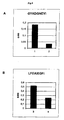
- Fig. 2 and Fig. 3 show the comparison of the solubility of the complexes after mixing in buffered saline or sorbitol solution.
- the two fluorescently labeled peptides ( FIG. 2A and Fig. 2B ) and the Green Fluorescent Protein (GFP, about 30 Kd; Fig. 3 ) were included in this experiment.
- GFP Green Fluorescent Protein
Landscapes
- Health & Medical Sciences (AREA)
- Life Sciences & Earth Sciences (AREA)
- Chemical & Material Sciences (AREA)
- General Health & Medical Sciences (AREA)
- Immunology (AREA)
- Medicinal Chemistry (AREA)
- Veterinary Medicine (AREA)
- Pharmacology & Pharmacy (AREA)
- Public Health (AREA)
- Animal Behavior & Ethology (AREA)
- Microbiology (AREA)
- Epidemiology (AREA)
- Mycology (AREA)
- Chemical Kinetics & Catalysis (AREA)
- General Chemical & Material Sciences (AREA)
- Nuclear Medicine, Radiotherapy & Molecular Imaging (AREA)
- Organic Chemistry (AREA)
- Engineering & Computer Science (AREA)
- Bioinformatics & Cheminformatics (AREA)
- Medicines Containing Antibodies Or Antigens For Use As Internal Diagnostic Agents (AREA)
- Medicinal Preparation (AREA)
- Peptides Or Proteins (AREA)
Description
- Die vorliegende Erfindung bezieht sich auf das Gebiet der Vakzinen.
- Die immunogene Wirkung von traditionellen Vakzinen beruht zumeist auf abgetöteten oder abgeschwächten Krankheitserregern. In den traditionellen Vakzinen wirken die Verunreinigungen der Vakzine selbst oder andere Komponenten von Organismen als Adjuvantien, die die immunogene Wirkung des eigentlichen Antigens verstärken und/oder verlängern. Z.B. enthält der Diphtherie-Tetanus-Keuchhusten-Impfstoff zwei potente, von der Ganzzell-Keuchhusten-Vakzine stammende Adjuvantien (LPS = Lipopolysaccharid sowie PT = Pertussistoxin); ebenso haben die Ganzzell-Typhus- und Choleraimpfstoffe potente Adjuvantien (LPS sowie Choleratoxin); die BCG-Vakzine (Bacillus Calmette Guerin) hat starke nicht-spezifische immunstimulatorische Wirkungen.
- Im Gegensatz zu den komplexen traditionellen Impfstoffen enthalten die modernen Vakzinen synthetische, rekombinante oder hochgereinigte Antigene in Form von Proteinen oder Peptiden. Diese Vakzinen gelten als sicherer, weisen jedoch im allgemeinen den Nachteil geringerer Immunogenität auf. Um diesen Nachteil zu kompensieren, werden den Vakzinen Adjuvantien beigegeben, um die spezifische Immunantwort auf Antigene zu verstärken und verlängern. Einige Adjuvantien haben die Eigenschaft, die T-Zellproliferation und die zelluläre Immunantwort zu verstärken.
- Die meisten der bisher verwendeten Adjuvantien weisen jedoch Nebeneffekte auf, auch erfüllen diese Adjuvantien nicht die Anforderungen, die an die Sicherheit von Adjuvantien gestellt werden, wie Stabilität im Hinblick auf Adjuvanswirkung, minimale Toxizität ohne Wechselwirkung mit dem Antigen, ferner Abbaufähigkeit im Organismus sowie Fehlen einer eigenen immunogen Wirkung.
- Eine Übersicht von gängigen Adjuvantien, die bisher für Vakzinen in Betracht gezogen wurden, wird von Vogel, 1995, und von Gupta und Siber, 1995, gegeben. Dazu zählen: anorganische Adjuvantien in Gelform (Aluminiumhydroxid/Aluminiumphosphat, Calciumphosphat); bakterielle Adjuvantien, wie Monophosphoryllipid A und Muramylpeptide, teilchenförmige Adjuvantien, wie die sog. ISCOMS ("immunostimulatory complexes"), Liposomen und bioabbaubare Mikrosphären, Adjuvantien auf der Grundlage von Ölemulsionen und Emulgatoren, wie Freund's Adjuvans oder IFA ("Incomplete Freund's Adjuvans"), Saponine (wie QS-21), Squalen; synthetische Adjuvantien, wie nicht-ionische Block-Copolymere, Muramylpeptidanaloge, synthetisches Lipid A, synthetische Polynukleotide und polykationische Adjuvantien, wie Polyarginin oder Polylysin (
WO 97/30721 - Die Wahl eines Adjuvans stellt in der Regel einen Kompromiß dar, der das Ergebnis einer Abwägung zwischen Toxizität und Adjuvanswirkung der jeweiligen Substanz ist.
- Bei Vakzineformulierungen wurde bisher im allgemeinen Bedacht auf Isotonizität genommen, die gängigen Vakzinformulierungen liegen üblicherweise in einer Salzkonzentration vor, die etwa 150 mM NaCl (ca. 300 mosmol/1) entspricht. Gängige Pufferformulierungen sind PBS und HBS (Phosphat-gepufferte bzw. HEPESgepufferte Salzlösung); z.B. wurde für eine ISCOM-Vakzine PBS pH 7.4 vorgeschlagen (Barr und Mitchell, 1996).
- Der vorliegenden Erfindung lag die Aufgabe zugrunde, eine Vakzineformulierung bereitzustellen, die die Wirkung von Vakzinen auf der Grundlage von Antigenen in Form von Peptiden oder Proteinen verstärkt.
- Es wurde überraschend festgestellt, daß die immunogene Wirkung einer adjuvanshältigen Vakzine auf Peptidbasis gesteigert wird, wenn die Vakzineformulierung eine niedrige Salzionenkonzentration aufweist bzw. frei von Salzen ist, und ein Zuckeralkohol enthält.
- Die Erfindung betrifft somit eine Vakzine, enthaltend ein oder mehrere synthetische oder hochgereinigte natürliche Peptide oder Proteine als Antigen(e) sowie ein oder mehrere Adjuvantien dadurch gekennzeichnet, dass sie als Adjuvans ein Polykation enthält. Die Vakzine ist femoral dadurch gekennzeichnet, daß sie als Lösung oder Emulsion vorliegt, die frei von anorganischen Salzionen ist bzw. eine niedrige Salzionenkonzentration aufweist, und ein Zuckeralkohol enthält.
- Im Zusammenhang mit der erfindungsgemäßen Vakzine wird unter "niedrige Salzionenkonzentration" eine Konzentration verstanden, die gleich oder niedriger ist als ca. 50% der Salzkonzentration einer isotonischen Lösung, was etwa ca. 75 mM Kochsalzlösung entspricht.
- Bei der Berechnung der Ionenkonzentration ist zu berücksichtigen, daß im Fall der Verwendung von Peptid- bzw. Proteinantigenen, die als solche eine Ladung aufweisen, diese Ladung nicht in Rechnung gestellt wird.
- Bevorzugt ist die Vakzine im wesentlichen frei von Natrium-, Chlorid- und Phosphationen, besonders bevorzugt ist sie im wesentlichen frei von sämtlichen anorganischen Salzionen ("im wesentlichen frei" bedeutet, daß der Vakzine keine Salze zugesetzt wurden, daß jedoch gegebenenfalls von Reagentien stammende Verunreinigungen oder Spuren von Ionen enthalten sein können; ebenfalls nicht eingerechnet werden von Adjuvantien stammende Ionen, z.B. bei Verwendung anorganischer Adjuvantien).
- Für den Fall, daß die Vakzine, z.B. von Pufferlösung stammende, Phosphationen enthält, ist sie bevorzugt frei von Natrium- und Chloridionen. Für den Fall, daß sie Natrium- und/oder Chloridionen enthält, ist sie bevorzugt frei von Phosphationen.
- In einer Ausführungsform der Erfindung enthält die Vakzine Antigen und Adjuvans in salzfreiem Medium, z.B. in destilliertem Wasser.
- Die erfindungsgemäße Vakzine enthält als isotonisch machende Substanz ein Zuckeralkohol, wie Sorbit oder Mannit.
- Die isotonisch machende Substanz liegt, je noch Molekulargewicht, bevorzugt in einer Konzentration vor, so daß die resultierende Lösung isotonisch oder leicht hypotonisch ist.
- Bevorzugte Zuckeralkoholkonzentrationen liegen im Bereich von ca. 200 - 400 mM, insbesondere im Bereich von 250 - 300 mM. Die Osmolarität der Lösung beträgt zweckmäßig zwischen 200 - 400 mosmol/l, die Lösung kann aber auch stark hypotonisch sein.
- Zusätzlich zur isotonisch machenden Substanz enthält die Lösung, in der die erfindungsgemäße Vakzine vorliegt, gegebenenfalls eine Puffersubstanz. Dafür kommen in erster Linie HEPES (N-[2-Hydroxyethyl] piperazine-N'-[2-ethanesulfonic acid]), oder TRIS (Tris[hydroxymethyl]aminomethane) in Betracht. Eine Puffersubstanz kann erforderlich sein, um die Vakzine auf einen physiologischen pH-Wert einzustellen, wenn die primäre Lösung vom physiologischen Wert abweicht.
- Bezüglich der Peptid- bzw. Proteinantigene unterliegt die erfindungsgemäße Vakzine keinerlei Beschränkungen. Bei den Antigenen kann es sich um natürlich vorkommende immunogene Proteine, z.B von viralen oder bakteriellen Erregern stammende Proteine bzw. deren Fragmente oder zelluläre Abbauprodukte in Form von Peptiden handeln; oder um Tumorantigene bzw. Fragmente davon. In einer bevorzugten Ausführungsform ist das Antigen ein Tumorantigen bzw. ein davon abgeleitetes natürliches oder synthetisches Peptid, in diesem Fall liegt die Vakzine als Tumorvakzine vor.
- Die Menge an wirksamem Antigen in der erfindungsgemäßen Vakzine kann über einen breiten Bereich variieren. Die Menge an Peptid hängt u.a. von der Verabreichungsart und der jeweiligen Formulierung ab. Die zu verabreichende Menge an Peptid kann ca. 0.1 µg bis ca. 10000 µg pro Vakzinierungsdosis betragen, im allgemeinen 1.0 µg bis ca. 1000 µg, insbesondere ca. 10 µg bis ca. 500 µg.
- Gemäß der Erfindung ist das Adjuvans eine Substanz, wie sie in der
WO 97/30721 - Im Rahmen der vorliegenden Erfindung wurde überraschend festgestellt, daß eine salzfreie, mit Sorbit isotonisch gemachte Tumorvakzine, enthaltend ein MHC-bindendes, von einem Tumorantigen abgeleitetes Peptid sowie Polyarginin als Adjuvans, gegenüber einer hinsichtlich Peptid/Adjuvans identischen, herkömmlich formulierten, d.h. eine isotonische Salzkonzentration enthaltenden Tumorvakzine eine stärkere Antitumoraktivität aufweist. Es wurde festgestellt, daß die Peptide zusammen mit dem Adjuvans in Sorbitlösung besser löslich sind als in herkömmlichem PBS Puffer. Ohne auf die Theorie festgelegt sein zu wollen, dürfte die verbesserte Wirkung der Vakzine, neben der verbesserten Löslichkeit, darauf zurückzuführen sein, daß die Interaktion zwischen Peptid und Adjuvans erleichtert und damit die Wirkung des Adjuvans verstärkt wird. Gegebenfalls ist die verbesserte Wirkung der Vakzine außerdem auf eine Co-Adjuvans-Wirkung der isotonisch machenden Substanz, z.B. Sorbit, zurückzuführen, d. h. diese Substanz (Sorbit) hat als solche eine gewisse Adjuvanswirkung, die die Wirkung des primären Adjuvans verstärkt.
- Um eine Vakzine optimal zu formulieren, wird zweckmäßig wie folgt vorgegangen: ausgehend von einem definierten Antigen, das die gewünschte Immunantwort hervorrufen soll, wird in einem ersten Schritt ein auf das Antigen abgestimmtes Adjuvans ermittelt, wie in der Fachliteratur, insbesondere in der
WO 97/30721 - Eine weitere Möglichkeit zur Testung der Effizienz einer Formulierung ist die Verwendung eines in vitro Modellsystems. Hierbei werden APCs zusammen mit Adjuvans, Peptid und Kandidatensubstanz inkubiert und die relative Aktivierung eines T-Zellklons, der das verwendete Peptid spezifisch erkennt, gemessen (Coligan et al.,1991; Lopez et al.,1993)
- Die Effizienz der Formulierung kann gegebenenfalls auch über die zelluläre Immunantwort durch den Nachweis einer "delayed-type hypersensitivity" (DTH)-Reaktion in immunisierten Tieren gezeigt werden.
- Letztlich wird die immunmodulatorische Wirkung der Formulierung im Tierversuch gemessen. Im Falle einer Tumorvakzine, wie im vorliegenden Beispiel, können u.a. etablierte Tumormodelle, bei denen von Immunzellen erkannte Peptidsequenzen bekannt sind, eingesetzt werden. Die Vakzine, enthaltend bei konstanter Peptid/Adjuvans-Zusammensetzung unterschiedliche Puffersubstanzen, wird den Versuchstieren appliziert. Der Schutz vor Tumorwachstum ist ein Maß für die Wirksamkeit einer Tumorvakzine.
- Die Versuche wurden durchgeführt, wie in der
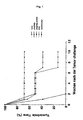
WO 97/30721 - a) DBA/2 Mäuse wurden mit einem Gemisch aus 100 µg MHC Klasse I bindendem Peptid SYFPETHI (Bezeichnung "P815 JAK1") und 75 µg Polyarginin (Polymerisationsgrad 70, SIGMA Chemicals, St. Louis MO) pro Tier dreimal in je einwöchigem Abstand geimpft. Die Peptid/Adjuvantslösung wurde in Sorbitlösung (270 mM Sorbit, 5 mM HEPES) oder phosphatgepufferter Kochsalzlösung (PBS, GIBCO BRL) verabreicht. Kontrollmäuse erhielten entweder 100 µg Peptid/Tier ohne Adjuvants in Sorbitpuffer oder wurden nicht vakziniert. Eine Woche nach der letzten Vakzinierung wurden 104 viable Tumorzellen injiziert und Tumorwachstum wöchentlich festgehalten.
Das Ergebnis der Versuche ist inFig. 1 dargestellt. Die Abbildung zeigt den Vergleich der Effizienz der P815 JAK1-Vakzine in Sorbitlösung gegen eine Vakzine in gepufferter, isotonischer Salzlösung im Tiermodell. Es zeigte sich, daß Tiere, die die Vakzine in Sorbitlösung erhielten, besser geschützt sind als Mäuse, die mit Peptid/polyArginin in PBS geimpft wurden. - b) Für die Löslichkeitsversuche wurden Gemische aus fluoreszenzmarkiertem Peptid LFEAIEGFI oder GYKDGNEYI hergestellt: 100 µg fluoreszenzmarkiertes Peptid wurde mit 75 µg Polyarginin (Arg; Polymerisationsgrad 70, SIGMA Chemicals, St. Louis MO) entweder in Sorbitlösung oder HEPES-gepufferter Kochsalzlödung (HBS: 20 mM HEPES pH 7.5, 150 mM NaCl) versetzt. Nach drei Stunden wurde die Menge an gelöster Fluoreszenz durch Bestimmung der Extinktion bei 490 nM gemessen. Als Testprotein wurde das Green Fluorescent Protein verwendet.
-
Fig. 2 undFig. 3 zeigen den Vergleich der Löslichkeit der Komplexe nach Mischung in gepufferter Salzlösung oder Sorbitlösung. Die beiden fluoreszenzmarkierten Peptide (Fig. 2A und Fig. 2B ) und das Green Fluorescent Protein (GFP; ca. 30 Kd;Fig. 3 ) wurden in diesen Versuch einbezogen. Durch Anmischung der Vakzine in Sorbitlösung ergab sich eine deutlich verbesserte Löslichkeit und Recovery (erhöhte Fluoreszenz) sowohl mit den beiden getesteten Peptiden als auch mit GFP. - Abraham, E., 1992, Vaccine 10, 461-468
- Allison, A.C., und Byars, N.E., 1991, Mol Immunol 28, 279-284
- Azuma, I., 1992, Vaccine 10, 1000-1004
- Baker, P.J., et al., 1988, Infect Immun 56, 3064-3066
- Coligan, J.E. et al., 1991, Current Protocols in Immunology, Wiley, New York
- Ellouz, F., et al., 1974, Biochem Biophys Res Commun 59, 1317-1325
- Gupta, R.K. und Siber G.R., 1995, Vaccine 13, 1263-1276
- Gregoriadis, G., 1990, Immunol Today 11, 89-97
- Harrington, D.G., et al., 1978, Infect Immun 24, 160-166
- Hunter, R., et al., 1991, Vaccine 9, 250-255
- Lopez, J.A., et al., 1993, Eur. J. Immunol. 23, 217-223
- Marx, P.A., et al., 1993, Science 28, 1323-1327
- Mbawuike, I.N., et al., 1990, Vaccine 8, 347-352
- Mowat, A.M., und Donachie, A.M., 1991, Immunol Today 12, 383-385
- Newman, M.J., et al., 1992, J Immunol 148, 23572362
- Phillips, N.C. und Emili, A, 1992, Vaccine 10, 151-158
- Rarrtmensee, H.G., et al., 1995, Immunogenetics 41, 178-228
- Relyvelt, E.H., 1986, Develop Biol Standard, 65, 131-136
- Ribi, E., 1984, J Biol Res Mod, 3, 1-9
- Stuart-Harris, C.H., 1969, Bull WHO 41, 617-621
- Takahashi, H., et al., 1990, Nature 344, 873-875
- Thapar, M.A., et al., 1991, Vaccine 9, 129-133
- Vogel, F. R. 1995, Ann N Y Acad Sci 754, 153-160
- Warren, H.S., et al., 1986, Ann Rev Immunol 4, 369-388
- Waters, R.V., et al., 1986, Infect Immun 52, 816-825
Claims (11)
- Vakzine, enthaltend ein oder mehrere synthetische oder hochgereinigte natürliche Peptide oder Proteine als Antigen(e) sowie ein oder mehrere Adjuvantien, dadurch gekennzeichnet, dass sie als Adjuvans ein Polykation enthält und als Lösung bzw. Emulsion vorliegt, diea) frei von anorganischen Salzionen ist bzw. eine niedrige Konzentration anorganischer Ionen, entsprechend einer Konzentration, die gleich oder niedriger ist als die einer ca. 75 mM Kochsalzlösung, aufweist, und dieb) einen Zuckeralkohol enthält.
- Vakzine nach Anspruch 1, dadurch gekennzeichnet, dass sie im wesentlichen frei von sämtlichen anorganischen Salzionen ist.
- Vakzine nach Anspruch 1, dadurch gekennzeichnet, dass der Zuckeralkohol Sorbit ist.
- Vakzine nach Anspruch 1, dadurch gekennzeichnet, dass der Zuckeralkohol Mannit ist.
- Vakzine nach Anspruch 1, dadurch gekennzeichnet, dass der Zuckeralkohol in einer Konzentration vorliegt, so dass die resultierende Lösung isotonisch oder leicht hypotonisch ist.
- Vakzine nach Anspruch 5, dadurch gekennzeichnet, dass die Zuckeralkoholkonzentrationen im Bereich von ca. 200 - 400 mM liegt.
- Vakzine nach Anspruch 6, dadurch gekennzeichnet, dass die Konzentration 250 - 300 mM beträgt.
- Vakzine nach einem der Ansprüche 1 bis 7, dadurch gekennzeichnet, dass sie zusätzlich eine Puffersubstanz enthält.
- Vakzine nach einem der Ansprüche 1 bis 8, dadurch gekennzeichnet, dass sie als Antigen ein Peptid enthält.
- Vakzine nach Anspruch 9, dadurch gekennzeichnet, dass das Peptid von einem Tumorantigen abgeleitet ist.
- Vakzine nach einem der Ansprüche 1 bis 10, dadurch gekennzeichnet, dass sie als Adjuvans Polyarginin enthält.
Applications Claiming Priority (3)
| Application Number | Priority Date | Filing Date | Title |
|---|---|---|---|
| DE19803453 | 1998-01-30 | ||
| DE19803453A DE19803453A1 (de) | 1998-01-30 | 1998-01-30 | Vakzine |
| PCT/EP1999/000524 WO1999038528A2 (de) | 1998-01-30 | 1999-01-27 | Vakzineformulierungen |
Publications (3)
| Publication Number | Publication Date |
|---|---|
| EP1051189A2 EP1051189A2 (de) | 2000-11-15 |
| EP1051189B1 EP1051189B1 (de) | 2005-08-10 |
| EP1051189B2 true EP1051189B2 (de) | 2009-01-14 |
Family
ID=7856041
Family Applications (1)
| Application Number | Title | Priority Date | Filing Date |
|---|---|---|---|
| EP99910158A Expired - Lifetime EP1051189B2 (de) | 1998-01-30 | 1999-01-27 | Vakzinformulierung enthaltend ein Polykation als Adjuvans sowie Zuckeralkohol und niedrige Konzentrationen anorganischer Ionen |
Country Status (7)
| Country | Link |
|---|---|
| US (1) | US6869607B1 (de) |
| EP (1) | EP1051189B2 (de) |
| JP (1) | JP2002501904A (de) |
| AT (1) | ATE301470T1 (de) |
| CA (1) | CA2319711A1 (de) |
| DE (2) | DE19803453A1 (de) |
| WO (1) | WO1999038528A2 (de) |
Families Citing this family (48)
| Publication number | Priority date | Publication date | Assignee | Title |
|---|---|---|---|---|
| AT409085B (de) * | 2000-01-28 | 2002-05-27 | Cistem Biotechnologies Gmbh | Pharmazeutische zusammensetzung zur immunmodulation und herstellung von vakzinen |
| CA2433561C (en) * | 2001-01-03 | 2014-04-01 | Willmar Poultry Company, Inc. | Compositions including gram negative siderophore receptor proteins and methods of use |
| EP1347775B1 (de) | 2001-01-05 | 2016-11-30 | Valneva Austria GmbH | Gebrauch von polykationischen substanzen als adjuvantien für impfstoffe |
| AT410798B (de) | 2001-01-26 | 2003-07-25 | Cistem Biotechnologies Gmbh | Verfahren zur identifizierung, isolierung und herstellung von antigenen gegen ein spezifisches pathogen |
| CA2452909A1 (en) * | 2001-12-07 | 2003-06-13 | Intercell Ag | Immunostimulatory oligodeoxynucleotides |
| CA2484941A1 (en) | 2002-07-24 | 2004-02-05 | Intercell Ag | Antigens encoded by alternative reading frame from pathogenic viruses |
| WO2004024182A2 (en) | 2002-09-13 | 2004-03-25 | Intercell Ag | Method for isolating hepatitis c virus peptides |
| EP2314603A3 (de) | 2002-10-15 | 2011-05-18 | Intercell AG | Bindungdsfaktoren von Gruppe B-Streptococcus, dafür kodierende Nukleinsäuren und Verwendungen davon |
| EP1601770B1 (de) | 2003-03-04 | 2009-09-02 | Intercell AG | Streptococcus pyogenes antigene |
| ES2562456T3 (es) | 2003-03-24 | 2016-03-04 | Valneva Austria Gmbh | Uso de un adyuvante que induce una respuesta inmune Th1 para mejorar las respuestas inmunes |
| EP1608756B1 (de) | 2003-03-31 | 2009-11-18 | Intercell AG | Staphylococcus epidermidis antigene |
| EP2333114A1 (de) | 2003-04-15 | 2011-06-15 | Intercell AG | S. pneumoniae Antigene |
| EP1620460A2 (de) | 2003-05-07 | 2006-02-01 | Intercell AG | Streptococcus agalactiae-antigene i + ii |
| CN102304527A (zh) | 2003-05-30 | 2012-01-04 | 英特塞尔股份公司 | 肠球菌抗原 |
| CA2530062A1 (en) | 2003-07-11 | 2005-01-20 | Intercell Ag | Hcv vaccines |
| ES2395022T3 (es) * | 2003-09-19 | 2013-02-07 | Epitopix, Llc | Polipéptidos de Campylobacter y sus métodos de uso |
| EP1987843A3 (de) | 2004-03-12 | 2011-10-26 | Intercell AG | Verfahren zur Auflösung von Peptidmischungen |
| EP1791858B1 (de) | 2004-09-24 | 2010-04-21 | Intercell AG | Verändertes vp-1capsidprotein von parvovirus b19 |
| CA2583026A1 (en) * | 2004-10-29 | 2006-05-04 | Intercell Ag | Hcv vaccines for chronic hcv patients |
| WO2008031133A2 (en) | 2006-09-15 | 2008-03-20 | Intercell Ag | Borrelia antigens |
| KR101378872B1 (ko) | 2006-09-26 | 2014-04-11 | 인펙셔스 디지즈 리서치 인스티튜트 (아이디알아이) | 합성 애주번트를 함유하는 백신 조성물 |
| US20090181078A1 (en) | 2006-09-26 | 2009-07-16 | Infectious Disease Research Institute | Vaccine composition containing synthetic adjuvant |
| PL2121011T3 (pl) * | 2006-12-06 | 2014-10-31 | Novartis Ag | Szczepionki zawierające antygeny czterech szczepów wirusa grypy |
| EP2152731A2 (de) | 2007-05-02 | 2010-02-17 | Intercell AG | Klebsiella-antigene |
| AU2008265218A1 (en) | 2007-06-18 | 2008-12-24 | Intercell Ag | Chlamydia antigens |
| AU2010212550B2 (en) | 2009-02-10 | 2016-03-10 | Seqirus UK Limited | Influenza vaccines with reduced amounts of squalene |
| EP2405938A2 (de) | 2009-02-13 | 2012-01-18 | Intercell AG | Nicht typisierbare haemophilus influenza-antigene |
| SI2437753T1 (sl) | 2009-06-05 | 2016-12-30 | Infectious Disease Research Institute | Sintetični glukopiranozil-lipidni adjuvansi in cepivni sestavki, ki jih vsebujejo |
| GB0910046D0 (en) * | 2009-06-10 | 2009-07-22 | Glaxosmithkline Biolog Sa | Novel compositions |
| GB0910045D0 (en) * | 2009-06-10 | 2009-07-22 | Glaxosmithkline Biolog Sa | Novel compositions |
| US8858958B2 (en) * | 2009-08-27 | 2014-10-14 | Novartis Ag | Adjuvant comprising aluminum, oligonucleotide and polycation |
| WO2011097595A1 (en) * | 2010-02-05 | 2011-08-11 | University Of Rochester | Methods of using agents that modulate claudin expression |
| WO2011101465A1 (en) * | 2010-02-19 | 2011-08-25 | Intercell Ag | Ic31 nanoparticles |
| EA032336B1 (ru) * | 2010-09-17 | 2019-05-31 | Баксалта Инкорпорейтид | Стабильная водная иммуноглобулиновая композиция и способ стабилизации иммуноглобулиновой композиции |
| US9821051B1 (en) | 2010-10-28 | 2017-11-21 | Seqirus UK Limited | Reducing hospitalization in elderly influenza vaccine recipients |
| DK2651436T3 (da) * | 2010-12-14 | 2016-06-20 | Glaxosmithkline Biologicals Sa | Mycobakterie antigen sammensætning. |
| AU2012243039B2 (en) | 2011-04-08 | 2017-07-13 | Immune Design Corp. | Immunogenic compositions and methods of using the compositions for inducing humoral and cellular immune responses |
| CN110339160A (zh) | 2012-02-07 | 2019-10-18 | 传染性疾病研究院 | 包含tlr4激动剂的改进佐剂制剂及其使用方法 |
| PT2850431T (pt) | 2012-05-16 | 2018-07-23 | Immune Design Corp | Vacinas para hsv-2 |
| US10137186B2 (en) | 2013-03-14 | 2018-11-27 | Takeda Vaccines, Inc. | Compositions and methods for live, attenuated alphavirus formulations |
| EP3711768A1 (de) | 2013-04-18 | 2020-09-23 | Immune Design Corp. | Gla-monotherapie zur verwendung in der krebsbehandlung |
| US9463198B2 (en) | 2013-06-04 | 2016-10-11 | Infectious Disease Research Institute | Compositions and methods for reducing or preventing metastasis |
| EP3033108B1 (de) | 2013-08-16 | 2021-03-24 | University Of Rochester | Designte peptide zur modulation dichter verbindungsbarrieren |
| IL310015B2 (en) | 2013-12-31 | 2026-02-01 | Access To Advanced Health Inst | Single vial formulation |
| US10166280B2 (en) | 2016-06-08 | 2019-01-01 | Epitopix, Llc | Polypeptides and immunizing compositions containing Bacillus polypeptides and methods of use |
| BR112021023726A2 (pt) | 2019-05-25 | 2022-02-15 | Infectious Disease Res Inst | Composição e método para secagem por pulverização de uma emulsão de vacina adjuvante |
| EP3980054A1 (de) | 2019-06-05 | 2022-04-13 | University Of Rochester | Neue konstruierte inhibitoren der bildung von dichten verbindungen |
| US20220396797A1 (en) | 2019-11-15 | 2022-12-15 | Infectious Disease Research Institute | Rig-i agonist and adjuvant formulation for tumor treatment |
Family Cites Families (9)
| Publication number | Priority date | Publication date | Assignee | Title |
|---|---|---|---|---|
| US3843451A (en) * | 1970-08-20 | 1974-10-22 | Burroughs Wellcome Co | Microorganism production |
| FR2313078A1 (fr) * | 1975-02-07 | 1976-12-31 | Anvar | Composition a base d'huile vegetale metabolisable et d'eau, utilisable notamment pour la constitution de preparations adjuvantes, ces preparations adjuvantes et leur procede d'obtention |
| US4147772A (en) * | 1976-02-03 | 1979-04-03 | Merck & Co., Inc. | Vaccine stabilizer |
| US4338335A (en) * | 1980-02-05 | 1982-07-06 | Merck & Co., Inc. | Vaccine stabilizer containing L-glutamic acid and L-arginine |
| CA1337859C (en) * | 1987-04-24 | 1996-01-02 | Masashi Chazono | Method for culturing bordetella pertussis, a pertussis toxoid and a pertussis vaccine |
| SG48309A1 (en) * | 1993-03-23 | 1998-04-17 | Smithkline Beecham Biolog | Vaccine compositions containing 3-0 deacylated monophosphoryl lipid a |
| DK0732936T3 (da) * | 1993-12-09 | 2000-09-04 | Heinrich Exner | Adjuvans til antigener, fremgangsmåde til fremstilling og anvendelse |
| CO4600681A1 (es) * | 1996-02-24 | 1998-05-08 | Boehringer Ingelheim Pharma | Composicion farmaceutica para la modulacion inmunitaria |
| GB9808922D0 (en) * | 1998-04-24 | 1998-06-24 | Cantab Pharmaceuticals Res Ltd | Virus preparations |
-
1998
- 1998-01-30 DE DE19803453A patent/DE19803453A1/de not_active Ceased
-
1999
- 1999-01-27 US US09/601,171 patent/US6869607B1/en not_active Expired - Fee Related
- 1999-01-27 CA CA002319711A patent/CA2319711A1/en not_active Abandoned
- 1999-01-27 JP JP2000529260A patent/JP2002501904A/ja active Pending
- 1999-01-27 WO PCT/EP1999/000524 patent/WO1999038528A2/de not_active Ceased
- 1999-01-27 EP EP99910158A patent/EP1051189B2/de not_active Expired - Lifetime
- 1999-01-27 DE DE59912393T patent/DE59912393D1/de not_active Expired - Lifetime
- 1999-01-27 AT AT99910158T patent/ATE301470T1/de active
Non-Patent Citations (1)
| Title |
|---|
| GIBSON T.D.: "Protein Stabilisation using Additives Based on Multiple Electrostatic Interactions", BROWN F (ED): NEW APPROACHES TO STABILISATION OF VACCINES POTENCY. DEV BIOL STAND., vol. 87, 1996, BASEL, pages 207 - 217 † |
Also Published As
| Publication number | Publication date |
|---|---|
| US6869607B1 (en) | 2005-03-22 |
| JP2002501904A (ja) | 2002-01-22 |
| DE59912393D1 (de) | 2005-09-15 |
| CA2319711A1 (en) | 1999-08-05 |
| ATE301470T1 (de) | 2005-08-15 |
| DE19803453A1 (de) | 1999-08-12 |
| WO1999038528A2 (de) | 1999-08-05 |
| WO1999038528A3 (de) | 1999-12-09 |
| EP1051189A2 (de) | 2000-11-15 |
| EP1051189B1 (de) | 2005-08-10 |
Similar Documents
| Publication | Publication Date | Title |
|---|---|---|
| EP1051189B1 (de) | Vakzinformulierung enthaltend Zuckeralkohol und niedrige Konzentrationen anorganischer Ionen | |
| DE3875762T2 (de) | Adjuvanzienmischung. | |
| DE60032250T2 (de) | Behandlung von Allergien | |
| DE69433750T2 (de) | Impffstoffe basierend auf Öl/Wasser Emulsionen mit Tocopherol und Squalene | |
| DE69836429T2 (de) | Impstoffe gegen Hepatitis B die Öl in Wasser Emulsionen enthalten | |
| DE60029115T2 (de) | Antigen enthaltende pharmazeutische zusammensetzung | |
| DE69836268T2 (de) | Immunverstärkende Zusammensetzung in fester Verabreichungsform mit Kollagen oder Polydimethylsiloxan als Trägersubstanzen | |
| DE69630033T2 (de) | Immunologische kombinationsmittel und dazugehörige verfahren | |
| DE69428795T2 (de) | Phosphazene und polyelektrolyte als immunadjuvantien | |
| KR100463372B1 (ko) | 사포닌및스테롤을함유한백신 | |
| DE69027112T2 (de) | Impfstoffzusammensetzung | |
| ES2233955T3 (es) | Adyuvantes para vacunas viricas. | |
| ES2180703T5 (es) | Composiciones de vacunas para mamiferos que comprenden escualeno o escualano, un fosfolipido y un tensioactivo como adyuvante. | |
| DE3750176T2 (de) | Impfstoff und verfahren zur herstellung. | |
| DE69427824T2 (de) | Impfstoffe bestehend aus protein- oder peptid-"cochleaten" und deren verwendung zur immunisierung | |
| DE102004049223A1 (de) | Zubereitung zum Impfen, Impfverfahren und Verwendung einer Impf-Zubereitung | |
| DE69515340T2 (de) | Impfstoff gegen mycobakterielle infektionen | |
| DE602004005460T2 (de) | Adjuvanskombinationen von liposomen und mycobakteriellen lipiden für immunisierungszusammensetzungen und impfstoffe | |
| Meyer et al. | Biologically active components from mycobacterial cell walls: V. Granuloma formation in mouse lungs and guinea pig skin | |
| DE60019726T2 (de) | Impfstofformulierung mit monoglyceriden oder fettsäuren als adjuvans | |
| DE60026588T2 (de) | Impfstoffe zur erhöhung der immunantworten gegen herpes simplex virus | |
| DE69434000T2 (de) | Impfstoffzusammensetzungen | |
| DE60031243T2 (de) | Impfstofformulierung gegen tuberkulose mit monoglyceriden oder fettsäuren als adjuvant | |
| DE69738597T2 (de) | Vakzine gegen das varicella zostervirus produkt von gen 63 | |
| KR101136107B1 (ko) | 알킬포스파티딜콜린과 혼합된 백신 조성물 |
Legal Events
| Date | Code | Title | Description |
|---|---|---|---|
| PUAI | Public reference made under article 153(3) epc to a published international application that has entered the european phase |
Free format text: ORIGINAL CODE: 0009012 |
|
| 17P | Request for examination filed |
Effective date: 20000830 |
|
| AK | Designated contracting states |
Kind code of ref document: A2 Designated state(s): AT BE CH CY DE DK ES FI FR GB GR IE IT LI LU MC NL PT SE |
|
| 17Q | First examination report despatched |
Effective date: 20030807 |
|
| GRAP | Despatch of communication of intention to grant a patent |
Free format text: ORIGINAL CODE: EPIDOSNIGR1 |
|
| RTI1 | Title (correction) |
Free format text: VACCINE FORMULATION COMPRISING SUGAR-ALCOHOLS AND LOW CONCENTRATIONS OF ANORGANIC IONS |
|
| RAP1 | Party data changed (applicant data changed or rights of an application transferred) |
Owner name: INTERCELL AG |
|
| GRAS | Grant fee paid |
Free format text: ORIGINAL CODE: EPIDOSNIGR3 |
|
| GRAA | (expected) grant |
Free format text: ORIGINAL CODE: 0009210 |
|
| AK | Designated contracting states |
Kind code of ref document: B1 Designated state(s): AT BE CH CY DE DK ES FI FR GB GR IE IT LI LU MC NL PT SE |
|
| PG25 | Lapsed in a contracting state [announced via postgrant information from national office to epo] |
Ref country code: NL Free format text: LAPSE BECAUSE OF FAILURE TO SUBMIT A TRANSLATION OF THE DESCRIPTION OR TO PAY THE FEE WITHIN THE PRESCRIBED TIME-LIMIT Effective date: 20050810 Ref country code: IT Free format text: LAPSE BECAUSE OF FAILURE TO SUBMIT A TRANSLATION OF THE DESCRIPTION OR TO PAY THE FEE WITHIN THE PRESCRIBED TIME-LIMIT;WARNING: LAPSES OF ITALIAN PATENTS WITH EFFECTIVE DATE BEFORE 2007 MAY HAVE OCCURRED AT ANY TIME BEFORE 2007. THE CORRECT EFFECTIVE DATE MAY BE DIFFERENT FROM THE ONE RECORDED. Effective date: 20050810 Ref country code: IE Free format text: LAPSE BECAUSE OF FAILURE TO SUBMIT A TRANSLATION OF THE DESCRIPTION OR TO PAY THE FEE WITHIN THE PRESCRIBED TIME-LIMIT Effective date: 20050810 Ref country code: FI Free format text: LAPSE BECAUSE OF FAILURE TO SUBMIT A TRANSLATION OF THE DESCRIPTION OR TO PAY THE FEE WITHIN THE PRESCRIBED TIME-LIMIT Effective date: 20050810 |
|
| REG | Reference to a national code |
Ref country code: GB Ref legal event code: FG4D Free format text: NOT ENGLISH |
|
| REG | Reference to a national code |
Ref country code: CH Ref legal event code: EP |
|
| REG | Reference to a national code |
Ref country code: IE Ref legal event code: FG4D Free format text: LANGUAGE OF EP DOCUMENT: GERMAN |
|
| REF | Corresponds to: |
Ref document number: 59912393 Country of ref document: DE Date of ref document: 20050915 Kind code of ref document: P |
|
| PG25 | Lapsed in a contracting state [announced via postgrant information from national office to epo] |
Ref country code: SE Free format text: LAPSE BECAUSE OF FAILURE TO SUBMIT A TRANSLATION OF THE DESCRIPTION OR TO PAY THE FEE WITHIN THE PRESCRIBED TIME-LIMIT Effective date: 20051110 Ref country code: GR Free format text: LAPSE BECAUSE OF FAILURE TO SUBMIT A TRANSLATION OF THE DESCRIPTION OR TO PAY THE FEE WITHIN THE PRESCRIBED TIME-LIMIT Effective date: 20051110 Ref country code: DK Free format text: LAPSE BECAUSE OF FAILURE TO SUBMIT A TRANSLATION OF THE DESCRIPTION OR TO PAY THE FEE WITHIN THE PRESCRIBED TIME-LIMIT Effective date: 20051110 |
|
| PG25 | Lapsed in a contracting state [announced via postgrant information from national office to epo] |
Ref country code: ES Free format text: LAPSE BECAUSE OF FAILURE TO SUBMIT A TRANSLATION OF THE DESCRIPTION OR TO PAY THE FEE WITHIN THE PRESCRIBED TIME-LIMIT Effective date: 20051121 |
|
| GBT | Gb: translation of ep patent filed (gb section 77(6)(a)/1977) | ||
| PG25 | Lapsed in a contracting state [announced via postgrant information from national office to epo] |
Ref country code: PT Free format text: LAPSE BECAUSE OF FAILURE TO SUBMIT A TRANSLATION OF THE DESCRIPTION OR TO PAY THE FEE WITHIN THE PRESCRIBED TIME-LIMIT Effective date: 20060110 |
|
| PG25 | Lapsed in a contracting state [announced via postgrant information from national office to epo] |
Ref country code: MC Free format text: LAPSE BECAUSE OF NON-PAYMENT OF DUE FEES Effective date: 20060131 Ref country code: LU Free format text: LAPSE BECAUSE OF NON-PAYMENT OF DUE FEES Effective date: 20060131 Ref country code: LI Free format text: LAPSE BECAUSE OF NON-PAYMENT OF DUE FEES Effective date: 20060131 Ref country code: CH Free format text: LAPSE BECAUSE OF NON-PAYMENT OF DUE FEES Effective date: 20060131 Ref country code: BE Free format text: LAPSE BECAUSE OF NON-PAYMENT OF DUE FEES Effective date: 20060131 |
|
| NLV1 | Nl: lapsed or annulled due to failure to fulfill the requirements of art. 29p and 29m of the patents act | ||
| REG | Reference to a national code |
Ref country code: IE Ref legal event code: FD4D |
|
| ET | Fr: translation filed | ||
| PLBI | Opposition filed |
Free format text: ORIGINAL CODE: 0009260 |
|
| 26 | Opposition filed |
Opponent name: SANOFI PASTEUR SA Effective date: 20060509 |
|
| REG | Reference to a national code |
Ref country code: CH Ref legal event code: PL |
|
| PLAX | Notice of opposition and request to file observation + time limit sent |
Free format text: ORIGINAL CODE: EPIDOSNOBS2 |
|
| PLAF | Information modified related to communication of a notice of opposition and request to file observations + time limit |
Free format text: ORIGINAL CODE: EPIDOSCOBS2 |
|
| PLBB | Reply of patent proprietor to notice(s) of opposition received |
Free format text: ORIGINAL CODE: EPIDOSNOBS3 |
|
| BERE | Be: lapsed |
Owner name: INTERCELL AG Effective date: 20060131 |
|
| RTI2 | Title (correction) |
Free format text: VACCINE FORMULATION CONTAINING A POLYCATION AS AN ADJUVANT AND SUGAR-ALCOHOLS AND LOW CONCENTRATIONS OF ANORGANIC IONS |
|
| PG25 | Lapsed in a contracting state [announced via postgrant information from national office to epo] |
Ref country code: CY Free format text: LAPSE BECAUSE OF FAILURE TO SUBMIT A TRANSLATION OF THE DESCRIPTION OR TO PAY THE FEE WITHIN THE PRESCRIBED TIME-LIMIT Effective date: 20050810 |
|
| PUAH | Patent maintained in amended form |
Free format text: ORIGINAL CODE: 0009272 |
|
| STAA | Information on the status of an ep patent application or granted ep patent |
Free format text: STATUS: PATENT MAINTAINED AS AMENDED |
|
| 27A | Patent maintained in amended form |
Effective date: 20090114 |
|
| AK | Designated contracting states |
Kind code of ref document: B2 Designated state(s): AT BE CH CY DE DK ES FI FR GB GR IE IT LI LU MC NL PT SE |
|
| REG | Reference to a national code |
Ref country code: ES Ref legal event code: FD2A Effective date: 20060128 |
|
| PGFP | Annual fee paid to national office [announced via postgrant information from national office to epo] |
Ref country code: FR Payment date: 20120206 Year of fee payment: 14 |
|
| PGFP | Annual fee paid to national office [announced via postgrant information from national office to epo] |
Ref country code: DE Payment date: 20120123 Year of fee payment: 14 |
|
| PGFP | Annual fee paid to national office [announced via postgrant information from national office to epo] |
Ref country code: GB Payment date: 20120120 Year of fee payment: 14 |
|
| PGFP | Annual fee paid to national office [announced via postgrant information from national office to epo] |
Ref country code: AT Payment date: 20120111 Year of fee payment: 14 |
|
| REG | Reference to a national code |
Ref country code: AT Ref legal event code: MM01 Ref document number: 301470 Country of ref document: AT Kind code of ref document: T Effective date: 20130131 |
|
| GBPC | Gb: european patent ceased through non-payment of renewal fee |
Effective date: 20130127 |
|
| REG | Reference to a national code |
Ref country code: FR Ref legal event code: ST Effective date: 20130930 |
|
| PG25 | Lapsed in a contracting state [announced via postgrant information from national office to epo] |
Ref country code: DE Free format text: LAPSE BECAUSE OF NON-PAYMENT OF DUE FEES Effective date: 20130801 Ref country code: AT Free format text: LAPSE BECAUSE OF NON-PAYMENT OF DUE FEES Effective date: 20130131 |
|
| REG | Reference to a national code |
Ref country code: DE Ref legal event code: R119 Ref document number: 59912393 Country of ref document: DE Effective date: 20130801 |
|
| PG25 | Lapsed in a contracting state [announced via postgrant information from national office to epo] |
Ref country code: GB Free format text: LAPSE BECAUSE OF NON-PAYMENT OF DUE FEES Effective date: 20130127 Ref country code: FR Free format text: LAPSE BECAUSE OF NON-PAYMENT OF DUE FEES Effective date: 20130131 |